Artist, poet, author of aphorisms, something of a local legend — these are just a few of the ways people describe Vladimir Spartak, one of the most recognizable contemporary artists of the Ural region. In November 2025, a short video featuring him went viral on social media — a clip of a blue-eyed elderly man with eccentric tattoos on his face that quickly gathered more than a million views.
To be honest, I immediately went online to search for his name, just to make sure the person was real and not some AI-generated character. At first it was difficult to believe: a face crossed by a blue stripe, dozens of tattoos across his body, colorful clothing, a house that looks like an art object, and a way of speaking where everyday phrases suddenly turn into something close to prophecy. But there turned out to be an enormous number of interviews with Spartak online — which quickly confirmed that the person behind this unusual image was very real.
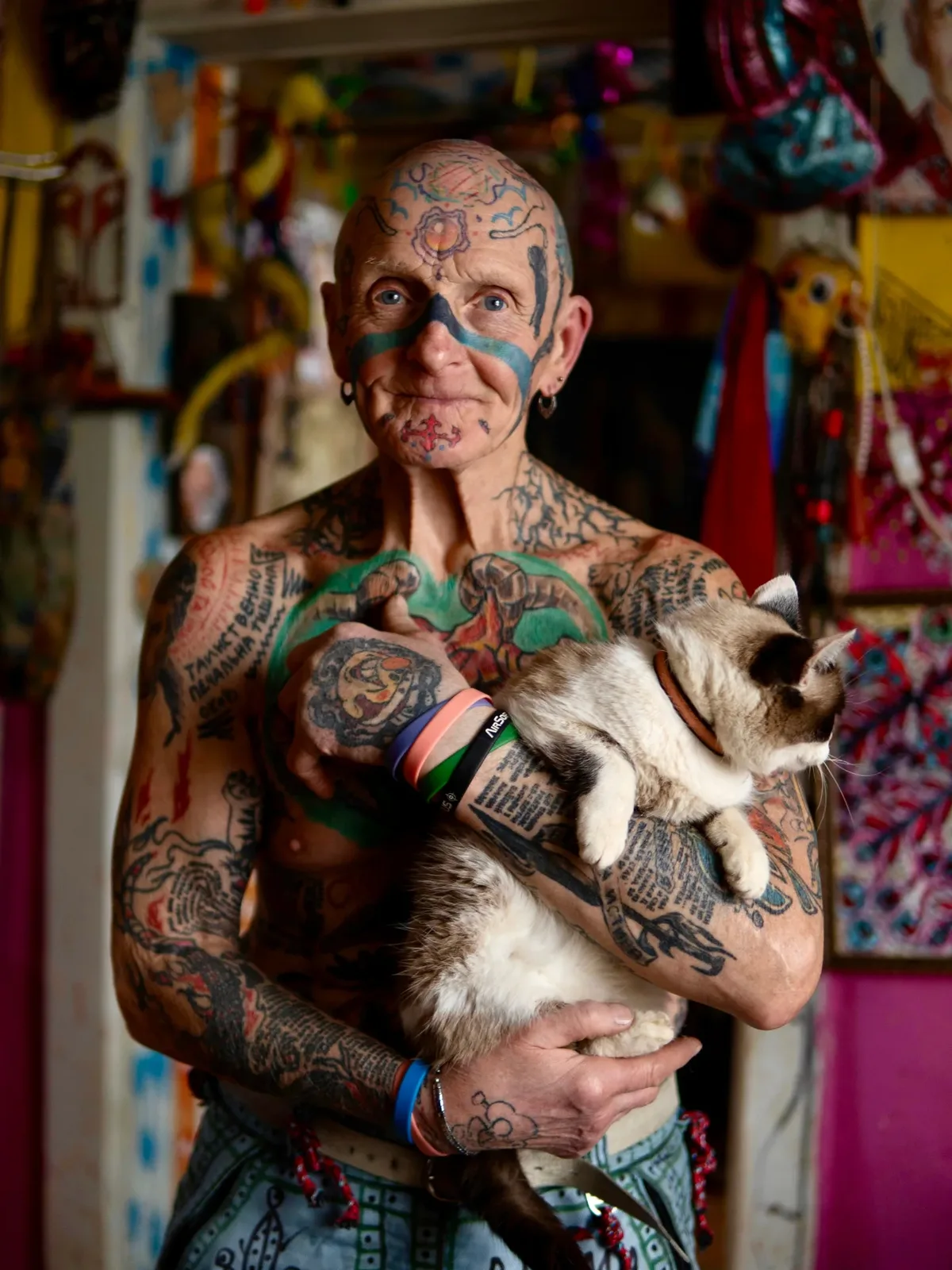
Seventy-nine-year-old Vladimir Spartak has long been one of the most recognizable public figures in Yekaterinburg. Local and national media write about him, he is invited to film projects, fashion shoots, and events, and short videos featuring him regularly spread across social media far beyond the city.
In Spartak’s case, however, this visibility does not feel artificial. It seems as if the internet simply discovered — perhaps a little late — a man who has long been living by his own rules and has already turned his life into a continuous artistic manifesto.
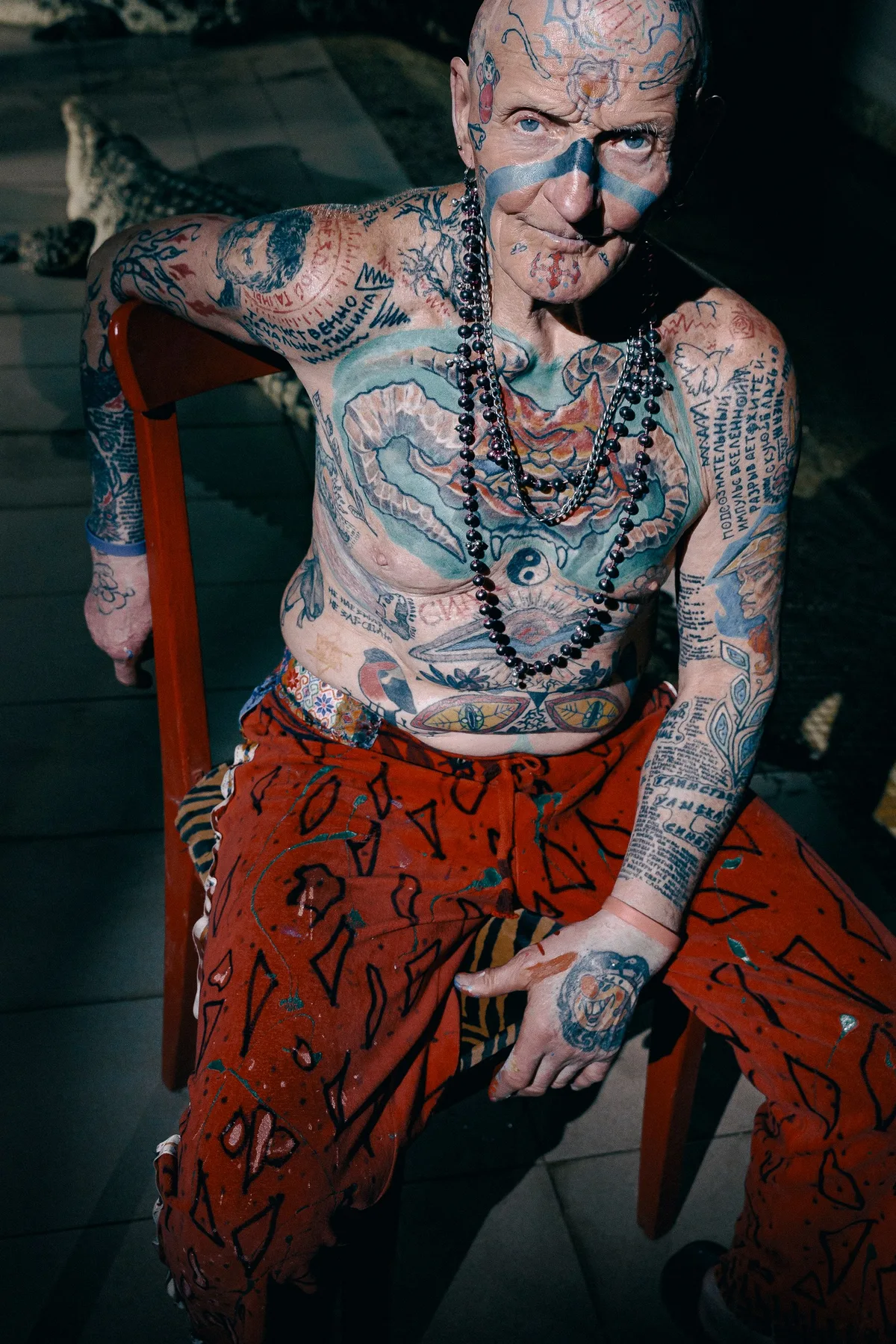
At the same time, many elements of his biography exist somewhere between fact and legend. This becomes obvious if you read several different publications: some details repeat almost word for word, while others sound more like stories told by the artist himself and are not always independently verified. For a figure like Spartak, however, this mixture of reality and myth feels entirely natural.
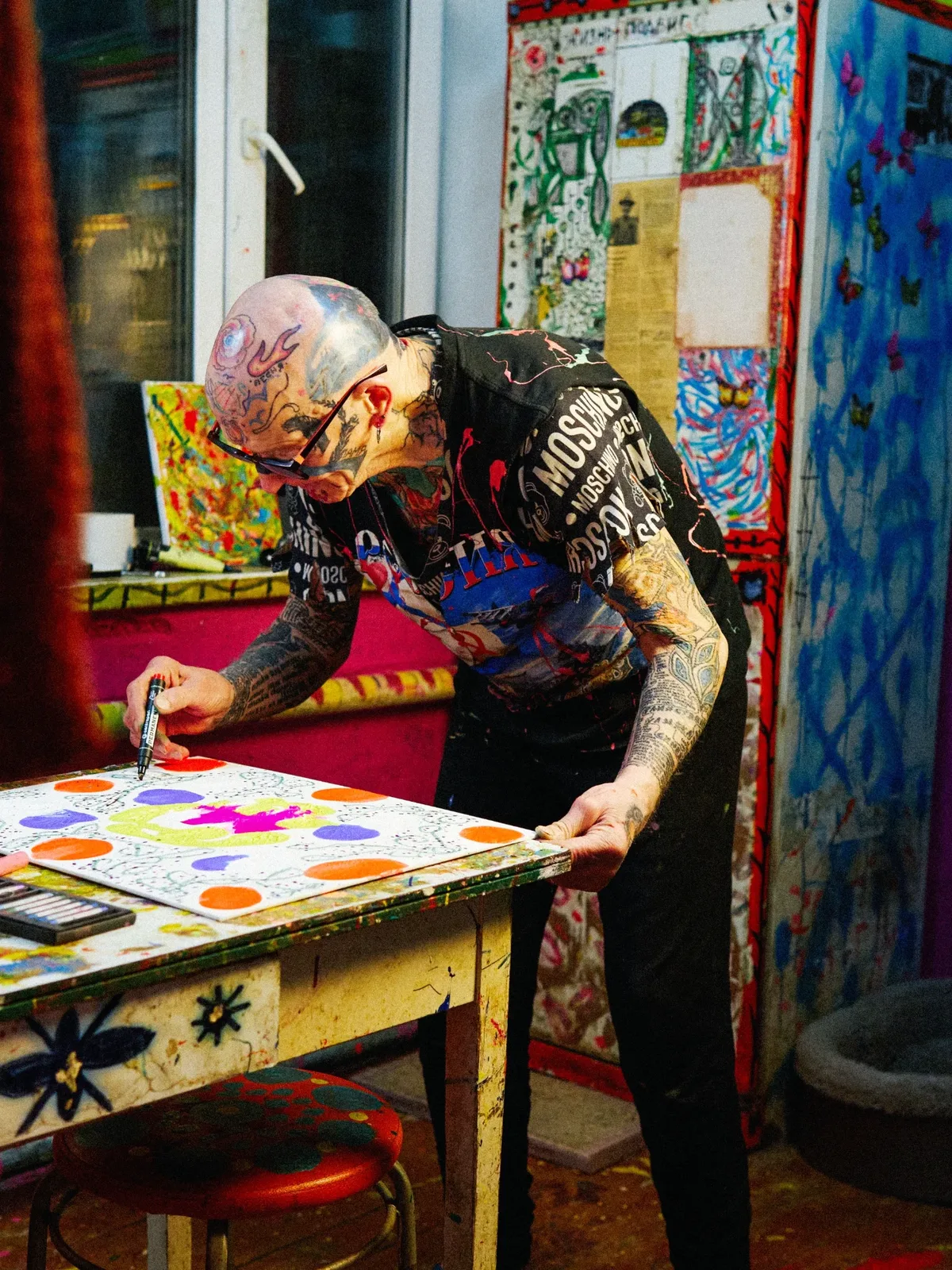
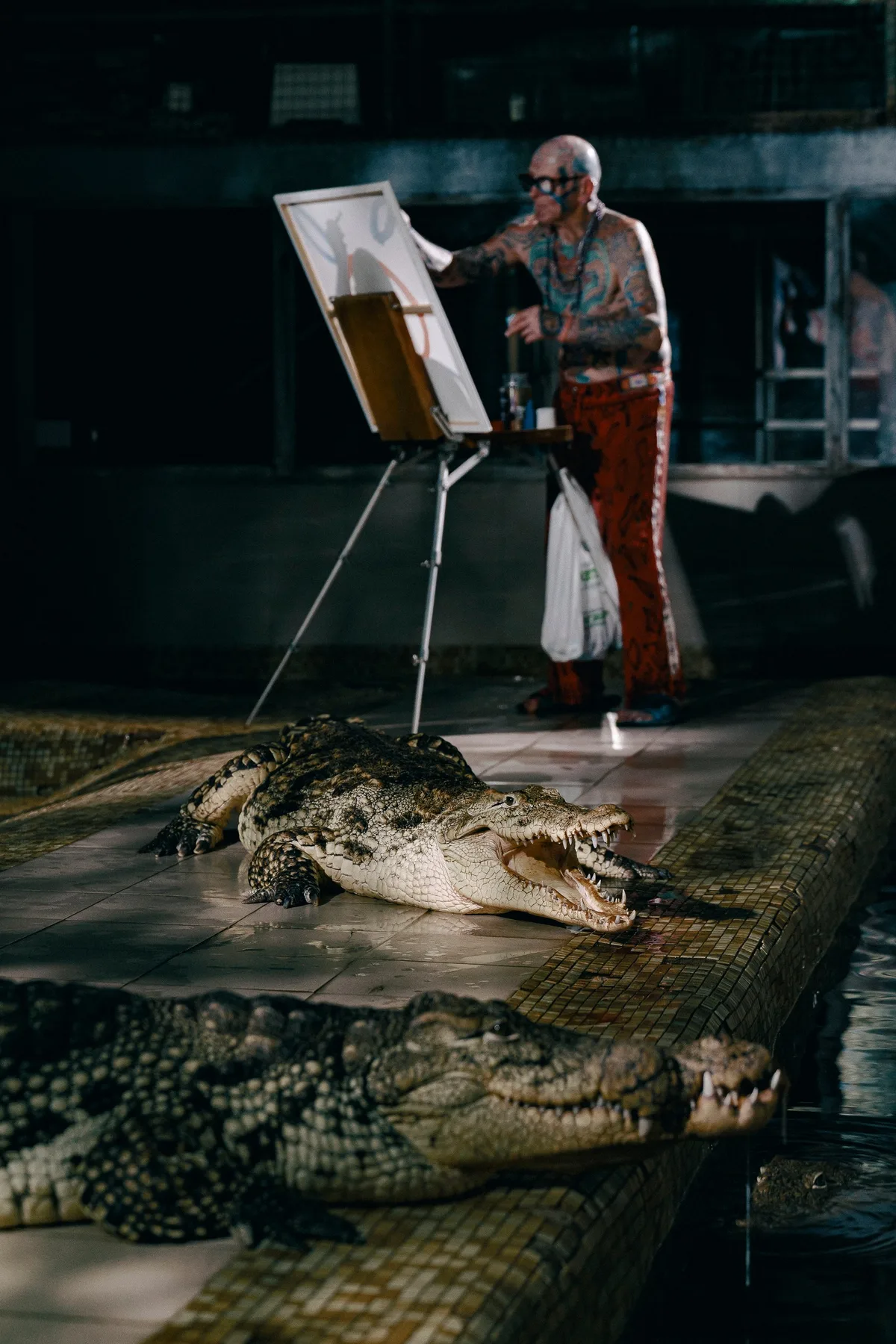
Spartak’s home has also become an extension of his artistic expression. Journalists often describe it as a place that resembles not so much a house as a museum, an archive, and an art installation all at once: painted walls, slogans and aphorisms across the facade, paintings, clippings, and traces of decades during which art was never separated from everyday life.
“His house is a real museum where you can spend hours looking at paintings, installations, and countless details,” says producer Nikita Nevsky.
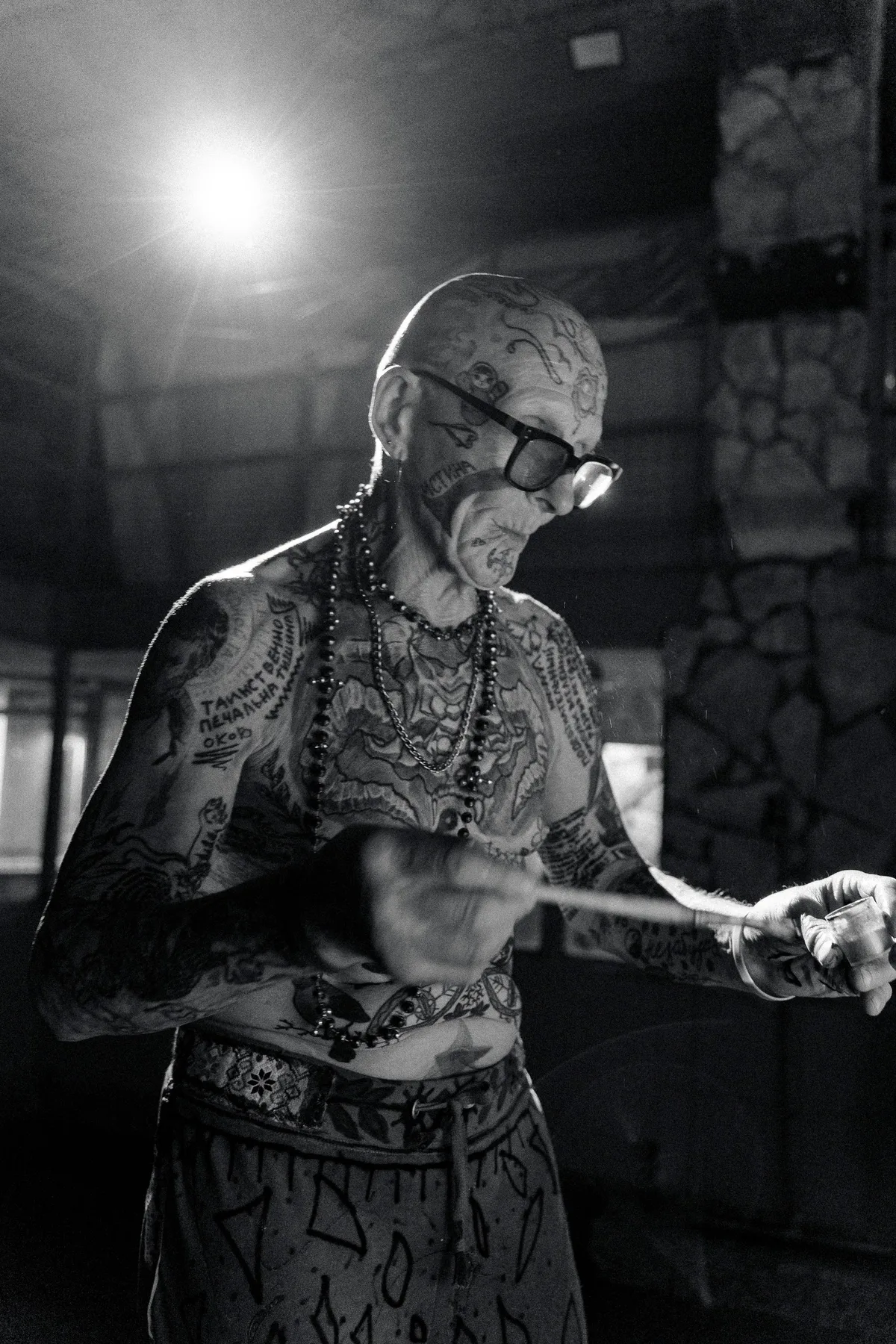
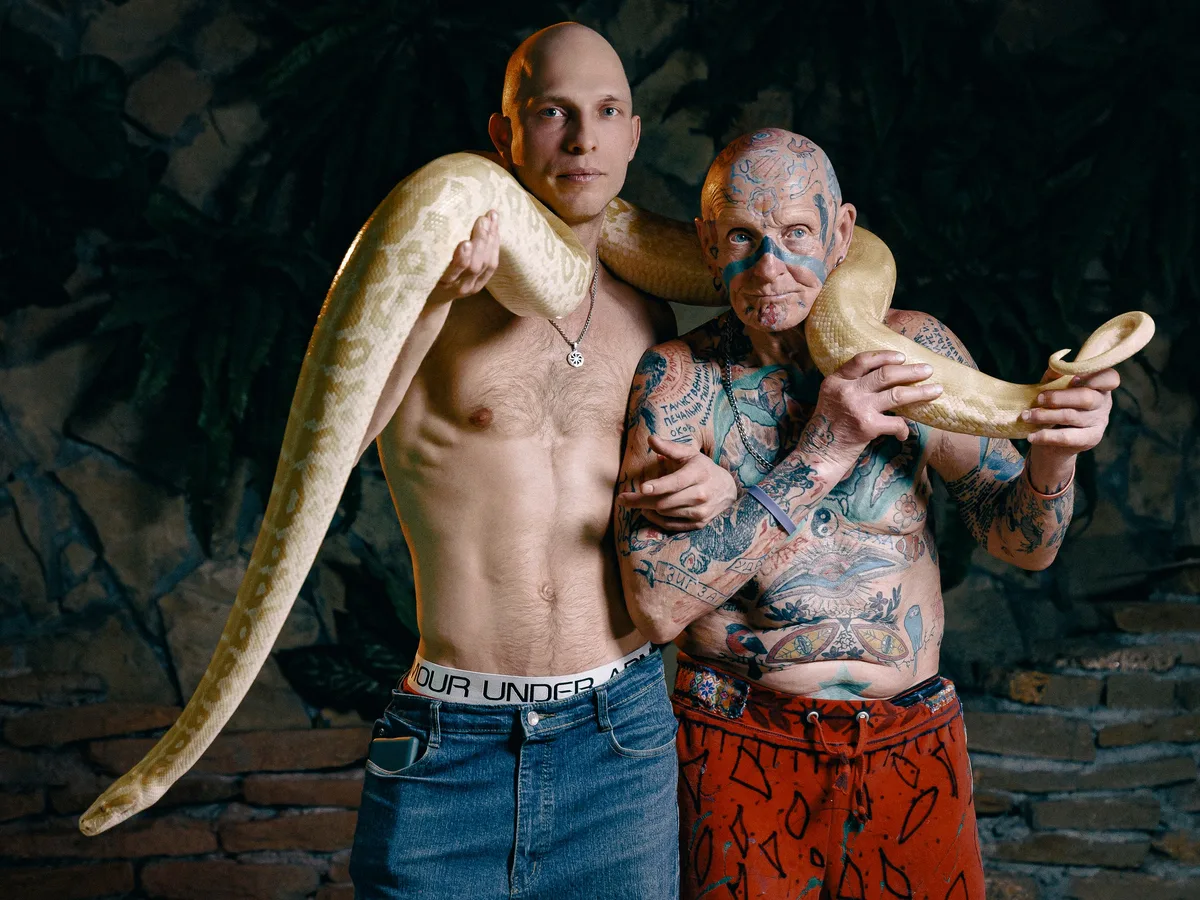
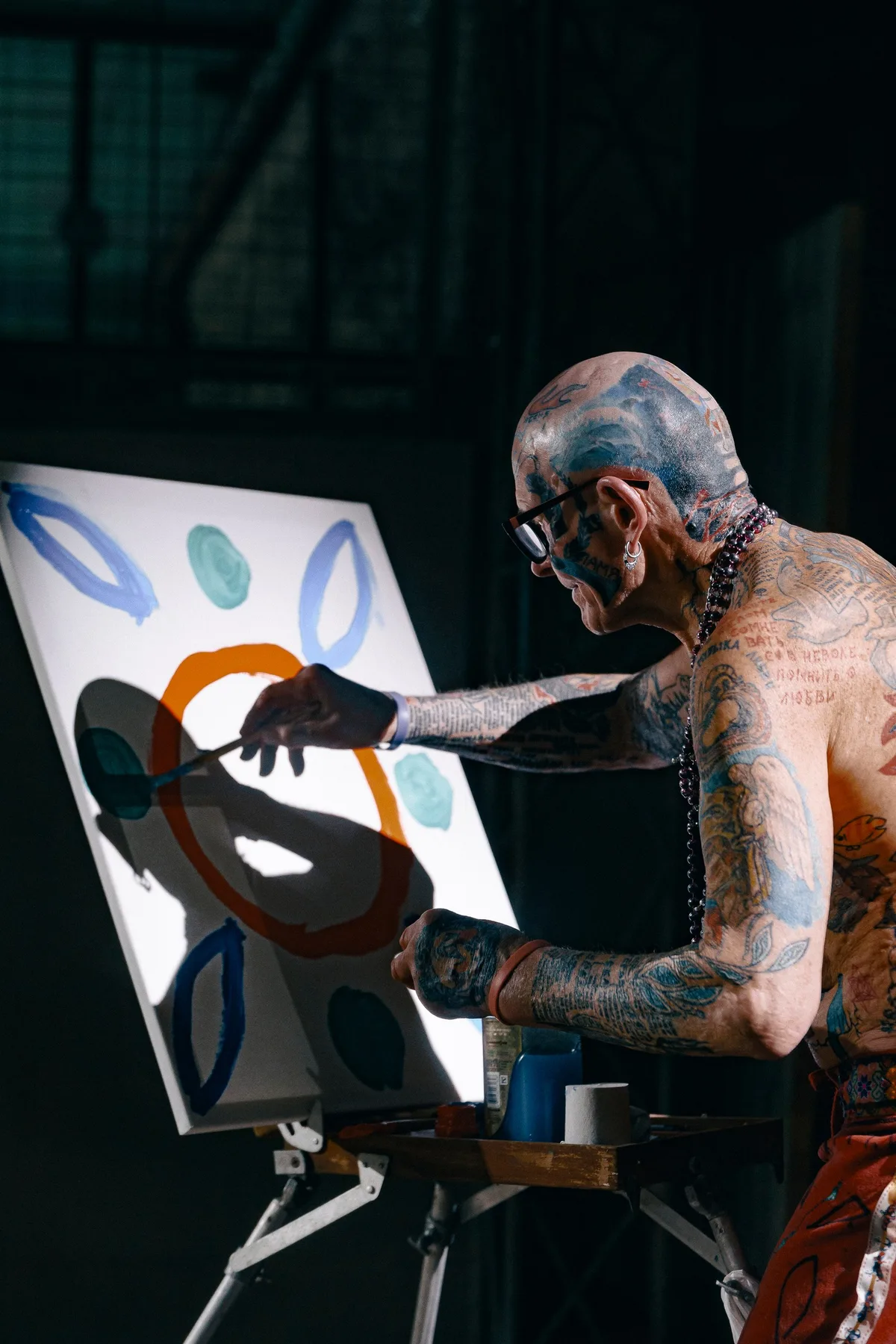
For Spartak, creativity is not limited to canvas — it extends into the house, clothing, gestures, speech, and of course the body. Today Vladimir Spartak has more than seventy tattoos. A simple calculation shows that he started getting them at around seventy.
“The ‘Titmouse’ tattoo is a symbol of freedom opening an active life. This first tattoo was made ten years ago,” Vladimir shares.
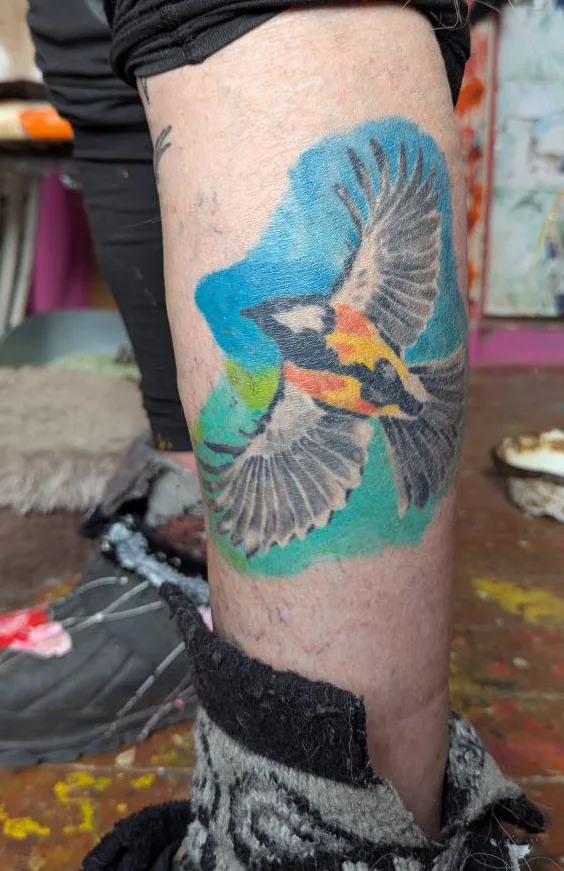
Vladimir continues to tell his story through his skin, turning his body into a kind of archive of lived experience.
“Each tattoo represents a moment of a particular period of life. Every one of them matters in its own way,” Spartak says.
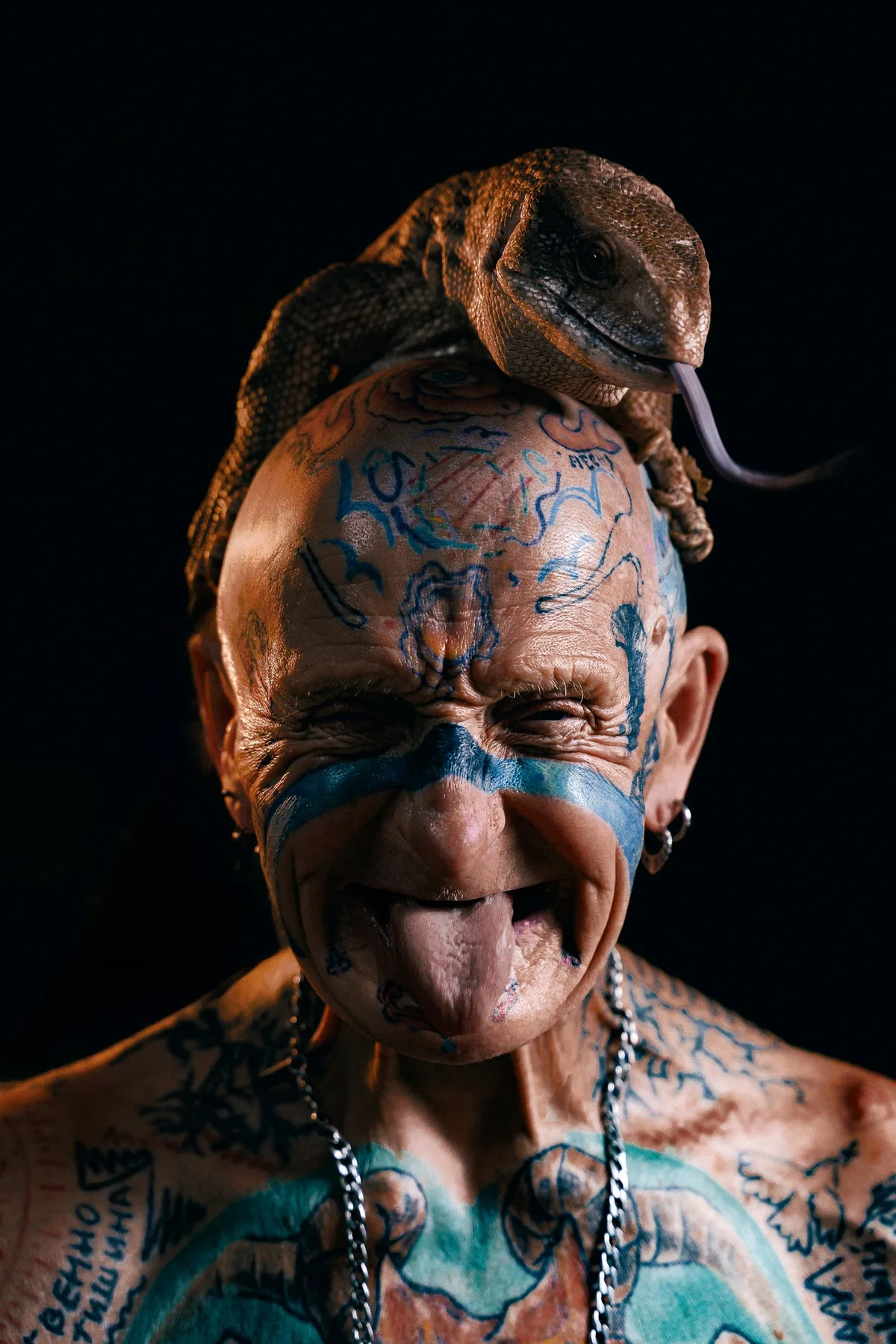
A special place in this visual image belongs to the blue stripe across his face. It is the first thing people notice and immediately makes him resemble either an ancient warrior, a character from a post-apocalyptic parable, or simply a man who seems to live within a slightly different coordinate system. This tattoo also appeared relatively recently — around 2018–2019.
“This tattoo directly refers to the nickname Spartak. Spartan shields had similar stripes. It symbolizes liberation from slavery.”
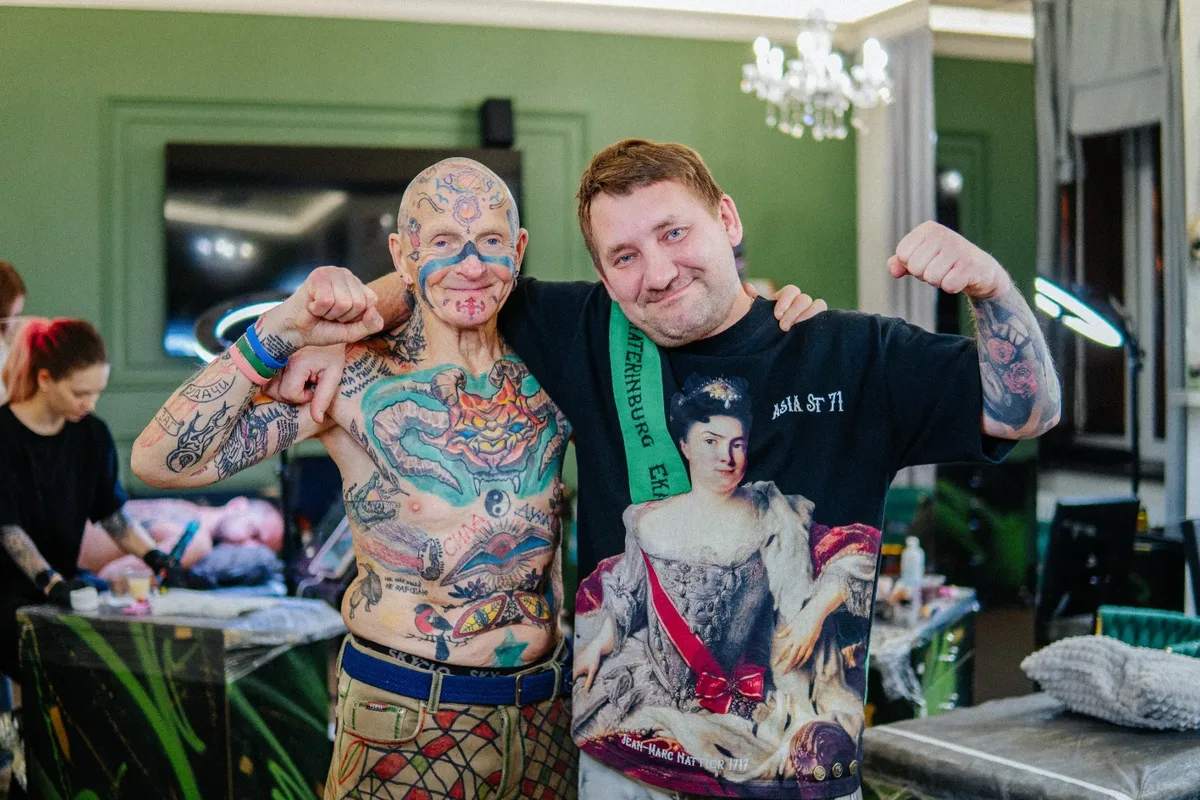
Another recent tattoo was created in 2025 at the studio of renowned tattoo artist Vasily Suvorov — a collaboration of seven tattooers working on a single small tattoo for Spartak.
“We decided to tattoo a seven-petal flower — seven petals and seven artists. Each artist puts their own energy into their petal to help fulfill Vladimir’s wishes,” explains Nikita Nevsky.
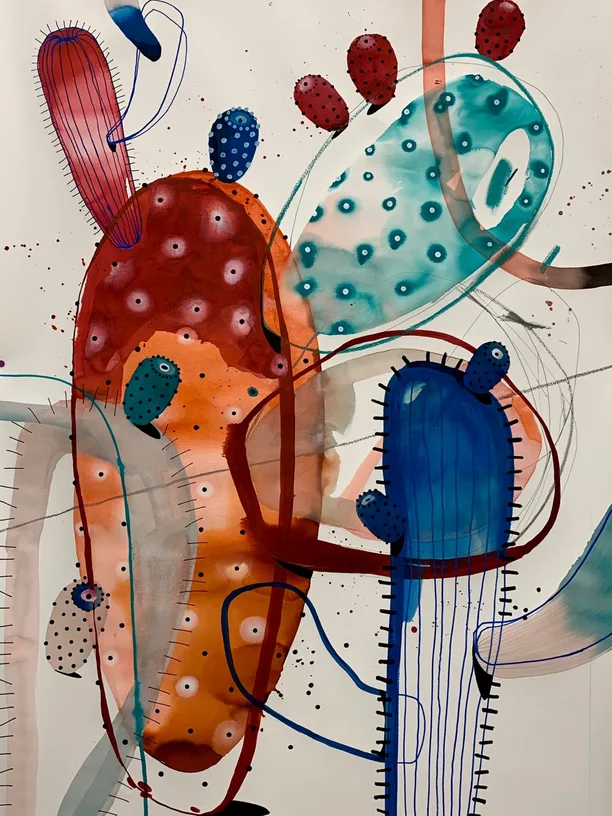
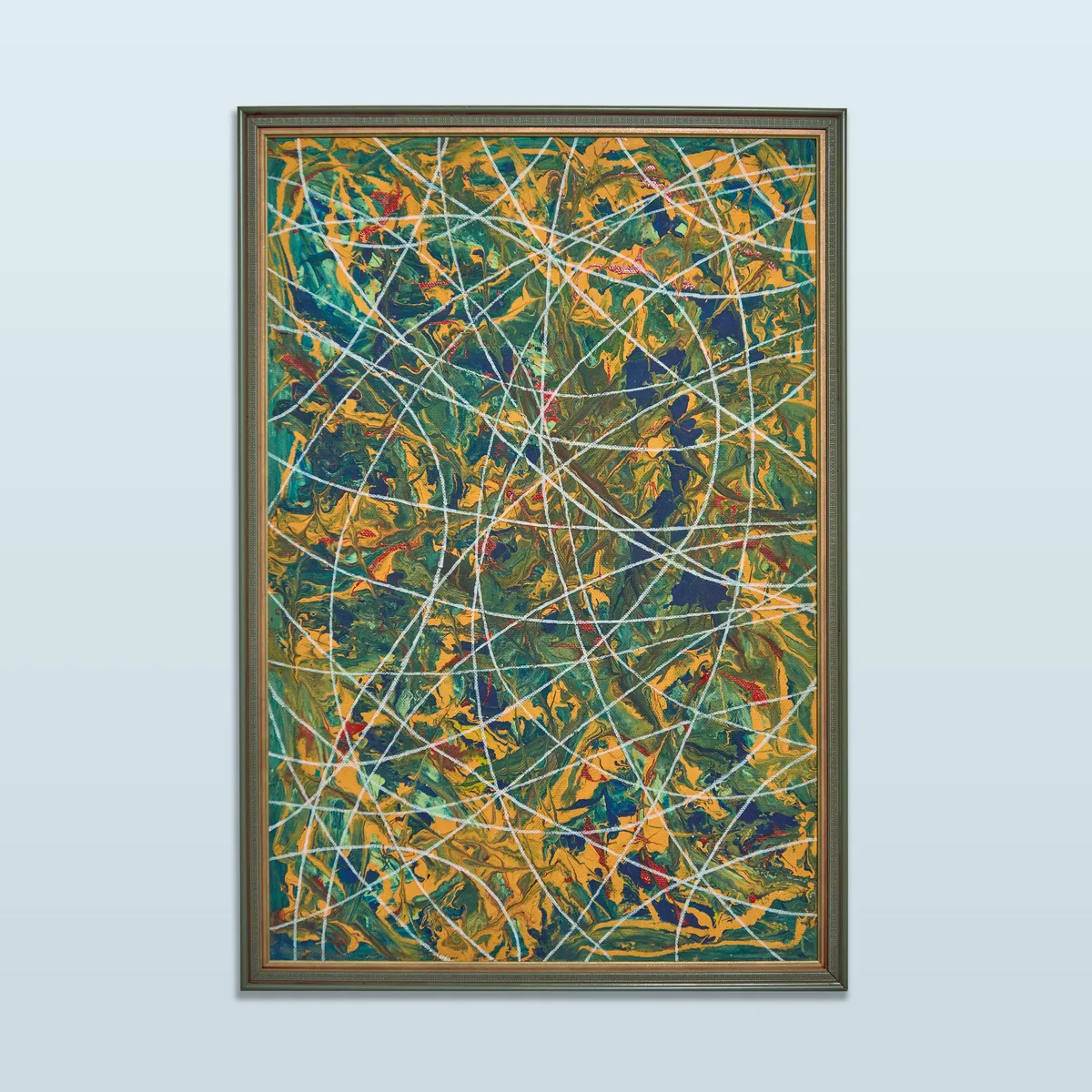
Despite the powerful visual image he creates, reducing Spartak to appearance alone would be a mistake. First and foremost, Vladimir is an artist with his own language and a coherent worldview.
Any art is not about asserting something, but about opening the eyes of others — showing that beyond the line of what we do not understand there exists the active force of cosmic intelligence and something unimaginable.
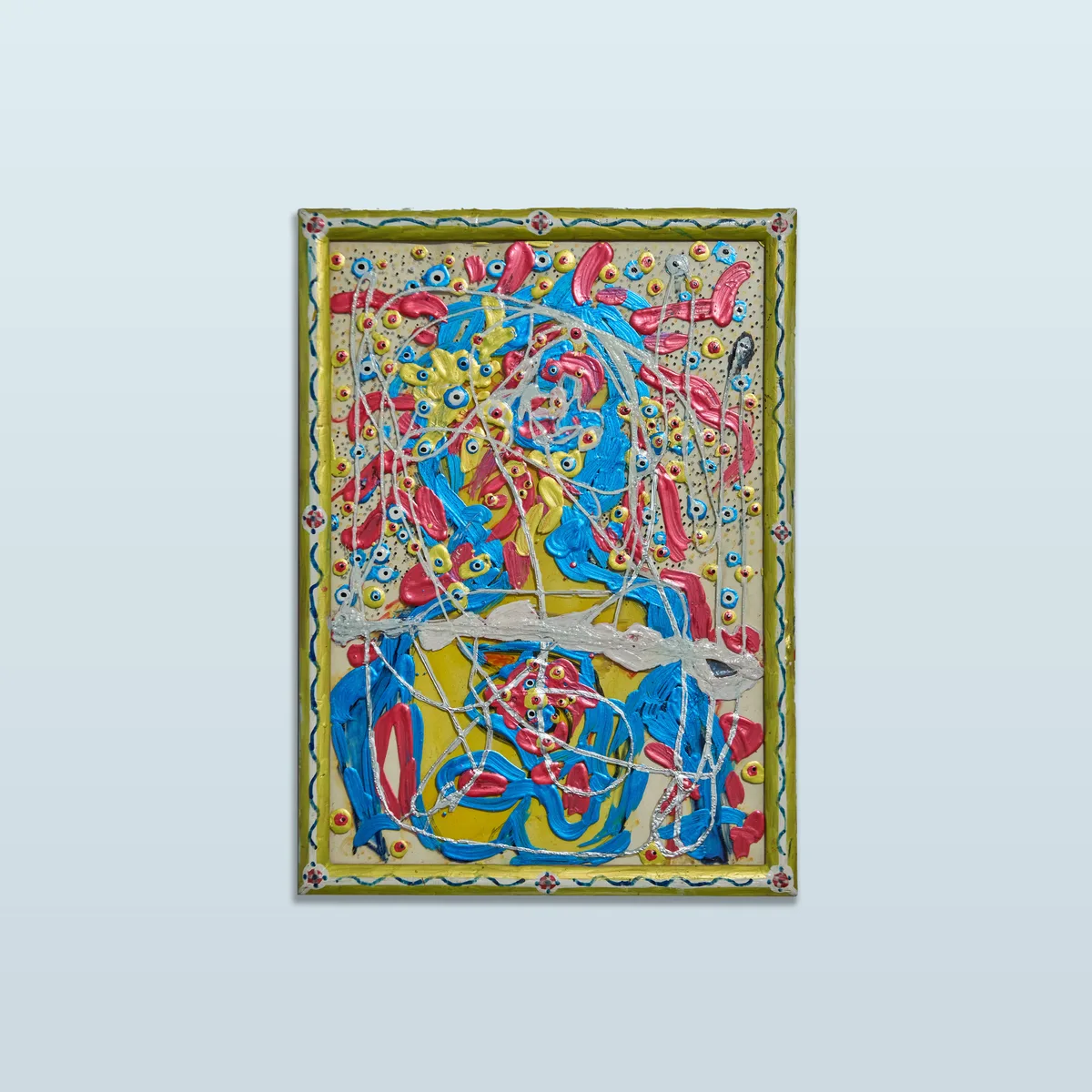
He calls his artistic direction “metaglobalism” — a worldview that, in his words, gives a person the light of beauty and elevates life. In his explanations he often speaks about an attempt to address global themes: the mystery of the world, the limits of rational thinking, and the idea that human experience is far broader than any logical system.
“I paint not with the mind, but with the soul and heart — and the result becomes a masterpiece connected to the star-like perception of the universe within a person.”
Finding the right approach to Vladimir Spartak is not easy. The most recognizable artist of the Urals does not trust everyone, and understanding his poetic phrases — filled with imagery and wordplay — is not always simple at first glance. To be honest, we did not even try to navigate that path ourselves. It turned out that Spartak’s promotion had already been taken up by producer and collaborator Nikita Nevsky — who eventually became our guide into this slightly chaotic but vibrant world.
Nikita explains that their acquaintance began with the filming of a music video and quickly grew into a friendship and ongoing collaboration: creating content, publishing materials, developing social media, and working on a future website and portfolio.
“I visit him at his place, help build a canopy in the yard, we talk, shoot content for the week ahead, and then I gradually publish everything,” he says.
This marked a new chapter in Spartak’s story. What makes it remarkable is the rare connection between two generations: one person continues to live through art as he has for decades, while the other helps that art finally reach its audience.
For many years Spartak essentially existed as an artist outside of market logic. He created, gave works away, accumulated paintings, and lived at his own pace. Only relatively recently, as he himself admits, did he begin to realize the value of what he creates.
“I never chased attention. I spent my whole life making art and giving away my paintings and books to people. Only recently did I realize the value of my work.”
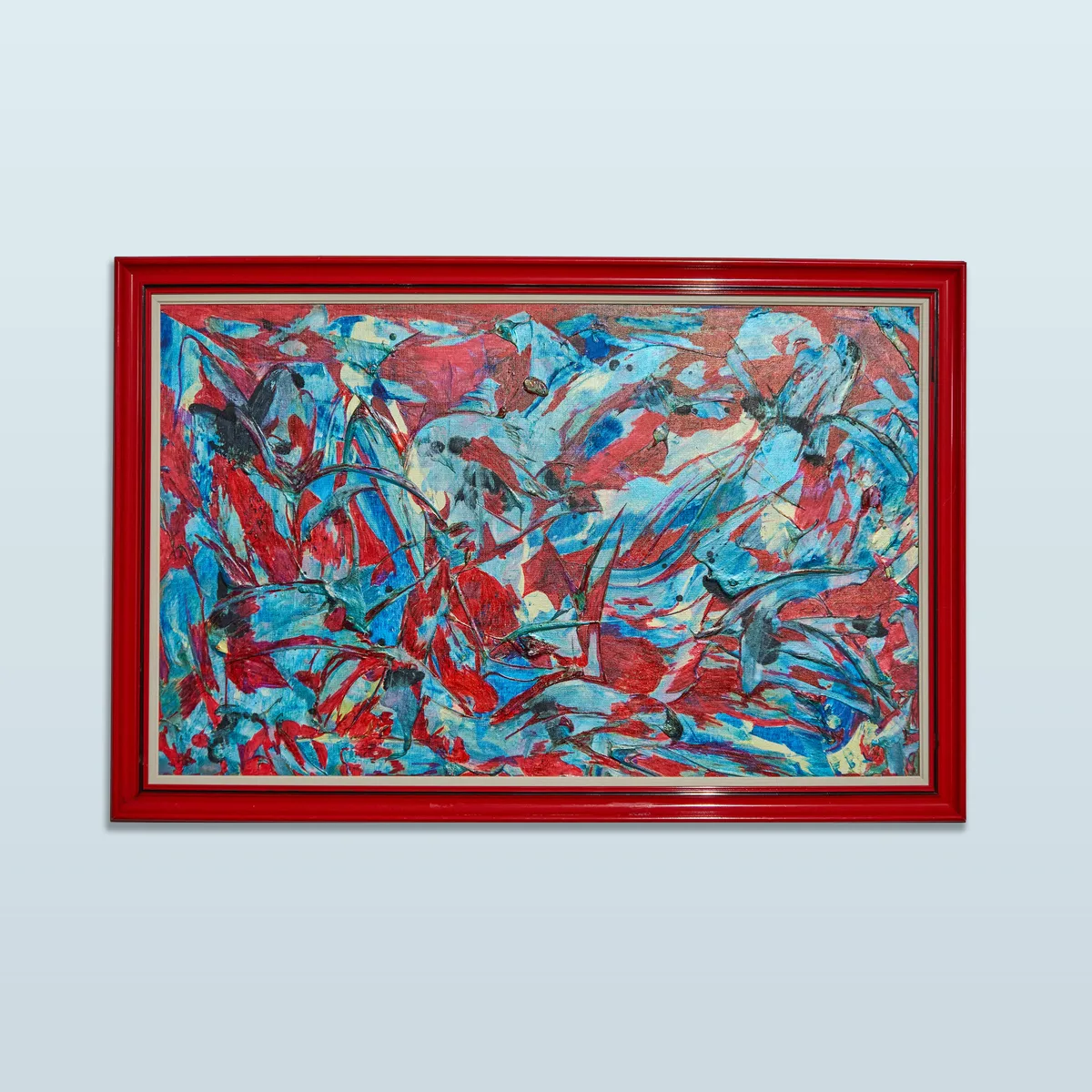
Today, the attention surrounding him is beginning to turn into something more practical: not just curiosity about an unusual image, but a genuine attempt to support the art itself — through the purchase of paintings, the creation of a catalog, a future website, exhibitions, and an archive.
“Spartak lives on a pension of 15,000 rubles. Many friends and acquaintances send him money when they can. Film director Alexander Hunt, who cast Vladimir in the movie ‘In Between Seasons,’ has been a great help,” Nikita says.
According to Nikita, some works are already beginning to find their audience. Work is underway on a website, and funds from sales and support are used for the simplest necessities: materials, everyday expenses, and the continued development of the project.
“The simplest way to help Spartak is to buy his paintings. In this case, everyone wins,” the producer says.
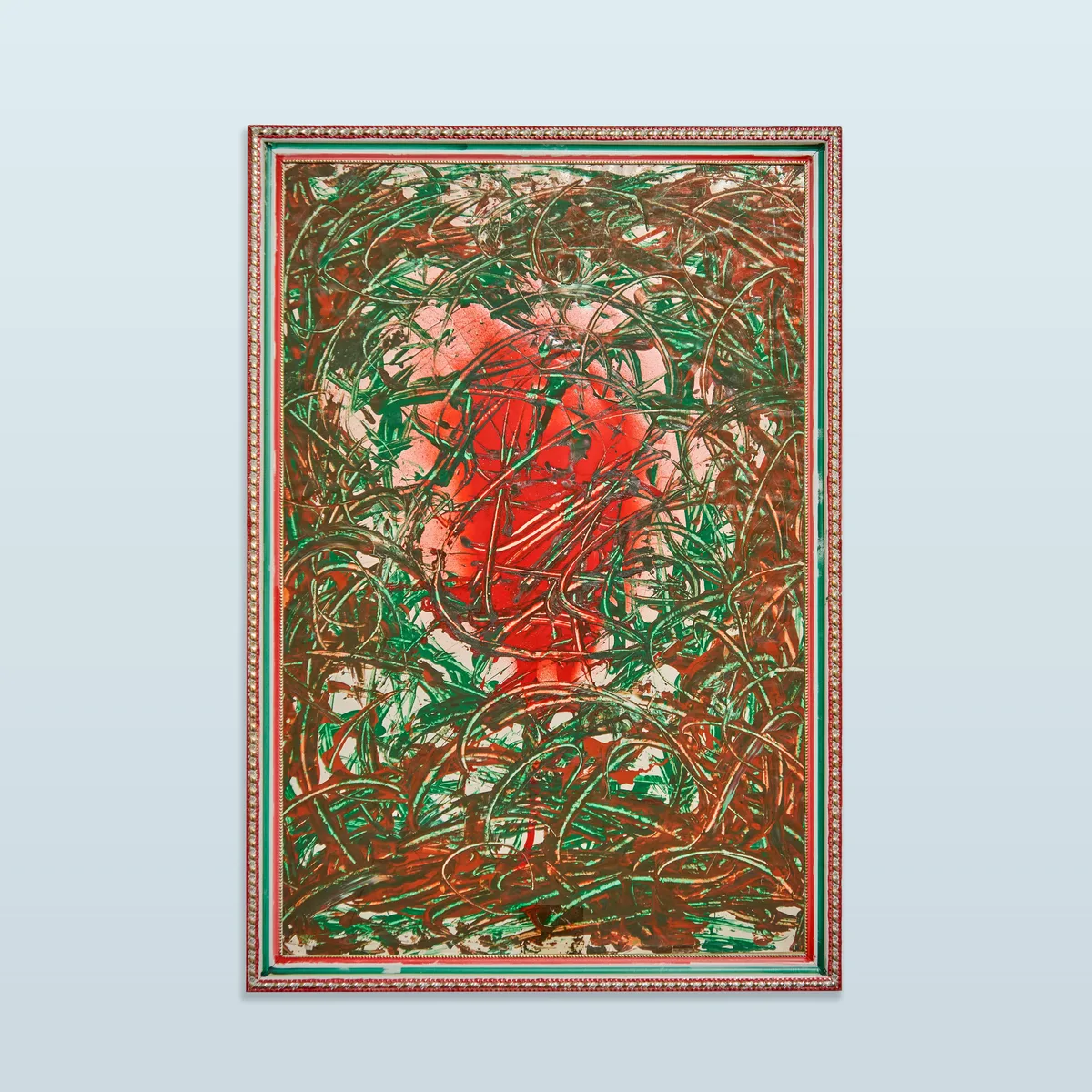
Vladimir Spartak does not resemble yet another internet phenomenon accidentally captured on camera. He feels more like an artist who spent too long on the margins — where recognition often arrives late, if it arrives at all. His appearance may surprise, confuse, or even shock. But perhaps the most accurate way to see Spartak is to look at his tattoos, paintings, and aphorisms not as eccentricity, but as an expression of inner freedom — something many of us feel we are missing today.
For our editorial team, it was important to tell this story not only about an unusual person, but also about an artist whose paintings deserve to be seen.
If you would like to support Vladimir Spartak, the simplest and most meaningful way is to explore his work and perhaps become the owner of one of his paintings.