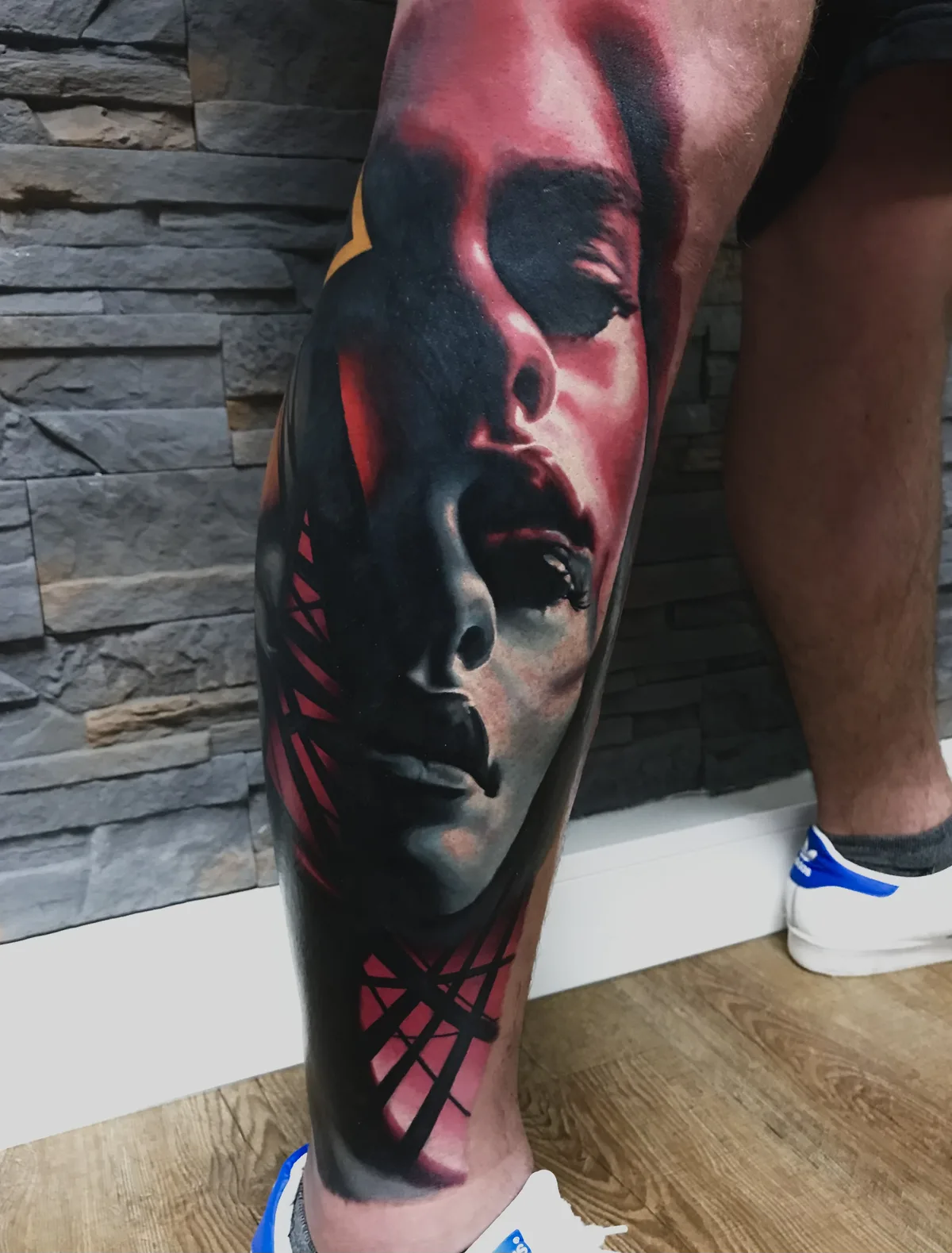
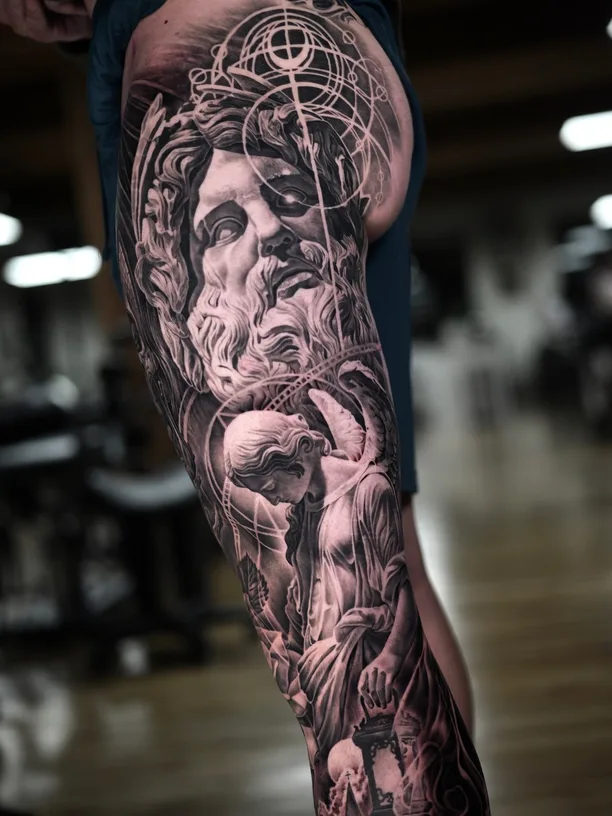
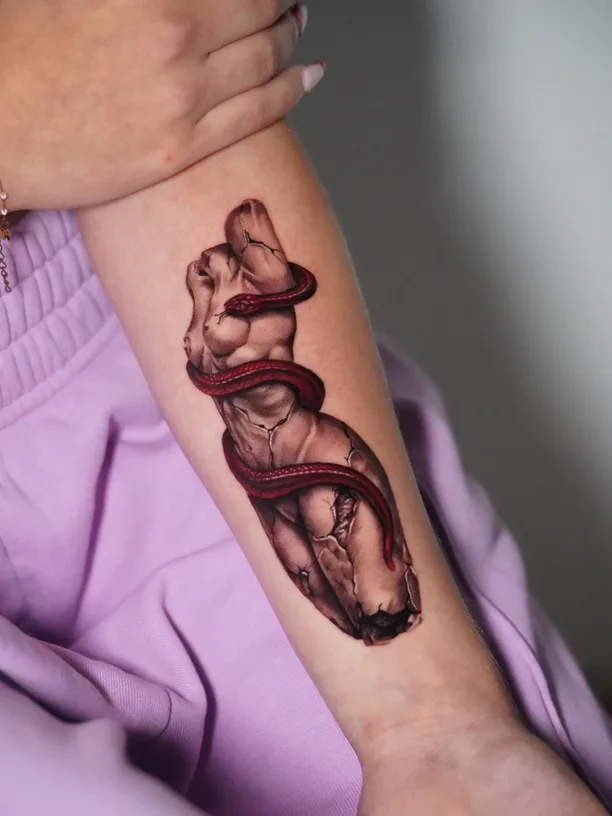
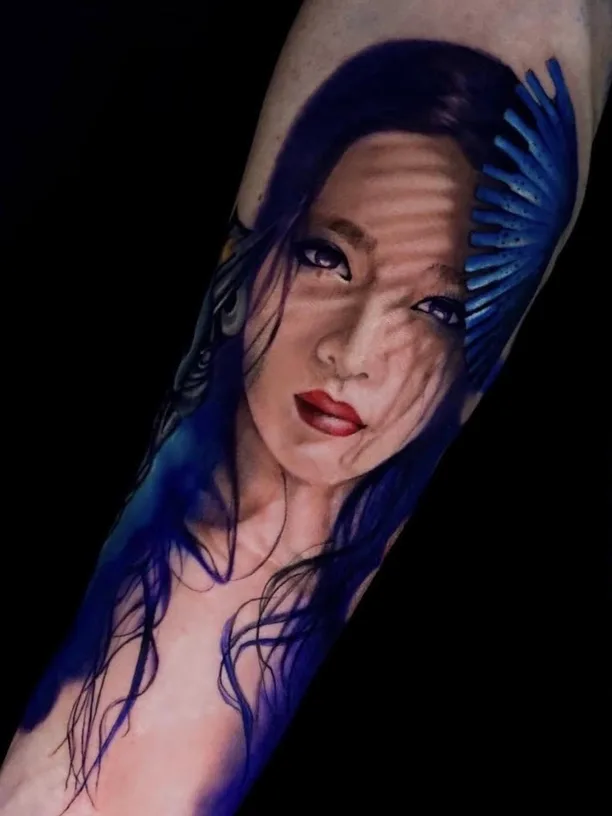
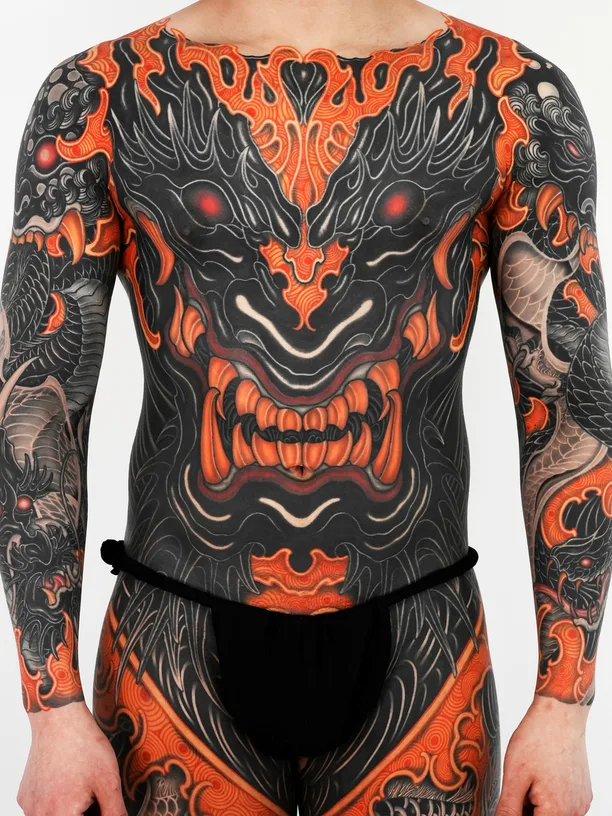
Tattoo artist Yevhen Dikov is an artist with more than twenty years of experience, whose career has taken him from a small Crimean town to the international tattoo scene. Having started working in the early 2000s, he gradually developed a recognizable approach to realism, combining it with expressive composition, collage elements, and bold work with color and light.
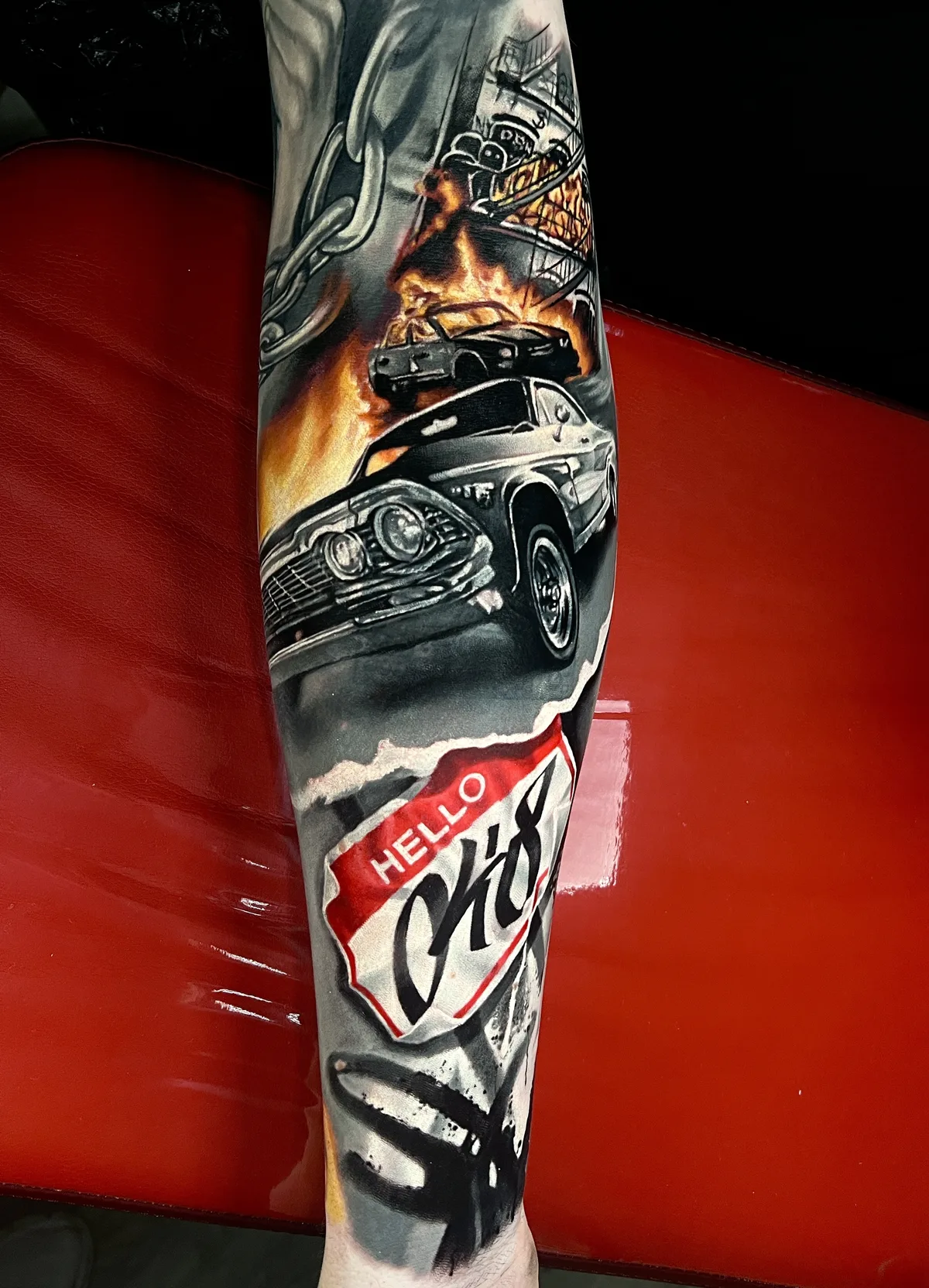
Over the years, Yevhen has taken part in numerous tattoo conventions and received several professional awards. Since 2019 he has been actively working guest spots across Europe, and today he welcomes clients in his own private studio Dikovinktattoo in Kassel, Germany, where clients come to him for large-scale realism projects, portraits, and complex compositions.
In this interview we spoke with Yevhen about his path into tattooing, the search for his own visual language, and how the experience of conventions, travel, and working in different countries has influenced his style and approach to large tattoo projects.
Yevhen, hello! How did you end up in Kassel? Where are you originally from?
— I grew up in Kerch, in Crimea — a small city where tattooing gradually turned from a hobby into a profession for me. I went from homemade equipment and a lack of information to serious realism projects, international conventions, and professional awards.
Since 2019 I started working regularly at guest spots across Europe. At first these were short trips for experience and new connections, but over time I almost stopped returning to my hometown and spent about two years constantly traveling from country to country, observing how tattoo culture was developing in different parts of Europe.
Tell us how you got into tattooing. How long have you been working?
— It has already been 23 years since I made my first tattoo. I’ve had a creative drive for as long as I can remember: I studied at an art school, so drawing was always part of my life. One summer I found a small job drawing temporary tattoos on the beach, and that’s when the process first caught my attention: working while actually enjoying what you do.
From that moment my interest in tattooing kept growing. I bought themed books and magazines, printed catalogues, and eventually moved on to my first “experiments” with permanent tattoos on friends and acquaintances. Later I got a job at a local salon — initially I just wanted to work there for a while, but as I became more involved in the technical side, I completed a short training at a tattoo studio and attended my first convention.
At that point it became clear that tattooing was far more than a temporary interest — it was a desire to become part of a culture that was just beginning to grow on a larger scale.
Was there a moment when you realized that working as a tattoo artist would be a long-term path for you?
— Not immediately. For a long time I still had the feeling that it was something temporary — even when I had already started working full-time in a studio.
People around me also didn’t always take it seriously. But when I traveled to another city to study at a tattoo studio (even though it was only for a short time), everything changed. Leaving a small town and entering the atmosphere of a full professional studio in a big city removed all doubts.
I saw a completely different attitude toward the profession — more serious and professional, both from artists and clients. That’s when I realized this was my path, and that the industry would continue to grow and eventually become normal even in smaller cities.
Was there someone or something at the beginning of your career that influenced your visual taste the most?
— My visual taste was shaped by different artists and resources. When I first became interested in tattooing, I once came across a very thick magazine. It featured a huge number of colorful tattoos from artists around the world: back pieces, Japanese-style bodysuits, large organic works. I was fascinated by the bright saturated colors, the plasticity of forms, and the high level of execution.
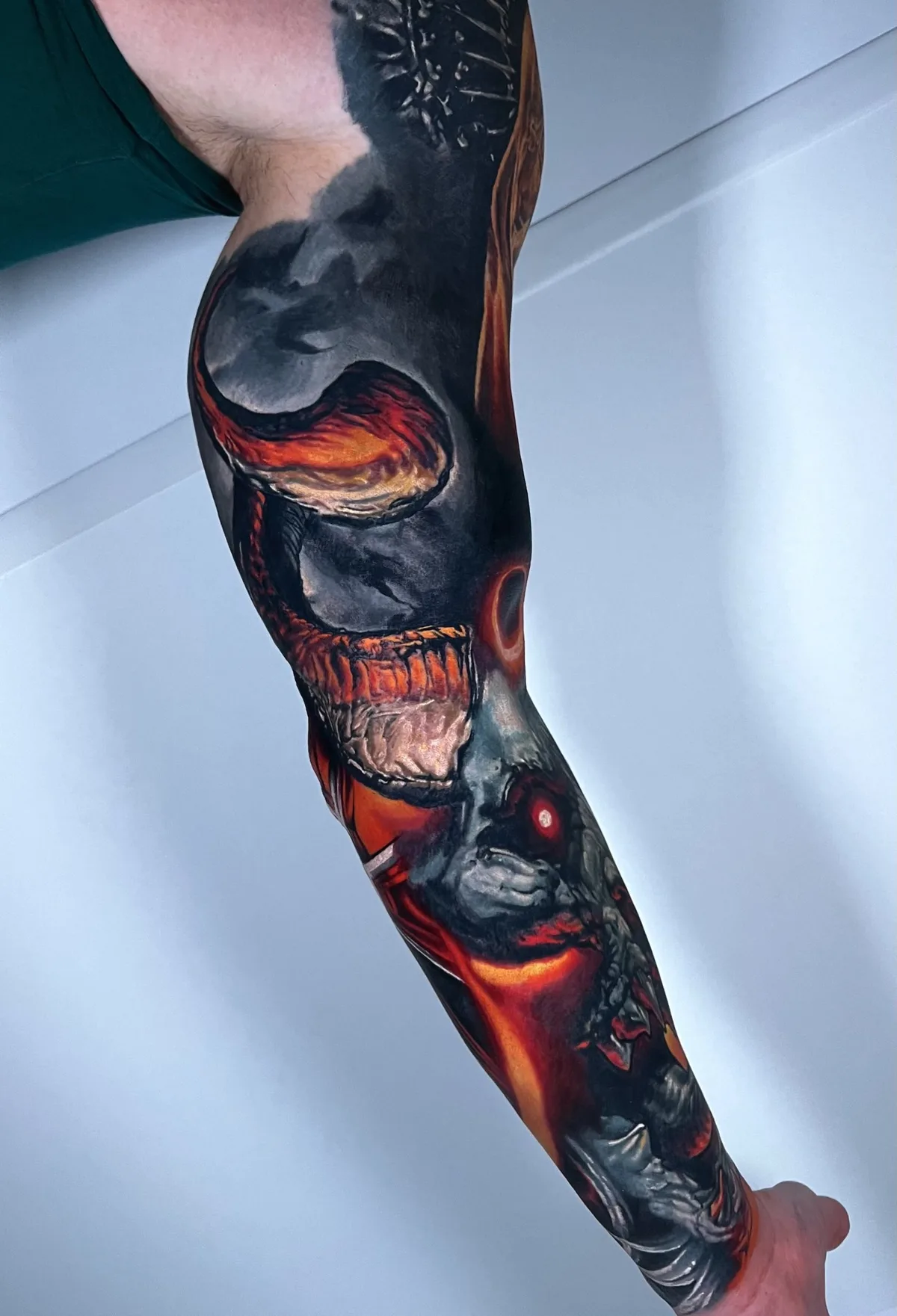
Later I discovered the work of artist H. R. Giger and his biomechanical style, which at the time often intersected with tattoo culture. The monochrome dark tones, the distinctive gloomy palette, atmosphere, and complex forms influenced my perception of composition and light and shadow.
Which projects or stages of your career do you consider key for you?
— For a long time at the beginning of my career I worked in the same salon in my hometown. People there knew me, and there was a steady flow of different work in various styles — mostly small tattoos, sometimes several clients a day. Only occasionally could I dedicate a day to truly “creative” projects. Even after important convention wins, I continued working in the same rhythm and the same place for some time. But more and more often I felt like I was stuck at one level and wanted something bigger.
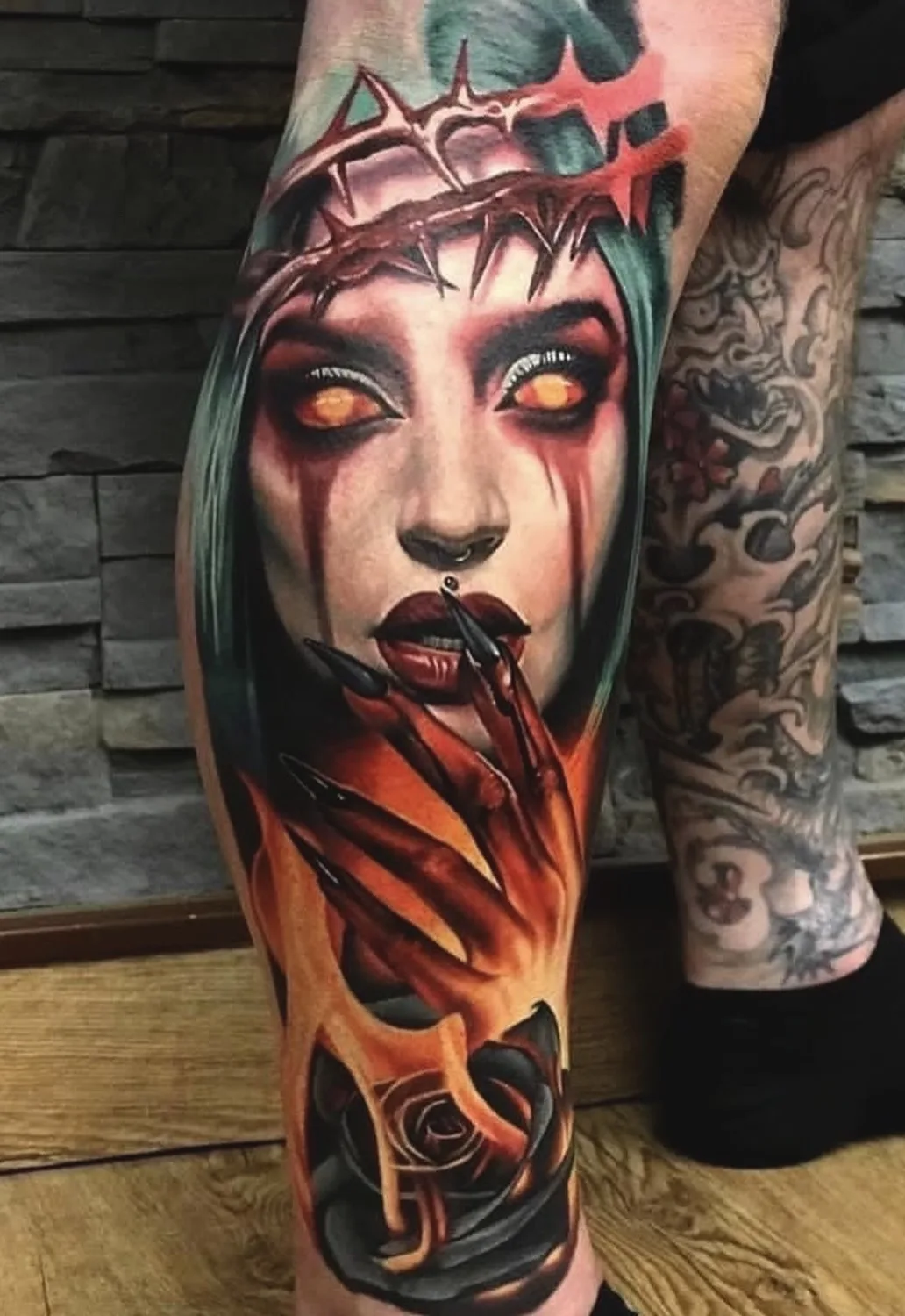
The turning point came when I decided to open my own studio and change my approach to work. I focused on serious projects, spent more time on consultations, and encouraged clients to choose truly meaningful work. Over time there were more large-scale projects, and I moved to stable sessions of at least five to six hours. Within a year most of my clients were traveling from other cities specifically for realism and portraits.
During that period I created probably the largest number of significant projects that I’m still proud of today.
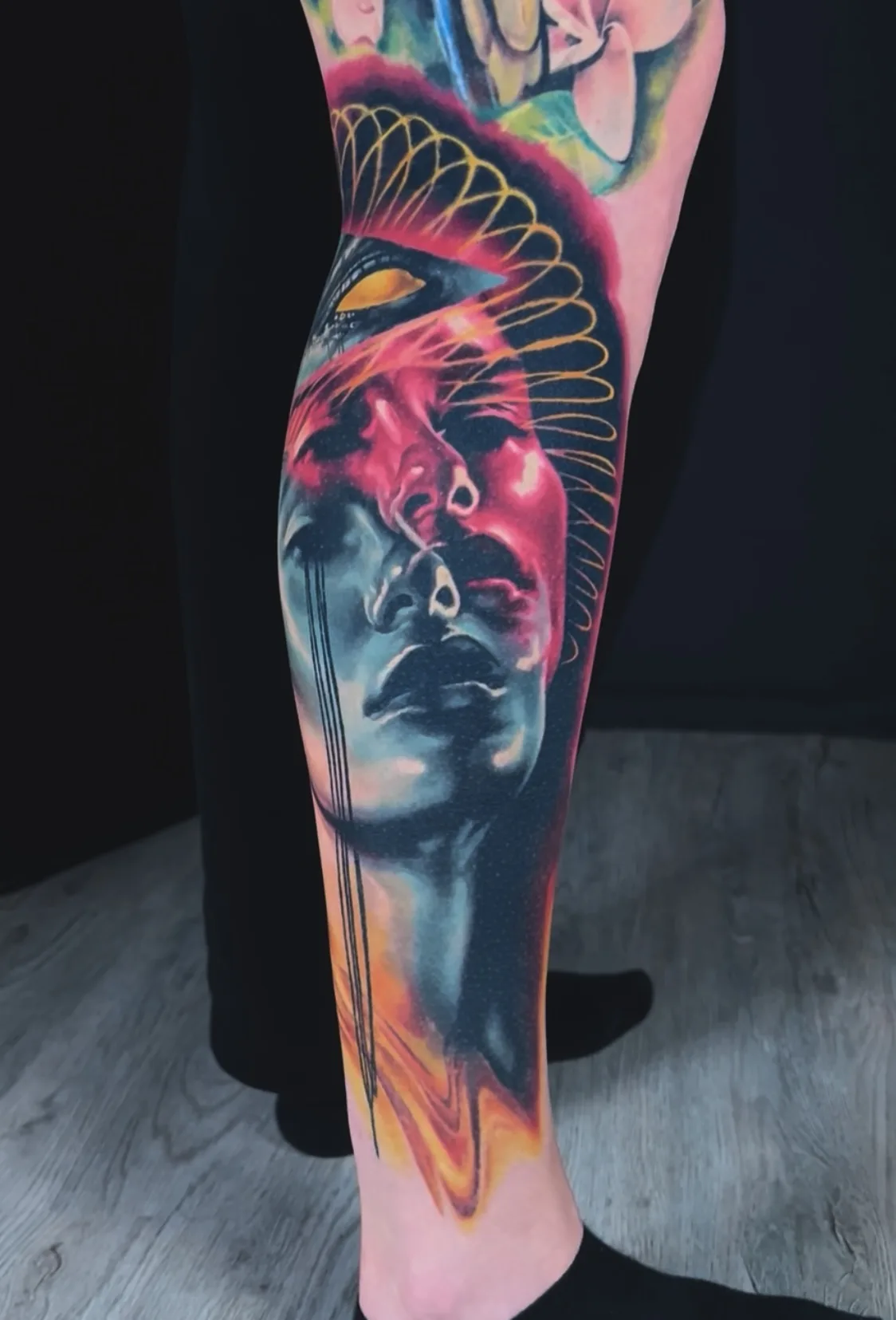
Your growth as an artist is clearly visible in your Instagram portfolio since 2023: there are obvious color favorites and a recognizable style across your work. Tell us how you found your “own style”.
— All these changes are the result of accumulated experience. In my hometown, I focused primarily on classical realism, where fully colored and highly realistic tattoos are valued above all.
Later, while working guest spots, I had to work faster without losing quality, often using a more restrained grey palette with bright accents. This led to greater stylization: I began moving away from excessive detailing and relying more on color and tonal gradients.
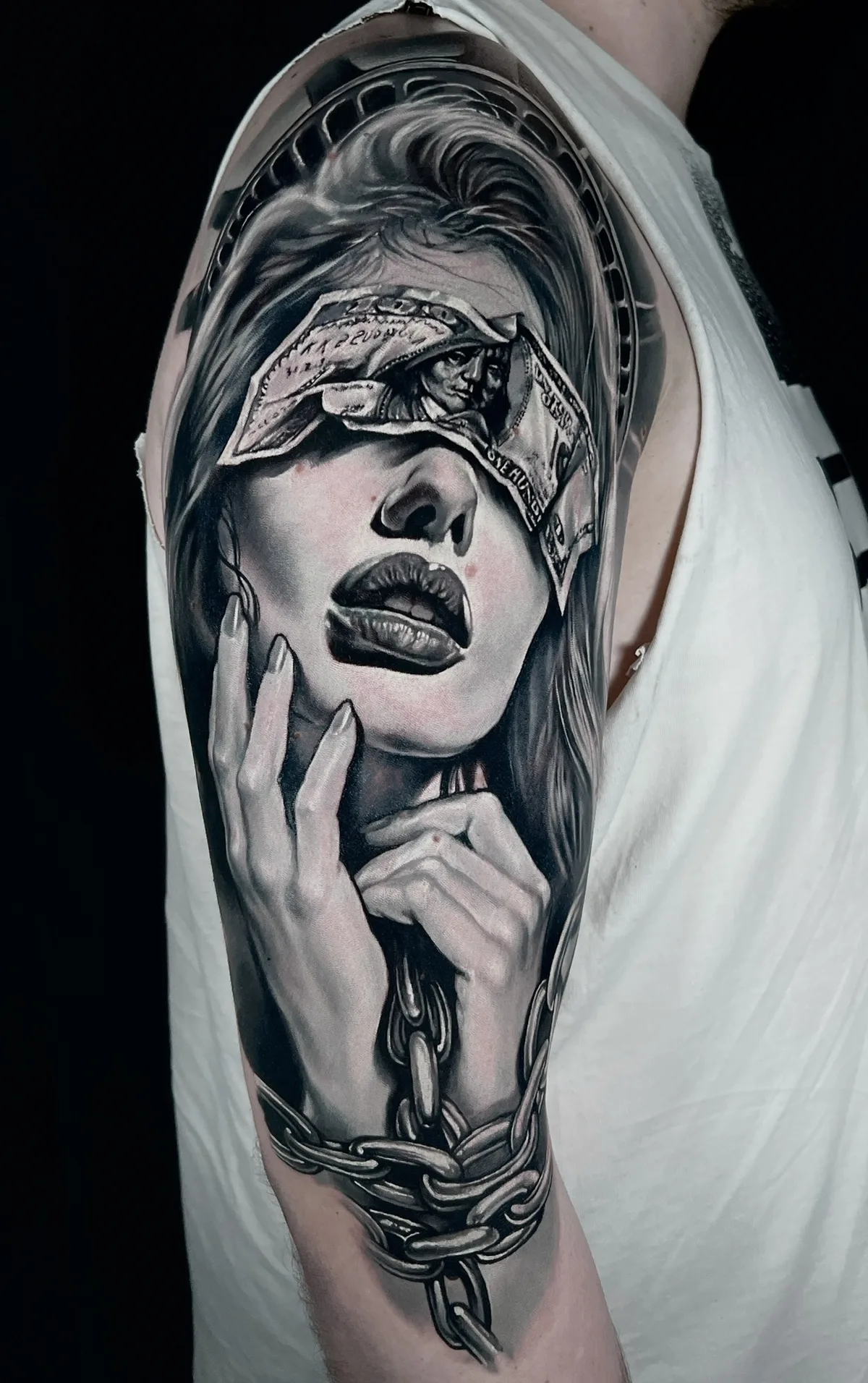
I also worked on many complex cover-ups where decisions had to be made within a single session. In such projects composition became the main tool — the work was built around an existing tattoo. This strengthened contrasts, made color bolder, and made my approach to form more structured. Over time it became important for me not just to do realism, but to create my own authorial space within it.
Now my approach is built on balance: realism as a foundation, but with simplified and readable composition where color works as a tool for depth and contrast.
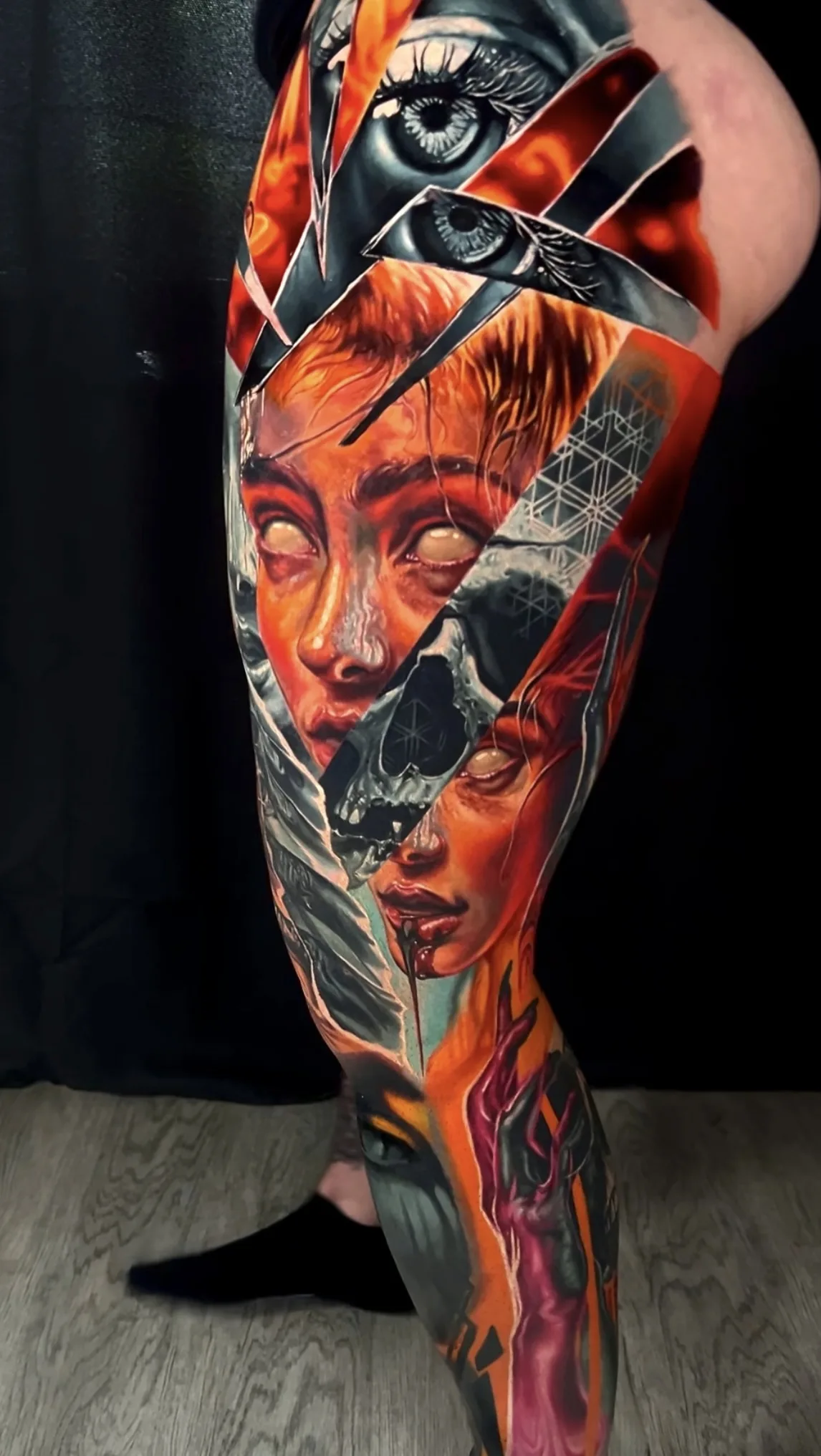
How do you find the balance between realism and more free, decorative elements in one composition?
— First of all I look at how the tattoo reads as a whole and how anatomically and dynamically it fits the body, especially in large projects. Abstract elements help to work more flexibly with form — they are easier to adapt to body curves.
— I give more attention to the central areas in terms of detail and realism, creating contrast with simpler decorative sections. This keeps the composition easy to perceive, while the viewer’s eye is immediately drawn to the main subject.
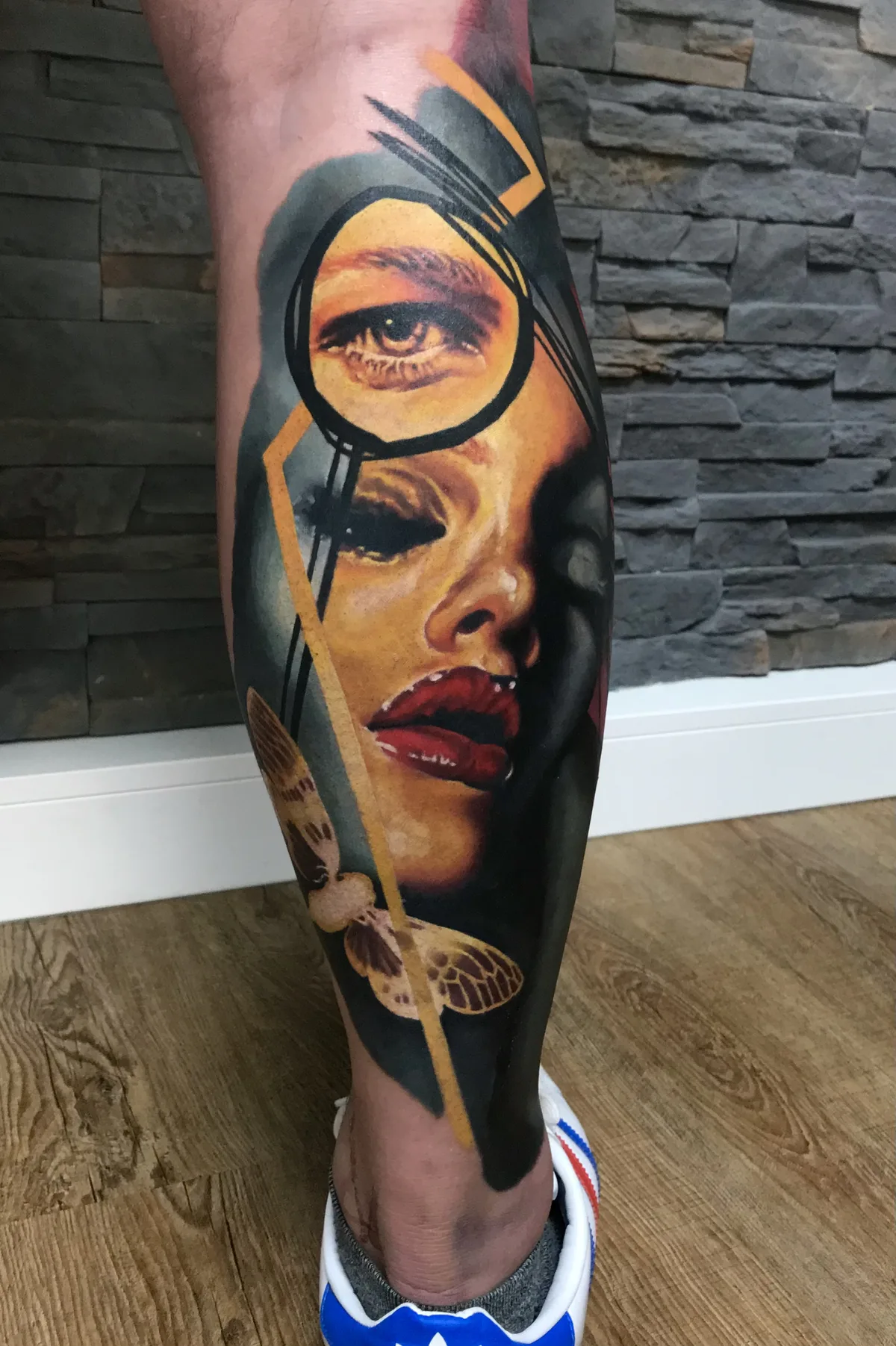
What matters more to you in large tattoos — the overall image or the ability to “read” the tattoo in fragments?
— If it’s one large-scale object, possibly with small background fragments, then the overall image and its level of detail are more important.
But in works with many fragments it becomes essential that they function on two levels: the fragments support each other’s shape and movement, while connecting elements separate larger parts and create the overall rhythm.
I like when a tattoo reads clearly from a distance and in motion — similar to Japanese style — without everything merging into one mass, while still allowing the viewer to explore it in fragments, as in realism, shifting attention from one scene to another.
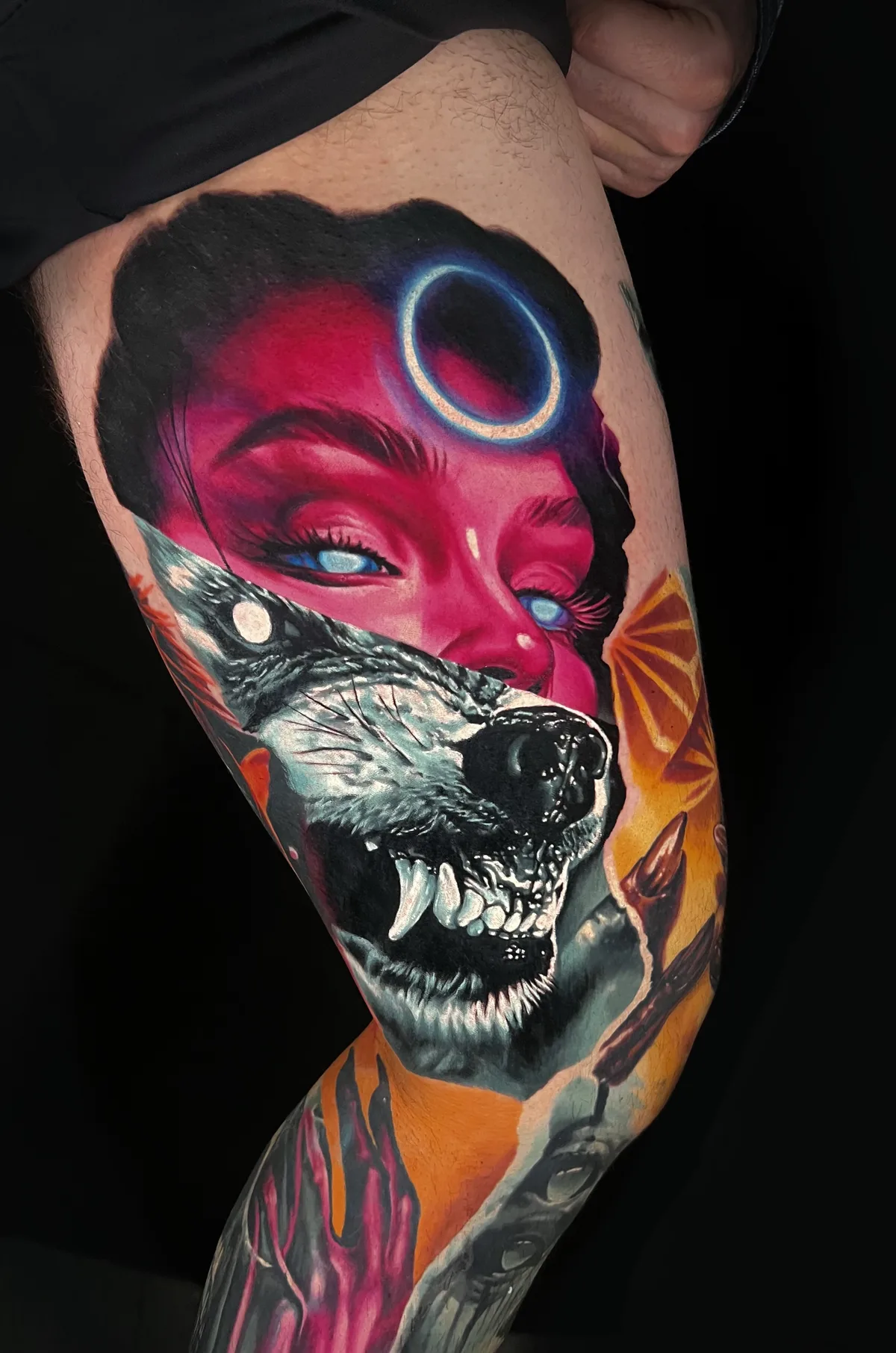
You often work with collage effects. What attracts you to it and what compositional problems does it help solve?
— For me collage is primarily freedom — the ability to combine styles and forms, to connect things that normally wouldn’t intersect in classical composition.
I admire artists who use collage boldly and even chaotically, creating projects where realism, cartoon elements, children’s drawings, and simple lines can coexist within one tattoo. But for me it’s mainly a tool.
Especially in complex projects it helps to find working solutions faster: isolate the necessary fragment, remove unnecessary details, and leave only the large element. This makes it easier to control the structure of the piece and maintain its integrity, especially when there are many сюжетs involved.
Sometimes I use duplicated fragments — this adds color contrast and creates tension, making the composition more expressive.
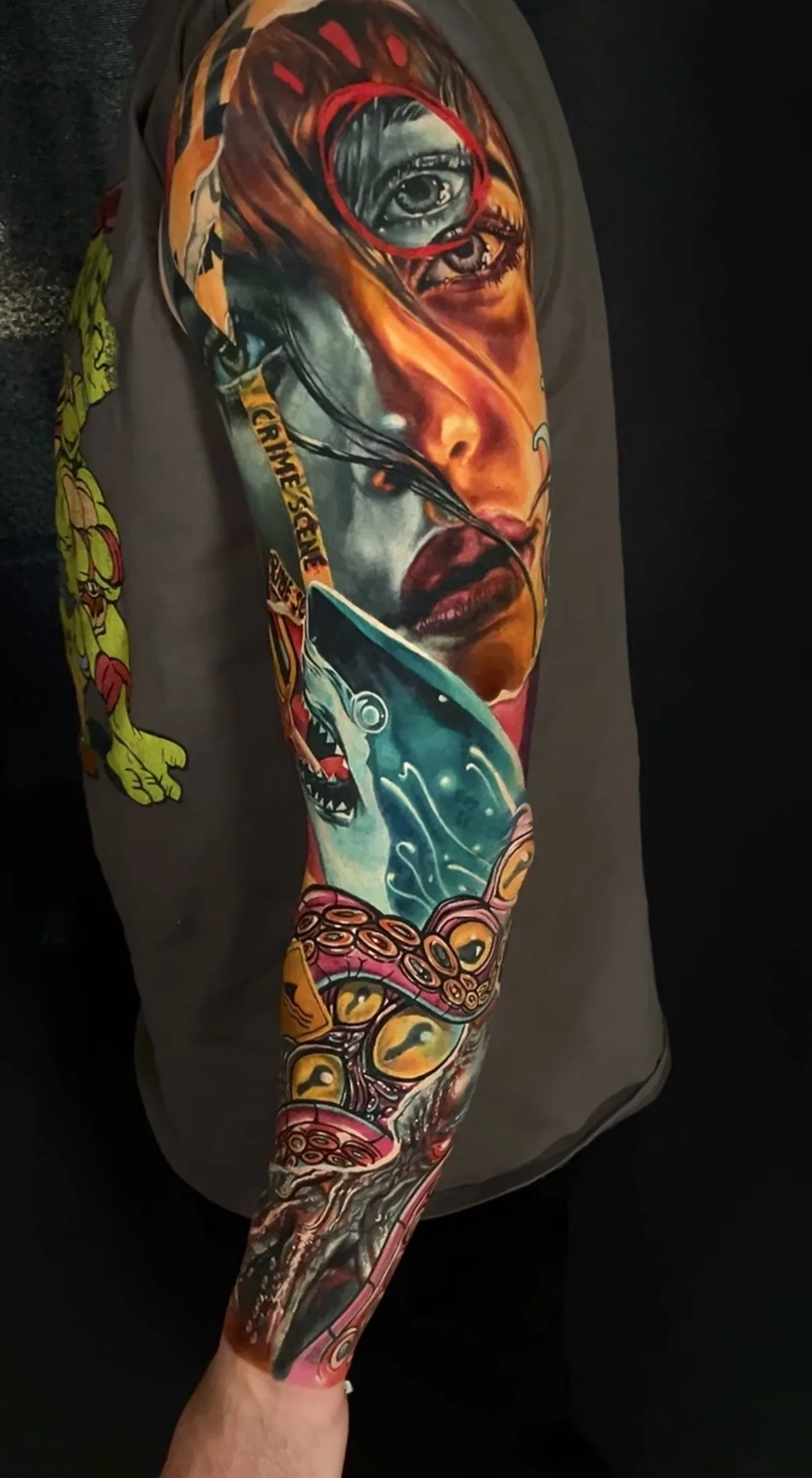
Your tattoos often carry a sense of tension and energy. What emotions do you try to convey in your work?
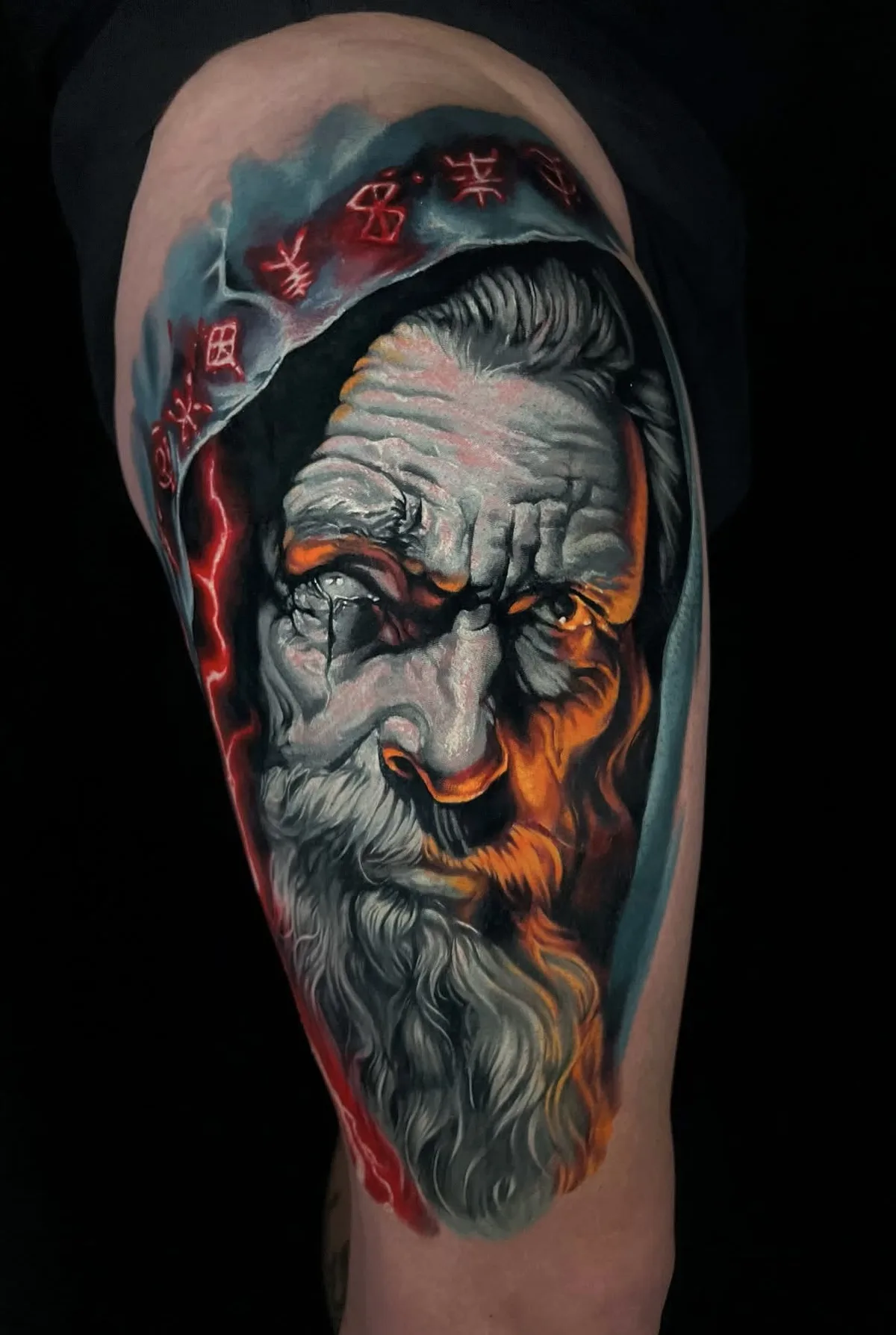
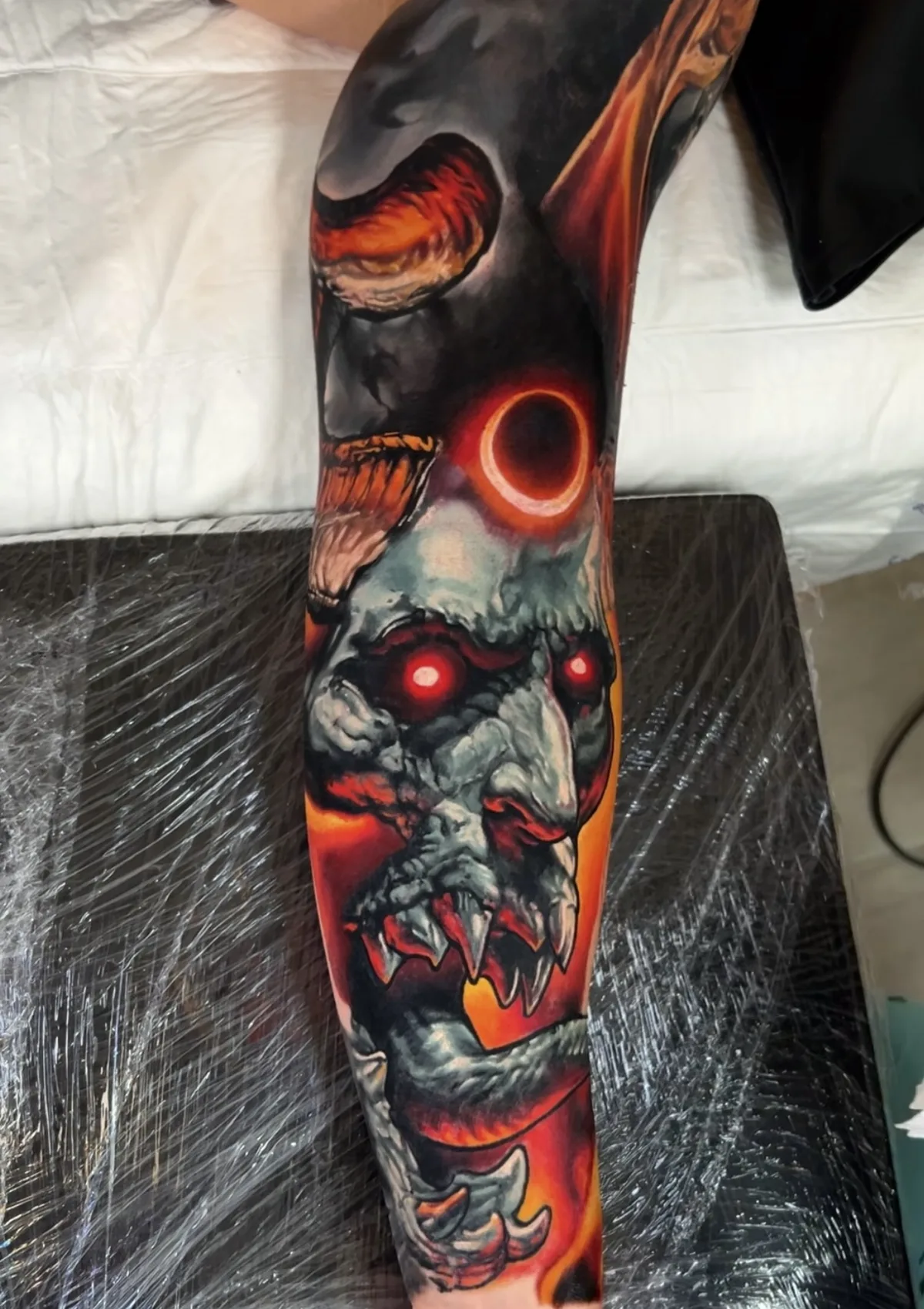
— I don’t intentionally try to embed a specific predefined emotion into the work. In my projects I often play with tonal shifts and color temperature — for example, gradients from grey-blue shades combined with warm yellow-orange tones. Through the dynamics of the image this creates a certain rhythm.
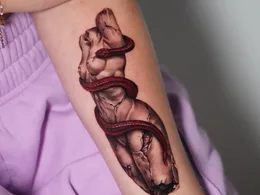
This helps me enhance volume and expressiveness within the composition. After that it works on an intuitive level — and everyone perceives it in their own way.
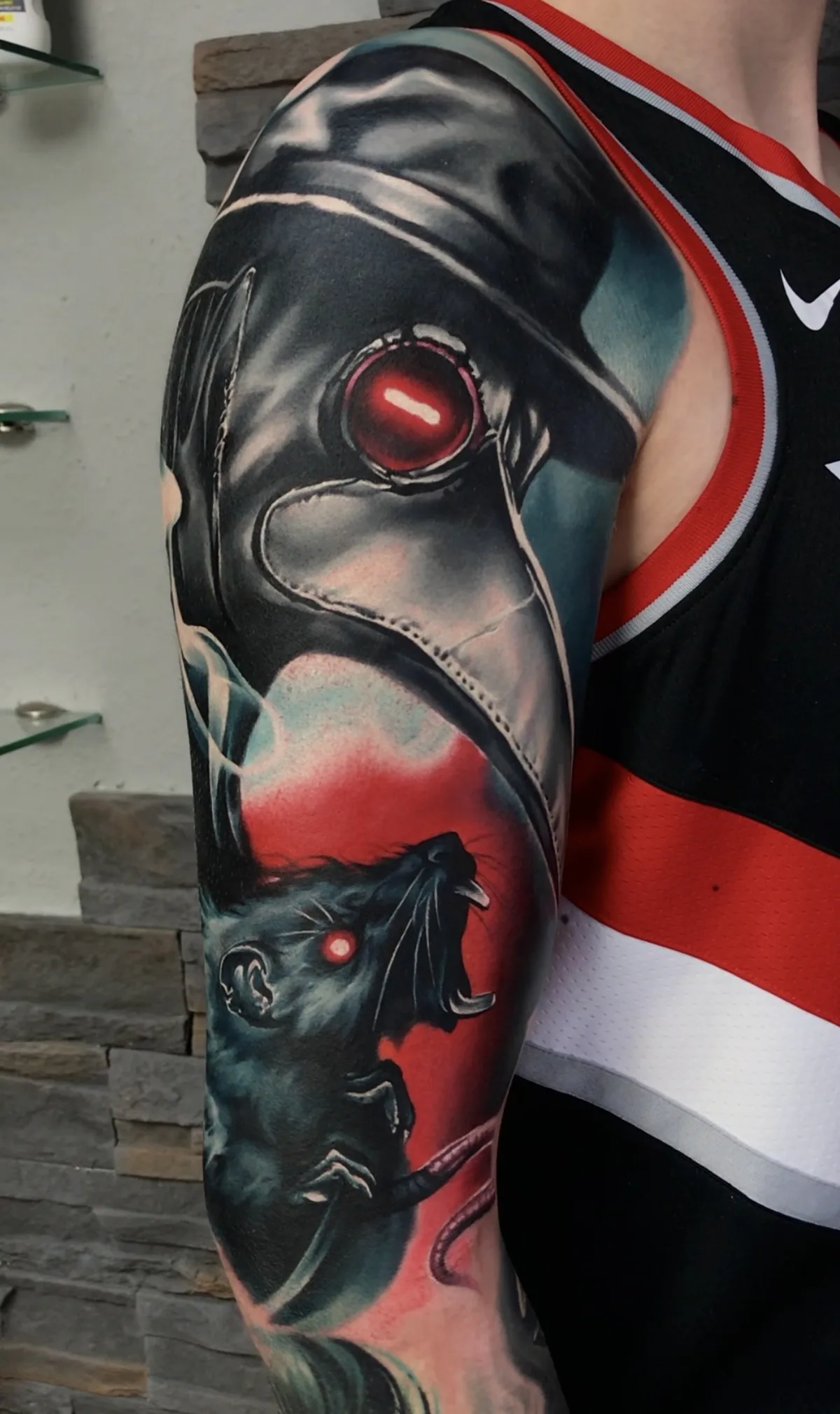
Why are you interested in such different themes — from portraits to horror?
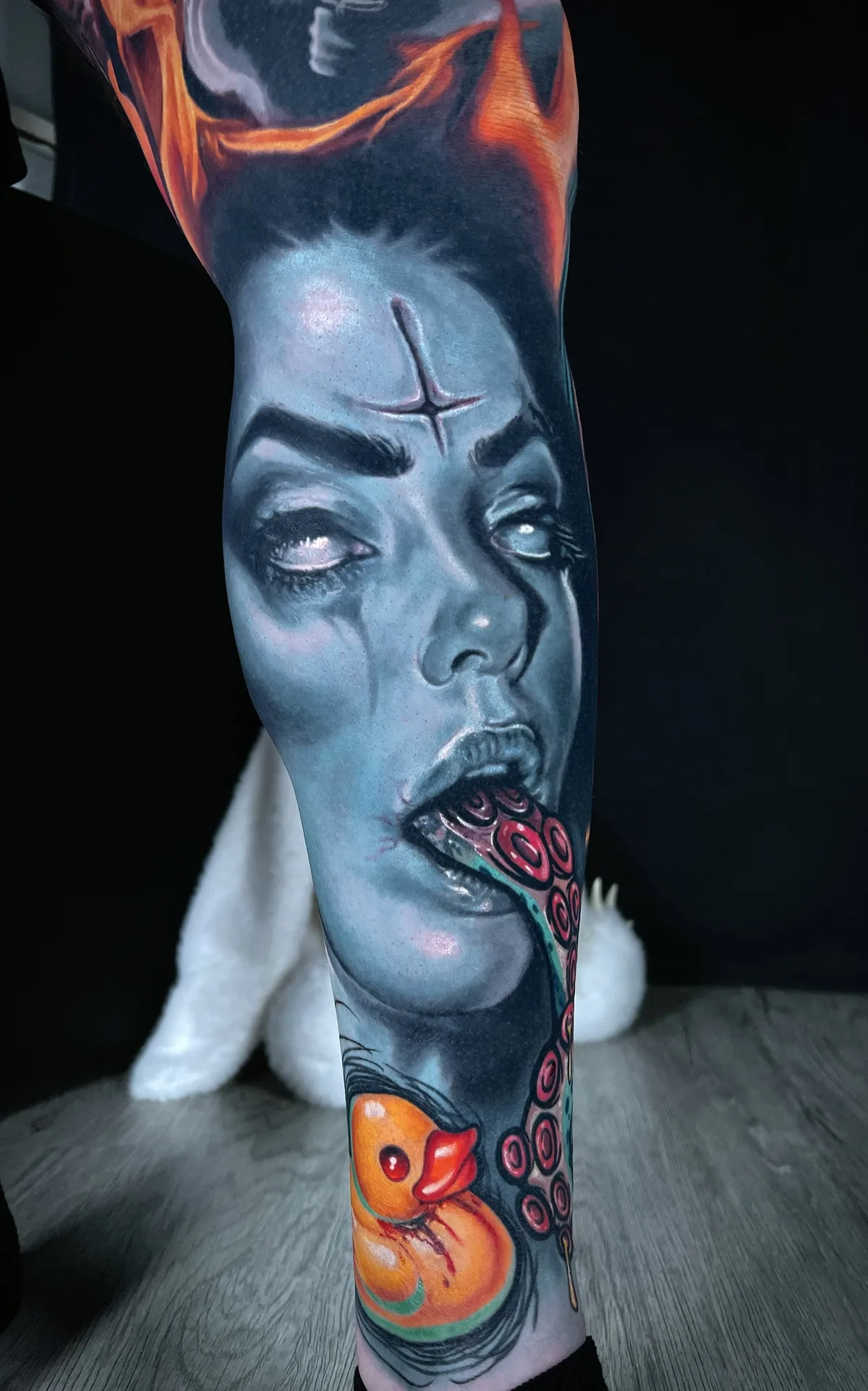
— I’ve always been drawn to horror aesthetics in pop culture. My first portrait works were actually in that direction. Horror gave me artistic freedom and expression — the ability to work with “dirtier” tones and bold color combinations that are rarely acceptable in classical portraiture.
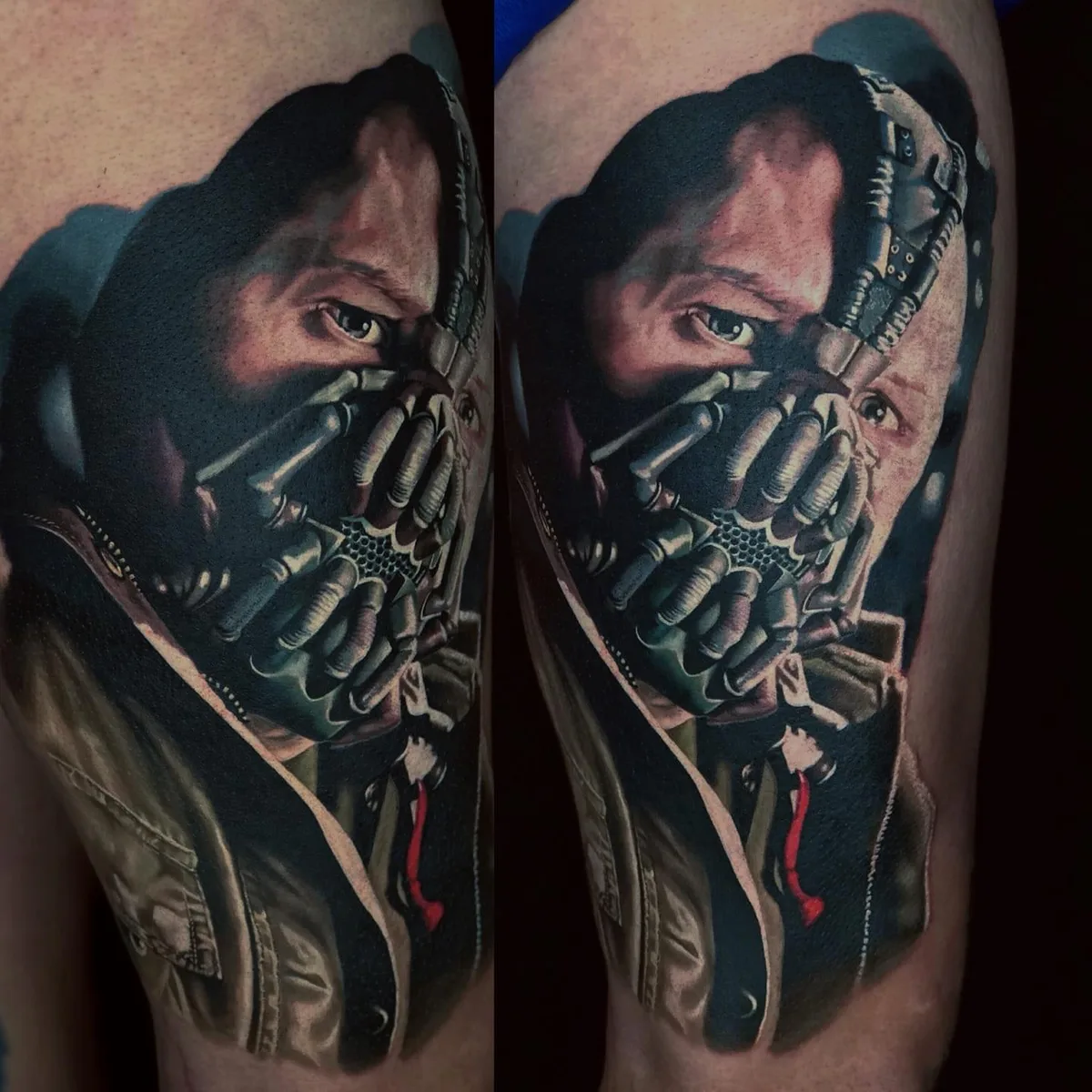
At the same time working with portraits is always about responsibility and concentration of realism within one piece: discipline, precision in rendering light, volume, and proportions. That’s why the range is interesting to me — different themes bring different challenges, but realism remains the foundation and the space where I continue to grow.
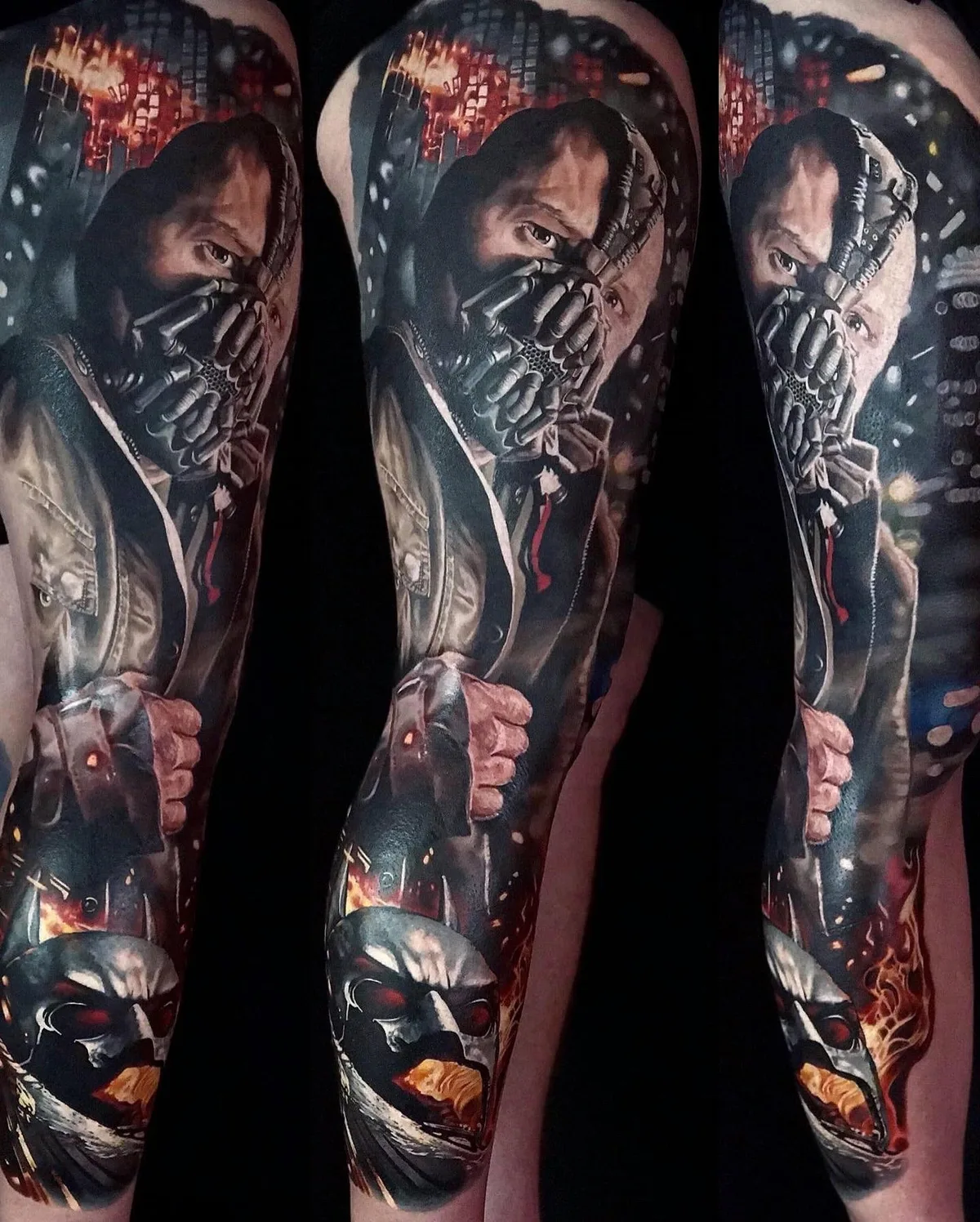
Are there themes you return to again and again?
— Of course, as cliché as it may sound, portraits, skulls, and film-inspired subjects.
But what attracts me more is not the specific subject itself or direct copying, but working with it inside the composition. Recently I’ve been returning more and more to surrealist aesthetics — it allows greater freedom with distortion and playing with scale.
This style makes it possible to combine different techniques and expand the color range, strengthening the atmosphere and adding depth to the image. As a result, familiar motifs become more individual while still retaining their classical foundation.
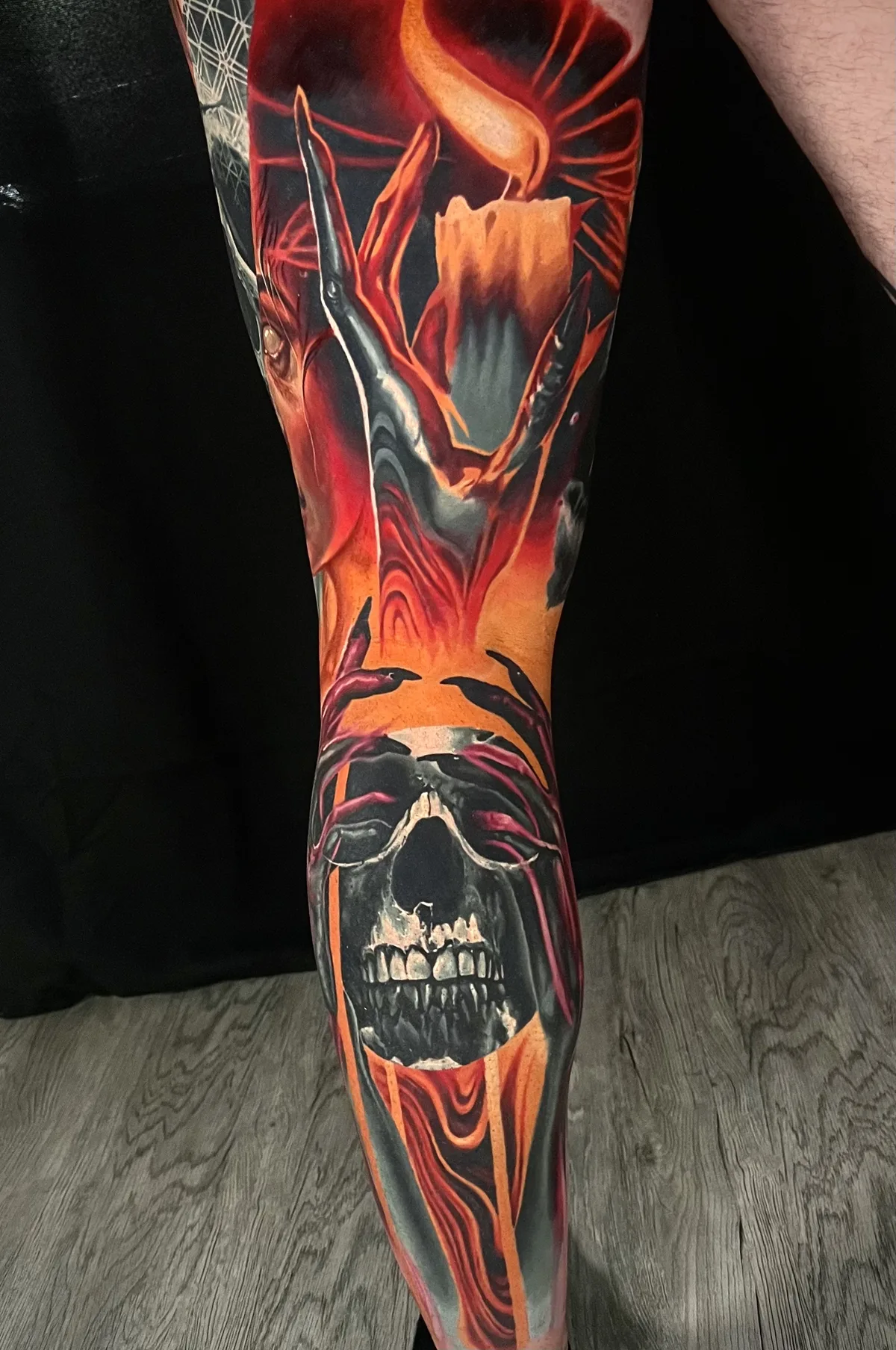
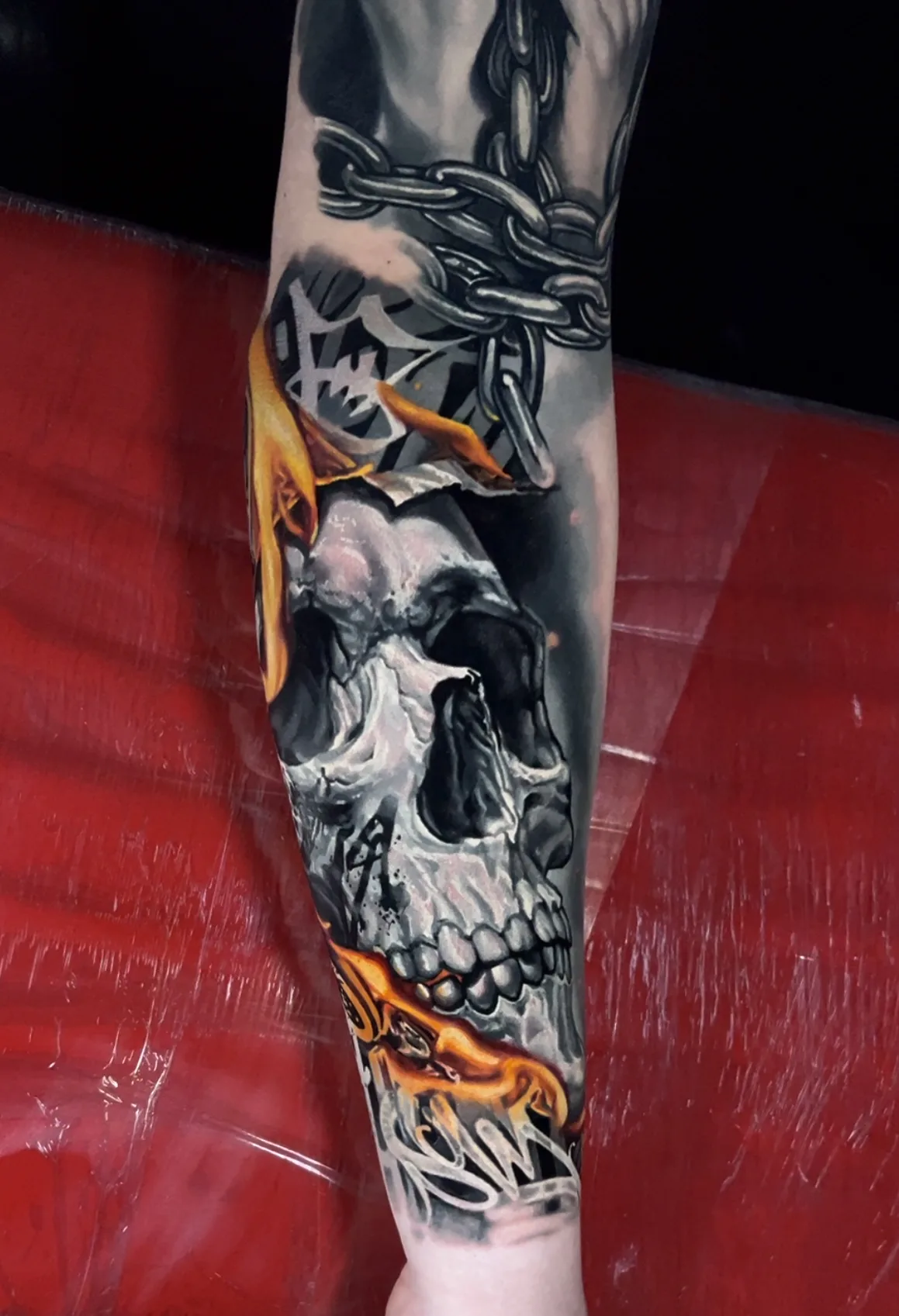
What role does light (especially fire) play in your tattoos?
— I always look for ways to introduce clean, bright shades, and lighting effects allow me to do this naturally. These elements also immediately draw the viewer’s attention.
Using “burning” elements such as fire as a light source helps tie the composition together into a single image and add reflections on the main subject, making it appear even more volumetric. Overall this gives the tattoo more depth and expressiveness.
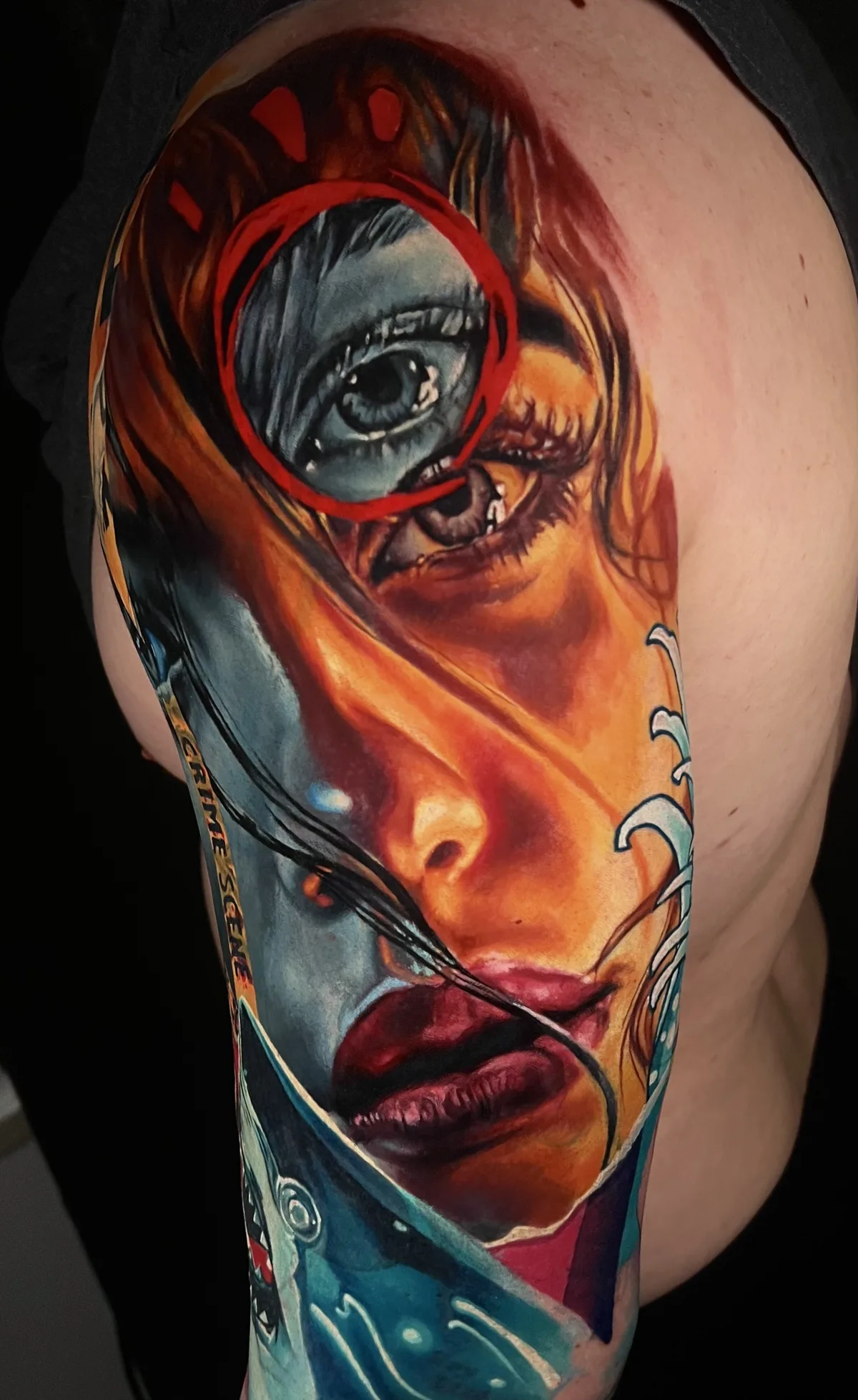
How does your workflow usually go? For example, working on a sleeve from consultation to completion.
— In the case of a sleeve everything starts with a detailed discussion with the client: we analyze the idea, the key elements, and the scale of the project. Even if the work is planned in stages, I still create a rough draft of the entire sleeve to understand the overall composition and distribution of subjects.
Usually we define the main element where the work begins. Most often it’s the shoulder — the largest area that sets the scale and hierarchy of the theme. Sometimes we start with the forearm if the client prefers that. After agreeing on references I prepare several options for the selected area, always including one option based entirely on my own vision.
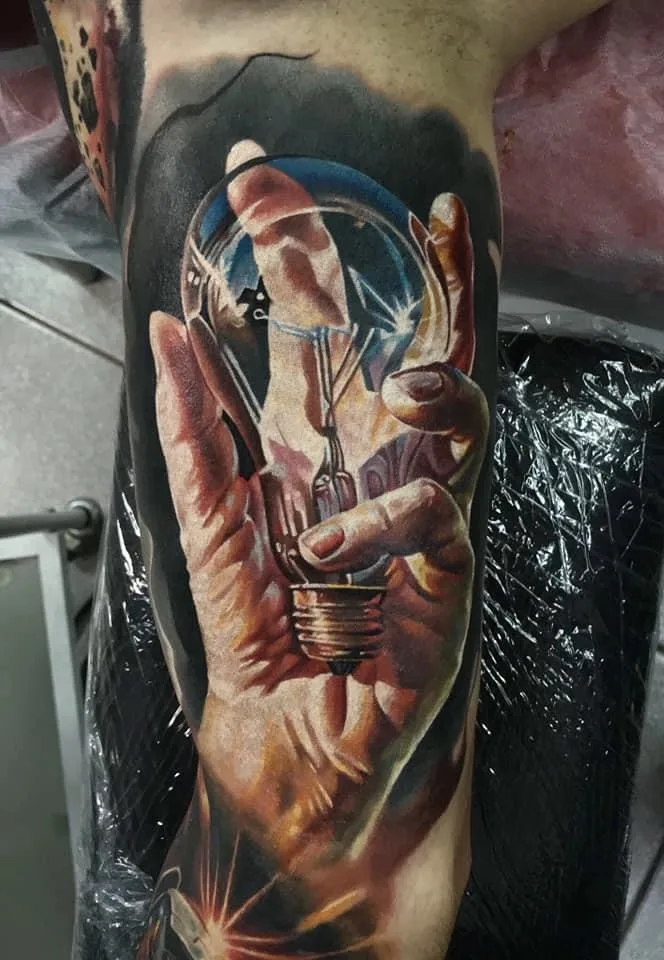
I create the sketch on a photo of the client’s arm, taking anatomy and placement options into account. During the process I may adjust accents, simplify or strengthen certain solutions if it improves the composition. The main plan exists in advance, but I always leave room for refinement.
Light and color are planned in the general scheme and then tested during the tattooing process — viewed from a distance and in motion, strengthening some accents and simplifying others.
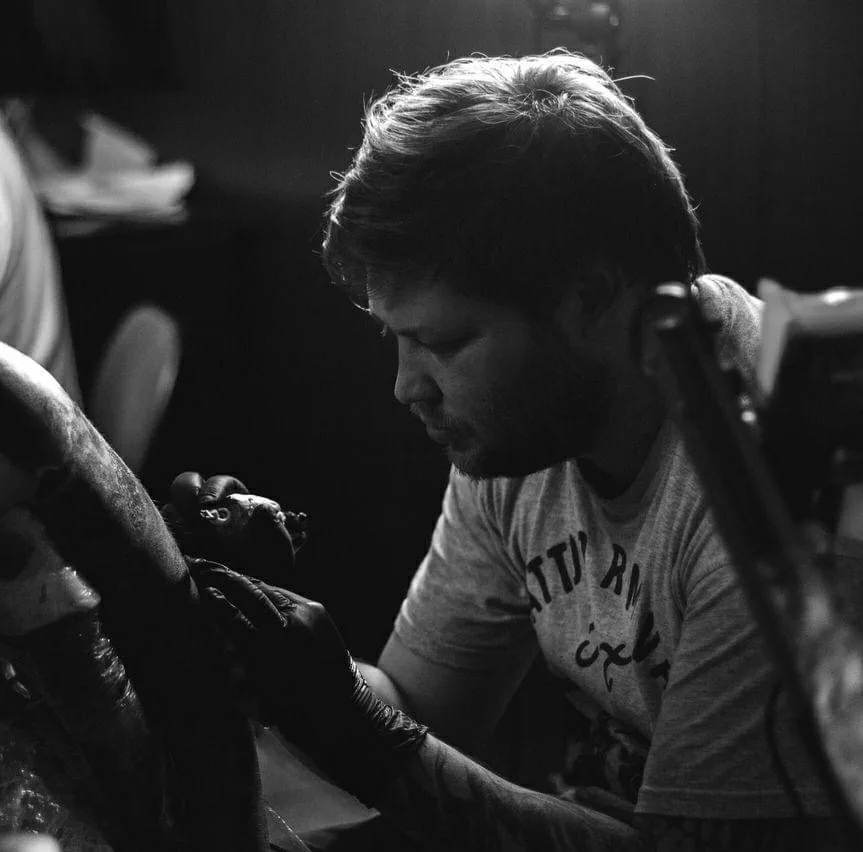
You have participated in many conventions. Tell us about your main experience.
— At an early stage tattoo conventions meant everything to me. Back then there was little information online, and live communication with other artists was the main source of knowledge. Over the course of a year many questions would accumulate — from working with color to equipment nuances — and conventions were the place where you could discuss these things in person and immerse yourself in an environment that was truly inspiring.
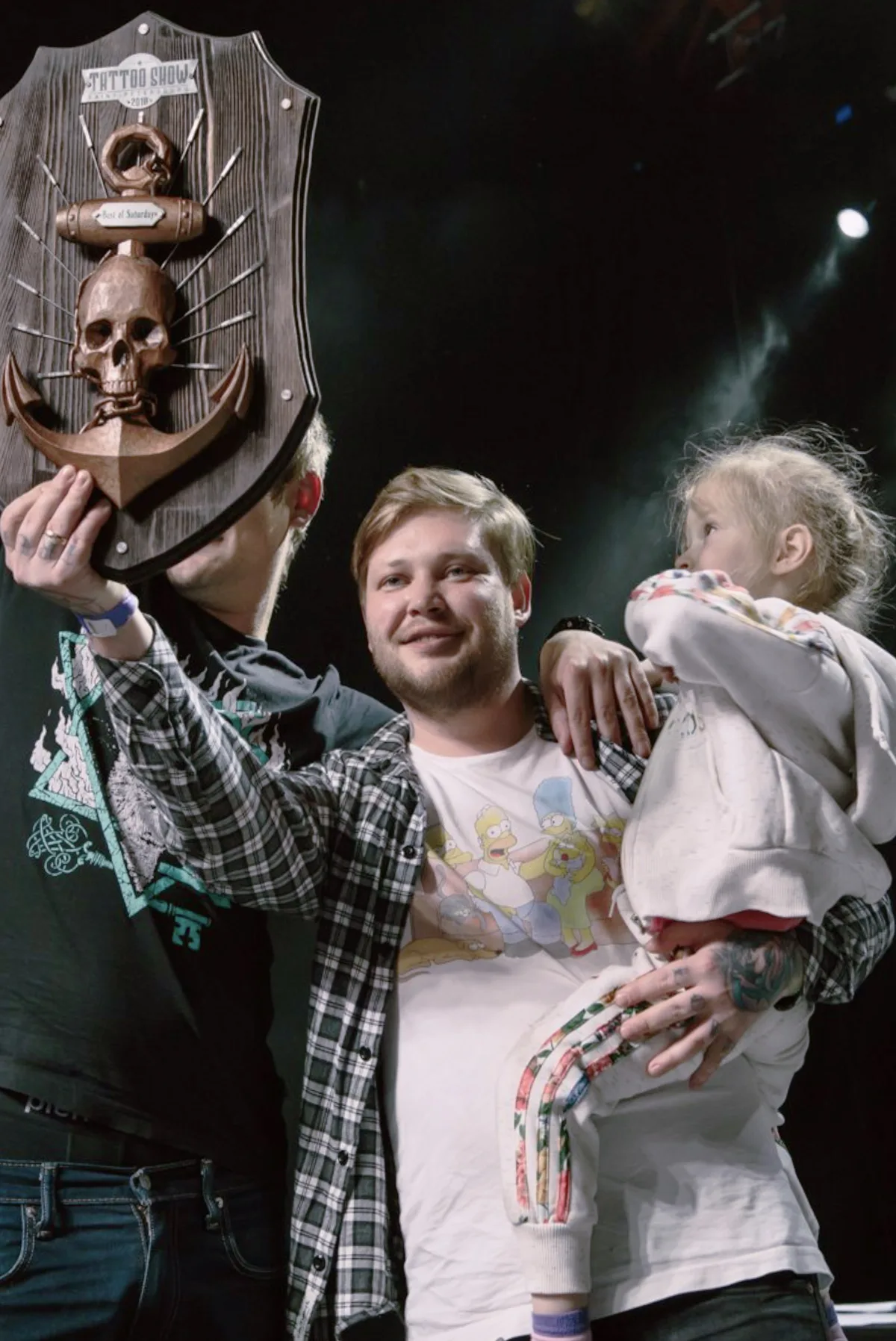
Participation in conventions is still important for understanding your level and growth. At the beginning of my career I won awards in biomechanical, portrait, and realism categories. A particularly significant moment was winning the Grand Prix at the Kyiv Tattoo Convention in 2013 — it removed internal doubts and set a higher benchmark for me.
Later I received two Best of Day awards in realism at Tattoo Show St. Petersburg 2018. I hope these won’t be my last victories and that soon I will return to conventions again, possibly already in Germany.
Tell us about your studio in Kassel — what is important to you in this space?
— It’s a private format of work. For me the studio space is first of all an opportunity to eliminate everything unnecessary and focus entirely on the process.
This independence allows me to control my schedule, work in a calm environment, and avoid chasing quantity. I can dedicate exactly as much time to each project as quality requires — especially when it comes to large compositions and long sessions.
It’s important for me that nothing distracts from the work and that the rhythm is set by the project itself, not by external circumstances.