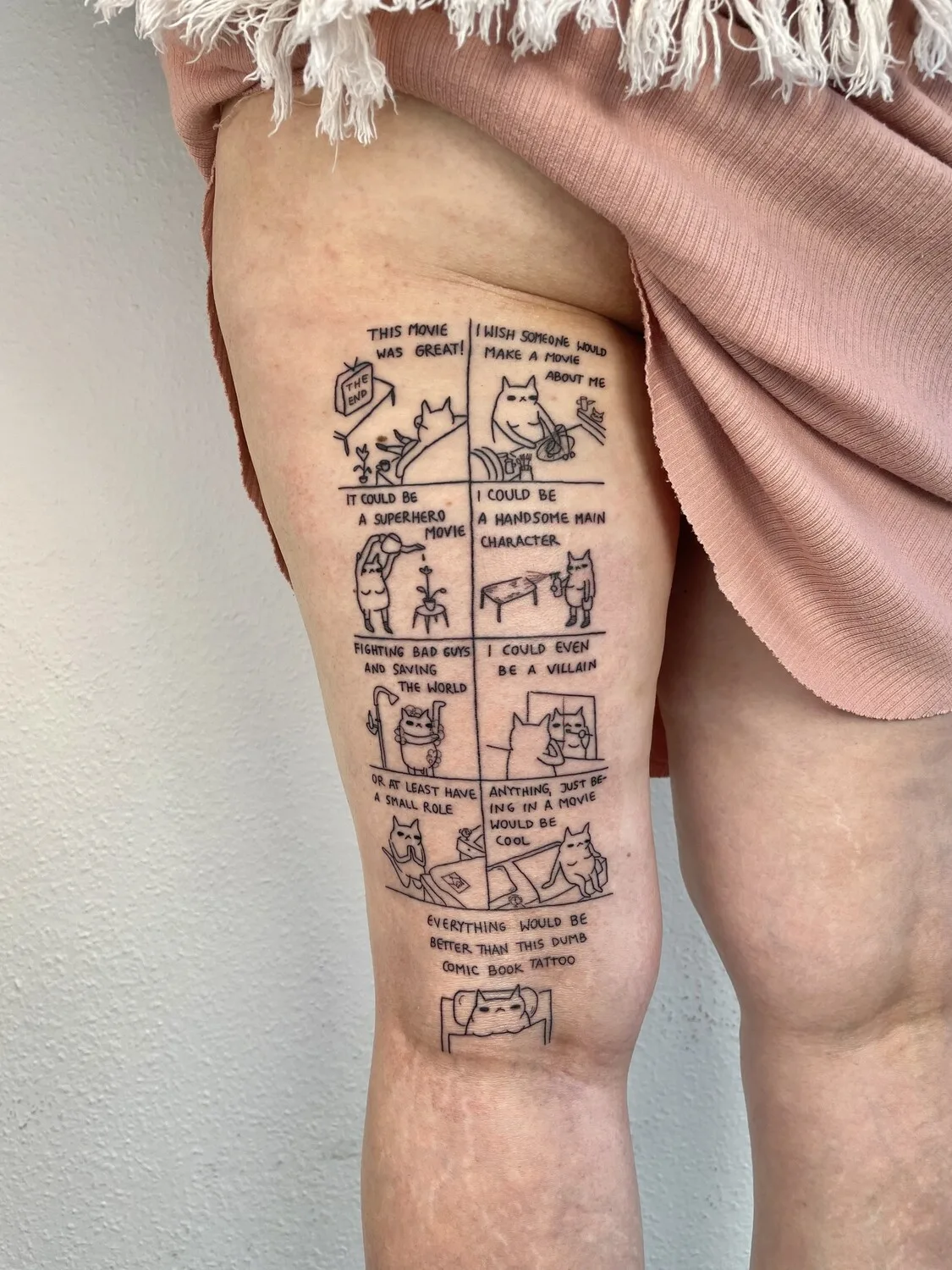
The most famous tattoo cat on Instagram — George — finds himself in all kinds of life situations, just like the rest of us, and sometimes his life even seems more eventful than a human one.
Surprisingly, he really does have a life of his own: he travels, appears in magazines, inspires toys, and even hairstyles.
Of course, this is not a real cat, but a tattoo character created by artist Szymon Lipowski (lipnetattoo), who works in Kraków, Poland. His ironic tattoos featuring the funny cat George have charmed people all over the world. I think this has a lot to do with the remarkable sincerity and simplicity of George’s image, and of course with the universal, deeply familiar situations he finds himself in.
We invite you to meet the creator of this wonderful character and learn more about the story behind one of the internet’s most famous tattoo cats.
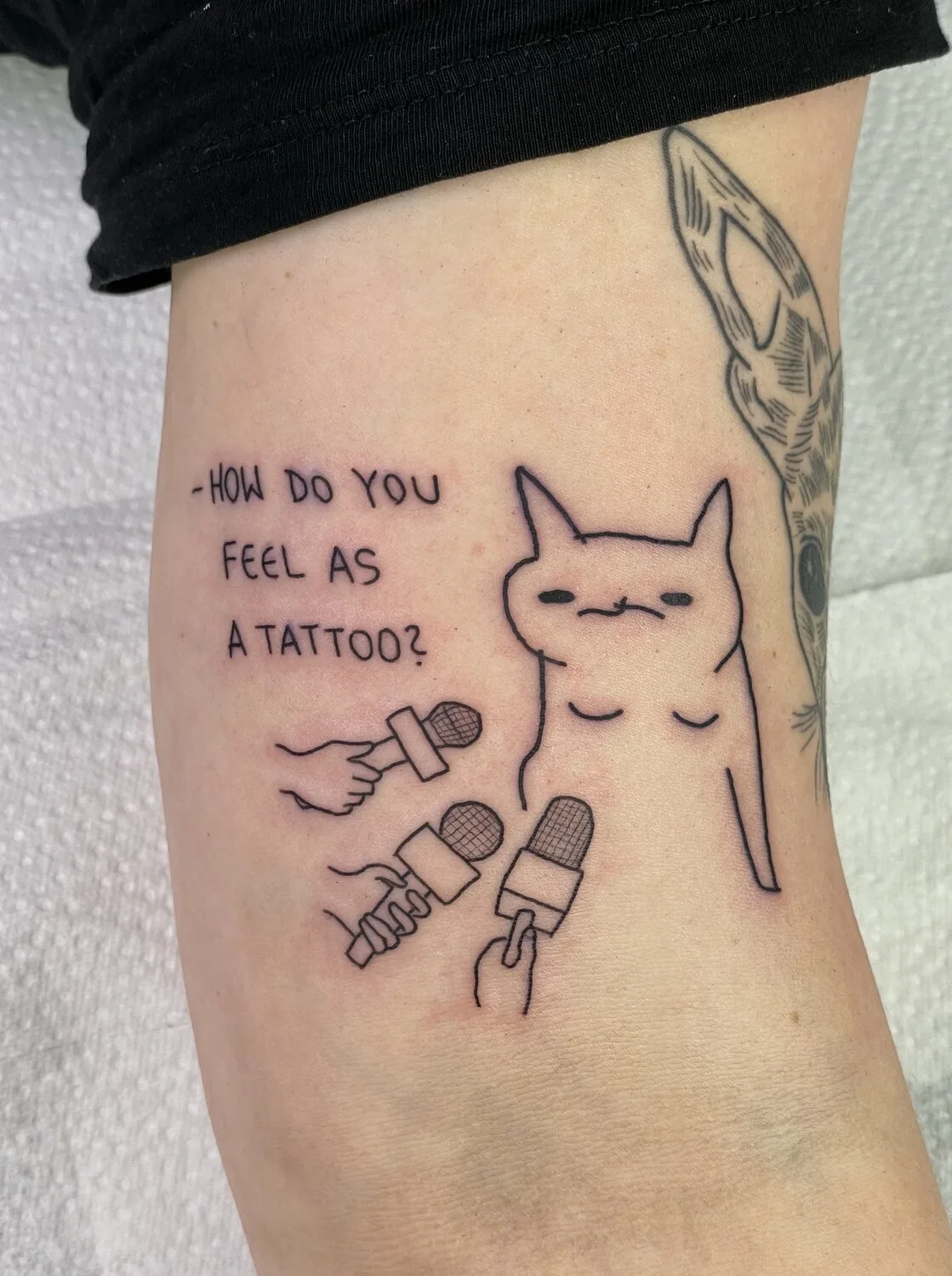
Who are you, where are you from, and how did your journey into tattooing begin?
— My name is Szymon Lipowski, and I’m a tattoo artist from Kraków, Poland. You can find my work on Instagram under the name Lipnetattoo.
I’m the creator of George, a character I’ve been tattooing for over seven years, exploring different situations, moods, and emotional states through him.
Before I got into tattooing, I didn’t really have any direction. I was trying to escape things instead of dealing with them, and that led me into addiction and eventually rehab. After rehab, I bought a cheap tattoo machine and started drawing and tattooing — first on myself and later on my friends. I really got into it, and it helped me stay sober and find peace in this chaotic world.
Over time, what began as a hobby and a passion turned into a professional career.
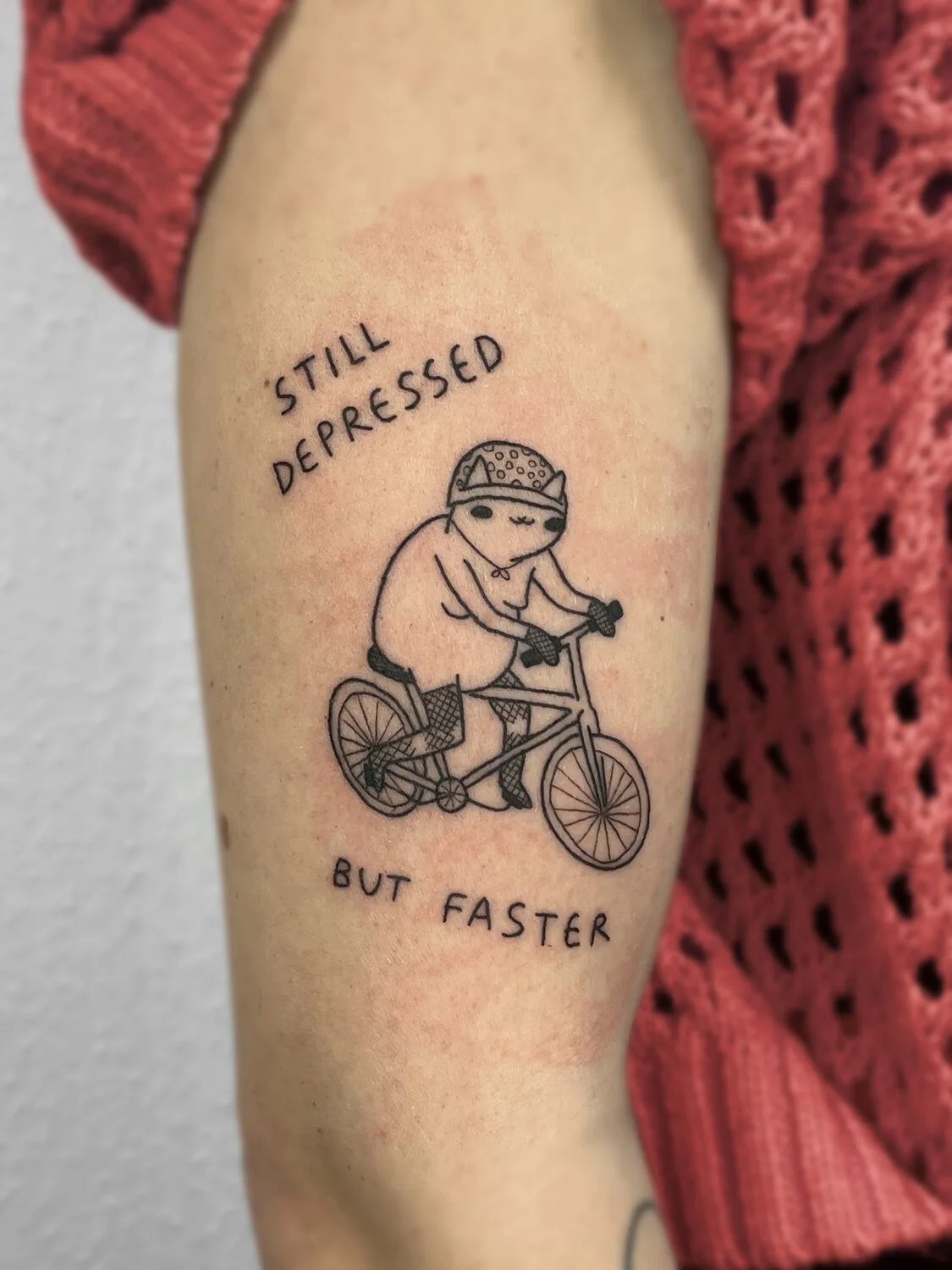
Do you remember when you first drew George? What was the original idea behind him?
— There wasn’t any clear concept in the beginning.
It started with simple cat sketches, often with random or silly captions. No deep meaning, nothing serious. It was around 2019. People generally like cats — they’re funny and easy to share — so I kept drawing them.
At the same time, I was going through a period when everything felt a bit off. Life after rehab wasn’t suddenly better, the way people expect it to be. Drawing became a way to slow things down and make sense of what I was feeling.
Eventually, I started putting my emotions into those loose drawings, and they slowly came together into one character. At first, he didn’t have a name, but after a few months I named him after my childhood cat — George. He was a fat, grumpy cat with slightly crossed eyes, and his facial expression always looked a bit surprised, like he didn’t know he was a cat or how he was supposed to behave.
My drawings are still evolving, and George has changed a lot over the years, so it’s difficult to point to a single drawing and say, “That’s the first one.”
Did you ever imagine it could grow into a whole universe?
— Definitely not.
I wasn’t thinking in terms of building something bigger. I was just making one drawing after another. But with time, it became more consistent. George started to feel like a character instead of just a sketch.
Now it has turned into something much bigger than I ever expected, but it happened step by step, never as part of a plan. It feels like George has a life of his own now. I love seeing how people interpret him — making their own George drawings, knitting him into clothes, creating little sculptures, and even including him in nail art or haircuts. It still feels crazy to me.
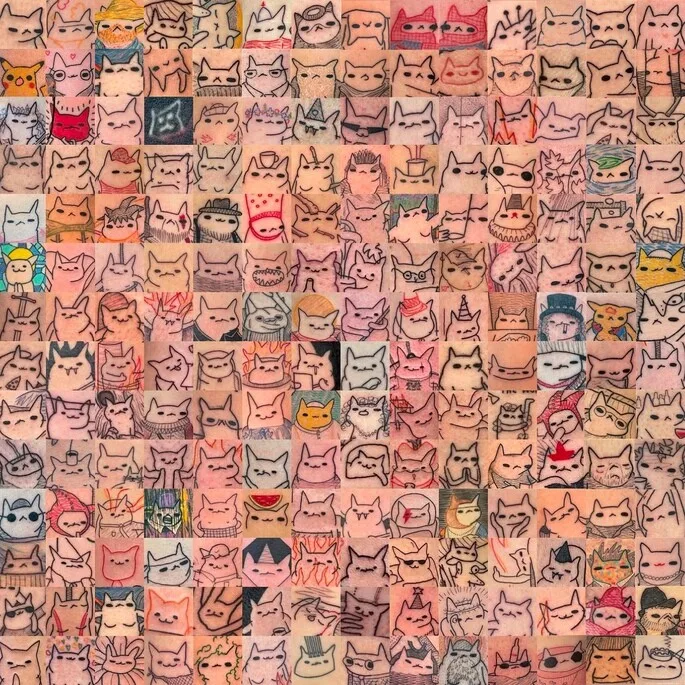
How do you choose references for your tattoos?
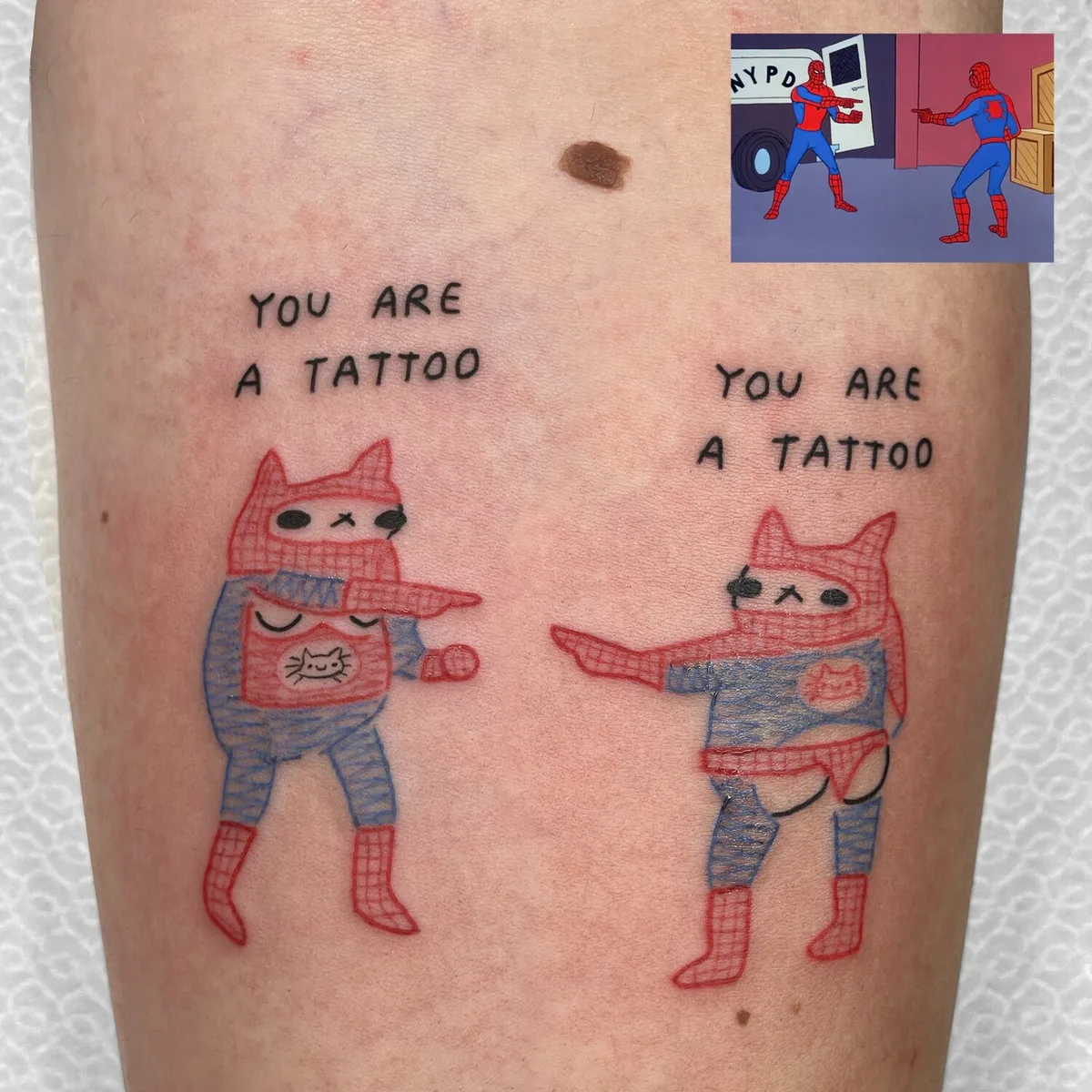
It’s very random. Most of the time, I draw custom Georges based on my clients’ ideas. The drawings that come from me can be inspired by almost anything. It can be my anxiety, a story I heard, or a picture I saw.
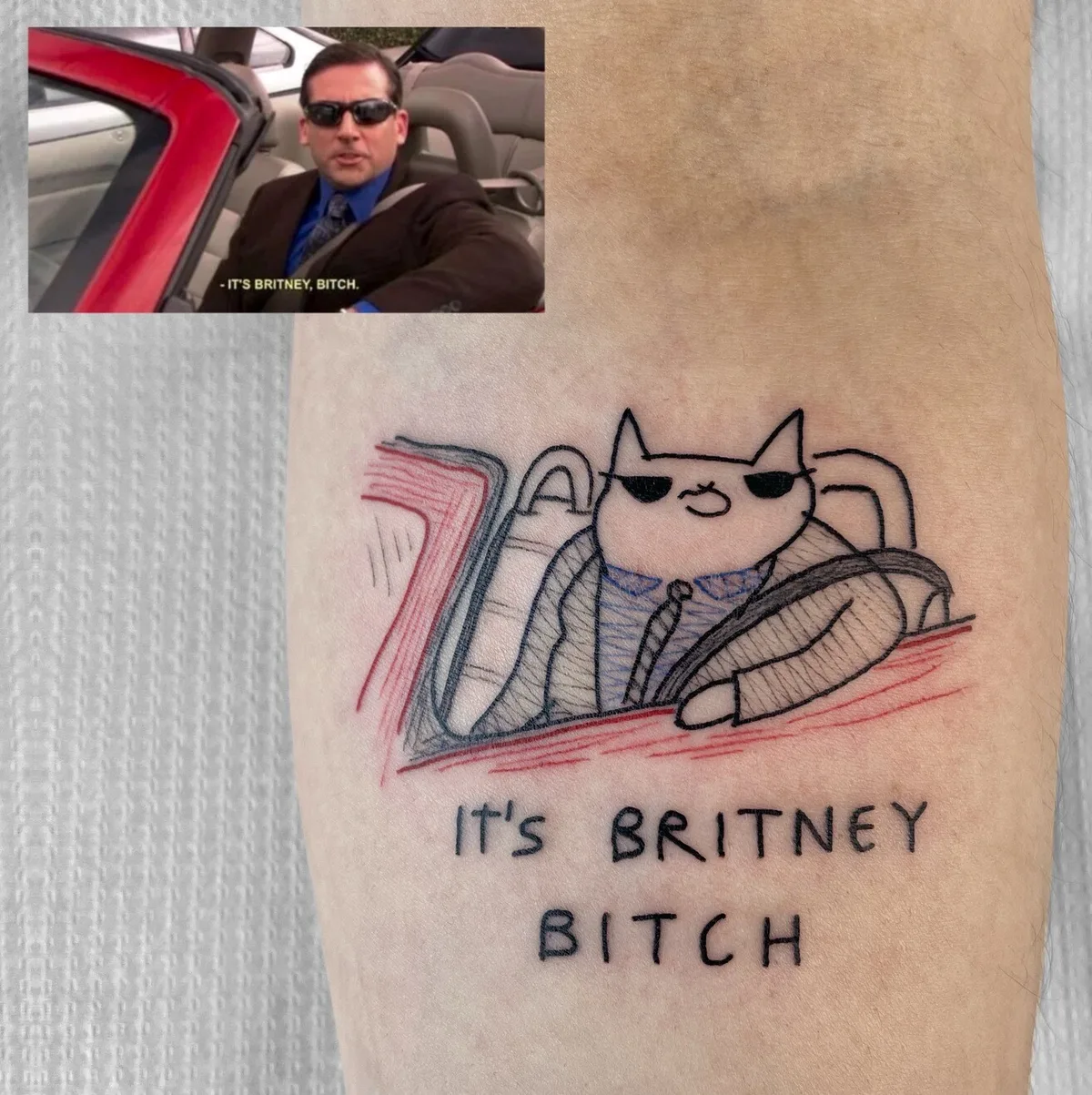
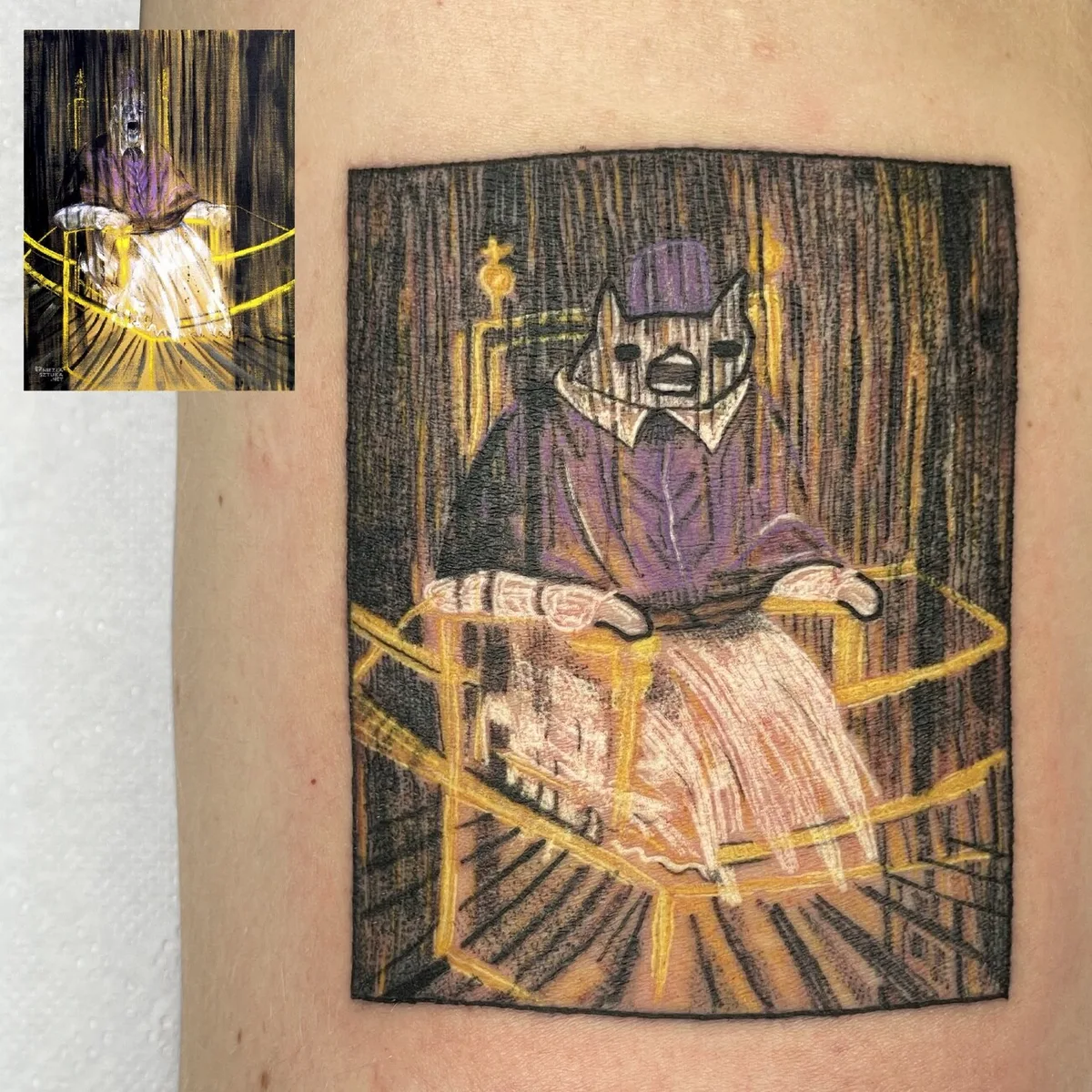
They can be based on popular images, movie frames, memes, classical paintings, or family photos. Sometimes I go for a walk and see a funny dog next to some random sign, and it somehow reminds me of a silly situation I had. It’s all mixed in my head — and suddenly, a stupid idea is born.
What matters is how it translates into my language. I try to reduce it as much as possible, keep only what’s essential, and rebuild it in a simple form.
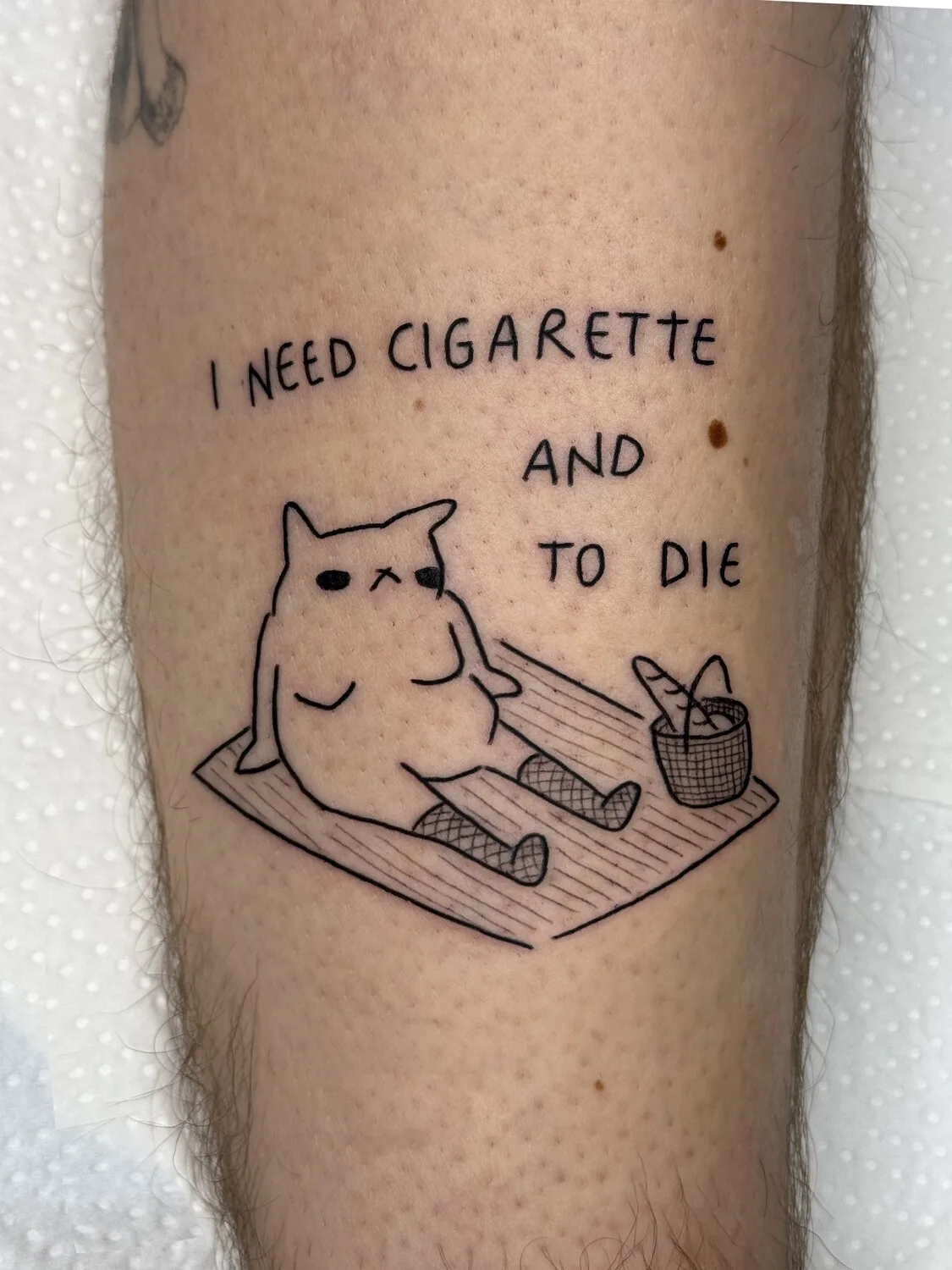
Do you think of each tattoo as a small narrative?
— Almost all of them, yes.
Some designs work like quick jokes, but others feel like fragments of a larger story — like a single moment taken out of context. People often attach their own meaning to them anyway, so even the simplest image can become something personal.
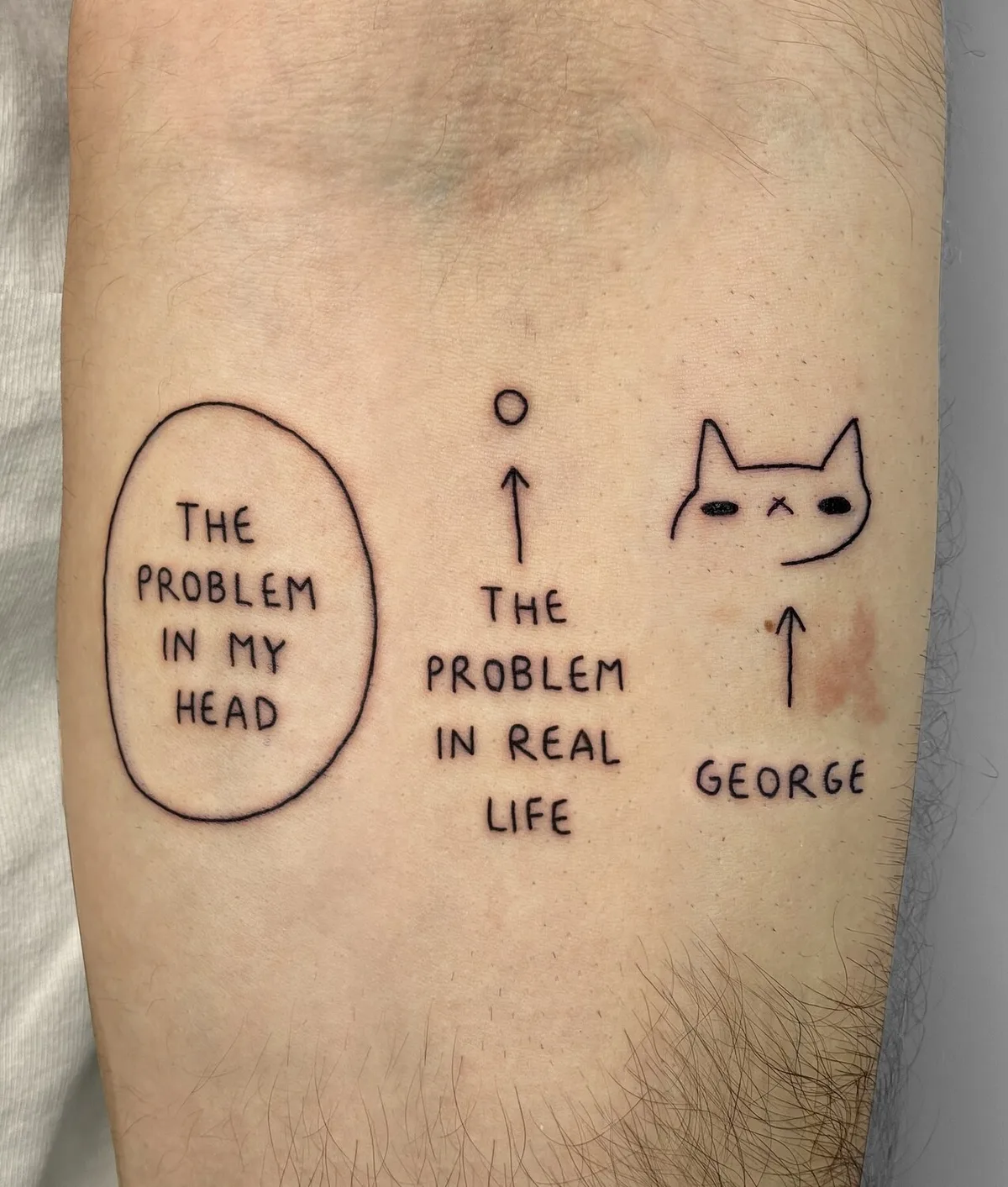
Was there a version of George that was especially challenging or interesting?
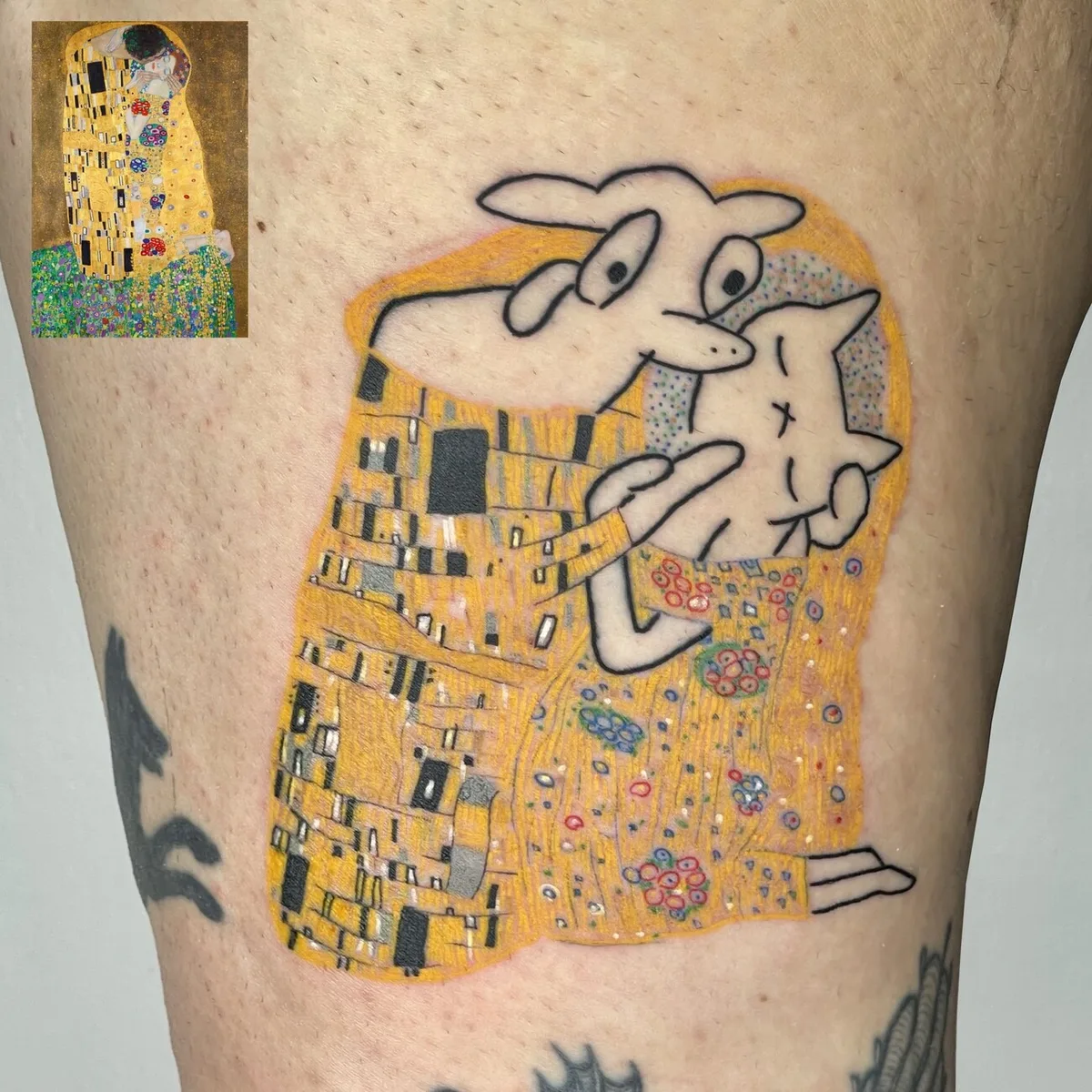
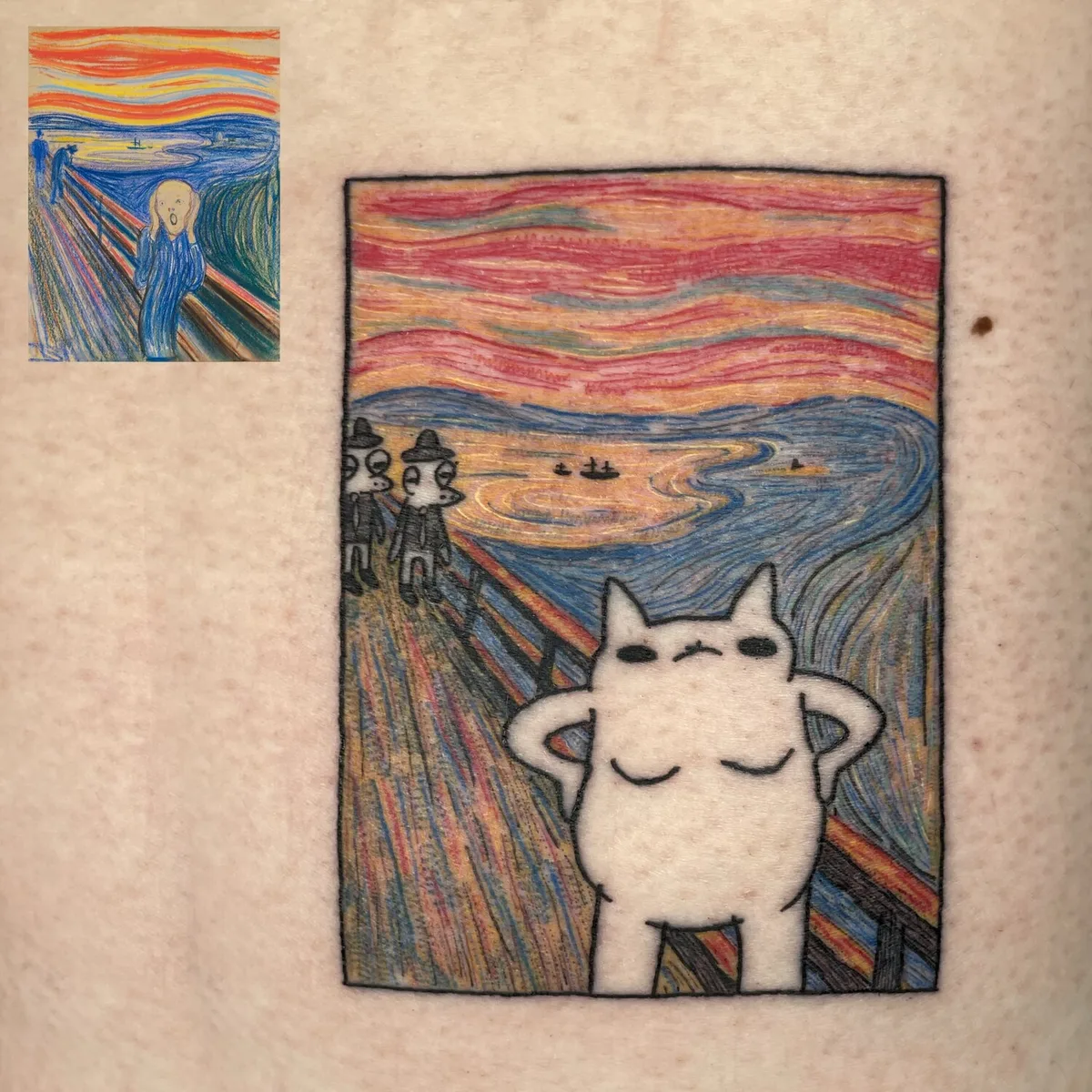
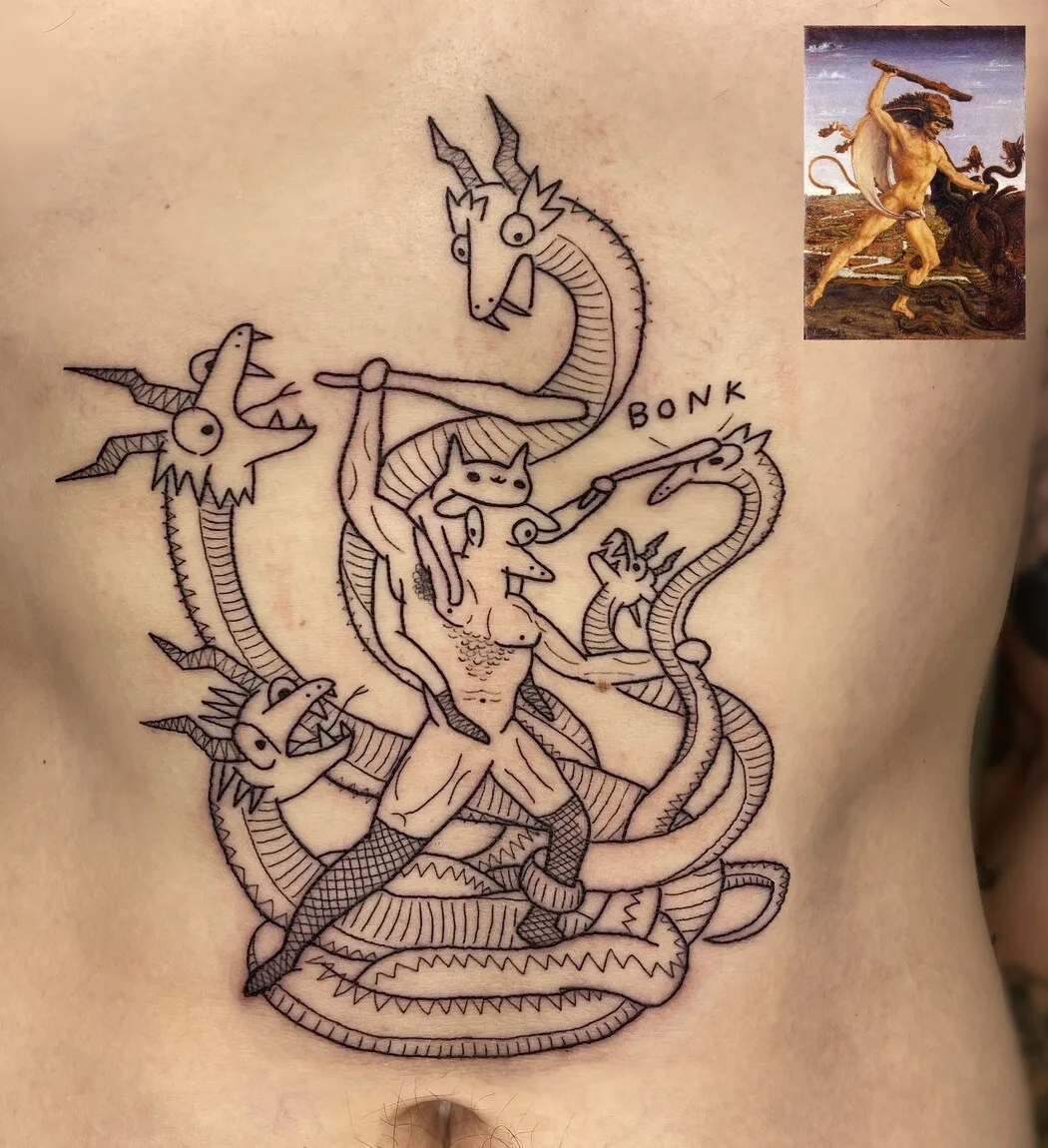
— Reinterpreting well-known artworks is always the most demanding.
You’re taking something visually rich and trying to strip it down without losing what makes it recognizable. It’s easy to go too far in either direction.
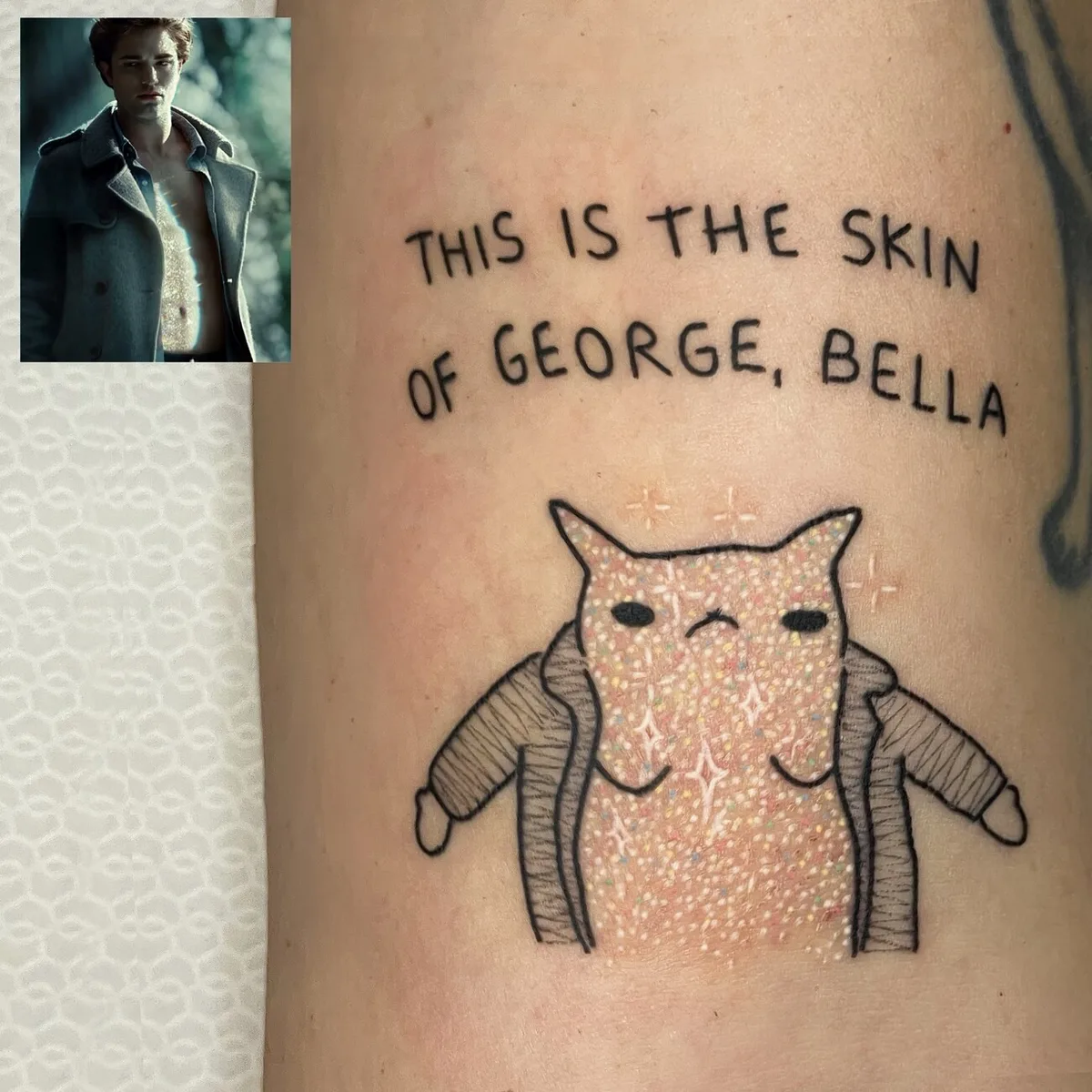
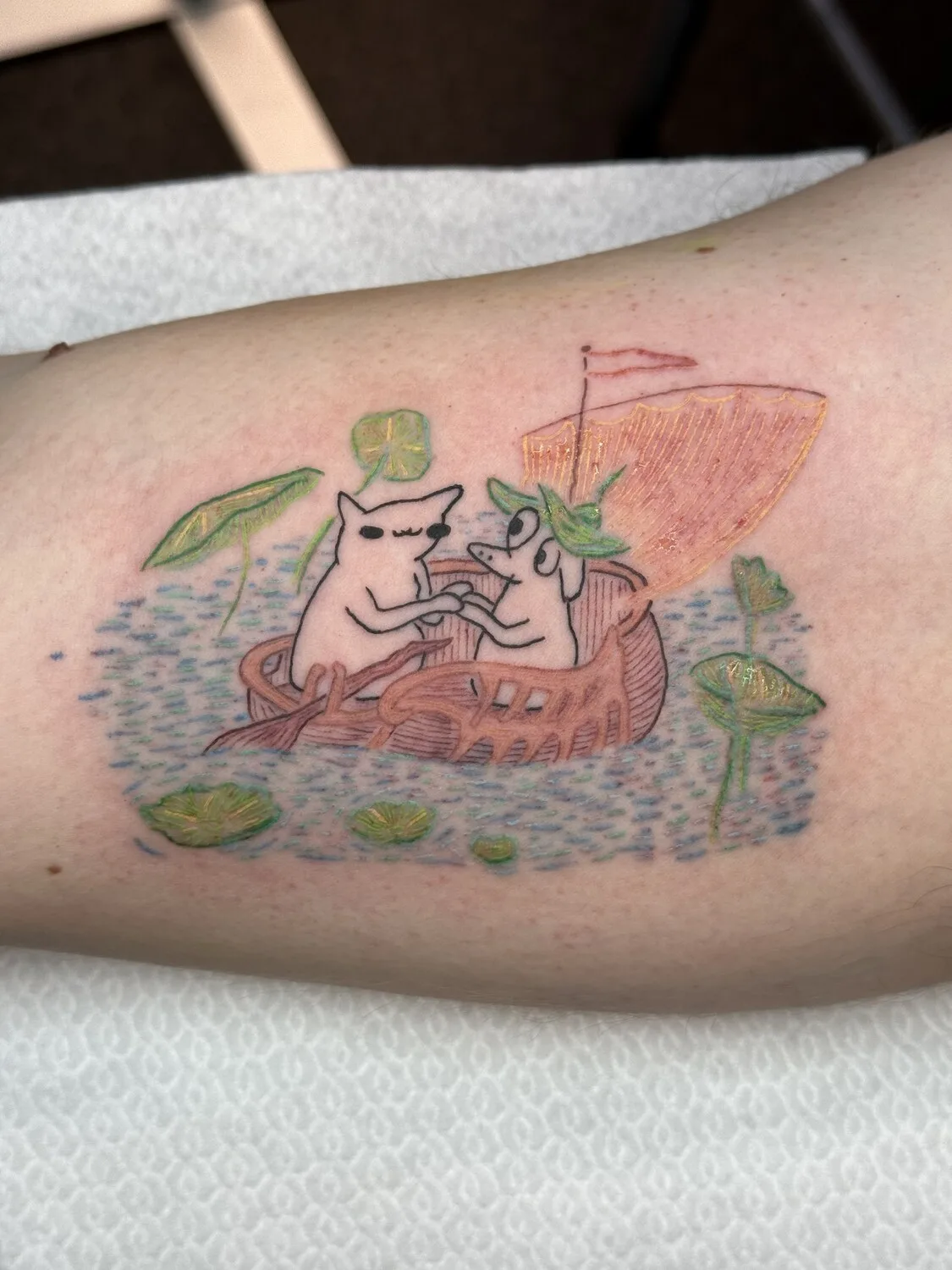
I love doing simple drawings, but sometimes there isn’t enough time to fully get into them and really enjoy the process. The tattoo is already finished, and I wish I could spend more time simply enjoying making it. With more complex, colorful pieces — especially those based on classical paintings or woodcut-like tattoos — there’s space to go deeper into the process. It makes me forget everything around me, and I love that.
I really enjoyed tattooing George based on The Kiss by Gustav Klimt and The Scream by Edvard Munch.
Beyond classical art interpretation, some George designs require finding a balance between a detailed reference and a simplified drawing, and that is what makes it interesting.
Your style mixes different approaches. How did that develop?
— It happened naturally.
I’ve always preferred simple, expressive lines over highly detailed work. At the same time, I kept experimenting with different styles and textures.
Over time, it all started to blend together. I don’t consciously build a style — it evolves through small changes. Most of my work falls into an ignorant, illustrative approach, but I also create more detailed, colorful pieces. There’s one thing that connects them all — George.
Does focusing on one character give you more creative freedom?
— Surprisingly, yes.
Working with one character forces you to think differently. Instead of constantly changing ideas, you develop one idea further.
George is simple, but flexible enough to work in many contexts. That limitation actually creates more possibilities. George easily finds himself in all kinds of situations. He can be a depressed pizza delivery guy, a scary monster based on an old sci-fi movie, or a little girl with braids.
Do clients usually come with ideas, or do they trust you to create them?
— Some of my clients come with a very specific concept, even with their own sketch of how they’d like their George to look. Others leave everything to me. Sometimes I receive just a screenshot of their favorite childhood ad, and sometimes there’s a whole story and meaning behind their idea.
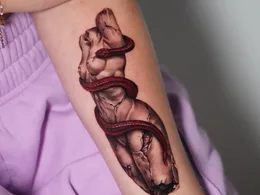
Most of the time, it becomes a mix — we talk it through and shape it together. That collaboration usually leads to better results.
Is George meant to be purely funny, or is there something deeper behind him?
— I think for most people, he’s just a silly, funny cat, but there’s definitely more to it — at least for me.
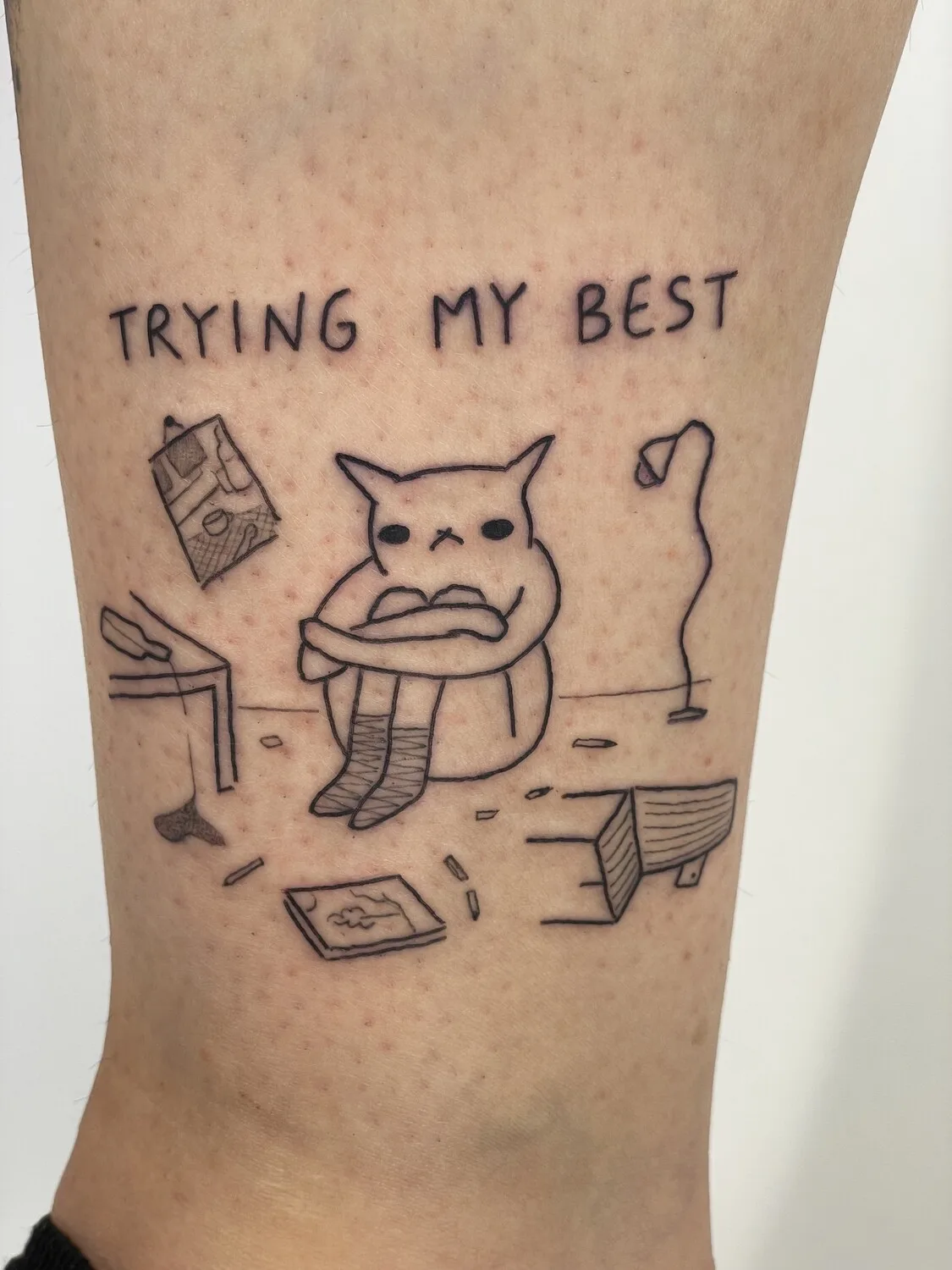
He can look light or even silly, but for me he used to represent things like anxiety, isolation, or confusion that I experienced — and still do. I like that contrast: when something simple carries something heavier underneath.
Do you see your work as a dialogue with art history and pop culture?
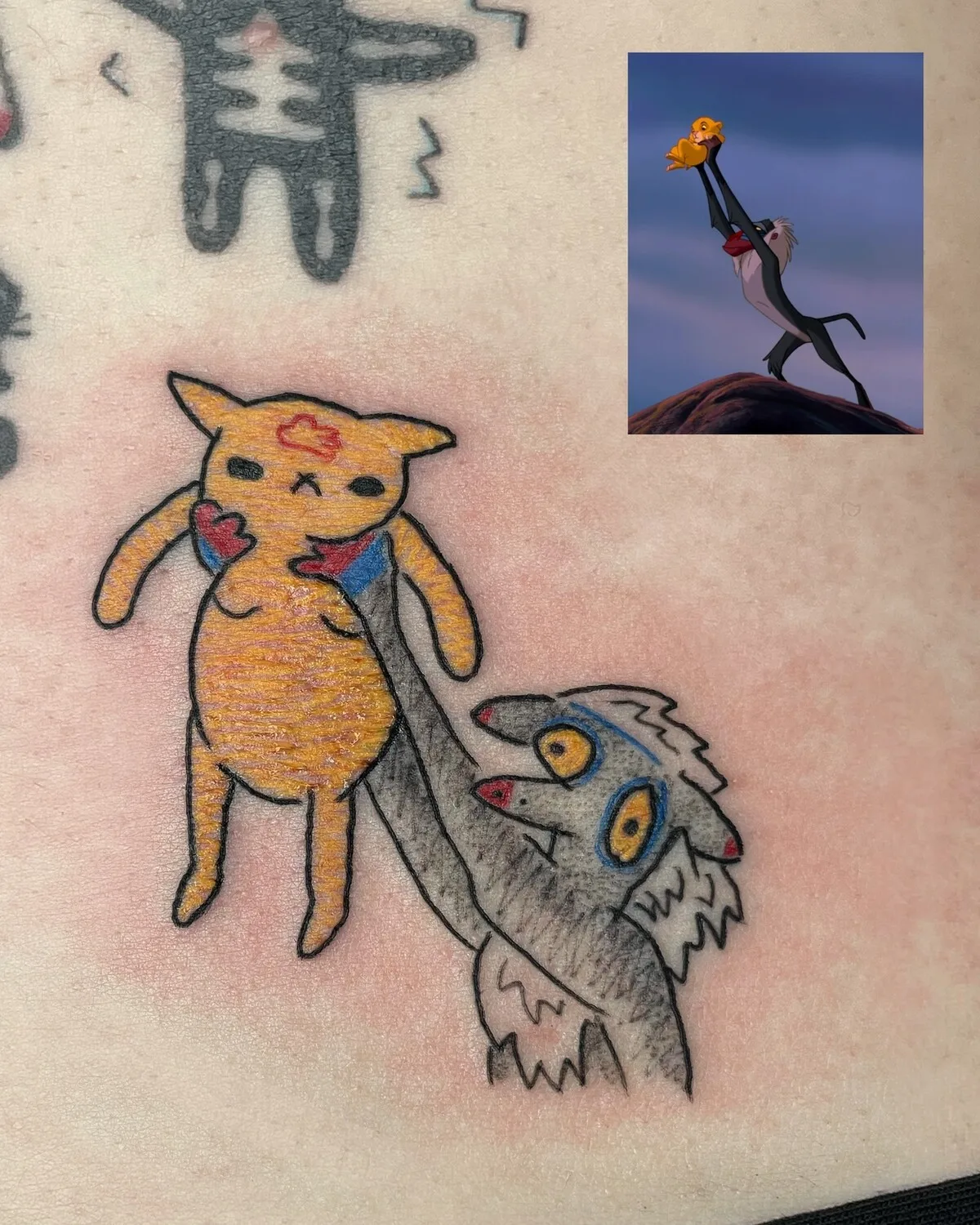
— Kind of, yes. I often take images or ideas that people already recognize — whether from art history or pop culture — and reinterpret them in my own way. It’s not about recreating them accurately, but about transforming them into something else, something that fits my visual language.
By filtering everything through George, those references lose their original context and gain a new meaning. Sometimes it’s more emotional, sometimes more absurd or ironic.
I think it creates a kind of dialogue, but not in a direct or academic way — it’s more intuitive, more playful. It’s about taking something familiar and making it feel slightly different, while still recognizable.
How did it feel to see George appear in publications like Happy Tattoos?
— It felt strange in a good way.
Until then, most of my work existed on skin or online. Seeing it printed in a book made it feel more real.
It also gave me a sense that George had moved beyond just my own space and started to exist independently, in a wider context — like he wasn’t only mine anymore, but something people could experience in a different way.
Do you feel like creating other characters, or is George still enough?
— George is definitely more than enough. Strangely, even after all these drawings — I think it’s already a few thousand — he’s still really fun to draw.
A lot of the ideas come from people all over the world, so almost every time it feels original and exciting. Through that, I get to discover new movies, series, local dramas, family stories — all kinds of things I wouldn’t normally come across. That’s a big part of why George still feels so alive to me.
Besides George, I sometimes draw a dog named Flynn — his friend and nemesis at the same time. From time to time, I also do other stuff, like raccoons or frogs.
Right now, I’m slowly working on a book — it takes ages to make any real progress — and that’s where some new characters will appear.
George still feels open and unfinished, though. There’s still a lot I can explore within that one character.
Where are you currently working?
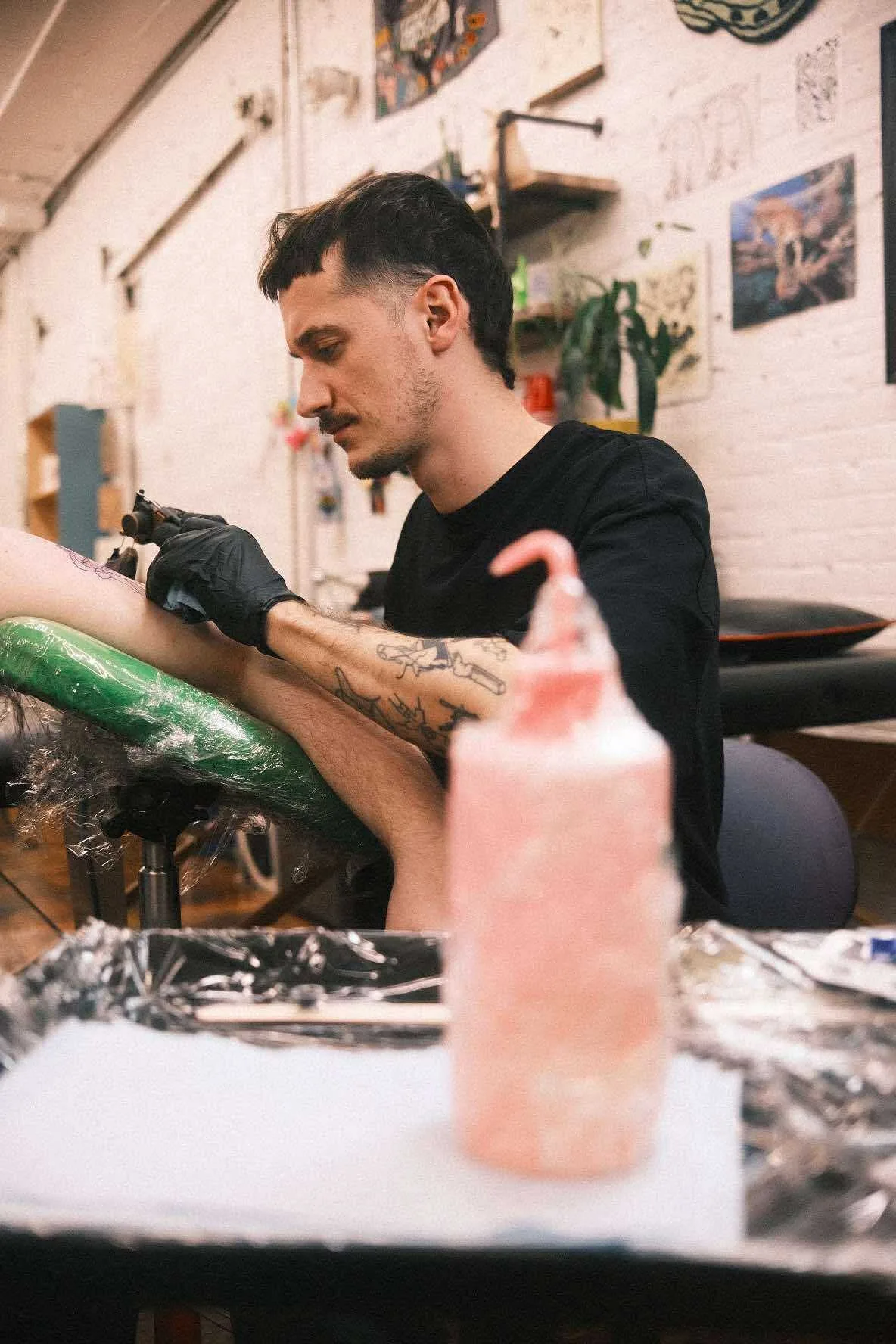
— I’m based in Kraków, at a studio called Europa Tattoo Shop, but I travel regularly. I work in different studios around the world — mostly across Europe for now, but I keep going farther and farther. George can’t be stopped. Traveling has become a big part of my work and helps keep it from feeling repetitive.
What are your plans for the future?
— I don’t like planning too far ahead. So far, everything has developed naturally, and I’d like to keep it that way.
I’m currently working on a comic project — something more story-driven and personal. I’m also interested in exploring physical objects and collectibles: plushies, art prints, playing cards, and stickers.
We’ll see how far George can go.