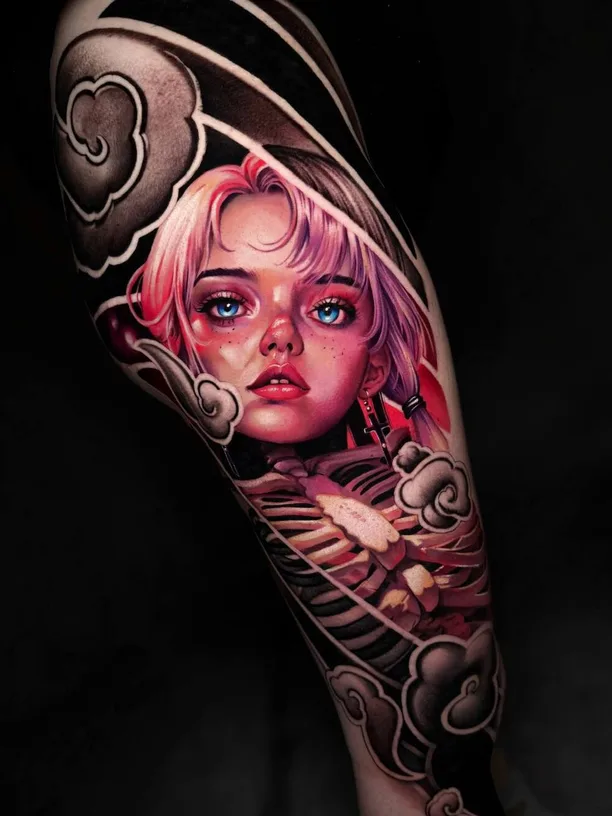
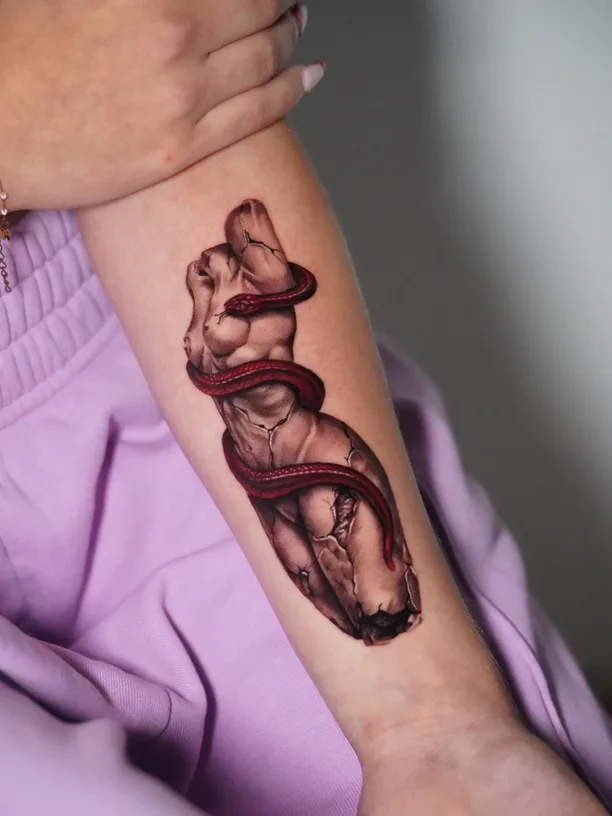
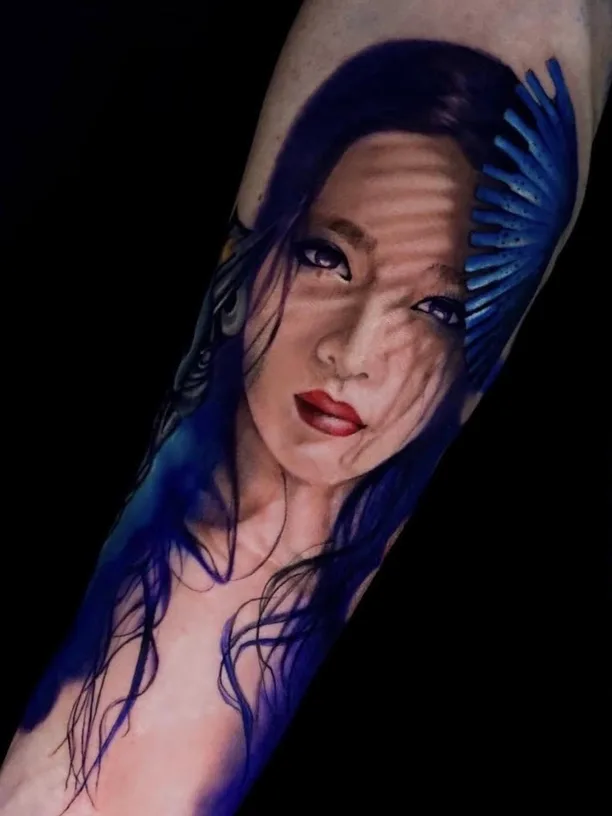
Anastasiia Kravets is a tattoo artist with more than nine years of experience, originally from Saint Petersburg, now based in Colorado and actively traveling for guest spots around the world.
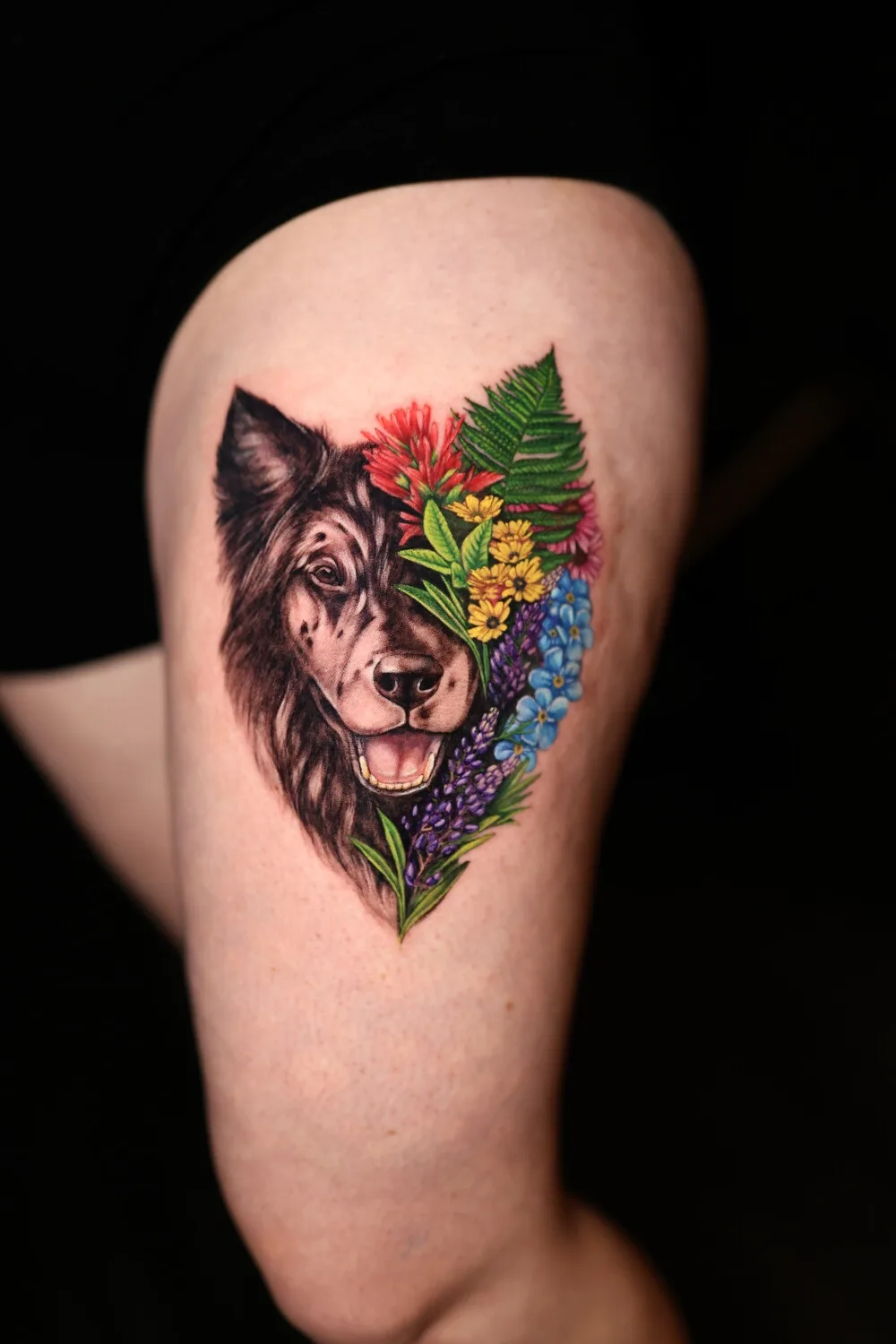
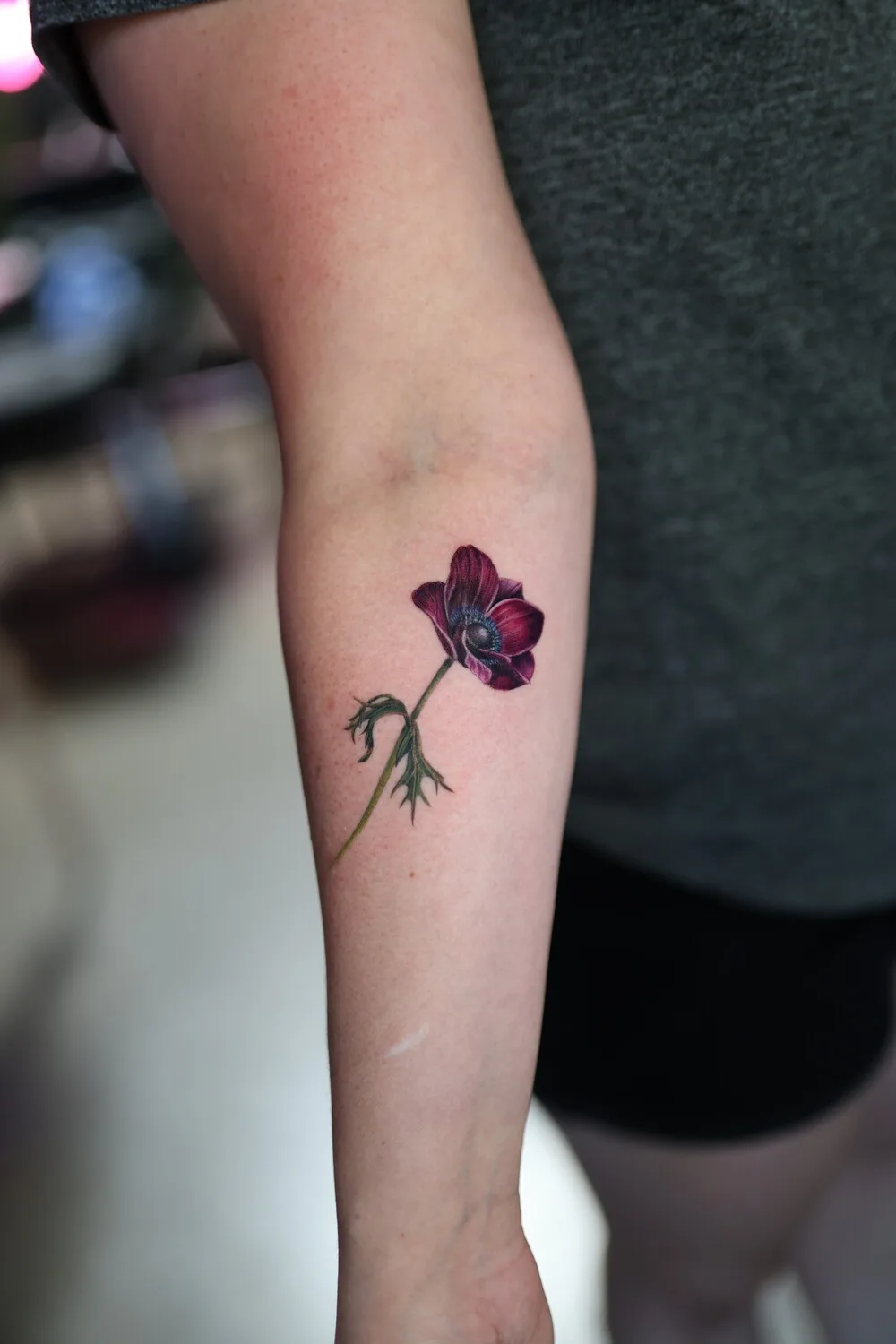
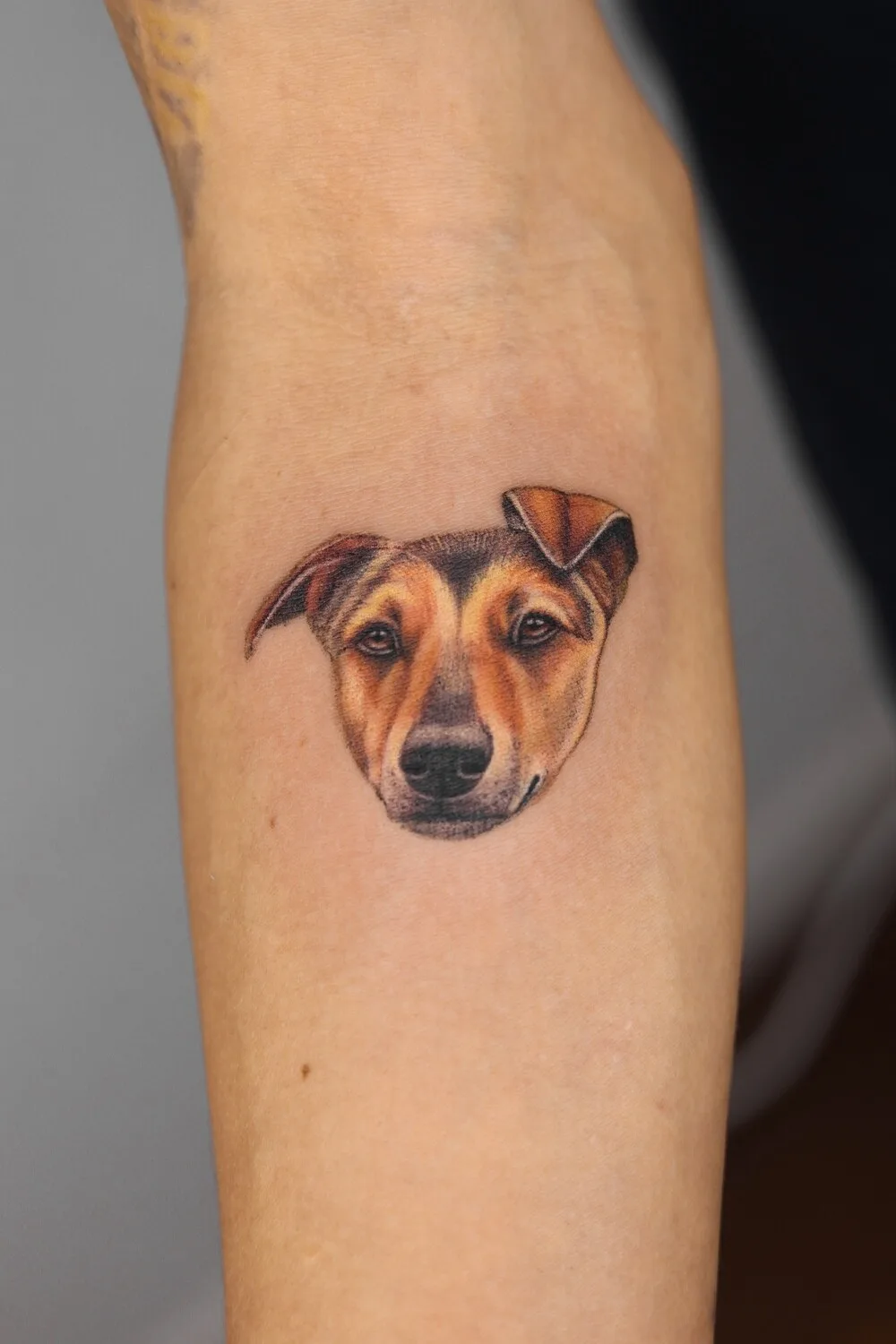
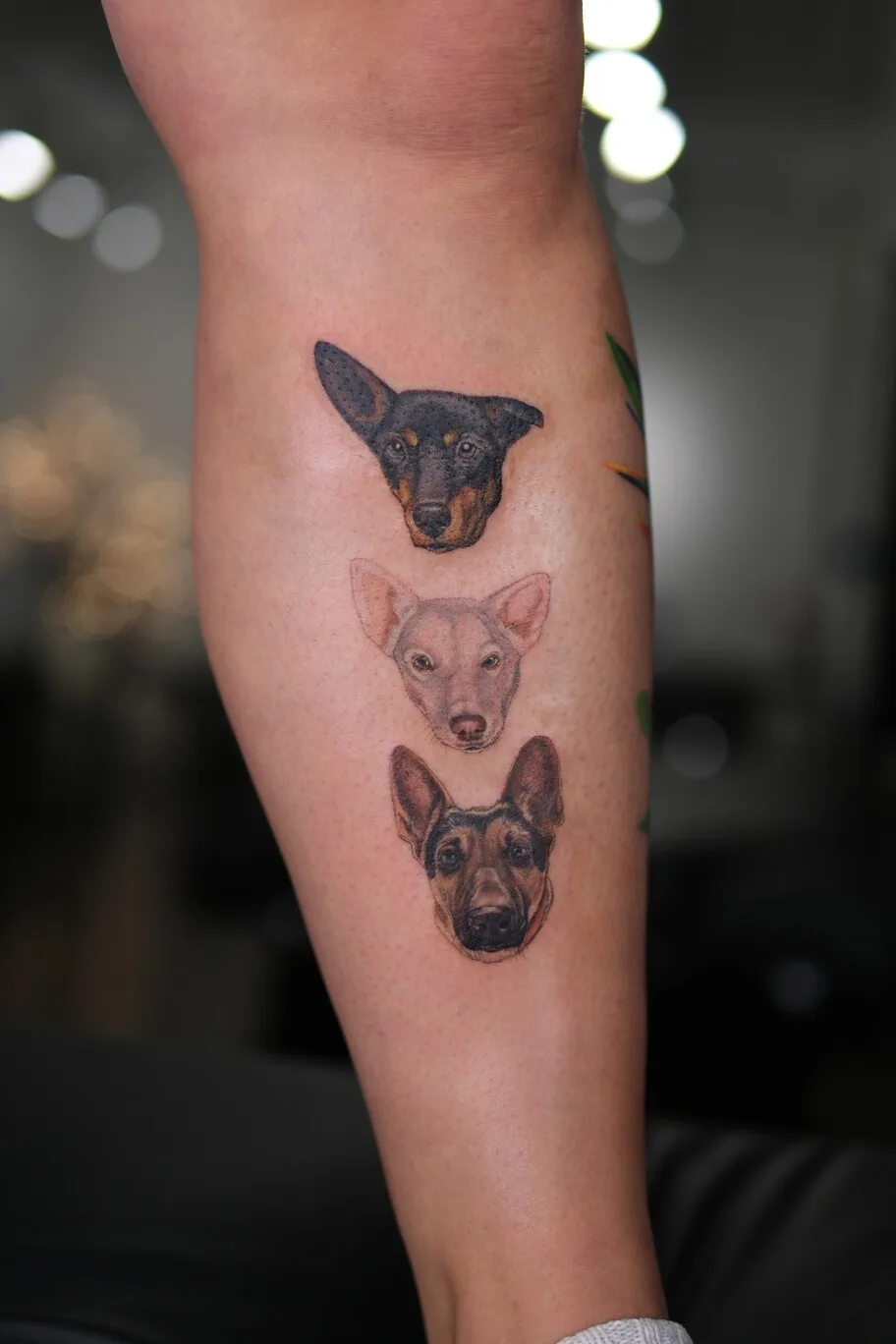
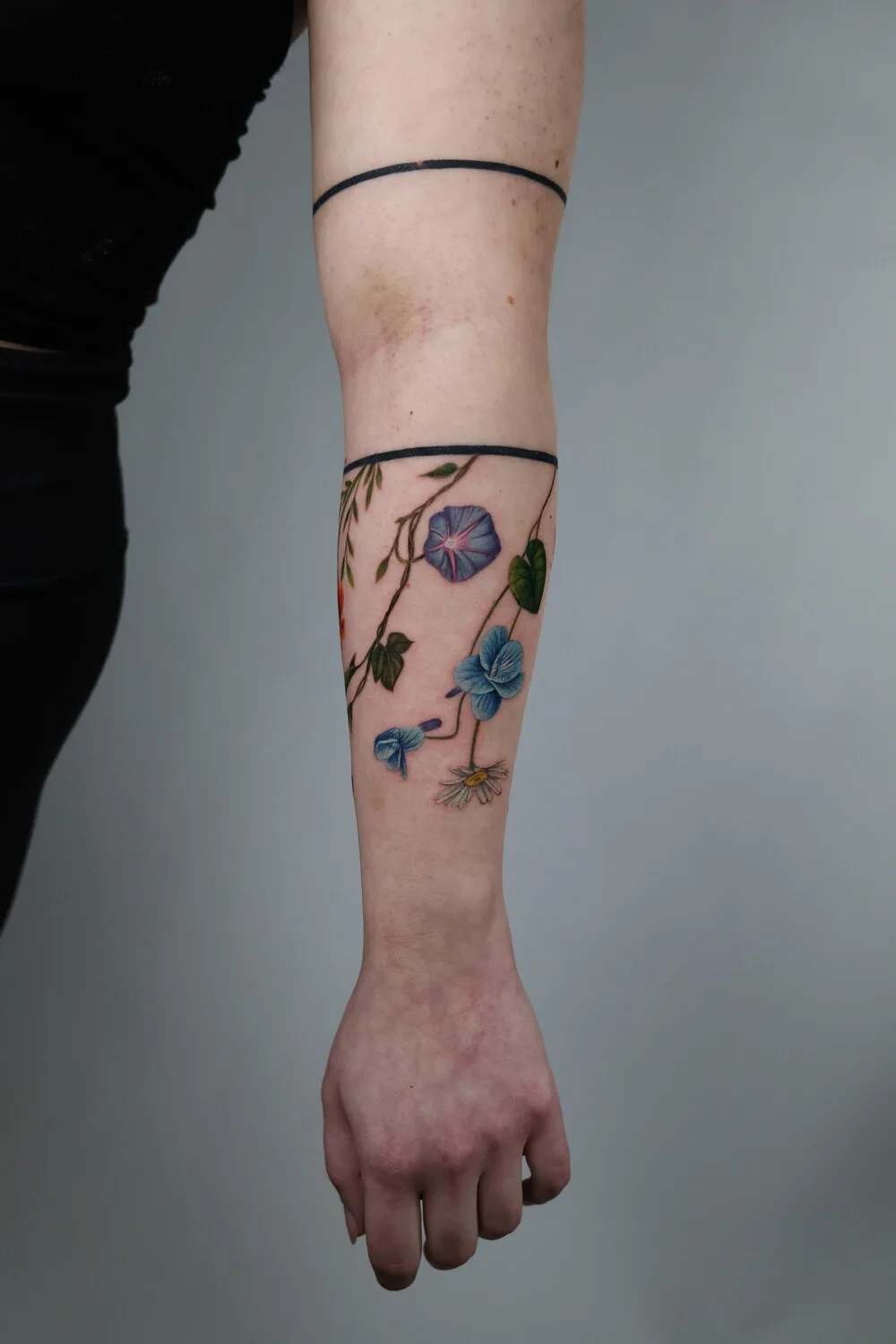
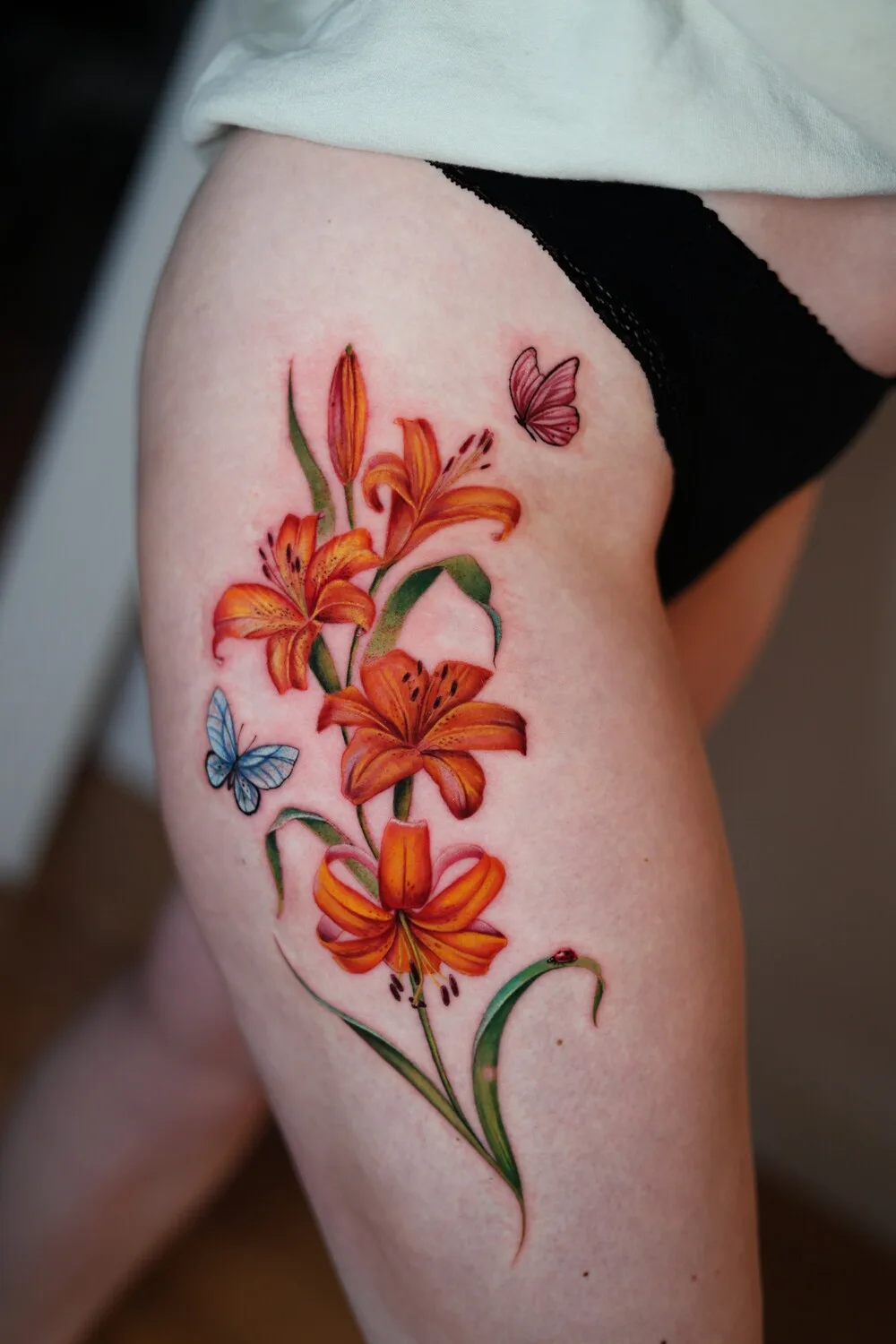
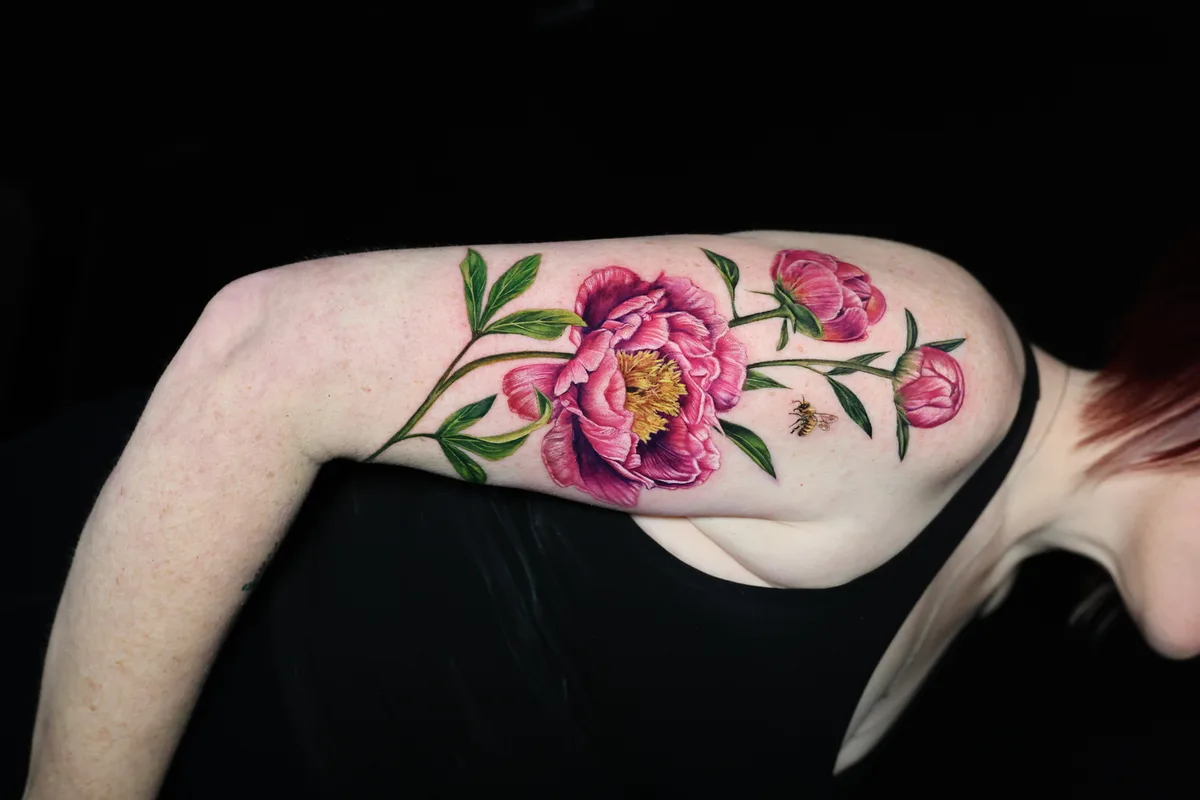
Her style sits at the intersection of botanical art and painting, with color compositions inspired by oil painting techniques. Plants and flowers form the core of her work, often complemented by birds, animals, insects, and pet portraits, giving her tattoos a sense of living, breathing nature.
In this interview, Anastasiia shares her journey, artistic approach, and the evolution of her distinctive style.
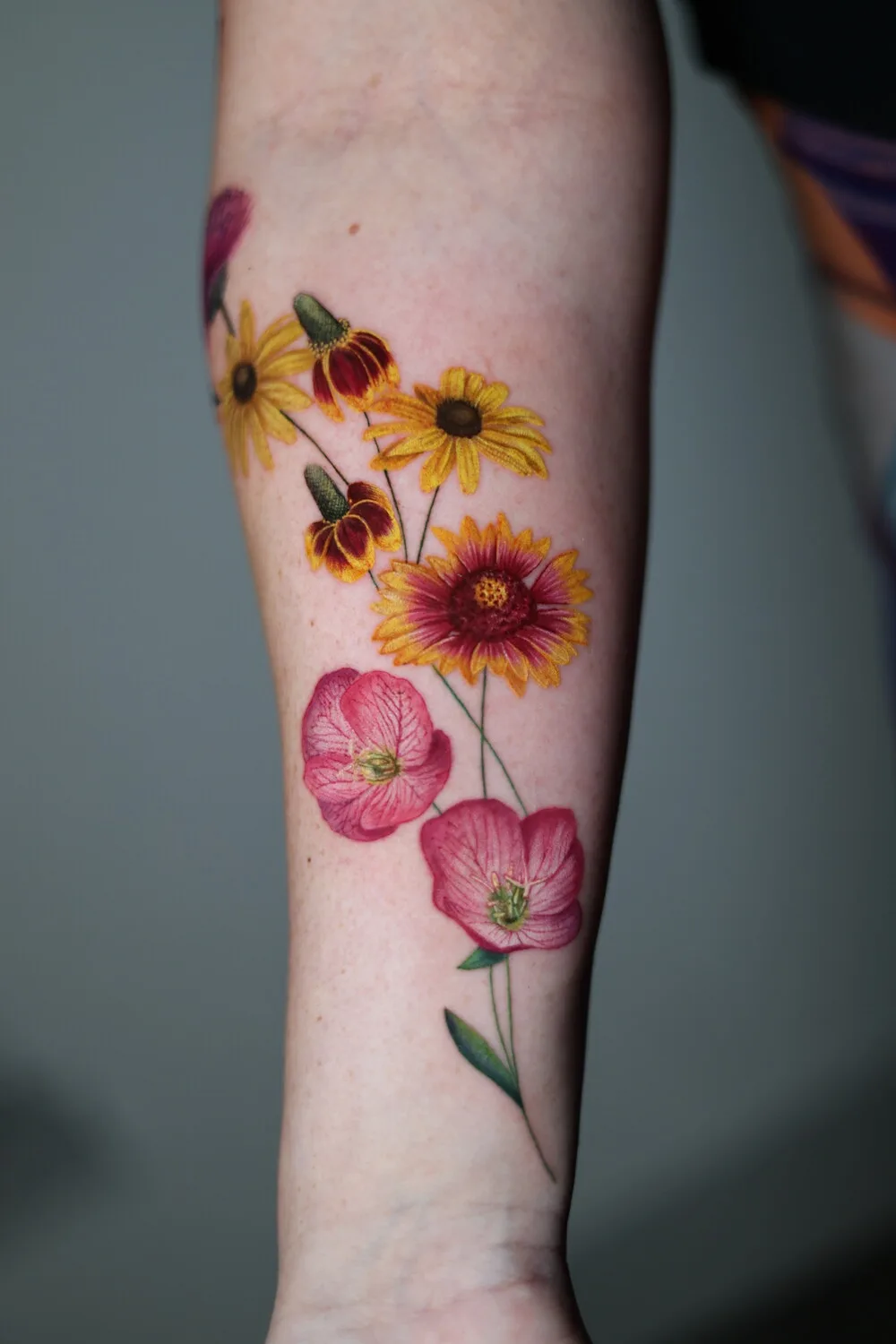
What did you do before tattooing? Why did you decide to become a tattoo artist?
Aren’t you tired of all those shiny “overnight success” stories? No? Interesting...
I’ve wanted to draw for as long as I can remember. Yet somehow, for the first twenty years, that dream kept slipping away from me — like the last ray of sun at dusk. And every time I felt I was finally close enough to catch it, the alarm went off, and I had to wake up from my dream.
It’s a familiar story — maybe a little too familiar. You live your “normal” life, waiting for that Hogwarts letter, hoping something will finally shift. But it never does. You just keep going — building something practical, respectable — while trying to silence that small voice inside whispering, “You know this isn’t what you want.”
And honestly? It’s terrifying to start living the life you actually want, especially when you suspect your art will never really pay the bills. And then, out of nowhere, my husband starts asking me these super random questions:
“Do you still want to draw?”
“Yeah, of course.”
“Ever thought about tattooing?”
I laugh. “Tattooing? What do you mean?”
“It’s still drawing,” he says. “You’re just doing it on skin.”
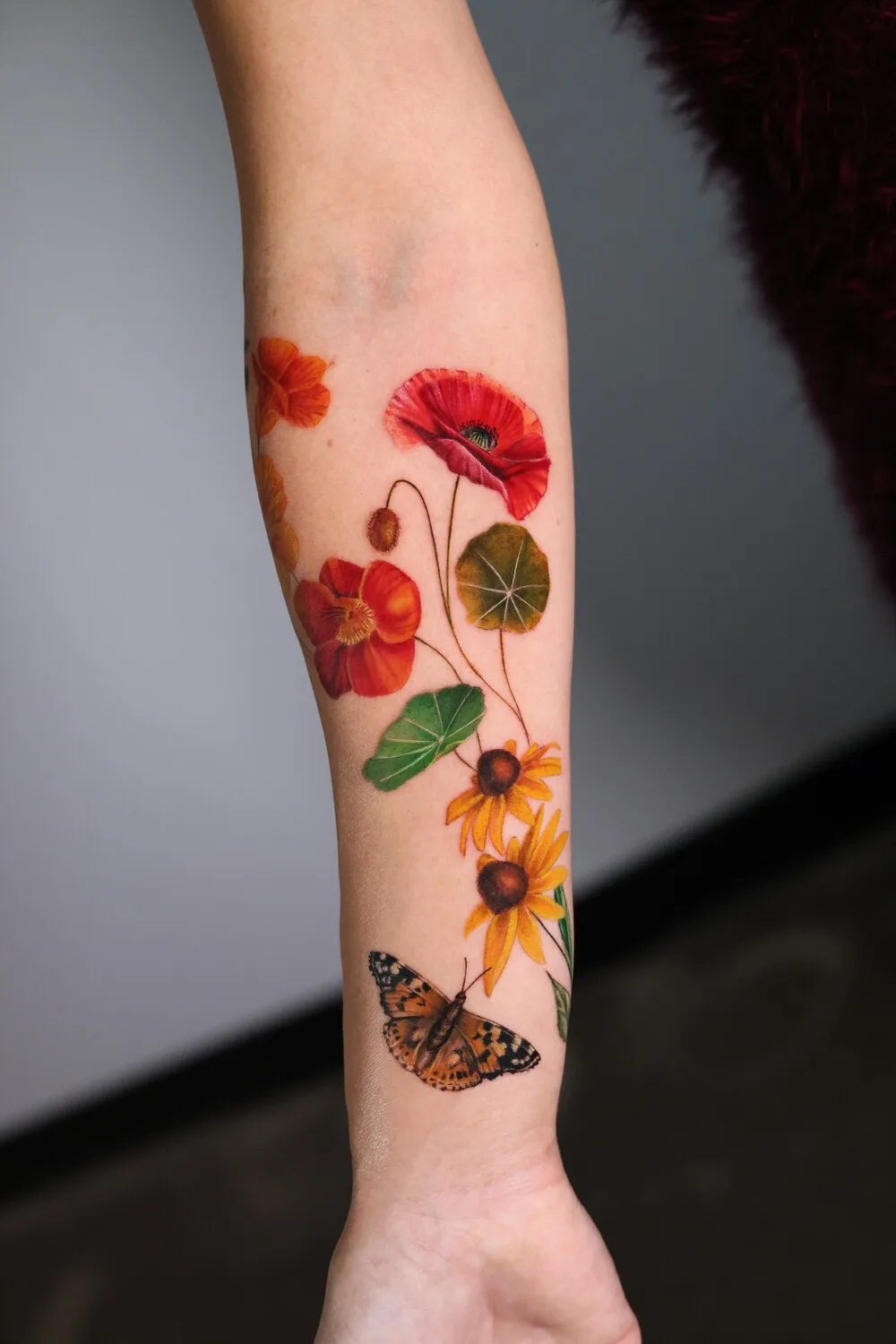
He drops this line and calmly goes back to what he was doing, leaving me with that one stubborn idea in my head, like a seed refusing to die. Before I knew it, I was falling down the rabbit hole of tattooing — reading, sketching, watching, learning everything I could. And you know what? I loved it.
Then came my first cheap machines, my first models at the studio where I was working, my first money — enough for my needles, sometimes a tip on top. Small, but earned. Models turned into clients, clients into dozens, dozens into hundreds, hundreds into thousands. Somewhere in there the money turned into a living. And suddenly more than nine years had passed. I barely noticed.
There’s a famous line usually attributed to Bukowski: “Find what you love and let it KILL you.” I’ve always felt the opposite: “Find what you love — and let it HEAL you.” Everything I have, I owe to tattooing. I give it all of myself, and in return, it gives me the chance to be who I truly want to be.
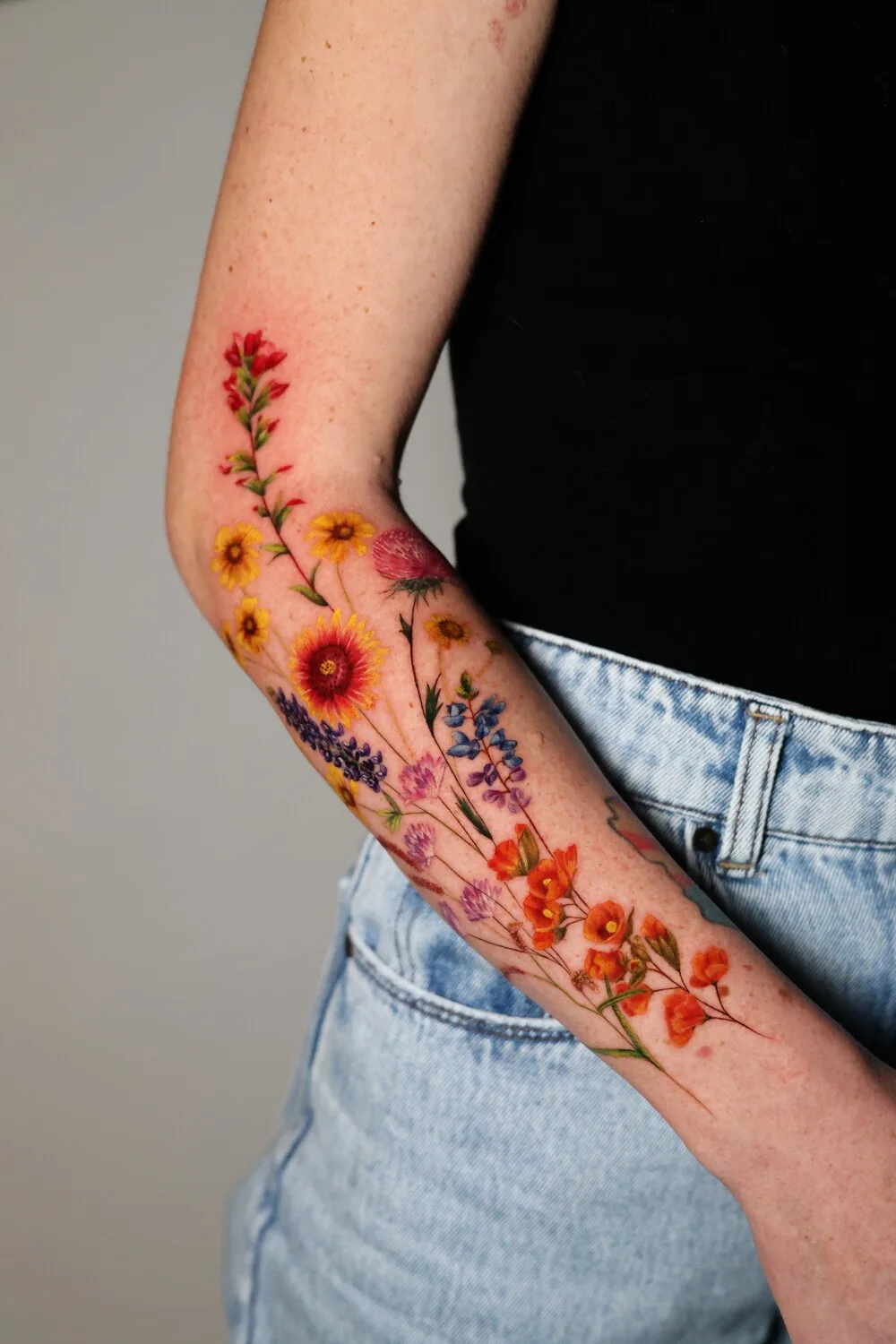
How did you come to develop such a unique style? Realistic, oil-like flowers and animals — did I forget anything?
If you want the nice version — I just got lucky. If you want the truth — I worked hard to be ready to catch my break when it finally came.
No one thinks about “style,” “uniqueness,” or their own “signature” at the beginning. At first, you just love tattooing. You take on any work that comes your way — anything at all. Minimum money, maximum styles. That’s how experience grows.
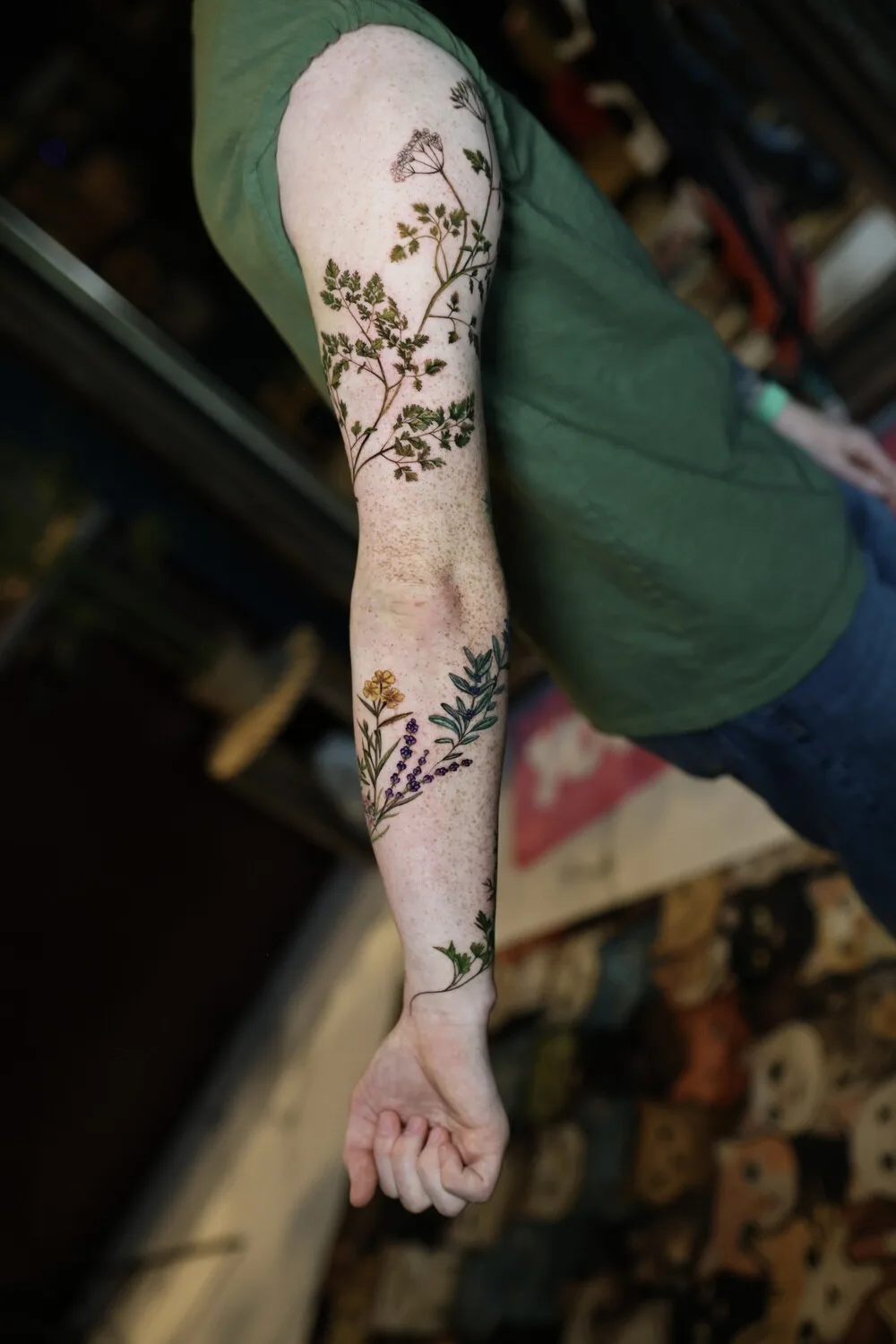
You start with one new style after another, constantly pushing yourself. It hurts, it’s scary, you mess up again and again — and that’s exactly how you learn. You live under constant pressure from your own expectations and ambitions. You’re always trying to run faster. And faster. And even faster.
Because in a creative profession, it takes all the running you can do just to stay in the same place — and if you want to get somewhere, you have to run twice as fast. That’s how character gets forged. That’s how skill is built. That’s how ancient carbon turns into a diamond.
I knew that if I wanted to succeed in tattooing, I would have to live under high pressure for quite a while. And for several years, I endured it. I kept telling myself that sooner or later I would find my own style.
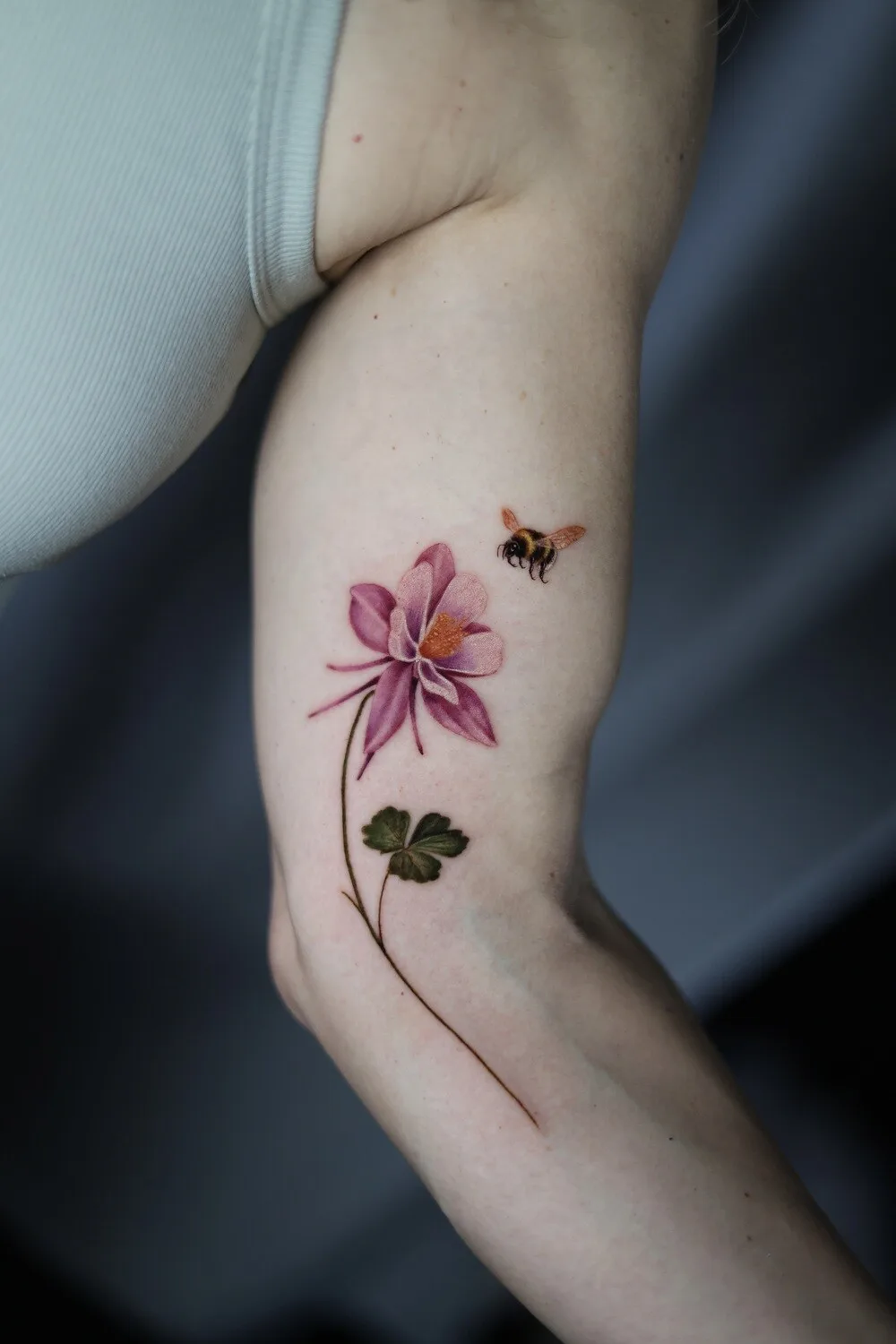
Even when it felt like everyone around me had found theirs within six months, and five years later I still couldn’t answer the question: “What’s my uniqueness? What tattoos do I truly want to create? What is my style?” And you know what? I didn’t have one. Imagine that!
For the first five years of tattooing, I didn’t have my own style. Sure, here and there you could spot my hand — my touch. Some tattoos I did more often than others.
But still — no distinct style, no clear direction. I just worked, waited, and believed that one day, luck would smile on me and I’d finally be able to answer everyone, including myself, what made my style unique.
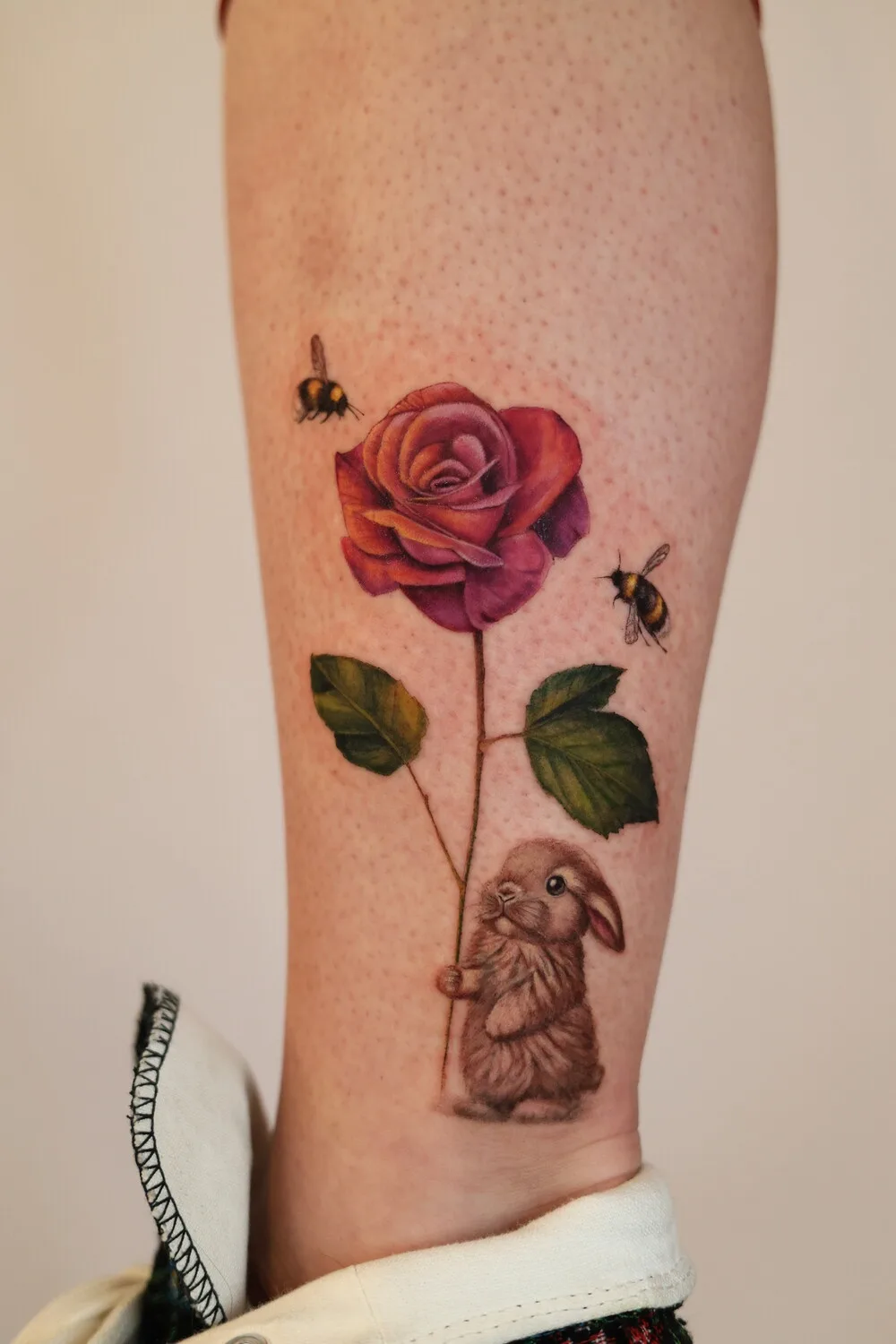
It took a few more years. But I still remember the day it happened. Early autumn. My husband and I were on the road out of Forks, where we’d just seen every one of my favorite Twilight spots. Warm sunlight through the window, our favorite artists playing. I felt calm. Peaceful.
Out of my last fifty tattoos, thirty were done in my current style. I loved working in it so much that I didn’t want to do anything else. I had enough clients. Enough money. Enough drive. Enough confidence. Enough curiosity.
I thought: Enough! Enough of black-and-white tattoos, enough of fine line, enough of lettering. Enough of everything that stopped exciting me, everything that no longer brought me joy.
At that moment, I had everything I needed to make a decision — and I made it. I decided to stop doing anything that didn’t inspire me. From that day on, I promised myself to work only on what felt truly interesting, unique, and meaningful — on what makes my eyes light up.
And that’s how I finally found my own style.
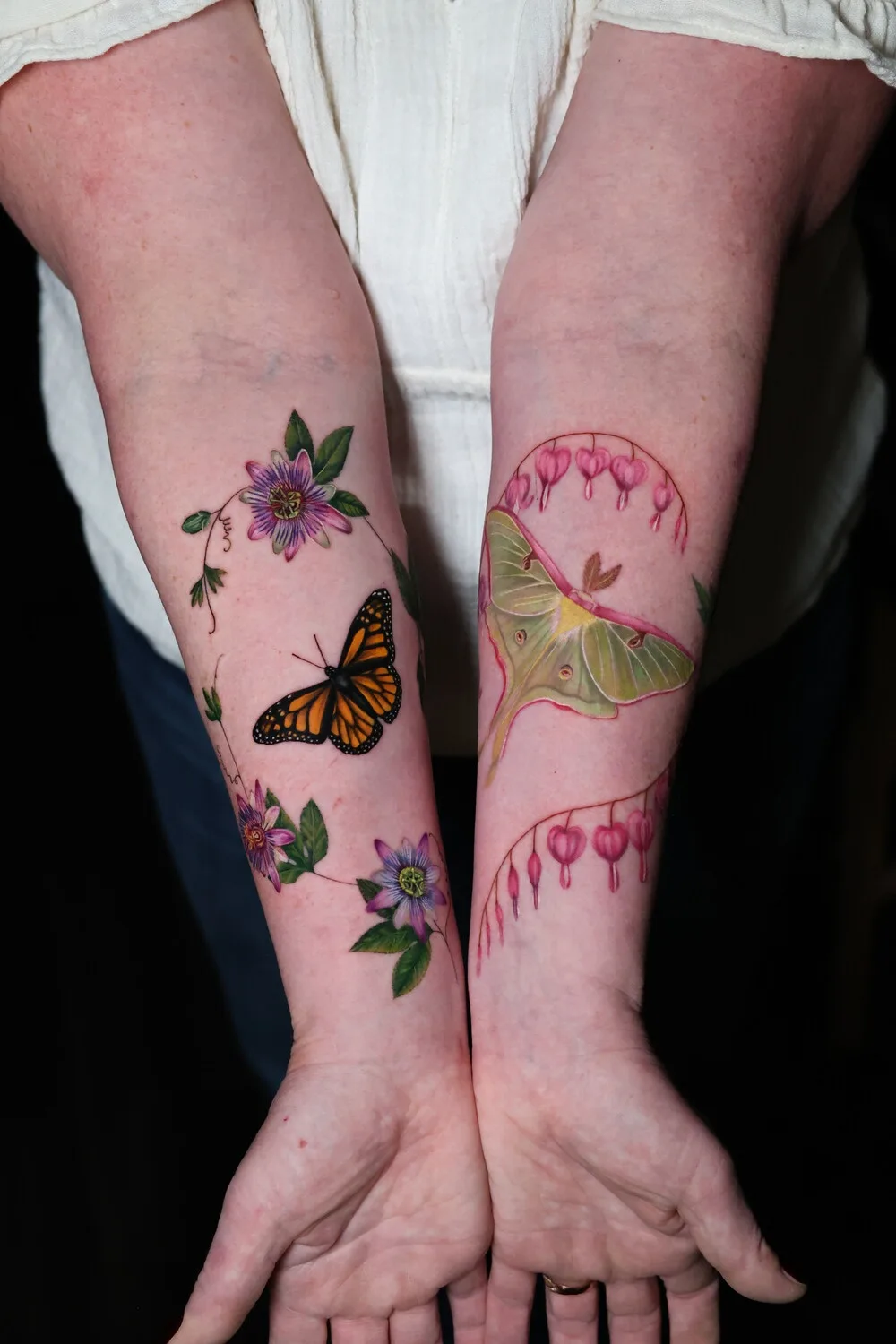
What matters more to you — the aesthetic of a tattoo or its meaning to the client?
Let’s imagine this: you’re a film director. In front of you is Michael Jordan. You’re shooting a commercial, and in the script the very first shot has to miss. But he takes the ball and scores. Then again. And again.
How many takes do you think it would take before MJ finally misses the hoop? Ten? Thirty? Fifty? The story goes it took nine hundred.
Nine hundred times — so the legend has it — Jordan threw the ball and simply couldn’t miss. Nine hundred times all those years of work paid off. Nine hundred times he proved exactly why he’s considered the greatest.
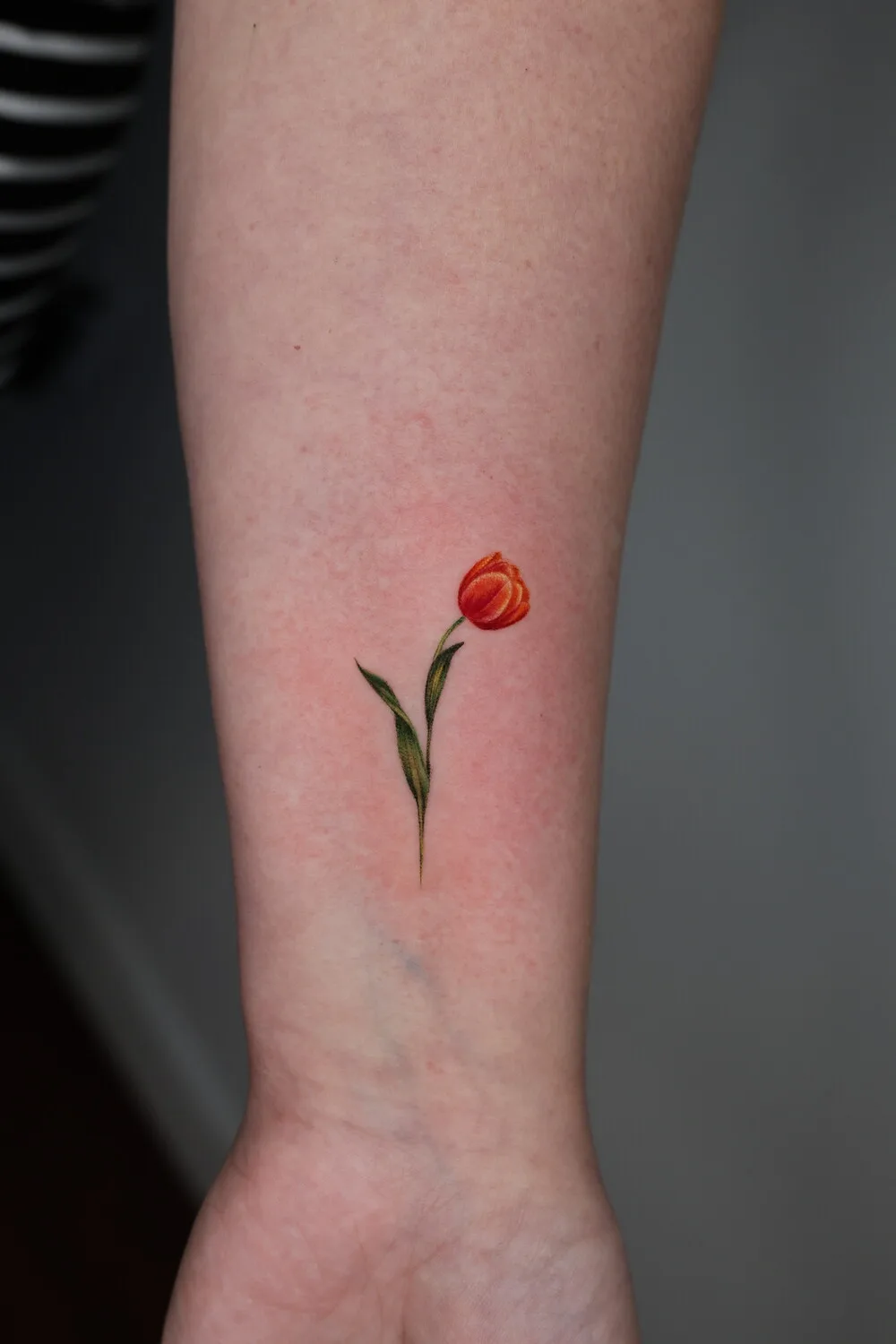
I want to believe that what I do is beautiful — that my tattoos are aesthetic. Feminine, graceful tattoos are my core specialty. It’s what I’ve been working on all the time I’ve been in tattooing. It’s the central element of everything I create. It’s my core. Without that sense of beauty, there is no “me” as an artist, and there are no tattoos that feel like mine.
Since I don’t do tattoos based on pictures from the internet — I design all my sketches myself, personally, always — it’s honestly hard for me to answer this question. Because for me, that choice simply doesn’t exist, never has and never will. No matter what the client’s idea is, my tattoo has to be aesthetic. And it will be.
Even if I tried to ignore aesthetics completely, the result would still be refined. For one simple reason — I just don’t know how to do it any other way.
Are there any styles or themes you fundamentally refuse to work with, and why?
Oh, that one’s much easier to answer by saying what I do take on rather than everything I don’t.
Right now I work exclusively in my own style, which is constantly evolving. So if you like what I’m doing at the moment, I’d honestly suggest booking sooner rather than later, because in a year or two I might be doing completely different tattoos and turning away from the style I’m working in now.
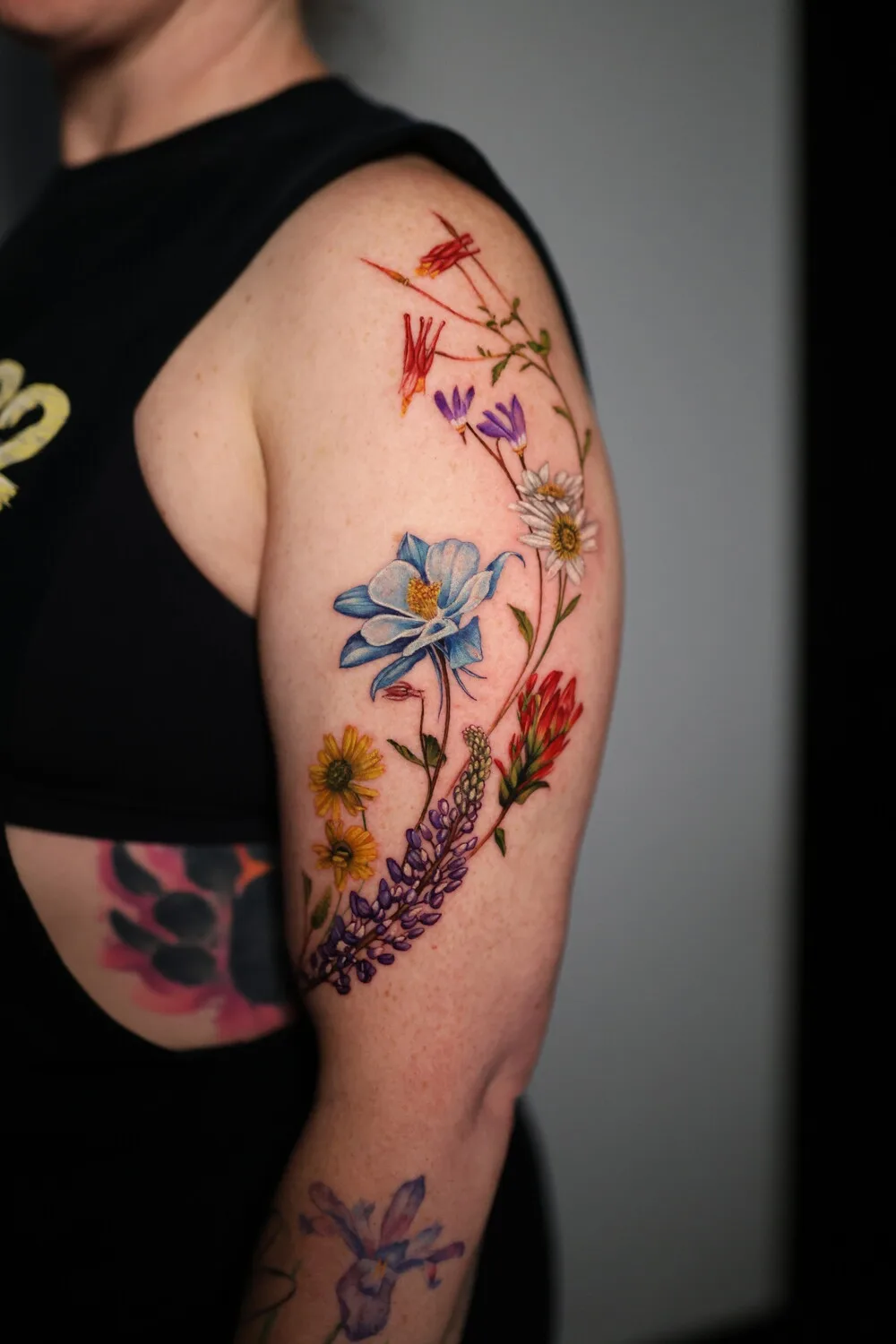
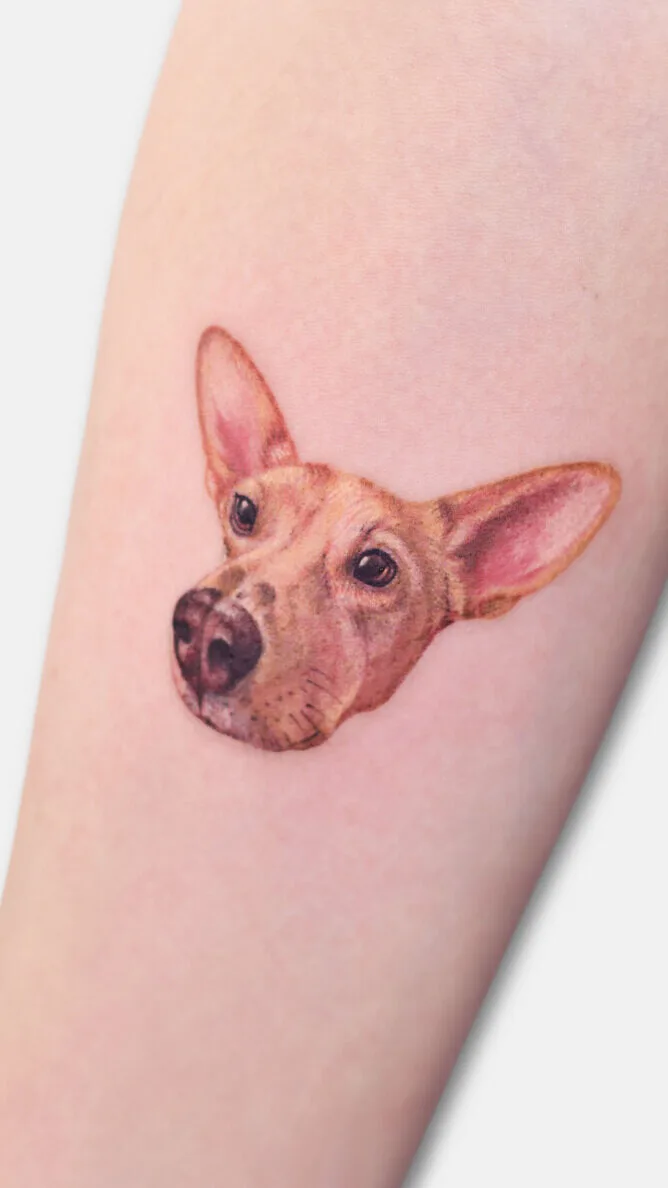
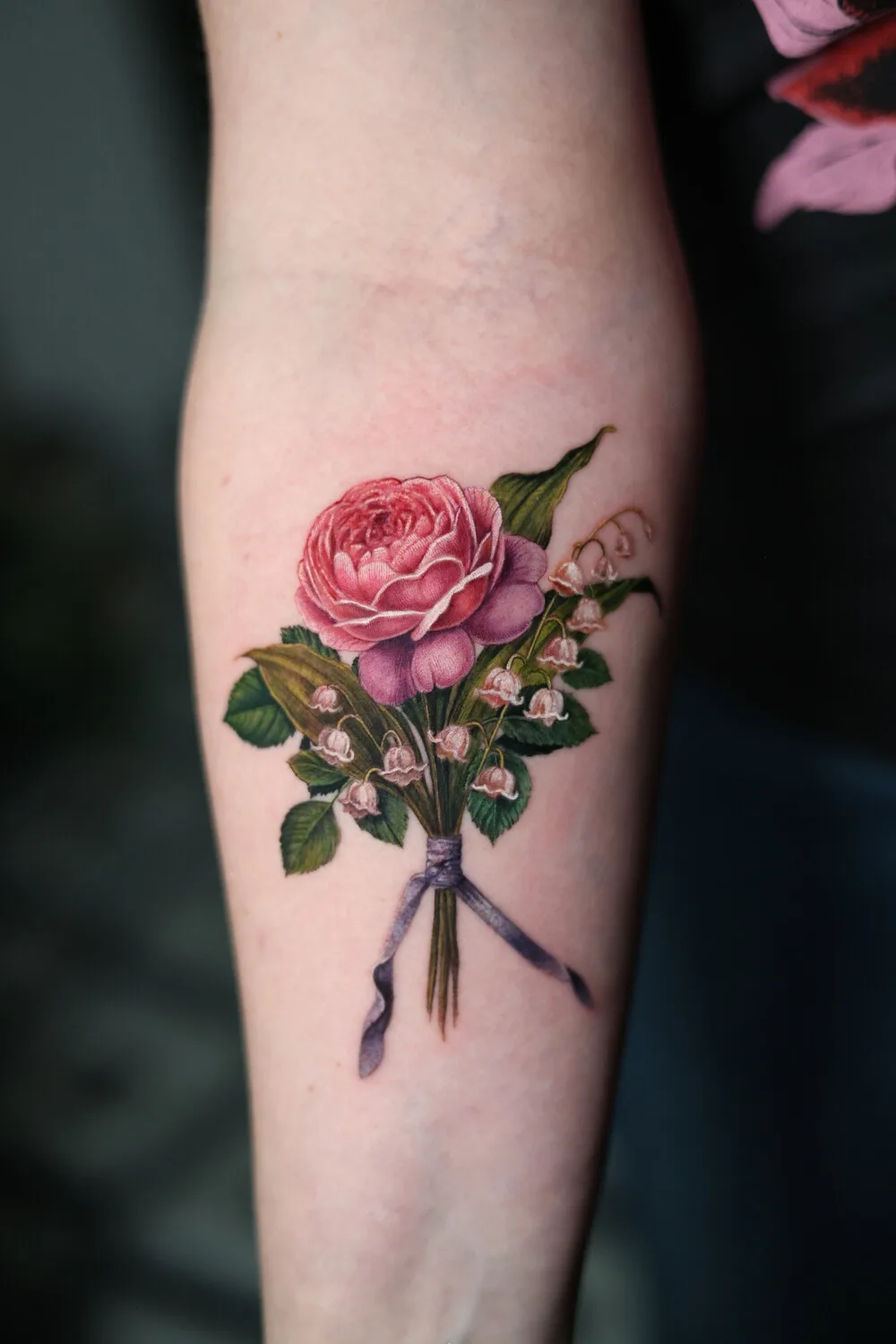
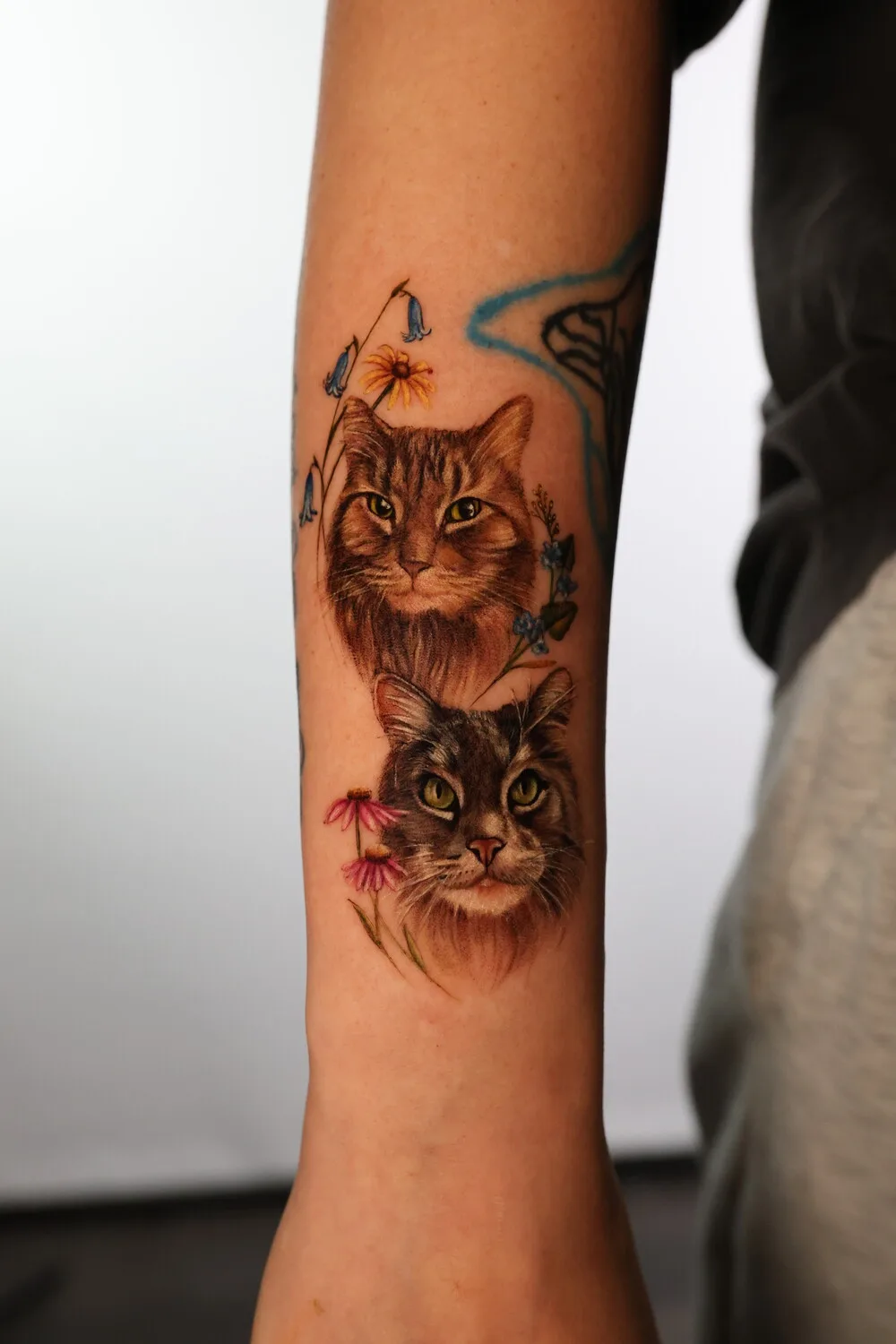
My style combines realistic botanicals in an “oil painting” technique with realistic portraits of animals, birds, bugs, spiders and all sorts of little creatures. Recently, fairies and more magical themes have started to sneak into it too. What comes next — only God knows. And as we all know, He doesn’t give clear, straightforward answers.
All my tattoos and styles are just a path I’m walking. There was a time when I loved doing black-and-white ferns. Now that’s my worst nightmare.
And that’s exactly why, to be honest, it makes no sense for me to list what I “definitely don’t do.” If you want to make God laugh, tell Him about your plans. Questions like that are better addressed to people who don’t change at all. Those guys can easily predict their future because they’ll always work in the same style.
My advice to anyone who feels drawn to my work is this: “Guys, thank you for your interest, I truly appreciate it. Open my Instagram, look through the last ten to twenty tattoo photos and honestly ask yourself: are you ready to get something in that kind of style on your own skin?”
What do you think separates a truly great tattoo artist from just a good one?
If we’re not really talking about the essence, then I’ma plead the Fifth, right?
For me, as someone inside the tattoo industry, there’s really only one criterion that matters: the result. I honestly don’t care if an artist is difficult to talk to, has a heavy personality, or seems a bit in a world of their own.
Why? Because that’s exactly the kind of person I’m probably going to look for. I’ve seen enough work to recognize that there might be a genius sitting in front of me. And geniuses, as we all know, are almost never easy to communicate with.
Personally, I want that mad alchemist, that creator obsessed with their craft like Van Gogh. Not because it’s trendy, but because that’s my taste: I’m drawn to people who are different, to those who stand out from the crowd. I love realizing that the person in front of me isn’t just an expert, but a glimpse of what the industry will look like in ten or twenty years. A messiah, in a way.
They usually flash an annoying little smile and say something like: “I got the world in my hands, you can have it too. I got two middle fingers, and they’re pointed at you.”
A beautiful story, right? But definitely not for everyone.
Especially when you remember how easy it is to mistake this kind of “genius” for a regular, everyday, normal “incompetent” — a childish idiot who talks a lot about themselves but can’t actually deliver at a high level. That’s why, for someone who hasn’t spent years inside tattoo culture, I genuinely hope you don’t fall for this pretty story like a sailor for a siren’s song. It sounds cool, but believe me, the idea of “hunting for a genius” can easily end up eating you alive.
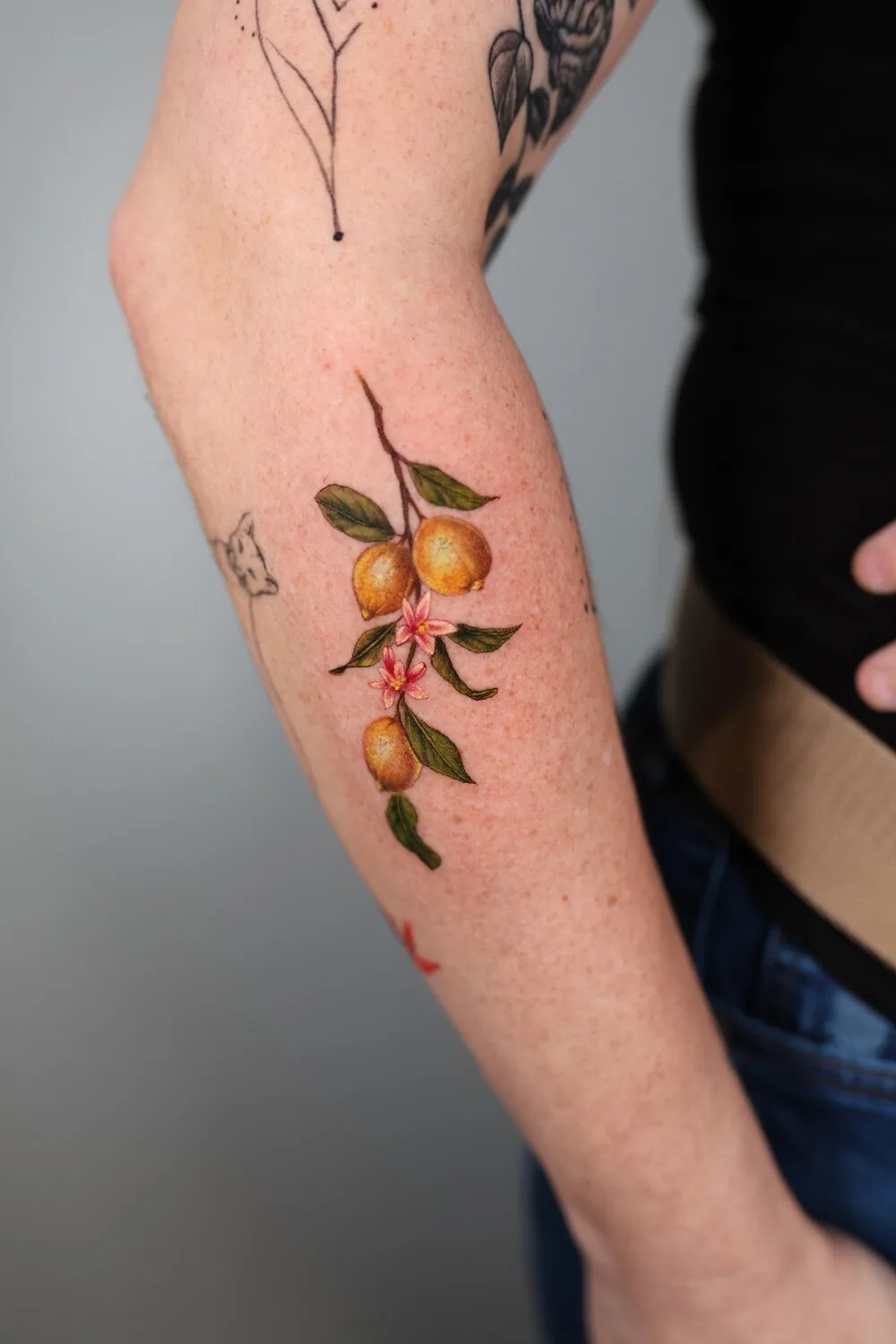
If we come back down to earth and look at normal people who know how to communicate calmly and respectfully, the criteria are actually very simple.
First: admit that chasing the philosopher’s stone is a job for alchemists. If you’re not an “alchemist,” that is absolutely fine.
Second: look at the artist’s work. You either like it or you don’t — be honest with yourself.
Third, and most important: their attitude. Portfolios can be stolen, Instagram can be boosted and hyped, but you can’t fake how someone treats you. That always shows.
If you ever decide to sacrifice the artist’s attitude for the sake of “quality,” make sure you’re really dealing with a genius. If not — don’t let yourself be fooled. Give yourself time to think.
In my view, you should genuinely like the artist’s work, and you should feel comfortable and safe interacting with them. If at least one of these is missing — stop. Take a closer look. Don’t rush. Talk to other artists. And never, ever make a decision about a tattoo on intense emotions. Emotions, no matter what they are, pass quickly. A tattoo stays with you for life.
How did your parents/partner react to you becoming a tattoo artist? Were there any conflicts?
To understand everything I’m about to talk about, I need to give you a bit of context. My parents are Russian — and Russian family culture is a world of its own.
Picture the most overbearing movie family you can think of: the kind where every relative has a detailed plan for your life, zero doubts about it, and no intention of keeping it to themselves. Got it? Visualized it? Now multiply that by ten — and you’ll get a rough idea of what a Russian family can look like.
I’ve been doing tattoos for more than nine years, and yet my grandmother, every time she answers my call, instead of the usual “Hi, my dear granddaughter,” says something like: “When are you finally going to find yourself a normal job? You studied at the Faculty of Mechanics and Mathematics, you could work as an accountant in an office.”
For the first five years of my career, my mom was convinced that every workday was a risk to my life. In her mind, I was tattooing exclusively dirty, drunk, aggressive bikers who start endless fights and orgies right there in the studio — probably all at the same time.
My father kept joking that in Russia only people who have been to prison get tattoos. That all my clients are ex-cons, and I should be very careful with them and always carry pepper spray. To him, all my success is just a coincidence, my work is a temporary phase, and the only truly sensible idea is to find a stable position in a big company.
Did I have conflicts with them? At first, no. It was much easier to just listen to all of this than to try to explain anything or argue.
But over the last five years, after they saw the financial side of my so-called “success,” they changed their tune very quickly — from “You’re tattooing shady ex-cons and this isn’t even a real job” to “You’re so amazing! We always believed in you and knew you’d make it!”
You know, in this situation, smiling and saying, “Thank you for always believing in me,” turned out to be much more fun, pleasant, and easier than asking, “Have you completely lost your mind?”
That’s all from me.
What was the most important turning point in your tattoo career?
A winter Sunday morning in Saint Petersburg. Five degrees below zero Fahrenheit. I cling to the bridge railings with both hands, crying loud enough for the whole street to hear, as my husband tries to pry me loose and pull me along.
Two hours earlier. At home.
“Are you sure about this?”
“Yes.”
“I’m scared, I don’t want to go. Let’s cancel everything!”
“No.”
“What if I’m faking all of it, and they can all tell?”
“Then it’s okay. It’s not the end of the world.”
“And what are we going to do with the tattoo machines we’re about to spend all our money on, plus our parents’ money?”
“I’ll just sell them online.”
“What if I disappoint everyone’s expectations?”
“You’ll just try. Get dressed and let’s go.”
On the way there.
“I can’t do it, I won’t make it! We have to cancel this!”
“I don’t care.”
“Your parents and my parents gave us this money, I can’t just spend it on myself.”
“I don’t care.”
“I’m not going anywhere! I’ll grab these railings and stay right here!”
“For God’s sake…”
At the shop.
“We need this machine,” my husband says.
“Which power supply?” the salesman asks.
“None! We’re going home!” I protest. “I’m not buying this machine!”
“A dual-port power supply, please,” my husband replies calmly.
“That’ll be sixty thousand rubles.”
“Here you go, thank you.”
“This is horrible! We spent all our money! I feel so guilty!”
“Yeah, yeah…”
On the way home.
“So, can’t wait to try the machine?”
“Go to hell.”
“Come on, it’s only all our money. Why are you so worried?”
“Shut up! It’s not funny! I hate you!”
When we got home, the machine went straight back into its box on the shelf. For the next three days I just walked past it, pretending it didn’t exist. I wouldn’t touch it, wouldn’t look at it, didn’t even want to hold it in my hands.
I felt guilty. I felt responsible for all of it. I was terrified of not living up to expectations and letting down everyone close to me.
I’d been tattooing with cheap machines for a while by then, still learning as I went. This was to be my first professional one. It cost a thousand dollars — but with Russian salaries it felt more like ten thousand. I was scared of everything — of working with it, of dropping it, even of just picking it up.
The biggest, hardest, and scariest moment in my tattoo career happened on the fourth day. That was the day I finally took the machine in my hands and did my first tattoo with it. It was the moment after which nothing in my life was the same.
The decision that was hardest for me to make turned out to be the one that changed my life the most.
What qualities are essential for a tattoo artist beyond artistic talent?
Just like in any other profession, for a tattoo artist, the most important thing is humanity. The ability to listen and truly hear. To understand and accept. The desire to help people.
Regardless of how strict a tattoo artist’s “no refund” policy is, if a client says, “I’m sorry, I can’t make it — a loved one’s been diagnosed with cancer, and I need the money for treatment,” and the artist still refuses to return the deposit…
If they choose to keep that money, no matter how impressive their credentials or portfolio might be — they’re not a good tattoo artist. That’s simply inhumane.
Compared to humanity, money is nothing but paper, gold is just another metal, and diamonds are only ancient carbon that’s endured an eternity of pressure.
If a client isn’t sure about a tattoo, and the artist still makes them sit for it just because the day’s booked — that’s a bad tattoo artist. If an artist just takes orders without trying to understand the client’s idea or add anything of their own — that’s not a good tattoo artist.
A good person knows when to stand their ground and when to step back. They know when to make a tough choice, and even when they’re completely right, they still choose what’s human over what’s in the contract. A good person keeps their word, stays fair, and knows when enough is enough. They avoid conflict not because they can’t win, but because they don’t want anyone to lose.
The ability to stay human — to keep your mind cool and your heart warm — is one of the most important qualities for any professional, including a tattoo artist.