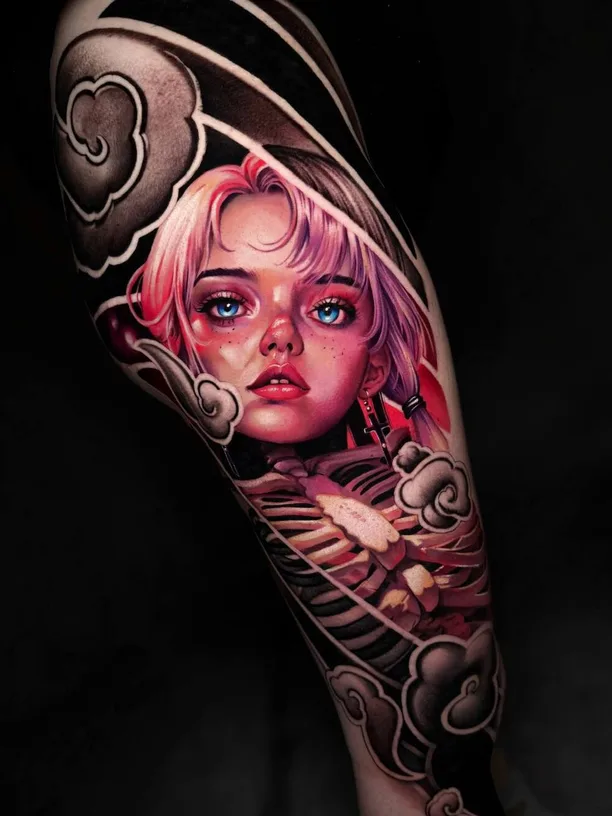
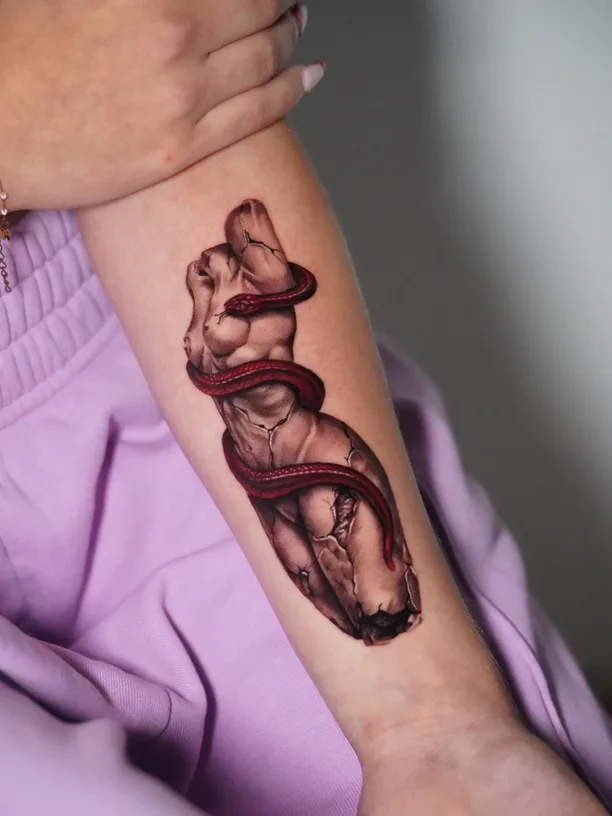
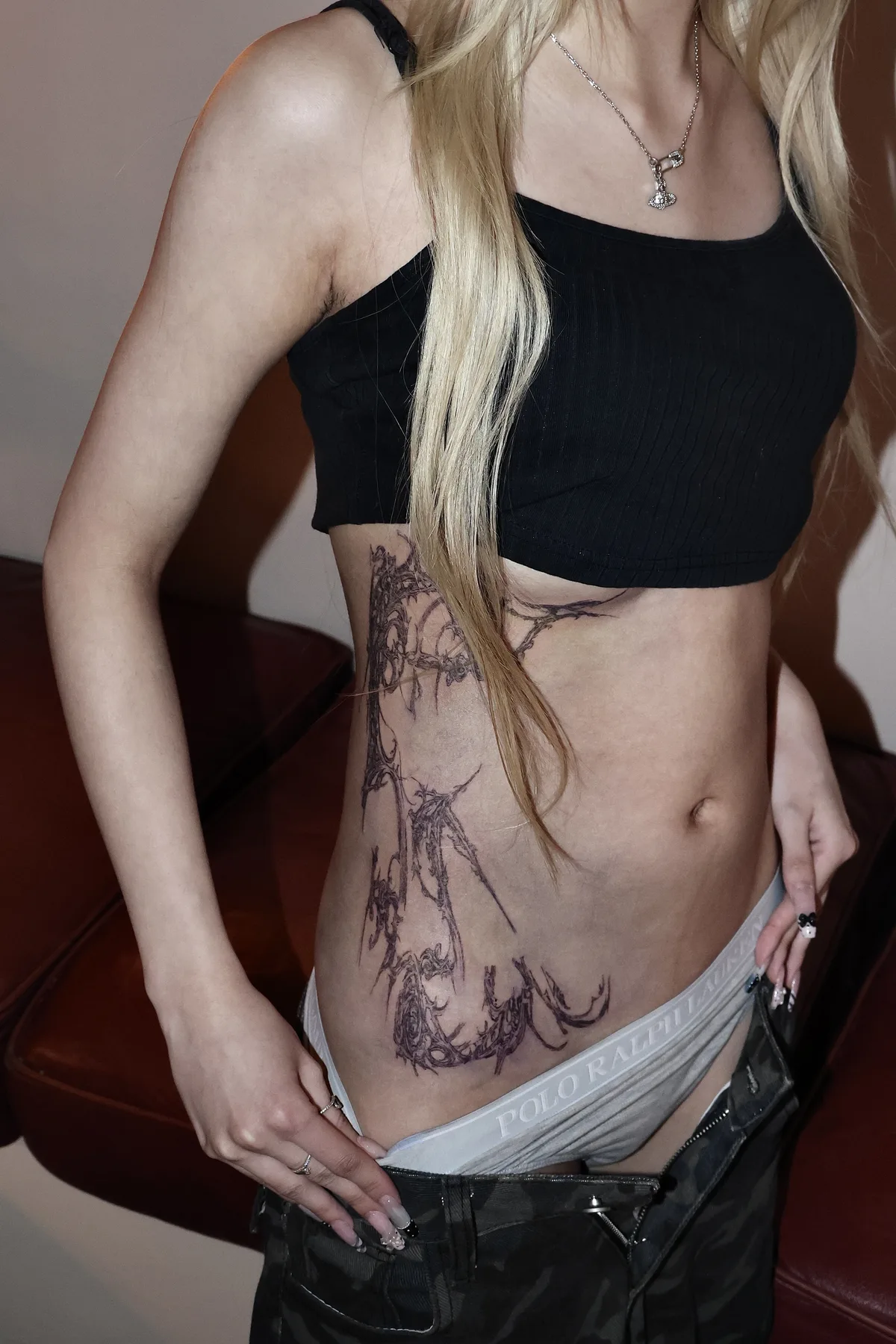
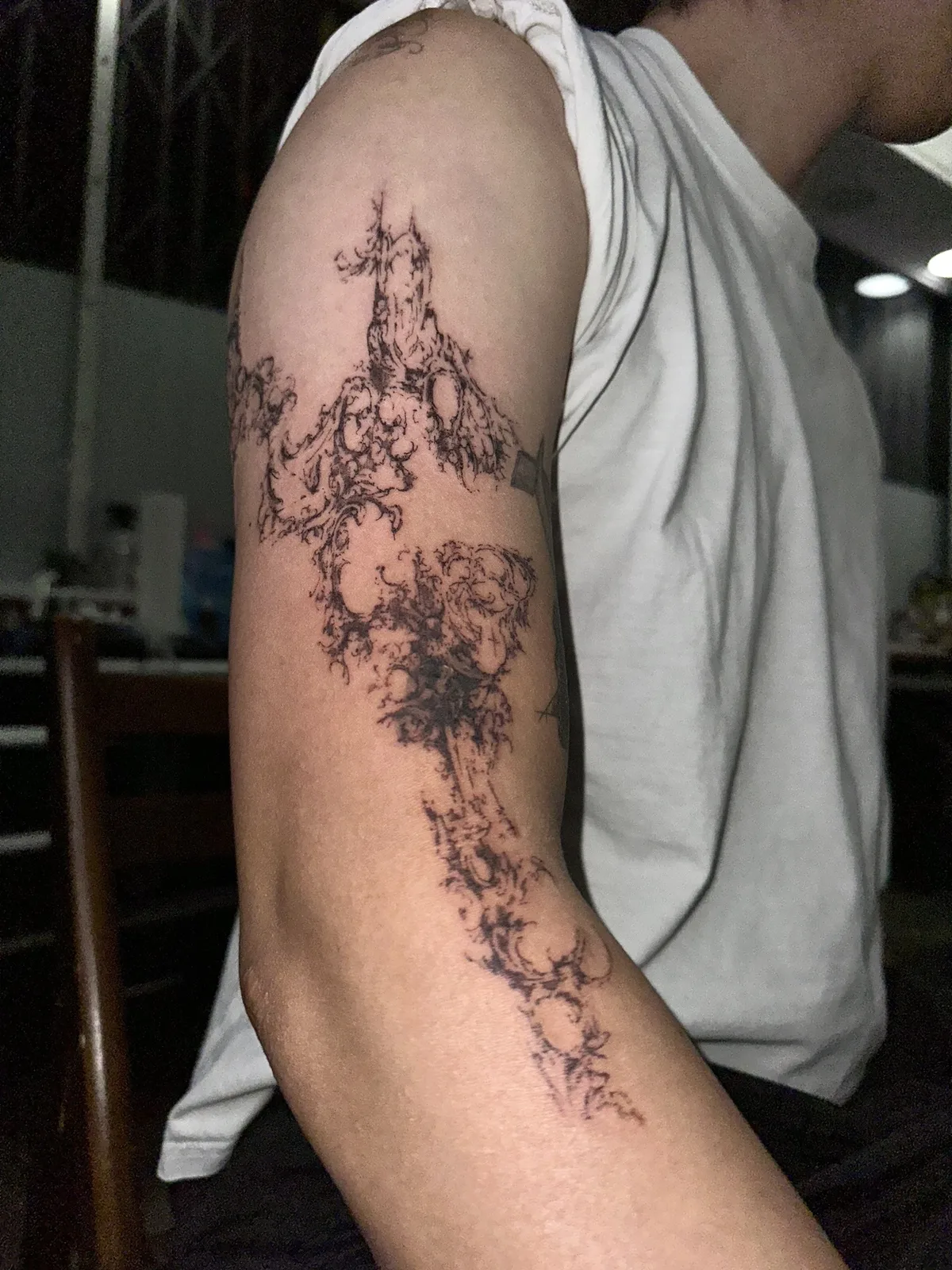
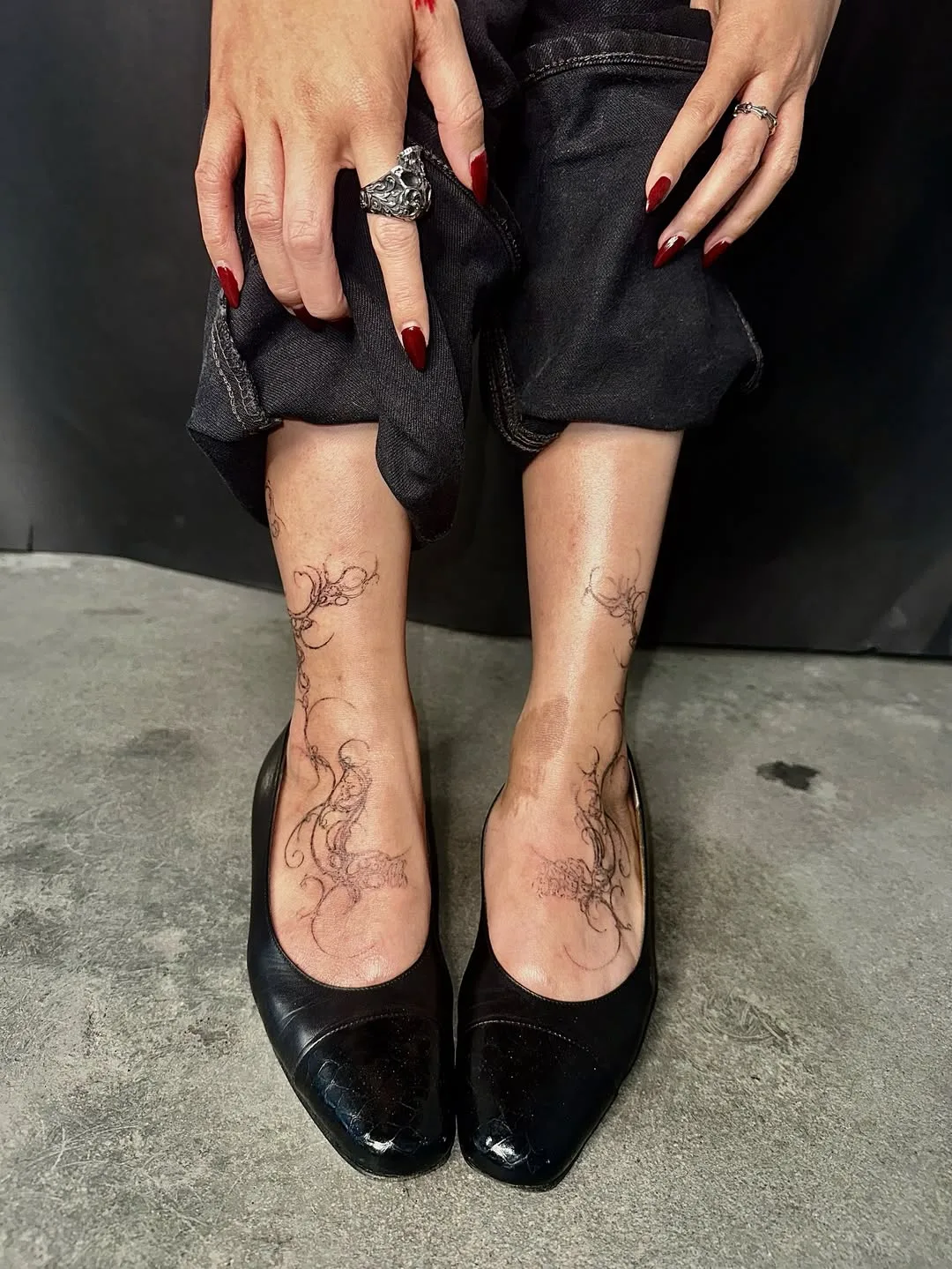
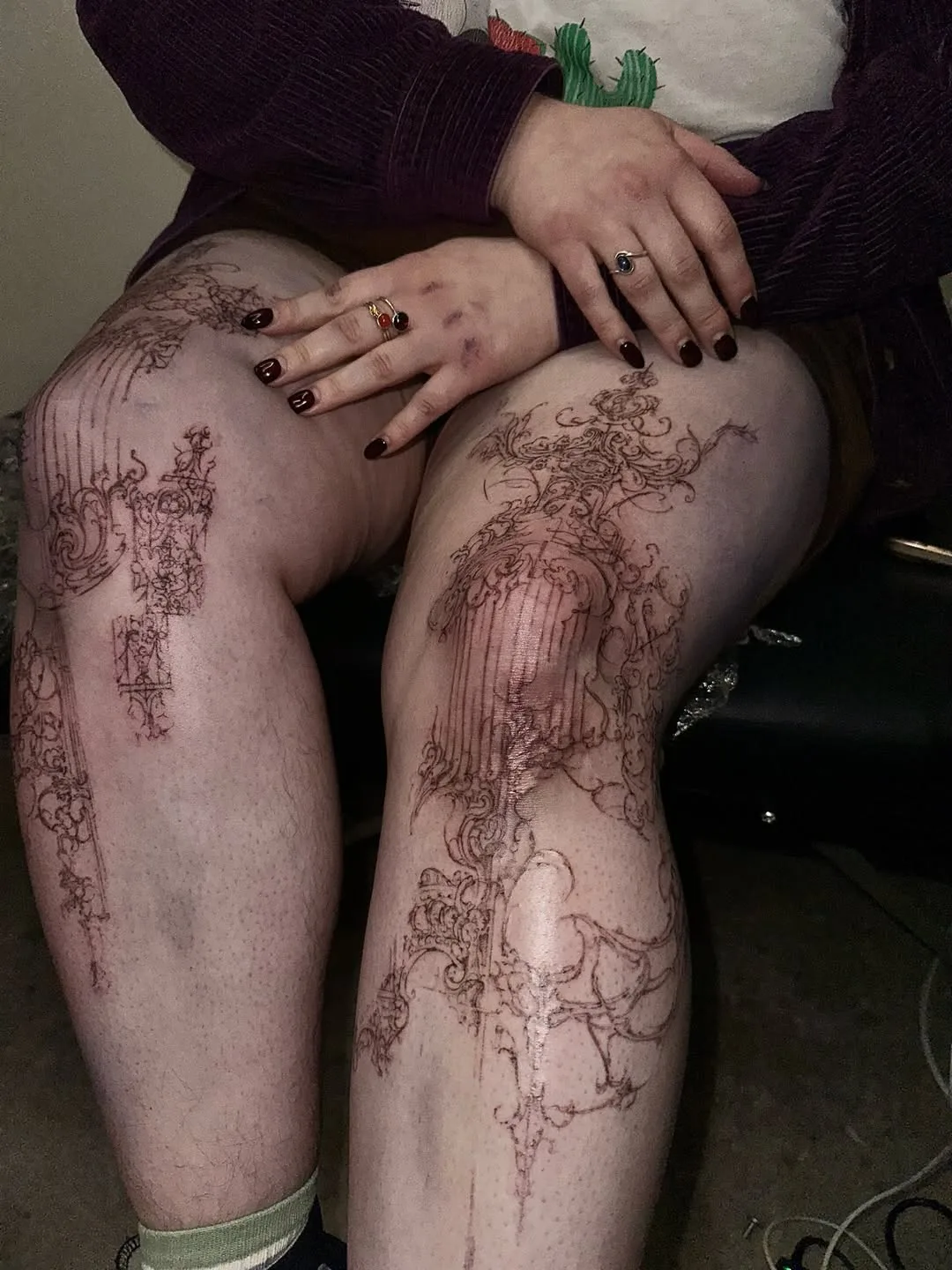
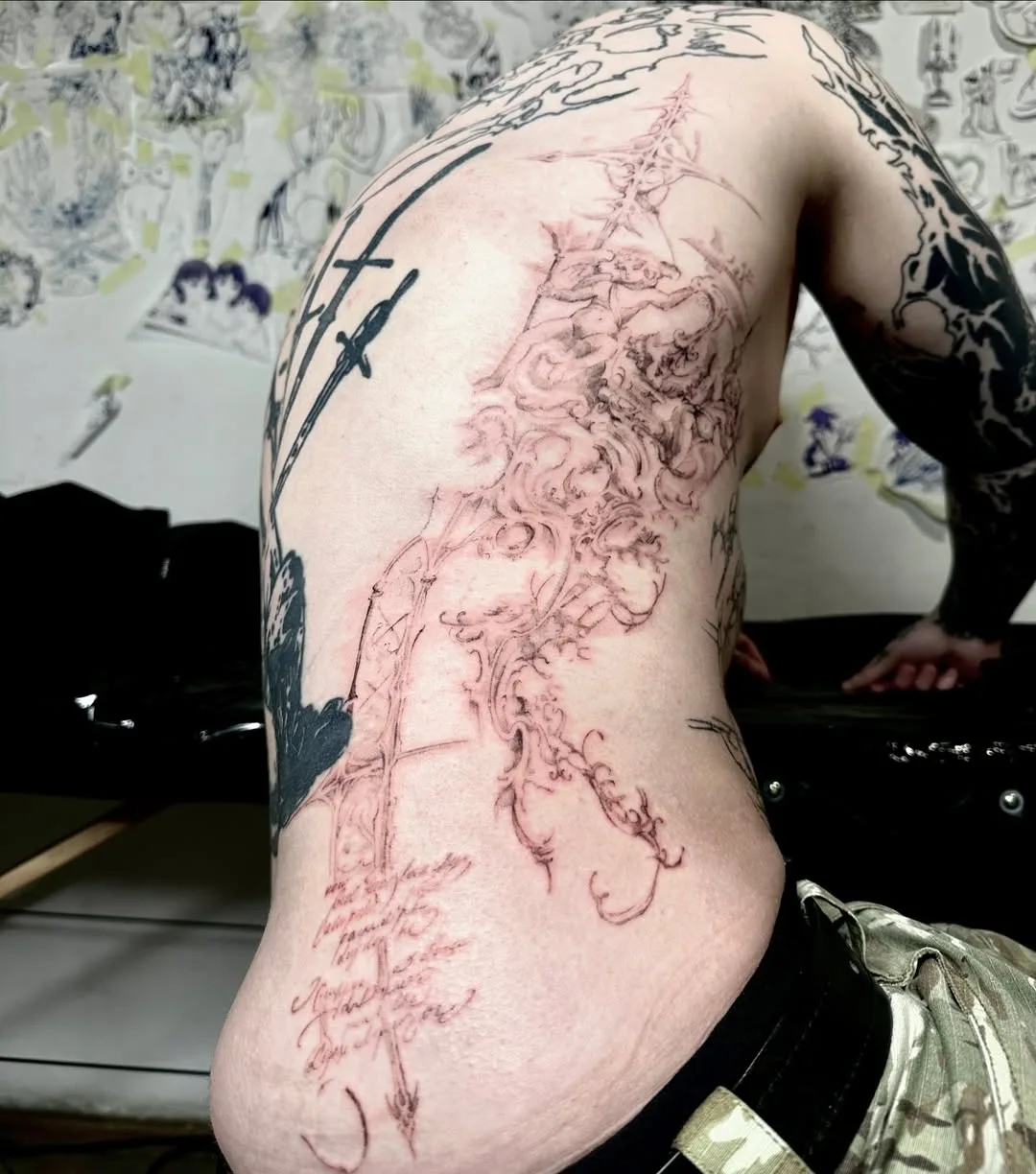
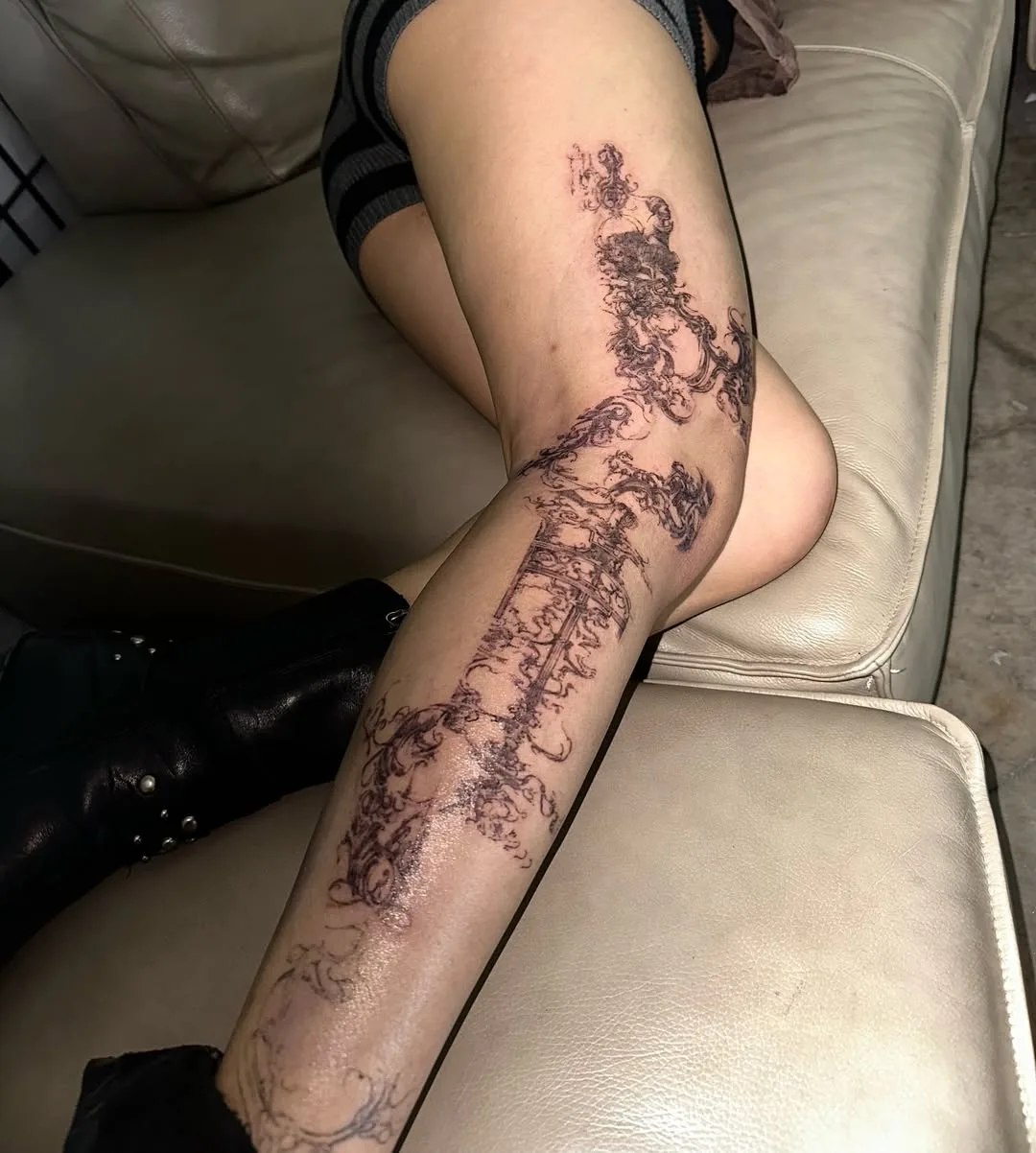
Luna Moth is a tattoo artist from Ukraine, now based in Los Angeles, working in one of the most unconventional directions in contemporary tattooing. Although abstract neo-gothic may seem like a relatively new style compared to more traditional tattoo aesthetics, its roots can in fact be traced back to medieval Gothic art. Luna moves freely through forms and lines, using tattooing as a way to express her own sense of beauty.
In this interview, we speak with Luna about the origins of neo-gothic, her creative process, and her perspective on this unique style from the inside.
How did your journey into tattooing begin, and what first drew you to the art form?
— The first time I did a tattoo was back in Ukraine. I made a small sketch for a friend who wanted something simple in linework. For a first attempt, it turned out perfectly — better than I expected. It took me a long time, though. I tried to put all of my artistic energy into it, along with everything I had learned at university. At that time, I was studying art.
Your style is very unique and abstract. How would you describe your tattooing style in your own words, and what do you call it?
— Neo-Gothic is a good name for it. I keep classic Gothic elements and add different shapes on top, creating layers. It’s something experimental with Gothic elements. A controversial visual composition allows the viewer to experience a search for form through their own perception, so everyone can find something within the abstraction that resonates with them personally.
What influences or artists, tattoo-related or otherwise, have shaped your approach to tattoo design?
— There are a lot of artists and practices I could talk about, but definitely the biggest influence, one I’ve known since I was 15 years old, is Goya. I would also mention Dürer as a great engraver and painter. Goya astounds me with the subject matter of his paintings. Later on, I explored more contemporary art, such as Basquiat, whose work sparked a desire in me to examine the contradictory nature of objects and new forms of visualization. I was also deeply impressed by Vrubel and the darkness in his paintings.
Among tattoo artists, I was greatly inspired by Ivan Curbe Lopez (@ivrsk) and Oscar Akermo (@oscarakermo). Later, in 2022, I worked at Crooked with Ivan Lopez, and it was an amazing experience to share professional knowledge and practice.
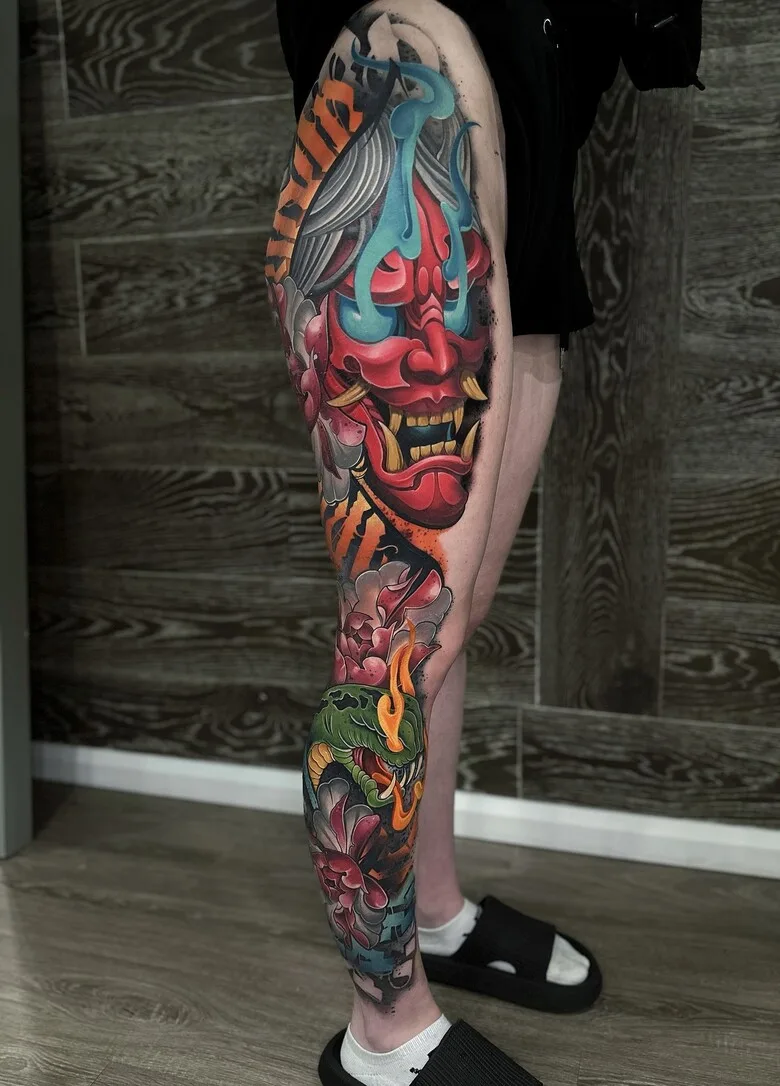
You often work freehand without a stencil. Can you explain how that process works for you, and what excites you about it?
— I still use all the techniques that help me achieve the precision of Gothic shapes that follow the body. Freehand also lets you add additional elements straight from your mind. It allows you to express your feelings in the moment.
Tattooing requires both technical skill and creativity. How do you maintain a balance between precision and artistic expression?
— It takes a huge amount of work. You never stop studying and exploring more. Self-education is a big part of any art. Internal discipline, maintaining a healthy lifestyle, and balancing both external and internal states help a lot, especially when you need to stay stable even after ten-hour sessions.
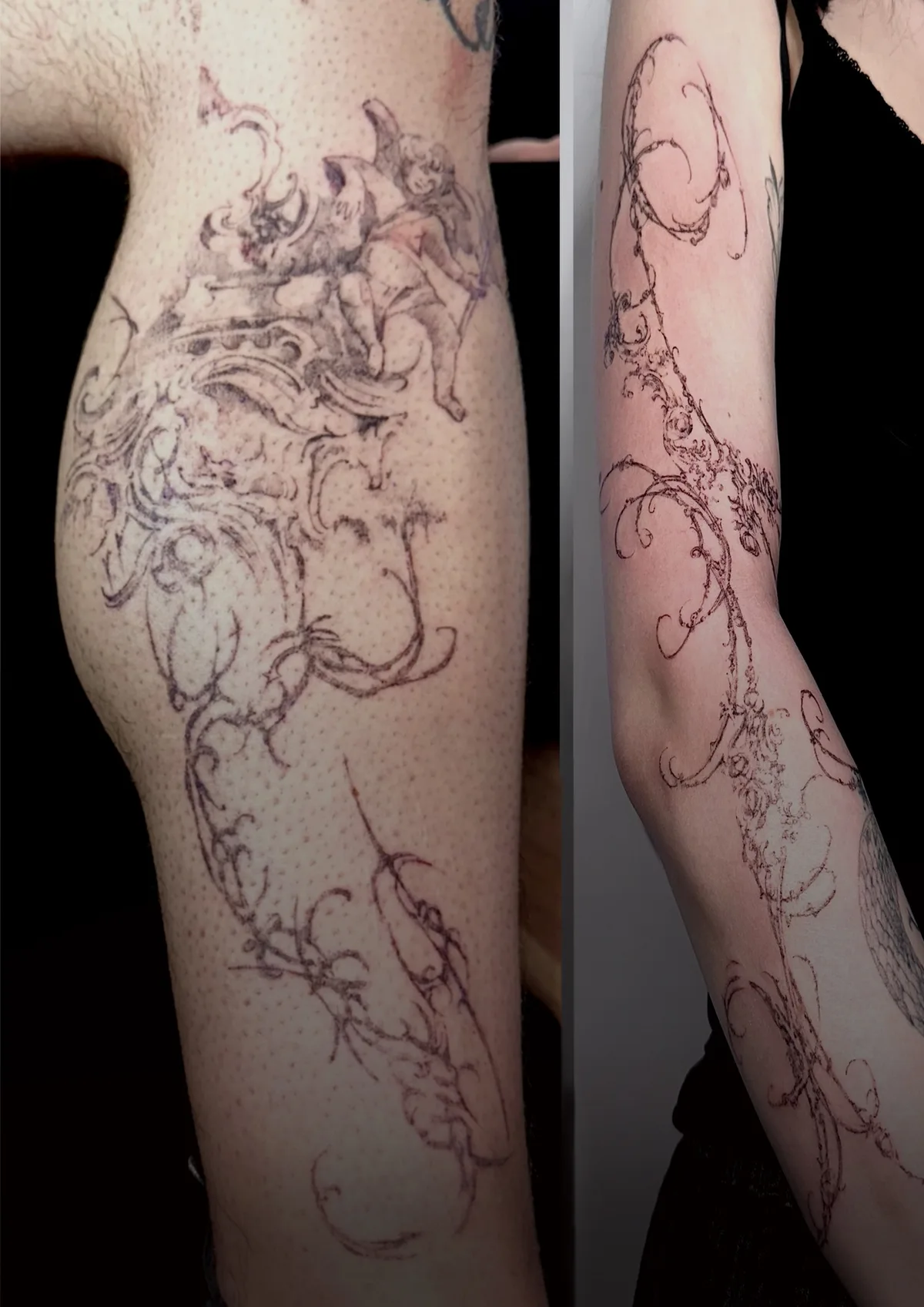
Abstract tattoos are often deeply personal. How do you collaborate with clients to create a meaningful piece for them?
— Usually my clients give me a lot of creative freedom, and I appreciate that. They show me work from my page and ask me to play around with that shape. Sometimes I get specific requests with certain elements they want to incorporate, and I do that in the best way I see possible. It’s also important for me to make sure they truly love the piece, so it’s always teamwork.
How do you keep your designs fresh and avoid falling into repetitive patterns?
— As I said before, we never stop learning. I’m constantly searching for something new, improving my skills with each tattoo, bringing in new shapes and details, and playing with contrast.
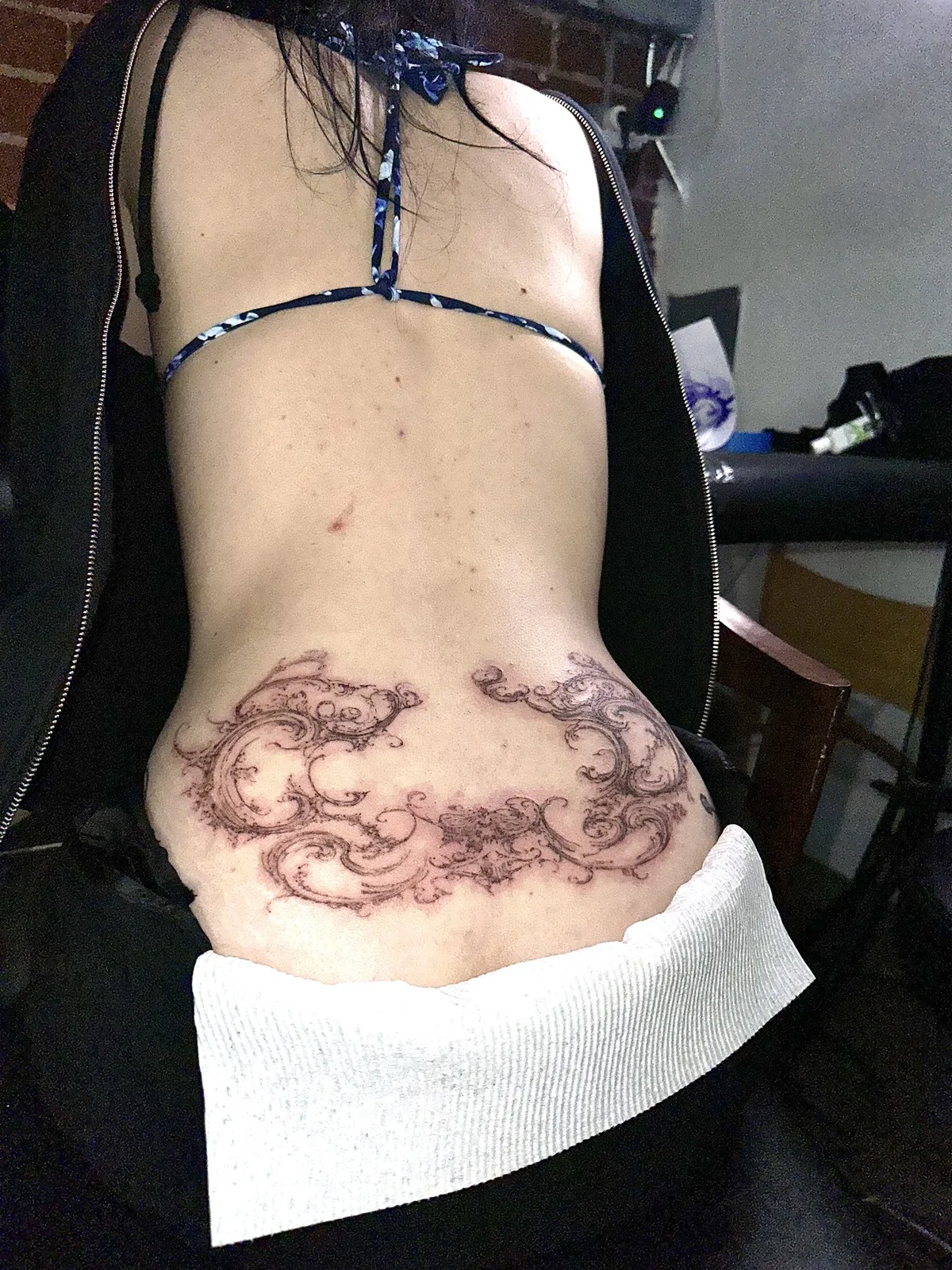
Tattoo placement plays a big role in your designs. How do you approach choosing the right spot for a tattoo?
— It’s easy in the sense that every placement can work. There are some difficult areas on the body that require more time and attention, and there are also a lot of painful spots, which can be even harder for clients than for me. Usually people already have open spaces they want to fill, but if the sketch doesn’t work there, I reshape it or change it completely. That’s how the process works.
What challenges do you face when translating abstract ideas into permanent body art?
— It’s probably more about my own feeling for the shape. If it’s not perfect, I keep working with the forms to improve the overall composition.
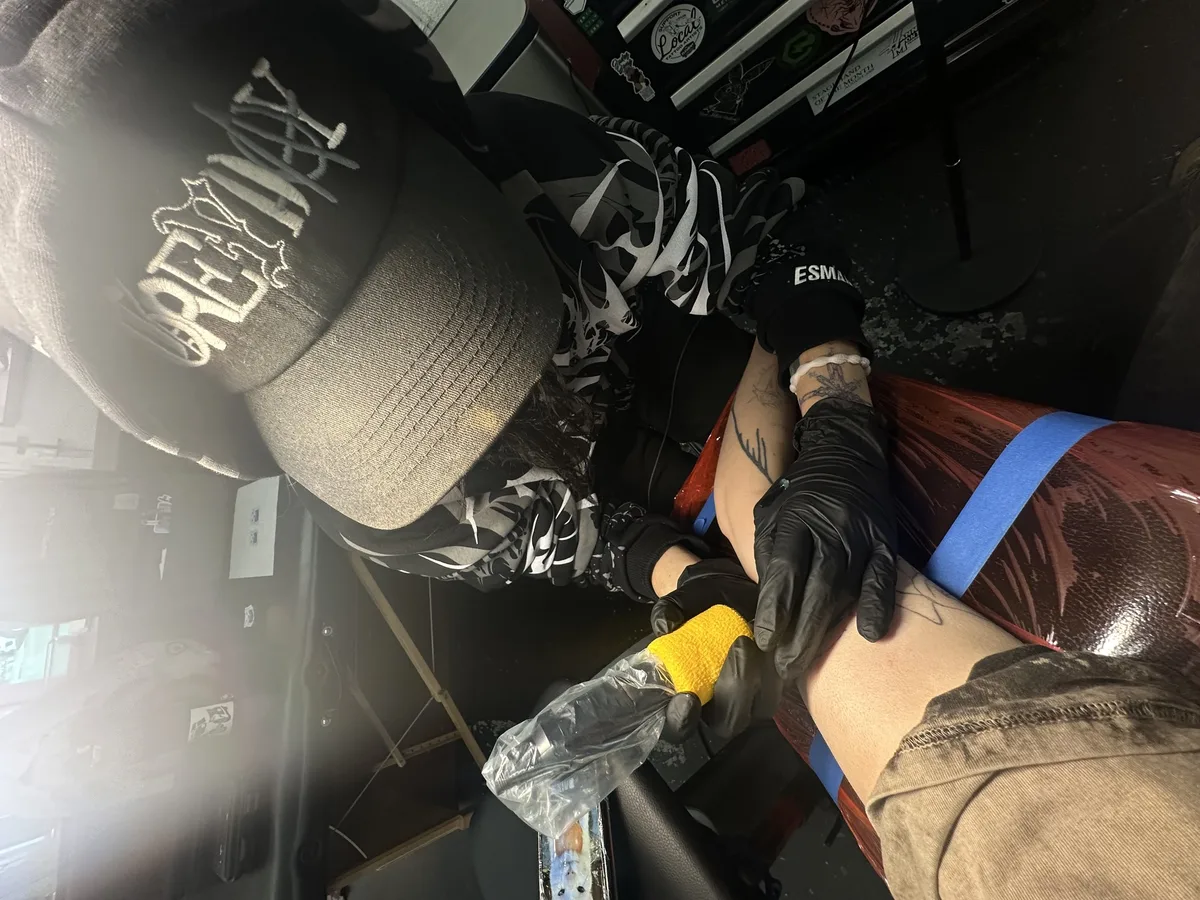
What do you think is the most misunderstood aspect of abstract tattooing?
— The elements you put inside a piece can have different meanings for everyone. As I always say, everyone sees a shape through their own perception. That’s what makes it great, but it can also be confusing for people who prefer classical art. Still, I really love how people of different ages accept something new and modern. They appreciate the chance to discover something unfamiliar, and they immediately become part of the expression. It’s wonderful to see their curiosity.
Do you have a favorite tattoo you’ve created, and if so, what made it special?
— There are no exceptions. I love each piece. I put myself into every tattoo to make it perfect — otherwise, it isn’t art.
What has been your most challenging project to date, and how did you approach it?
— Any large-scale project is a challenge. The complexity of the volume and the total number of details make it a difficult process. In addition to the details inside the piece, it’s necessary to maintain harmony in the overall form. I take every tattoo as a challenge because each one is unique and never repeated. You won’t be able to find two identical pieces done by me.
Do you find inspiration from your surroundings in Los Angeles? How does your environment influence your work?
— Of course. There is a huge scene here. Los Angeles is overflowing with Gothic art, from artists to designers. I love how different styles inspire and complement each other, and how artists from completely different fields share their experiences and recognize their connection through art. They all experiment, and that energy is very inspiring.
How do you see the tattoo industry evolving in terms of abstract and experimental styles like yours?
— I see development as a continuous improvement of form through the expression of objects in new textures, broken lines, contrasts, and unusual combinations of completely incompatible forms that ultimately create a unified image and new styles. It is difficult to imagine something truly new, but as soon as you begin to study more, it comes naturally. Absolutely everything you see around you can be translated into an image and turned into a worthy tattoo.
What advice would you give to aspiring tattoo artists who want to develop their own unique style?
— Never stop exploring. The world is full of art. If you study art history, you can see how it grows and intertwines across time. Every century has its own way of visualizing objects. A lot can be taken from Gothic art of the 15th and 16th centuries, from religious graphics, and from the development of other styles that later became references for future generations. Art has never stopped evolving. So look into books, do your research, and learn about different cultures.
Lastly, what are your future plans? Any new projects, collaborations, or ideas you’re excited to explore in the coming years?
— Of course. I want to bring to life a couple of projects that will give other artists and art lovers the opportunity to discover new art. I’m currently working on a platform that will serve as an online magazine for new styles. I would also like to collaborate with young galleries that showcase contemporary artists, such as @ch.u.rch. I’d also love to work with videographers to create films about contemporary art.