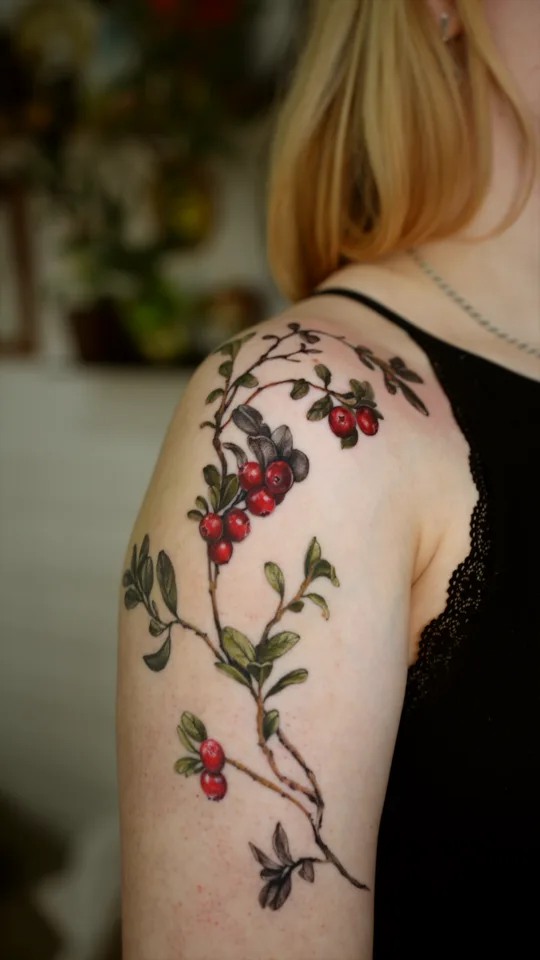
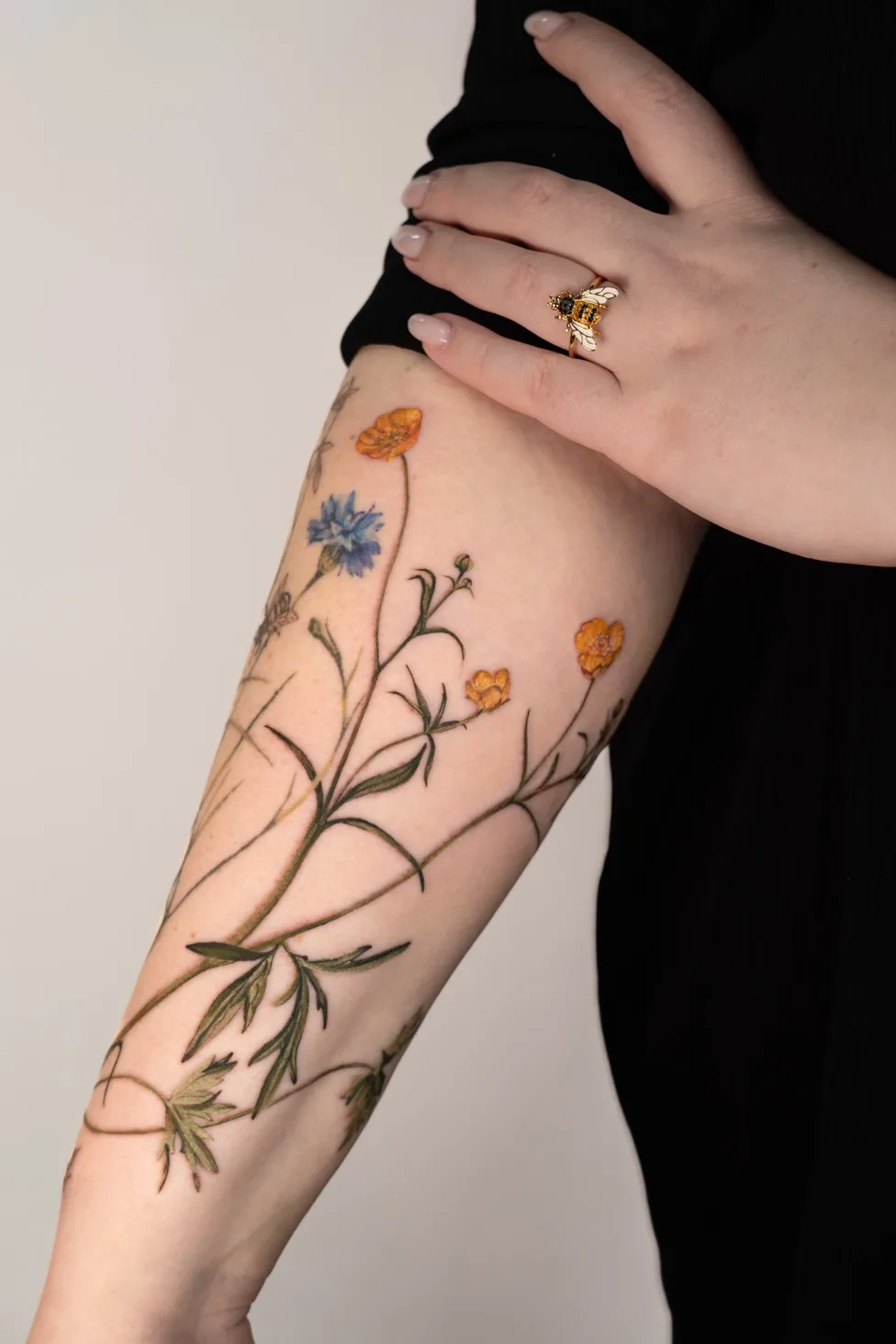
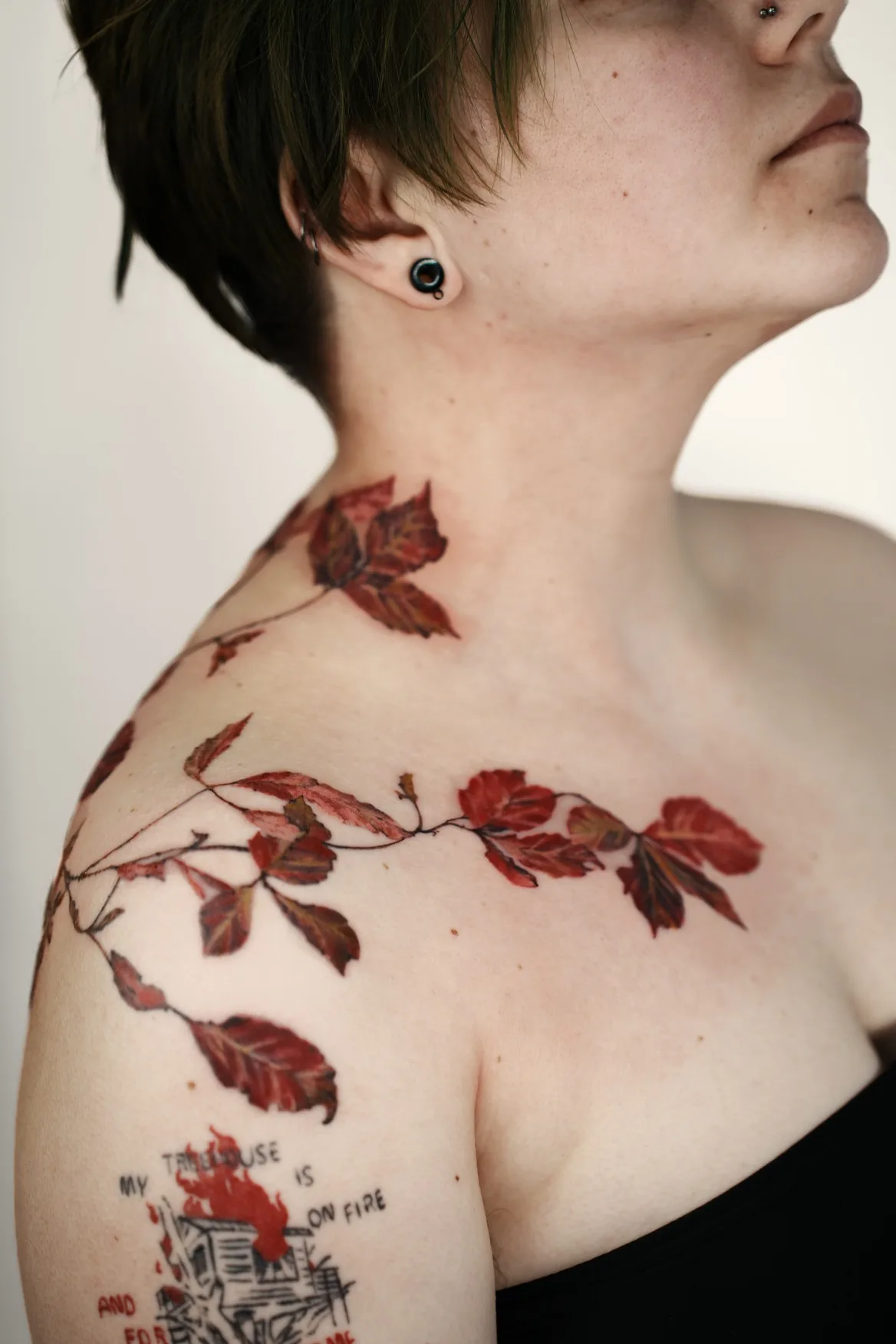
The heroine of our new interview is Polina Red Head, a tattoo artist from St. Petersburg working with realistic botanicals, forest motifs, and natural forms that she carefully integrates into the anatomy of the body. In her work, flowers, mushrooms, berries, pine needles, ferns, and tiny forest creatures become a visual language of their own — alive, deeply attentive to detail, and very personal.
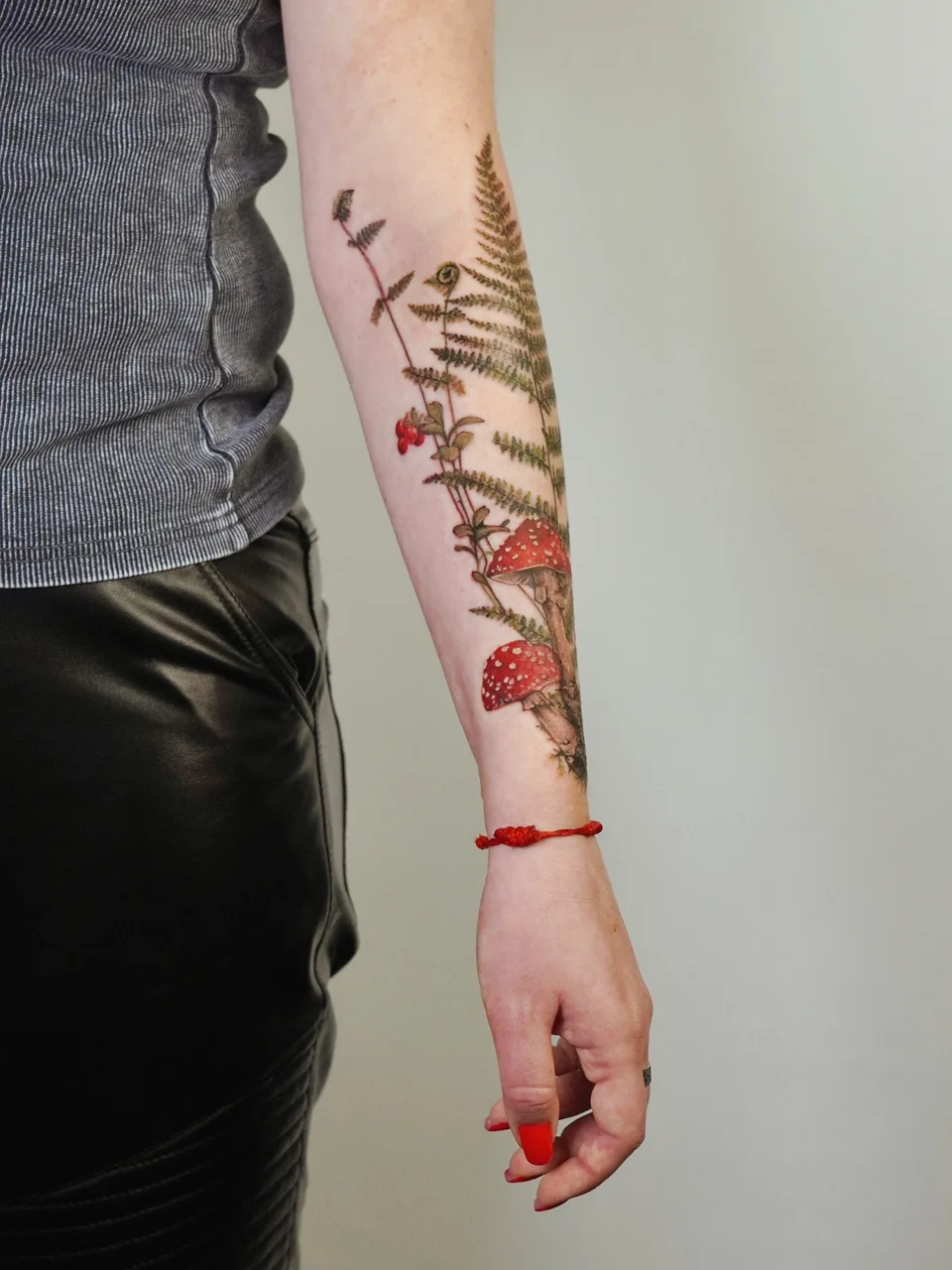
Over six years in tattooing, Polina has gone from her first experiments and portrait drawing to building a recognizable artistic direction of her own. In 2025, she made her first festival appearance as part of the iNKPPL team in St. Petersburg, and soon after won Best of Day Color at the “Colors of the Polar Day” convention in Murmansk for a forest composition with northern berries, fly agaric mushrooms, and fern. In 2026, Polina served as a judge in two categories at the Hebei International Tattoo Convention in China and brought home third place for a miniature yet technically precise bumblebee tattoo.
Today, Polina confidently proves that botanical tattooing can be delicate and intimate while still having real strength in a festival format. This is what we spoke about in this interview.
Polina, tell us a little about yourself: where are you from, where do you work now, and how long have you been tattooing?
— I am originally from the sunny Republic of Khakassia. It is a very special place for me, and I think its unique nature has had a strong influence on me. For the past three years, I have been living and working in St. Petersburg. I like that such different places have come together in my life: on one side, nature, silence, and calm; on the other, a big city with its aesthetics, creative atmosphere, and inspiration.
I have been tattooing for six years now. During this time, tattooing has become much more than just work for me. I am constantly developing, searching for new ideas, experimenting, learning, and going deeper into my own direction.
How did you come into tattooing? Did you have an artistic background before that?
— I have been drawing for as long as I can remember. While many people my age were going out and partying, I would calmly stay at home, play video games, and draw. Drawing came to me quite naturally. I guess it was one of those cases where you can speak of an innate inclination or talent.
As a teenager, I became deeply fascinated with portraits, and I started growing quite quickly in that direction. I was interested in capturing a person’s likeness, and over time I became better and better at it. At some point, commissions started coming in, and it was through my art that I first began earning money. That was an important experience for me: I realized that what I loved and knew how to do could be more than a hobby. It could become something valuable to other people.
I came into tattooing quite spontaneously. Once, during a session with my own tattoo artist, I accidentally found out that she was going to teach a guy. That really caught my attention, because before that I had never even thought that you could enter this field by learning directly from a tattoo artist. Something clicked in that moment, and I realized that I wanted to try it too.
I bought my first equipment with my student stipend and started learning: first on artificial skin, then on acquaintances and friends. It was a difficult period. Covid had just begun, supplies were very expensive, there were noticeably fewer clients, and everything felt unstable overall. But I did not quit. On the contrary, that period gave me a lot: it taught me persistence, independence, and helped me understand that if this work truly mattered to me, I was ready to go through difficulties for it.
Why did botanicals become your main theme? What attracts you to flowers, leaves, and natural forms?
— Botanicals became my main theme very organically, because I love the forest, nature, and all living things. I think any artist always shows in their work what is truly close to them. For me, it is flowers, trees, birds — they hold everything most beautiful and real.
Natural lines adapt easily to anatomy, emphasize the shape of the body, and look as if they have always belonged there. That is probably why I find them so interesting to work with: botanicals have so much freedom, plasticity, and natural beauty.
Botanicals in tattooing are a classic that will always remain relevant and does not depend on trends. Natural imagery is very close to people, so it fits easily and naturally into a person’s image. I think we are similar to plants in many ways. Like us, they can be fragile, tired, alive. They grow, pass through their cycles, recover after damage, and continue living.
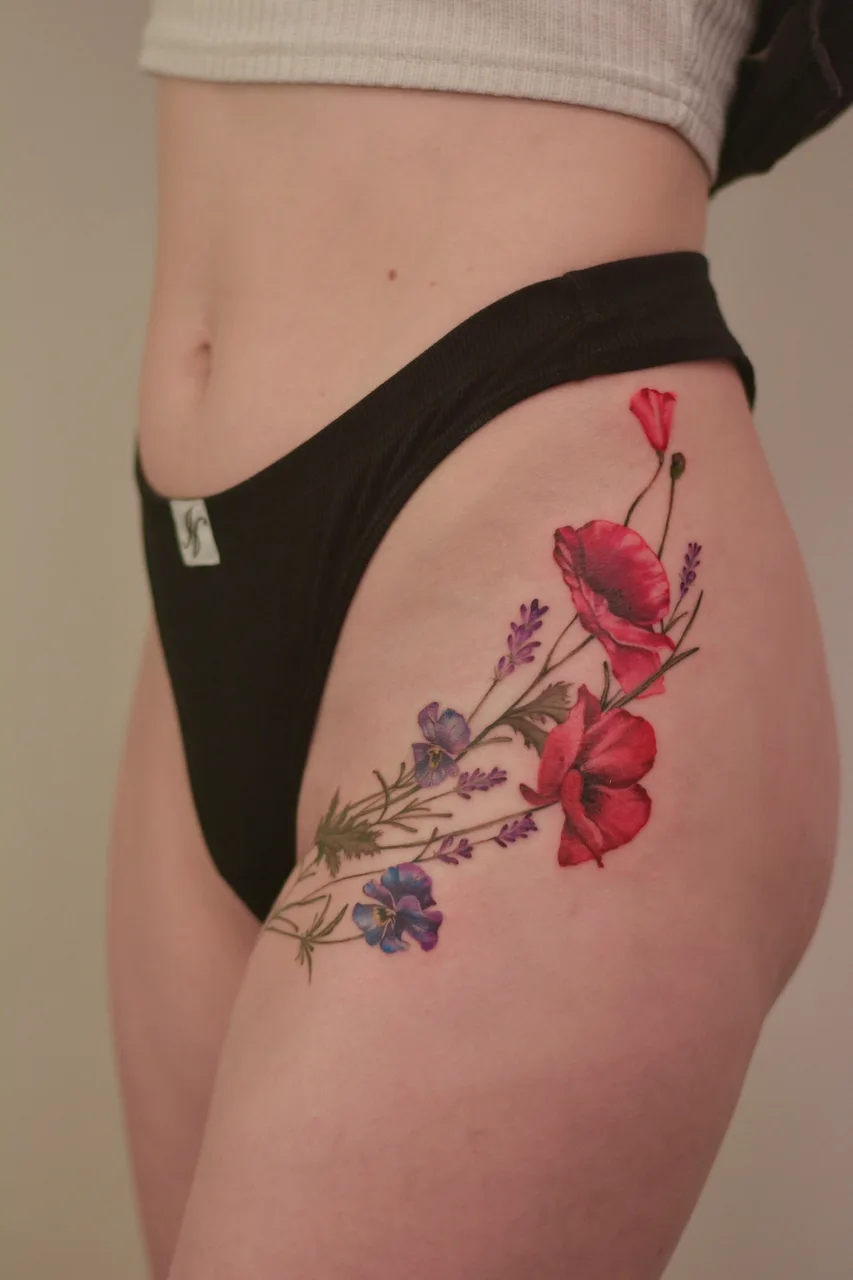
Many botanical tattoos today lean toward neo-traditional or decorative stylization, while your work is closer to realism. Why is this approach important to you?
— Because of my early fascination with portraits, I have always loved realism. There is a special kind of magic in it: when you look at a piece and feel that you are seeing something almost real. I think that is what affects both me and other people the most.
In my view, botanicals are beautiful exactly as our planet created them. I deeply love natural beauty, and I try not to redesign it, but to carefully transfer it into tattooing.
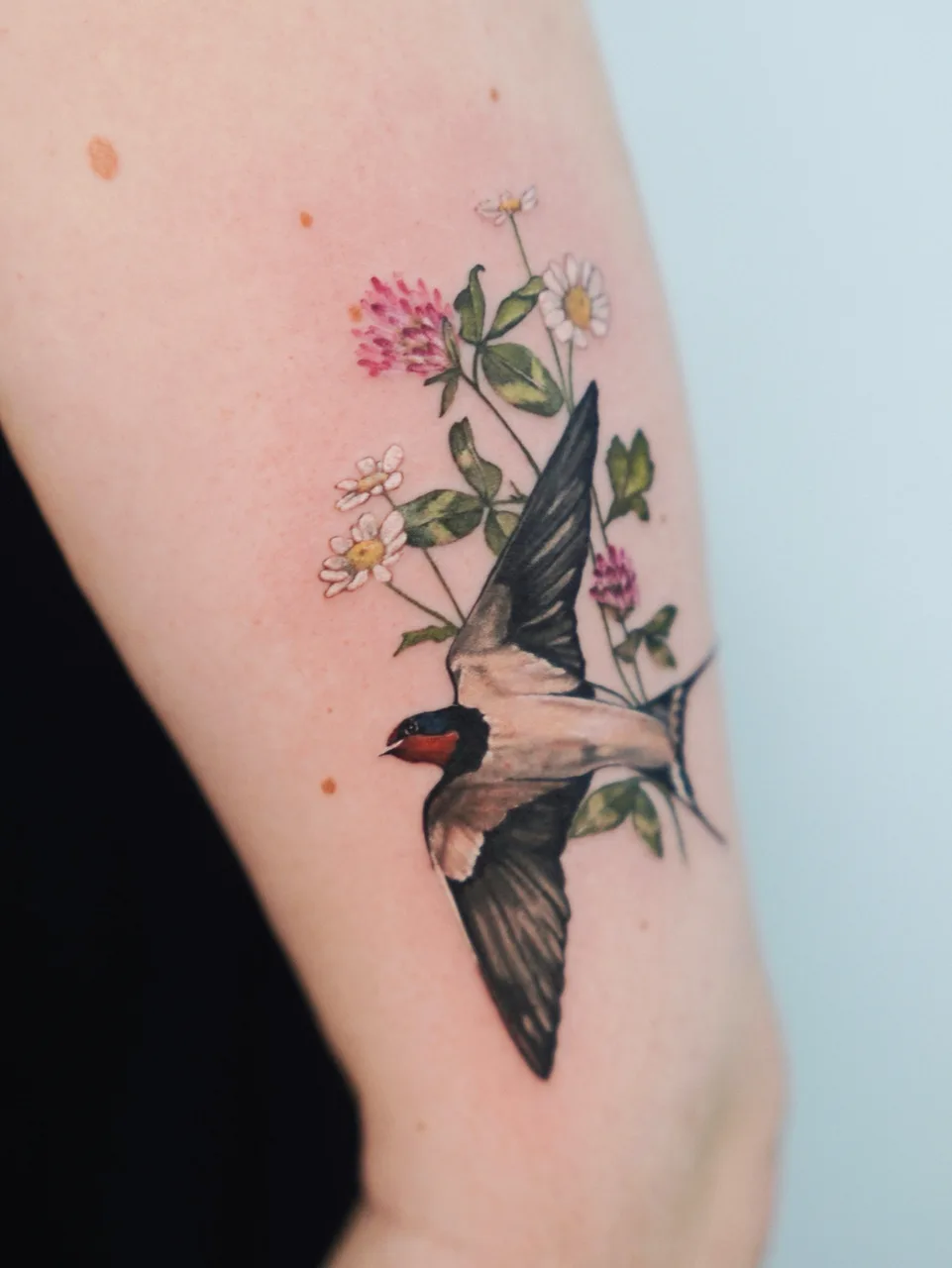
What matters more to you in a botanical tattoo — the realism of the image or how the piece sits on the body?
— For me, there is no real choice between realism and how the tattoo looks on the body. Both are important. But perhaps even more important is capturing the essence of the plant: showing how it grows, how it is structured, what kind of movement it has, and what transitions of tone exist in it.
At the same time, it is always important to me that the tattoo fits the body well. I can slightly adapt a plant to the anatomy: for example, lengthen a stem, remove unnecessary details, or adjust the composition a little so the piece looks as harmonious as possible on that exact placement.
But it is essential for me that after all these changes, the plant still remains convincing, technically accurate, and readable as something real. I think this is my main interest — finding the balance between aesthetics and realism. I want the work to feel alive, beautiful, and organic on the body. It is a very fine line, and I am still exploring it, searching for an even more precise approach.
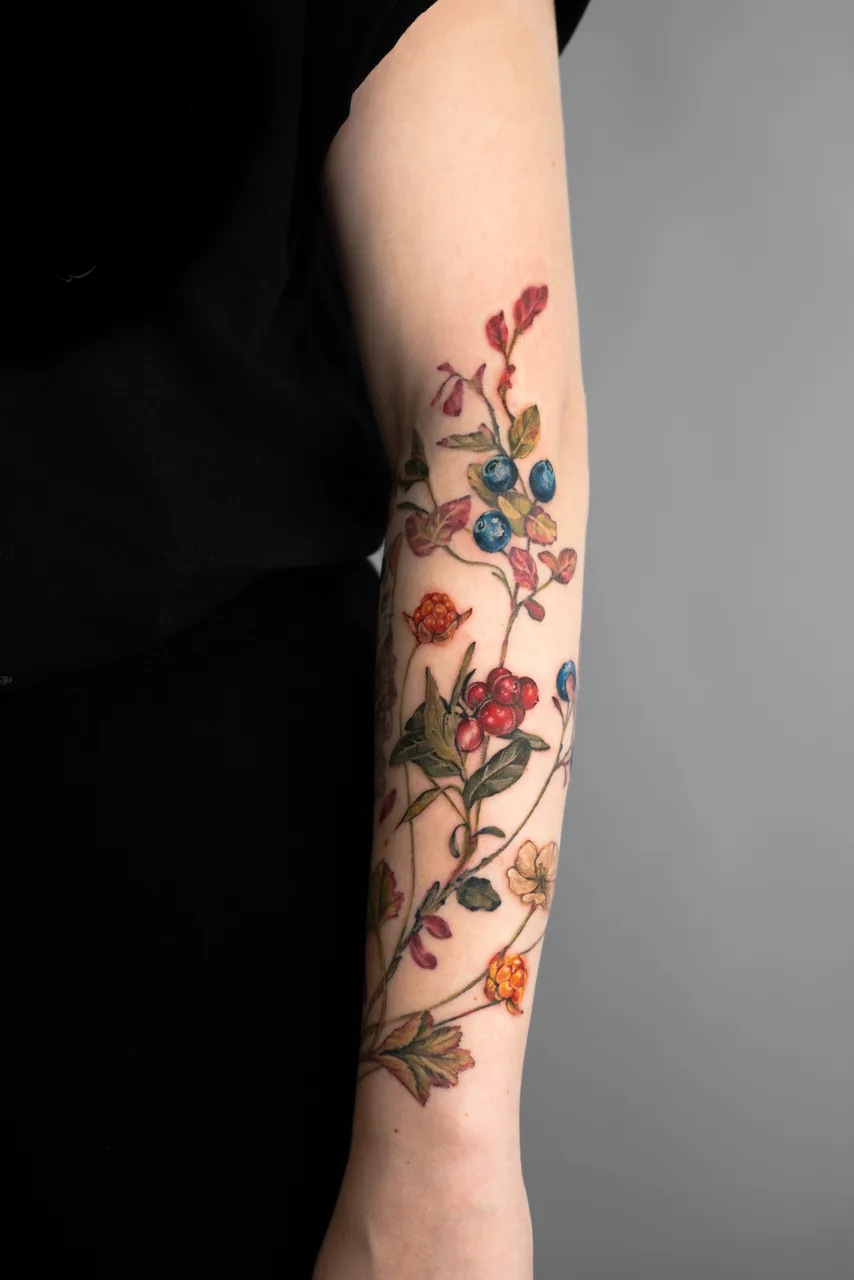
How do you choose plants for your sketches? Is it usually the client’s wish, your artistic idea, or a shared search for an image?
— Most often, clients trust my taste, experience, and vision when it comes to choosing plants. Sometimes a person already has a specific plant that they want to include, but when we are talking about a complete composition, that usually remains my responsibility.
I always start not only from the request itself, but from the person as a whole. It is important for me to feel their mood, character, energy, and understand what will truly suit them. I also always look at the body placement: how the plant will follow the shape, how it will look in motion, and how harmoniously it will fit this particular anatomy.
I also pay attention to the person’s overall appearance: skin tone, softness or contrast, sometimes even the impression they make. All of this helps me choose plants that will look natural and organic, as if they were meant to be there.
So most often it is a shared process, but the main construction of the image comes from me as the artist. The client brings their feelings, wishes, and sometimes meaningful symbols, and I help turn all of that into a complete composition.
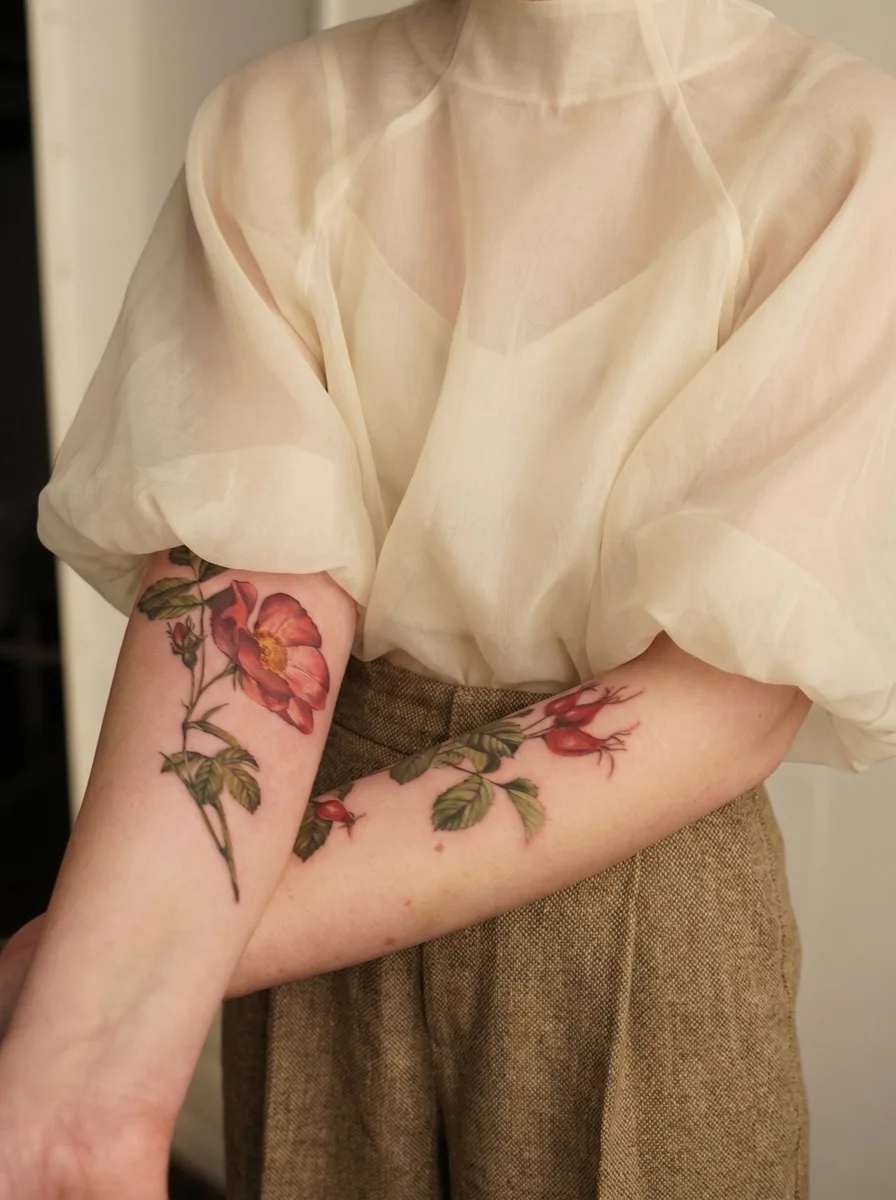
Do you have favorite flowers or plants that are especially interesting for you to translate into tattooing?
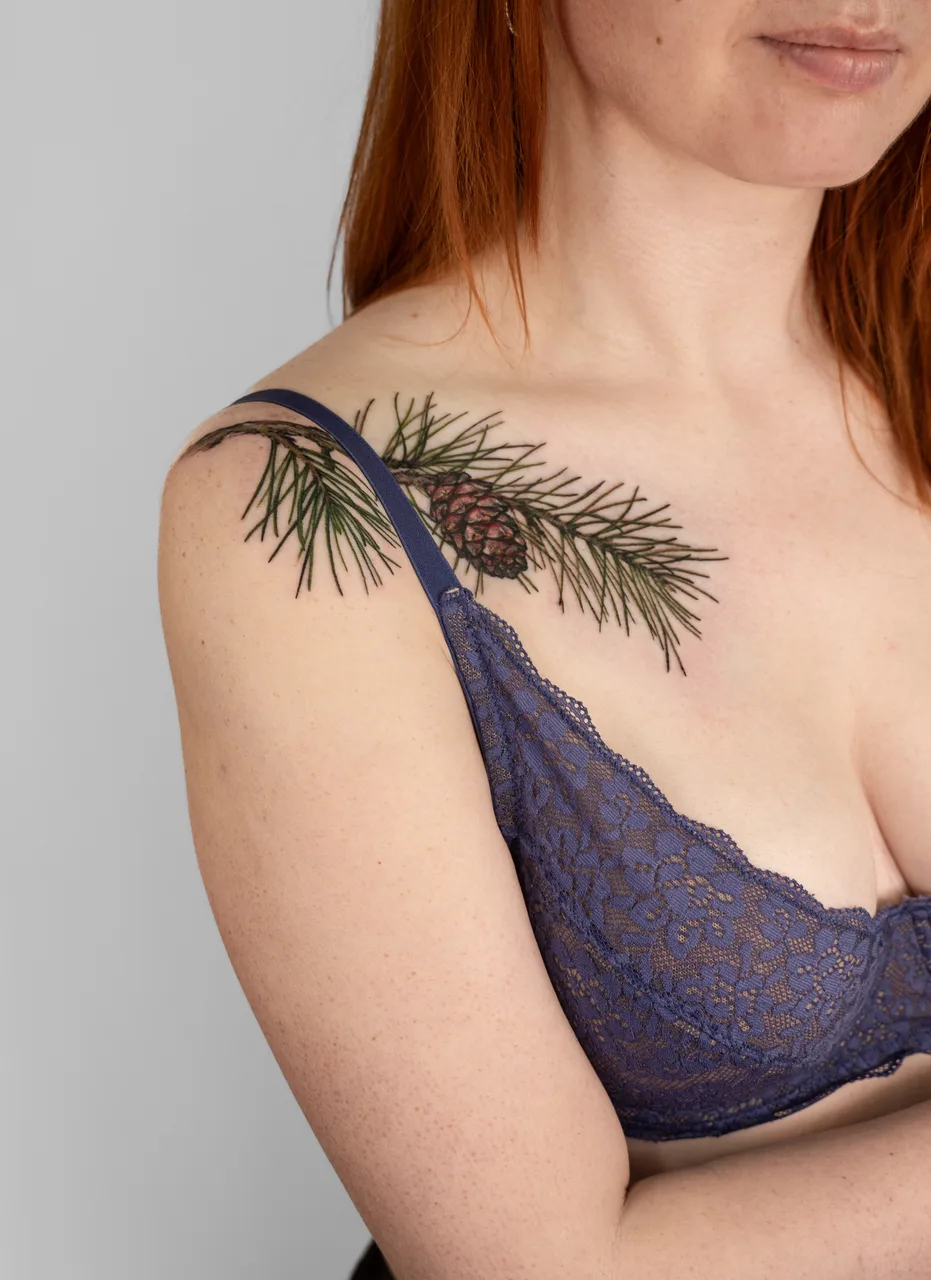
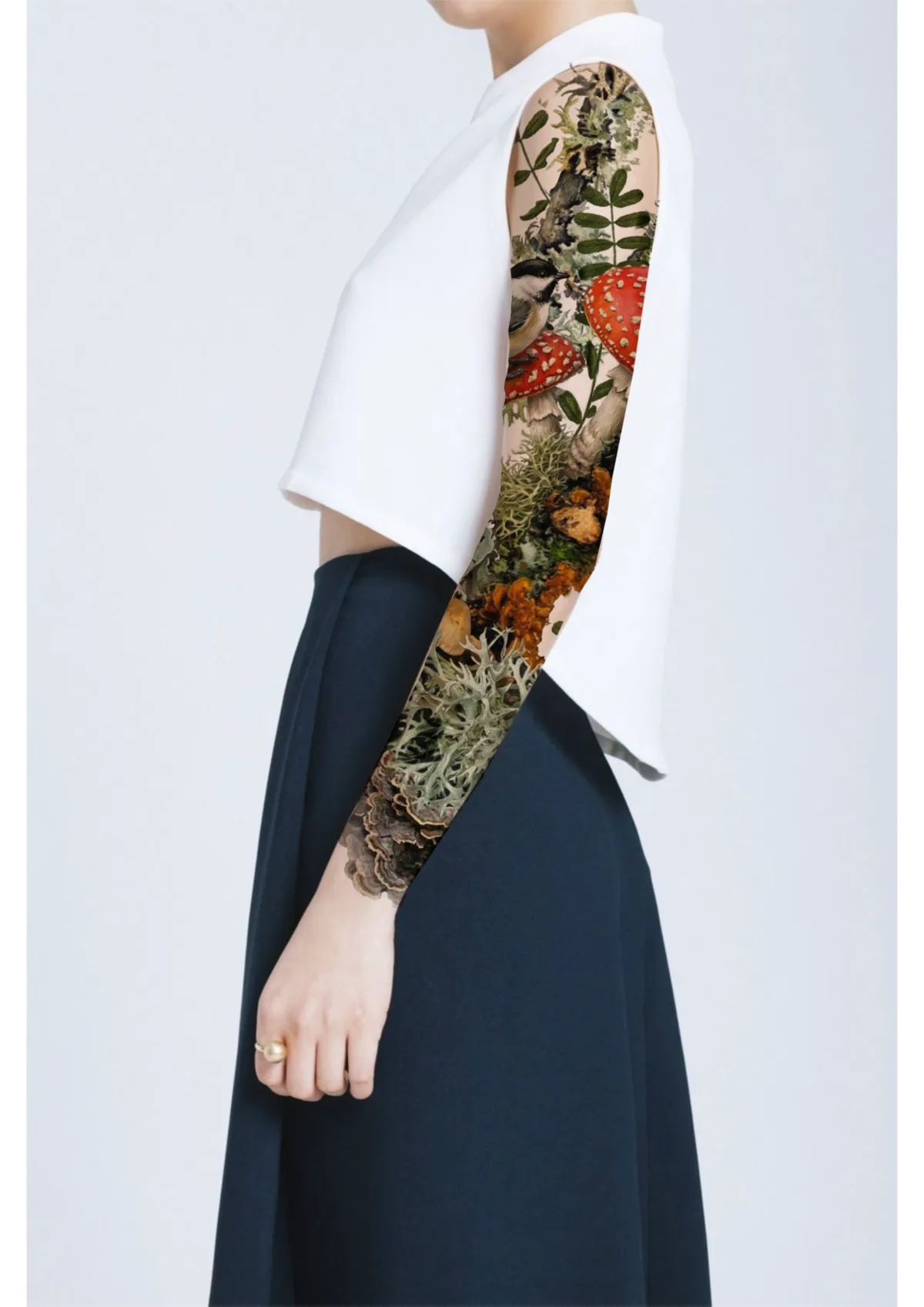
— Right now, I have almost completely moved into the forest theme: mushrooms, pine needles, berries, ferns, birds, insects, and other forest inhabitants. This is what excites me the most and what I am ready to tattoo literally every day.
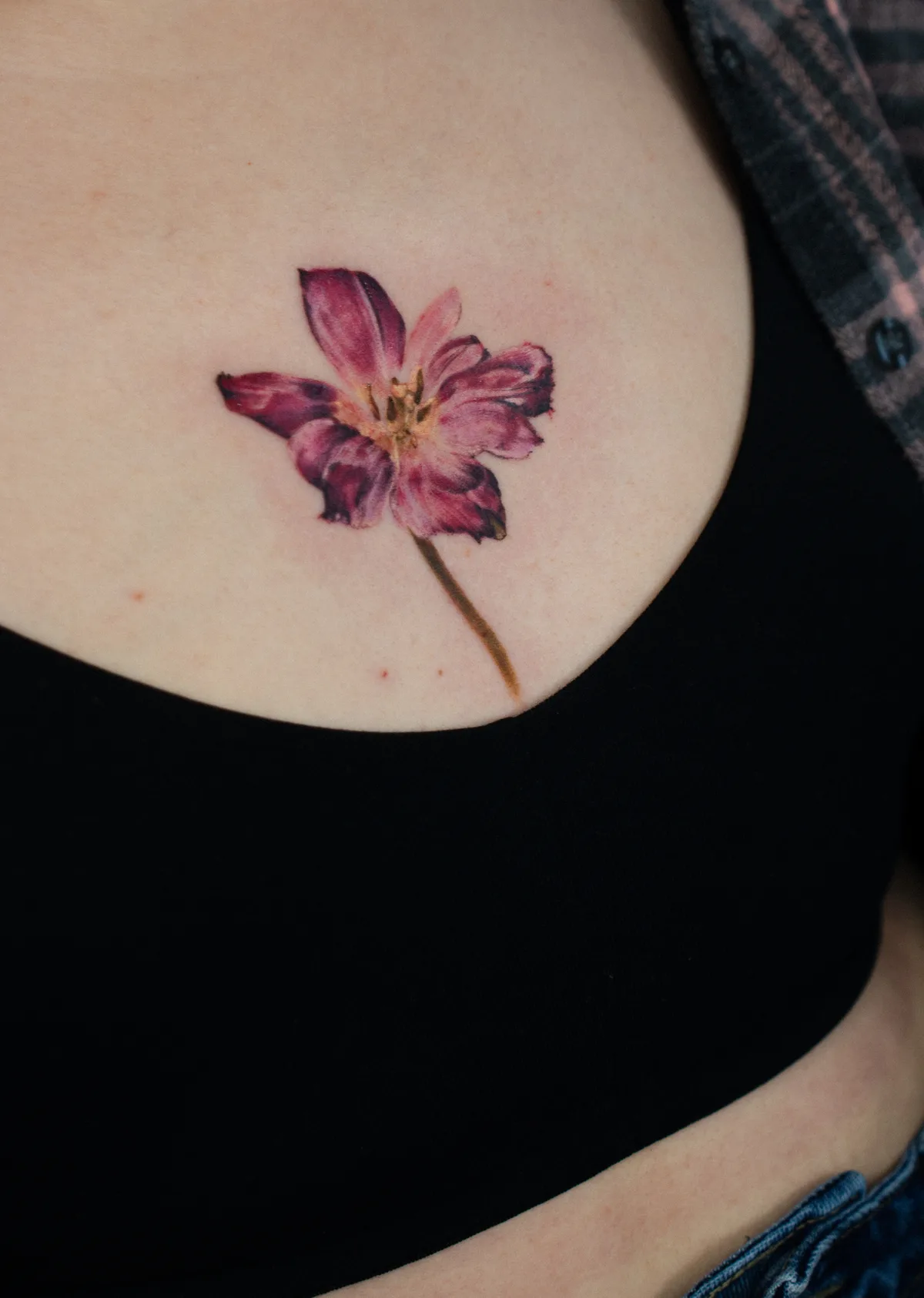
If we speak specifically about flowers, I am drawn to plants in warm shades and climbing forms that resemble vines. They have very beautiful movement: they naturally fit almost any part of the body, emphasize the anatomy, and do not weigh it down visually.
Tell us about the process of creating an individual project: where does the work on a sketch begin, and how do you arrive at the final composition?
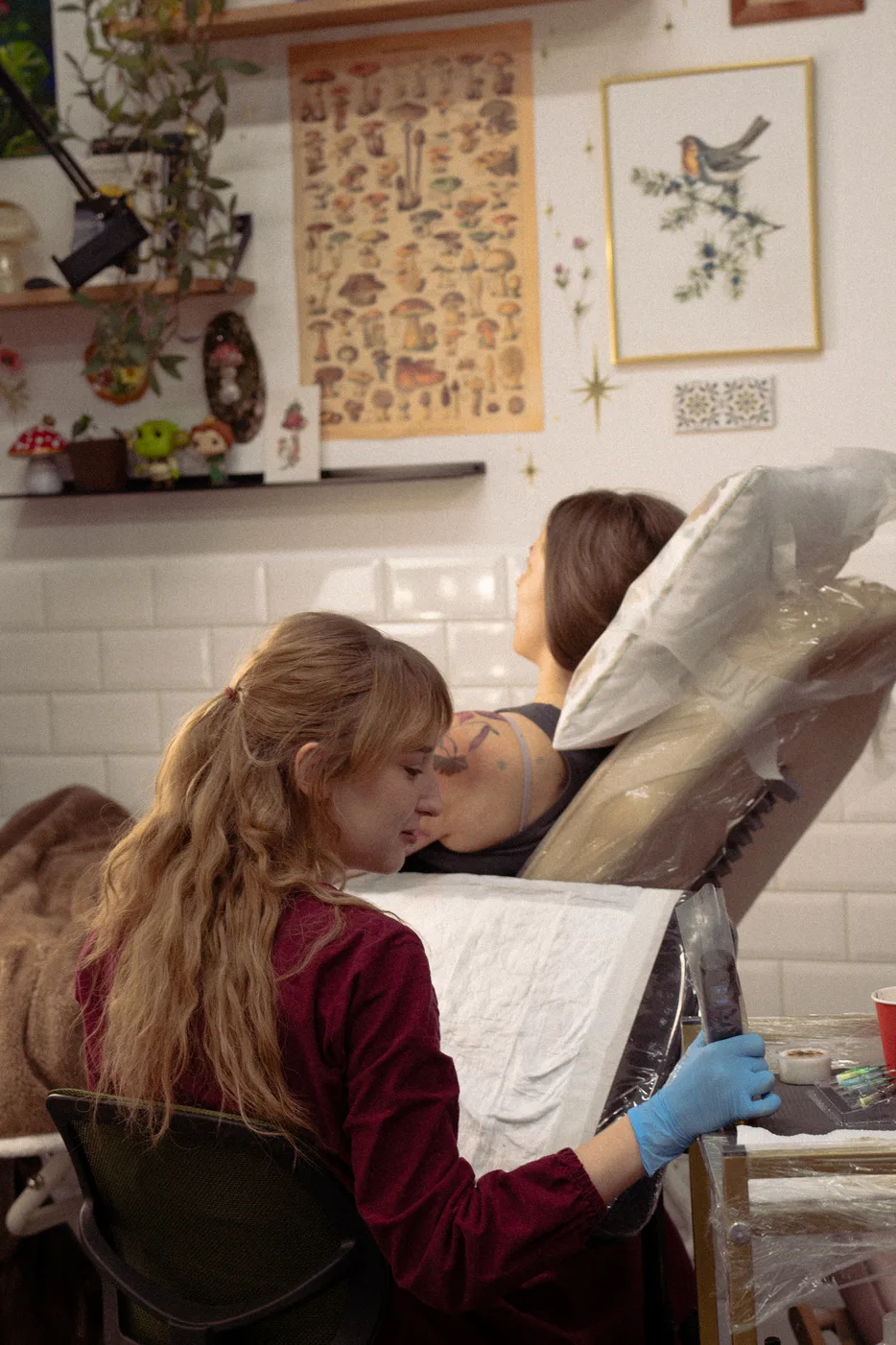
— Usually, everything begins with a personal consultation with the client. Together, we look at different plant options and discuss what resonates the most, which images and details feel close to her. At this stage, a list of plants and elements that may become part of the future piece gradually comes together.
After that, I continue working on the idea at home: I expand and refine it, look for the right shape, think through the details, create collages, and gradually build the composition.
During the session itself, we always try the sketch on the body, see how it sits, and I make the final adjustments to the shape of the placement so everything looks as anatomical as possible.
In general, it is always a living process: with experiments, searching, many attempts, and different versions. Sometimes this work takes hours, because it is important for me to find the exact solution where everything comes together. In those moments, I often feel like a florist arranging the most important bouquet of someone’s life.
How do you feel your style developing now? What direction are you interested in moving toward?
— Right now, I really feel my style becoming deeper. I am increasingly drawn to a forest aesthetic — more atmospheric, more mysterious. I feel very close to images like mushrooms, lichens, moss, roots, and everything alive that seems hidden from a quick glance.
I like the idea that a human being is part of nature, part of a large ecosystem. And I want to express that in tattooing as if natural elements live together with the body, grow through it, and become part of it.
Perhaps this is exactly the direction I want to move in: toward forest tattoos that are deeper, more atmospheric, and more complete as images. At the same time, the search for the ideal composition is especially important to me now. I want the tattoo to look absolutely organic on the body, so there is no feeling of randomness, so everything is in its place and perceived as naturally as possible.
Of course, I also want to make my tattoos even more alive and natural. That is why I study a lot: I take courses, develop my drawing, try new materials, work a lot with watercolor on paper, study living plants, look at them, touch them, observe their form and texture. In a way, I am truly becoming more and more of a botanist, and I really like that.
You took part in a tattoo convention in China — a major international experience and a completely different professional environment. What results, impressions, and experience did you bring back from that trip?
— That trip became one of the most spontaneous and at the same time one of the most important experiences in my professional life. Everything was decided literally in one day, and I have never regretted taking that step.
It was my first trip abroad, and Asia really felt like a completely different world in terms of atmosphere, scale, and overall impression. The convention itself was quite clear in structure and in many ways similar to our local festivals, but the level and scale of some of the works presented there were, of course, very impressive. I was especially struck by the large, complex, carefully developed costumes — they were truly incredible.
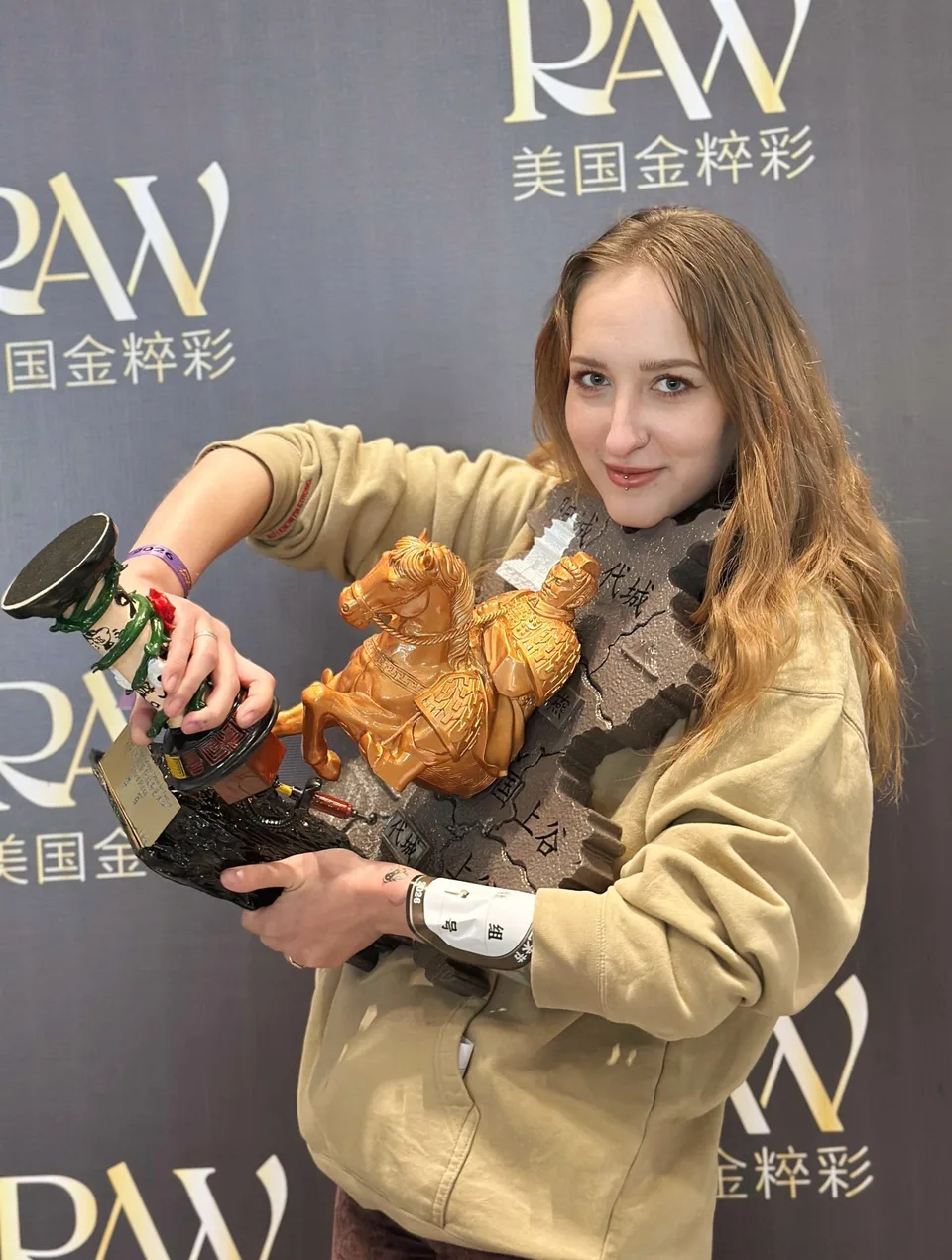
One of the most valuable moments for me was being entrusted with judging two categories at the festival. It was a very powerful and important experience. In that moment, I felt very clearly how much I had grown over the past few years, and I saw that my professional path, my perspective, and my experience truly had weight.
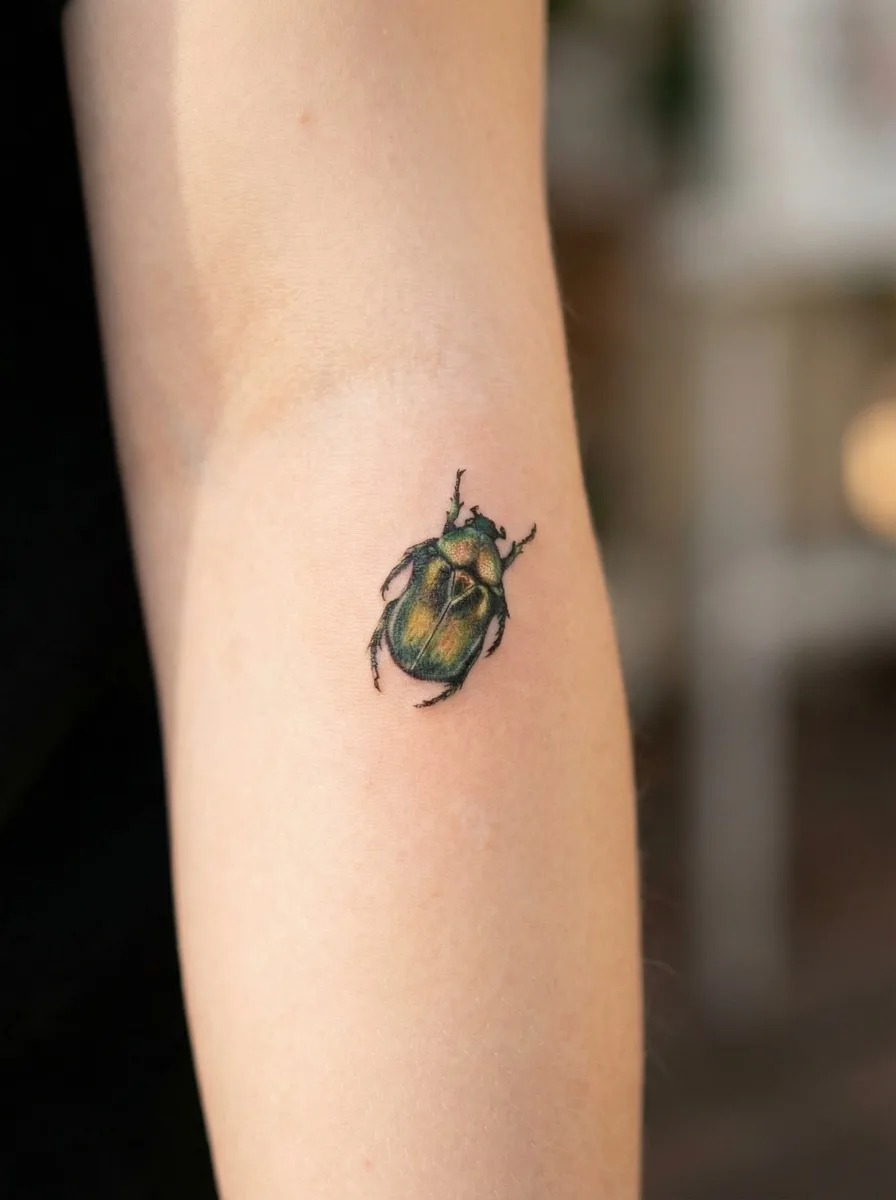
At the same time, the trip gave me more than a new status. It also became a very personal story. I could not find a model at the festival, so I spontaneously decided to tattoo myself. I had prepared transfer sketches for the convention in advance, and among them was a little bumblebee. I had tried placing it several times before the trip and again on-site, and at one point I realized that I wanted to keep it with me forever. That is how this sketch became my own tattoo.


This piece unexpectedly received a very strong response from the festival guests. Many people came up to me. They were surprised by how small, neat, and at the same time detailed the tattoo was. It was a very powerful feeling — seeing people genuinely admire your work.
In the end, I decided to enter this tattoo into a competition category without really expecting anything. So it was a huge joy for me to take third place and bring home an award from an international tattoo festival.
So I came back from this trip not only with impressions, but with an important confirmation of my professional path. Now I am a judge and an award-winning participant of the Hebei International Tattoo Convention 2026 in China.
Which festivals and conventions have you already taken part in? What has this experience given you as an artist?
— At this point, I have had several very important festival experiences, and each of them has strongly influenced me as an artist in its own way.
The first time I took part in a festival was as part of the iNKPPL team in St. Petersburg in 2025. It was a very emotional step for me, because, like many tattoo artists, I had struggled with impostor syndrome for a long time. It was hard for me to take that step, hard to believe in myself and in the idea that my work deserved a platform of that level.
But I still went through the fear, literally with shaking hands. I did not win an award that time, but the experience was still very valuable. The most important thing I took away from it was an understanding of where I needed to grow, what to improve, and what direction to move in as an artist and tattooer.


At the same time, even then I heard very warm and enthusiastic feedback from colleagues and festival guests, and I saw genuine interest in my work. That was especially important to me because I felt that what I was doing really stood out and was perceived as something fresh, unusual, and alive. That kind of response gives you a lot of energy.
Exactly one month later, I took part in my second convention — “Colors of the Polar Day” in Murmansk. I worked both days and made two tattoos. On the first day, it was a forest composition with fly agaric mushrooms, northern berries, and fern — a tattoo inspired by the northern nature of Murmansk. That piece ended up winning Best of Day Color on the first day of the festival.
Those emotions were incredible. In that moment, I was overwhelmed with happiness. I could not believe that I had really done it. It was a very powerful moment: a lot of adrenaline, joy, and the feeling that all the effort had been worth it. That was when I truly felt that I was capable of winning, that I could stand out among other artists and confidently promote the style I love. At the festival, local news filmed me, interviewed me, and showed my work. That also became a meaningful moment for me, because I felt interest in my art not only from the professional community, but also from a wider audience.


Another important experience was participating in the online tattoo festival “Liga Tattoo.” There, the judges did not rate my work as highly as I might have hoped, but I received a very warm response from other participants. People noticed me, praised my work, and that was also valuable to me. I take such situations calmly: in a creative field, this is normal. Sometimes your taste and perception simply do not match the judges’, and that really happens. For me, it was not a reason to doubt myself. On the contrary, it reminded me once again that my style has its own audience.
Botanical tattooing is a very delicate and intimate direction, while conventions often favor large, high-contrast, more visually “loud” pieces. How competitive do you think botanical tattooing is in a festival format?
— Even such a niche style as botanicals has already managed to win more than one award in my work. For me, this is direct proof that botanical tattooing can absolutely be competitive even in a festival format, where larger, more contrasting, and more visually familiar works often tend to win.
Yes, festivals have their established ideas of what a winning piece should look like. But I think the value of the industry’s development lies in gradually expanding those boundaries. In a sense, I have already managed to break them a little and prove that botanicals can also be noticeable, strong, and worthy of high recognition.
I actually believe that in the future, botanical tattooing could become its own category at festivals. And I would really like to contribute to that happening. This direction has huge potential: it is delicate, technically complex, and very expressive. It simply needs more space and more chances to be seen.
So I am sure that botanical tattooing is very competitive. Like any new or less familiar direction, it needs time, attention, and the opportunity to make itself known.
We have already written about you on iNKPPL when you were part of our team at the festival in St. Petersburg. What do you remember most about that experience?
— It was my first festival experience, and I have never regretted living through it in your company. It really mattered to me, because everything was new, exciting, and at times even frightening.
In a moment like that, it is especially valuable to be around people who not only invited you to be part of the team, but also truly supported you, helped you, and guided you. I remember that care, attention, and support from your side very clearly.
In a first festival experience, this means a lot, because it helps you feel more confident and calm. I am grateful that you saw potential in me and gave me the opportunity to become part of your team. For me, it was a very warm and important stage in my professional path. And perhaps that is exactly why I am with you again this year.
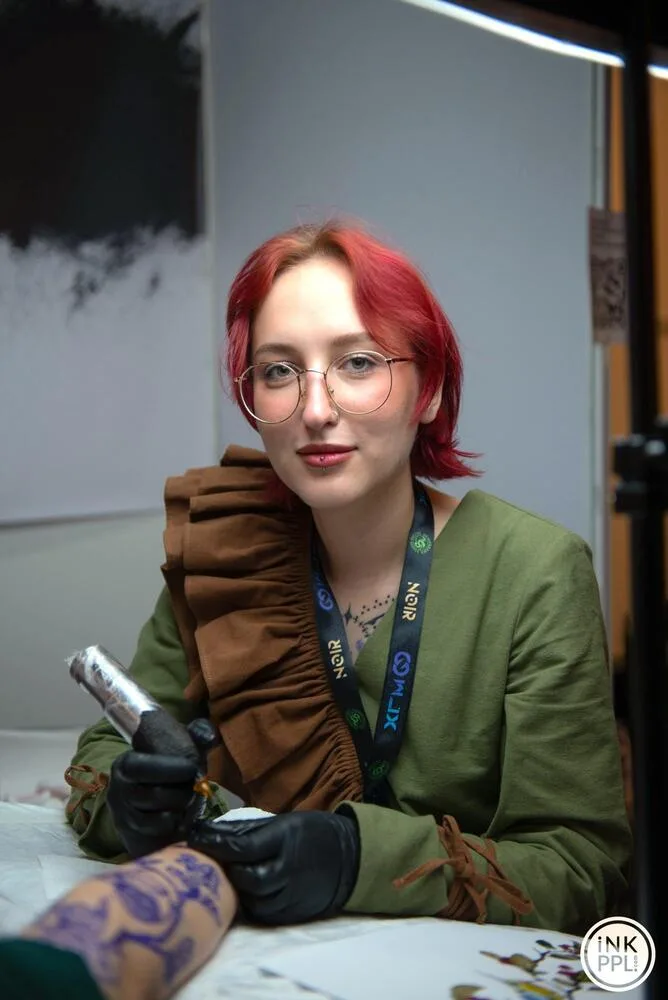
Now you are going to the St. Petersburg Tattoo Convention with us again. What mood are you bringing into this event?
— This year, I am going with a completely different inner state — with much more confidence in myself, in my abilities, and in my work. I am very charged for this festival and determined to bring home more awards. Now I already have that inner sense of grounding that I may have lacked in the very beginning. I understand what I can do, and I want to speak even more boldly through my work.
For me, this is no longer just about nerves, but also about excitement, about the desire to win people’s hearts with my tattoos and show that botanicals can be strong and truly memorable. I do not want to simply participate. I want to surprise people again, to catch their attention, and to leave an impression.
In addition, this time I will also take part in the costume exhibition. I will prepare my botanical costume and show what this direction can look like on a larger scale. I am very interested in revealing botanicals from a new side.
What are your plans for the near future — in your work, travels, conventions, or creative projects?
— In the near future, I want to keep growing and gradually reach an international level. I am interested in showing my work to a new audience, taking part in creative projects, meeting strong artists, and finding people who feel close to my aesthetics.
I want to develop technically and shape my own recognizable style even more deeply. It is important to me to create tattoos that impress, stay in memory, and adorn the person who wears them.