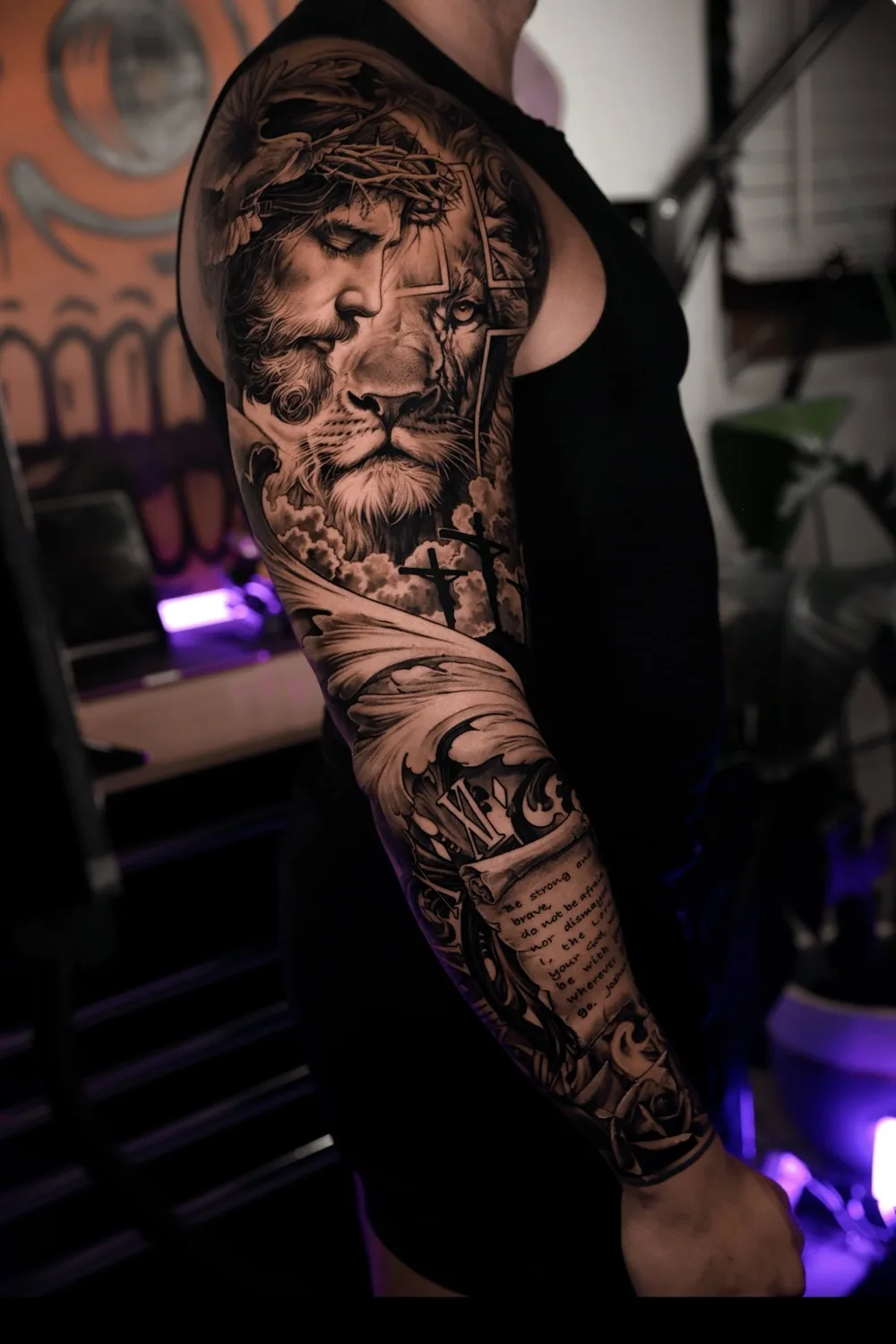
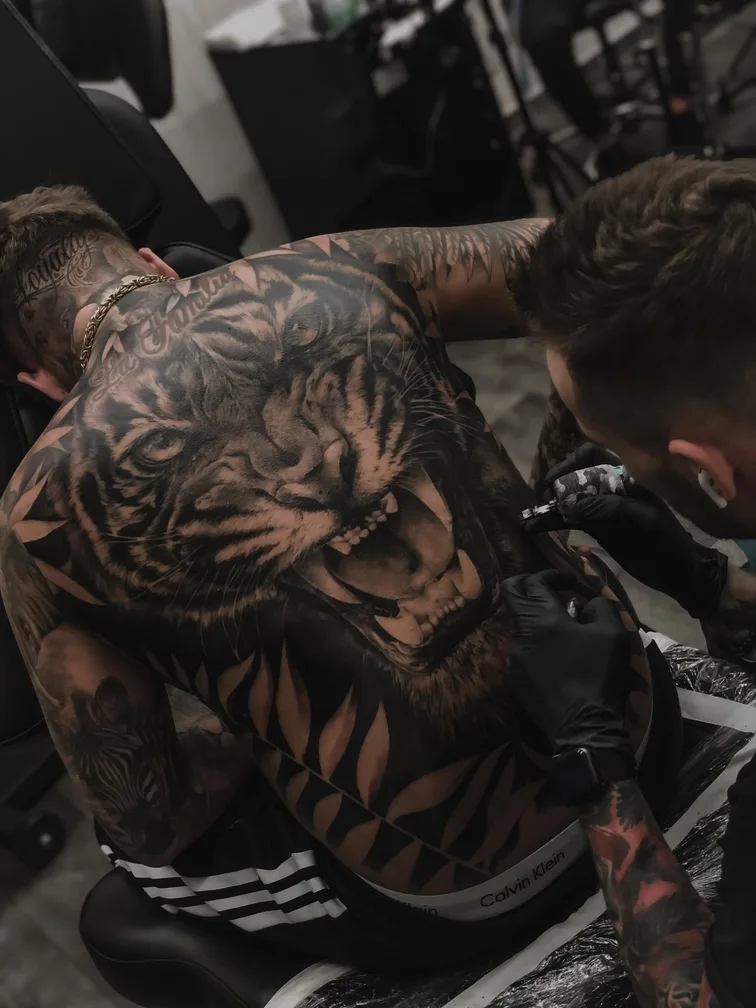
Taras Dmytruk is a Miami-based tattoo artist whose name has been increasingly recognized within the professional community in recent years. His work regularly earns awards at major conventions, and he has become a reference point for a new generation of artists working in black and grey realism.
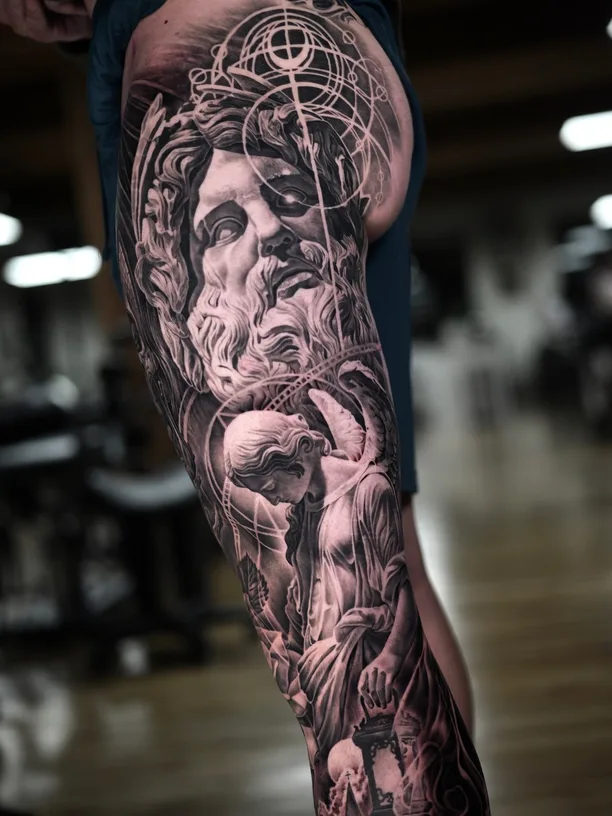
His tattoos are instantly recognizable: strong contrast, precise detailing, and well-balanced compositions. But what truly defines his portfolio is the atmosphere. Each piece carries a sense of inner tension, strength, and drama, turning every tattoo into a memorable story.
Taras, could you tell us a little about yourself — where are you from and how you first got into tattooing?
Taras: I'm from Ratno, Ukraine. I've been drawing since I was a kid, but at 17 I went to study management. While I was at university, I tried tattooing for the first time and at first it started more like a hobby.
By 18 I had already opened my own studio in Lviv, then a few more after that. A couple of years later I went on a guest spot to Germany and worked at Neon Tattoo Germany, which gave me real experience in the European tattoo scene.
Eventually I moved to the United States, and now I'm based in Miami, Florida.
When did you start tattooing, and what was your path before becoming an artist?
Taras: I started at 17, honestly by accident. A friend bought a cheap tattoo machine, and I had a lot of free time. There was no formal apprenticeship, just practice and YouTube videos. Then first clients came, and opening my own studio made me realize this could be a real career, not just a hobby. I quickly found like-minded people to work with, which helped a lot.
Later, working in Germany gave me a completely different perspective on standards and workflow.
What makes your realism stand out compared to other artists?
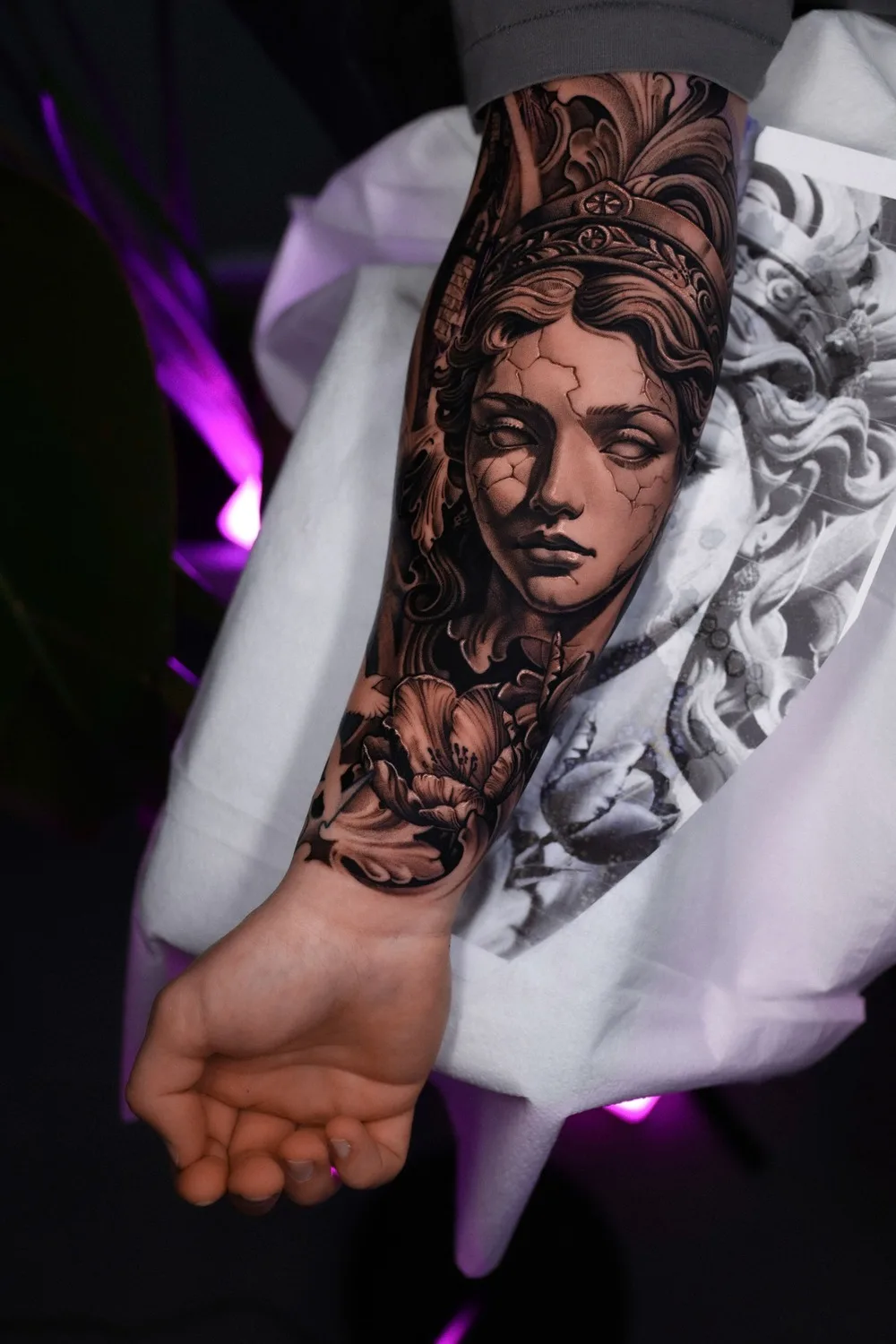
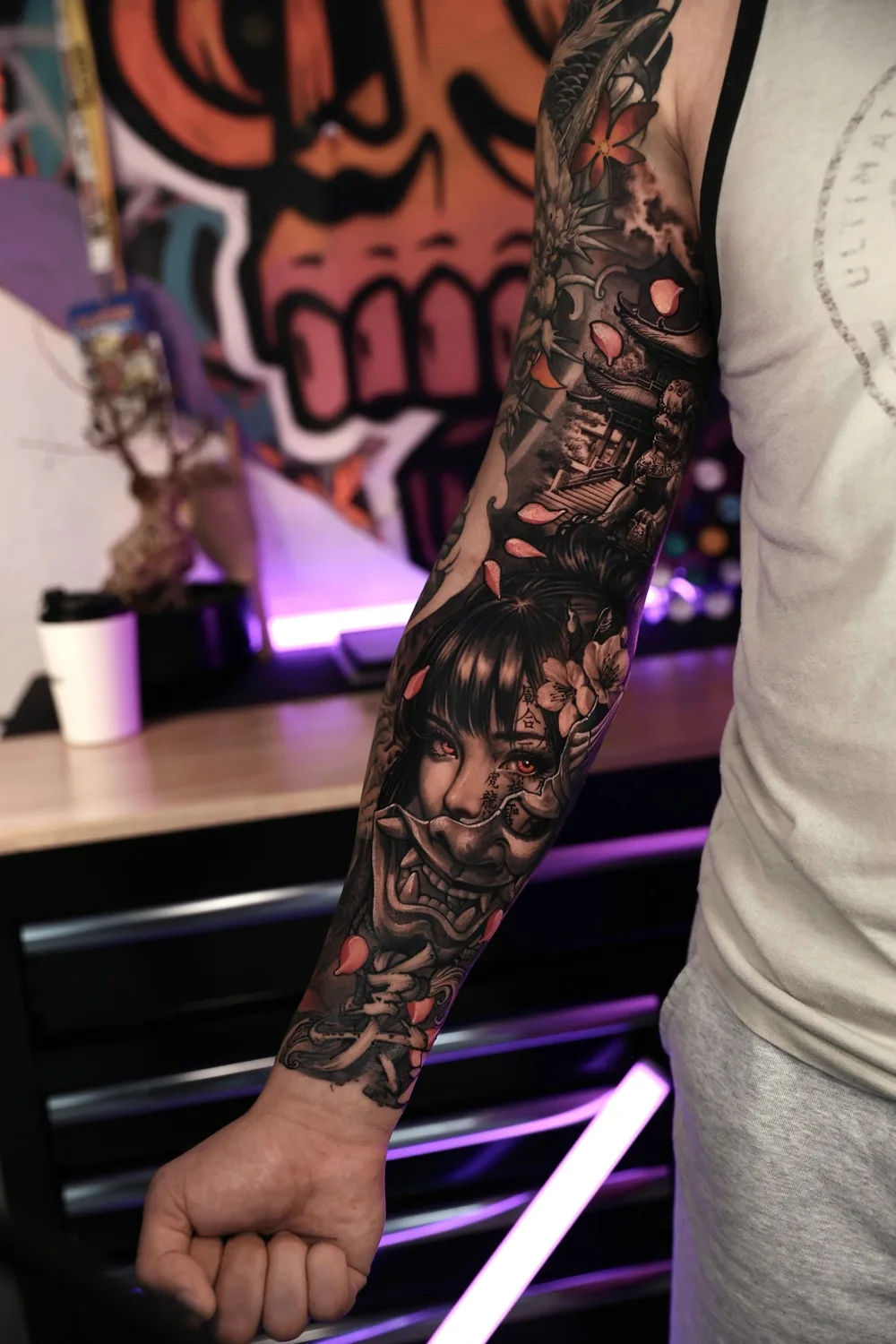
Taras: I work mostly in black and grey realism, but over time I’ve also started mixing it with color accents and Japanese elements, so my work has been evolving beyond one strict direction. What sets my approach apart is the focus on design: it's important to create something unique for every client.
I'm also inspired by Renaissance and Baroque aesthetics. I treat every tattoo like a painting, not a reproduction of a photo. I focus on how the piece interacts with the body and on contrast, which is one of the main accents in my work.
What drew you to realism in particular? Do you focus more on portraits, animals, or other themes within this style?
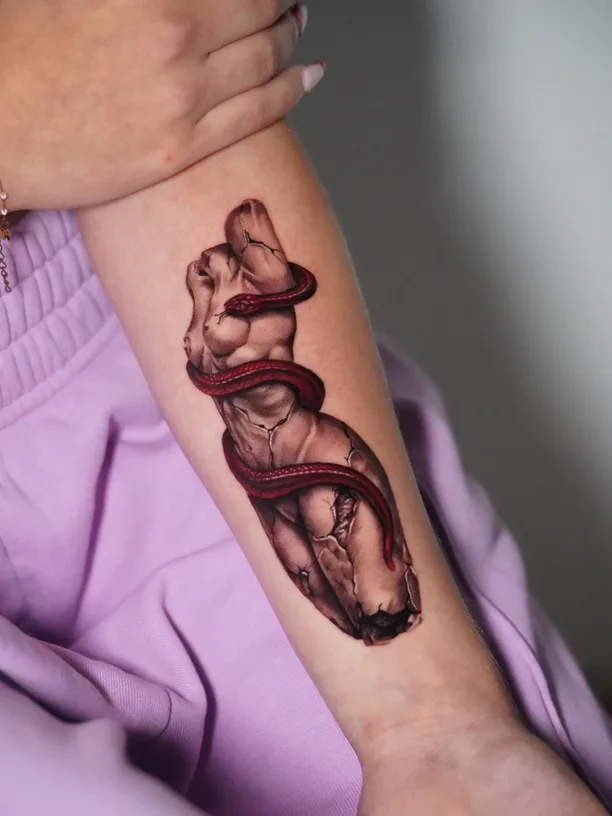
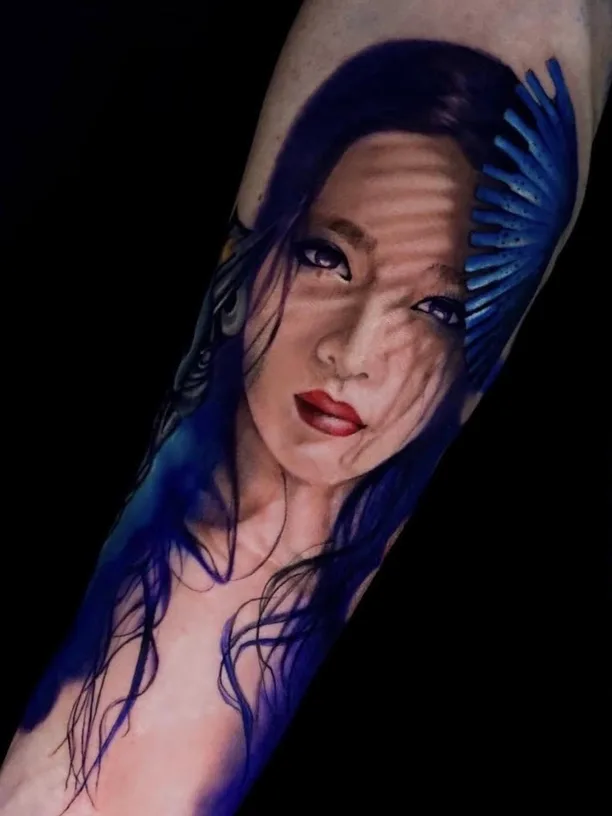
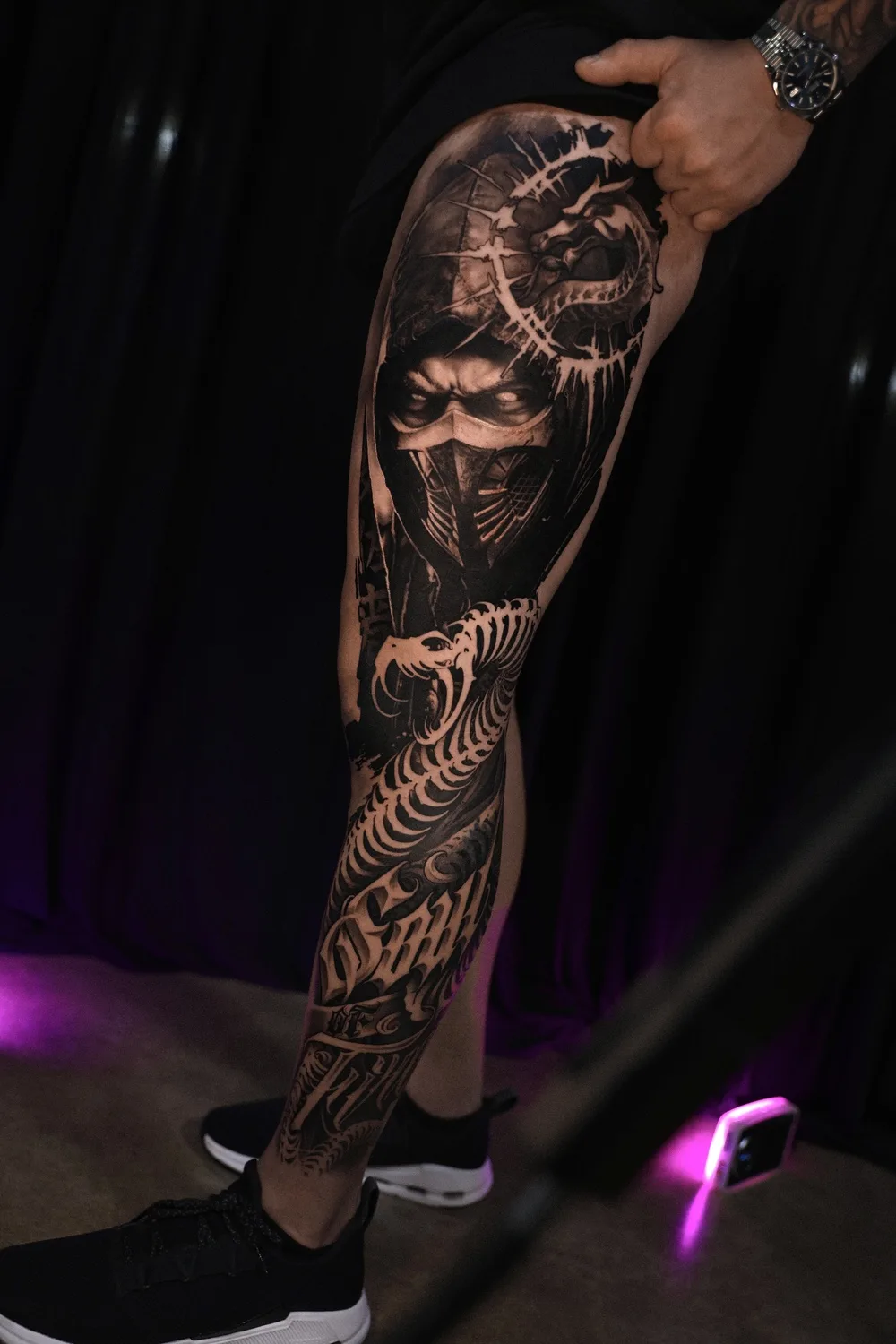
Taras: Realism is the closest thing to classical fine art in tattooing, and that connection is what drew me in. I mostly work on multi-session projects. The themes that come up most are classical sculpture, religious motifs, portraits, and architectural elements.
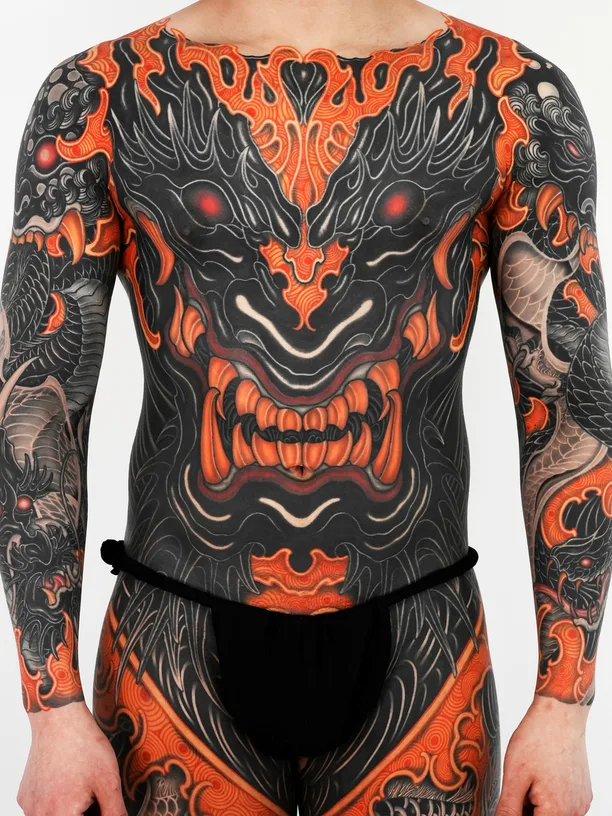
But lately a big part of my sleeves are inspired by Japanese style combined with realism, and that really excites me. I prefer building a complete composition on the body rather than placing separate images. Structure and anatomy always come first.
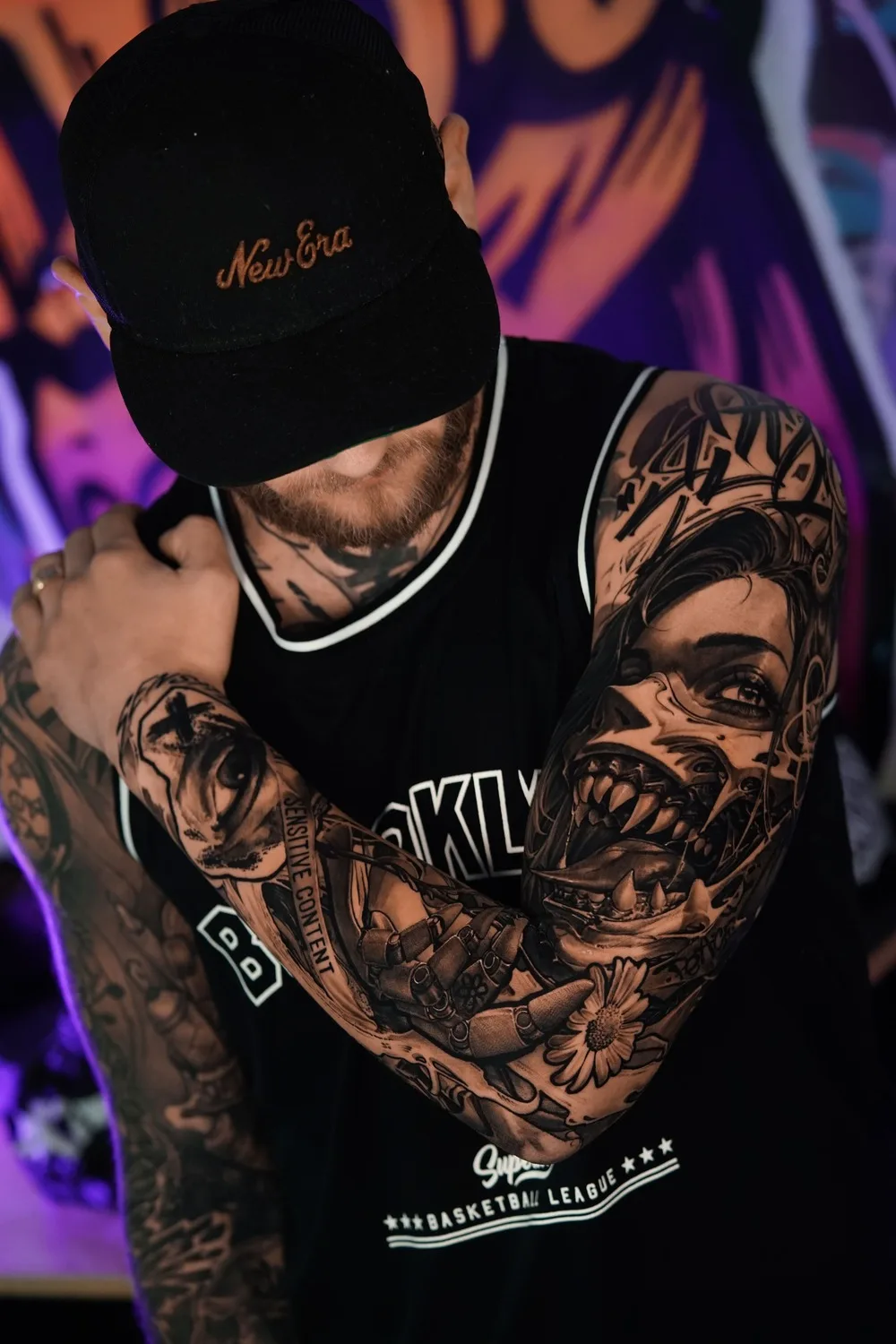
Most of your work is done in black and grey, but occasionally you add color. In what cases do you decide to use color, and what role does it play in your compositions?
Taras: This is something I've been actively exploring lately. I started adding color accents, mostly reds and oranges, into my black and grey work. It adds focal points and brings a different energy into the composition without taking away from the realism.
I'm also mixing black and grey realism with elements of traditional Japanese style, creating a kind of neo-Japanese approach. It's still a relatively uncommon combination in tattooing, and the result looks unique. I want to keep developing this direction.
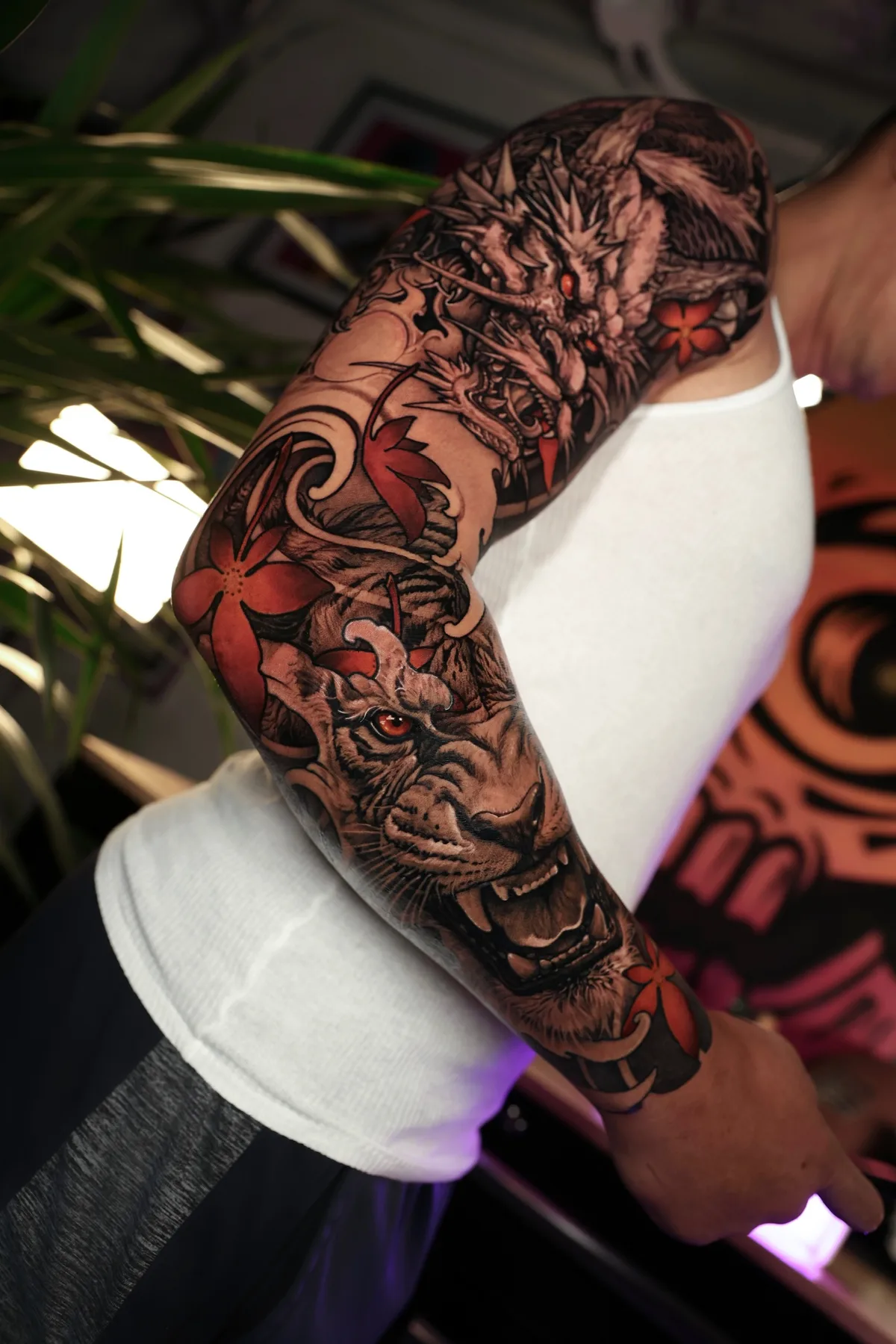
Do you usually create custom designs based on clients' requests, or do you prefer developing your own concepts?
Taras: I always stay true to my own style, but I start with a conversation with the client. I need to understand their idea, their anatomy, how much space we have, and the overall direction. Then I look for references to understand mood and structure. It's really important to get on the same wavelength with the person I'm designing for. The final design is always something unique.
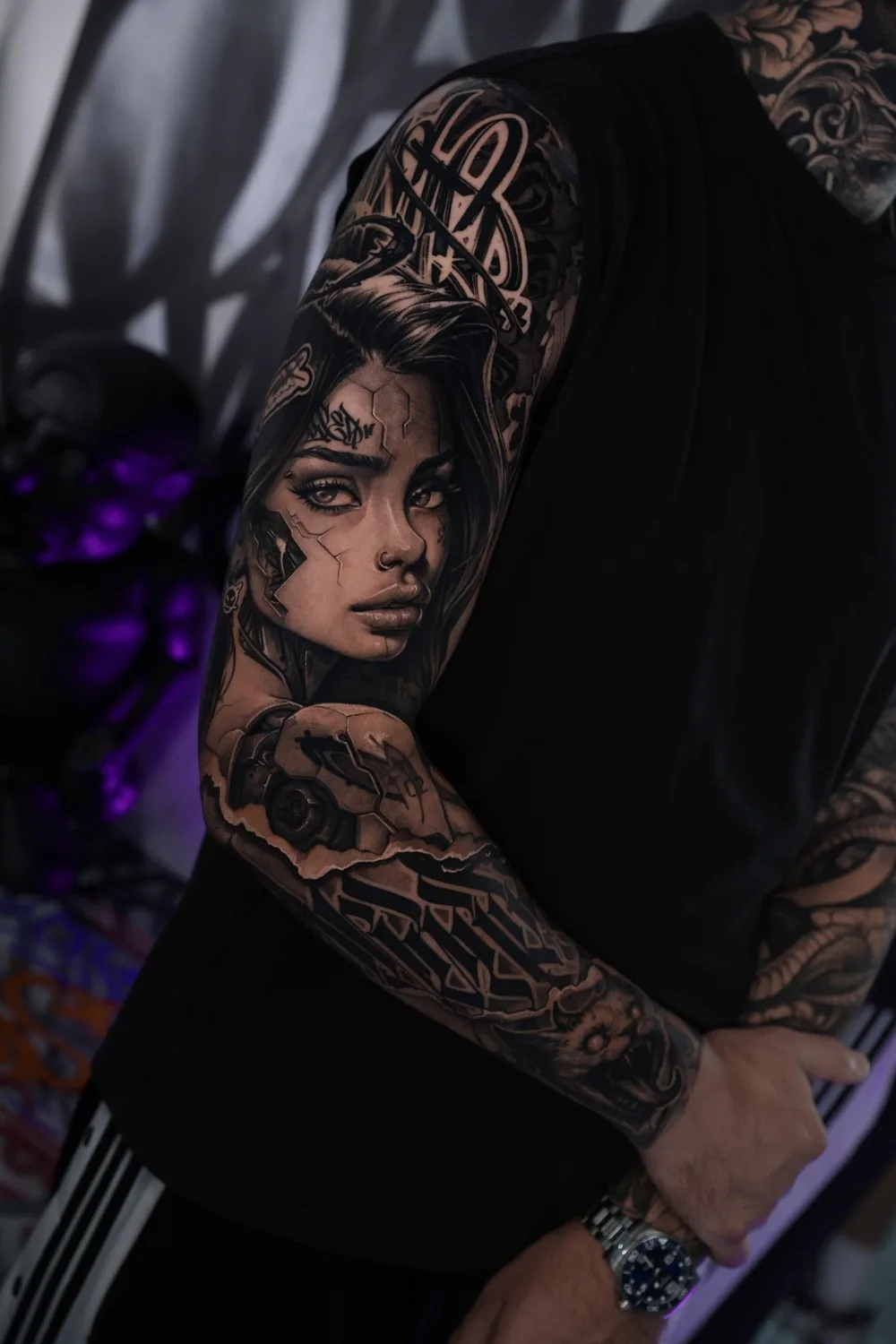
What is most important for you in tattooing — technical quality, artistic expression, or the emotional connection with the client?
Taras: For me it's the emotional connection with the client first. Especially when it comes to large projects over multiple sessions. When you have that connection and you're comfortable working together, the whole process flows easily, and it always shows in the result. Technical quality is important, of course, but that comes with experience.
As a good friend of mine once said: art ends after the design is created, after that it's a matter of technique. And it's through the connection with the client that real artistic expression comes through. Then it's not just work, it's a meaningful process for both me and the person.
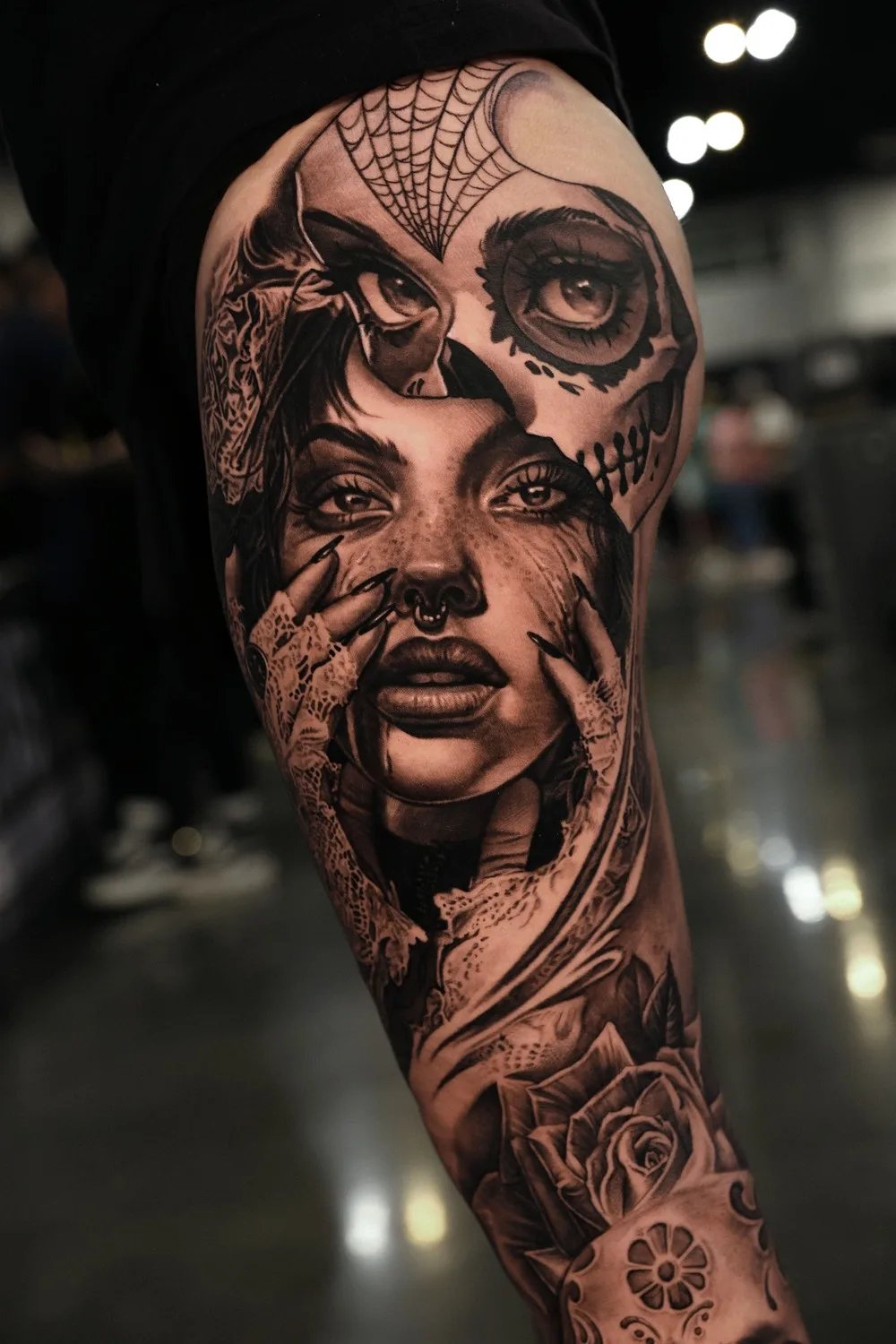
Where do you usually find inspiration for your work?
Taras: Mostly I'm inspired by the work of other tattoo artists and contemporary art in general. I find it fascinating to watch strong artists work, especially at conventions, it always gives a fresh perspective and motivates me to grow.
At the same time I'm very drawn to Baroque art, especially sculpture, for its movement, tension, and use of light. I try to combine these things in my designs.
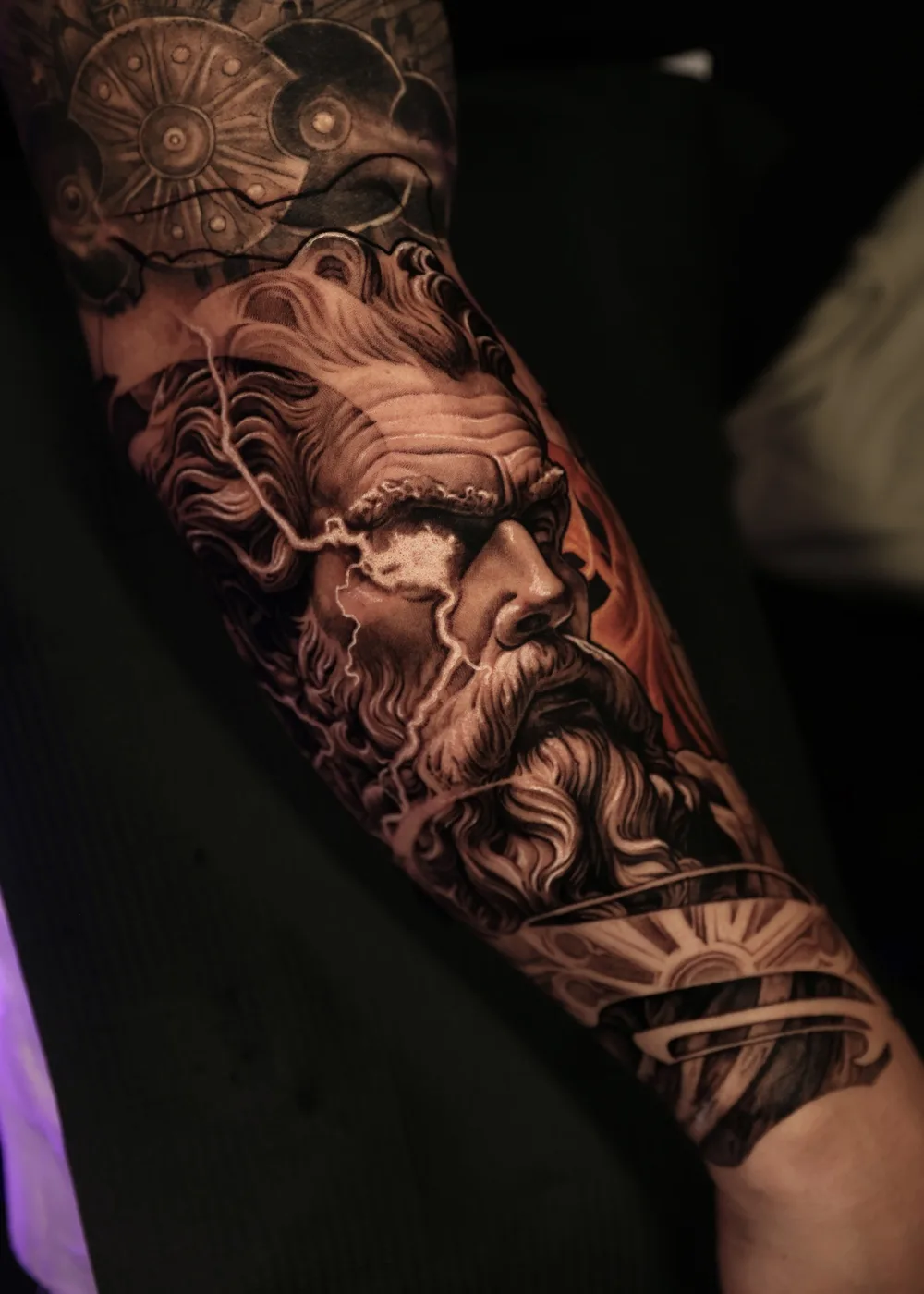
Could you share one or two projects that are especially meaningful to you and why?
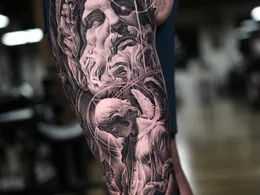
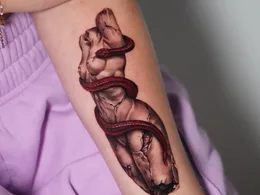
Taras: One that stands out is the collaborative project with Adrian Delgado at InkCon 2024 in California. We worked together on a piece that won the Best of Show award, and it meant a lot because it was a true creative partnership.
Beyond that, my most meaningful projects are usually multi-session sleeves where I build an entire composition from scratch over several months. Those are the ones where I feel most like an artist.
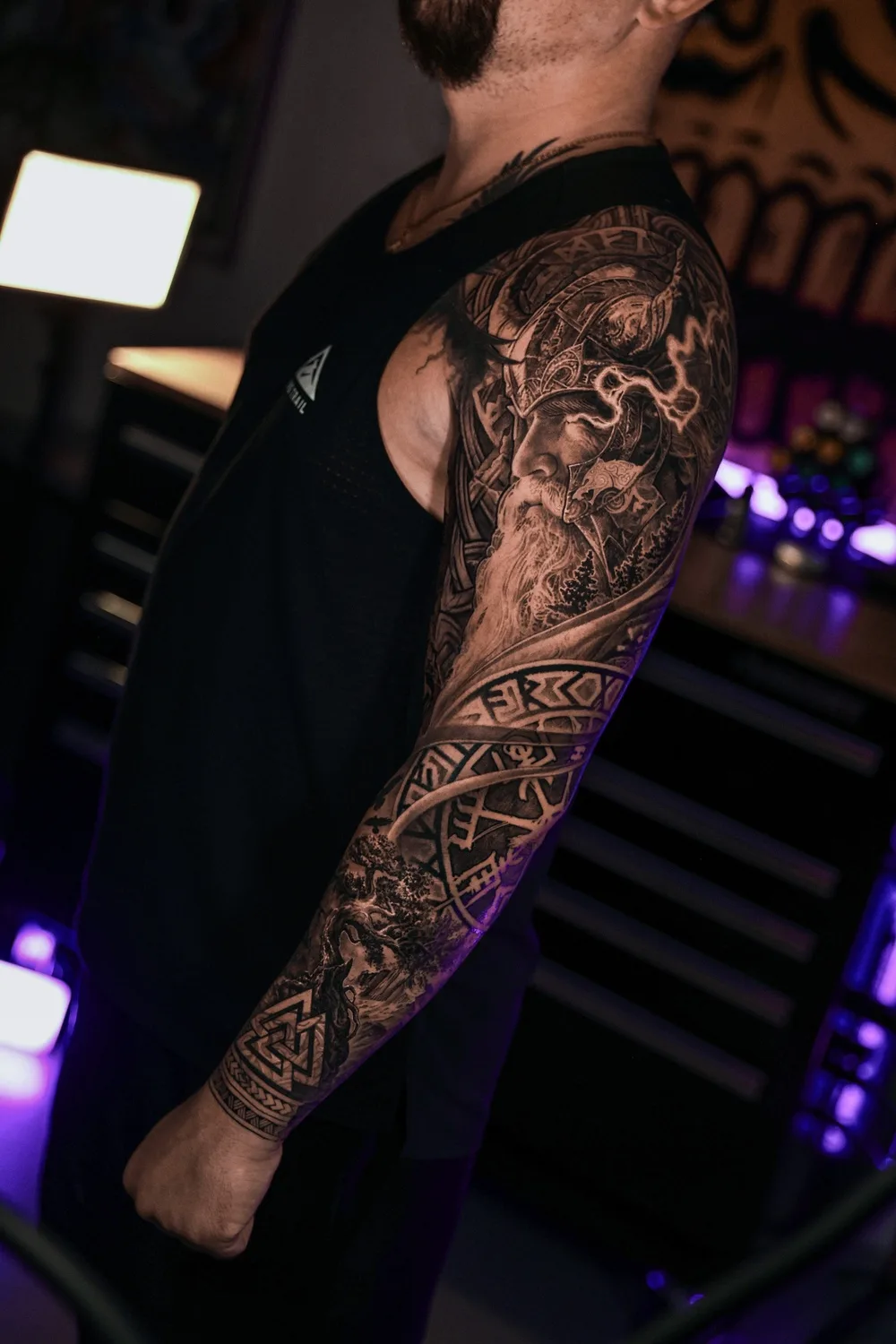
You have extensive experience participating in tattoo conventions. Could you tell us about your most significant awards?
Taras: At InkCon 2024 in California, Adrian Delgado and I won the Best of Show award. At the Orlando Tattoo Show 2025, I took first place in Best Portrait and Best Black & Grey, plus second in Two Days Tattoo. At the Florida Gulf Coast Tattoo Expo 2025, I also received placements in Best Black & Grey categories.
I've also been invited to judge at the Orlando Tattoo Arts Festival, Tampa Tattoo Arts Festival by Villain Arts, All Stars Tattoo Convention in Miami, and Orlando Tattoo Show 2025. Judging gives you a different perspective. You start evaluating work not just as an artist but as someone responsible for standards, and that sharpens your own eye.
Taras Dmytruk, black and grey style Taras Dmytruk, black & grey realism Taras Dmytruk, black and grey realism


You also conduct training sessions and workshops. Could you tell us how you structure your teaching process and what you focus on most when working with students?
Right now I work with younger artists only occasionally, mostly in a private one-on-one format. Most of my time is focused on my own work, conventions, and developing my projects.
In the near future, I plan to expand this into a small school format with group sessions. I’m interested in creating an environment where there’s healthy competition and motivation to grow, first of all on a personal level.
At the same time, I’m working on a professional course that I plan to launch soon.
How important do you think mentorship is in the tattoo industry? Did you have a mentor yourself, and how did that influence your journey?
Taras: Very important. I didn't have one single mentor. I learned by working, by watching, and by spending time in environments like Neon Tattoo Germany where the level around me was very high. That was my education. And that's exactly why I believe in creating the right conditions for younger artists. When you're surrounded by strong work every day, you grow faster than any course could teach you.
Where are you currently based and working? Do you often collaborate with other artists or studios?
Taras: I work at Green Avenue Tattoo in Miami. I like being around other artists because it keeps you honest about your level. Miami is a great city for tattooing because so many cultures come together here. Many clients travel from other states or abroad specifically to get tattooed in Miami, and that pushes us to keep raising our standards.
Do you plan any guest spots or travels in the near future? Where and when?
Taras: I'm always open to guest spots. For about two years I regularly traveled to Neon Tattoo Germany, where some of the best artists from around the world were working at any given time. That environment gave me a huge push. Now I focus on conventions across the United States, but I'm looking to expand internationally again.
How long is your waiting list at the moment, and how can new clients book a session with you?
Taras: My schedule is usually booked around two to three months in advance, especially in Miami, which is a very competitive market. The best way to reach me is through Instagram. I always try to make time for serious projects, especially when someone has a clear vision and is ready to commit to multiple sessions.
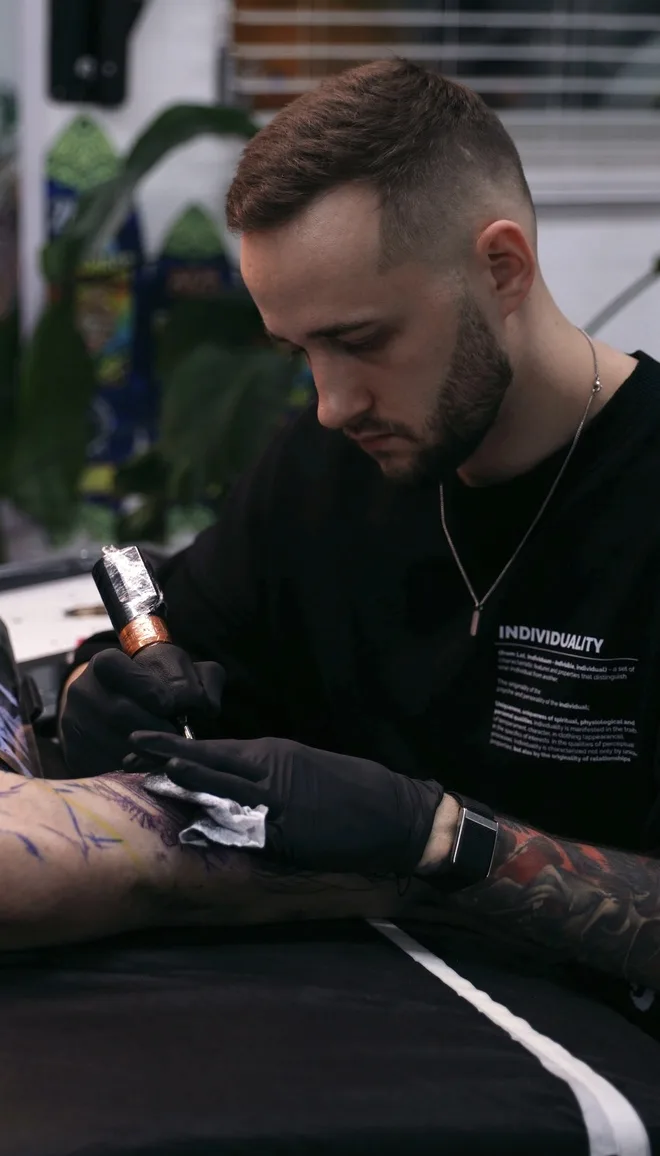
Looking ahead, what direction of growth do you see for yourself in the next few years?
Taras: I want to continue developing professional studios and mentoring younger artists. I want this industry to keep moving forward, to a place where tattooing is recognized purely as art. That takes education, high standards, and the right environment.
On the creative side, I want to keep pushing my neo-Japanese direction and taking on projects that challenge me. Step by step, with discipline and a clear vision of where I want to go.