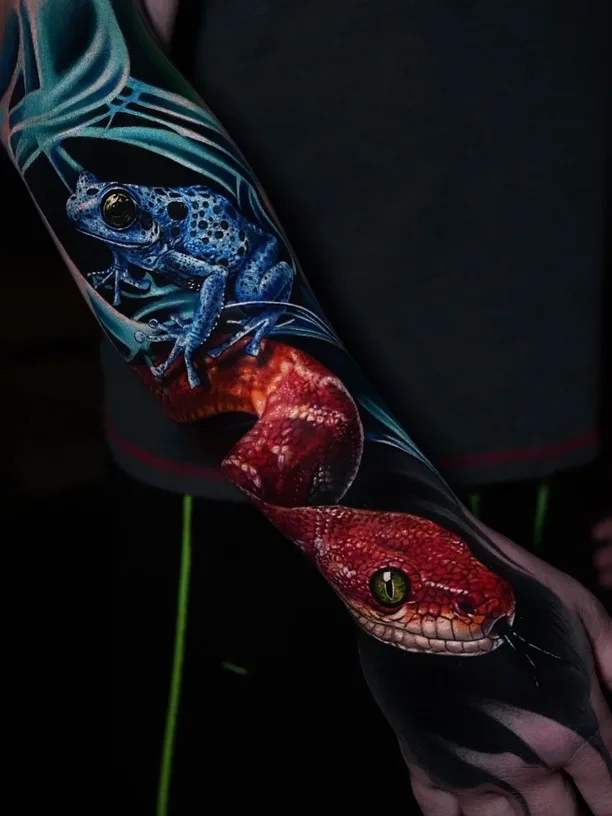
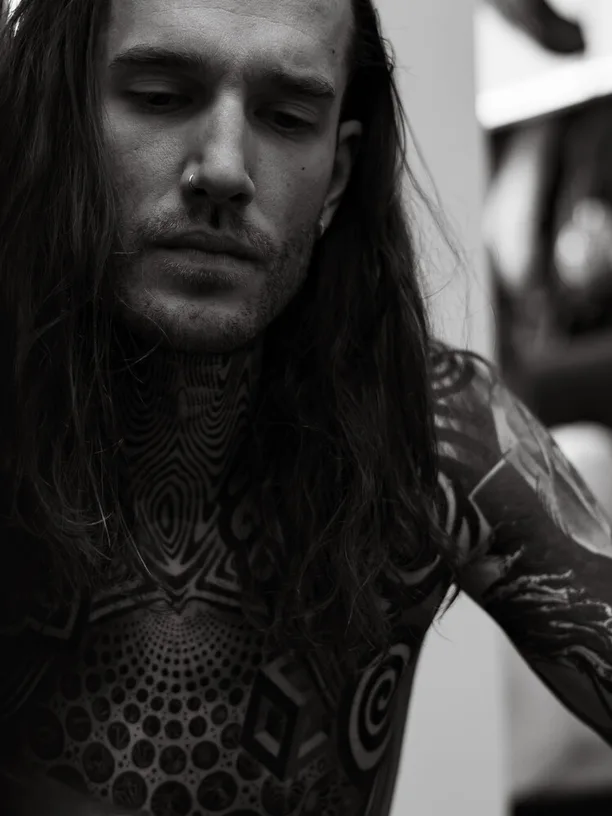
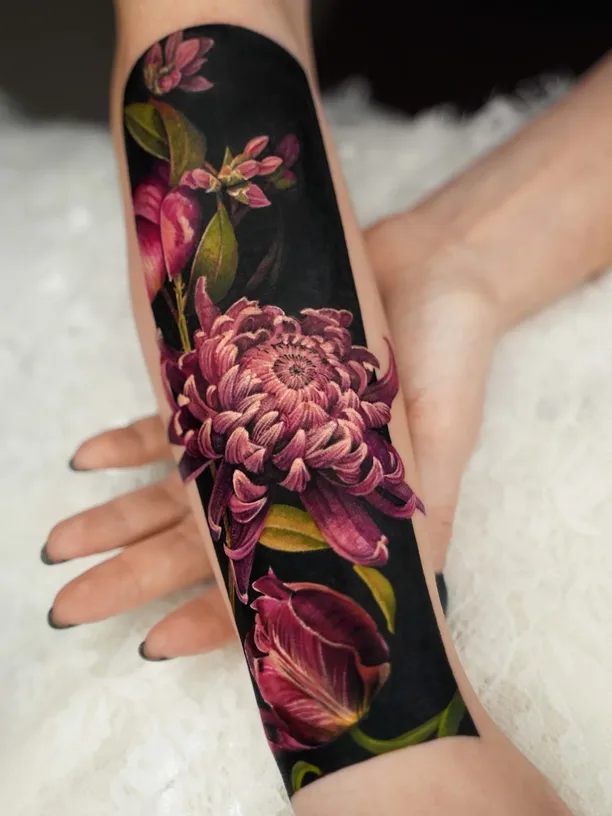
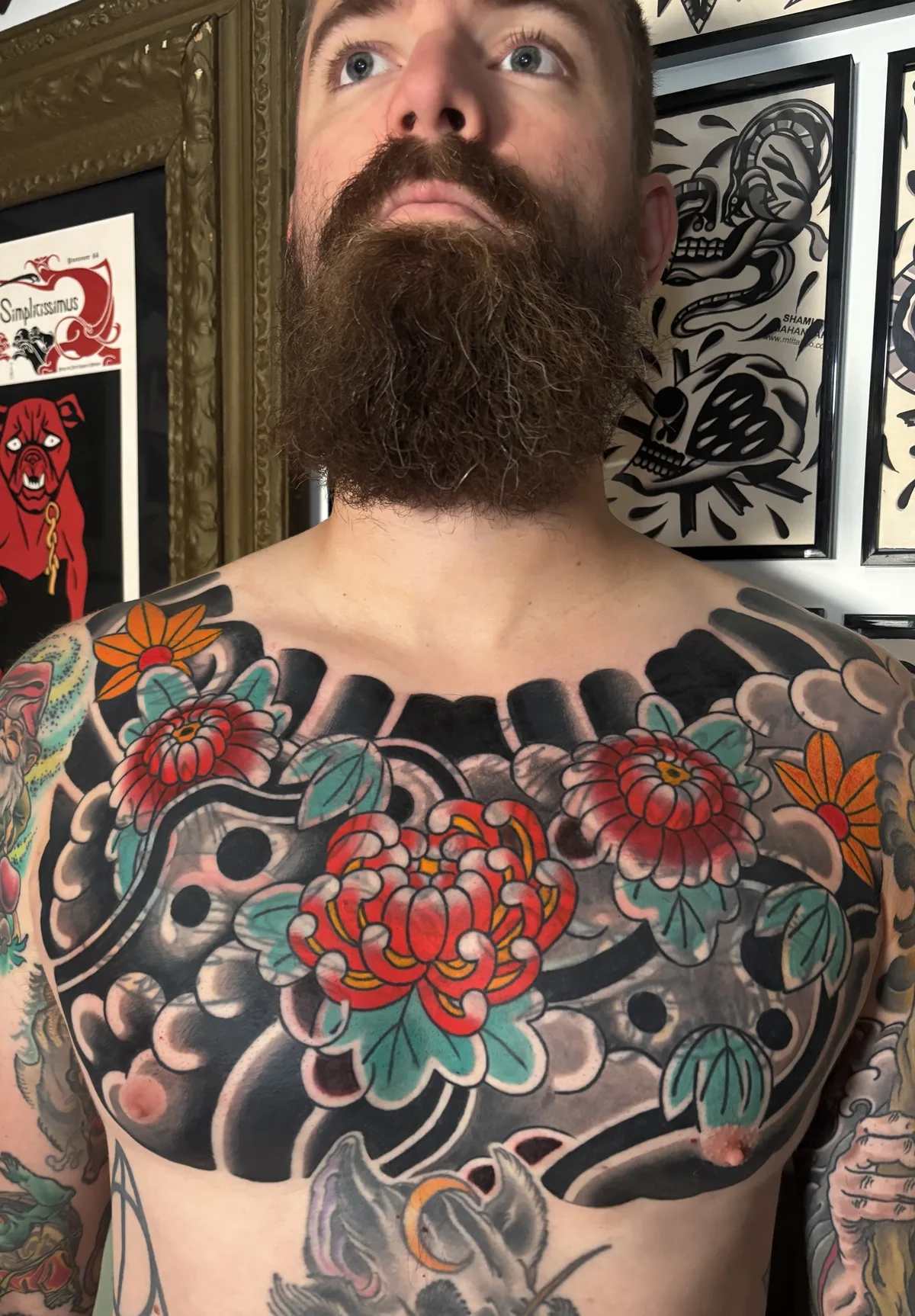
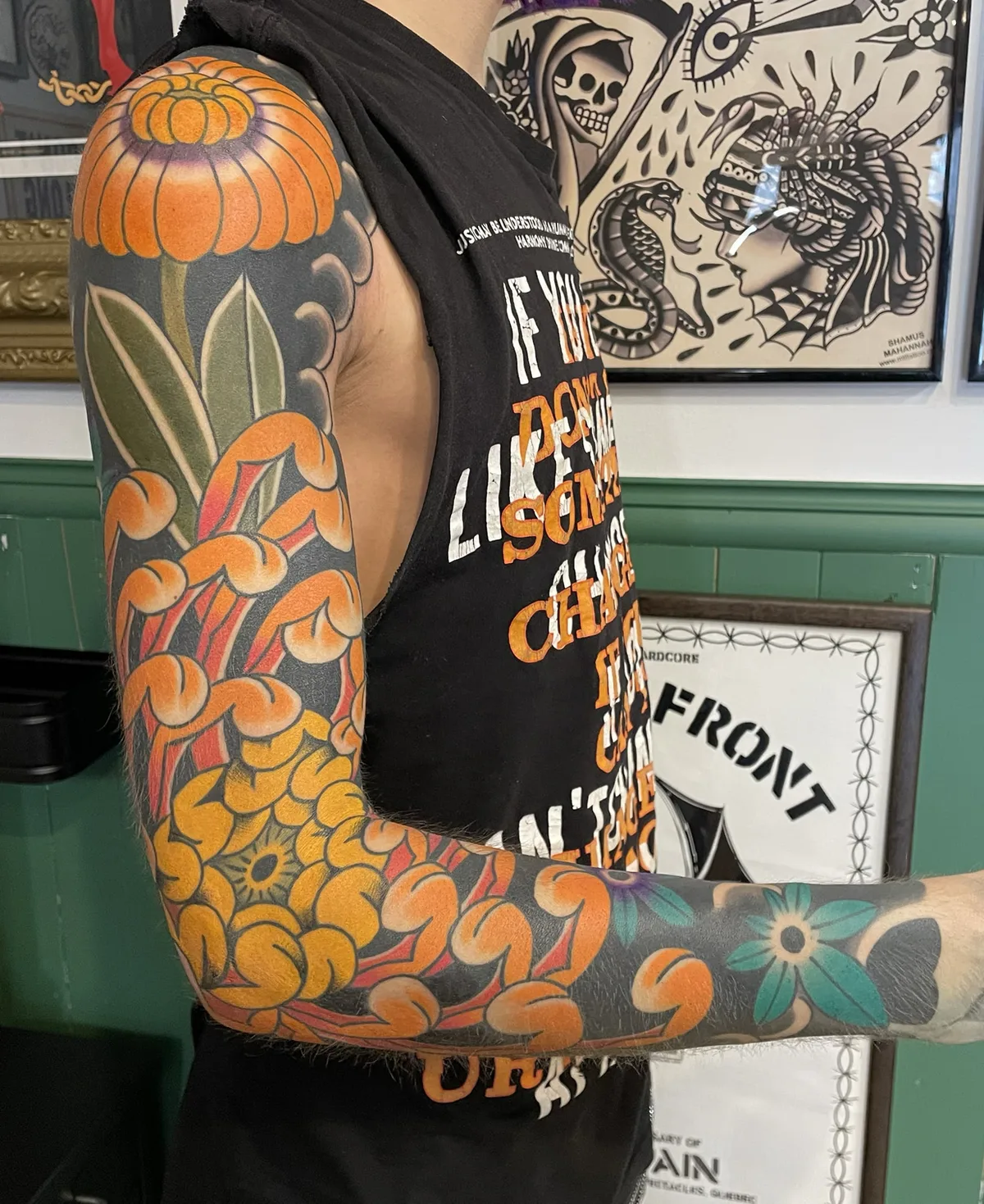
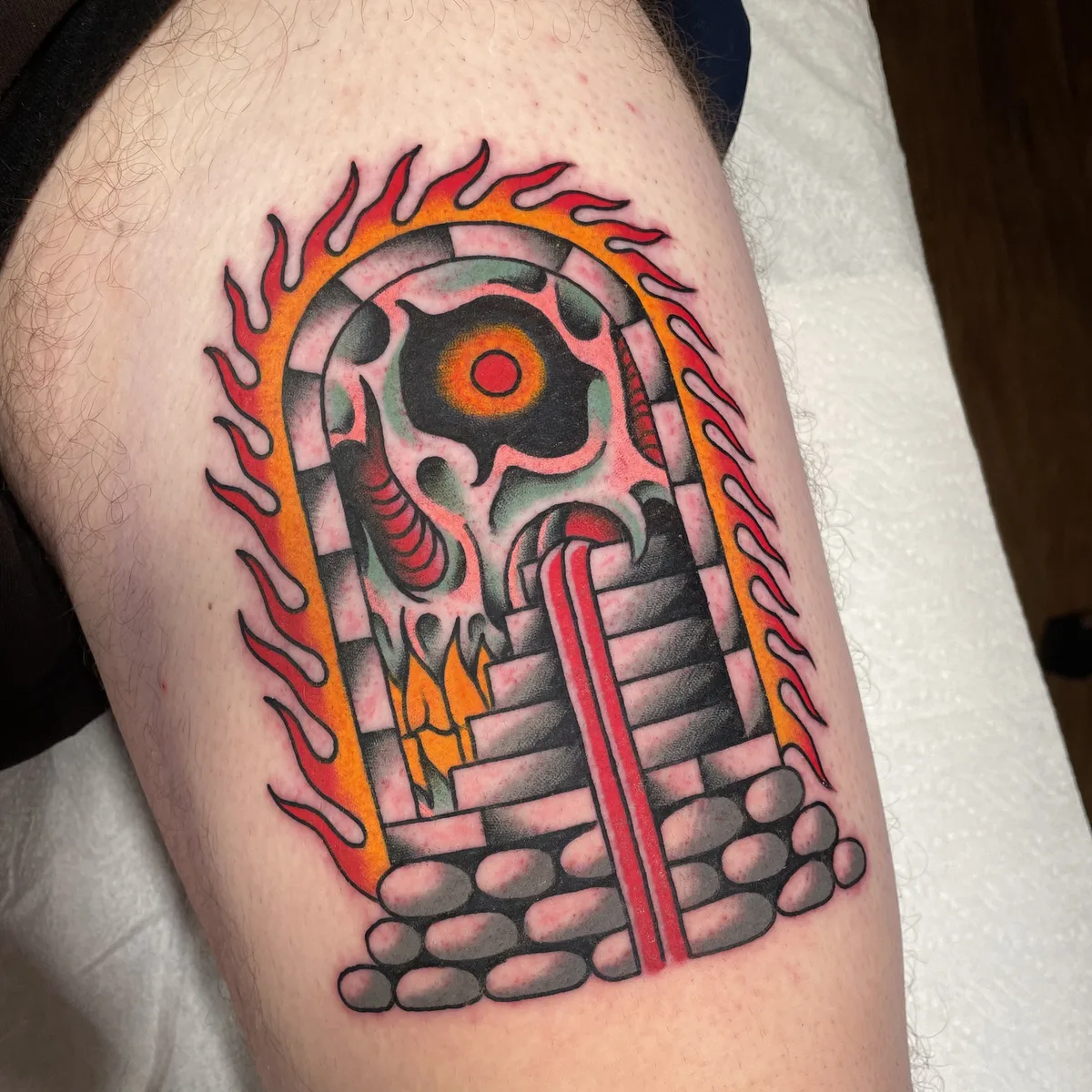
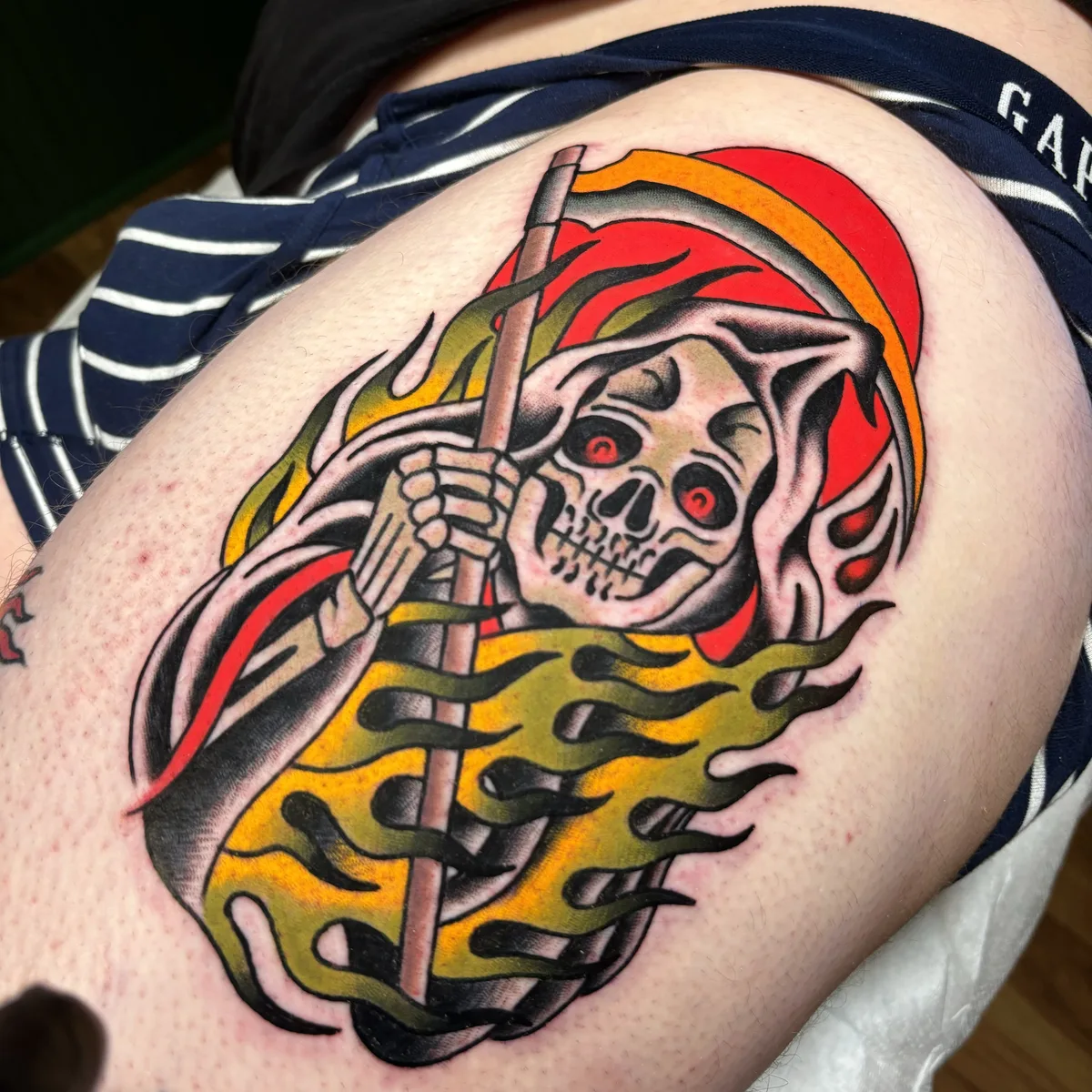
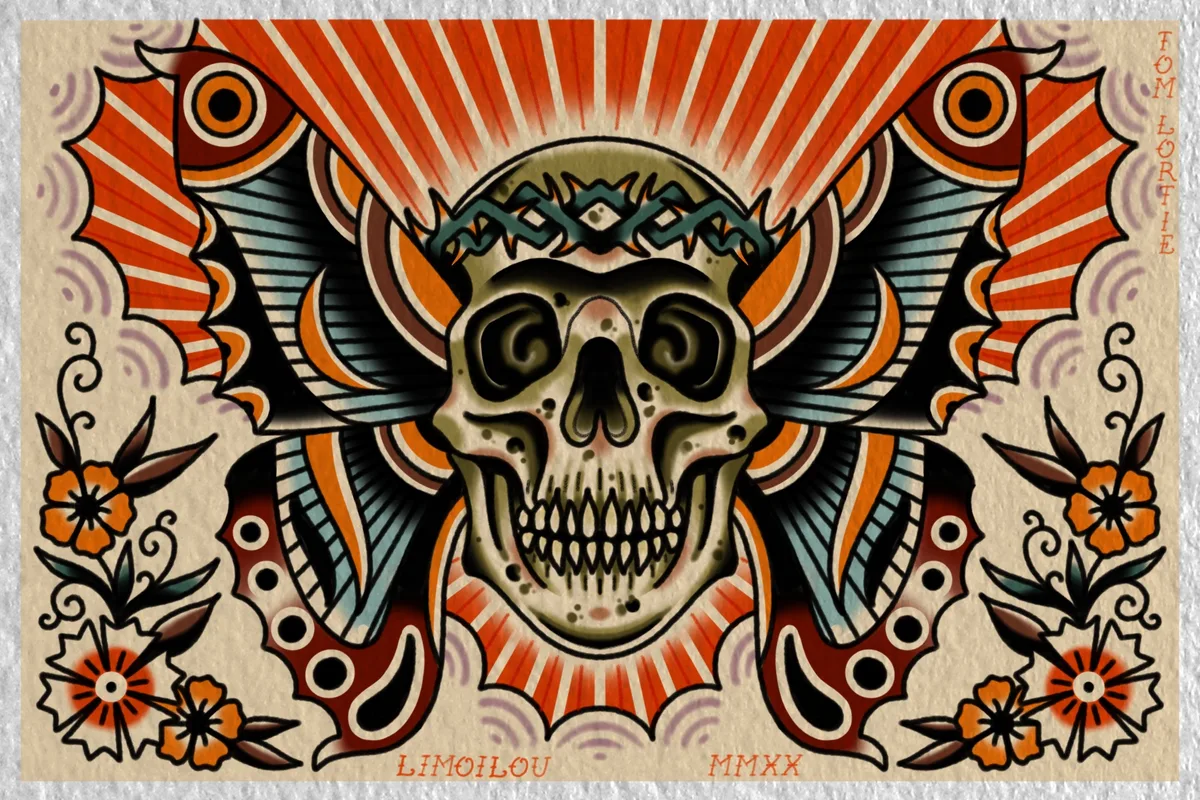
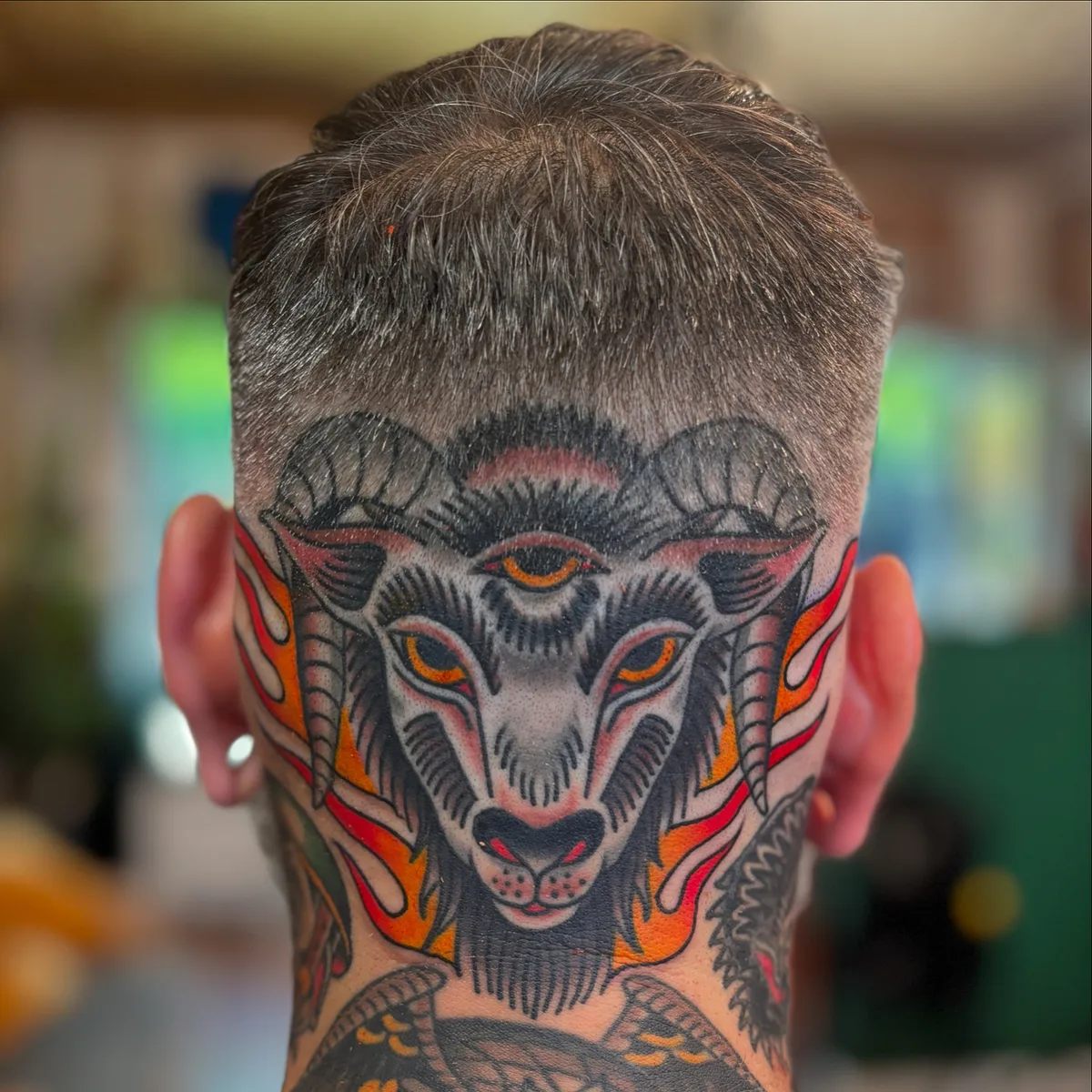
The Black Panther is the perfect reflection of its owner, Tom Lortie. The welcome is friendly and unpretentious, just like the Quebecer. Far from the flashy window displays and tattoo parlors, the 39-year-old artist welcomes you into his intimate, carefully decorated sanctuary, where his undeniable taste for the visual arts shines through. Based in Limoilou, this devotee of the traditional offers a modernized version in vibrant colors. With the Black Panther, Tom imposes his unique style, without giving in to the sirens of fashion.
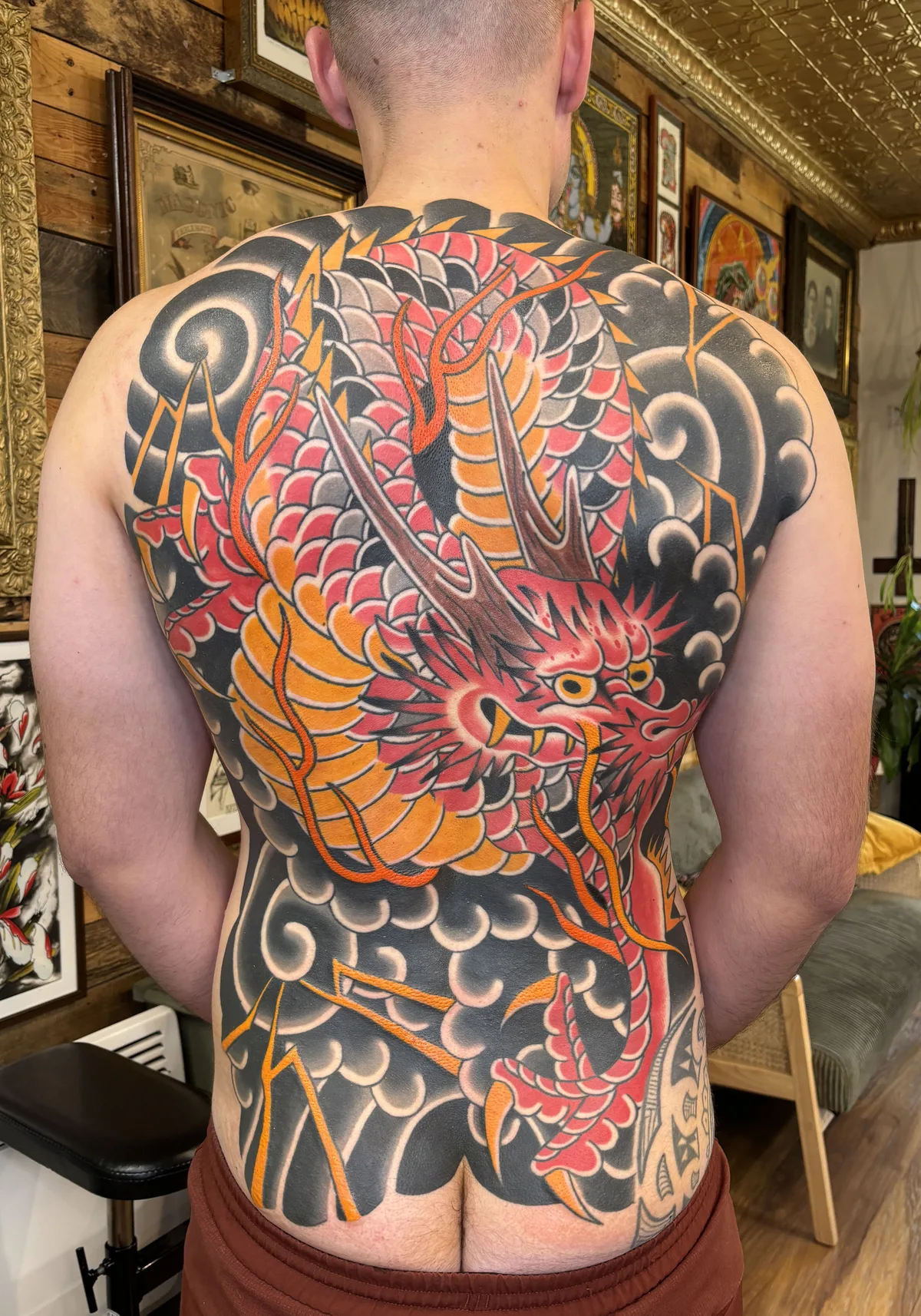
Uncle Patrick
Tom Lortie was born in 1986 in Stoneham-et-Tewkesbury, on the edge of Jacques Cartier National Park. In this wild setting north of Quebec City, he grew up sheltered from the hustle and bustle of the city. Unlike most of his classmates, he didn't dream of becoming a champion of ice hockey, the national sport. Instead, he preferred individual activities such as skateboarding, snowboarding, and cycling. These activities gave him a sense of well-being and tranquility. Drawing quickly became his refuge, a personal space where his imagination flourished freely. And tattoos? In Tewkesbury, his neighbor's name was Patrick McGrath, his father's brother. The boy has vivid memories of his uncle's inked arms, including a Japanese dragon: “I thought, wow, I want the same thing!”.
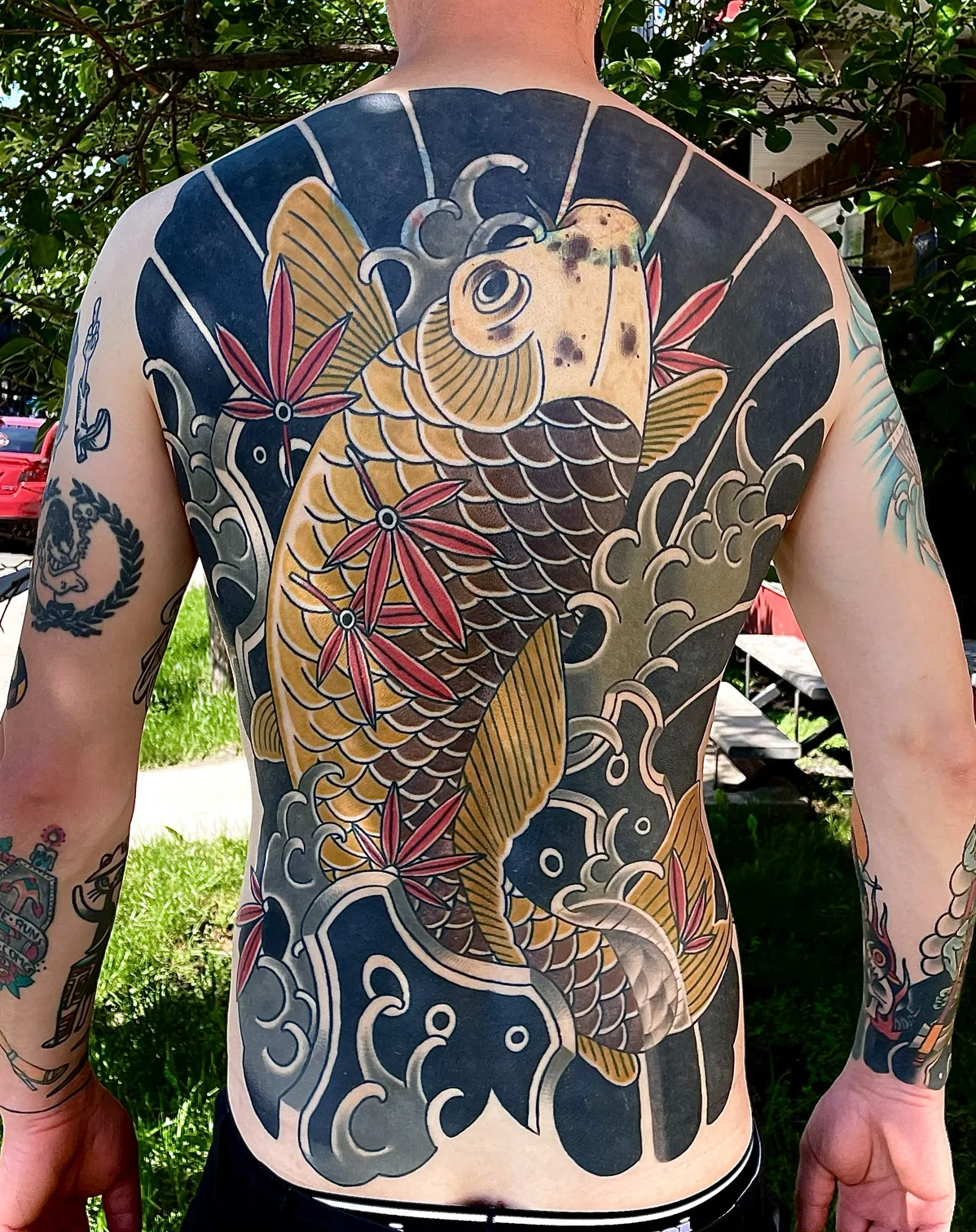
In his family, no one is tattooed, “At the time, it was still very frowned upon.” This intrigues him even more so. Patrick's tattoos are like medals of honor on a veteran's chest. They bear witness to his past adventures. The man actually served in Korea and, during his leave, he got inked in Japan. The Quebecer recalls: “He even had to be treated there because he had contracted a virus that had infected his arm.” Patrick also sports traditional patterns tattooed in Canada. It was a turning point. Tom had found his calling, to adorn bodies with his drawings. When he tells his father about this decision, the answer comes down sharp as a guillotine blade :“This is not right, my son. You will not have a job.” And for good reason.
The art of Tattooing in Quebec
As in France, tattooing took time to spread across the province of Quebec. Tom Lortie mentions an emblematic figure : Tony d’Anessa. In 1961, after being hit hard by the tattoo ban in New York City, he worked underground for a while. Eventually, he left the Big Apple and, in 1976, opened Pointe-Saint-Charles Tattoo (P.S.C.) in Montreal. For Tom, this pioneer embodies the very essence of the craft: “Tony had raw energy and a deep respect for his art. He’s the kind of artist who reminds you why you do this job.” The P.S.C. quickly became a must-visit spot, attracting future big names in the field, such as Dave Knight, a specialist in neo-traditional tattooing, and Dave Cummings, known for his modern take on the Japanese style.
In Quebec City, the art of ink was just as discreet. Tom recalls, “Back in 1963, Bruce Bodkin — with whom I did part of my apprenticeship — was one of the first tattooers in the city. In the 1970s, another shop, Chain Block Tattoo, opened on Chemin de la Canardière. The guy mostly worked with a biker clientele.” As a teenager, Tom nurtured his fascination with tattooing by reading specialized magazines from abroad — Tattoo, Tattoo Flash, and even Tatouage Magazine. Leafing through American publications, he discovered Spaulding & Rogers equipment and dreamed of ordering a mail-order kit. In the early days of the internet, there were no social networks or YouTube tutorials. The only way into the trade was still the classic apprenticeship under a professional.
Piercing : a springboard
Tom was determined to become a tattoo artist and left high school in 2003 to move downtown. He hoped to find an apprenticeship there, but the city had only five studios. At first, he visited Doc Tattoo as a client. It was there, on Saint-Joseph Street, that he met one of his mentors, Bruce Bodkin. Bruce was getting a traditional design tattooed on his leg by Bert Smallwood. A sign of fate? Tom landed his first job there—not as a tattooer, but as a piercer. “It was an easy way in. I mainly did cleaning, sterilization, and piercings. Nothing major,” he recalls. Yet this period was crucial: as a piercer, he saved money to buy his first machines, while covering his daily expenses before he could make a living entirely from tattooing.
Around 2005, the piercer left Doc Tattoo to join Le Dermographe, a suburban shop. Two years later, the owner decided to close the studio to go back to school. It was then that Tom bought his first machines: two from the renowned Quebec brand Max Machines, as well as a Micky Sharpz. The young man could finally pursue his dream. He was about to handle the tattoo machine but quickly realized that the beginning was anything but easy. “My first tattoos, I was overexcited,” he recalls. On himself, a small skull — “honestly, it was a mess.” The next day, he tattooed his roommate Blue, writing his nickname on the back of his neck. “It was a total disaster. I spent 1 hour 40 on a lettering that today would barely take me 20 minutes. I felt discouraged. It wasn’t as simple as I had imagined.”
Tatouage Celtic
Tom’s career takes a decisive turn when he’s hired as a piercer at Tatouage Celtic, where Bruce Bodkin is working. In 1963, this emblematic figure of tattooing in Quebec was among the first active tattoo artists in the city. Like Tom, Bruce developed the desire to get a tattoo kit after seeing an ad in a magazine — in his case, one by Milton Zeis in 1962. He then convinced his father to buy him the equipment. Bruce began practicing tattooing in his spare time while honing his drawing skills. That same year, he met Sailor Joe Simmons, who tattooed his forearm for three dollars. When Bruce asked him if the trade was difficult, Simmons replied that mastering drawing was the key.
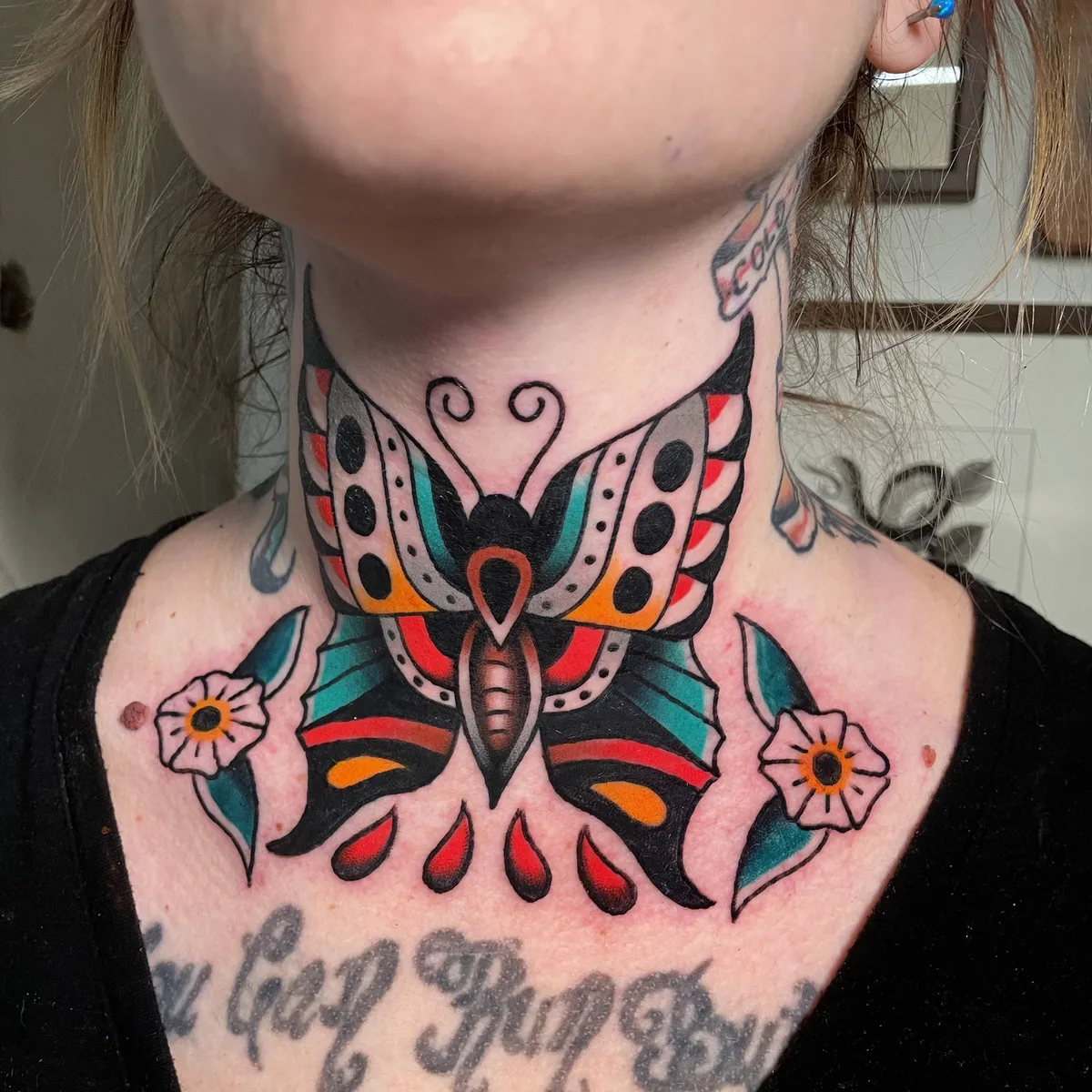
At Tatouage Celtic, Bruce Bodkin took Tom under his wing. This pioneer of the Quebec tattoo scene guided him with advice and technical explanations. Even better, he allowed Tom to tattoo his friends and family during the shop’s off-hours. The young man learned to handle the tattoo machine on his girlfriend, his friends, and even his mother — starting with a daisy on her ankle, then a lotus flower on the back of her neck. In his 5 ½ apartment in Limoilou [a three-bedroom, one-bathroom apartment], he set up a space dedicated to tattooing. However, his clientele remained limited to his circle of friends. The Quebecer recalls: “If you saw someone with lots of tattoos — a full sleeve or a leg covered — it was either a tattoo artist or a member of a band.”
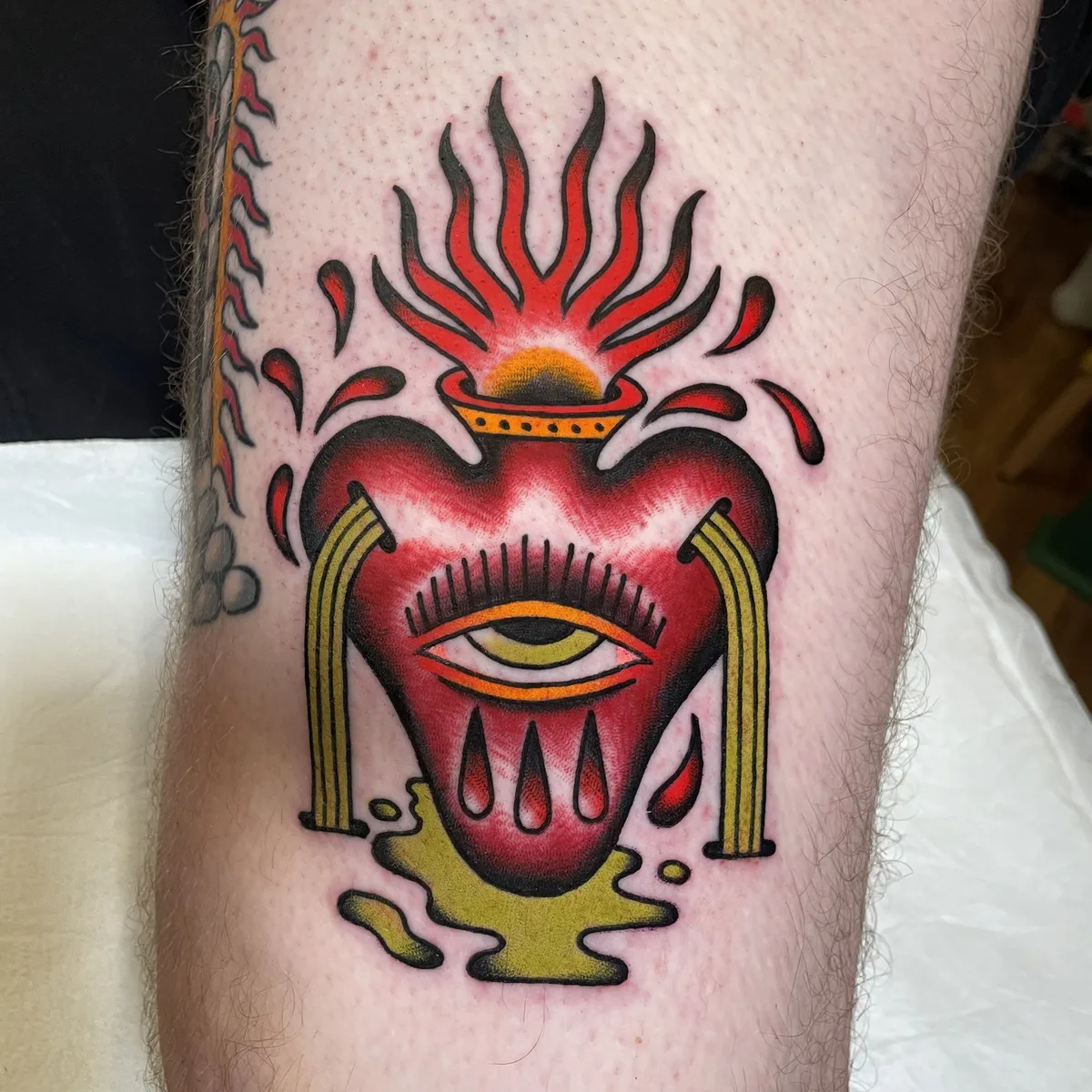
From New School to Tribal
In the early 2000s, colorful New School reigned supreme, drawing influences from comics to graffiti. This style reinvented tattooing techniques, combining mastery of volume, striking perspectives, and ultra-vivid colors. In 2009, Tom joined D-Markation, Jay Marceau’s studio. This experience proved decisive in his learning, as he himself explains: “Jay encouraged me to explore all styles, techniques, and the different tools.” The young tattooer learned to ink all the classics—except realism: lettering, tribal, floral compositions… everything is covered. The perfectionist notes enthusiastically: “When done carefully, with beautiful curves and flawless filling, tribal tattoo is incredible.” This mastery was crucial and, above all, it was the best school! Indeed, Tom experienced significant growth, both artistically and personally. He gained confidence and refined his vision of the craft.
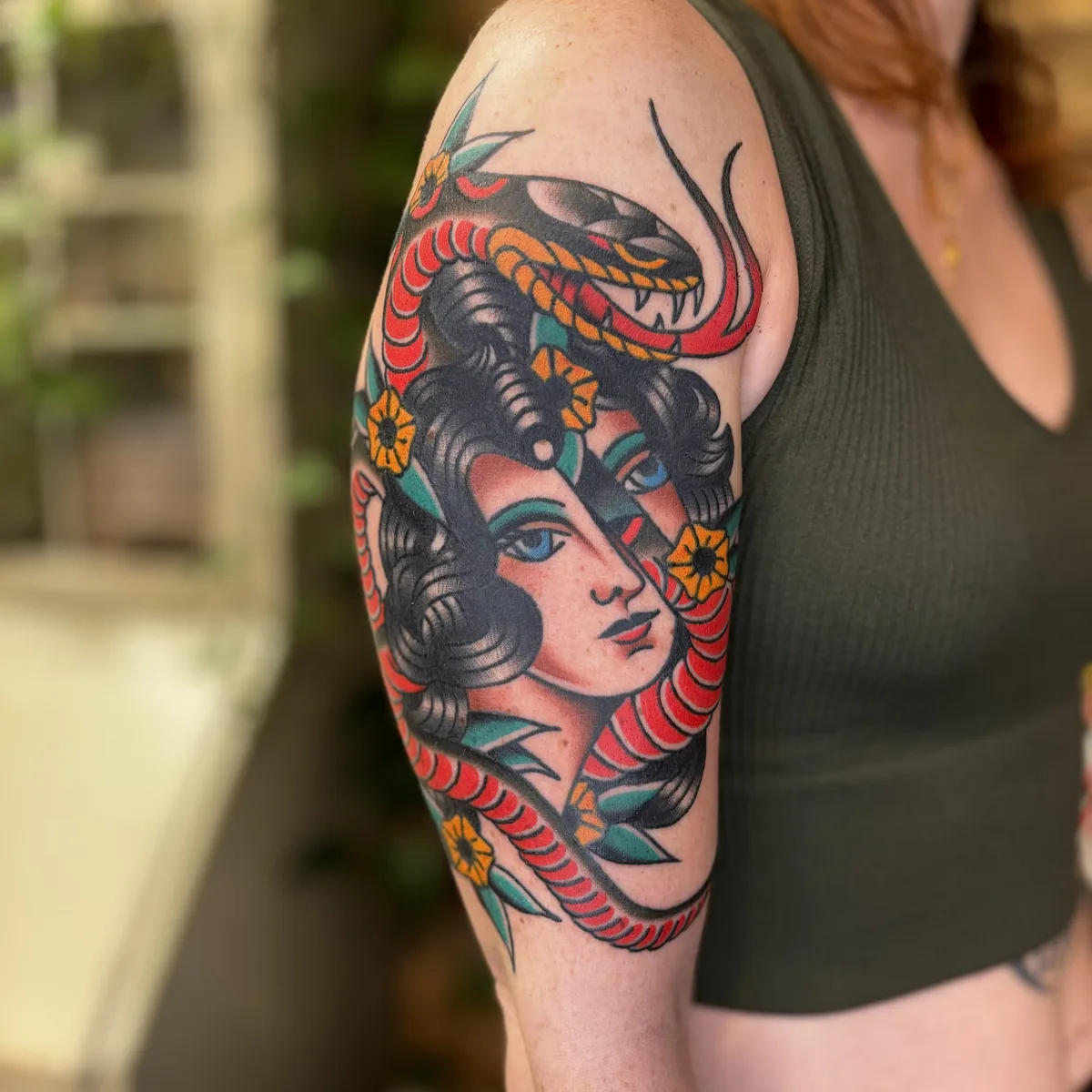
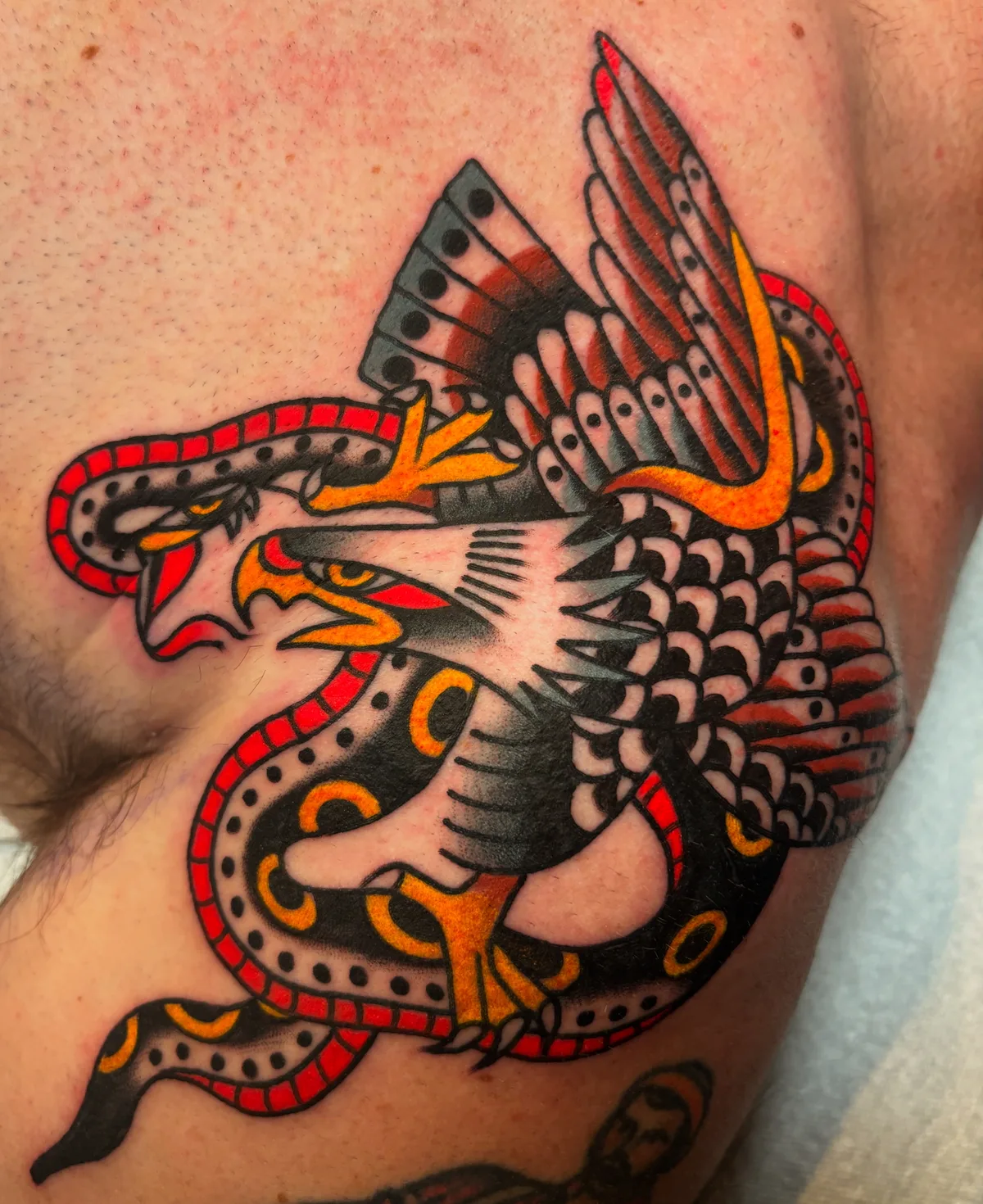
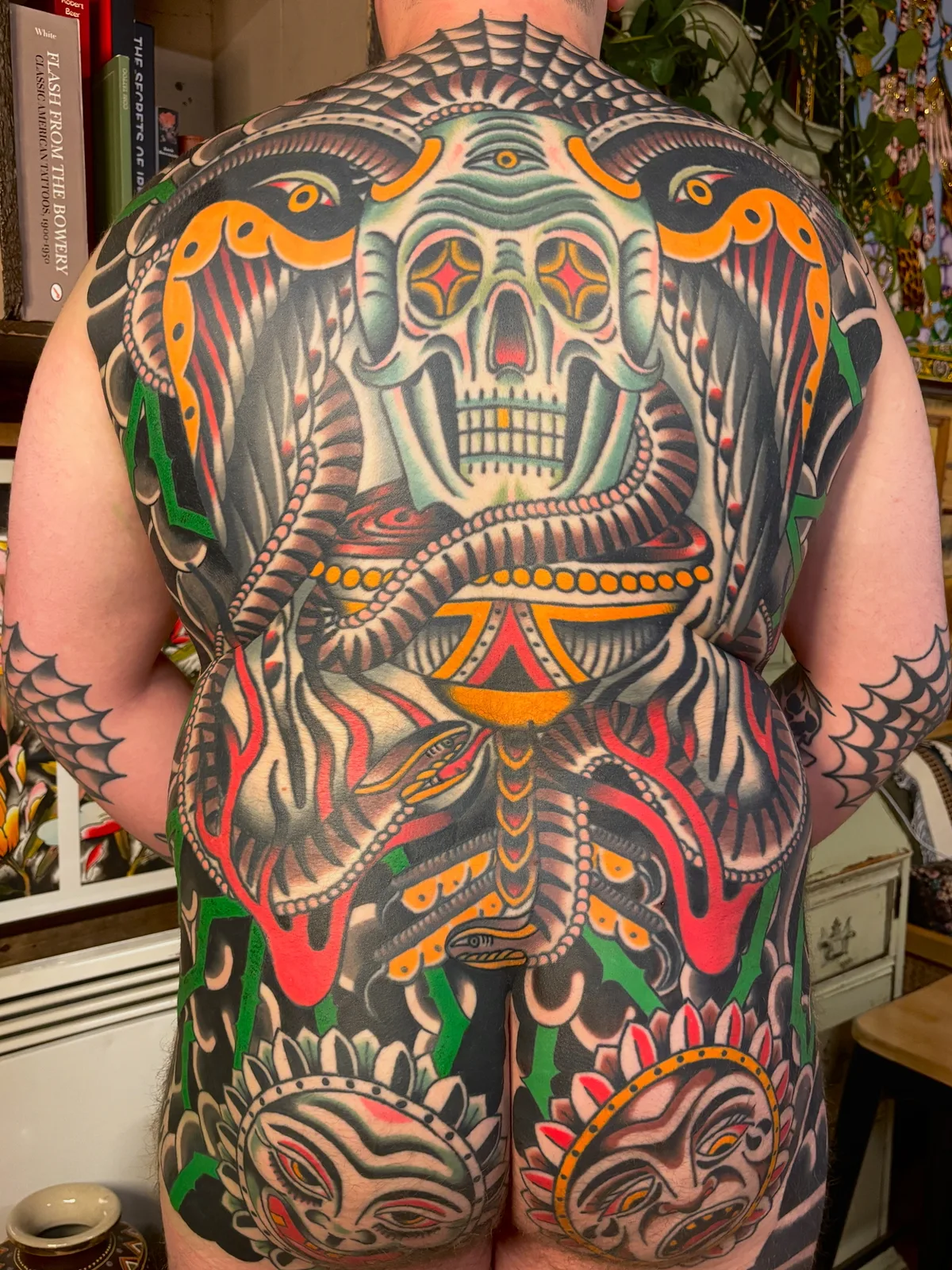
At D-Markation, there were no standardized tattoos like the Cherry Creek tattoo flashs — everything was hand-drawn. Tom remembers: “There were about ten of us. Everyone brought their own vision.” He gravitated toward traditional American tattooing, but with his own twist: “It was the era of bright colors and cartoons. I wanted to do trad because it ages well and tells a story.” The young tattooer developed a personal approach to the style, blending a carefully chosen color palette with a bold reinterpretation of the classics.
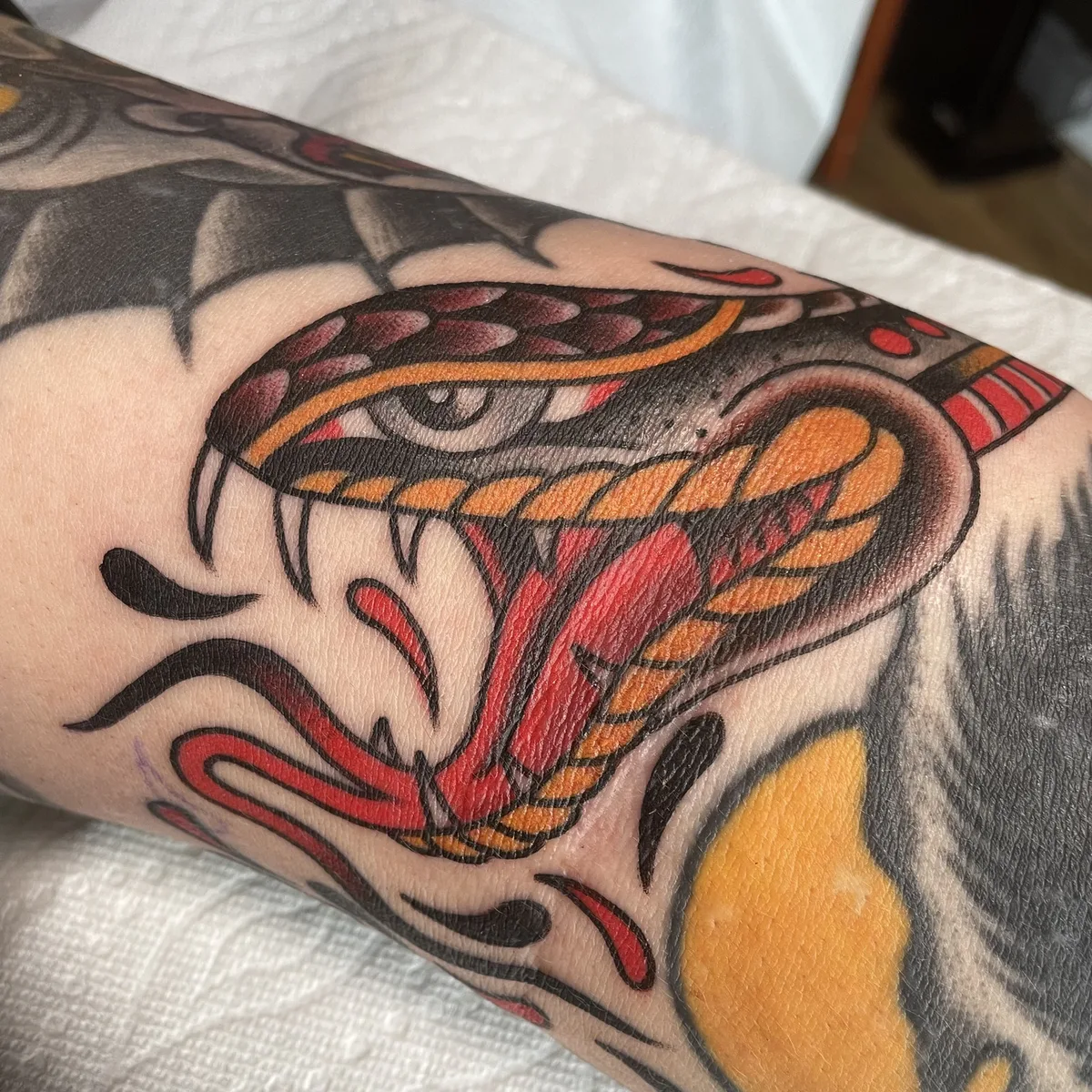
Today, Tom fully asserts his graphic identity, following in the footsteps of the artists who inspire him most—Chad Koeplinger, Jeff Ensminger, Todd Noble, Ichibay, Honkey Kong, Filip Leu, and Marc Nava. A collector as well, he draws inspiration from records, books, and antiques that he buys or hunts down with passion. A true all-round artist, he also expresses himself through painting—both watercolor and acrylic—and photography. This diversity shapes his vision and allows him to cultivate a singular visual signature, instantly recognizable, which has earned him a loyal clientele.
The Black Panther
In 2016, Tom reached another significant milestone. The result of many years of work and careful saving, he opened The Black Panther. Most of his clientele discovered the street shop through word of mouth or via Instagram. In this space, which he designed to be welcoming, he alternates between spontaneous small pieces and large, carefully planned designs. As a meticulous professional, he approaches every project with both kindness and exacting standards, even those that diverge from his preferred styles. Fully aware of his clients’ expectations as well as the permanent nature of his art, he dedicates long, intense days to his craft. He begins each day at 8 a.m. and continues working at home, drawing from 9 to 10 p.m. The secret to his longevity? Hard work and sheer perseverance. As the tattooer himself admits: “It hasn’t always been easy. There are people—my mother, some close friends—who’ve seen me work. I’d say I feel proud, because I’ve managed to do what many never will.”
Tom’s expertise goes far beyond mere creativity. A true technician, he masters every aspect of his craft, from inks to machines. Among his favorite models are iconic names like Dan Kubin Rotary, Shagbuilt, Bruno Kea, Randy Randerson, Lucien Capsman, Jimmy Whitlock, Jesse Young, Alex Harpin, Toby Reece, Lucas Ford, and Inkmachines, among others. This self-proclaimed geek explains: “What I love is understanding how the machine works. Why is it better than another? How does it affect healing?”
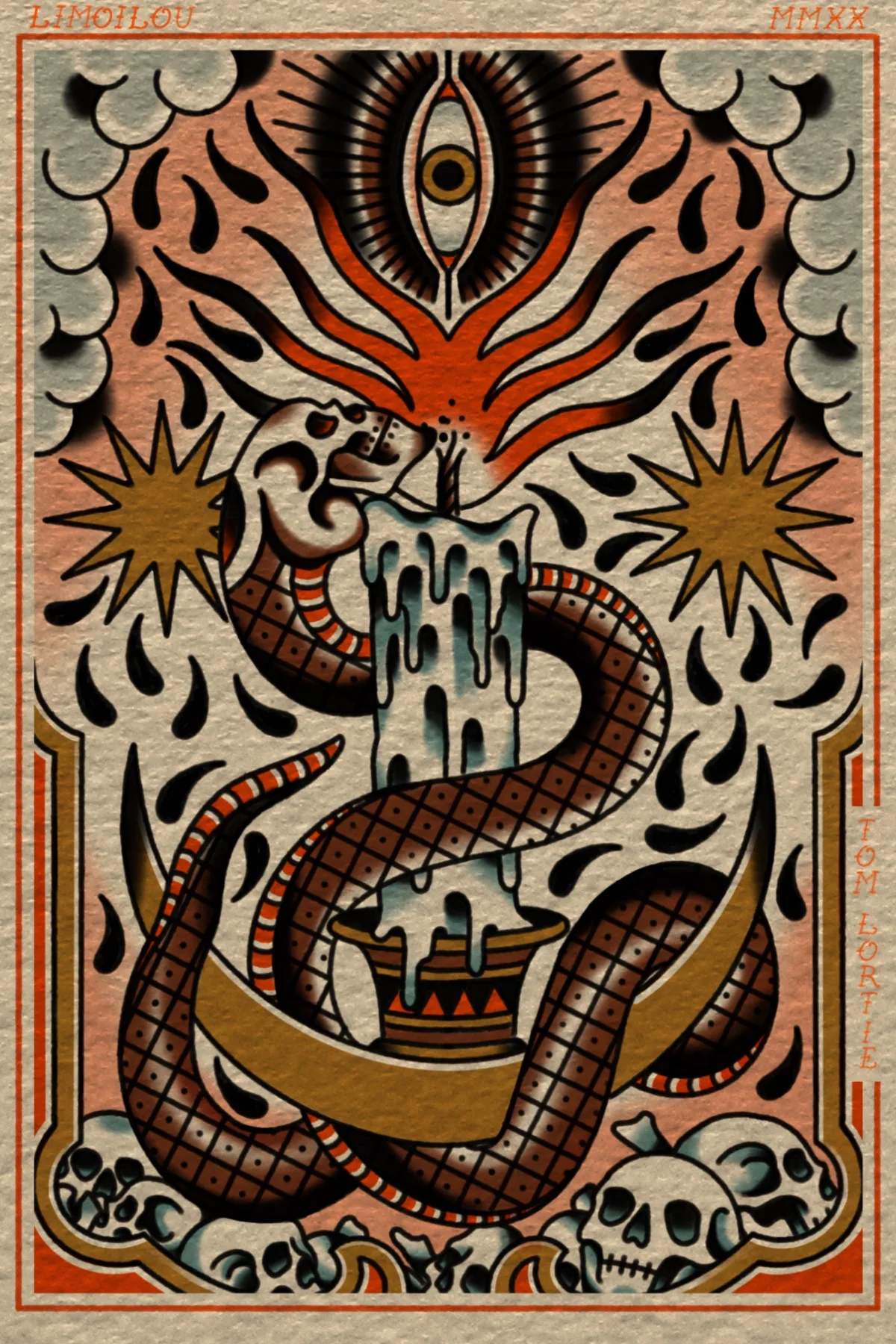
Beyond the mechanics, Tom has the experience to judge how pigments age over time. Sponsored by Fantasia since 2019, he has experimented with many inks—Chroma, Panthera Ink, Eternal, Waverly—which he now considers his favorites. Over the years, he has narrowed his palette to between six and ten colors: from golden yellow to vibrant red, emerald green to jungle green, opaque gray, with a subtle touch of Dermaglo blue light.
For Life
Between 2010 and 2020, Quebec City experienced a true tattoo boom, which has now noticeably slowed. Tom observes: “It’s like in France: studios, street shops, private parlors are popping up everywhere, mostly focused on minimalist tattooing. Some do it really well, with clean lines and a real sense of aesthetics.” The various changes in the profession, however, have fostered a Quebec tattoo scene that is both rich and diverse—a scene that Tom is proud to be part of. He doesn’t hesitate to highlight the work of his colleagues: “I think of those who’ve built a solid reputation over the years, like Jay Marceau, with whom I collaborated for a long time. There’s also Saint-Paul Tattoo, with Marianne Savard, Max Lemieux Beaulieu, and Pierre Denux, as well as La Griffe du Monstre, run by Jean-Rock Valiquette. Among the rising talent, I’d mention Charles Charron-Pelletier and Émile Tranquille.”
And the future? When I ask him where he sees himself in ten years, Tom replies: “I hope to tattoo as long as my body allows.” In an ever-changing world, he continues his journey day by day, driven by the same energy, discipline, and passion—turning his craft into a true way of life.
We would like to thank the author of this material, Alexandra Bay — photographer, writer, and researcher of tattoo culture, who has been documenting and telling the stories of people devoted to this art since 1995.