About a half-hour drive from the center of Thailand's capital, in a quiet area on the shore of the Gulf of Thailand, there is a studio of sacred tattoos that is over 200 years old.
In this secluded temple complex, the legendary master Kit Sanapon (Kit Sanapon) receives visitors. To the world, he is a world-famous tattoo artist. To Buddhists and seekers of spiritual practices, he is an Ajahn (Teacher) who can not only ink a design but also change a person's fate, embedding the magic of the thousand-year-old Sak Yant tradition into the skin.
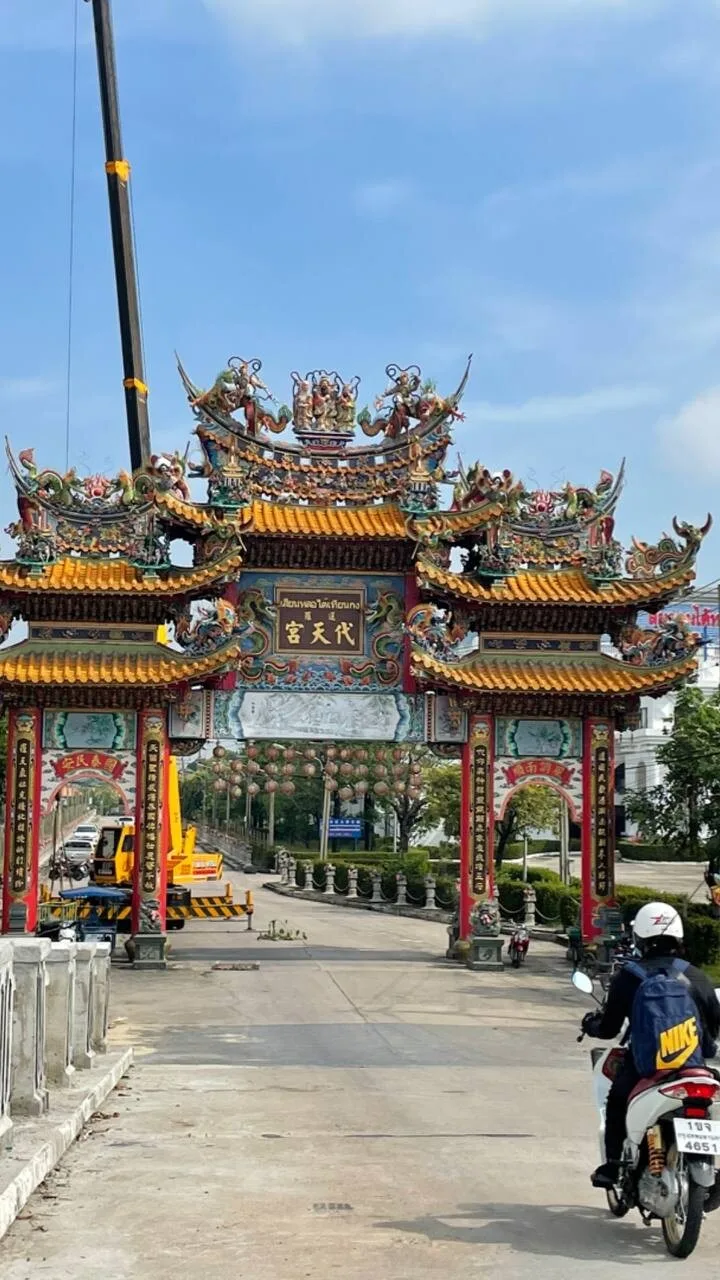
The first time we met with Master Kit was in China, at one of the tattoo shows in Changchun. At that time, we could hardly speak to each other—neither of us knew English very well. We just smiled and exchanged short phrases, trying to understand each other through gestures.
After some time, we planned a bicycle trip through Asia, and I wrote to him. The reply came quickly: “Come.” That’s how I first found myself in his studio of traditional Thai tattooing. And a few years later, I returned there again.
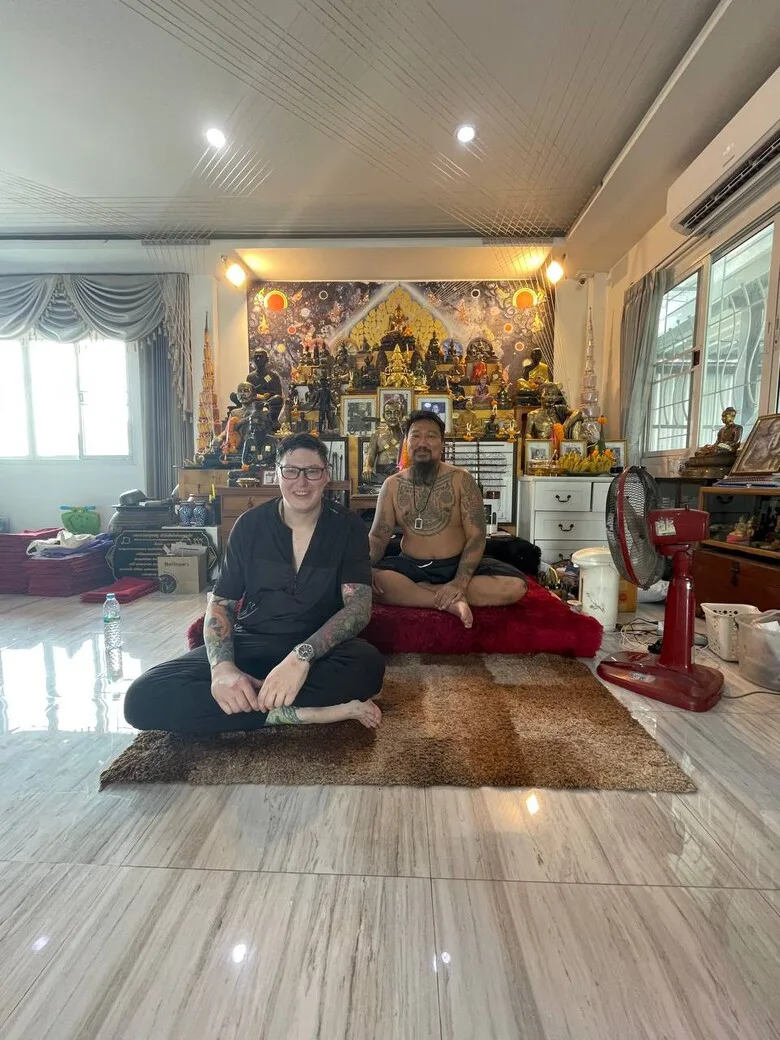
The master himself speaks very little English, so most of the stories about his art were told to me by his wife. She explained the traditions, the family history, and the meaning of the symbols that the master has been applying to people’s skin for many years.
The master has two children, and his eldest son is likely to become the fifth Sak Yant master in this dynasty. It was then that I began to understand that I was not just in front of a tattoo artist, but a guardian of an ancient tradition.
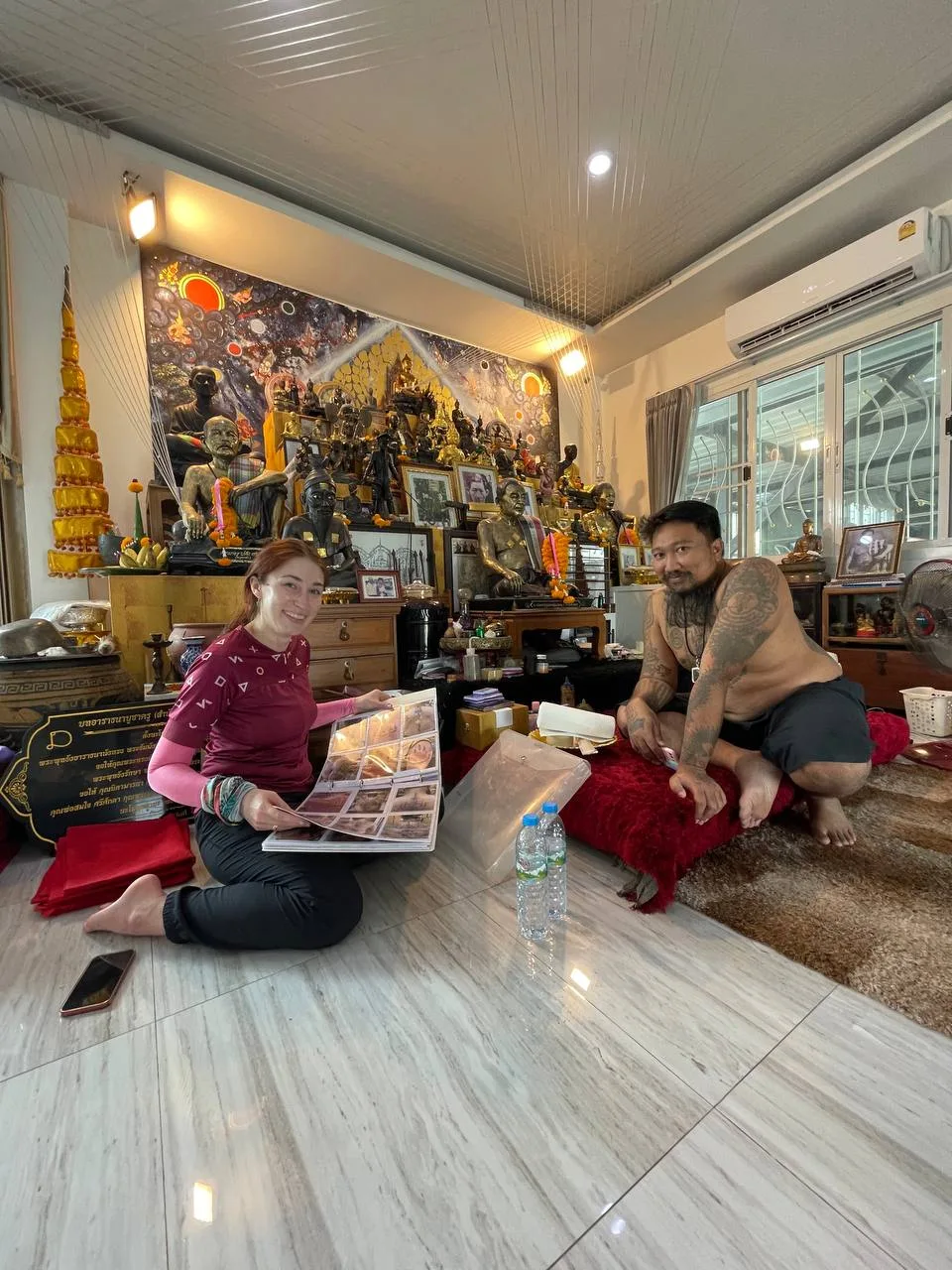
The Sak Yant Tradition in 4 Generations
To understand the depth of Kit Sanapon’s mastery, one must look into the past—the very sacred line of succession that passes the power of Sak Yant from teacher to student.
«Our family adheres to the true tradition of Sak Yant and has passed down this art from generation to generation for about 150 years».
In interviews, Master Kit rarely calls himself a “creator” of designs. He is just a link in the chain, and his power depends directly on who stood before him. In the Sak Yant tradition, it is believed that the power of the master is the sum of the powers of all his teachers.
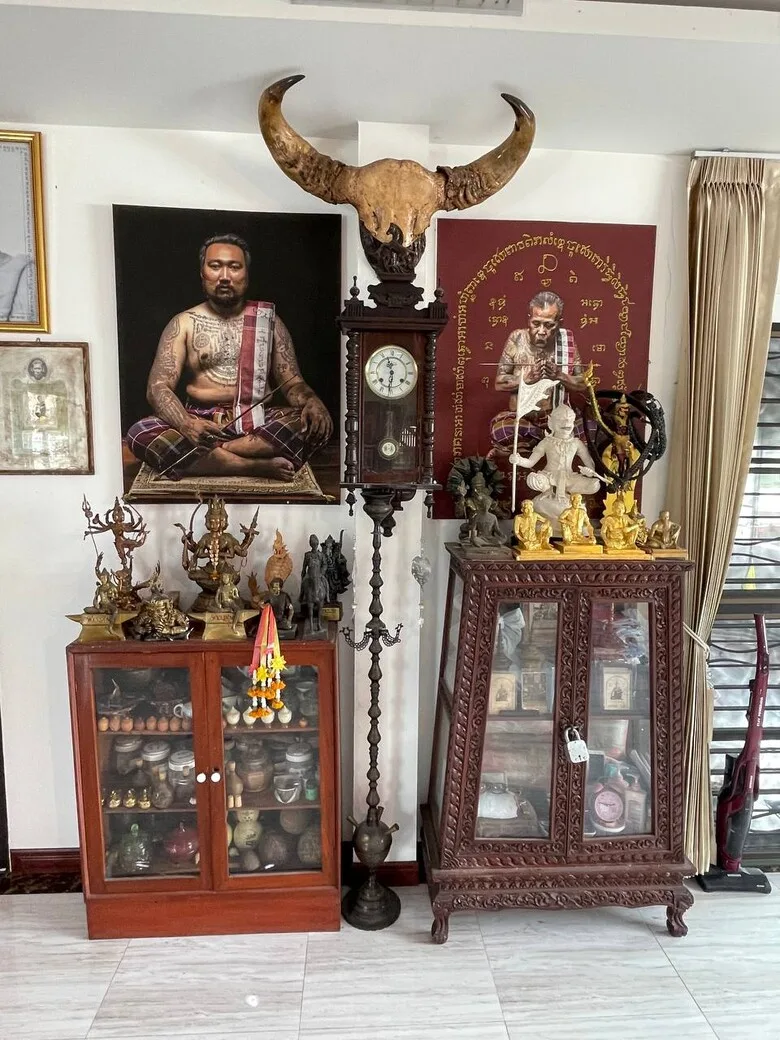
The first master in this line was Pu Saeng—a renowned master of sacred tattooing who lived during the reigns of Kings Rama IV and Rama V. He was so respected in his time that he performed Sak Yant for Prince Chumphon—the son of King Rama V.
He passed all his knowledge to his student and successor, Pu Plang Srisakde. During World War II, Master Plang became famous for a story that is still remembered in Thailand. In 1942, military planes dropped bombs on Phra Sumen Fort near his home. While the villagers were leaving their homes, Master Plang stayed. Hearing the air raid siren, he went outside and began waving a red cloth. To everyone’s surprise, none of the bombs that fell exploded.
Many people then believed that this happened thanks to the power of the Buddhist amulet that was tied to that cloth.
After the war, Master Plang Srisakde became widely known as a master of sacred tattooing and spiritual protection. He performed Sak Yant for soldiers of the Thai army, police officers, civil servants, and many influential people of that time.
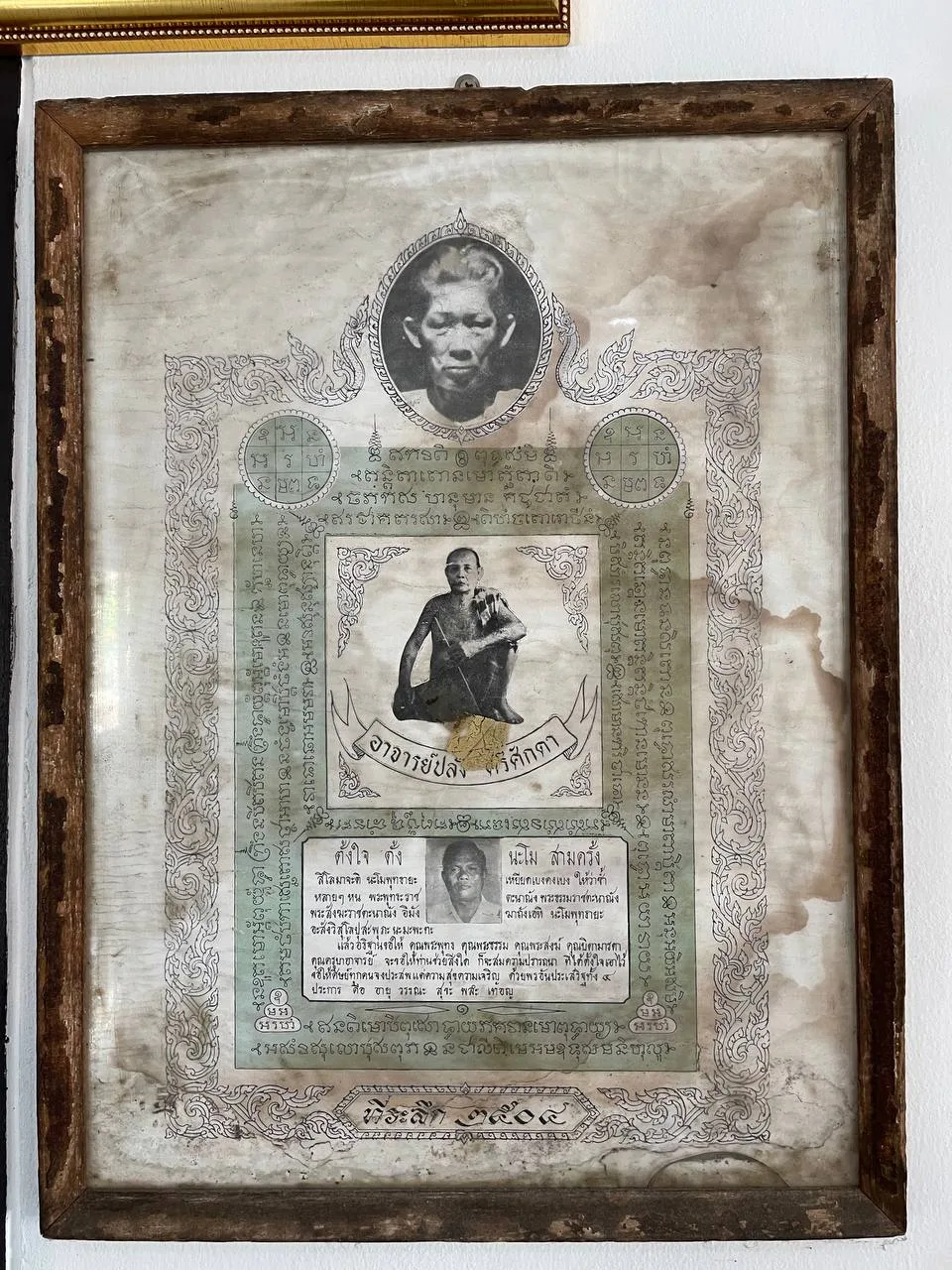
The next master in this line was Po Somjai Srisakda, son of master Plang. He started making sacred tattoos at the age of sixteen and from a young age learned from his father ancient Khmer and Thai scripts, mantras, and protective spells.
Many stories are also associated with his name. One evening, the police surrounded his house after learning that a notorious criminal nicknamed "Four Kings of Spades" had visited the master. When the police broke in, the man they were looking for was no longer there - he disappeared right before their eyes. Later, a legend spread that a sacred tattoo he received from master Somjai helped him hide.
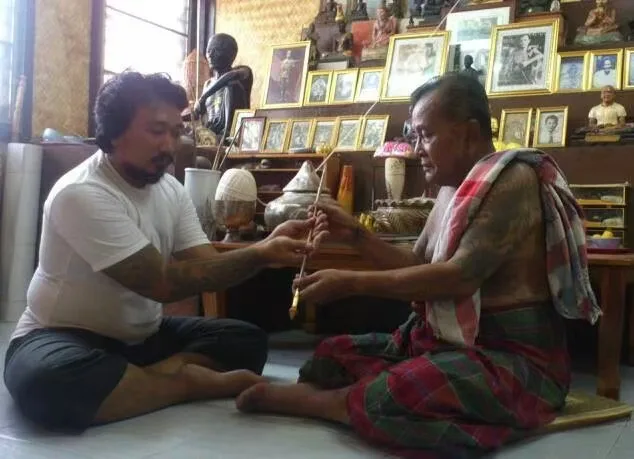
It was from this master that Kit Sanapon learned. From a young age, he was interested in the art of sacred tattooing and studied ancient texts, Buddhist magic, and rituals.
He had heard of the famous Master Somjai and aspired to become his student after meeting him at the temple. Master Somjai Srisakda, seeing Kit's unwavering devotion, accepted him as a student. For many years, he passed on his knowledge and skills in various aspects of sacred tattooing, as well as the blessings of his teachers and the responsibility for continuing the ancient tradition.
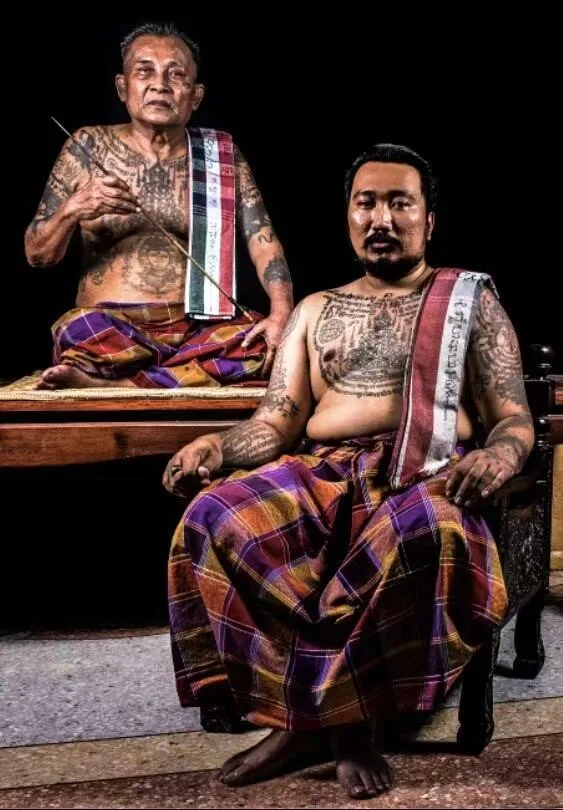
The Mystery of the Ritual
Kit Sanapon often says: "When you come to me, you receive a blessing not only from my hands but also from the souls of all my teachers."
Therefore, before starting work, master Kit always performs a short Wai Kru ritual - he whispers mantras, calling the spirits of his mentors into the studio and asking their permission to apply sacred symbols to the body of a new person. If during this ritual he gets goosebumps and a warmth in his chest - it means the ancestral line has given approval.
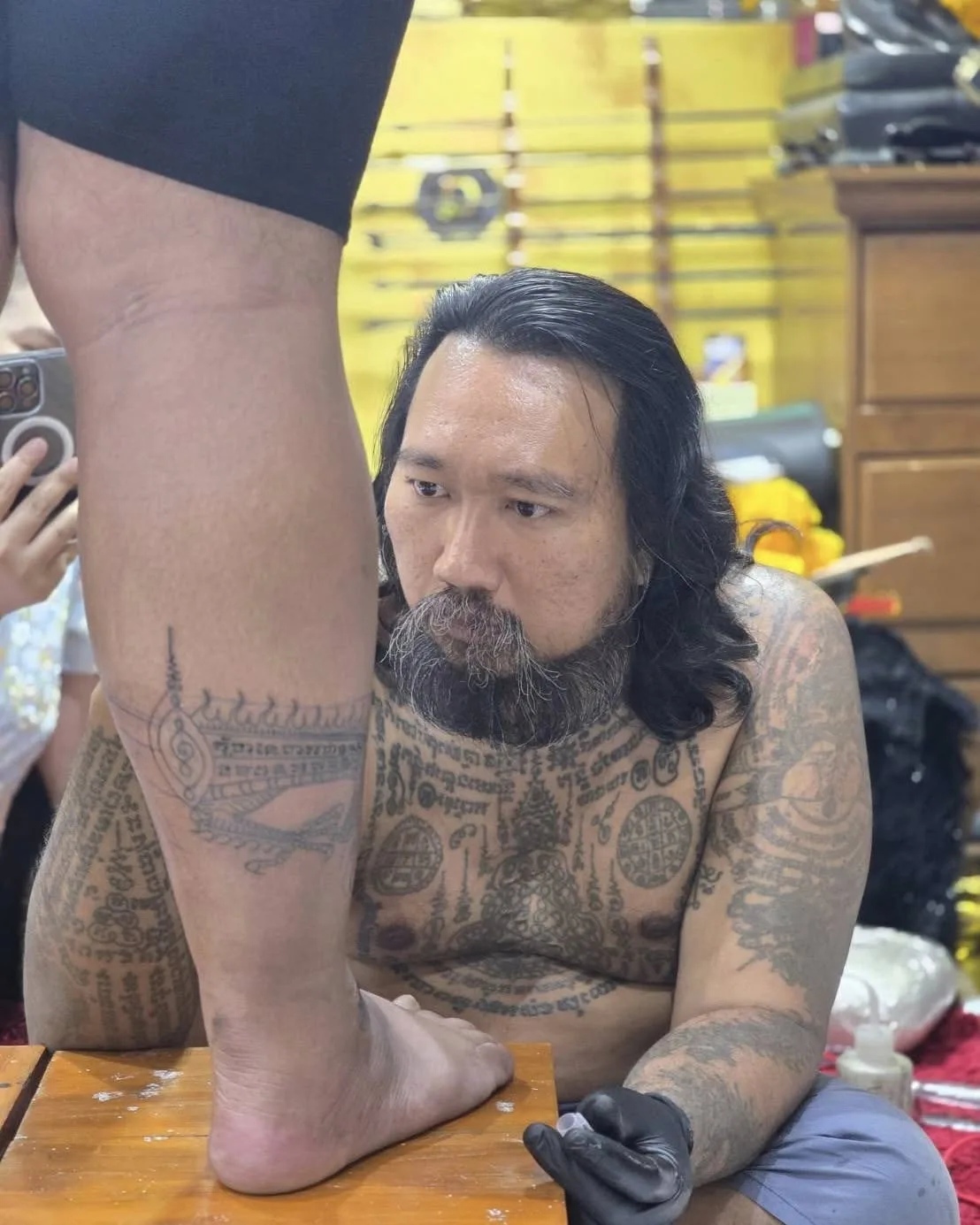
When master Kit Sanapon takes his tools in hand, the mystery begins. Every item that the ajarn (teacher) touches has its own soul and history. Unlike Western tattoo artists who use machines and factory cartridges, Kit works with materials that he prepares himself according to ancient recipes.
The master's main tool is Khem Sak (Khem Sak) - a long metal rod sharpened at the end. This is not just a needle, but a relic. The tool was passed down to him by his teacher and has special sacred value.
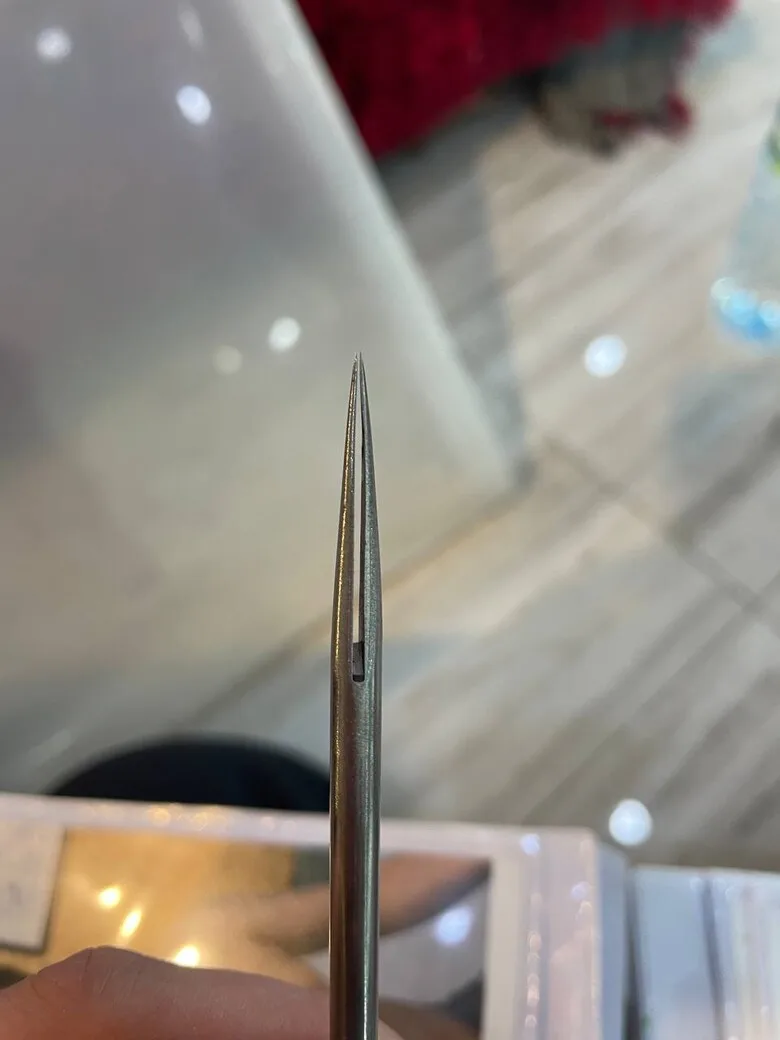
Kit sharpens it by hand:
"The line should be alive, like a stream of water. A dead needle - a dead tattoo."
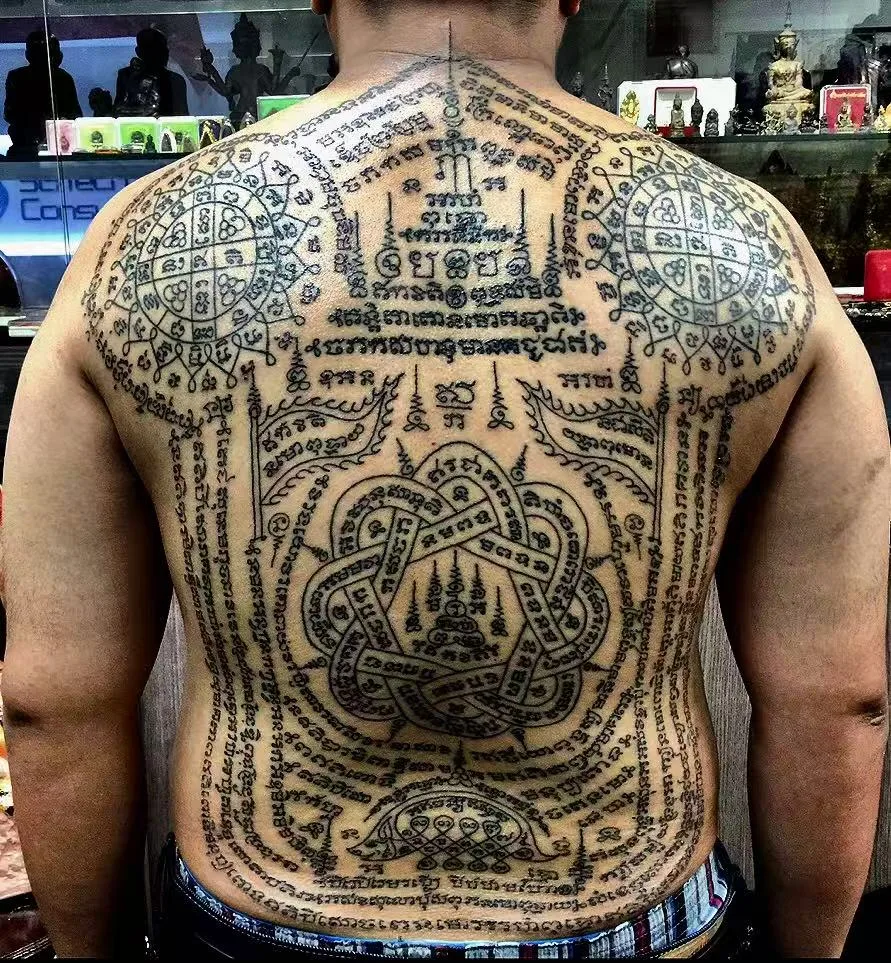
In the master's studio, there are things that are rarely talked about beyond its walls. One of them is the ink. Its recipe is passed down within the family and is considered one of the most sacred parts of the tradition.
"When master Kit prepares the ink, he adds a little ink from his teacher, master Somjai. This is one of the key ingredients", - says the master's wife.
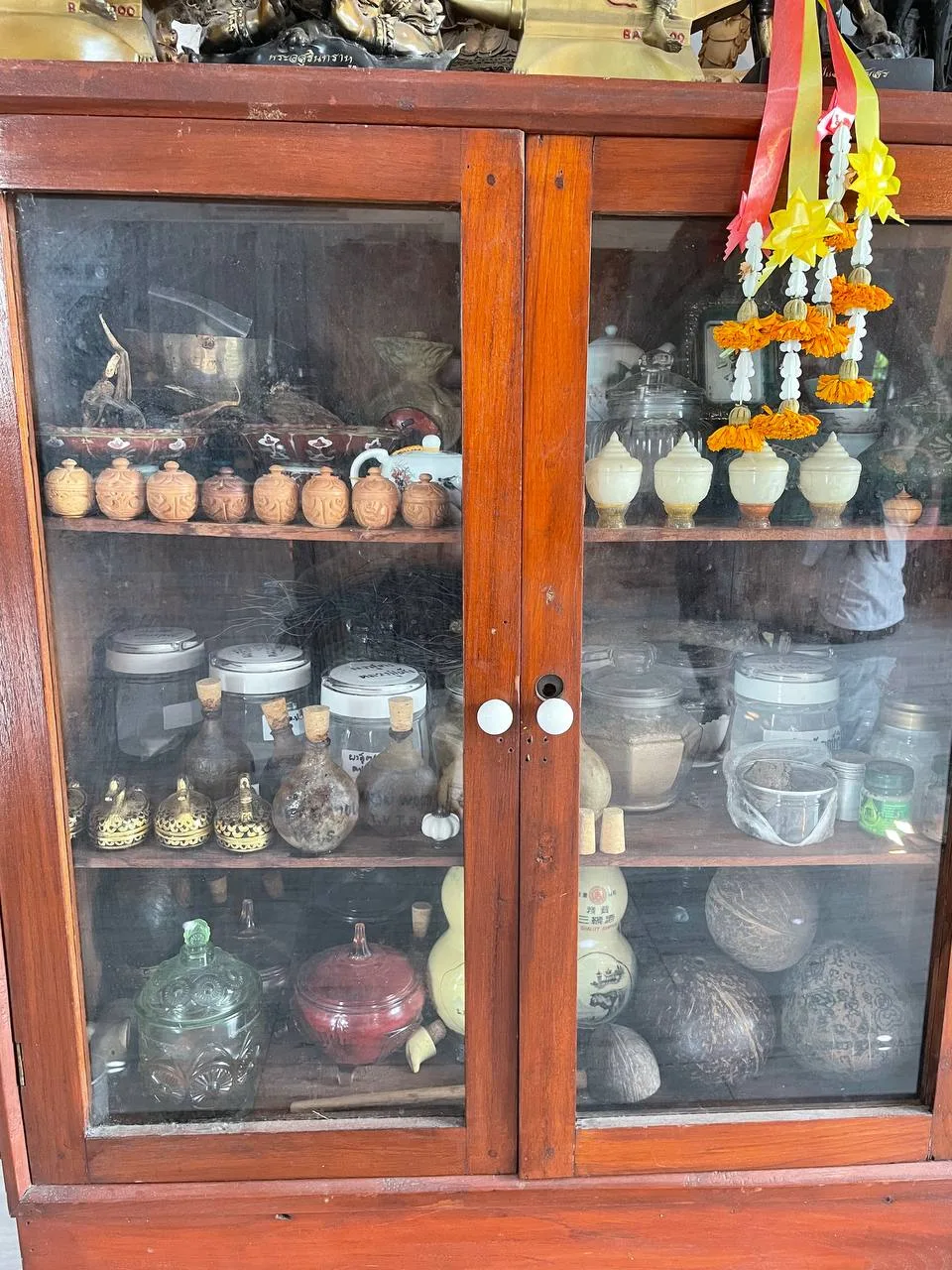
However, the recipe does not end there.
Sak Yant inks include several unusual components, each with a symbolic meaning. In the tradition, the master uses organs and other biological materials from various animals. These are heated in a clay vessel over coals, after which the resulting composition is mixed with charcoal and a special herbal oil. Many herbs are collected at a certain time of the year and used in ritual practice.
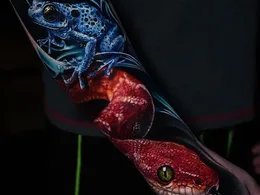
Kit's wife tells: «We use animal organs — bear, tiger, turtle, some species of fish, and many others. From the animal organs, we obtain the black pigment as well as their strength. In Thai, we call this daeht — the strength and special qualities of the animal, which are passed on with a particle of its body».
The process of creating ink takes several days and is accompanied by the recitation of mantras. Kit Sanapon prepares them only on certain days of the lunar calendar.
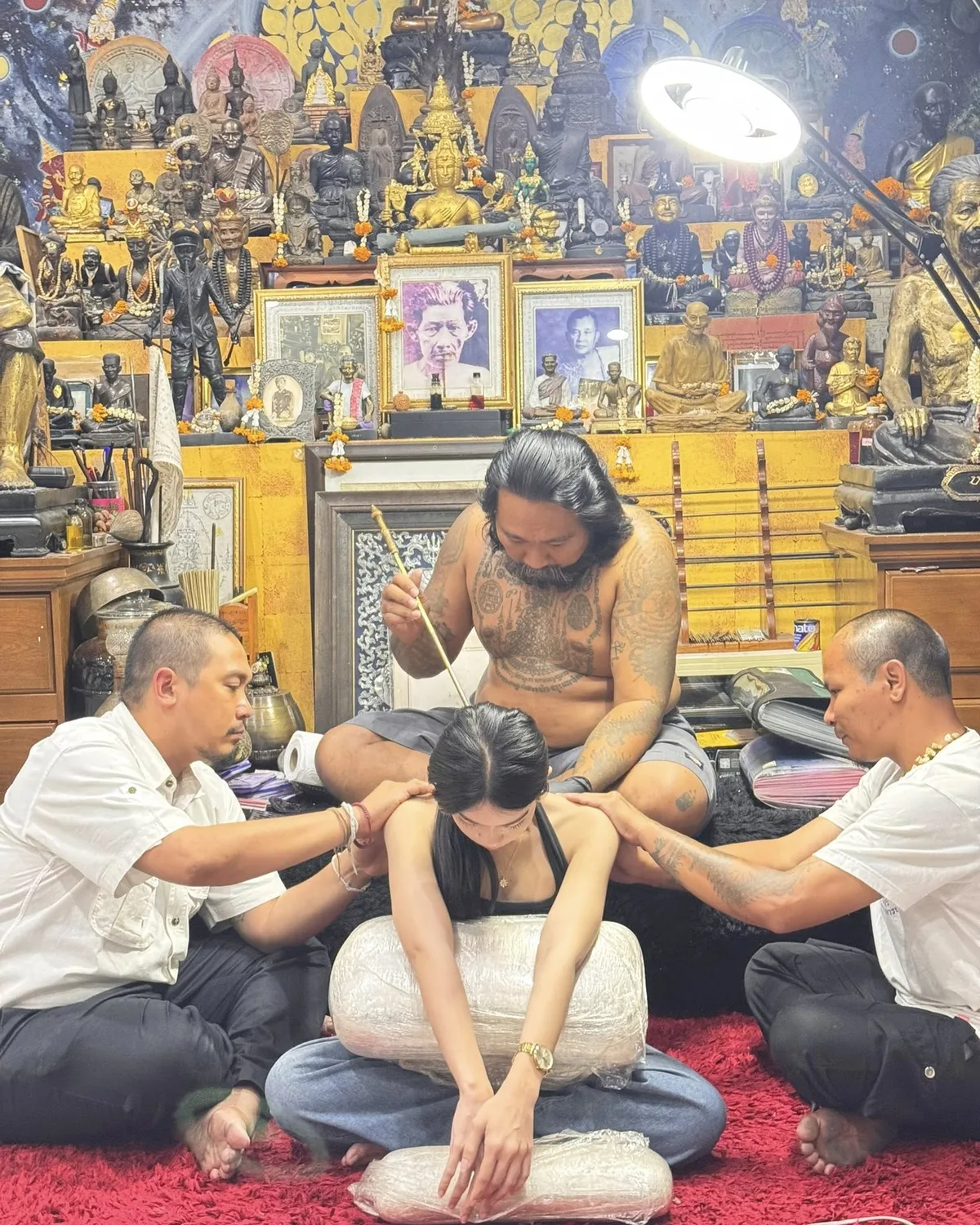
A sacred practice, not a decoration
Sak Yant — this is not just a drawing on the skin. In Thailand, this is a sacred practice closely related to Buddhist culture and the spiritual life of the country.
The word sak means «to strike» or «to apply a tattoo», and yan comes from the word yan tra — a sacred geometric scheme including ancient writings, mantras, and Buddhist symbols. Such tattoos are performed by master-ajans — teachers who possess knowledge of ancient texts, rituals, and spiritual practices.
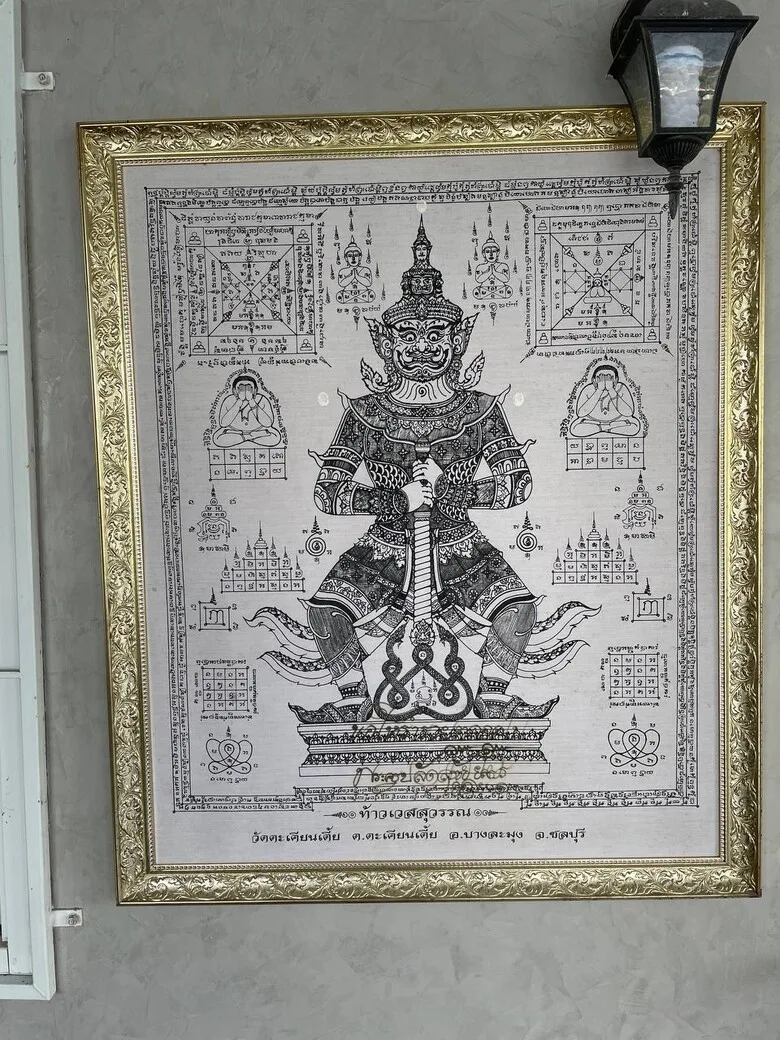
During the application of the tattoo, the master reads prayers and blessings. In Thailand, most people profess Buddhism and worship Buddha. And the culture of Sak Yant tattooing is closely related to faith. The tattoos use mantras — special letter-sound symbols from Buddhist sacred texts. It is believed that it is through the mantras that the symbols receive their power.
As the master Kit himself explains:
«During the work, the master reads a prayer and prays for everyone who comes to our temple. One could say that everything you see here — is white magic».
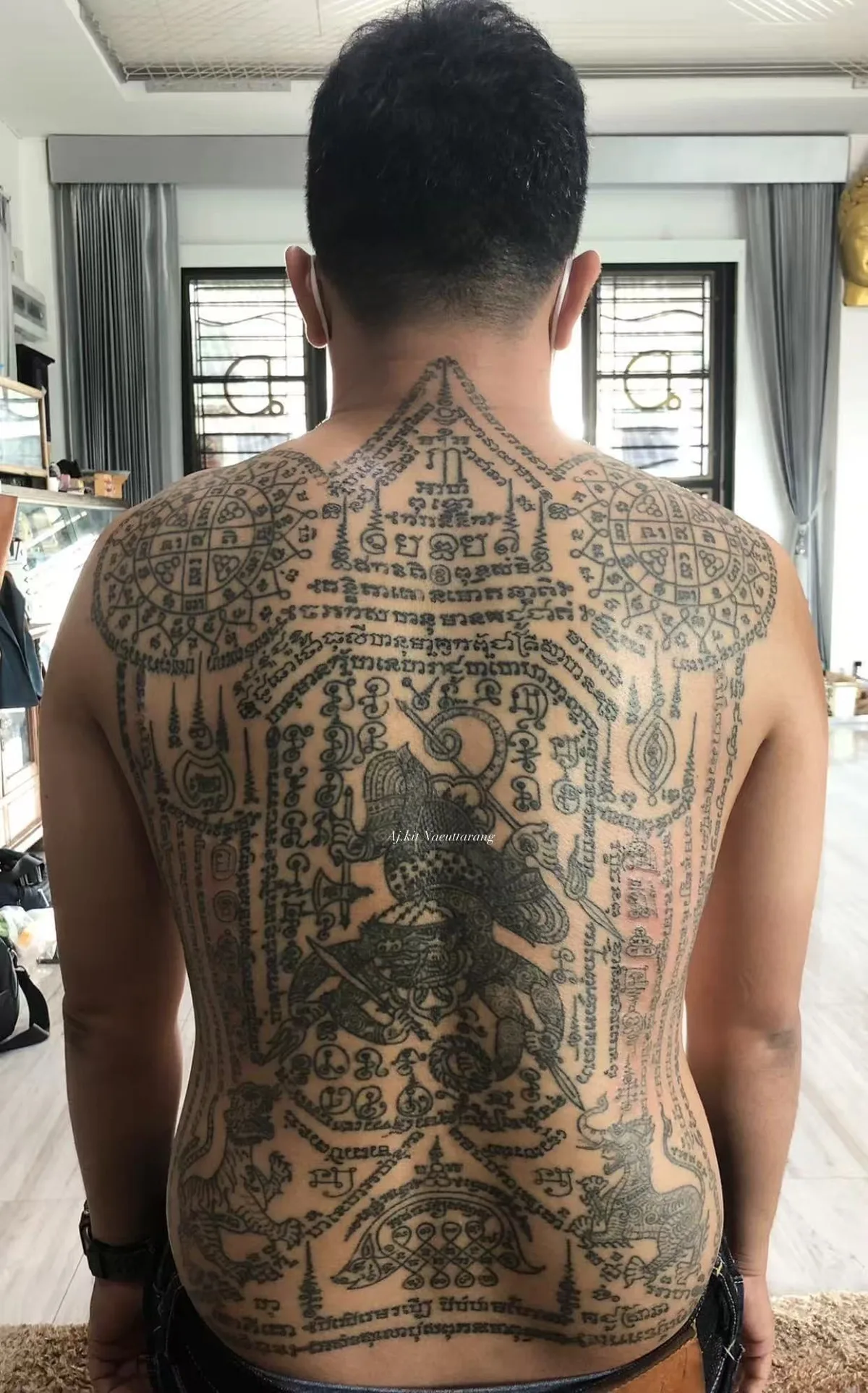
In the master's studio, you can meet all kinds of people. Bangkok police officers who believe that Hah Teo (five rows of protective lines) will protect them from a bullet. Stockbrokers from Singapore, wanting to attract luck with the symbol of Un Alom. Blogger girls asking to apply Gao Yang (nine peaks of luck) for increasing popularity. And just tourists who want to touch the mystery.
«It doesn't matter what a person believes at the moment, — says the master, leaning over the client's hand. — What matters is what he feels afterwards. My tattoos — like guardian angels. You don't see them, but you know they are nearby. This gives strength to move forward».
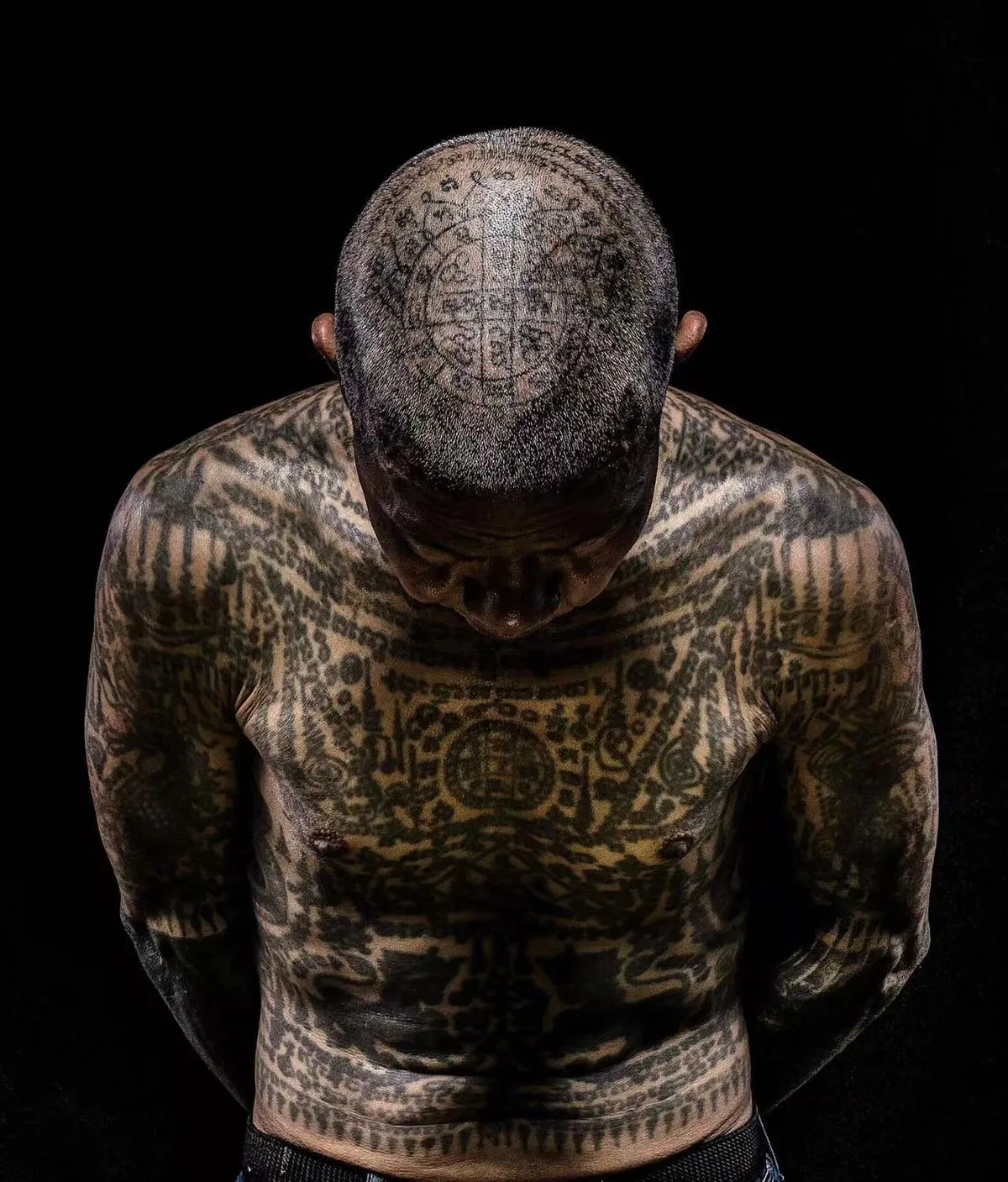
The modern world and ancient art
Today, Kit Sanapon balances on the edge of two worlds. He runs a page on Instagram where he posts photos of his work. Celebrities from Hollywood and Europe fly to him.
However, upon closing the studio door, he lights incense and immerses himself in a world where there are no hashtags or likes, only silence and the blessing of ancestors.
«Sac Yan will not become as mass-produced as vending machine coffee,” he says as he bids farewell. — This is an intimate conversation between God and man. I am merely a conduit. And as long as there are those who wish to speak with Heaven, I will hold this steel needle in my hand».
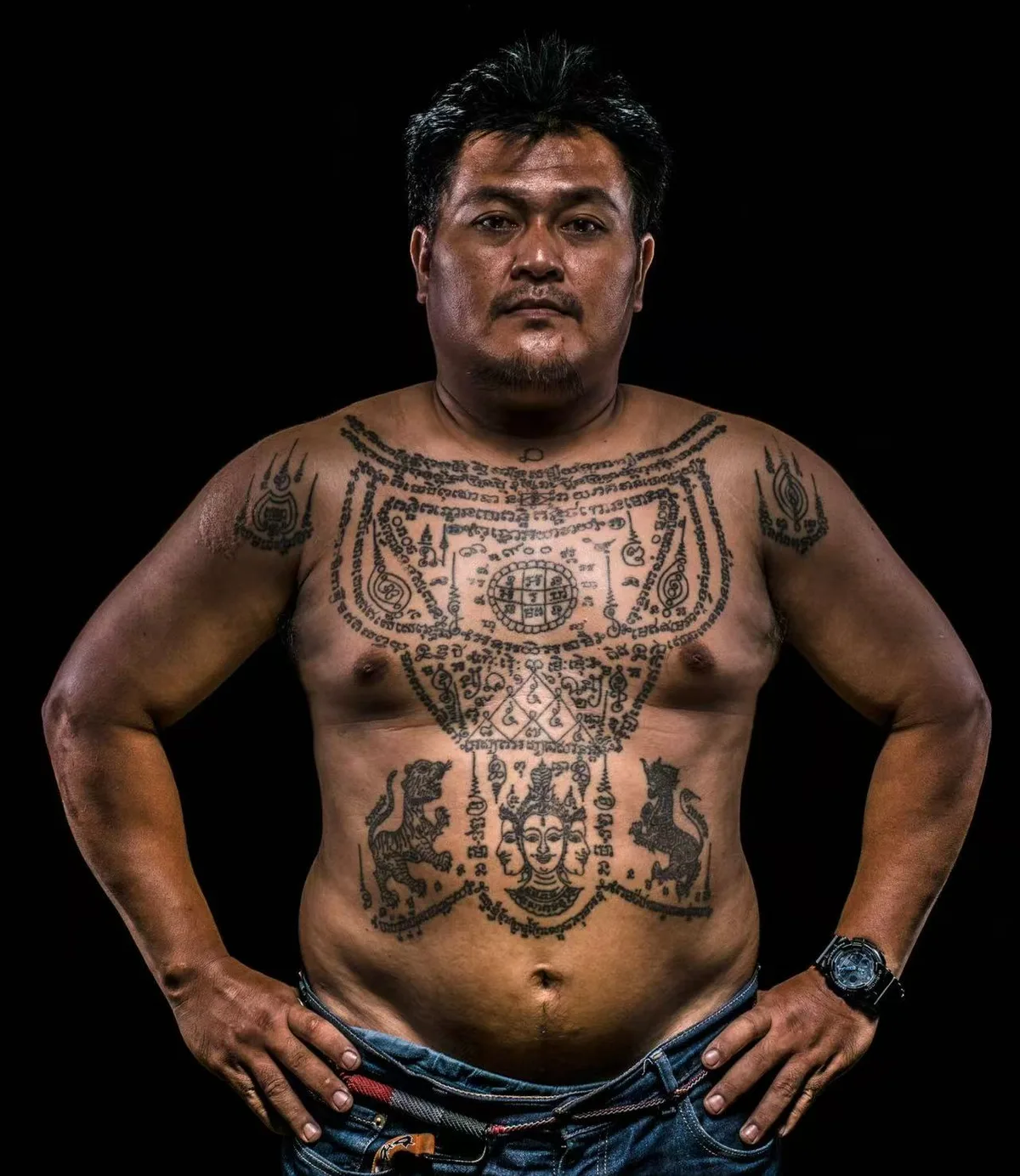
Master Kit is one of the last guardians of this tradition. It is a long, meditative, and rather painful process. But here, the pain is not a side effect, it is part of the initiation. It is believed that through enduring the pain, the energy of the master and the power of the mantra penetrate deeper into a person's body and spirit. If you decide to meet with the master, remember: you are not going for a pretty picture, you are going for a transformation. And perhaps, years later, when the lines have slightly faded, their magic will manifest in your life in the most unexpected way.
We thank the author of this material — Vladimir Babchuk, organizer of the international KTB tattoo forum and researcher of tattoo culture. For many years, he has been traveling the world, studying the traditions of different schools and communicating with masters whose knowledge is passed down from generation to generation. It is thanks to his acquaintance with Kit Sanapon that this autumn, the legendary Sac Yan master will come to Moscow for the first time as a special guest of the KTB forum. Visitors will have a rare opportunity to see the ancient tradition of sacred tattooing and meet one of its guardians in person.