For an artist of Jung Kook’s scale, every public action is often read as a deliberate gesture. But his tattoos tell a different story. They didn’t appear for dramatic visuals or album concepts. Instead, they are a series of quiet decisions that reflect the inner path of someone who grew up inside a massive system yet managed to preserve a private space of his own.
Jungkook’s tattoos stopped being just a visual feature long ago. They have become part of the visual language of a whole generation, for whom BTS is not simply a music group but a cultural anchor. That’s why each new detail, every cover-up, every performance where the tattoos are seen a bit more clearly, draws attention far beyond the fan community.
The Beginning: Direct Symbols Without Explanation
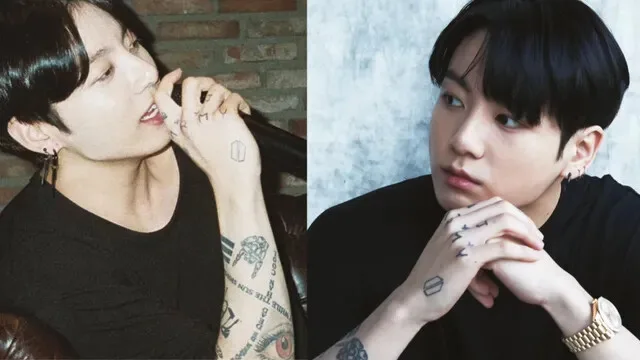
When fans first noticed the word ARMY on Jung Kook’s fingers, the reaction was instant. In an industry where tattoos are often concealed with makeup, this looked honest and unexpectedly open. No metaphors, no complex codes — simply gratitude to the fans.
Other elements appeared alongside it:
- The letter “J” on his ring finger.
- A purple heart, long established as an emotional symbol within the community.
- “0613”, the date of BTS’s debut — a personal calendar anchor.
These tattoos are often viewed as a single block marking a starting point — the formative years, early concerts, and the group’s growth. And it makes sense: life was changing monthly back then, and small symbols became a way to keep key moments close.
Phrases That Sound Like His Inner Voice
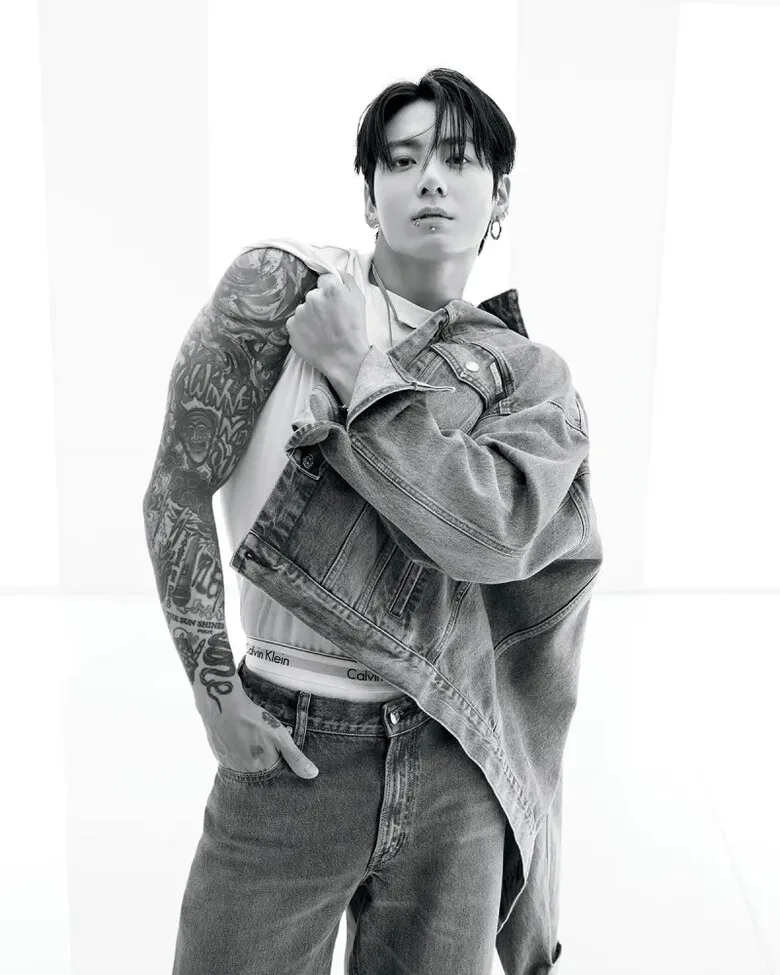
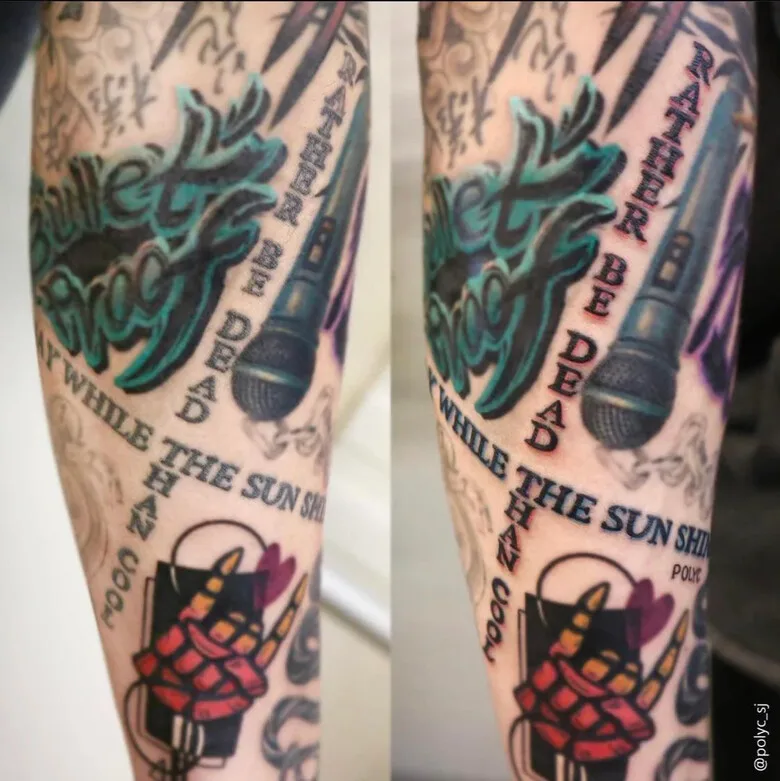
Over time, text appeared on Jung Kook’s arm — visually simple but meaningful in tone:
- “Rather be dead than cool”
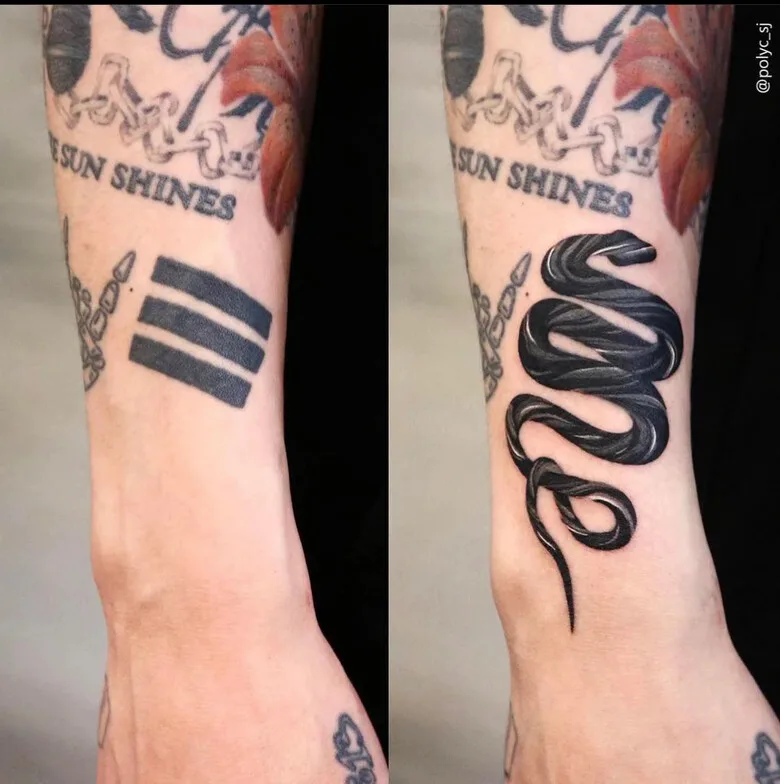
- “Make hay while the sun shines”
For many artists, such phrases are decorative. For Jung Kook, they feel like a bridge between his stage persona and private self. The first quote recalls his early straightforwardness in interviews, while the second echoes the work ethic that BTS often name as their core principle.
These lines blended naturally into the sleeve, though at first they seemed like separate ideas. And here you can see what often happens to people who work at high intensity for many years: certain phrases become anchors so they don’t lose their direction.
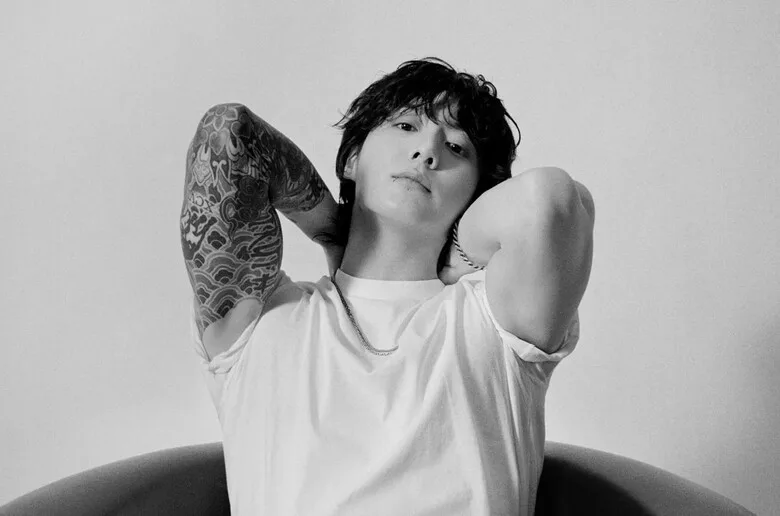
The tiger lily and the phrase “Please love me” became some of the most discussed elements in his tattoo composition.
The lily is his birth flower. On its own, it already carries symbolic meaning. But the text beneath adds another layer — not aesthetic but emotional. For an artist of Jung Kook’s level, such an open phrase feels almost paradoxical: someone loved by millions leaves a reminder on his skin that he too needs simple human warmth.
Clocks, musical notes, and a microphone surround this motif — together forming a kind of “center of gravity” of his sleeve. They connect childhood dreams, profession, and real emotions into a more cohesive picture.
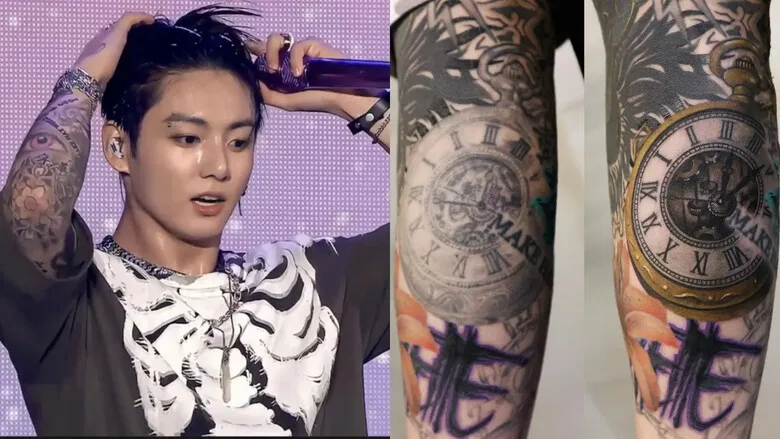
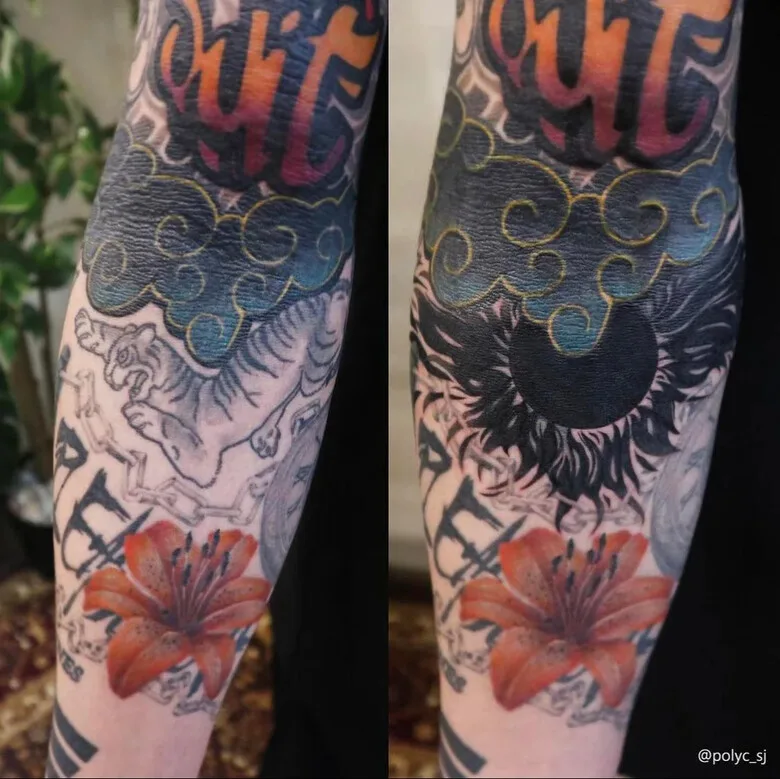
The path toward a full sleeve was gradual. First came individual elements. Then connecting details. Then cover-ups.
Some early tattoos disappeared entirely. They were replaced by forms that better fit the developing composition. This is a normal process — tattoos grow with the person and change when their inner contour requires a new visual expression.
The evolution of the sleeve shows how a set of personal symbols turned into a full visual narrative. Sketches became drawings, and drawings matured into a style that can’t be mistaken for anyone else’s.
One important detail: he never did it abruptly. He didn’t suddenly appear with a fully inked arm. Everything unfolded naturally, step by step, which makes watching the process even more interesting.
New Tattoos in 2024–2025: Fans Noticed More Than He Said
When Jung Kook returned to the stage in 2024–2025, fans noticed a new tattoo on his chest and changes around his shoulder and left arm.
The images don’t provide full clarity, but the general trend is obvious: he continues to expand the composition. Yet he does this without public explanation. It belongs to his personal territory, which he understandably keeps private.
Fans document the changes, build timelines, and compare photos from different years. However, the tone remains respectful — which itself reflects how tattoo culture has matured within the K-pop environment.
Ten years ago, such openness would have been almost impossible.
In Korea, attitudes toward tattoos change slowly. For a long time, they were associated with marginal subcultures, and artists often hid any ink under clothing or makeup.
Jungkook became one of the key figures through whom these perceptions began to shift.
What changed:
- The fan community came to see tattoos not as provocation, but as a natural part of an artist’s life.
- Tattoo artists around the world reported a surge of interest in styles and motifs similar to his sleeve.
- The K-pop industry began cautiously adapting to a new norm where tattoos are not a scandal but a form of self-expression.
Jung Kook’s influence turned out to be broader than expected — not because of bold statements but through consistency and sincerity in his visual decisions.
A Personal Story Built From Fragments
His tattoos are not a set of flashy symbols. Not a collection of trends. And not an attempt to provoke the public.
Each element is part of a biography, though not in a literal sense. Rather, they are emotional markers.
- The debut date.
- The birth flower.
- A phrase one repeats on a difficult day.
- Signs of gratitude.
- Musical motifs that shaped his path.
In the end, we see not a collection of small stories but one ongoing narrative that he has been shaping for several years — quietly, without commentary, yet open enough for others to read.
If one were to describe Jung Kook’s tattoos briefly, it would be a mix of intention, trust, music, and vulnerability. But taken as a whole, they tell the story of someone who grew up in front of the entire world.
He doesn’t have to explain the meaning of every symbol. What matters is that each one appeared purposefully, not for effect. It’s a way of living a bit closer to himself — even when millions are watching.
His sleeve continues to evolve. And it will likely keep speaking for him in moments where words don’t fit.