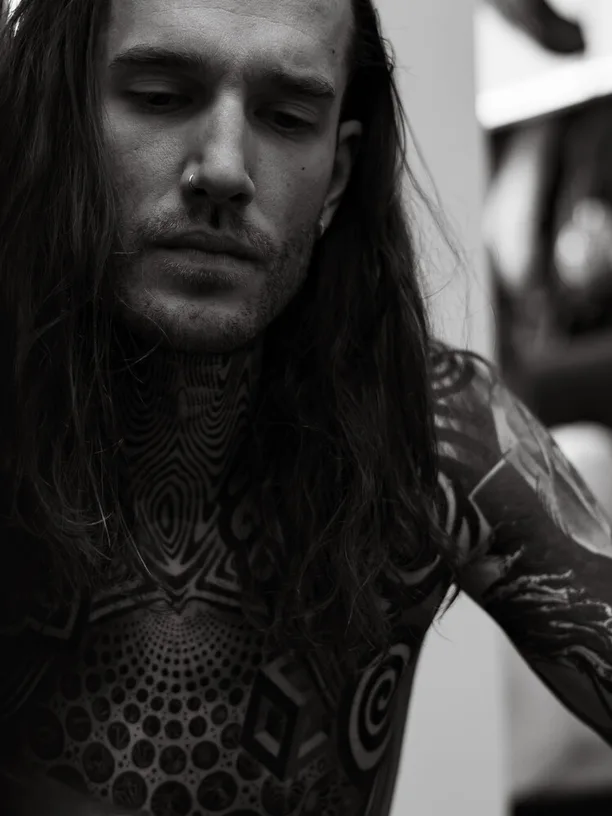
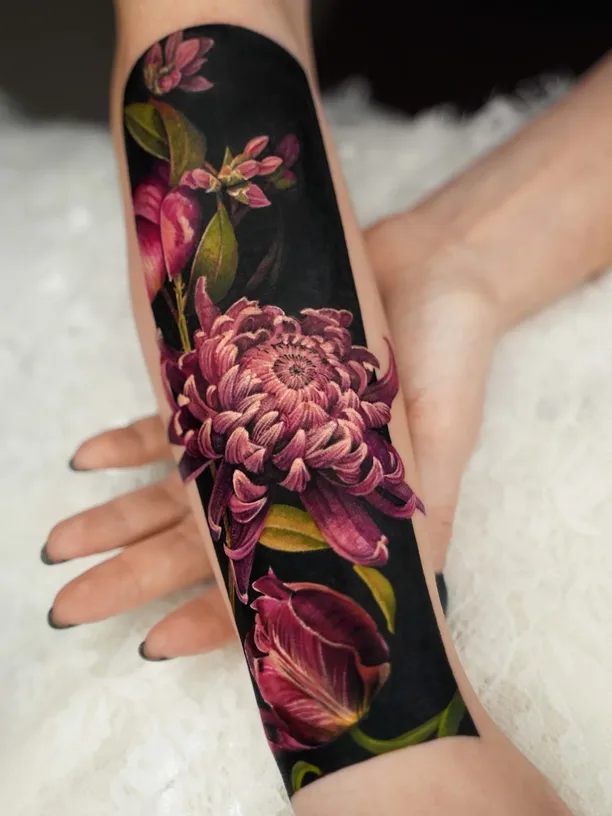
Finding, feeling, and shaping a personal style in tattooing is no easy task, and for many practitioners it remains out of reach. Anastasia Pakhanova is one of the tattoo artists who managed to bring together black, almost translucent tattoos inspired by X-ray imagery of plants with soft, nearly contourless ornamental work. Over time, this rare combination of ornamental tattooing and X-ray aesthetics evolved into a distinctive and recognizable authorial style.
Anastasia Pakhanova was born in Kazakhstan, while her childhood and teenage years were spent in Saint Petersburg — a city that had a strong influence on her visual thinking. Museums, architecture, and classical art became a natural environment for her, and drawing has been part of her life from an early age.
“Drawing has been with me since early childhood. The first person who noticed and supported my interest in creativity was my grandfather,” she recalls.
Art schools, followed by studies at the Stieglitz Academy, gave her a solid academic foundation — an understanding of composition, form, and anatomy that still directly informs her tattoo practice today.
“I started drawing almost as soon as I learned how to hold a pencil.”
Anastasia came to tattooing about eleven years ago. At first, it was a logical extension of drawing: the personal works she shared on Instagram were increasingly perceived as tattoo designs. At that time, structured education within the industry was limited, so after acquiring basic technical skills, she had to develop her own approach independently — from tools to stylistic direction.
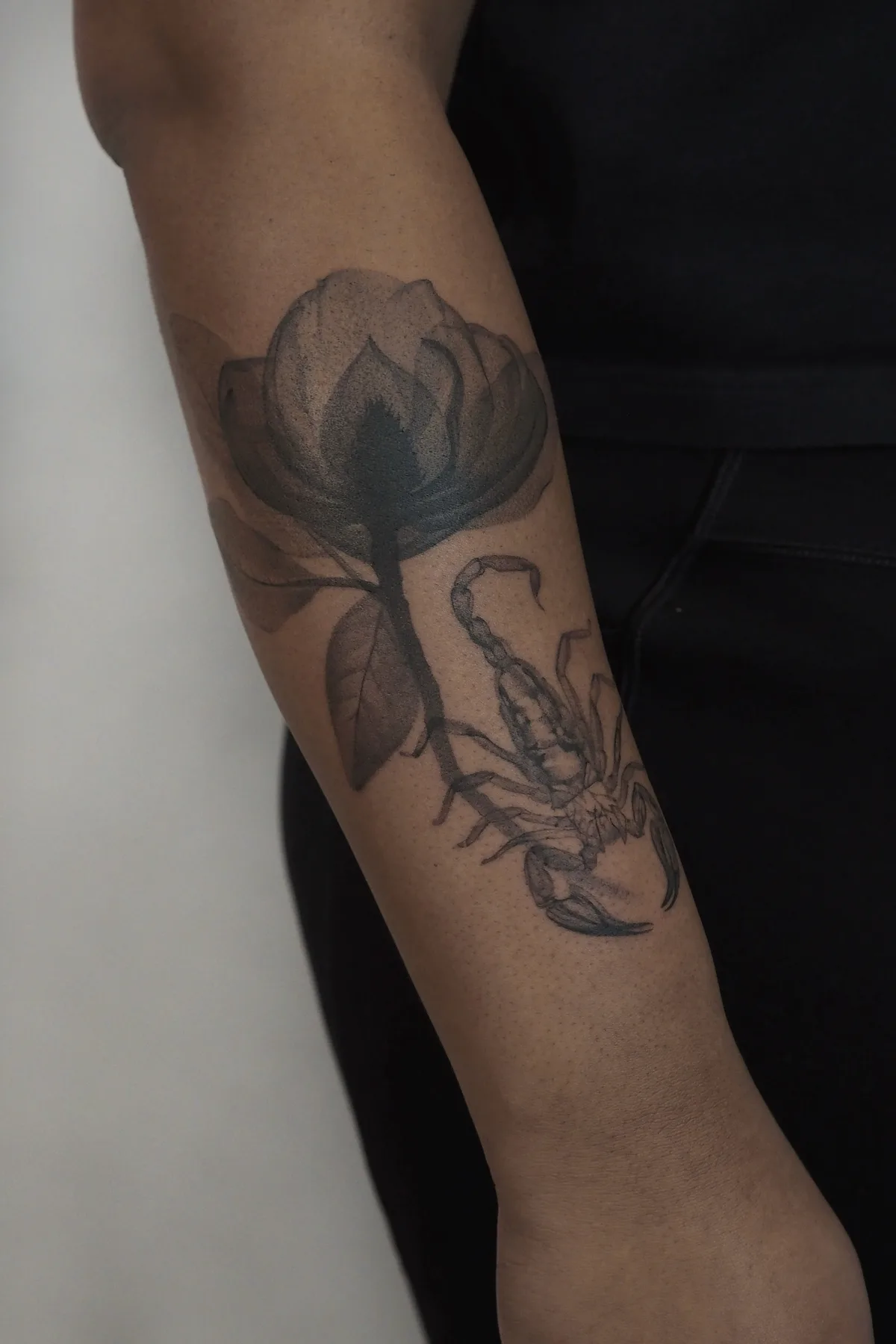
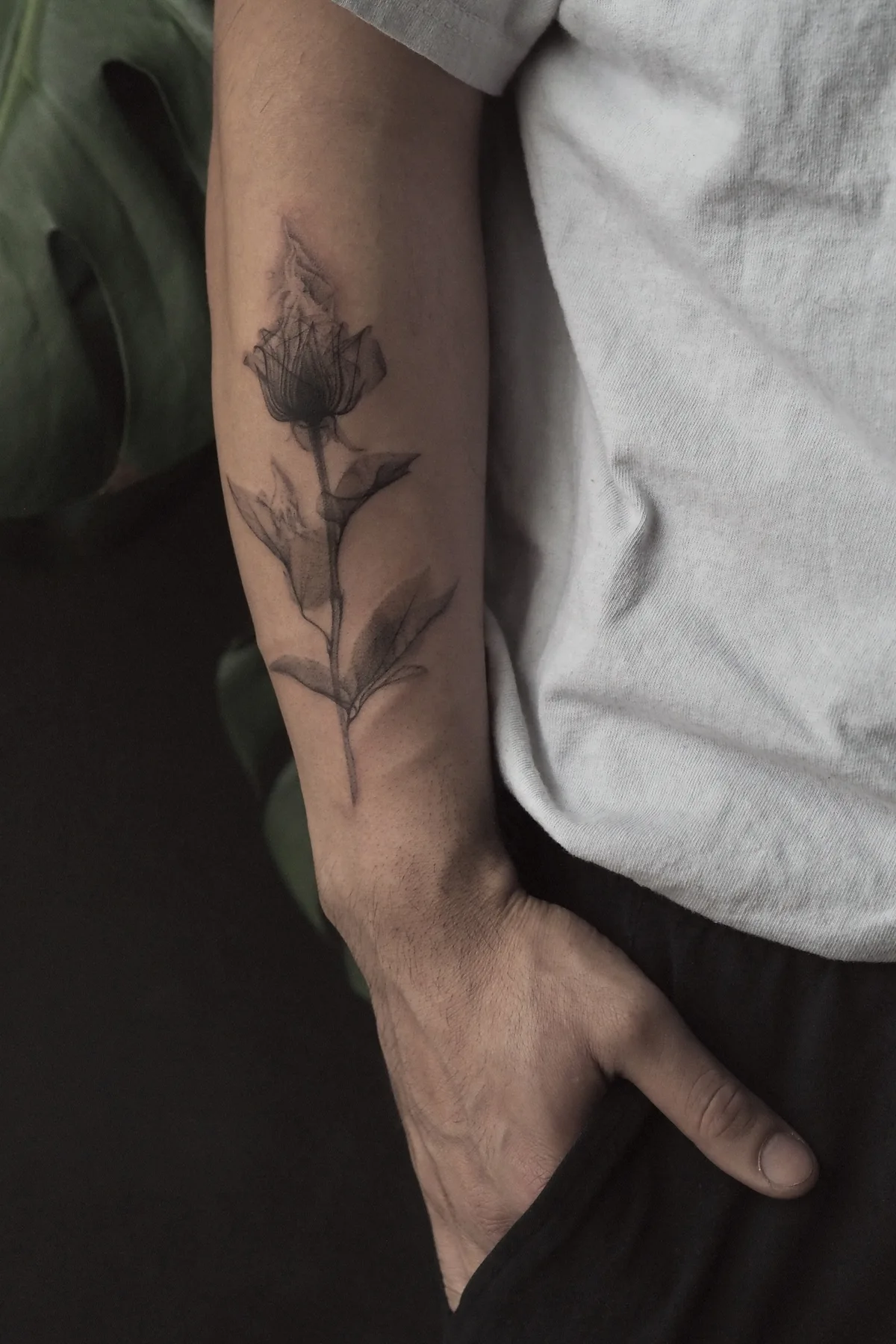
For many years, Anastasia worked primarily with botanical tattooing, which later became the foundation of her current style. A few years ago, however, her approach shifted fundamentally when she happened to see X-ray images of real flowers. That moment sparked the idea of introducing X-ray aesthetics into tattooing.
“This aesthetic reveals not only the external appearance of an object, but also its inner structure, allowing me to work with deeper meanings — fragility, inner strength, and invisible layers of beauty,” she explains.
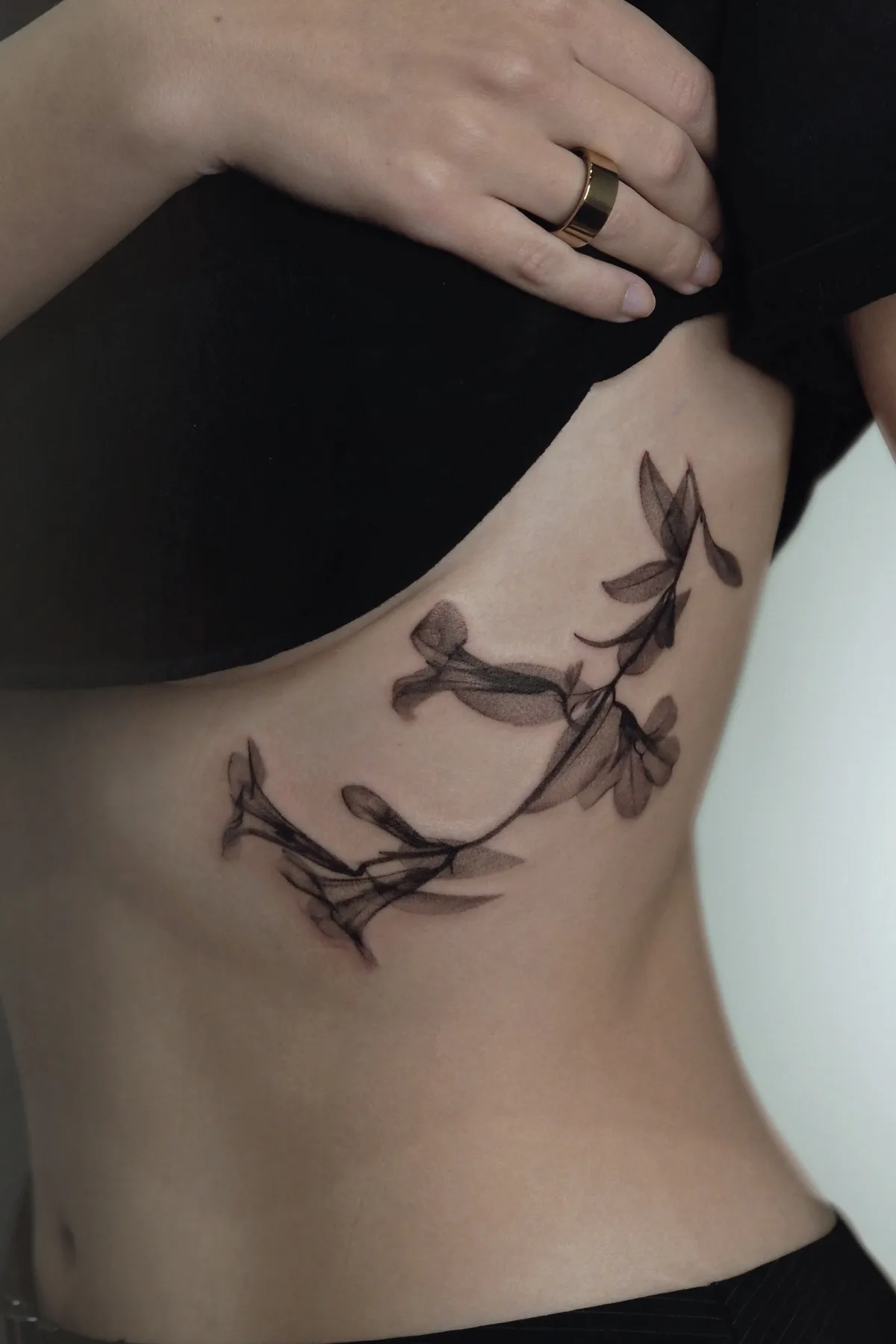
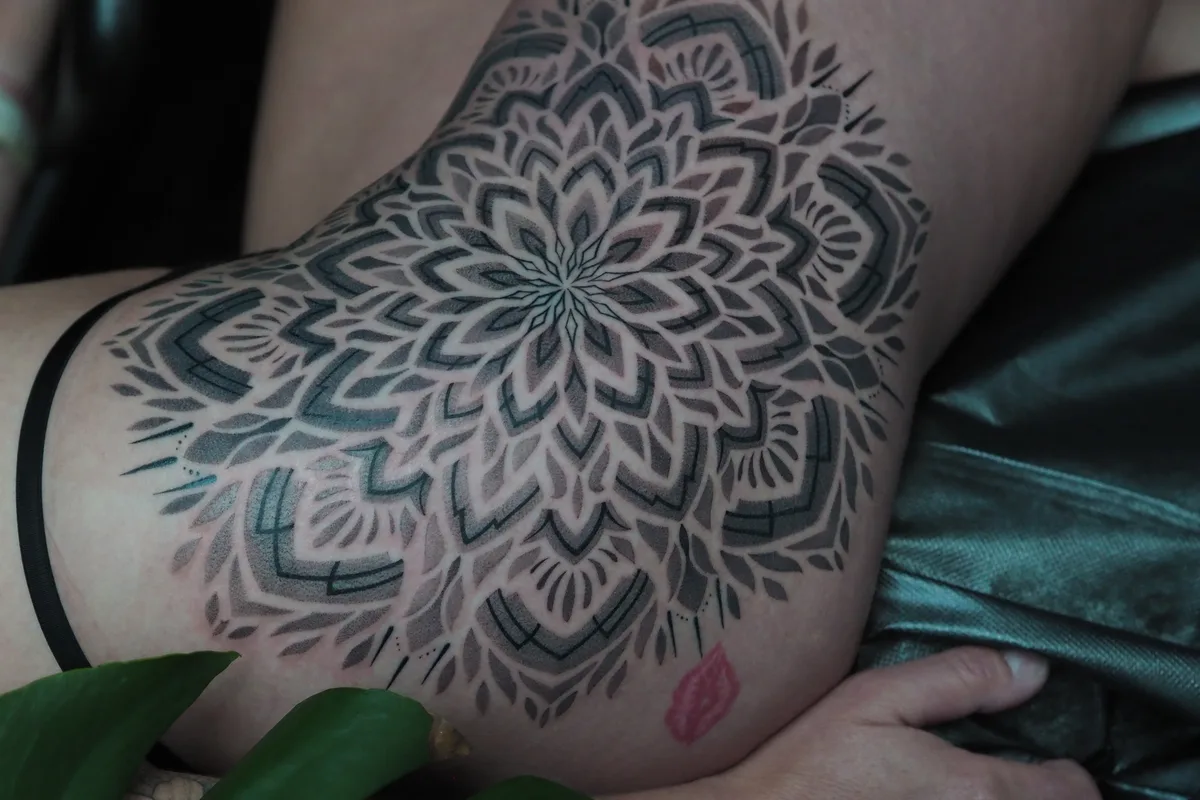
Ornamental tattooing has always been present in her portfolio, but over time her focus moved away from sharp lines and rigid contours toward working with shadow. By combining these three seemingly different approaches, a unique authorial style emerged: Botanical X-Ray and Ornamental Tattoo.
Anatomical placement is one of the key principles of Anastasia’s work and the foundation of her philosophy, regardless of style. In her tattoos, the image does not exist separately from the person, but becomes an organic continuation of the body, emphasizing movement, form, and individual anatomical features. For Anastasia, the best confirmation of successful work is the reaction of her clients: “It feels like I was born with this tattoo.”
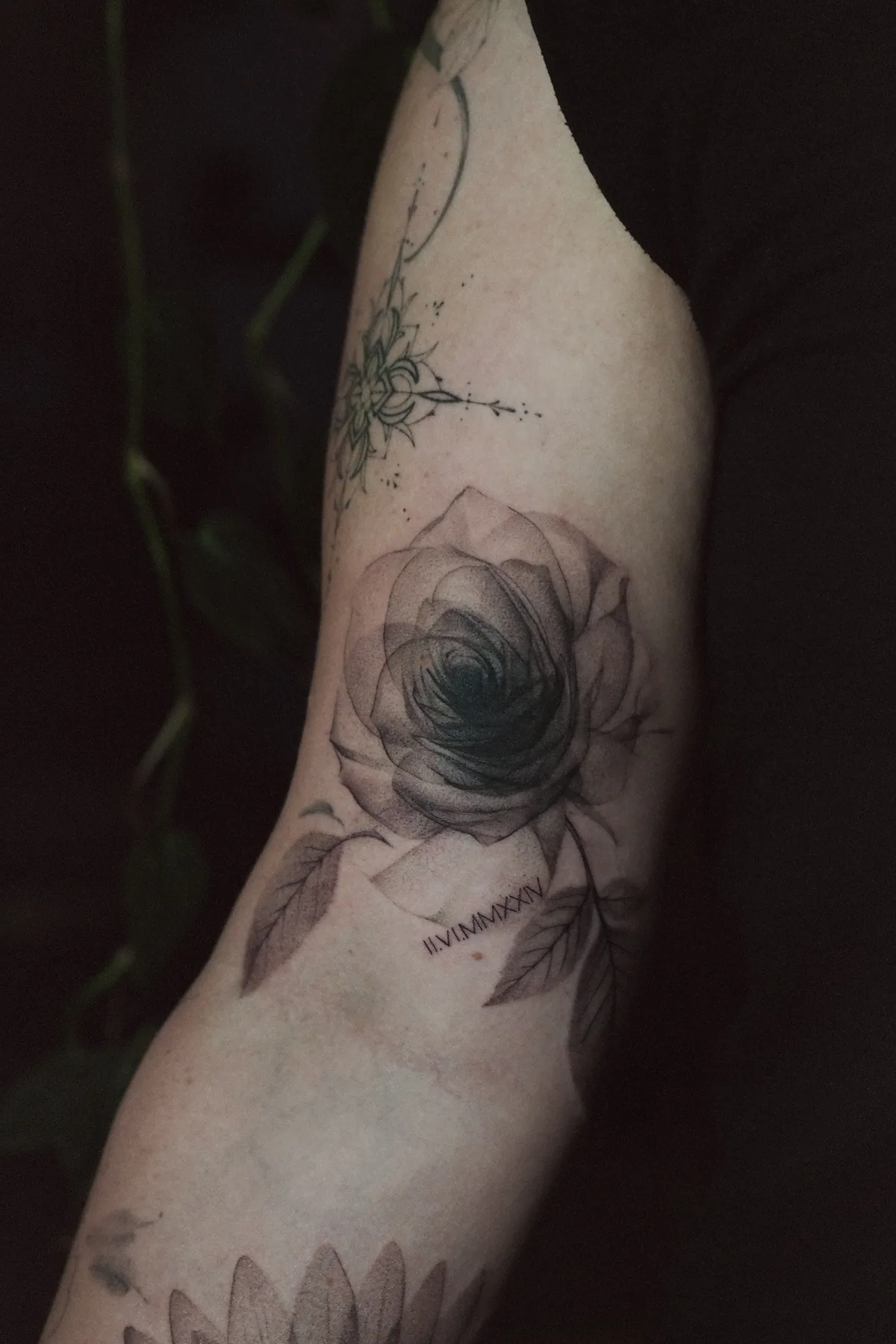
Black is a conscious artistic choice in Anastasia’s portfolio. In the context of X-ray imagery, black is also the most classical and natural option, she believes. It is directly connected to medical and scientific visuals that served as inspiration for the development of this style.
“Gradations of black allow for the most precise work with depth, shadow, and transparency — the key elements of X-ray aesthetics.”
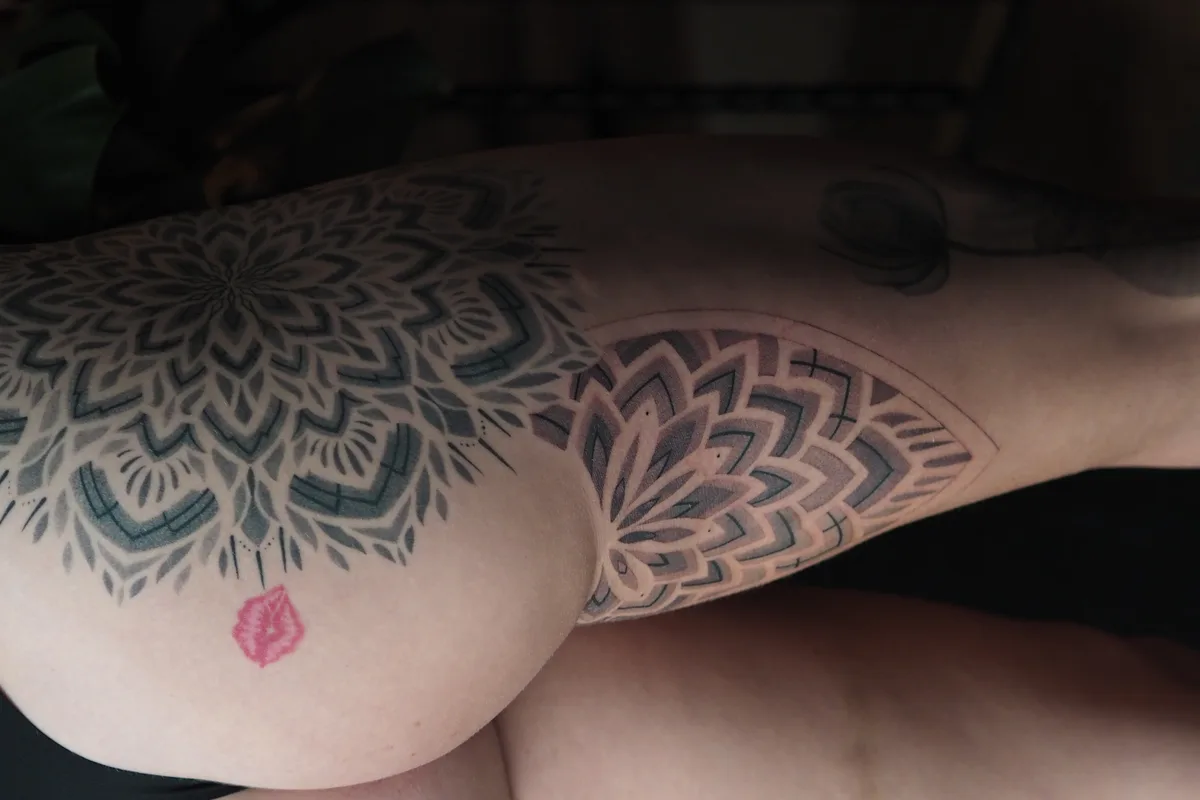
Anastasia draws most of her inspiration from flora. Her tattoos focus on a dialogue between plant form and human anatomy.
“I’m especially drawn not only to visible forms, but to hidden internal structures that become accessible through X-ray visualization,” she says.
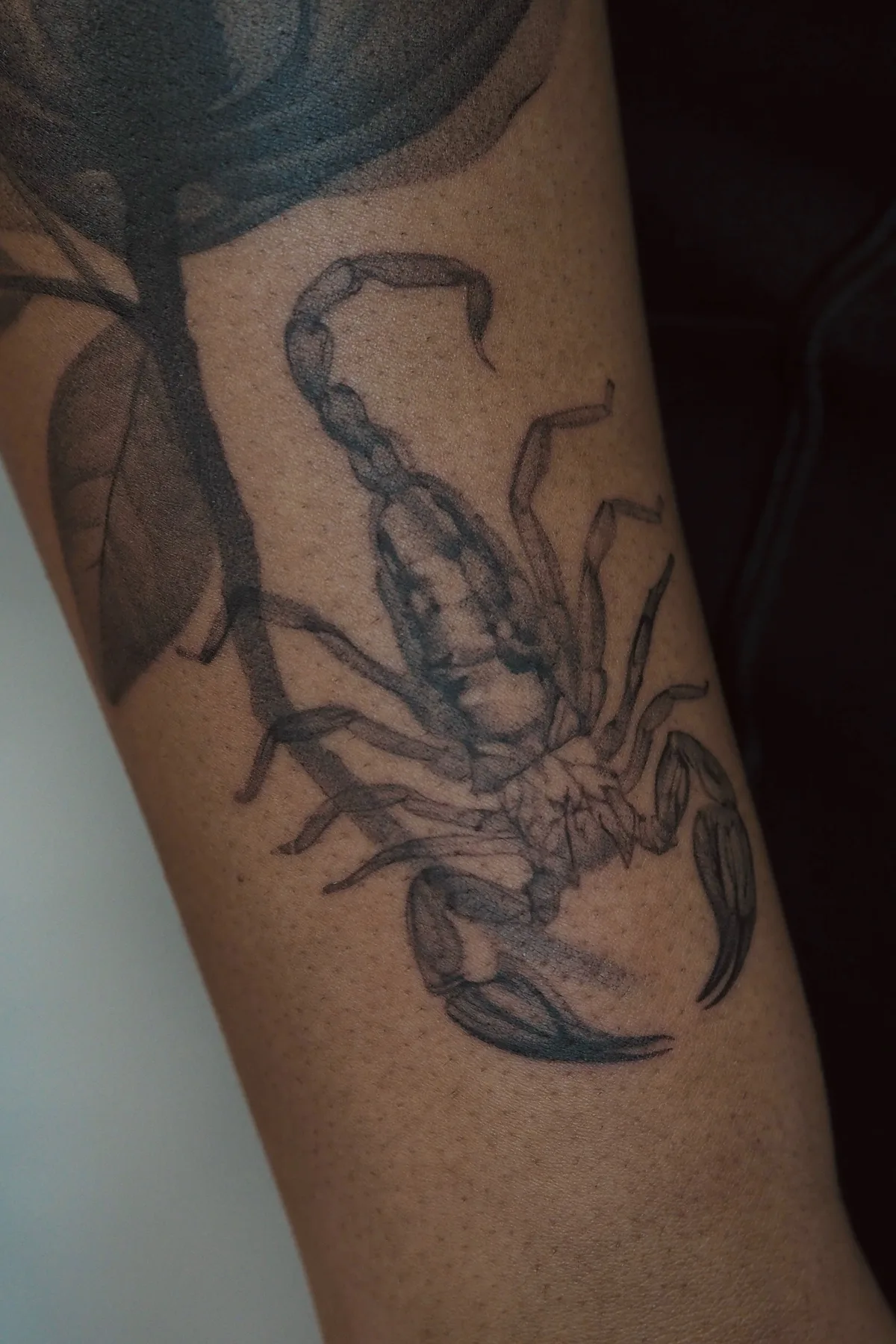
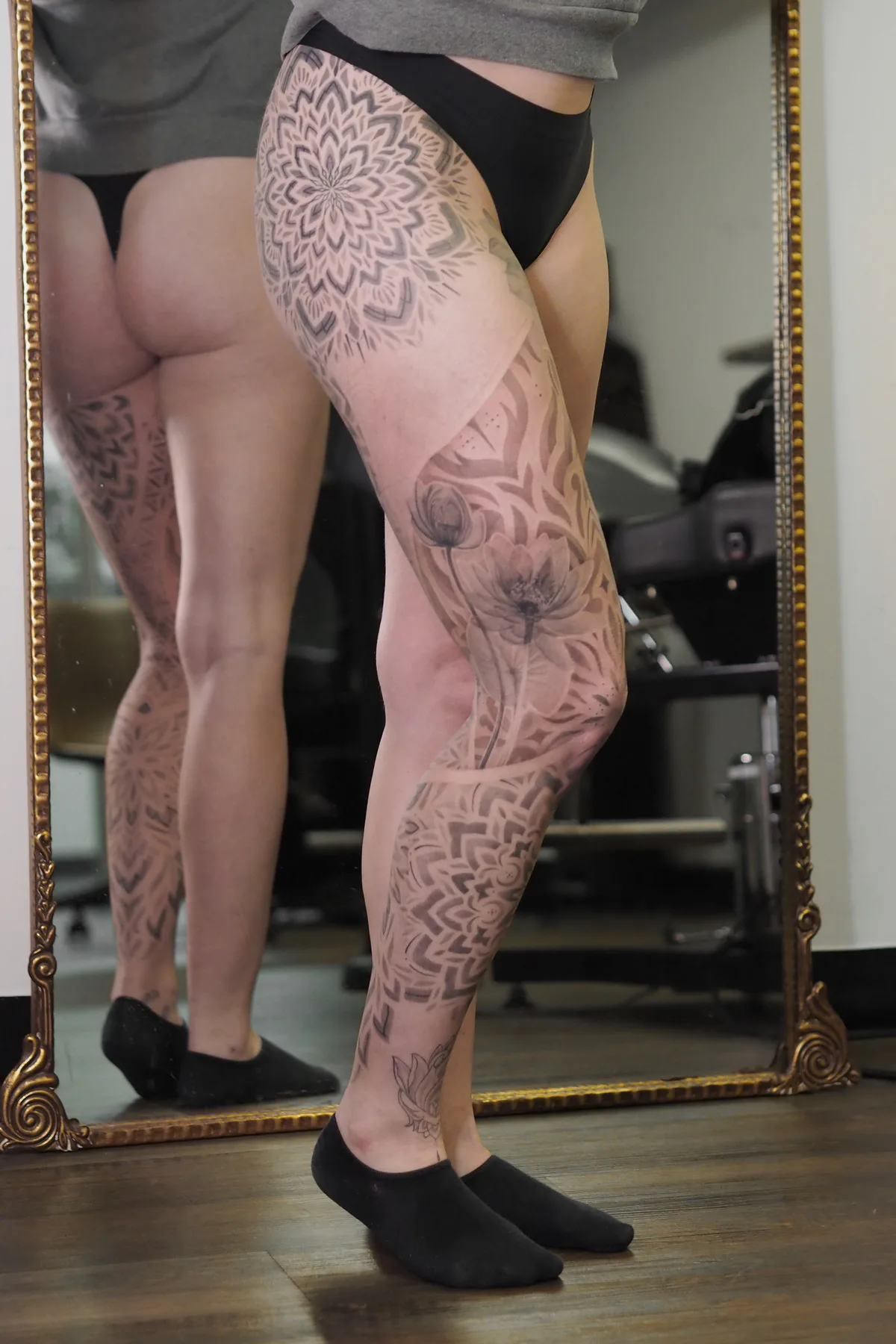
One of the most significant projects of her career is a large-scale full-leg piece that combines shadow-based ornamentation with lotus flowers executed in X-ray botanical aesthetics. The project develops slowly, over dozens of sessions, fully adapting to form, movement, and changes in posture.
“I genuinely love this project at every stage. I especially value the client’s trust — we’ve already completed more than fifteen sessions, and the work is still ongoing,” she notes.
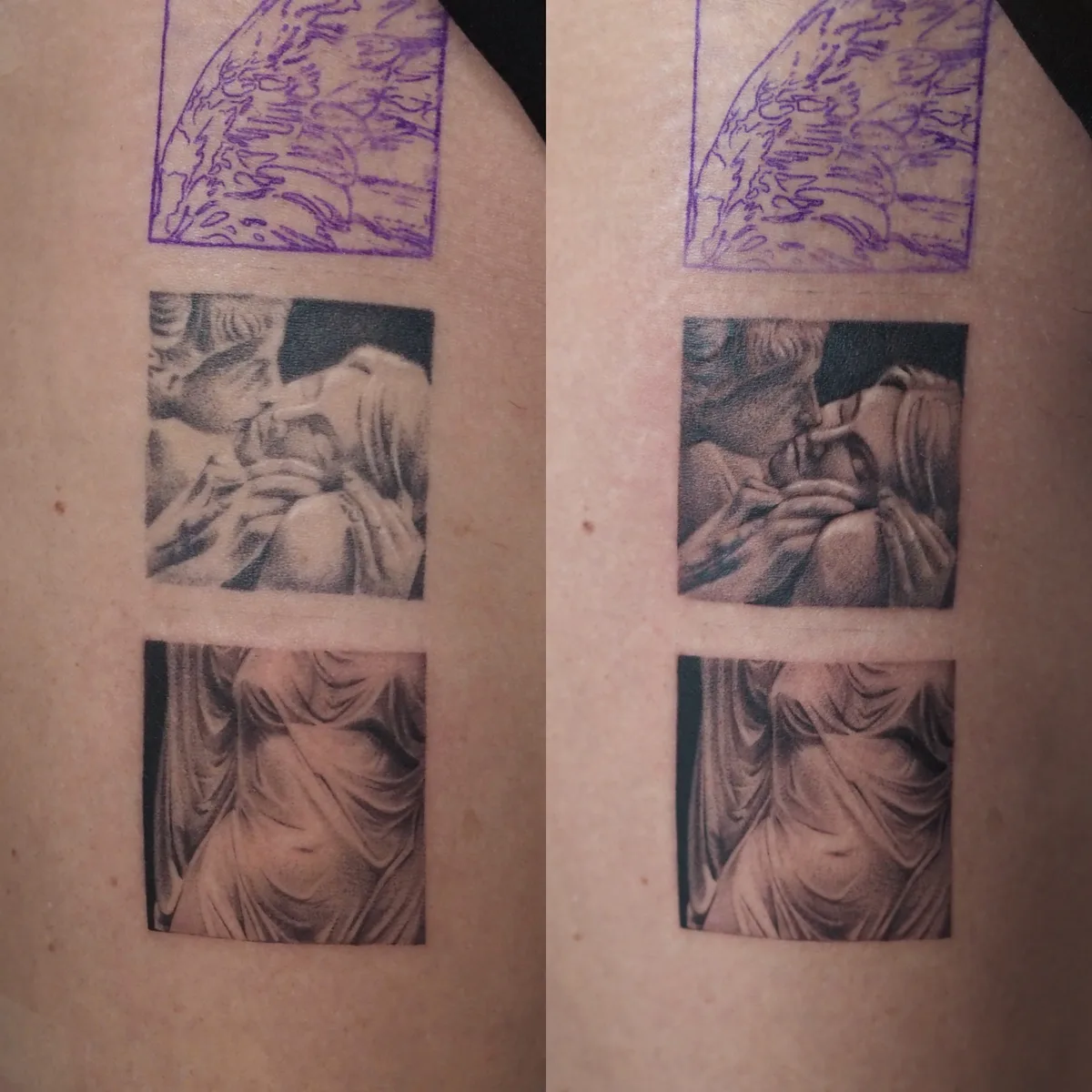
A separate focus within Anastasia’s portfolio is cover-up work and the correction of unsuccessful tattoos. Depending on the situation, this may involve careful restoration while preserving the original motif, incorporating elements of the existing tattoo into a new composition, or a complete transformation of a dark piece into a larger-scale project. Each case is approached individually, taking into account the condition of the skin and the characteristics of the original design.
Anastasia has participated in international tattoo conventions in Moscow and twice at the Golden State Tattoo Expo in the United States. During the festival, she completed a large-scale X-ray-aesthetic piece that received strong feedback from the professional community and was recognized by Nikko Hurtado. She has also served as a judge, evaluating participants’ work in two competition categories.
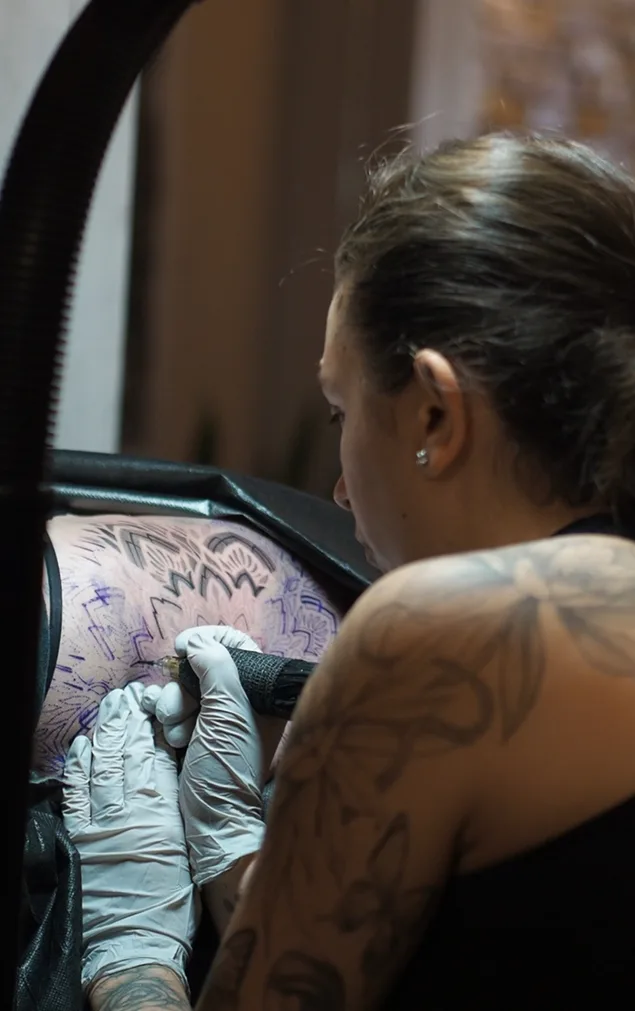
Currently, Anastasia is based in Los Angeles and works with Koru Studio, focusing on long-term, large-scale projects and consistent artistic practice. Her schedule depends on the scope of each project. She works with a limited number of clients to maintain focus on every piece and manages all bookings personally, considering direct communication an essential part of the process — from understanding the initial idea to supporting the project through every stage.
Looking ahead, Anastasia is considering launching an online educational format focused on artistic thinking, working with shadow, anatomy, and creating designs on the iPad. She admits that her interest remains centered on X-ray botany and shadow-based ornamentation, as well as on how form and shadow interact with the body.