Every tattoo starts as a stencil. Before a needle touches skin, the artist presses a purple line drawing onto the client and uses it as the map. Usually that sheet of paper ends up in the bin. In São Paulo it has become the face of a blood drive.
Pró-Sangue, the blood centre of São Paulo, and the agency The Juju Brasil have launched “Marcados para doar” (“Marked to donate”). The campaign takes stencils from real tattoos and turns them into invitations to give blood.
Seven days instead of six months
The campaign rides on a change in Brazil’s rules. Under Ordinance GM/MS No. 11,685 of 3 July 2026, the Ministry of Health cut the waiting period for donating blood after a tattoo from six months to seven days. The condition: the tattoo must be done in an establishment that meets sanitary safety standards.
That is a large audience. According to estimates cited by the campaign, Brazil ranks ninth in the world for tattooed people. Between 30% and 37% of Brazilians have at least one tattoo, roughly one in three.
The stencil, not the needle
Blood-drive ads usually show a tattooed arm on a donation chair. The Juju wanted to avoid that picture. The agency built the campaign around the stencil instead, the drawing that comes before the art is transferred to skin for good.
“When the chance came to talk about the change in the blood donation rules, our challenge was to find a different angle,” say Ariane Dias and Danilo Carvalho, executive creative directors at The Juju Brasil. “Instead of once again showing tattooed people donating, we looked at something that is part of the experience of everyone who has a tattoo: the stencil.”
“It is the first step of a mark someone chooses to carry on their skin, and in this campaign it takes on a new meaning. We turned drawings that represent individual stories into invitations to a collective gesture that can help save lives.”
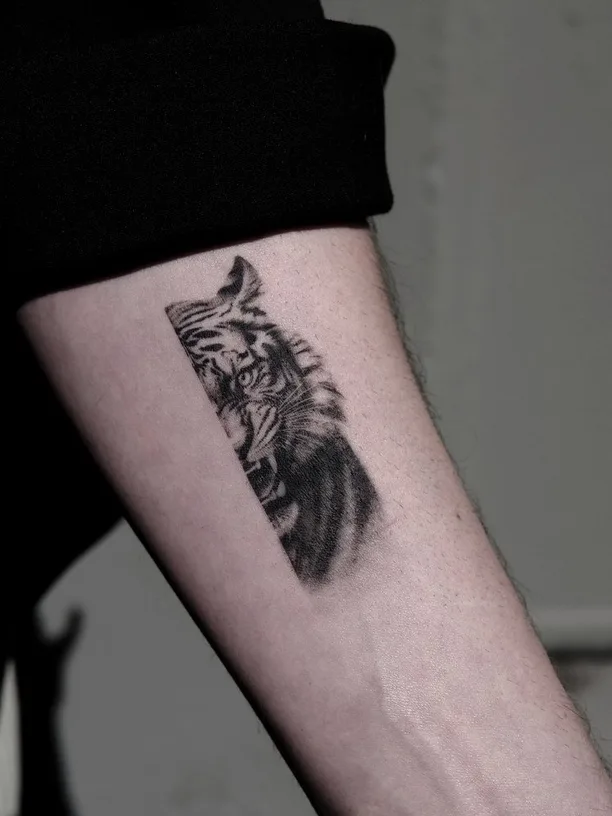
In the key visual, a tiger stencil hangs in a tattoo studio. The line beside it reads, in Portuguese: “In one week, whoever was marked by this stencil could mark lives.”

Why it matters to the blood centre
Pró-Sangue sees the rule change as a chance to reach new donors, and says information has to come with it.
“The update to the rules is an important step for blood donation, because it widens participation and lets more people help save lives,” says Dr Alfredo Mendrone Júnior, technical and scientific director of Pró-Sangue. “It is essential that this change comes with information and awareness, to bring in new donors and reinforce the importance of voluntary, altruistic and regular blood donation. Every donation makes a difference and helps keep stocks supplied for those who need them.”
Artists invited
The campaign will run on social media, outdoor media, digital panels and posters. Tattoo artists, studios and influencers from the tattoo scene will be invited to take part and carry the message to their own audiences.
What it means if you are tattooed
- Seven days after a tattoo done in an appropriate, safe studio with proper asepsis and disposable materials, you can donate.
- Four months is the wait if you are not sure about the safety of the studio, the materials or the procedure, according to the campaign materials.
- Other criteria are checked on site during clinical screening. Check the eligibility criteria before you go and find a blood centre (hemocentro). In São Paulo, Pró-Sangue posts updates at @prosangue.
The blood goes to patients who need transfusions, from ongoing treatment to emergencies.
Campaign by The Juju Brasil for Pró-Sangue. Quotes translated from Portuguese.