Today, we'd like to introduce you to Alejandro Gómez, a tattoo artist from Medellín, Colombia, with more than 20 years of experience in fine art, numerous professional achievements, and award-winning work at international tattoo conventions.
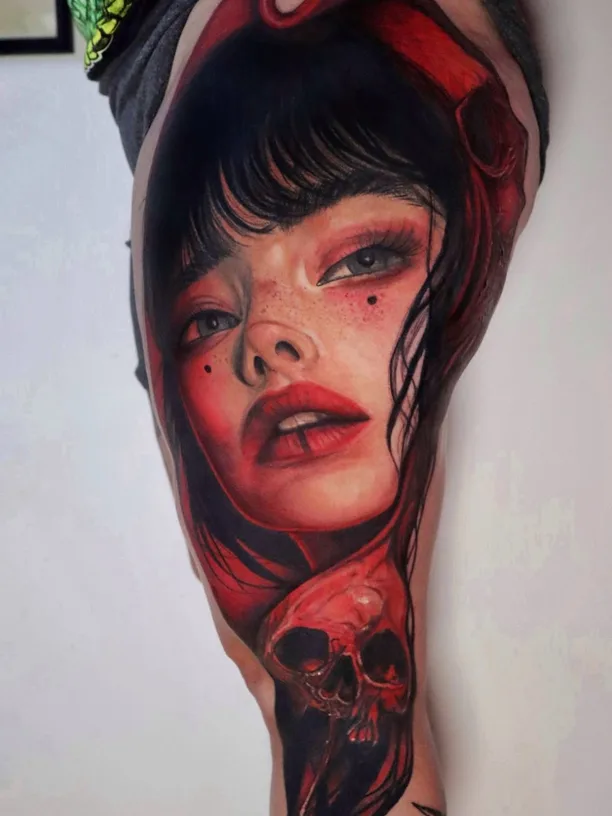
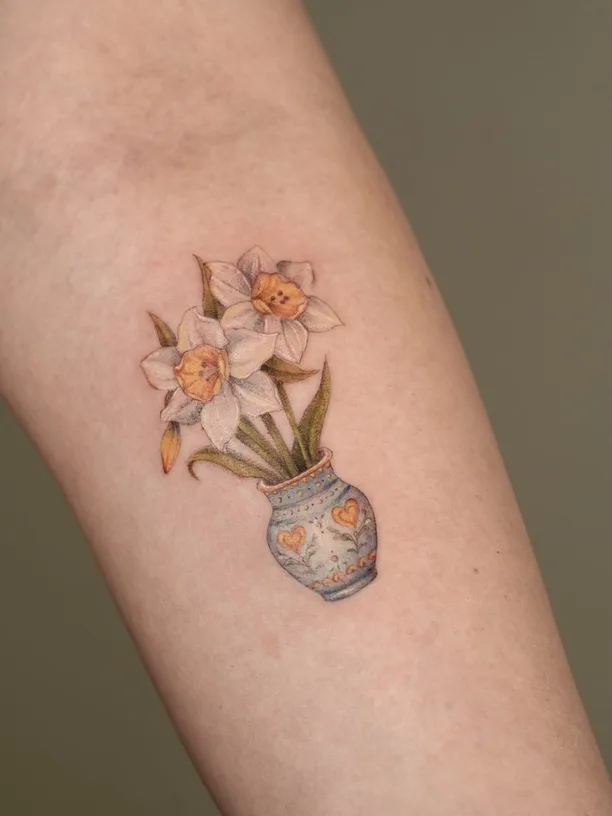
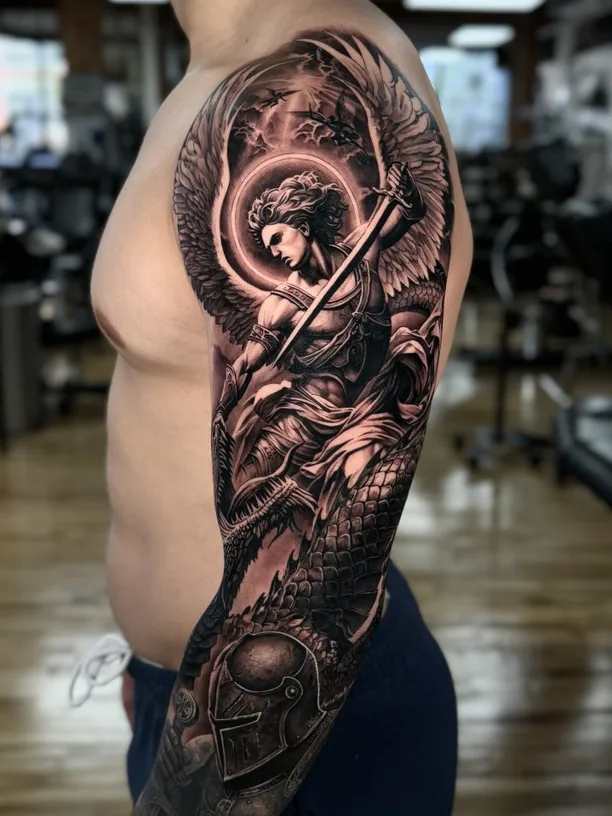
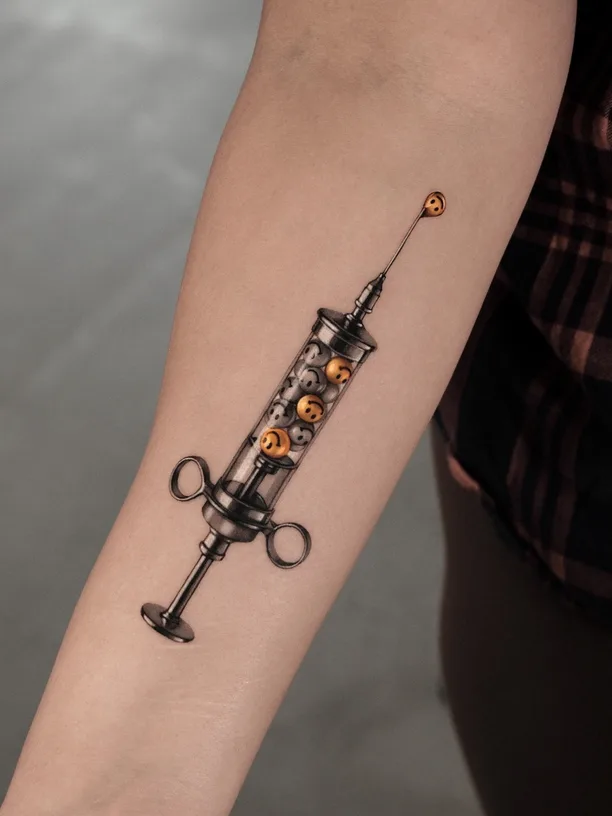
Vibrant colors, unexpected combinations of subjects, expressive female faces, and almost cinematic lighting immediately draw attention to Alejandro's tattoos. But what makes his work particularly interesting is the way he approaches form. Rather than pursuing the photographic precision typical of hyperrealism, he often uses broad, painterly strokes, simplifies individual elements, and lets color create volume. As a result, his tattoos often resemble paintings brought to life on skin rather than photographic reproductions.
And while Alejandro is now known for his colorful realistic and surrealist compositions, his artistic journey began long before he ever picked up a tattoo machine.
Alejandro's love for art started in childhood. One of his earliest inspirations was The Joy of Painting, the television show hosted by American painter Bob Ross. Watching him paint encouraged Alejandro to begin experimenting with painting himself.
But the moment that truly shaped his artistic interests came a little later. At the age of nine, Alejandro discovered Peter Paul Rubens' famous painting The Three Graces while exploring a computer encyclopedia. It sparked his fascination with the human figure, particularly the female form, which would eventually become one of the central subjects of his art.
By the age of 13 or 14, Alejandro had already sold his first painting and begun to realize that something he loved could become his profession.
An important figure in his artistic education was Colombian painter Belarmino Miranda Montoya, under whom Alejandro studied and later worked as an assistant.
This experience gave him far more than painting skills. He learned about museology, curatorial practices, working with galleries, and presenting artistic projects professionally. But what Alejandro values most are the philosophical lessons he received from his mentor.
"He taught me to approach painting with respect and love, and to recognize our deepest passions, emotions, and inner drives as endless sources of artistic inspiration. That philosophy remains fundamental to my work."
Alejandro's relationship with tattooing began long before he became a tattoo artist. He got his first tattoo about 17 years ago, and later, as an established painter, became interested in exploring skin as another medium for artistic expression.
Initially, he only intended to experiment on synthetic skin. But one day, someone familiar with his paintings asked him for a real tattoo. His first piece was an image of Buddha, marking the beginning of an entirely new chapter in his artistic career.
His academic training had given him a solid foundation in composition, color theory, perspective, and lighting. Yet transitioning from painting to tattooing required not only learning new tools but also reconsidering some deeply established artistic habits.
"Ironically, one of my greatest challenges was unlearning something deeply rooted in my classical painting education."
In traditional figurative painting, artists often soften the boundaries between forms, creating volume through gradual transitions of light and color. Tattooing, however, requires clearer separation and stronger contrasts to ensure that an image remains readable as it ages. After approximately 14 years of painting, adapting to this difference was far from easy. Ultimately, though, it helped Alejandro find a way to combine both artistic approaches.
And now, let's take a closer look at his tattoos!
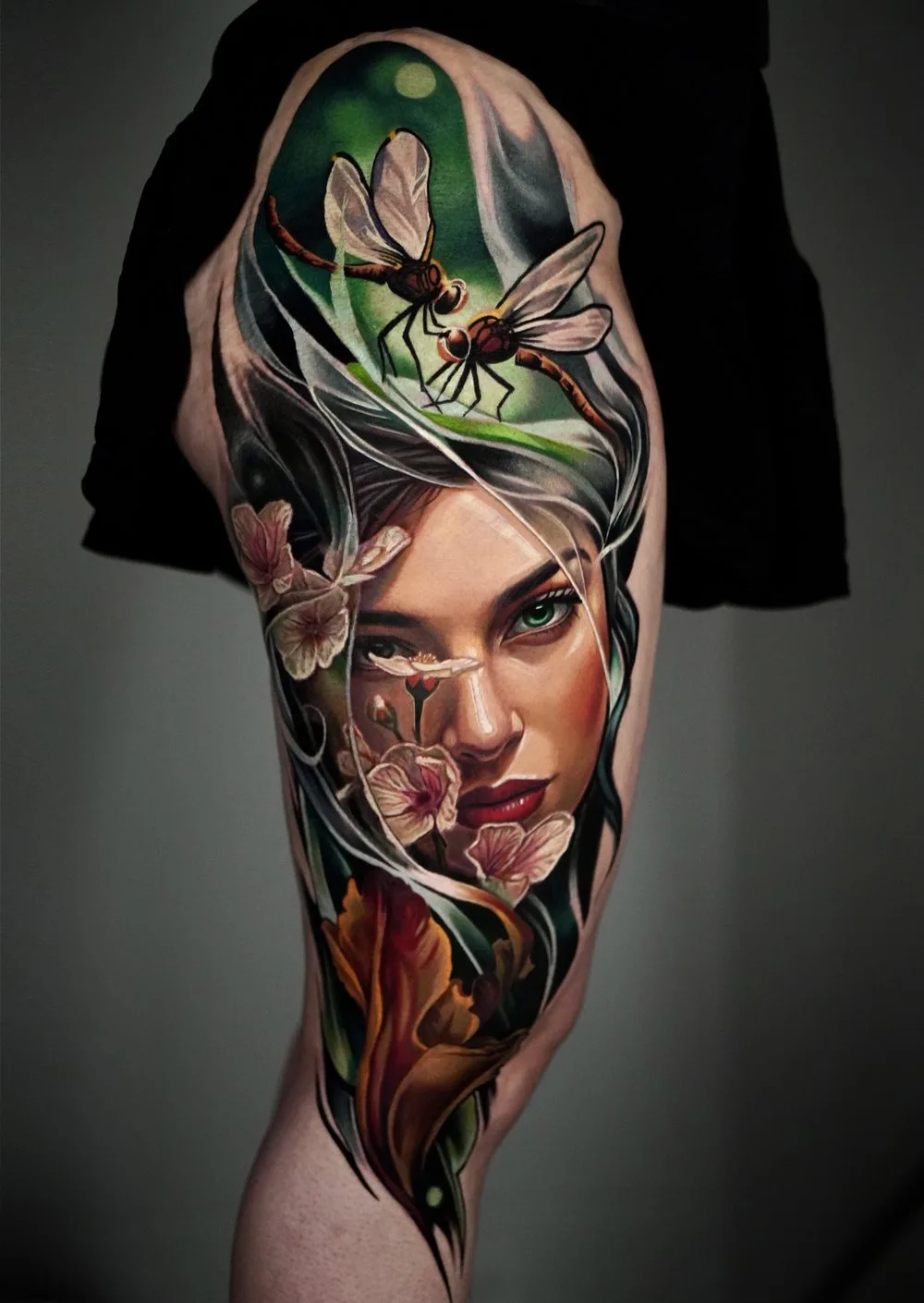
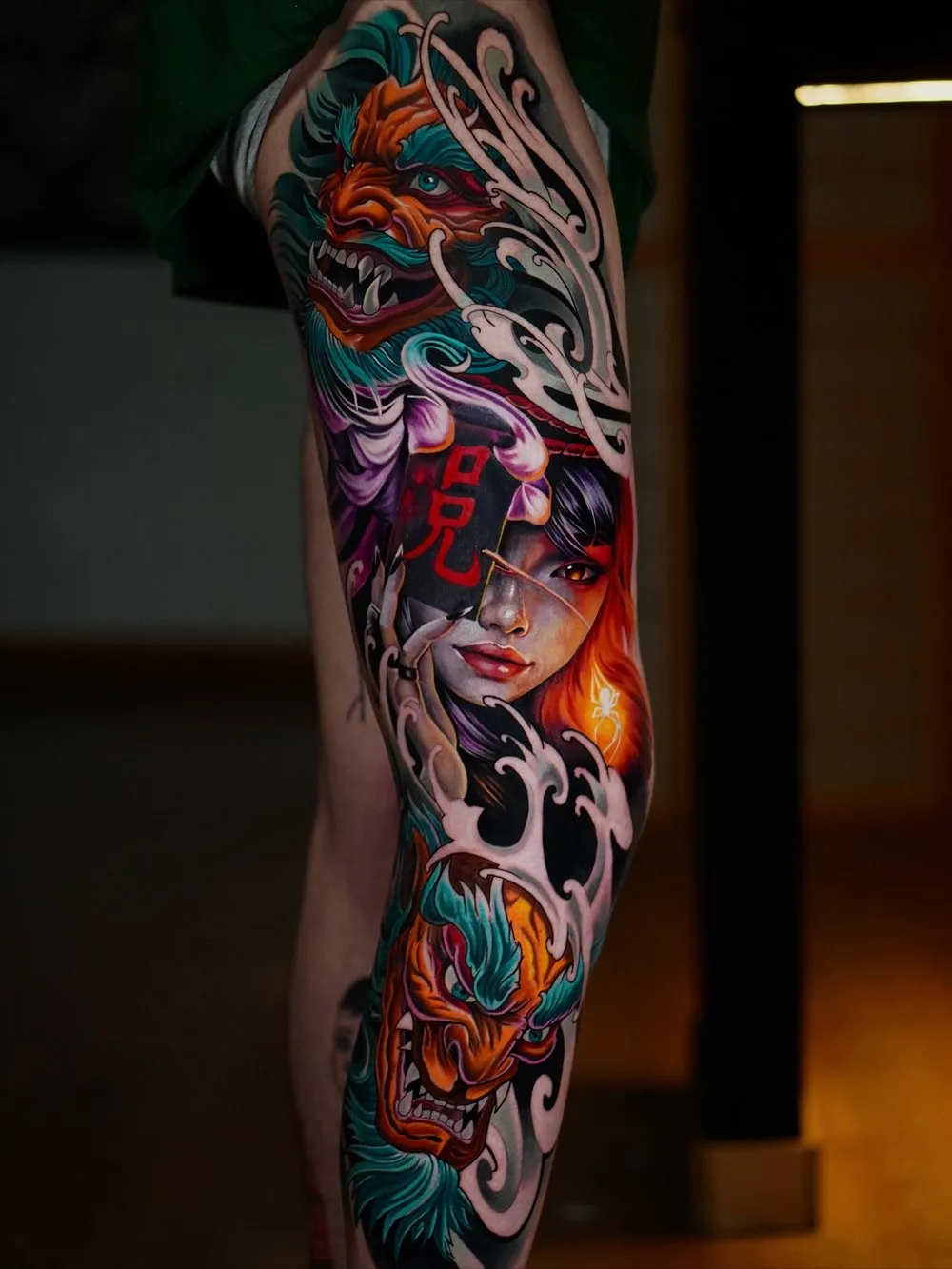
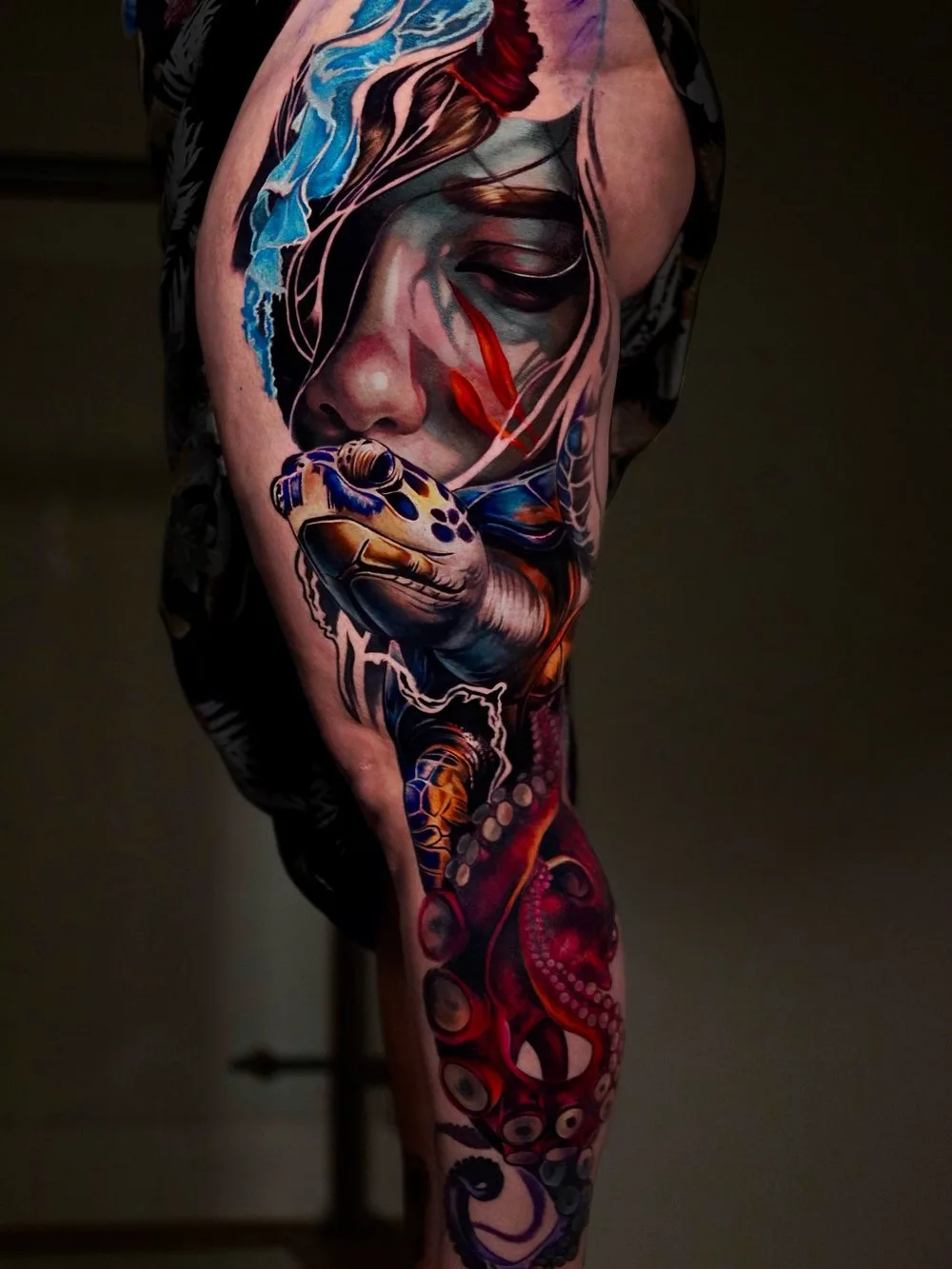
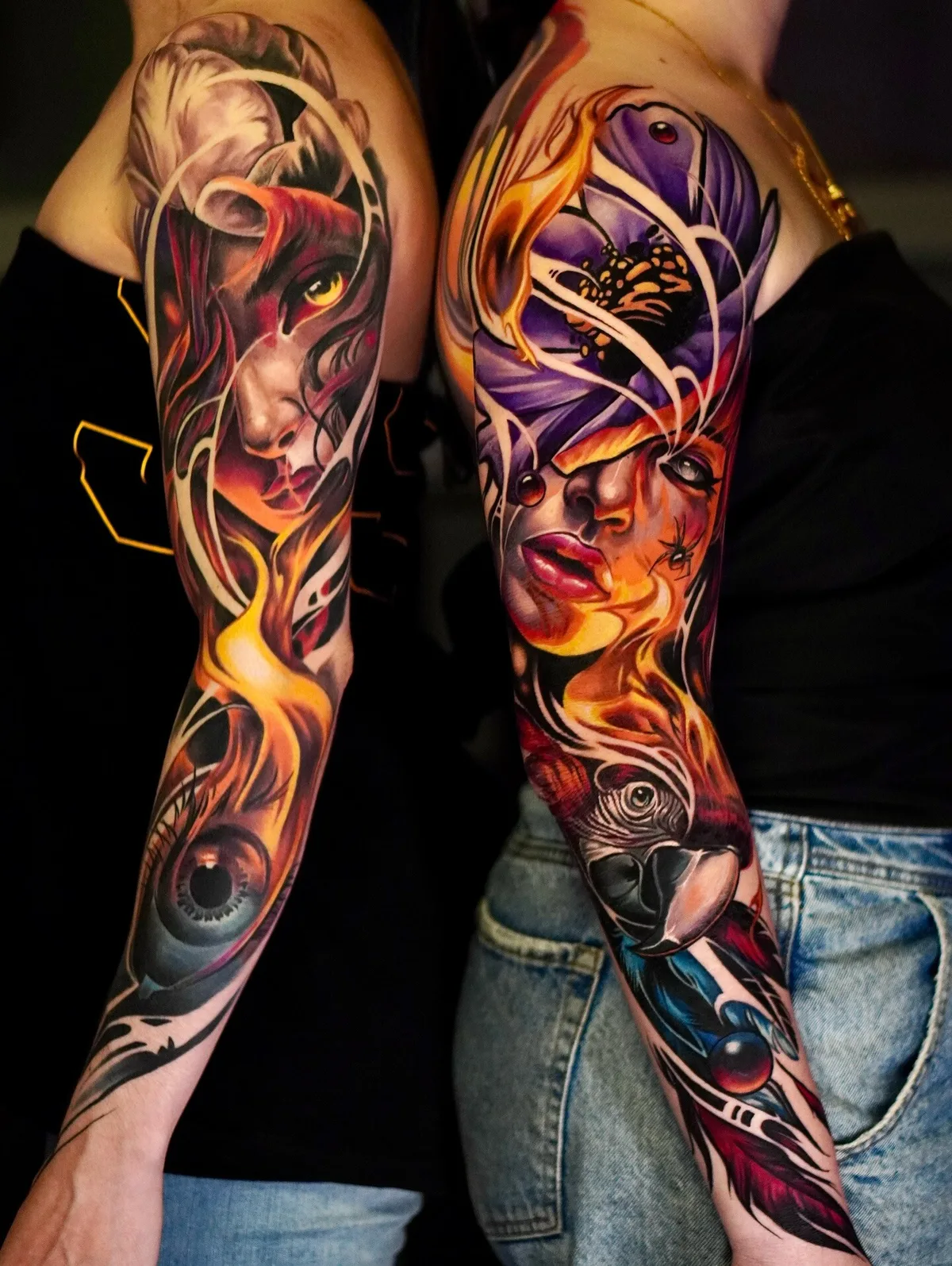
The first thing that catches the eye is his love for color and expressive female imagery. Female faces appear throughout his compositions, surrounded by flowers, flames, snakes, and birds. They often become the central elements of large-scale pieces, with entire visual narratives developing around them.
This is hardly surprising, considering that Alejandro's fascination with the female figure dates back to his childhood discovery of Rubens.
What I find particularly interesting, however, is how unexpected some of his sources of inspiration can be.
For example, when designing water, fire, or even leaves, Alejandro often turns to photographs of women's dresses. The movement of fabric, its folds, and flowing curves help him develop organic shapes that naturally complement the human figure.
Other recurring elements have their own stories. Snakes reflect his interest in mythology, particularly stories of transformation, such as those of Harmonia in Greek mythology and Bachué in the Muisca tradition. Birds connect him to Colombia's extraordinary biodiversity, while their wings and feathers allow him to suggest wind and movement.
Fire holds a special place in his work because of its ability to create movement, illumination, and dramatic contrast all at once.
At the same time, Alejandro doesn't try to assign a fixed symbolic meaning to every element. He's more interested in exploring how different forms interact and what kind of impression they create together.
His female portraits deserve particular attention. You'll probably notice that the eyes often become the emotional focal point of a composition.
Alejandro admits that expressing a character's personality and emotions matters more to him than achieving perfect photographic resemblance.
"Personally, I've always been fascinated by the eyes. When I speak with someone, I naturally pay attention to their gaze because I feel it reveals a great deal about their personality and emotions."
And as he explains:
"When I create a portrait, I want the eyes to communicate something beyond anatomical accuracy. I want the viewer to feel a connection with the person I'm representing."
Indeed, in many of Alejandro's tattoos, the gaze becomes the point where our attention first settles. Only then do we begin exploring the surrounding flowers, animals, flames, and other details of the composition.
And this brings us to another interesting aspect of his work: composition itself. At first glance, Alejandro's tattoos can seem incredibly complex, combining multiple characters, plants, textures, light sources, and rich color transitions. Yet behind this visual intensity lies a principle he calls visual economy: every element should support the central idea rather than distract from it.
That's why Alejandro always begins a project by talking with his client. He wants to understand not only the chosen subject but also its personal significance. From there, he establishes the main and supporting elements, builds the composition, and guides the viewer's attention.
"I like to think of myself almost as an omniscient narrator. I want to guide how the viewer experiences the image, deciding what attracts attention first and how the different elements relate to one another."
Interestingly, Alejandro didn't always work this way. Early in his tattoo career, his pieces were much closer to conventional photorealism, filled with intricate details. Over time, however, he realized that this approach didn't fully reflect his identity as a painter.
A turning point came with a tattoo combining a flamenco dancer with elements of a fish. While creating this piece, Alejandro decided to apply a principle he had spent years studying in classical painting: simplifying an image without losing its expressive power. Instead of reproducing every small detail, he focused on essential shapes, tonal values, color relationships, and contrast.
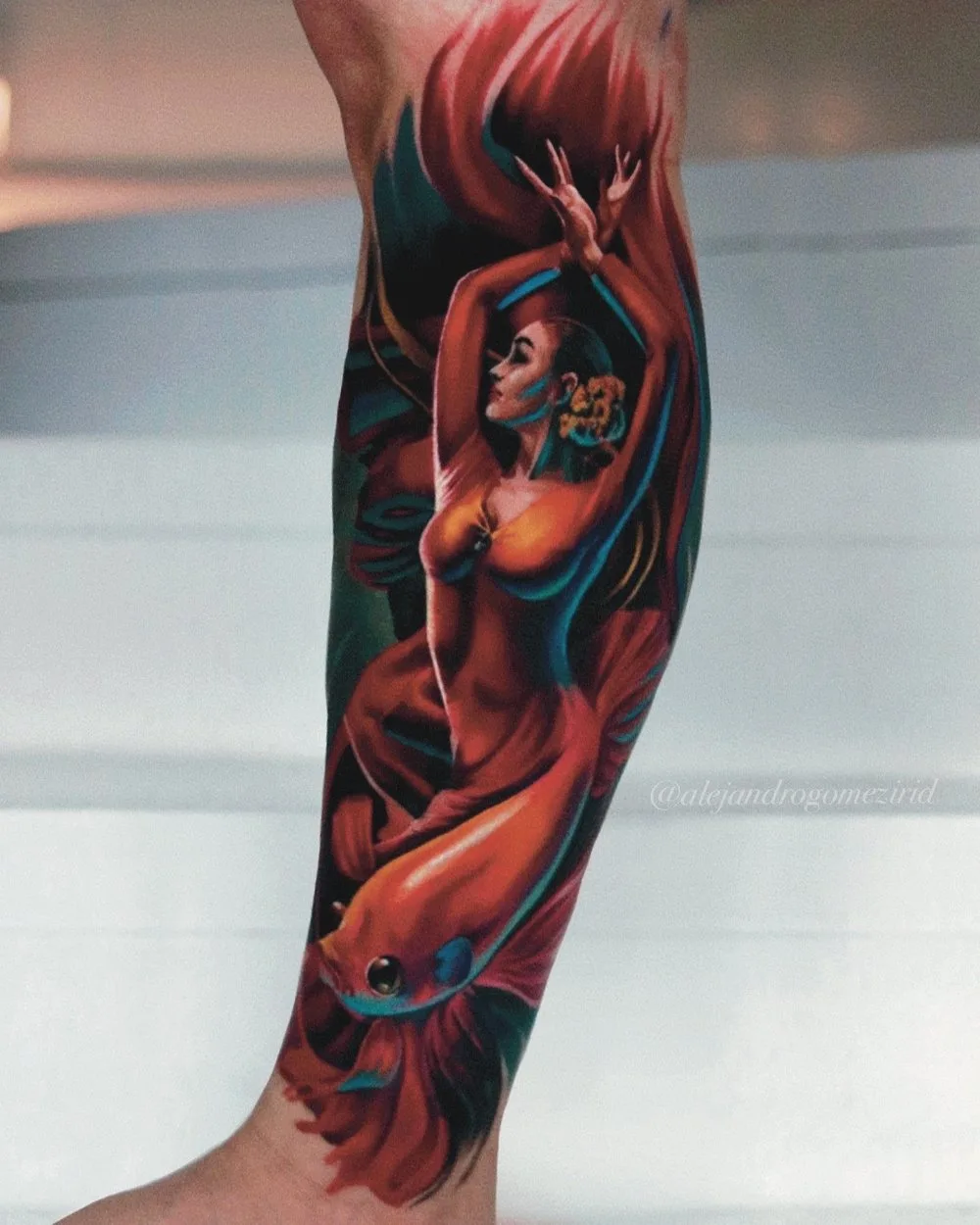
According to Alejandro, that experiment fundamentally changed the direction of his work.
"Today, my tattoos may appear highly realistic at first glance, but when you look closely, many of their forms are actually quite simplified. To me, being able to communicate something complex with fewer visual elements is one of the greatest achievements in art."
To me, this is one of the most interesting qualities of Alejandro's tattoos. They give the impression of complex, almost painterly canvases, yet much of their expressiveness comes not from the number of details but from carefully considered relationships between form and color.
And speaking of color, there's another unexpected detail in Alejandro's story. Alejandro is colorblind.
Yes, the artist whose tattoos are known for their incredibly vibrant color combinations perceives colors differently from most people. This is why color theory has become more than just part of his artistic education. For Alejandro, it is an essential working tool.
He often begins developing a composition using black-and-white references or images with a very limited palette. First, he establishes tonal relationships, then builds his own color combinations, carefully considering saturation, contrast, and lighting.
"Because I don't perceive every color the same way most people do, understanding color harmony has become especially important to my work."


As he puts it, studying color hasn't simply been an artistic interest — it's been a necessity. Notice how often saturated oranges and reds appear alongside cool turquoise, blue, and green tones in his tattoos.
This isn't merely a preference for contrasting colors. Alejandro uses warm light against cooler shadows to create volume and depth, an approach that becomes particularly noticeable in compositions involving fire.
Lighting itself is another distinctive feature of his work. It often has an almost cinematic quality. Sometimes, characters appear to be illuminated from several directions at once, while individual elements seem to emerge from the depth of the image.
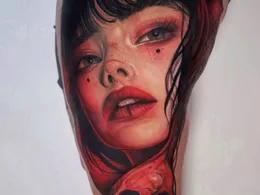
As Alejandro explains, he always starts by establishing a primary light source and then introduces secondary lighting when the composition requires it. But there's another principle behind his approach: "Impact before logic."
For example, if a flame appears next to someone's face, realistic lighting would normally illuminate that face quite intensely. Alejandro sometimes deliberately reduces this effect to preserve the desired color balance and keep the viewer's attention on the main subject.
"I understand how the light should behave physically, but I allow myself to reinterpret it when doing so creates a stronger image. For me, lighting isn't just about making something look three-dimensional. It's also a storytelling tool."
Of course, behind all these artistic decisions are the personal stories of Alejandro's clients. And this is where his approach becomes particularly interesting. Despite having such a distinctive artistic style, he doesn't necessarily want complete freedom when designing a tattoo.
On the contrary, when a client tells him to tattoo absolutely anything he wants, Alejandro appreciates the trust but doesn't consider it his ideal way of working.
To him, a tattoo should be a collaboration between two people — the client's idea and the artist's interpretation.
"My ideal client brings me a concept and allows me to interpret it. That's where I find true creative freedom: not in deciding what someone should wear on their body, but in deciding how to represent something meaningful to them."
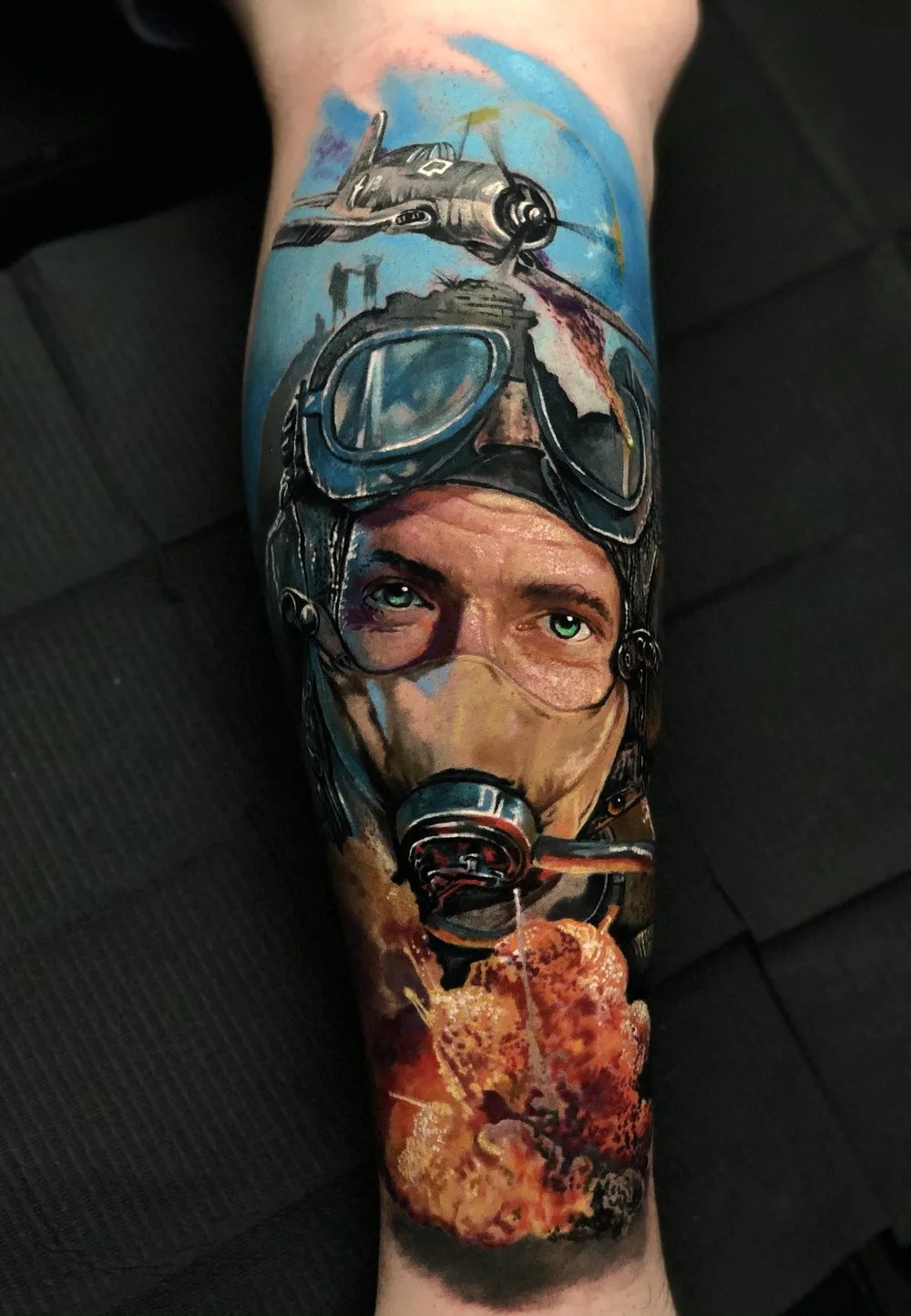
One of the projects that helped Alejandro arrive at this understanding was a 2020 tattoo depicting a World War II pilot. The client initially wanted only an airplane. However, while working at La Tinta, with encouragement from Sebastián Carvajal, Alejandro proposed transforming the original idea into a complete composition featuring a pilot and an explosion.
According to the artist, this was the moment he realized he could do more than simply fulfill a client's request. He could develop their ideas into complete artistic narratives.
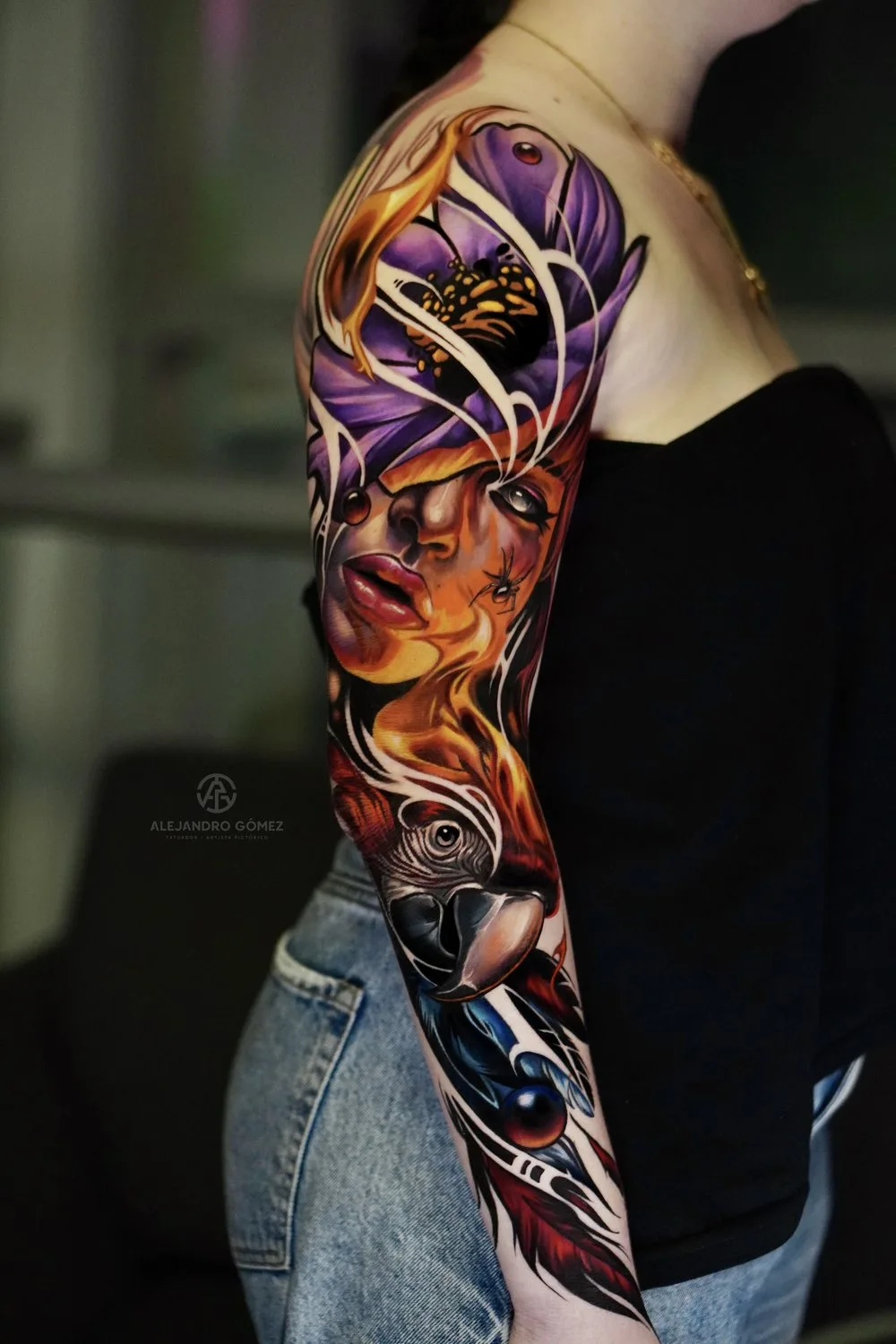
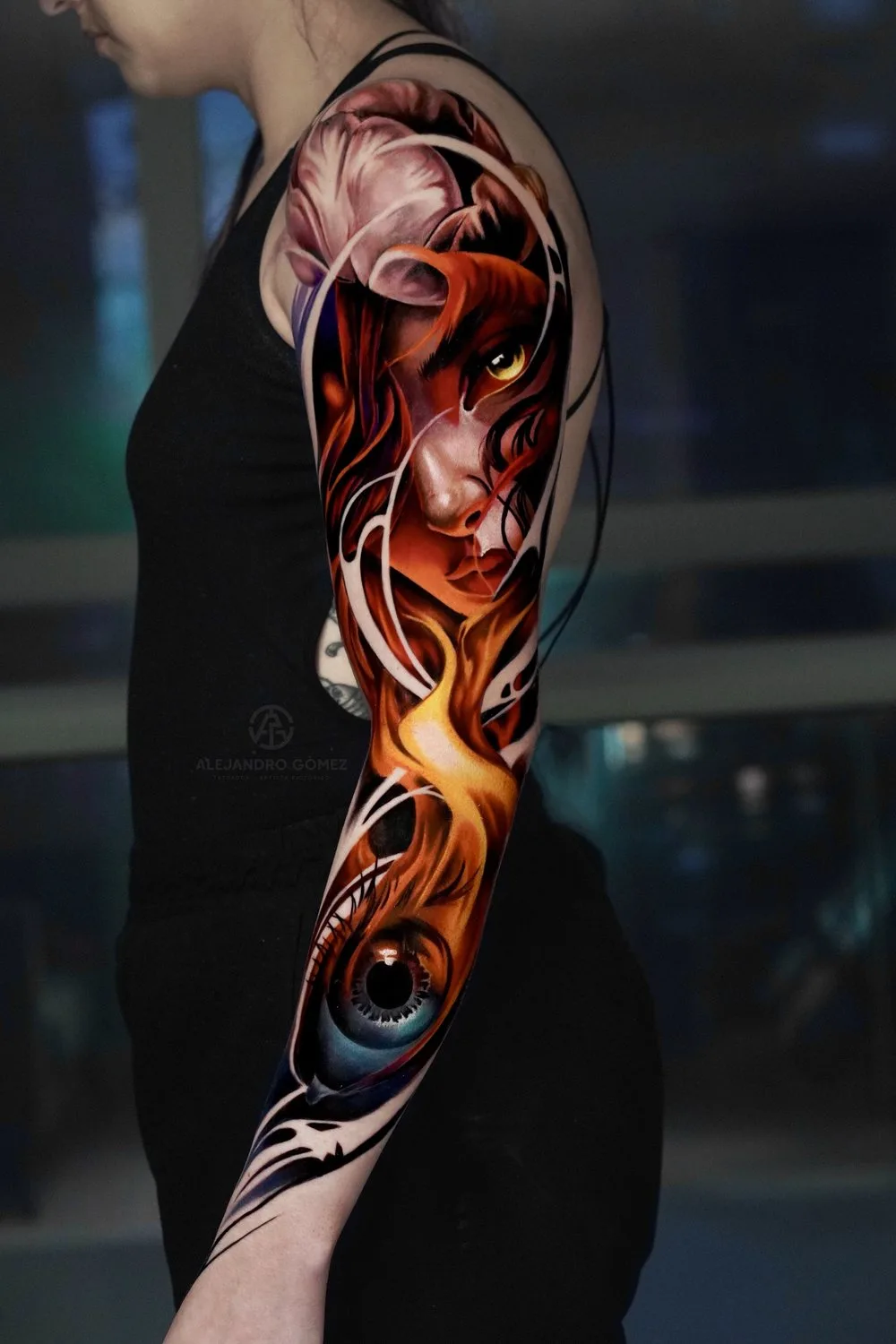
Another particularly meaningful project was inspired by magic.
The client already had a magical-themed tattoo on her arm and invited Alejandro to show how he personally imagined magic, placing complete trust in his interpretation. The result was a composition featuring a female face, organic shapes, an eye, and fire.
This piece became one of Alejandro's most recognizable tattoos and attracted attention from clients in other countries.
But recognition of his work extends well beyond the interest of tattoo collectors.
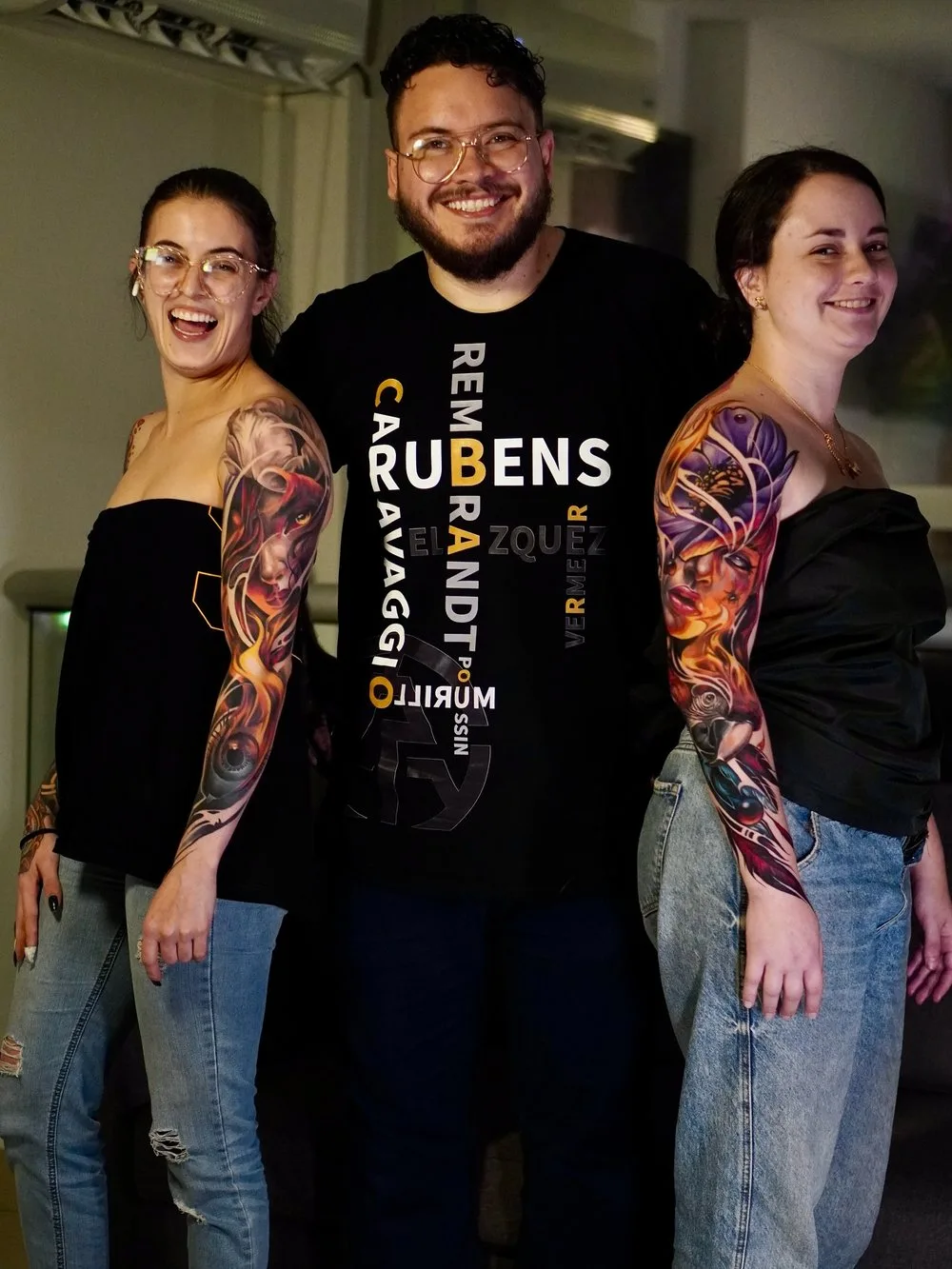
Throughout his career, Alejandro has received several professional awards, including first place in Best Art Fusion at ExpoTattoo del Eje 2022 in Colombia, Best Collaboration at the Brussels Tattoo Convention 2025 in Belgium, and Best Colour at the Oporto Tattoo Convention 2026 in Portugal.
He has also served as a guest judge at Santander ExpoTattoo (2025), Bello Tattoo Festival (2024), and ExpoTattoo Calarcá (2023), and has given seminars and lectures on color theory and composition in Colombia and Spain, including Madrid (2025), Bilbao (2026), and the FindInk Summit in Medellín. From 2022 through 2026, he also participated in Expotatuaje Medellín, one of Colombia's major tattoo conventions, for five consecutive years.
The victories in Brussels and Porto hold particular significance for Alejandro. These were his first two tattoo conventions outside Colombia, and both resulted in first-place awards.
In Brussels, he collaborated with his friends and fellow artists Kenet Ramírez, RAC, and Elan López. Their client, Andy from Germany, wanted a tattoo representing Freyja, a goddess from Norse mythology. Together, the artists developed their own interpretation of the character, bringing their individual styles together in one large-scale composition.
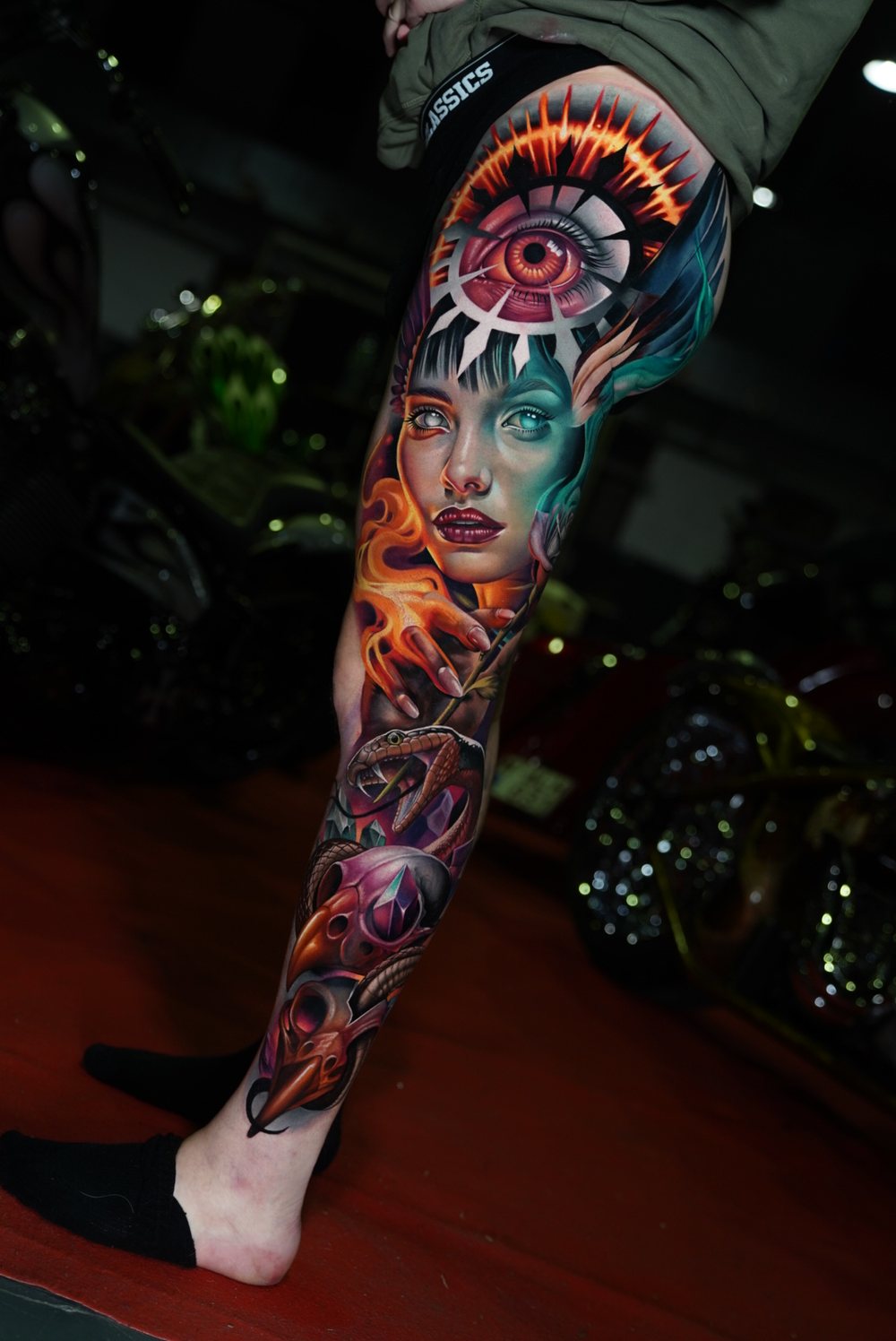
Freyja, Brussels Tattoo Convention 2025, Best Collaboration
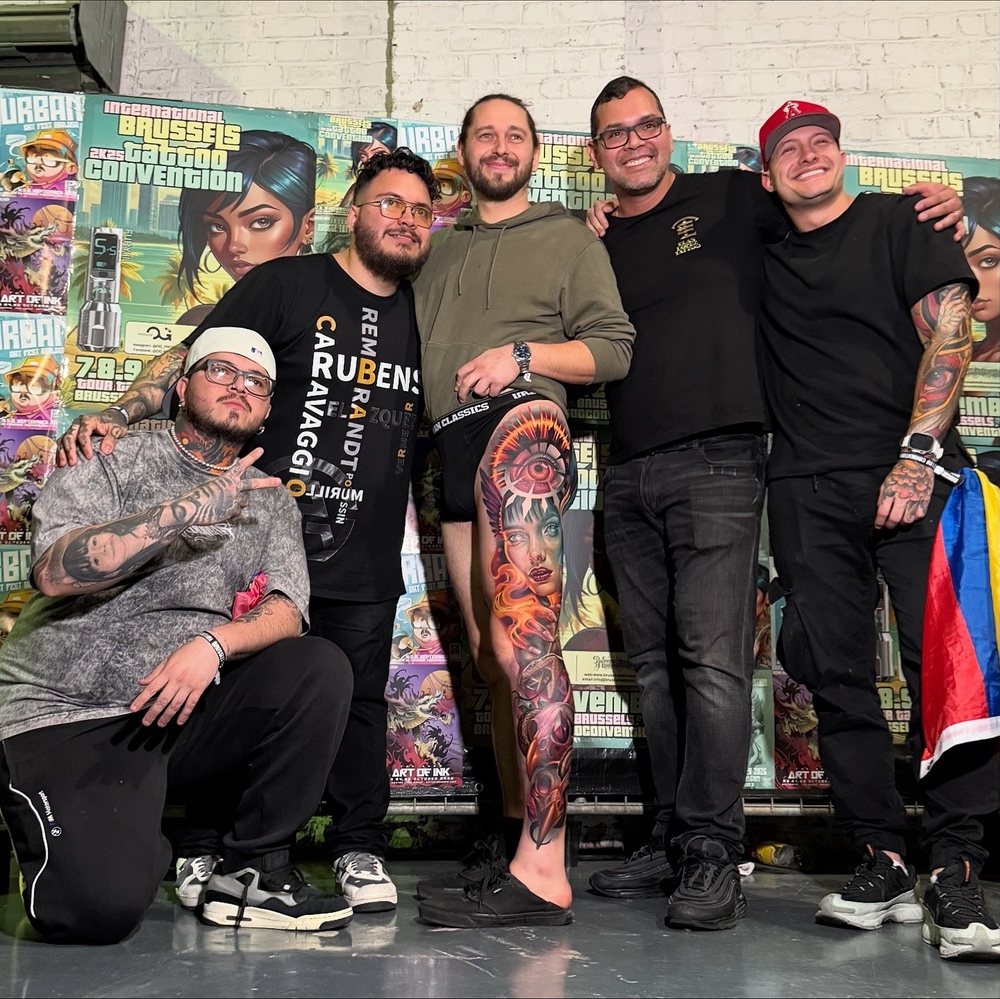
The team and their client, Brussels Tattoo Convention 2025
Then, in 2026, at the Oporto Tattoo Convention, Alejandro joined forces with Elan and RAC once again. This time, their client proposed an unusual concept: a fusion between a woman and a carnivorous plant.
As the project developed, the artists incorporated birds, fire, and an apple into the design, bringing elements of their individual visual identities into the composition.
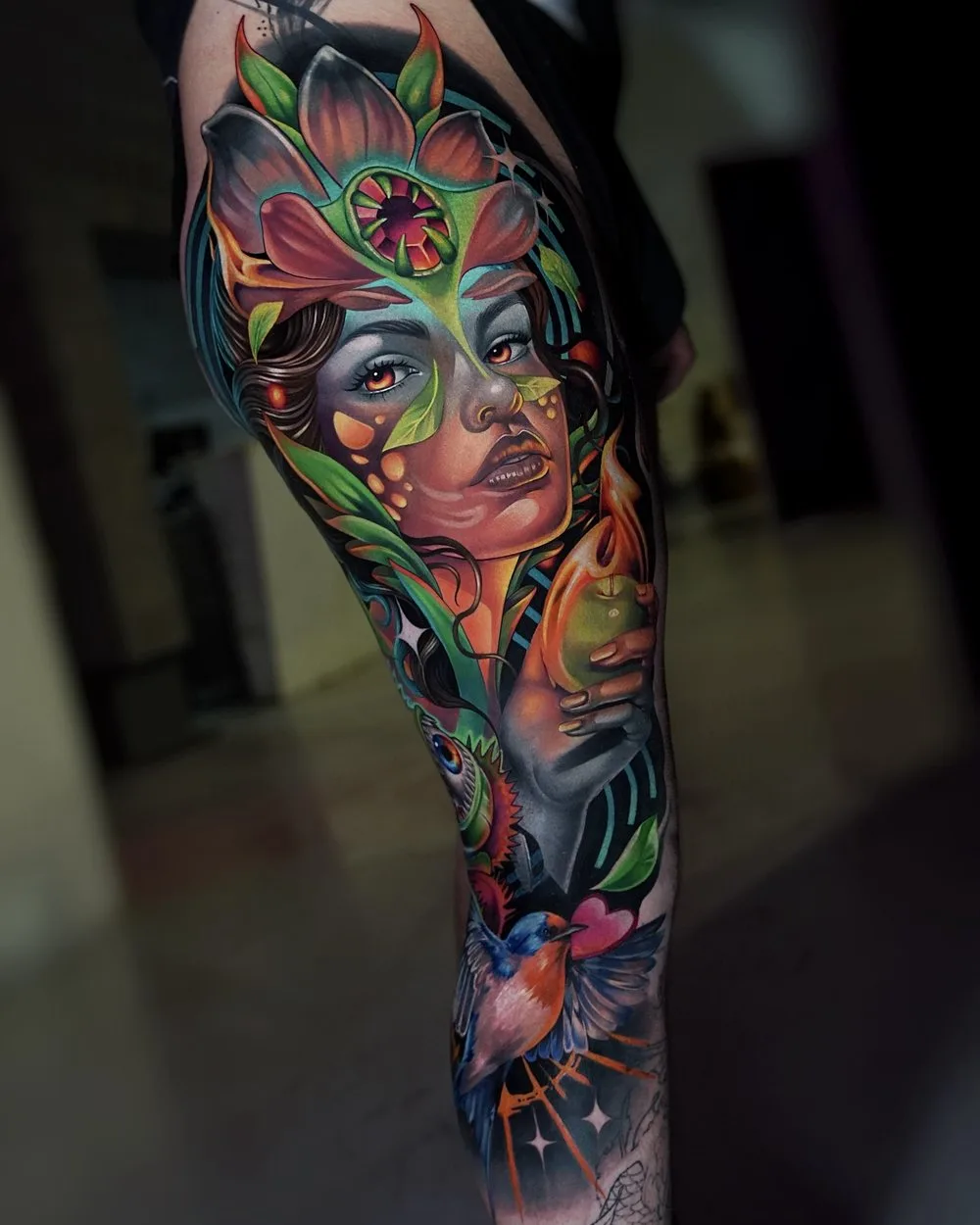
And although both victories represented important professional achievements, what Alejandro remembers most vividly isn't the awards themselves, but the people with whom he shared those moments.
"One of my happiest memories is standing on stage with my friends, raising the Colombian and Venezuelan flags in front of the crowd. Beyond the award, what made that moment unforgettable was sharing it with people I deeply love and admire."
For Alejandro, the human relationships he has built through tattooing are among the most valuable gifts the profession has given him.
What I find especially interesting about his story, though, is something else. After a long journey from classical painting to international tattoo conventions, Alejandro never abandoned his artistic background. Instead, he found a way to bring that experience into an entirely different medium.
His tattoos are certainly worth a closer look. Behind the striking colors, unusual lighting, and elaborate surrealist imagery are carefully considered compositional decisions, experiments with form, and deeply personal stories.
And perhaps that's what makes Alejandro's work so interesting — these are tattoos you can not only admire but also explore, discovering something new each time you look at them.
You can discover more of the artist's work on Instagram @alejandrogomezirid.