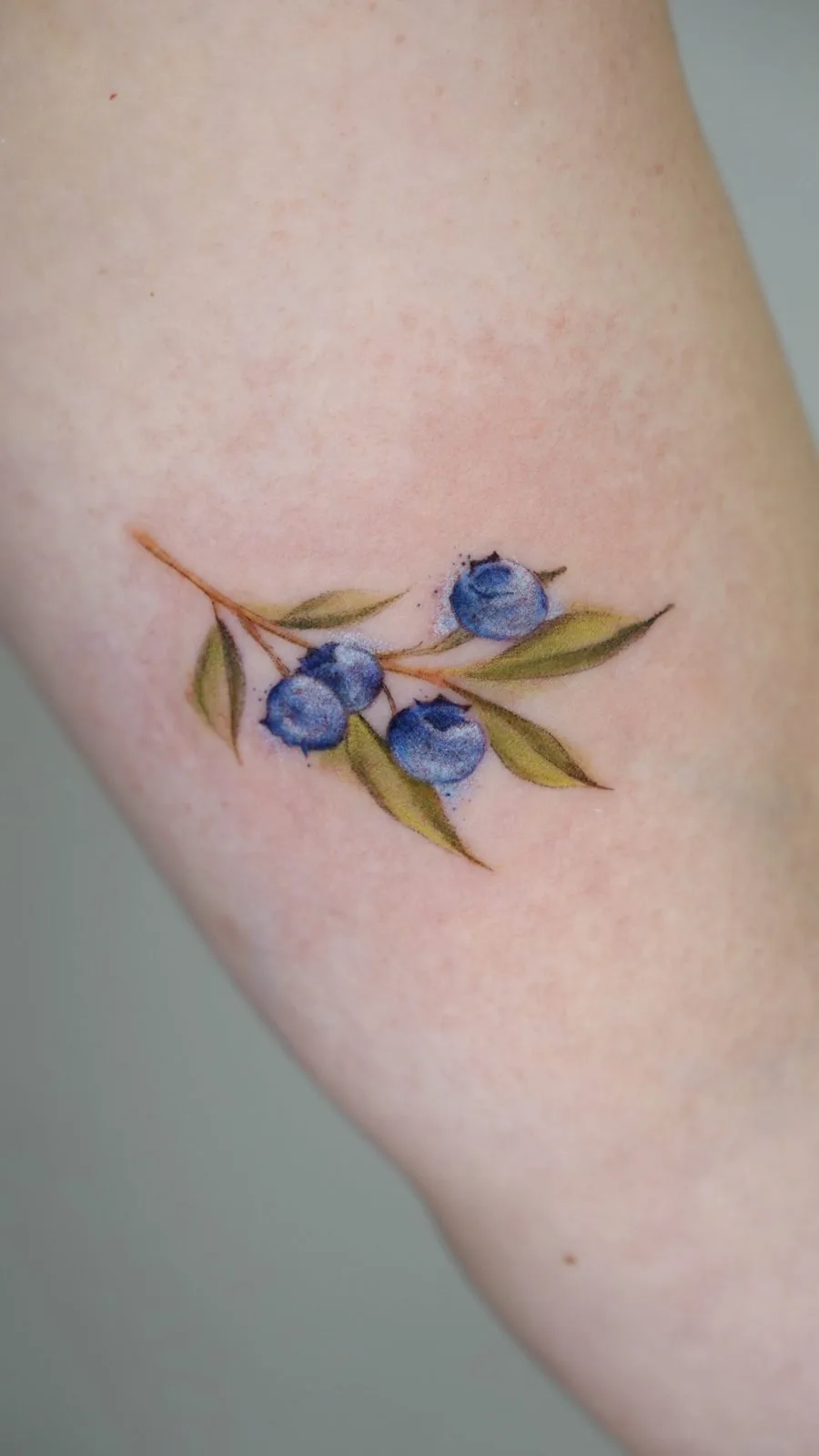
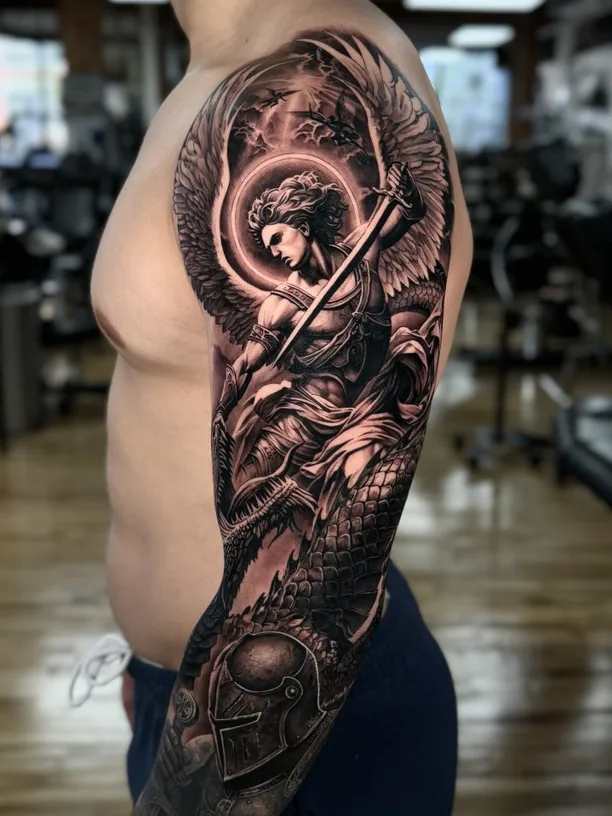
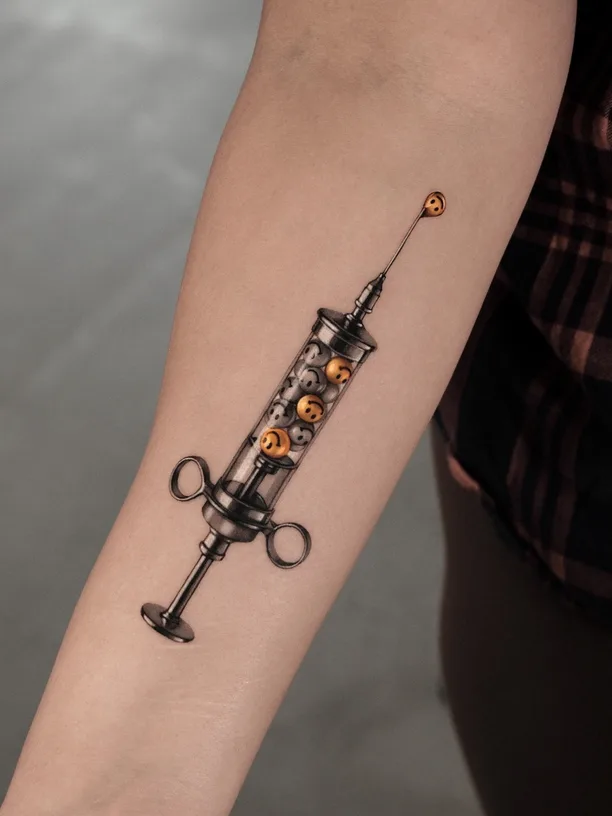
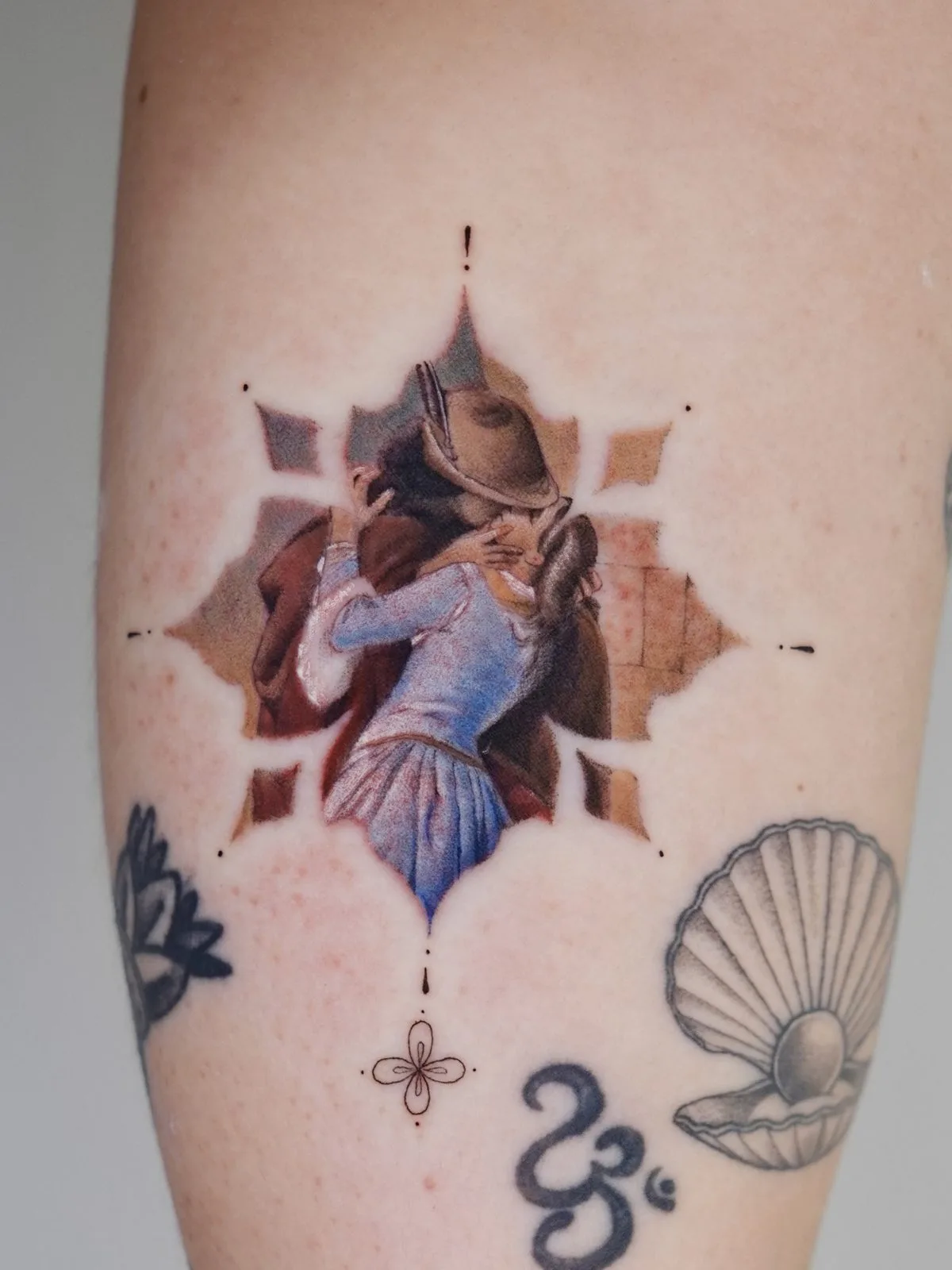
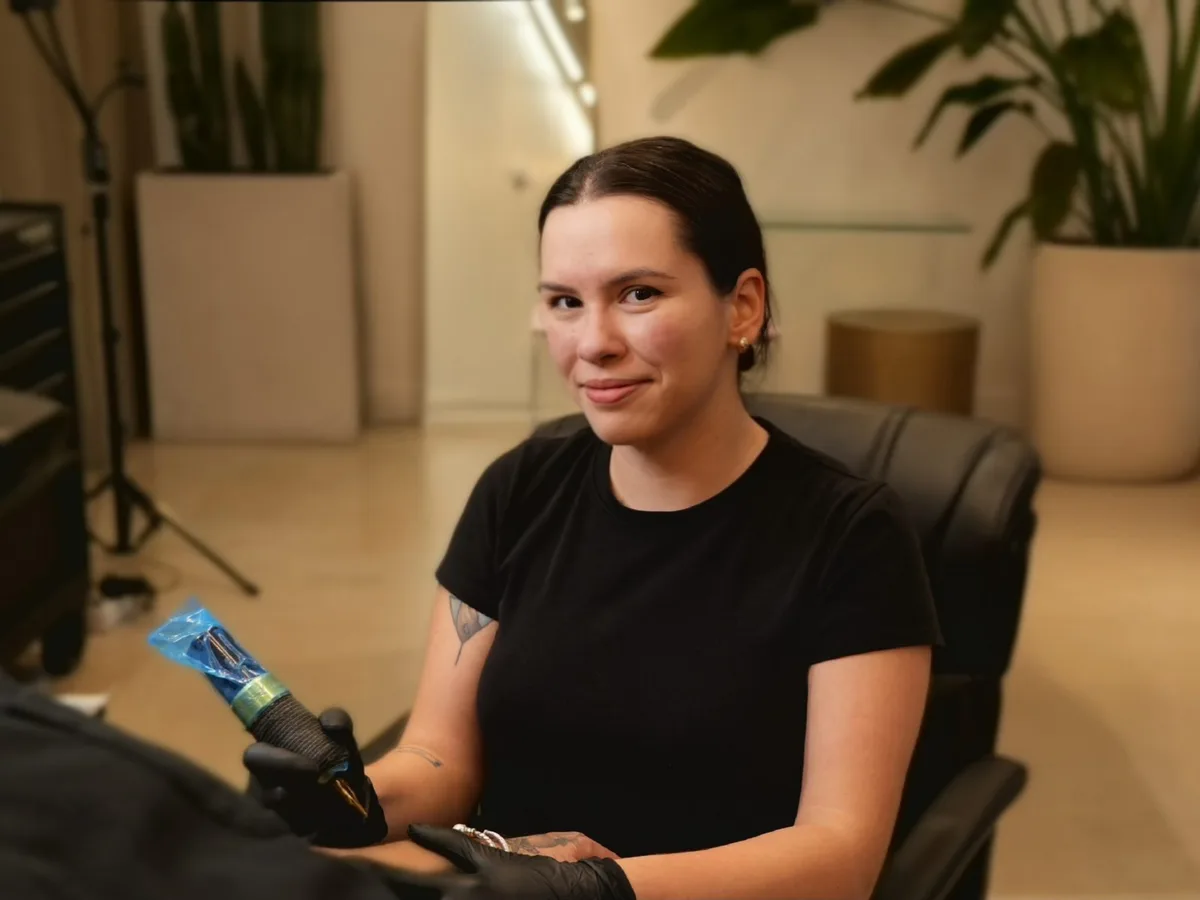
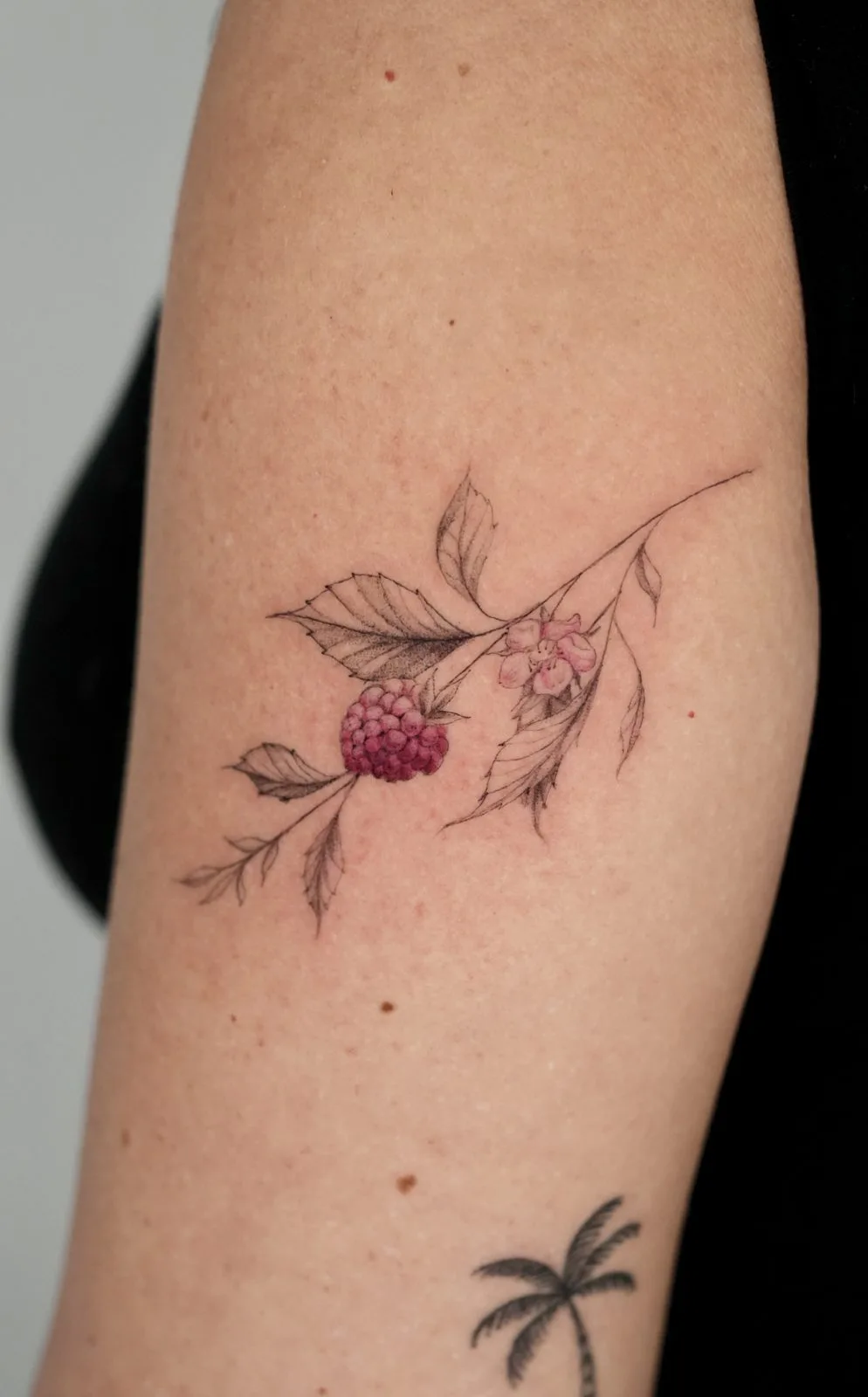
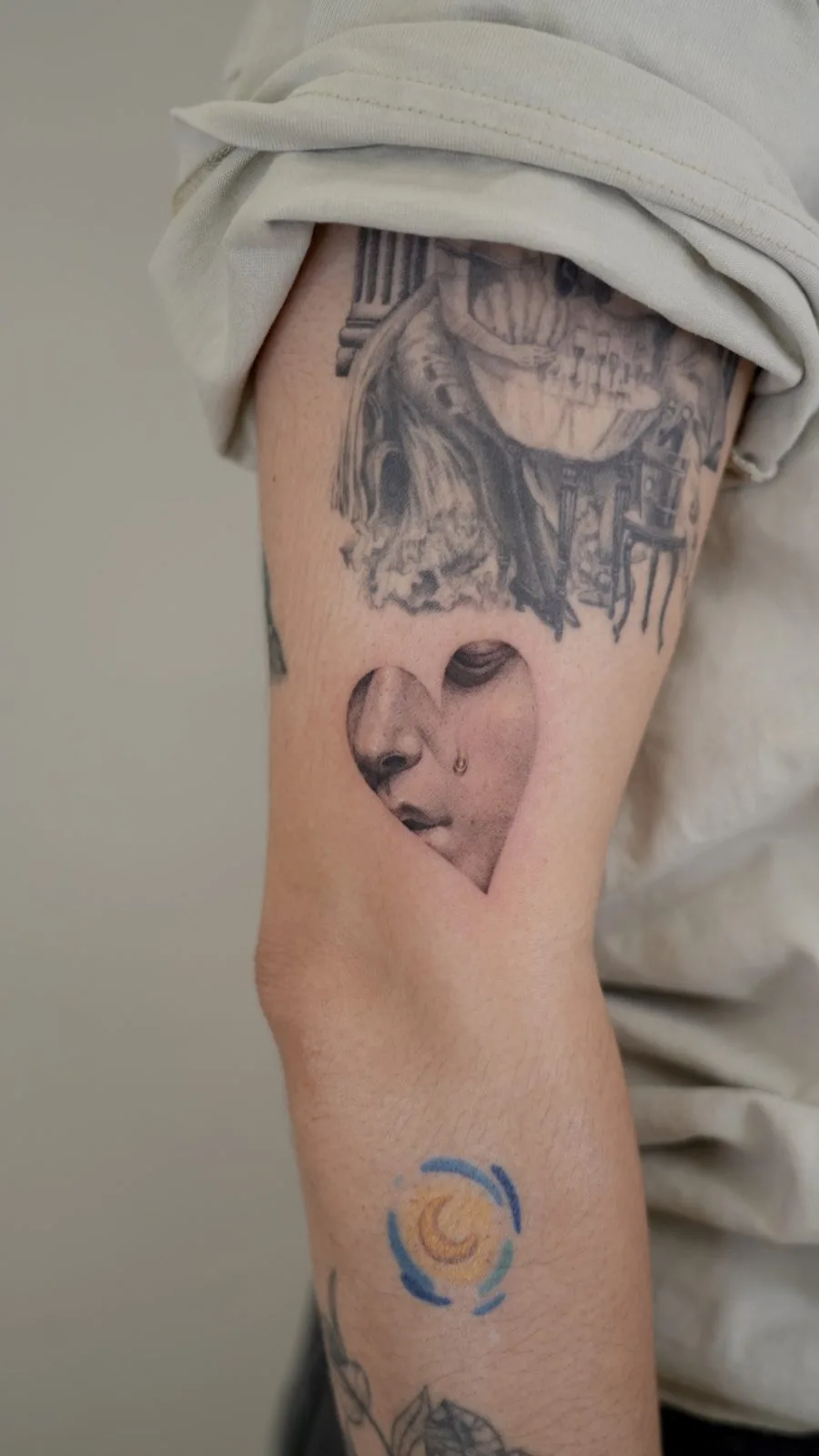
Amanda Rodríguez Oropeza is a Venezuelan microrealism artist who works at Iris Tattoo in Wynwood, Miami. Her tattoos are small – a dog's portrait on a forearm, a fragment of a painting on a forearm, a branch of blueberries – and almost every one of them is built for a single person: drawn around a client's story and adapted to their anatomy.
Her road to Miami ran through four countries. She started in Caracas, worked in Panama and Argentina, joined Iris Tattoo in Buenos Aires in 2019 and in 2024 relocated to the studio's Miami location. Along the way she has tattooed Emilia Mernes, Abel Pintos, Oriana Sabatini, Kate Cassidy, Young Ezee, Noah Ohlsen, Stephanie Demner and Paula Chaves. But the idea that holds her work together is simpler than the résumé: a convincing small tattoo depends as much on what the artist chooses to leave out as on what she puts in.
Drawing, painting and making things by hand were part of Amanda's life long before tattooing. By 2015, at 19, she was spending her days hand-painting intricate designs on fabric. She did not yet see it as a profession. “It was something that came naturally to me, but for a long time, I saw it more as a hobby or a passion than something I could actually turn into a career,” she says.
The painted fabrics caught the eye of tattoo artist Esther Finlayson, who thought Amanda had the skills to tattoo and offered her an apprenticeship. Amanda moved to Caracas – still unsure the profession was for her. “The funny thing is, I wasn't even completely sure I wanted to become a tattoo artist at first. I was curious about it and saw it as an interesting opportunity.”
The interest grew with practice. What made her stay was the realization that a lifelong pastime could become a living: “Something I had always considered a passion could become my career, something that other people could appreciate and value.” The first years were full of things to learn, and she says the habit they formed has never left her: “Even today, I'm constantly looking for ways to get better at what I do, and I still love that process.”
Amanda came to microrealism through a lifelong weakness for tiny, intricate things and the appeal of putting a lot of detail into a space that does not cover much skin. What keeps her in the style is a paradox at its core. “You're creating the illusion of realism on a very small scale. And to make that work technically, you actually have to simplify the image.”
“When you work with light, shadow, and the right values, the human eye naturally fills in some of the missing information.”
For her, the craft is about deciding “which elements are essential and which ones can be left out, so the tattoo still looks realistic, reads clearly, and ages well over time.” She does not treat microrealism as simply shrinking a picture. The question is which details, proportions and elements keep the image recognizable once it is the size of a stamp – and on skin rather than paper.
Miniature pet portraits are a large part of her portfolio, and they show the method most clearly. Work starts before the stencil, with the choice of a reference photo: it has to be a good image, but also one that will translate into a tattoo. Then comes the hierarchy of features – the eyes, the shape of the nose, the mouth, “all those little features that make each animal unique.” The eyes come first, because they can change the whole expression.
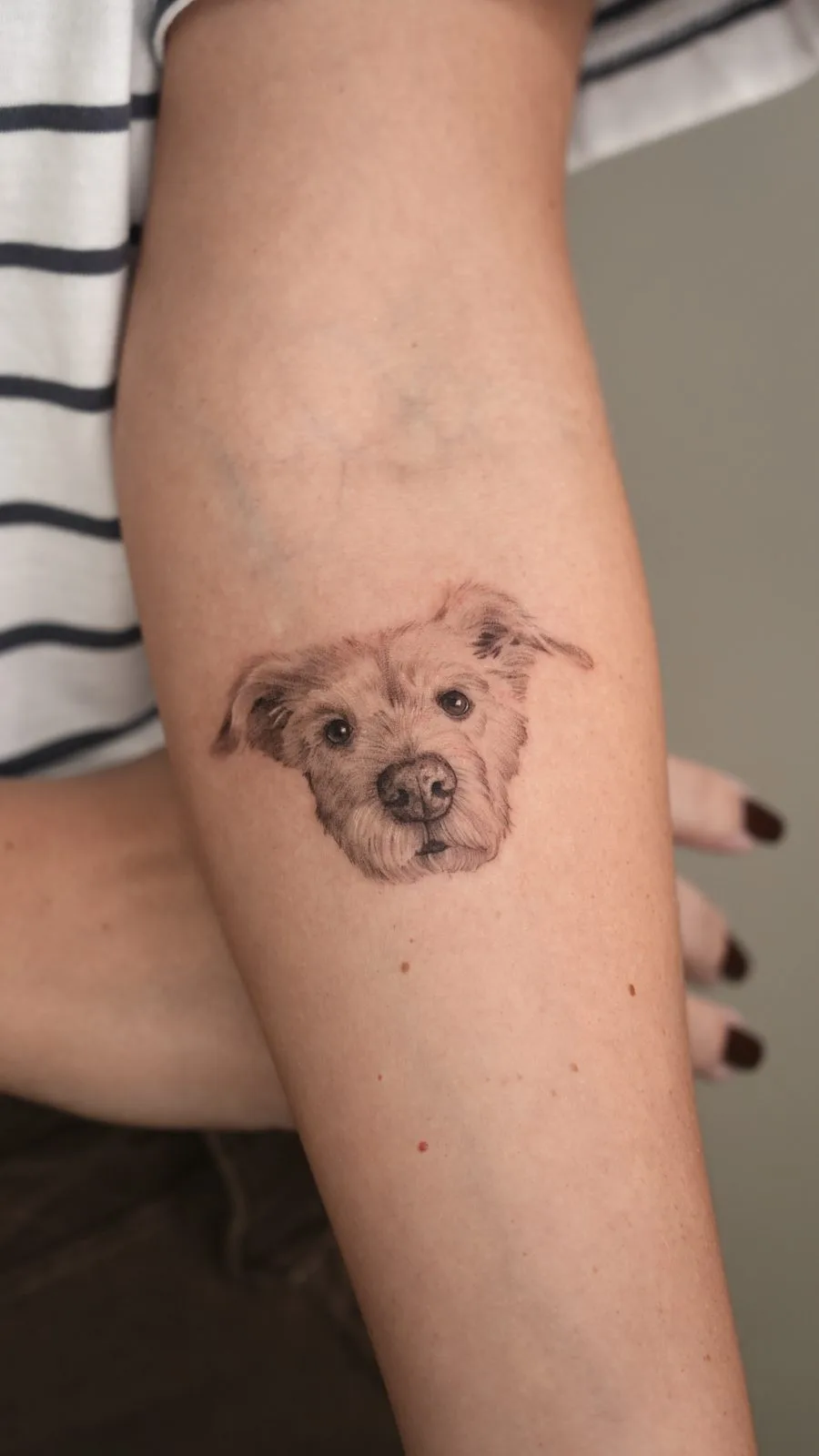
How much survives depends on size and on whether the piece is in color or black and grey. Reflections in the eyes are often the first to be simplified: too much detail in a small space will not hold in the skin. A black dog gets the opposite treatment – Amanda exaggerates the lighting slightly to create contrast so the features do not disappear into the dark coat.
“There are so many things to consider, and every portrait is different,” she says. Her goal stays the same every time.
“I want my client to look at the tattoo and immediately feel, ‘That's my dog.’”
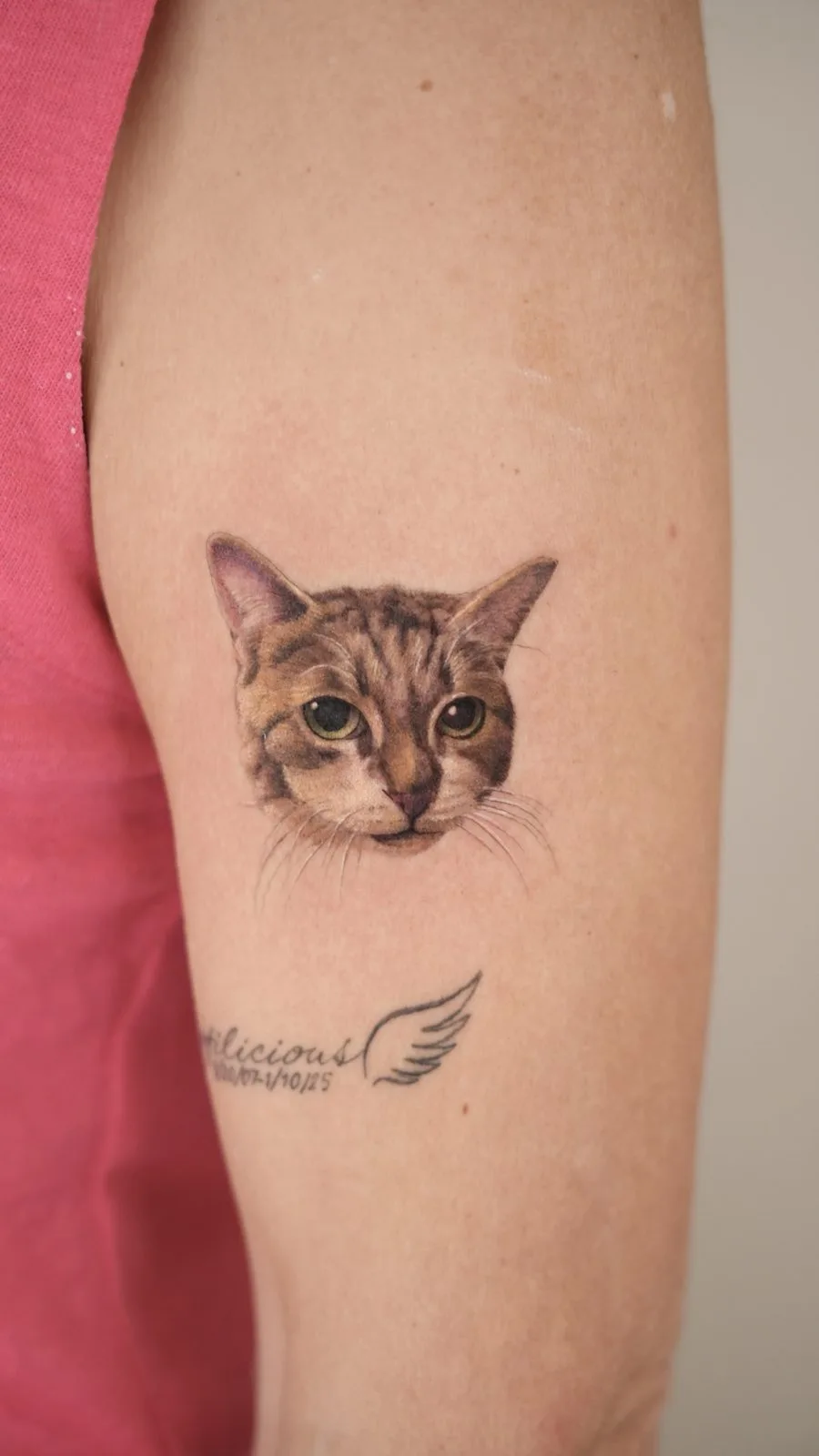
Amanda works in both color and black and grey and says she enjoys them equally. The choice starts with the client. After that, the deciding factor is contrast, which matters even more at this scale than in large realism. If a reference has very soft, subtle colors, she may recommend black and grey. If the client wants color anyway, she pushes the tones: a dog with light cream or brown fur may get warmer, more saturated shades – “like a touch of orange, so the image doesn't get lost against the skin.”
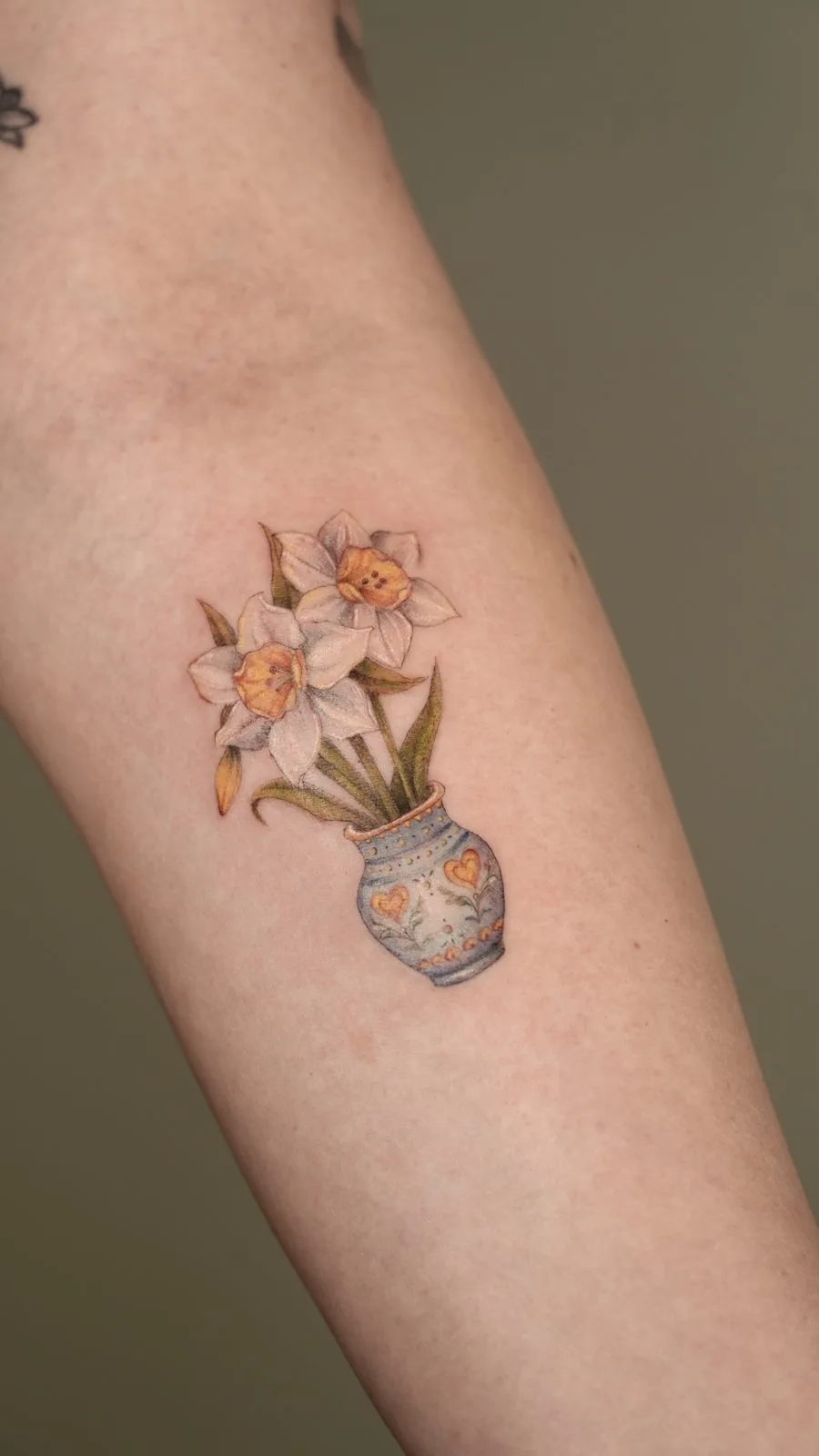
In black and grey she wants clearly visible highlights and well-separated shades, so the piece reads from a distance. What draws her to it is depth without color: “I love seeing how much depth and realism you can achieve without using color.”
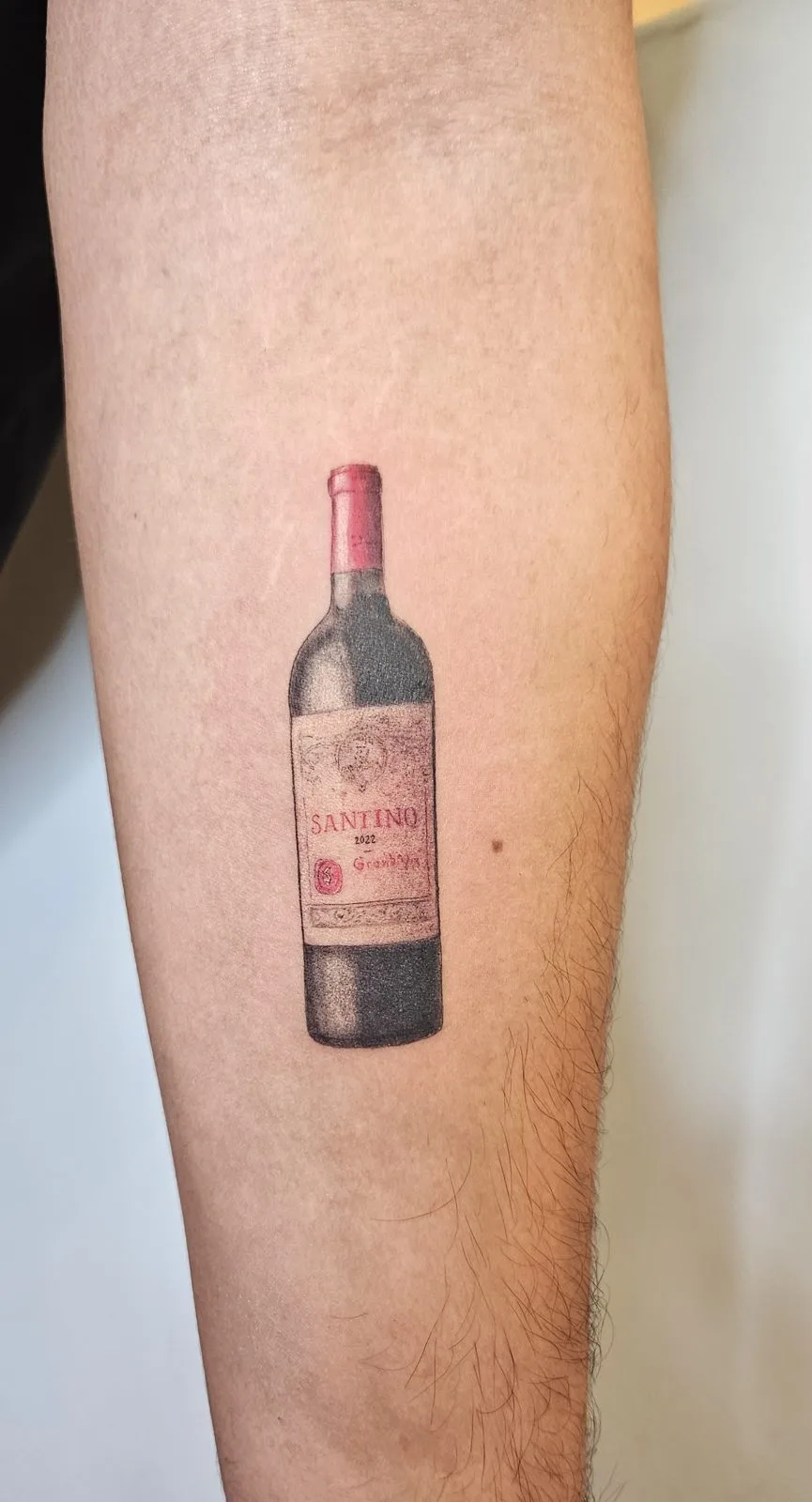
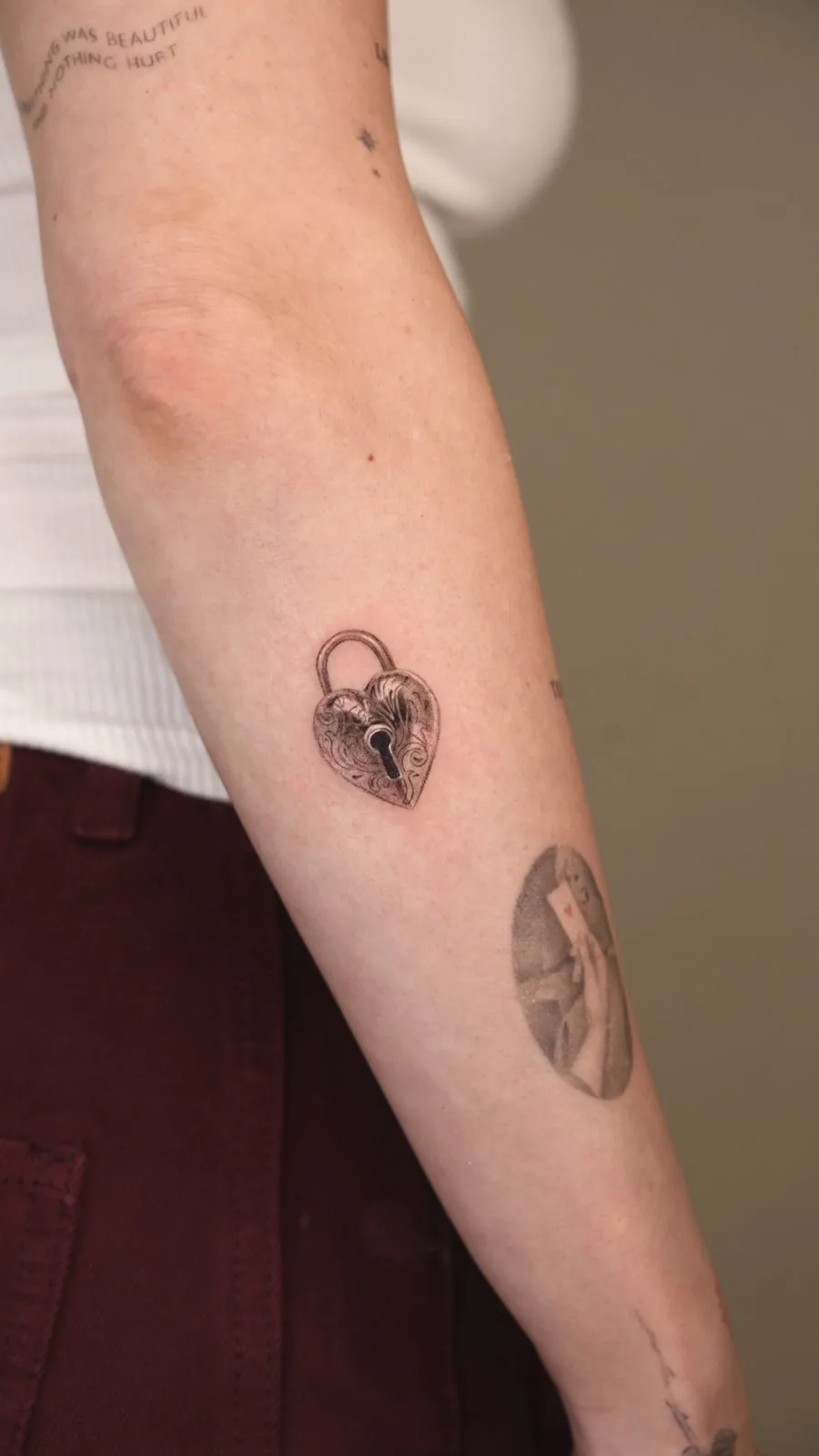
Many of her tattoos stand in for something else: a pet, a person, a date, a feeling. Some clients arrive with a finished idea, and her job is to turn it into a tattoo. Others know what they want to say but not how to show it. That is when the process becomes collaborative, and Amanda says she likes hearing the stories behind the pieces: “I think understanding where the idea comes from and what it means to the person helps me connect with what they're trying to express.”
One recent piece shows how far the meaning can sit below the surface. At first glance it was a pretty botanical branch. Woven into it were meaningful dates and small details marking key moments in her client's relationship with his wife. “I really enjoyed how we were able to turn something so personal into a subtle and beautiful design.”
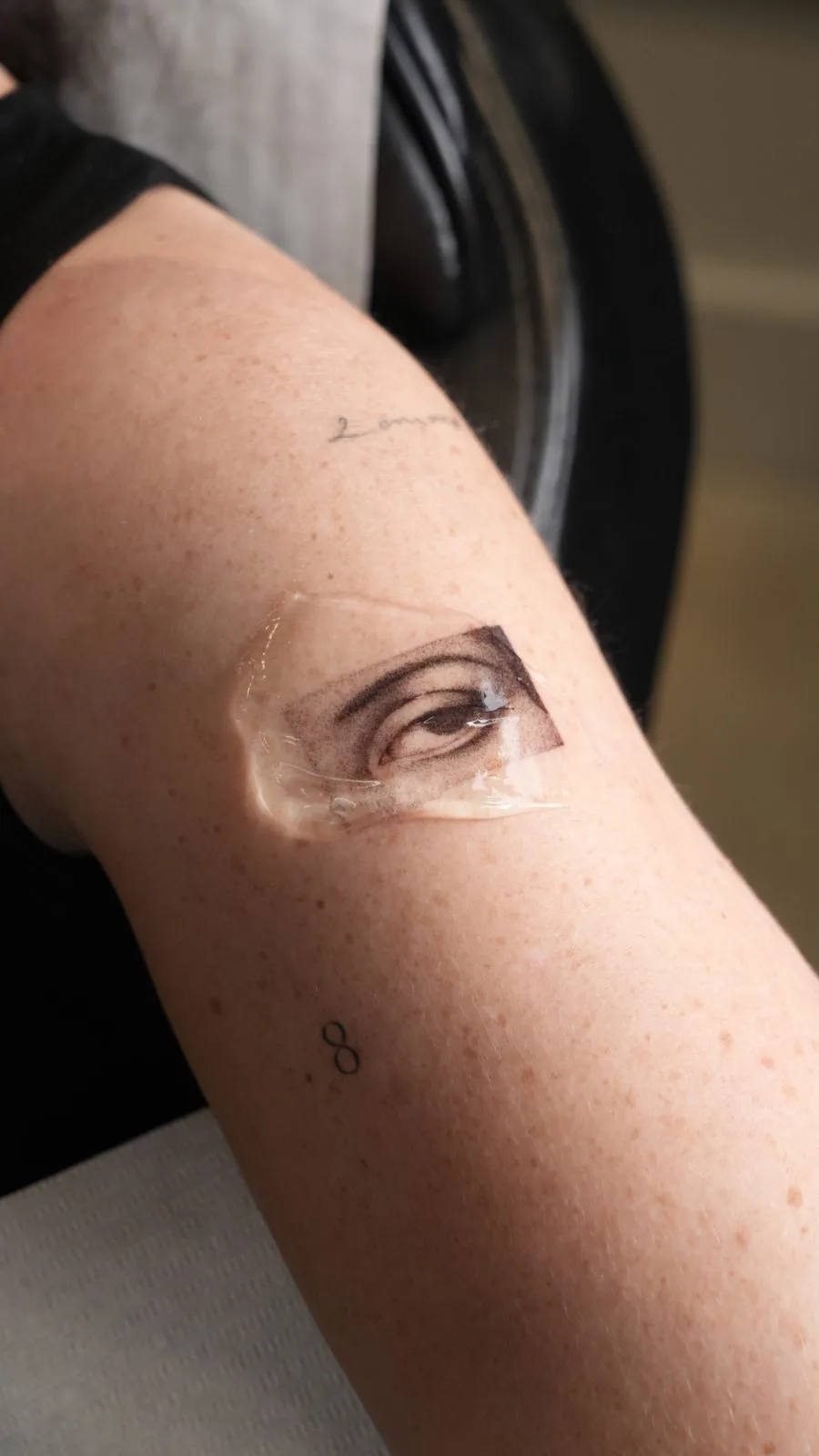
The technical piece she remembers best is an eye taken from a classical painting. The challenge was to keep the expression once the eye was cut out of its original canvas, using nothing but the balance of blacks and greys. She was pleased with how “striking and readable” it turned out, even from a distance.
Faces and expressions are where her interest is heading. “They can be challenging, but I find that process fascinating, and it's always exciting to see the final result.”
Microrealism is regularly accused of not lasting. Amanda's answer is that ageing is a design problem, not a matter of luck, and she addresses it before the needle touches skin. While developing a piece she weighs the amount of detail against contrast and against what the skin will do with both over the years. With existing artwork such as a classical painting, the composition is already fixed; the work is in translating it with the right technical decisions so it stays readable as it ages.
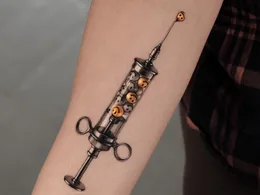
“Creating a tattoo that ages well starts with the artists and the decisions we make throughout the process.”
Aftercare matters, she says, but the outcome is decided earlier. When she sees that lines might eventually merge or an area could go too dark and lose definition, she tells the client and proposes a fix: stronger contrast, fewer elements, or a slightly larger size. “I want to preserve the feeling and realism of the original image, but I also want to make sure I'm creating something that will look beautiful on the skin for years to come.”
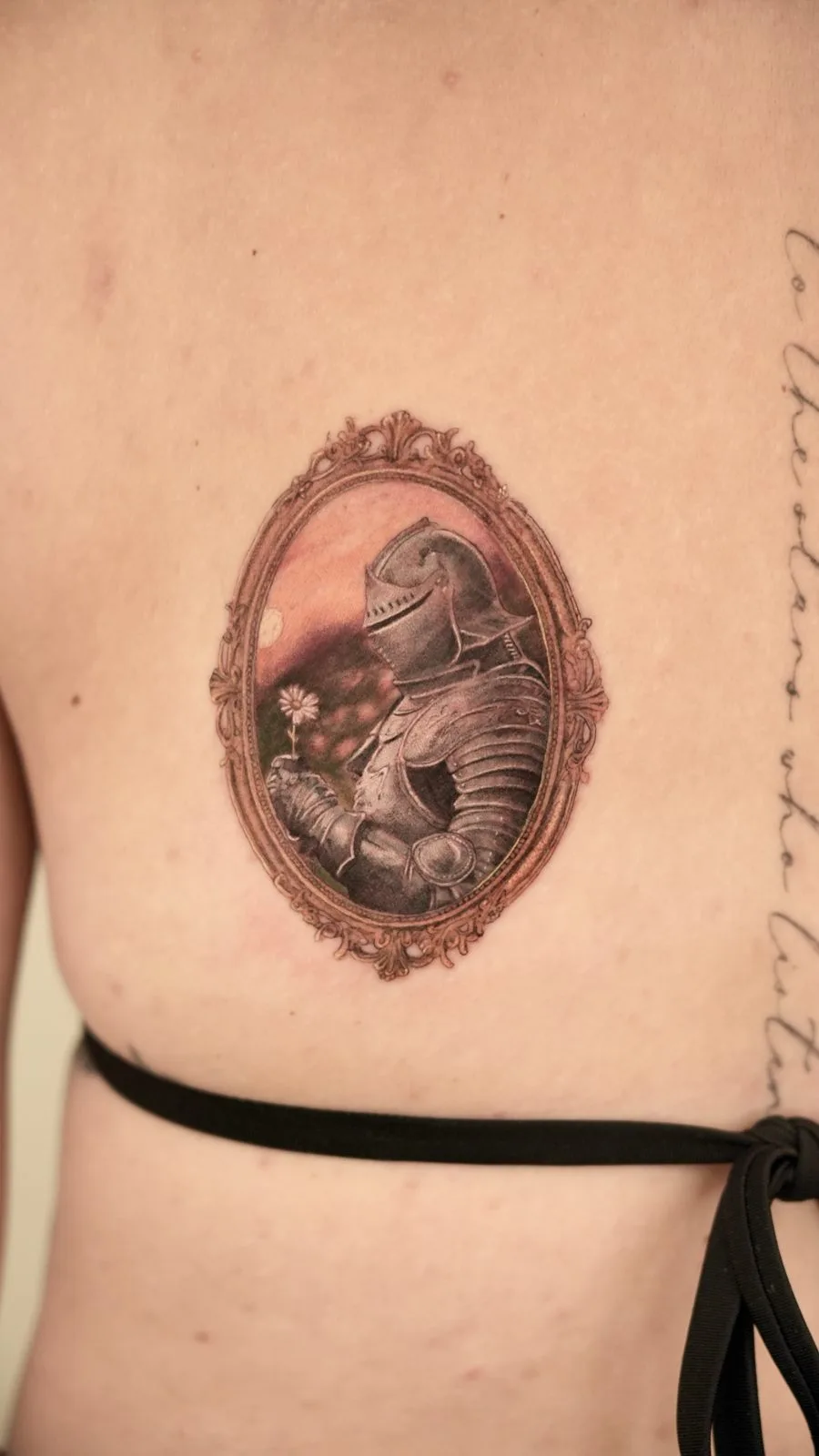
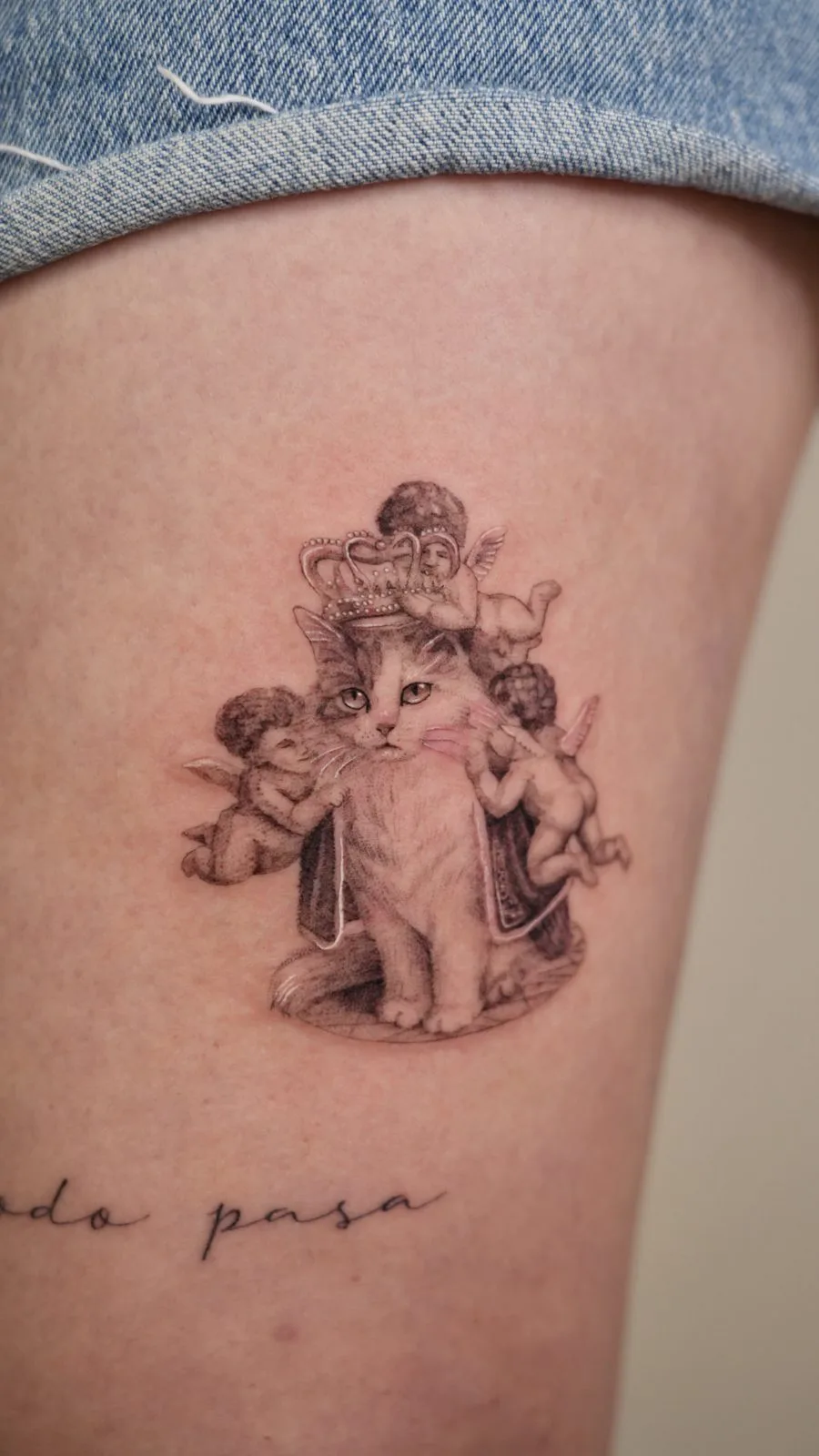
Venezuela, Panama, Argentina and the United States each brought their own clients and their own tastes. Amanda notices the differences, but she also sees that a developed style sorts the clientele: people start coming because they connect with the work and want something similar, and in a studio, clients are matched with the artist whose style fits their idea. The result is a consistency that has survived every move.
Over time, those individual appointments have developed into lasting relationships. Some clients return specifically to Amanda, and others are willing to wait for an opening in her schedule rather than book with another artist, even when she has been away on vacation or maternity leave. She also works with people who travel to Miami expressly to be tattooed by her.
“Since moving to Miami, I've continued developing my style while also working with clients from many different backgrounds, which I really enjoy.”
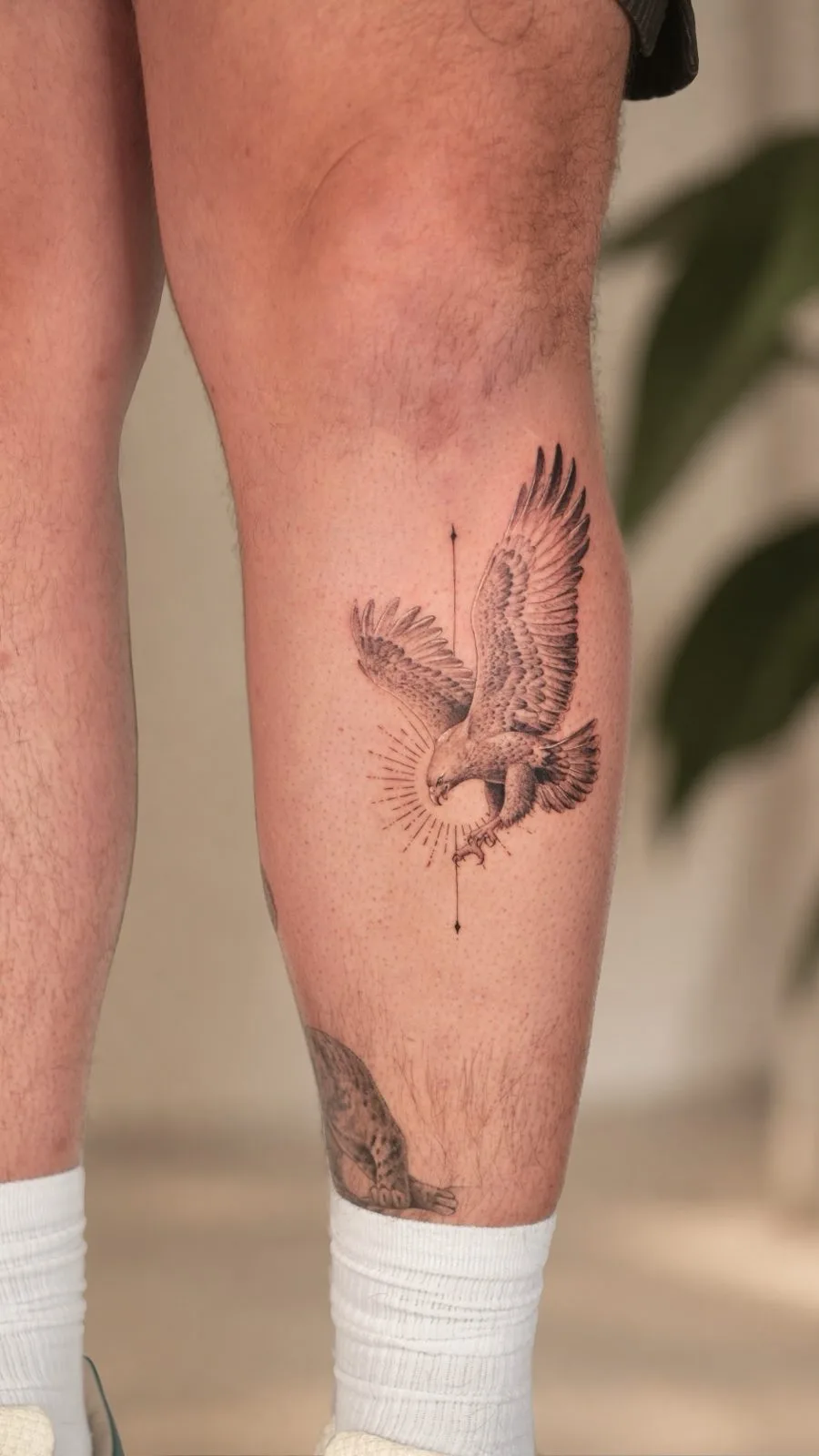
Each relocation, she says, taught her to adapt, to work with new people and to become more confident in what she does. Iris Tattoo, first in Buenos Aires and now in Miami, gave her what a microrealist needs most: a steady flow of clients and therefore constant practice. She values the studio's welcoming atmosphere, the talented artists around her and the fact that people travel from across the United States and abroad specifically to get tattooed there. “I feel very lucky to have joined Iris Tattoo all those years ago, and I still feel just as grateful to be part of the team today.”
According to figures Amanda shared from Iris Tattoo's records, she completed more than 1,700 tattoo sessions with over 1,500 clients in Miami between May 2024 and the time of this article. During that period, she had the second-highest number of bookings among the studio's 16 artists. Beyond her own appointments, she also helps train and supervise fellow artists, shares technical knowledge and contributes to the studio's artistic development.
The celebrity clients are part of the same story, and she talks about them without drama. “What I've enjoyed the most about these experiences is getting the chance to meet them personally. All of them have been incredibly kind and down-to-earth, and it's always nice to get to know the person behind the public figure.”
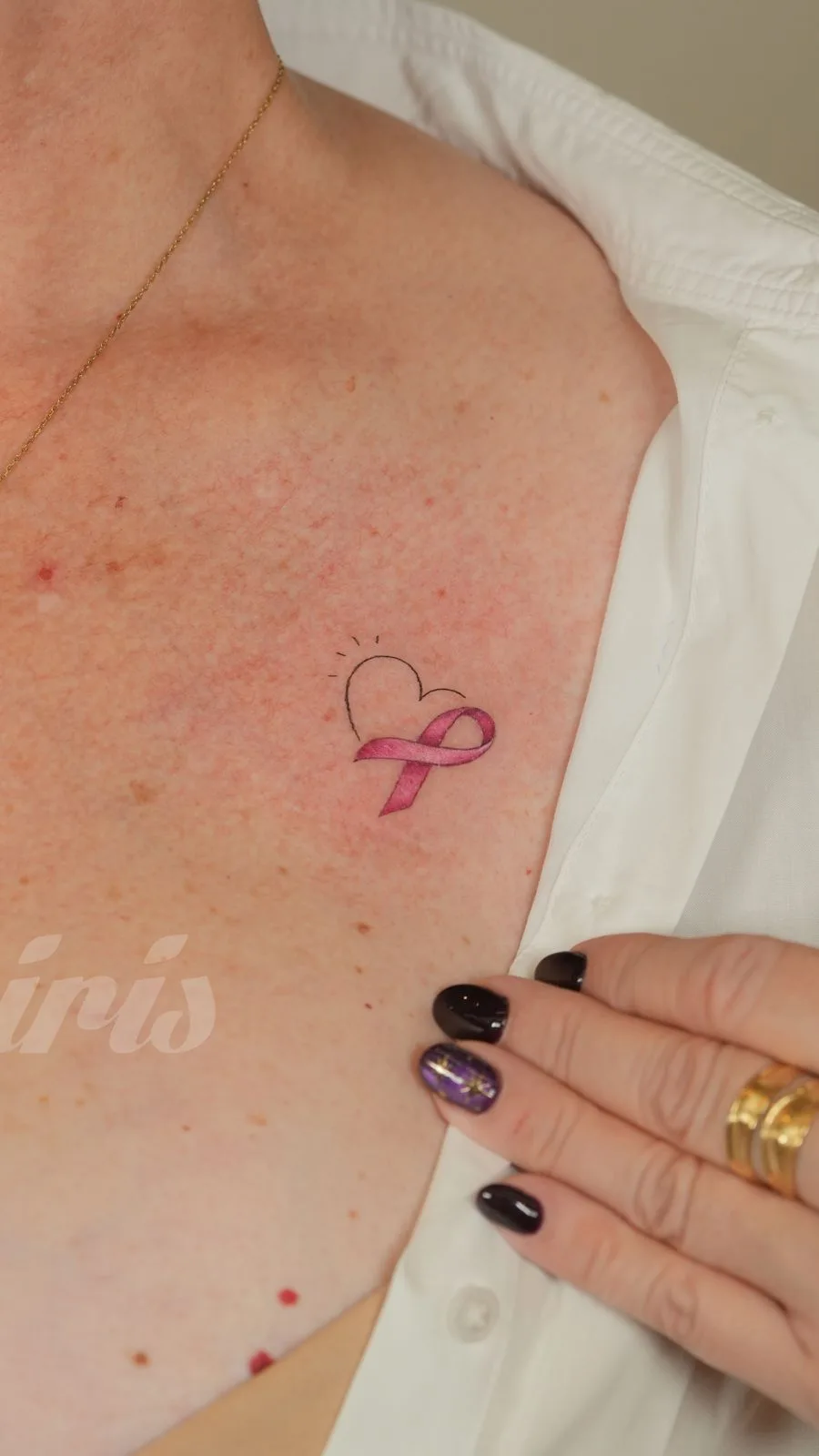
Her work has also extended to community initiatives. Amanda participated in a breast cancer awareness event that included a donation to 305 Pink Pack, a Miami nonprofit supporting people undergoing cancer treatment. Following the major earthquakes in Venezuela in 2026, she contributed original tattoo designs and her time to a fundraiser organized by Iris Tattoo. Proceeds from the tattoo event were donated to Impaktemos to help people affected by the disaster. As a Venezuelan artist, she wanted to take part in supporting her home country.
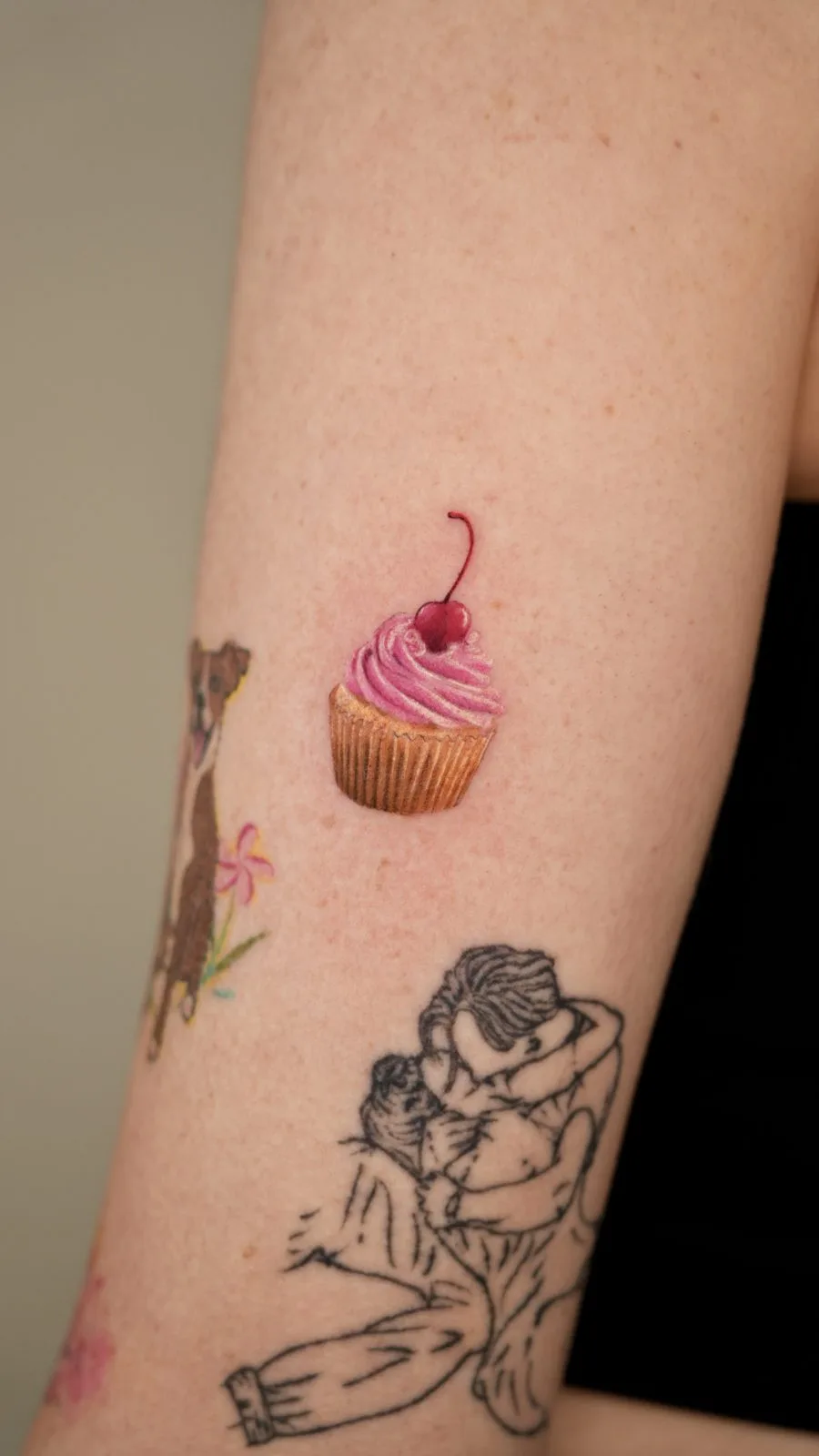
Comparing her first tattoos with today's, Amanda sees the change mostly in linework, shading and detail. In the beginning she did simple designs with lines that were often too thick and imprecise, and she was drawn mainly to florals. Technical control opened up realism and classical art – subjects she “wouldn't have imagined tattooing” when she started.
What has not changed is her attitude to the job.
“One thing that has always remained the same is the respect I have for tattooing and for the responsibility of working on someone's skin.”
Even with limited skills, she approached every tattoo with care and the intention of doing her best, and she still refuses to consider the learning finished: “I never want to reach a point where I feel like I've learned everything or that my work can't get any better.”
Next, Amanda wants to do more human portraits, especially ones inspired by classical art. “I find the human face incredibly interesting because of how complex and specific every feature and expression can be.” She is also open to larger compositions, while staying with the miniature format that made her name. “I think there's always something new to explore as an artist, and that's what keeps me excited about what I do.”