Just a few meters from the Atlantic Ocean in Martinique, a brightly painted trailer has been transformed into a tattoo studio. Behind Family Tattoo Truck is Shou, whose approach to tattooing brings together art, mentorship, freedom and spirituality. Here, a tattoo is more than an image on skin — it becomes part of a lived story.
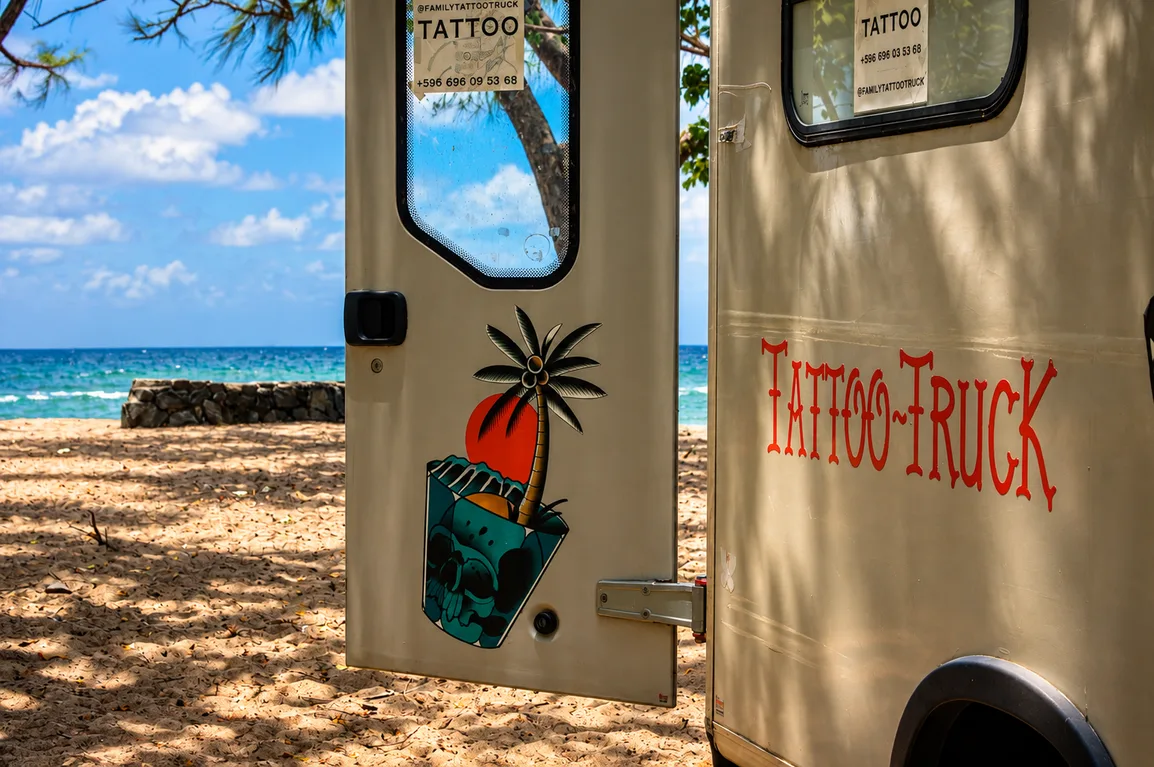
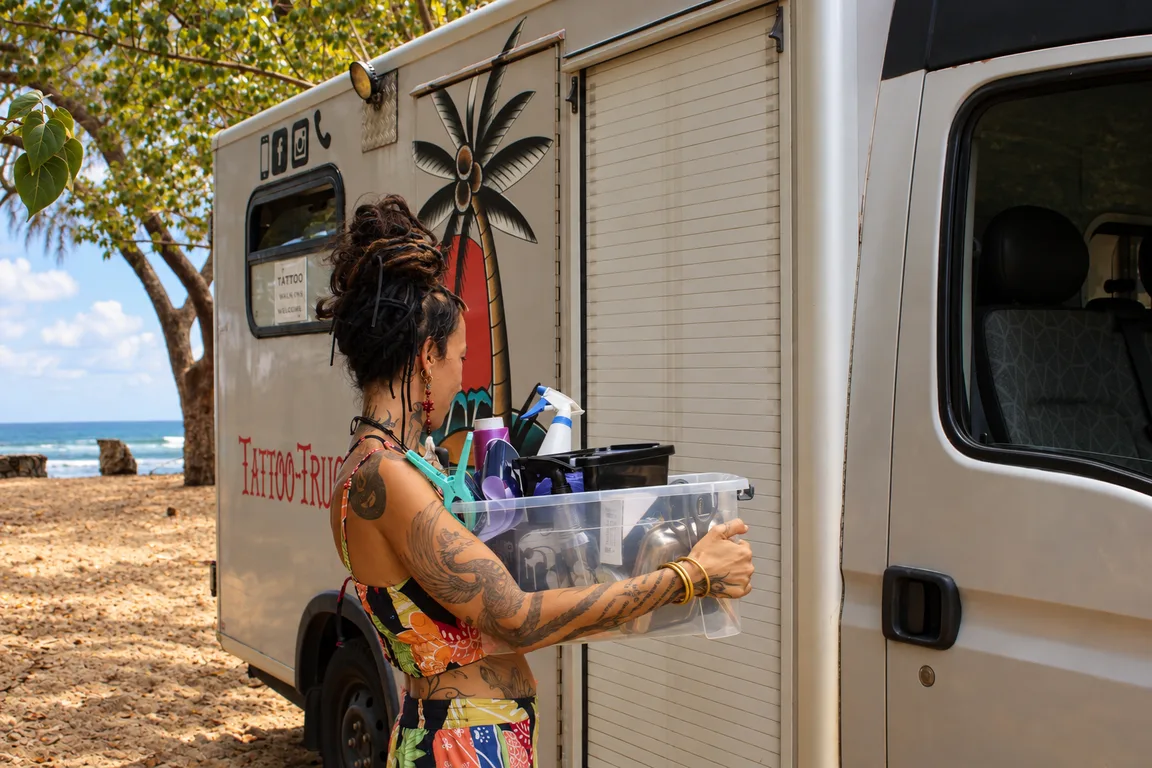
At Anse l’Étang in Tartane, only a narrow strip of sand separates the sea from a vividly painted trailer. Palm trees, a wave and a skull cover its exterior. Across the side, two words appear in red: Tattoo Truck.
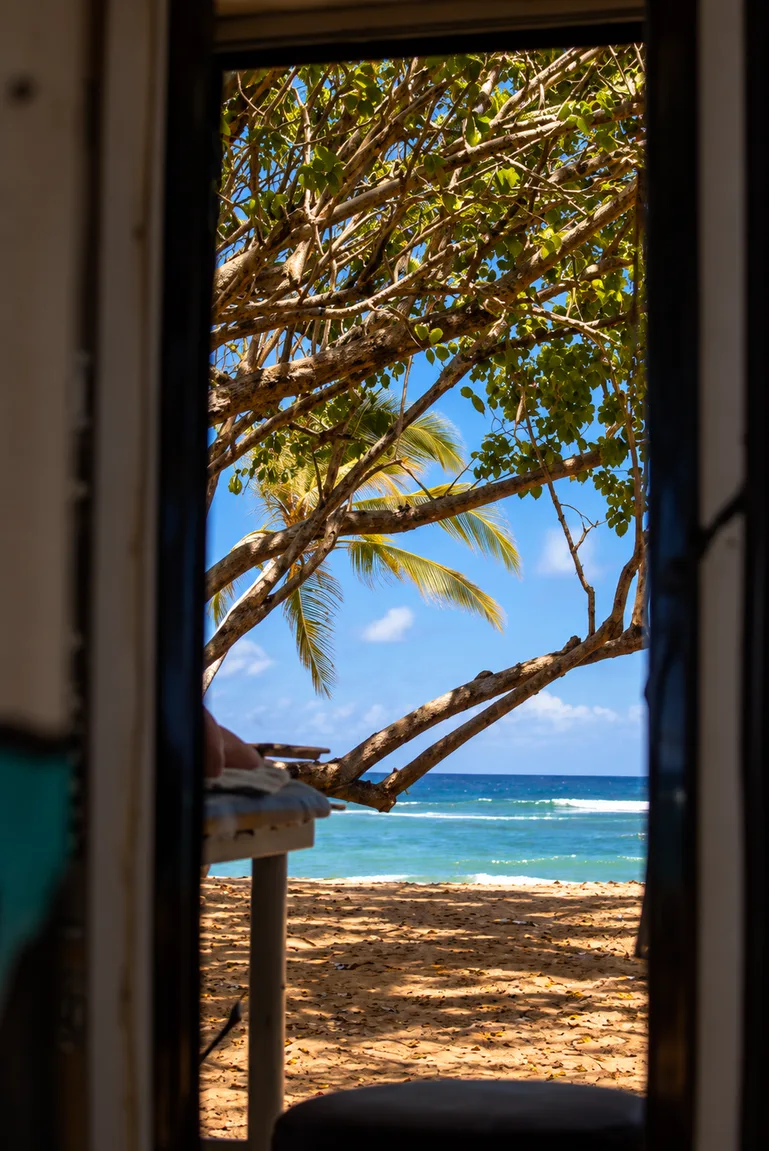
Inside, the atmosphere shifts completely. A worktable, bottles of ink, purple gloves and the steady buzz of a tattoo machine. A client lies on the bed while Shou works on her skin. Beyond the windows is an almost idyllic view of the ocean.
The scene might look almost too perfect to be real. But the setting is far from accidental — it already says a great deal about the way Shou understands tattooing.
For her, Family Tattoo Truck represents freedom above all: the freedom not to be tied to one fixed location, to change surroundings and to remain directly connected to nature. The family also has a permanent studio in Ducos, but the trailer allows them to move not only the workspace itself, but the entire tattoo experience.
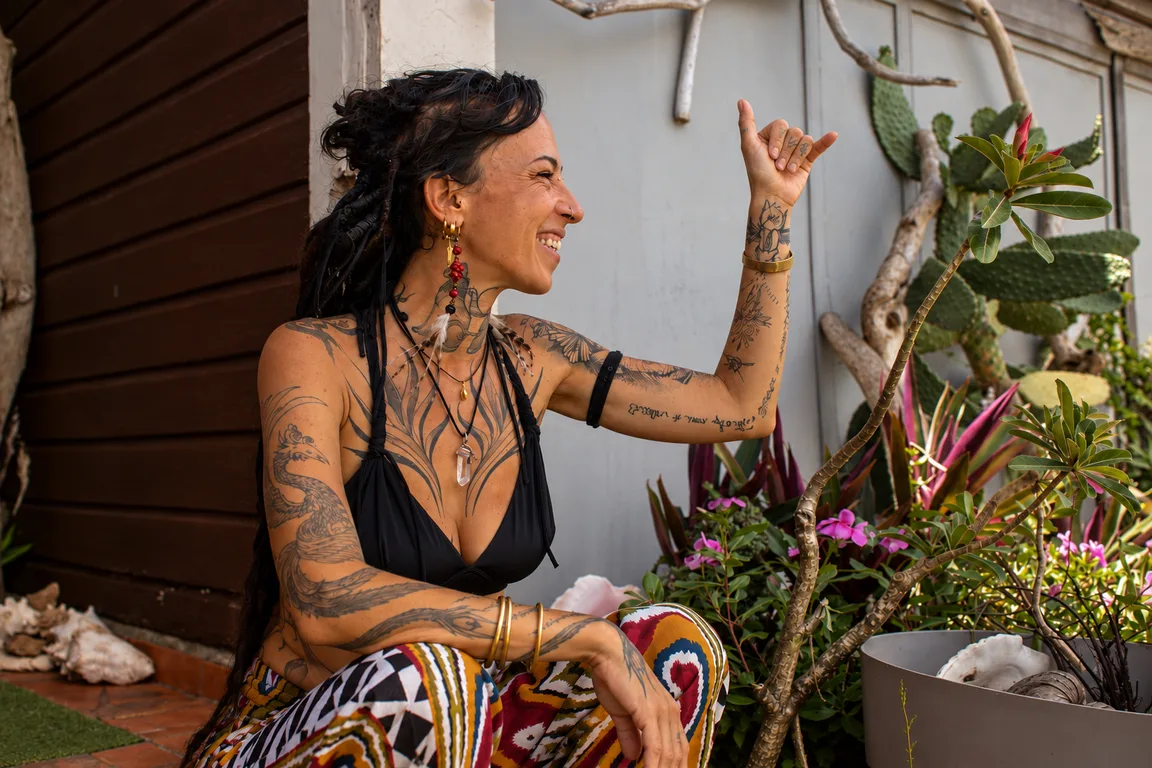
From Fashion to Tattooing
Six years ago, Shou arrived in Martinique looking for a life closer to nature. Today, she sums it up simply: “Martinique chose me.” It was on this same beach that she met Nico, a Martinique native who would later become both her life partner and creative partner.
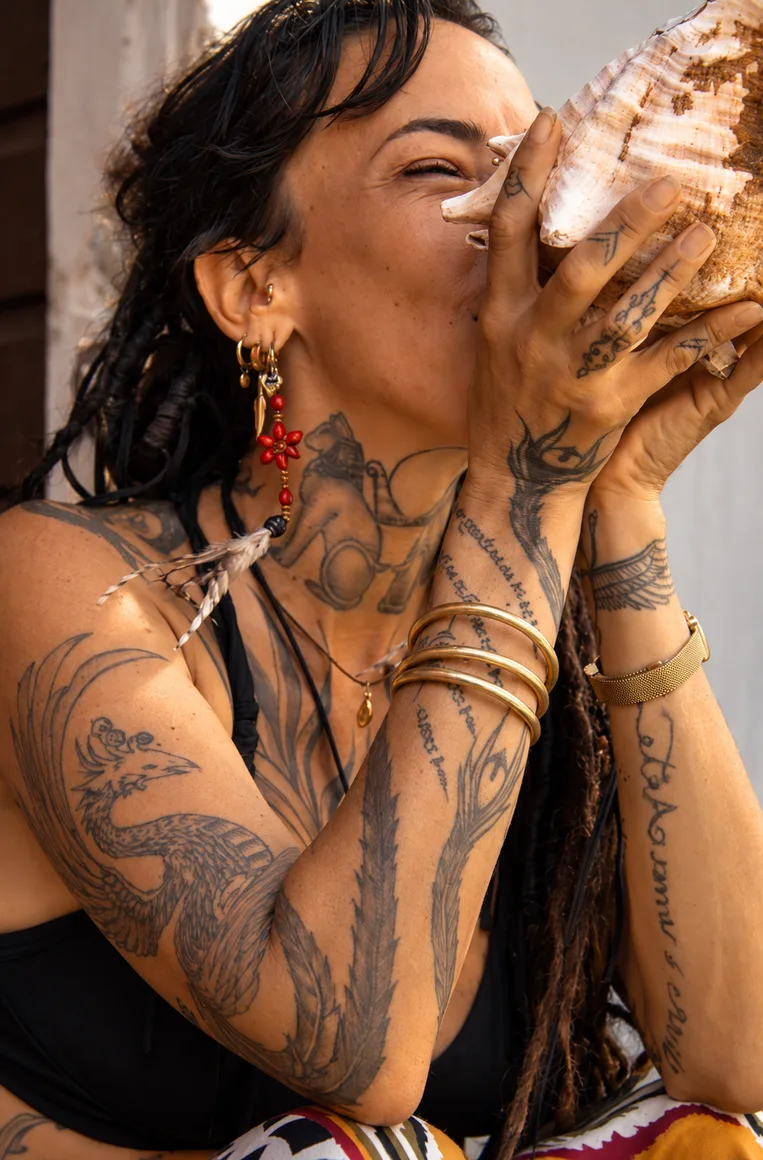
Before tattooing, Shou worked in fashion and was developing her own clothing label. Then came her first tattoos on friends and a largely self-taught path into the craft. By observing other artists, she came to understand one thing in particular: there is no single correct way to tattoo. “Everyone develops their own movement and their own technique.”
Nico took a different route. He began with drawing and carving calabash gourds before friends started volunteering as his first tattoo clients. At the time, he had no tattoos himself. Today, he carries his rider name across his stomach — a mark of his connection to surfing.
Two very different paths eventually converged in the same practice, giving the word Family in the project’s name a very literal meaning.
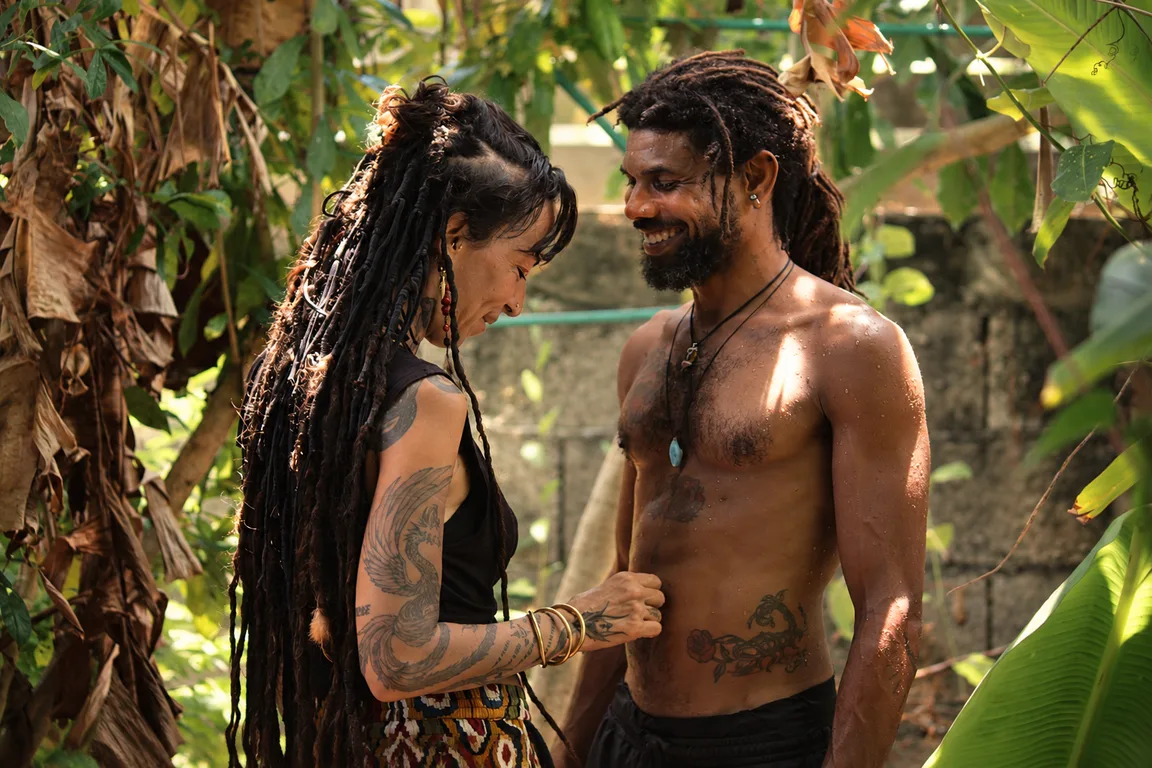
Gaby, Andy and Colline are also part of the circle around Shou and Nico. For Shou, the group has long since become more than a professional team.
“I hold each of them close to my heart. It is not only about learning — it is also about sharing and passing knowledge on.”
This culture of mentorship developed gradually, particularly after motherhood forced Shou to rethink the way she worked. She continued tattooing during pregnancy, but after her child was born, she faced a question that became a turning point in her career: how could she continue growing as an artist while also becoming a mother? The need to delegate opened the door to teaching others and to building a new, almost family-like structure around the work.
Creativity is already passing into the next generation. Their five-year-old child, Moonaïky, draws as well, and some of those drawings have already been turned into tattoos.
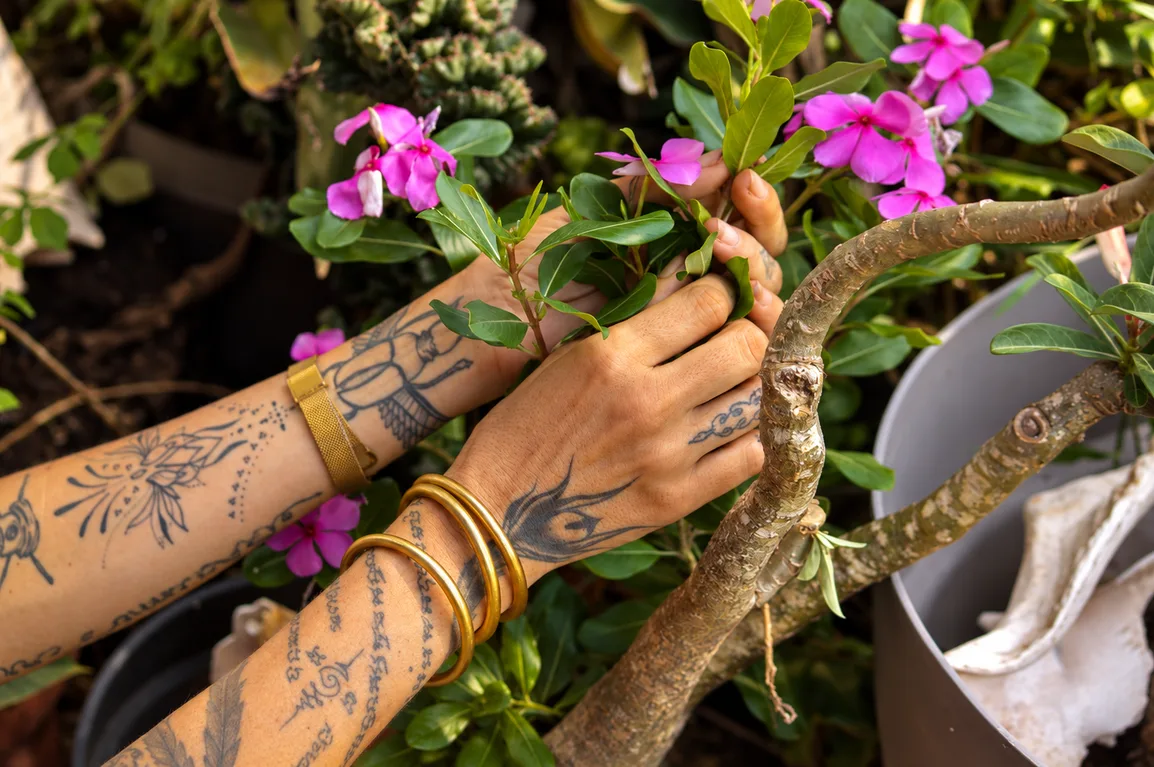
Before tracing other people’s stories onto skin, Shou carries her own
Her tattoos speak to one another like fragments of an ongoing story. Some belong to a particular period in her life; others recall a meeting, an intention or simply the person she was when she chose them. Over time, each one has found its place within her personal history.
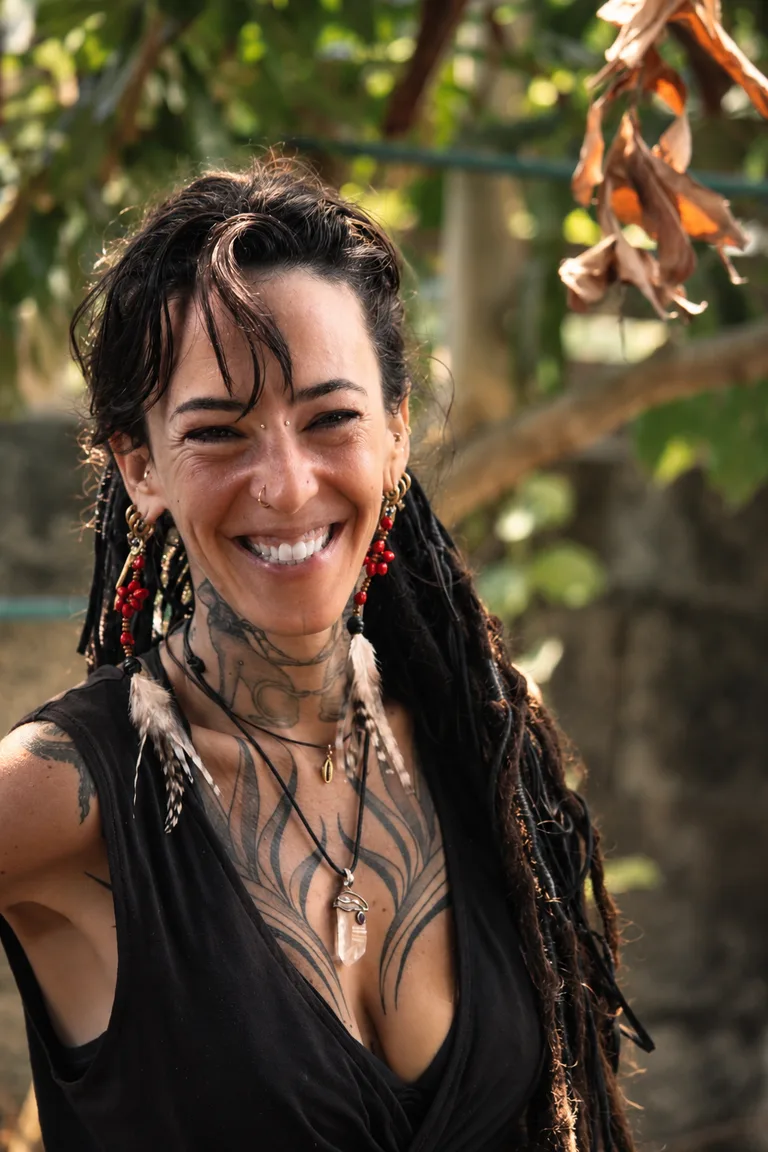
Shou likes to believe that a tattoo is never entirely random. Even when its meaning is not immediately obvious, an image can quietly resonate with what a person is going through at that moment — an emotion, an inner need or a part of themselves they have not yet found the words to name.
Among the symbols she wears, the butterfly holds a special place. For Shou, it is a reminder that nothing is permanent: everything passes, changes and eventually makes room for something new.
In that sense, skin becomes memory. Not a way of holding on to what is meant to disappear, but a way of preserving a trace of what has moved through us. A way to carry pieces of what we have loved, lived through, lost or chosen to become.
And perhaps this is where her approach to tattooing others becomes clearest: behind the aesthetics of an image, there can be far more than a design.
There is a mark we choose to keep.


Awareness. Sharing. Grounding.
Three words. That is how Shou describes her relationship with tattooing: “Awareness, sharing, grounding.”
As the machine moves across the skin, her thoughts drift far from the idea of tattooing as simple decoration. In her own view, every image can carry an intention — conscious or not — and connect with whatever the person is experiencing at the moment they choose to have it tattooed.
A tattoo can become a marker in time. An image that recalls a meeting, a transformation, a difficult experience or simply the person someone was at that particular point in life — much like our ancestors carved and painted their stories onto cave walls.
Nico puts it another way:
“The skin becomes a page in the storybook of the person being tattooed.”
For Shou, this approach also has a spiritual dimension. She speaks about energy, intuition, alignment and the importance of paying attention to the environment in which a tattoo is created. Much of this perspective has been shaped by her travels and by encounters with different tattoo practices and cultures.
She does not, however, present her perspective as a universal truth.
“Everyone has their own truth. This one is mine, and I am not asking you to make it yours.”
When Nature Becomes Part of the Tattoo
This search for connection also helps explain why the trailer plays such an important role in the project.
Tattooing outside a conventional studio is not simply about having a dramatic backdrop. The mobility of the Tattoo Truck allows Shou to maintain the connection with her surroundings that she has been seeking ever since she arrived on the island.
And sometimes, nature itself seems to find its way into the session.
One day, while the Tattoo Truck was parked on the beach, Shou was tattooing a sea turtle on a young woman. During the session, a real turtle surfaced just offshore.
In Le Carbet, dolphins appeared. On another occasion, while Shou was working in the studio on a hummingbird design, a real hummingbird flew into the room — almost as if it had come to inspect its own portrait.
Shou tells these stories with a smile, without trying to give them any universal meaning.
“They are simple but beautiful moments in life that reconnect us with nature.”
Nature is never far from the Tattoo Truck. It appears beyond the doorway and through the windows. Just a few meters away, waves continue to roll into the surf break while, inside the trailer, another line appears on skin.


Changing Perceptions
The project, however, was not immediately understood or accepted.
When the concept was still taking shape, an interview with Shou broadcast by local news channel Martinique La Première prompted a wave of criticism. Rather than abandoning the idea, she says she turned those negative reactions into motivation.
“These are my values, my truth, my ambition and my path.”
In the end, what matters most to her are the people who have sat in her chair: the stories they have shared, the encounters and the conversations. She sums up her approach with a simple question: “Who am I to judge?”
Even now, she continues moving forward without trying to define exactly where the path will lead. There are new ideas, including tattoo sessions she describes as more “connected” and intimate, but she prefers to let them develop gradually — “step by step.”
When asked where she sees herself in a few years, the answer comes naturally, simply and with a broad smile:
“Alive. I’ll let life show me where I’m meant to be.”
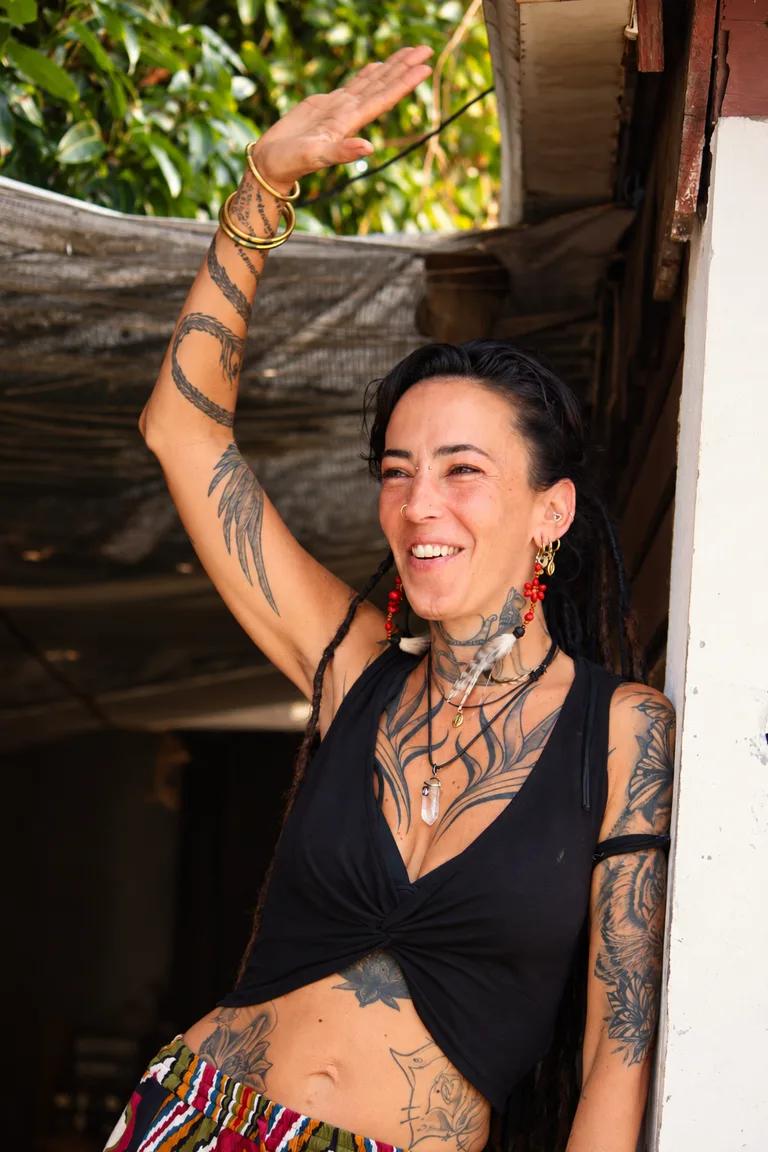
Facing the Atlantic, the Tattoo Truck may move from one beach, landscape or destination to another. But on the skin of the people who step inside, their stories will have already left a mark.
We would like to thank Margaux Mathé for this story. Margaux is a French journalist and writer from Martinique. She studies journalism at ISFJ Aix-en-Provence and focuses on interviews, reporting and field journalism. Her work has appeared in A Armes Egales, L’Essor de la Gendarmerie and Voyages & Hôtels de Rêve.