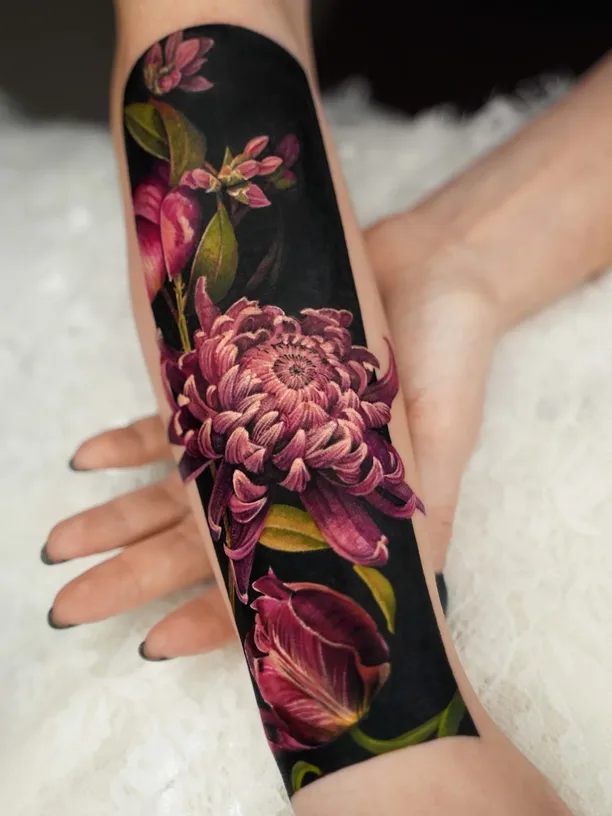
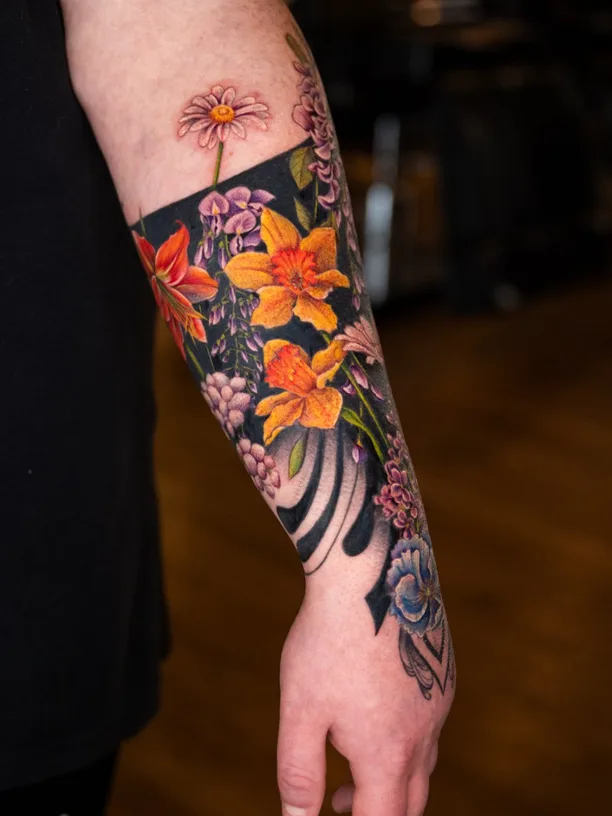
There is no stencil on the table. Thor Keilitz picks up a marker, looks at the person in front of him, and begins. The composition emerges from the body itself, its muscle lines, its proportions, the way it shifts when the person breathes. That is the whole method, and it takes about twelve years to trust it completely.
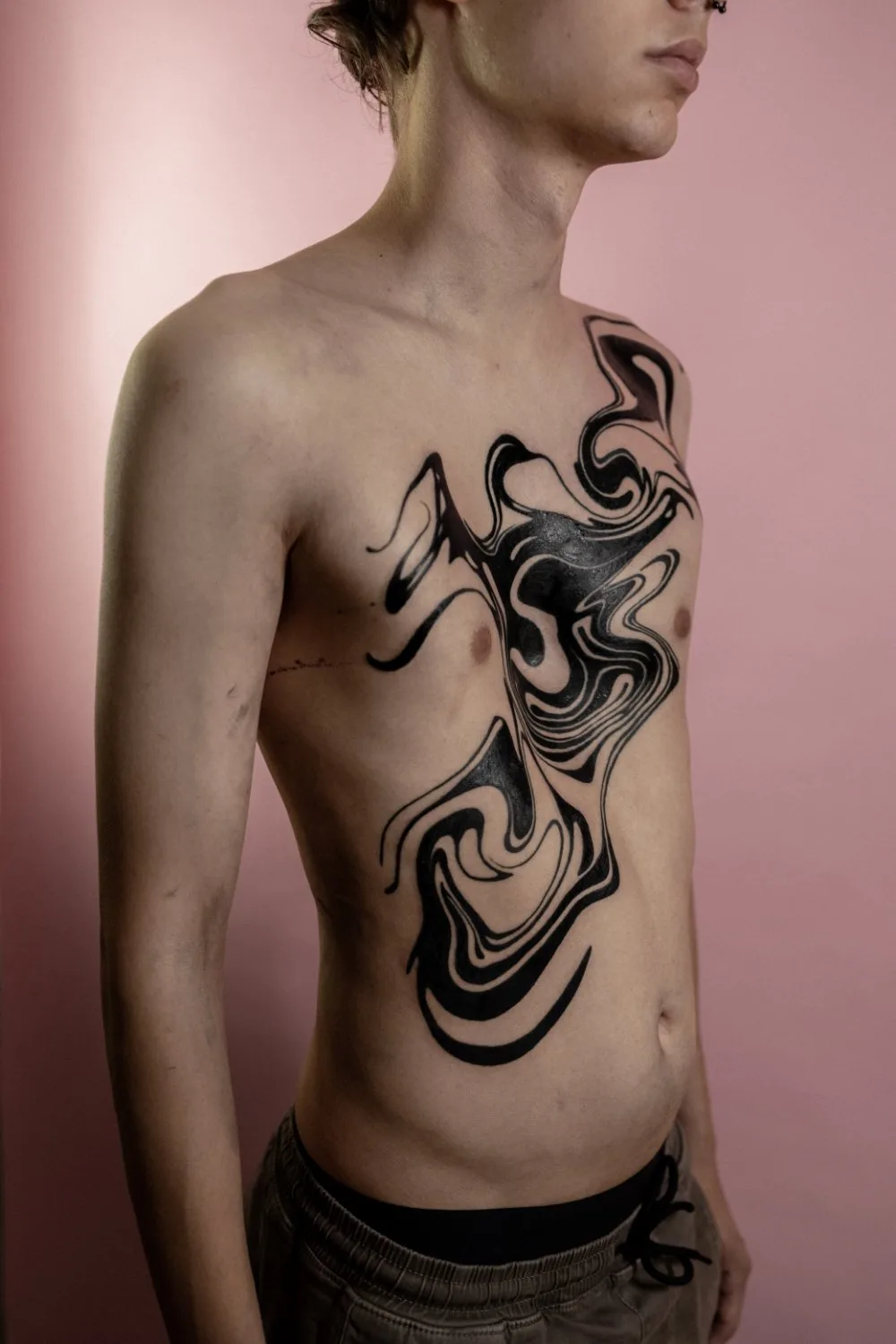
Keilitz came to tattooing from a traditional craft background, one that drilled precision into him early and left him with a lasting respect for technical discipline. What it gave him less of was room to move. Tattooing, when he first encountered it seriously around twelve years ago, offered something his previous work had not: a medium where craftsmanship and genuine creative freedom occupied the same space.
He started tattooing alongside his regular job, the way most artists do, cautiously, on the side, feeling out whether the pull was real. It was. The more he learned, the more he saw how much remained unexplored, and eventually the side work became the work. That shift, from supplemental practice to full profession, was less a decision than a slow recognition of where his attention had already gone.
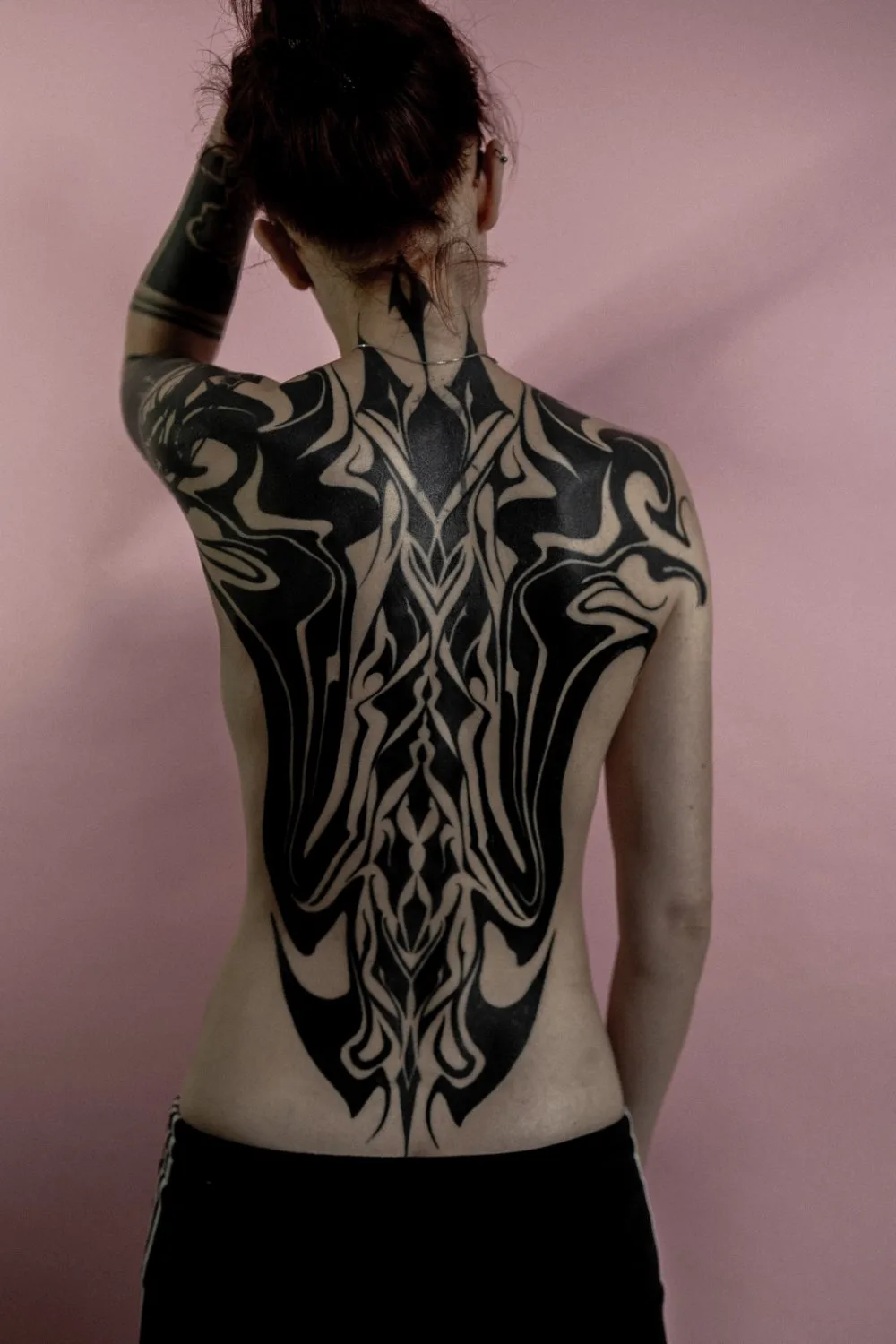
The name Boldblack Tattoo is almost a manifesto compressed into two words. Large, rich black areas, that is the visual core. But Keilitz has also noted the second meaning that revealed itself over time: the courage it takes to sit for this kind of work. Freehand sessions, often running across multiple appointments, with no finished design to approve in advance. That is, as he puts it, a hell of a lot of guts on the client's part.
“Boldblack Tattoo means, in a nutshell: Black Tattoos for Bold People.”
His style did not arrive from a deliberate program. There was no moment where he decided to work abstractly or to pursue a particular aesthetic lineage. Influences from abstract art and calligraphy are present, but what seems to have shaped him more than any single reference is a sustained fascination with organic process, the way structures emerge in nature without anyone having planned them, the rhythm that underlies movement. He finds those qualities and tries to find them again on skin.
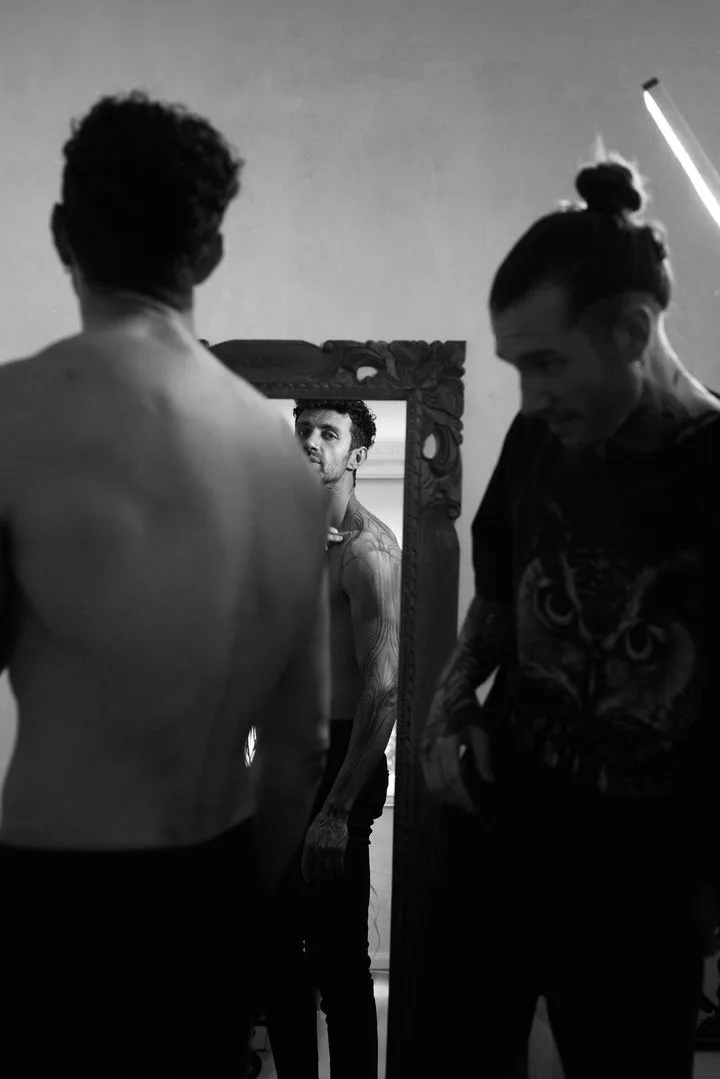
The freehand approach shapes everything about how a session begins. Keilitz looks first at the area of the body: how the muscles run, how the form changes with movement, what is already there. A two-dimensional design can serve as a foundation, he acknowledges, but the moment it meets a real body, everything shifts, the anatomy, the perspective, the way lines need to travel. Working freehand inverts the usual hierarchy. The body leads; the composition follows.
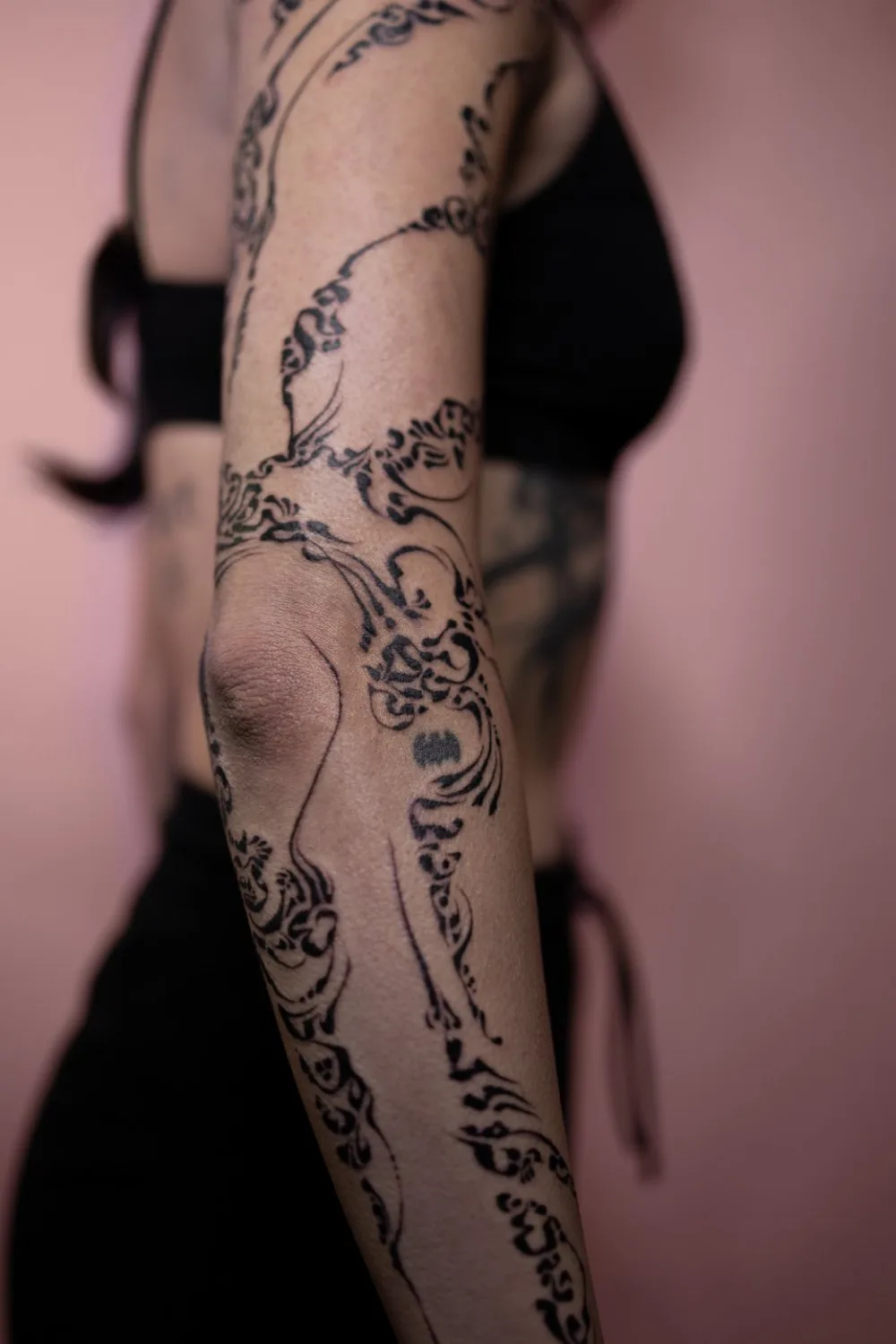
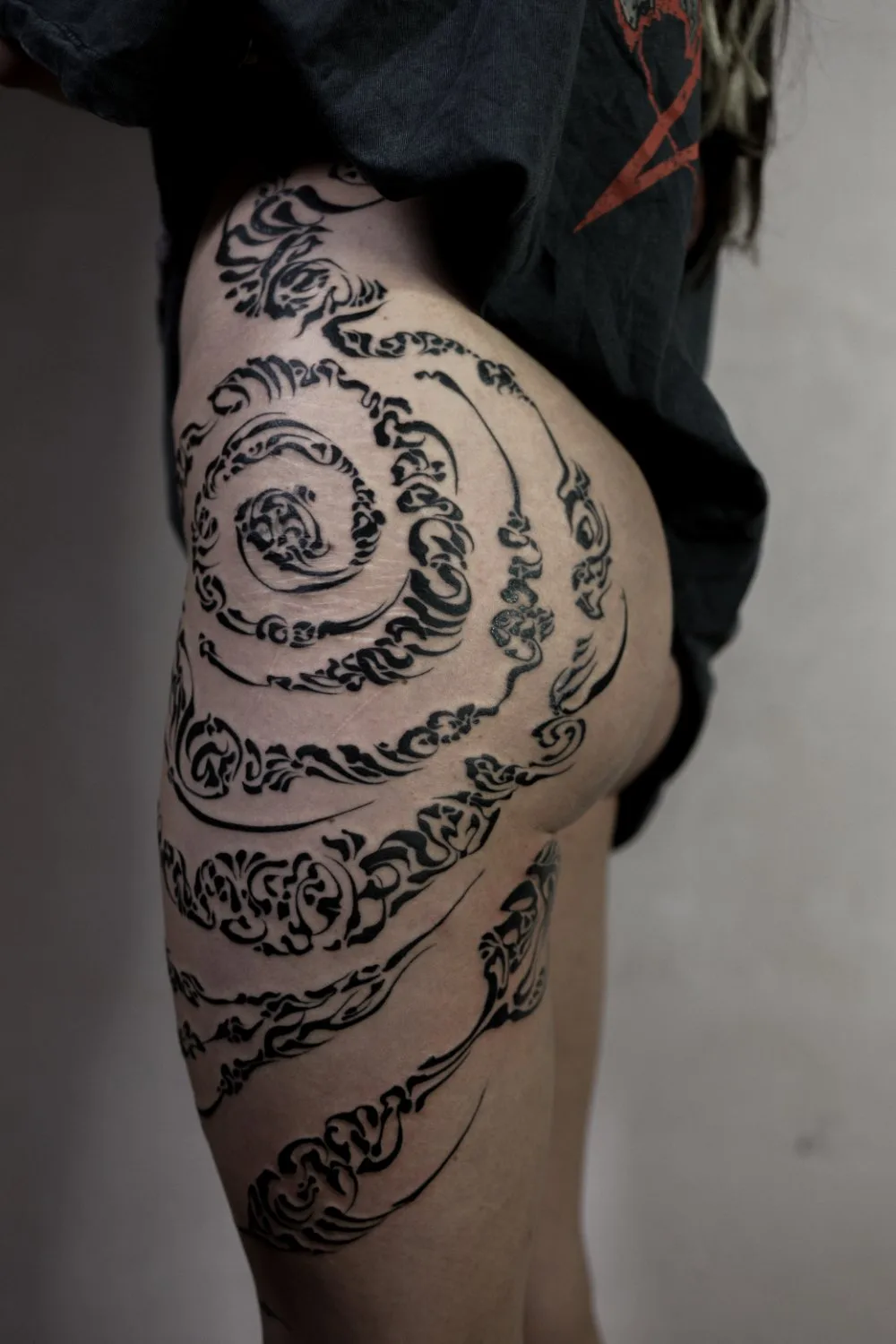
The term Alien Calligraphy emerged from a specific experience. Three years ago, Keilitz attended the Boom Festival in Portugal, brought body-painting colors, and began working on people there with no plan at all, responding to the music, the atmosphere, whoever was in front of him. Something clarified during those sessions. The freedom of working entirely in the moment, without a predetermined outcome, was not a limitation. It was the point.
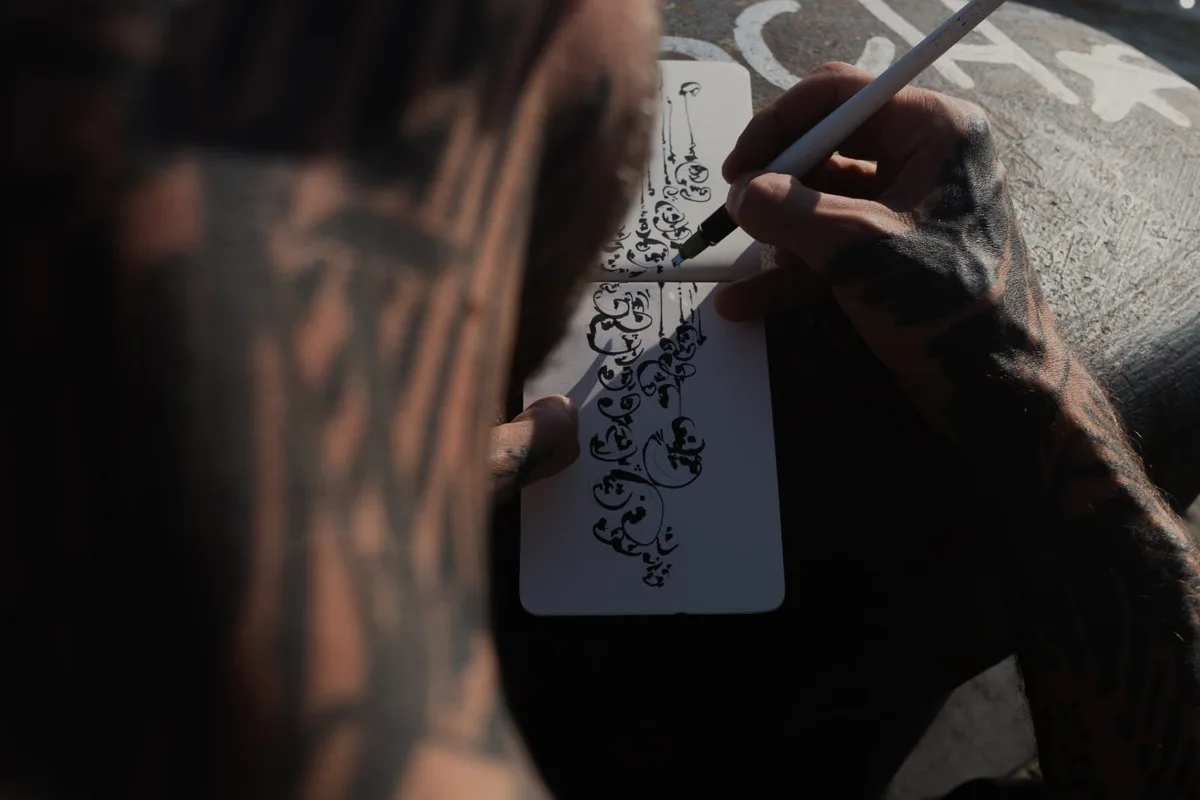
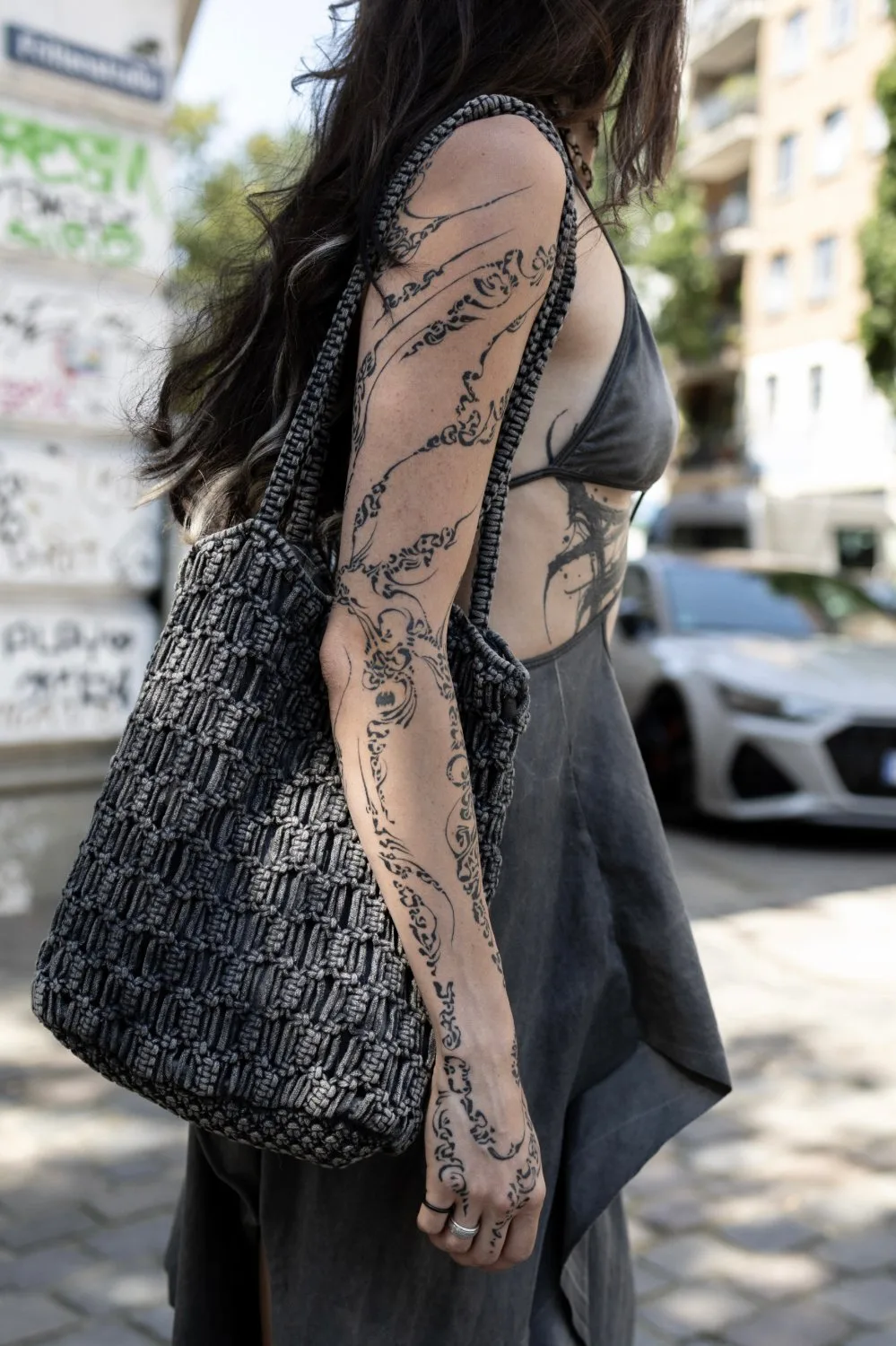
Alien Calligraphy, as he defines it, resembles calligraphy in its rhythm and gesture but follows no known script. It looks like a language from somewhere else, hence the name. Keilitz has said he finds the instinct to name and categorize things quickly both understandable and worth resisting. The work is meant to stay open, to shift with whoever is reading it, to allow interpretations that change over time rather than fixing meaning in place.
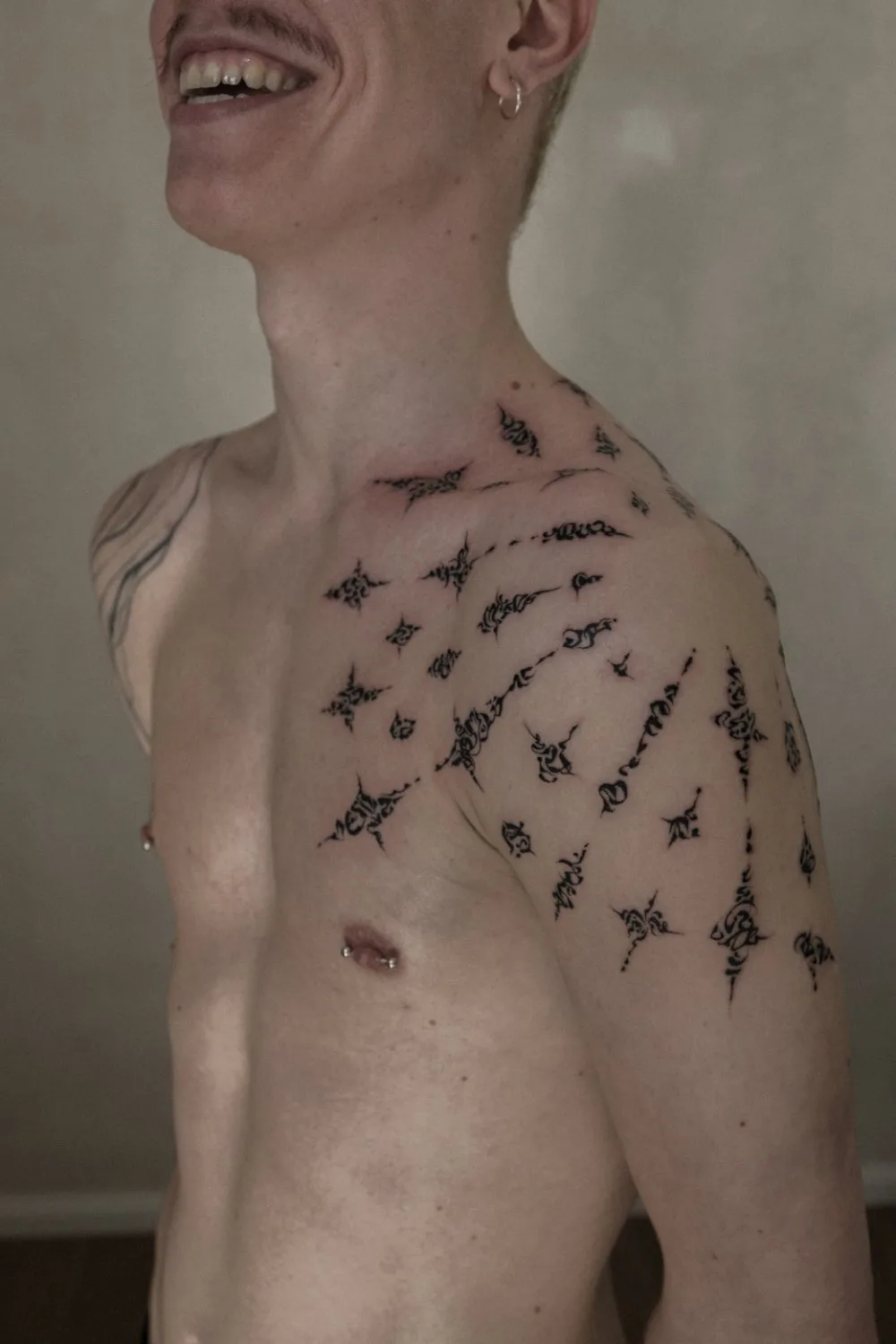
“For me, that's exactly what Alien Calligraphy is about: letting go of the need to understand and creating space for our own, ever-changing interpretations and perspectives on it.”
Each Alien Calligraphy composition has its own internal rhythm, developed through principles that have built up over years of practice. But there is no formula, no system he can simply run. The crucial decisions happen intuitively, in real time, with Keilitz trying to stay as present as possible and keep his analytical mind from interfering. When that state holds, he says, the elements find their natural place on the skin.
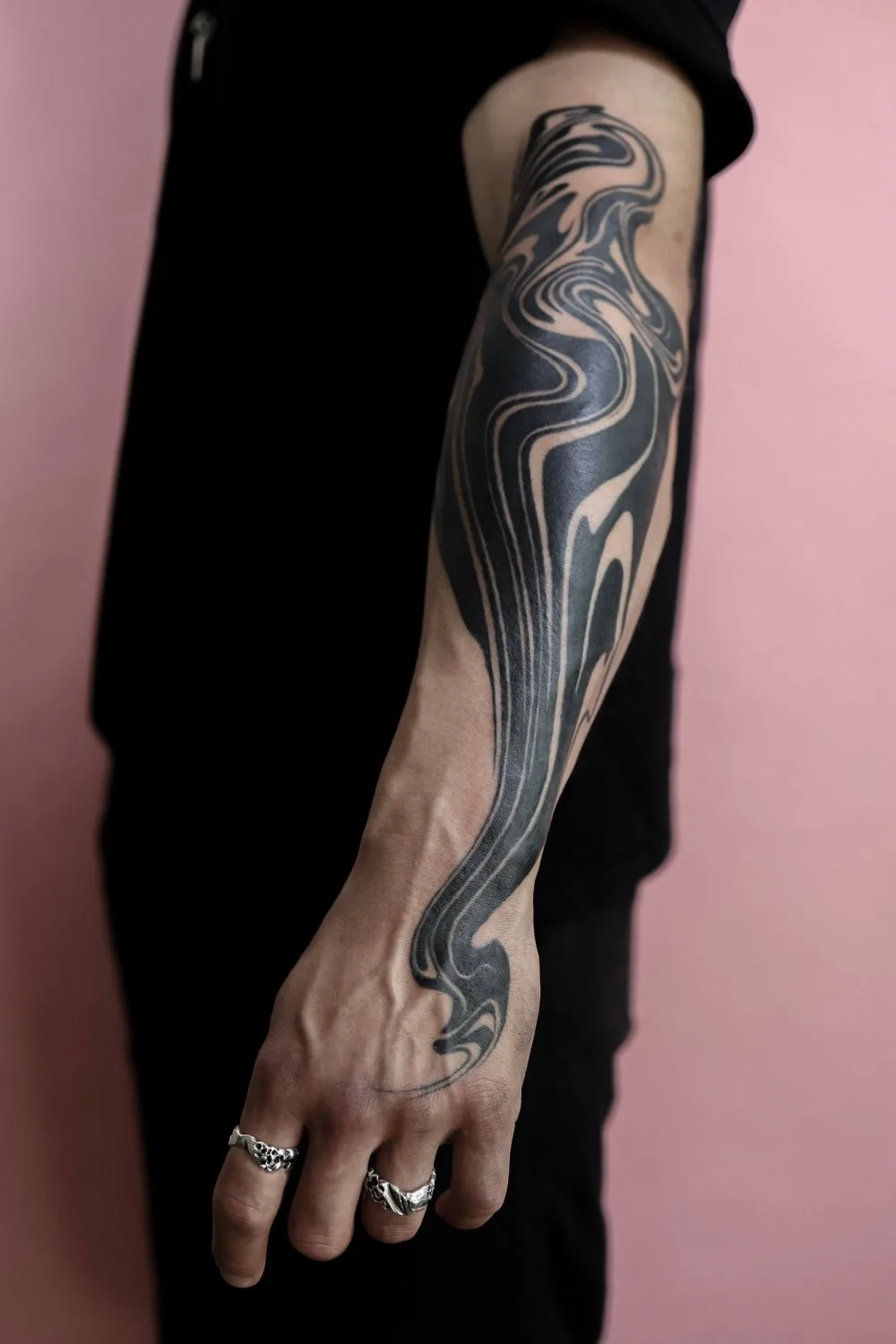
Another visual sensation Keilitz is inspired by is the Japanese Suminagashi, a technique of floating ink on water to produce marbled patterns. The practice involves setting something in motion and then watching what happens, intention and coincidence held in tension, neither one fully in charge. Keilitz has described that dynamic as exactly what makes it special, and it maps closely onto how he approaches freehand work: a point arrives in every session where fighting the process stops being useful.
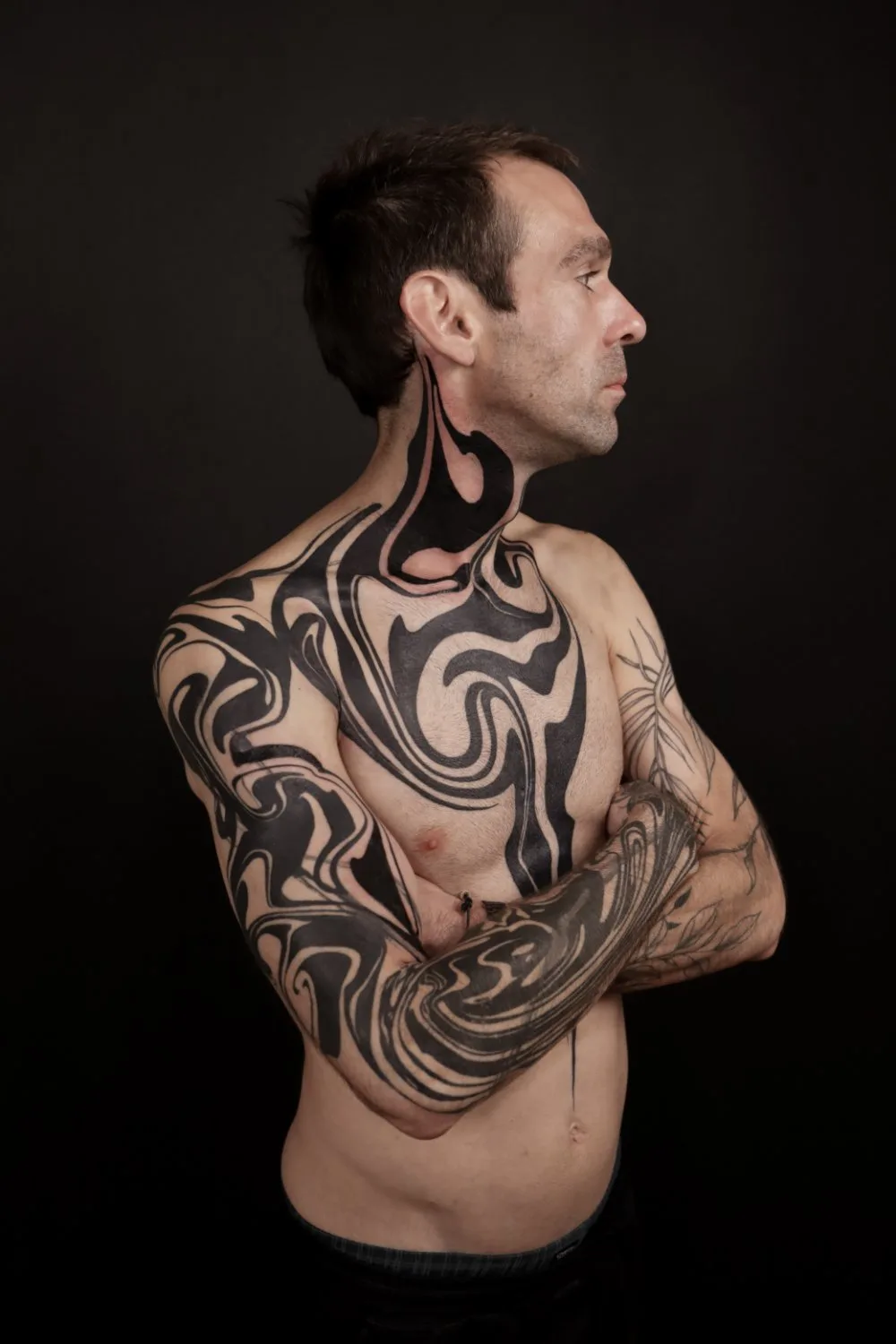
Clients come in with varying degrees of specificity. Some bring a detailed concept; others arrive with a rough direction and leave the rest open. Keilitz seems to prefer the latter, or at least the spirit behind it. A specific reference image is not always necessary, he has said, sometimes a rough direction leaves more room for the collaborative process. What interests him is the space between the client's original idea and the thing that eventually gets made, the version neither person could have fully planned.
“I'm interested in the space in between, when the original idea evolves into something we create together that neither of us could have fully planned beforehand.”
Sessions change. Lines extend differently than expected, areas grow denser or open up, something that seemed essential turns out not to be needed. Keilitz treats this as a feature rather than a problem, though he is careful to note that all of it happens in consultation with the client. Clinging too tightly to an original idea, he has observed, risks missing what is actually most important. That requires openness on both sides, and he is direct about being grateful for the trust his clients extend.
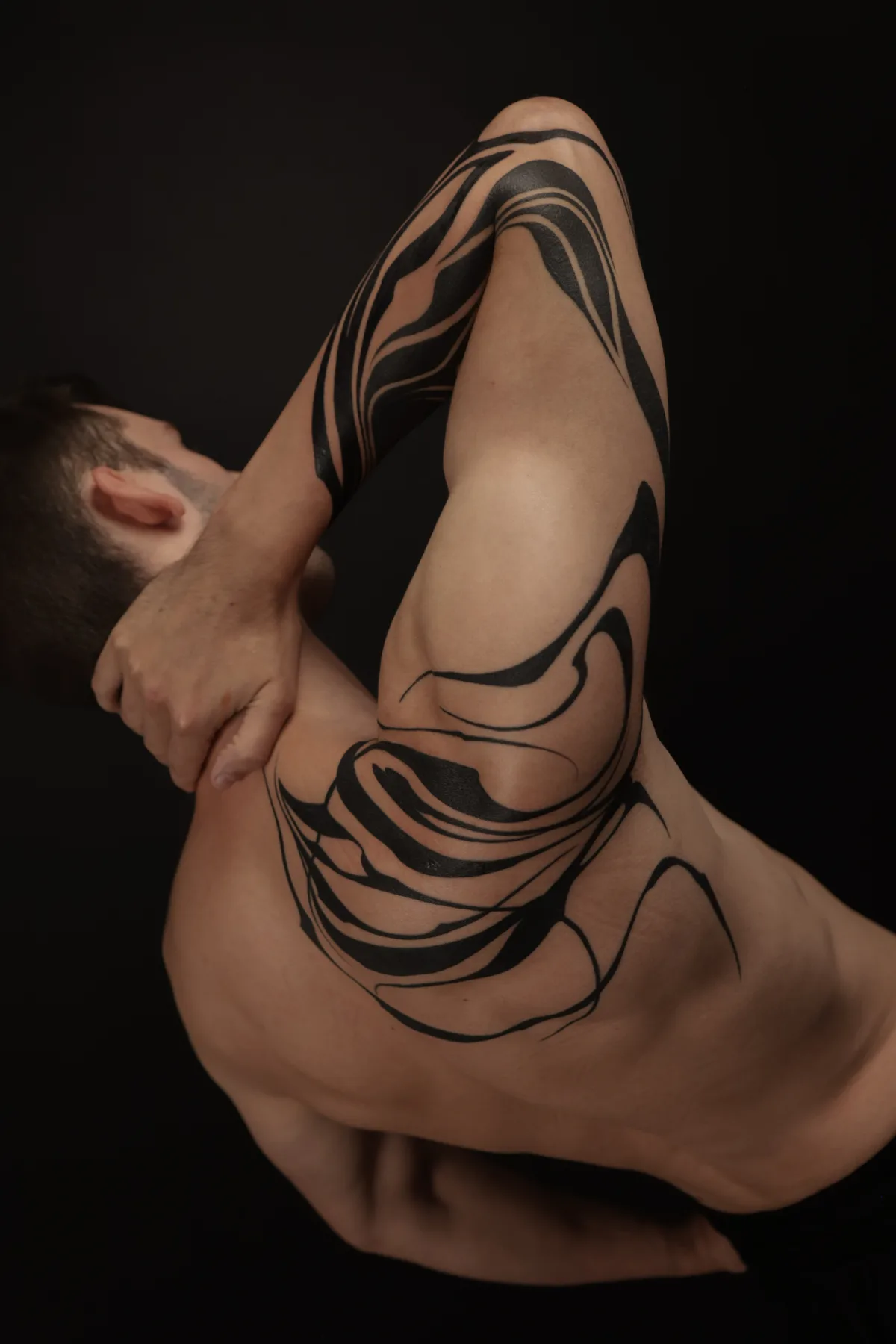
Movement is built into the composition from the start. Keilitz watches how a body part changes between standing, sitting, and shifting, and arranges lines and shapes to reflect that. One of the things he finds genuinely fascinating is a tattoo that looks slightly different depending on how the person is standing, new details surfacing, the dynamic altering. A static image on a moving body is, in his view, a missed opportunity.
Balance in his compositions is not about even distribution. Dense, heavy black areas need a counterpoint, fine lines, open space, something quieter elsewhere. Keilitz pays as much attention to the shapes created by negative space as to the marks themselves. A piece can be crowded in one zone and almost empty in another; what matters is that the tattooed and open areas hold each other in equilibrium. The skin that is not touched is still part of the design.
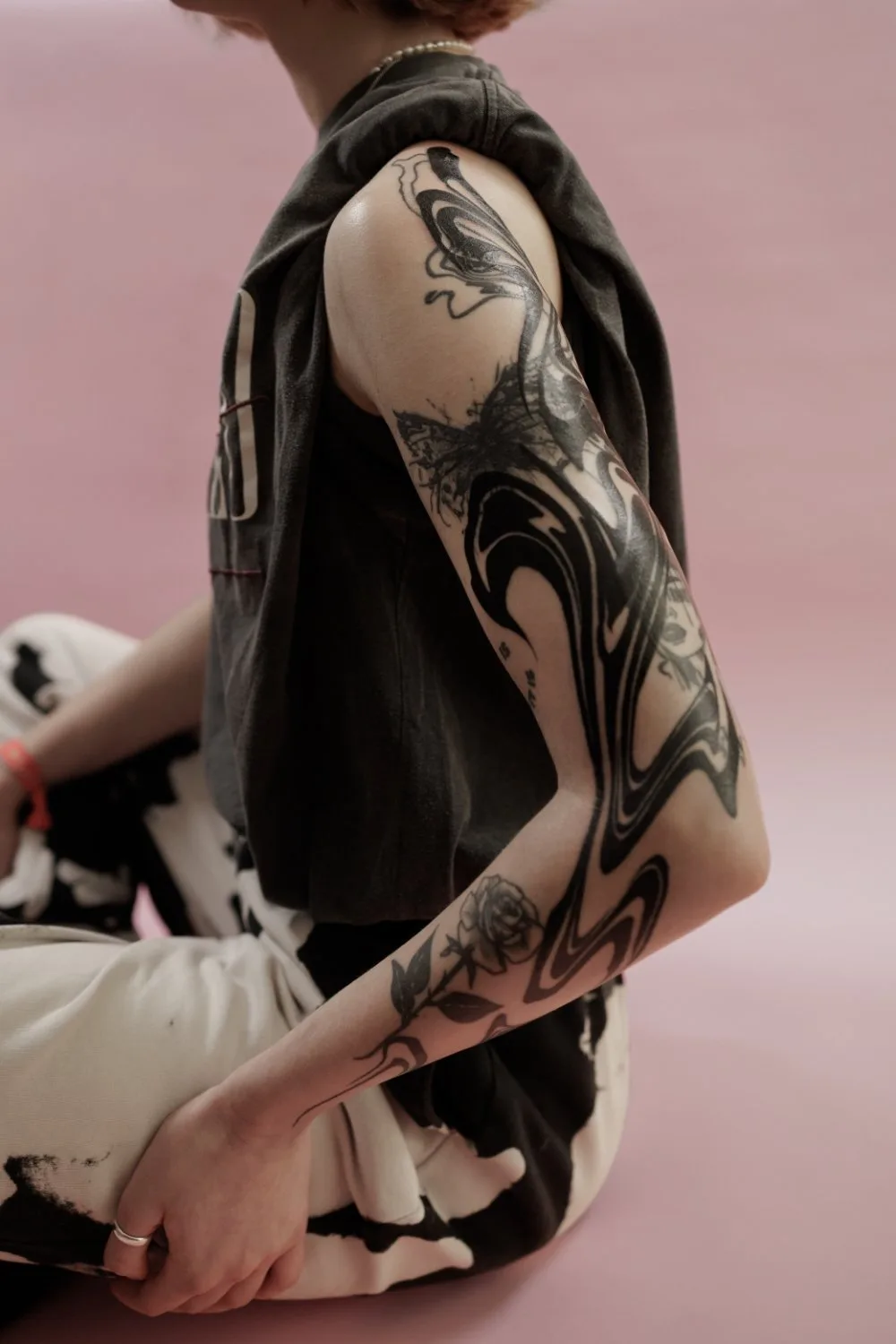
When asked whether a single project marked a turning point, Keilitz has said it was less a specific tattoo and more the transition to freehand itself that opened a new phase. His confidence in his own intuition has grown steadily since then, and so has his awareness of how much the client's trust shapes what becomes possible. When someone is willing to embrace this approach, he has said, that is where the magic begins. It is the kind of statement that could sound like a platitude but, given how the work is actually made, reads as a precise technical observation.
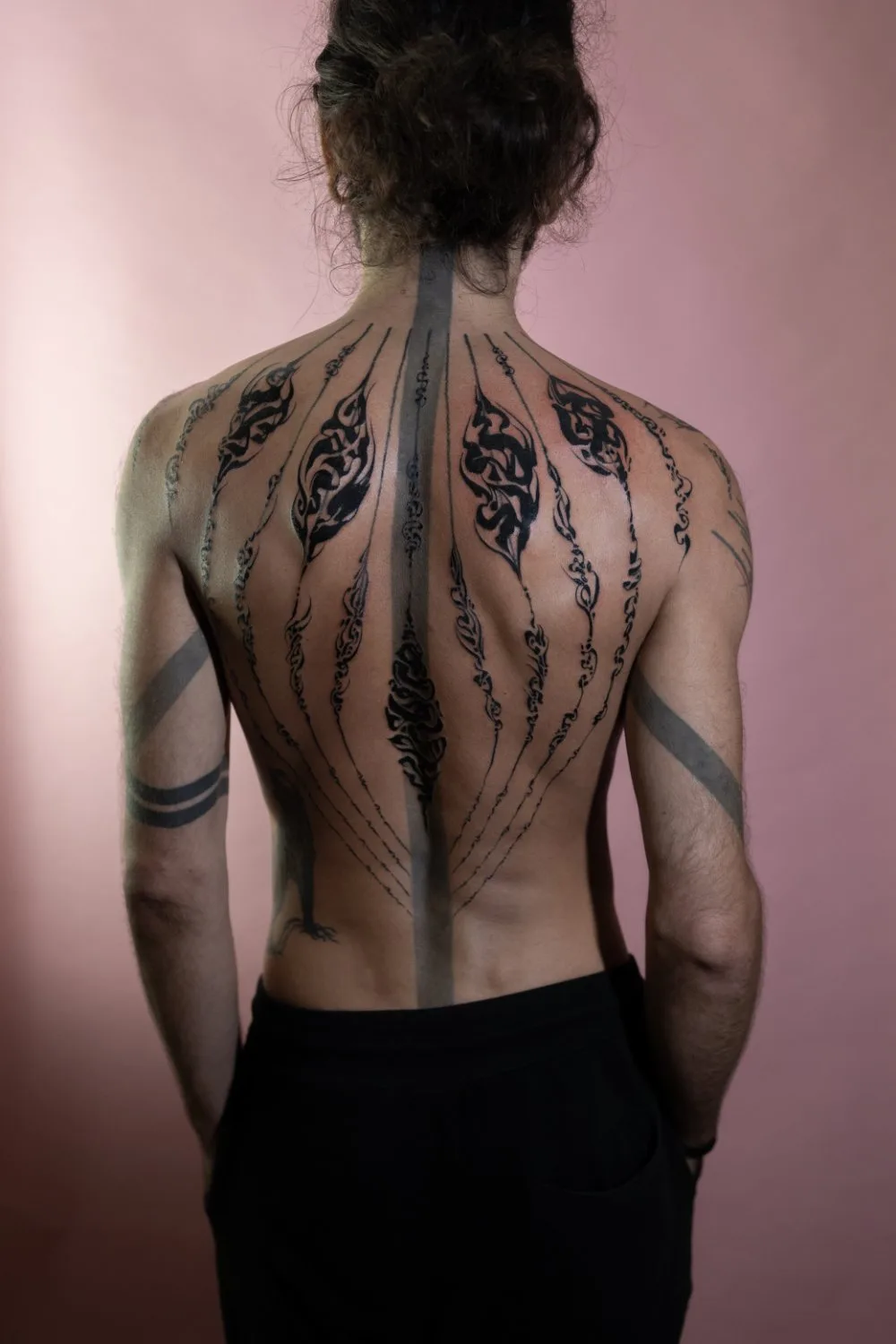
“When someone is willing to embrace this approach, that's where the magic begins.”
The directions he wants to pursue from here run in two broad channels. One is scale, larger projects, compositions that move across the whole body and connect multiple areas. The other is medium: Alien Calligraphy animated and synchronized with music, street art at a scale that walls allow, experiments that feed back into the tattoo work by generating ideas it could not produce on its own. The cross-contamination between forms is, for him, the point.
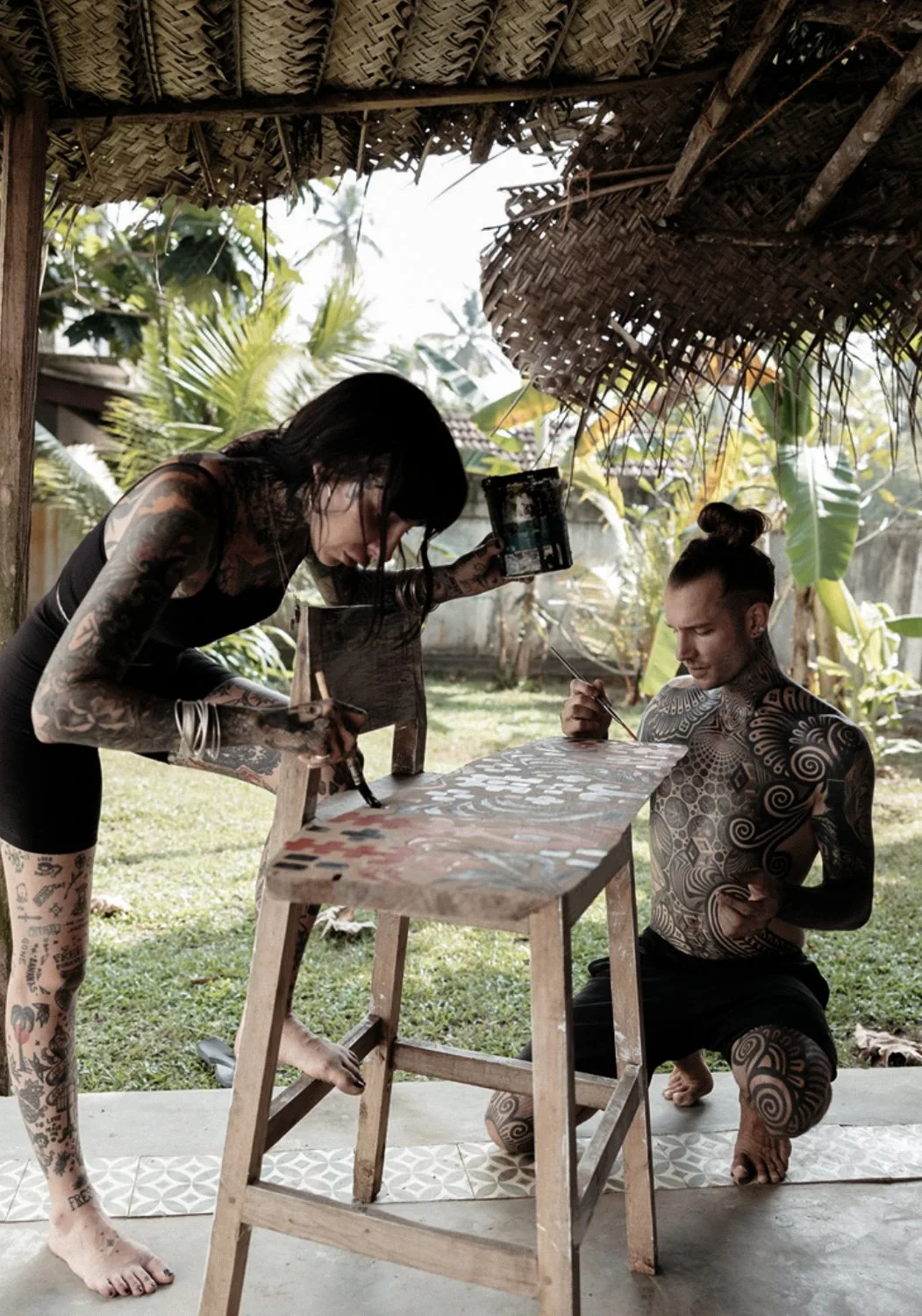
Keilitz is, in the end, an artist who has organized his entire tattoo practice around a single conviction: that the body is a three-dimensional subject the composition answers to. Everything else, the freehand method, the Alien Calligraphy, the Suminagashi-inflected thinking about chance and control, follows from that. Twelve years in, the work keeps opening up. That combination of precise craftsmanship and creative freedom, the thing that pulled him in at the start, is still pulling strong.
Read alsowww.boldblacktattoo.com