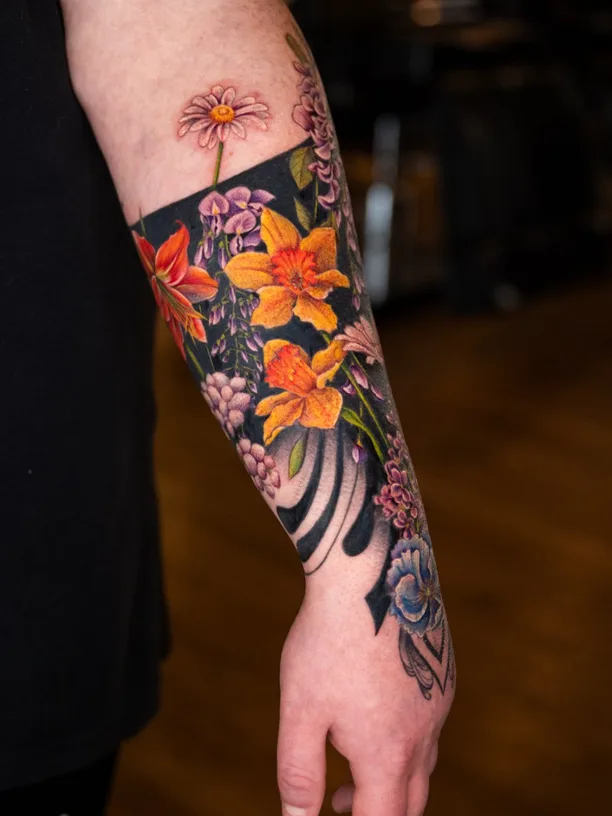
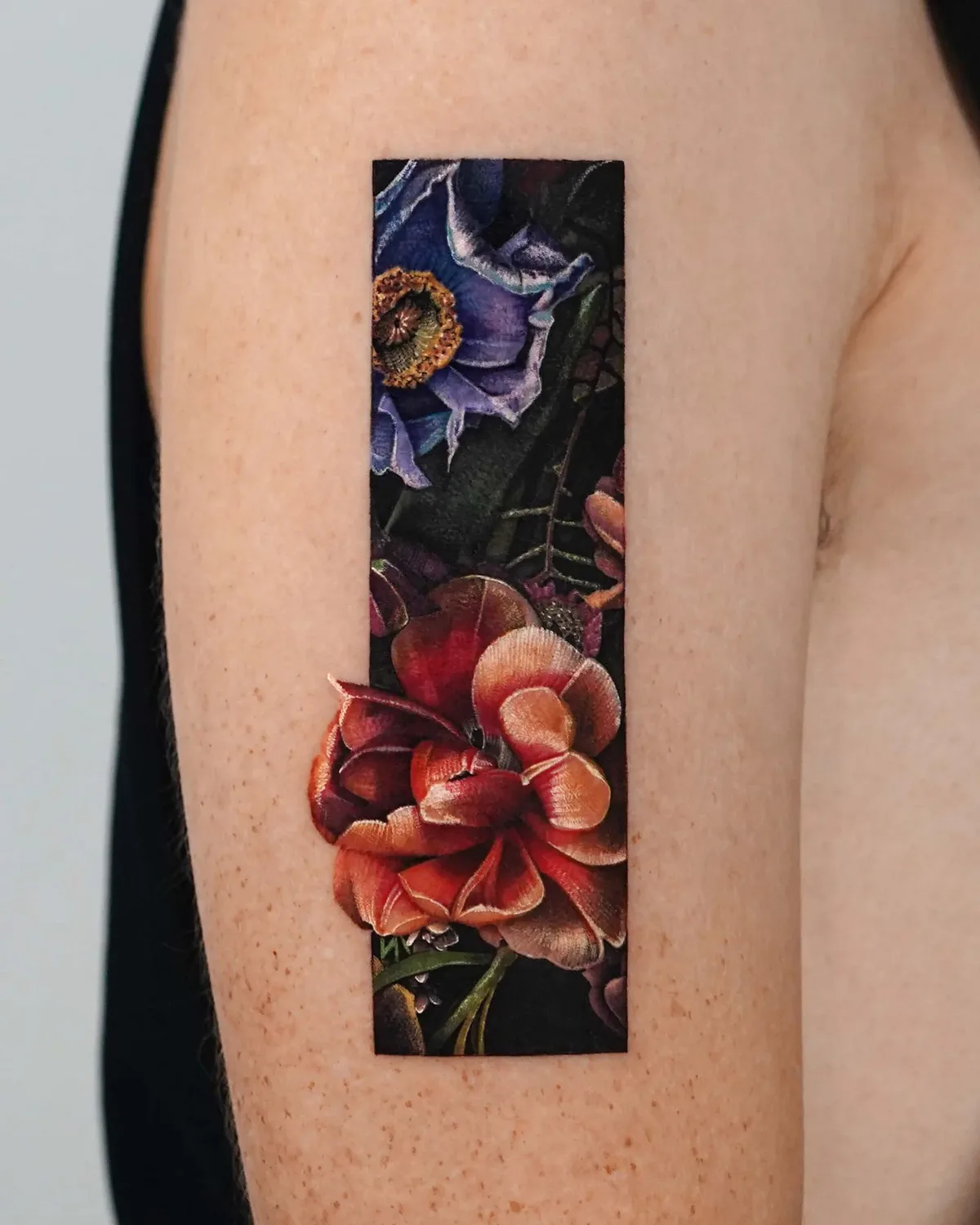
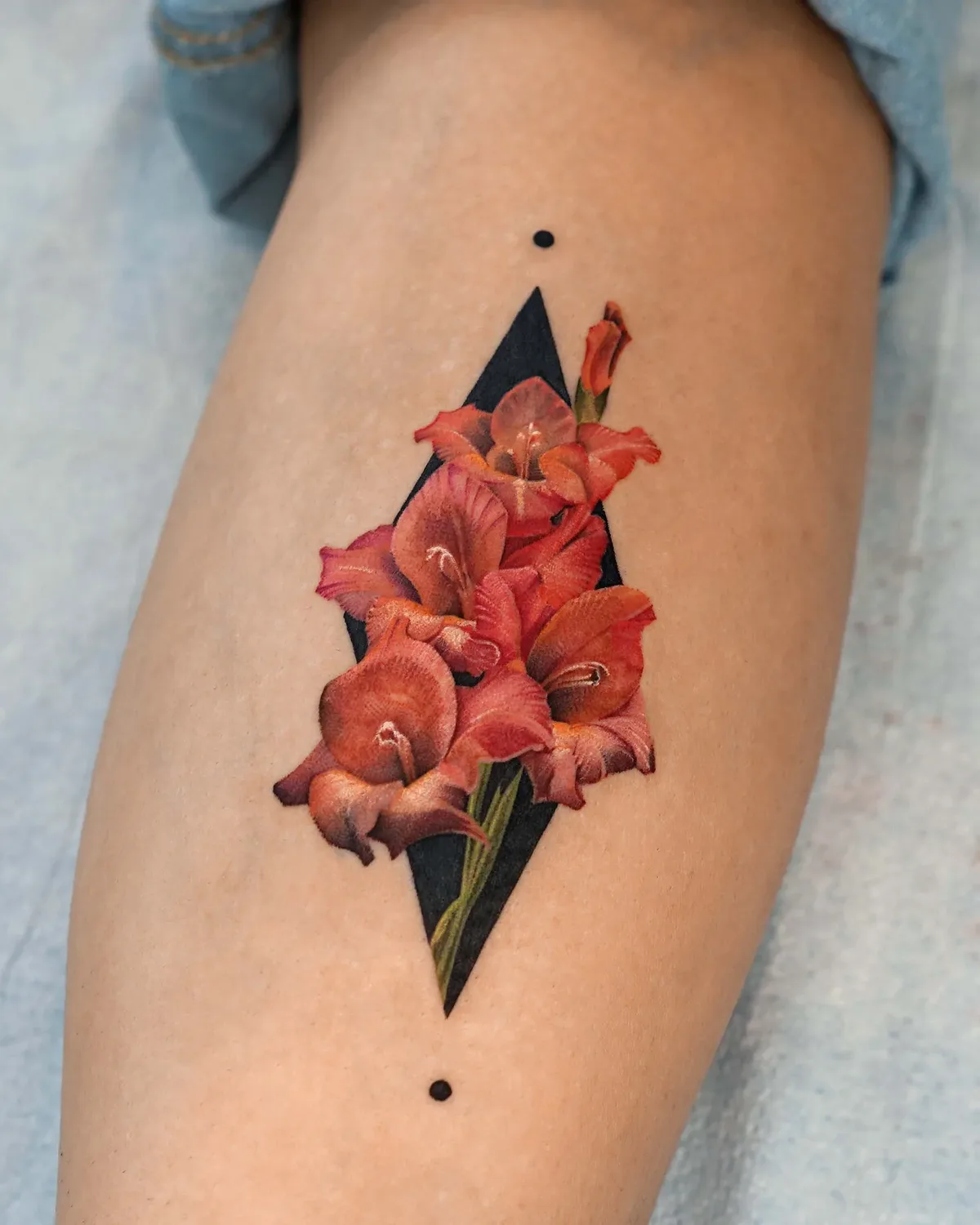
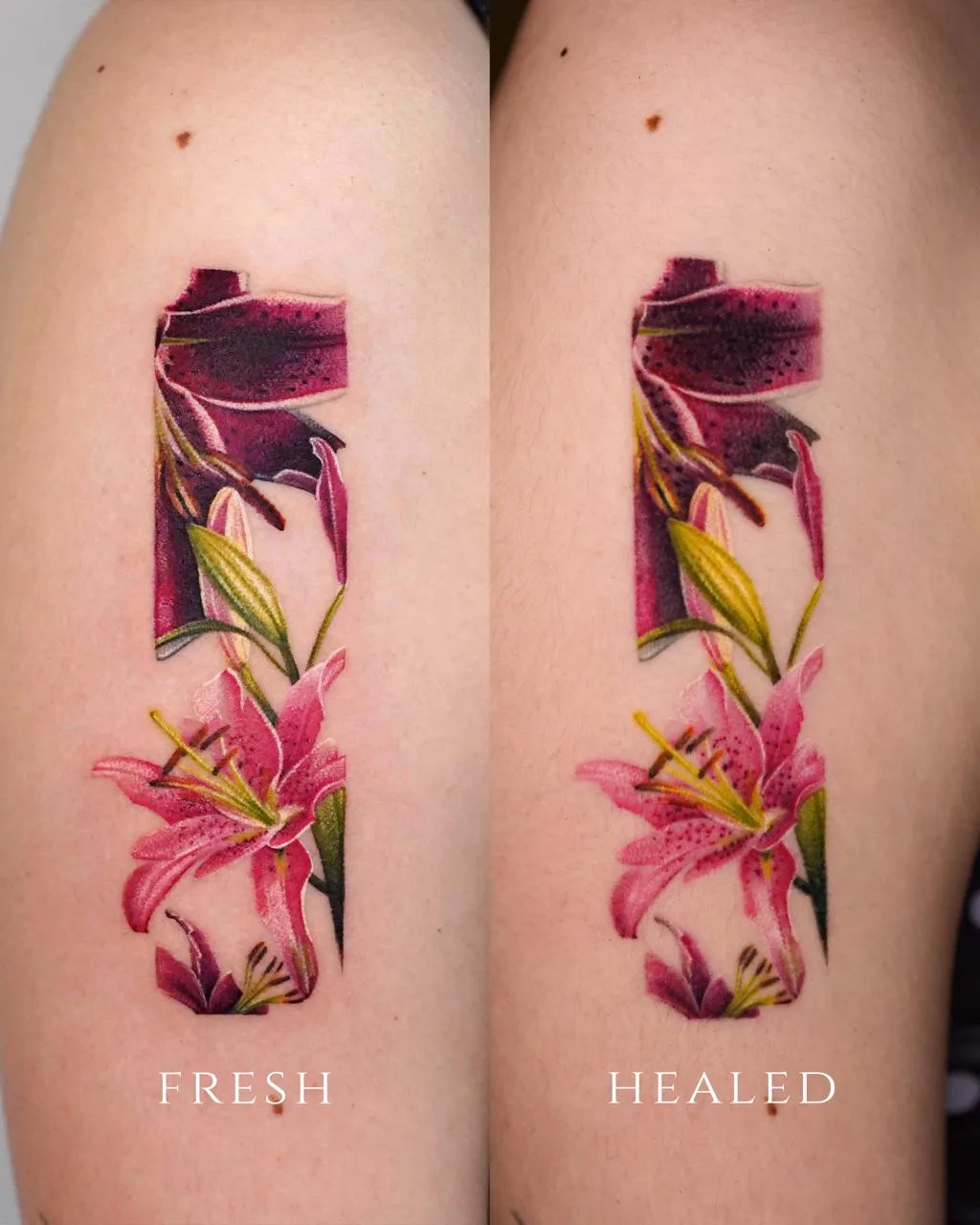
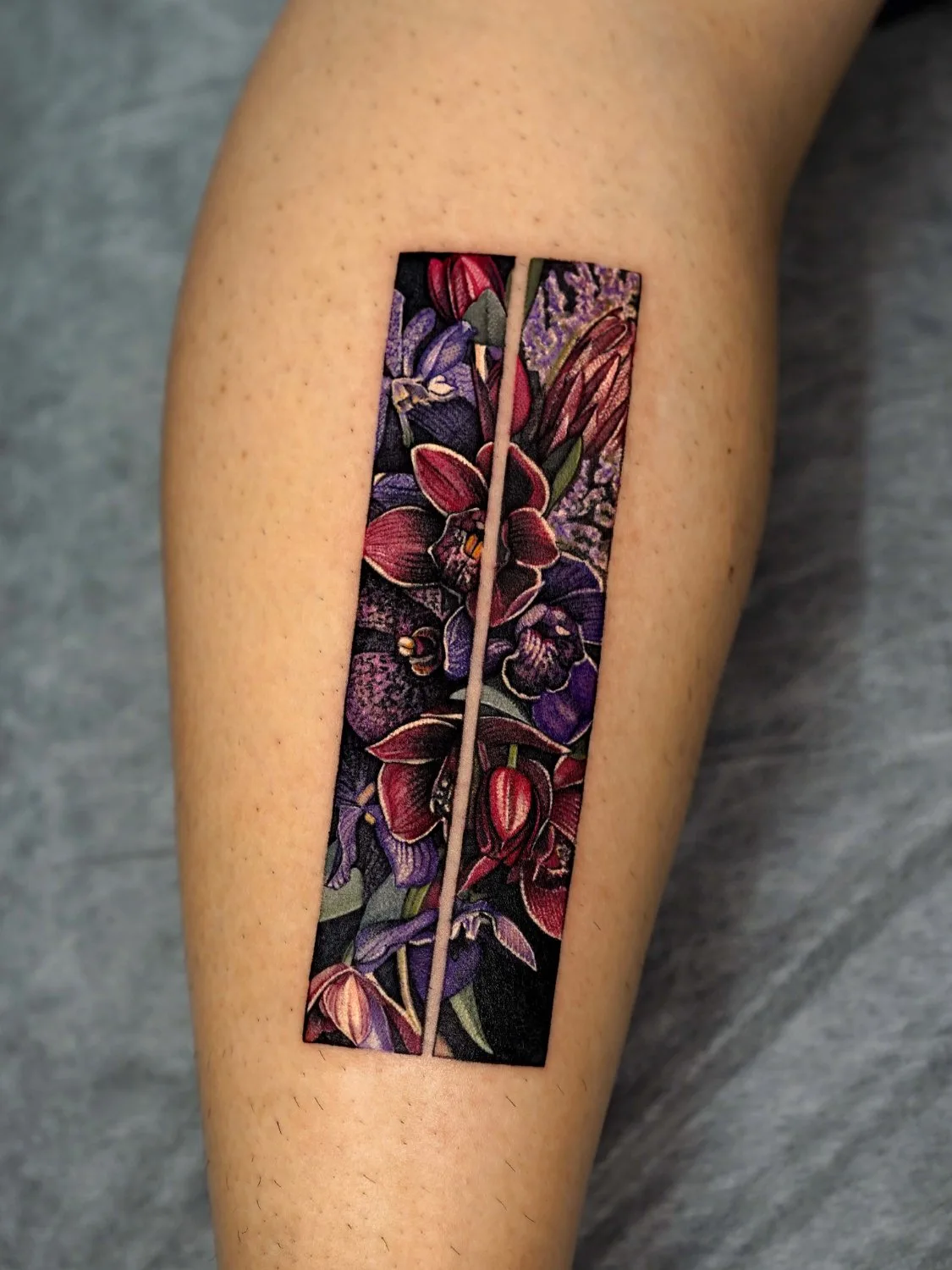
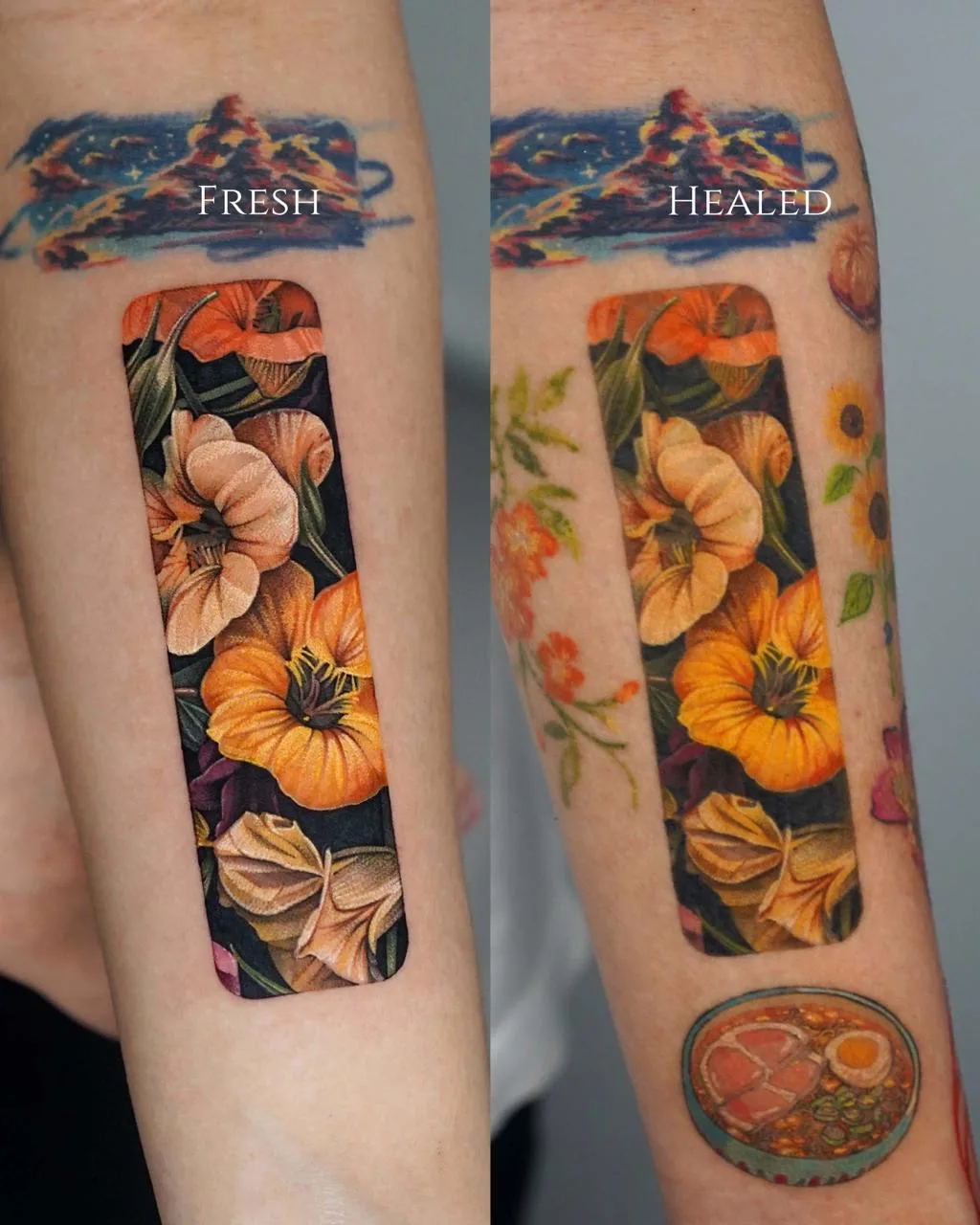
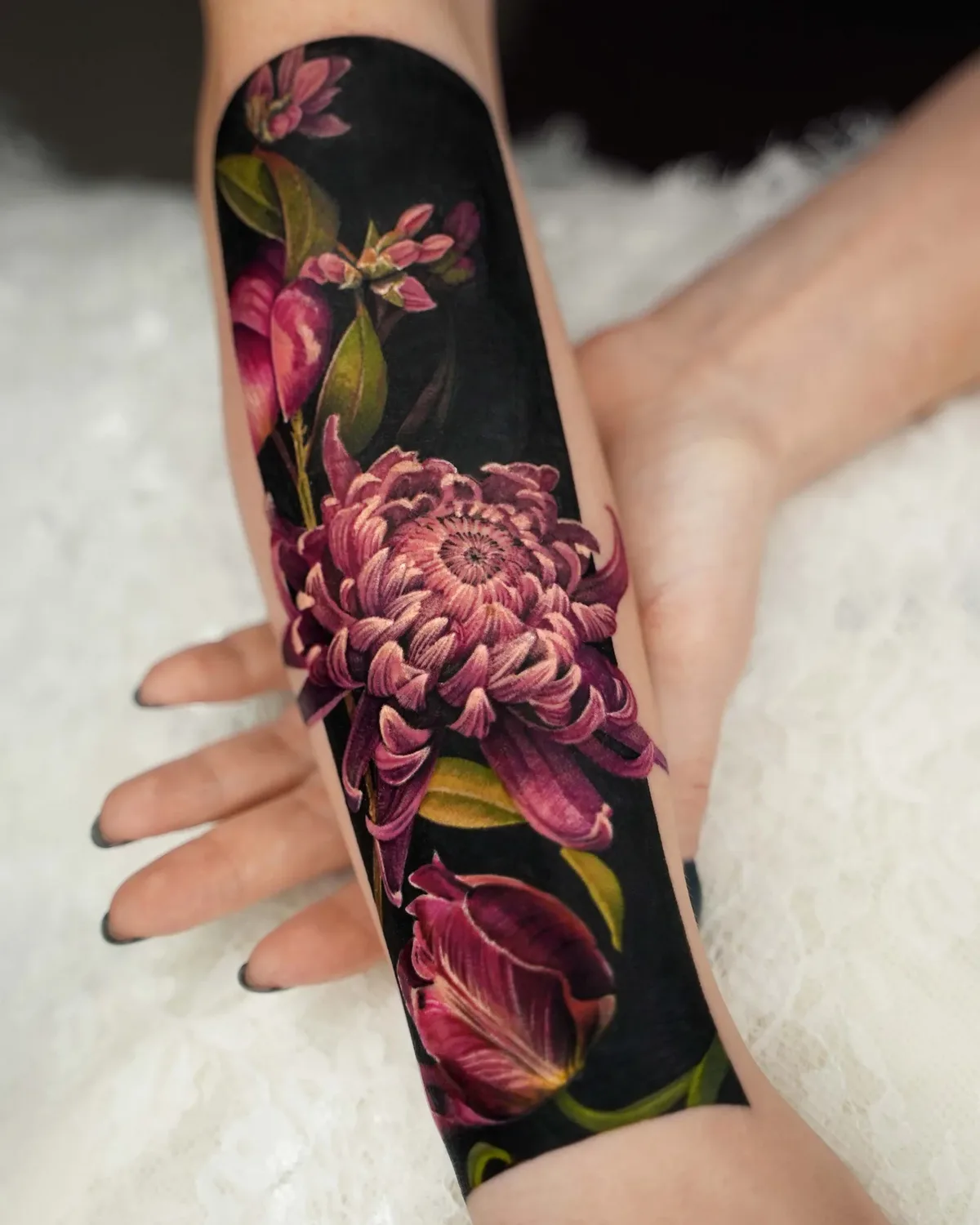
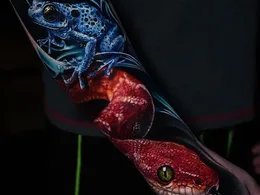
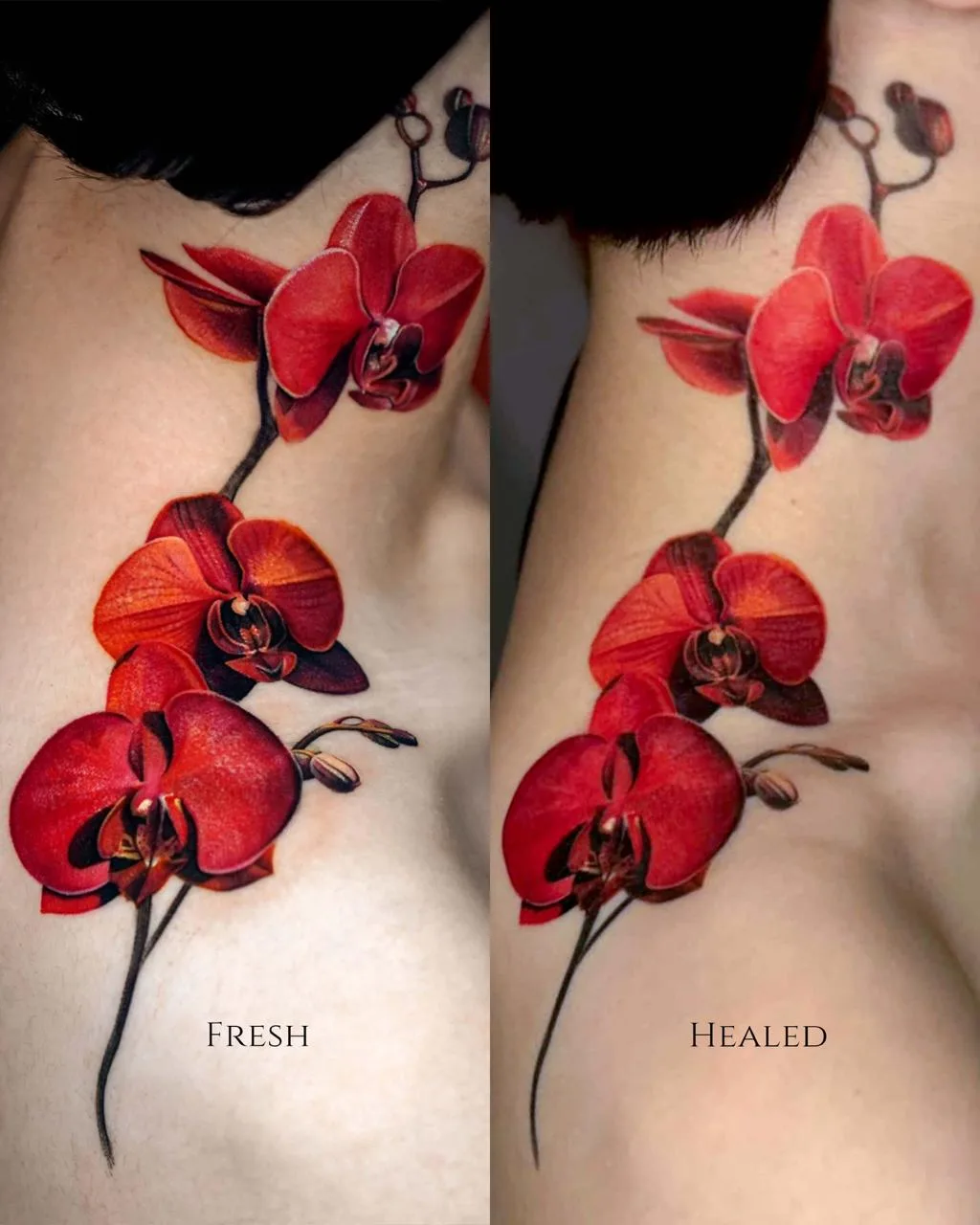
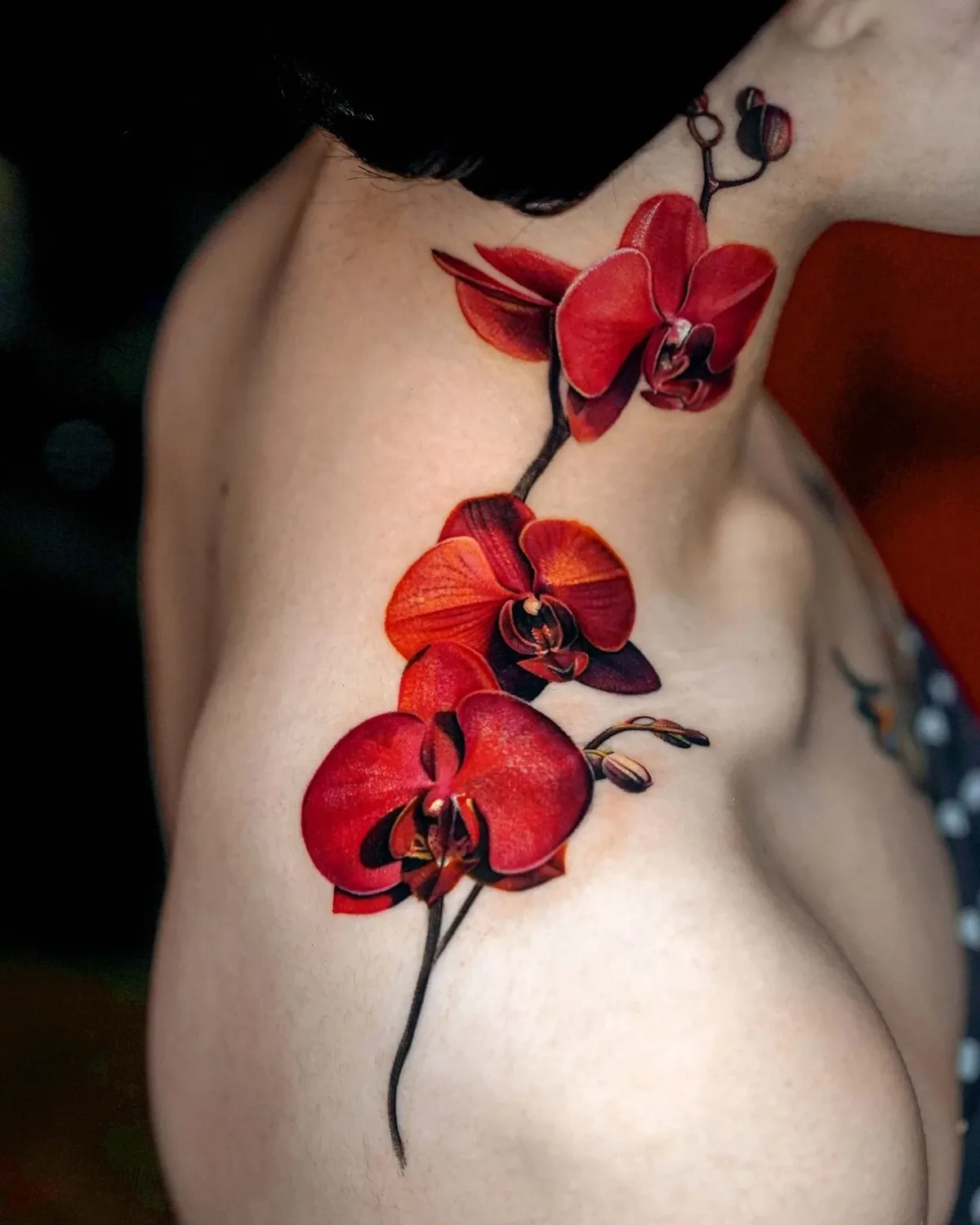
There is something about Myungdo's tattoos that photographs can't quite pin down. The flowers sit inside geometric frames, yes, but they don't stay there. The growth pushes past the border, and the whole piece reads less like a flat image and more like a small piece of nature living inside and beyond the frame.
Myungdo has been tattooing professionally for around six to seven years. He is from Seoul. For several years he split his time between Seoul and Singapore, and more recently he has been traveling to cities around the world for guest spots, working with clients from many different countries and absorbing a wide range of tattoo cultures along the way.
His focus is realistic color botanical tattooing: flowers, plants, the textures and subtle color shifts that most people walk past without registering. What sets his compositions apart is the geometric frame, a deliberate structure that organizes the design, and then his choice to let certain elements break free of it. That tension creates a sense of depth. It's a quiet trick, but it works.
The decision to become a tattoo artist came from an unlikely place. Myungdo was serving in the military in his early twenties, the kind of enforced stillness that tends to clarify things. He found himself thinking seriously about what he actually wanted to do. Tattooing felt like a match. His family, when he told them, simply asked why not, a response he describes as open-minded, which it clearly was.
He had studied design before any of this. What drew him specifically to skin was the body itself, the way it curves and shifts, the way a design can follow that movement rather than fight it. A flat canvas doesn't breathe. The body does, and Myungdo found that relationship between form and artwork genuinely compelling from the start.
"I found it especially beautiful that a tattoo can follow the natural structure and movement of the body."
He learned from a tattoo artist whose work he had admired for a long time, building technical foundations through direct instruction rather than self-teaching. His first tattoo was a single tulip on the back of an arm. He ran through the exact same design on fake skin about five times beforehand.
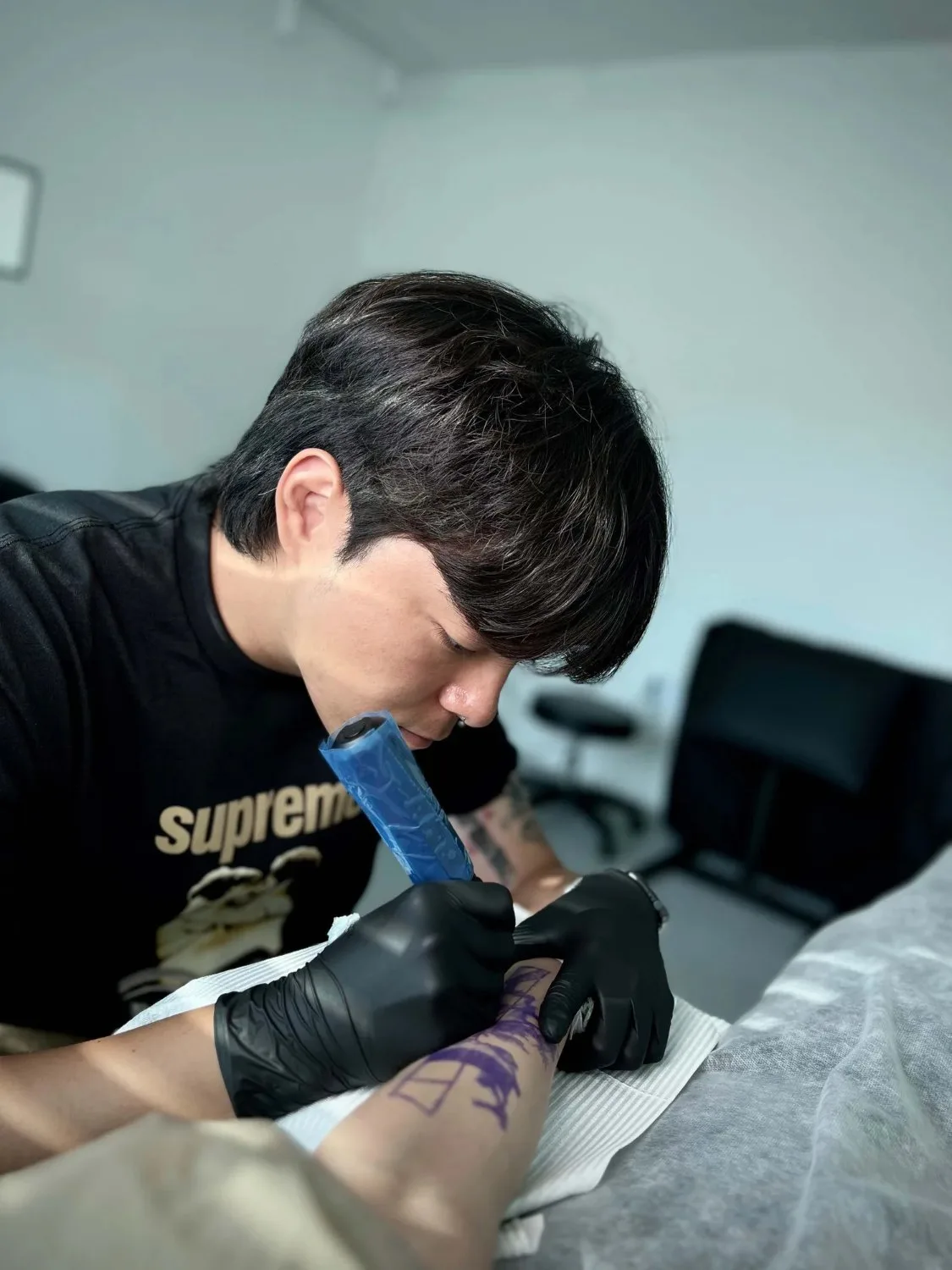
The process he follows now is structured and client-focused without being mechanical. He sends a first draft three to seven days before the appointment, works through revisions carefully, and on the day itself tests sizes and placements on the body before committing to anything. Every design is custom-made. No flash sheets. No repeats. That commitment to custom work makes the design process genuinely collaborative, though Myungdo is clear about where he draws the line.
He presents the first draft entirely in his own style, his best interpretation of what the client wants, not a neutral rendering of their reference. Adjustments are welcome, but he tends to recommend keeping revisions focused on smaller details rather than reworking the overall concept. This isn't stubbornness. From what he describes, it's a form of care: keeping the artistic balance of a design intact usually makes for a smoother tattooing process and a better result long-term.
Honesty runs through his approach in a way that feels less like a policy and more like a habit. If a placement won't heal well, he says so. If a size is too small for the level of detail a client wants, he explains why. He sees the artist's responsibility as extending beyond the session itself, a tattoo is permanent, and the decisions made around it should reflect that.
Pricing follows the same logic. Size and complexity matter, but so does time, and two tattoos of identical dimensions can require very different amounts of work depending on the detail involved. He reviews each project individually before quoting. Probably the only honest way to do it, given the range of what he takes on.
Portrait tattoos are one thing he doesn't usually take on. Capturing a person's likeness is a specific discipline, and he prefers to stay in the area where his skills are strongest. The reasoning is straightforward: clients get better results from artists who specialize in what they're asking for. There's no ego in it, just a clear read of where his strengths actually lie.
If there is a single word Myungdo would use to describe himself, it is observant. He pays close attention to small details in nature, delicate textures, subtle color variations, the particular way a petal curves or a stem bends. When he translates those observations into tattoos, preserving that detail isn't optional. It's what makes the plant feel alive on the skin rather than merely represented.
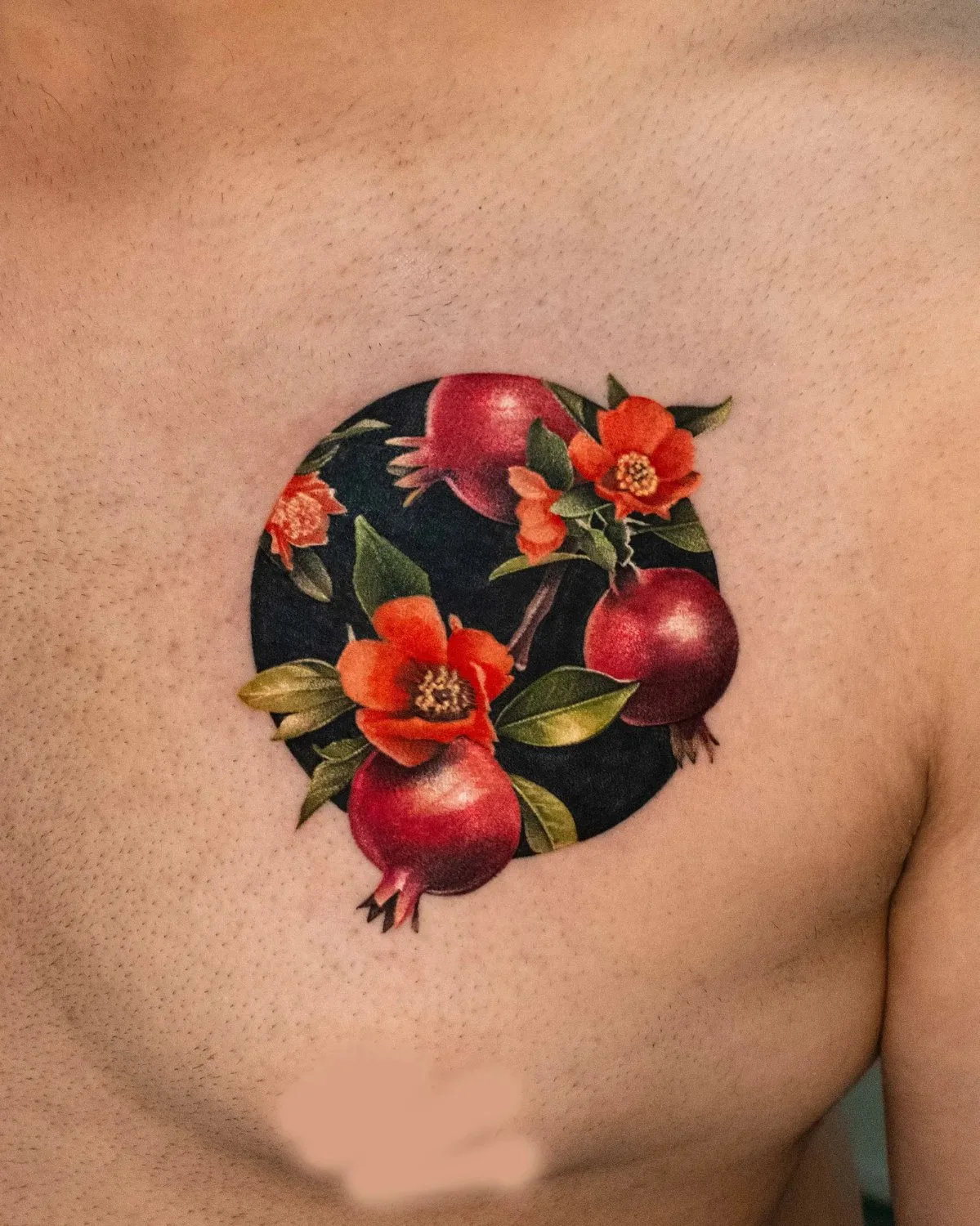
"I pay very close attention to the small details in nature, especially the delicate textures, subtle color variations, and forms of flowers and plants."
That observational quality shapes how he stays creatively inspired. Travel helps, new landscapes and plant life constantly feed his color sense and compositional thinking. He also draws from classical European painting, which he has admired for a long time. The way those works handle light, color, and the arrangement of a scene continues to shape how he approaches his own designs, even when the subject matter is entirely different.
His sponsors are PEPAX and Xtreme, both of which have supported him for more than four years, since before he had built a large audience. He also works with Kwadron, Mast Pro, Intenze, and Eternal depending on the project, and his primary machine is the Bishop Packer. His view on sponsorship is simple: he doesn't use products because they're sponsored. He uses what genuinely works, and he's grateful that the brands backing him happen to be ones he trusts.
What he describes with PEPAX and Xtreme goes well past equipment. He gives honest feedback rooted in actual use, not talking points, not polished endorsements, and that exchange is what separates a real working relationship from a logo on a banner. For Myungdo, it seems to be about the long game: a relationship that grows over time, and tools that end up better for other tattoo artists.
Long sessions produce unexpected conversations. Sometimes clients open up during extended appointments, and through those exchanges Myungdo gets to learn about different cultures, lifestyles, other ways of seeing things. It is one of the genuinely surprising parts of the job, that tattooing, quietly, is a form of sustained human contact as much as it is a craft.
One of the most rewarding moments in his career, he says, is when a client comes back for a second piece years after the first. That return means something specific: the work has held up, the client has lived with it and still loves it, and they trust him enough to sit in his chair again. In a permanent medium, that kind of repeat trust is about as meaningful as it gets.
The Korean tattoo scene he came up in has changed considerably. Across much of Asia, tattoos have long carried an uneasy reputation. That perception has been shifting, particularly among younger people, who increasingly treat tattooing as a legitimate art form and a mode of personal expression. Korean artists have also been earning serious international attention, recognized for refined technique, close attention to detail, and styles that are distinctly their own.
Myungdo takes quiet pride in that. Seeing Korean tattooing recognized and appreciated around the world means a lot to him. The attention Korean artists draw internationally comes down to refined technique and a level of detail that is hard to miss, plus styles you can pick out on sight.
The Singapore Ink Show holds a particular place in his memory, his first convention experience. He went originally to support a close artist friend, tattooed a few clients during the event, and came away struck by the atmosphere: the density of different styles in one room, the chance to see work he had only ever encountered on a screen. He is looking forward to more conventions. Seeing admired artists' tattoos in person, up close, is a different thing entirely.
He has not yet collected a tattoo from another artist, though he hopes to. A collector of careful observations, waiting for the right moment and the right hand.
Social media is one of the biggest challenges he names. The algorithms are unpredictable, and there is no reliable formula for what reaches people. So he keeps experimenting, learning by trial and error.
His admiration within the tattoo community centers on Oozy, Sol, and his mentor Ziho. He admires Oozy for building a style so distinctive it is immediately recognizable. Sol's sense of composition and detail has influenced him for years. Ziho, who taught him directly, shaped his technique and his understanding of what professionalism in this field actually looks like, craft, mindset, and the willingness to keep improving, all at once.
That last quality is something Myungdo applies rigorously to himself. Even when a tattoo comes out well, he looks back and finds what could have been better. Call it discipline rather than dissatisfaction, a deliberate refusal to get comfortable, to stop growing. The best advice he received early in his career was to become a skilled technician before trying to become an artist. He has carried that ever since.
“Become a skilled technician before trying to become an artist.”
The distinction he draws between a good tattoo artist and a great one follows the same logic. Technical skill is the foundation, without it, nothing heals properly, nothing lasts. But the artists who become truly great develop a visual identity so clear that their work is recognizable without a signature. And that kind of identity is hard to replicate.
He does not think any tattoo style is overrated or underrated, a position he holds with some consistency. Every style demands years of practice to master. Every one carries its own history and artistic logic. Comparing them seems, to him, less useful than respecting the artists who dedicate themselves to each. It is a generous view, and probably a hard-won one.
His goals for the near future are focused rather than sprawling: continue developing his style, take on larger and more ambitious compositions, push the depth and atmosphere of his work further while staying recognizably himself. He is going deeper into the direction he has already found.
“I don't think I've reached my greatest accomplishment yet.”
The legacy question produces a characteristically precise answer. He wants to leave behind a style people recognize instantly, not a name, but a visual signature in the work itself. And if that work inspires another artist to find their own style, he considers that the better outcome. The kind of legacy that compounds rather than simply accumulates.
Myungdo is still traveling, still refining, still looking closely at the world around him for the details most people walk past. The flowers in his tattoos break their frames deliberately. So, it seems, does he.