Shanghai tattoo artist Xu Jielei has spent more than 11 years developing a broad, technically grounded practice. Since joining Lucky7 Tattoo in 2020, he has continued refining an approach shaped by drawing and close attention to the body.
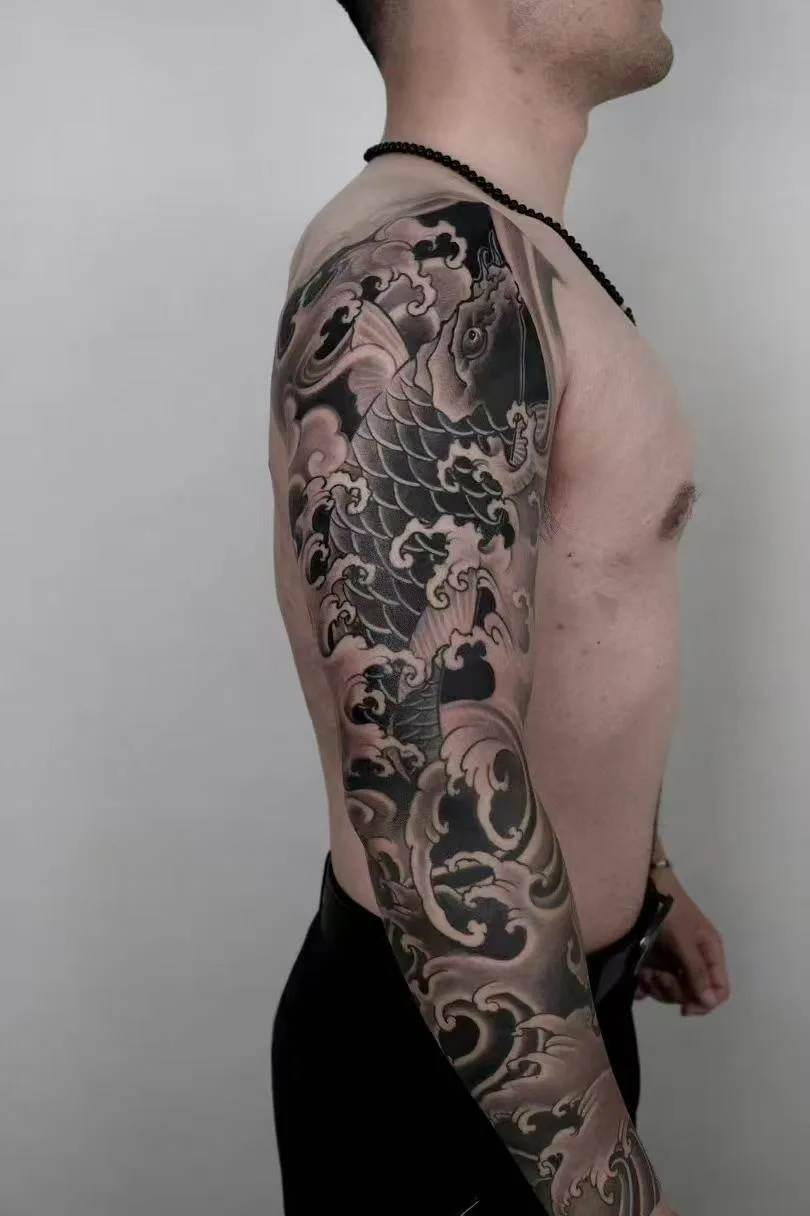
His portfolio moves through Black & Grey Realism, Old School, New School, and Neo-Traditional tattooing. Clean linework holds the structure together, while controlled shading and readable compositions give each piece room to age.
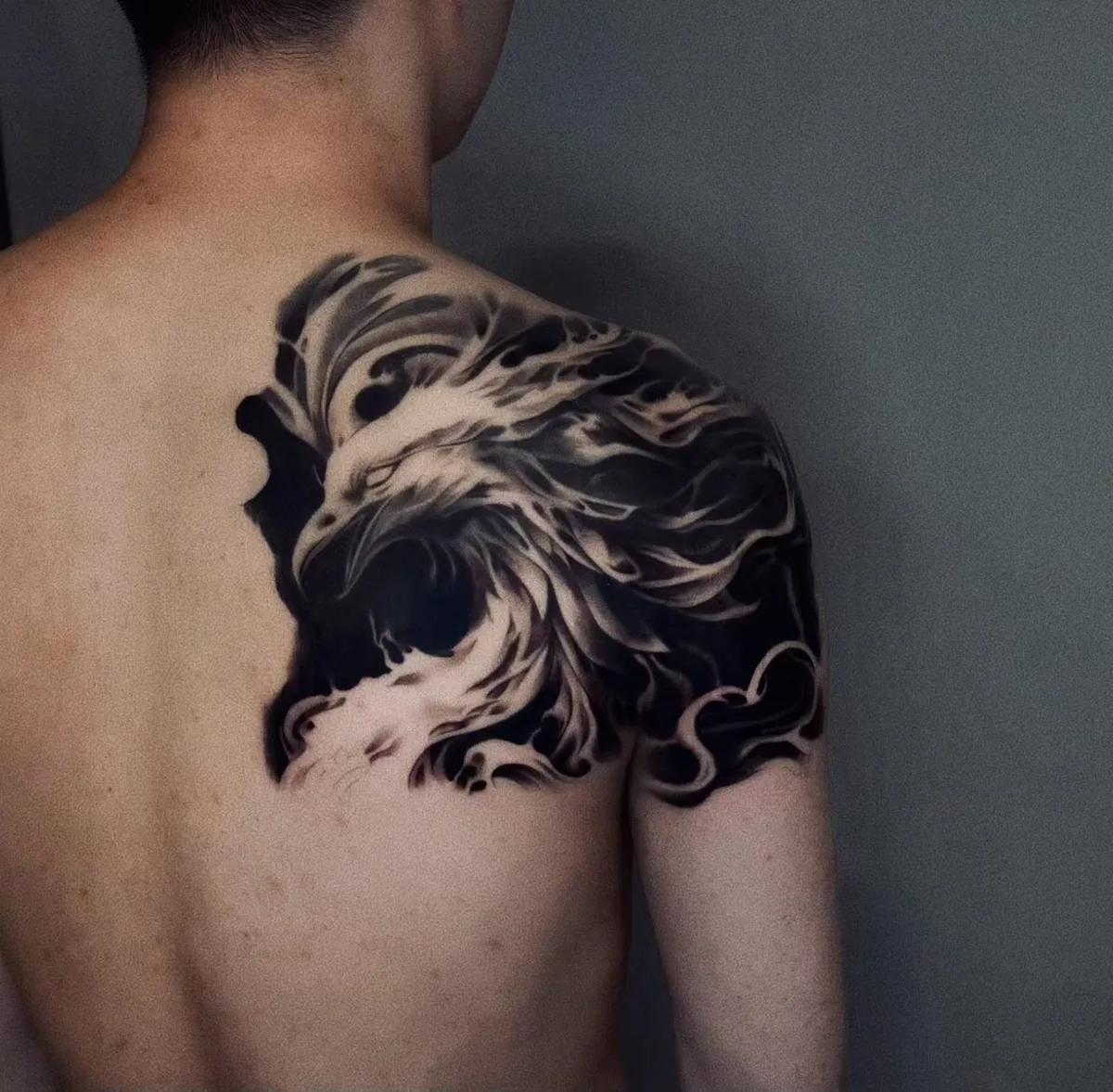
That range matters. Xu treats style as a working vocabulary, adapting its visual rules to the client’s story rather than forcing every idea through one recognizable formula. A sensible position, frankly.
Here, Xu discusses technique, cultural context, a deeply personal memorial tattoo, China’s changing tattoo scene, convention judging, and his plans for international exchange.
You have been tattooing for over 11 years. Looking back at your earliest work and comparing it to what you create today, what has changed the most – your technique, artistic vision, or attitude toward the profession?
– I’ve tattooed for more than 11 years. All three areas have grown, but the biggest change is my attitude toward this profession.
“Yet learning to respect the weight of every mark on skin defines who I am as an artist today.”
At first, I focused purely on technique: clean lines, stable ink saturation, and good healing. I chased popular styles and copied references, only hoping to prove I could finish the design.
Over time, my skills and artistic vision matured. I learned to tailor designs to each client’s body shape and consider how tattoos will age on skin decades later.
Practice improves technique; experience broadens vision. Yet learning to respect the weight of every mark on skin defines who I am as an artist today.
From 2018 to 2020, you worked at Tai Cool Tattoo before joining Lucky7 Tattoo. How did these two stages of your career differ, and what professional goals did you set for yourself during each period?
– Tai Cool Tattoo was a crucial growth phase from 2018 to 2020. I focused heavily on consolidating my foundational tattoo skills, practicing diverse styles, and accumulating client experience. My main goal then was to become a reliable tattoo artist with solid craftsmanship.
After joining Lucky7 Tattoo, I entered a brand-new phase. Instead of merely refining basic technical skills, I began to develop my own artistic language and personal style.
Your portfolio combines Realism, Black & Grey, Old School, New School, and other styles. What connects these different approaches? Are there particular elements that make your work recognizable regardless of the style?
– I pursue balanced composition, solid structure, and thoughtful storytelling in every piece. Even when switching between styles, I keep clean execution and focus on the client’s personal narrative. This attention to structure and narrative is what makes my work recognizable.
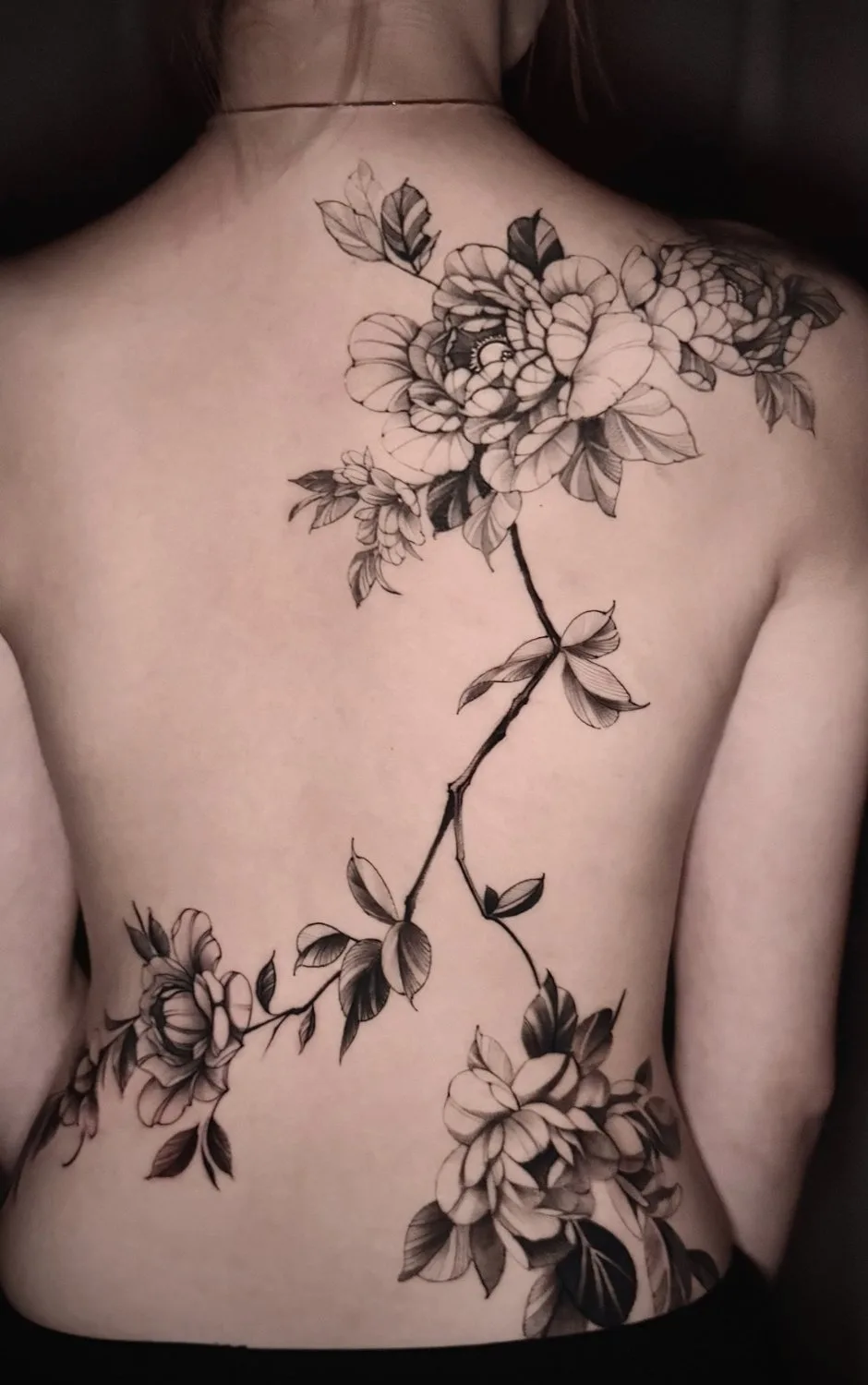
Today, you focus particularly on Western Realism and Neo-Traditional tattooing. What attracts you to these styles, and what artistic possibilities do you find in each of them?
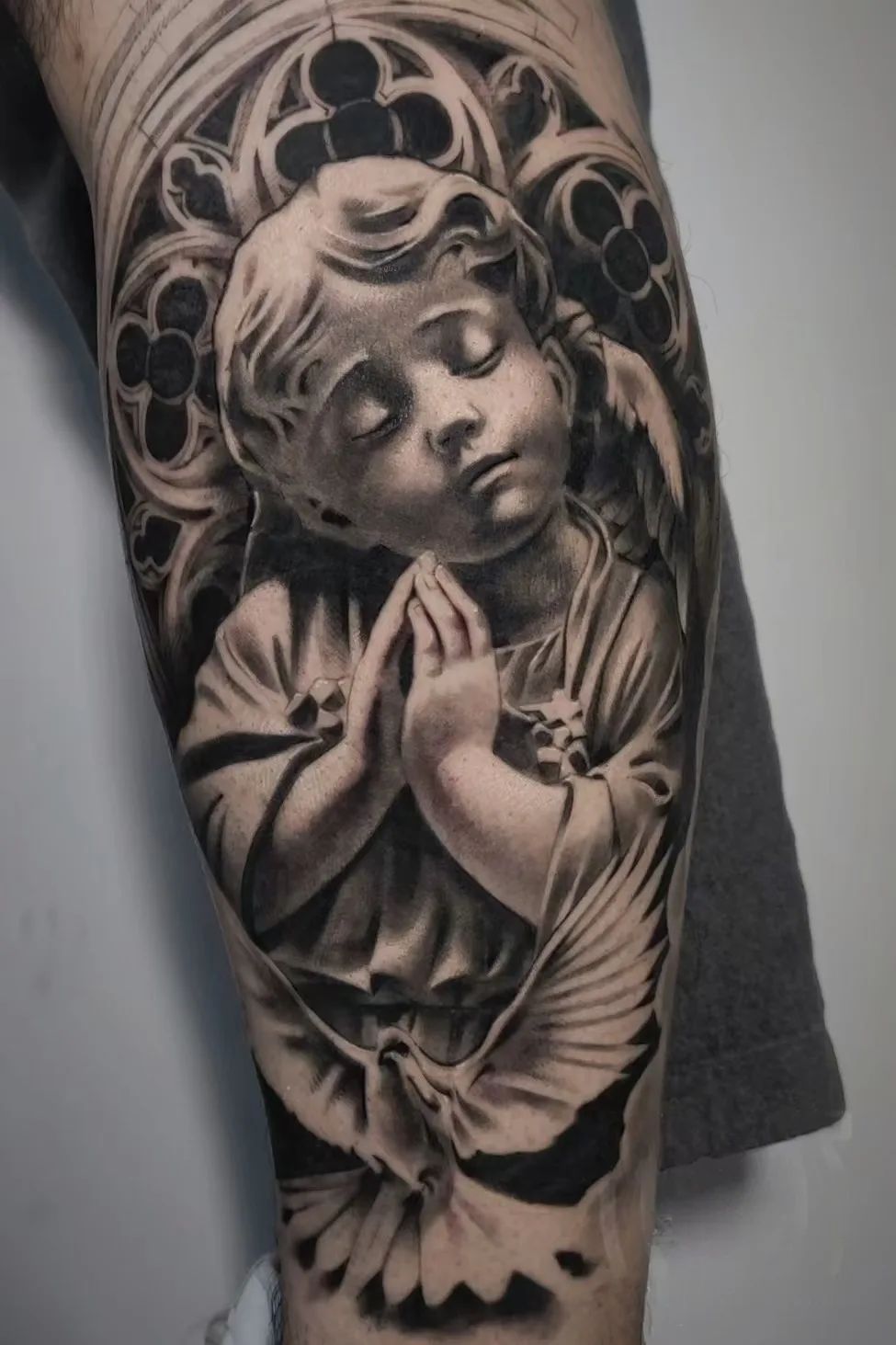
– Western Realism draws me in for its power to capture subtle texture, light, and shadow. It lets me portray subjects with depth and authenticity. The artistic potential lies in conveying realistic emotion and details while still adapting the artwork to fit the body and stand the test of time.
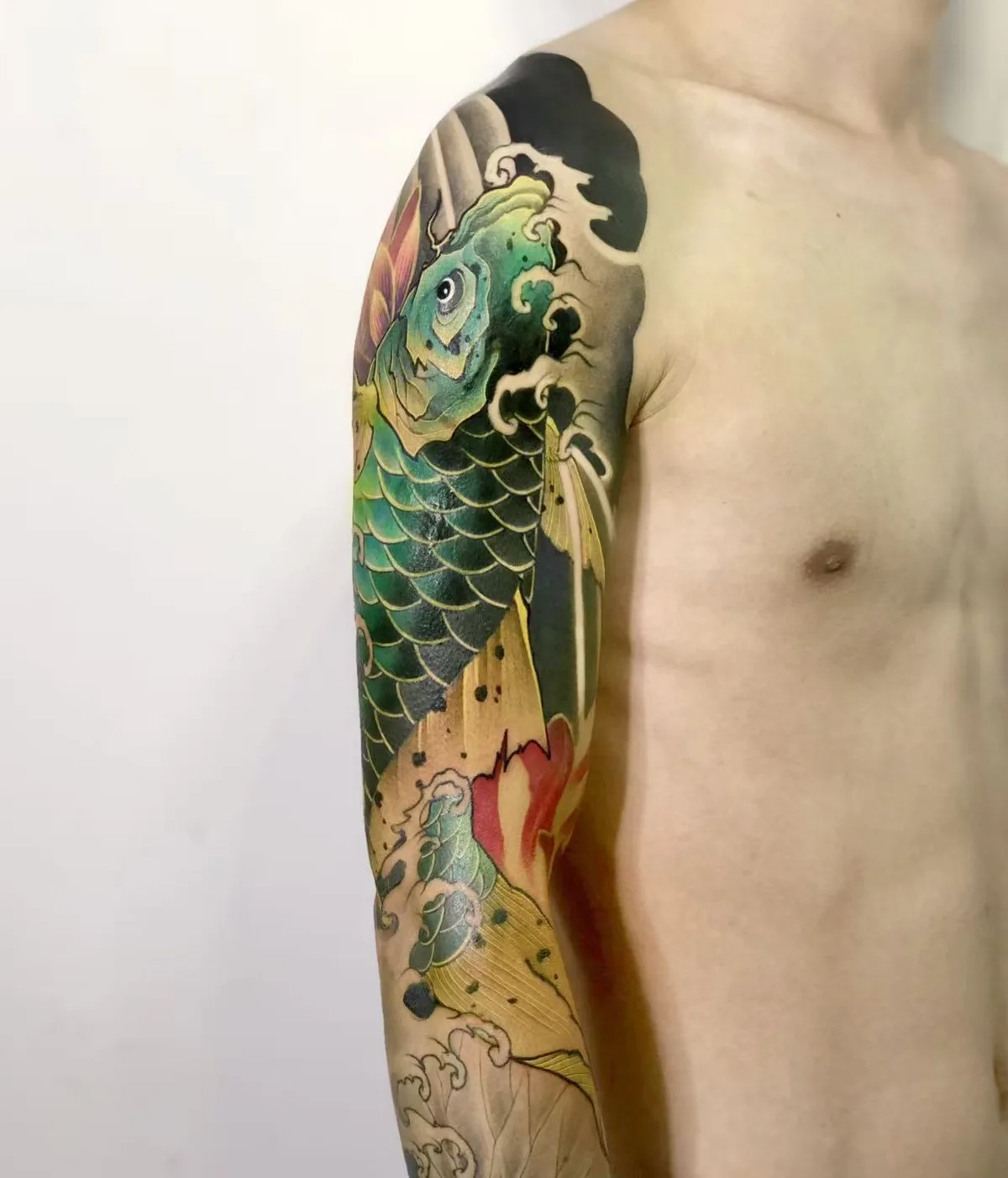
Neo-Traditional, on the other hand, uses bold outlines, rich contrast, and stylized shapes. It gives me greater freedom to reinterpret themes. I can balance decorative beauty with narrative, creating striking imagery that remains clear and readable decades later.
Both styles share the same core: a solid structural foundation. They offer different paths to turn a client’s idea into permanent art on skin.
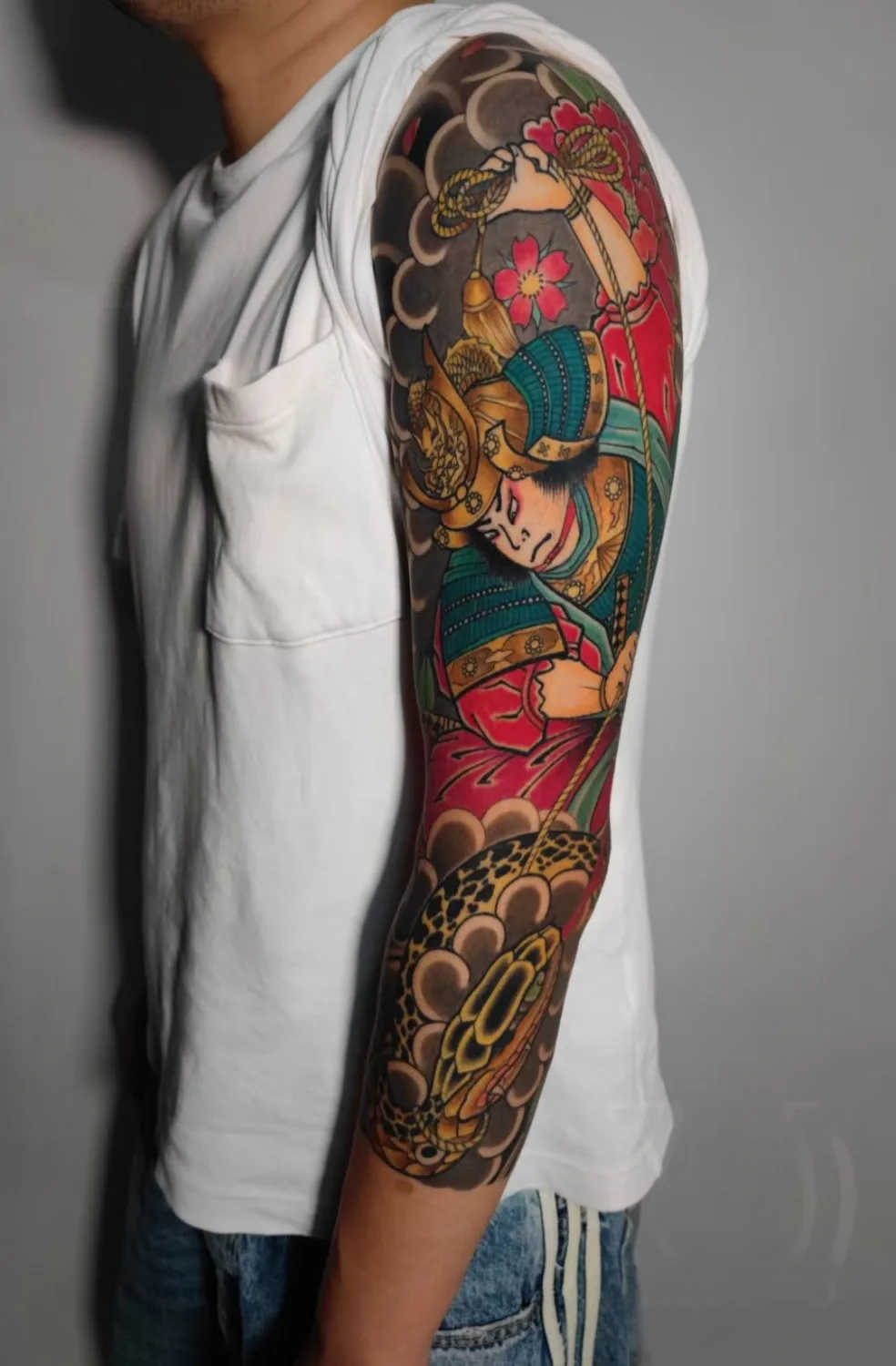
Western tattooing has its own history and visual traditions. How do you study these traditions and incorporate them into your work? How important is it for you to understand their cultural background rather than simply reproduce the imagery?
– I learn Western tattoo traditions through classic tattoo publications, master artists’ portfolios, and attending international tattoo conventions. I study the origin of motifs, the evolution of lines, and shading logic, then absorb these essences instead of copying directly.
“If I only copy the surface image, the work will lack soul.”
Understanding cultural context is extremely important. If I only copy the surface image, the work will lack soul. Knowing the story and cultural meaning behind each symbol helps me interpret the design properly.
This knowledge lets me make reasonable adjustments to fit the client’s body and personal story. I respect these traditions while still creating original custom tattoos that carry genuine meaning.
Tell us about your artistic education. Where and how did you learn to draw? Did you receive formal training in tattooing, or did you develop your tattooing skills independently?
– I attended a professional art academy. My drawing foundation was built through years of self-study. I devoted countless hours to sketching, studying master paintings, and teaching myself anatomy and light and shadow.
Even today, I never stop learning. I visit exhibitions, study art books, and communicate with international artists to keep refining my drawing and tattooing ability.
Tell us about a tattoo in which you were able to bring a particularly interesting artistic idea to life. How did the concept develop, and what creative decisions made this piece special to you?
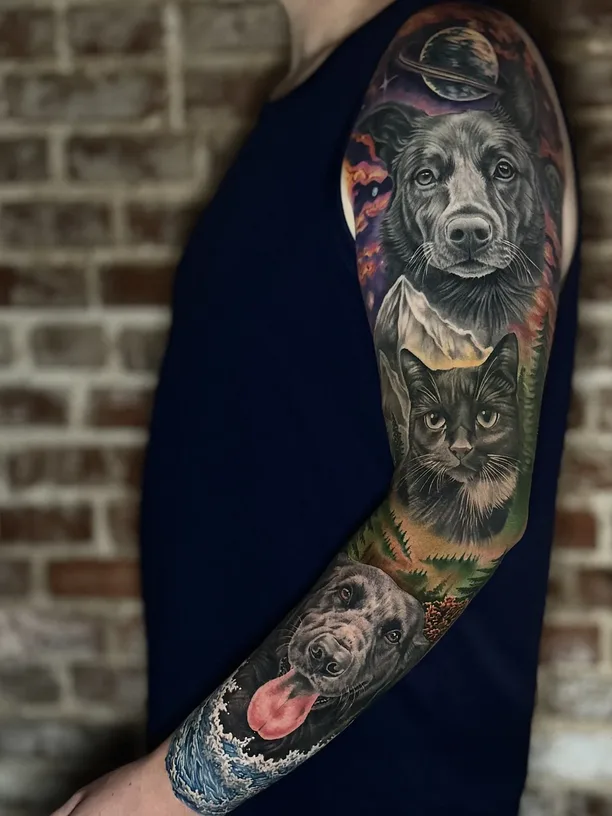
– One memorable custom tattoo features the client’s grandmother and his beloved cat. He wanted a way to keep his family close forever. We refined the concept and blended all the elements together.
For execution, I used black-and-grey realism to faithfully recreate the reference photo. I added the cat and soft luminous accents to keep the composition from feeling dull and heavy.
What makes this piece special is that it was not merely a pretty image. It merged the client’s personal story with solid artistic execution, turning his emotional memory into permanent art on skin.
Over the years, you must have encountered projects that pushed you beyond your usual limits. Which one presented a particularly significant professional challenge, and what did you learn from it?
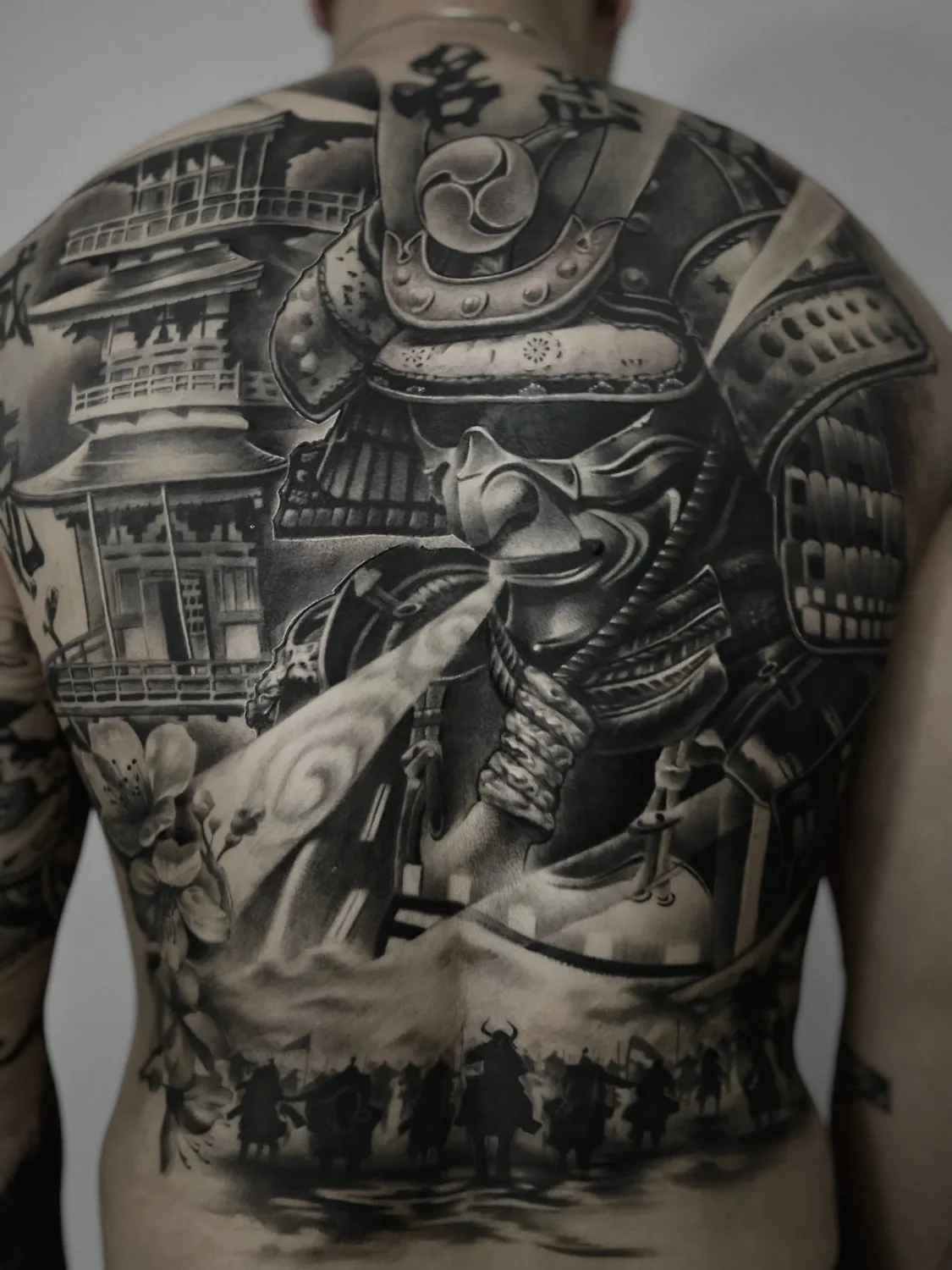
– I once took on a large, full-back, black-and-grey realism piece. The client wanted multiple portraits combined in one composition, with fine facial details and seamless transitions between different figures.
The biggest challenge was balancing the density of details across the whole back. I needed to avoid overworking certain areas while ensuring all portraits stayed recognizable even as the skin ages.
This project forced me to plan the layout more carefully before starting. I learned to prioritise the overall harmony of the whole piece instead of only focusing on local details.
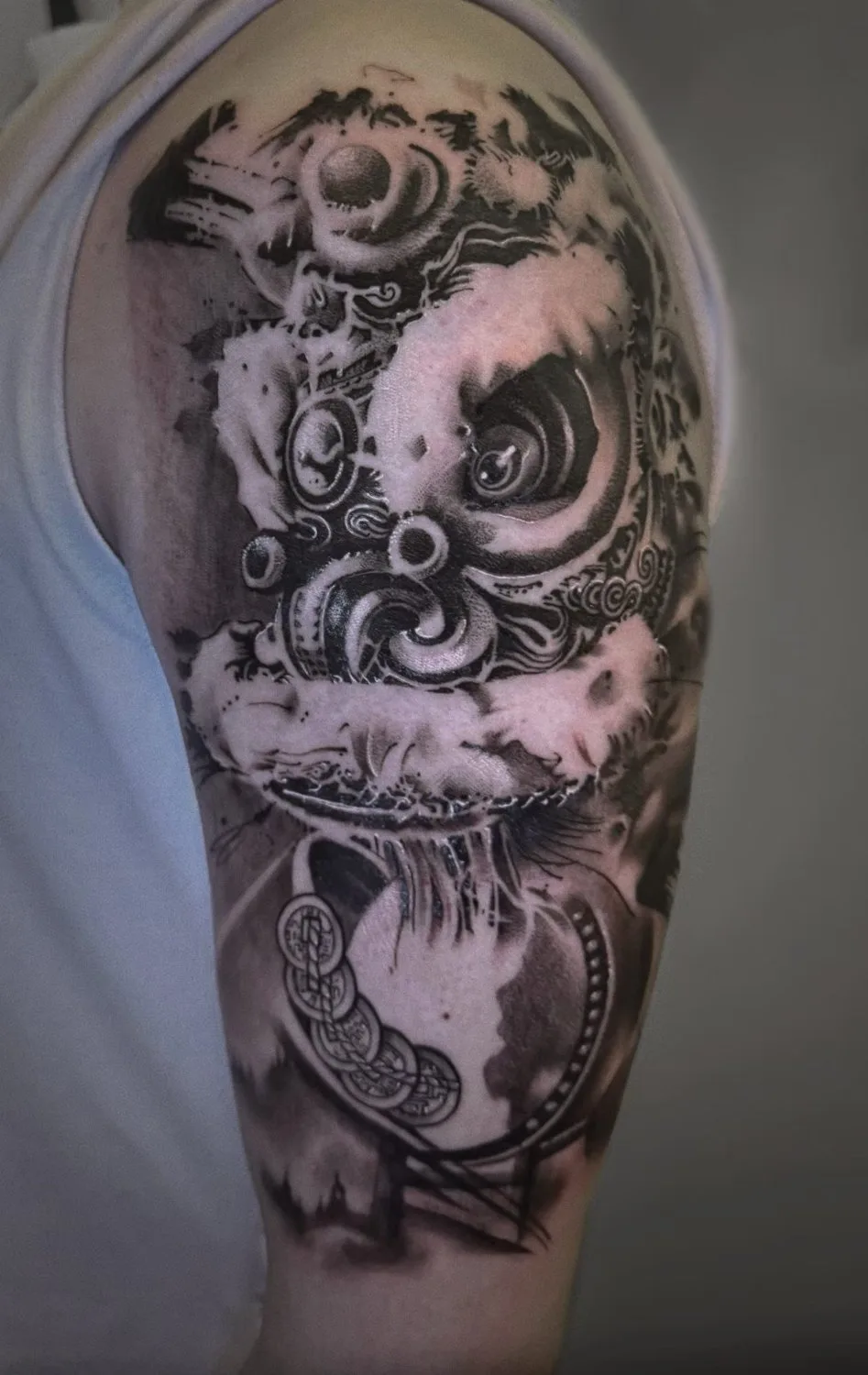
It taught me that excellent tattoo art is not just about precise rendering. Good planning and long-term vision for how the tattoo ages are equally vital.
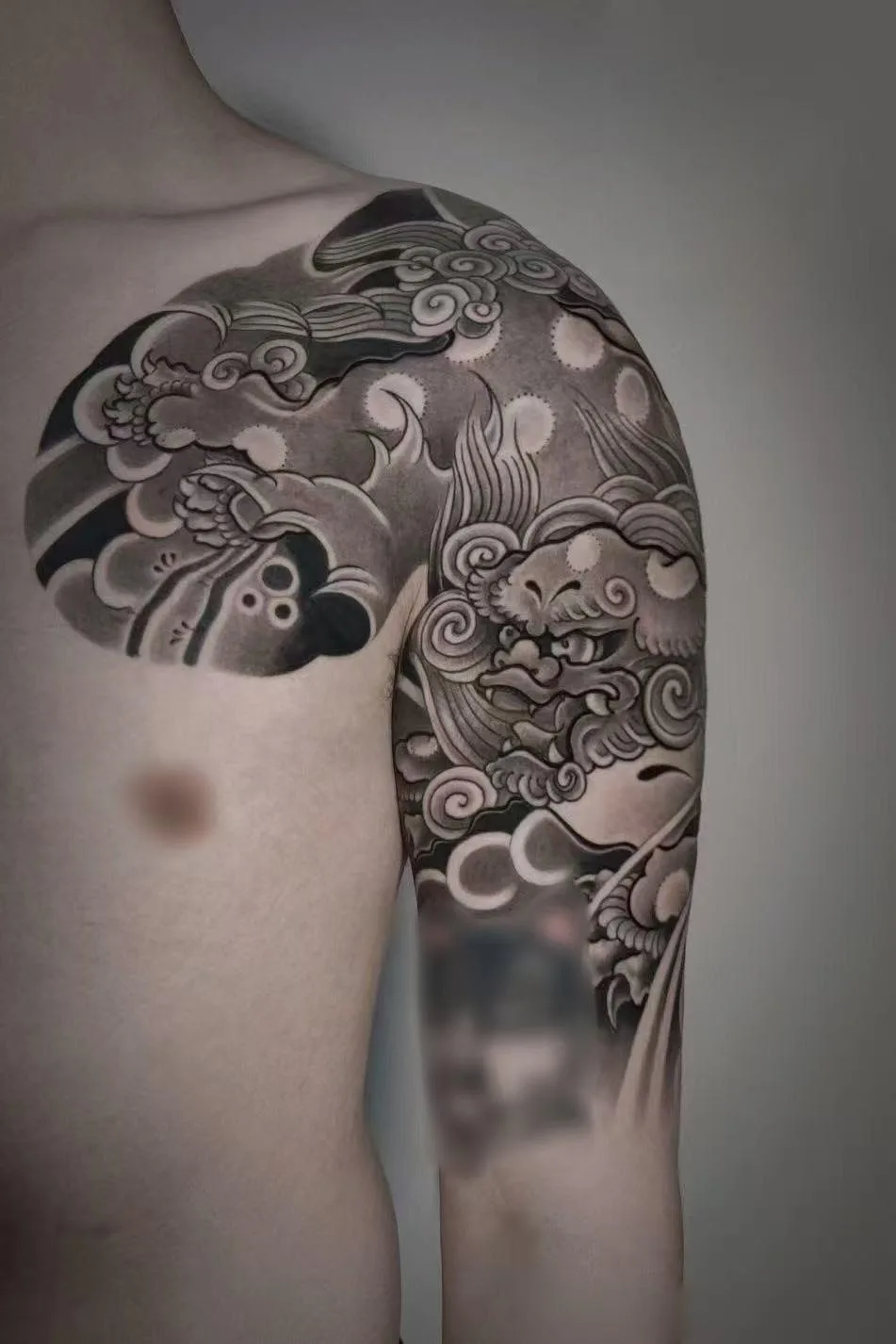
You have witnessed the development of China’s tattoo industry for more than a decade. How have clients’ artistic preferences and the skill level of local tattoo artists changed during this time? Which styles or trends are particularly interesting in Shanghai today?
– I have watched China’s tattoo scene evolve for over a decade. In the early days, most clients picked ready-made flash designs and prioritised auspicious symbolic motifs. Nowadays, clients crave original custom work, and they care more about personal stories behind the tattoo rather than just surface visuals.
Local artists’ craftsmanship has improved dramatically. More artists have solid fine-art backgrounds, and many travel to conventions, exchange ideas with international creators, and master global techniques while preserving their own artistic thinking.
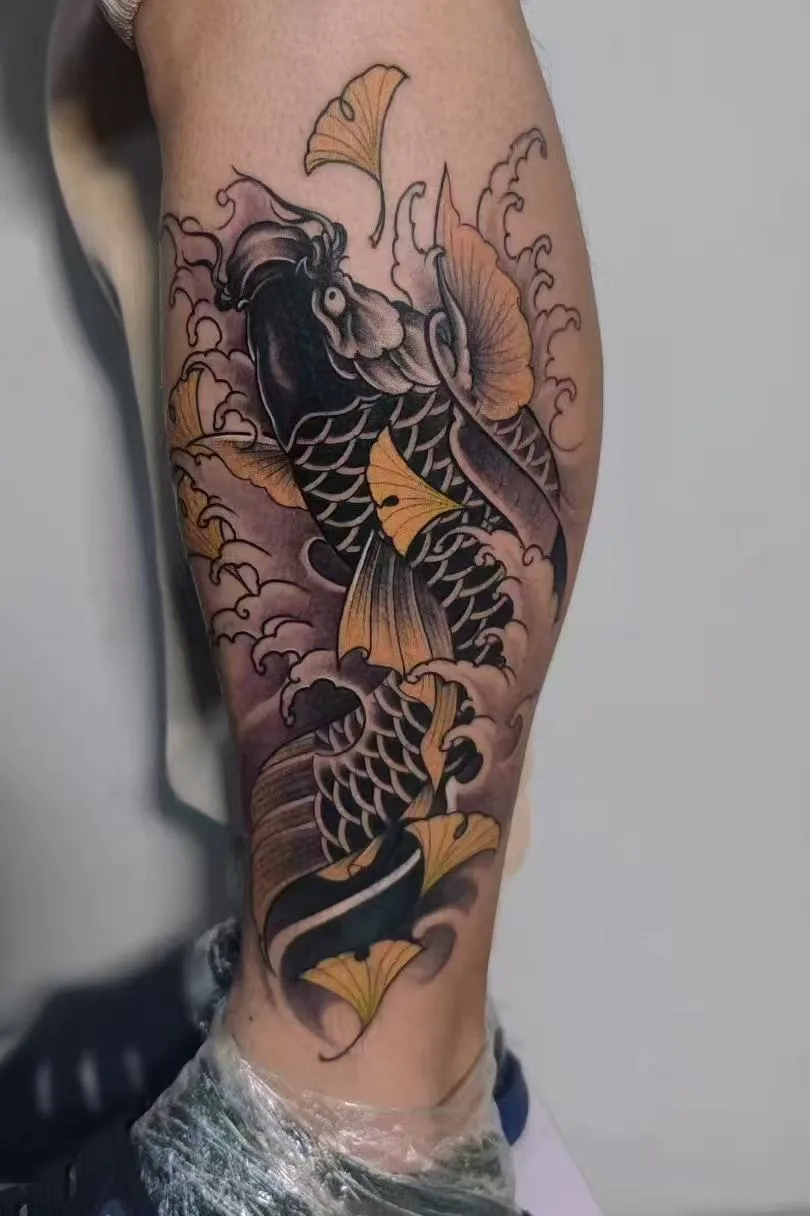
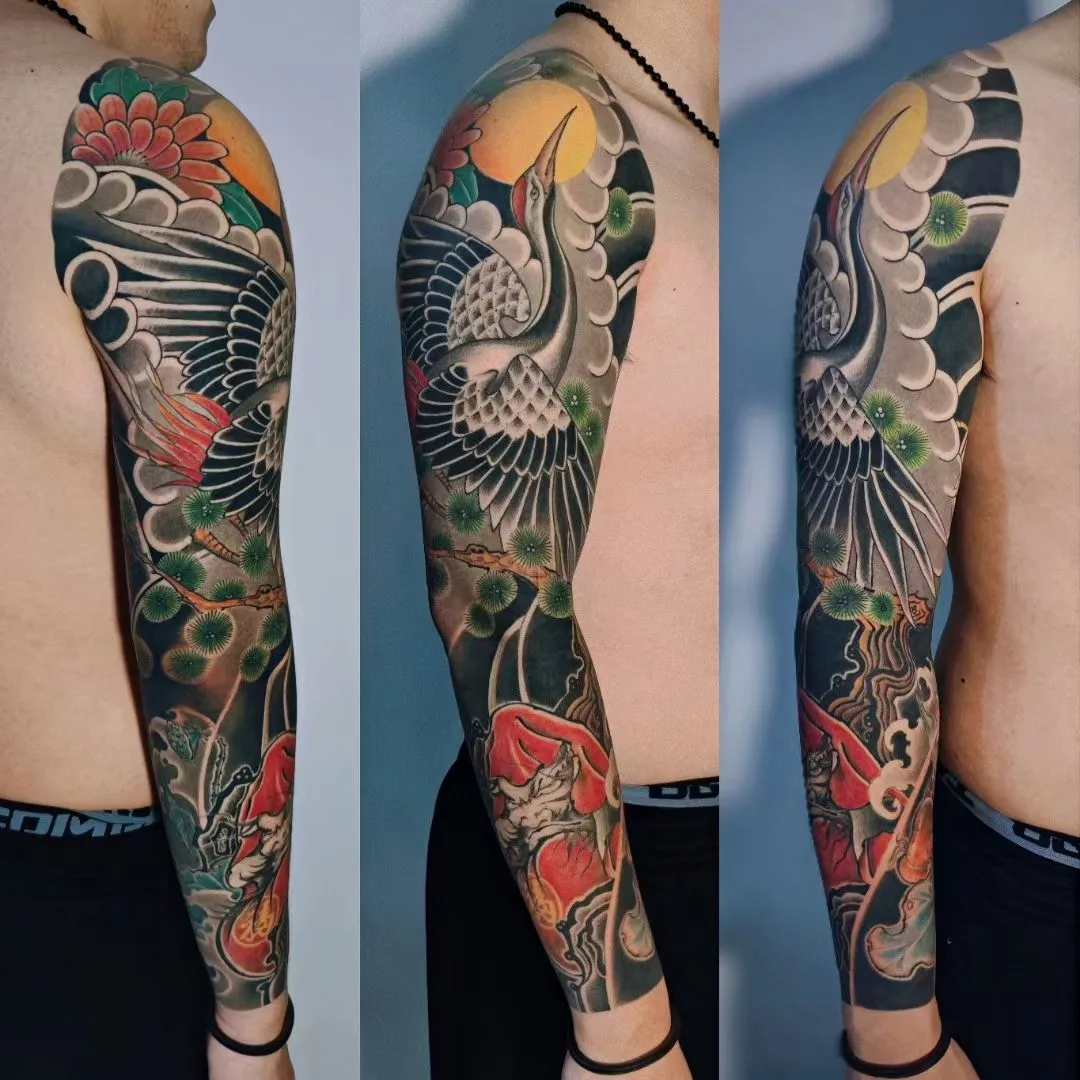
As for Shanghai, it is a diverse and open market. Black & Grey Realism and Neo-Traditional remain popular. Fine-line minimalist tattoos are also trending. What I find most interesting is that clients freely mix Eastern and Western visual elements to build unique personal tattoos.
Tell us about your experience participating in tattoo conventions and professional exhibitions. Which events did you attend early in your career? Which conventions or exhibitions have been the most significant for your professional development, and why?
– Early in my career, I visited tattoo conventions mainly as an observer. I came to study works from different artists and absorb new ideas.
Later, I began joining conventions as a contestant and eventually served as a judge. I have taken part in the Oriental Tattoo Convention, Badu Tattoo Expo, the 7th Qing Tattoo Convention, and Changchun International Tattoo Show.
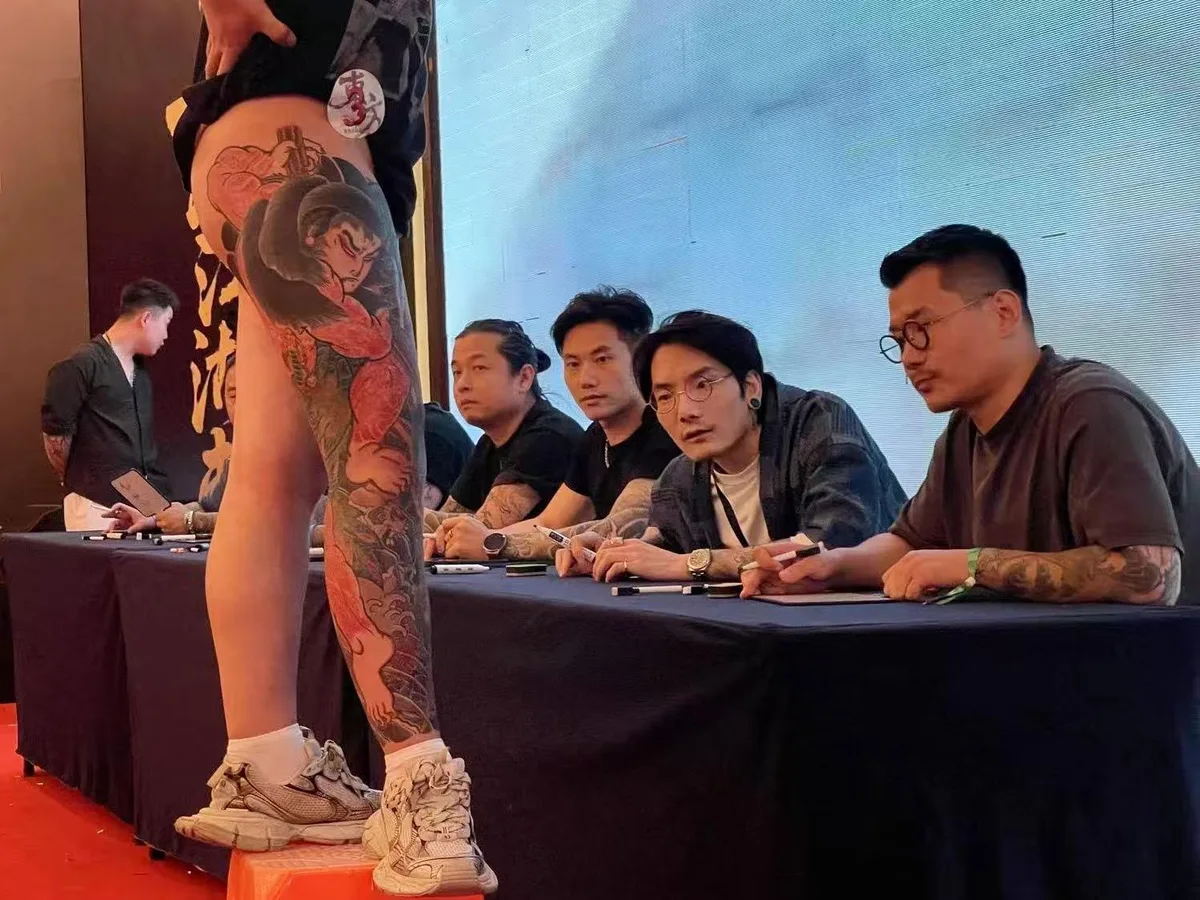
Among them, the Oriental Tattoo Convention and the 7th Qing Tattoo Convention were the most influential. These events gathered top artists nationwide. Competing and judging there pushed me to re-examine my own standards, exchange techniques face to face with peers, and broaden my artistic vision.
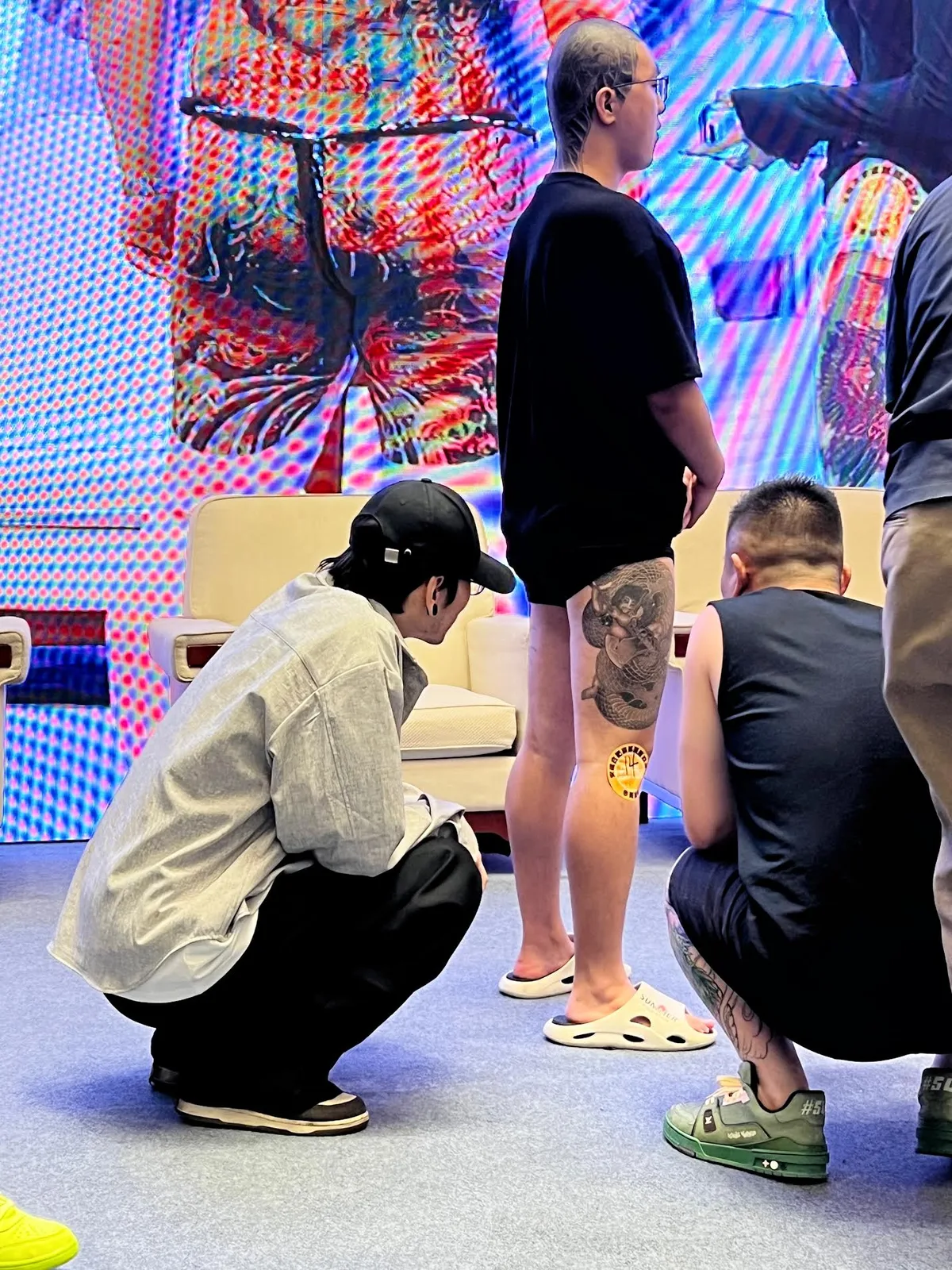
Conventions are more than competitions. They are important platforms to communicate, reflect on my work, and keep moving forward.
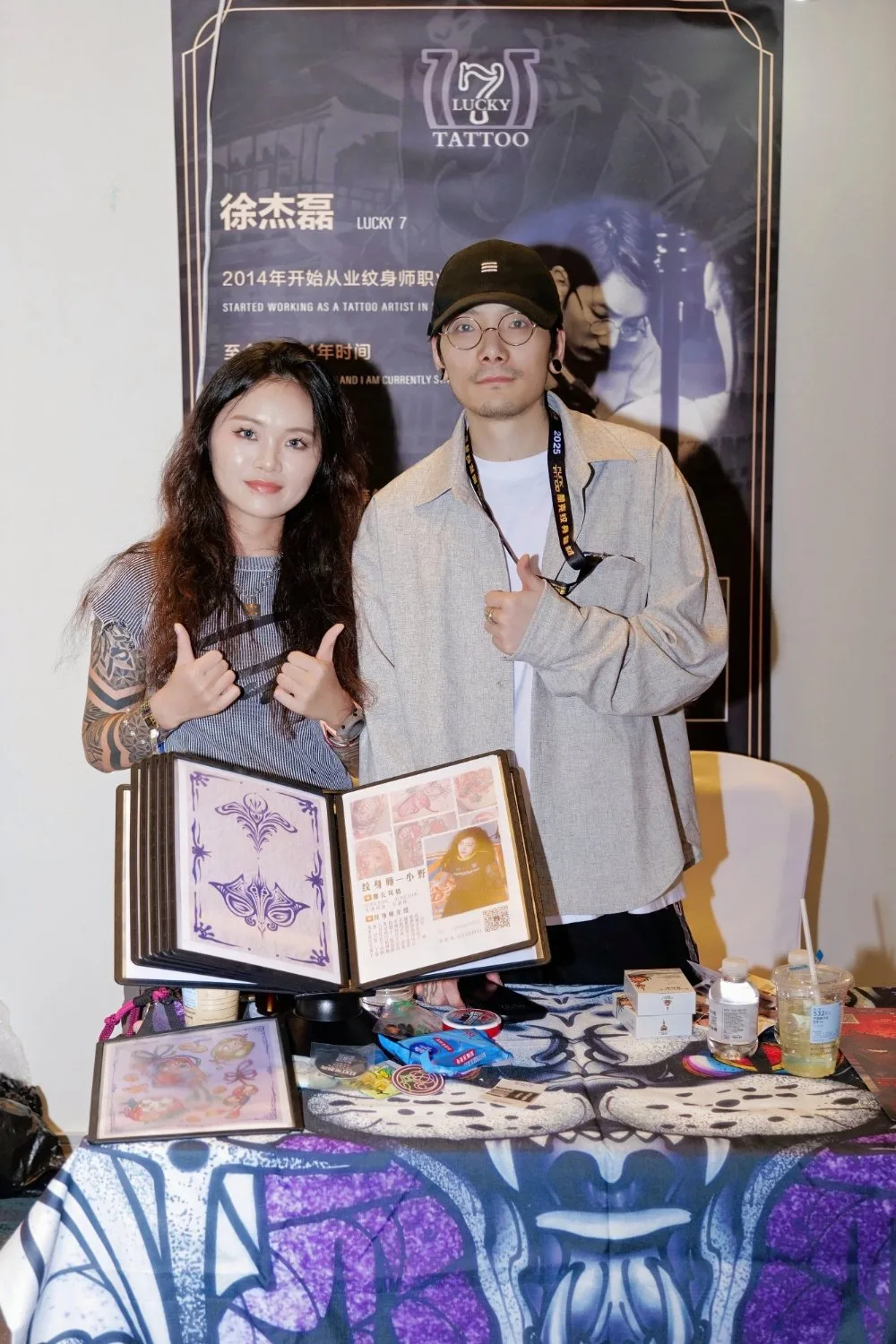
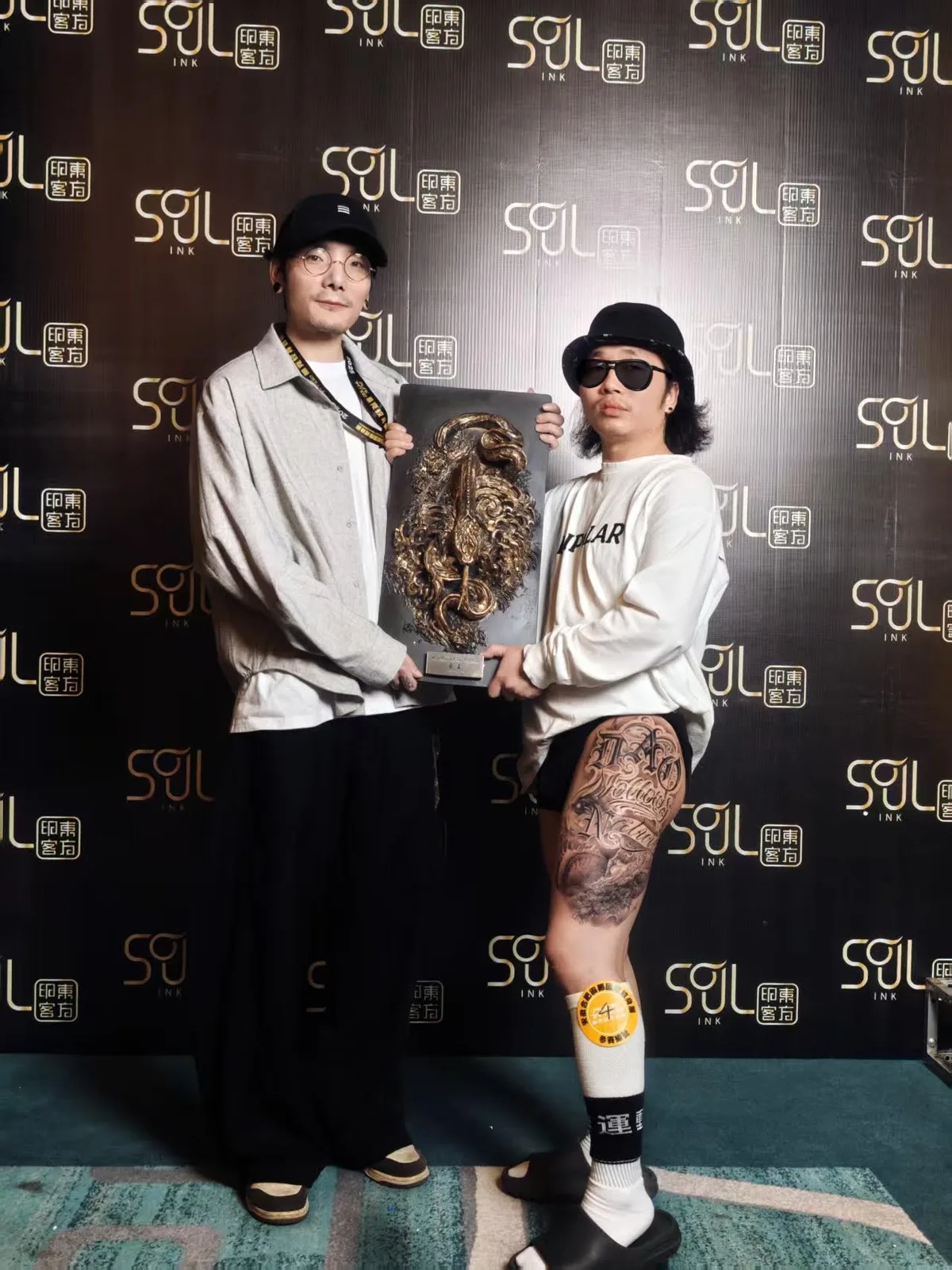
What awards and competition placements have you received throughout your career? Please provide a complete list of your professional achievements, including event names, years, competition categories, and placements. Also, tell us about your Third Place award at the 2025 Badu International Tattoo Convention – which tattoo did you enter in the competition?
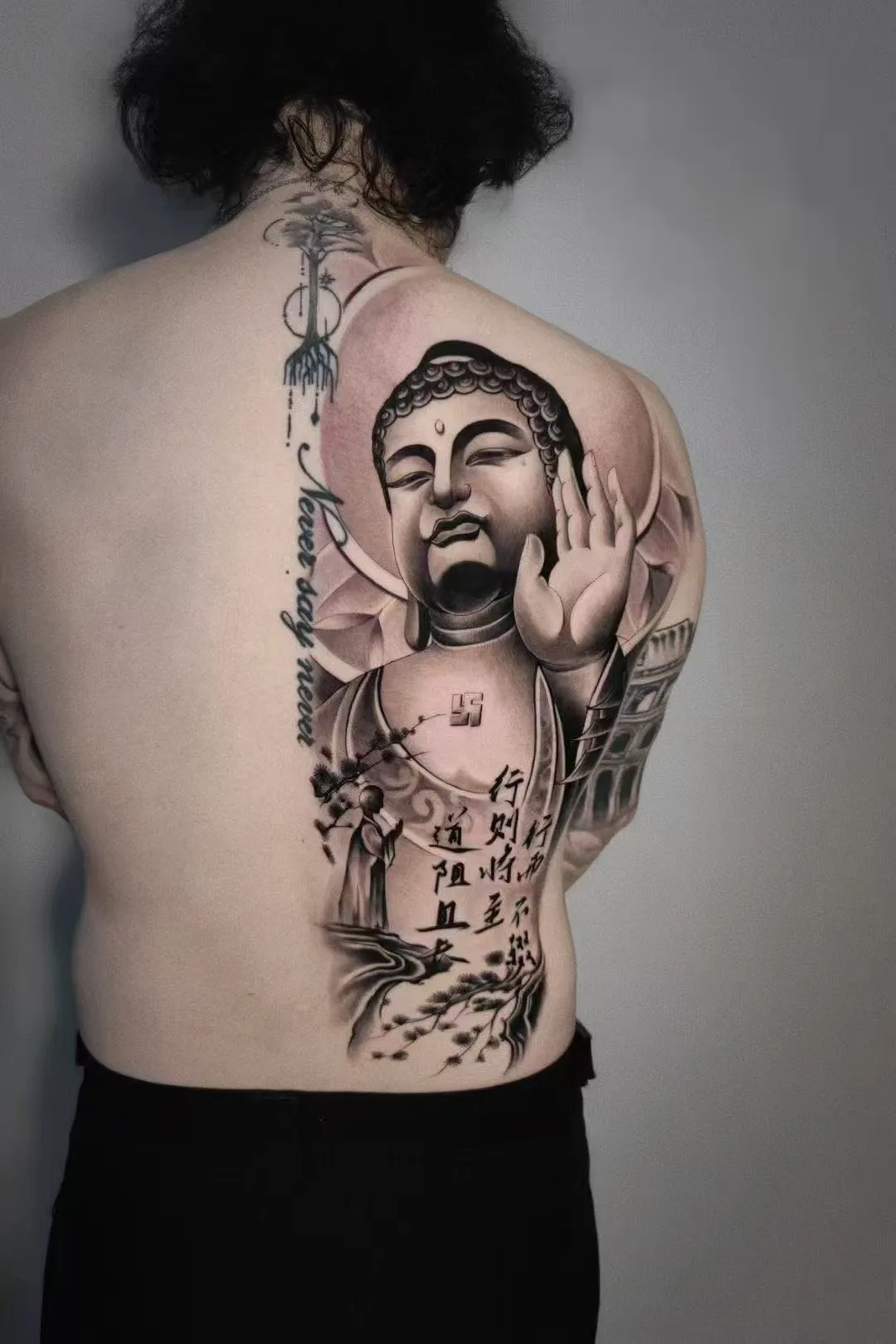
– 2025 Badu International Tattoo Convention | Third Place, Western Style Group. For the 2025 Badu International Tattoo Convention, I submitted a black-and-grey realistic tattoo combined with script lettering. The artwork depicted a dragon with traditional Chinese elements.
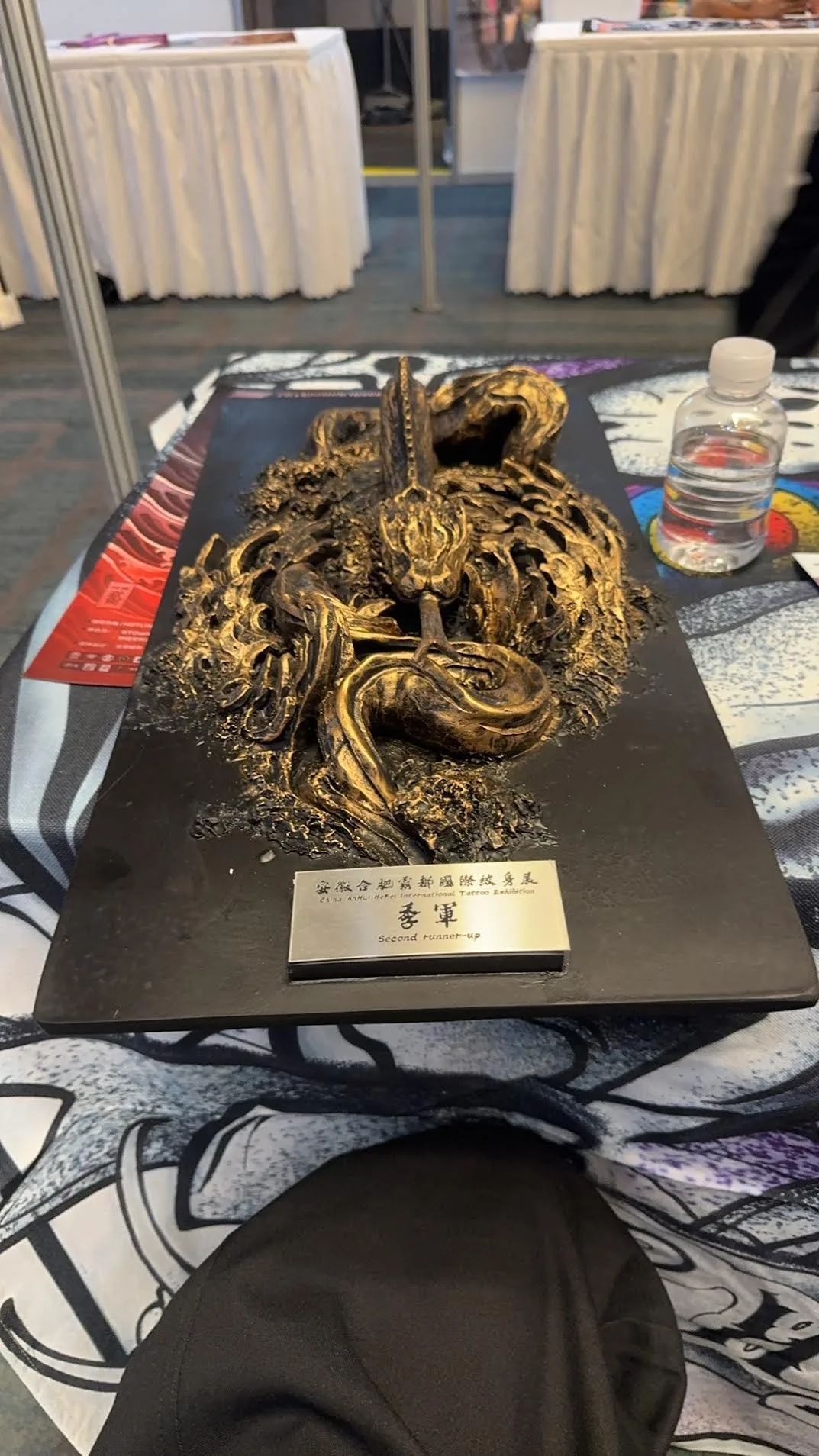
This competition pushed me to refine my control over shading depth and composition. I needed to balance delicate textures of the dragon, the flow of the script lettering, and overall visual harmony while taking into account how the tattoo will age on skin over time.
Beyond this award, I have served as a judge at multiple tattoo conventions: the Oriental Tattoo Convention, the 7th Qing Tattoo Convention, and Changchun International Tattoo Show. These judging experiences are also key professional achievements for me.
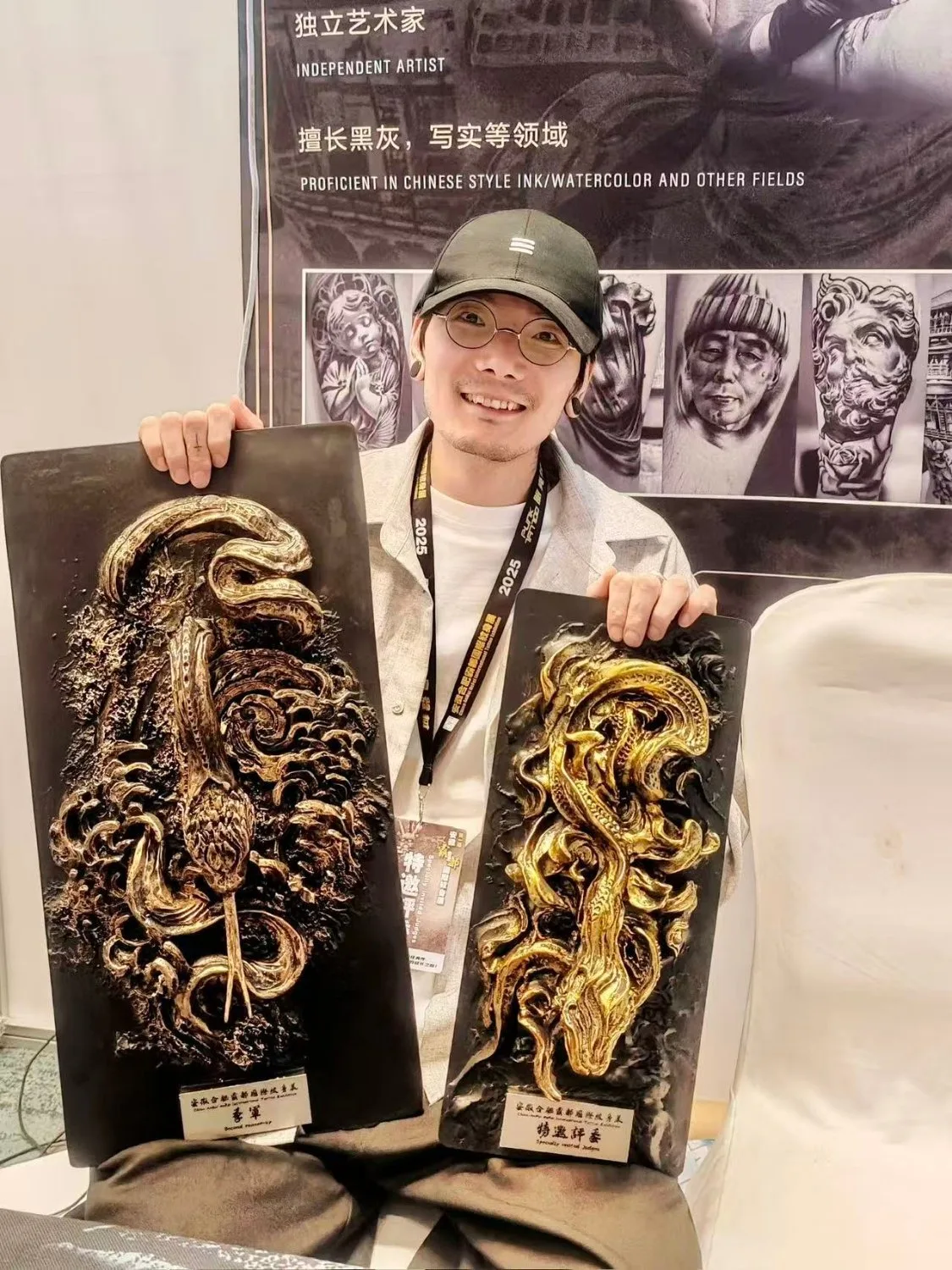
In 2025, you were invited to serve as a judge at the Oriental Tattoo Art Exhibition and the Badu International Tattoo Convention. How did these invitations come about? What does the opportunity to evaluate the work of fellow tattoo artists mean to you, and what did you learn from serving as a judge? Have you received invitations to judge any other professional events?
– The organisers extended the invitations after seeing my competition achievements and my consistent body of custom tattoo work. They recognised my technical standards and industry experience.
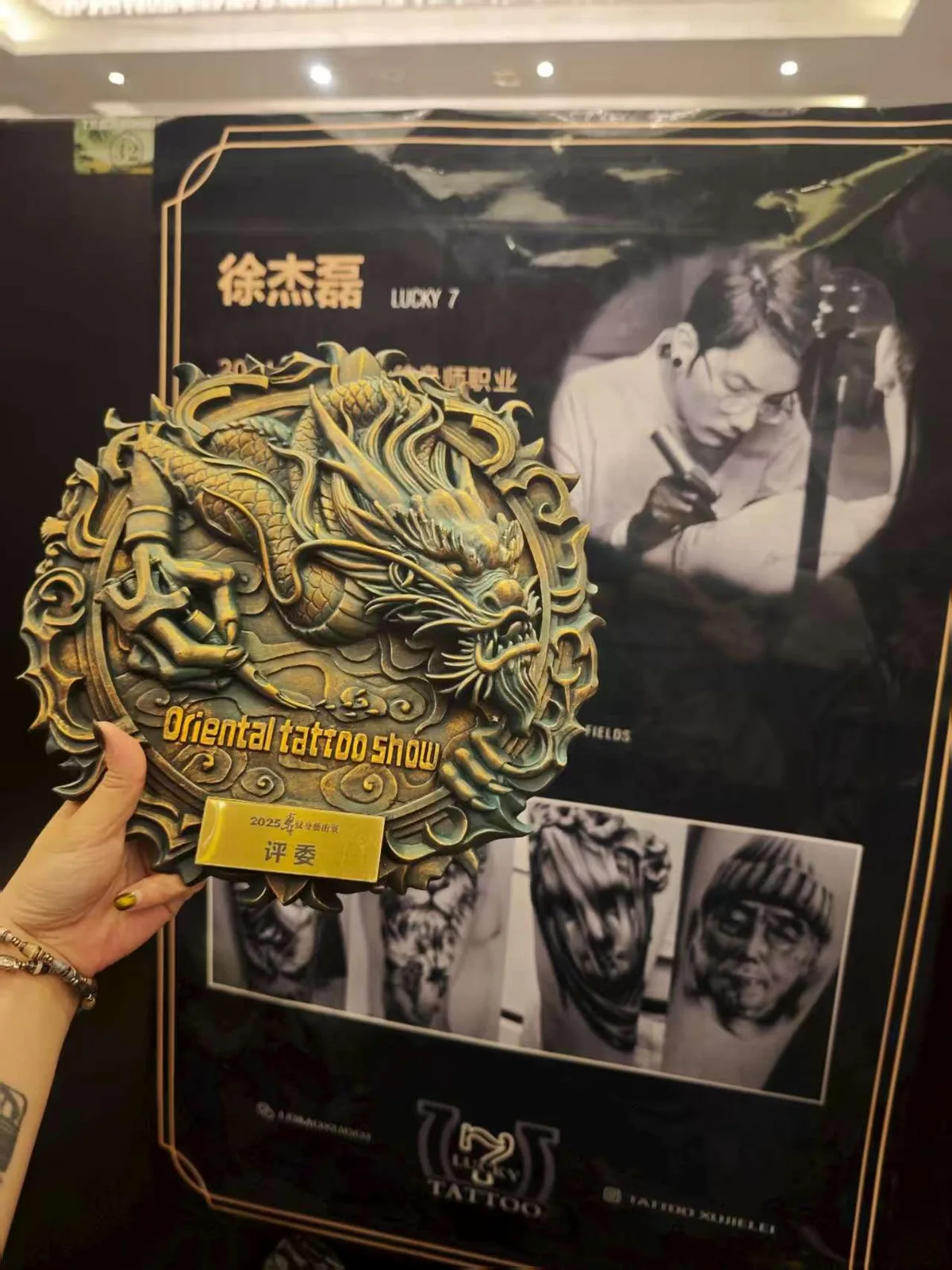
For me, judging is both an honour and a serious responsibility. I must evaluate each piece fairly, respecting every artist’s dedication and creative vision.
Judging also shifted my perspective. Examining a wide range of works helps me observe different creative approaches, rethink my own standards, and gain new insights into tattoo craftsmanship.
You are developing your career internationally. What opportunities for creative exchange and collaboration with artists from other countries interest you most? What would you like to achieve professionally over the next few years?
– I am eager to exchange artistic concepts and tattoo techniques with international artists. I hope to discuss how different cultures shape tattoo aesthetics and explore cross-cultural collaborative custom creations.
I also want to participate in international tattoo conventions, observe top artists’ live work, and share my understanding of Eastern elements within realistic tattooing.
For the next few years, my main goal is to keep refining my craft, build wider global artistic connections, and create cross-border tattoo works that combine Eastern cultural charm with Western tattoo language.