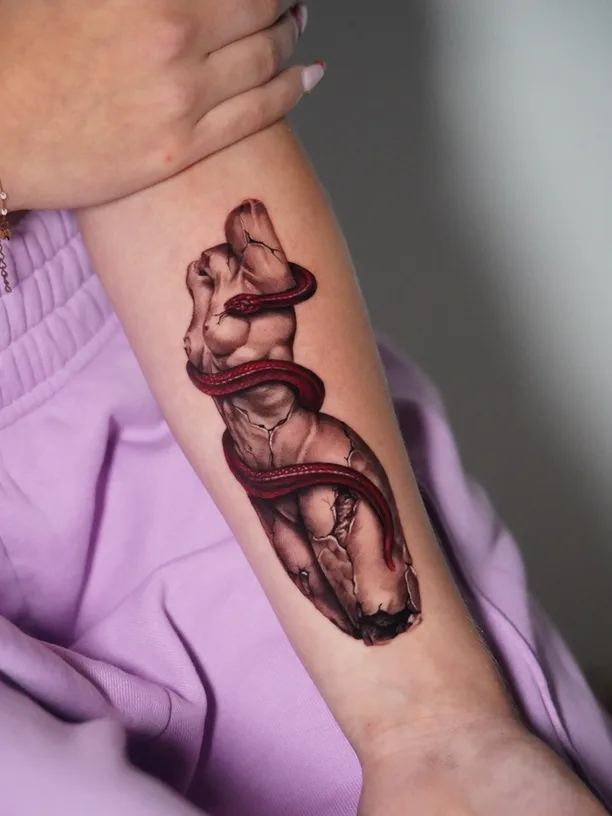
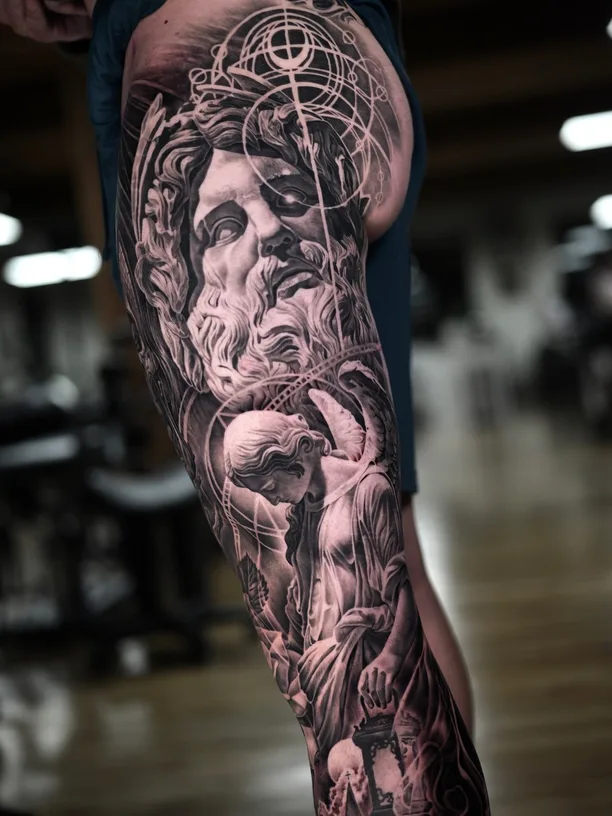
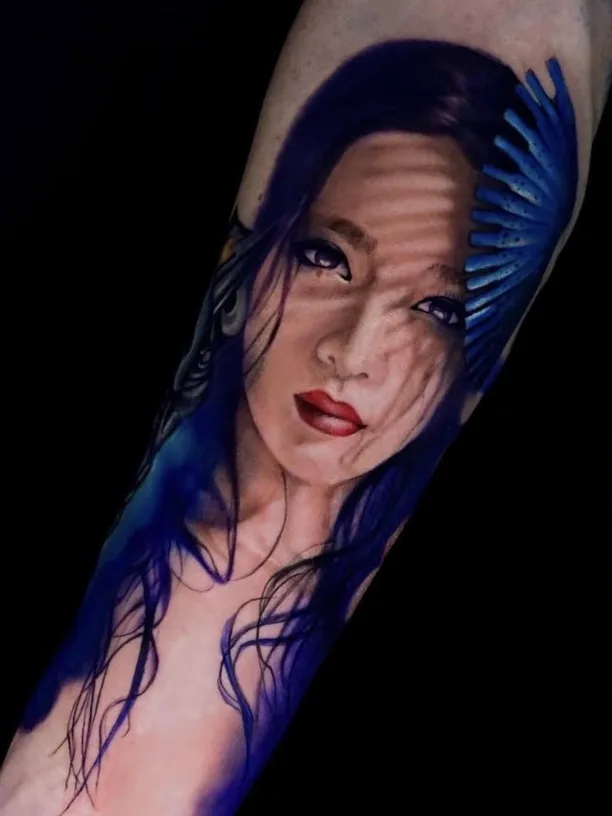
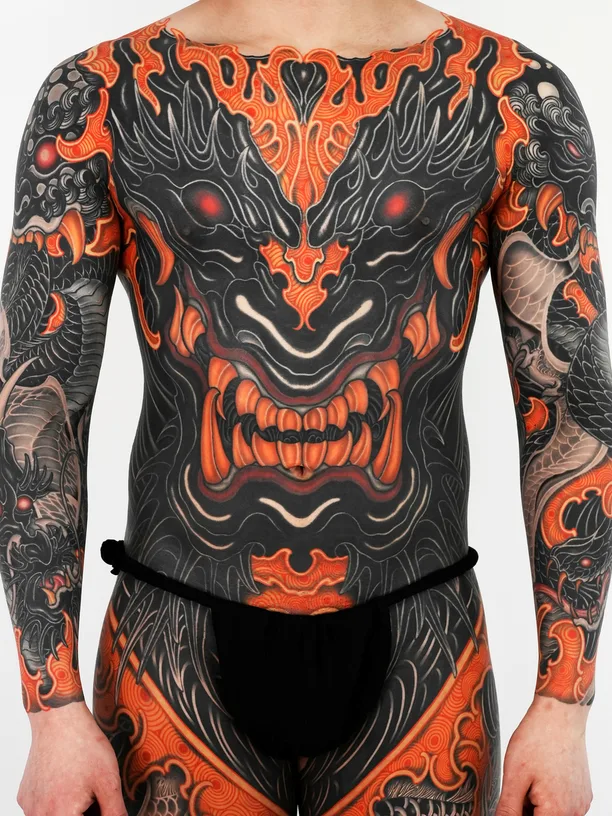
Artem Sachko is a Moscow-based tattoo artist with over 12 years of experience. His main focus is realism, which he often combines with graphic elements, Japanese influences, color, and black & grey. Large-scale projects and challenging cover-ups that many artists would hesitate to take on are a major part of his practice.
Today, Artem is part of the team at Moscow's Tanto Tattoo Studio. He regularly takes part in tattoo conventions and collaborates with fellow artists. One project created with Egor Odintsov earned them first place in the Best Two-Day Collaboration category at Kazan Tattoo Fest in 2026.
In this interview with iNKPPL, Artem discusses the technical challenges of cover-ups, the longevity of realism tattoos, working with large compositions, and creating a competition piece alongside another artist.
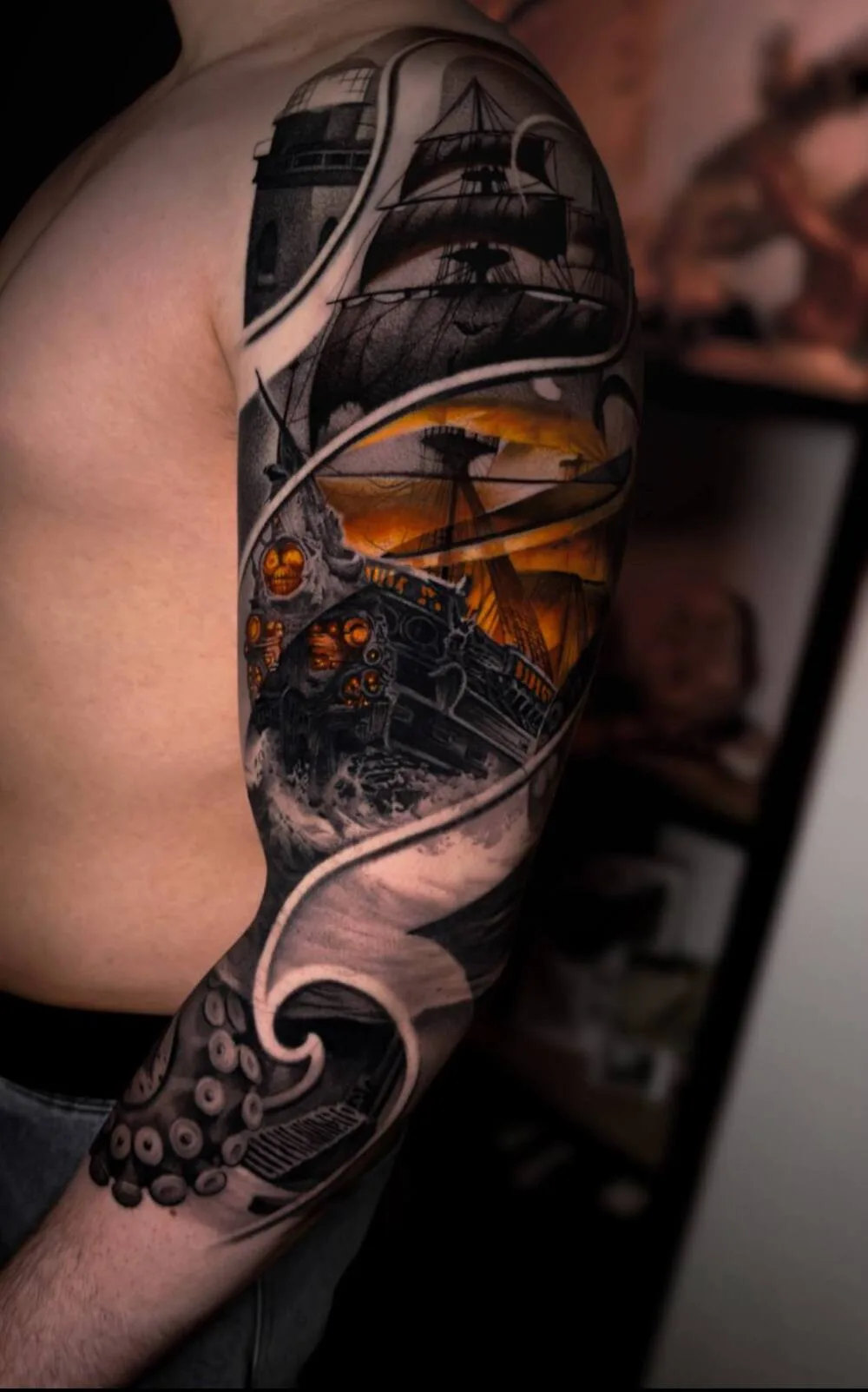
Artem, you've been tattooing for over 12 years. How did your journey into the profession begin?
— Tattooing came into my life by chance. I'd always been interested in drawing, and one day a friend called and said, "I'm going to get a tattoo."
At the time, the tattoo industry seemed like a completely closed world to me, and I knew almost nothing about it. But I was so curious that I asked if I could tag along and watch his session.
As luck would have it, the tattoo artist offered to let me try tattooing my buddy myself. And thank the gods, my friend went along with it. He gave me a chance to try being a tattoo artist.
Literally ten minutes after picking up a tattoo machine for the first time, I stood up and told myself, "I'm going to be a tattoo artist for the rest of my life." That's how it all started, with this slightly sentimental story.
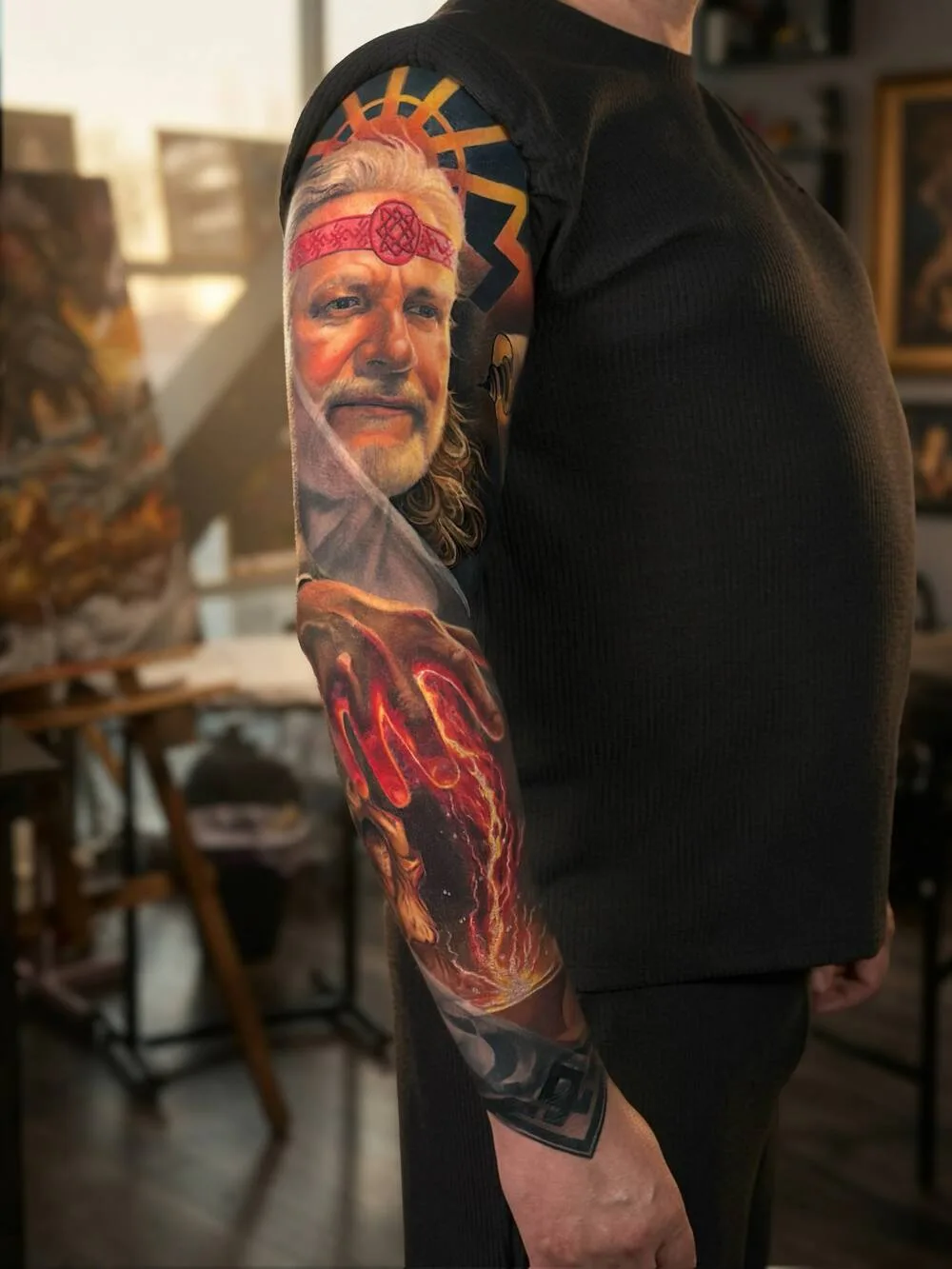
Realism is the main direction of your work, but your portfolio makes it clear that you aren't trying to stay within its traditional boundaries. How would you describe your style today?
— I'm a realist, but not entirely.
To me, realism is about volume, light, texture, and character. At the same time, I don't like it when the body's natural form gets lost in conventional realism. Reproducing an image realistically interests me more as a technical challenge; visually, I'm much more drawn to other tattoo styles.
That's why my work often involves exploration and stylization: realistic techniques combined with stronger, more readable compositions, sometimes incorporating Japanese tattooing, graphic elements, or ornamentation.
I want a tattoo to be interesting to look at up close, from two meters away, and years down the line.
I suppose the most accurate way to put it is that I work with different forms of stylized realism.
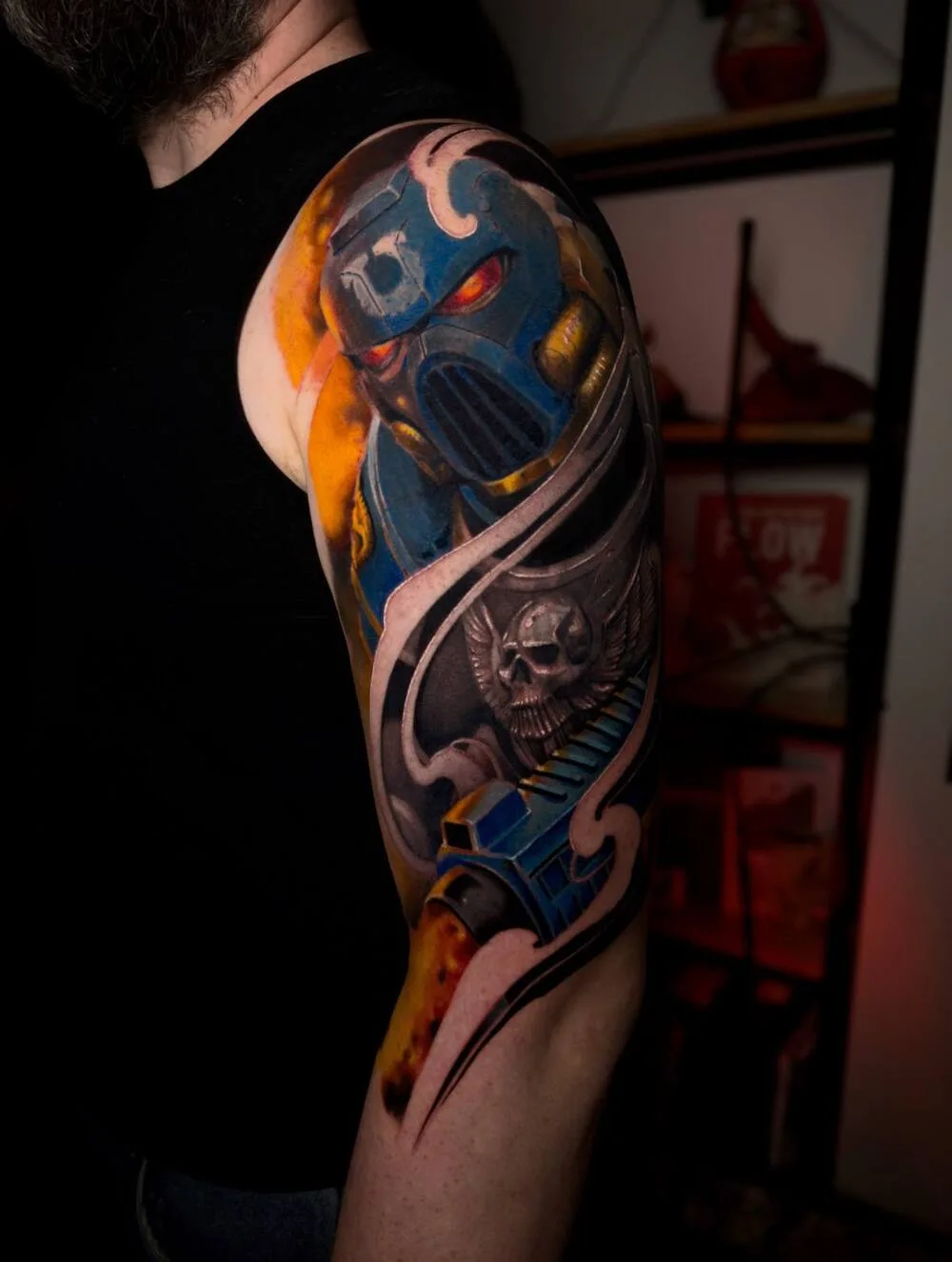
Complex cover-ups make up a significant part of your practice. How is working on a cover-up fundamentally different from creating a tattoo on untouched skin?
— I'd go so far as to say cover-ups are one of the main areas of my work.
People often come to me after trying to get something done "cheaper" or "faster." They've learned the hard way that it's much more serious than that: you have to live with a tattoo and see it on your body every day.
A cover-up is engineering combined with drawing.


You need to conceal the old tattoo, rebuild the composition's visual rhythm, and sometimes deliberately draw the eye away from the area being covered. The stakes are higher. You might not only fail to achieve the image you're aiming for, but actually make the original problem more noticeable.
That's why preparing for a cover-up often takes more time. You have to consider more options and look for unconventional solutions.
Technically, complex cover-ups leave almost no room for error. Any areas that aren't fully saturated can affect the overall appearance much more than they would on untouched skin.
Consistent saturation is especially important in cover-ups. As an artist, you simply can't afford mistakes.


You work in both color and black & grey, often combining them in a single composition. What does that combination allow you to achieve?
— I do combine black & grey and color tattooing quite often. Each technique has its own appeal and serves different purposes.
Black & grey gives you simplicity, depth, and readability. Color, on the other hand, makes it easier to convey warmth or coolness, create accents, and establish a mood.
By combining these techniques, I can create stronger visual contrasts. I think that helps a tattoo retain its impact and draw attention for longer. If I had to choose something that feels most like my own approach, it would definitely be combining color and black & grey in the same piece.
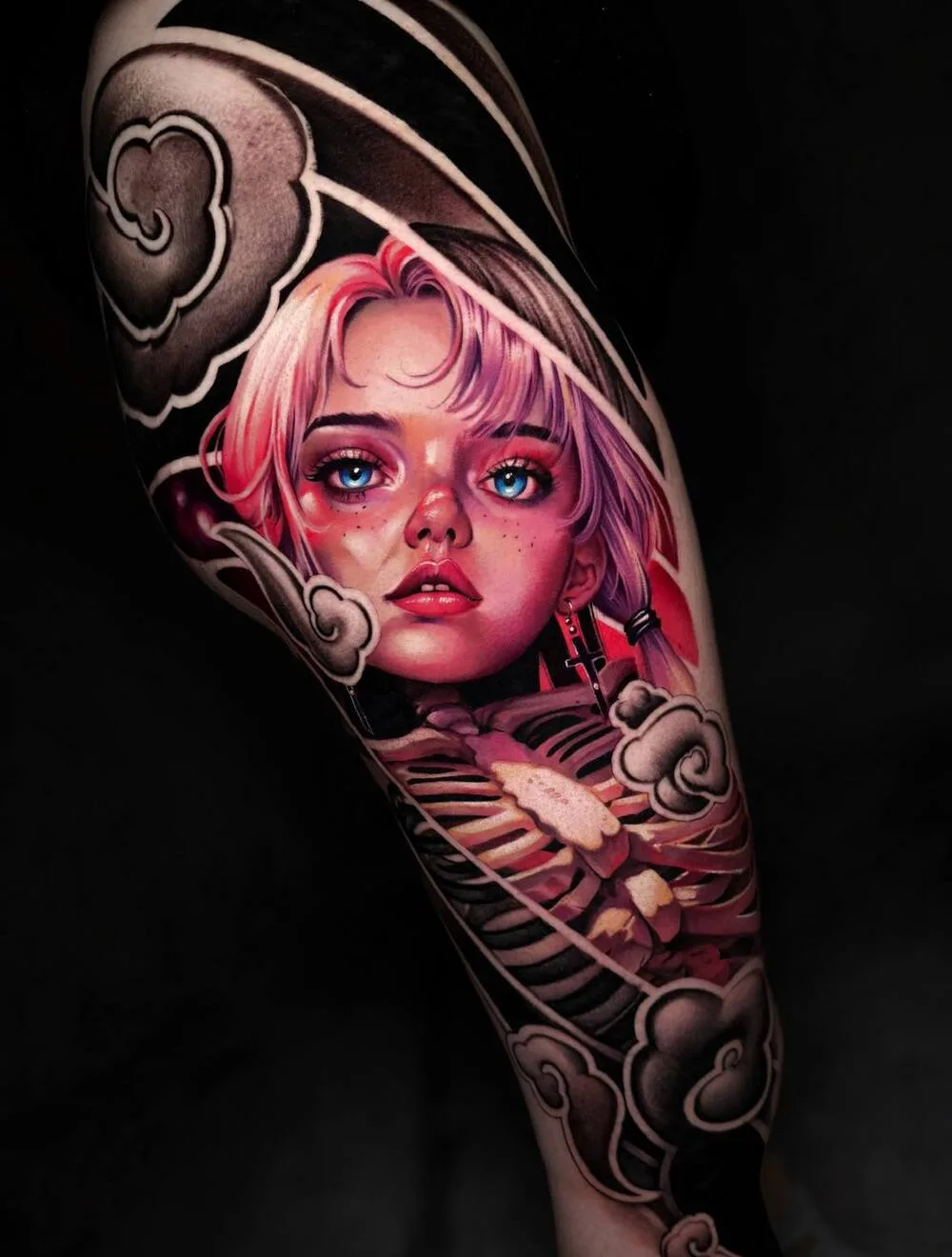
Your portfolio includes many large-scale pieces, from sleeves to extensive compositions. What makes these projects more interesting to you than individual tattoos, and what's the biggest challenge?
— I still haven't completed a full tattoo bodysuit. Those are the projects I consider truly large-scale today. And it's not even about the size, but the complexity of the task. What matters isn't how many centimeters the tattoo covers, but whether you can keep the entire composition cohesive.
In general, large pieces — sleeves, backs, legs — are what I value most and what I've been focusing on in recent years. I enjoy building compositions that wrap around an arm or another part of the body and work as a unified whole.
Of course, putting projects like these together takes much longer and is far more difficult than creating individual images. But that's exactly where I find my identity as a tattoo artist, rather than just being a printer transferring an image onto skin.
A large-scale project is about art direction, not the ability to copy.
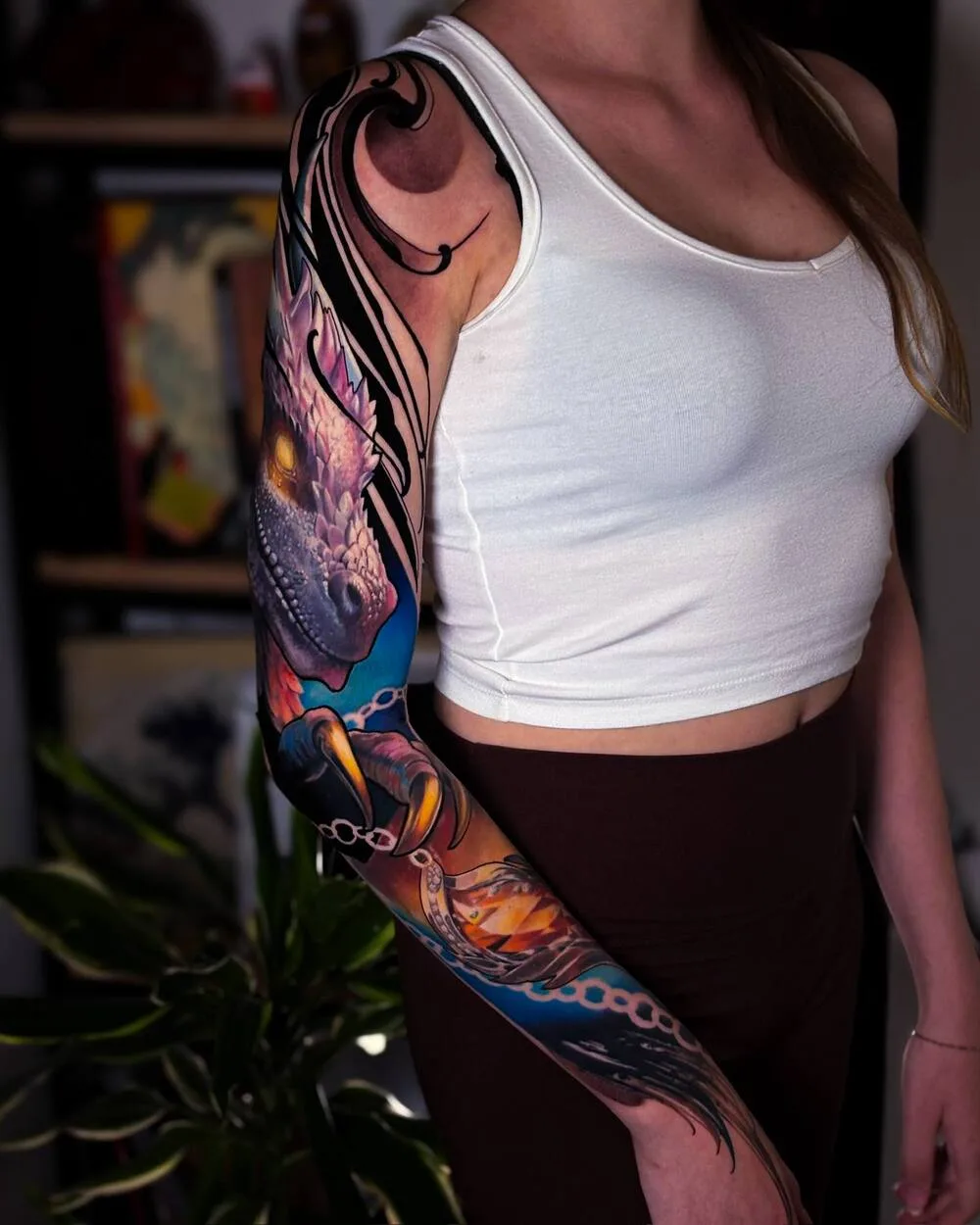
How does a new project usually begin for you?
— With an idea and a place on the body.
First comes the meaning and the imagery the client wants to wear. Then anatomy: the scale of the piece, how the design will sit on the body, where the joints and bends are, where the skin is thinner, and whether there's an old tattoo that needs covering.
Only then do I start working on the composition: rhythm, areas of light and dark, and where the viewer's eye will go. The final design is the result of all those stages. If you start with a beautiful reference and then try to cram it onto a shoulder, the result almost always feels awkward.
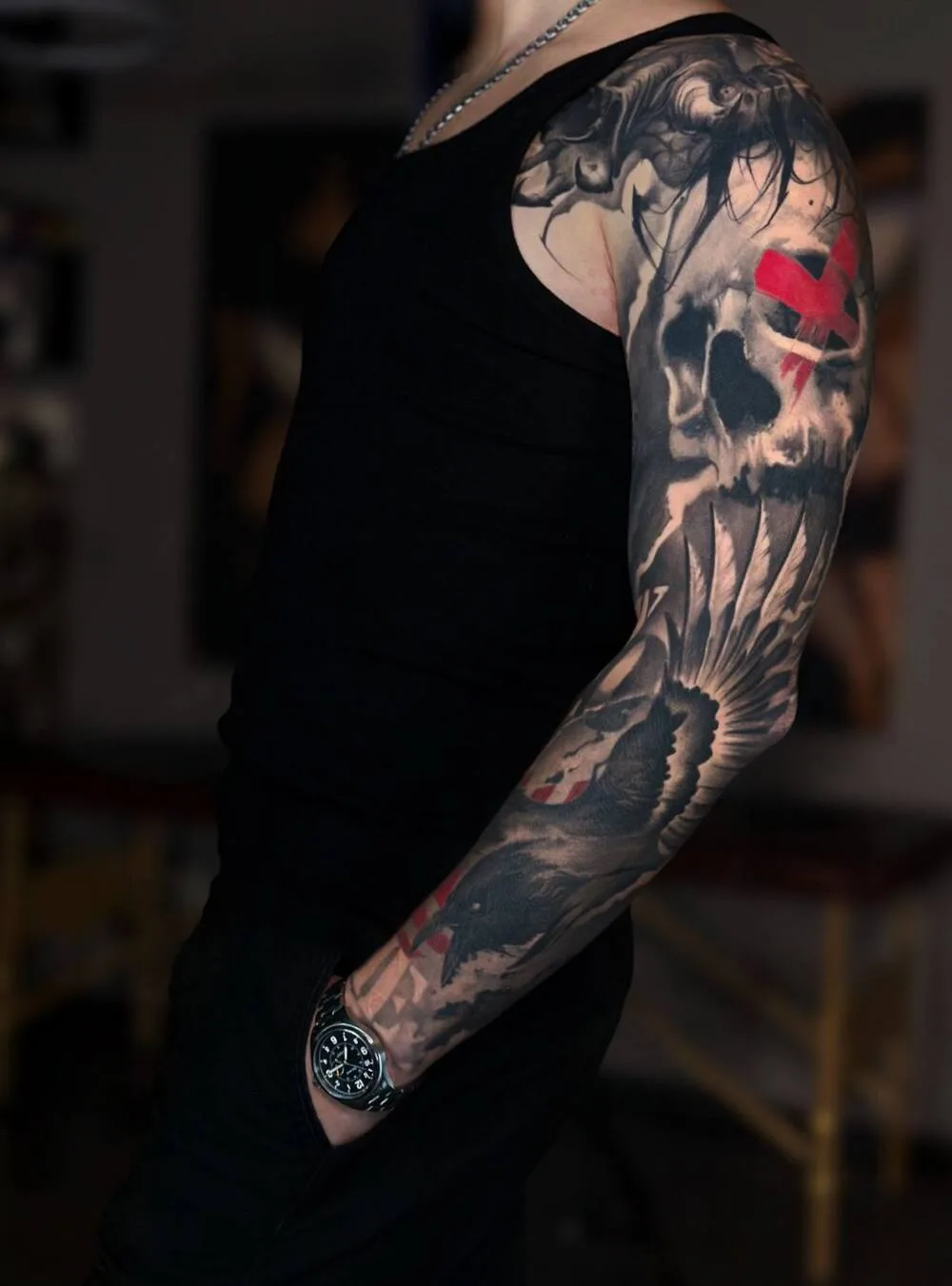
In your opinion, what's especially important for a tattoo to hold up well over time?
— You need enough contrast to spare, the right needle depth, and solid pigment saturation. When those things aren't taken into account, realism starts to "die."
In the race to attract clients, artists often try to stand out by working faster. I went through that phase myself and also tried to tattoo more quickly. But over time, I realized that wasn't the direction I wanted to develop in.
A tattoo done relatively quickly can certainly look good right after the session. But if the technical execution isn't solid enough, it can lose saturation and visual impact over time.
That's why, alongside detail and carefully planned contrast, the quality and consistency of pigment application are fundamental to me. And that applies to more than just realism. In my view, technical execution is hugely important in every style.
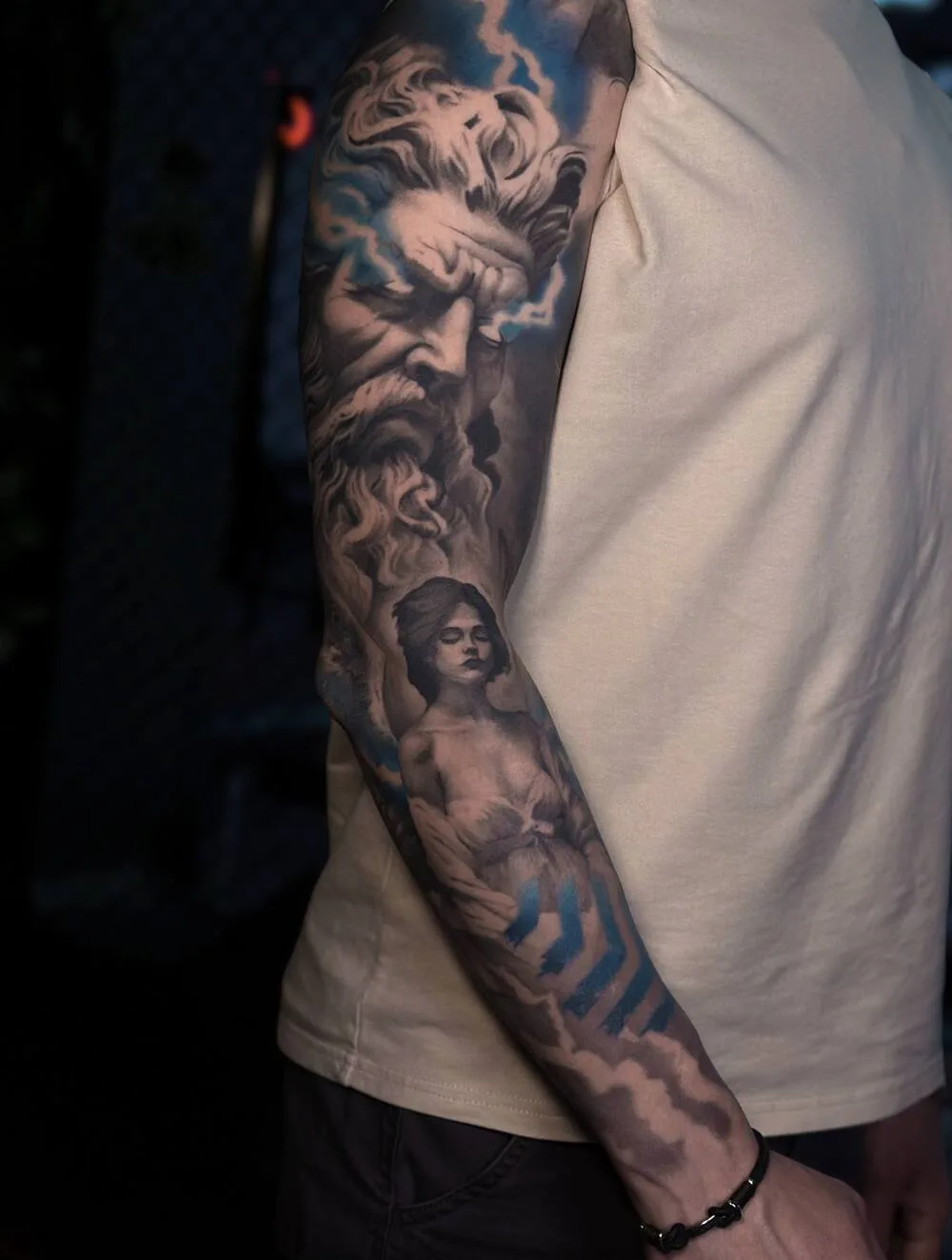
Realism has changed considerably in recent years. What do you think separates a truly strong realism artist from someone who's simply good at reproducing an image?
— I think realism has developed more in terms of artistic taste and visual techniques than in purely technical terms.
Artists today are exposed to an enormous amount of visual work, and their visual literacy is generally very high. But technical execution sometimes takes a back seat to making an immediate impression.
There are huge numbers of tattoos today that look striking and interesting. Far fewer, however, are executed to a genuinely high technical standard and will still look good on the skin years later.


A strong realism artist solves many problems at once. The lighting is carefully considered, the shapes work naturally with the body's movement, unnecessary elements are removed, and the important ones are emphasized. At the same time, the tattoo needs to be applied with solid saturation and technical precision. The artist should be able to anticipate how the tattoo will look once it's healed.
To me, a strong realism artist is both a good visual artist and a technically skilled tattooer.


You spent almost five years working in Turkey. How did that experience shape you as an artist?
— Working abroad breaks your habits much faster. Different mindsets, different client requests, a different pace of work, and different service standards.
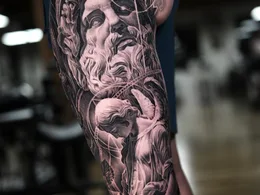
In Turkey, I worked with a very high volume of clients for almost five years. The main demands were speed and the ability to handle complex cover-ups on the spot.
The language barrier taught me to understand what clients wanted quickly and, without lengthy discussions, find a compromise between their ideas and my own visual judgment. It broke my habit of "drawing whatever was convenient for me" and taught me to build a composition around the individual person.
But more importantly, working abroad takes you out of your own familiar school of thought and pushes you beyond your comfort zone. In a studio, you're constantly surrounded by artists with different levels of experience, mindsets, and approaches. You see how they solve problems, pick up useful skills, and learn to work with people. It was an incredibly valuable experience for me.


You've been regularly attending tattoo conventions since 2021. What do these events give you beyond the chance to compete for awards?
— I love conventions, and since 2021 I've tried to attend them regularly. I've been to around 10 to 12 festivals so far.
What's interesting is that each one offers something different. That even goes for events where I came just to walk around and have a look.
Getting out of your comfort zone, meeting people, finding clients, winning, losing, gaining experience — you leave every festival with something that opens up new possibilities for growth.
Awards are nice, of course. But for me, a convention is first and foremost an opportunity to see where I stand today compared with my past self and with the industry as it is now.
Taking part in conventions is a way to make my self-assessment more objective.
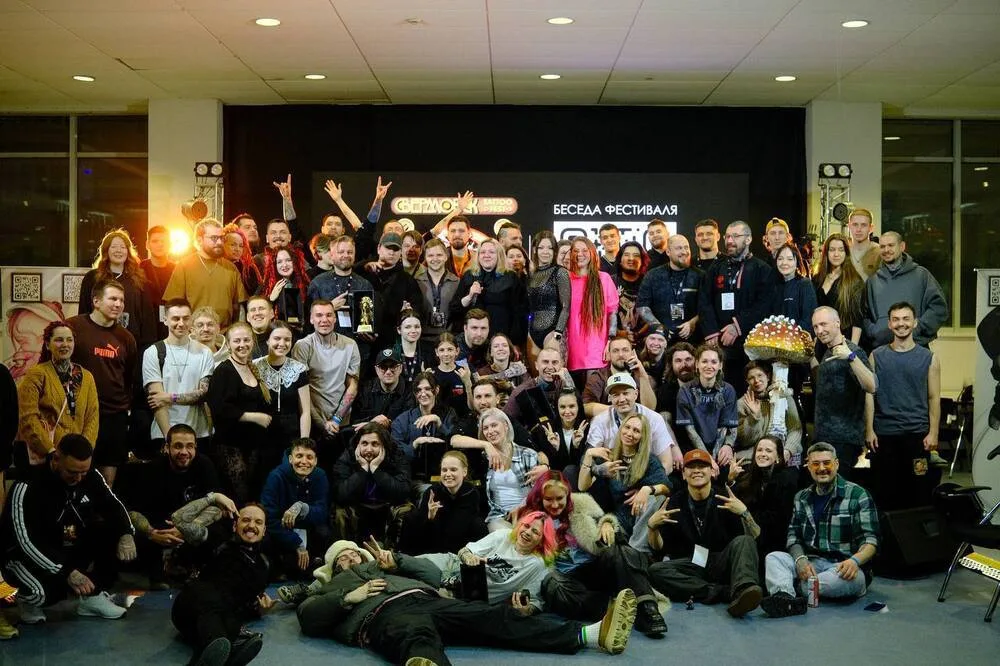
At Kazan Tattoo Fest, you collaborated with Egor Odintsov. You work in different styles: realism in your case and neo-Japanese tattooing in Egor's. How did the idea of combining your approaches in one tattoo come about?
— Egor and I are friends, we work together, and our paths constantly cross as artists who speak different visual languages. I work in realism; he works in neo-Japanese tattooing.
It was precisely our different perspectives on tattooing that gave us the idea to collaborate.
We didn't want to make "two separate pieces in different styles placed next to each other." We wanted one story in which different techniques worked toward the same goal.
The division of responsibilities was fairly simple: each of us focused on what we did best. But while preparing the design, we reviewed even each other's rough sketches several times to make sure the composition remained cohesive.
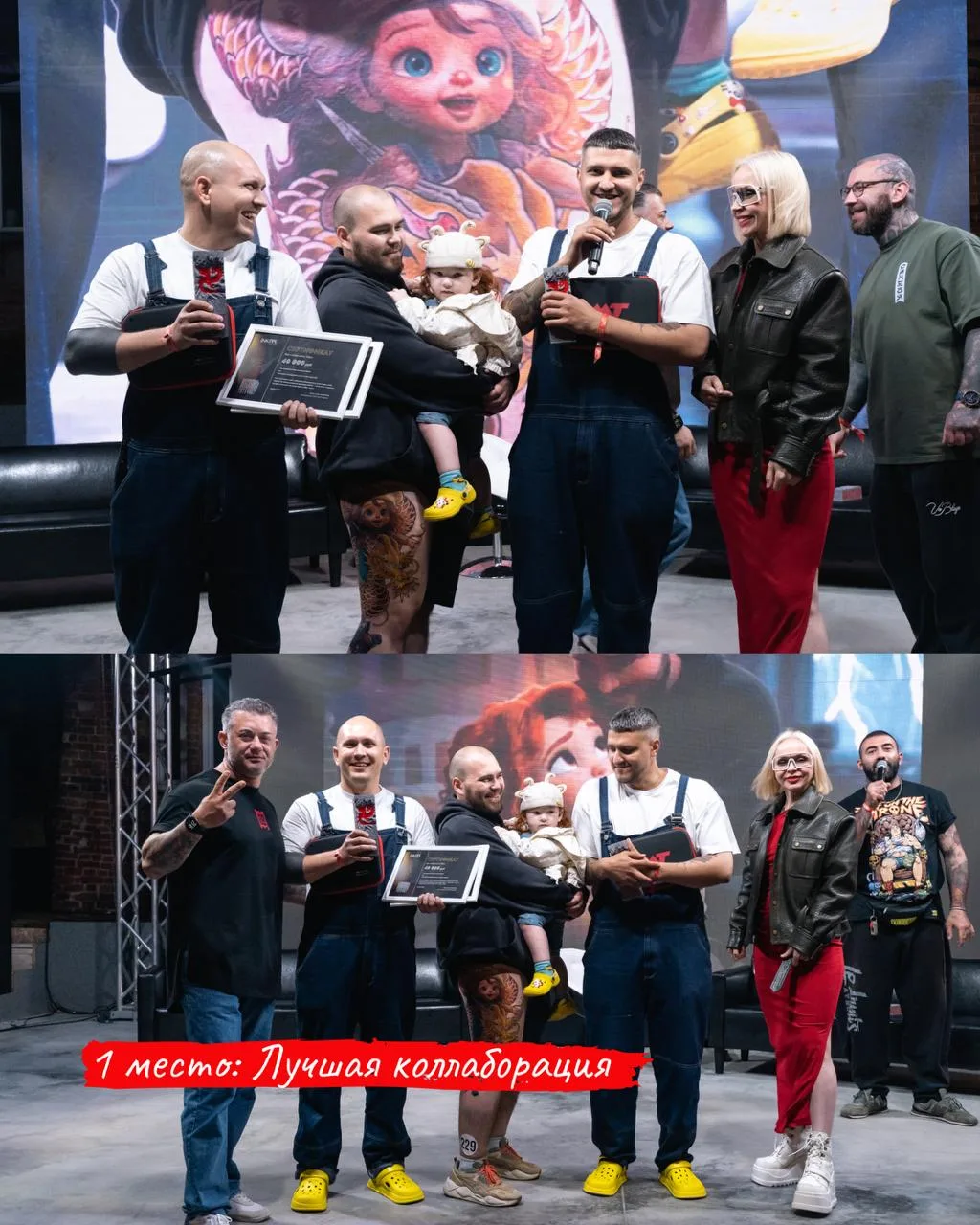
For your competition piece, you chose a story about the bond between a father and daughter. Why did you settle on that theme?
— Our main objective at the Kazan festival was to compete. So from the outset, we followed one principle: a competition piece should be easy to understand, both visually and in terms of its meaning.
The bond between generations is a universal theme that everyone can understand.
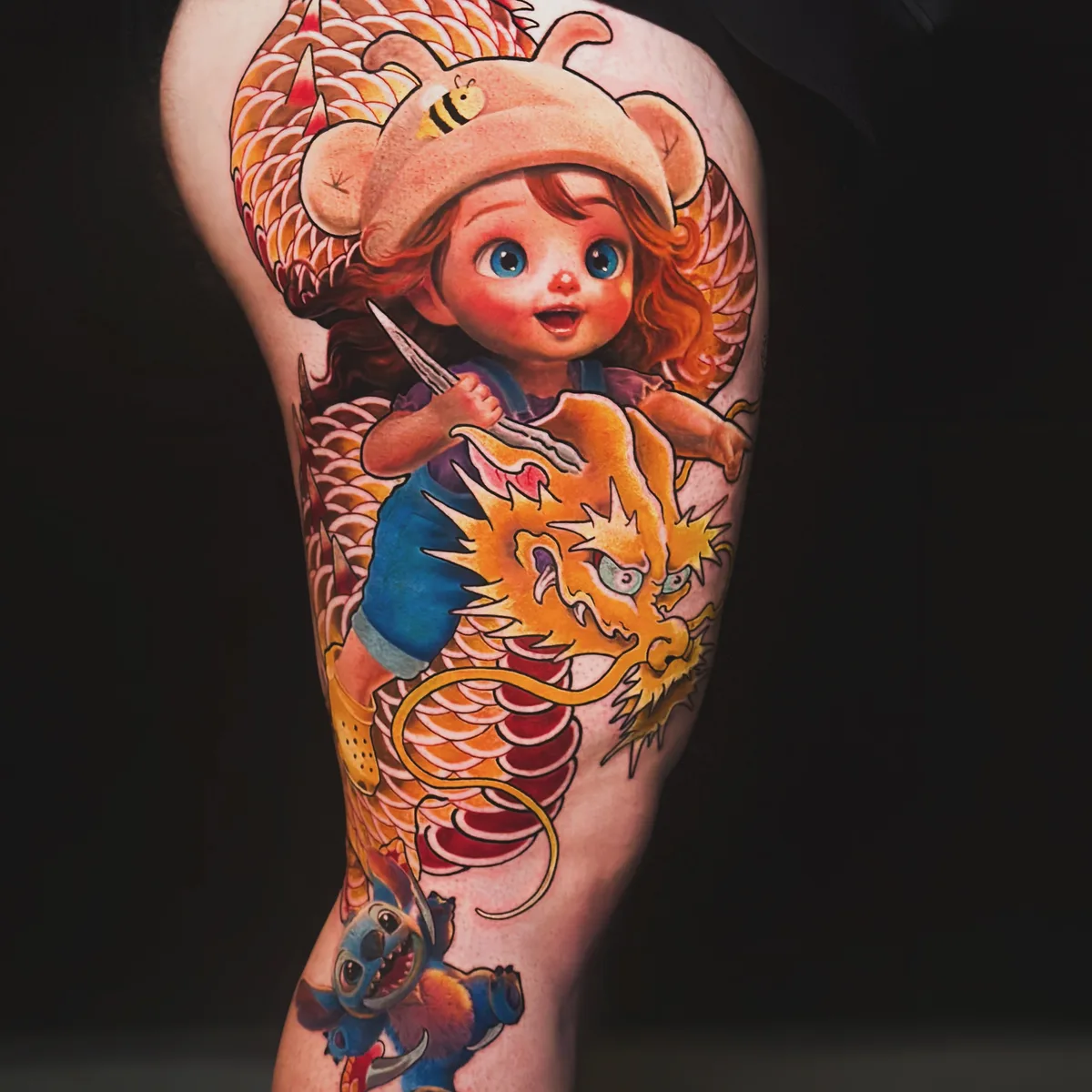
We also felt that we'd be able to find a suitable model for this particular project. That's another important factor when choosing an idea for a competition.
And one more thing: it was our first collaboration of this kind. We had no idea what surprises or complications might come up during the process, so we deliberately decided not to overcomplicate the concept itself.
You went beyond the tattoo itself, creating a themed workstation, a handmade knitted doll based on your own design, and even a short animated film. What role did all of this play in presenting your competition piece?
— We really did prepare very thoroughly for the festival.
We had a themed booth, an actual hand-knitted doll made from our design, and a short animated film telling a story that led viewers directly to the tattoo design.
It was important to us that the concept made sense not only to the judges but also to the audience. We wanted the entire presentation to feel like one unified story, and for the combination of two completely different styles to be immediately recognizable as an intentional collaboration.
I think that clarity and the obvious contribution of both artists were among the project's greatest strengths.
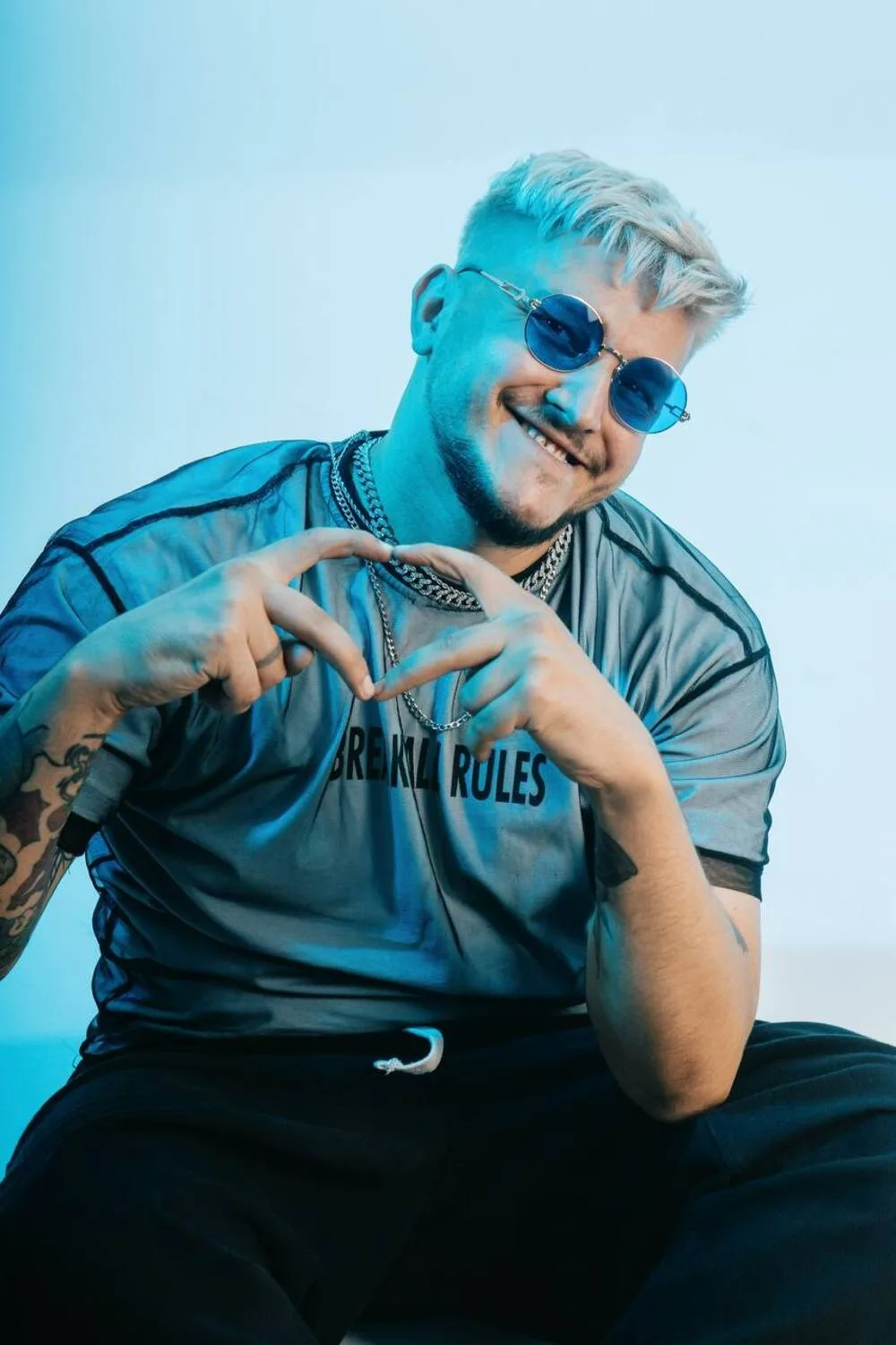
You had two days to complete the tattoo itself. What was the hardest part of having two artists work on the same project?
— The hardest and most unexpected part was figuring out the order in which we should work.
We hadn't really thought about it beforehand. But once we got started, we realized that when you're working side by side, you even have to be especially careful about stretching the skin so you don't interfere with the other artist. Both Egor and I had to adapt to those aspects of working together.
After the festival, we drew some conclusions. I think next time we'll handle things more smoothly. And, by the way, that's a little spoiler for the Moscow festival in 2027.
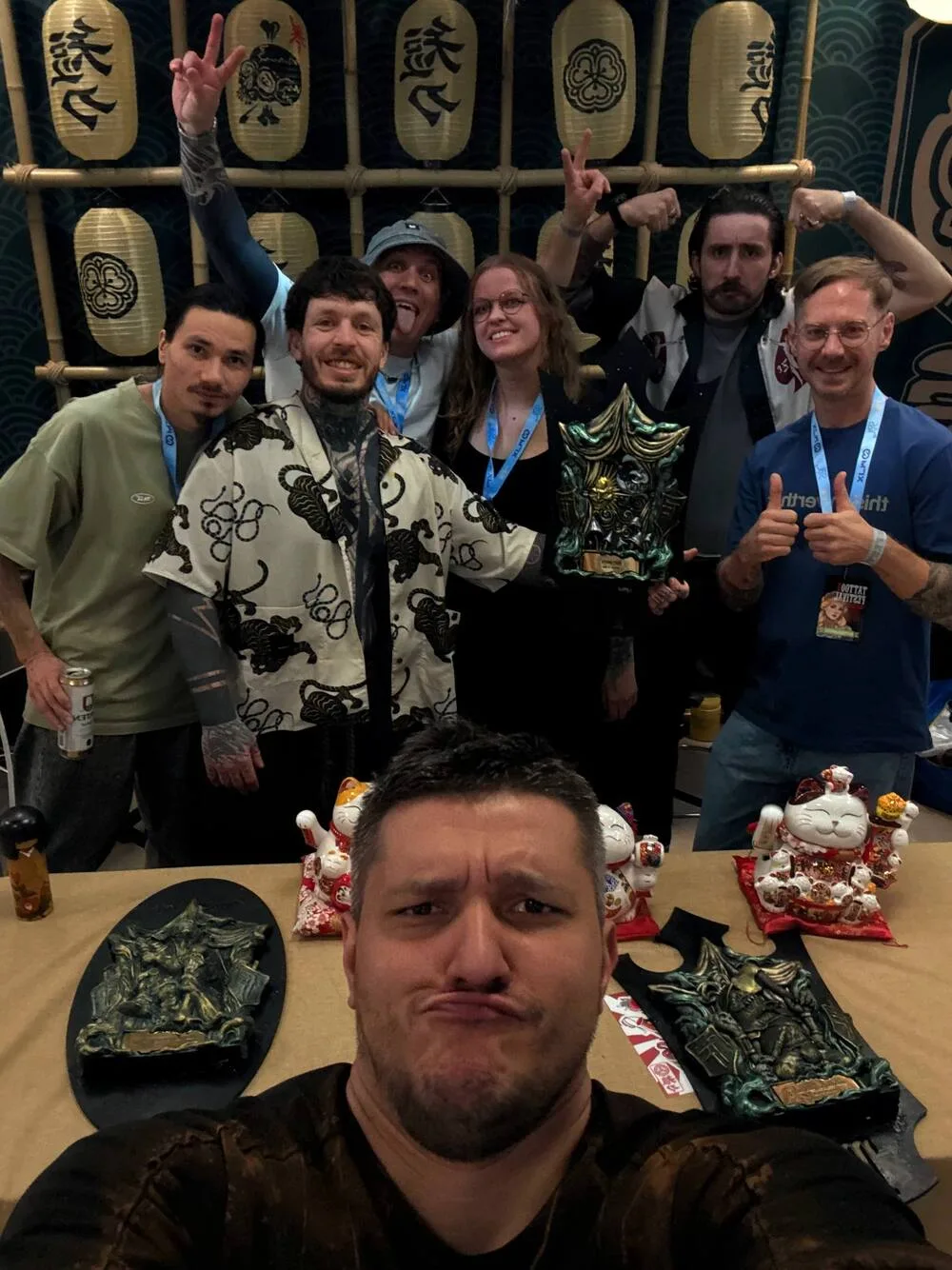
Your piece ultimately won first place for Best Collaboration at the festival. You've said that collaborative projects have interested you for a long time. What would you like to develop further in this direction?
— I've been passionate about collaborations for a long time and have been experimenting with working alongside different artists.
I enjoy bringing together different styles and approaches, finding solutions where each artist retains their own visual language while every element contributes to a single composition.
So collaborations will remain one of the directions I most want to pursue. And our experience in Kazan showed that Egor and I still have plenty of room to grow and improve the way we work together.