Why an Eye Tattoo Feels Alive
When you spot an eye tattoo on someone else, you notice the gaze before you notice the linework. That feeling of being looked at runs through each eye tattoo meaning: the restored Eye of Horus carries the idea of being made whole, the Eye of Providence on the dollar looks out from a triangle, and the blue nazar meets a harmful gaze with a stare of its own. Each gives the person looking at it a different role.
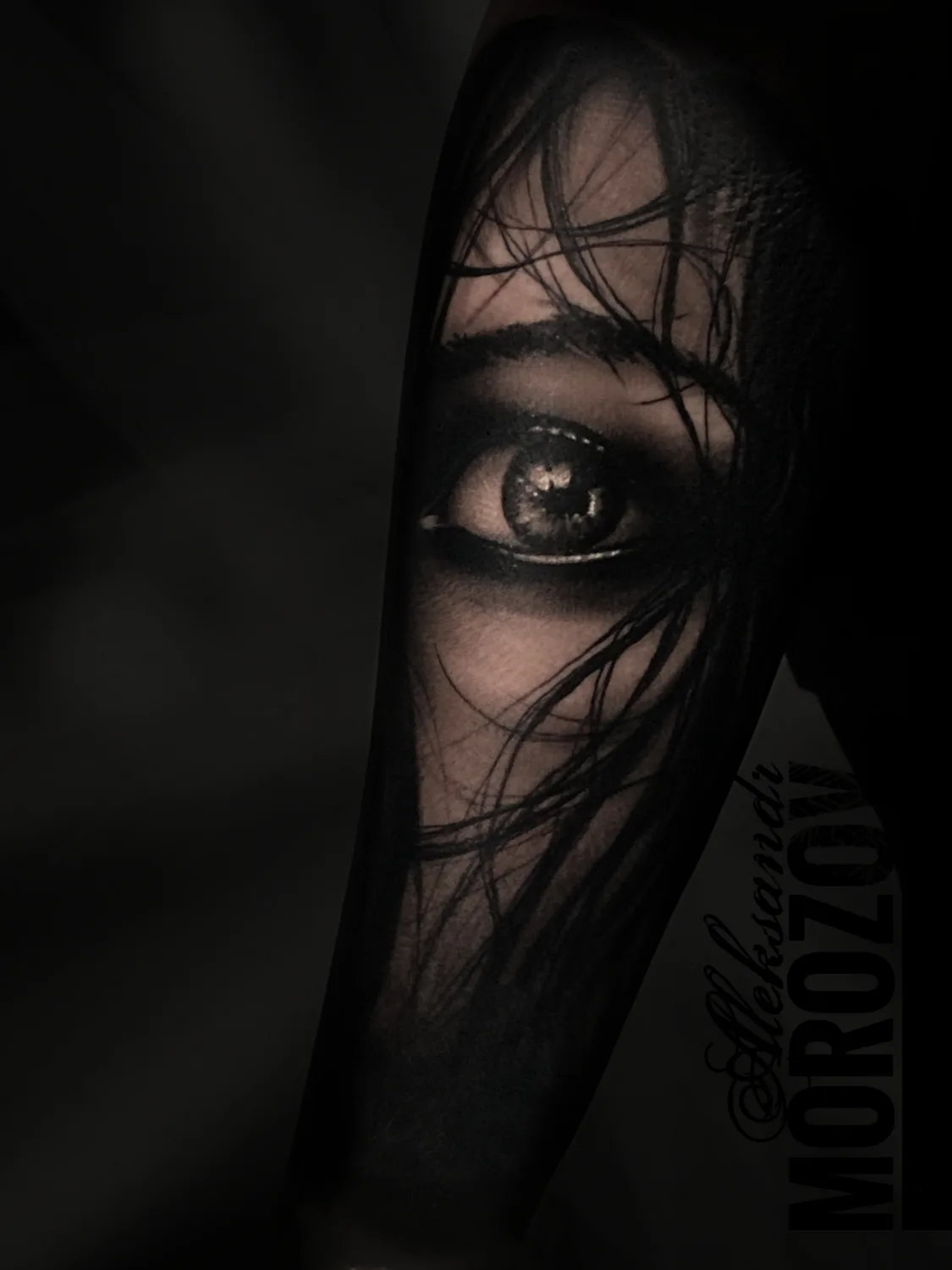
You can change that encounter with a few decisions in the sketch. A round pupil centered beneath an open lid seems to meet you head-on. A pupil tucked into one corner makes you want to follow its line of sight. A tiny highlight can give a portrait eye the flash you recognize from a photograph. Browse the eye tattoo gallery and notice which eyes you instinctively look away from and which ones make you lean closer. That reaction can tell you what kind of gaze you want to wear.
Eye of Horus and Eye of Ra
The Eye of Horus gets its meaning from an injury that heals. In Egyptian myth, Horus loses his eye in his fight with Seth. Thoth restores it in one version of the story, and Hathor restores it in another. The restored eye, called the wedjat or udjat, carries the idea of soundness, or being whole again. The British Museum’s Egyptian amulets show how that idea took physical form: the eye was worn for protection and placed with the dead. For a tattoo that marks recovery, the detail that matters is the restoration. The eye has already come through the ordeal.
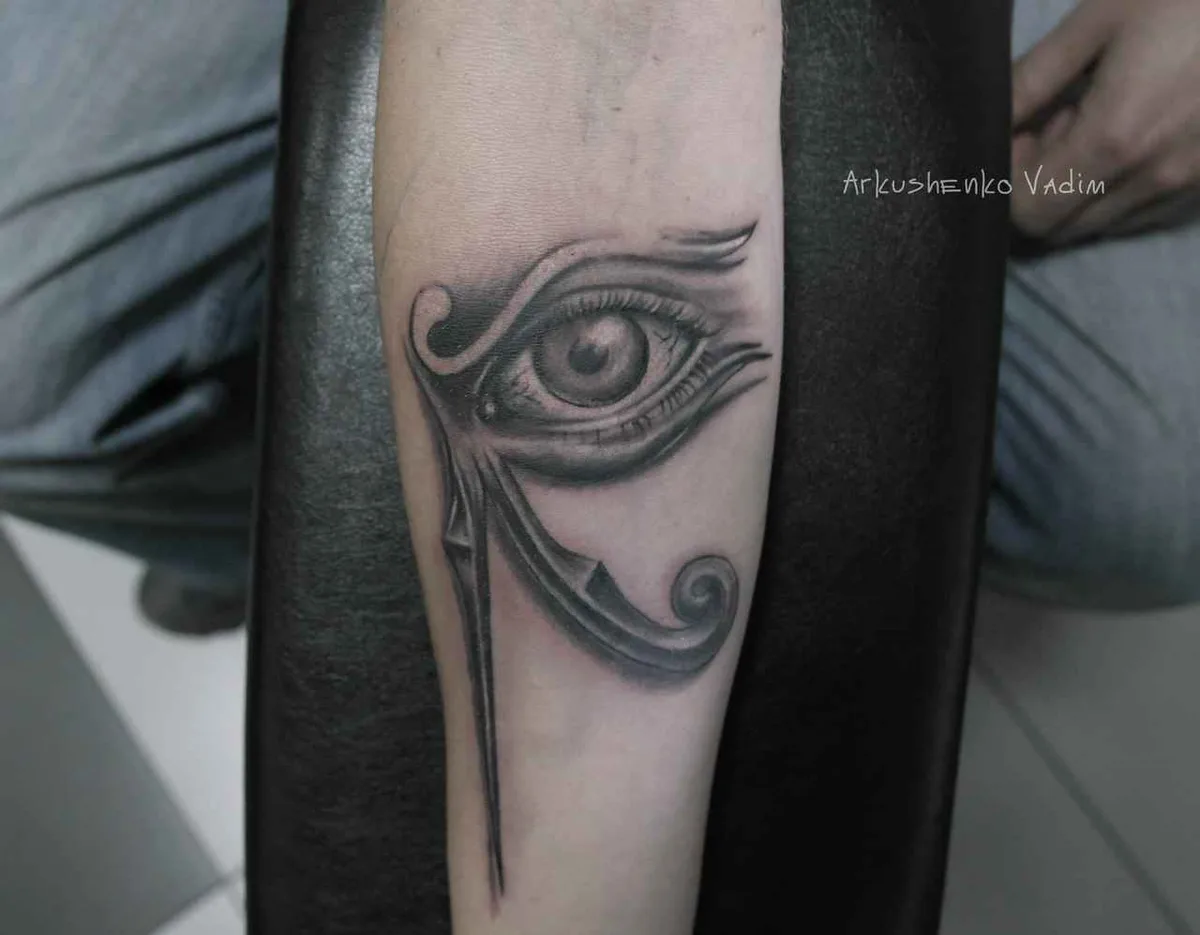
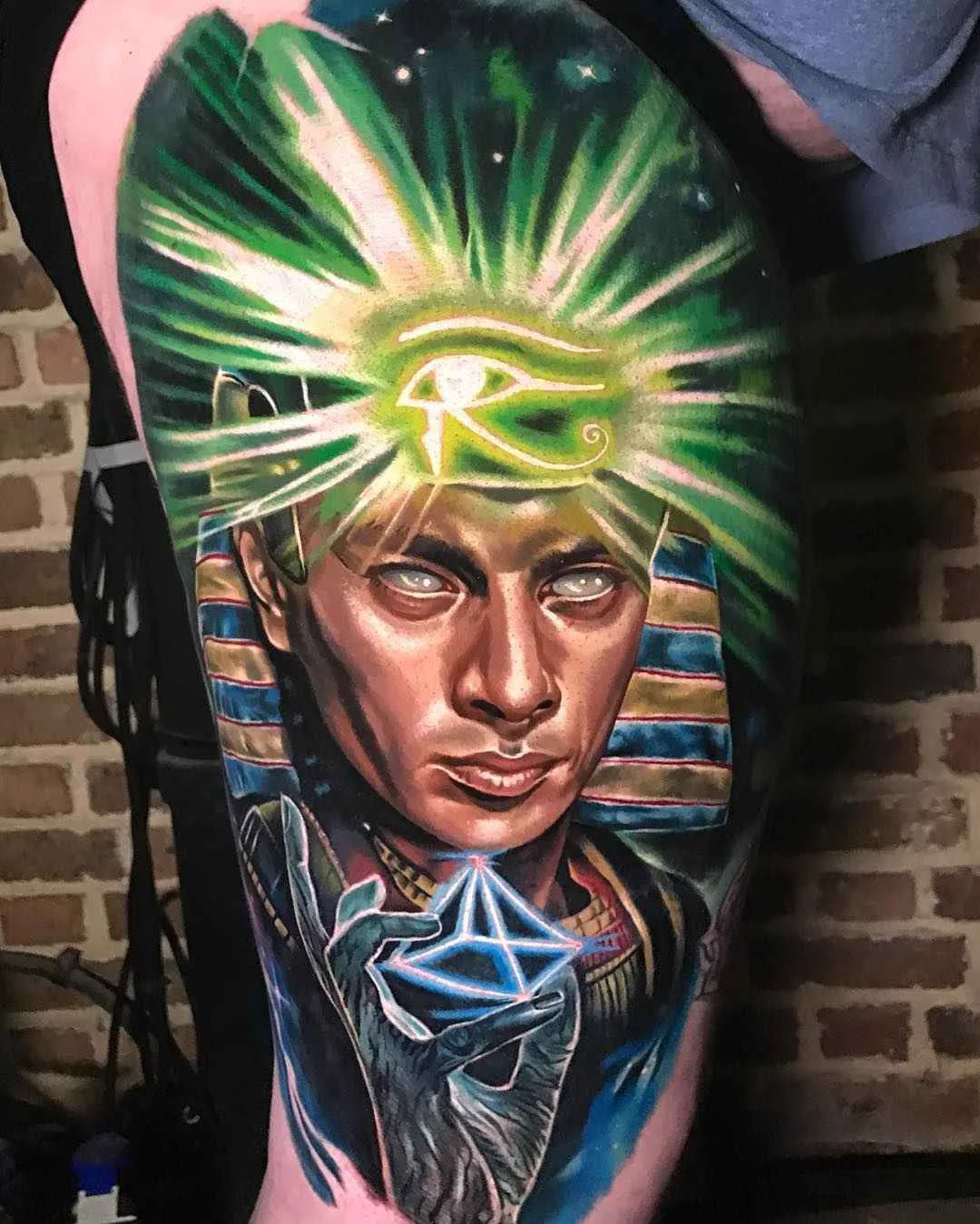
The Eye of Ra belongs to the sun god and has a fiercer character in Egyptian mythology. It acts as a force in its own right and is associated with goddesses including Hathor, Sekhmet, and Wadjet. Tattoo references usually draw the Eye of Horus as a left eye and the Eye of Ra as a mirrored right eye. Ancient Egyptian sources use the distinction less consistently, so give your artist the specific version you want to wear, along with the story that drew you to it. If you’re considering a larger composition, our guide to Anubis tattoos offers another way into Egyptian funerary imagery.
The All-Seeing Eye and the Triangle
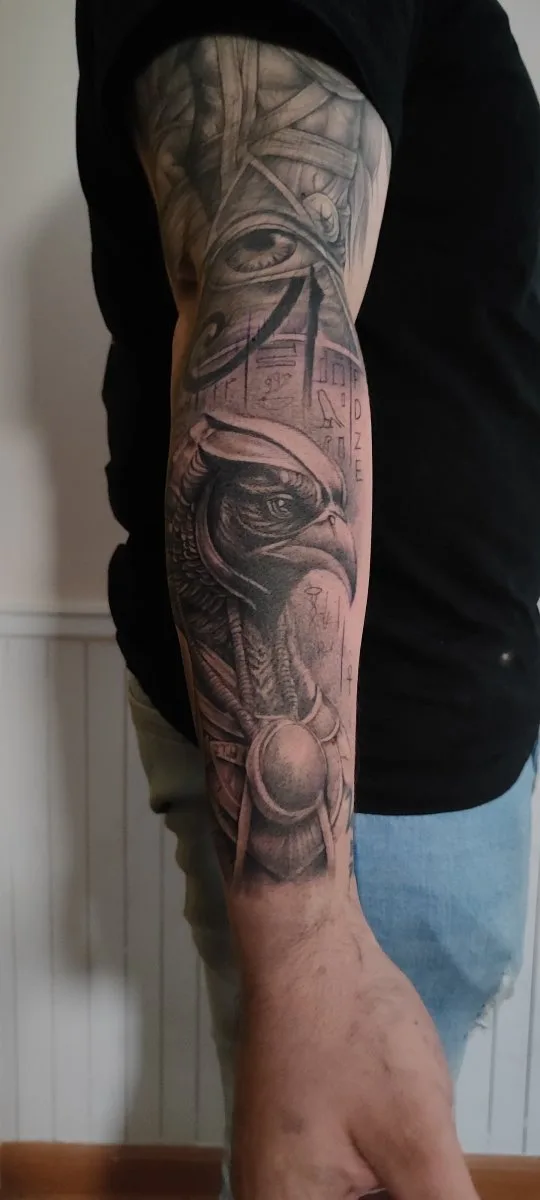
A single eye enclosed in a triangle, often with rays spreading from it, is the familiar form of the Eye of Providence. In Christian art it stands for God’s watchfulness, with the triangle referring to the Trinity. The rays help give the composition the look of a light shining outward. In a tattoo, that image can express faith or the feeling of being watched over. A strong, straight-on stare can also bring out the more unsettling sensation of being watched.
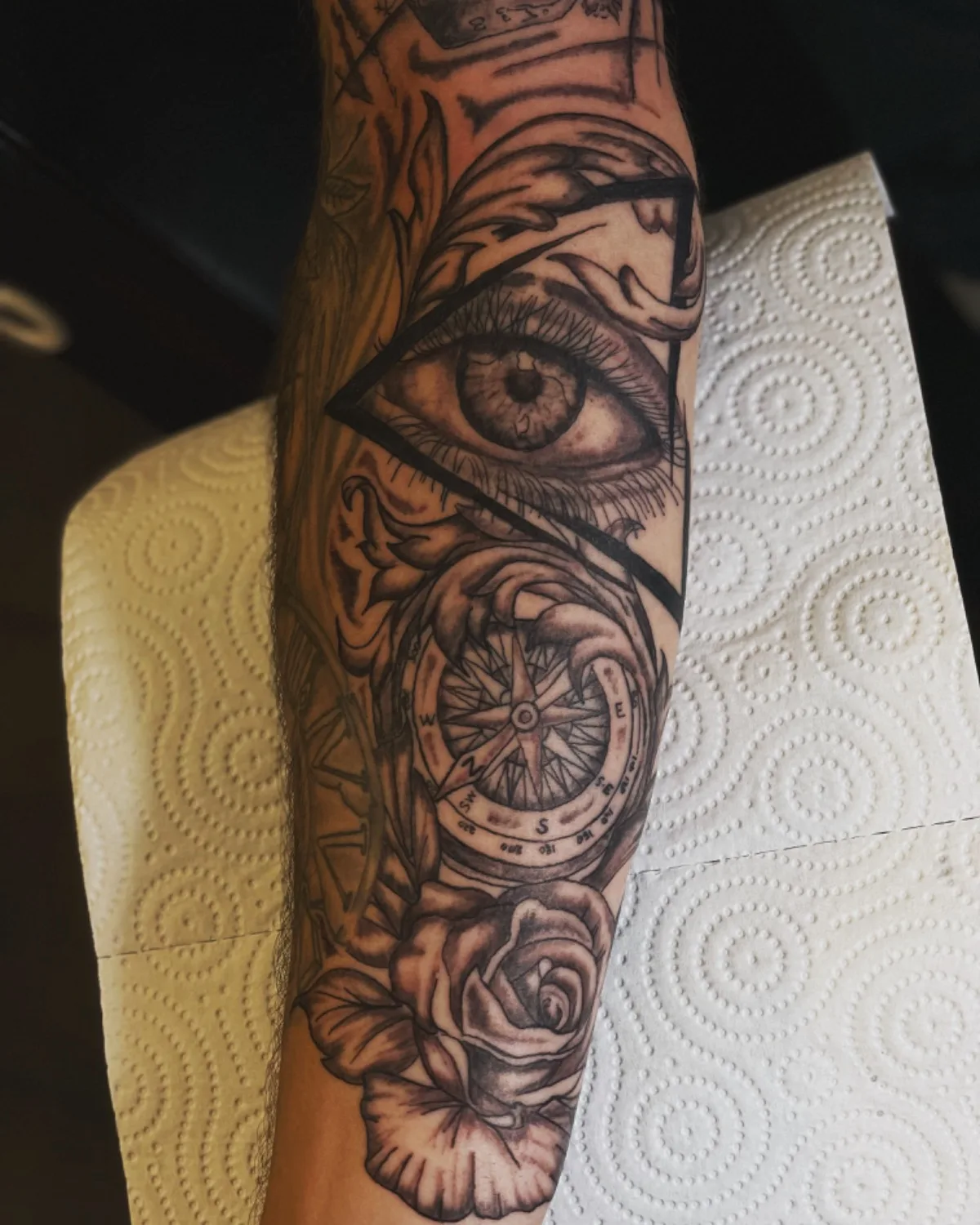
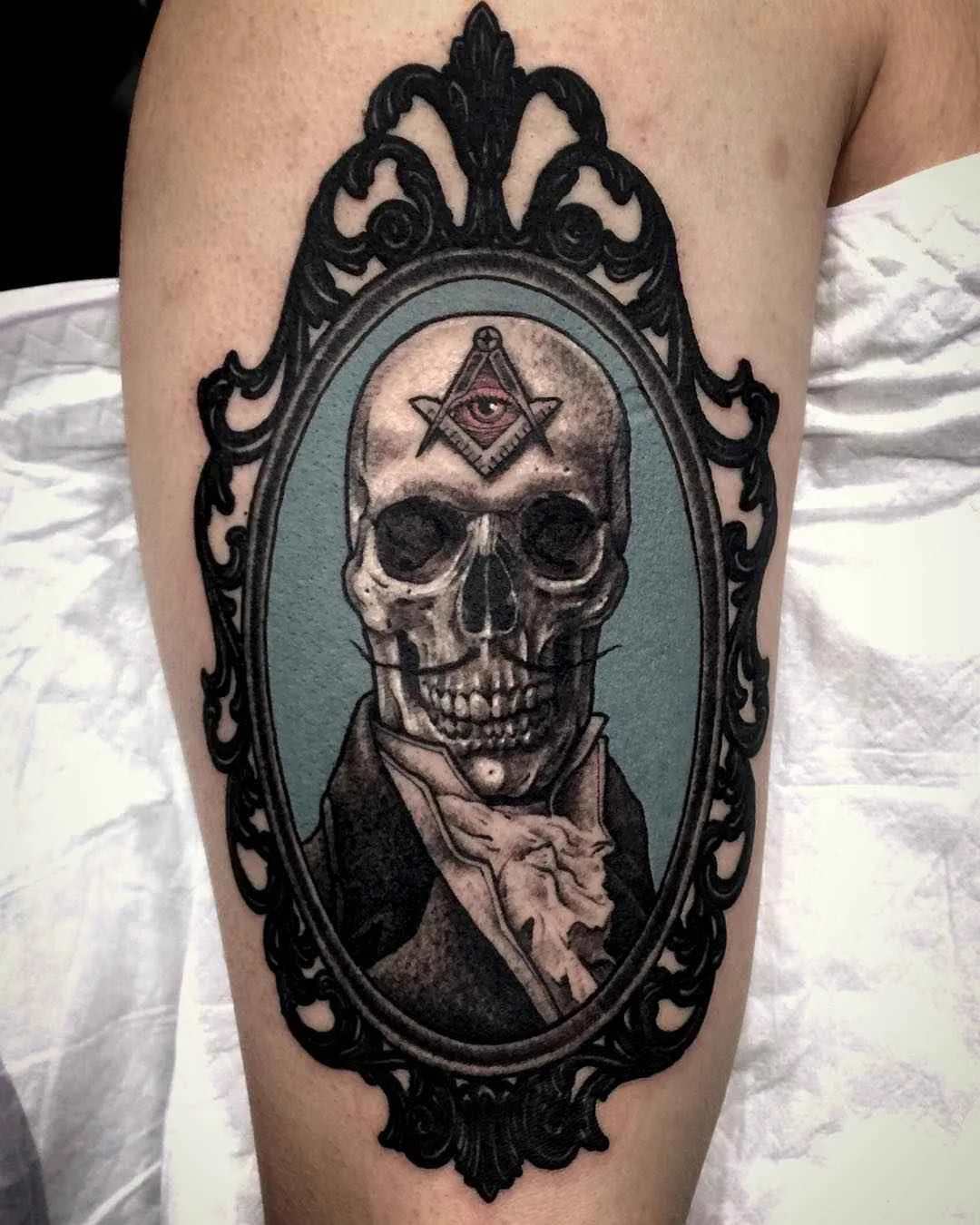
You can see the eye above an unfinished pyramid on the reverse of the Great Seal of the United States, reproduced on the back of the one-dollar bill. Freemasonry also adopted the all-seeing eye, as a reminder that a higher power sees a person’s conduct. The Great Seal took shape separately, through congressional design committees and the artists they consulted. If you find yourself drawn to this version, ask whether it’s the eye in the triangle that stays with you or the whole scene on the bill. Keeping the rays and triangle brings out the familiar Providence image; including the pyramid makes the dollar reference more direct.
Evil Eye (Nazar) as Protection
The blue rings of a nazar look like an eye already staring back. That’s the point of the charm: the evil eye is the harmful look, and the nazar is what people wear or display to ward it off. The belief that an envious gaze can do harm runs across the Mediterranean, the Middle East, and South Asia. The blue glass bead is familiar in Turkey and the eastern Mediterranean. A hamsa with an eye set into its palm is another protective image found in traditions that recognize the evil eye.
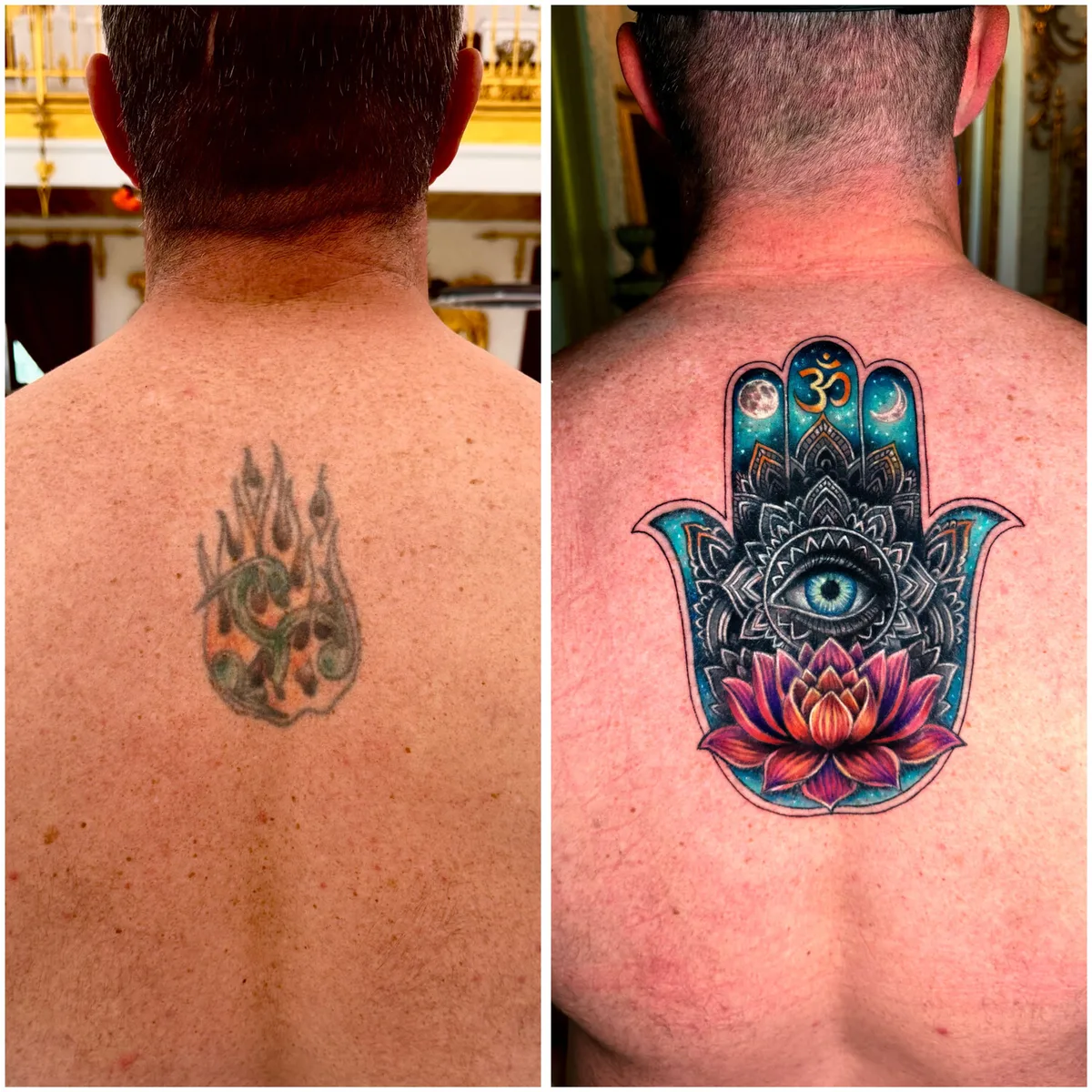
In a tattoo, those concentric circles can recall a charm you grew up seeing or one someone once gave you. If you have the bead, bring it to the consultation. Your artist can use its particular shades of blue or the way its rings sit a little off center to make the design recognizable to you. Wearing a nazar for protection expresses a folk belief. If the charm was a gift, the tattoo can also hold the gesture behind it: someone wanted you to be safe.
Realistic Eyes, Third Eye and Eye With Moon or Sun
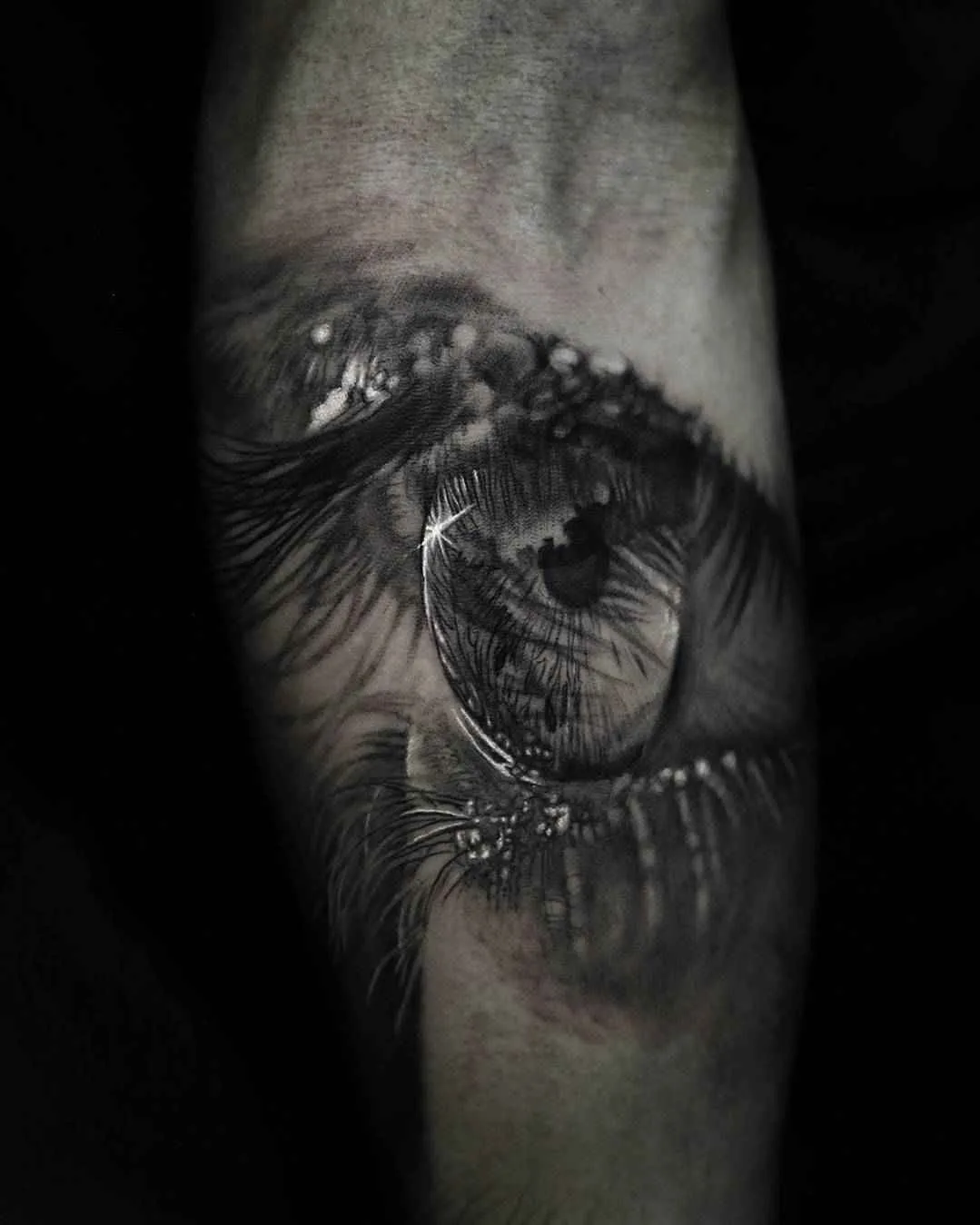
A realistic eye gives you room to remember a particular person. The curve of the upper lid, the crease where it folds, or the way the eye narrows when someone smiles may be what you recognize first. Bring your artist a photo with the expression you remember, even if you have another photo that shows the iris more clearly. A tear changes the whole composition: as your gaze follows it down the cheek, the tattoo starts to feel like a moment caught in motion.
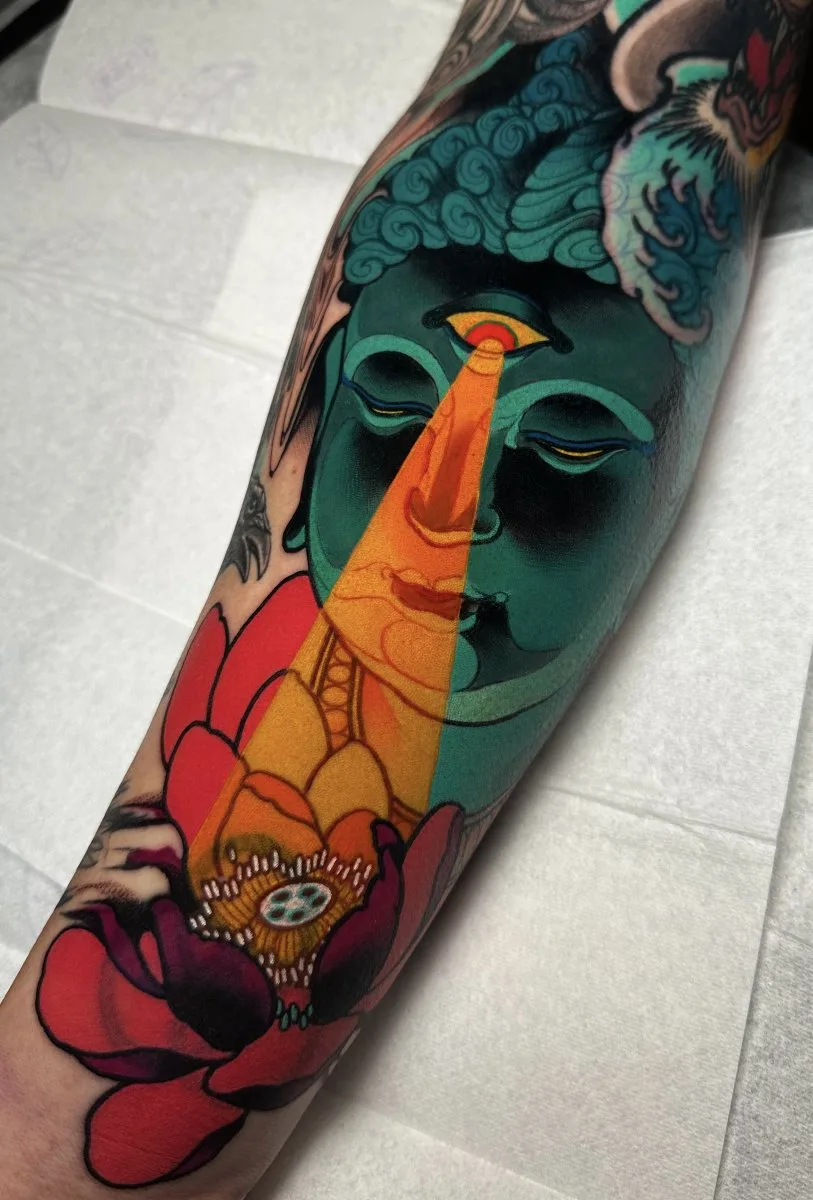
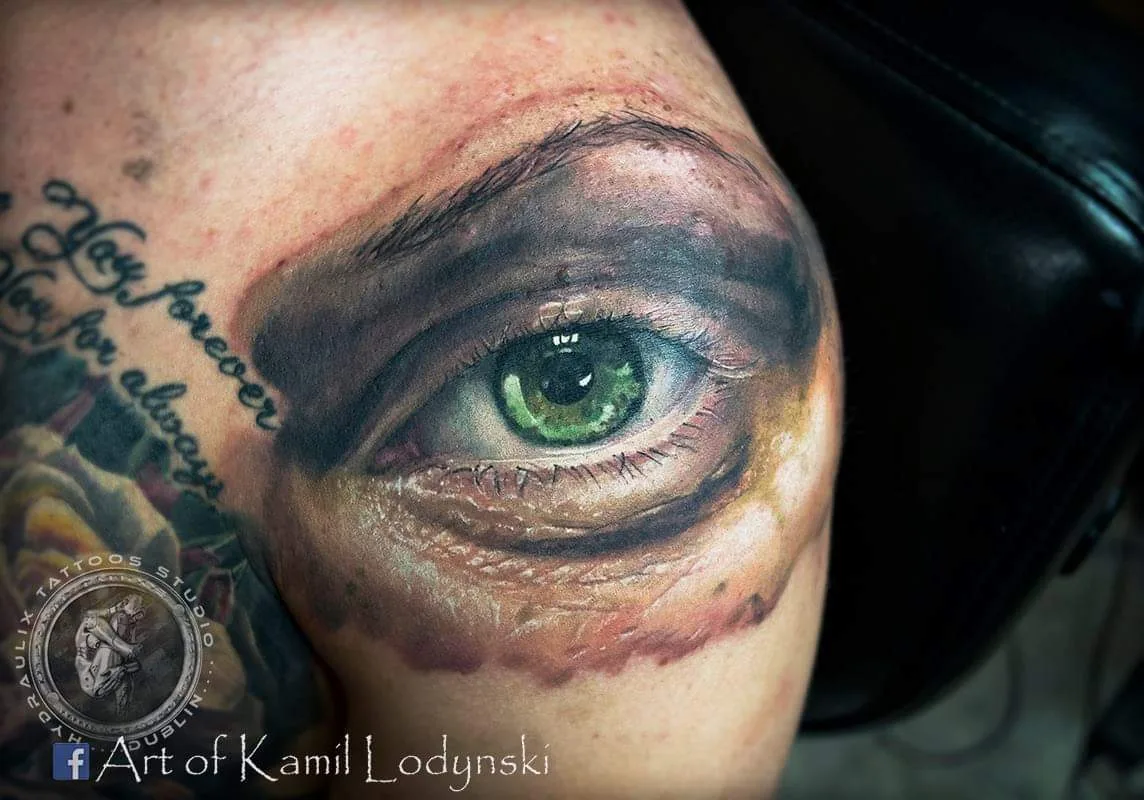
A third eye tattoo draws on a different kind of seeing. In Hindu and yogic traditions, the ajna chakra is associated with the space between the eyebrows and with inner perception. The moon and sun offer another way to suggest a kind of sight. In contemporary tattoo designs, an eye beside a crescent can suggest intuition or finding your way at night, while an eye surrounded by sunrays can suggest daylight and clarity. Our guides to moon tattoo meanings and sun tattoo symbolism offer more ways to develop either pairing.
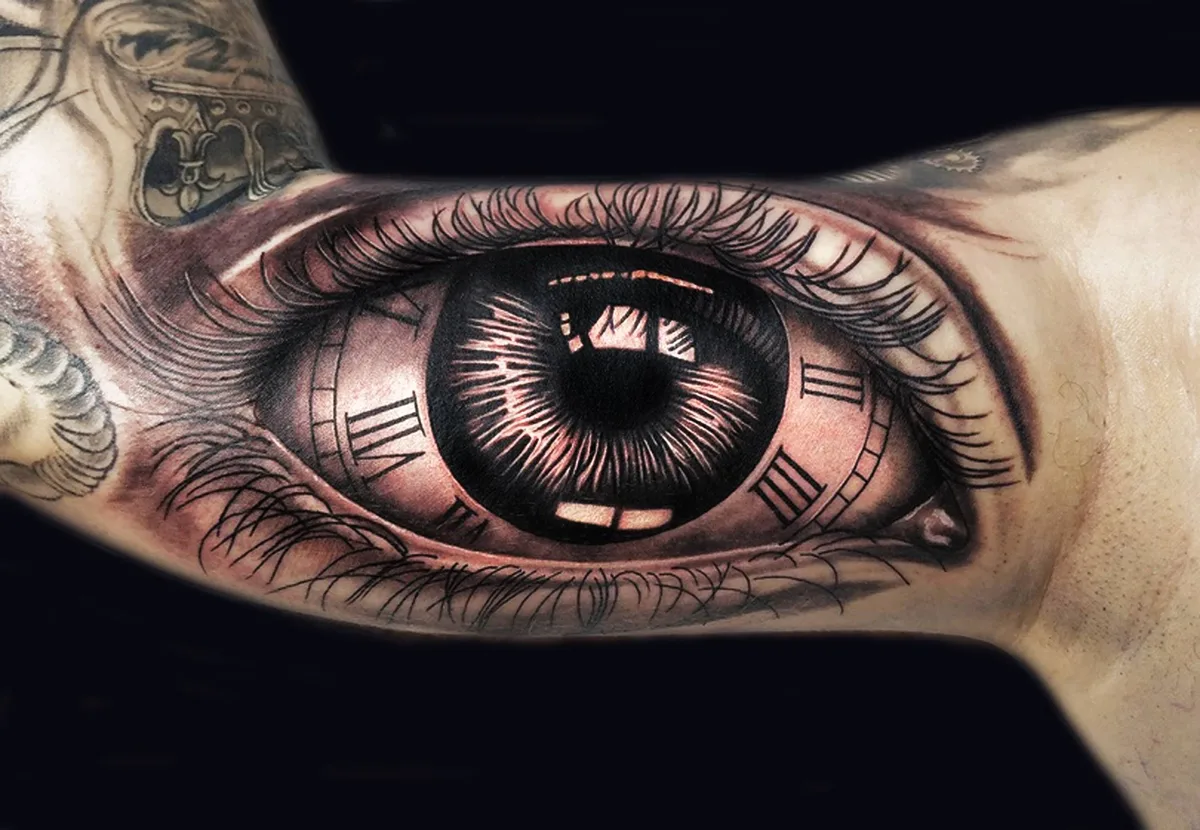
Placement: Hand, Neck, Elbow, Back
Try the stencil in the position you’ll naturally hold most often. An eye on the back of your hand faces outward when you reach for something. Set inside a hamsa on your palm, it appears when you open your hand. Palm skin renews quickly, so ask your artist how a palm piece will hold up. At the neck, check it from the side and with your head turned so you can see how much of the gaze remains visible from each angle.
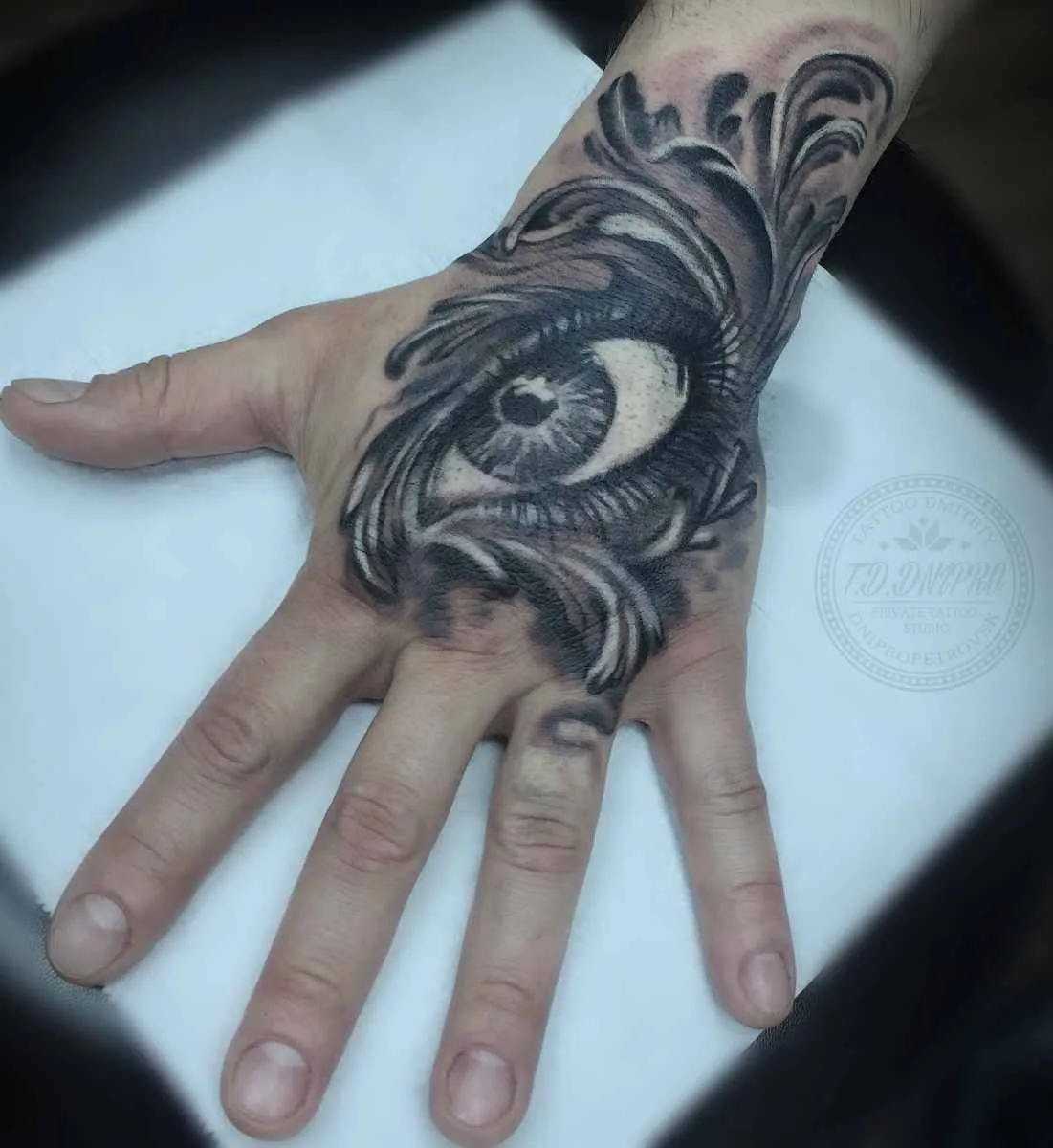
At the elbow, you can center the pupil over the joint and let the lines around it shift when you bend your arm. Ask your artist to show you the stencil with your arm both bent and straight. Between the shoulder blades, an eye can play on the joke of having “eyes in the back of your head.” Placement gives you a way to stage the image: decide who sees the eye first, from where, and whether it seems to look back.
FAQ
What does an eye tattoo mean on a hand?
An eye inside a hamsa can carry the hand-shaped charm’s protective association. A portrait eye in the same spot can keep someone’s gaze in your everyday line of sight. The design supplies the symbolism; the hand makes it visible as you gesture.
Eye of Horus vs Eye of Ra?
Horus’s restored eye recalls healing and wholeness. Ra’s eye carries the fierce power of the sun god. Tattoo designs usually draw Horus as a left eye and Ra as a right eye, so start with the story you want your design to tell.
Does an evil eye tattoo protect you?
That depends on what you believe: protection from an envious gaze belongs to folk tradition. Wearing a nazar can express that belief, honor a tradition you grew up with, or remind you of the person who shared it.
What does an eye in a triangle mean?
In Christian imagery, it’s the Eye of Providence: the eye conveys God’s watchfulness, and the triangle refers to the Trinity. Add the unfinished pyramid, and the design also recalls the Great Seal and the one-dollar bill.
What do three dots under the eye mean?
In the U.S., three dots near the eye or on the hand are widely read as “mi vida loca” (“my crazy life”), a mark tied to prison and Chicano gang culture. Other countries read them differently. See the guide to three-dot tattoo meanings for the cultural contexts behind the mark.