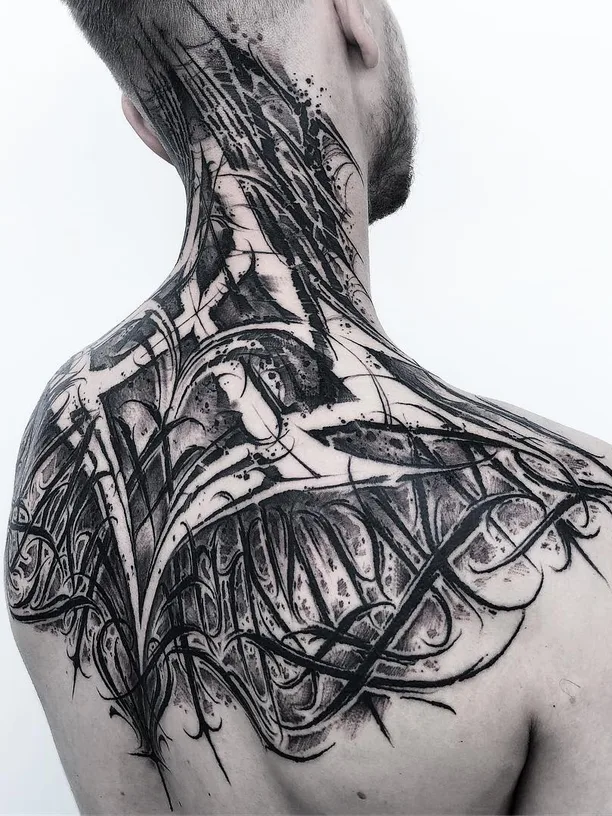
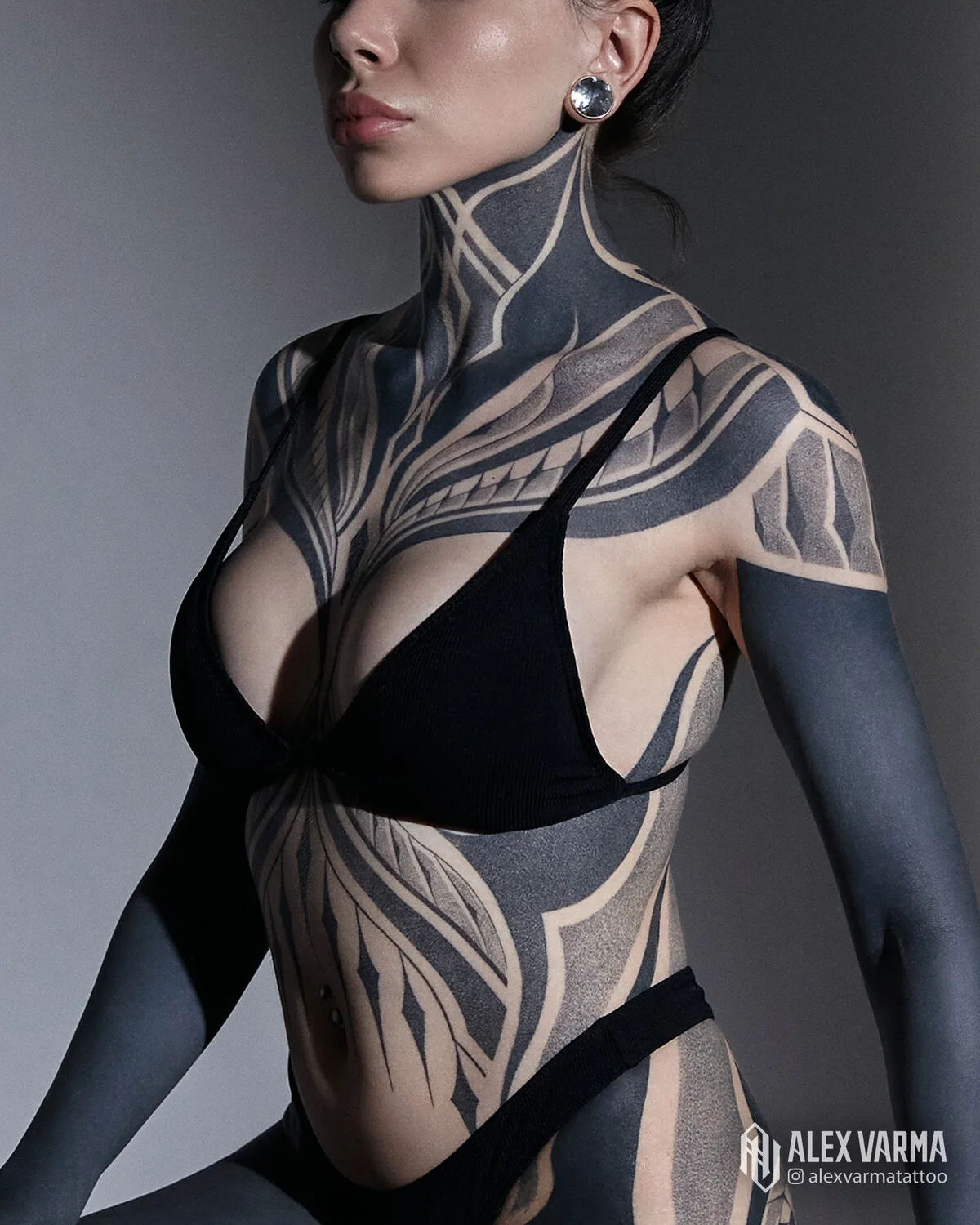
There's something visceral about blackwork. No color gradients to soften the blow, no watercolor washes to blur the edges. It's ink at its most uncompromising — carbon black pigment driven into skin with deliberate, permanent intention. And yet, for all that directness, blackwork tattoos contain some of the most intricate, sophisticated artistry happening in tattooing right now.
Blackwork has existed in some form for thousands of years. Polynesian tribal patterns, Southeast Asian sacred geometry, the hand-poked markings found on Ötzi the Iceman (dated to roughly 3300 BCE) — the impulse to mark the body with solid black pigment is arguably the oldest tattoo tradition on the planet. But what's happening with the style today looks almost nothing like what came before, and it looks nothing like what was happening even ten years ago. The genre has splintered into dozens of sub-styles, absorbed influences from graphic design, architecture, illustration, and sacred geometry, and attracted a generation of artists who treat black ink the way a sculptor treats marble: as the only material they need.
This guide breaks down what blackwork actually means as of 2025, the sub-styles driving the movement, how to plan a piece that holds up over decades, and what to look for when choosing an artist. Whether you're considering your first tattoo or building a collection, blackwork deserves serious attention.
Blackwork Tattoos at a Glance
• Blackwork encompasses any tattoo executed entirely in black ink — from heavy blackout coverage to intricate fine-line geometry and everything between. • The style has deep historical roots in Polynesian, Japanese, and Indigenous tattooing traditions, but contemporary blackwork is a distinctly modern art movement. • Sub-styles include ornamental, geometric, blackout, illustrative, dotwork, and tribal-inspired patterns, each requiring different technical skill sets. • Blackwork tends to age well compared to color work, though proper aftercare and quality ink matter enormously. • Choosing a specialist artist is critical — a great color realist isn't automatically a great blackwork tattooer.
What Actually Counts as Blackwork?
The term gets thrown around loosely, so let's be specific. Blackwork refers to any tattoo style that uses exclusively black ink. That's it. That's the unifying thread. Everything else — technique, subject matter, density, negative space — varies wildly depending on the sub-style and the artist's approach.
This creates a genre that's deceptively broad. A solid blackout sleeve and a delicate fine-line botanical piece technically both qualify as blackwork. So does a Polynesian-inspired chest panel, a brutalist geometric forearm wrap, and a hyper-detailed illustrative back piece rendered entirely in black and grey. The common denominator is the commitment to a single-ink palette, and what artists manage to achieve within that constraint is, honestly, remarkable.
- Blackwork encompasses any tattoo style using exclusively black ink, from heavy blackout coverage to intricate fine-line geometry
- Black pigment is the most stable tattoo ink available, resisting UV breakdown and maintaining crisp edges over time
- The style has splintered into distinct sub-genres including geometric, ornamental, blackout, and illustrative approaches
- Choosing a blackwork specialist is critical — technical requirements differ significantly from color tattooing
- Proper planning and aftercare are essential for pieces that will hold up over decades
The Technical Foundation: Why Black Ink Behaves Differently
Black pigment — typically carbon-based — is the most stable tattoo ink available. It holds its density longer than virtually any color pigment, resists UV breakdown more effectively, and tends to maintain crisp edges over time. This is one reason blackwork has such staying power, both literally and as a style.
But working exclusively in black presents its own challenges. Without color to create depth, artists rely entirely on line weight variation, solid fills, negative space, stippling density, and geometric precision to build visual complexity. The margin for error is smaller than you'd think. A blown line in a color piece can sometimes be camouflaged. In blackwork? It's exposed.
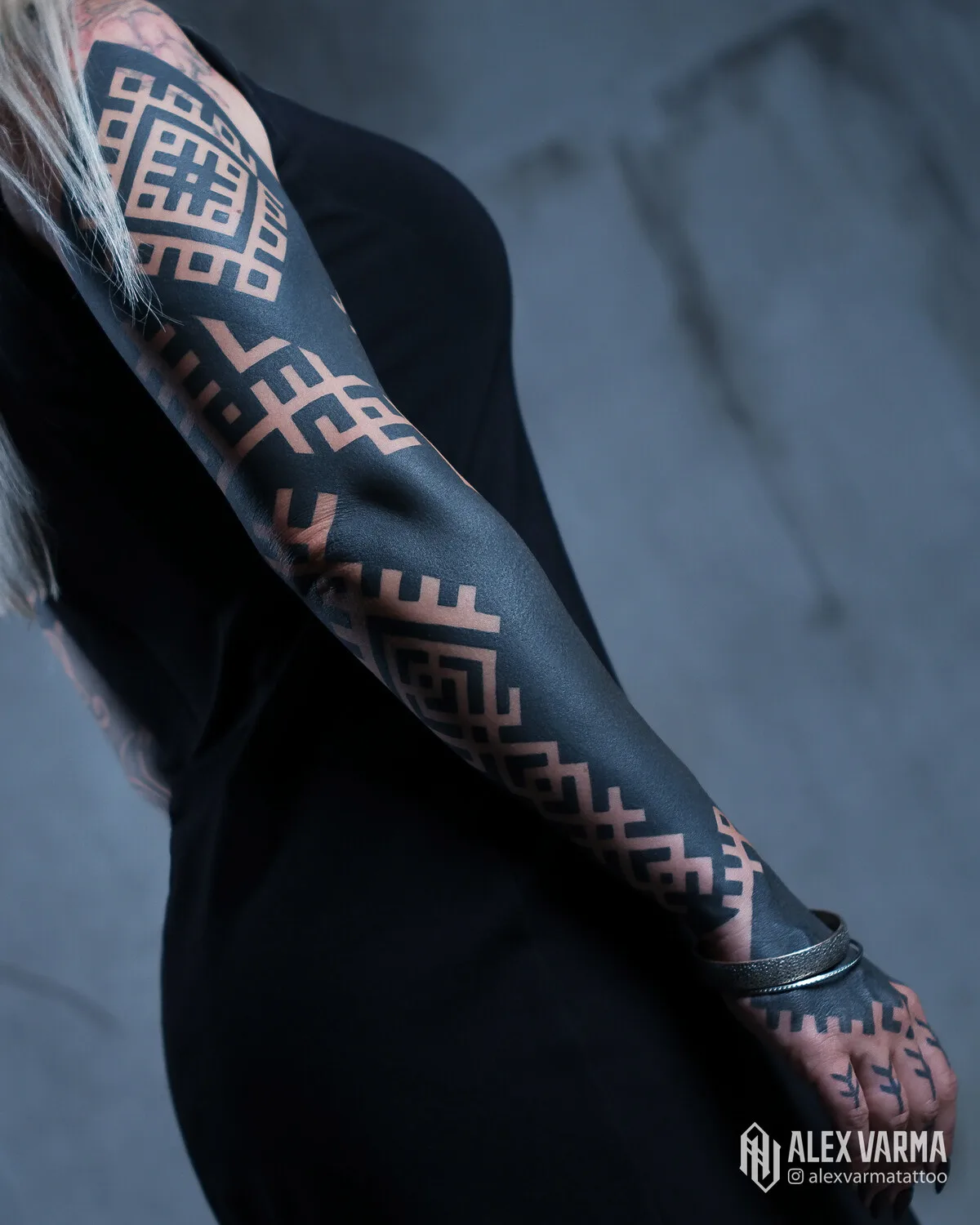
There's also the matter of saturation. Achieving truly solid, even black coverage — especially over larger areas — demands a specific technical approach. Packing ink consistently across broad sections without overworking the skin is harder than it looks, and it's one of the first things that separates a competent blackwork artist from a specialist.
Blackwork vs. Black-and-Grey: A Common Confusion
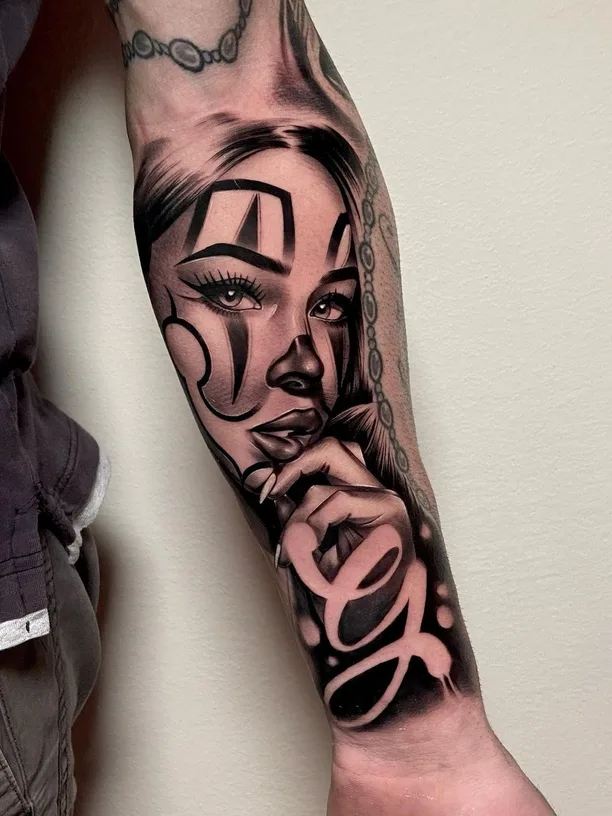
Worth clarifying. Black-and-grey tattoos — the style made famous by Chicano culture and portrait artists — use diluted black ink (grey washes) to create smooth gradients and photorealistic shading. It's a phenomenal style, but it's a different discipline from what most people mean when they say blackwork.
Don't confuse blackwork with black-and-grey tattoos. Black-and-grey uses diluted ink to create smooth gradients and photorealistic shading, while blackwork embraces the graphic quality of pure black with hard contrasts and dense fills.
Blackwork tends to embrace the graphic quality of pure black. Hard contrasts. Dense fills. The interplay between inked skin and untouched skin. Some crossover exists, sure — plenty of artists blend techniques. But if you tell a blackwork specialist you want a realistic portrait with smooth grey transitions, you'll probably get redirected to a colleague. And rightly so.
Sub-Styles: The Many Faces of Blackwork
This is where things get interesting. The blackwork umbrella shelters some of the most visually distinct sub-genres in contemporary tattooing, each with its own community of artists, collectors, and aesthetic philosophy.
Geometric and Sacred Geometry
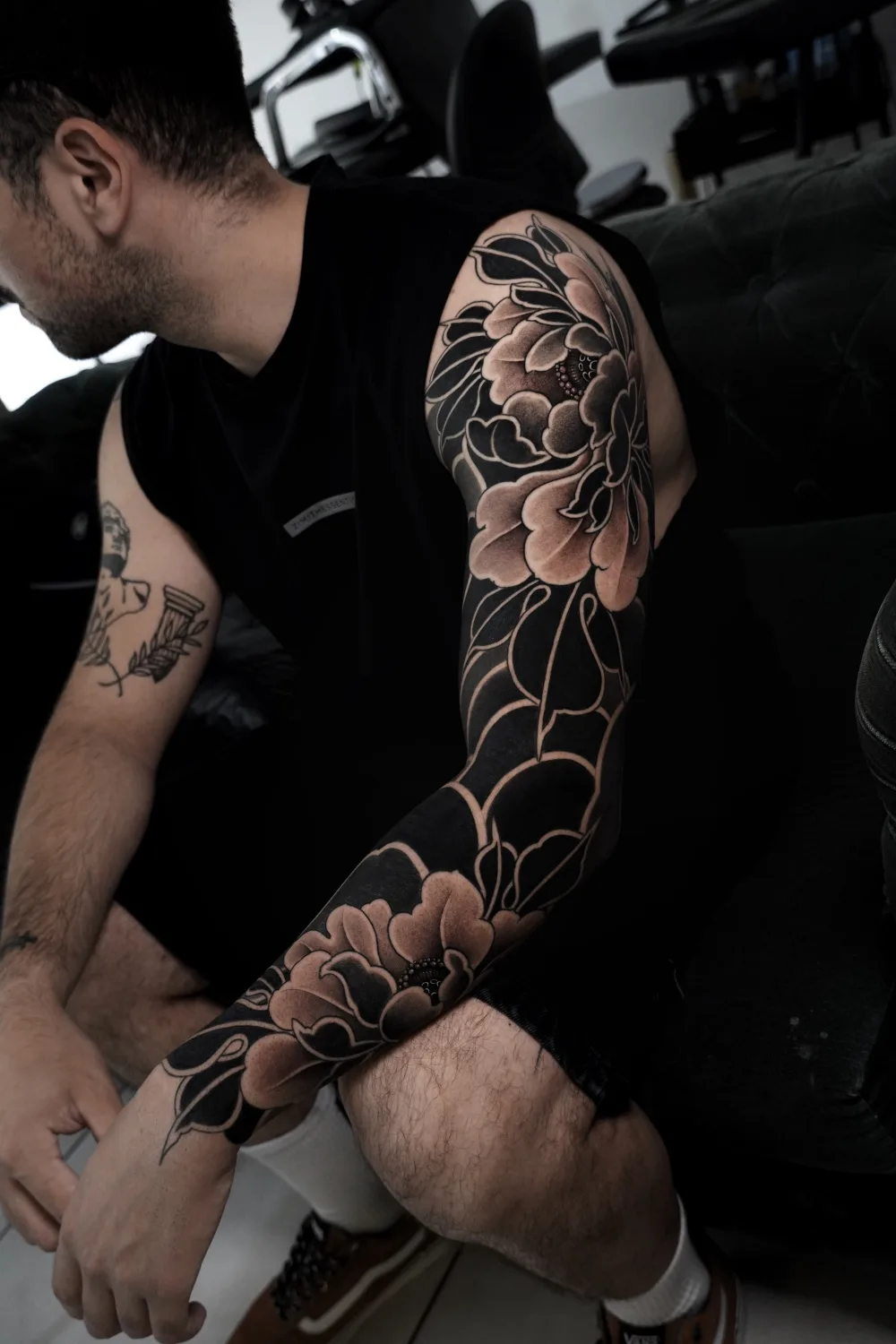
Precision is everything here. These pieces build patterns from mathematical relationships — the Flower of Life, Metatron's Cube, tessellating polygons, fractal-inspired structures. The best geometric blackwork has an almost architectural quality, like something that could exist as a building facade or a cathedral window.
Artists in this lane often use stencil technology and even digital projection tools to ensure symmetry, though plenty still work freehand. The appeal goes beyond aesthetics for many collectors. Sacred geometry carries symbolic weight across multiple spiritual traditions, and wearing those patterns permanently feels intentional in a way that's hard to articulate.
Read alsosacred geometry tattoo style| Sub-Style | Technique Focus | Time Investment | Best For |
|---|---|---|---|
| Geometric/Sacred Geometry | Precision, symmetry, mathematical patterns | Medium to High | Symbolic meaning, architectural aesthetics |
| Ornamental/Mandala | Dotwork, filigree, textile-inspired patterns | Very High (40-60 hours) | Intricate detail lovers, spiritual significance |
| Blackout/Heavy Black | Dense packing, negative space design | High | Bold statements, cover-ups |
| Illustrative | Graphic clarity, printmaking styles | Medium | Mainstream appeal, storytelling |
Ornamental and Mandala Work
If geometric blackwork channels architecture, ornamental blackwork channels textile design. Think elaborate filigree, paisley-influenced curves, mehndi-inspired patterns adapted for permanence. Mandala designs — radially symmetrical patterns that can be endlessly complex — sit at the heart of this sub-style.
The ornamental approach often incorporates dotwork as a shading technique, creating smooth gradients entirely through varying dot density rather than line work. It's painstaking. A full ornamental sleeve might require 40-60 hours depending on complexity. But the result has a quality that's almost impossible to achieve in any other style — a kind of lace-like intricacy that rewards close inspection.
Blackout tattoos require serious commitment. They hurt more than most styles due to dense packing over large areas, and the healing process can be intense. Consider the physical and emotional commitment before proceeding.
Blackout and Heavy Black
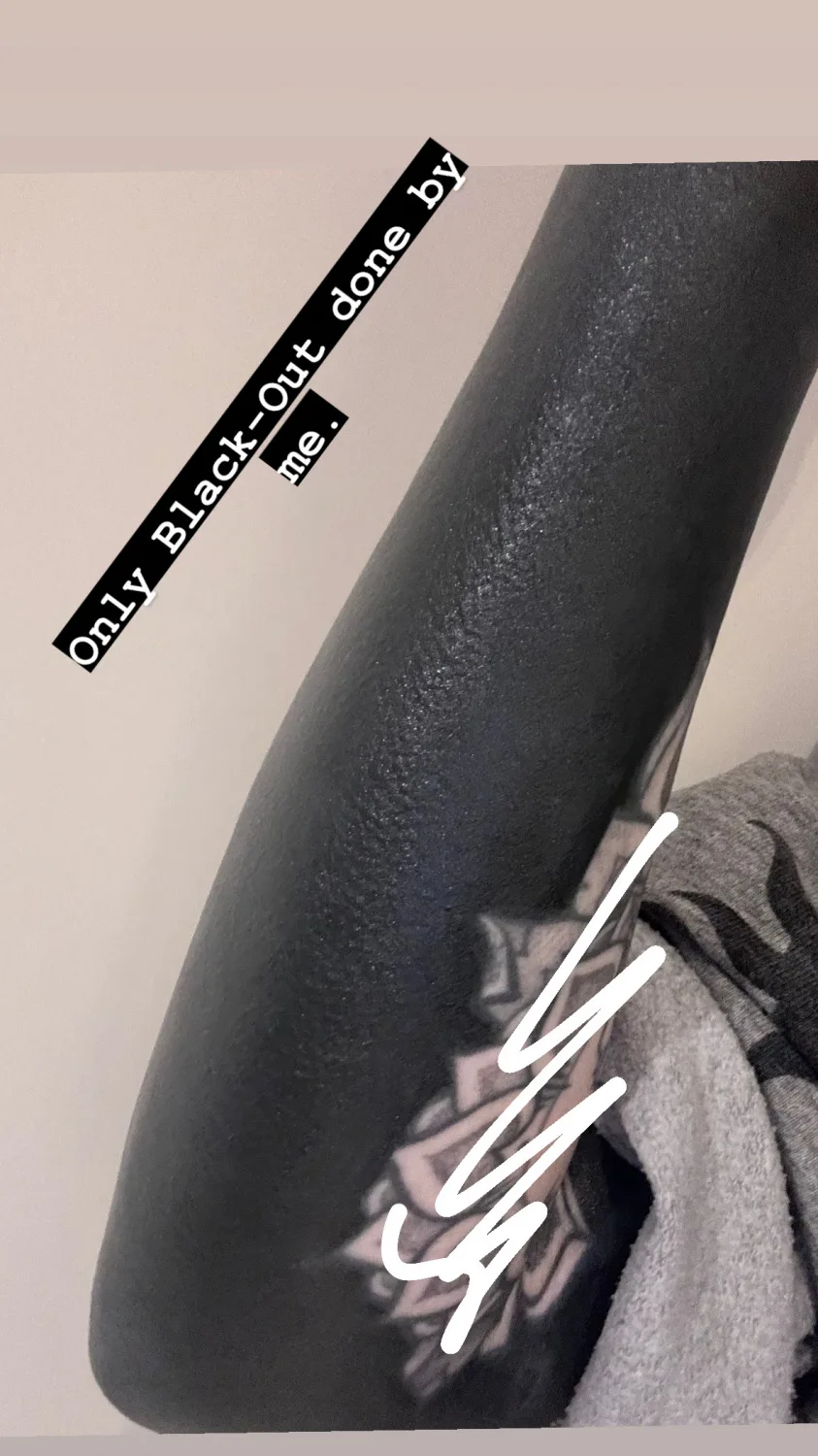
This is blackwork at its most extreme. Entire sections of skin — sometimes full limbs, sometimes torsos — saturated in solid black ink. No pattern. No negative space. Just black.
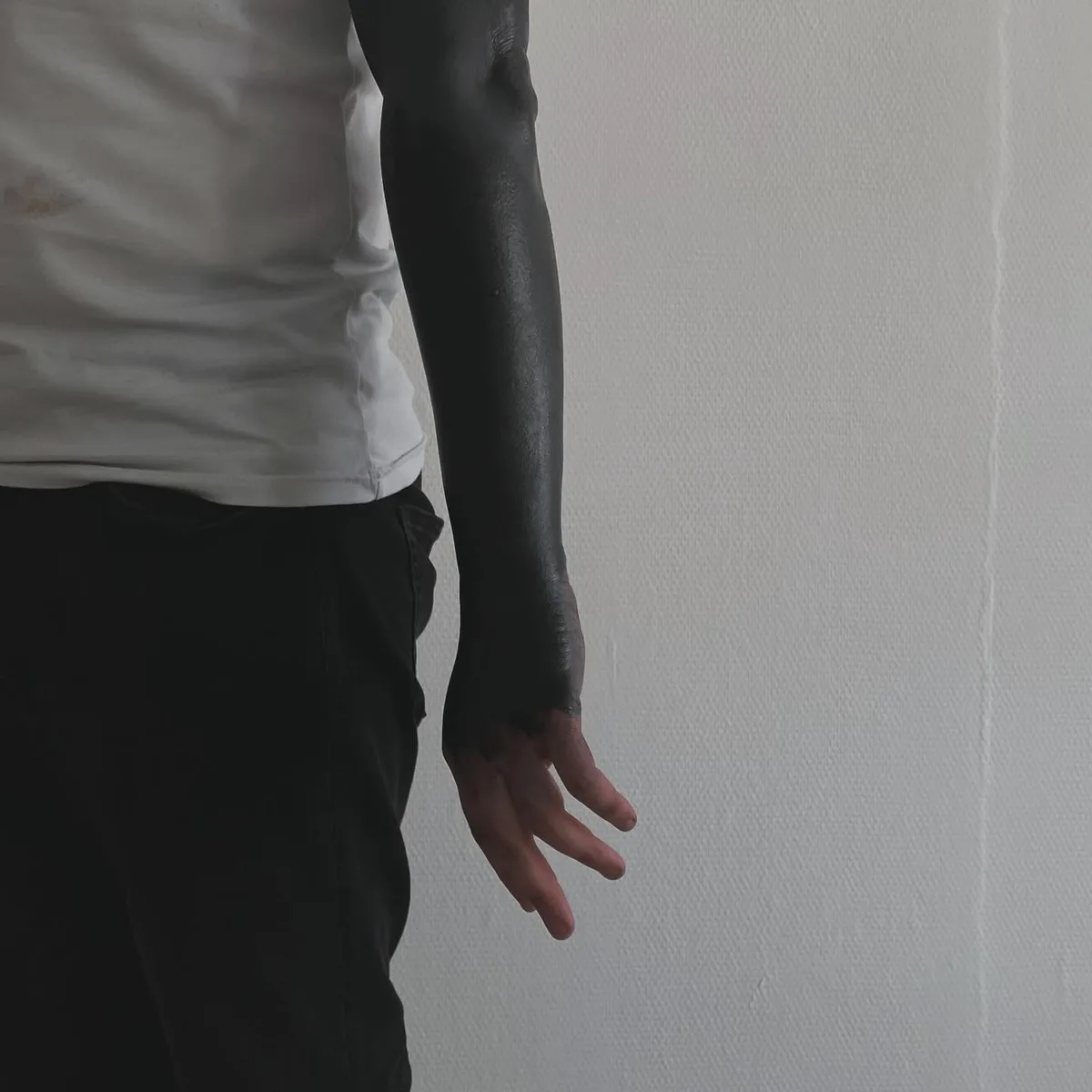
Or rather — and this is the subtle part — the negative space IS the design. Many blackout pieces use uninked skin as the canvas, leaving organic shapes, illustrations, or geometric cut-outs that appear to glow against the surrounding darkness. The technique has become increasingly popular for cover-up work, too, offering a solution for collectors who want to repurpose heavily tattooed skin.
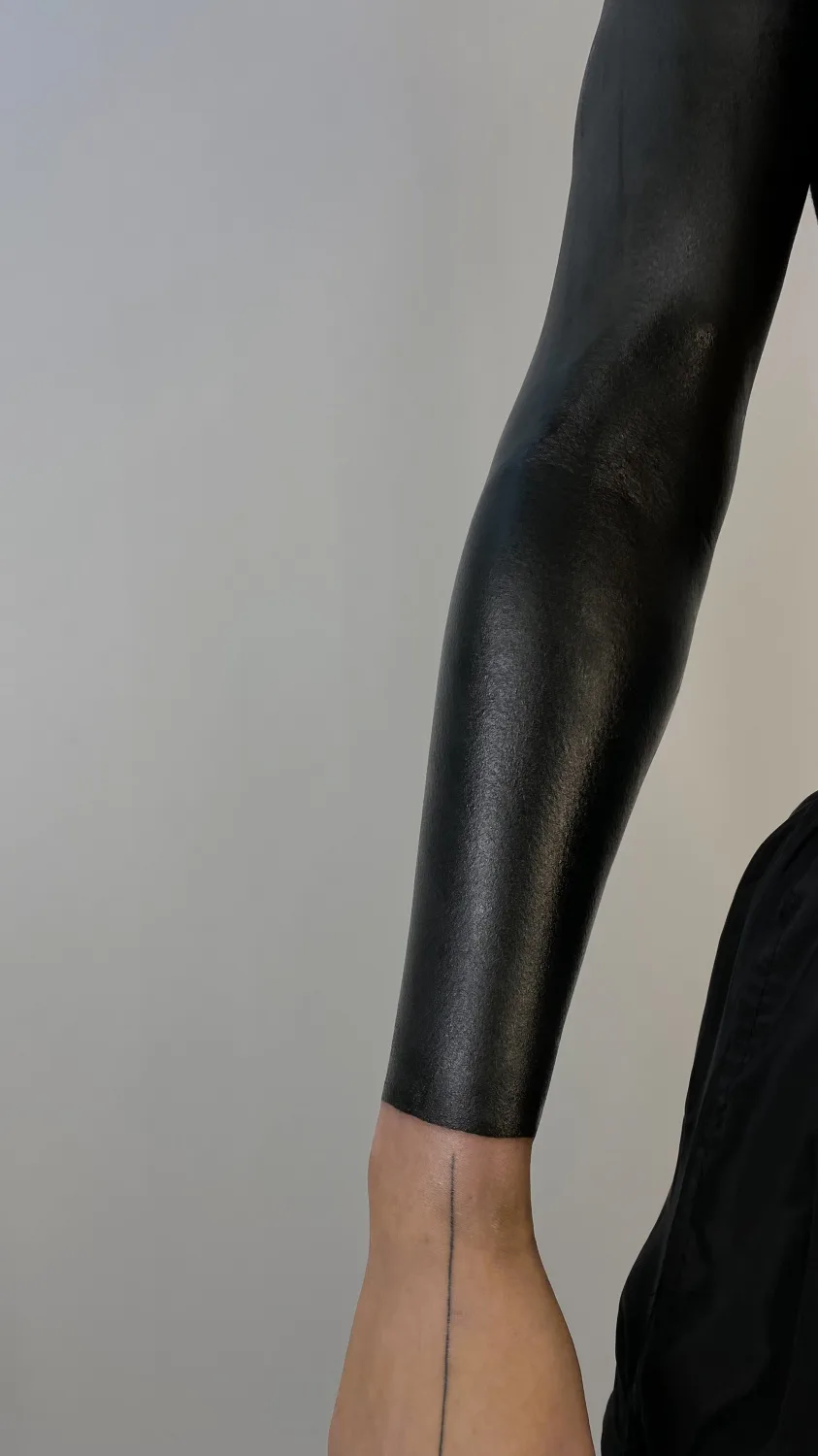
Blackout requires serious commitment. It hurts more than most styles — dense packing over large areas is physically demanding for both artist and client. The healing process can be intense. But the visual impact is undeniable.
Illustrative Blackwork
This sub-style borrows from illustration, printmaking, and graphic novels. Think woodcut-inspired imagery, etching-style crosshatching, botanical illustrations that look like they belong in a Victorian field guide. The subject matter ranges widely — skulls, animals, mythological figures, landscapes — but the execution stays rooted in the graphic clarity of black ink on skin.
Illustrative blackwork has probably done the most to pull the genre into the mainstream. It's accessible. People who might not connect with abstract geometry or solid blackout coverage can immediately appreciate a beautifully rendered raven or a detailed architectural scene. The storytelling potential is enormous.
Read alsoillustrative tattoo styleTribal and Neo-Tribal
This needs careful framing. Traditional tribal tattooing — Polynesian ta moko, Samoan pe'a, Borneo's hand-tapped designs — represents living cultural practices with deep significance. These traditions deserve respect, and getting someone else's cultural tattoo because it "looks cool" is, at minimum, a conversation worth having seriously.
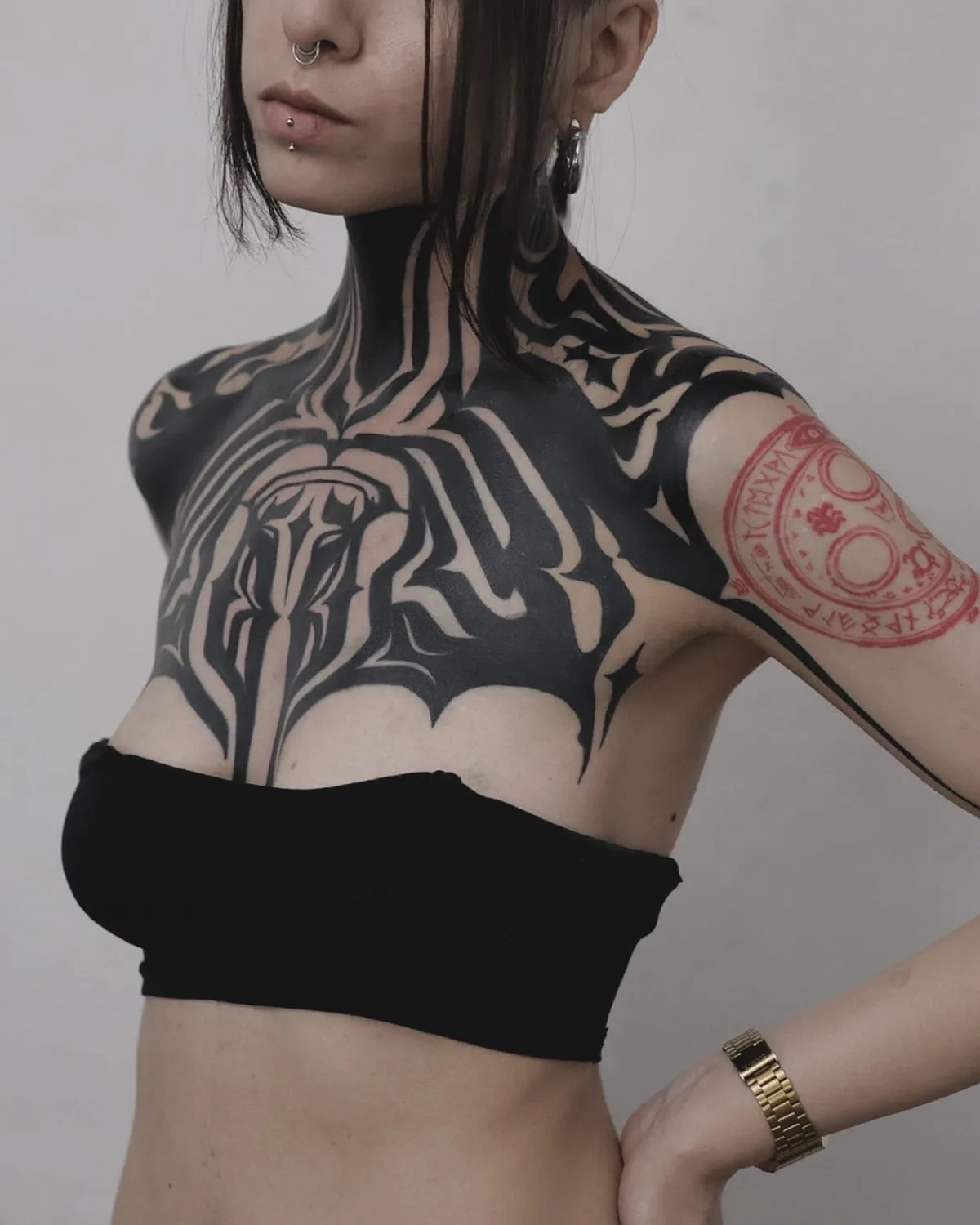
That said, a neo-tribal movement has emerged that draws on the visual language of indigenous patterns while developing new, non-appropriative designs. What's clear is that the conversation around tribal blackwork has matured significantly. The best artists in this space engage thoughtfully with their sources and create original work rather than copying sacred designs.
Planning a Blackwork Piece That Lasts
Blackwork ages well. Probably better than any other style, if we're being honest. But "ages well" doesn't mean "requires no forethought." Plenty of decisions made during the design phase affect how a piece looks at year five, year ten, year thirty.
Size, Spacing, and the Long Game
Ink spreads over time. Every tattoo artist knows this, but it's especially important in styles that rely on fine detail and tight spacing. Lines that sit too close together will eventually blur into each other. Dotwork that's packed too densely in small areas can read as a muddy grey patch after a decade.
Good blackwork artists design with this in mind. They leave enough breathing room between elements. They scale patterns appropriately for the body area. A mandala that looks stunning at 15 centimeters might lose critical detail if shrunk to fit a wrist. This is one of the most common planning mistakes — falling in love with a design at screen size without considering how it translates to skin at the intended scale.
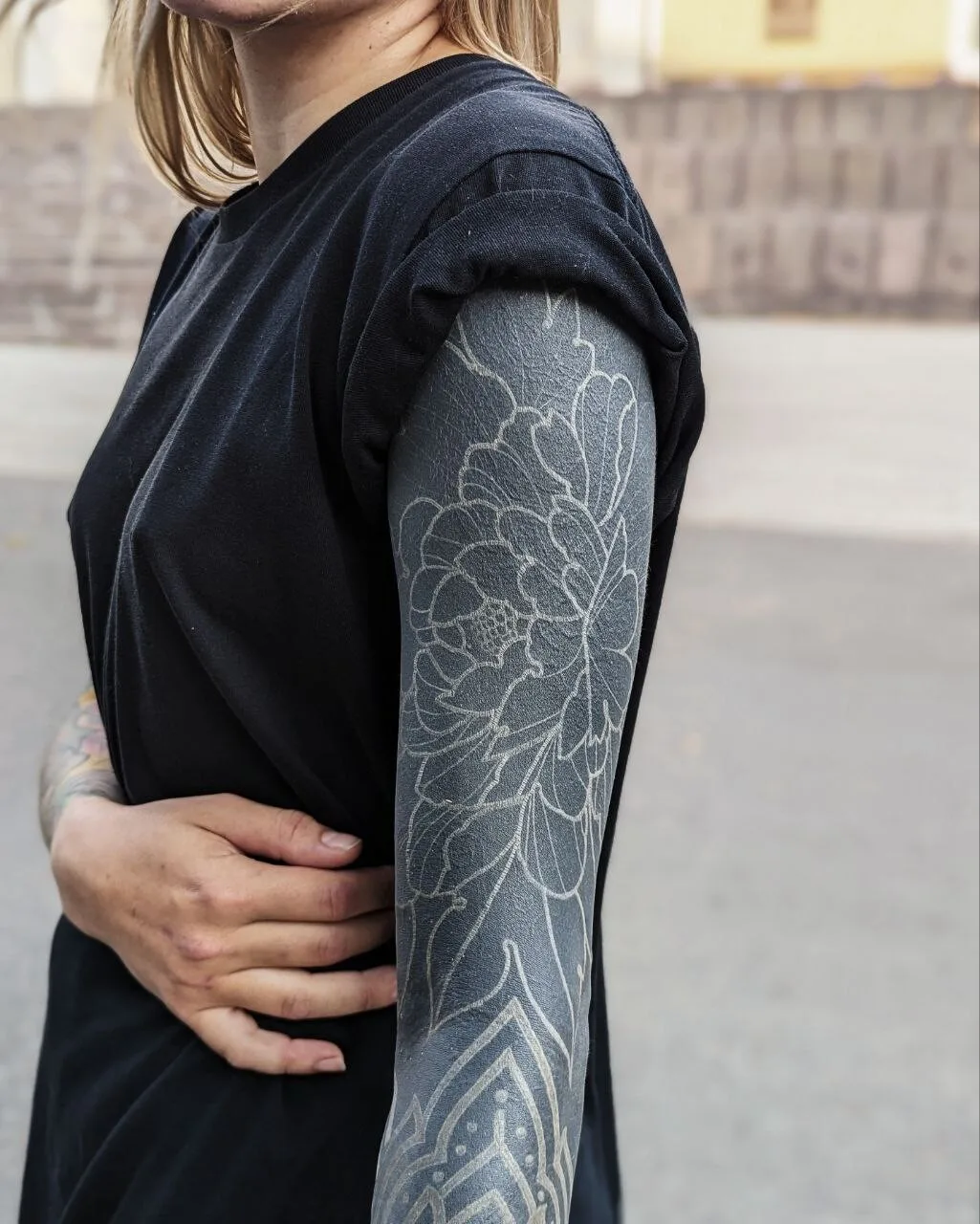
Placement matters too. Areas with thin skin, heavy joint movement, or significant sun exposure will age differently than, say, an upper arm or back. It's not that you can't put blackwork on your hands or ribs — plenty of people do, beautifully — but the maintenance expectations differ.
Working With Your Artist: Collaboration, Not Dictation
The best results happen when clients bring reference imagery, mood boards, and ideas about feeling and meaning — then trust the artist to handle the technical translation. A flat 2D design from Pinterest needs to be adapted for a three-dimensional, moving body. Curves, muscle contours, how a pattern wraps around a limb — these are problems that experienced blackwork artists solve every day, and they're better at it than you are.
I've seen stunning custom pieces emerge from a client simply saying, "I want something inspired by Islamic geometric patterns, flowing from my shoulder to my elbow, with room to extend later." That kind of brief gives an artist creative room while establishing clear parameters. Compare that to someone who walks in with a screenshot and says "exactly this, exactly here" — even when the design won't work for their anatomy.
Trust the process. Or more precisely — trust the artist you've specifically chosen because you trust their process.
Cover-Ups and Reworks
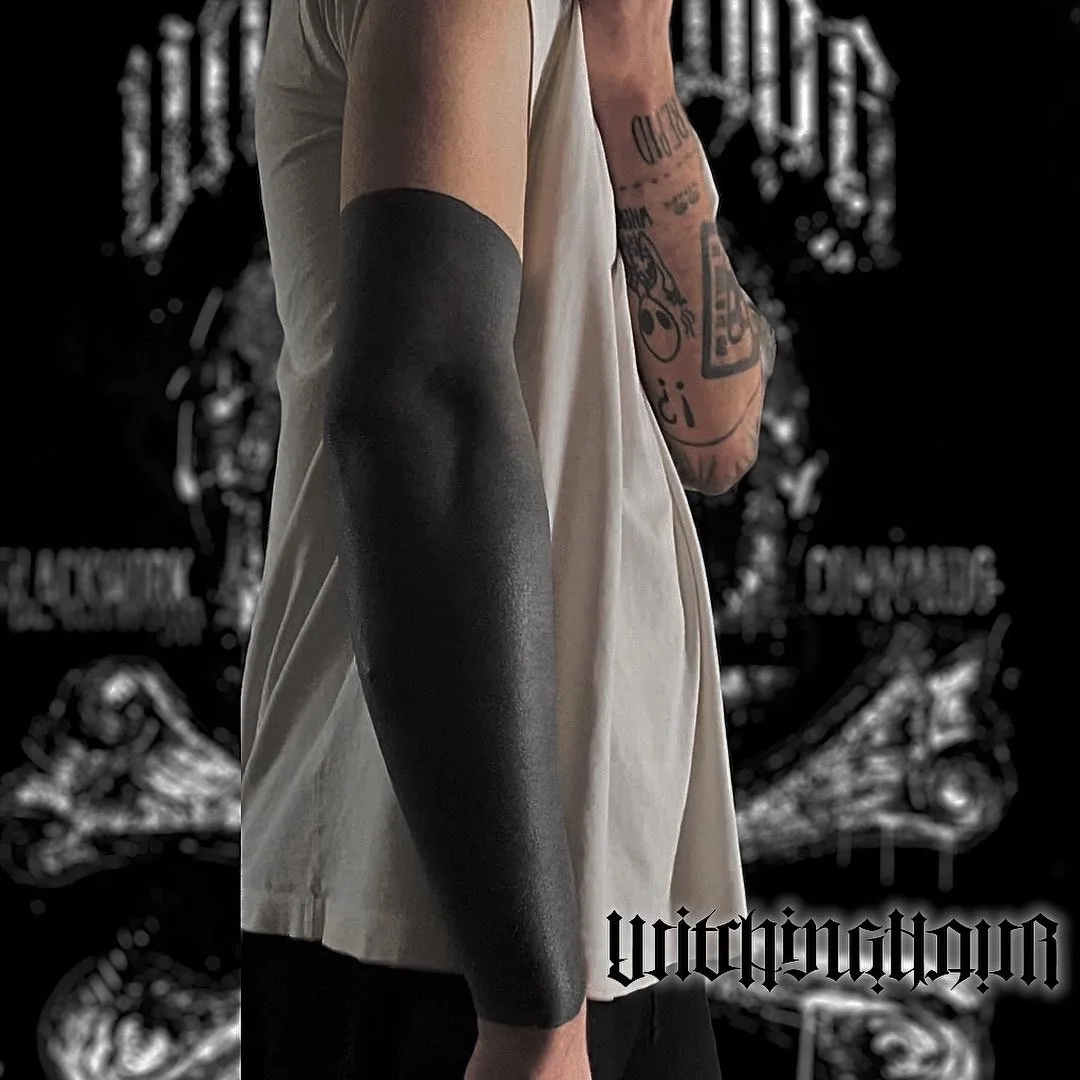
Blackwork has become one of the most powerful cover-up tools in tattooing. Older tattoos that can't be effectively lasered or reworked can be incorporated into blackout designs, ornamental patterns, or heavy illustrative pieces. The solid density of black ink conceals previous work effectively, though it requires a skilled hand to ensure even coverage over existing ink of varying colors and densities.
If you're considering blackwork specifically as a cover-up solution, consult with an artist who has documented experience in this area. The before-and-after evidence in their portfolio will tell you more than any verbal promise.

tattoo cover-up guide
Finding the Right Artist
This might be the most important section here. Blackwork looks straightforward. It's black ink, how hard can it be? The answer: very. And the consequences of choosing the wrong artist are particularly visible in a style that offers nowhere to hide mistakes.
What to Look For in a Portfolio
Healed photos. This is non-negotiable. Fresh blackwork always looks incredible — the skin is tight, the ink is saturated, everything pops. But healed work tells the real story. Look for consistency in solid fills (no patchy grey areas), clean line intersections, and symmetry that holds up under scrutiny. If an artist only shows fresh work, ask why.
Also look for range within their specialty. An artist who does great geometric sleeves but has never tackled a large-scale back piece might not be the right fit for your back piece. Similarly, someone known for bold blackout work may not have the fine-line touch needed for delicate ornamental patterns. Specialization within specialization matters.
Red Flags
Inconsistent saturation in solid black areas. Lines that waver in geometric or symmetrical designs. No healed work in the portfolio — at all. Reluctance to discuss their process or answer technical questions. Copying designs directly from other artists without credit or modification. And, perhaps most importantly, an artist who takes on every style equally. The tattooer who does color realism on Monday, traditional on Tuesday, and blackwork on Wednesday might be talented, but they're probably not going to match the output of someone who's spent years deep in one discipline.
There are exceptions. Of course there are. But as a general rule, specialization matters in blackwork more than in many other styles.
Where to Look
Instagram remains the primary discovery platform for tattoo artists, though the algorithm has made it harder to find niche specialists organically. Hashtags like #blackworktattoo, #blackworkerssubmission, and #dotworktattoo still surface strong work. Convention appearances are another indicator — artists who regularly work major conventions (
Geographically, blackwork talent is genuinely global now. Strong scenes exist in Berlin, London, Melbourne, Seoul, Barcelona, São Paulo, and across North America. The style doesn't cluster the way some genres do. That said, certain cities have developed particularly dense concentrations of specialists, making them worth considering if you're willing to travel for the right artist.
how to choose a tattoo artist
Aftercare for Blackwork: What's Different
The basic aftercare principles apply — keep it clean, keep it moisturized, avoid sun exposure during healing, don't pick at it. But blackwork has a few specific considerations worth knowing.
Large solid-black areas tend to scab more heavily than lighter tattoos. This is normal. The temptation to pick or peel is proportionally stronger because there's more scabbing surface. Resist it. Peeling off scabs before they're ready can pull ink out and leave patchy spots that require touch-ups.
Sun protection is important for all tattoos, but blackwork — especially pieces with fine detail and negative space — benefits particularly from consistent SPF use after healing. UV exposure gradually breaks down ink particles over time, and black ink, while more resistant than color, isn't immune. A solid SPF 50 habit will keep your blackwork looking sharper for longer. Not a maybe. A certainty.
The Cultural Weight of Blackwork
It's hard to talk about blackwork without acknowledging its roots in indigenous tattooing traditions — traditions that predate the modern tattoo industry by millennia. Polynesian tattooing, Maori ta moko, Filipino batok, Berber facial tattoos, the hand-tapped traditions of Thailand and Cambodia — these aren't just aesthetic influences. They're living practices embedded in cultural identity, spiritual belief, and social structure.
The contemporary blackwork movement owes an enormous debt to these traditions, even when individual artists are creating completely original work. The emphasis on pattern, on sacred geometry, on the body as a deliberate canvas — these ideas didn't emerge in a vacuum. Acknowledging that lineage matters. It doesn't mean every blackwork tattoo is an act of appropriation — far from it. But awareness of where the visual language comes from, and respect for the cultures that developed it, is part of being a thoughtful collector.
This conversation has evolved considerably over the past decade. More artists are engaging with it openly. More collectors are asking the right questions. That's progress, even if it's imperfect.
Frequently Asked Questions About Blackwork Tattoos
FAQ
Does blackwork hurt more than other tattoo styles?
It depends on the sub-style. Dense solid fills and blackout work typically involve more sustained, heavy-handed tattooing, which most people find more intense than fine-line work or lightly shaded pieces. Dotwork can be surprisingly uncomfortable over long sessions because the repetitive stippling creates a cumulative irritation effect. That said, pain tolerance is deeply individual, and placement matters more than style in most cases. An upper arm blackwork piece will generally hurt less than a rib fine-line piece.
How long does a large-scale blackwork piece take to complete?
This varies enormously based on complexity, coverage area, and artist speed. A geometric half-sleeve might take 15-25 hours spread across multiple sessions. A full blackout sleeve with negative space design could require 30-50 hours or more. Ornamental full-back pieces can exceed 60-80 hours for the most intricate work. Most artists work in sessions of 4-8 hours, spaced 3-6 weeks apart for healing. Expect a significant time investment for anything beyond a single sitting.
Will my blackwork tattoo fade to grey over time?
All tattoos experience some degree of fading as the body's immune system gradually breaks down ink particles. However, high-quality black ink is the most fade-resistant pigment in tattooing. Well-executed blackwork with properly saturated fills should maintain its boldness for many years. The primary enemies of longevity are sun exposure, poor initial saturation, and choosing an artist who doesn't pack ink deeply enough. Consistent sunscreen use after healing is the single best thing you can do to preserve your blackwork long-term.
Can I add color to a blackwork tattoo later?
Practically speaking, no — you cannot effectively tattoo color over solid black ink. The black will overpower any color placed on top. However, you can design blackwork pieces that intentionally leave space for color accents from the beginning. Some artists create stunning hybrid work that combines solid blackwork elements with color highlights in the negative space. If you think you might want color eventually, discuss this with your artist during the design phase so the composition accounts for it.
Where Blackwork Goes From Here
Blackwork isn't going anywhere. If anything, the style is accelerating. New tools — including more precise machines, better ink formulations, and digital design software — are expanding what's technically possible. Artists are pushing into territory that would have been considered unrealistic a decade ago: full-body compositions with architectural precision, pieces that play with optical illusion and dimensionality, work that blurs the line between tattoo and sculpture.
The cultural conversation is deepening too. As tattooing continues its slow march toward broader artistic legitimacy, blackwork — with its roots in the oldest tattoo traditions and its branches reaching into contemporary fine art — sits at a uniquely interesting crossroads.
For collectors, the opportunity is clear. There has never been more talent working in this style, more sub-genres to explore, or more information available to help you make informed decisions. The right blackwork piece, executed by the right artist, is one of the most enduring things you can put on your body.
If you're ready to start planning, spend time deep in portfolios. Follow artists whose work moves you. And when you find the one — book that consultation. Your skin will thank you for the patience.