From August 14 to 16, Seattle Center Exhibition Hall will once again become one of the major gathering points for the American tattoo scene. Seattle Tattoo Expo is celebrating its 25th anniversary — a quarter century during which tattooing has made an extraordinary journey from a countercultural phenomenon to a recognized form of contemporary art and one of the most personal ways to tell a story about yourself.
The convention has been held in Seattle since 2001 and brings together thousands of visitors and hundreds of artists from around the world each year. This year’s lineup includes Vyvyn Lazonga, Shawn Barber, Tony Hundahl, Big Gus, and many other renowned tattoo artists. Organized by Hidden Hand Tattoo and Supergenius Tattoo, the event promises three days of live tattooing, competitions, and activities that bring together the professional tattoo industry and people for whom tattoos have long become part of their personal stories.
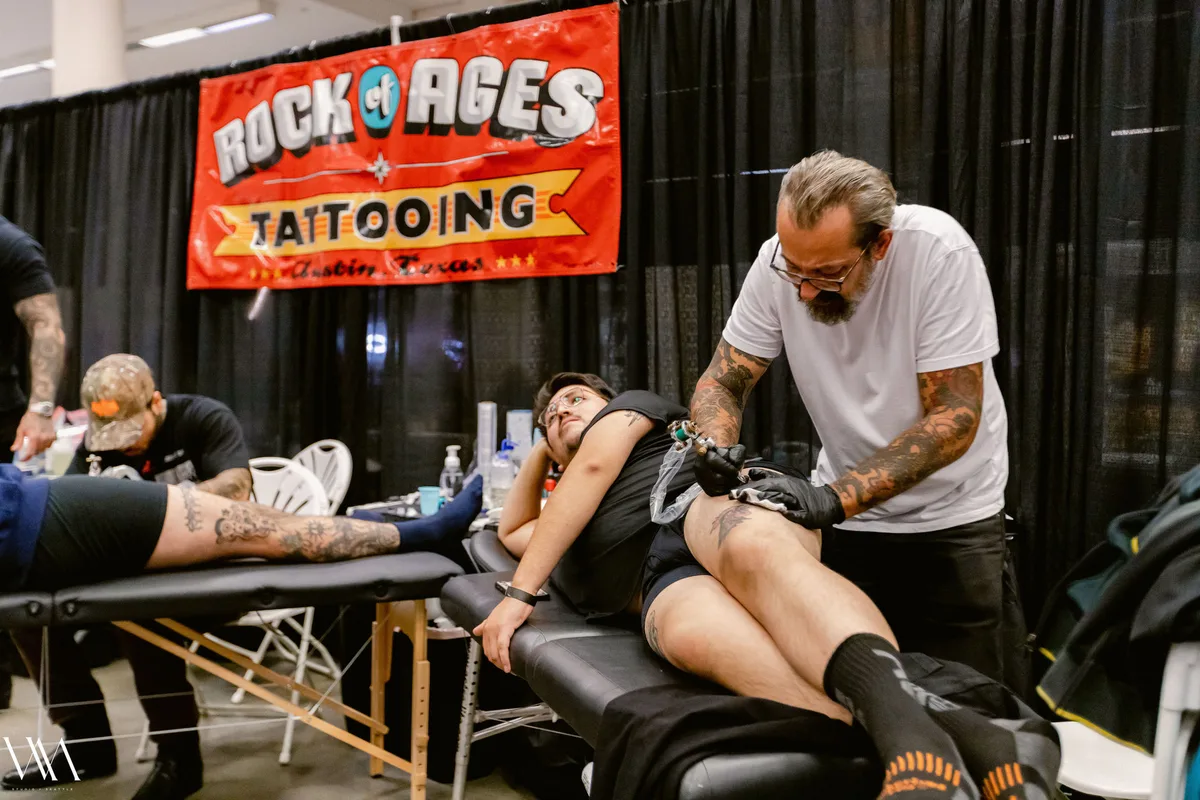
But one of the most interesting aspects of Seattle Tattoo Expo 2026 is not the famous names — or even the thousands of new tattoos that will be created over the course of the weekend. This year, the organizers are also drawing attention to the people on the other side of the tattoo machine: collectors and the personal stories behind their tattoos.
Among them are Derek, John, and Erin from Seattle. Their tattoos are completely different in both visual language and meaning, yet each one illustrates why an image on the skin can become far more than simply a design someone likes.
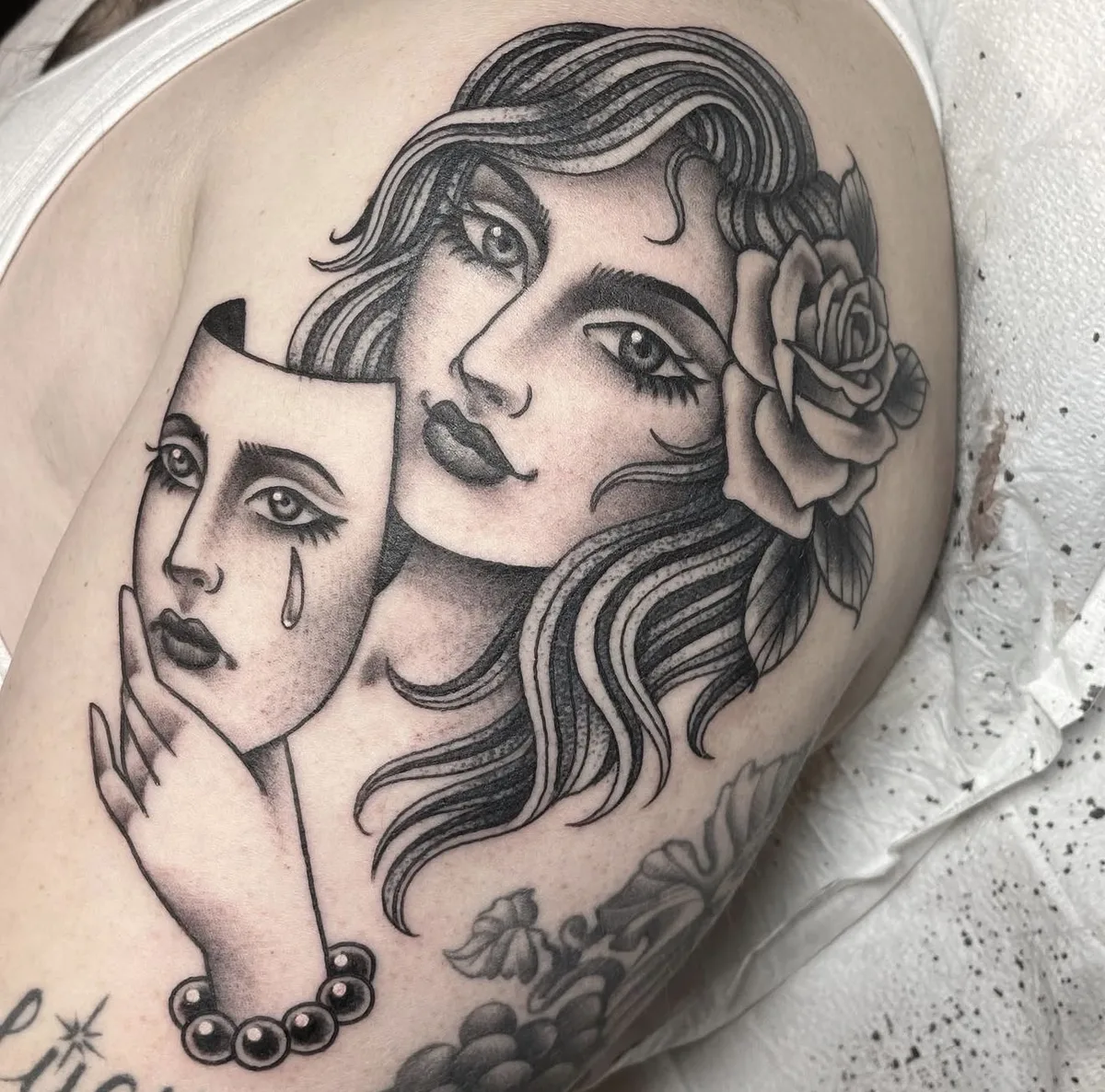
Derek: Keeping the Memory of a Loved One Close
For Derek, tattooing became a way to preserve his connection with his sister after her death.
The design was created by his wife, a tattoo artist who was also close to Derek’s sister. At the center of the composition is a woman’s face accompanied by a mask expressing a contrasting emotion. The tattoo became an intensely personal family symbol — a reminder of someone who is no longer there, and at the same time a reflection on an inner world that is not always visible to others.
Works like this are difficult to view purely in terms of technique or style. A memorial tattoo exists first and foremost as part of the life of the person wearing it. It does not try to replace a memory — it gives that memory a physical presence.
Stories like Derek’s reveal something unique about tattooing: unlike most works of art, a tattoo does not remain on a wall or inside a collection. A person literally continues living with it.
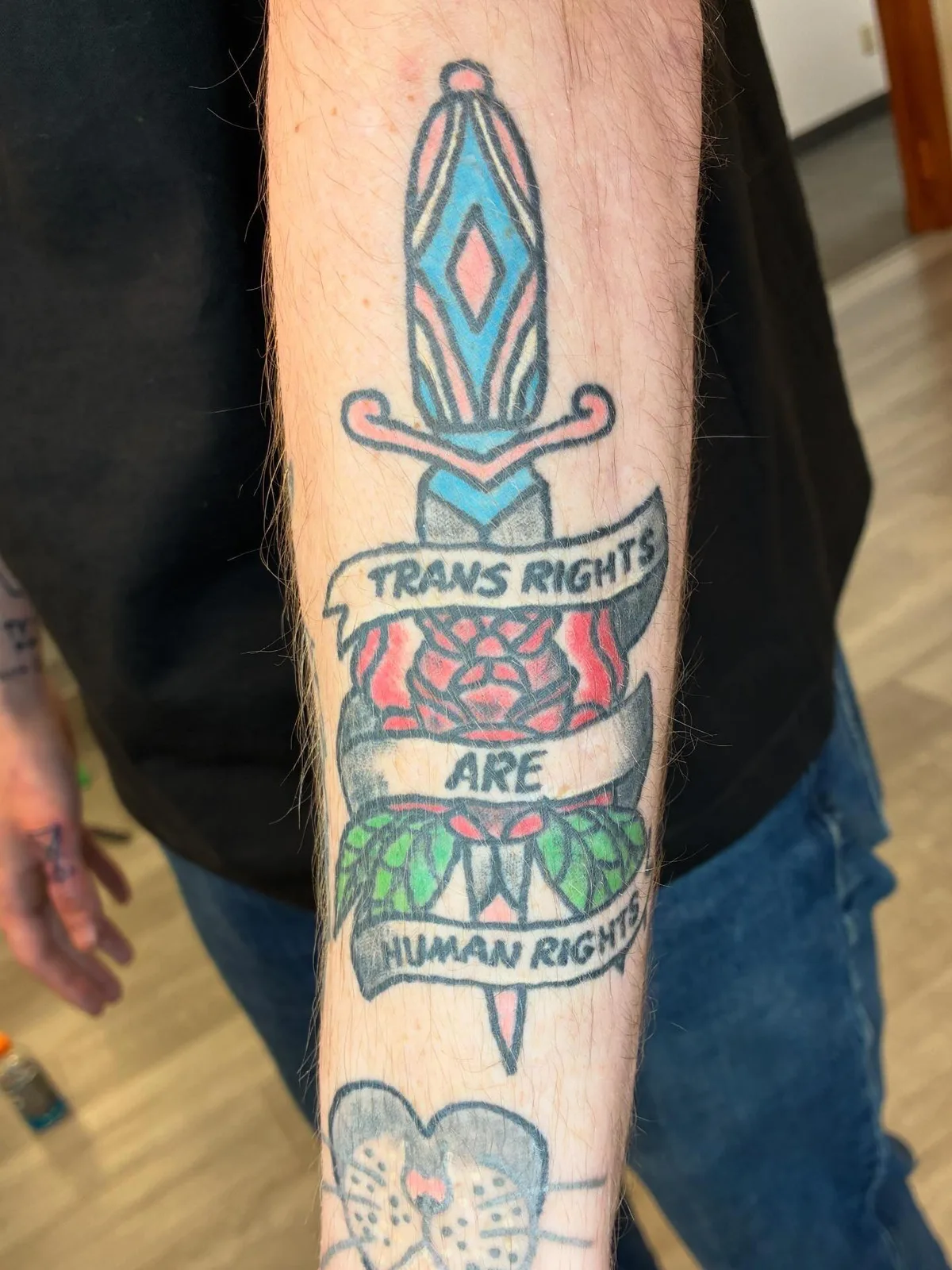
John: When a Tattoo Becomes a Statement of Values
John’s motivation is different.
For him, tattoos are a way to openly express the principles he considers important. One of his pieces is dedicated to supporting the transgender and nonbinary people in his life, becoming a permanent sign of solidarity with them.
John was born in Texas and says that his accent sometimes leads strangers to make assumptions about his political or social views before they know anything about him. His tattoos allow him to challenge those assumptions without lengthy explanations.
In this case, tattooing functions almost like a public statement.
Personal beliefs can remain private, be expressed in conversation, or shared online. But placing a statement permanently on the body moves it into an entirely different space — it stays with the person wherever they go.
John’s story is a reminder that tattoos have long been used not only as decoration, but also as a way to express belonging, solidarity, protest, or a personal system of values.
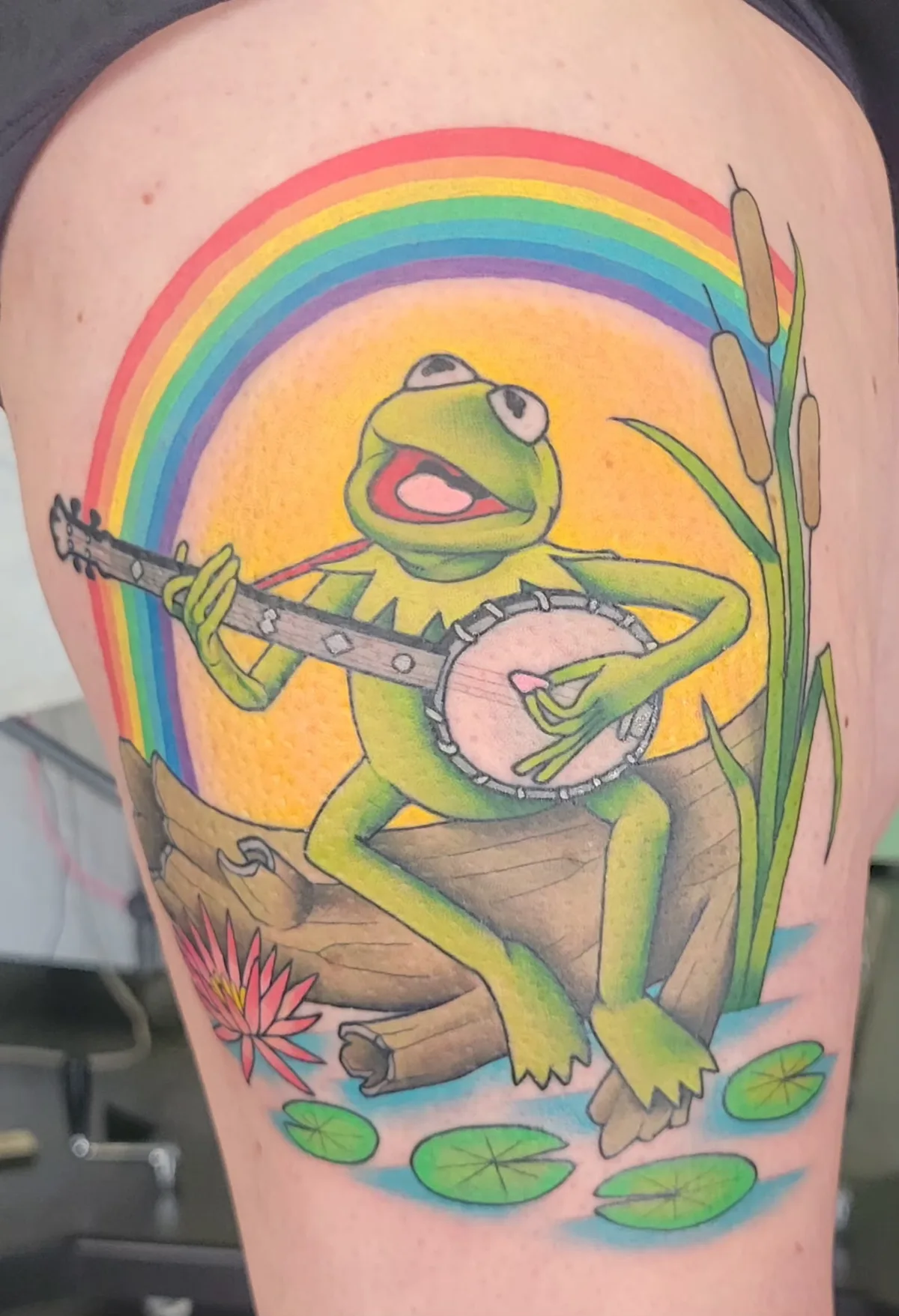
Erin: Preserving a Sense of Wonder
Erin’s story is lighter in tone, but no less personal.
She grew up watching The Muppets with her family. During a visit to Seattle Tattoo Expo, she came up with the idea of getting Kermit the Frog singing Rainbow Connection tattooed on her thigh.
For Erin, the image is connected not simply with nostalgia for a familiar character, but with a particular way of looking at life. The tattoo reminds her to remain curious, approach the world with positivity, and continue finding something extraordinary in everyday life.
It represents another side of contemporary tattoo collecting. Not every tattoo needs to commemorate a difficult event, an important date, or a philosophical idea. Sometimes a movie, a song, a character, or a family memory that still evokes the right feeling years later is enough.
Erin’s tattoo turns that feeling into a permanent visual symbol.
From Image to Story
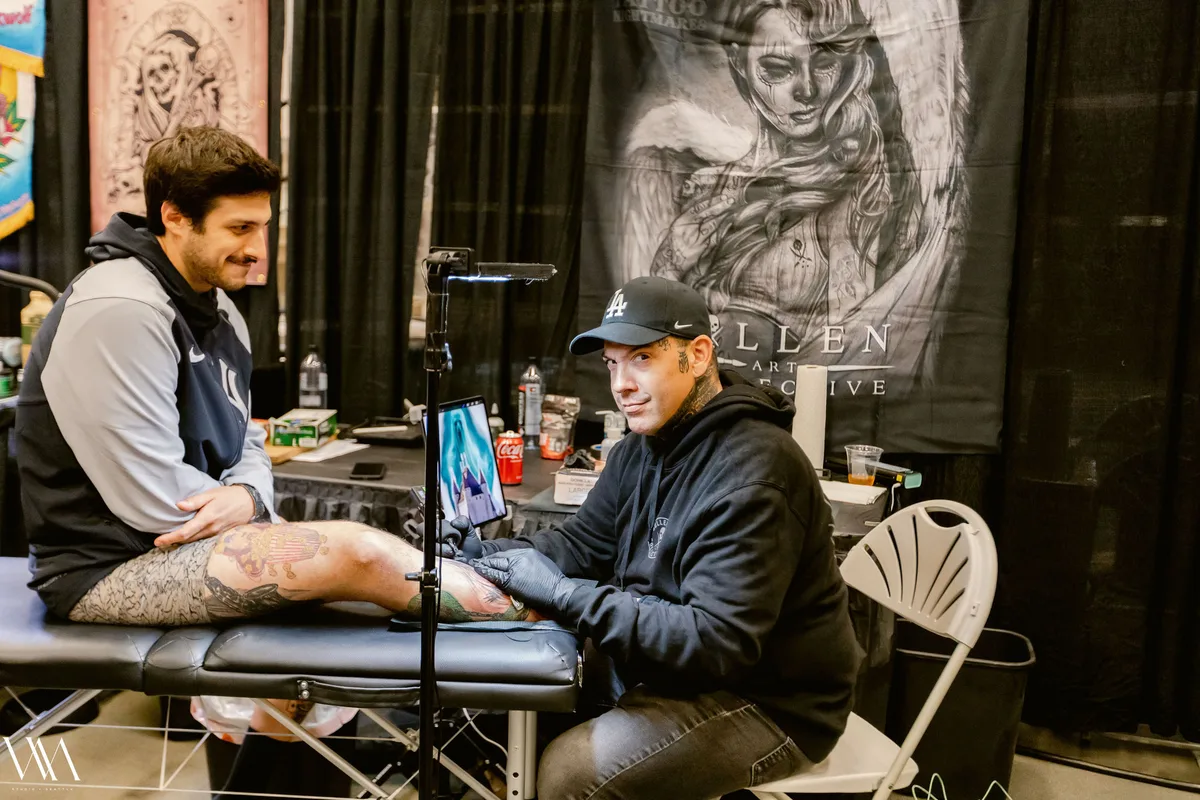
Derek, John, and Erin represent just three of the countless stories that can be found at a tattoo convention.
One person comes to an artist to preserve a memory. Another wants to make their position visible. Someone else wants to capture a moment of joy or an image that has stayed with them since childhood.
This is why contemporary tattooing is increasingly difficult to understand through style, technique, or trends alone.
Behind realism, traditional tattooing, neo-traditional, blackwork, or even a small illustrative piece, there is almost always a specific person. And sometimes the question “Why did you get this tattoo?” tells us far more about the work than a description of needles, pigments, or artistic techniques ever could.
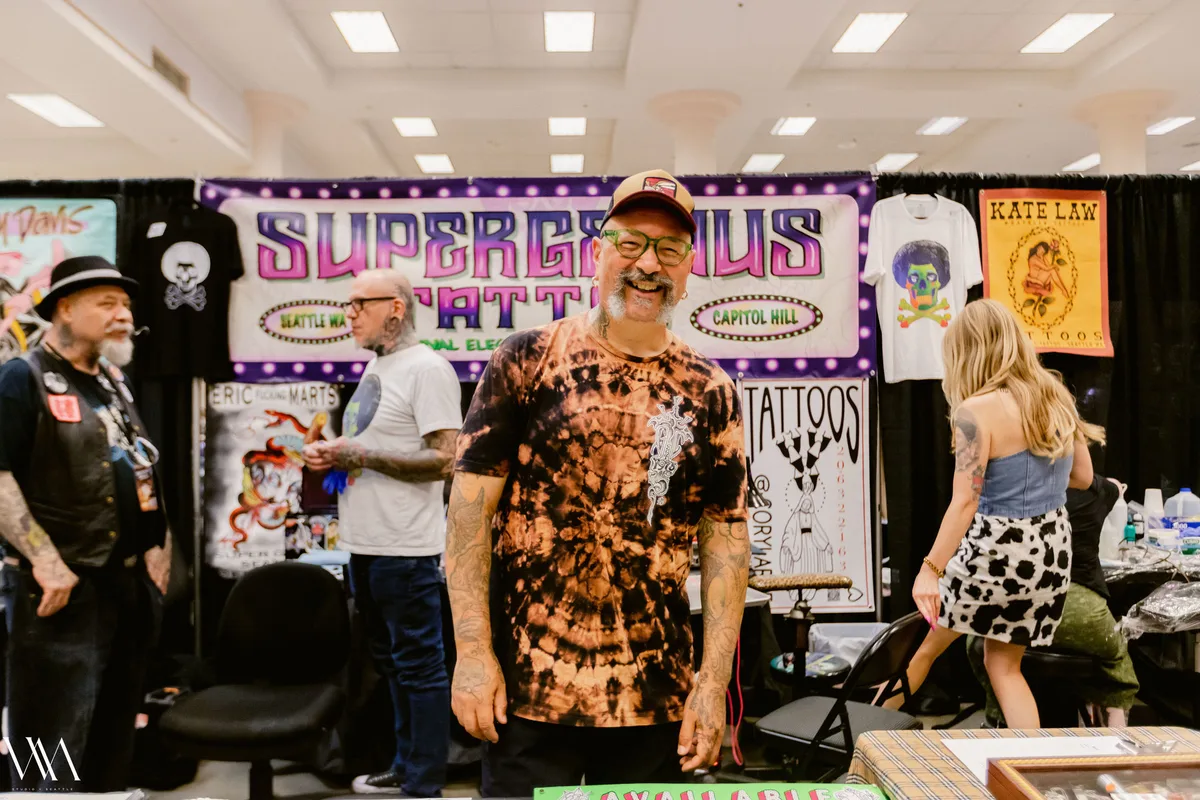
This idea also reflects the philosophy behind Seattle Tattoo Expo itself. The organizers describe one of the event’s main goals as creating a space where emerging artists, established names in the industry, and people united by their interest in tattooing can come together. Since its launch in 2001, the convention has grown into one of the region’s premier tattoo events.
In 2026, organizers expect around 6,000 visitors, while more than 3,000 tattoos are expected to be created during the convention itself. Representatives of more than a hundred tattoo shops will take part in the event.
And every one of those thousands of new tattoos has the potential to become the beginning of another story.

Seattle Tattoo Expo 2026
Seattle Tattoo Expo will take place August 14–16, 2026, at Seattle Center Exhibition Hall, 301 Mercer Street, Seattle.
The convention will be open Friday from 2:00 p.m. to 10:00 p.m., Saturday from 12:00 p.m. to 10:00 p.m., and Sunday from 12:00 p.m. to 8:00 p.m. Single-day tickets start at $32, while a full weekend pass costs $75.
For some visitors, these three days will be a chance to see renowned artists at work. For others, it will be an opportunity to find the right tattooer and get a new piece directly at the convention. And for someone else, Seattle Tattoo Expo may become the place where a personal memory, belief, or long-familiar image becomes a tattoo for the first time.
Twenty-five years after Seattle Tattoo Expo first began, perhaps this is what best demonstrates how dramatically tattoo culture has changed: behind the images, we increasingly want to see not only the artist who created them, but also the person who will carry them for the rest of their life.