New York-based psychologist and psychoanalyst Dr. Natalie R. Cohen decided to get a large-scale back tattoo in her fifties. A black panther and three peonies, created by tattoo artist Bryan Gee over three sessions totaling eighteen hours, became a deeply personal symbol for her—an attempt to reclaim the right to make decisions about her own body after experiencing medical and sexual violence.
But this story proved much more complicated than simply getting a tattoo with personal meaning. Physical pain, doubt, the need to trust another person, and the unusual intimacy that develops between tattoo artist and client led Natalie to reconsider her boundaries and her relationship with her body.
Later, a photograph of her back by renowned New York photographer Beowulf Sheehan became the cover of her memoir, Radical Return: Reclaiming My Body Through Coffee, Drugs, Dance, and Psychoanalysis, published in October 2026.
By Natalie R. Cohen
The first tattoo I got from Bryan Gee was supposed to solve a small problem. I wanted a rose placed over a generic daisy on my body—a modest cover-up, nothing more. I thought that would be the end of it. Little did I know that a year later, after an ayahuasca journey, an entire back tattoo would follow with this same artist. A larger graphic representation of psychic liberation, transforming past violence and creating boundary protection. A design inside of me just screaming to get out, inked armor of body reclamation protecting me as I called out sexual violence. It would take eighteen hours and three sessions to complete. That tattoo eventually became the cover of my memoir, Radical Return: Reclaiming My Body Through Coffee, Drugs, Dance and Psychoanalysis.
My back tattoo preparation began the moment I started following Bryan on Instagram, just as preparation for my ayahuasca journey began the moment I thought about the tea and went to a meditation circle.
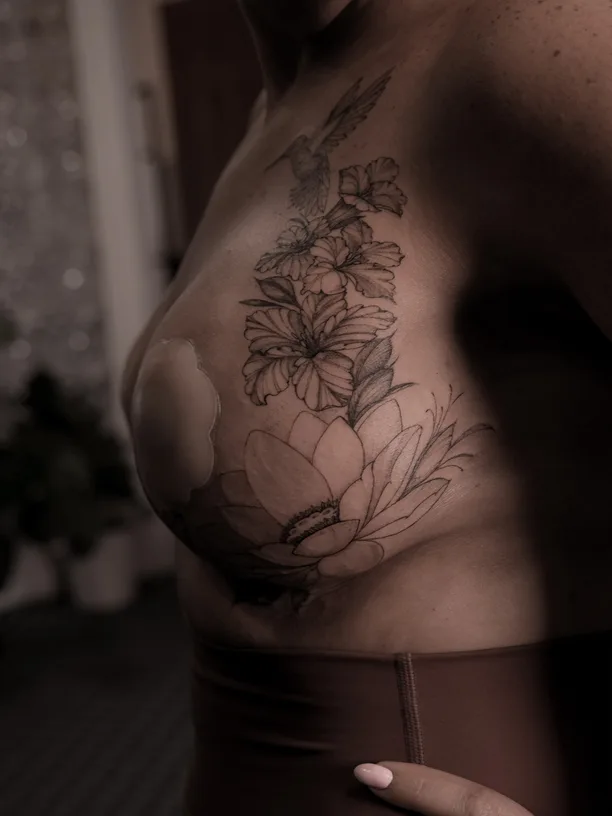
I reached out to Bryan to explain my vision for several peonies symbolizing life’s unfolding beauty, transmuting blame and anger into forgiveness and self-compassion, cascading down my back in an S shape all the way to the cover-up rose tattoo he’d created. Sitting on top of my right shoulder would be a serene, fierce black panther gazing outward.
“She’s got my back,” I told him.
“Sick,” he replied, and confirmed this piece would take at least two, if not three, sessions.
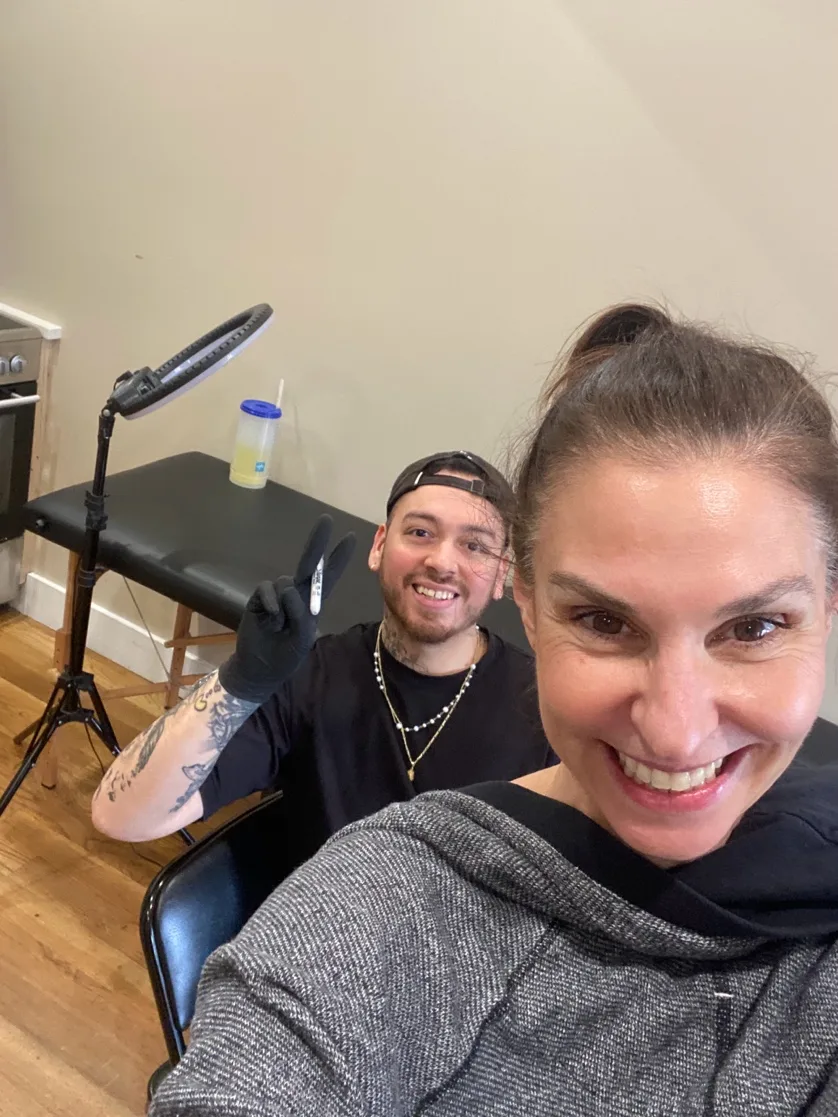
I was taken aback for a moment by the proposed commitment of time, money, and pain. Would I willingly agree to spend eighteen hours lying on his table again, being introduced to Mac Miller music videos, syncopated to the sounds of the tattoo pen?
The first time we’d met, Bryan was younger than I’d expected. I hypothesized that I could be his mother.
“Naw,” he’d said. “My mother is fifty.”
“I’m six years her senior,” I laughed.
During the rose cover-up, he’d bent over my bum for four hours, needling in a light and consistent manner, wiping every tenth insertion with antiseptic solution and care.
A strange intimacy had developed as I gave my body and trust over to him.
When I said yes to the second tattoo, I consented to the illusion that an old self was being replaced by a newer version. I hoped the experience would provoke awareness of my boundaries while ushering in feelings of transcendence. Maybe the abundance of vasopressin would leave me in a non-ordinary state of consciousness. Maybe my body would speak to me.
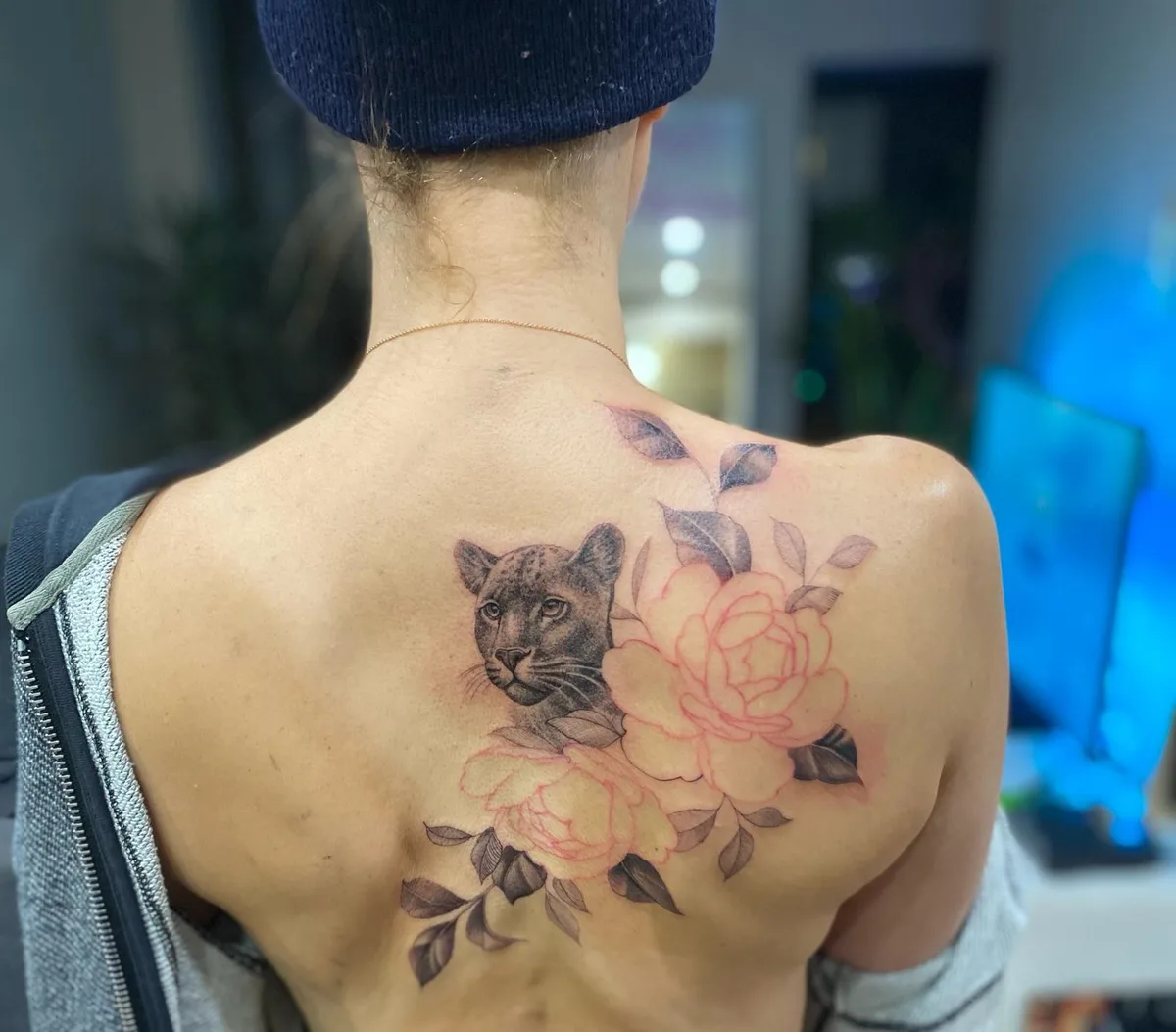
I felt flummoxed as I walked through the blue gate up the stairs to his apartment, again. A strange feeling of coming home washed over my entire body as we sat on his couch eating Chipotle bowls, and he sketched my panther, measuring the size of the peonies. He donned his black gloves, apparently black in color to camouflage blood residue and excess ink.
My eyes were blinded by Mac’s gold grills on the TV, and my ears adjusted to jazz frat rap. I also passed the time with my EarPods in, listening to five hours of the audiobook Emergent Strategy: Shaping Change, Changing Worlds by adrienne maree brown, and breathing mindfully as the pain winced through my body. I drank plenty of water infused with mango-peach electrolytes and took fewer breaks than I’d thought would be needed. He completed the panther head, outlined in red the two peonies, and shaded their leaves.
“Not too bad,” I said gleefully. “I got this.”
Bryan smiled and quietly said, “We haven’t shaded yet.”
I registered his ominous tone and decided not to ask for clarification. When I left the apartment, his attention was deep in his phone, and my words lingered as I closed the door behind me: “See you in two weeks.”
The pain I’d endured was a symbolic way of taking control of my flesh, of choosing exactly where and how my skin would be penetrated.
The two weeks until the next session also marked the fortitude and evidence of a healing process.
Feeling overly confident about my ability to manipulate the body barrier and command the needling pain, I arrived for the second tattoo session hydrated but hungry. But I was ill-prepared for the intensity of the pain from the start.
Like a scalded cat, I settled on the table, wearing a zipper hoodie backwards to provide the illusion of coverage, EarPods in to finish the last of Emergent Strategy. The goal of the session was to color-shade both peonies, add some leaves, and outline the third peony on the lower left oblique, with leaves cascading down the side of my back.
But holy shit, the thicker tattoo needle and the gun continually passing over the same spot to deliver shades of pink was instantaneously excruciating. It reminded me of the sharp shock of dye shooting up my fallopian tubes during a fertility procedure decades ago— but that had been over after five minutes. This was no gentle cat scratch or needle prick that I could breathe into and through like my last two tattoo sessions.
Over the next six hours, my body went from sweating profusely to shivering cold with fear to feeling light-headed to counting insertions of the needle knowing there would be a pause to wipe away blood. I lived for that pause. Bryan had the beginnings of a cold, so I counted his sniffles as a mindfulness activity.
There came a time when the actual violence being perpetrated on my skin was overpowering.
By the last hour I wailed and whimpered, saying, “I was fond of you at the beginning of the session but now I fucking hate you.”
Bryan smiled and said, “Ya, I get that a lot.”
The many bathroom breaks provided short, painless respites for me to glance in the mirror. I gazed at the progress of the tattoo and fell in love all over again. The slogan “no pain, no gain” took on a whole new meaning and propelled me back to submission.
During the last hour, I was sitting up shivering on a chair so the shoulder leaves could be shaded over again in green. White and yellow highlights were interspersed on the pistil, anther, filament, and stamen of the flowers. Finally, he was done. I waited the obligatory fifteen minutes for the swelling to subside and looked forward to the closing ritual of antiseptic spray, Aquaphor, Saran Wrap, and his aloof goodbye that would usher me out the door and on my way home.
But I noticed he wase sketching.
“What are you working on?” I asked, still shivering.
“The third flower for your back,” he replied, without glancing my way.
For some absurd reason, the voice of Blue Velvet’s Frank Booth screamed in my mind: “Heineken? Fuck that shit! Pabst Blue Ribbon!” Another familiar voice, the one that yelled at me in moments of trepidation before I surrendered in a psychedelic journey, made herself heard: “You are never getting a tattoo again.”
These two voices were longtime friends; their message traveled through the translation tunnel of adulthood, and I uttered, “My body cannot take another prick today. I’m done.”
“No worries,” Bryan said. He picked up his phone and started scrolling.
I stumbled through Williamsburg wondering about the intense somatic activation of this session. It was as if my body had traveled from one microclimate zone to another—hot, cold, stormy, calm, sunny, dark—all in the space of an afternoon.
At home, I took a hot shower, avoiding my scarred back, and sat down to eat something when suddenly my face, ears, and upper arms burned hot and flushed red as a tomato. I looked like I had second degree burns. Panic descended. I was minutes away from going to the ER when my friend, a somatic practitioner, advised me to take Tylenol and wait an hour. Twenty minutes later, my skin returned to baseline.
Sheepishly, tenderly, I crawled into bed, positioning myself on my right side. As I was lulled to sleep watching television on my phone, I believed there was no need for the third flower. The tattoo was already a magnificent piece of artwork, manifesting a protector who controlled the gaze outward. It healed beautifully, and for the time being it felt complete.
Weeks went by, and, despite the torture involved, I felt a nagging pull to finish the triumvirate of sun-seeking perennials. Three months after the excruciating second session, I ascended the blue gate armed with a dozen gifted tubes of Turkish over-the-counter 5 percent lidocaine, a full belly, the first season of Centaurworld downloaded on my phone, and of course, my breath.
Courage, endurance, and nerve guided me horizontally onto Bryan’s table. I chose to be unaided by numbing gel, believing that pain was somehow a crucial variable for imparting meaning to the changing image that symbolized control over my own stories.
This session, I approached the pain with reverence, experiencing the sensation with a skillful pattern of breath and right relation. I submitted softly and calmly and moved through the experience with presence. I was with the pain, not too far, not too close.
Okay, who am I kidding with this reworked, dissociated, magical narrative?
By hour three, I was unable to hold the pain at a distance and begged to try the Turkish lidocaine. Bryan slathered it on and Saran Wrapped my bleeding lower back. We waited.
Perhaps it was the placement on my body, the increase in petal size, or the expanse of shading ground that needed to be covered, but the tidal surge of pain was too much to bear. The only thing worse would be leaving with a half-finished tattoo as a reminder of my retreat.
Somehow, a new dose of confidence, hope, and a glimmer of completion excitement pushed me back to the table. This was my chance to master the high dive I couldn’t jump off as a child. I heard the tattoo gun fire up and meet the border of skin, and my unconscious attempted to play with the sensation.
The Turkish cream’s promise of blocking nerve signals and stabilizing the neuronal membranes was in vain. This pain was unlike any other my body had felt consciously. I had no choice but to wince, tense, and hum my way through the next two hours. Humming diverted the focus of each penetrating needle pierce. I created sensory input elsewhere and used my voice.
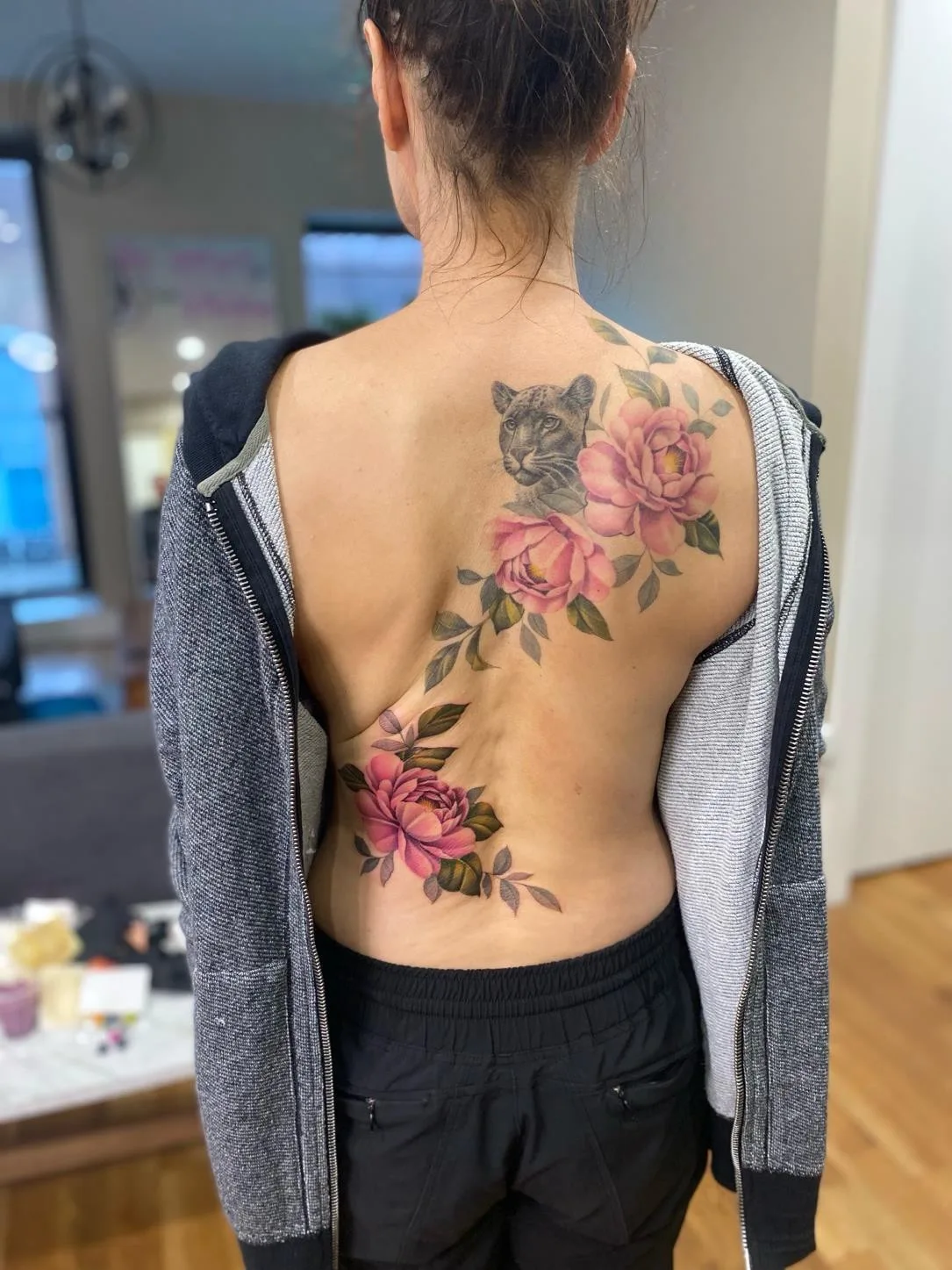
I now have ink that I cannot see but I know is adorning me with beauty and bravery by way of feline and flora.
This tattoo cannot protect me from being hurt again. It does something quieter. It reminds me that my body is not only a record of what has been done to it. It is also a place where I can imagine, choose, create, and change my mind.
The panther has my back. The peonies keep opening. And I am still learning how to live in the body beneath them.
Excerpted from Radical Return: Reclaiming My Body Through Coffee, Drugs, Dance and Psychoanalysis by Natalie R. Cohen. Used with permission.
Editor’s Note
This essay is adapted from the chapter Welcome Home in Dr. Natalie R. Cohen’s memoir Radical Return: Reclaiming My Body Through Coffee, Drugs, Dance, and Psychoanalysis (Rootstock Publishing, 2026). It recounts the author’s personal experience and is published without changes to her wording. It addresses medical and sexual violence and describes individual physical reactions during and after tattooing. These experiences should not be taken as universal or as medical advice.
About the Author
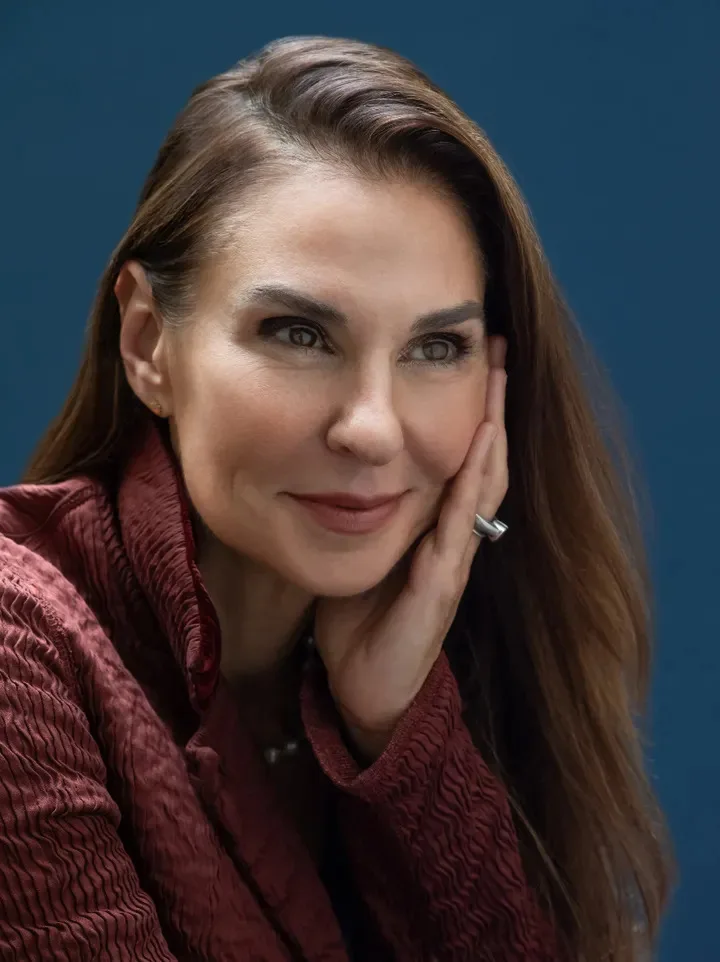
Dr. Natalie R. Cohen is a psychologist, psychoanalyst, and psychedelic-assisted therapist in New York City. She holds post-graduate certifications in ketamine- and psilocybin-assisted therapy and MDMA training from MAPS. Dr. Cohen lives with her partner, tween daughter, and their puppy. Outside the consulting room, she can often be found dancing barefoot, swimming, boxing, practicing yoga, or walking the Central Park reservoir — quietly imagining what it means to live fully, both in this dimension and beyond. Radical Return is her first book.