One Shape, Many Crosses
Two intersecting lines create one of the simplest marks a hand can draw, yet changes in proportion can turn that mark into a declaration of faith, a memorial, a protective emblem, or a rebellious image. That visual flexibility sits at the heart of the cross tattoo meaning: the longer lower arm of a Latin cross points toward Christian tradition, while a ring, extra bars, or eight sharply divided points place the design in other cultural settings.
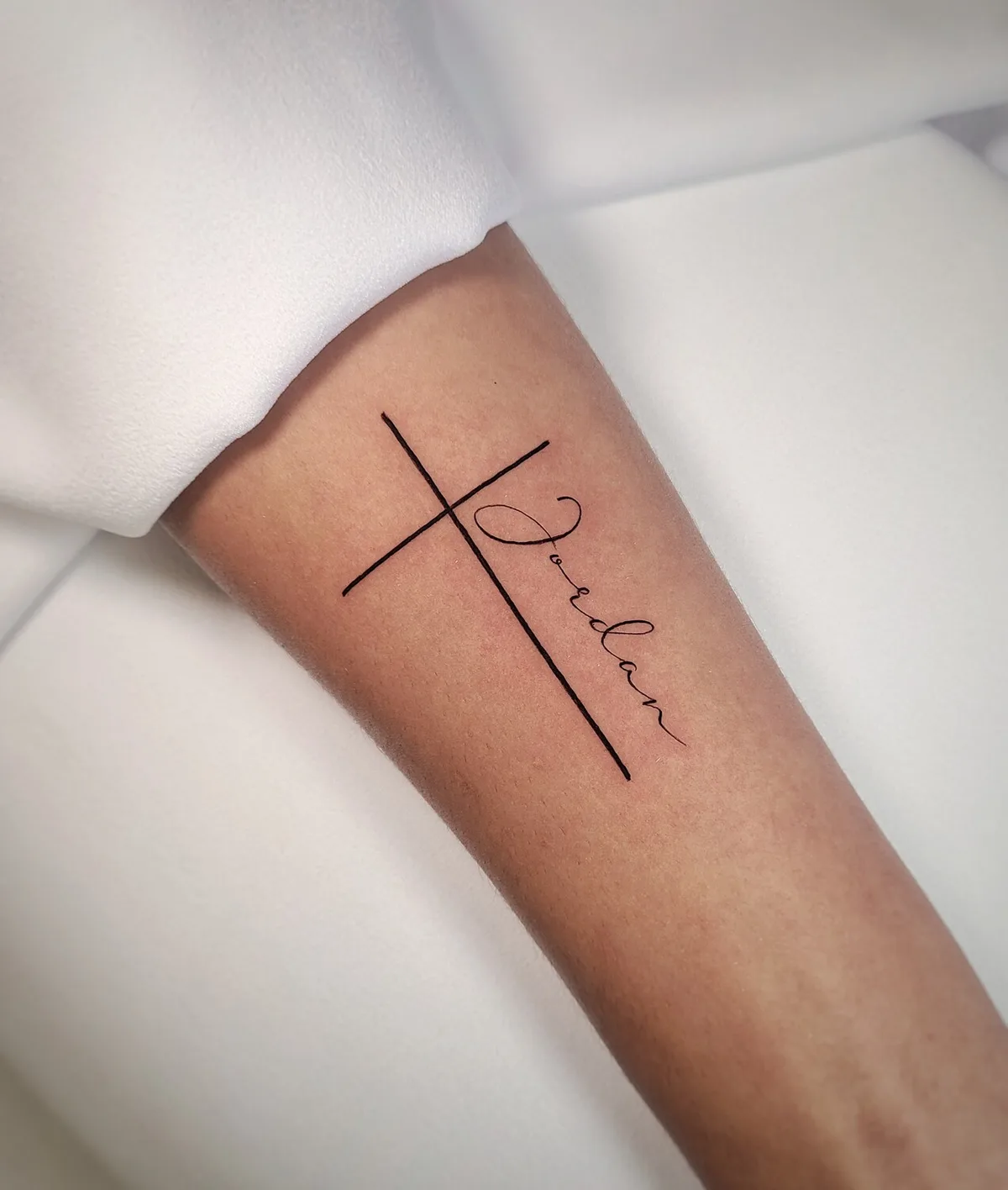
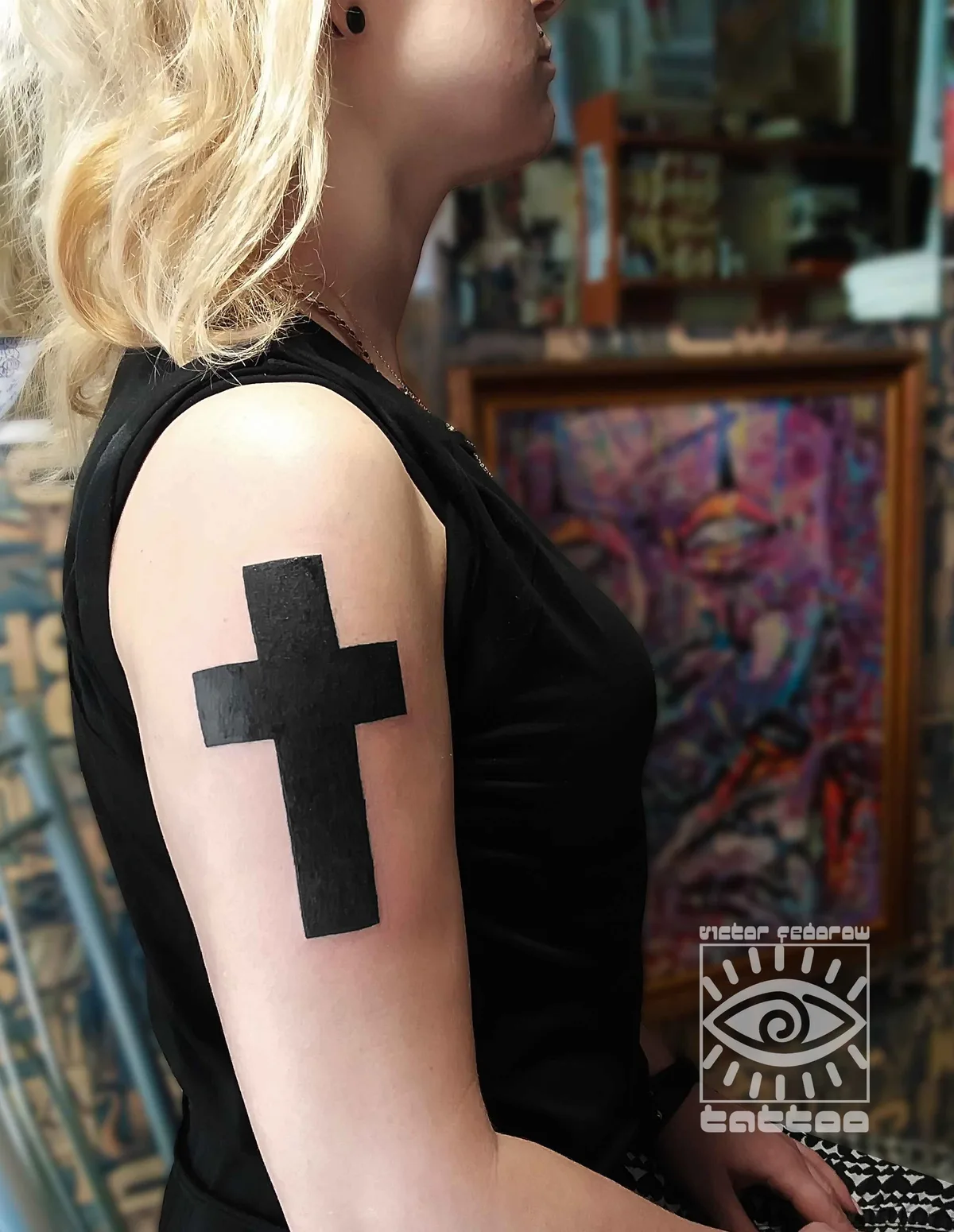
Within Christian practice, the cross recalls the crucifixion of Jesus and the belief in his resurrection. A crucifix adds the body of Christ, giving greater visual emphasis to sacrifice and suffering. Many contemporary wearers choose an empty cross to center faith, hope, devotion, or family tradition. Others build a memorial around it with a loved one’s name, meaningful dates, flowers, or rosary beads. Roadside memorial traditions also give the cross a modern association with remembrance and a life marked by loss.
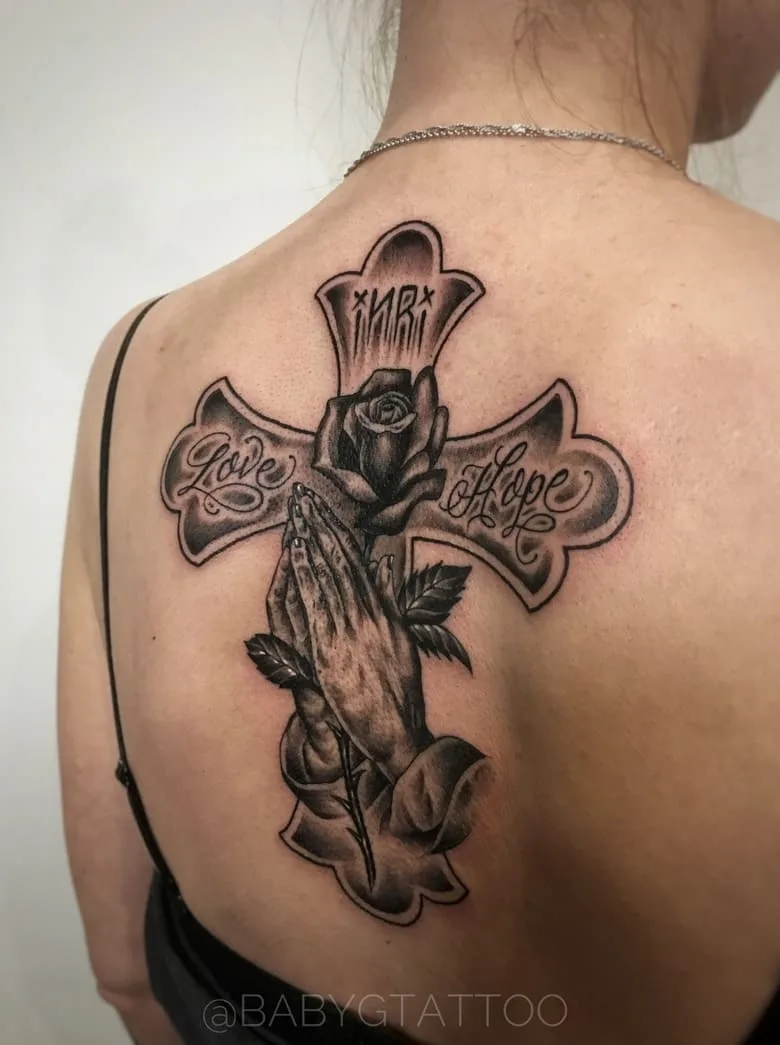
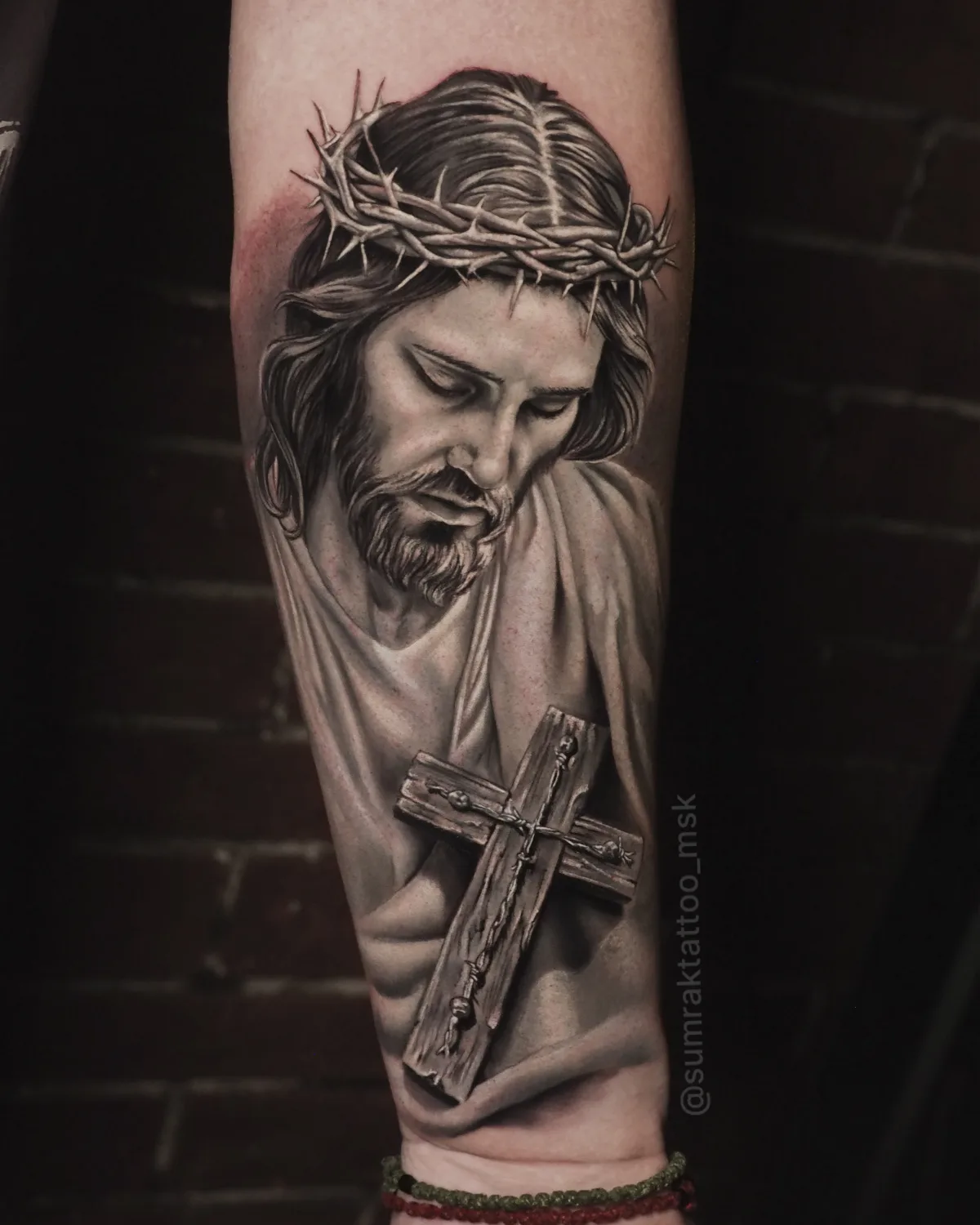
The design can feel quiet or monumental. A fine-line outline works as a private devotional mark, while blackwork, ornamental framing, lettering, or religious imagery turns the same structure into a larger narrative. Proportions matter because viewers recognize established forms through their silhouettes. Before choosing a design, decide whether you want a historically recognizable cross or a personal variation inspired by one. The cross tattoo gallery offers examples of how artists approach scale, line weight, ornament, and composition.
Latin, Celtic, Orthodox and Maltese
The Latin cross has a vertical beam extending farther below the intersection than above it, with a shorter horizontal beam. Christian tradition associates this form with the crucifixion and resurrection of Jesus, making it a familiar choice for devotion, spiritual commitment, remembrance, and hope. When the body of Christ appears on the design, Christian art identifies the image as a crucifix. Rosary beads, rays of light, sacred lettering, flowers, and memorial inscriptions can direct the composition toward prayer or remembrance.
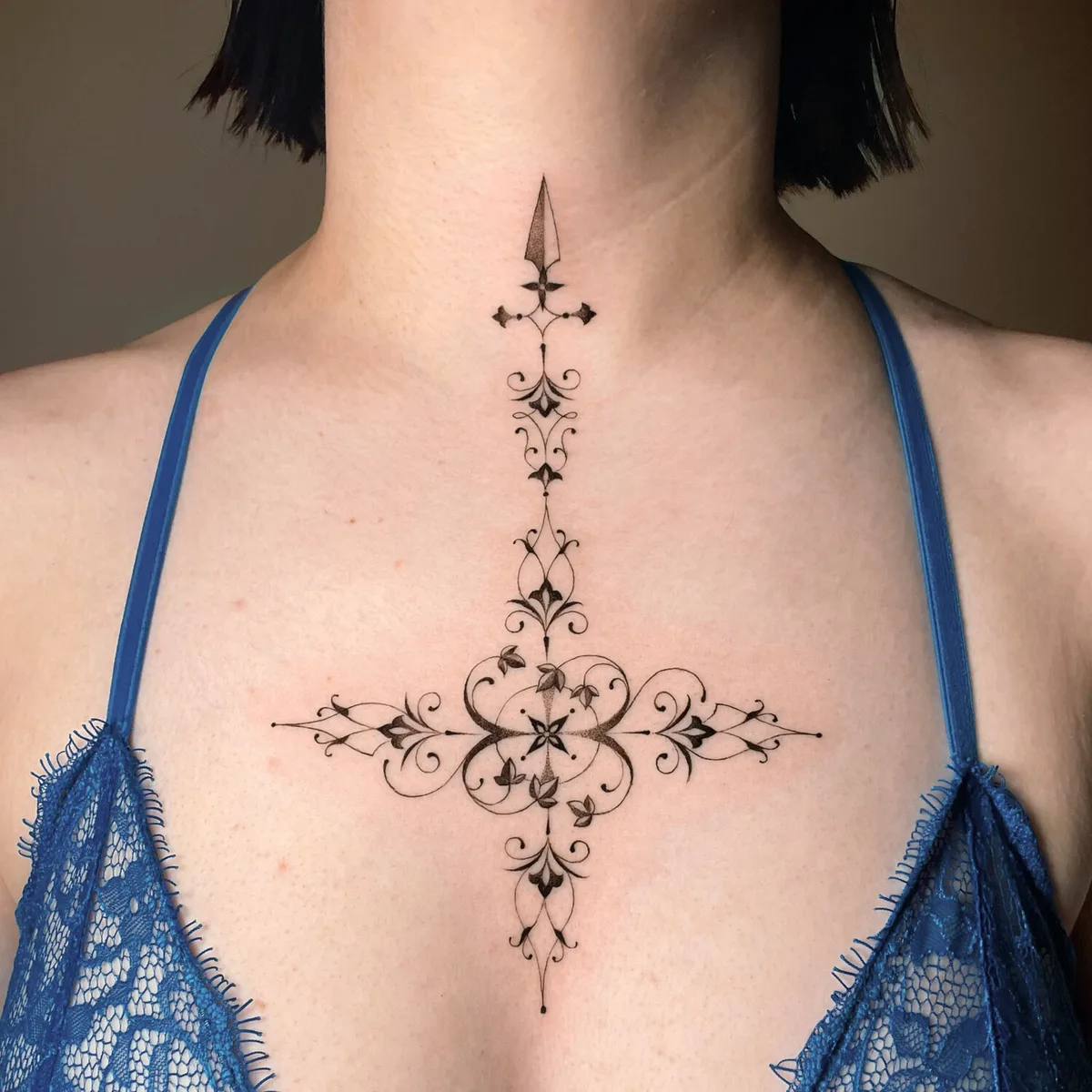
The Celtic cross places a ring around the intersection of the arms. Early medieval stone high crosses in Ireland and Britain established this circular form as a major feature of Christian visual culture in those regions. In contemporary tattooing, the ring may frame knotwork, carved-stone textures, interlacing lines, or simple black shapes. Wearers often connect it with Irish, Scottish, Welsh, or broader Celtic heritage, and you can weight the design toward family roots, faith, or both.
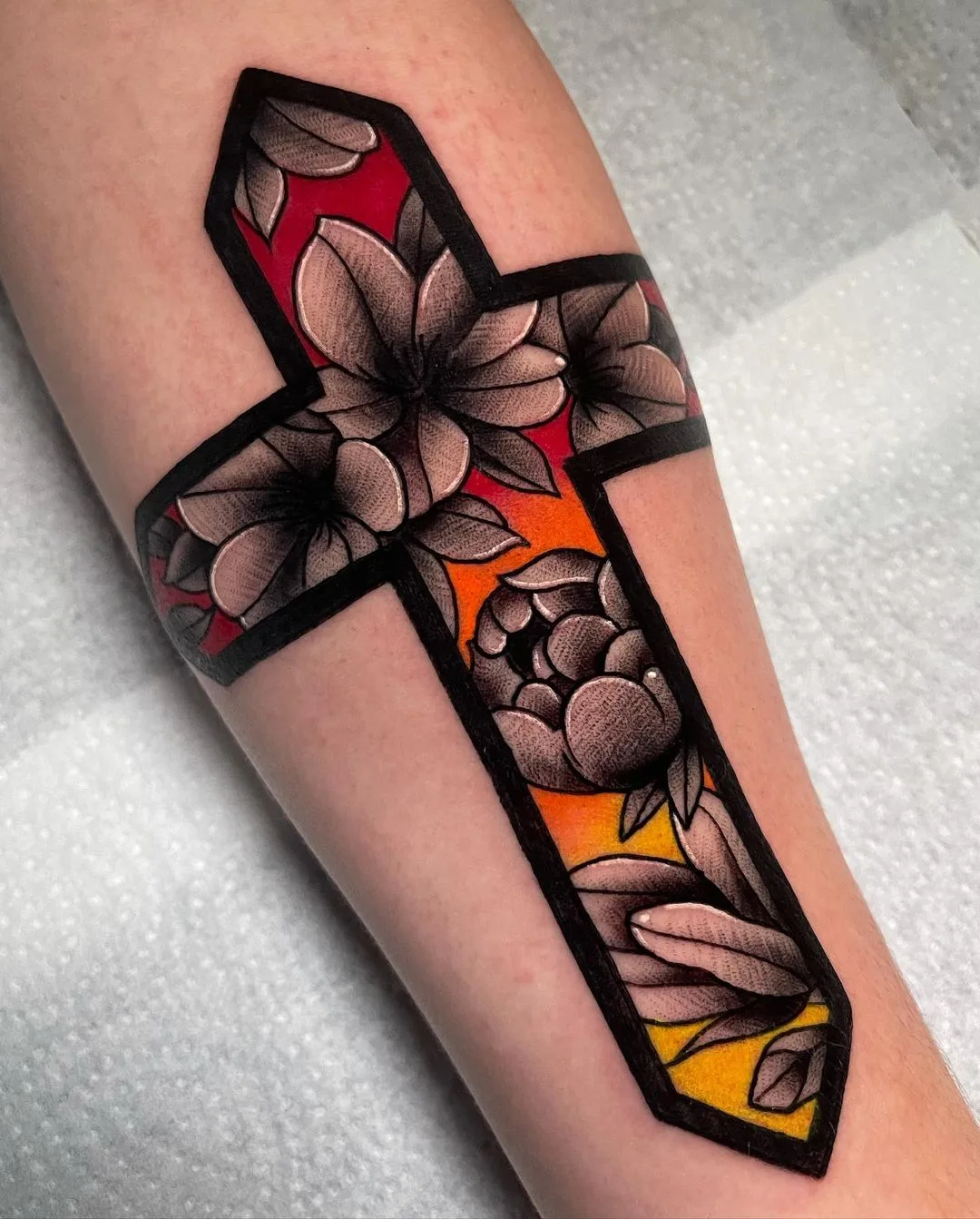
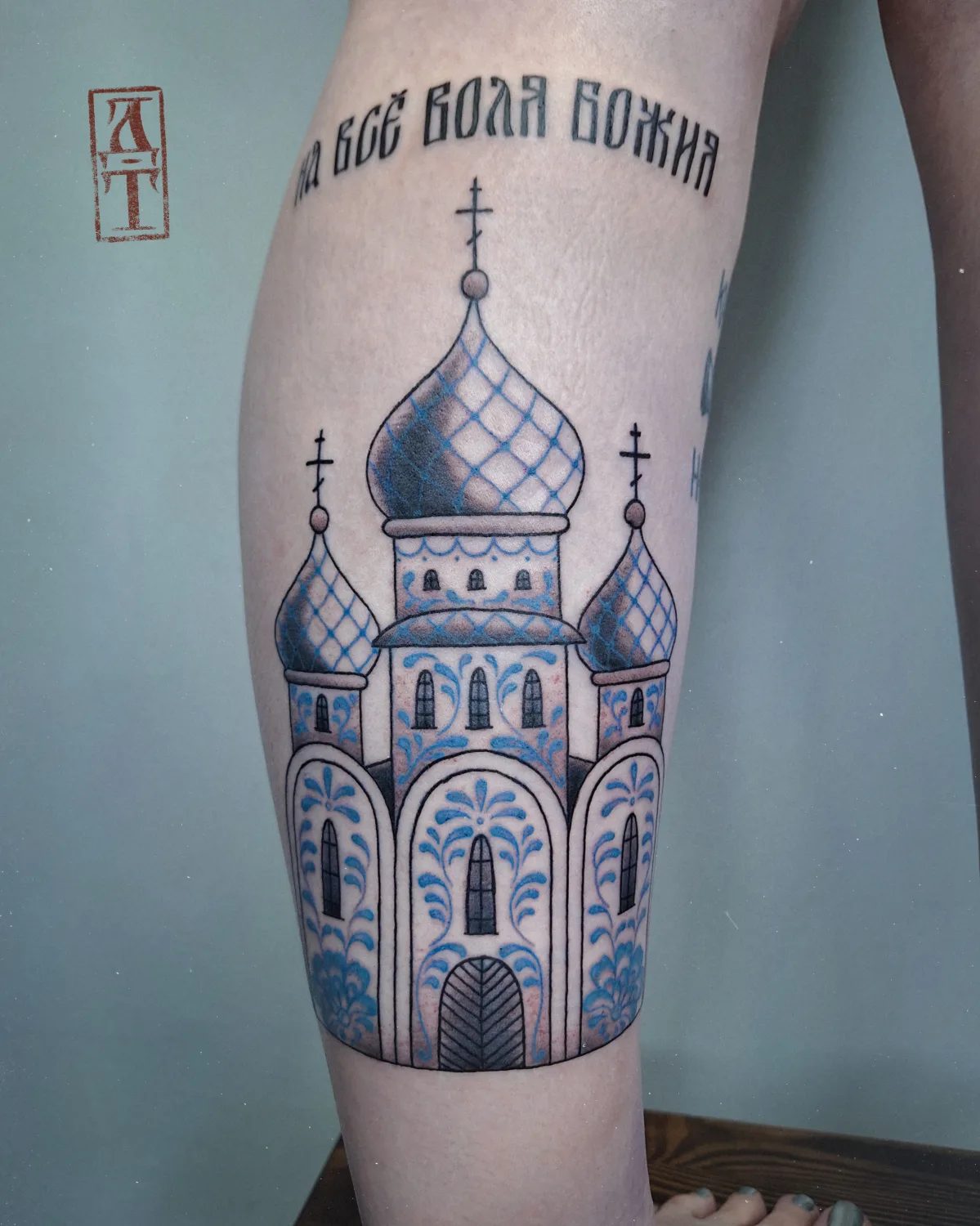
The Orthodox cross commonly has three horizontal bars. The short upper bar represents the inscription placed above Christ, the central bar forms the main crossbeam, and the slanted lower bar represents a footrest in Eastern Orthodox iconography. Russian Orthodox and other Eastern Orthodox churches use versions of this form. In a tattoo, its distinctive lower bar communicates a specific Christian tradition more clearly than a plain Latin silhouette. Icons, church domes, prayer text, and rays may reinforce that context.
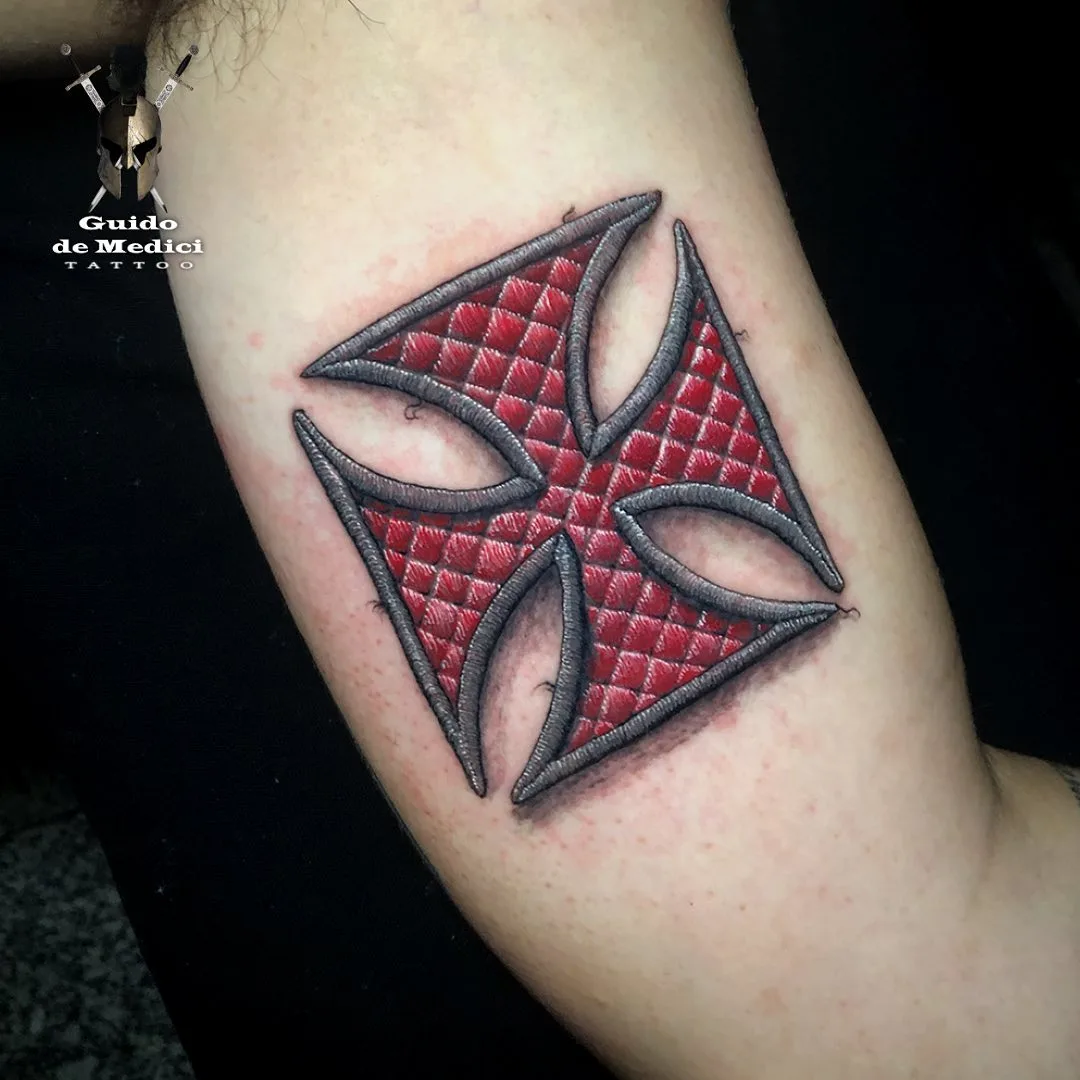
The Maltese cross has four V-shaped arms that create eight points. The tradition of the Knights Hospitaller, also known as the Order of St. John, links the emblem with Malta, service, courage, and religious history. Many fire departments in the United States use an emblem derived from this visual family, often described more precisely as a St. Florian cross. Anyone choosing the design for firefighting service should compare the intended badge with historical Maltese and St. Florian forms, since their outlines differ.
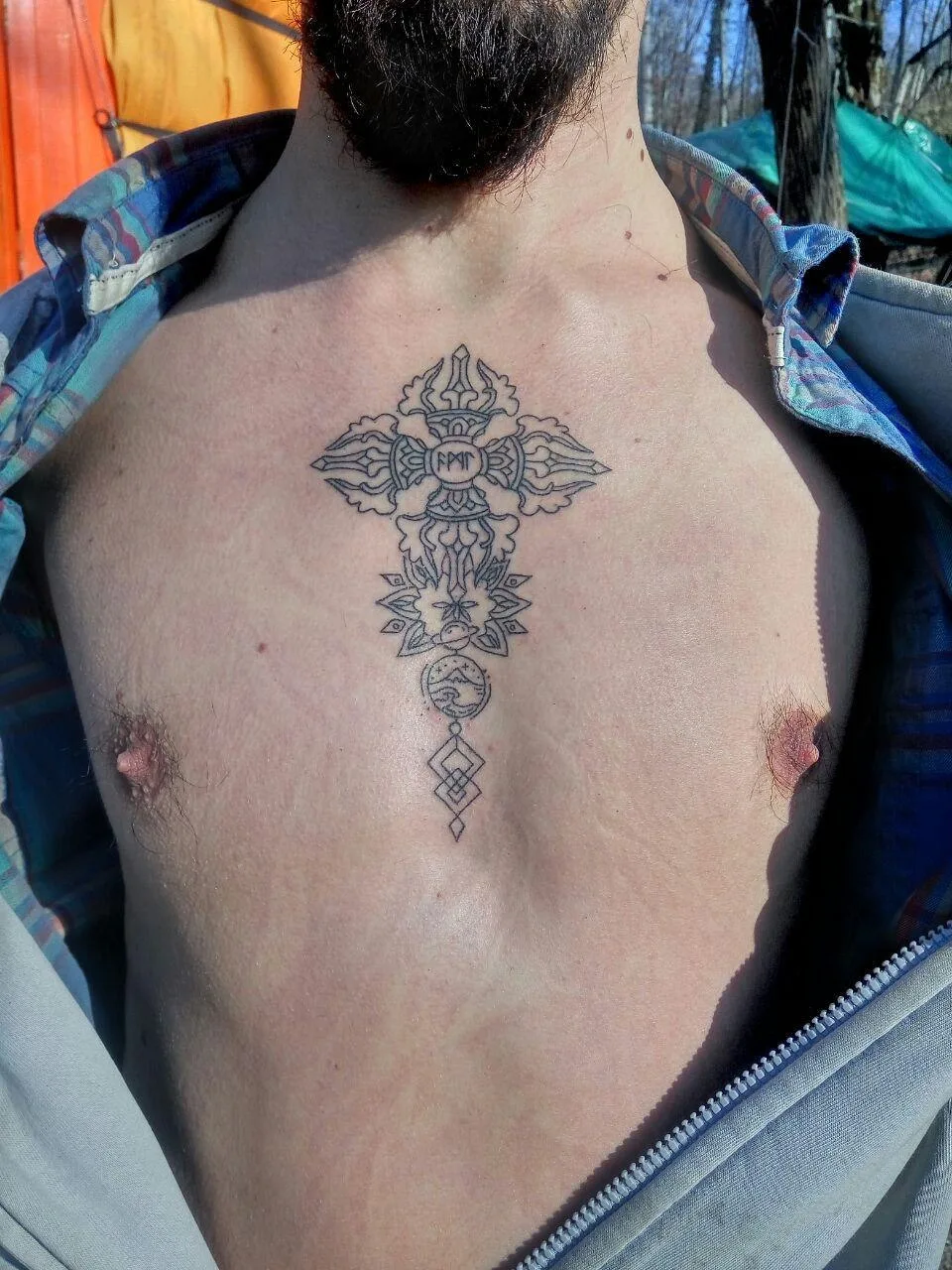
Each version carries recognizable visual history, and personal additions guide the final reading. A name and date create a memorial focus; a rosary places the image within Catholic devotion; family symbols foreground ancestry; and flames, armor, or heraldic elements can emphasize service and courage. Clear reference images help your tattoo artist preserve the identifying proportions while adapting the design to your body.
Upside-Down Cross
In Catholic tradition, an inverted cross is the Cross of St. Peter. The apocryphal Acts of Peter relates that Peter was crucified head-down, and later Christian tradition reads the image as an expression of humility before Christ. In that setting, the orientation carries a devotional meaning rooted in martyrdom and discipleship.
Metal music, horror imagery, and popular entertainment also use the inverted cross as an anti-Christian, occult, provocative, or rebellious sign. Those associations have become visually familiar, so surrounding details strongly influence how viewers read the tattoo. A portrait of St. Peter, keys, a halo, church imagery, or devotional text can establish the Catholic interpretation. Dark theatrical imagery, hostile lettering, or references to horror and metal culture can establish rebellion or confrontation.
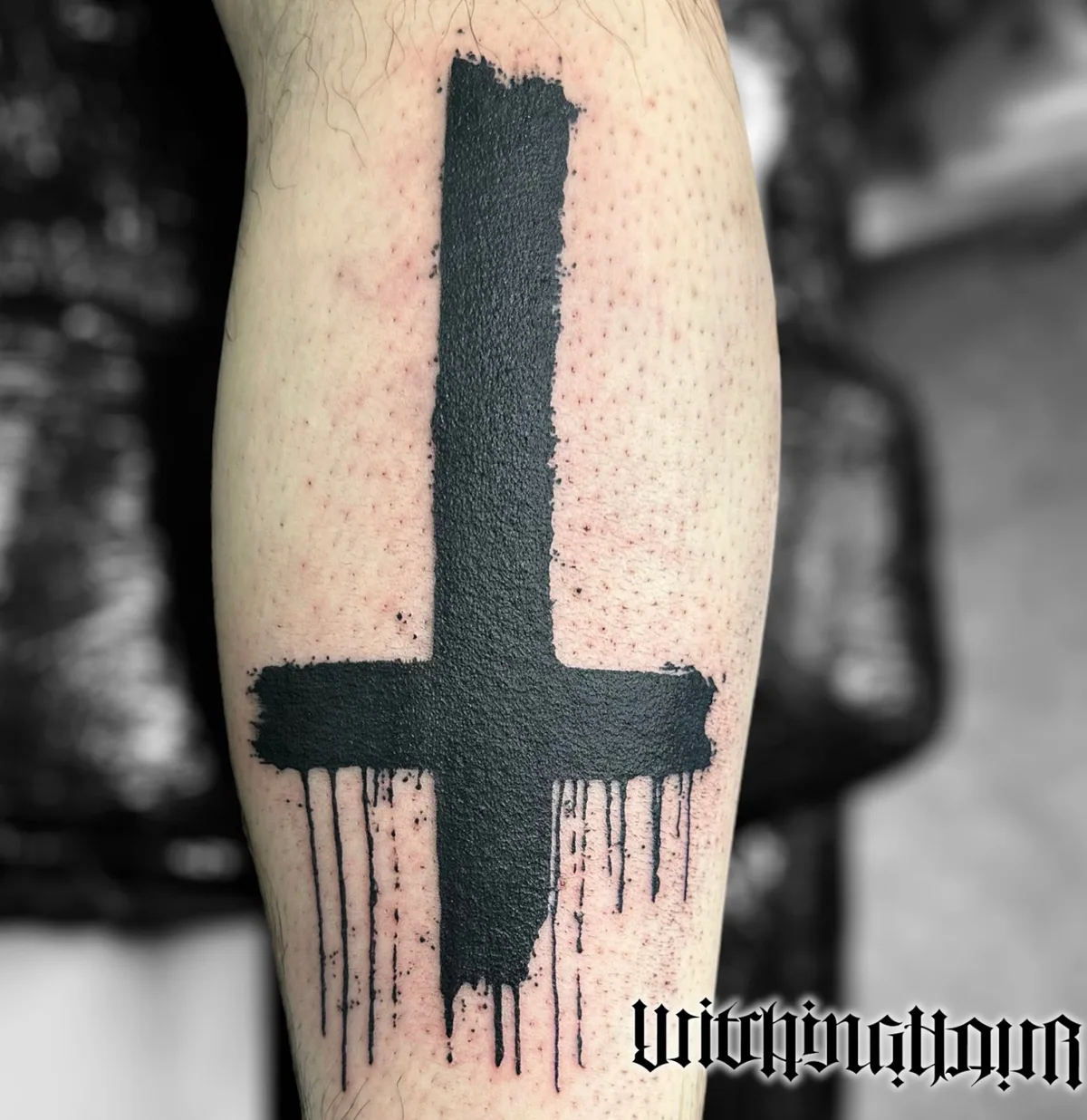
Orientation also changes as the body moves. A cross on the forearm may appear upright to the wearer and inverted to someone standing opposite. Decide which viewpoint matters most before the stencil is applied. If the Cross of St. Peter is your subject, recognizable supporting imagery can make that intention legible. If provocation is the goal, a spare inverted silhouette often gives the mark a direct, graphic presence.
Cross on the Hand, Finger or Face
Placement changes the intensity of the message because the hand and face remain highly visible in everyday interaction. The meaning of a cross tattoo on the hand usually comes from the chosen cross, accompanying imagery, and the wearer’s intention.
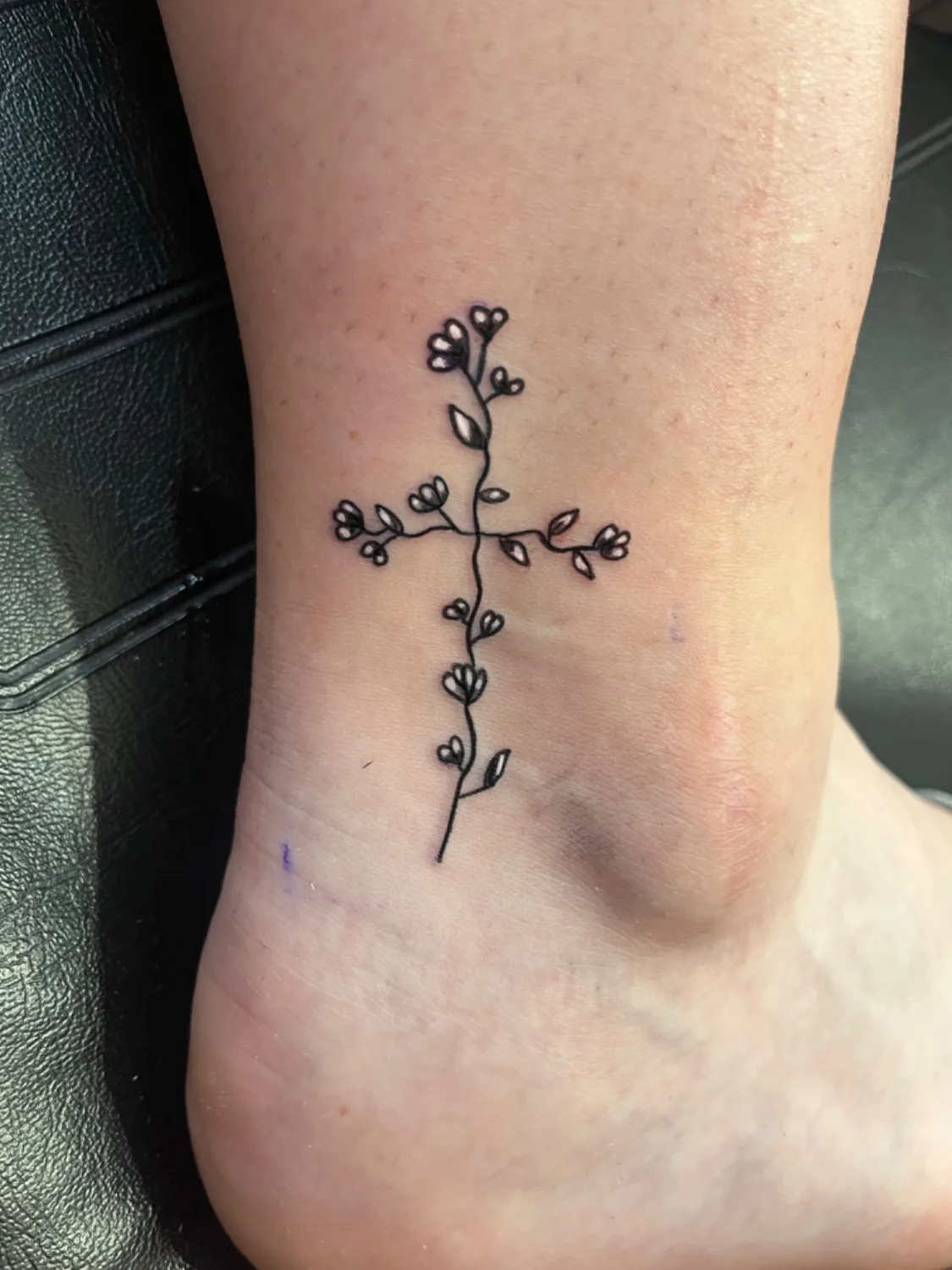
A cross on the side or top of a finger suits fine-line work and compact compositions. The limited area favors a clean outline, a few solid lines, or a tiny ornamental form. Hands and fingers are demanding placements: washing, friction, movement, and sun exposure make tattoos there fade faster. Bold spacing and realistic expectations about future touch-ups can help when planning the design.
The back of the hand provides more room for blackwork, rays, lettering, ornamental details, or a larger devotional composition. Its visibility can turn a personal belief into a public statement. Before committing, consider workplace expectations, social visibility, and how the design will interact with rings, watches, sleeves, and other tattoos. A hand piece also benefits from a stencil that respects knuckles, tendons, and movement.
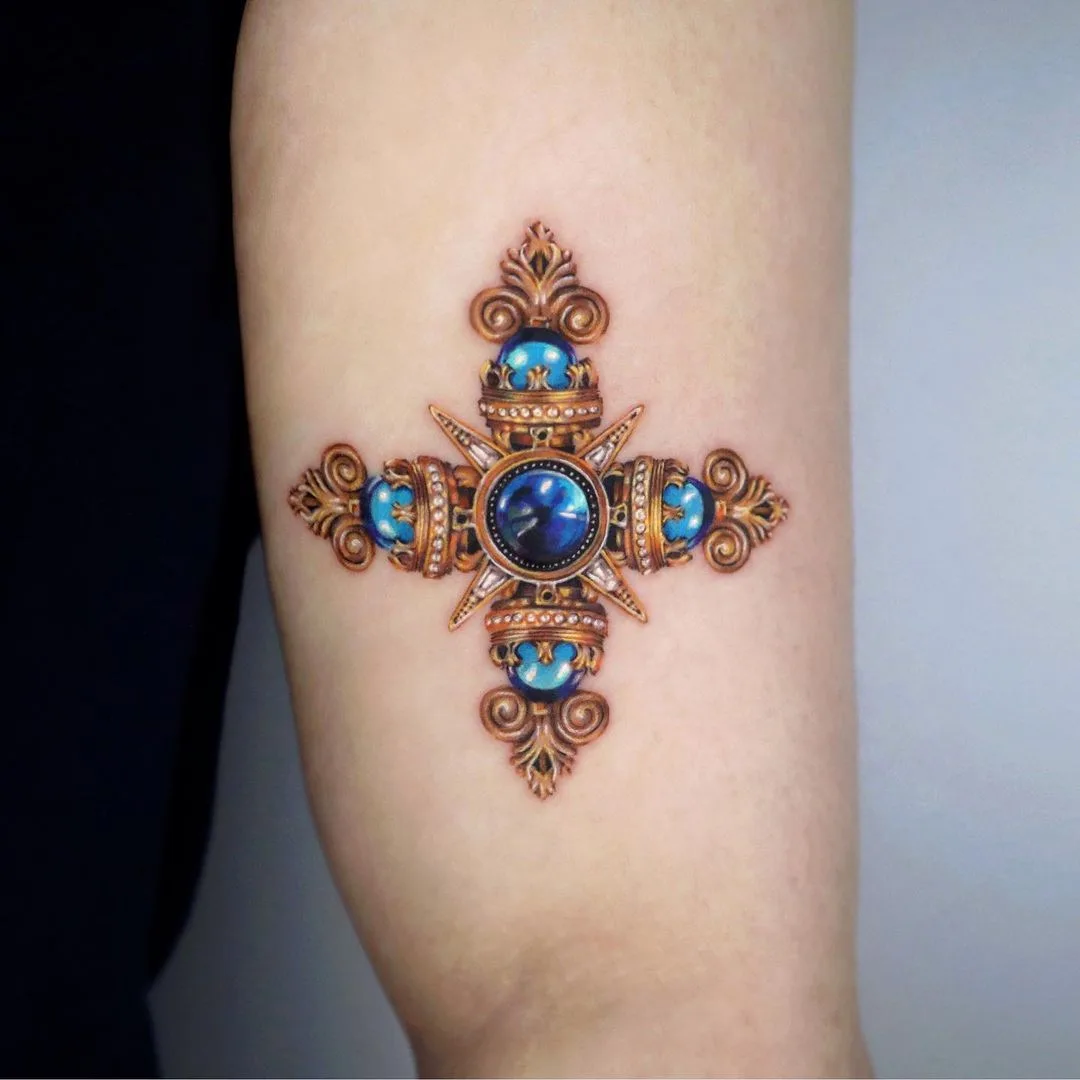
A cross between the eyes, at the temple, or elsewhere on the face carries even greater visual force. Small face crosses have grown more visible in recent years, as musicians and other public figures wear them on stage and online. A face tattoo can communicate devotion, mourning, identity, rebellion, or an aesthetic affiliation, with the surrounding artwork supplying the strongest clues. Because coverage is limited and daily visibility is constant, consultation and temporary placement tests are especially useful before the final appointment.
Cross With Three Dots
Three dots carry distinct readings in different communities. In Latino gang and prison culture, the dots are often associated with the Spanish phrase “mi vida loca,” translated as “my crazy life.” The phrase can refer to a life shaped by the street or criminal milieu, and on their own the dots describe a general outlook shared across many groups. Our guide to the history and meanings of the three-dots tattoo examines that symbolism in greater depth.
When the dots appear beside or around a cross, Christian wearers may read the group as the Holy Trinity: Father, Son, and Holy Spirit. A tattoo showing a cross with three dots can therefore combine devotion with a compact visual structure, or it can bring together religious imagery and a reference drawn from prison or street culture. Arrangement provides useful context. In both readings the dots usually form a small triangle, so the surrounding design decides: dots set around or above a cross lean toward the Trinity, while a lone triangle on the web of the hand, between thumb and index finger, is the classic placement for the “mi vida loca” reading.
Discuss the intended association with your tattoo artist before settling on the composition. A halo, rosary, sacred heart, or devotional lettering can clarify a Christian interpretation. The dots should also remain large enough and far enough apart to age as separate marks.
FAQ
What does a cross tattoo on the hand mean?
It can express Christian faith, remembrance, protection, family tradition, or a personal commitment. Hand placement adds visibility; the symbol itself carries the meaning. The type of cross and any names, dates, rosary beads, or lettering communicate the intended message. Hands also experience regular washing, movement, friction, and sun exposure, so tattoos there may fade faster.
What does an upside-down cross tattoo mean?
Catholic tradition identifies it with St. Peter and humility, drawing on the apocryphal account of his head-down crucifixion. Horror, metal, and popular entertainment also use the image for anti-Christian sentiment, provocation, or rebellion. Supporting symbols usually establish the intended reading: keys and devotional imagery point toward St. Peter, while darker theatrical elements point toward a rebellious interpretation.
What does a cross with three dots mean?
Christian wearers may interpret the three dots as the Holy Trinity. Latino gang and prison culture often connects three dots with “mi vida loca,” or “my crazy life.” A cross, rosary, sacred heart, lettering, and the arrangement of the dots can guide viewers toward the intended association.
What does a small cross tattoo on the finger mean?
It commonly serves as a compact expression of faith, remembrance, or personal commitment. Finger placement keeps the symbol visible while supporting a simple fine-line or blackwork design. Frequent washing, friction, and hand movement can soften finger tattoos relatively quickly, so clear spacing and possible future touch-ups should be part of the plan.