Why the Lily Is Two Flowers at Once
A white lily in an Annunciation painting and a red flower beside a grave tell strikingly different stories. That contrast sits at the heart of the lily tattoo meaning many wearers explore: purity and resurrection on one side, death and farewell on the other. Christian art connects the Madonna lily, Lilium candidum, with the Virgin Mary, and the angel Gabriel often carries the flower in traditional images of the Annunciation.
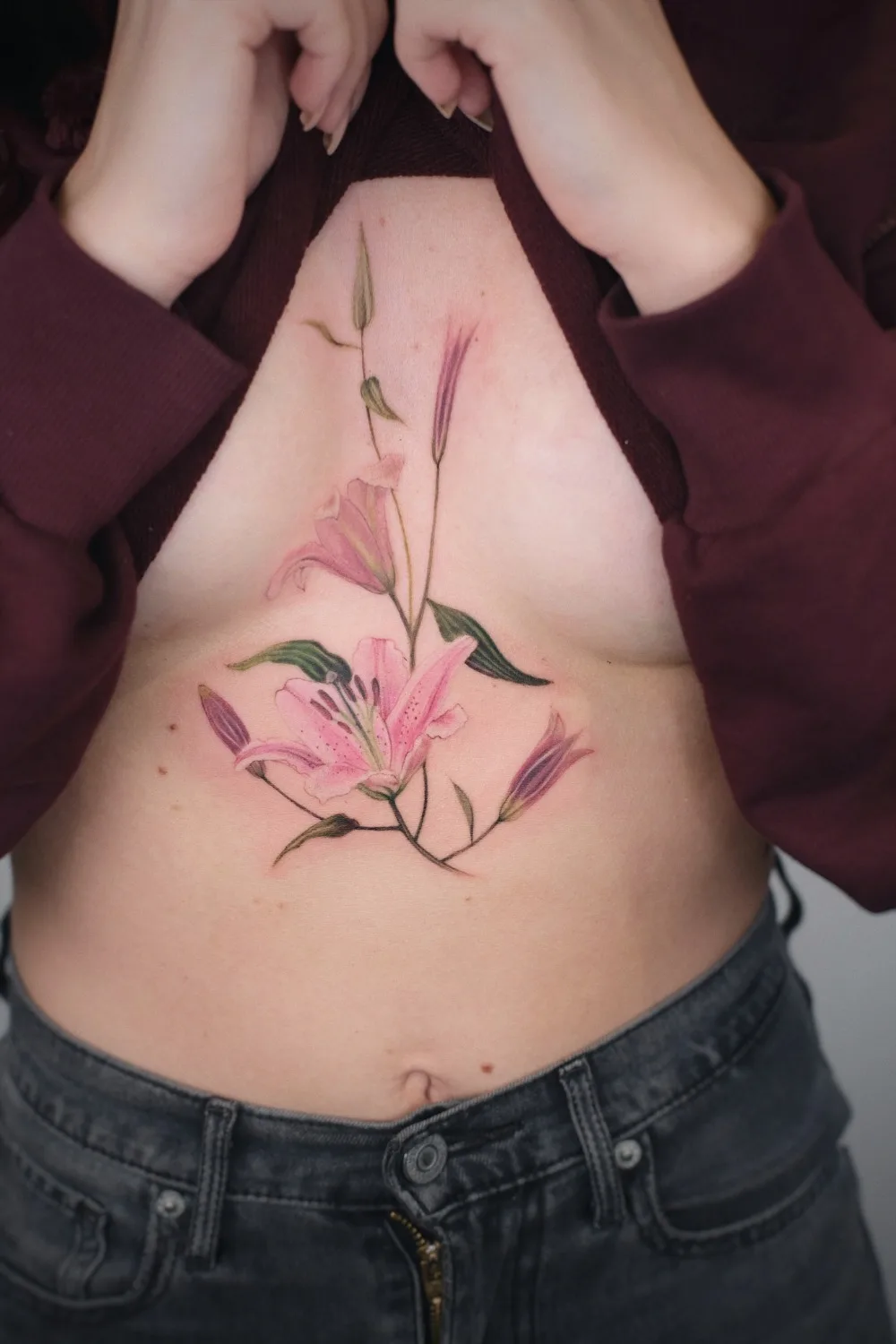
In everyday speech, the word “lily” covers several different plants. True lilies belong to the genus Lilium, which includes the Madonna lily, tiger lily, and Easter lily. Other familiar flowers carry the name through common usage. The calla belongs to the arum family, water lilies belong to Nymphaea, and the Japanese red spider lily is Lycoris radiata. For tattoo planning, each plant brings its own visual language and cultural associations.
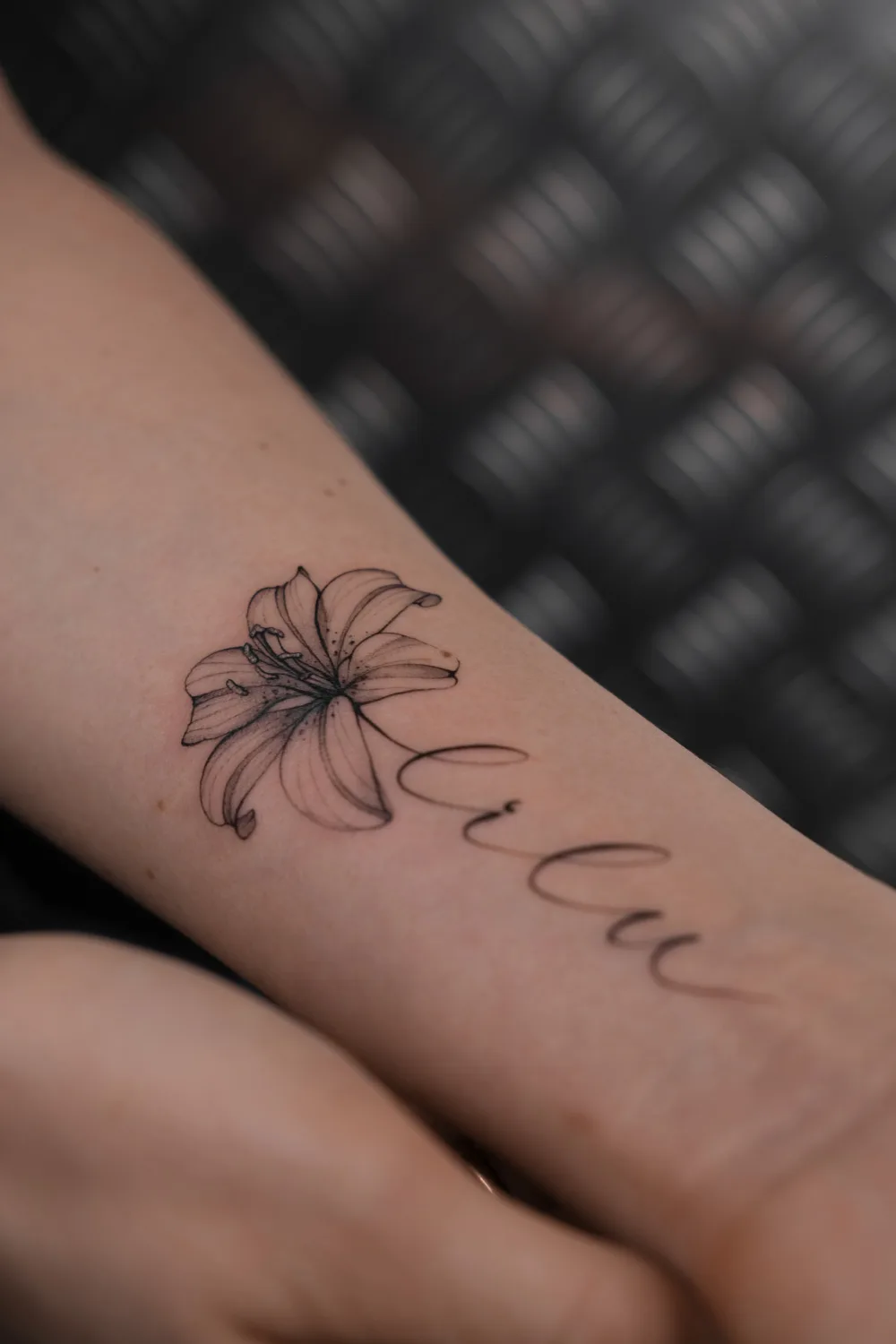
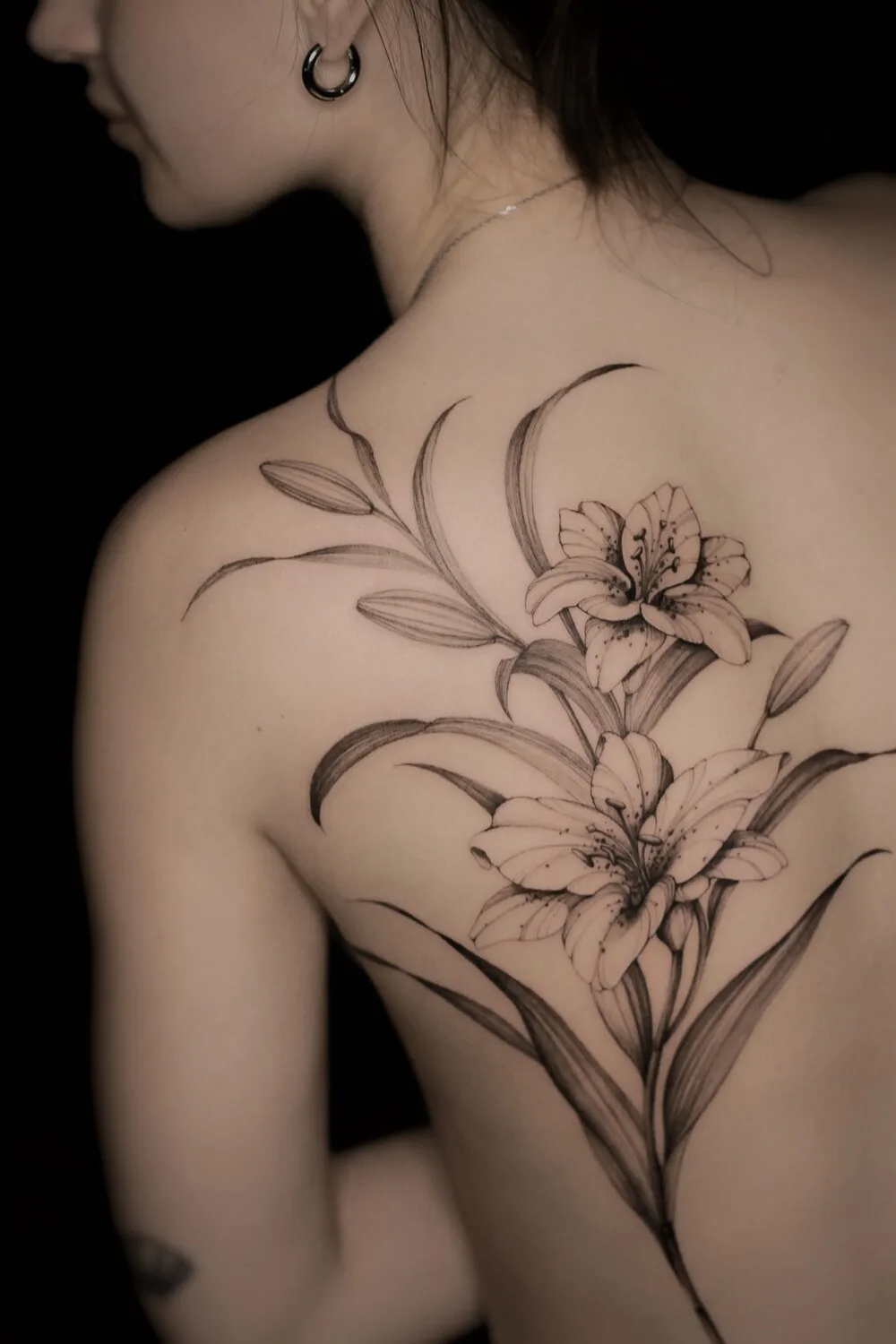
The fleur-de-lis adds another branch to the story. Historians still debate whether this stylized flower began as a lily or an iris; heraldry made it the emblem of the French monarchy. New Orleans civic imagery and the New Orleans Saints’ official branding also use the emblem, giving it a recognizable Louisiana connection. Before choosing your version, compare petals, leaves, and compositions in the lily tattoo gallery; the species you select can carry more meaning than placement alone.
Spider Lily (Higanbana)
The red spider lily produces a ring of curling petals and long stamens that resemble fine legs or flames. Lycoris radiata grows from poisonous bulbs. Japanese farmers traditionally planted them along rice-field boundaries and near graves, where the poisonous bulbs were thought to keep moles and mice away; the red flowers still mark the line between fields, burial places, and paths.
In Japan, the flower is called higanbana. Its blooming season coincides with the autumn equinox and Higan, a Buddhist period associated with visiting family graves. Japanese folklore links the flower with death, separation, final meetings, and the road into the afterlife. Modern anime and other Japanese visual media frequently draw on the same imagery, especially during scenes of loss, transition, or approaching tragedy.
That history shapes the spider lily tattoo meaning: the flower can preserve the memory of someone who has died, mark the end of a relationship, or represent acceptance of a life-changing departure. A single red bloom emphasizes farewell, while a path or field of flowers draws more strongly from Japanese afterlife folklore. Dark backgrounds heighten the flower’s dramatic silhouette; open skin and fine linework bring attention to the delicate stamens. Cultural context gives the image its gravity, so the design works best when you feel a genuine connection to remembrance, mortality, or passage.
Tiger Lily, Calla and Easter Lily
Botanical descriptions identify the tiger lily, Lilium lancifolium, by its orange, recurved petals and dark spots. Contemporary flower symbolism reads that fiery appearance as confidence, boldness, pride, and visible individuality. That reading drives the tiger lily tattoo meaning: the flower suits someone celebrating self-possession or a willingness to take up space. Blackwork emphasizes the spots and petal structure, while saturated orange preserves the feature that inspired the flower’s animal name.
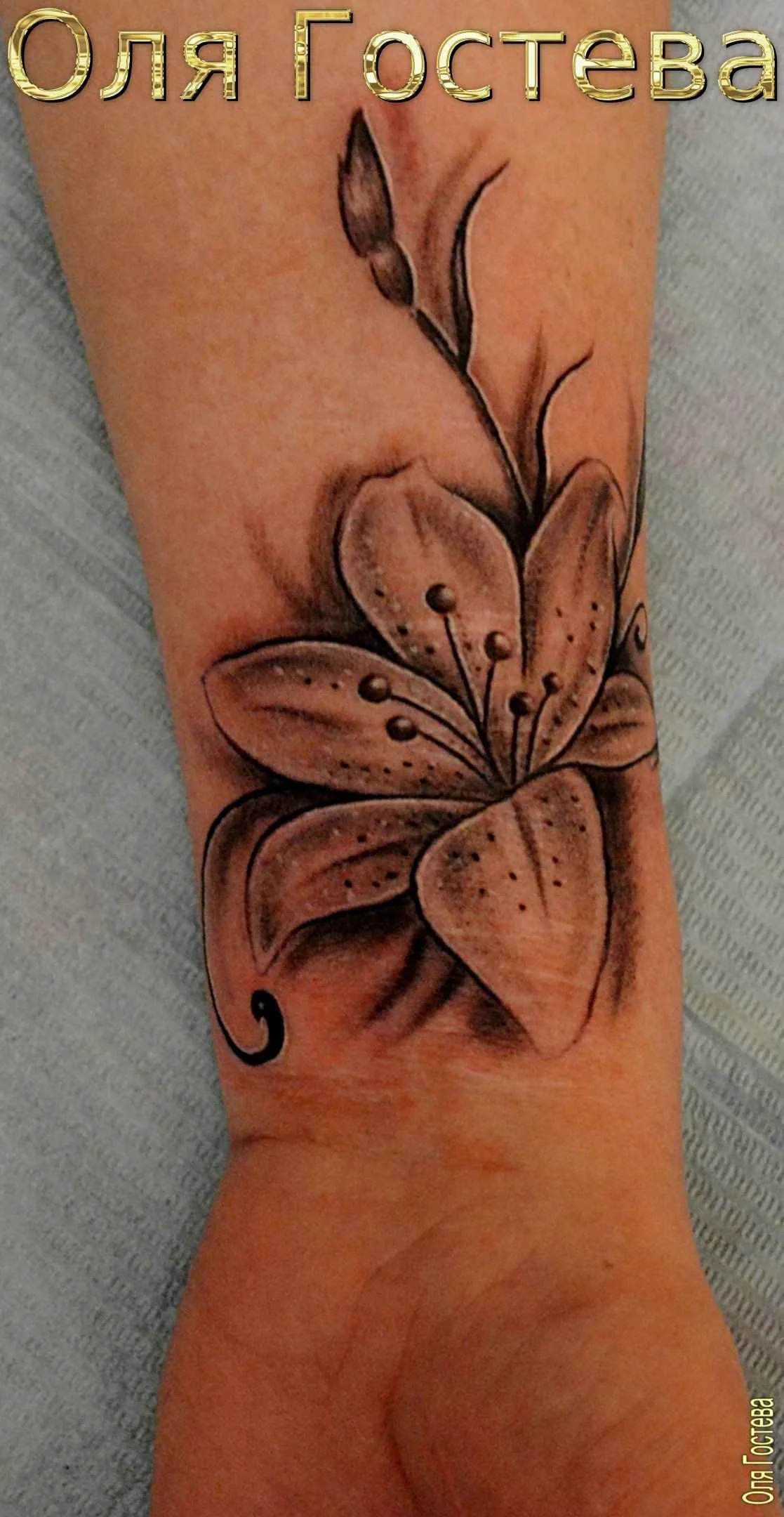
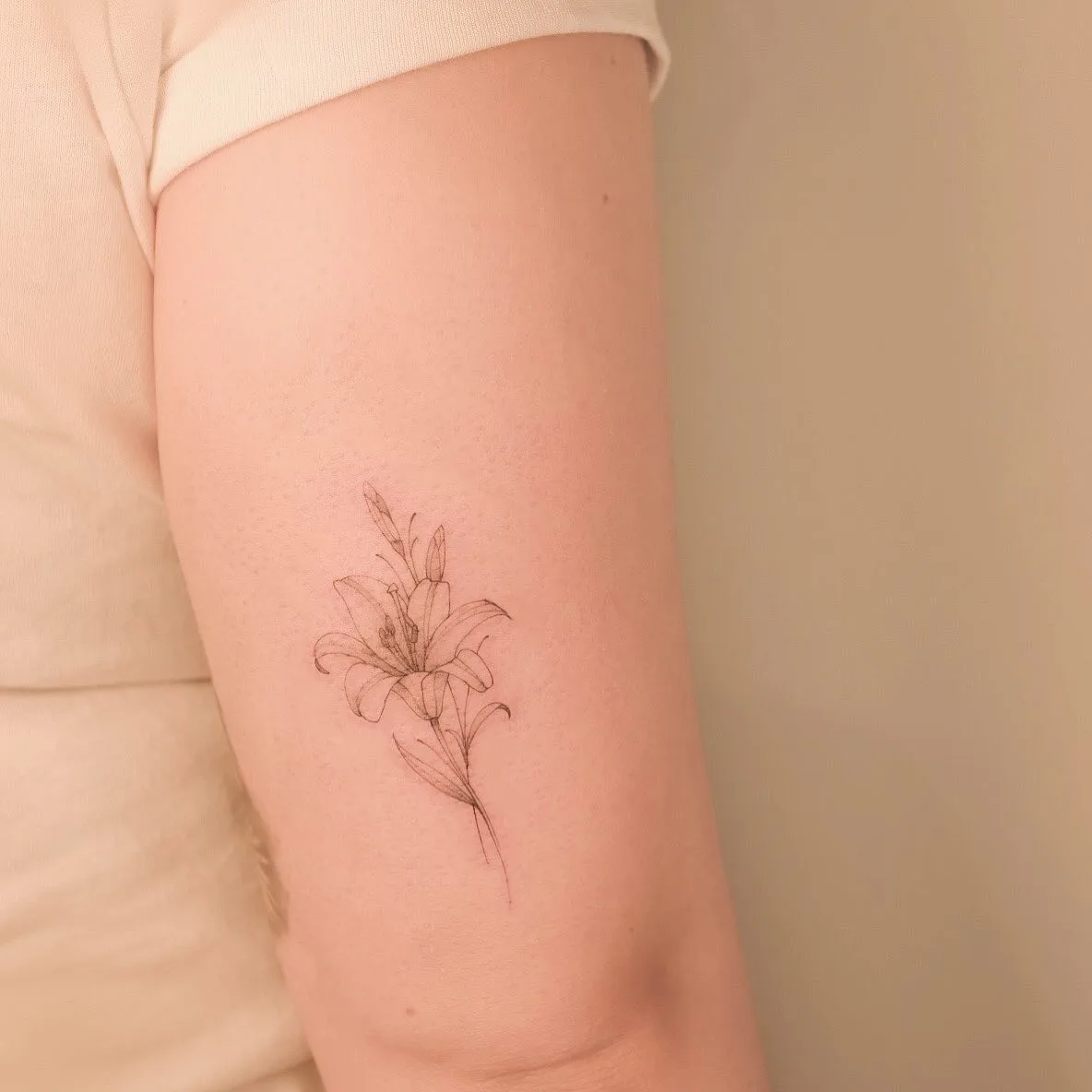
Celebrity body art can also influence which motifs fans research, even when the celebrity’s own designs tell a separate personal story. Our feature on how celebrity tattoos shape global fan conversations explores that process through Jungkook’s evolving collection. Inspiration can begin with a public figure, but your chosen flower can still reflect your own experience and visual preferences.
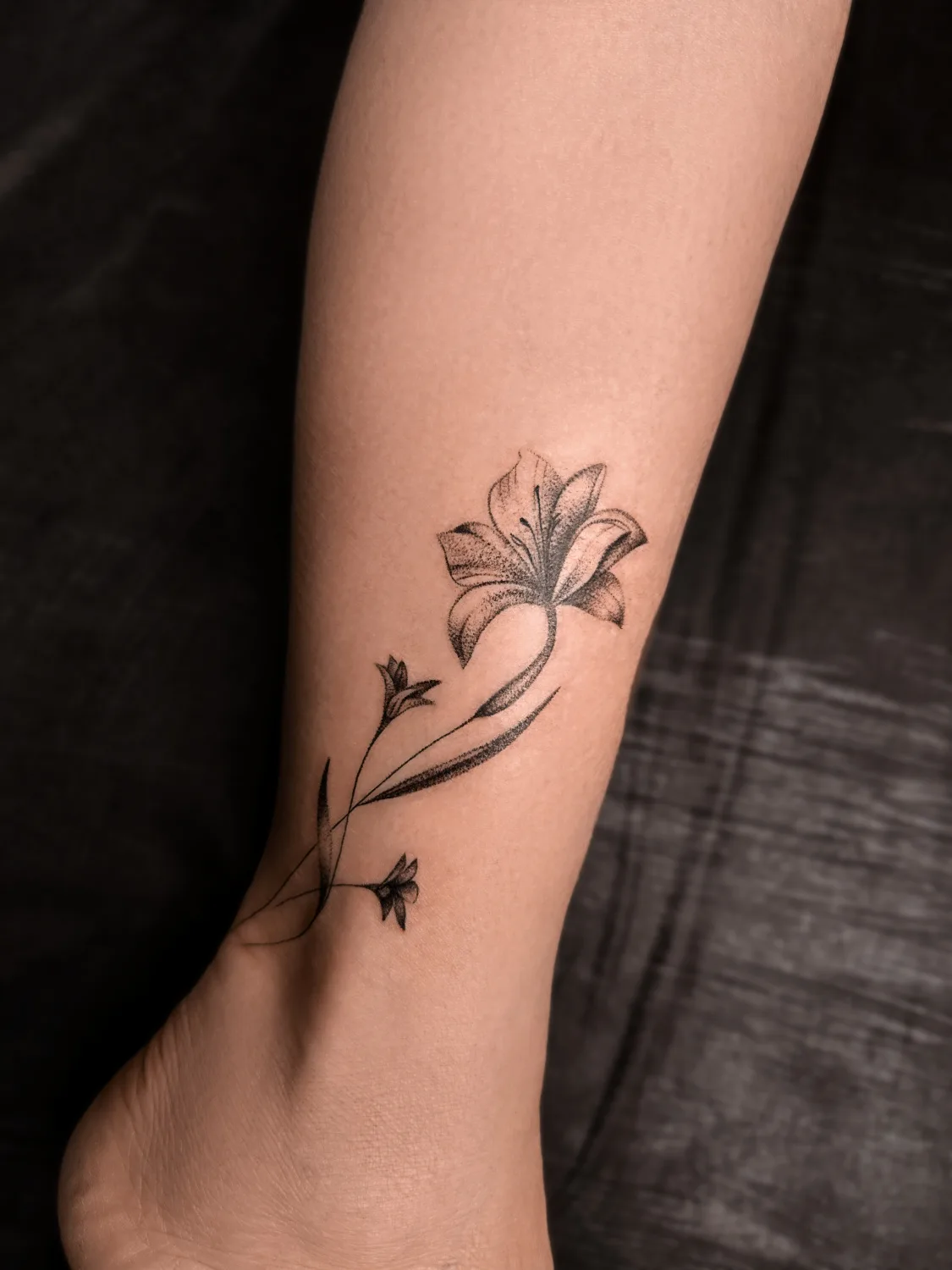
The calla, or Zantedeschia, belongs to the arum family, Araceae. Its sculptural form comes from a curved spathe surrounding a central spadix. Western floral customs use callas in both wedding and funeral arrangements, giving them a range that spans devotion, elegance, remembrance, and renewal. In contemporary tattoo work, the calla lily tattoo meaning leans toward grace, mature love, and rebirth. A long stem supports flowing designs along the arm, ribs, thigh, or back.
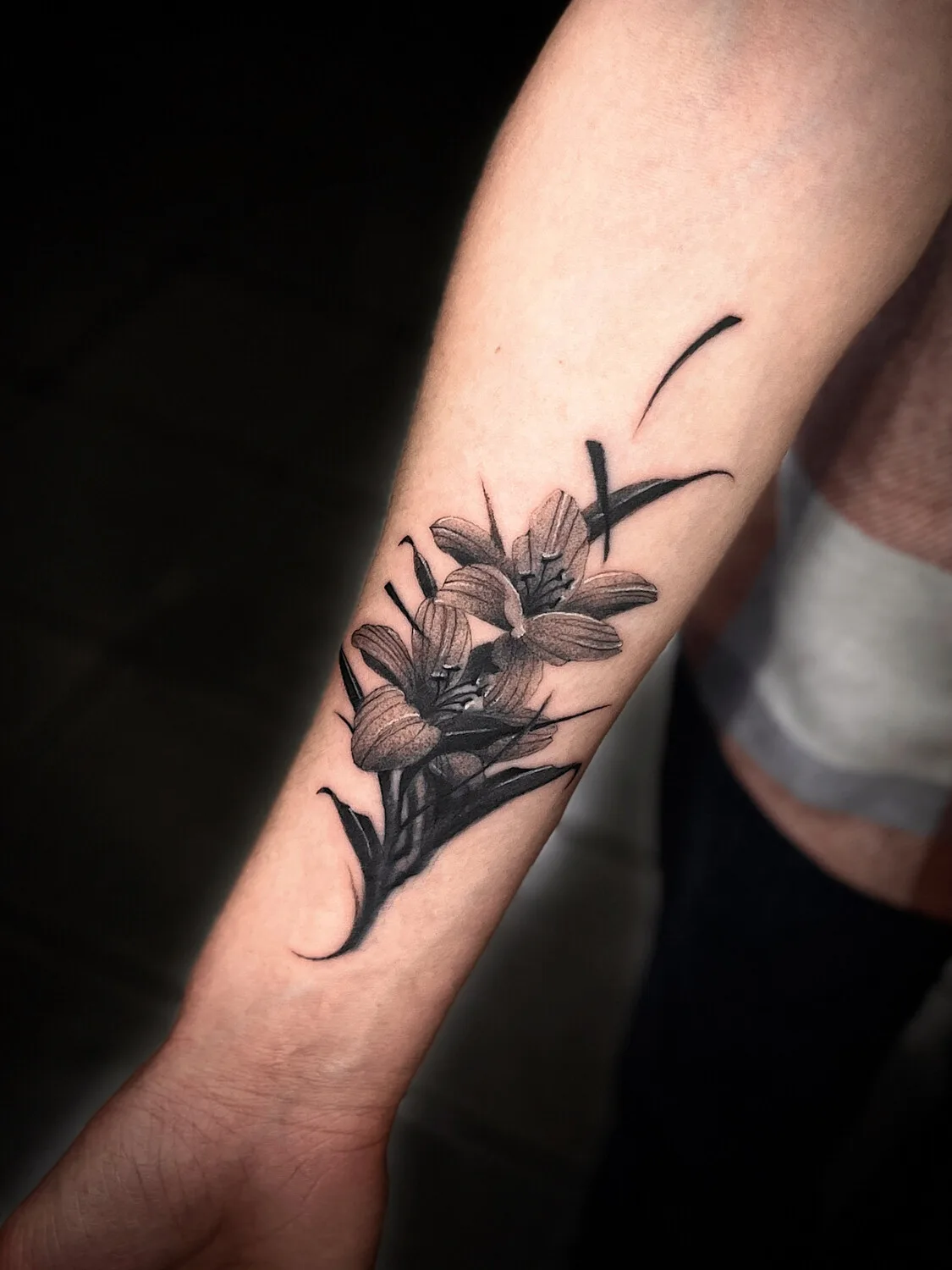
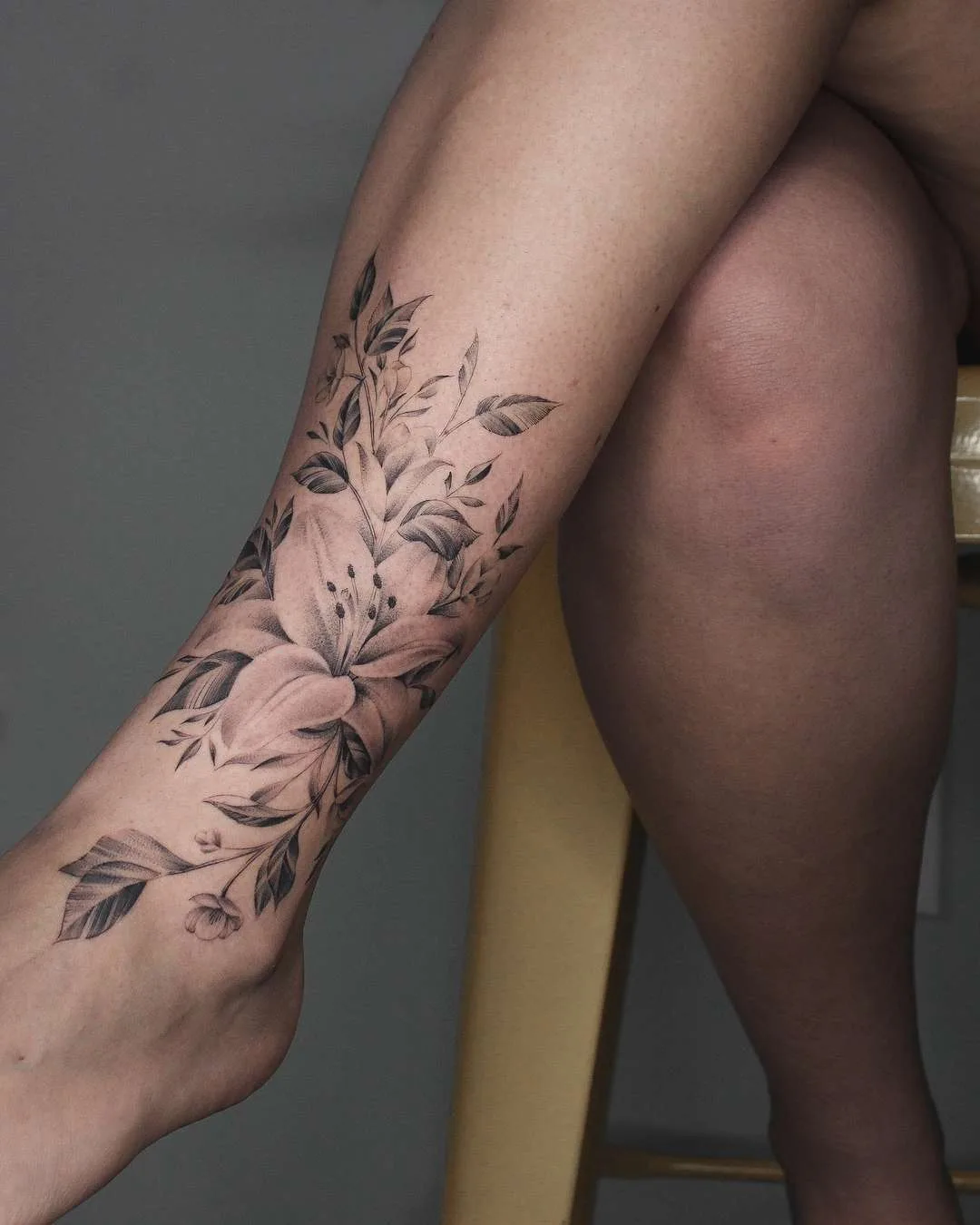
Christian Easter custom, especially in the United States, connects the Easter lily, Lilium longiflorum, with the resurrection of Christ. Within that tradition, its white trumpet-shaped flower evokes rebirth, spiritual hope, and life emerging after suffering. The Madonna lily carries a related association with purity through Christian art and its connection to the Virgin Mary. An Easter lily design can mark recovery or a fresh chapter, while explicitly Christian details such as a cross place the flower within a faith-centered narrative.
Water Lily and Lotus: How to Tell Them Apart
Botanical classification separates the water lily from the lotus. Water lilies belong to the genus Nymphaea; their flowers and notched leaves usually rest on or close to the water’s surface. Lotuses belong to Nelumbo, and their round leaves and flowers rise above the water on sturdy stalks. These structures produce distinct tattoo silhouettes even when both plants appear in calm pond scenes.
Historical naming creates one famous overlap: the “Egyptian lotus” is the blue water lily, Nymphaea caerulea. In imagery inspired by ancient Egypt, that name is culturally established, while the plant remains a water lily in botanical terms.
In modern readings, the water lily tattoo meaning centers on peace, emotional depth, reflection, and beauty unfolding from hidden roots. Lotus imagery has its own religious and cultural history, particularly in Asian traditions. If that is the flower you have in mind, explore our guide to lotus tattoo symbolism before finalizing the petals and leaves.

Lily Colors
Color can steer the emotional tone of a lily design before a viewer identifies the species. In modern tattoo symbolism, white commonly suggests purity, peace, remembrance, or a new beginning. Christian artistic tradition reinforces those readings through the Madonna lily and Easter lily. White ink tends to fade and shift over time, so many designs express “white” through open skin, pale shading, and darker outlines.
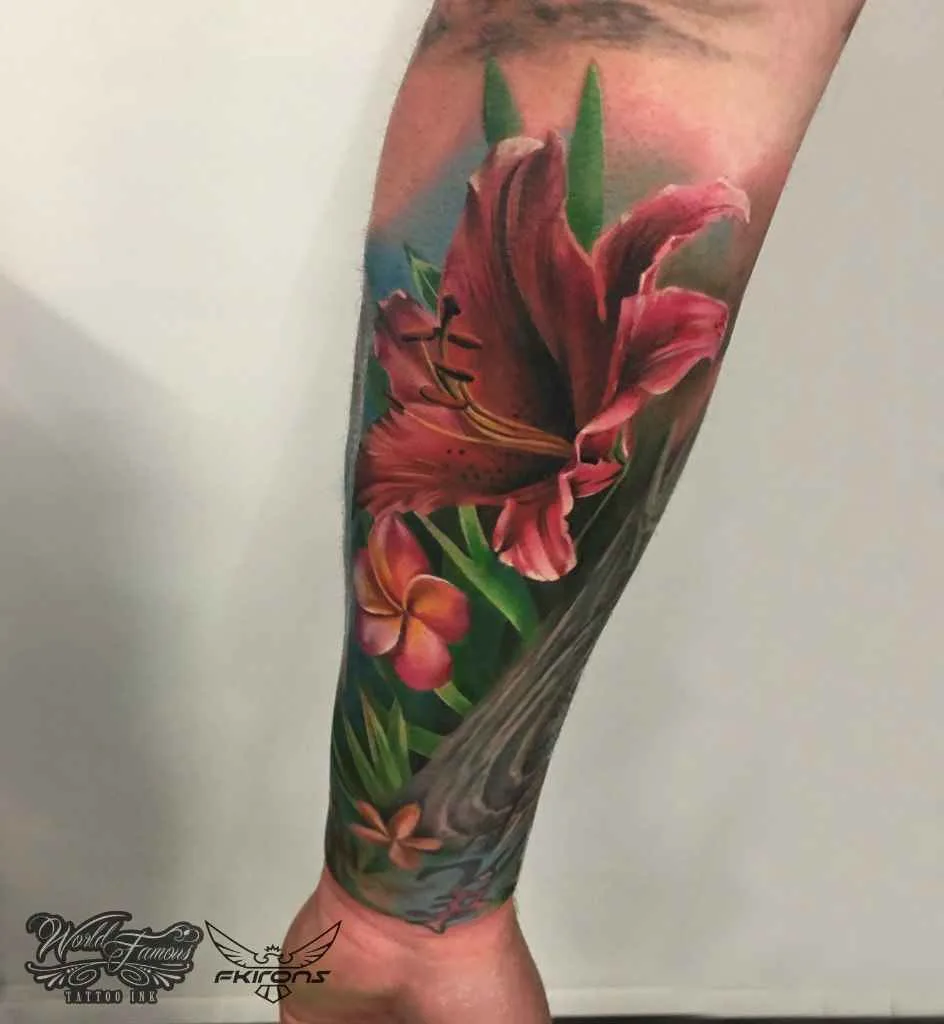
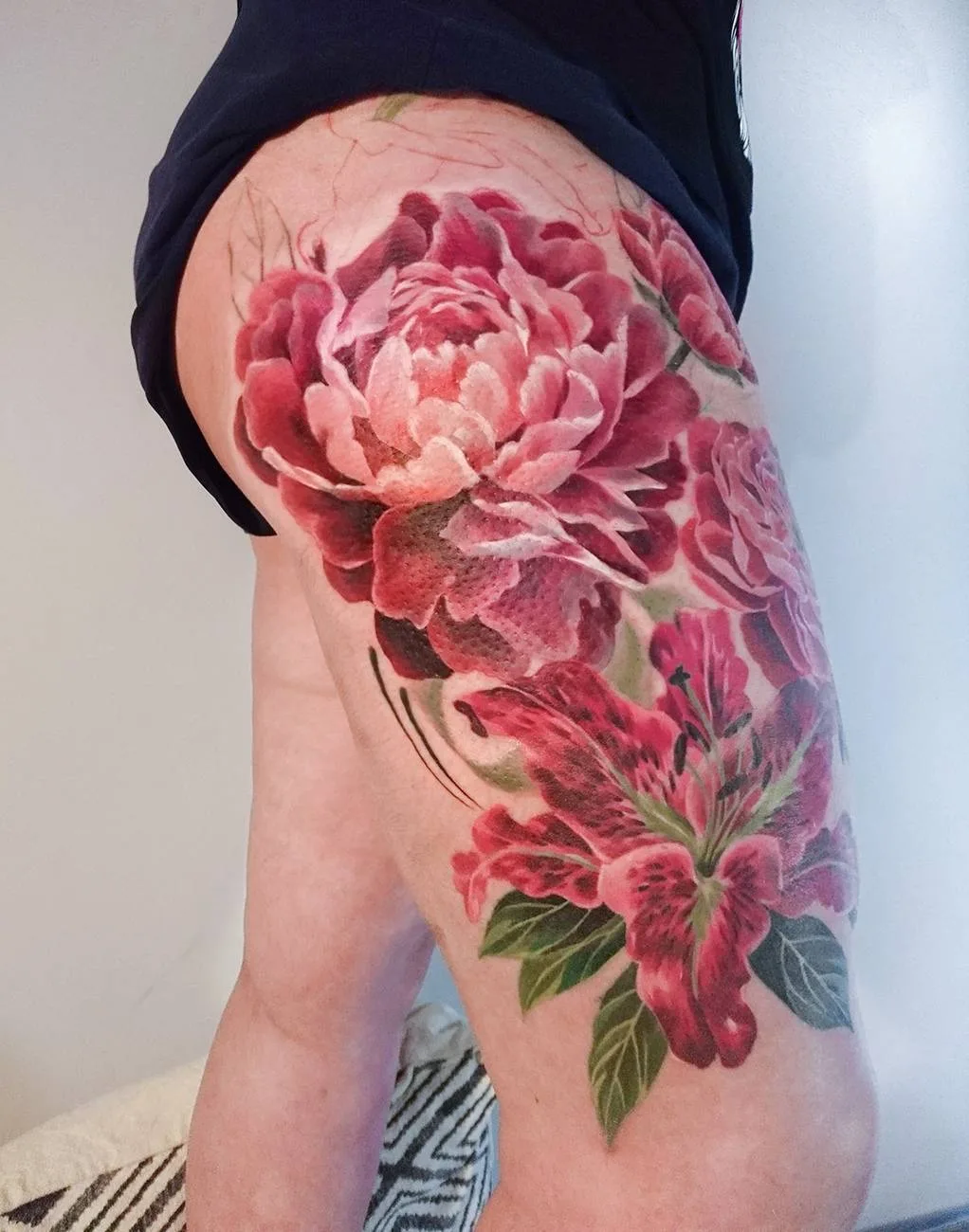
Red carries passion and intense attachment in contemporary Western flower symbolism. On a Japanese spider lily, it also invokes farewell, death, and the passage into the afterlife through Higan folklore. Orange fits the tiger lily’s natural appearance and supports modern associations with confidence, energy, and pride. Pink lilies are commonly read as admiration, tenderness, or affectionate love, while yellow suggests warmth, friendship, and joy.
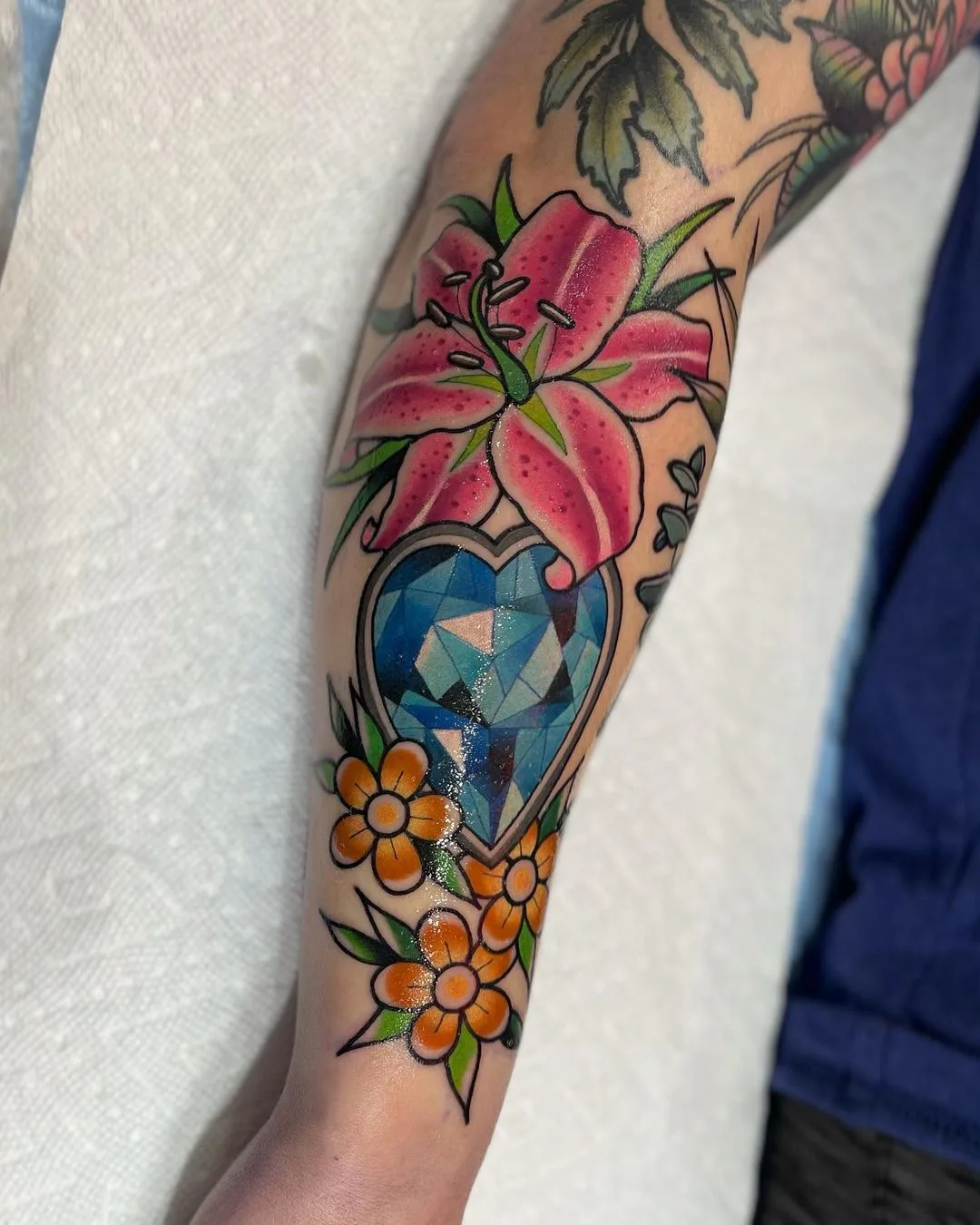
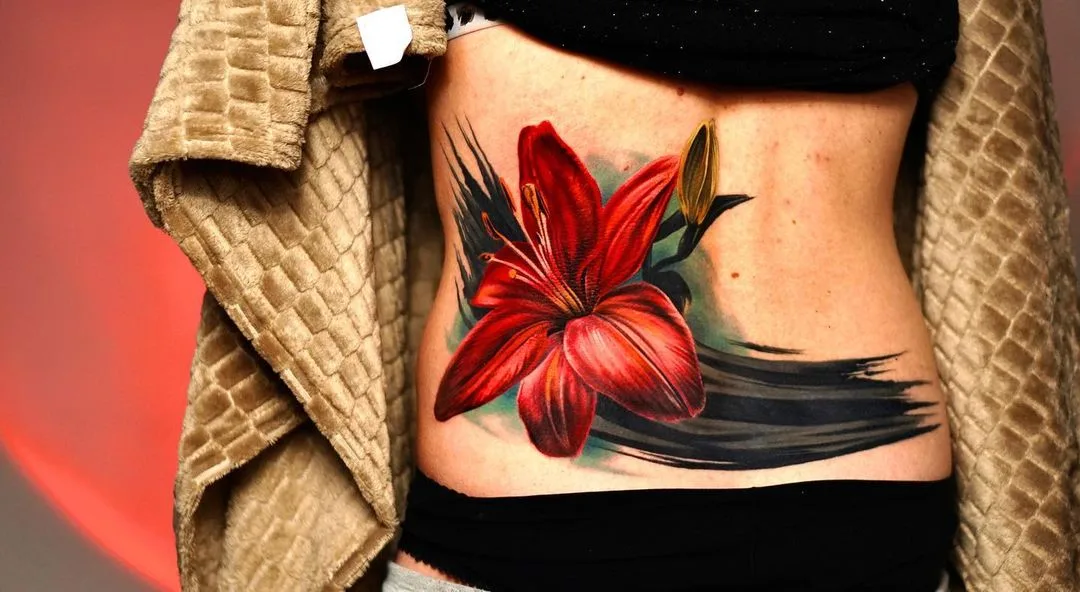
These color readings are contemporary conventions rather than a single fixed code. Species, accompanying objects, and personal history can strengthen one interpretation. A white Easter lily beside a cross presents a Christian story of resurrection; a red higanbana near a memorial date centers grief and farewell. Flowers also speak to one another: lilies can emphasize spiritual or ceremonial themes, while roses bring their own established vocabulary of love and loss. Our guide to rose symbolism by color and culture can help you plan a mixed bouquet.
FAQ
These short answers cover four popular lily designs and the traditions behind them.
What does a spider lily tattoo mean?
Japanese folklore associates the red spider lily, or higanbana, with death, farewell, grave visits, and the road to the afterlife. The association draws strength from the flower’s appearance around the autumn equinox, when Japanese Buddhist custom observes Higan and families visit graves. In a personal design, it can honor someone who died or mark a permanent goodbye.
What does a tiger lily tattoo mean?
Modern tattoo readings connect the tiger lily’s orange petals and dark spots with confidence, boldness, pride, and individuality. Its vivid natural pattern gives the flower an assertive presence, making it suitable for a design about self-belief or personal visibility. Orange colorwork highlights its botanical identity, while blackwork creates a sharper graphic interpretation.
What does a calla lily tattoo mean?
Contemporary symbolism links the calla with elegance, devotion, remembrance, and rebirth. Western floral customs use callas in weddings and funerals, allowing the flower to represent enduring love as well as dignified mourning. Its smooth spathe and long stem also create a restrained design for someone who prefers flowing lines and minimal detail.
Is a water lily the same as a lotus?
Botany classifies them as separate plants. Water lilies belong to Nymphaea and usually carry notched leaves and flowers at the water’s surface. Lotuses belong to Nelumbo, with round leaves and flowers rising on stalks. The traditional name “Egyptian lotus” refers to Nymphaea caerulea, a blue water lily, which explains some of the familiar overlap in terminology.