There's a moment, right before the needle hits skin, when you can see the whole thing in your mind, the curl of petals, the weight of color, the thorns catching light along a collarbone or wrist. Rose tattoos do that. They sit in your imagination fully formed before they ever become real.
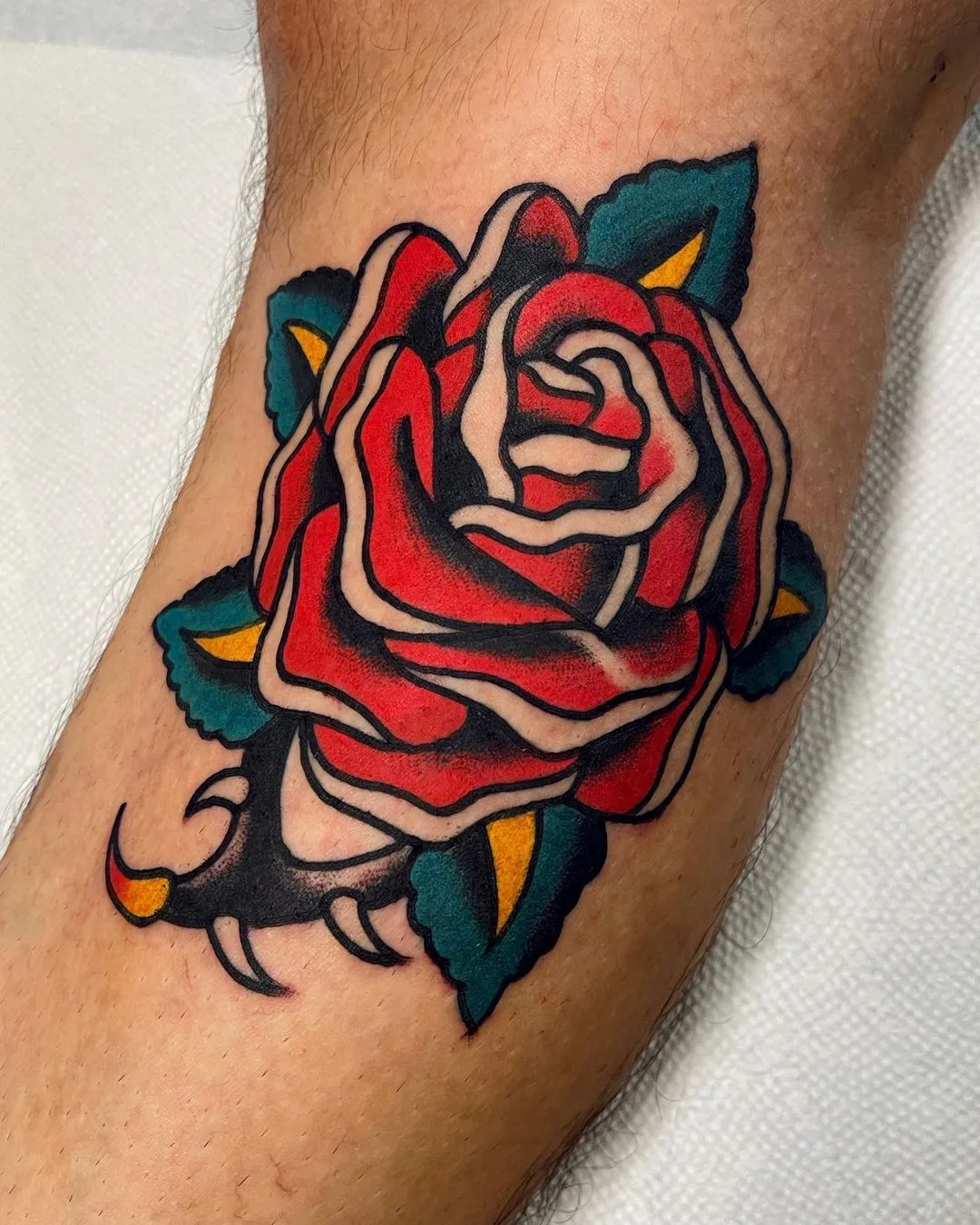
Of all the subjects people bring to a tattoo artist, the rose might be the most requested and the most misunderstood. It looks simple. A flower. Beauty. Romance. But spend any time around tattoo culture, a decade-plus in our case, and you realize the rose carries more symbolic weight per petal than almost any other motif in the catalog. It's been inked into the skin of sailors, prisoners, poets, punk rockers, grandmothers, and kings. Each one meant something different.
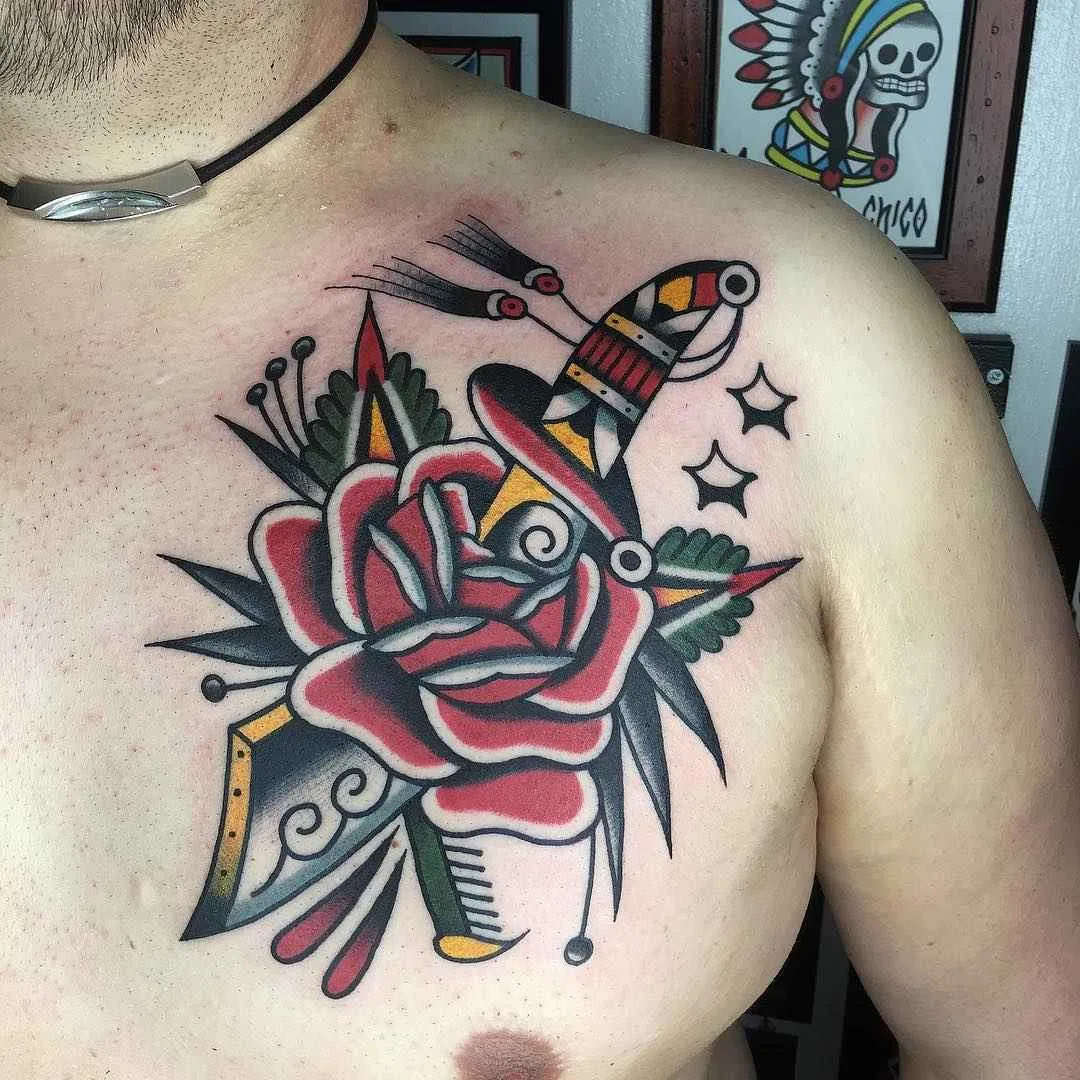
That's the thing about rose tattoo meaning. It's never just one thing. It bends with color, with placement, with the number of thorns or the state of bloom. A single design can whisper grief or shout defiance. And that flexibility, that layered depth, is exactly why it's endured across centuries and across every tattoo style humans have invented.
The Primal Symbol: What Do Rose Tattoos Actually Mean?
Ask ten people what a rose tattoo means and you'll probably get twelve answers. That's not a flaw, it's the point. The rose is one of the rare symbols that carries genuine universality while still leaving space for deeply personal interpretation. But there are core threads of meaning that run through nearly every rose tattoo, regardless of style or era.
Love in All Its Forms
The most obvious meaning, sure. But it's worth sitting with for a moment because "love" is doing a lot of heavy lifting here. A red rose tattoo can represent romantic love, passionate, consuming, all-in. But it can also honor familial love, the love of a lost parent, a child, a friend who didn't make it. Memorial rose tattoos are among the most common pieces any shop produces, and they carry a tenderness that's hard to fake.
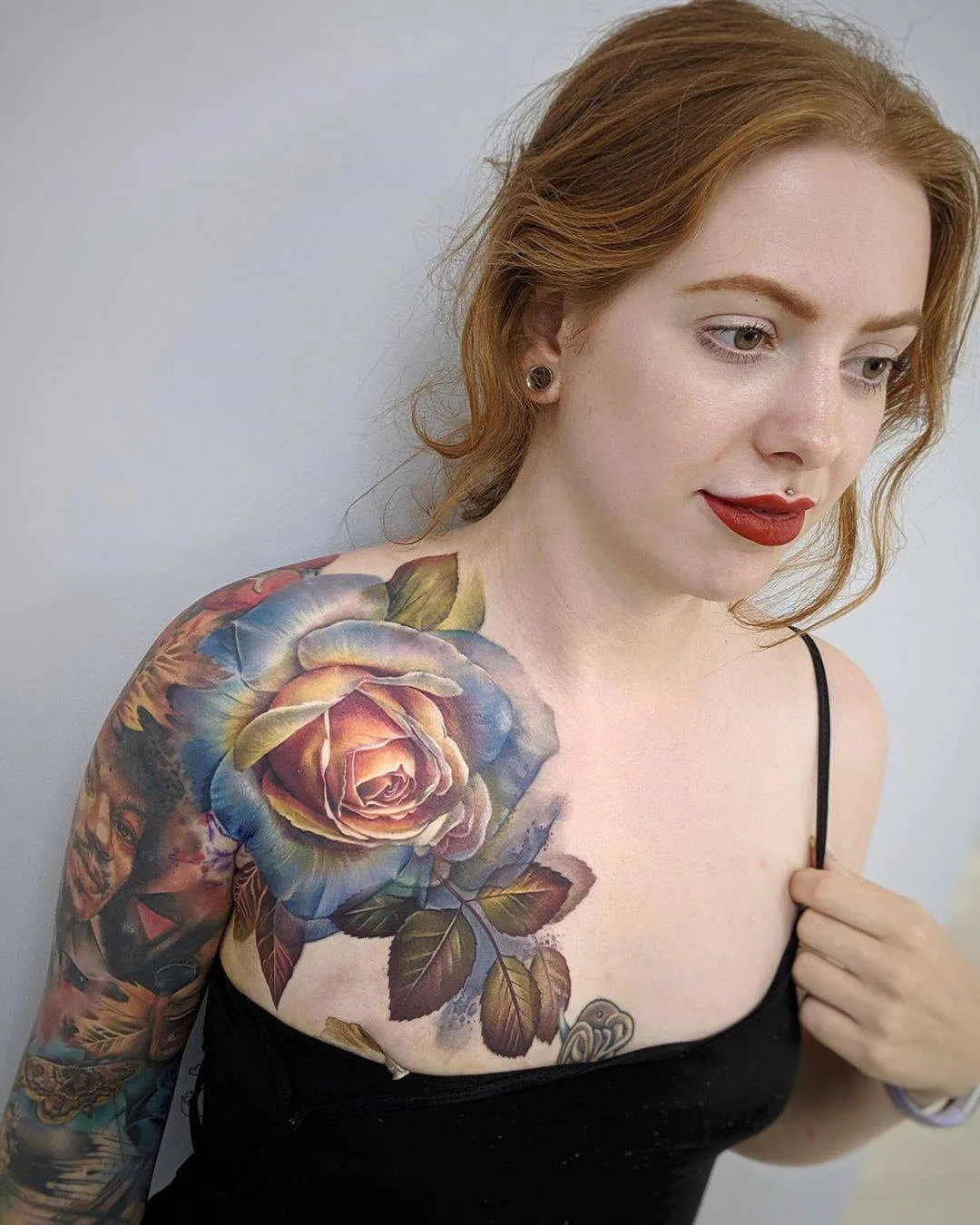
The association between roses and love goes back millennia. In Greek mythology, the rose was linked to Aphrodite, goddess of love, said to have been created from her tears and the blood of her lover Adonis (Source: Greek Mythology, various classical texts). That origin story, beauty born from grief, pretty much sets the template for every rose tattoo that's come since.
Beauty and the Pain That Comes With It
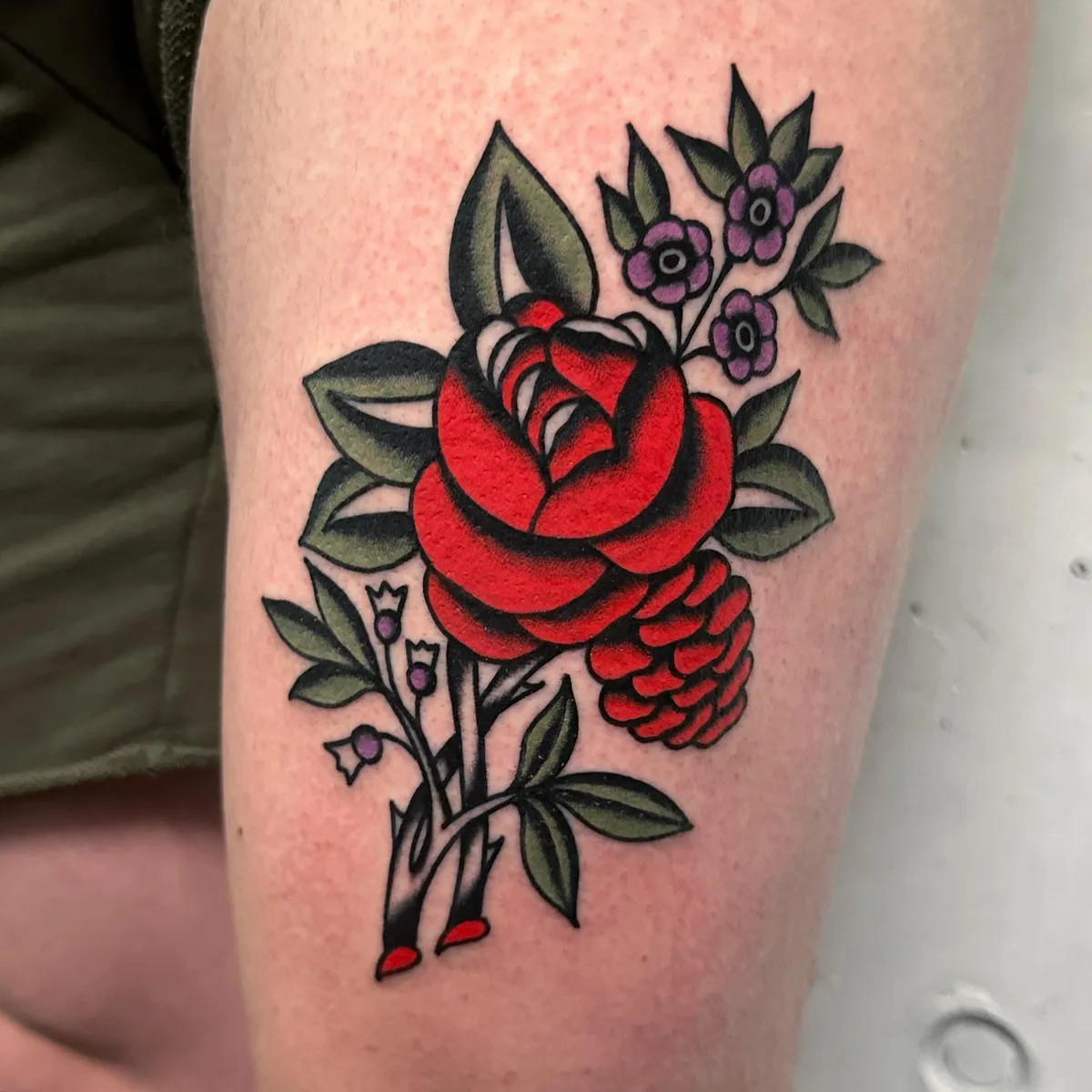
You can't talk about roses without talking about thorns. Actually, that's the whole metaphor. The rose is one of nature's most elegant contradictions: stunning to look at, painful to grab carelessly. In tattoo symbolism, this duality speaks to people who've learned that beauty and suffering aren't opposites, they're companions.
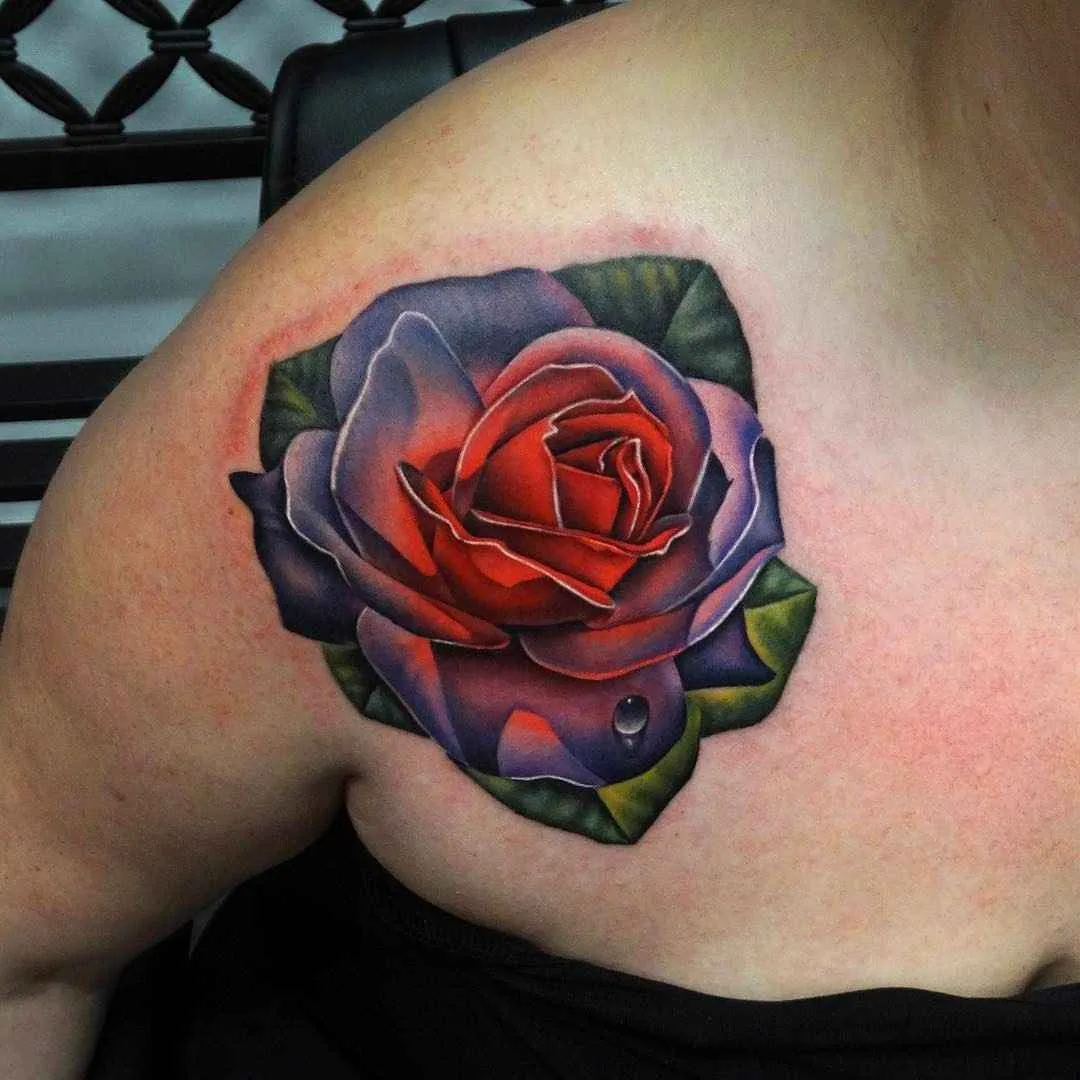
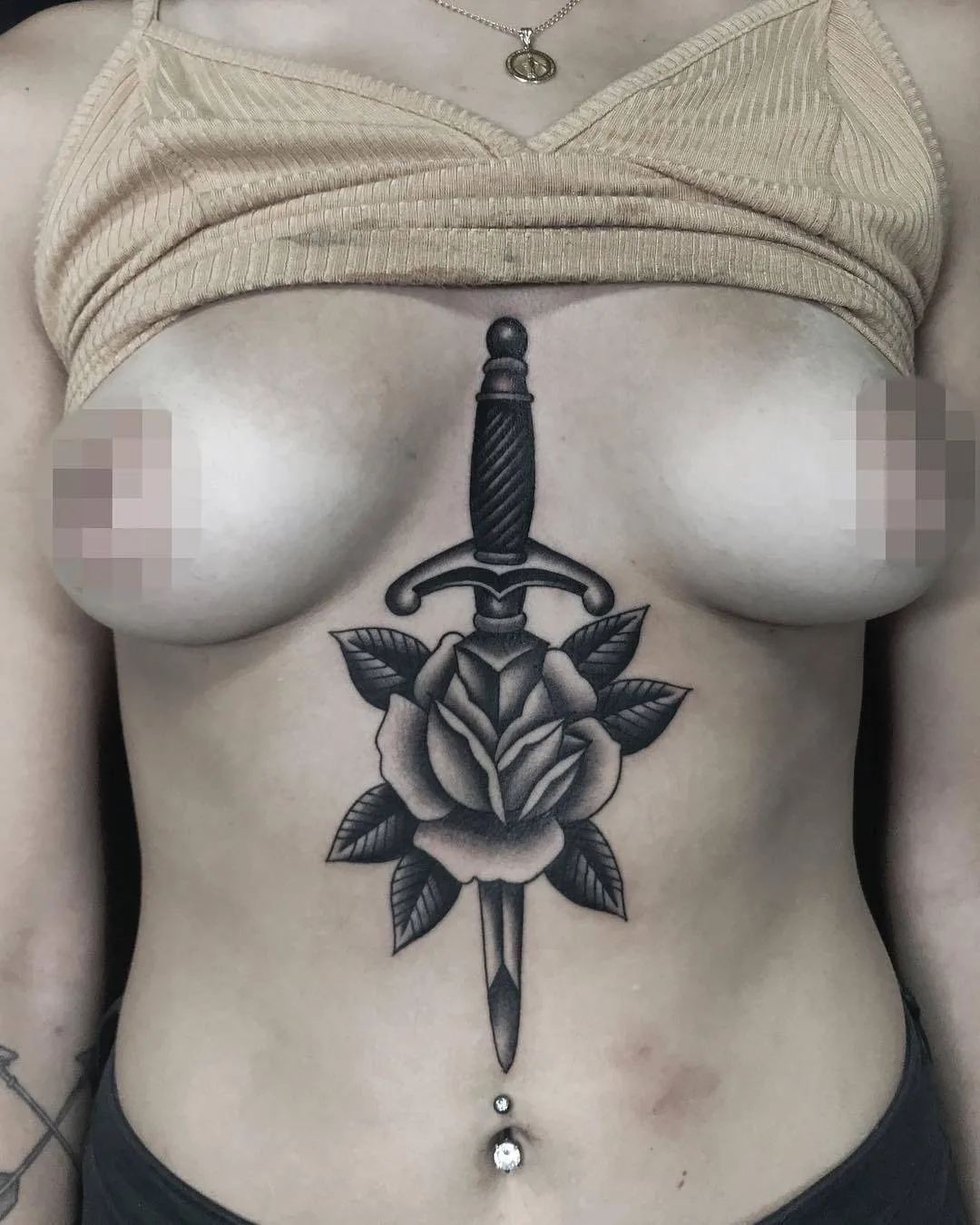
Many collectors choose roses specifically because of the thorns. A rose without thorns reads as naive or idealized. A rose with prominent, sharp thorns tells a different story: I've been through something, and I'm still beautiful. Or maybe: don't mistake softness for weakness. That tension is magnetic, and it's one reason the rose has remained central to American Traditional tattoo design for over a century.
Secrecy and Confidentiality
Here's one that surprises people. The Latin phrase "sub rosa", literally "under the rose", refers to something done in secret or confidence. In ancient Rome, a rose hung from the ceiling of a meeting room meant everything discussed there was confidential (Source: Roman cultural traditions). This meaning has carried forward in subtle ways. Some people get a rose tattoo as a private marker, a reminder of something known only to them. Not every tattoo needs to be explained to the world. Some are just for you.
Resilience and New Beginnings
Roses bloom seasonally. They die back, endure winter, and return. That cycle makes them a powerful symbol of resilience, rebirth, and the capacity to start again after devastation. This is probably, or, well, almost certainly, why rose tattoos are so popular among people marking major life transitions: recovery from addiction, survival of illness, the end of a difficult chapter.
A budding rose, not yet open, carries specific meaning here: potential, youth, the beginning of something. A fully open bloom suggests arrival, maturity, peak vitality. And a wilting or dying rose? That's not necessarily negative. It can represent acceptance of mortality, the passage of time, or the honest acknowledgment that nothing lasts forever.
The Color Wheel: How Color Changes Everything
If rose tattoo meaning were a language, color would be its grammar. The same flower rendered in different hues tells a completely different story. This isn't arbitrary, these color associations have roots in Victorian flower language (floriography), religious art, and centuries of cultural tradition.
Red Rose: Passion and Devotion
The classic. Deep red roses are the unmistakable symbol of romantic love, desire, and commitment. In tattoo work, a rich red rose often serves as a declaration, of love for a partner, for life itself, for something worth bleeding for. It's the most traditional choice and arguably the most emotionally direct. No ambiguity here.
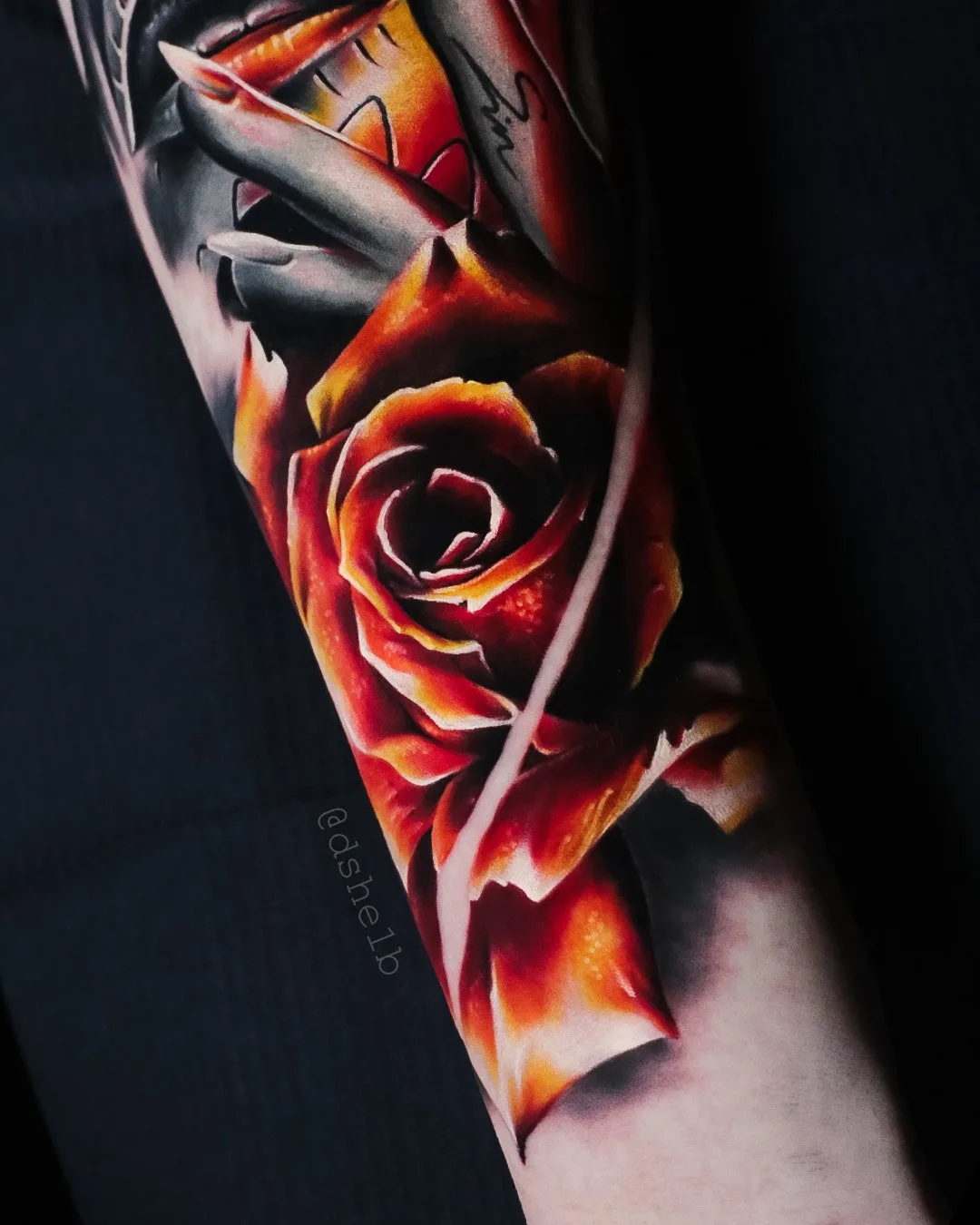
Black Rose: Grief, Rebellion, and Transformation
Black roses don't exist in nature, which is part of their power as tattoo subjects. They represent mourning and loss, yes, but also rebellion, anarchy, and the embrace of darkness as a creative or spiritual force. In some subcultures, goth, punk, certain metal scenes, the black rose is a badge of identity. It can also symbolize the end of something: a relationship, an era, a former self. There's beauty in that ending, though. A black rose isn't nihilistic. It's honest.
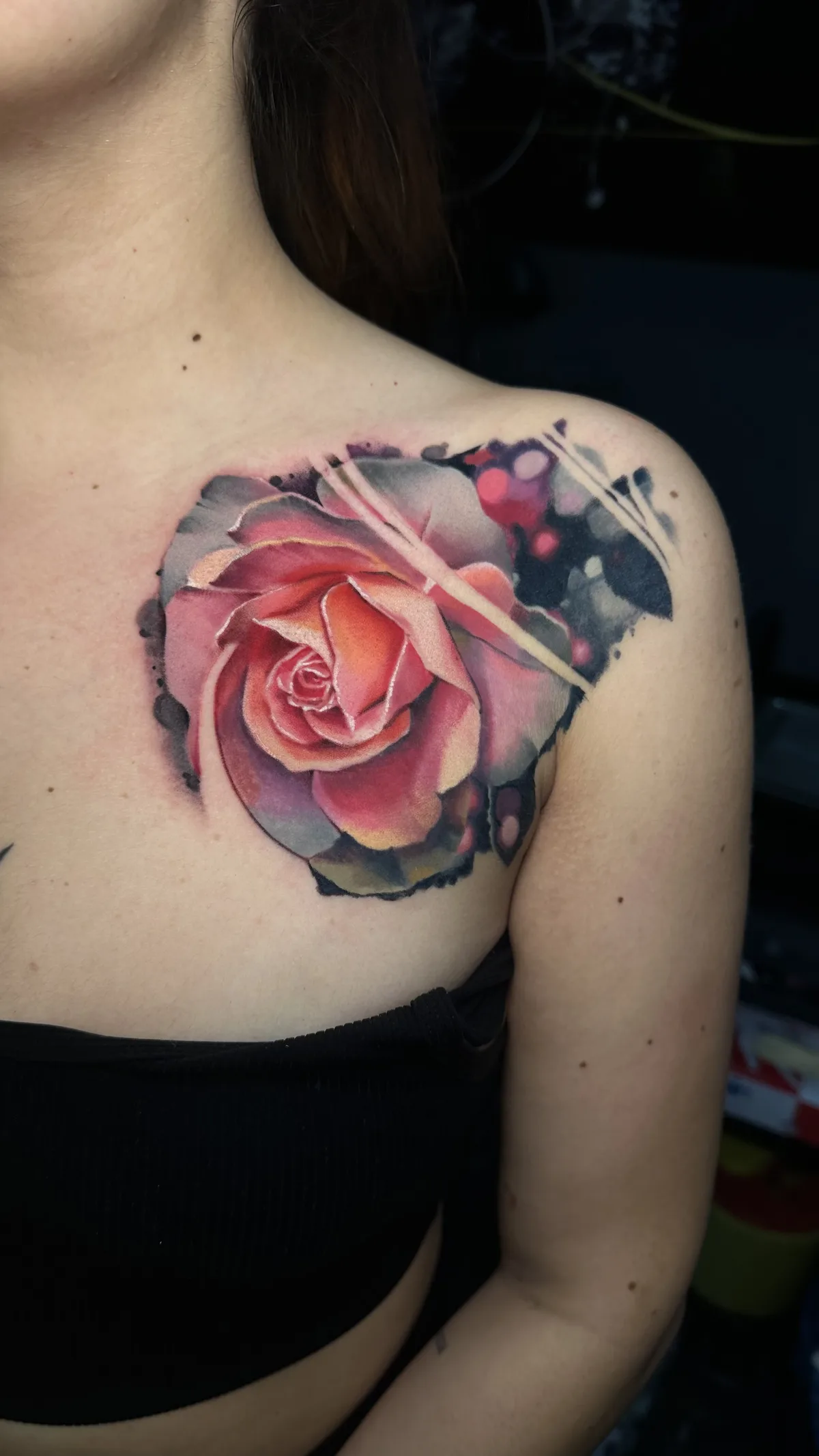
White Rose: Purity, Remembrance, and Spirituality
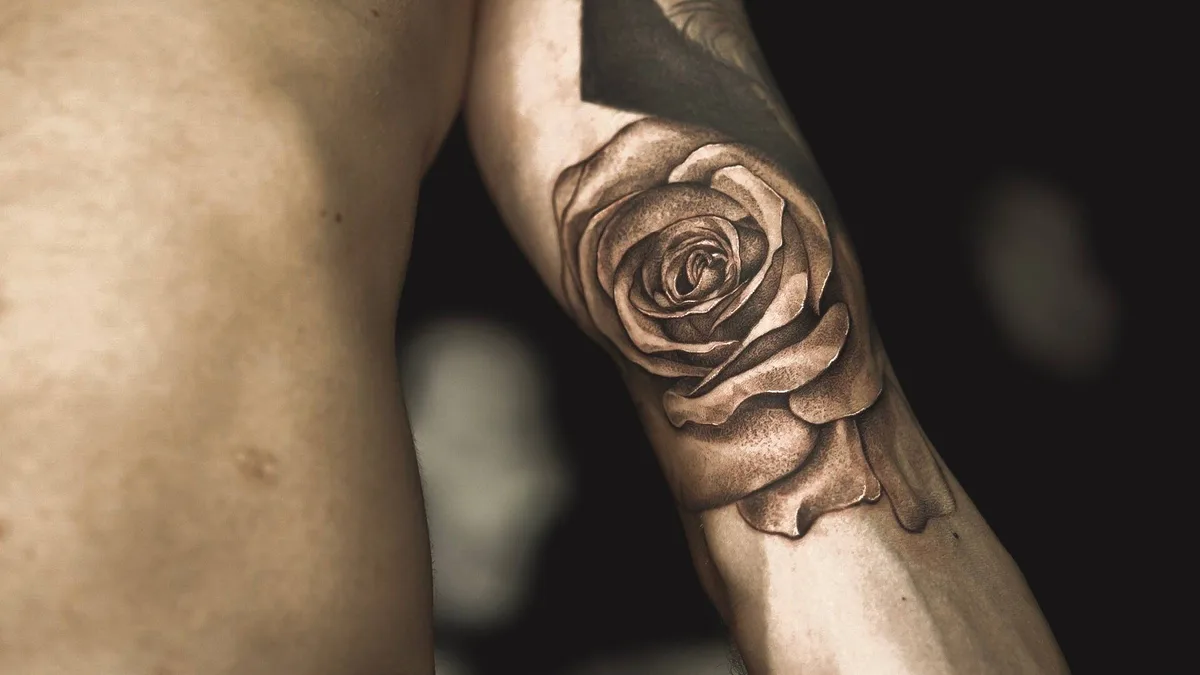
White roses carry connotations of innocence, purity, and spiritual devotion. They're common in memorial tattoos, particularly when honoring someone young or when the wearer wants to emphasize peace rather than grief. In some Christian traditions, the white rose is associated with the Virgin Mary. In secular contexts, it can represent a fresh start, a blank page, untouched and full of possibility.
Yellow, Blue, and Beyond
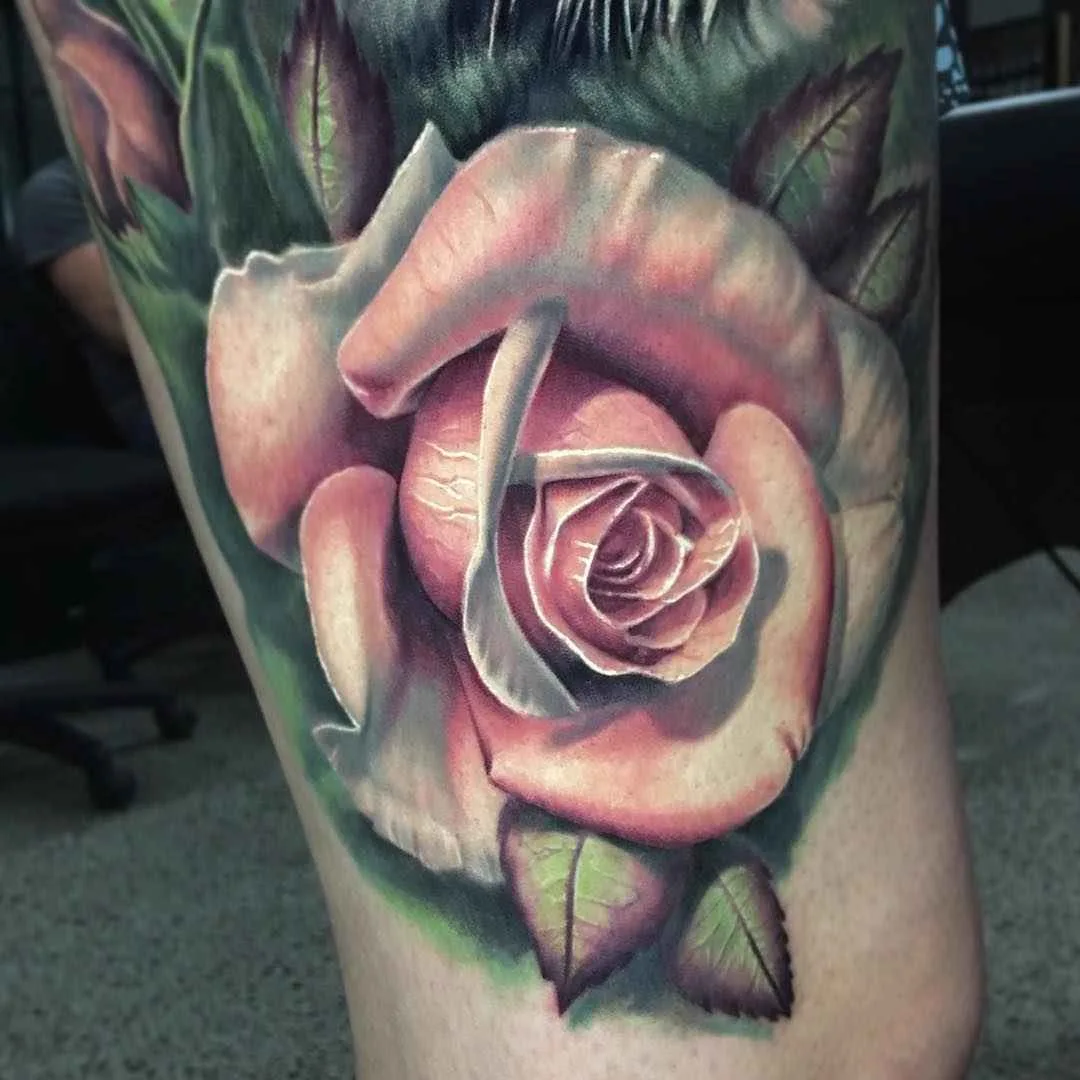
Yellow roses traditionally symbolize friendship and joy, though older interpretations sometimes linked them to jealousy, context matters here. Blue roses, like black ones, don't occur naturally. They represent mystery, the impossible, the pursuit of something unattainable. Pink roses sit between red and white: gratitude, admiration, gentle affection without the intensity of deep red.
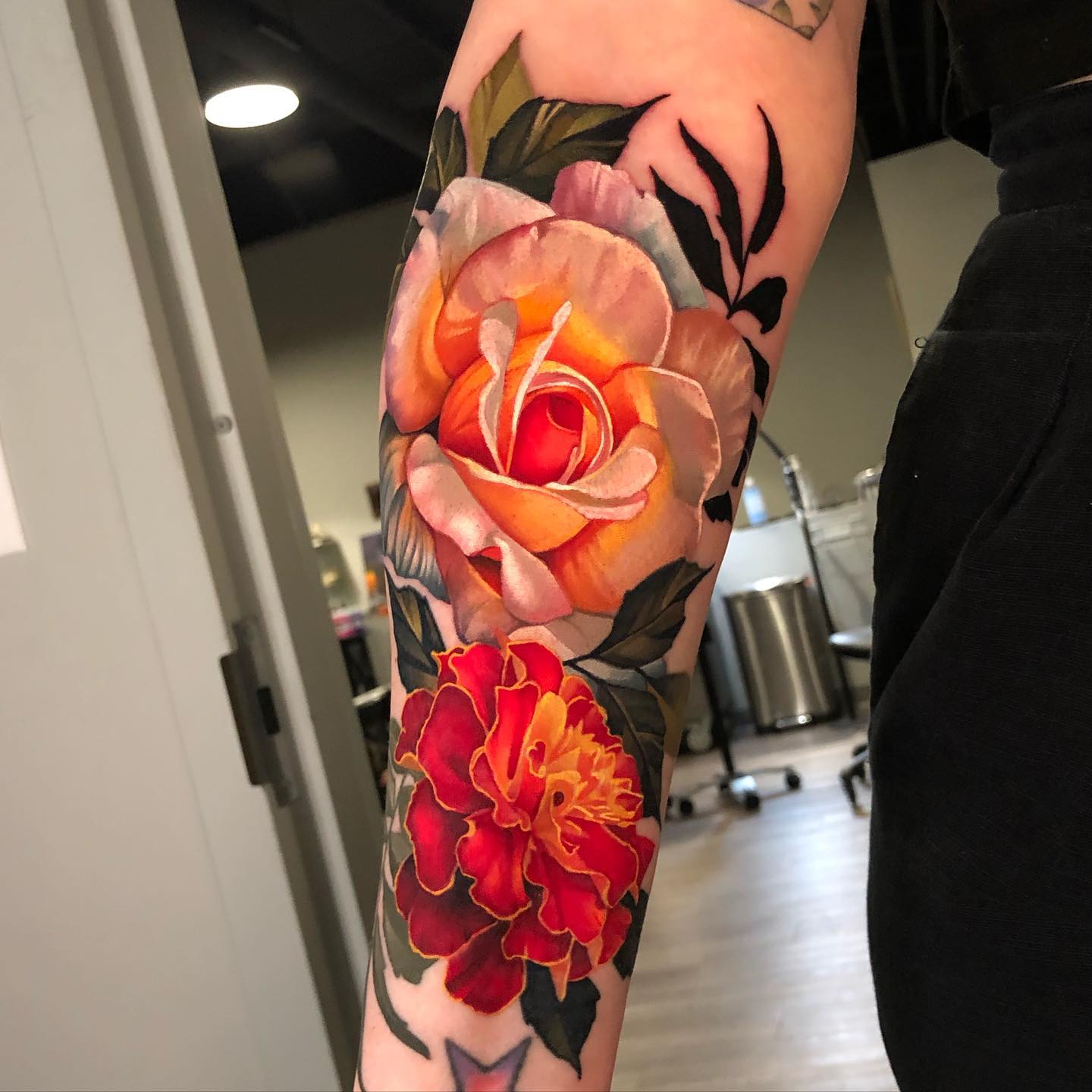
Rose and flower realistic tattoo by @allisintattoos
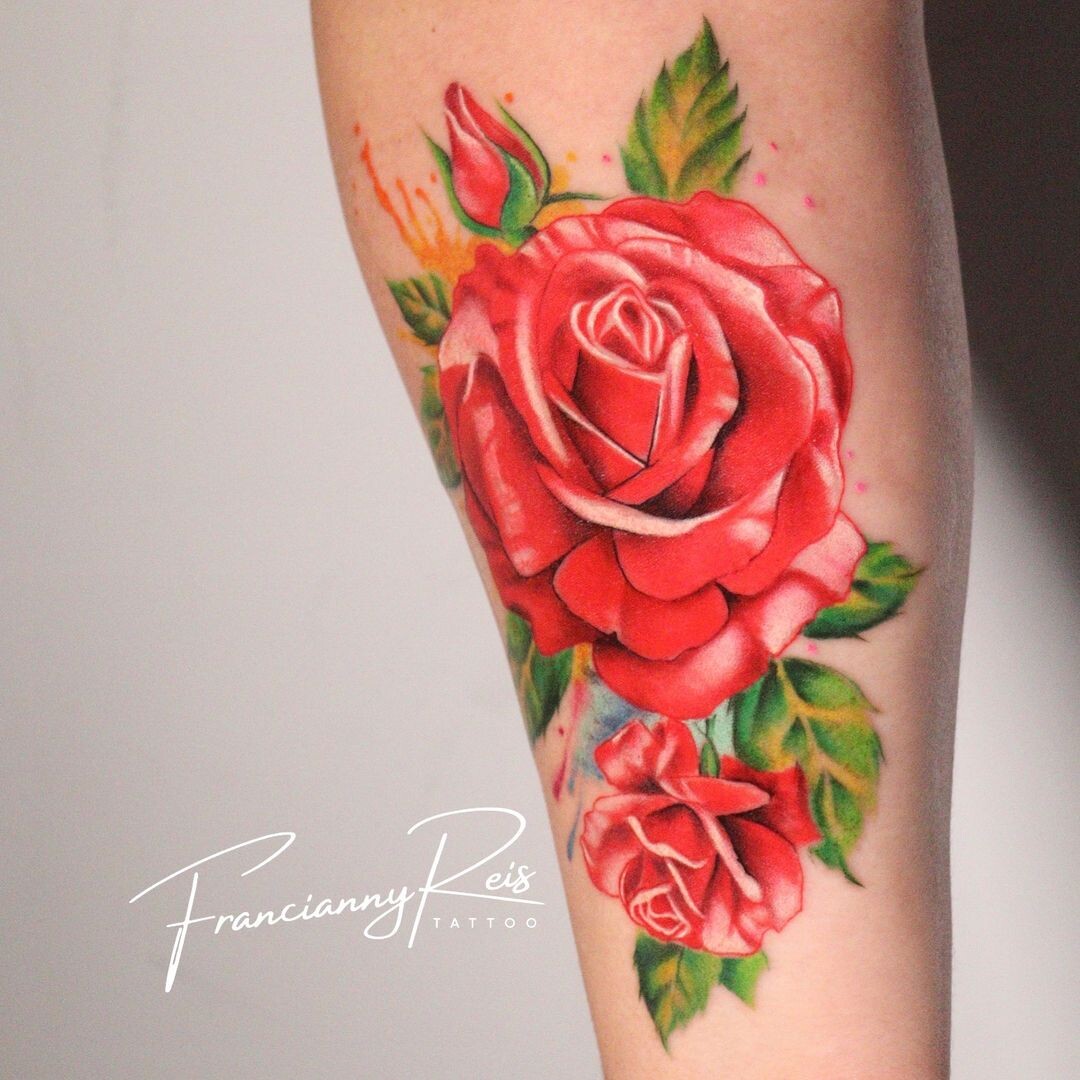
Red rose watercolour tattoo by @franciannyreis
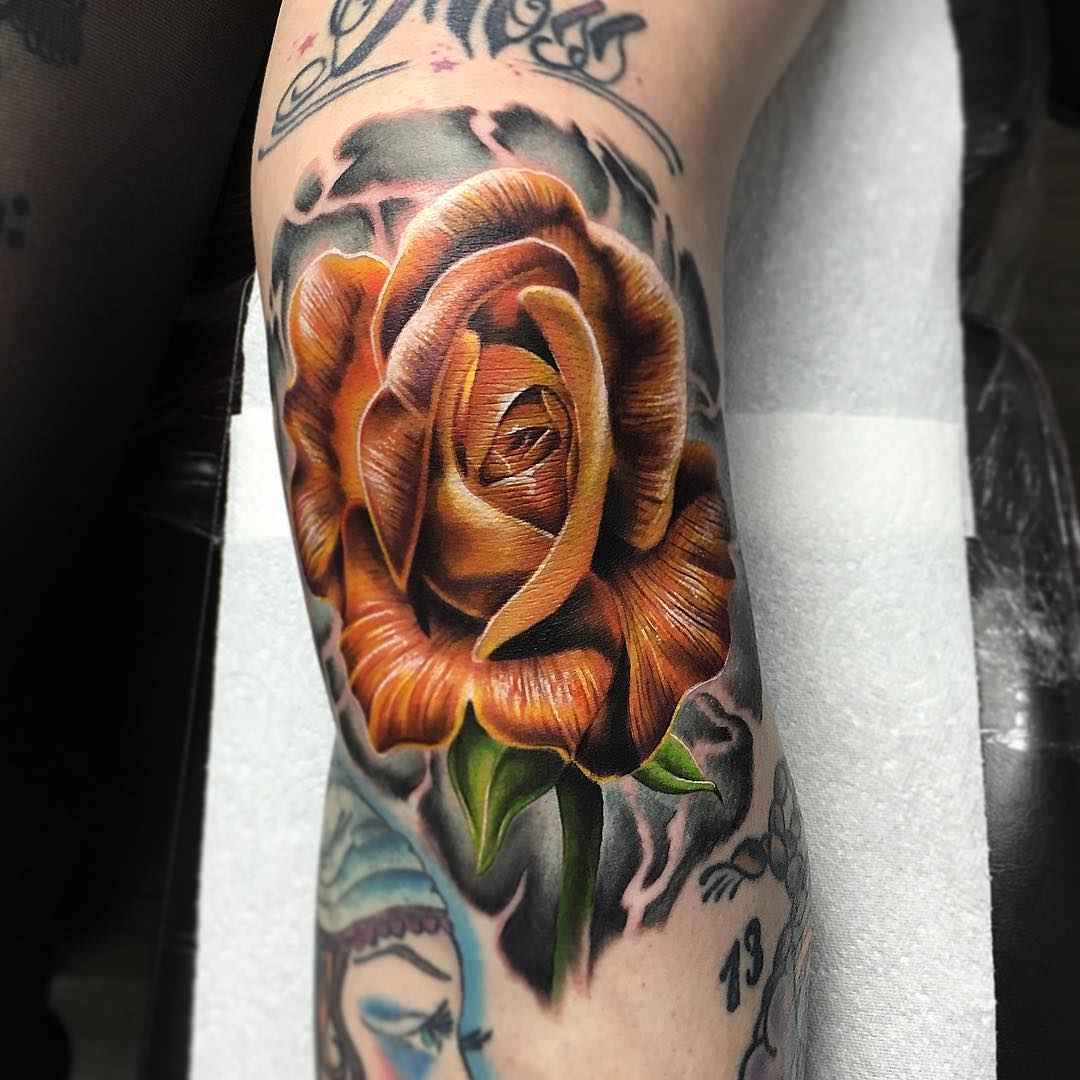
Realistic thigh rose tattoo by @ryansmithtattooist
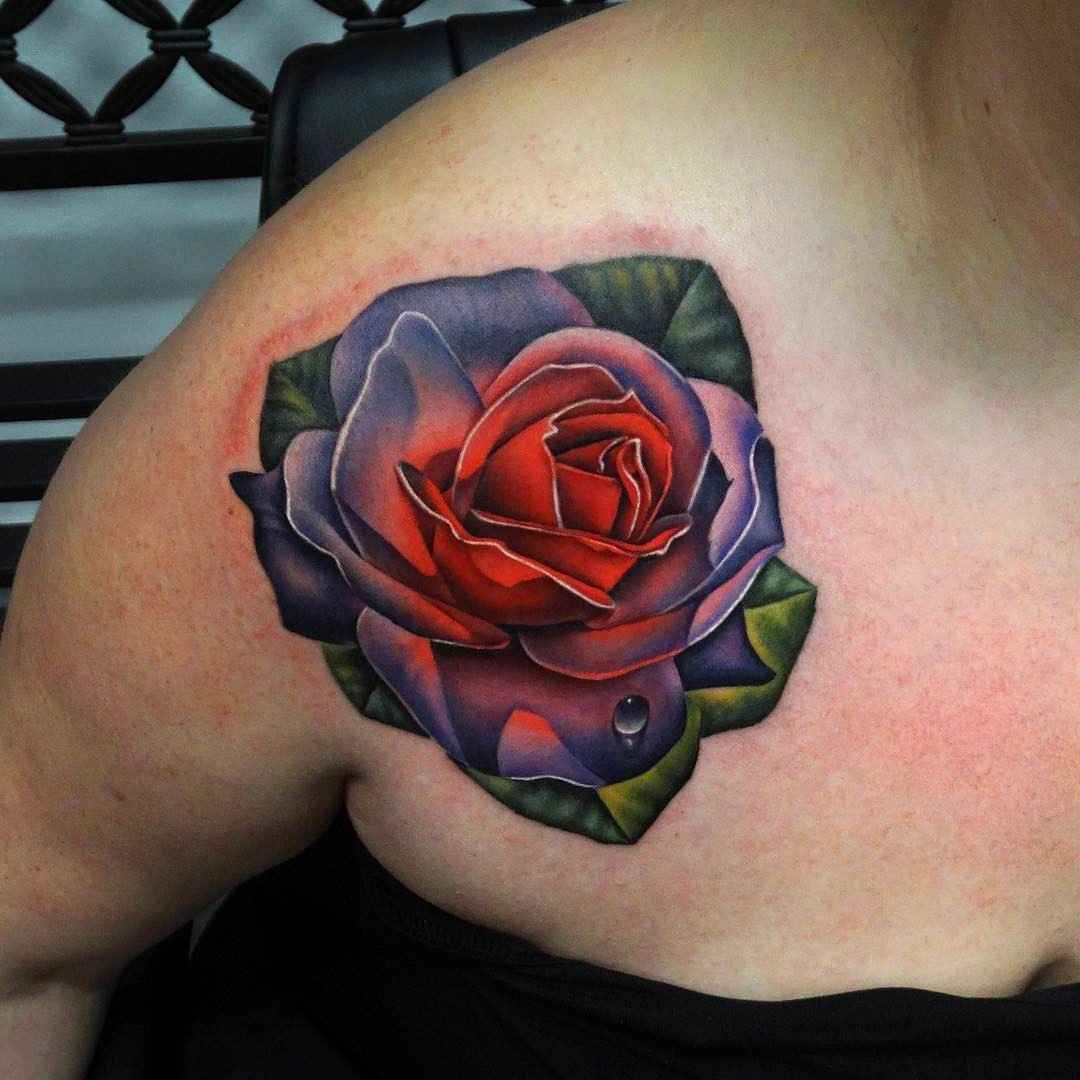
Rose tattoo with water droplet by @acostattoo
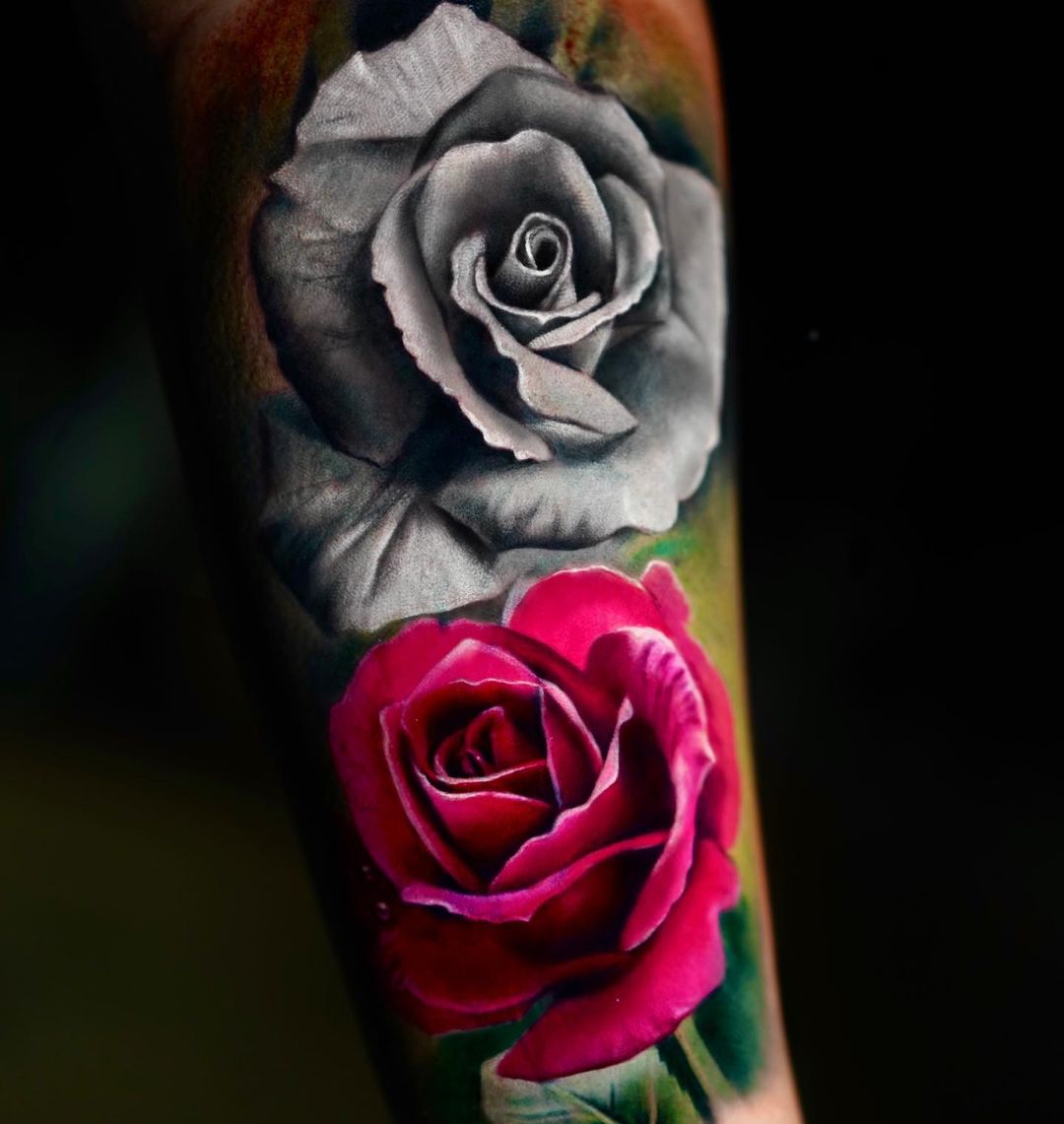
Black-grey and red rose tattoo by @yesytattoo
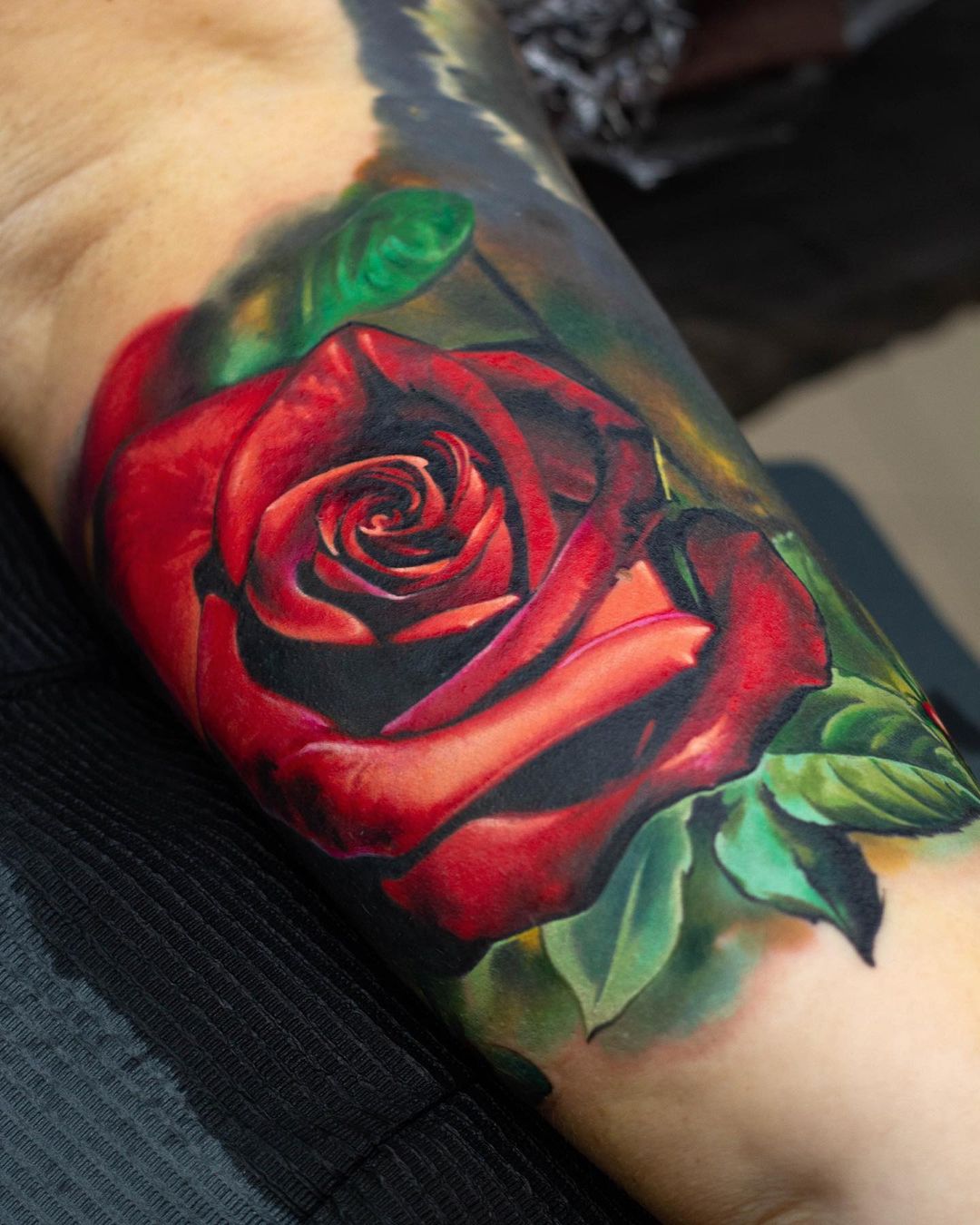
Vibrant red rose tattoo by @storozh_tattoo
I should note that color meaning isn't rigid law. It's more like a shared vocabulary that individual artists and collectors remix constantly. Your blue rose might mean something entirely personal, and that's valid.
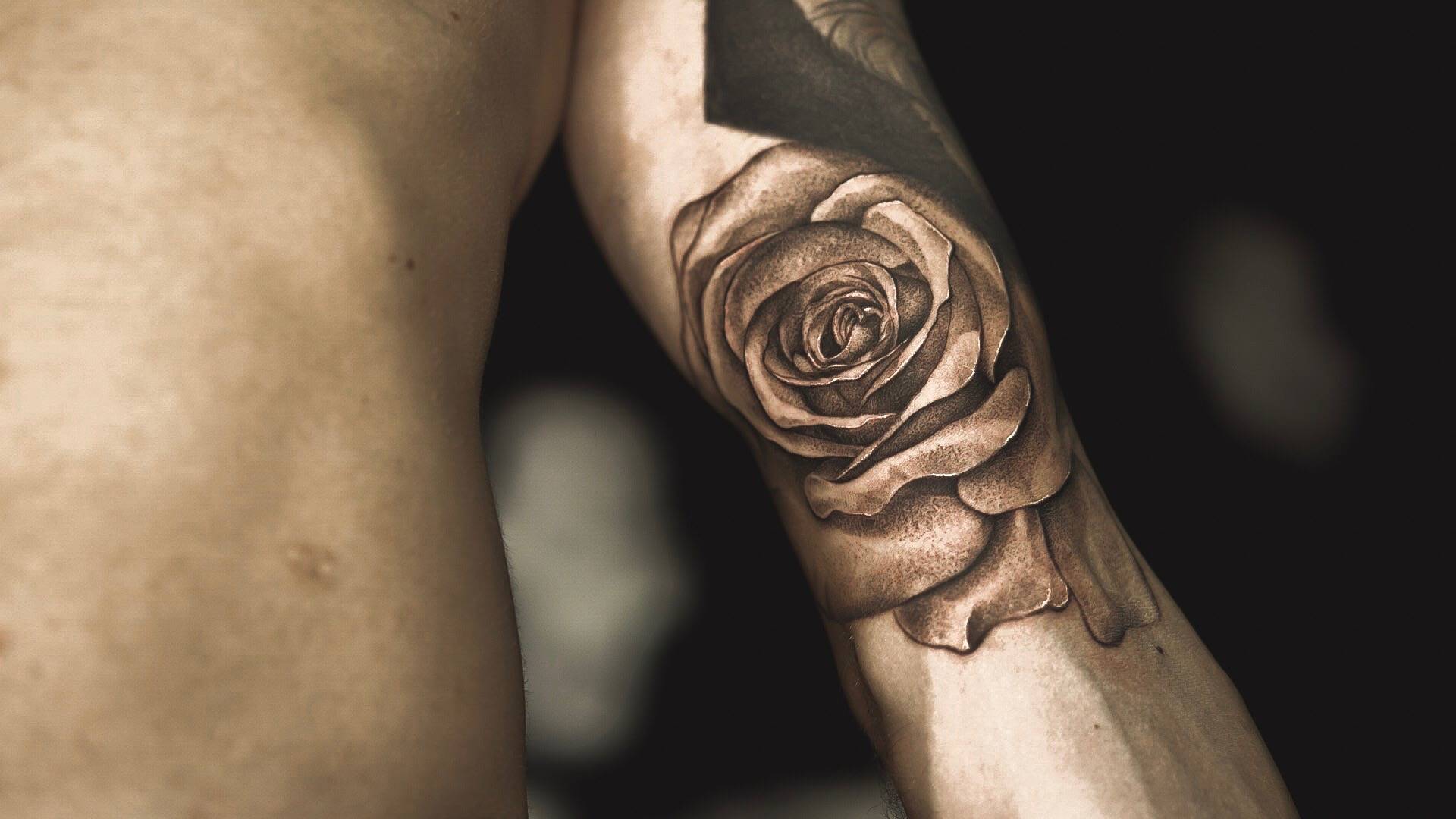
Realistic rose forearm tattoo by @spbtattooart
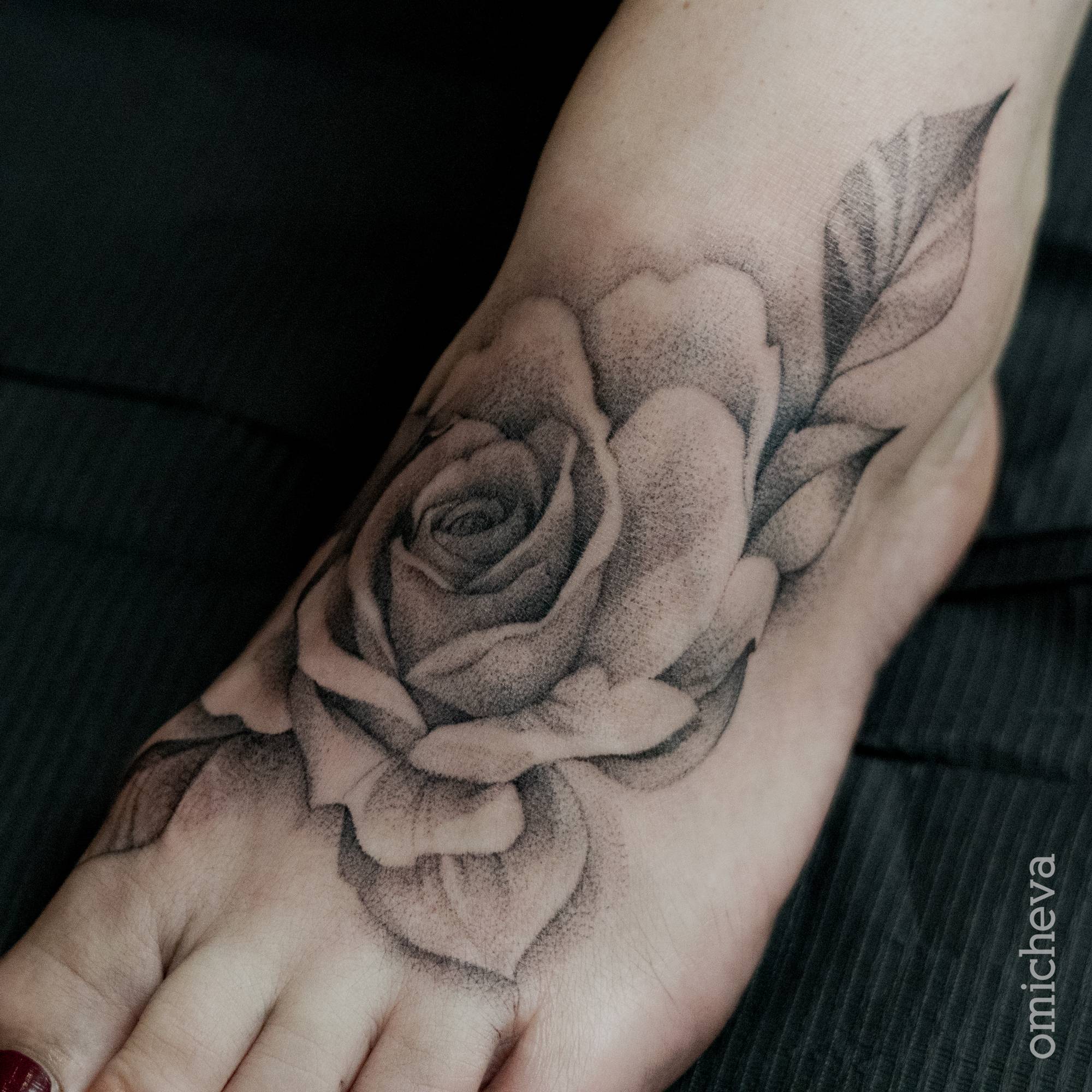
Dotwork rose tattoo with leaf by @omicheva
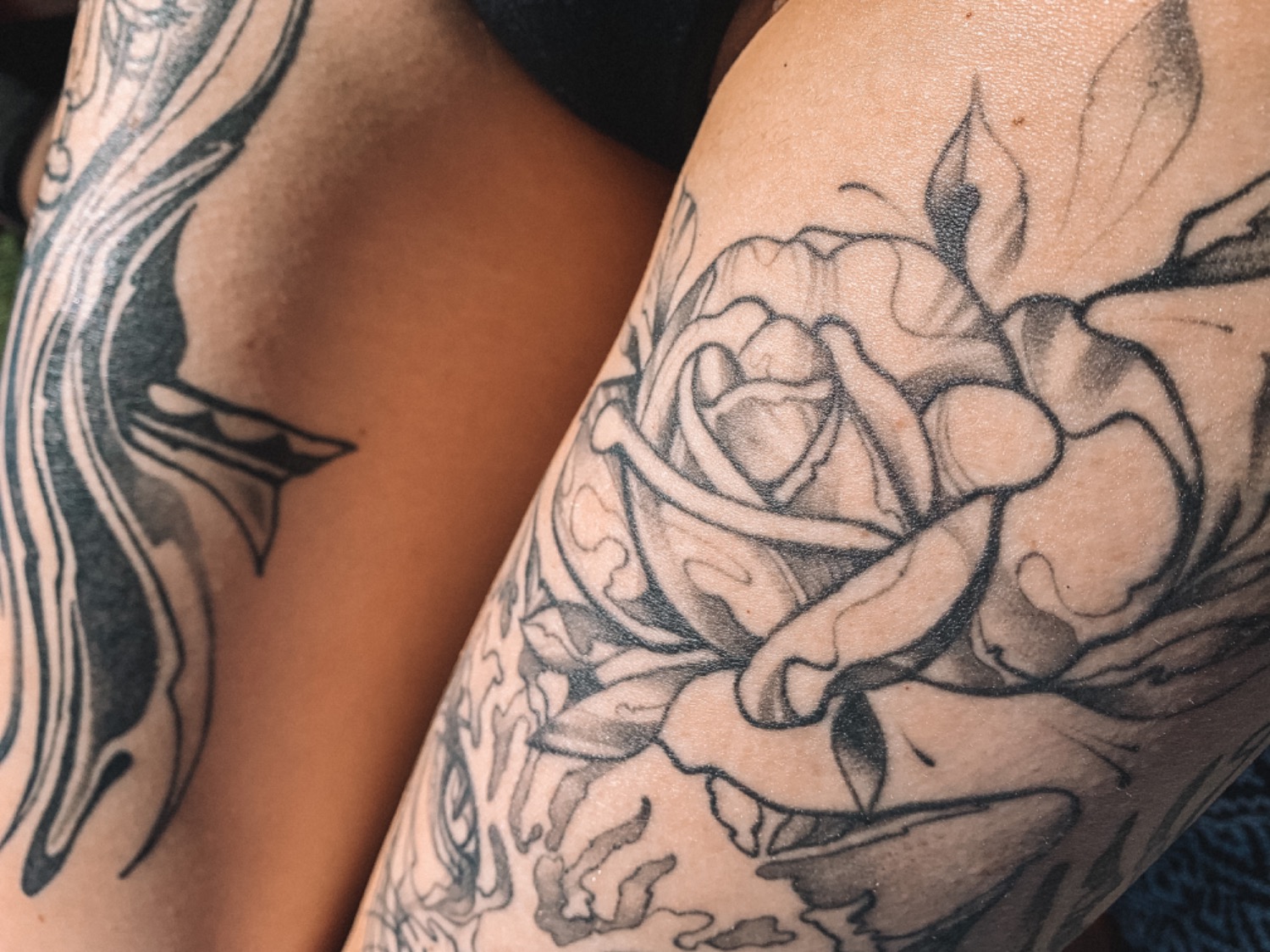
Black-and-grey rose forearm tattoo by @Alena21_12fares
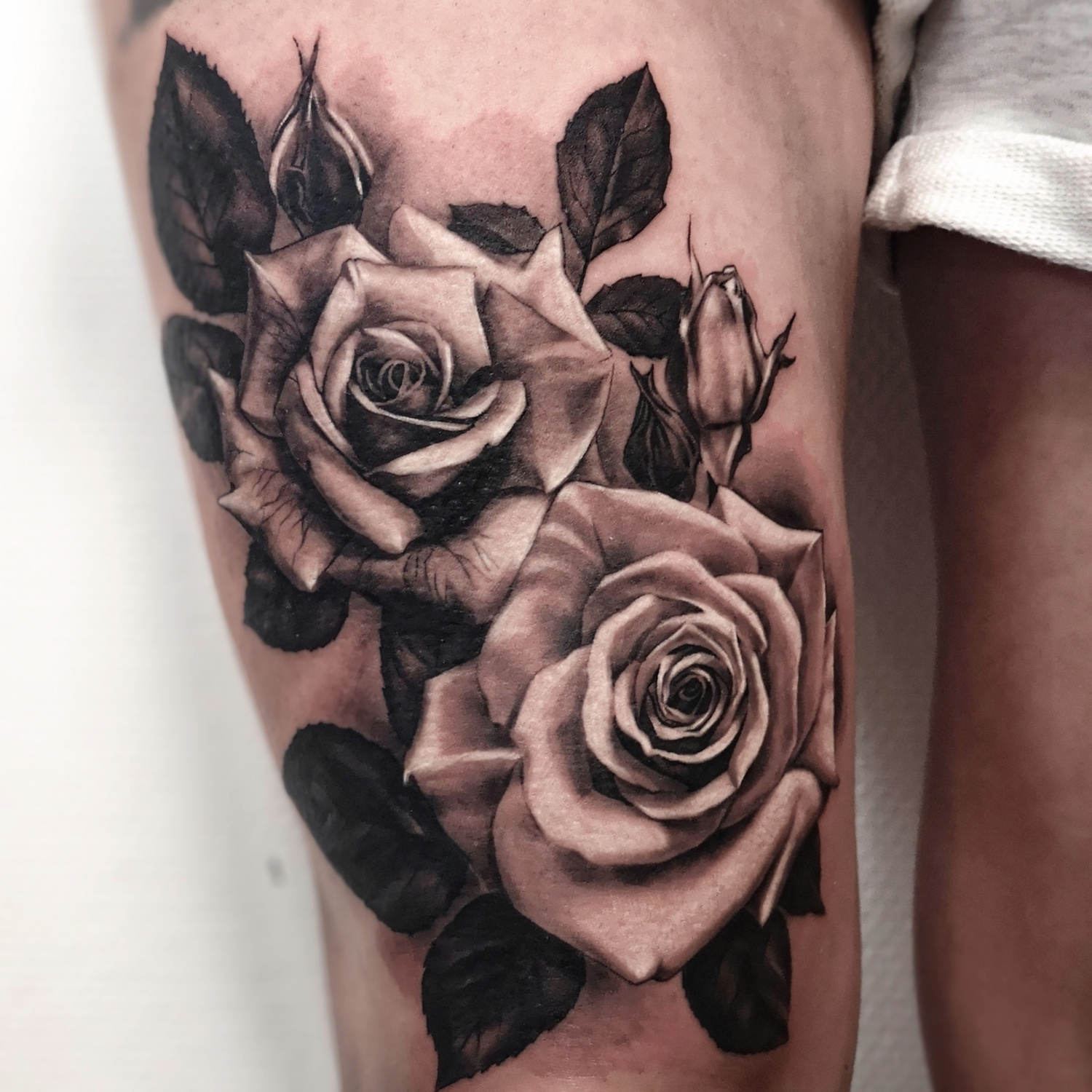
Two roses tattoo, bloom and bud, by @dark_eve_black
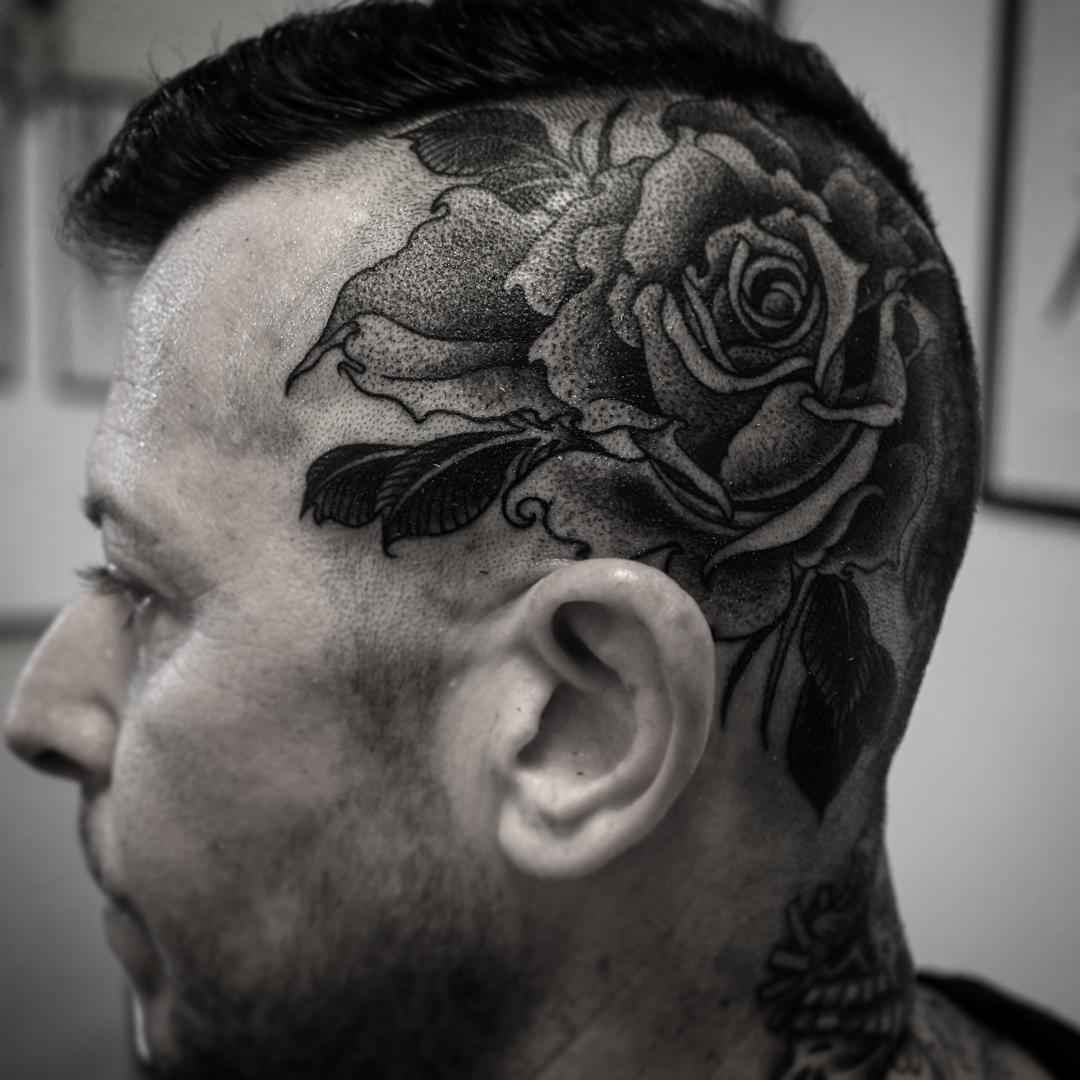
Dotwork rose scalp tattoo by @alexandergrim
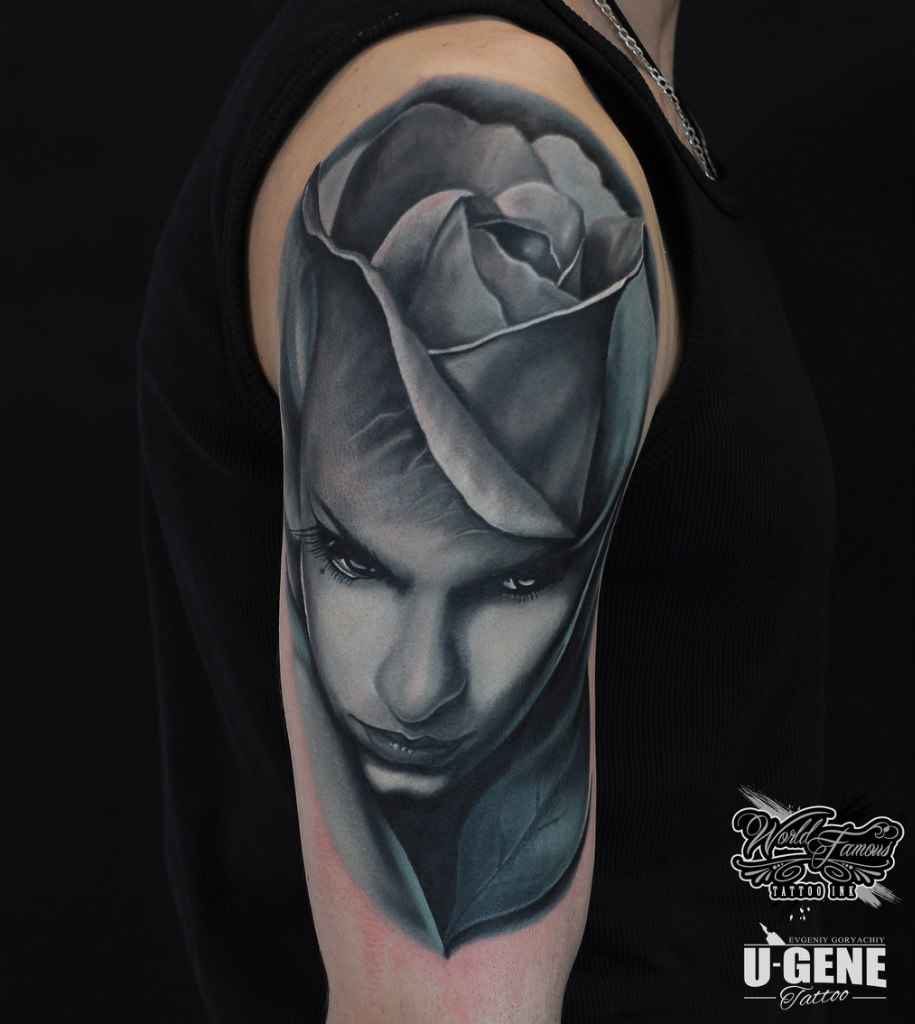
Woman's face and rose black-grey tattoo by @u_genetattoo
Cultural Roots: The Rose Across Civilizations
The rose didn't become the most tattooed flower by accident. Its symbolic power has been built across thousands of years and dozens of cultures. Understanding those roots doesn't just make for interesting reading, it can genuinely deepen the meaning of the piece you're carrying on your skin.
Western Tattoo Tradition: Sailors, Soldiers, and the Old School
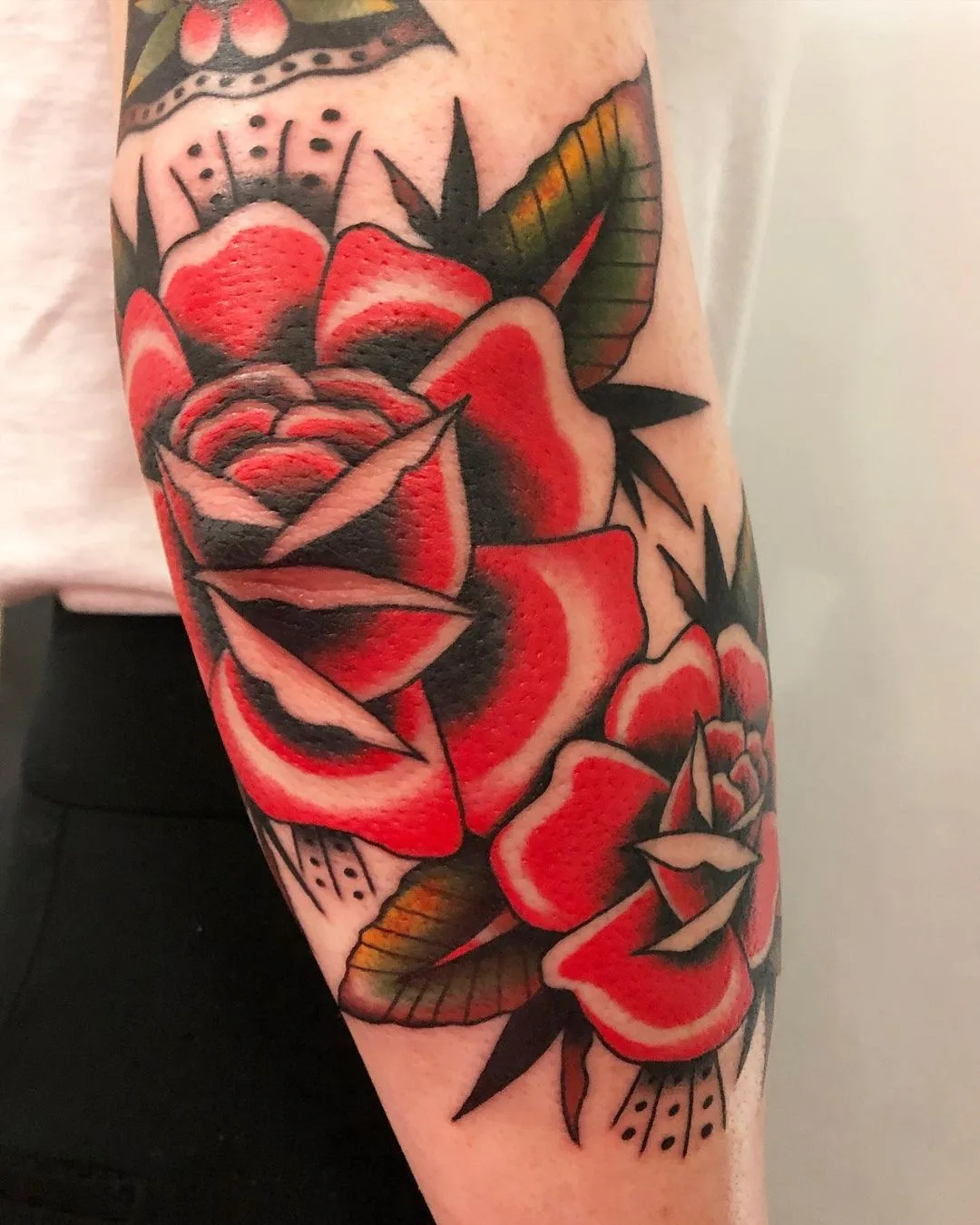
In Western tattooing, the rose has been a staple since at least the early 20th century. Sailors got rose tattoos to carry a reminder of the women, or the beauty, they'd left on shore. Soldiers in both World Wars wore roses as symbols of love and hope during brutal times. The rose became one of the foundational motifs of American Traditional tattooing, rendered in bold lines, limited color palettes, and that distinctive flat-yet-dynamic style.
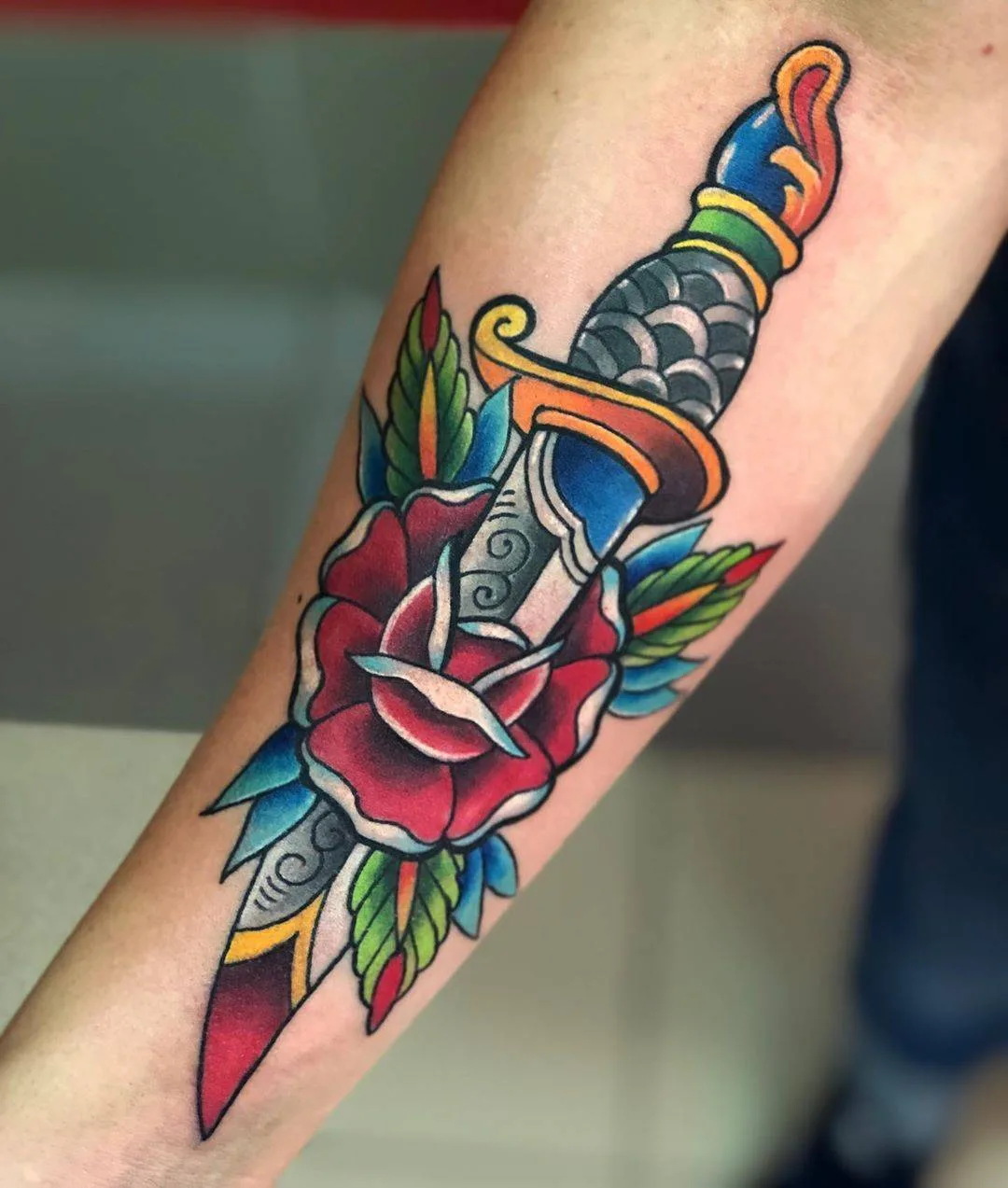
Even today, a traditional rose with a dagger through it or wrapped around a skull remains one of the most requested designs in any street shop. These pairings aren't random: the dagger-and-rose represents the pain inherent in love, while the skull-and-rose captures the coexistence of death and beauty.
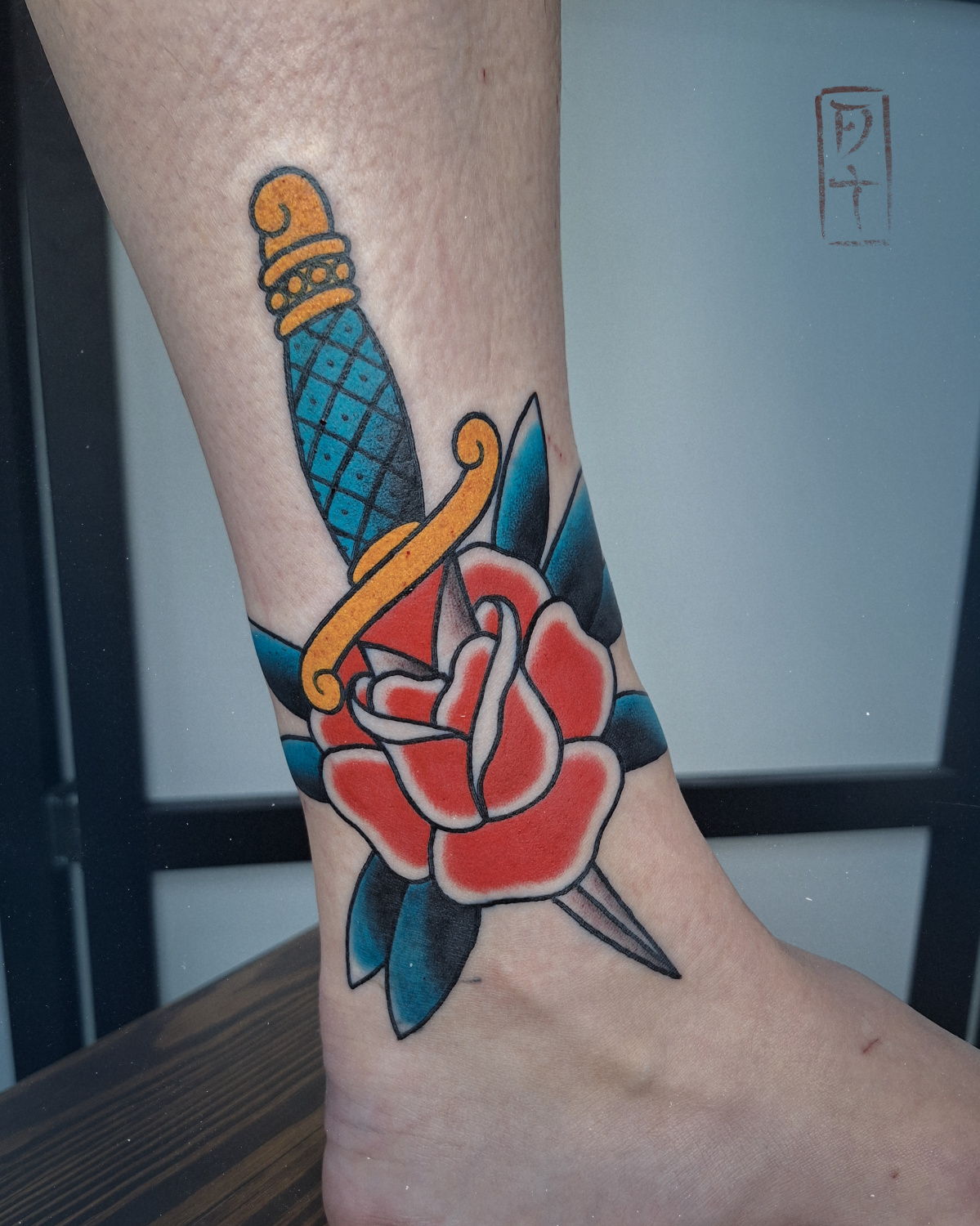
Traditional rose-and-dagger tattoo by @romadoberman
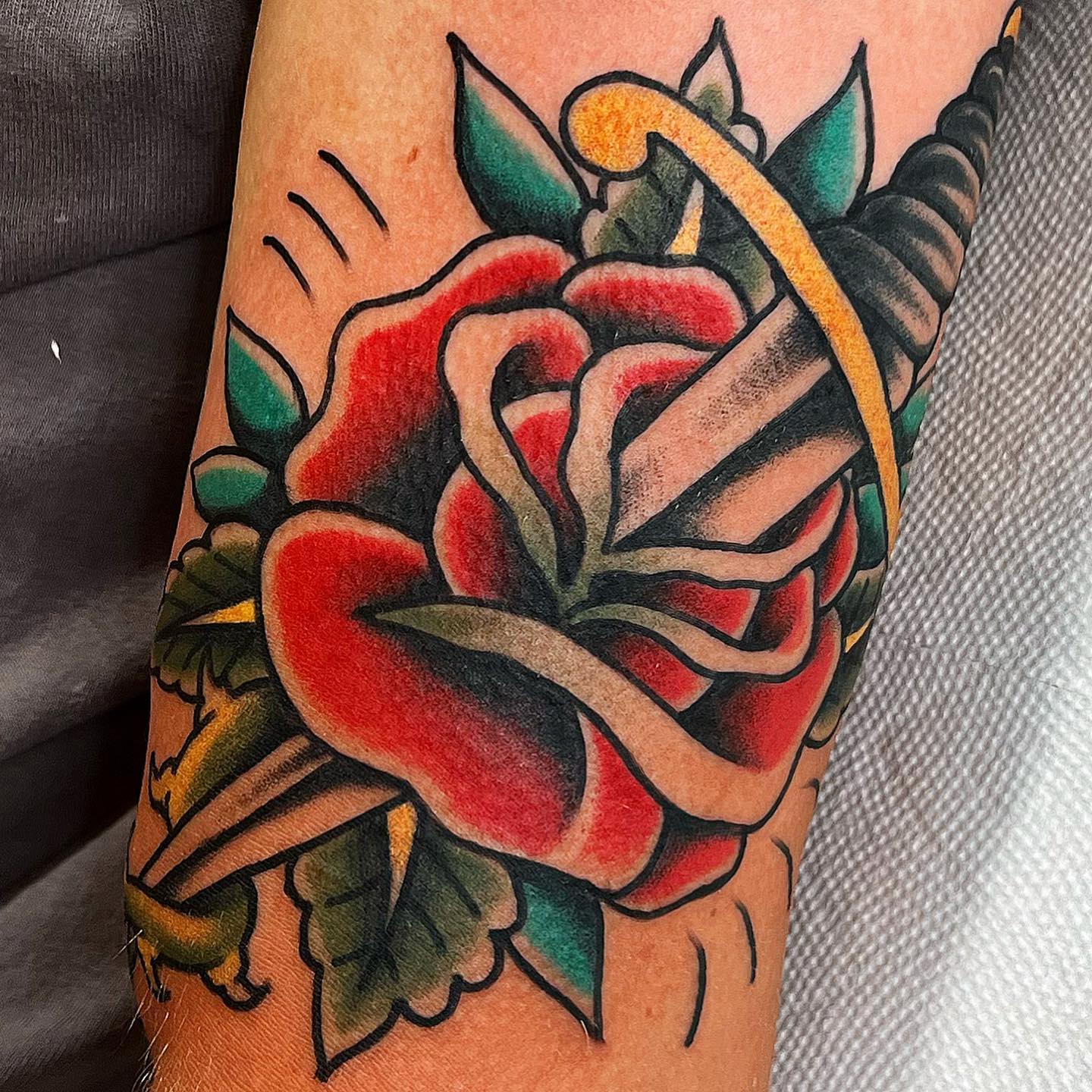
Rose-and-dagger tattoo in bold colour by @ryanmillertattoo
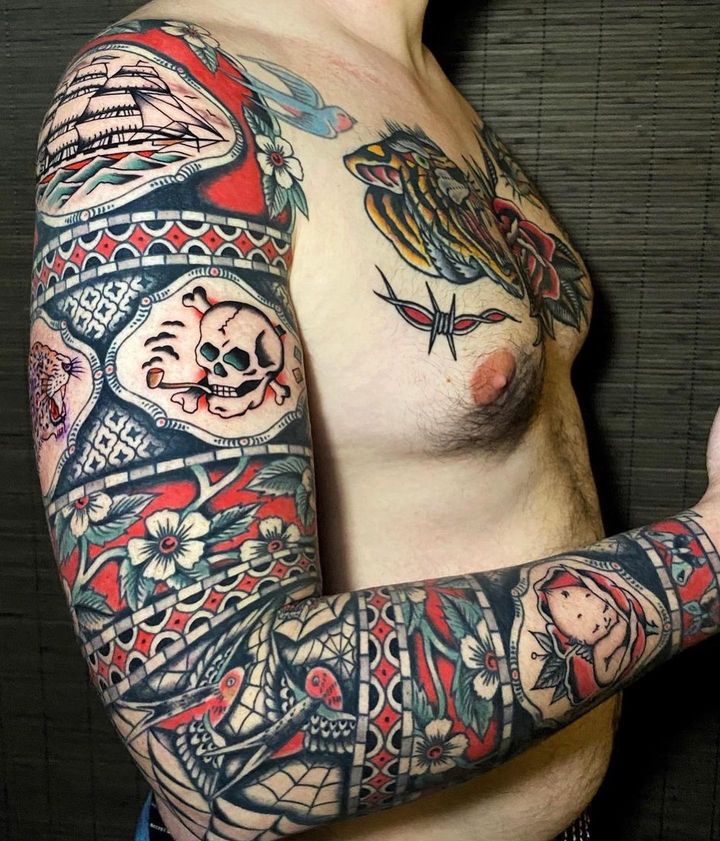
Full sleeve tattoo with skull, ship, florals by @joe_tartarotti
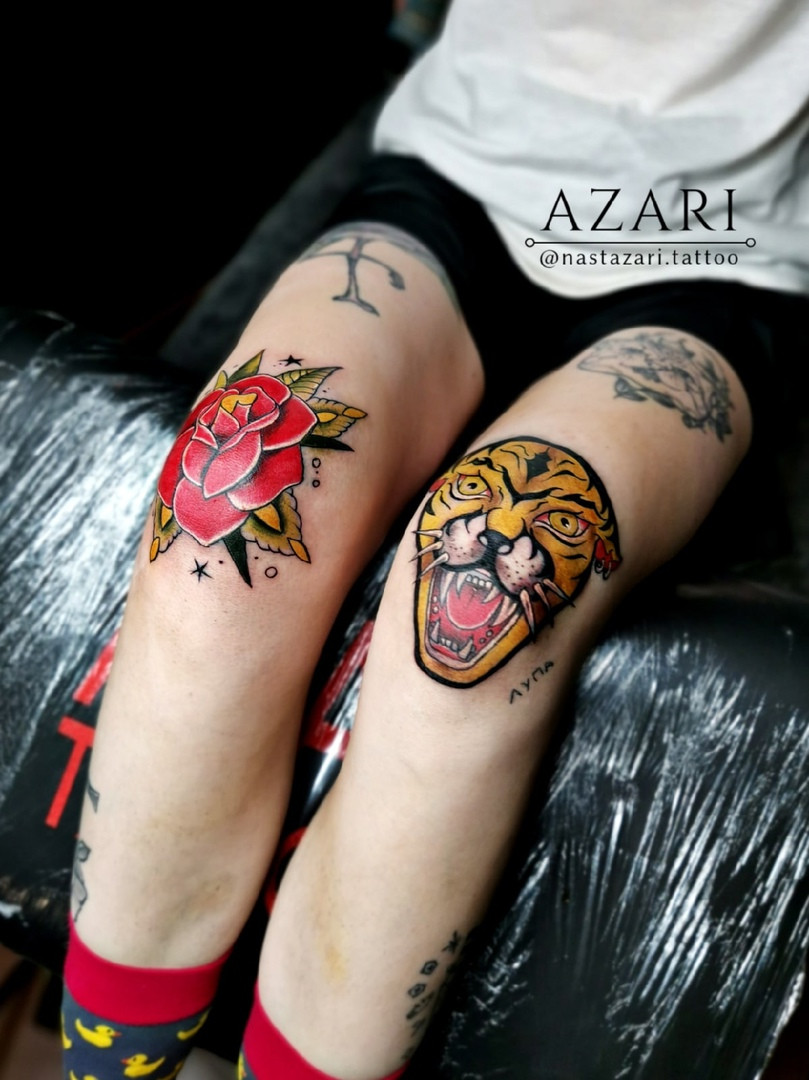
Rose and tiger head tattoo by @nastazari
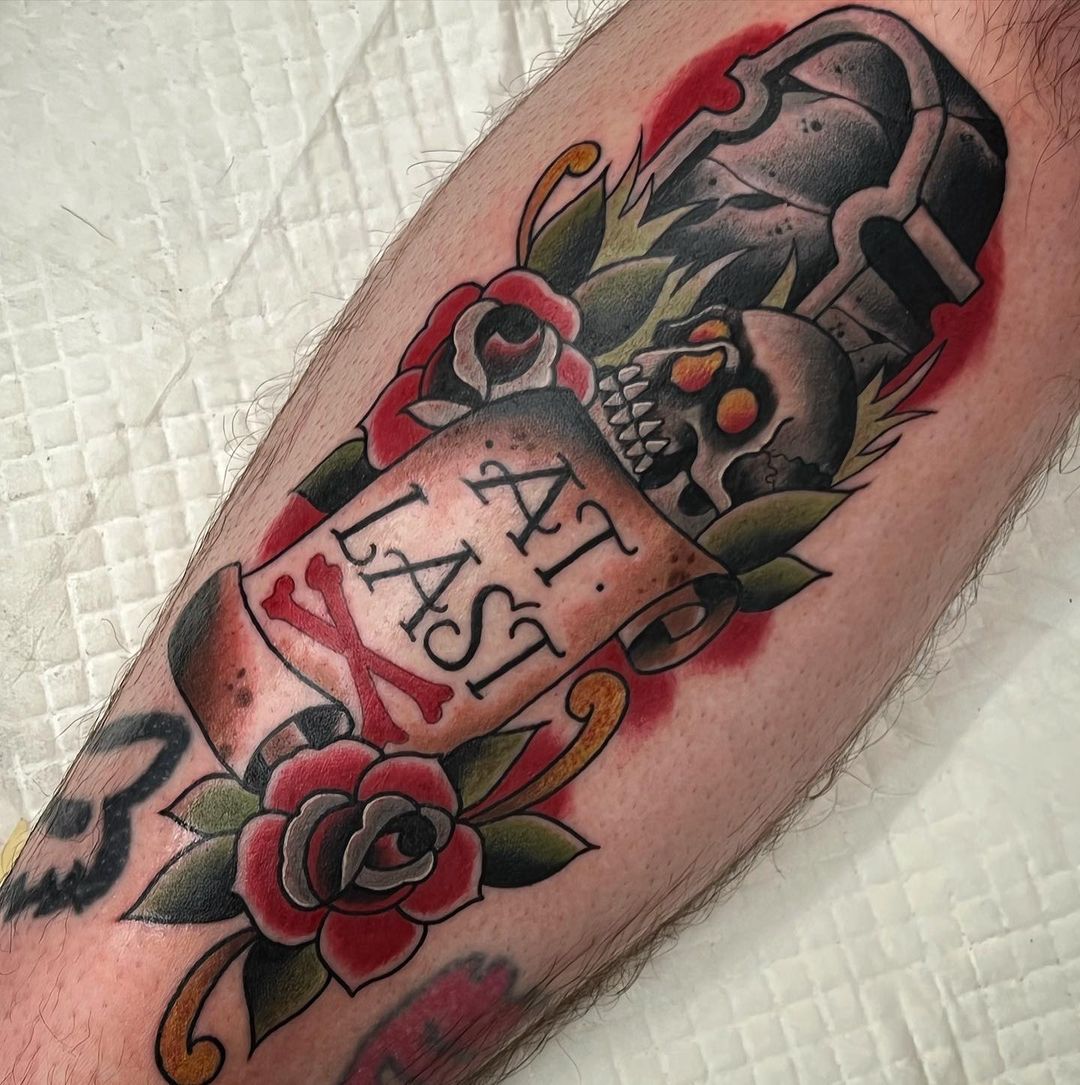
Skull, tombstone, and roses tattoo by @demonkiller1
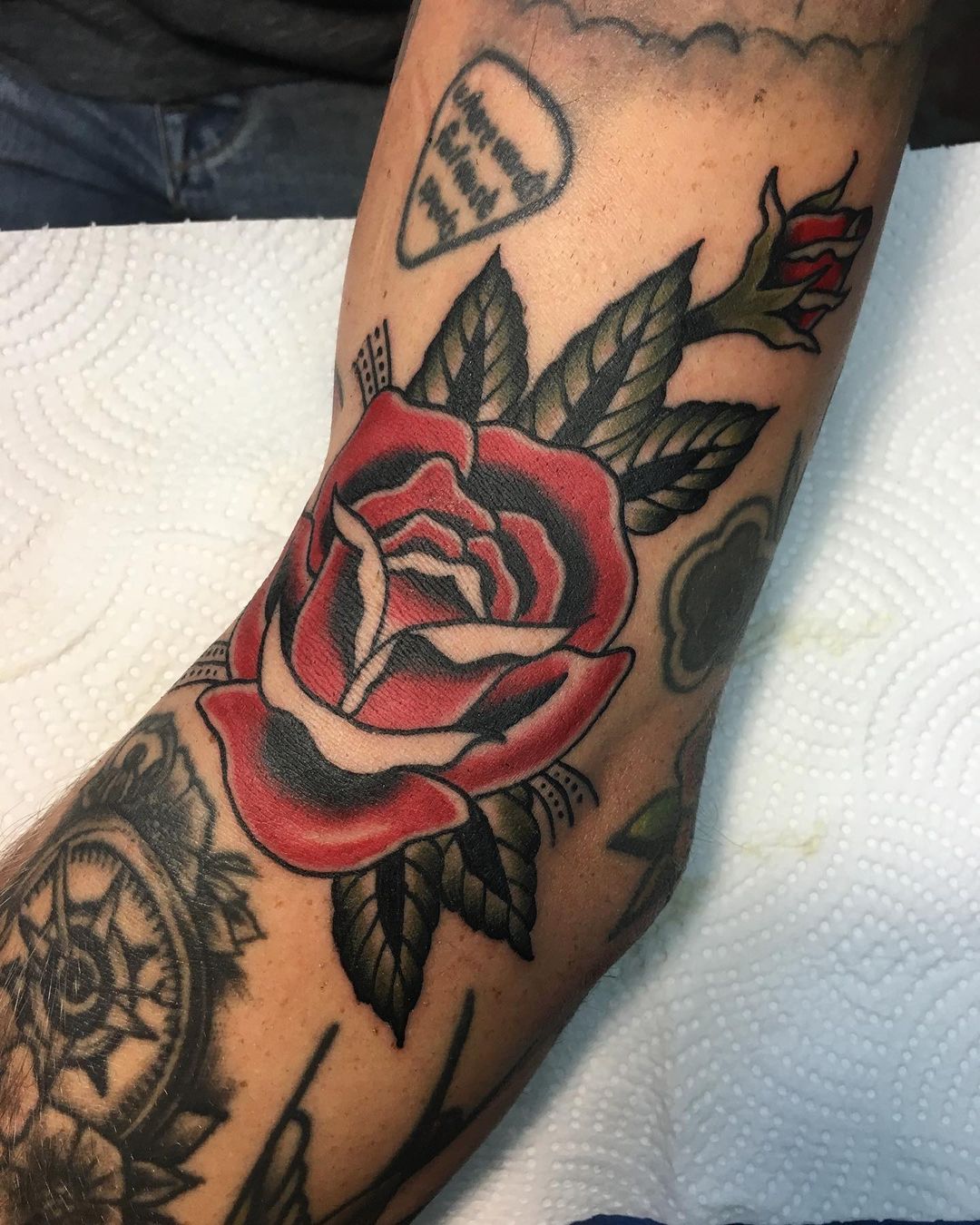
Traditional red rose tattoo by @electrictildeath
Christianity and Religious Symbolism
In Christian iconography, the rose holds deep significance. The five petals of the wild rose were said to represent the five wounds of Christ. The rosary itself derives its name from the Latin "rosarium", rose garden. Throughout medieval and Renaissance art, the Virgin Mary was frequently depicted with roses, linking the flower to divine grace, purity, and maternal love.
This religious dimension still drives many tattoo choices. A rose with a cross, a rosary wrapped around a stem, or a rose framed by sacred geometry, these designs carry specific devotional weight for the people who wear them.
Eastern and Middle Eastern Connections
The rose isn't exclusively Western territory. In Sufi poetry, particularly the works of Rumi and Hafiz, the rose represents the divine beloved and the soul's longing for union with God. In Persian culture, the rose and the nightingale form one of literature's most enduring metaphors for love and longing.
In parts of East Asia, while flowers like the cherry blossom and peony tend to dominate tattoo traditions, the rose has gained significant ground as a cross-cultural symbol, particularly in contemporary Korean and Chinese tattoo scenes, where it blends with local aesthetic sensibilities to create something new.
Design Variations and What They Signal
A rose is a rose is a rose, except when it isn't. The specific design choices surrounding a rose tattoo dramatically shift its meaning. Here's where the insider knowledge matters.
Single Rose vs. Bouquet
A single rose tends to carry focused, personal meaning, one love, one loss, one truth. A bouquet or cluster of roses suggests abundance, fullness of life, or multiple relationships and memories woven together. Three roses specifically are sometimes used to represent the phrase "I love you," with each rose standing for one word.
Rose with Thorns vs. Without
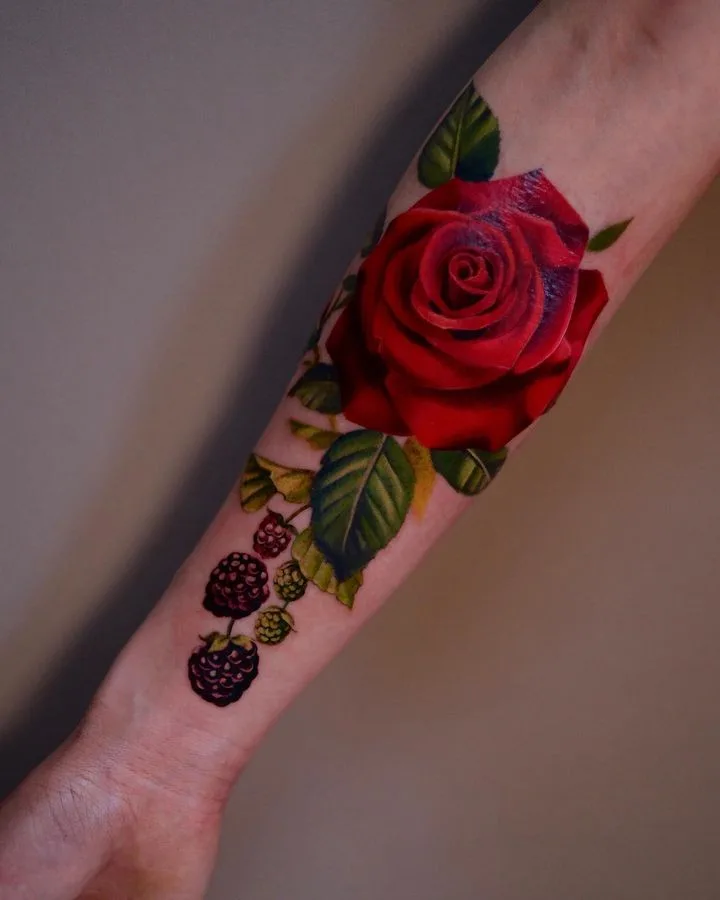
We touched on this earlier, but the choice deserves emphasis. Many clients specifically request thorns. The thorns ground the tattoo in reality. They say: I know what love costs. A thornless rose isn't naive necessarily, but it does present a more idealized vision.
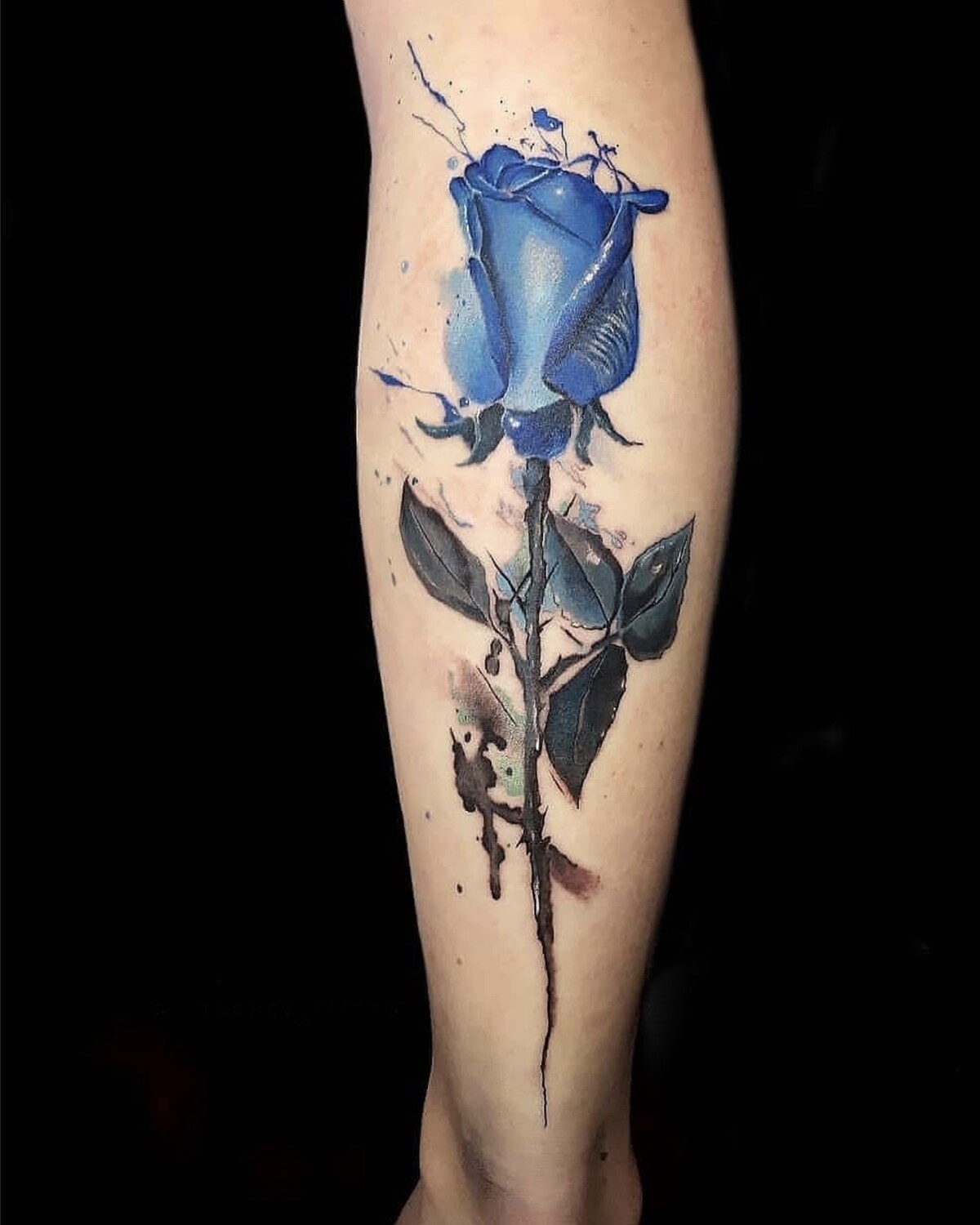
Blue watercolour rose tattoo by @vsemtatoo
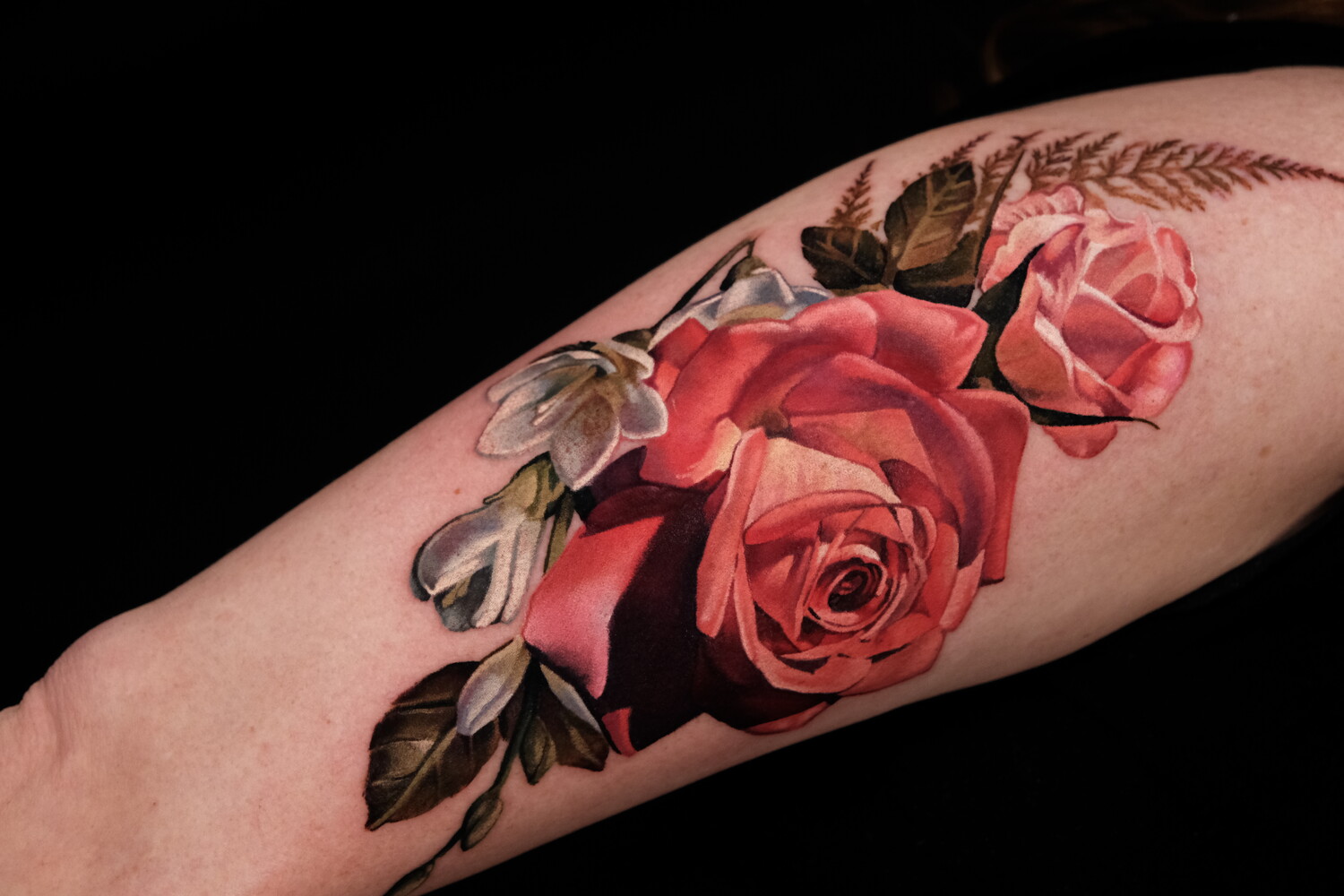
Floral bouquet tattoo in vibrant hues by @fedoseev_tattoo

Watercolour pink rose tattoo by @luiza.blackbird
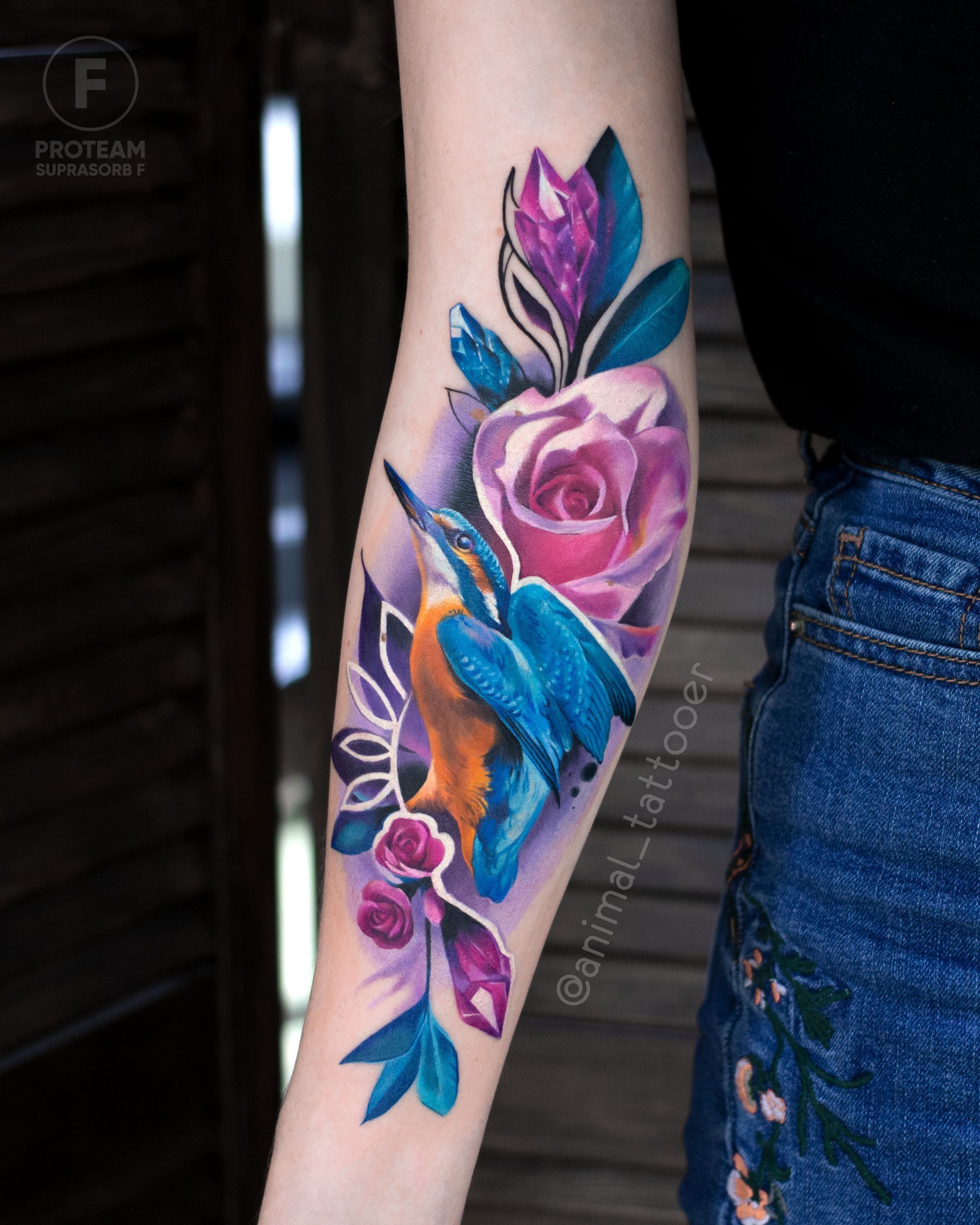
Kingfisher, roses, crystals tattoo by @natilleray_tattoo
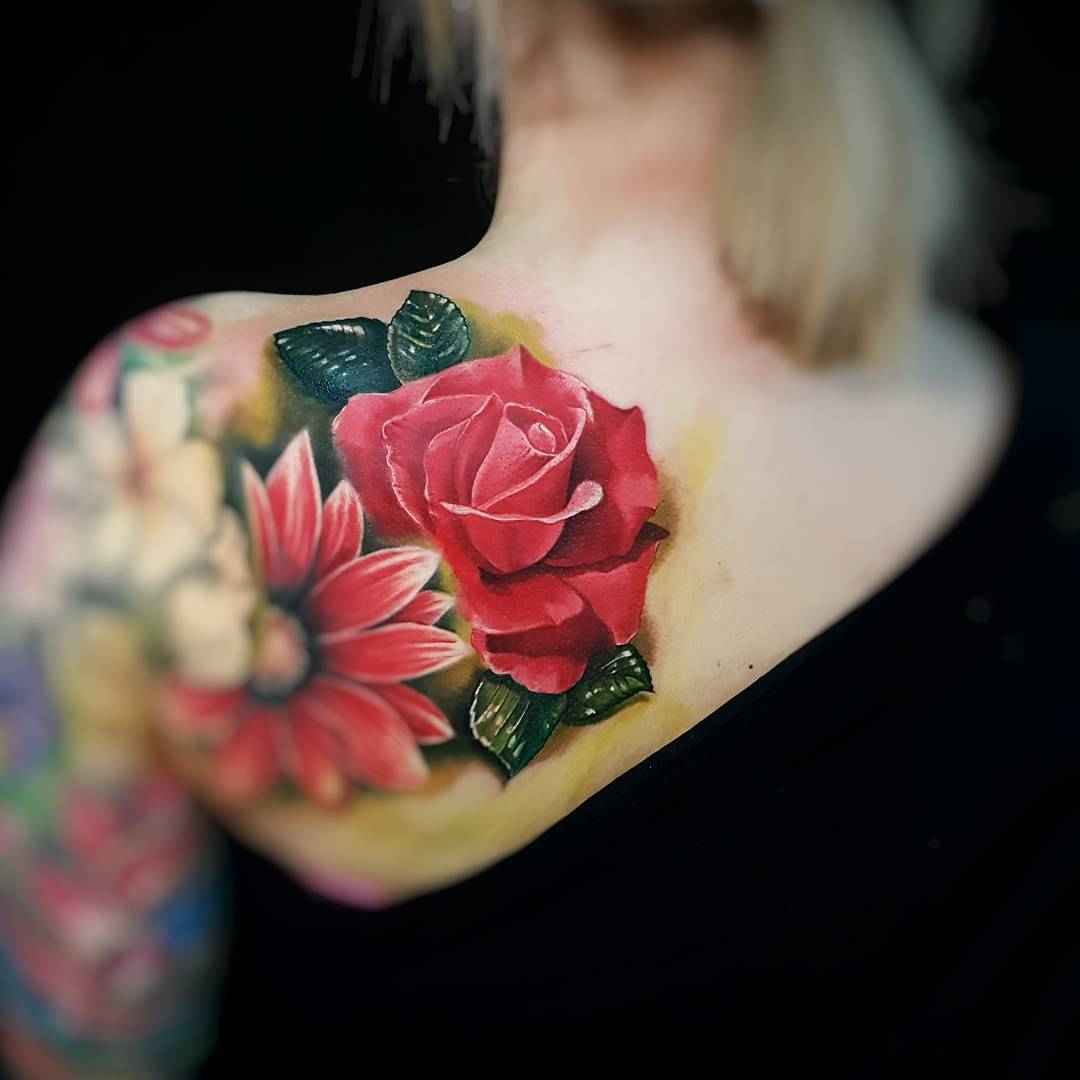
Red rose and daisy tattoo by @marzan_tattoo
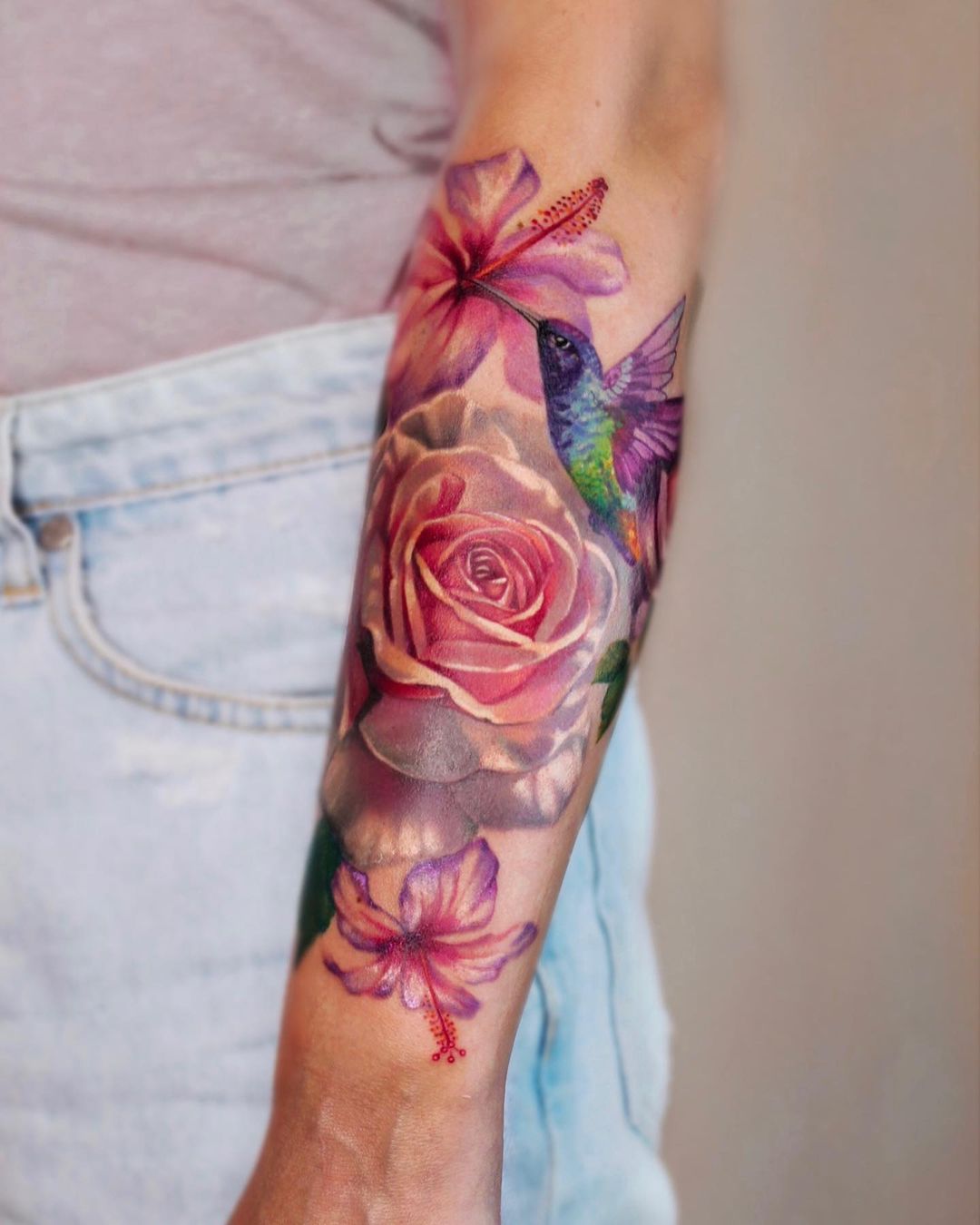
Rose, hibiscus, hummingbird tattoo by @yablokovatattoo
Pairing the Rose: Skulls, Daggers, Clocks, and More
The rose plays exceptionally well with other symbols. A rose with a clock or timepiece speaks to the fleeting nature of beauty and life. A rose growing from a skull transforms death into regeneration. A rose wrapped around a dragon tattoo creates tension between delicacy and ferocity. A compass rose, the navigational kind, blends the flower's romantic meaning with themes of guidance and journey.
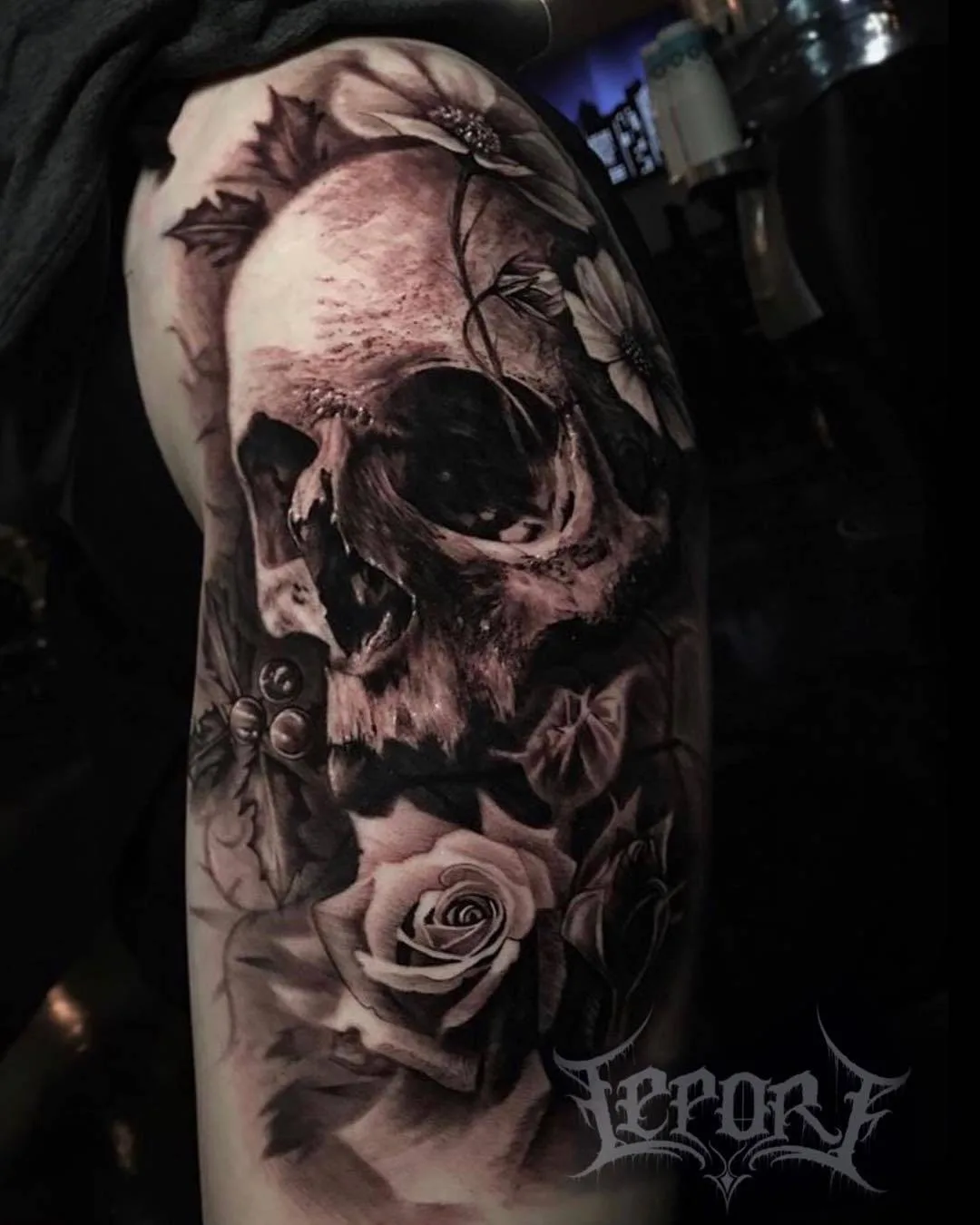
Each pairing creates a conversation between symbols. That's what makes tattoo design so endlessly interesting: it's visual storytelling with a personal dictionary.
Style Matters: Realism, Traditional, Minimalist, and Watercolor
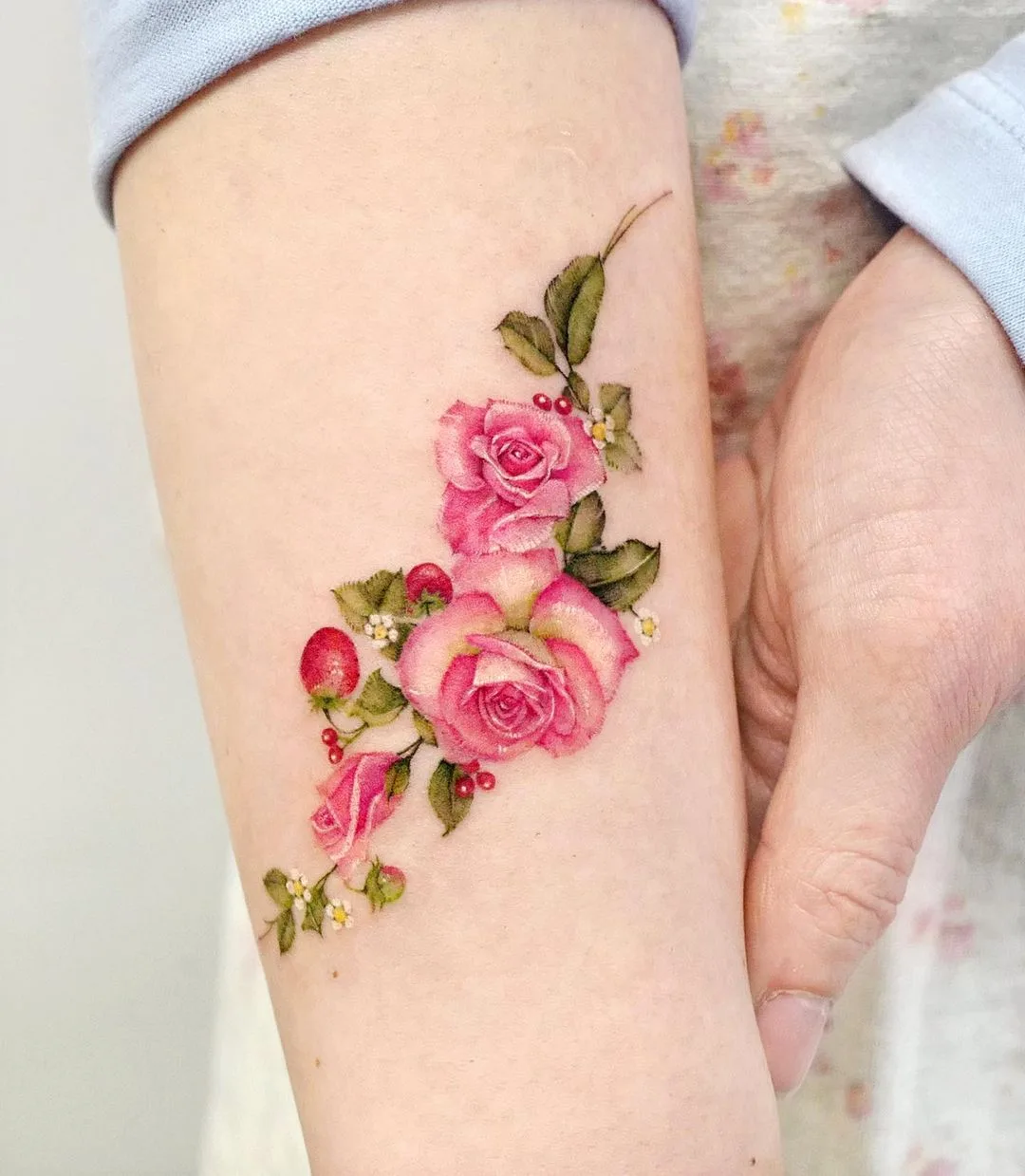
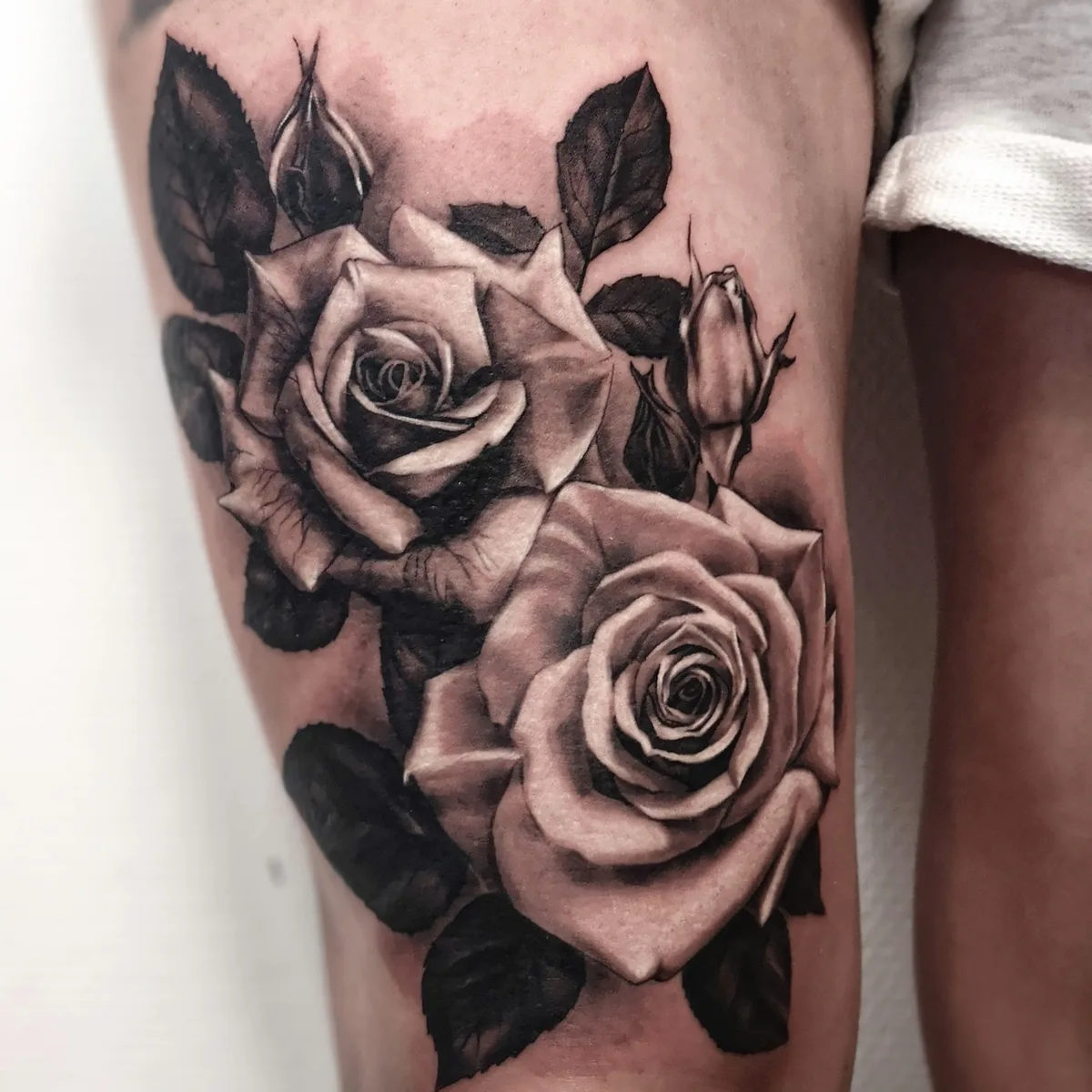
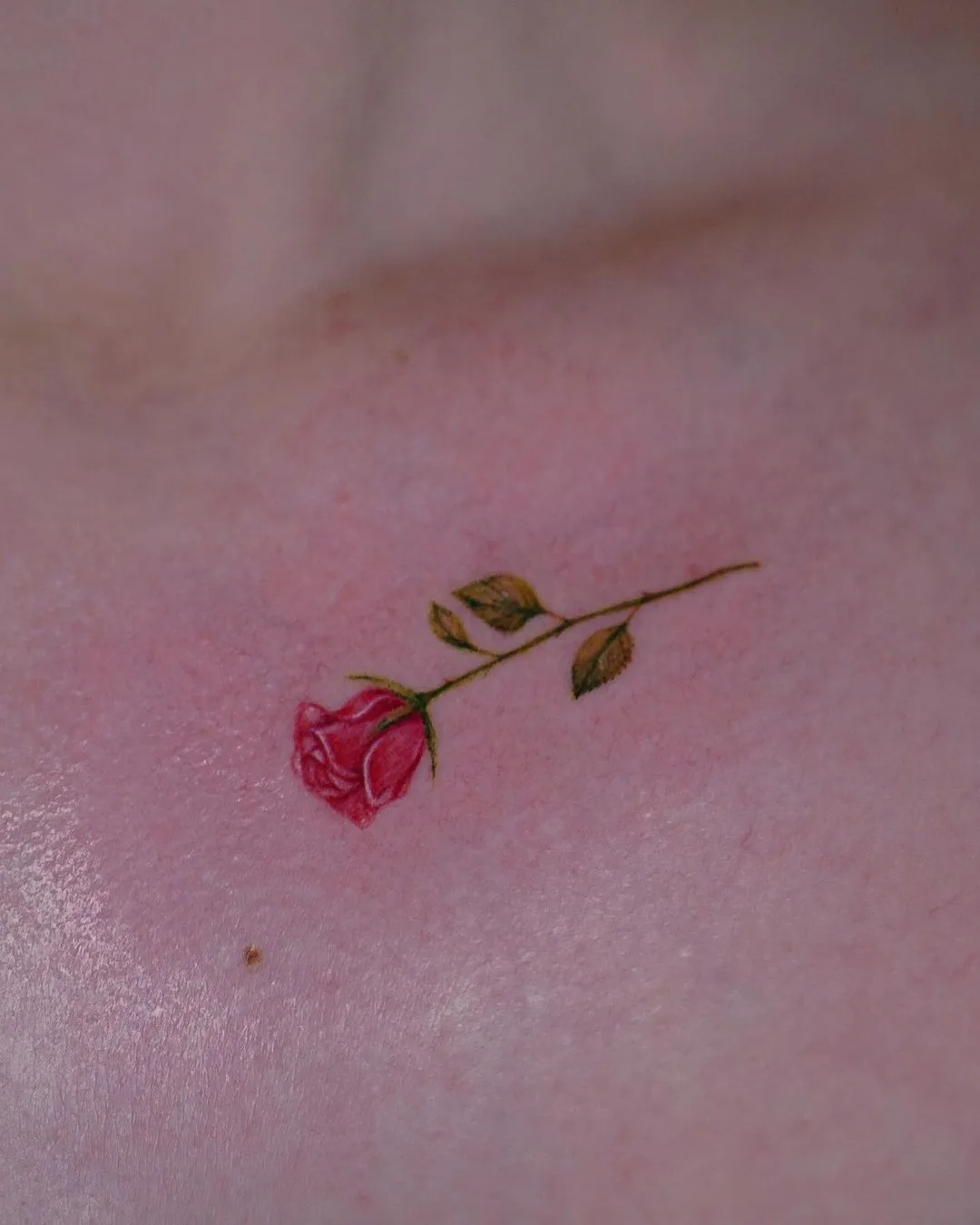
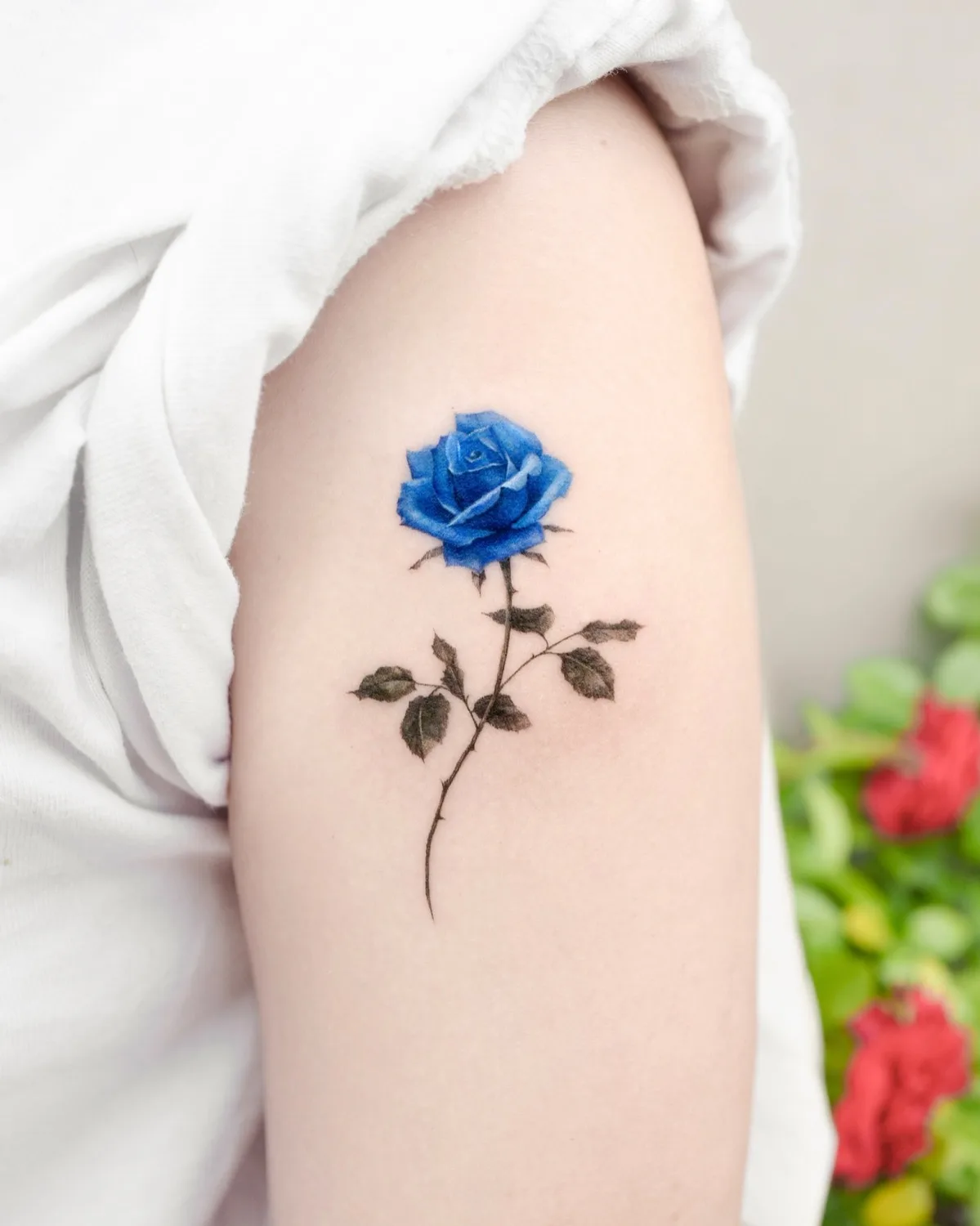
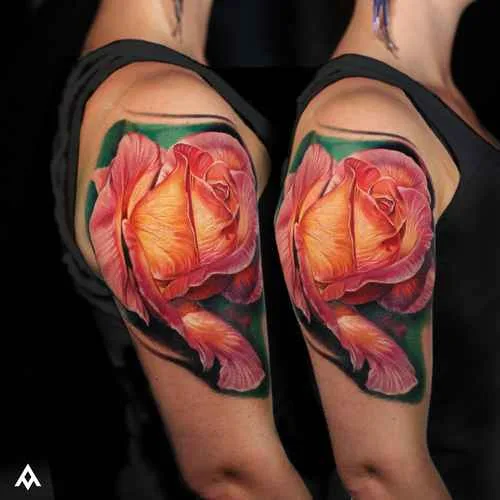
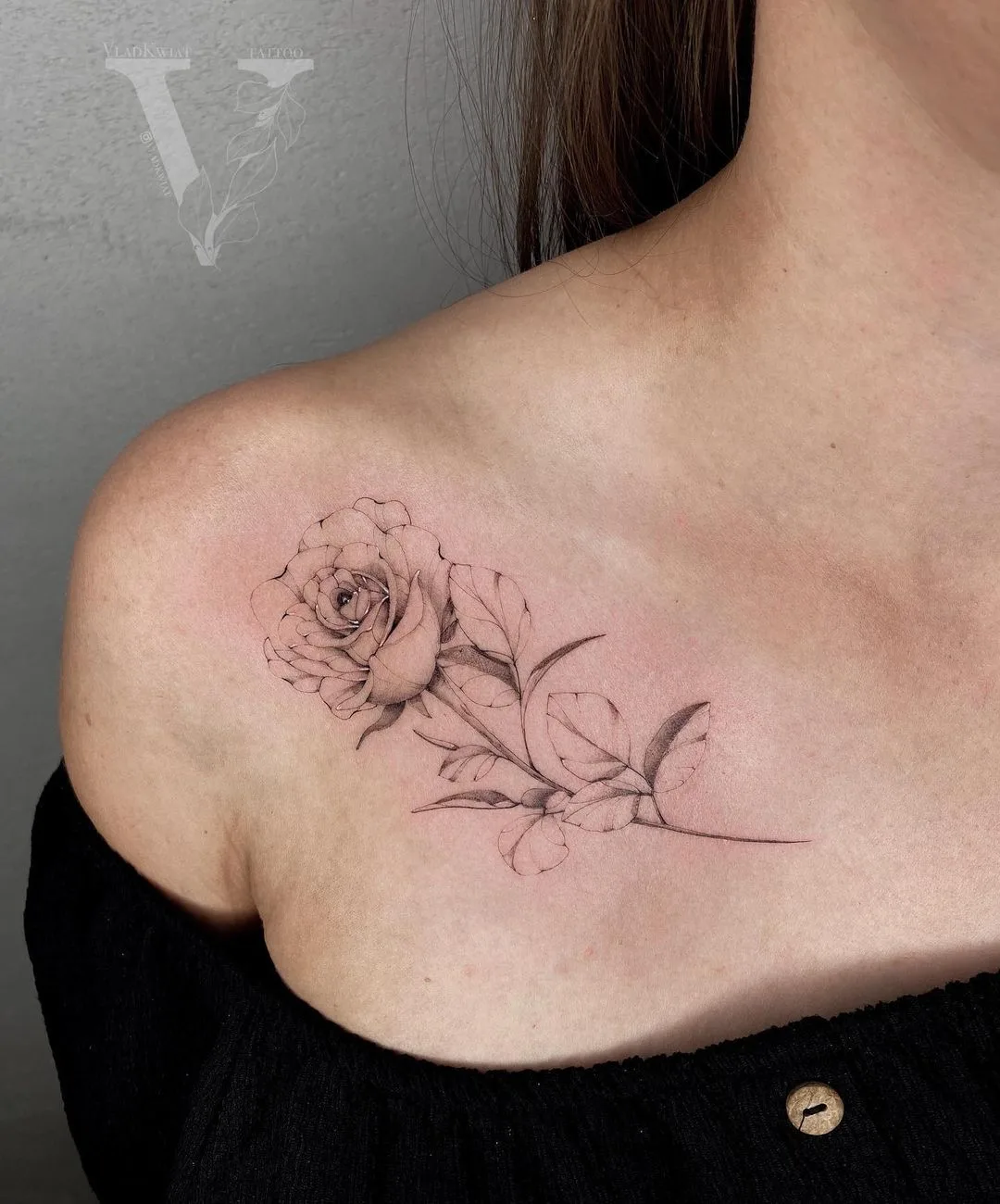
A photorealistic rose with dewdrops catching light communicates something different than a bold Traditional rose with thick outlines. Realism tends to emphasize the flower's natural beauty and transience. Traditional styling connects to tattoo history and carries a certain toughness. Minimalist and fine-line roses, hugely popular as of 2025-2026, lean toward elegance, subtlety, personal intimacy. Watercolor roses, with their loose edges and color bleeds, feel dreamlike and emotional.
The style you choose is itself a layer of meaning. It tells people not just what you value, but how you see the world.
Placement and Its Quiet Power
Where you put a rose tattoo matters more than most people realize before sitting in the chair. Placement isn't just practical, it's narrative.
A rose on the chest, near the heart, is about as direct a statement of love or devotion as you can make with ink. It's intimate, usually hidden, revealed on your terms. A forearm rose is a visible declaration, something you live with publicly every day. Hand and finger roses carry a certain boldness, they can't be hidden, and they age with character as hands do the work of living.
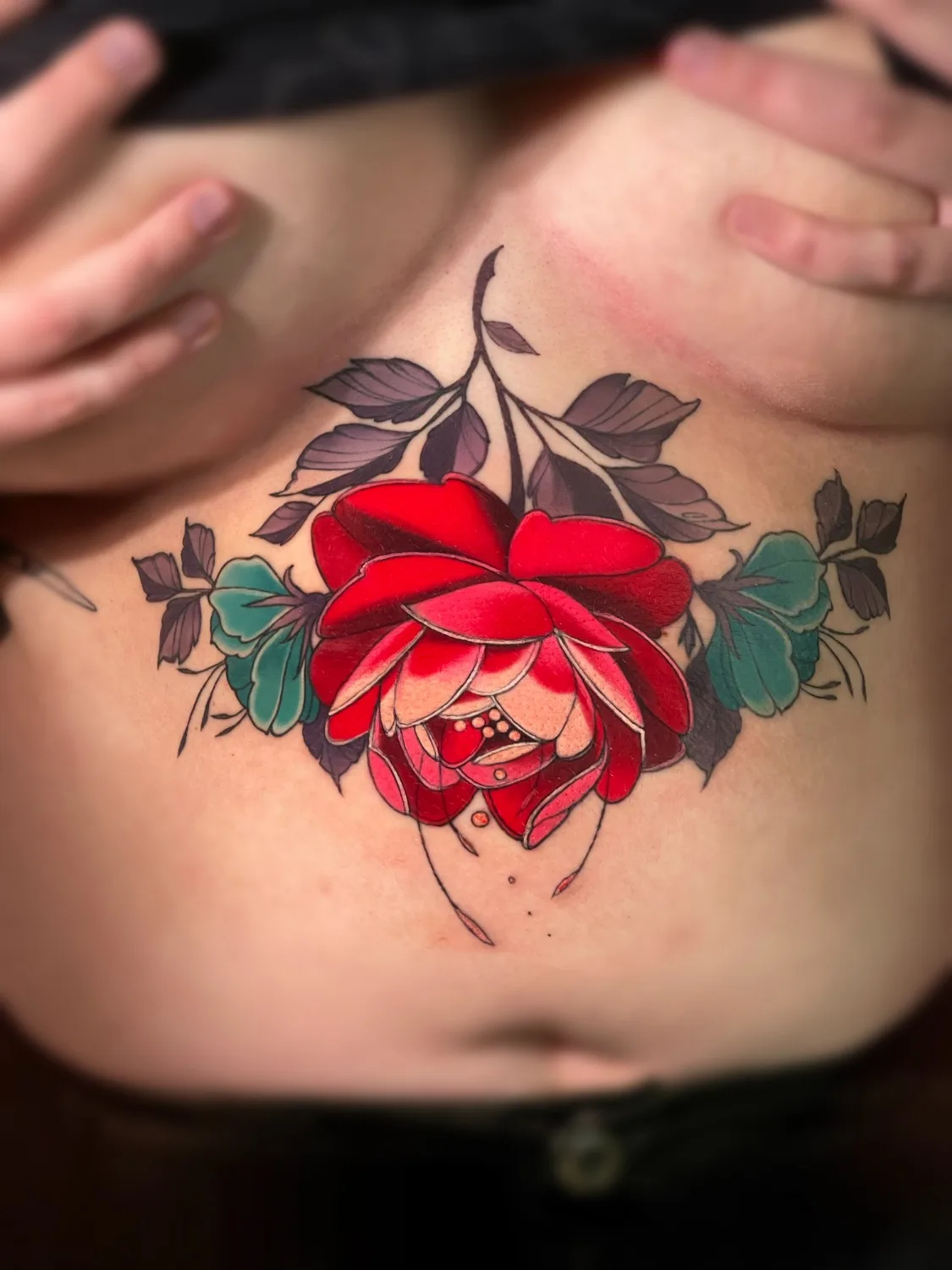
Ribs and side placements are often chosen for their privacy and for the visual drama of a rose following the body's curve. Back pieces allow for grand compositions, a full rose garden climbing the spine, thorns and all. Neck and throat roses? Those are commitment. They carry an edge of defiance that softer placements don't.
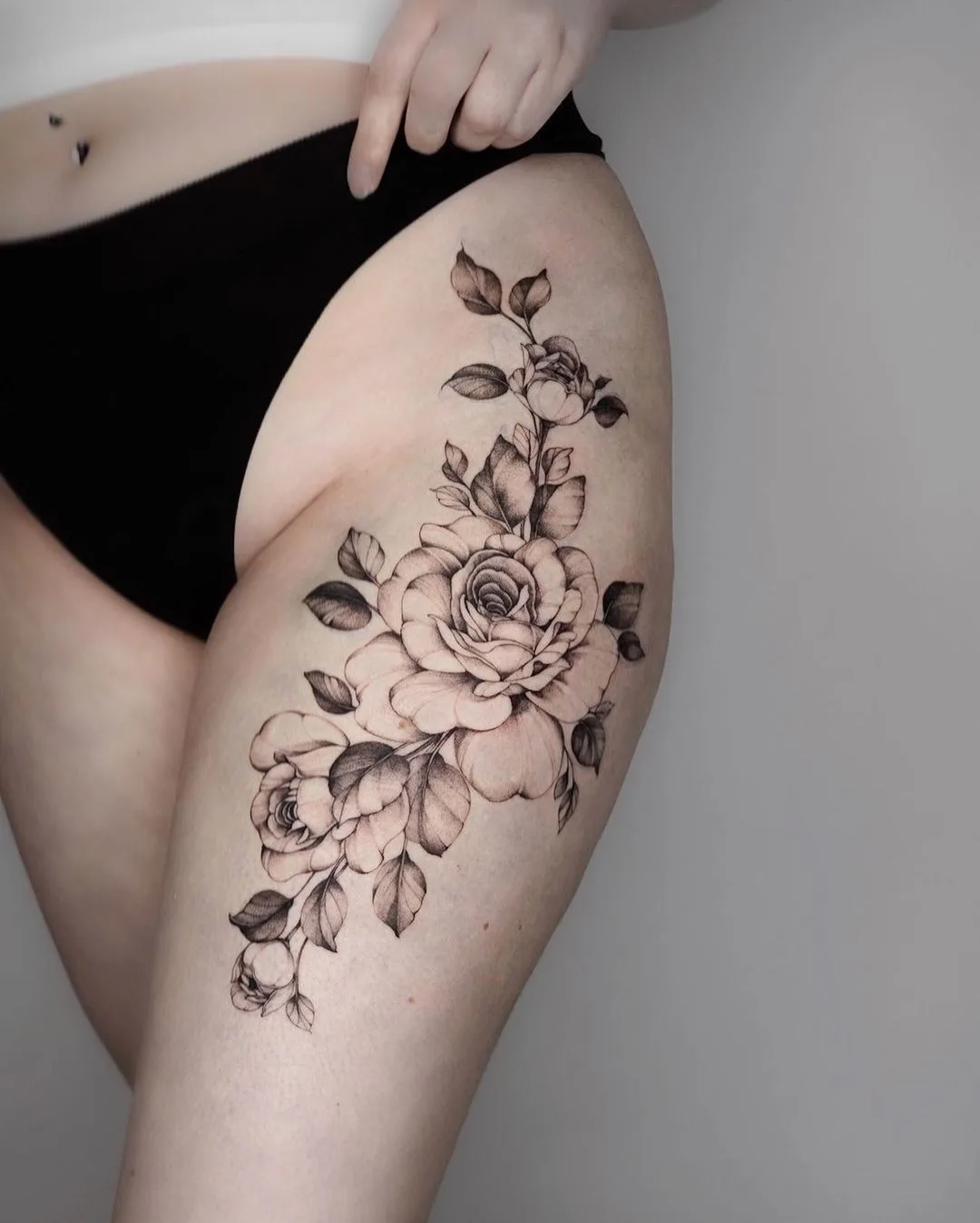
Smaller placements, behind the ear, the ankle, the wrist, tend toward personal talismans. Quiet reminders rather than public statements.
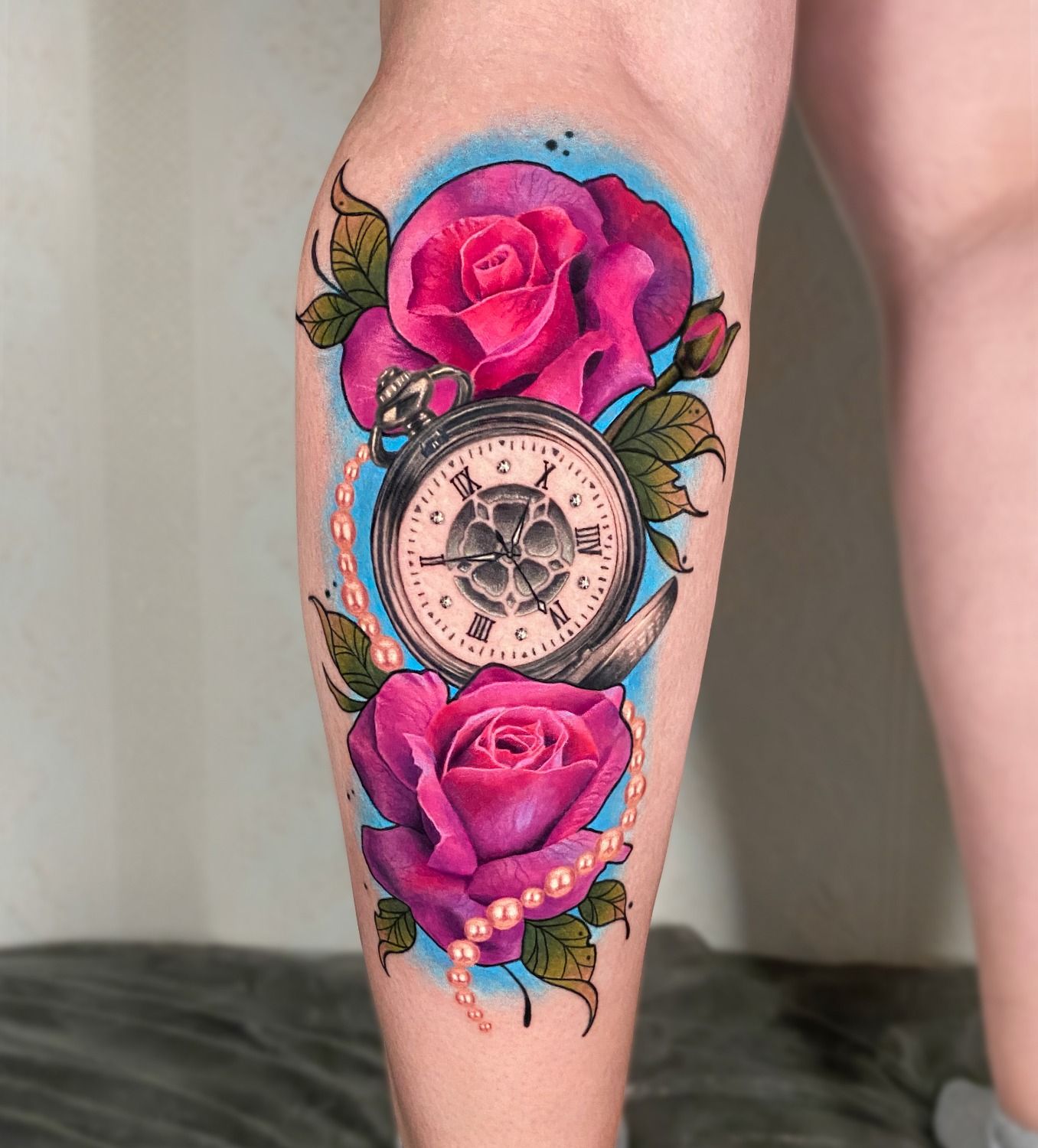
Roses, pocket watch, pearls tattoo by @crystaltattoo
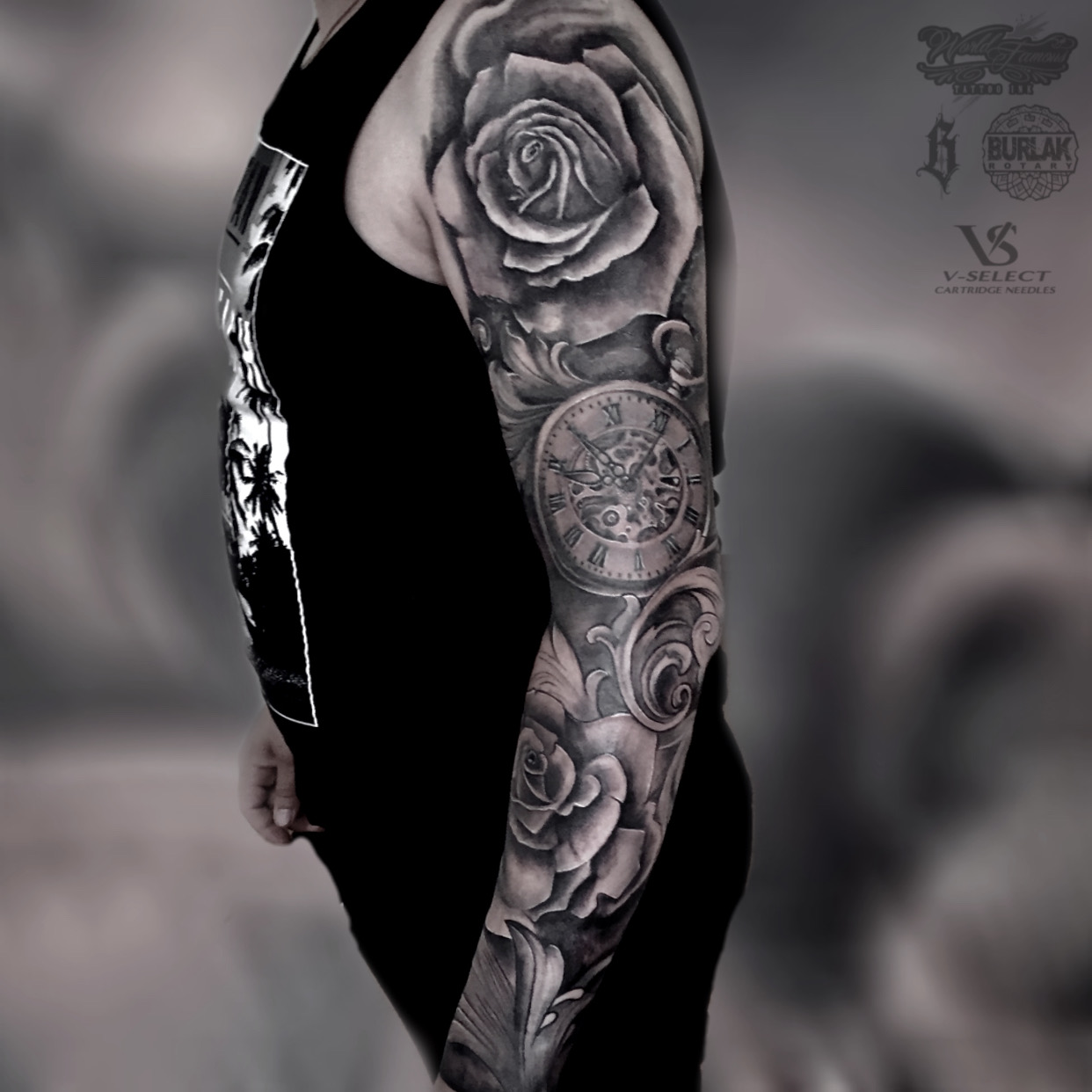
Sleeve tattoo with roses and pocket watch by @mesbor
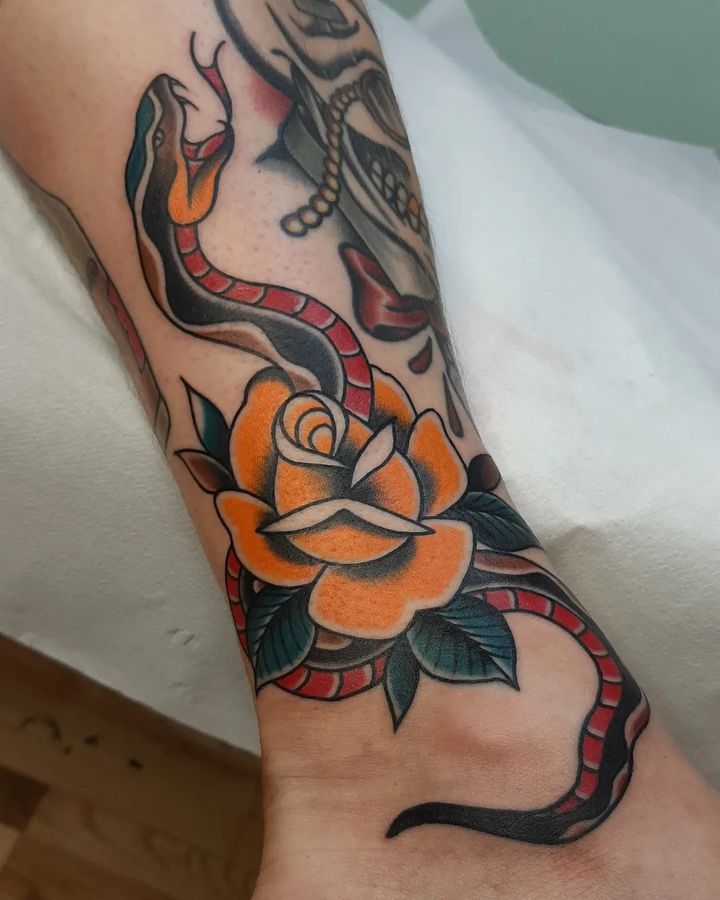
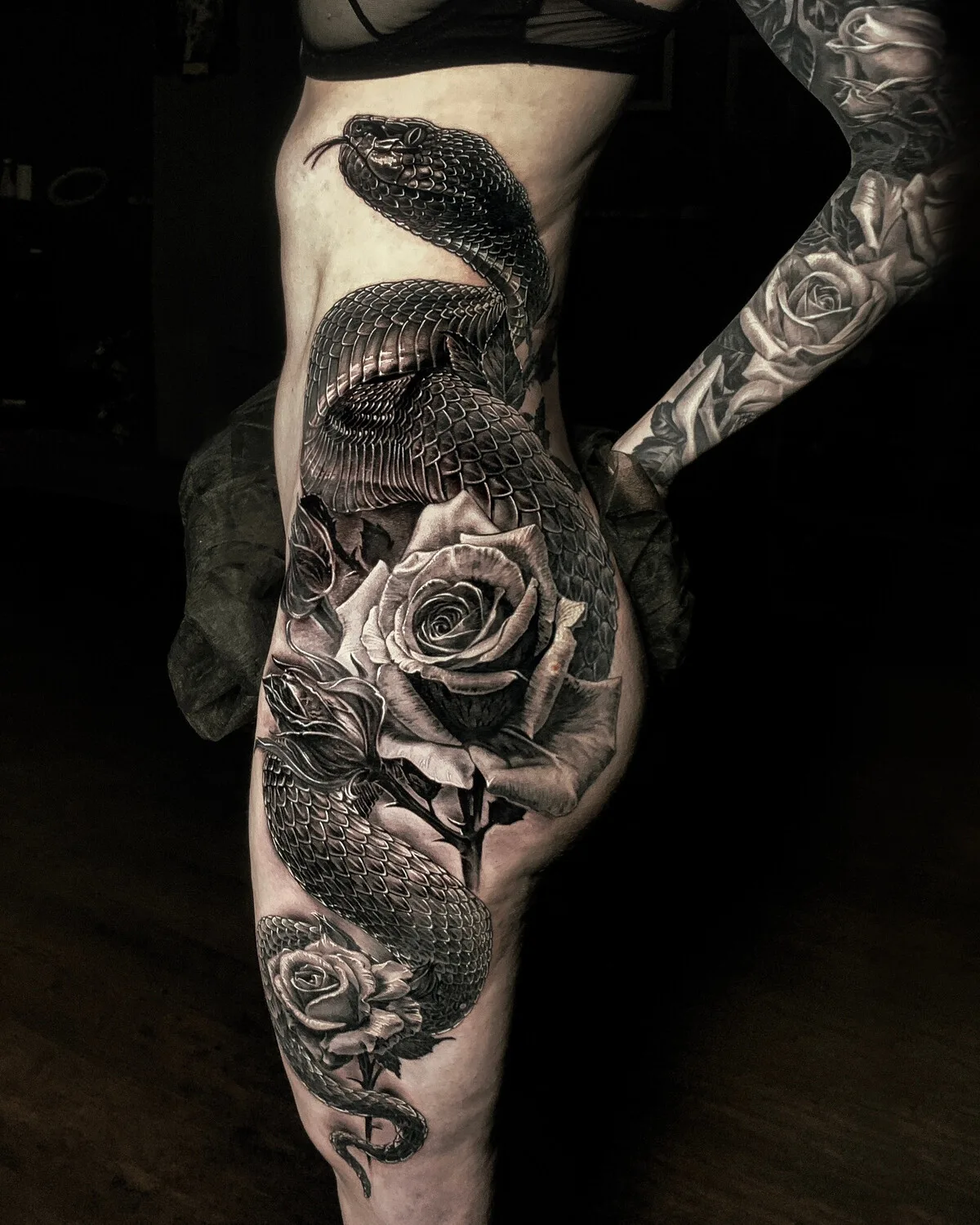
Traditional snake and rose tattoo by @teeth_grinder
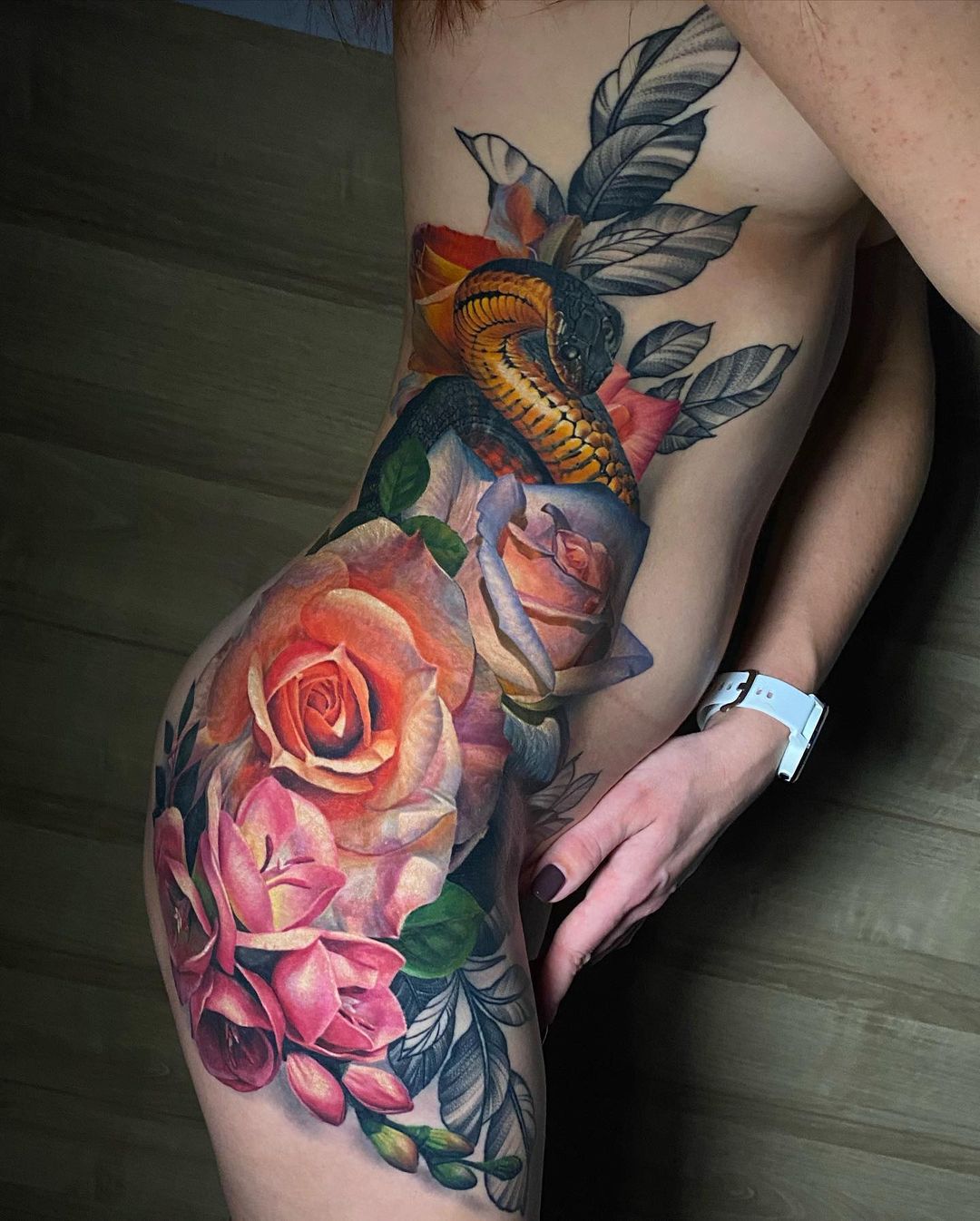
Snake entwined with roses tattoo by @nabokanastasya
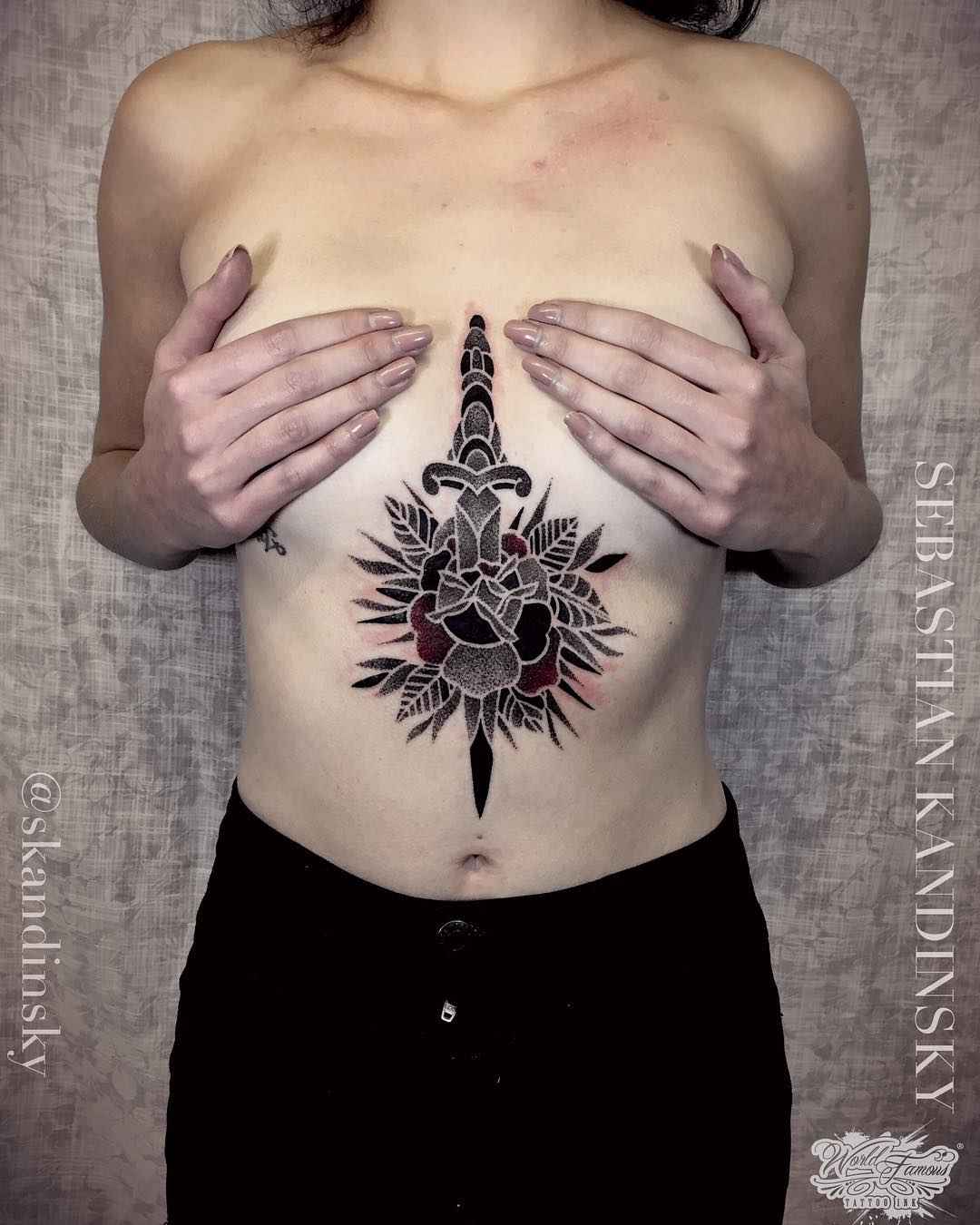
Blackwork dagger-through-rose tattoo by @skandinsky
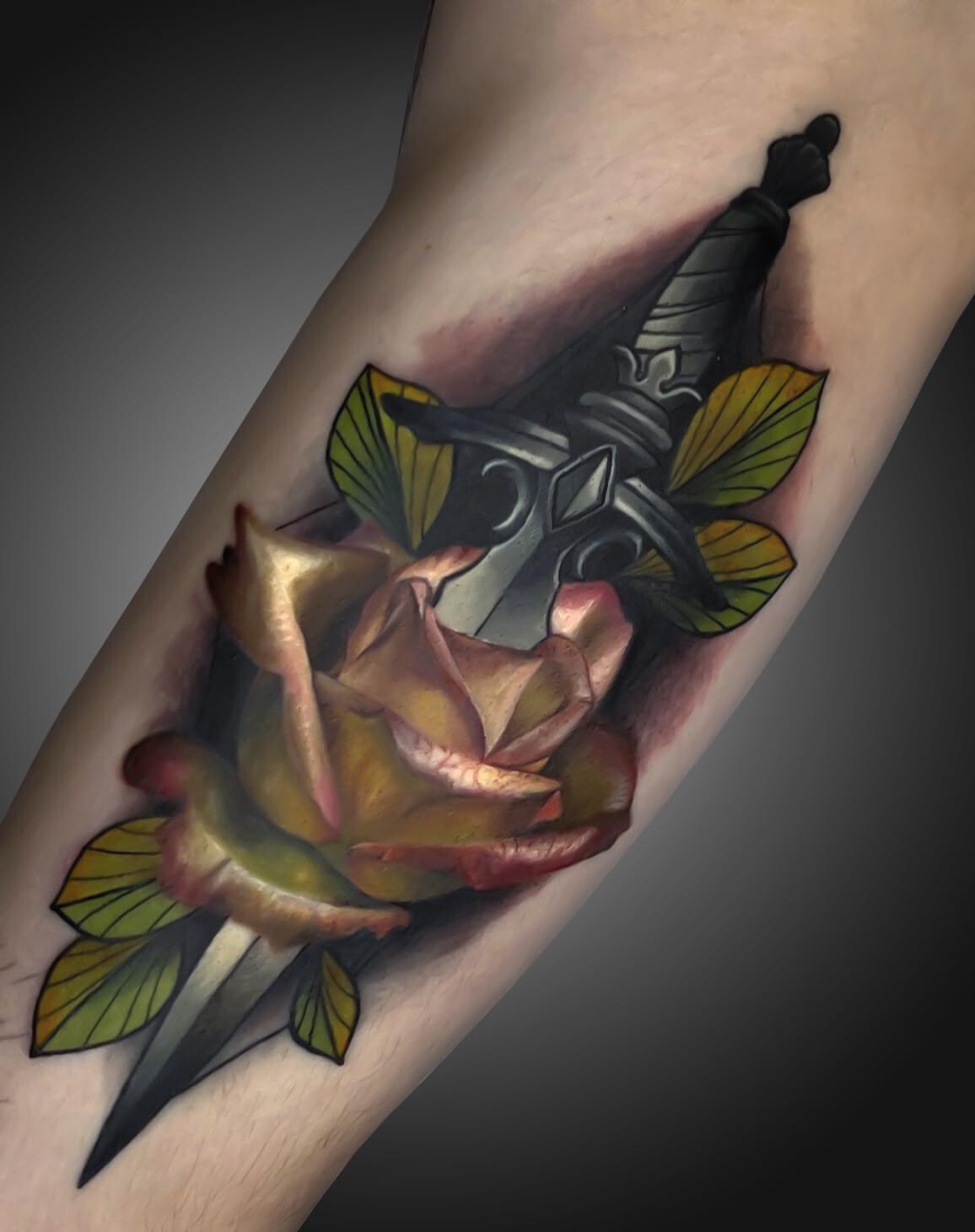
Rose and dagger tattoo by @alex1995
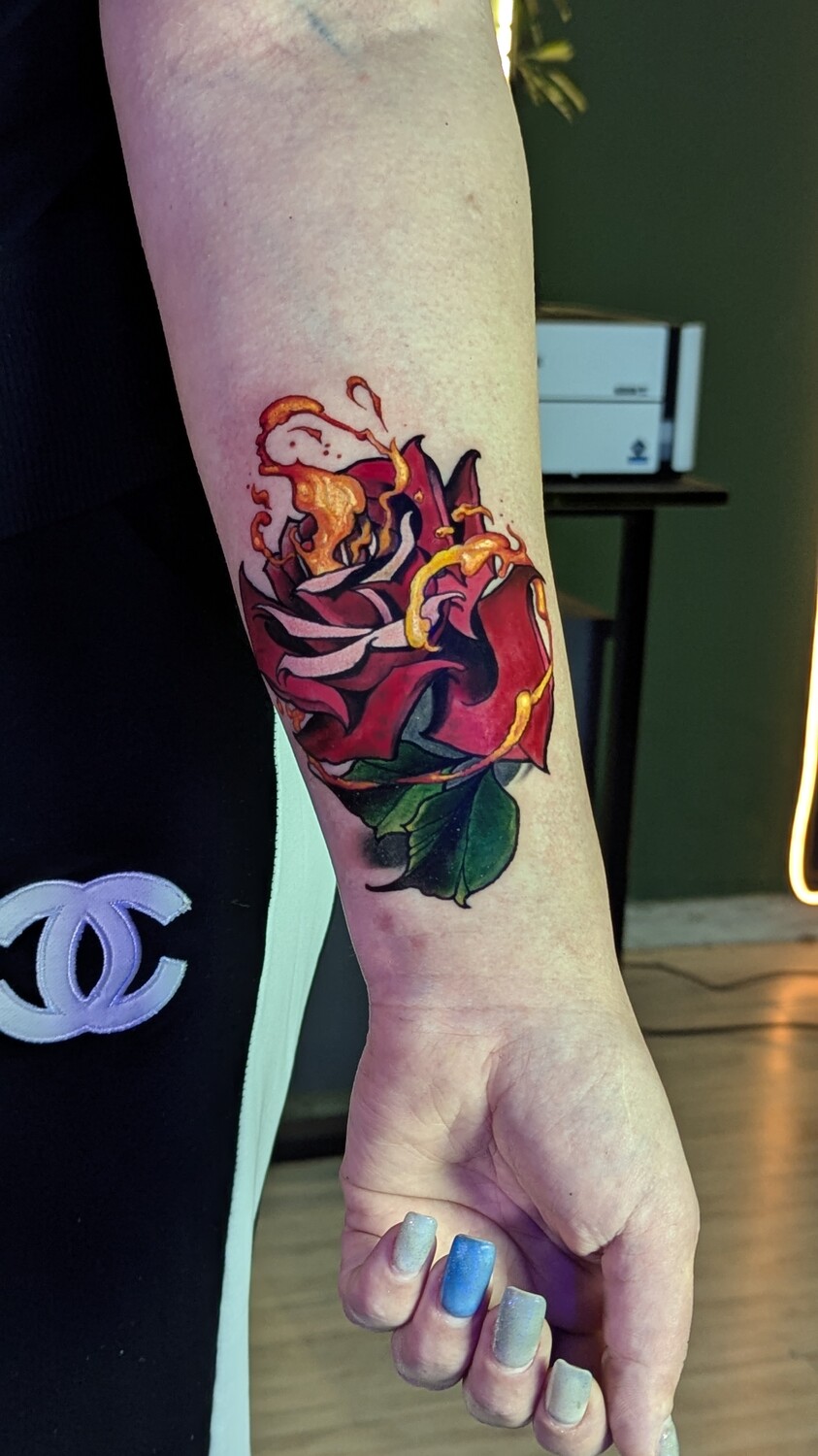
Flaming rose tattoo by @karen1989
Who Gets Rose Tattoos, and Why It Matters That Everyone Does
Here's something that occasionally gets lost in symbolism guides: the rose is genuinely universal. It's one of the very few tattoo subjects that crosses every demographic line, age, gender, culture, tattoo experience level. First-timers get roses. Heavily collected people get roses. And they all mean it.
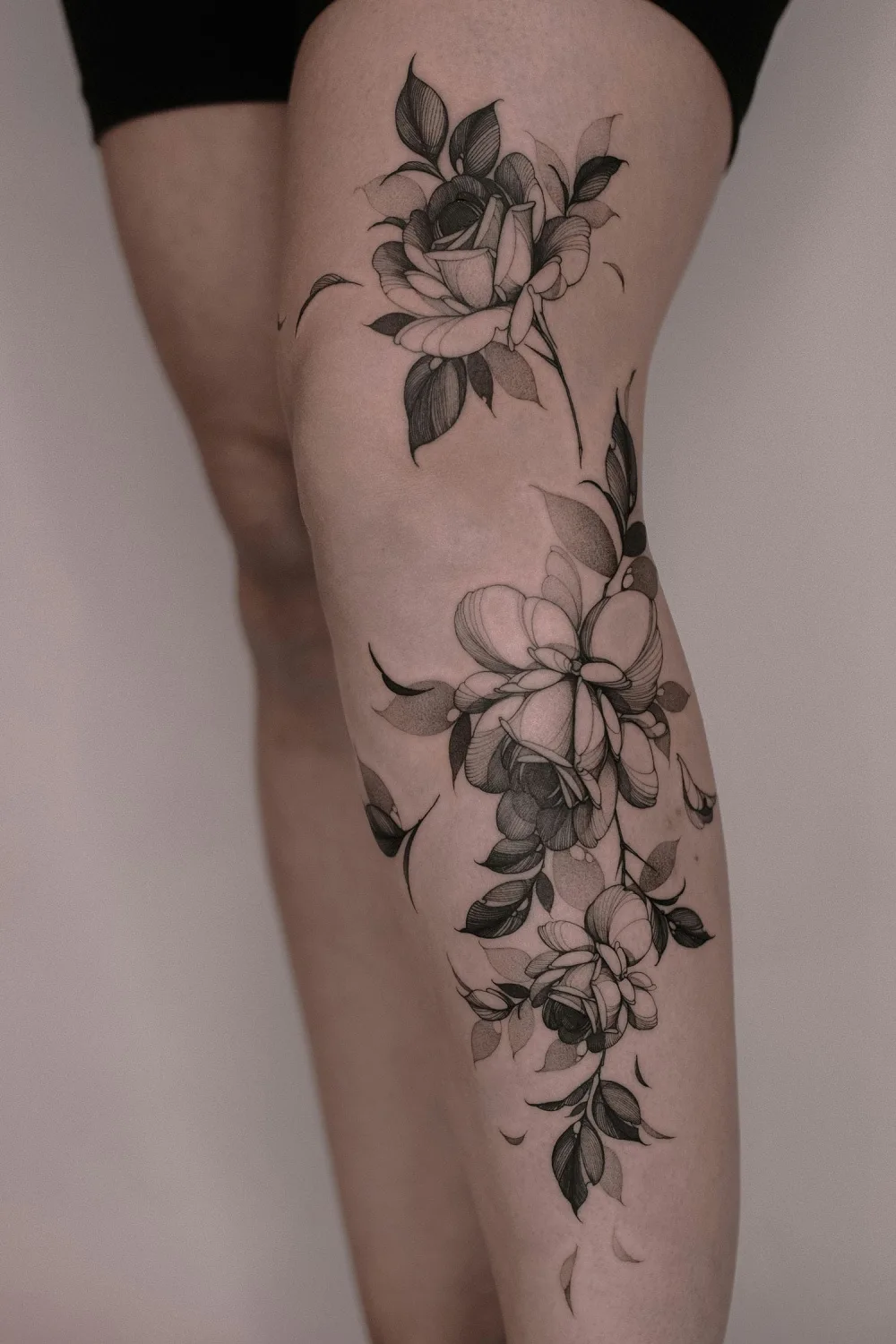
For women, rose tattoos often lean into themes of feminine strength, self-love, sensuality, or maternal devotion. But, and this is a correction from how the industry sometimes talked about it even a decade ago, there's nothing inherently gendered about the symbol. Men have been getting rose tattoos since the golden age of Western tattooing, frequently as declarations of love, honor, or hard-won wisdom.
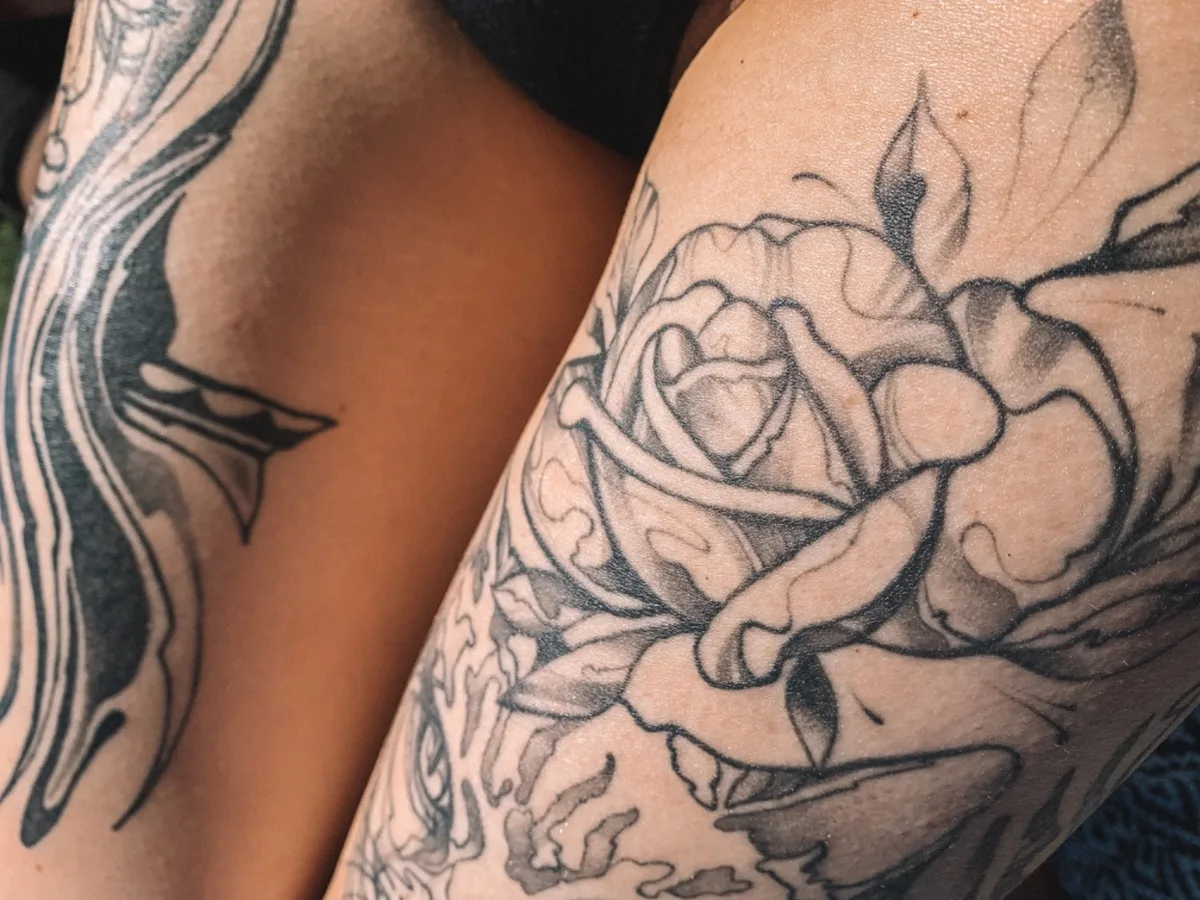
The rose's refusal to belong to any single group is part of its power. It's available to everyone and diminished by no one.
FAQ
What does a rose tattoo symbolize for a woman?
A rose tattoo on a woman can symbolize a wide range of meanings, from feminine strength and self-love to maternal devotion, sensuality, or remembrance of someone lost. The color and design details shape the specific meaning. A red rose might represent passionate love or deep commitment, while a black rose could signal personal transformation or independence. There's no single fixed meaning, which is precisely why so many women choose roses as deeply personal pieces.
Does the number of roses in a tattoo change the meaning?
Yes, it can. A single rose typically represents focused devotion or a singular love. Two roses intertwined often symbolize mutual love or partnership. Three roses are sometimes interpreted as representing the words "I love you." A dozen or bouquet of roses suggests abundance, a full life, or gratitude. These numerical meanings are flexible rather than absolute, but many artists and collectors do consider them when designing a piece.
What does a rose and skull tattoo mean?
The skull-and-rose pairing is one of tattooing's most enduring combinations. It represents the coexistence of life and death, beauty and decay. Some interpret it as a memento mori, a reminder that life is fleeting and beauty temporary. Others read it more optimistically: life persisting through or growing from death. In many designs, a rose literally grows from or through a skull, suggesting regeneration and the idea that something beautiful can emerge from endings.
Is a black rose tattoo negative or bad luck?
Not at all. While a black rose is often associated with mourning and loss, it's rarely considered bad luck. In tattoo culture, it more commonly represents transformation, the end of one chapter and the beginning of another, or a rebellious spirit. For many wearers, a black rose is empowering, it acknowledges darkness without being consumed by it. The meaning ultimately depends on the wearer's intention and personal connection to the design.
The Meaning You Carry Forward
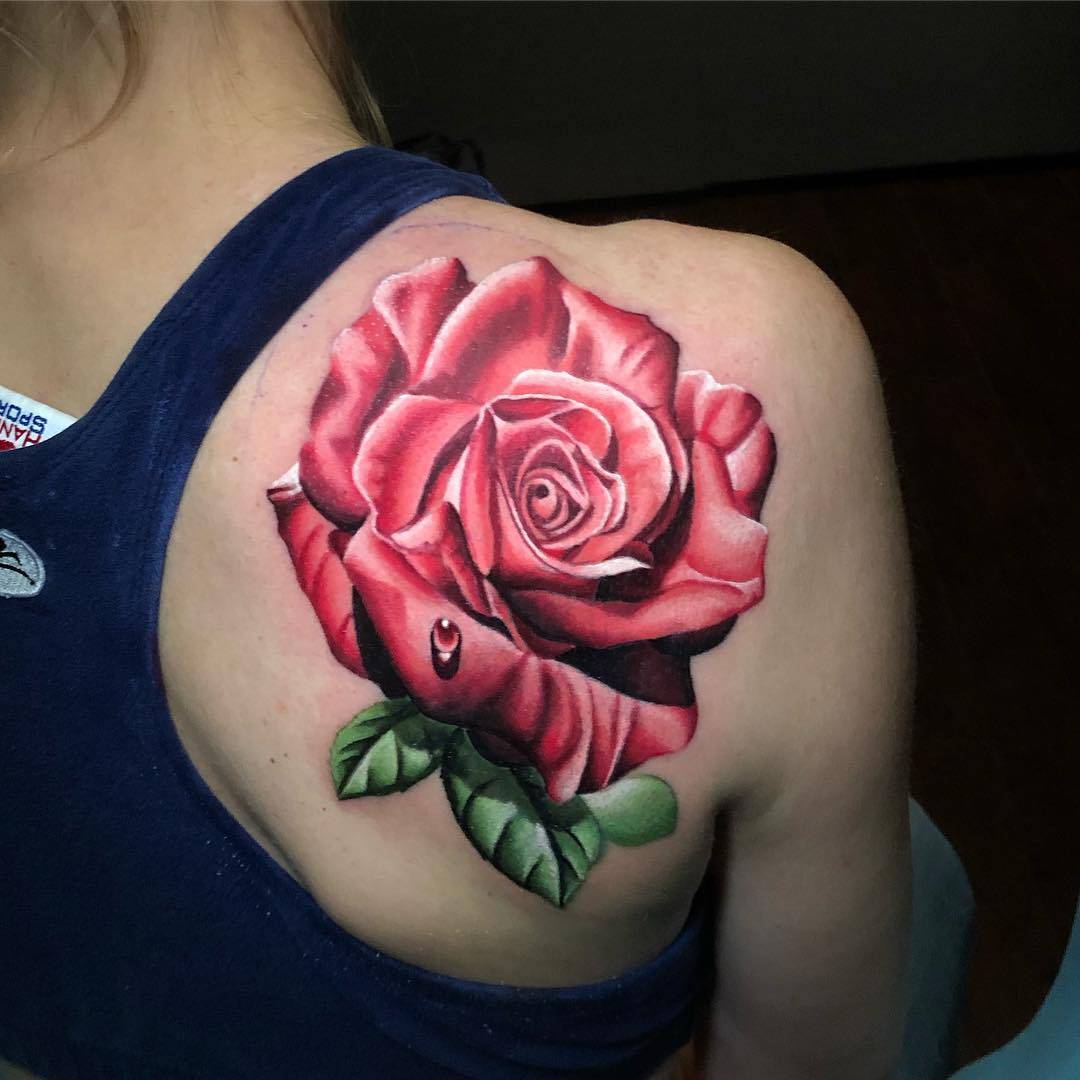
Photorealistic red rose tattoo by @cheeseburgerchampion
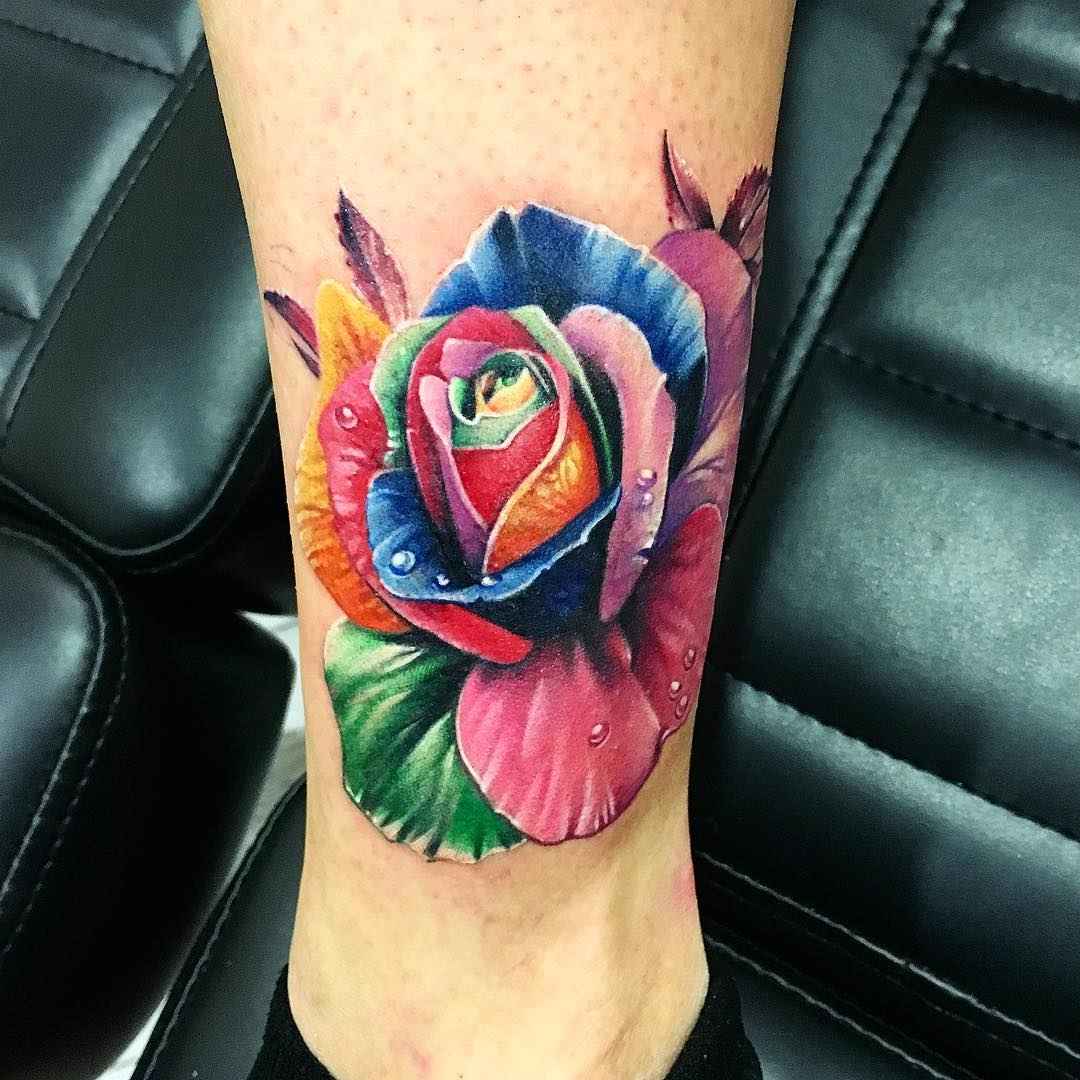
Realistic rose tattoo with dewdrops by @anjelika_kartasheva
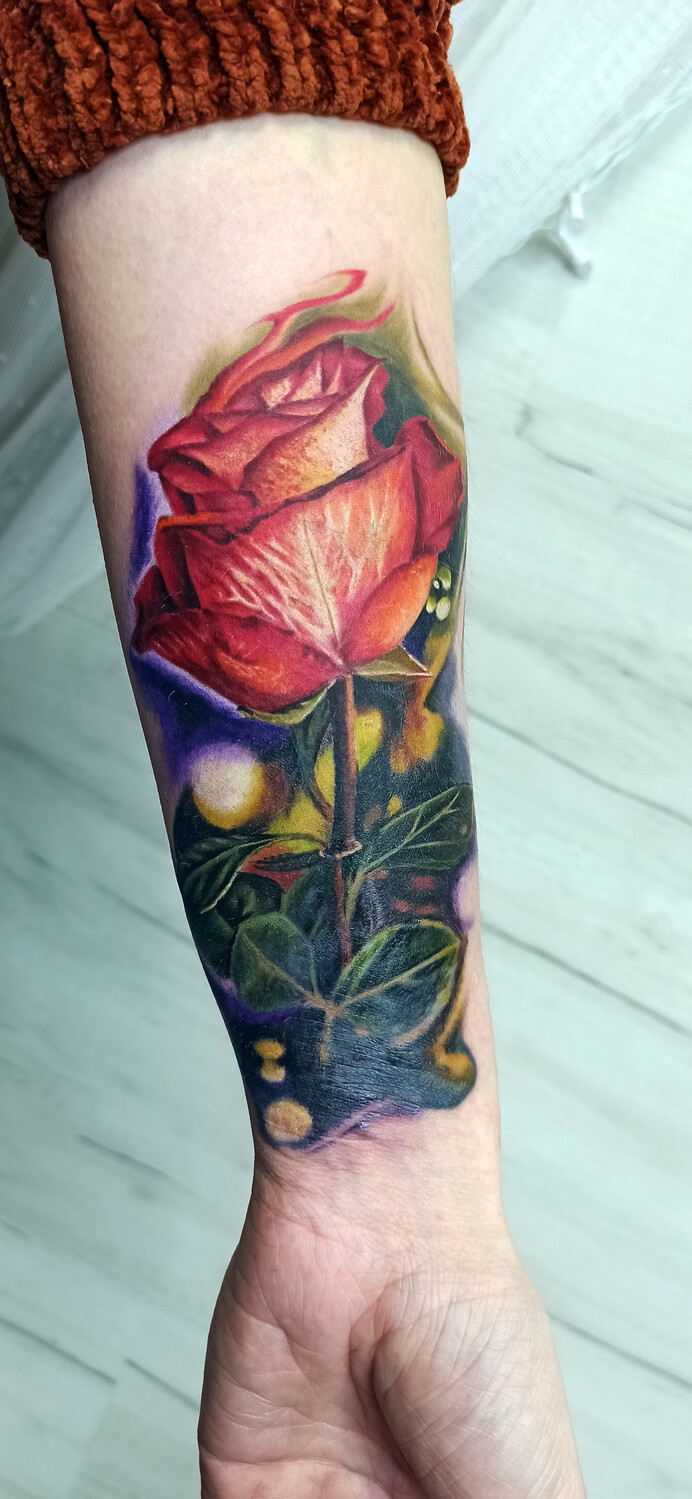
Full-colour realistic rose tattoo by @ryba_tattoo
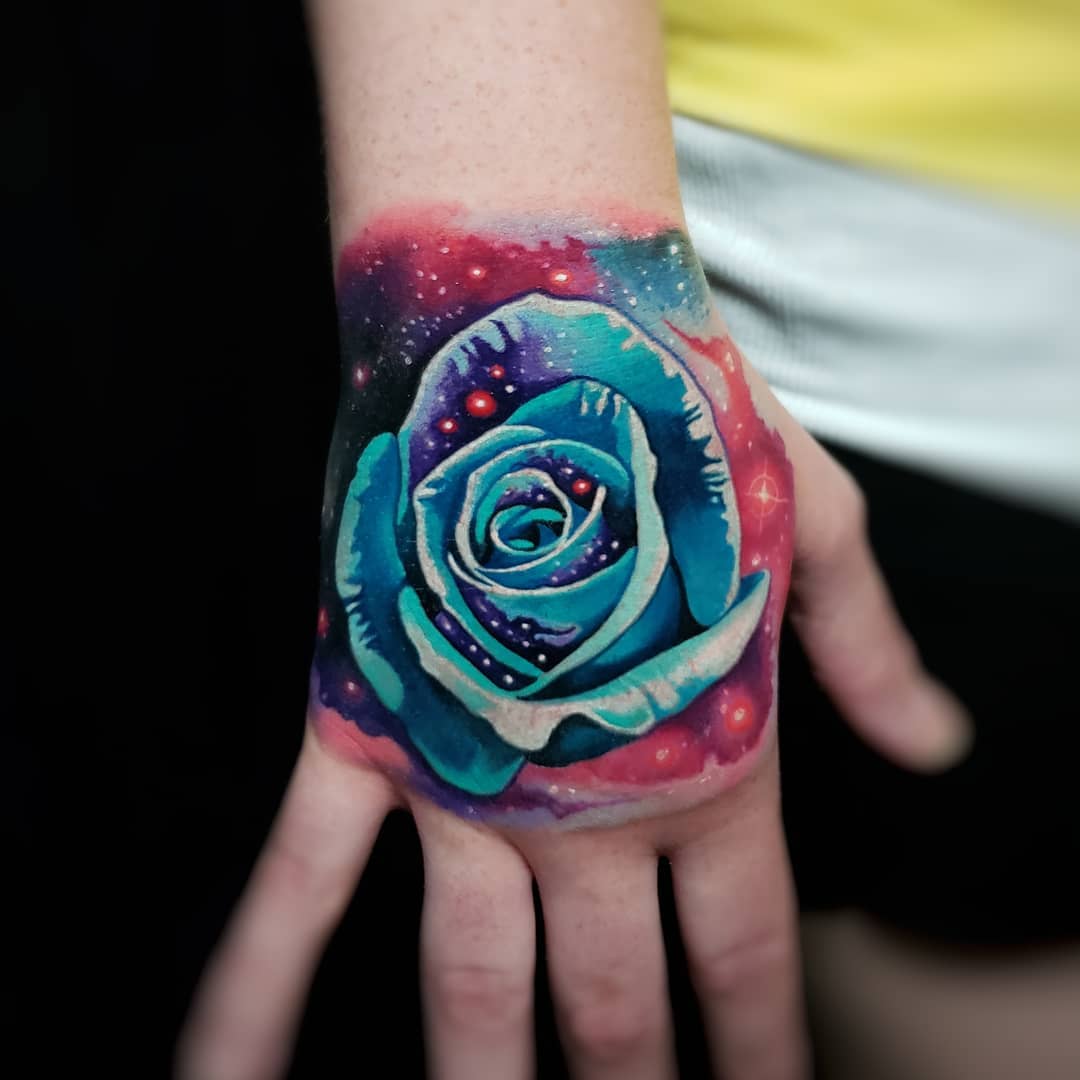
Galaxy-centre watercolour rose tattoo by @tylermalek
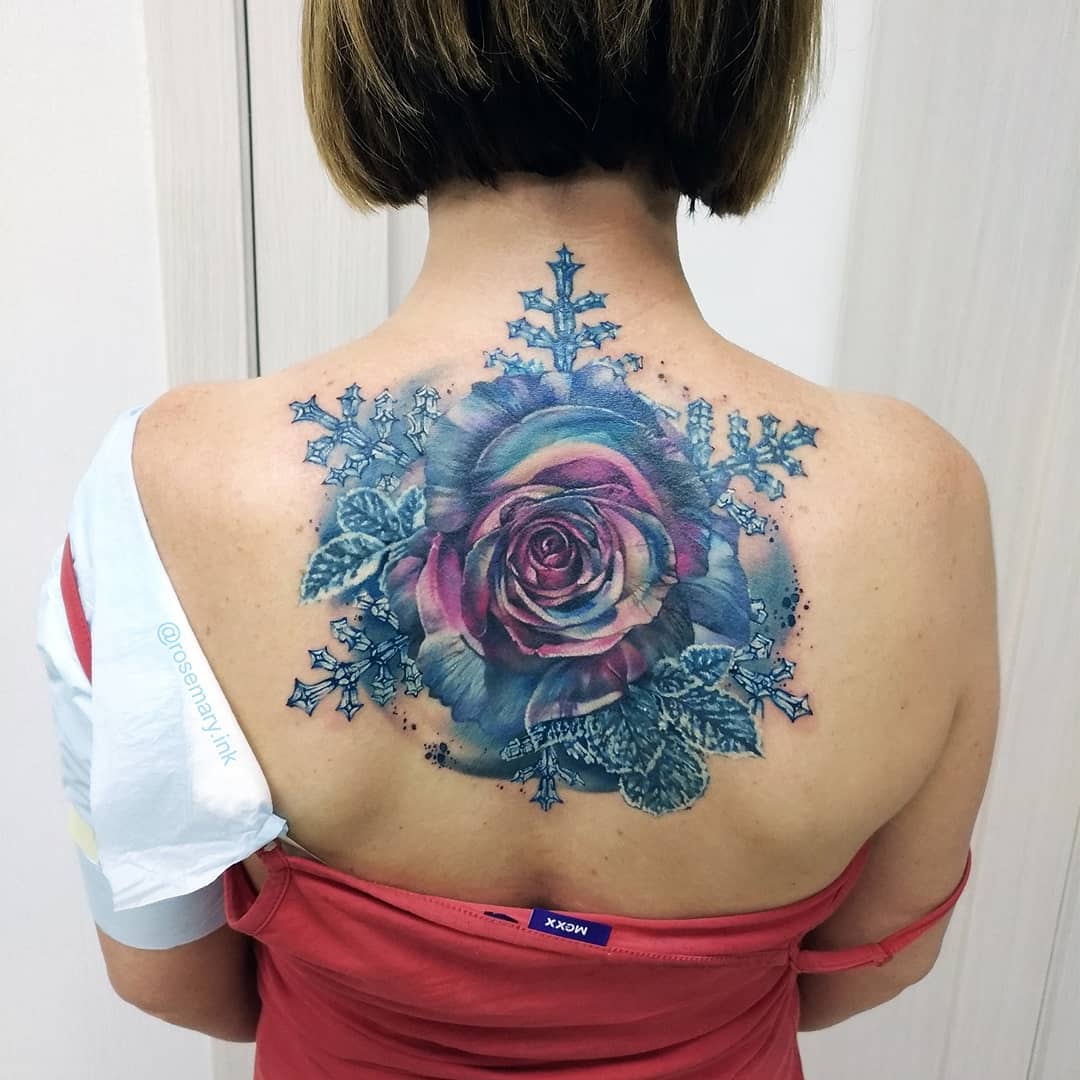
Rose and snowflakes watercolour tattoo by @rosemary.ink
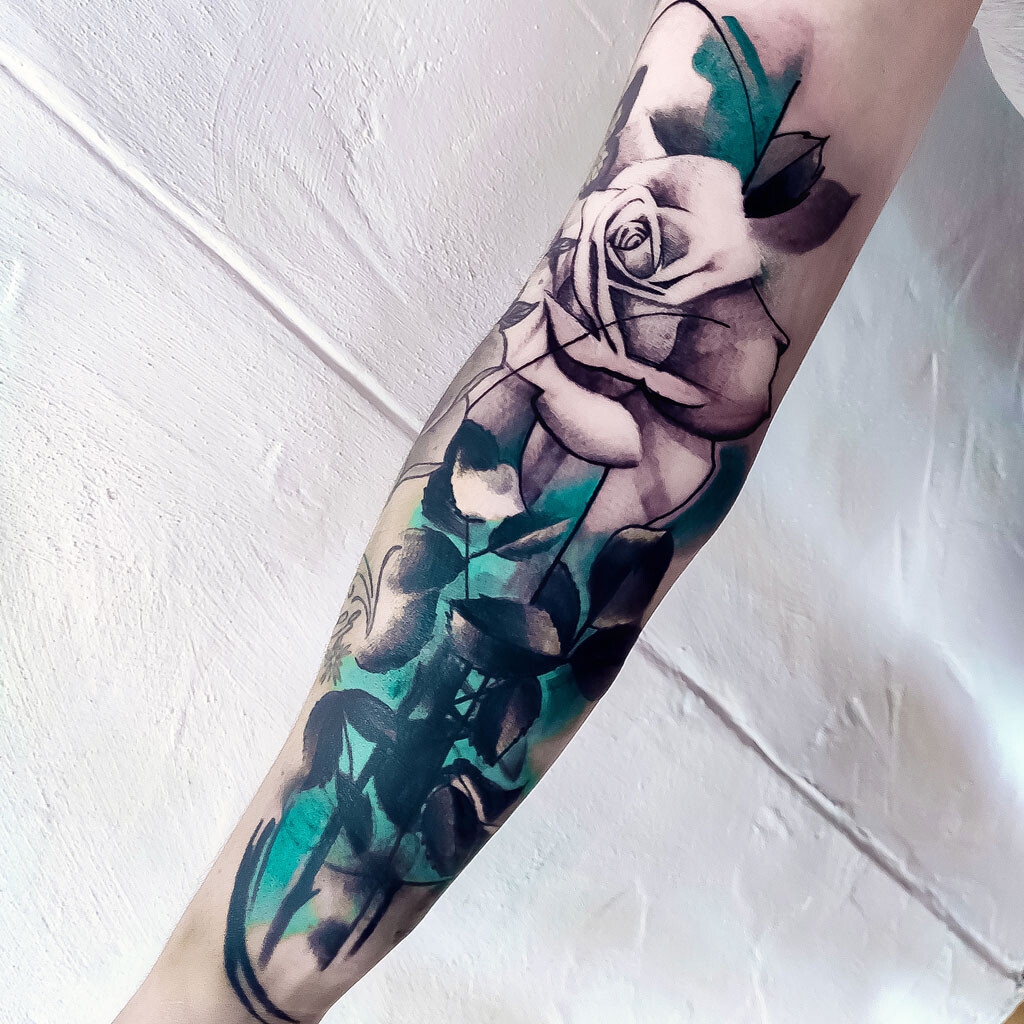
Black-grey teal rose tattoo by @efthimis
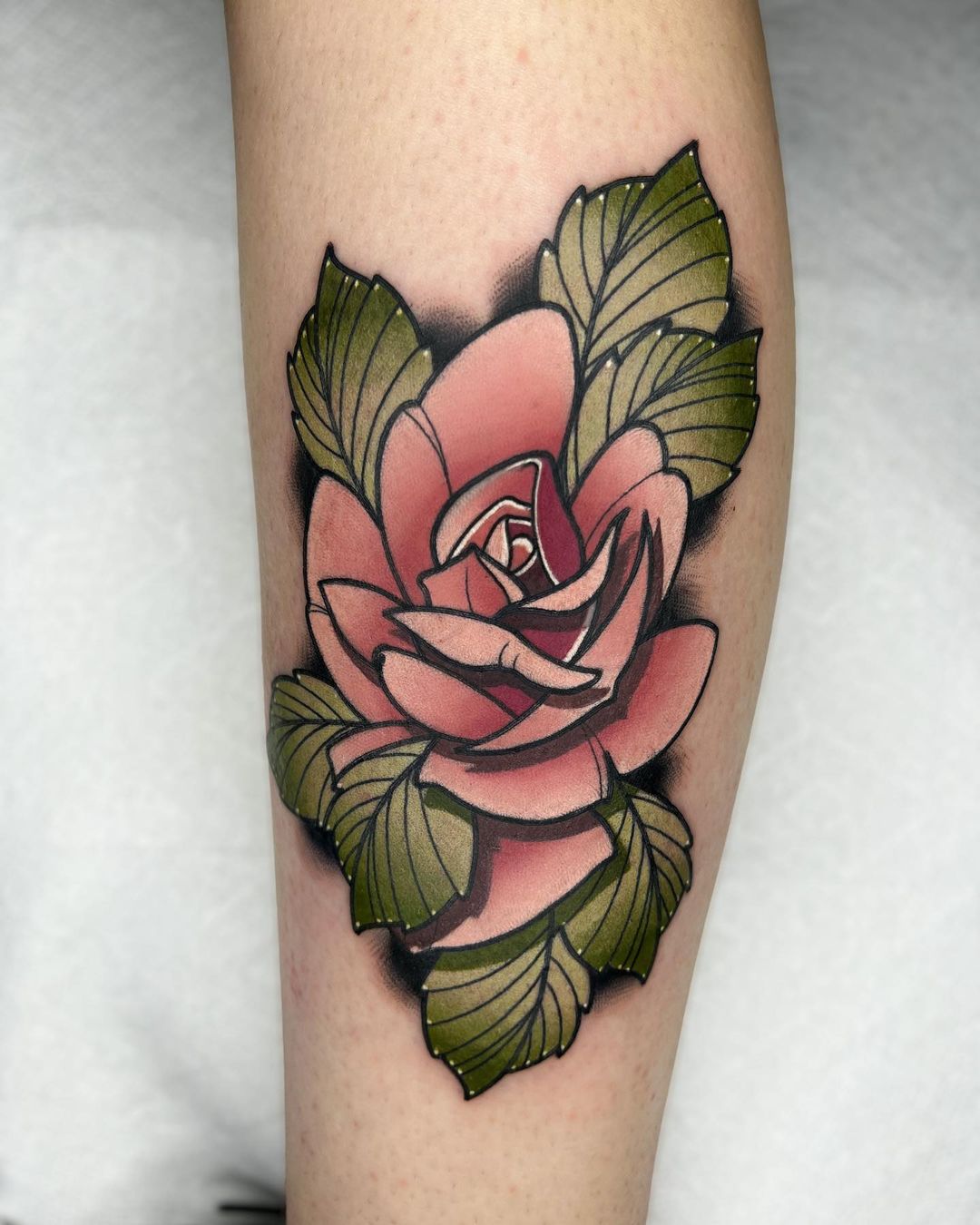
Neo-traditional rose tattoo by @tattoosbymatt_
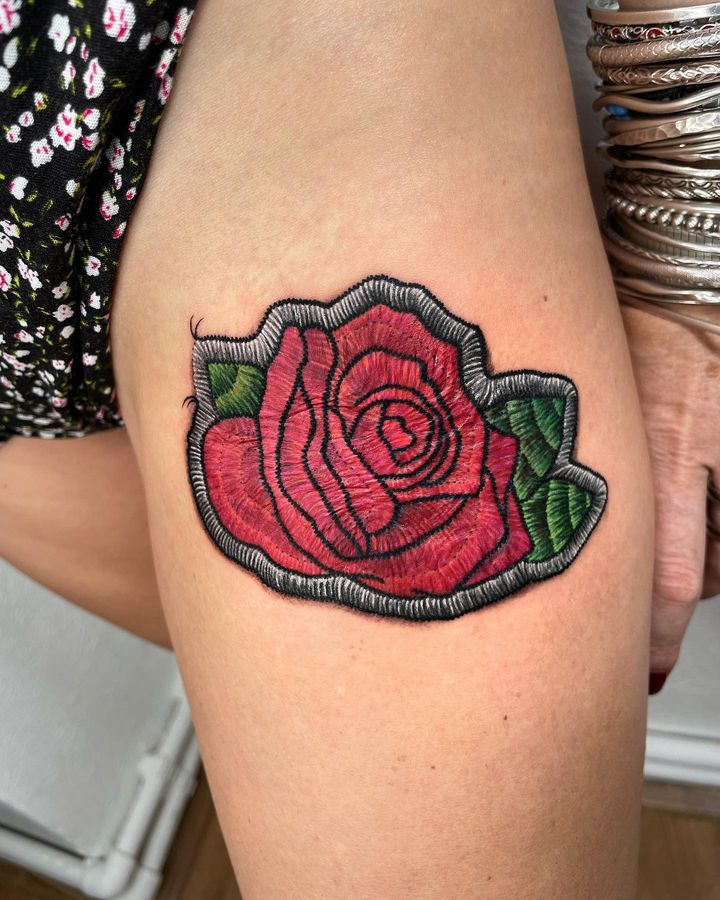
Embroidered patch rose tattoo by @muslubash.tattoo
Roses have been tattooed for as long as people have been tattooing. They've survived every trend, every stylistic revolution, every cultural shift. That kind of endurance doesn't happen by accident. It happens because the rose genuinely contains multitudes, love, grief, beauty, pain, resilience, secrecy, devotion, rebellion.
Your rose tattoo will mean what you need it to mean. That's not a cop-out. That's the point. The best tattoos carry meaning that grows with you, that shifts as you shift, that reveals new layers as you live more life. The rose is uniquely suited for that kind of evolution.
If you're considering a rose piece, spend time with the details: the color, the thorns, the state of bloom, the companions, the placement. Each choice is a sentence in a story only you can tell. And when it's done, you won't just have a beautiful tattoo. You'll have a mirror.
Browse iNKPPL's artist galleries and style guides to find the right artist for your rose tattoo, someone whose style speaks the same visual language you're imagining.