A tattoo usually stops peeling and looks healed within two to four weeks, while the skin underneath keeps recovering for months. The day-by-day tattoo healing stages below are based on guidance from the AAD, Cleveland Clinic and Mayo Clinic; for daily cleaning details, follow tattoo aftercare, step by step.
| Stage | Days | What you see | What to do |
|---|---|---|---|
| Fresh tattoo | Days 1–3 | Tenderness, mild redness, swelling and some clear or ink-colored fluid | Follow the artist’s bandage instructions, wash gently and apply a thin recommended moisturizer. |
| Peeling stage | Days 4–14 | Itching, flakes, light scabs and a temporarily dull appearance | Keep it clean and lightly moisturized; do not scratch, scrub or pull off flakes. |
| Settling stage | Weeks 3–8 | Fewer flakes, smoother skin and gradually clearer color | Continue gentle care and protect the area from friction and sunlight. |
| Deeper recovery | Following months | The surface looks healed while deeper layers continue repairing | Maintain normal skin care and use sun protection once the tattoo has healed. |
How Long Does a Tattoo Take to Heal?
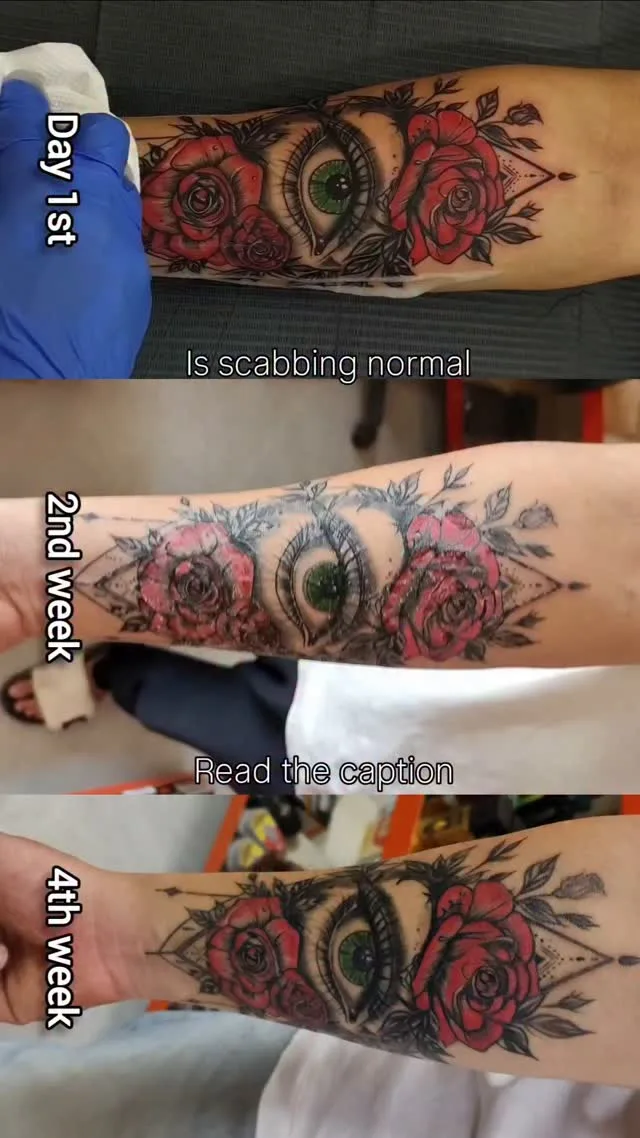
There is no single date when every layer finishes healing. Mayo Clinic says most tattoos take about two weeks to heal, while ameli gives a broader estimate of three to four weeks. Cleveland Clinic separates the visible stages more precisely: scabs are usually healing and flaking has eased by about three weeks, the top layer may need around two months, and deeper layers can take several additional months.
These differences describe separate points in the tattoo healing process rather than a contradiction. A design can stop peeling and feel comfortable while tissue beneath the surface is still recovering. Your artist’s instructions also matter because the dressing, technique and amount of work done in one area influence early care.
Surface vs. full healing
Surface healing means the skin has closed, active peeling has ended and ordinary movement no longer feels tender. Full healing includes the less visible repair below that surface. This distinction explains why a tattoo may look finished before it is ready for prolonged soaking, heavy friction or unrestricted sun exposure.
The visible result can also change during recovery. Fresh pigment may initially appear very bright, then look cloudy under peeling skin before becoming clearer. Evaluate fine details and color consistency only after the surface has settled. If a healed area still needs adjustment, ask the original artist when it is suitable to assess a touch-up.
By placement and size
Large, densely colored tattoos generally place more stress on the skin than small designs, and areas exposed to rubbing or repeated movement can be harder to protect. Cleveland Clinic notes that smaller tattoos on the hands, wrists or arms are likely to heal faster than large pieces on the chest or back, although everyday use can still expose hand tattoos to frequent washing and friction.
Placement should be discussed before the appointment. The AAD advises that ink over a mole can make changes associated with skin cancer harder to notice; read more in do tattoos increase the risk of skin cancer? A suitable tattoo artist can plan the design around existing marks and explain how the location affects practical aftercare.
Never stop or change prescribed medicines, including blood thinners, on your own because of a tattoo; ask your doctor before booking and tell your artist which prescription medicines you take.
Stage 1 (Days 1–3): Oozing, Redness, Swelling
A new tattoo is an open skin injury. During the first few days, mild warmth, tenderness, localized redness and limited swelling can occur. Small amounts of clear fluid, plasma, blood or excess ink may collect beneath the dressing or appear during washing. These signs should become calmer rather than more intense as the days pass.
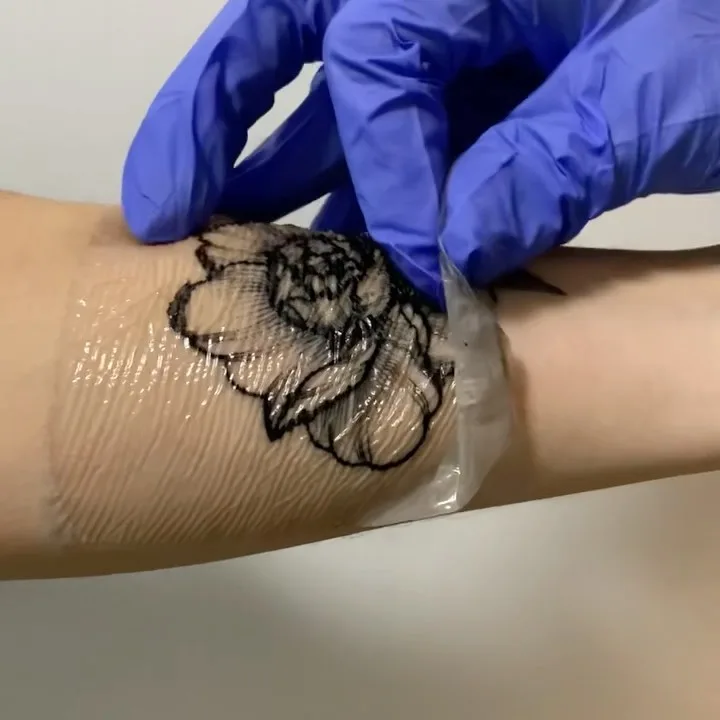
The artist decides which dressing is appropriate and how long it should remain in place. This may be a conventional covering or a second-skin film such as Saniderm. Cleveland Clinic advises following the artist’s timing and soaking the bandage in warm water to soften it before removal. Pulling a dry covering away forcefully can irritate the area.
Keep washing and moisturizing as described in our tattoo aftercare instructions.
Loose, clean clothing reduces rubbing and keeps fabric from sticking. Some discomfort is expected, but the overall direction should be improvement. Redness spreading away from the tattoo, pain that worsens instead of easing or swelling that keeps increasing belongs in the warning-sign category described below.
Stage 2 (Days 4–14): Scabbing, Itching and Peeling
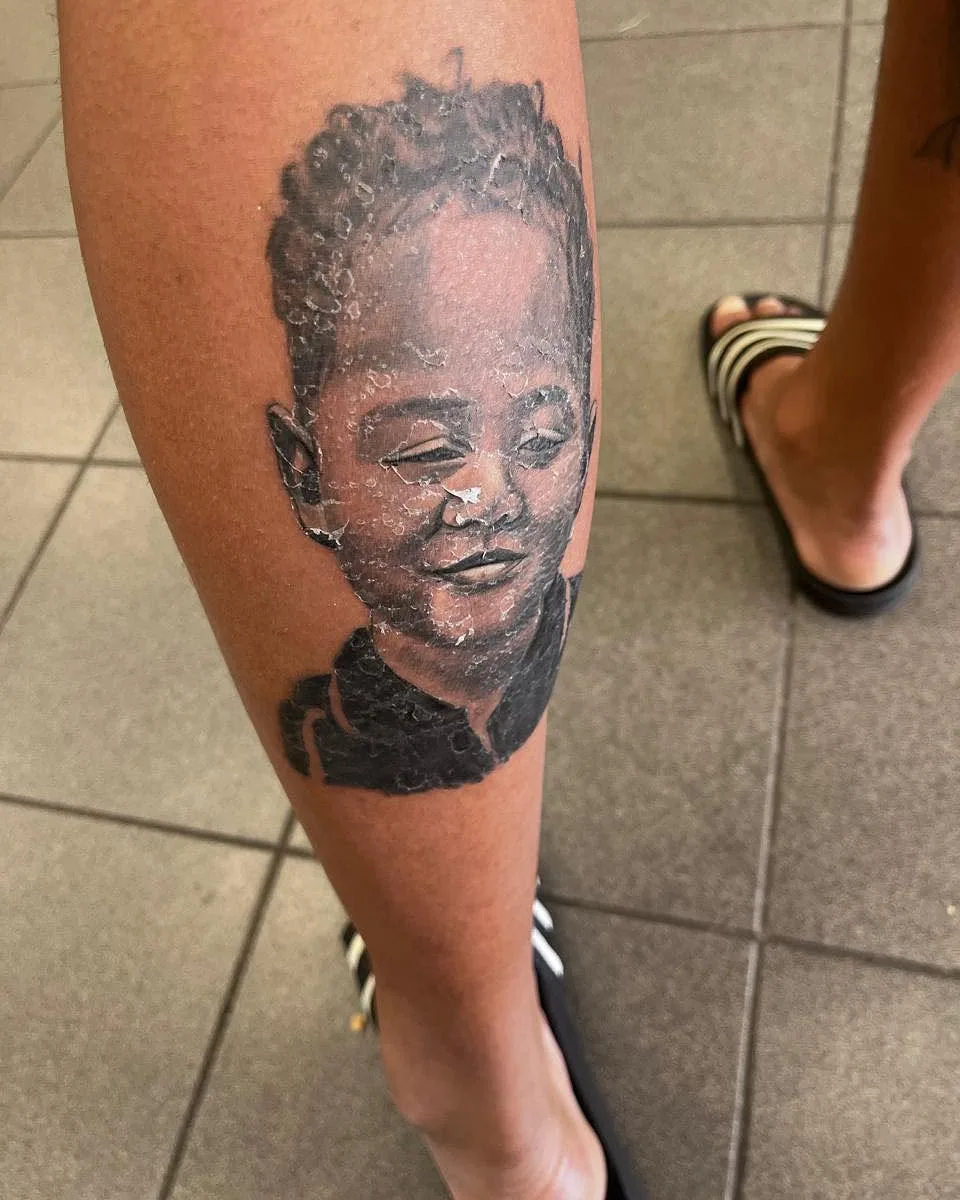
During this stage, the tattoo often becomes drier and begins shedding thin pieces of skin. Tattoo peeling can resemble the fine flakes seen after a mild sunburn. Light scabs may form where the artist worked more heavily, especially in saturated color or shaded areas. These changes can look dramatic without damaging the design.
Why does a new tattoo itch?
Itching commonly develops as the skin barrier repairs itself and the surface becomes dry. Cleveland Clinic says itching and flaking often start in the first two weeks and ease off at around three weeks, and advises against scratching or picking. Ameli likewise notes that light peeling is possible in the days after the session.
The sensation should remain manageable and gradually settle. Intense itching accompanied by spreading bumps, a rash or swelling can suggest a reaction rather than routine healing. Reactions can also appear after the tattoo has seemed healed, so timing alone does not rule one out.
When does a tattoo start peeling and how long does it last?
Peeling often becomes noticeable after the first few days and may continue into the third or fourth week. Individual flakes can persist longer in heavily worked areas. According to Cleveland Clinic, itching and flaking often begin in weeks one and two, and by about three weeks the scabs are healing and flaking has eased. The wider surface-healing range explains why one tattoo may finish shedding sooner than another.
Peeling should gradually diminish. A fresh patch may appear beside an area that already looks smooth, particularly in a large piece completed during one long session. Let every flake detach by itself.
Is it normal that the tattoo looks cloudy or faded while peeling?
Yes. A thin layer of healing skin can temporarily soften contrast, make black ink look gray or give color a muted, cloudy cast. Loose white flakes may also reflect light and conceal details. The tattoo usually appears clearer as shedding ends and the surface settles.
A temporarily dull appearance is different from pigment disappearing in isolated spots. Even then, wait until healing is complete before judging the outcome. Picking a flake or scab can remove healing tissue prematurely and may affect how evenly the area recovers. If a fully healed tattoo still looks dull, see why tattoos fade and how to prevent it.
What to do (and not do) when it itches
Keep following gentle cleaning instructions and use only a thin layer of an appropriate moisturizer. The AAD recommends a water-based lotion or cream for dry tattooed skin, while Cleveland Clinic supports a simple moisturizer or the ointment recommended by the artist. Heavy application can leave the area sticky and uncomfortable.
Do not scratch, peel, scrub or shave over healing skin. Avoid petroleum jelly: the AAD warns that petroleum-based products may cause ink to fade, and Cleveland Clinic also advises against petroleum jelly during aftercare. Keep fingernails away from the tattoo, including while sleeping, and choose loose clothing that does not drag across it.
Scabbing: thick vs. light scabs
Thin, dry flakes and light scabs can occur as the surface closes. They should become smaller and lift naturally. A thick, wet or increasingly painful crust needs more caution, particularly when it is accompanied by expanding redness, heat, pus or an unpleasant odor.

Never pull off a scab to “help” the tattoo finish healing. Ameli specifically advises against picking off scabs or dead skin. Forced removal can reopen the skin and disrupt the developing surface.
Stage 3 (Weeks 3–8 and Beyond): Settling In
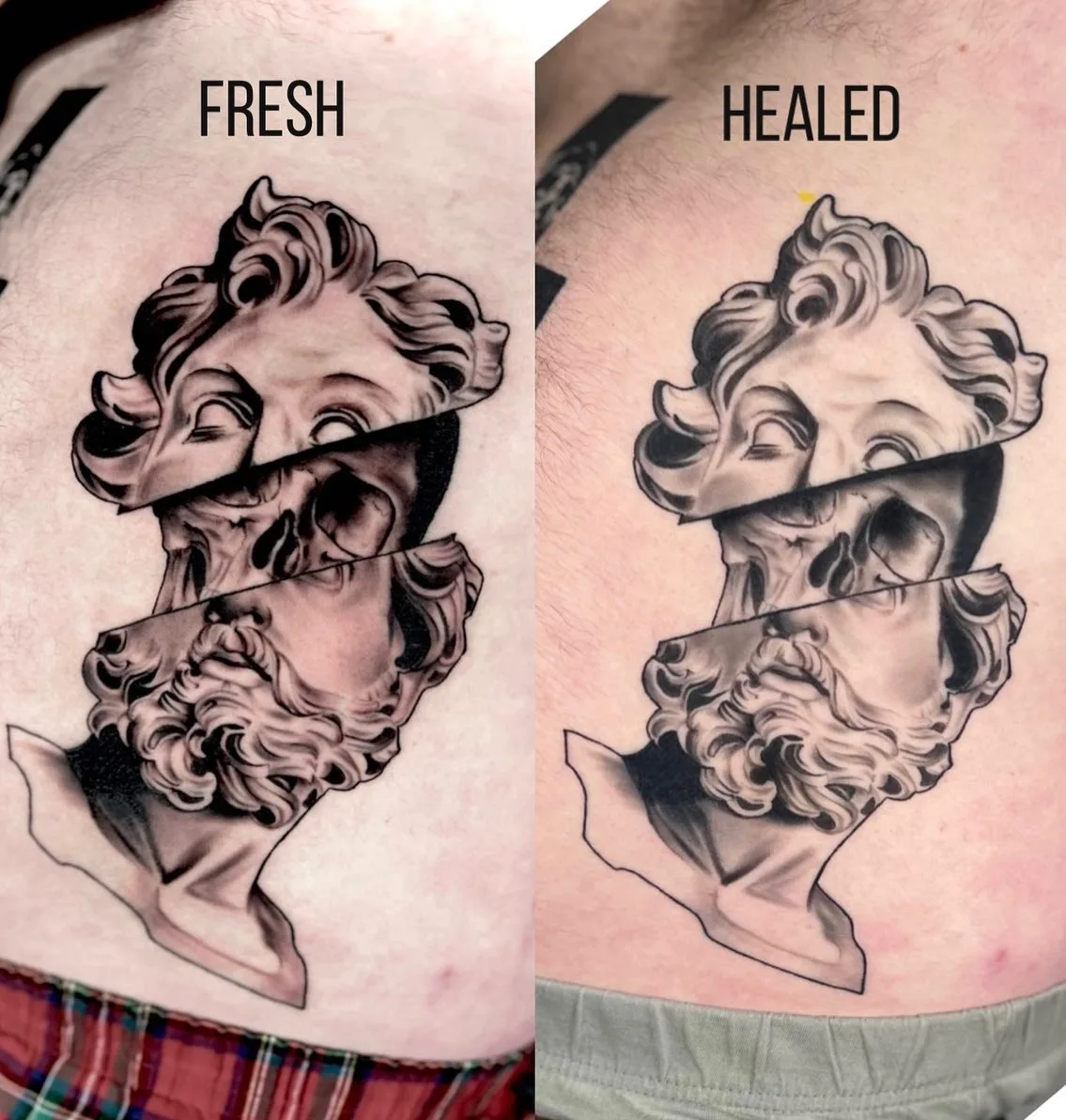
By the third week, most light flakes and scabs are disappearing. The skin may still look slightly shiny, tight or uneven in texture, but comfort and flexibility should continue improving. Color and linework often become easier to assess as the cloudy surface clears.
A tattoo that looks healed is still maturing below the surface. Cleveland Clinic estimates about two months for the top layer and several more months for deeper layers. Continue treating the area gently if it remains dry or sensitive, especially where clothing, equipment or repetitive motion creates friction.
Sun care changes once healing is complete. While the tattoo is healing, Cleveland Clinic advises against applying sunscreen to it and recommends loose clothing. After healing, the AAD recommends a water-resistant, broad-spectrum SPF 30 or higher, applied 15 minutes before going outdoors and reapplied at least every two hours. The AAD also advises staying out of tanning beds.
If texture, tenderness or color remains concerning once the expected recovery period has passed, contact the artist for a visual assessment. Skin symptoms such as persistent rash, bumps or swelling require medical evaluation rather than a cosmetic touch-up.
Normal vs. Warning Signs
| Usually normal | Needs medical attention |
|---|---|
| Localized redness and mild swelling that improve; limited clear or ink-colored fluid early on; manageable itching; fine flakes; light, dry scabs; temporary cloudiness. | Symptoms becoming more intense after the early days; spreading redness; pus; fever or chills; red streaks; painful bumps, pustules or a rapidly worsening rash. |
Pain, redness or swelling that get worse instead of better, pus, fever or chills, or red streaks are warning signs: see a doctor; do not treat it yourself. Cleveland Clinic lists redness, swelling, pain that worsens, fever, chills and bumps that may contain pus among signs of tattoo infection. In its guidance on infected piercings, the NHS also identifies feeling hot, cold or shivery, or generally unwell as signs of infection.
Do not start leftover antibiotics or try to manage a suspected infection without medical care. Tattoo infections can require treatment prescribed by a doctor, and Cleveland Clinic notes that symptoms can sometimes develop well after the appointment. Contaminated ink is another possible source of infection, according to the FDA.
An allergic reaction may resemble irritation or infection. Mayo Clinic says allergic reactions can occur years later and are especially associated with red ink; our guide to tattoo allergy explains why it happens and what to do. Persistent itching, raised skin, bumps or swelling around a healed tattoo should be assessed by a dermatologist, as the AAD recommends for tattoo-related skin reactions.
What Slows Healing
Picking, friction and soaking all disturb the recovering surface, so skip baths, swimming pools, hot tubs and saunas until the tattoo has healed and keep to the routine in our tattoo aftercare instructions.
Strong sunlight and heavy sweating can also interfere with practical aftercare. Ameli recommends avoiding sun exposure and activities that cause heavy sweating during healing. It also states that alcohol and tobacco slow healing; see our article on alcohol and tattoos. Avoid combining conflicting routines or adding products your artist did not recommend.
FAQ
Is tattoo peeling normal?
Yes. Light peeling and small dry flakes are expected as the surface renews itself. Ameli notes that light peeling is possible in the days after the session. Peeling that accompanies worsening pain, spreading redness, pus, fever or red streaks needs a doctor’s assessment.
Can I put lotion on a peeling tattoo?
Use a thin layer of fragrance-free moisturizer or the ointment recommended by your artist. Cleveland Clinic recommends applying it twice a day, and the AAD suggests water-based lotion or cream for dryness. Avoid petroleum-based products and do not smother the skin with a thick coating.
Why is my healed tattoo itchy?
Occasional dryness may cause mild itching, but persistent itching, bumps, scaling or swelling can indicate a delayed reaction. The AAD advises seeing a dermatologist when tattooed skin develops a reaction. Reactions can appear long after the original appointment.
Can I scratch my tattoo?
No. Scratching can tear flakes or scabs away before the skin beneath is ready. Cleveland Clinic advises against scratching and picking during the itchy, flaky stage. Keep the tattoo lightly moisturized according to the recommended routine and wear loose clothing over the area when necessary.
When is a tattoo fully healed?
The visible surface may settle in roughly two to four weeks, depending on which healing milestone is used. Mayo Clinic gives about two weeks for most tattoos, ameli estimates three to four weeks, and Cleveland Clinic says the top layer may take around two months and deeper layers several months.
Sources
- American Academy of Dermatology: Caring for tattooed skin
- Cleveland Clinic: Tattoo Aftercare
- Cleveland Clinic: Tattoo Infection
- Mayo Clinic: Tattoos–Understand risks and precautions
- FDA: Think Before You Ink–Tattoo Safety
- NHS: Infected piercings (signs of infection)
- Ameli: Tattoo care and when to seek help