Why Wings Mean Protection
Wings create a sheltering shape: they stretch above a figure, fold around a child, or close like a shield. That visual gesture is the core of the angel wings tattoo meaning many wearers have in mind. In Christian iconography, angels serve as heavenly messengers and protectors, while contemporary tattoo symbolism turns their wings into a personal image of care, safety, and spiritual companionship.
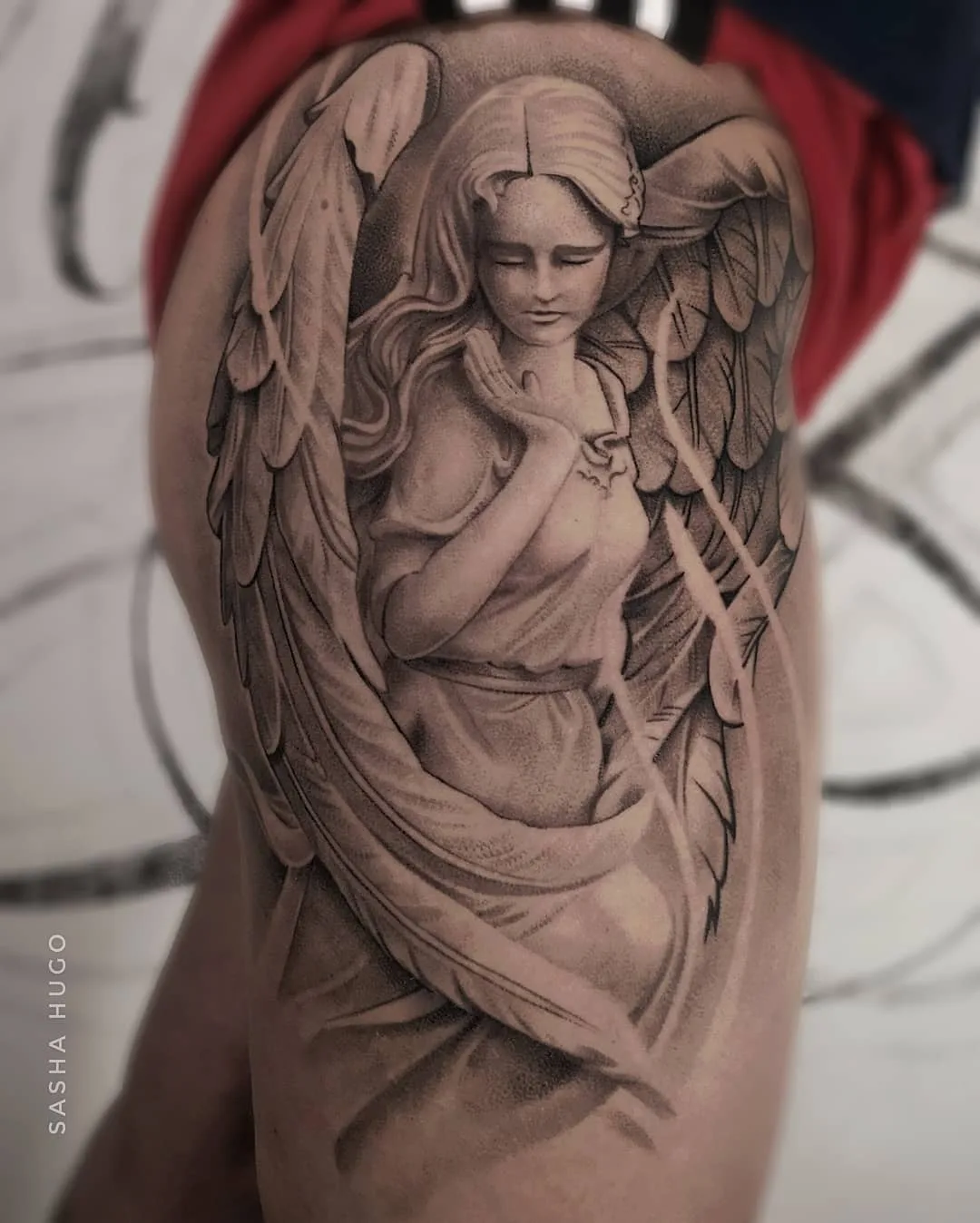
The feathers also suggest movement between earthly and heavenly realms. Within a spiritual design, upward wings can express hope, freedom, or the desire to rise through a difficult period. Wings curved inward feel more intimate, as though they are holding a person close. A lowered or partially folded pair can convey grief, reflection, or quiet strength. These readings come from the pose and composition as much as from the angelic subject itself.
Details can focus the message. A halo strengthens the association with heaven, while rays of light bring hope and guidance into the composition. Clouds can make the wings feel celestial, and a smaller figure beneath them emphasizes protection. Crosses, prayer hands, names, and short inscriptions can connect the design with Christian faith or remembrance. If you are still deciding between a complete figure and wings alone, the angel tattoo gallery offers examples of both approaches.
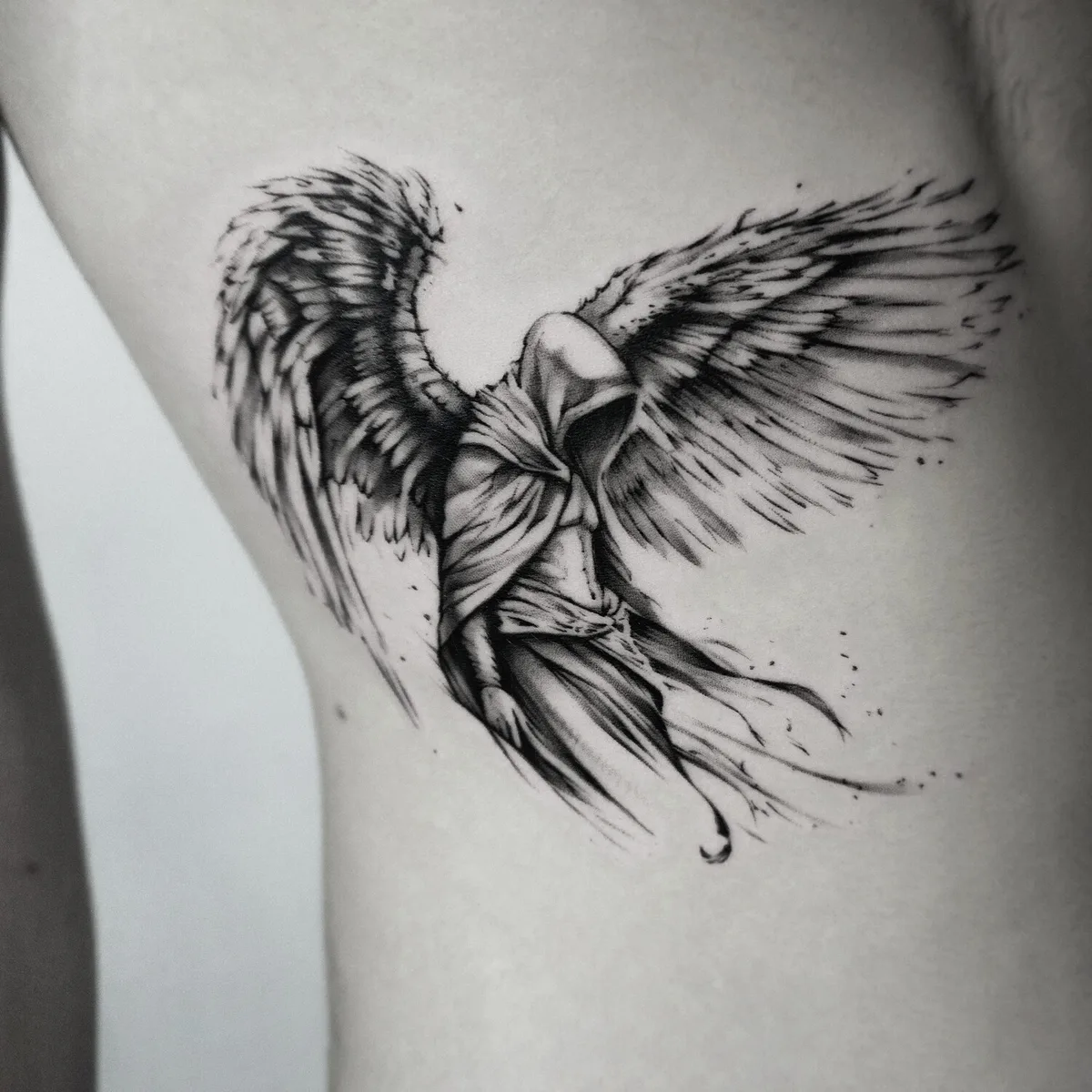
Wings also leave room for a highly personal reading. Their scale, posture, condition, and surrounding symbols tell the emotional story. Broad, open feathers feel confident and watchful; softly folded wings feel caring; damaged feathers can carry a story of survival. The result can express faith, memory, protection, or several of these ideas at once.
Guardian Angel Tattoos
Christian tradition gives the idea of a personal heavenly protector its best-known form. In Matthew 18:10, Jesus says the angels of the little ones always see the face of the Father in heaven, and Christian teaching on guardian angels often cites this verse. In tattoo imagery, that belief becomes a companion who remains close during danger, grief, illness, or a major life change. That image gives the guardian angel tattoo meaning its emotional center: care, companionship, and hope for help in hard times.
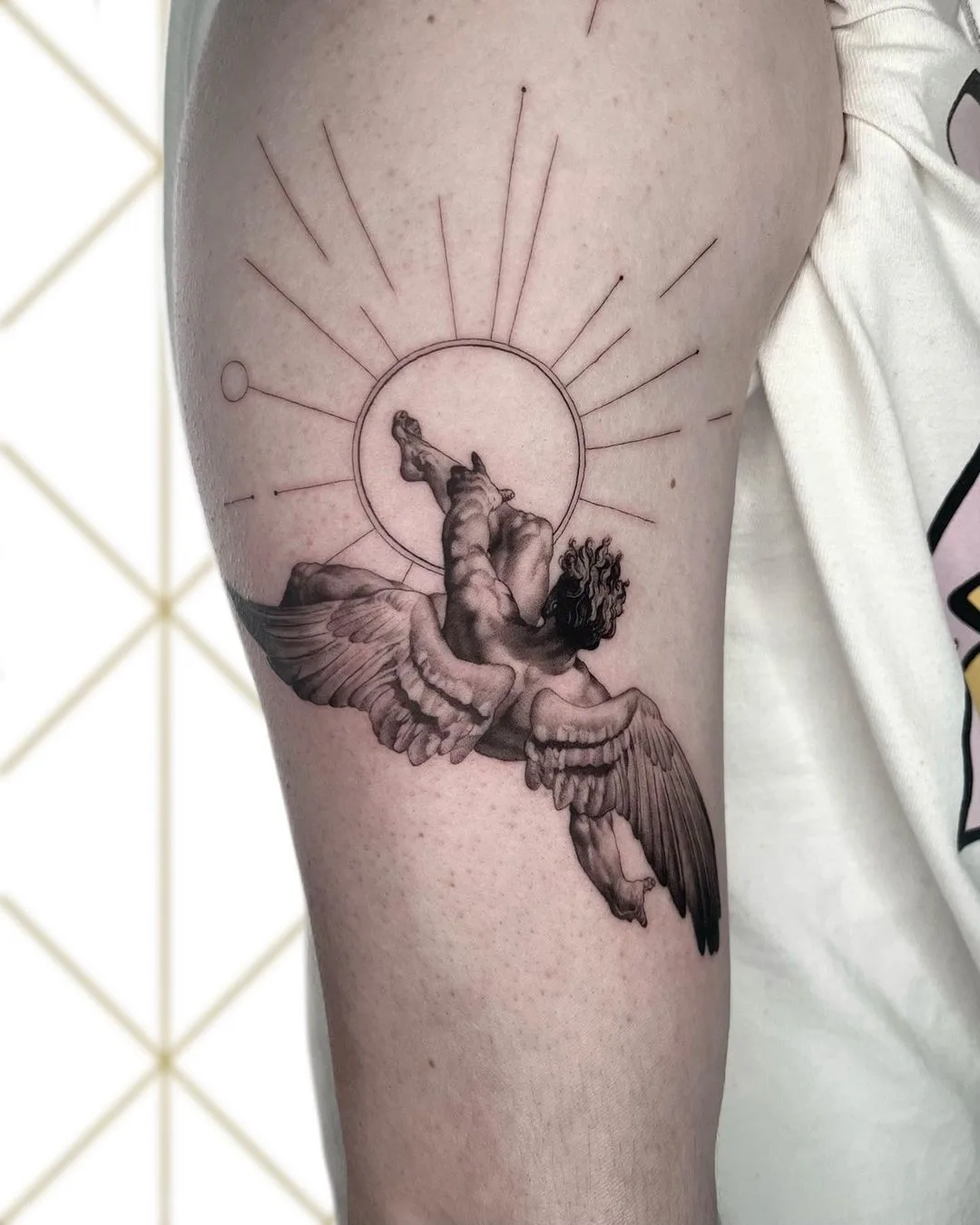
A guardian can appear behind a standing person, bending over a child, or wrapping wings around a smaller figure. Each arrangement changes the relationship between the subjects. An angel positioned above someone feels watchful and guiding. Wings surrounding a figure create a sense of immediate shelter. An angel walking beside a person emphasizes companionship, making the design feel like a spiritual presence moving through life with you.
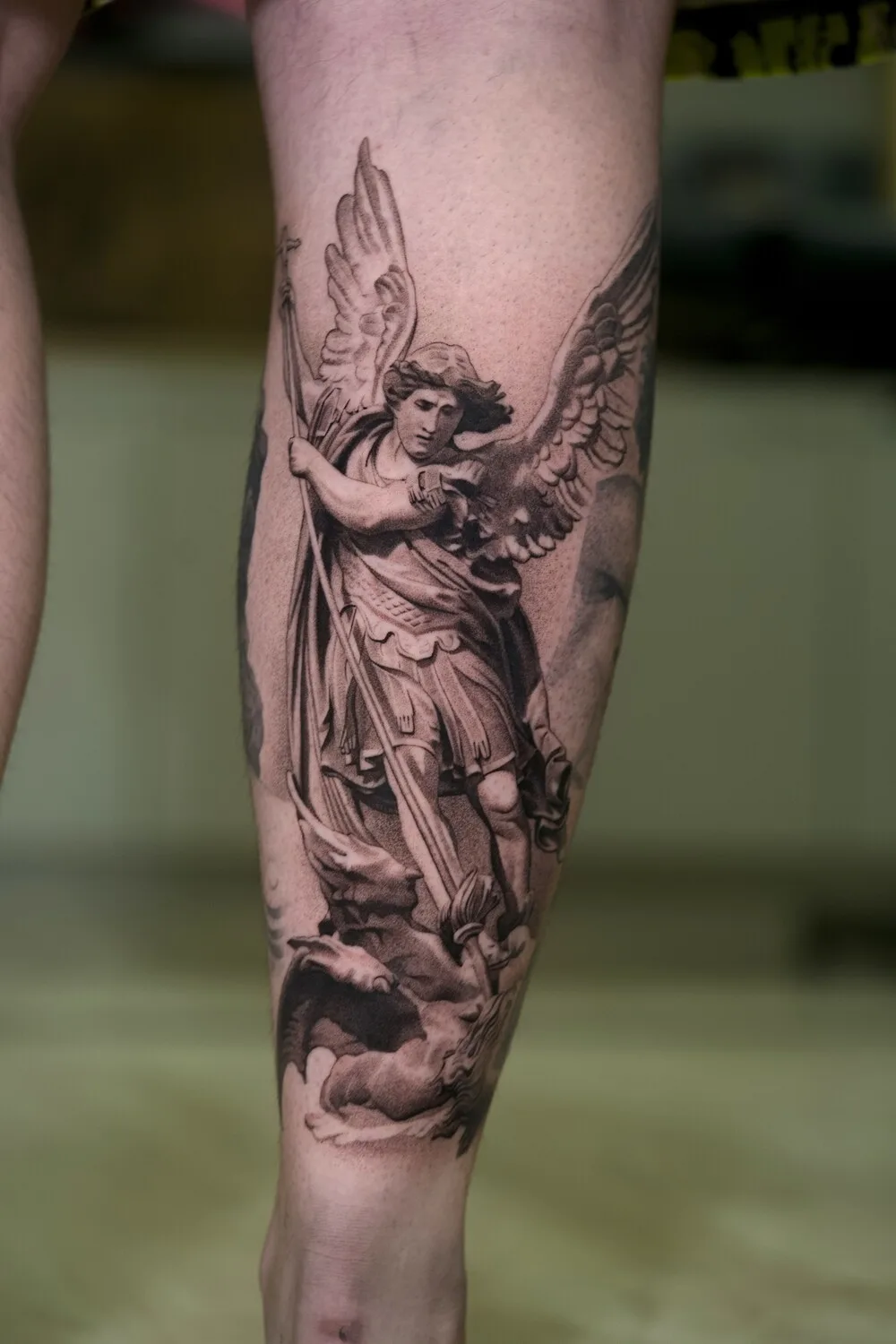
You can also choose symbols that identify what the guardian protects. A child may represent innocence, parenthood, or someone loved. A family silhouette can turn the piece toward home and responsibility. Armor, a sword, or a shield gives the guardian a more active role and can draw upon the Christian image of Archangel Michael. Gentle light, open hands, and soft feathers create a calmer expression of care.
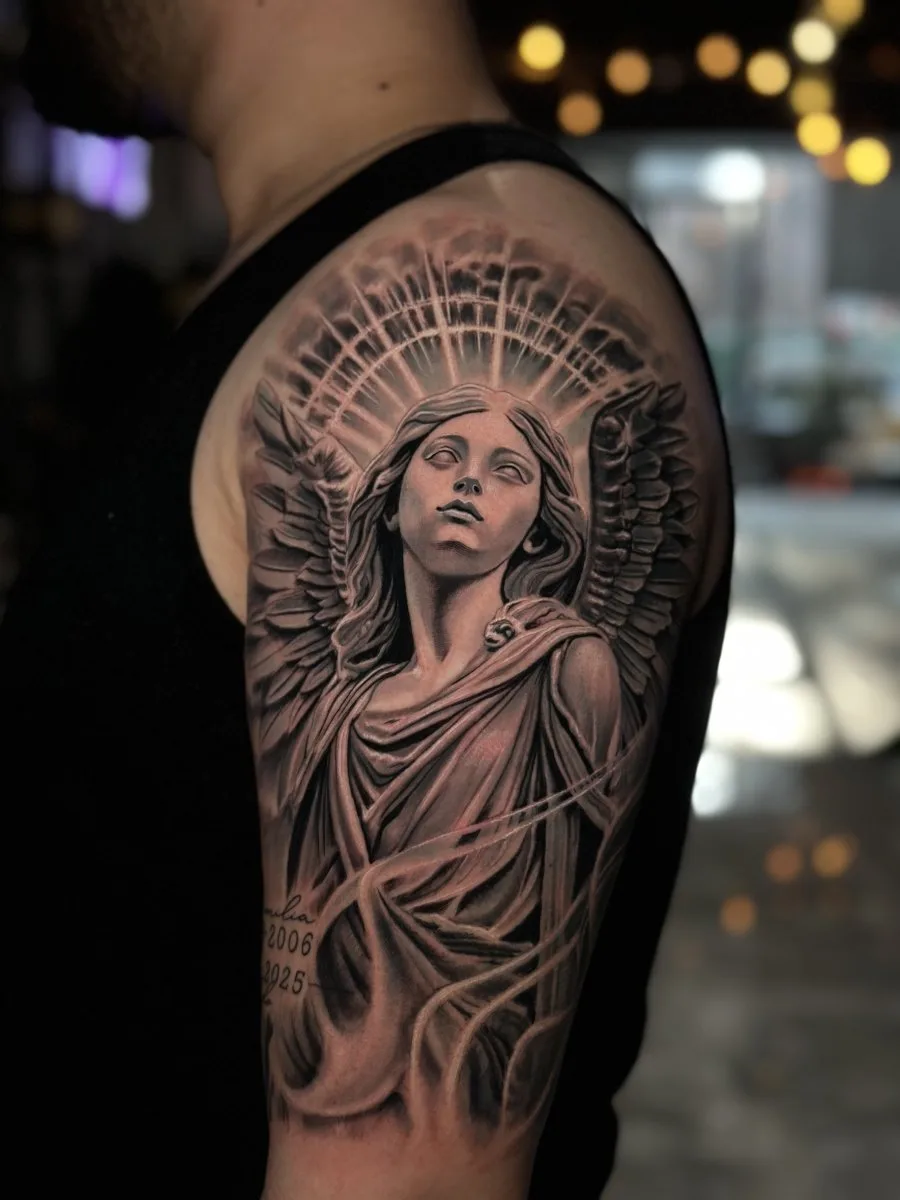
For a personal design, consider whether the figure represents a heavenly protector, a loved one whose care still guides you, or the strength you want to carry yourself. That decision can guide the angel's posture, facial expression, scale, and relationship to the other elements.
Memorial Angel Wings
Wings became a memorial favorite in contemporary tattoo culture because they can visually hold a person close while also placing that person in a heavenly setting. A memorial angel wings tattoo may honor a parent, child, partner, friend, or another loved one who has died. The sheltering shape expresses continuing care, while the upward movement of the feathers can suggest peace, passage, and a bond that reaches beyond physical absence.
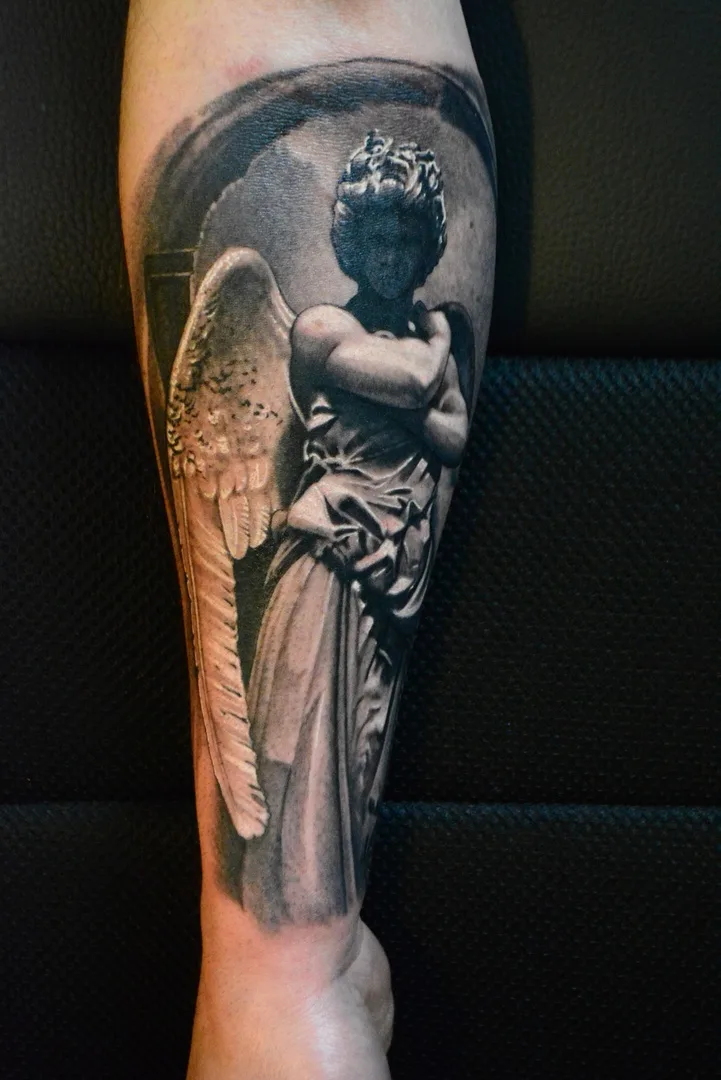
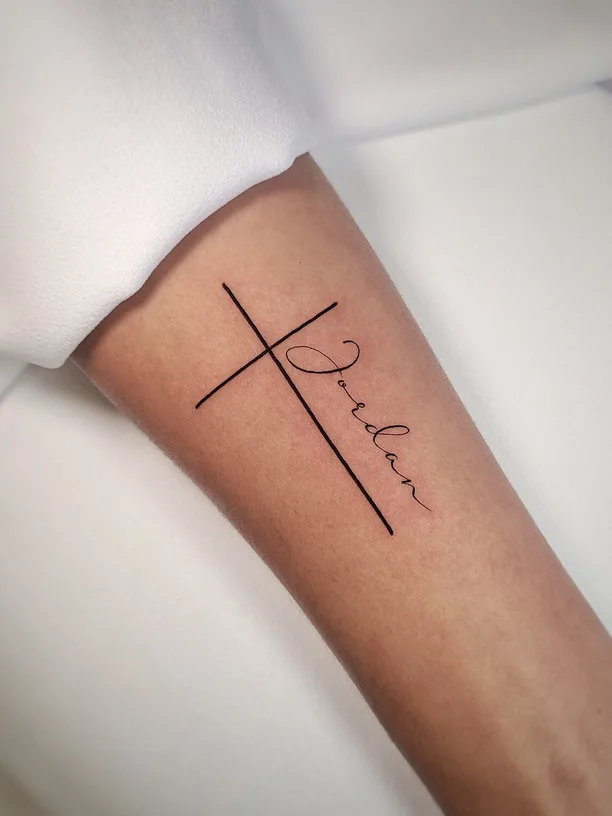
Names and dates make the dedication explicit. A halo, cross, heartbeat line, portrait, or handwritten message can add another layer of identity. Some people place a name between two wings, creating a balanced emblem that works at several sizes. Others build the wings around a portrait or silhouette so that the loved one appears protected within the composition. A single wing can also accompany an initial or a short remembrance when a quieter design feels appropriate.
Feathers connect memorial wings with broader ideas of lightness, flight, and spiritual presence. Our guide to feather tattoo symbolism explores those associations in greater depth. When combining a feather with a name or date, consider how clearly each element will remain visible as the tattoo ages. Generous spacing can help small lettering and fine feather lines retain their structure.
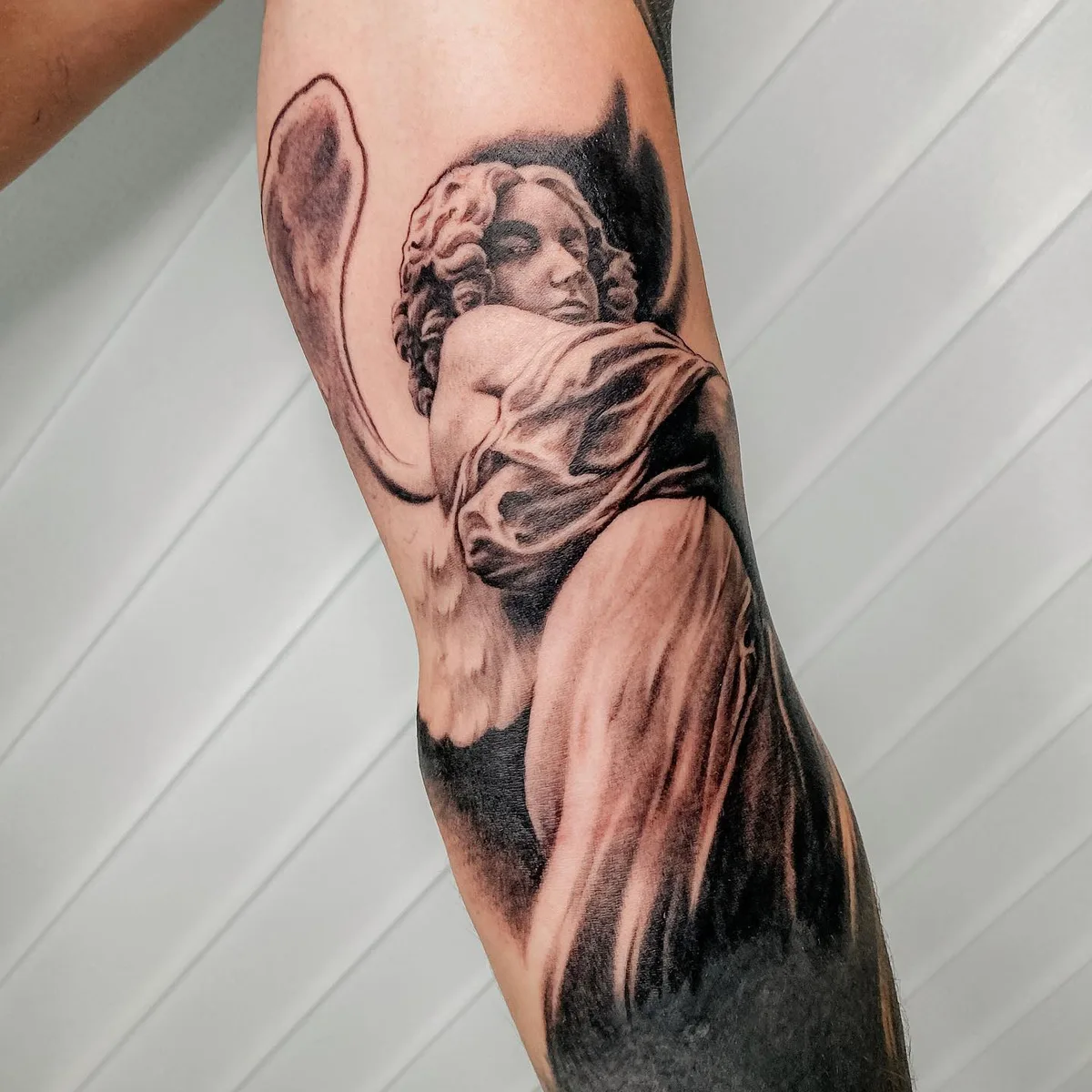
A memorial design benefits from details that belong to the person you are honoring. A flower they loved, a meaningful phrase, or a familiar piece of handwriting can make the image specific. The wings provide the protective framework; the personal symbol carries the individual memory.
Cherubs, Archangels and Fallen Angels
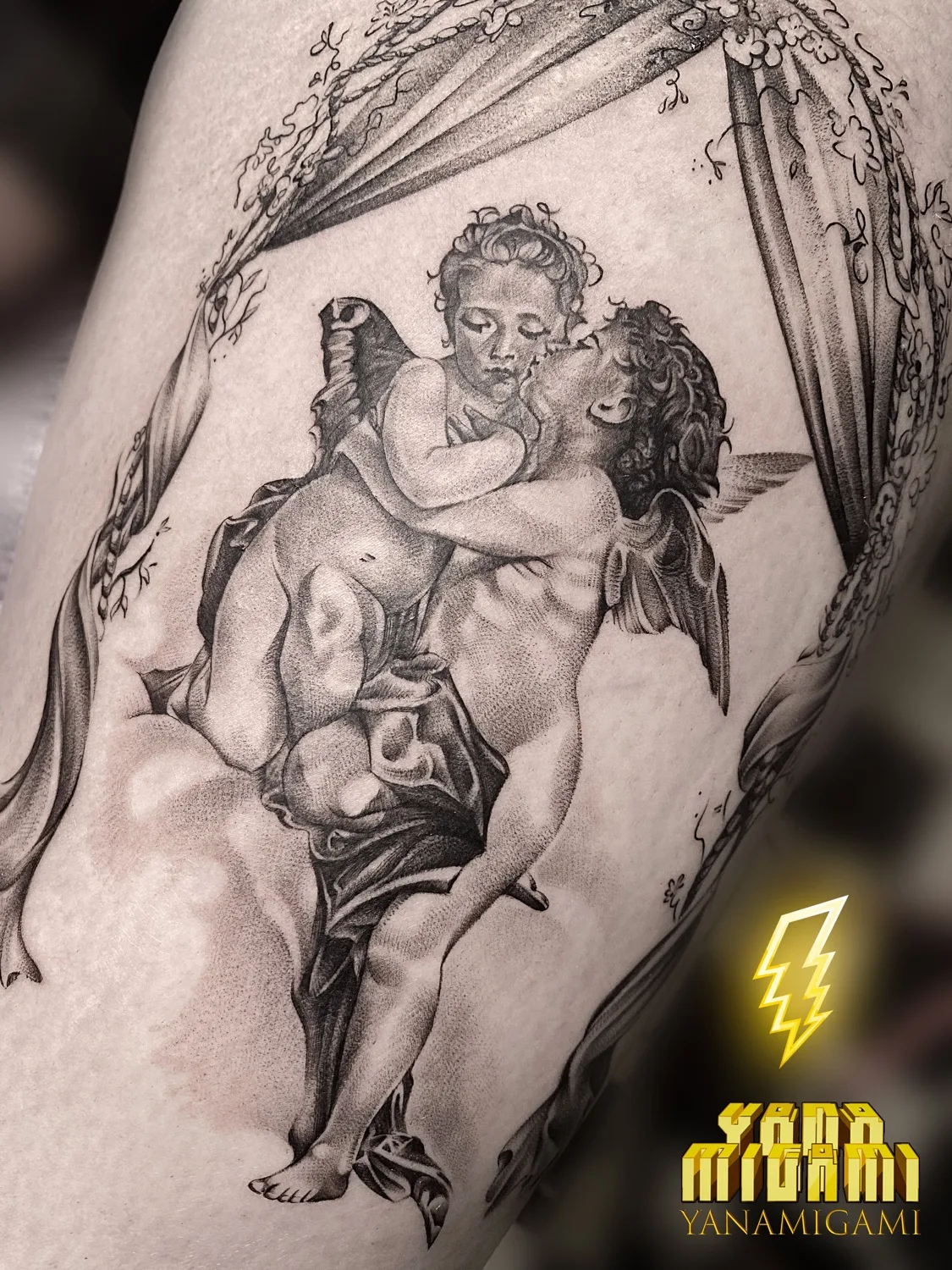
Different angelic figures create distinct emotional tones. Cherubs in popular tattoo imagery often take the form of putti, the chubby winged children seen in European Renaissance and Baroque art. Two especially familiar putti appear at the bottom of Raphael's Sistine Madonna, held by the Gemäldegalerie Alte Meister in Dresden. In a tattoo, this art-historical form can convey tenderness, affection, playfulness, or remembrance of a child. Biblical cherubim carry a grander role: Genesis 3:24 places them east of Eden to guard the way to the tree of life, and scripture associates them with sacred space and the divine throne.
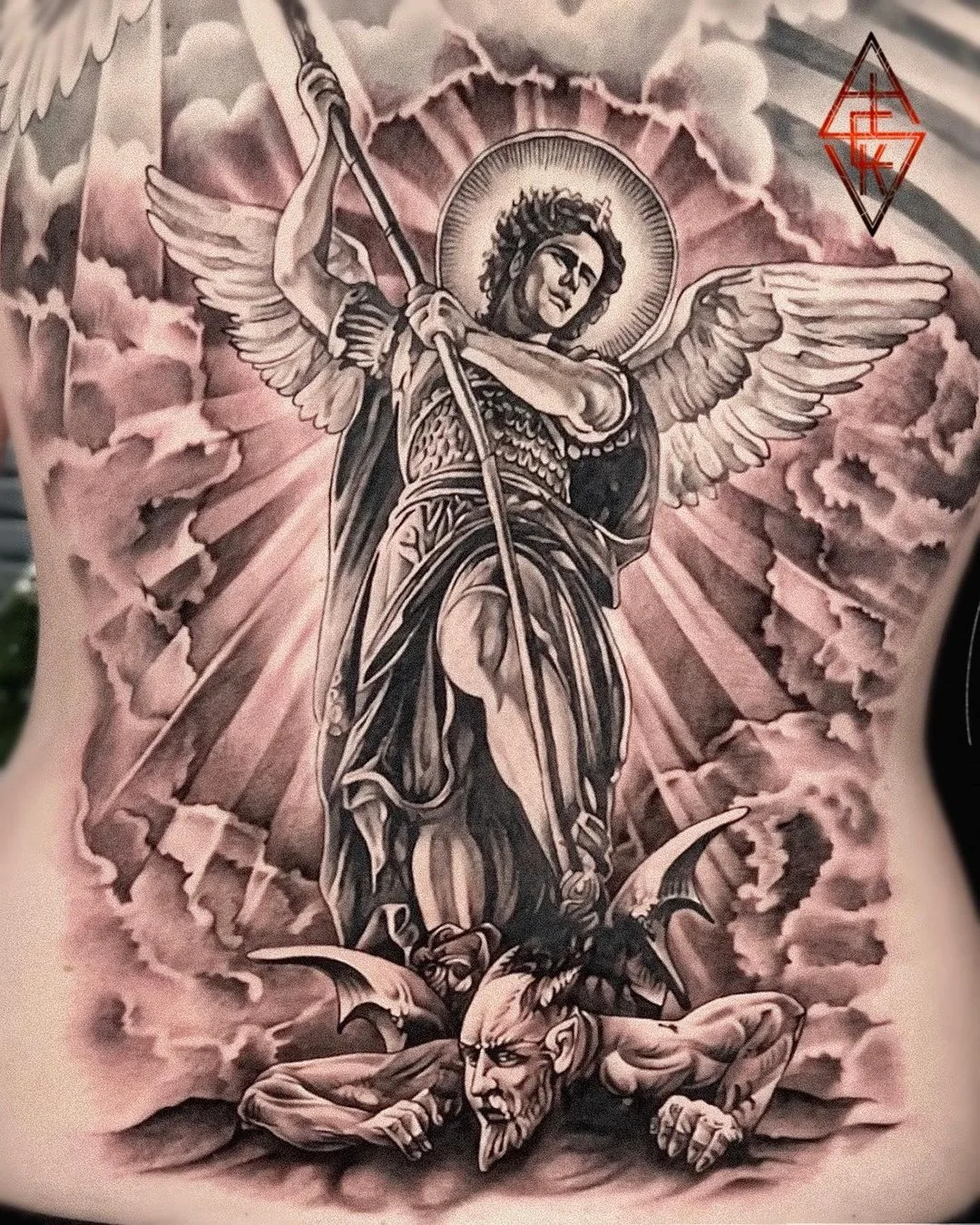
Archangel Michael brings a warrior image. In Revelation 12, Michael and his angels fight the dragon, and Christian art has long shown him with a sword or spear, a shield, and armor; tattoo compositions borrow that image. These elements support readings of protection, justice, courage, and resistance to evil. The dragon can serve as the defeated threat beneath Michael or as a dramatic symbol of the struggle itself. Its cultural associations vary widely, as explained in our guide to dragon tattoo meanings across cultures.
Gabriel creates a different atmosphere. In Luke 1, Gabriel announces to Mary that she will give birth to Jesus. Annunciation paintings often show Gabriel holding a lily or a scroll, with rays of light falling toward Mary. These symbols can shape a design around hope, revelation, a life-changing message, or a new beginning. Gabriel is well suited to a calm, luminous composition with open gestures and flowing fabric.
A fallen angel carries a darker story. Christian and literary traditions connect the image with separation from heaven, pride, regret, and the consequences of a defining choice. Tattoo designs often express this through dark or damaged wings, chains, ruins, a bowed posture, or a figure looking upward. Isaiah 14:12 mourns a fallen “morning star,” rendered as Lucifer in the Latin Vulgate and the King James Bible; the passage addresses the king of Babylon, and later tradition read it as the fall of Satan. Revelation 12 describes the dragon and his angels cast down from heaven. Later literature, especially John Milton's Paradise Lost, helped shape the proud and tragic fallen figure familiar in modern art.
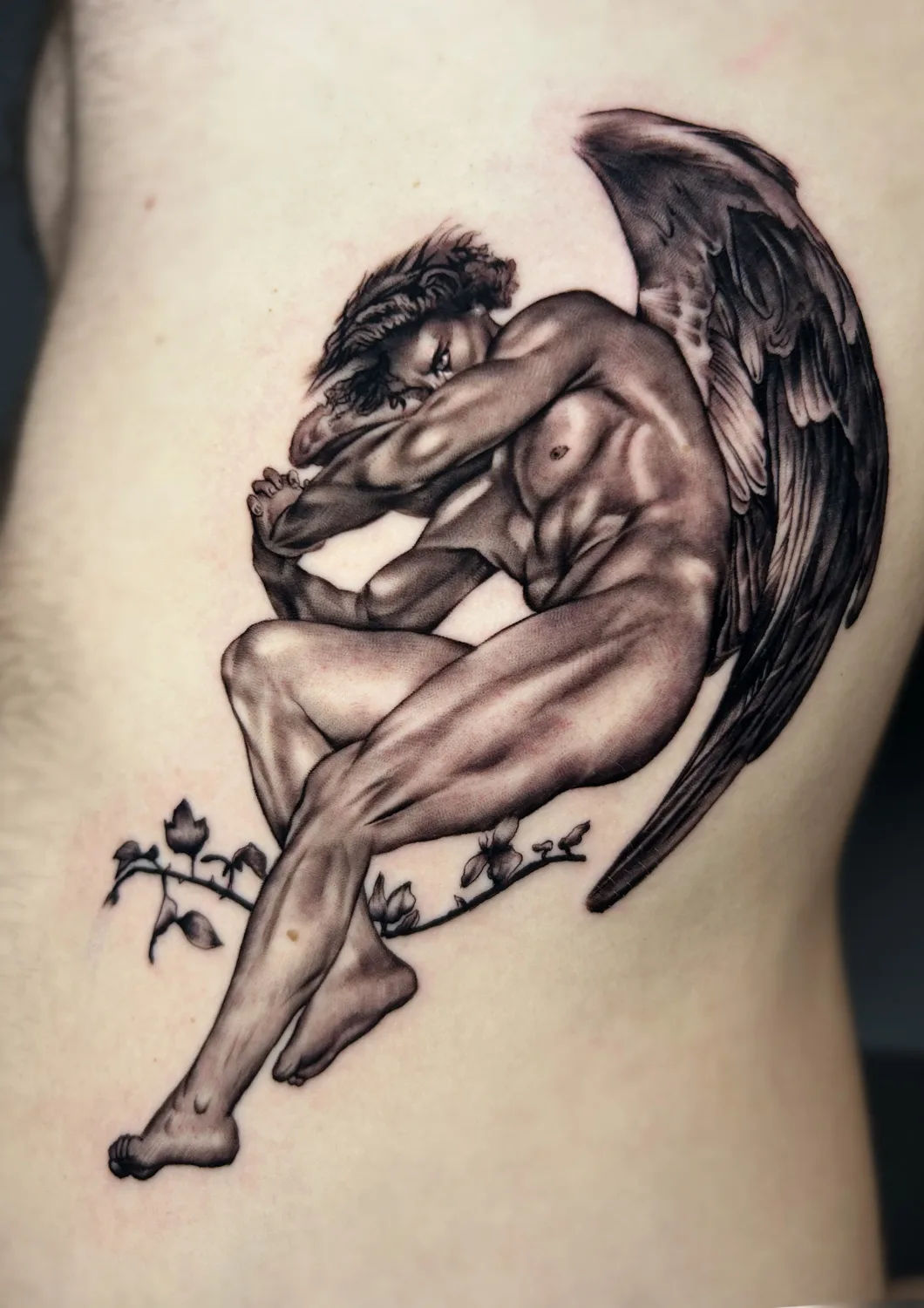
An angel paired with a demon usually expresses inner conflict in contemporary tattoo symbolism. The two figures can represent conscience and temptation, discipline and impulse, or competing paths. Their scale and position reveal the balance: equal figures suggest an ongoing struggle, while one figure rising above the other indicates a choice taking shape.
Placement
In contemporary tattooing, placement shapes composition and emphasis more than meaning. The upper back is the classic location for a large pair of wings because the shoulder blades give each wing a natural base. Feathers can follow the shoulders and taper toward the spine or waist, creating the impression that the wearer has their own wings. This broad area also provides room for layered feathers, shading, halos, names, or a central angelic figure.
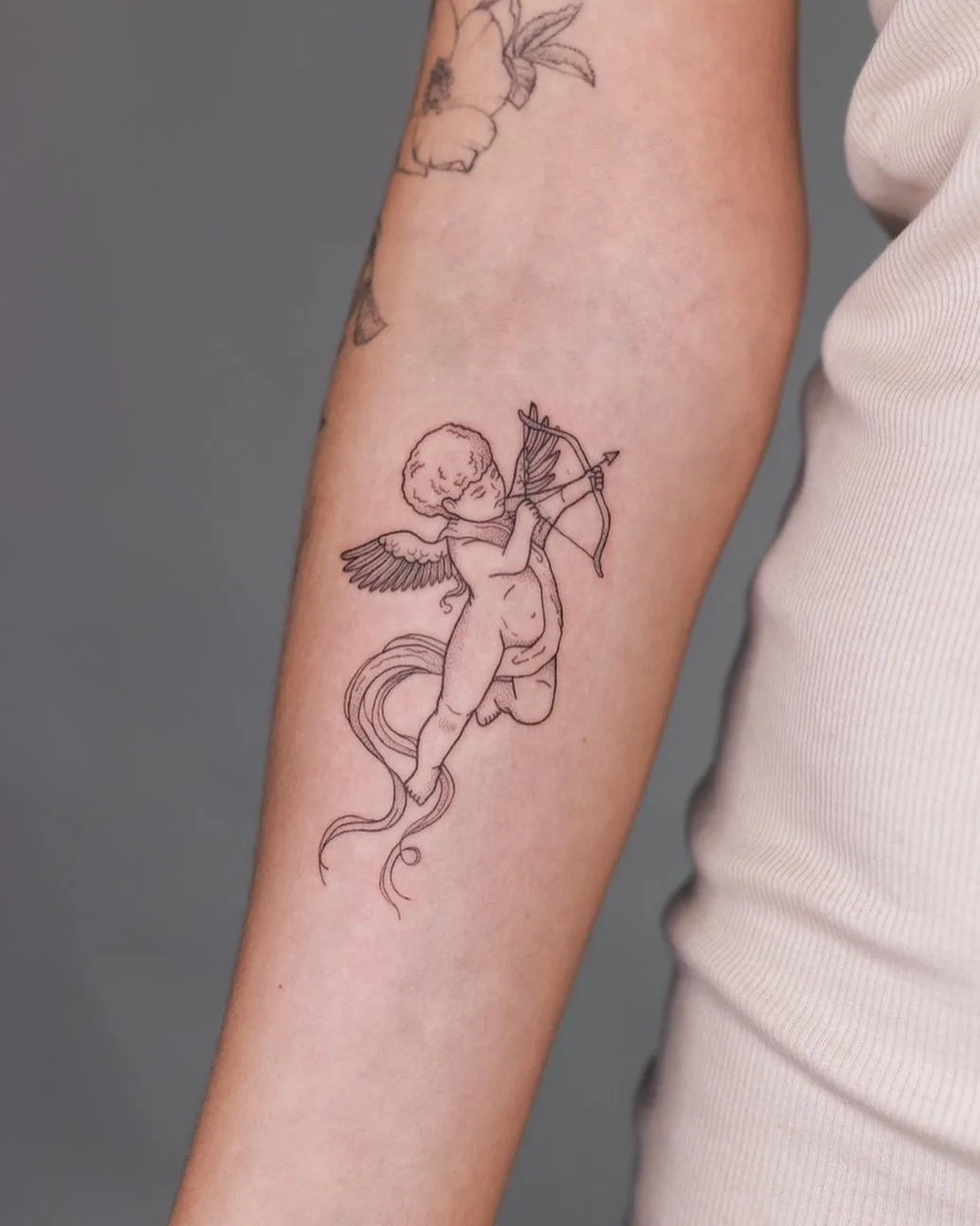
The chest can frame wings around the sternum, a cross, or a memorial inscription. On the upper arm or thigh, folded wings fit the body's vertical shape and can form part of a larger sleeve or leg piece. A forearm placement gives a guardian figure enough length for a readable pose, while the ribs suit elongated, sweeping feathers.
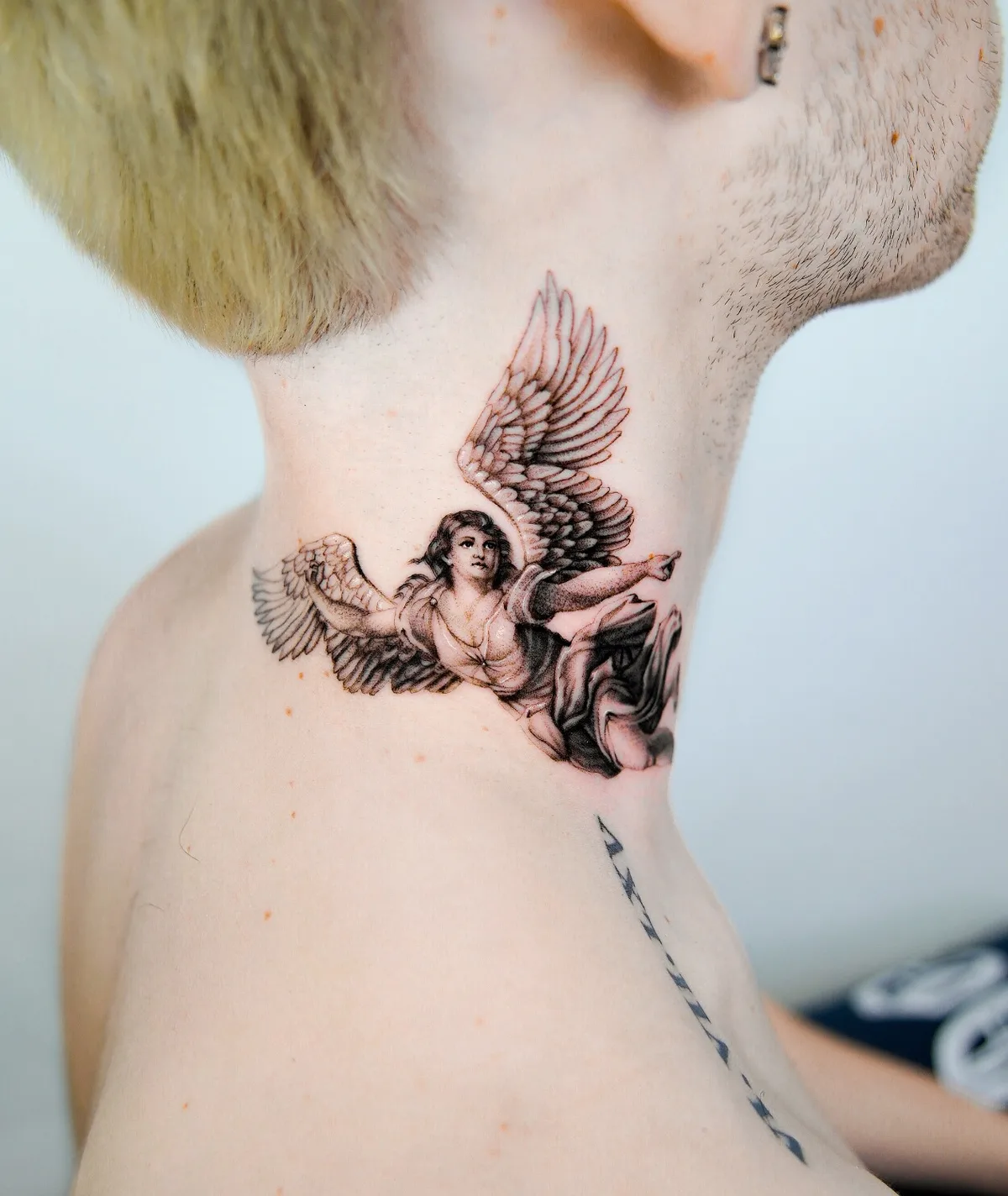
Small wings work well behind the ear, at the wrist, on the ankle, or at the back of the neck. These placements create a discreet emblem of protection or remembrance. Fine details require enough space to remain clear, so a tattoo artist may simplify individual feathers, lettering, and facial features at smaller sizes. Bring several placement ideas to your consultation and ask to see the design at full scale on the body before committing.
FAQ
What does an angel wings tattoo mean?
They commonly express protection, spiritual care, freedom, hope, or remembrance in contemporary tattoo symbolism. Wings folded around a figure emphasize shelter, while open or rising wings suggest aspiration and movement toward something higher. Names, dates, halos, crosses, and portraits can turn the image into a clear memorial or statement of Christian faith.
What does a guardian angel tattoo mean?
It represents companionship, care, and hope for heavenly help during difficult times. The idea draws from Christian tradition, including Matthew 18:10 and its reference to angels before the Father in heaven. A guardian behind a person appears watchful, while wings wrapped around a child or smaller figure create a stronger image of direct protection.
What does a fallen angel tattoo mean?
A fallen angel can represent separation, pride, regret, rebellion, or the lasting consequences of a choice. Damaged wings, chains, ruins, and bowed poses bring these themes into the design. Christian scripture and later literary tradition provide the image's spiritual and tragic background, while modern tattoos often connect it with a personal struggle or difficult transformation.
What do angel wings on the back mean?
In modern tattoo interpretation, wings across the back often feel like the wearer's own wings. The shoulder blades support that illusion and allow the feathers to open across the body. The design may express protection, freedom, spiritual identity, or remembrance. Folded wings create a quieter mood, while a wide, raised pair projects confidence and strength.