What a Single Feather Carries
A feather keeps the shape of the bird that dropped it: light enough to drift on air, yet structured to make flight possible. That pairing is the root of the feather tattoo meaning most people choose: freedom, lightness, and quiet strength. It can mark independence, release from a difficult period, or the courage to follow your own direction. Because a fallen feather also suggests an absent bird, the image can preserve the memory of someone who is gone.
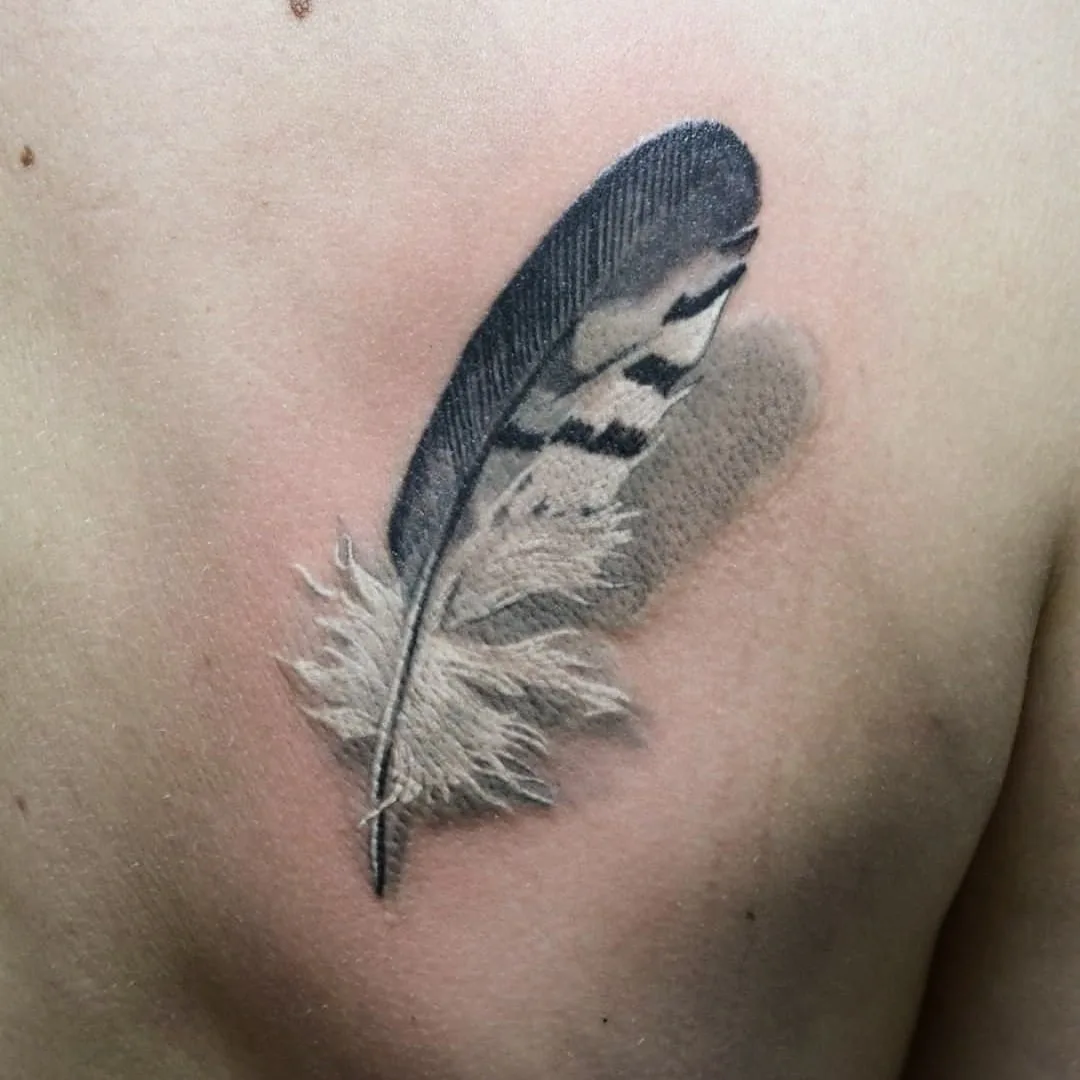
Ancient Egyptian tradition adds another layer. In the Book of the Dead, commonly identified as spell or chapter 125, the heart of the deceased is weighed against the feather of Maat. Maat represents truth, justice, and cosmic order, so a feather inspired by this scene can express conscience, honesty, and the wish to live in balance. If that is your reference, details such as scales or an Egyptian visual frame can make the source clearer.
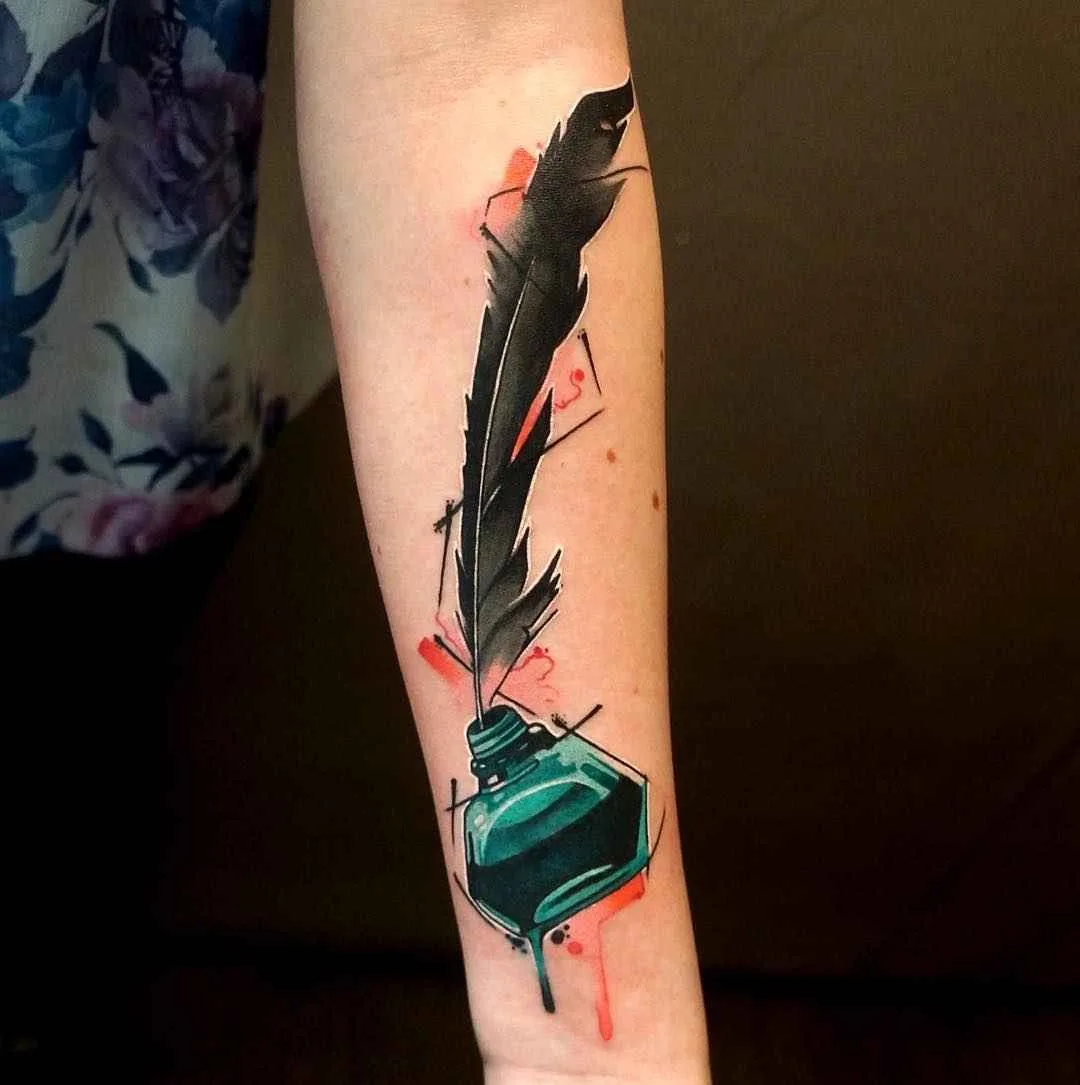
A quill shifts the focus toward writing, imagination, and a life shaped by words. A feather paired with an arrow may emphasize direction and resolve. Dreamcatcher combinations are commonly read today as signs of protection and good dreams, although the dreamcatcher comes from Ojibwe tradition and deserves thoughtful research rather than decorative borrowing. You can explore different compositions in the feather tattoo gallery before deciding which associations belong in your design.
Eagle, Raven and Phoenix Feathers
The bird changes the emotional weight of the design. Outside specific Indigenous contexts, an eagle feather tattoo usually stands for courage, vision, and freedom. An eagle flies high and sees across great distances, making its feather a strong choice for someone who wants to remember a wider goal or act with confidence. Our guide to eagle tattoo symbolism explores those associations in greater depth.
For many Native American tribal nations, eagle feathers are sacred honors connected with courage, achievement, and responsibility. Meanings and protocols differ from nation to nation, so no single reading covers them all. The legal status of physical feathers matters too: under the Bald and Golden Eagle Protection Act, possessing eagle feathers without authorization is prohibited in the United States. The US Fish and Wildlife Service explains that enrolled members of federally recognized tribes may obtain feathers for religious use through the National Eagle Repository. A tattoo isn’t a real feather, of course, but its design can still point to sacred regalia.
A raven feather tattoo draws from a darker, more reflective image. In Norse mythology, Odin’s ravens Huginn and Muninn are associated with thought and memory. A raven feather can suggest intelligence, memory, and the uneasy knowledge that only experience brings. Read more about these mythic and modern associations in the guide to raven tattoo meaning.
A phoenix feather tattoo carries the heat of survival. Classical accounts describe the phoenix as a bird renewed through a cycle of death and return, and modern designs often use a single burning feather to represent rebuilding after loss. Red, orange, and gold can make the reference immediate, while blackwork can present rebirth in a quieter form. The full story appears in our article on phoenix tattoos and rebirth.
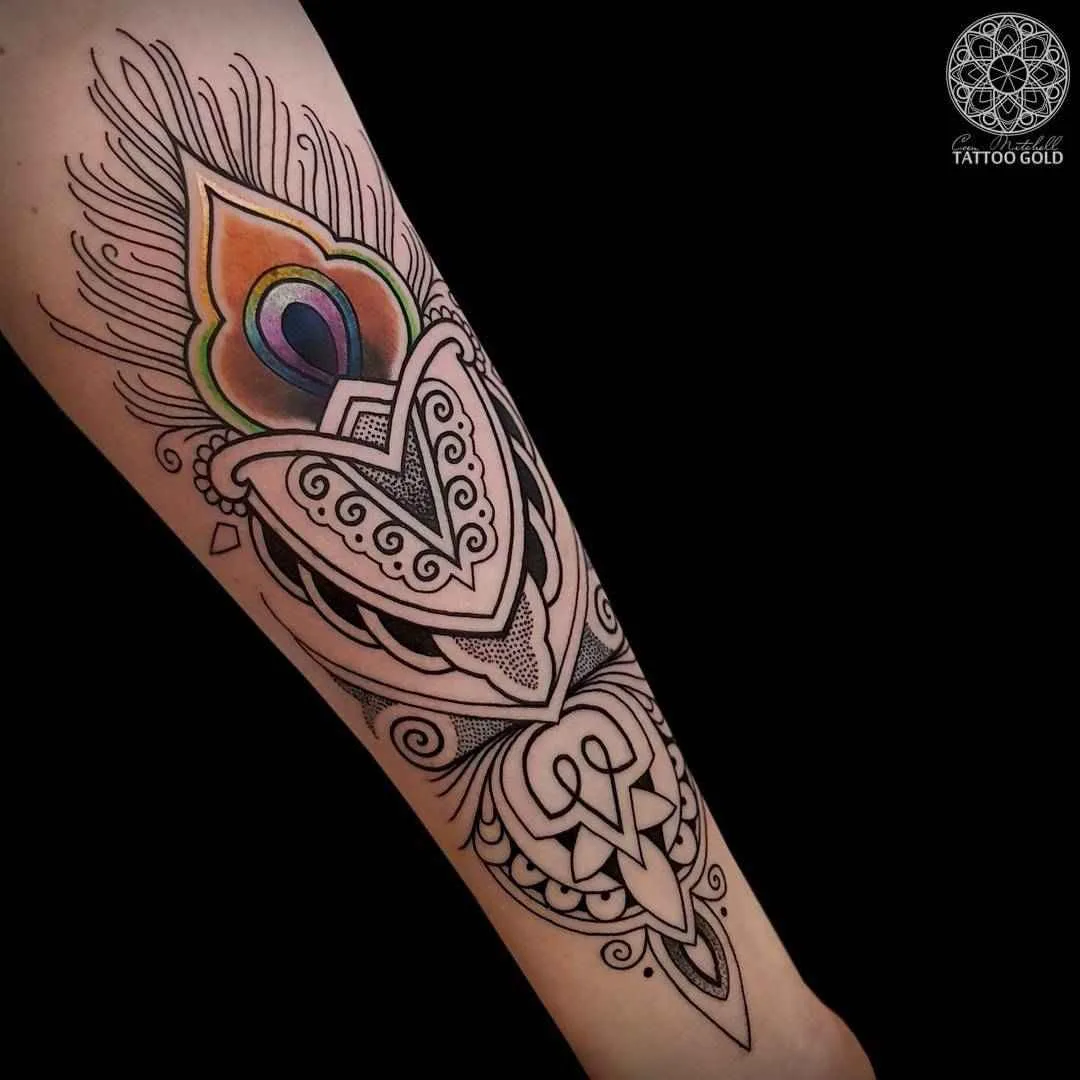
Other species create different moods. In Indian religious imagery, Krishna is commonly shown wearing a peacock feather in his crown, connecting it with beauty and joy; the eye-like pattern can also suggest watchfulness. Whatever bird you choose, name the source clearly if the design borrows from a living cultural tradition.
Feather Turning Into Birds
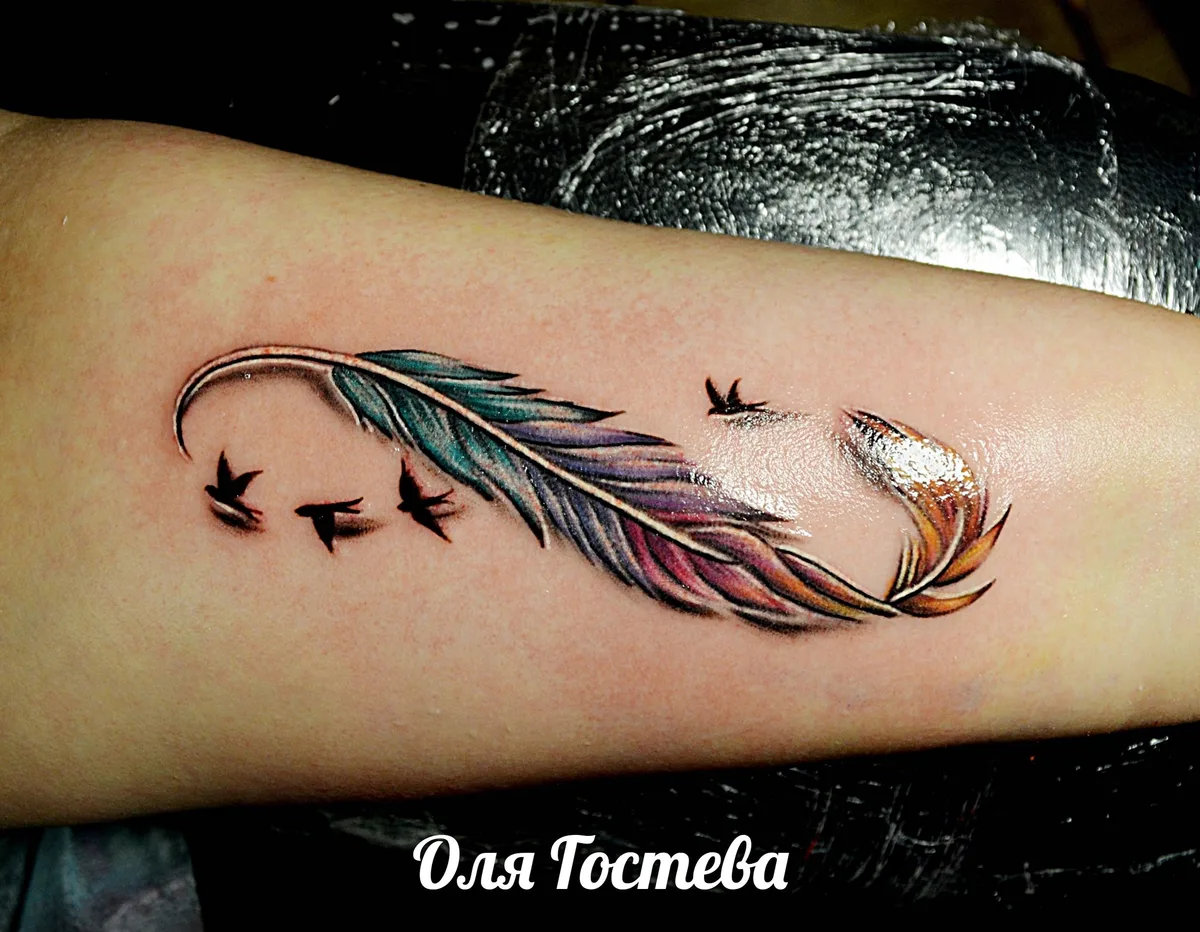
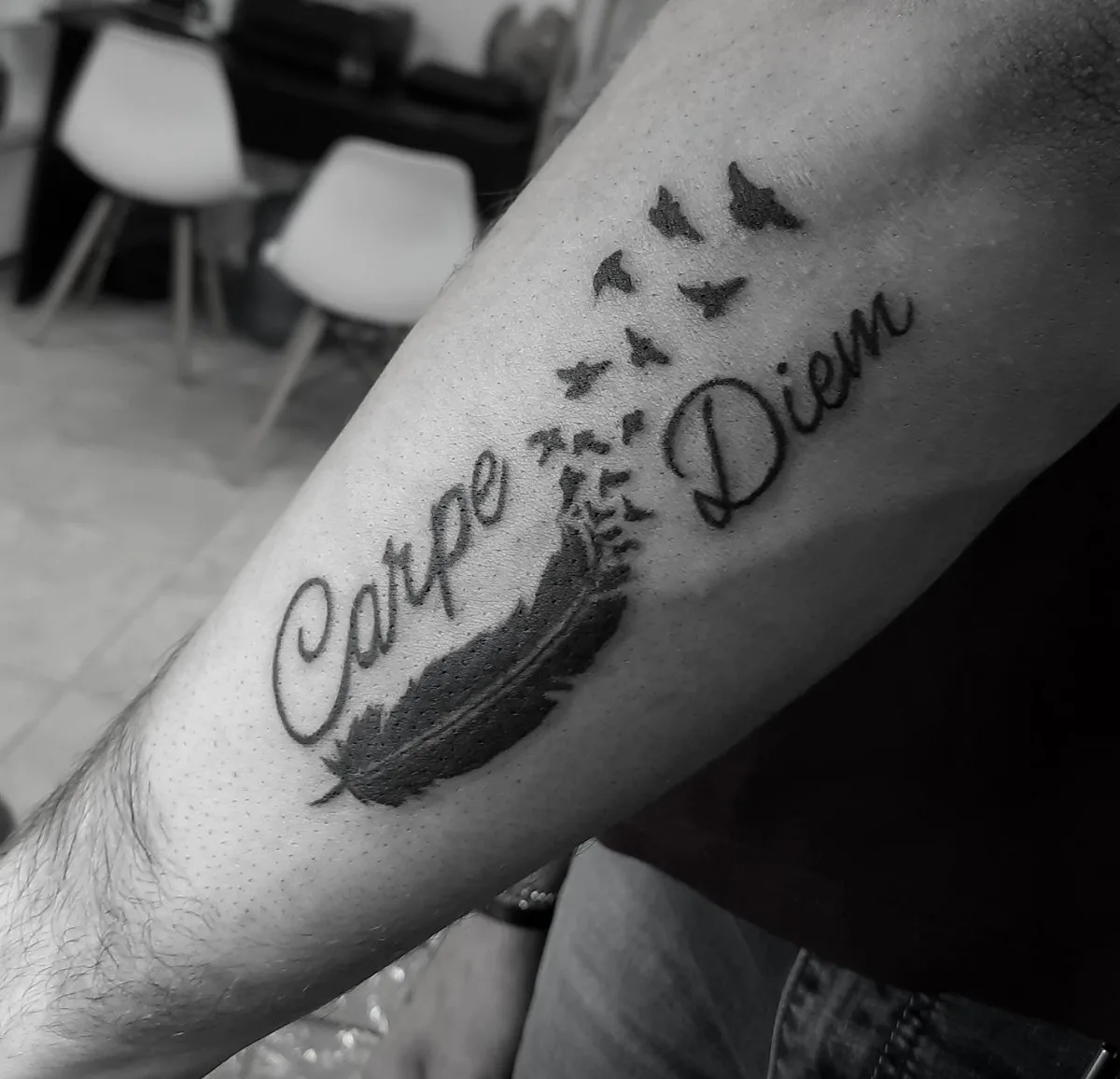
A feather dissolving into a flock is one of the most familiar modern compositions. The solid form appears to loosen, divide, and take flight, creating a visual story about letting go. It can mark a change of identity, the end of a restrictive period or the beginning of a new chapter. Birds rising upward usually give the scene a hopeful motion, while a flock moving across the body can make the transition feel active and unfinished.
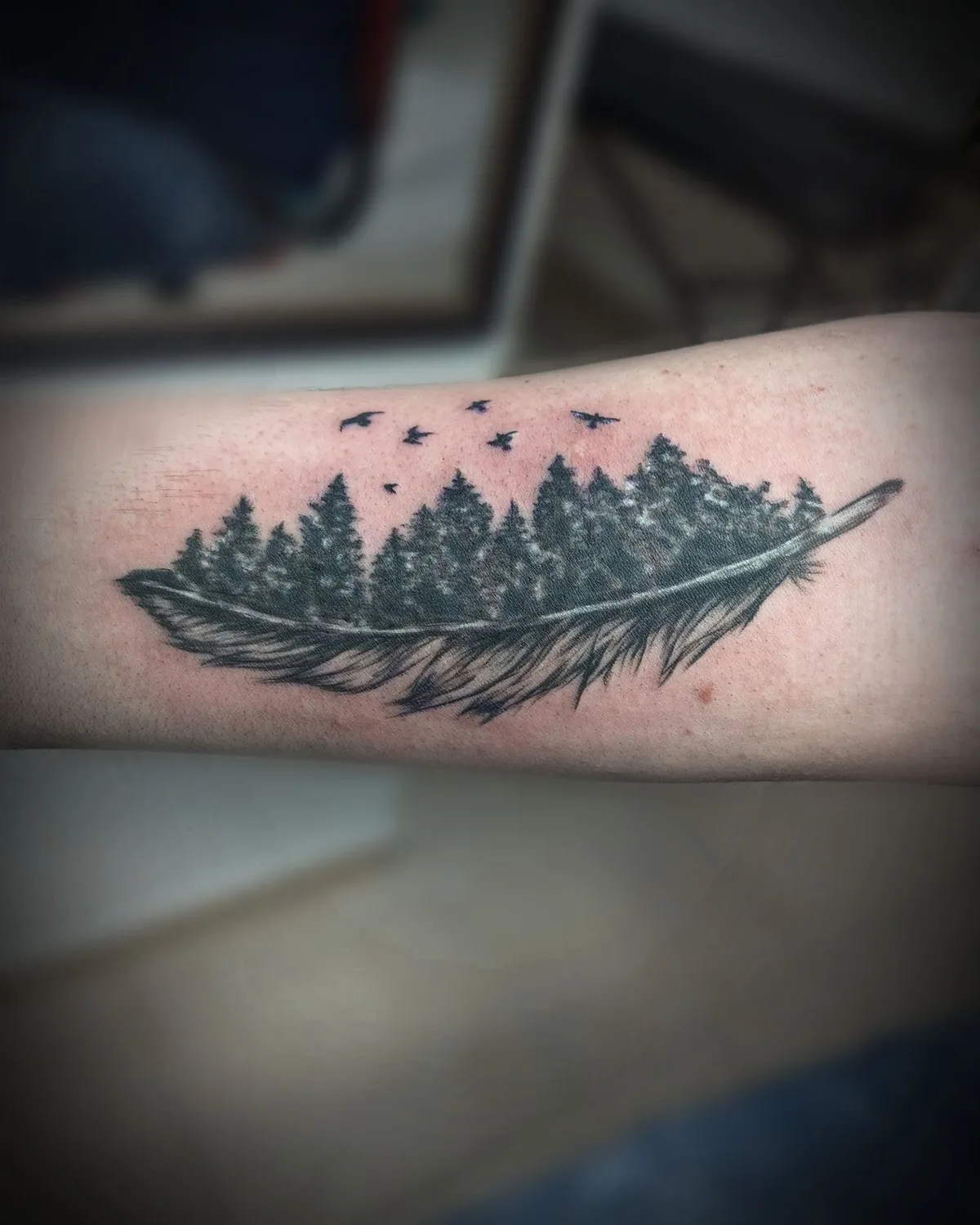
The direction and spacing affect how the story reads. A tight group of birds feels connected to the original feather; wider gaps make the flock look increasingly independent. Some people assign each bird to a person, a goal, or a stage of life, while others treat the flock as one movement toward freedom. A tattoo artist can also use the body’s natural lines so the birds appear to travel around the shoulder, along the forearm, or across the ribs rather than sitting inside a rigid rectangle.
Feathers in Memorial Tattoos
A memorial feather tattoo uses the image’s softness and sense of absence to hold a personal remembrance. In a popular folk belief, finding a feather means that a loved one who died is nearby; the saying “feathers appear when angels are near” belongs to the same comforting tradition. This is a spiritual interpretation rather than a teaching shared by every faith, but it gives many wearers a gentle way to express an ongoing bond.
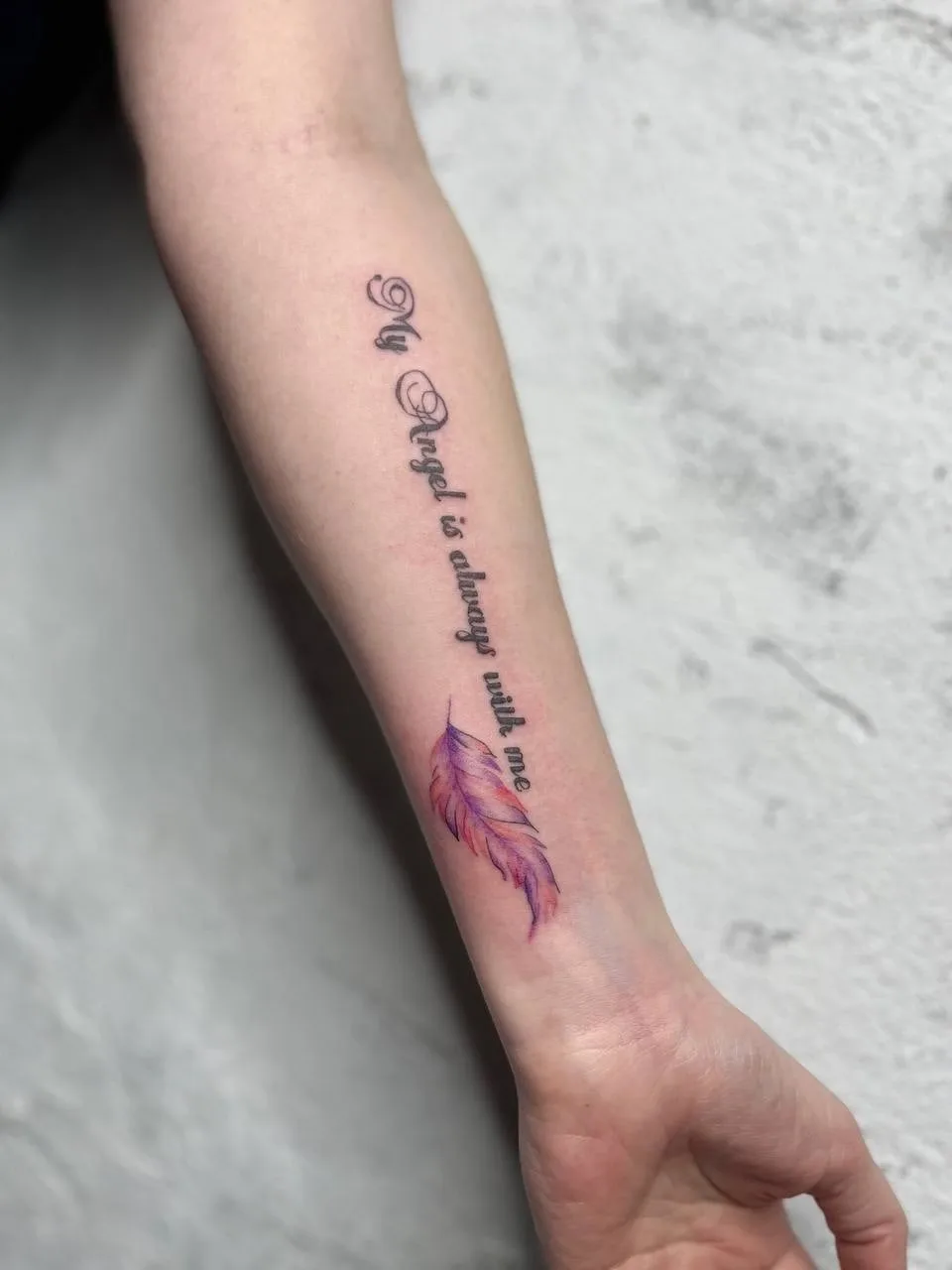
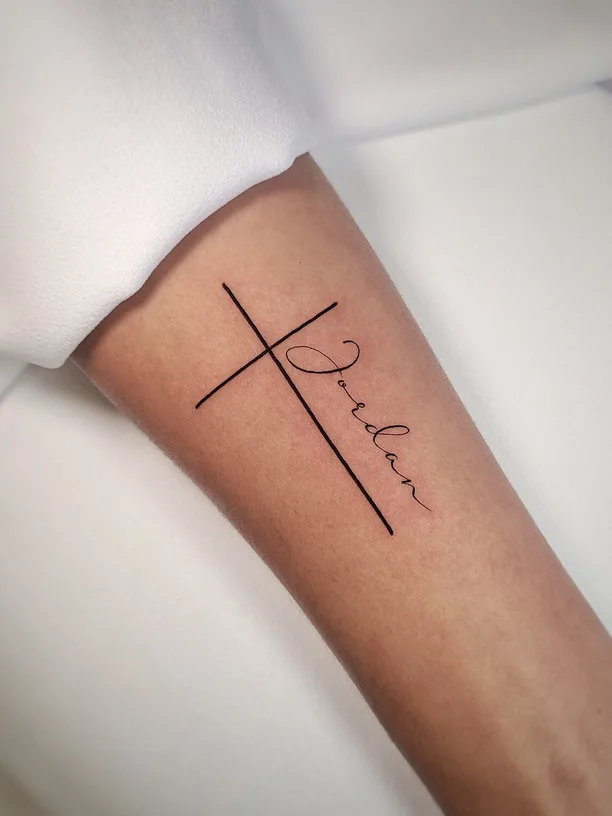
Initials, names, and dates can identify the person directly. A line copied from their handwriting creates a more intimate detail, while a heartbeat line may refer to life, loss, and continued love. If privacy matters, the memorial can remain encoded: the feather might use the colors of a loved one’s favorite bird, contain a small symbol they valued or break into a number of birds understood only by you.
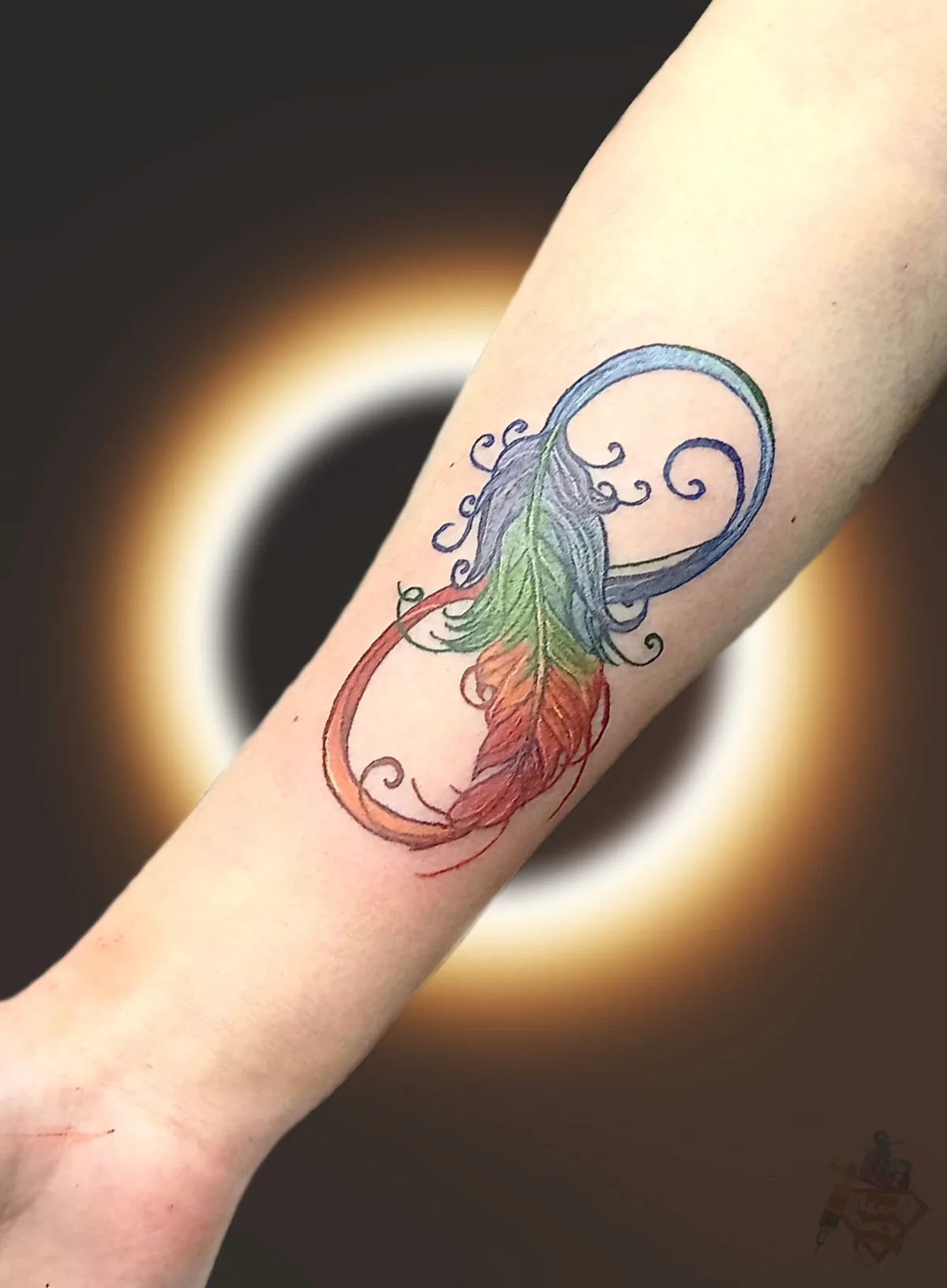
Leave enough room for handwritten text and fine internal lines to remain readable. Dates and initials can be placed beside the shaft instead of squeezed into the barbs. Bring the clearest available handwriting sample to your tattoo artist, who can simplify fragile marks while preserving the character of the original.
Styles and Placement
Fine line suits the feather’s lightness and can describe the shaft and individual barbs with minimal weight. Watercolor adds drifting color, splashes, or fire-like transitions, especially in phoenix designs. Realism focuses on species-specific texture, while dotwork builds soft shadow through fields of small marks. Blackwork, traditional, and neo-traditional approaches produce a bolder silhouette that remains clear from farther away.
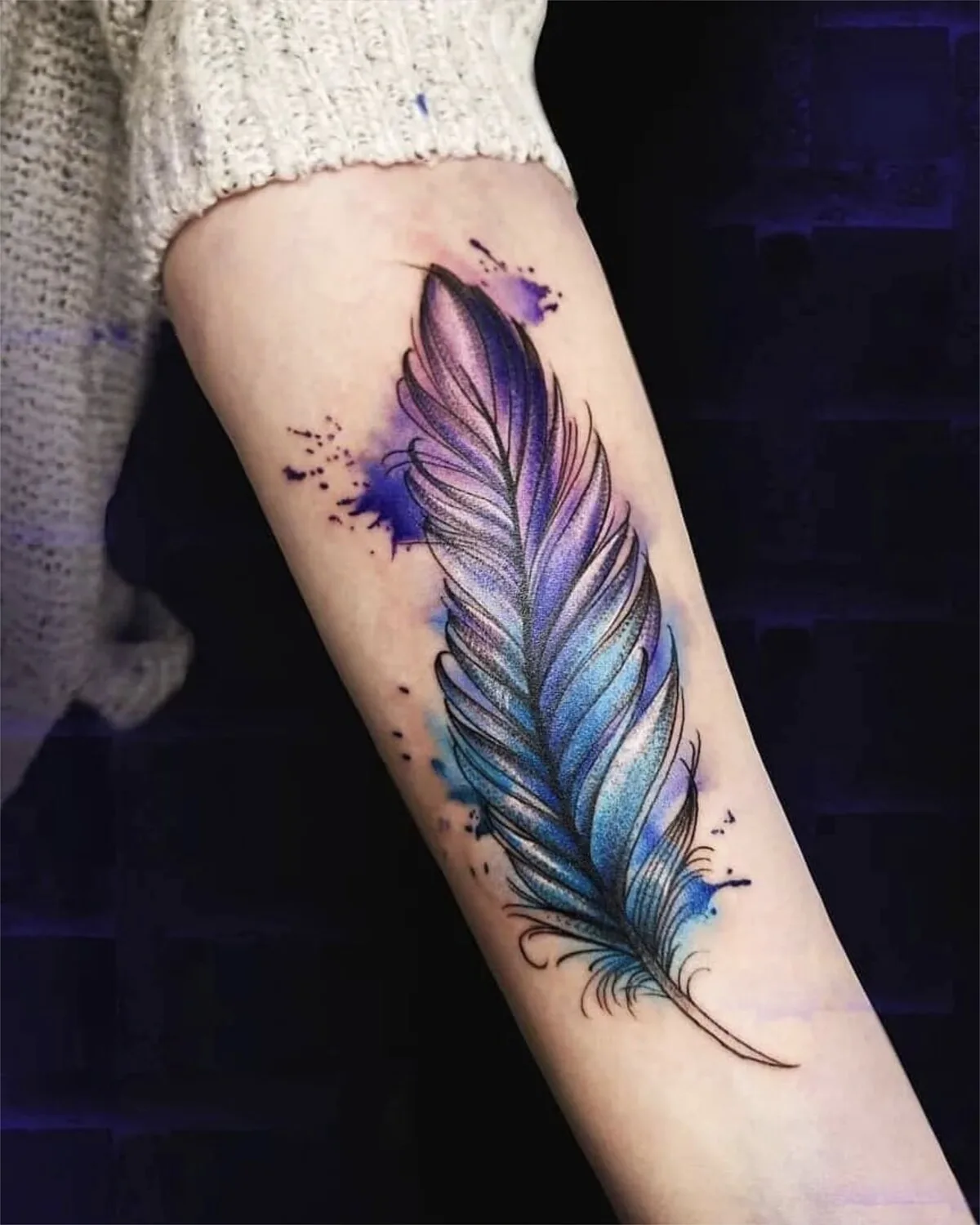
Very small feathers need restraint. Closely packed barbs and tiny gaps can lose separation as tattoo lines settle and soften over time. A simplified outline may age more clearly than miniature realism, particularly behind the ear or on the ankle. Ask your tattoo artist how much detail the chosen size can support and examine healed examples of similarly delicate work.
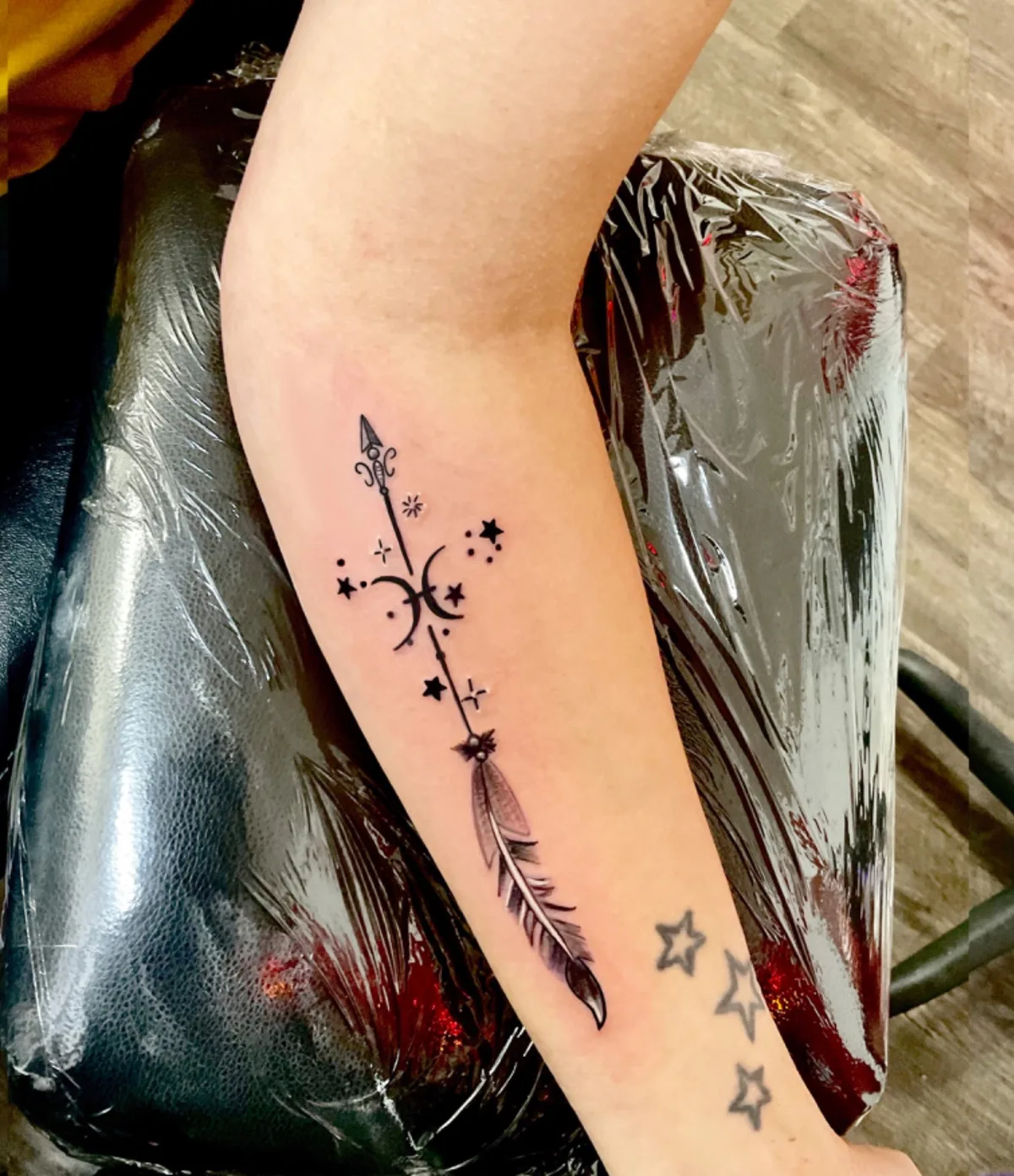
The feather’s long, narrow shape fits naturally on the forearm, ribs, spine, and collarbone. A forearm design stays visible and gives a transforming flock room to travel toward the wrist or elbow. The ribs and spine can hold a longer feather with sweeping barbs, although both tend to hurt more. The collarbone supports a light horizontal composition, while the ankle or area behind the ear works best for a compact, simplified version.
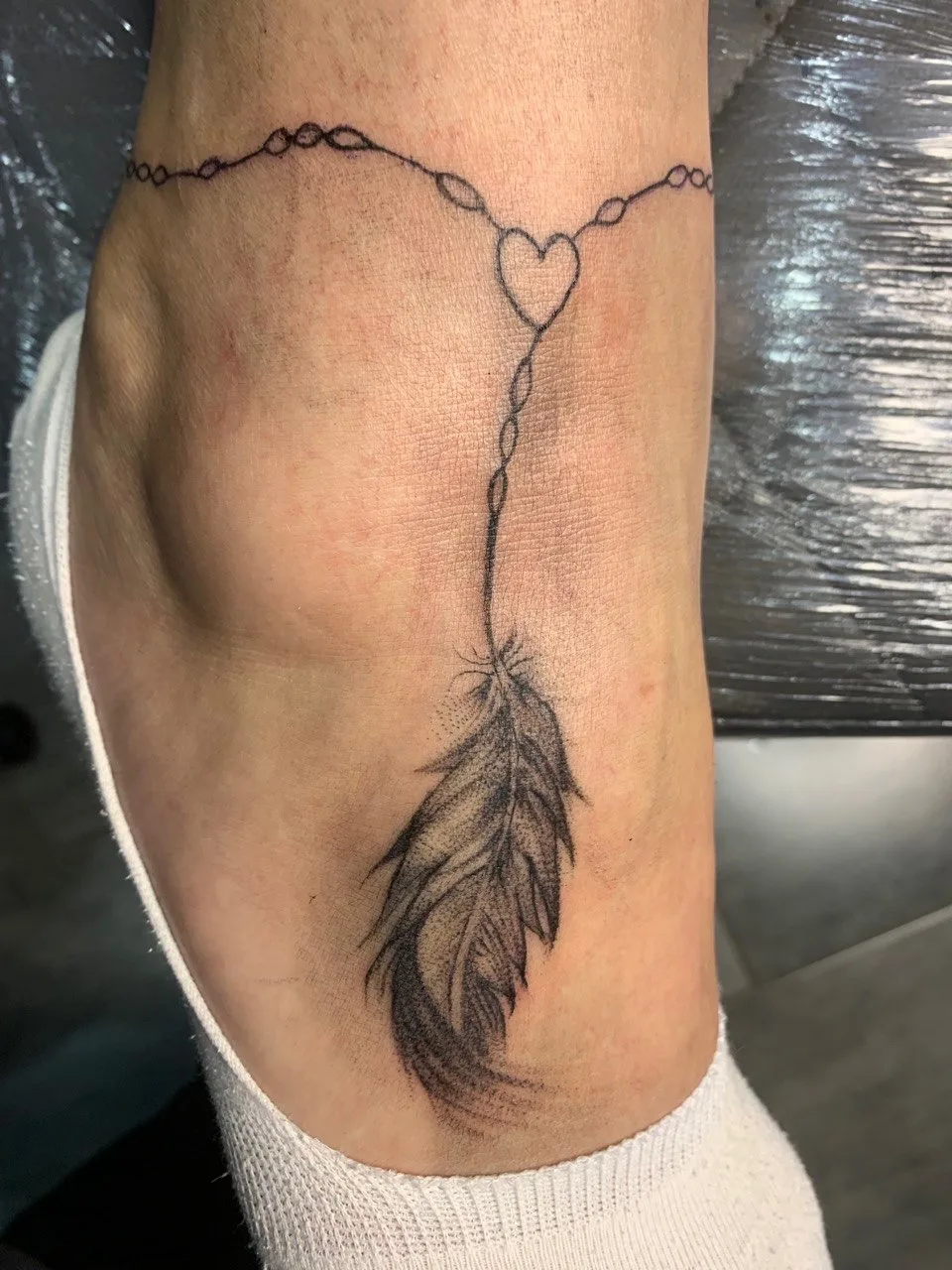
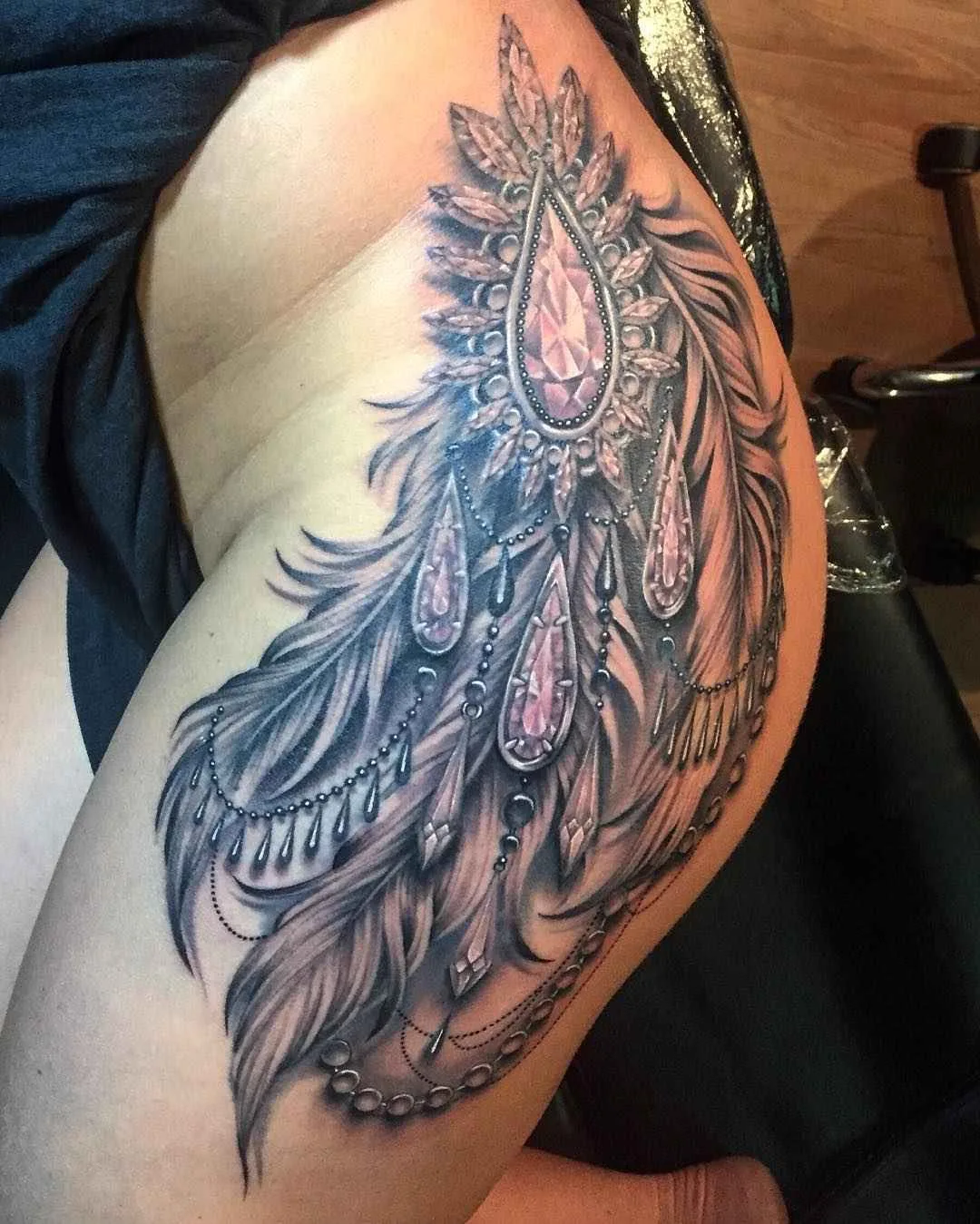
Placement does not carry a fixed symbolic message. It controls visibility, scale, movement, and exposure to friction or sunlight. Choose a location according to whether you want to see the tattoo every day, show it selectively, or give a detailed design enough space. The final sketch should follow the contours of your body so the shaft looks intentional when you stand, turn, and move.
FAQ
What does a feather with birds tattoo mean?
Its common modern reading is release, transformation, and movement into a new stage of life. The feather represents what has been carried or held together, while the departing birds make change visible. An upward flock can add hope; birds spreading in several directions may express independence or separate paths.
What does an eagle feather tattoo mean?
In a general contemporary design, it can express courage, freedom, clear vision, and responsibility. For many Native American nations, eagle feathers are sacred honors governed by distinct cultural protocols. If your design refers to a particular nation, learn from sources connected to that community rather than combining unrelated symbols.
Is an eagle feather tattoo cultural appropriation?
A naturalistic eagle feather used as a personal symbol is common across many tattoo traditions. Criticism concentrates on copying war bonnets, sacred regalia, or designs belonging to a specific tribal nation without understanding their role. Research the source, avoid presenting a sacred honor as a generic accessory and, when referencing a particular nation, seek guidance from its members.
What does a feather tattoo mean for a woman?
The motif suits any wearer. A woman may choose it for freedom, memory, resilience, creativity, or a connection with a particular bird. Delicate fine line and watercolor versions are popular choices, but bold realism, blackwork, and traditional designs work equally well for anyone. Personal experience matters more than gender labels.