A single line crosses over and under itself, turns at the edge, and returns without revealing a beginning or an end. That continuous path is at the core of the Celtic tattoo meaning many wearers have in mind: enduring bonds, loyalty, ancestry, and connection across generations. The image feels ancient, yet the designs used today bring together symbols from several periods and regions.
Choosing one starts with deciding what kind of continuity you want to express. A knot can hold a family story, a triskele can suggest movement, and an animal can give the ornament a more personal character. Historical context helps you choose a design whose visual language supports your intention.
Knots Without an End
The eye follows a Celtic knot instinctively. Each band passes over one strand and beneath the next, creating a route that appears to continue forever. In modern tattoo culture, this uninterrupted construction represents lasting relationships, family ties, loyalty, and the way one generation remains connected to another. That visible continuity is the source of the Celtic knot tattoo meaning: the bond survives every turn in the pattern.
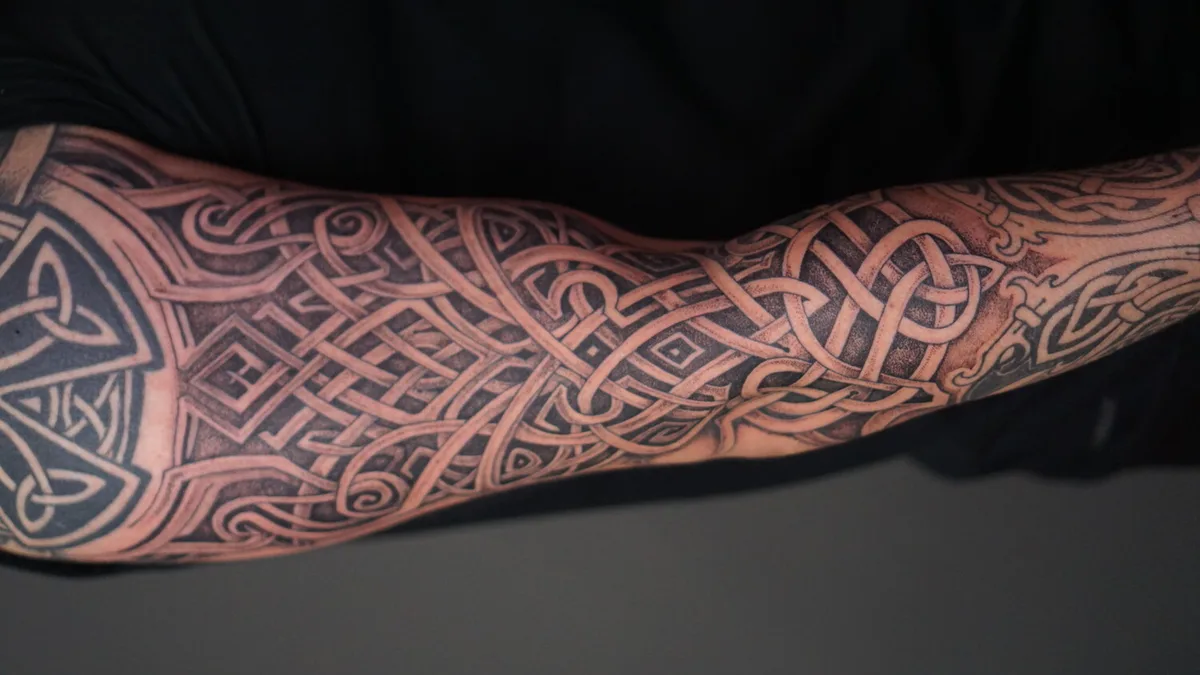
Different compositions can focus the idea. A compact knot works well as a private reminder of one person or promise. Two interwoven paths can represent partners, siblings, or family lines. A broad circular knot emphasizes return and renewal, while a long border pattern can evoke a journey that continues through changing stages of life. These are modern personal readings, so the wearer supplies the relationship or experience held within the line.
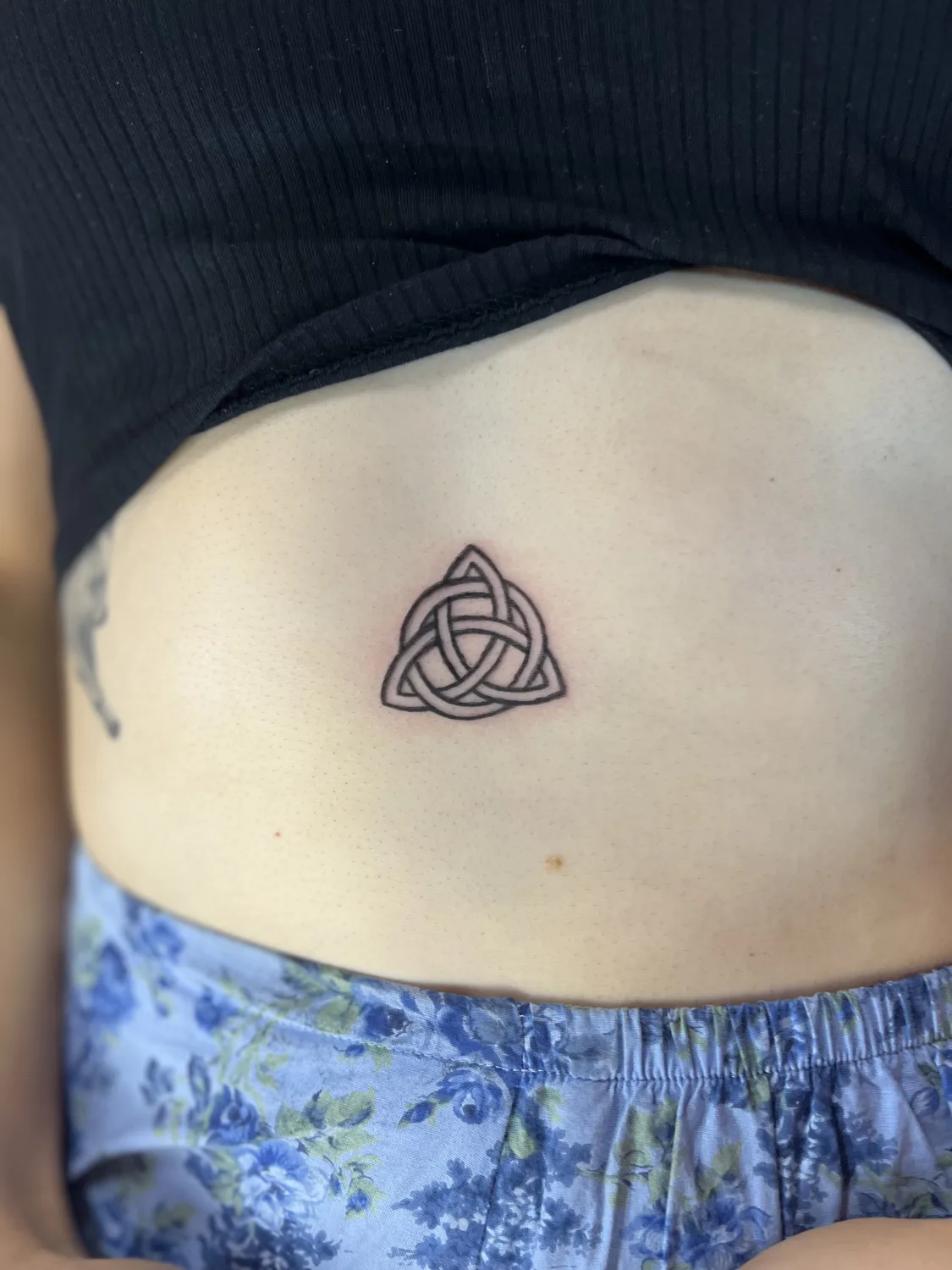
Clarity matters as much as symbolism. Traditional-looking interlace follows a consistent over-and-under sequence. When every crossing is legible, the eye can trace the strand and understand the design as a continuous path. Broken rhythm, uneven spacing, or crowded gaps can weaken that effect. Before committing, follow the proposed line through the entire sketch and check that its route remains readable.
Trinity Knot and Triskele
The trinity knot, also called the triquetra, uses three interlaced arcs to form a unified figure. Some versions place a circle through or around the arcs. In Christian use, the three-part form is associated with the Holy Trinity. Modern wearers also use it for three people, three generations, or three areas of life held in balance. The trinity knot tattoo meaning therefore grows from a specific visual device: three distinct curves belong to one continuous composition.
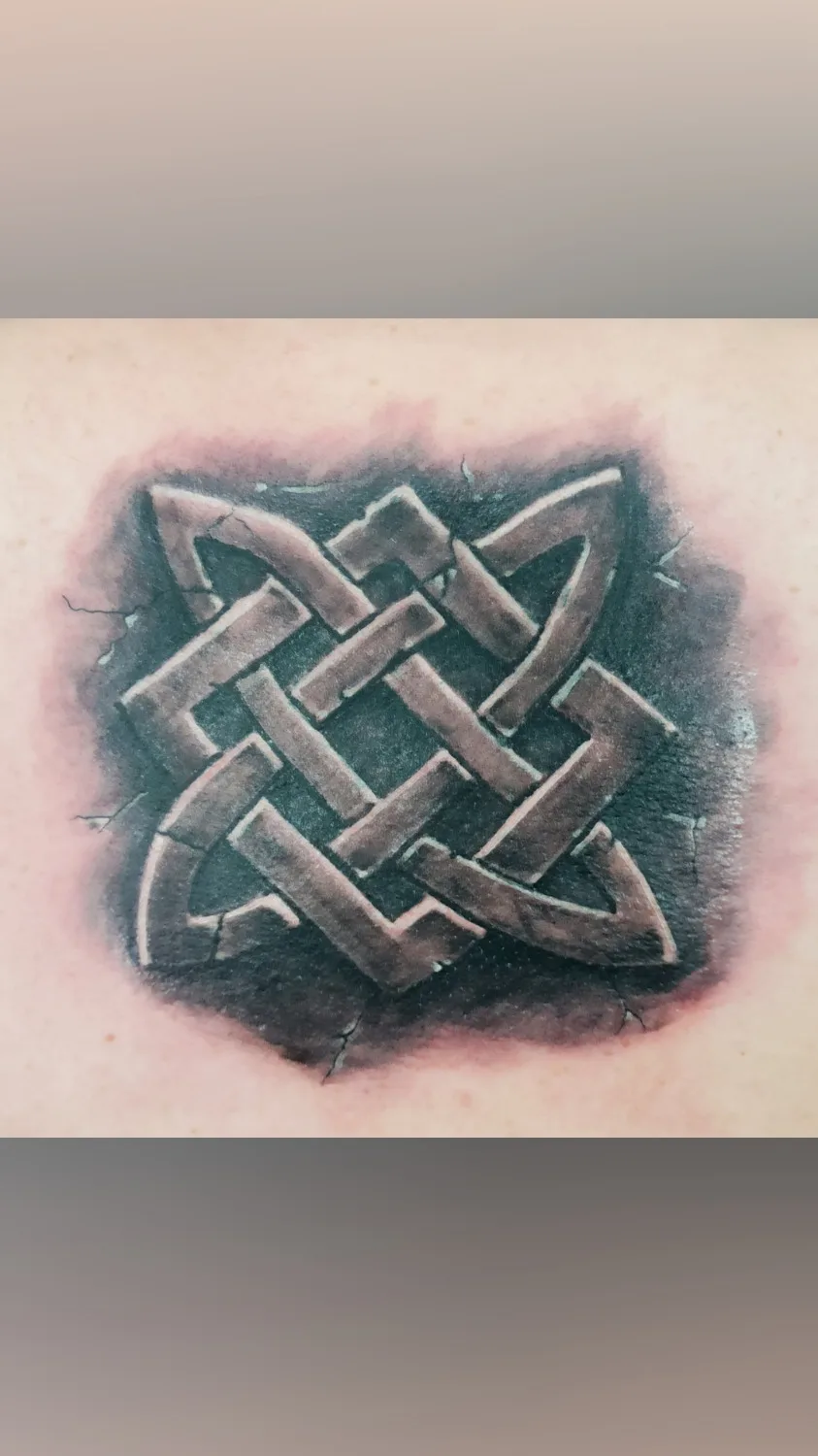
A triskele has a different energy. Its three arms or spirals extend from one center, giving the image a sense of rotation. The triskele tattoo meaning comes from that movement: modern interpretations connect it with growth, life cycles, forward momentum, and recurring change. Archaeological context adds an important distinction: triple spirals appear in the Neolithic carvings at Newgrange, which predate the historical Celtic cultures. The Breton “triskell,” meanwhile, serves as a regional identity sign in Brittany. Contemporary tattooing often gathers these related threefold forms under a broad Celtic visual vocabulary.
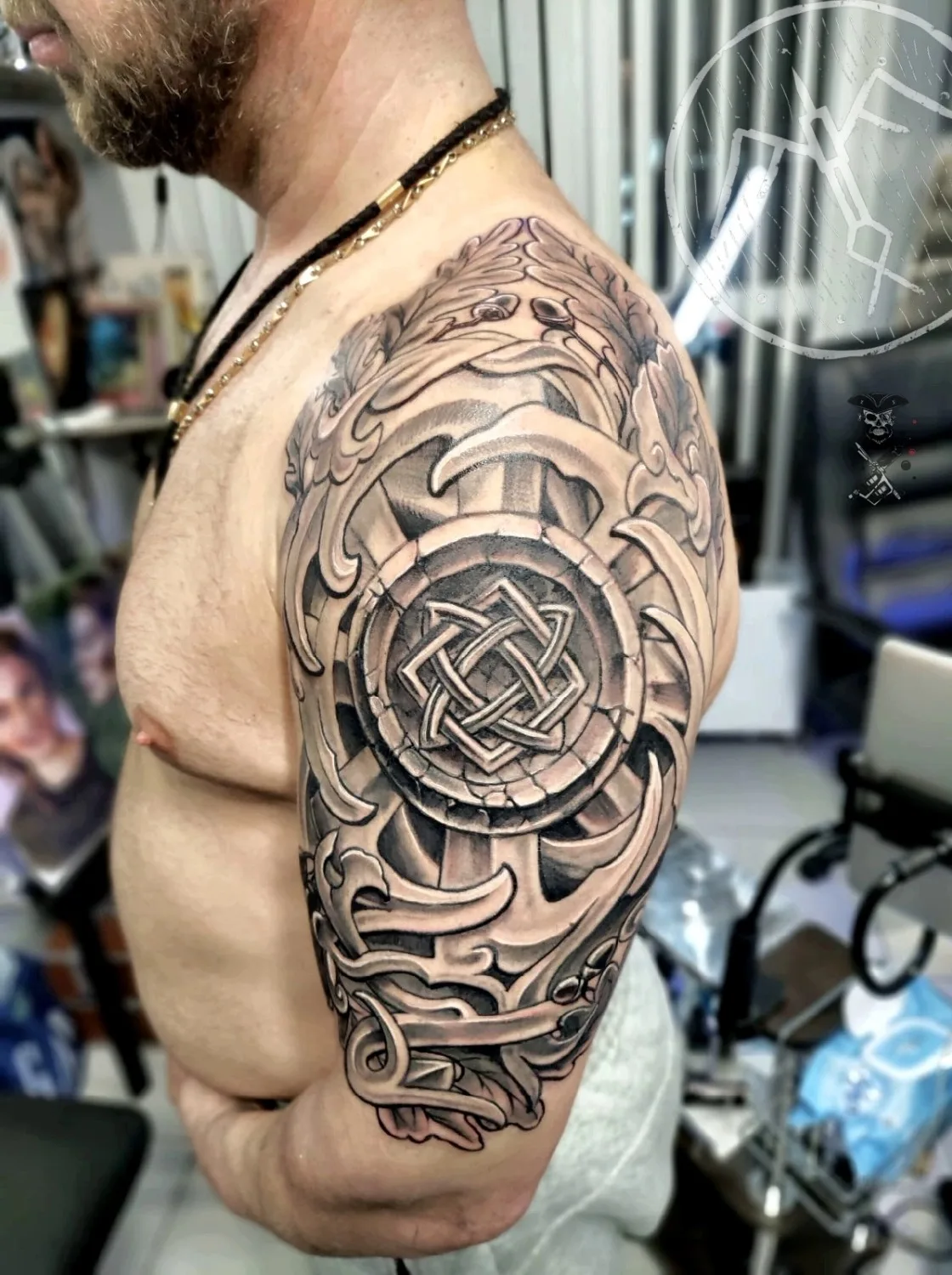
Choose between them by looking at the action of the shape. The triquetra closes inward and suits themes of union, commitment, and interdependence. The triskele radiates outward and supports a story about motion or development. A circle can make either design feel more contained, while open spirals create a livelier silhouette. For either symbol, three names, initials, small marks, or color accents can assign a personal role to each part without obscuring the main geometry.
Celtic Animals: Bear, Raven, Dragon
Animals enter Celtic-inspired tattooing through zoomorphic interlace, a feature visible in Insular art where elongated bodies, tails, jaws, and limbs become part of the woven ornament. This approach lets the creature carry two layers of meaning: its own cultural associations and the continuity expressed by the knot.
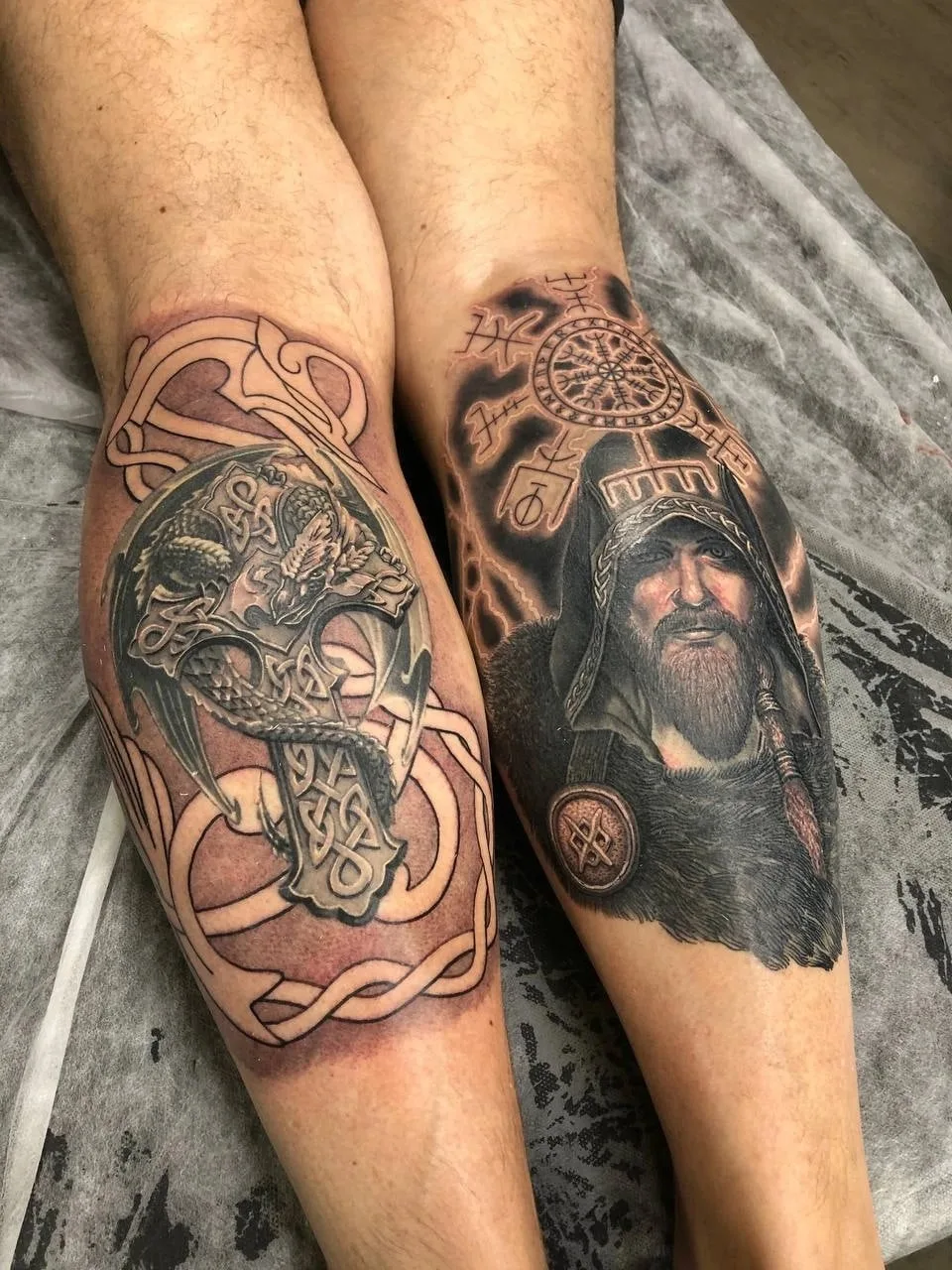
The bear offers a strong image of physical power and guardianship. The Gaulish bear goddess Artio is represented by the Muri statuette held by the Bern Historical Museum, giving the animal a documented connection to a Celtic religious setting. Modern wearers commonly choose it for strength, protection, courage, and care for family. Our guide to bear tattoo symbolism explores those readings in greater depth.
In Irish myth, the Morrígan is associated with crows and ravens, especially in stories involving battle and prophecy. A raven woven into knotwork can draw on those stories to evoke foresight, transformation, sovereignty, or the courage to face difficult truths. See the broader cultural background in the raven tattoo meaning guide.
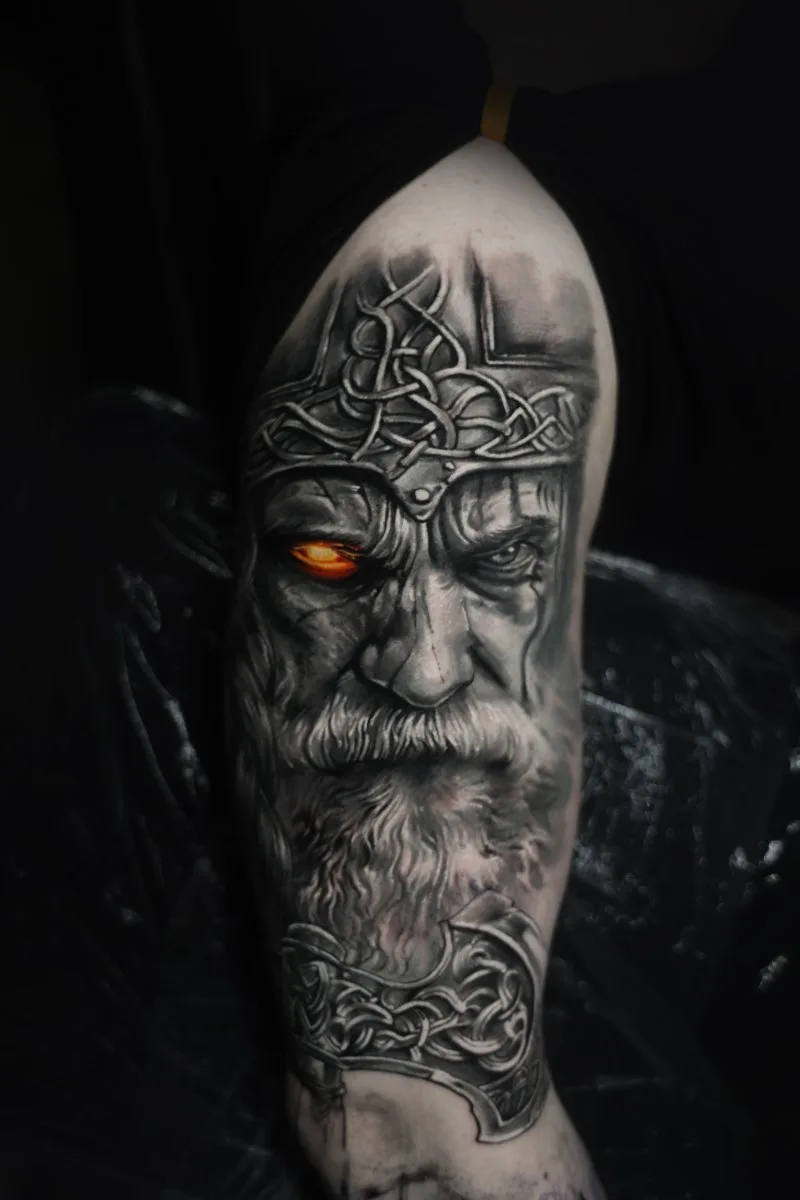
The red dragon, Y Ddraig Goch, belongs to Welsh tradition and provides a forceful emblem of identity, resistance, and pride. Knotwork can shape its wings, spine, or tail while preserving a clear dragon silhouette. Because dragons carry different associations across cultures, the dragon symbolism guide can help you separate the Welsh reference from other traditions.
Where the Patterns Come From: Book of Kells
Much of the knotwork recognized as Celtic today comes from the Insular art of early medieval Ireland and Britain. Surviving manuscripts such as the Book of Durrow, the Lindisfarne Gospels, and the Book of Kells display interlace, spirals, decorated lettering, and animals integrated into dense ornamental pages. The Book of Kells, generally dated to around 800 and held by Trinity College Dublin, remains one of the best-known sources for this visual language. Stone high crosses provide another major body of interlaced ornament.
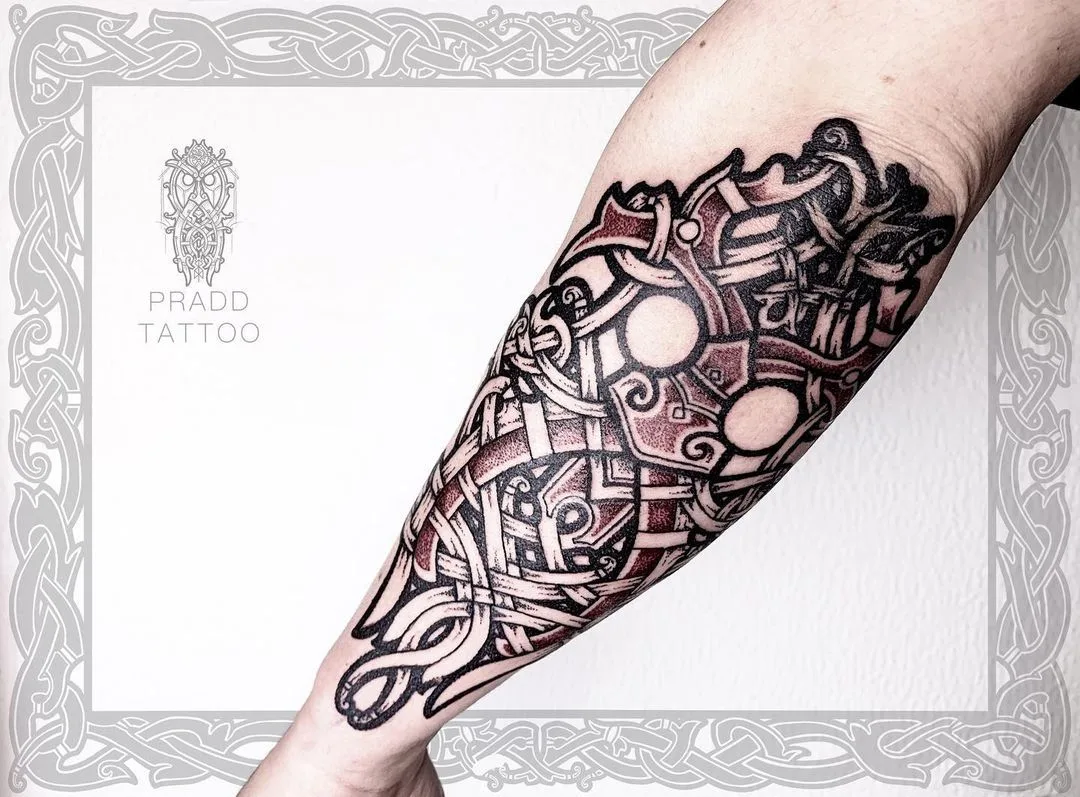
Earlier Iron Age Celtic art, often discussed through the La Tène tradition, favored flowing curves, spirals, and plantlike forms. The dense endless knots familiar from modern designs belong primarily to the later Christian Insular period. Contemporary Celtic tattoos combine these eras, placing ancient spiral geometry, medieval manuscript interlace, crosses, animals, and modern family symbolism within one flexible category.
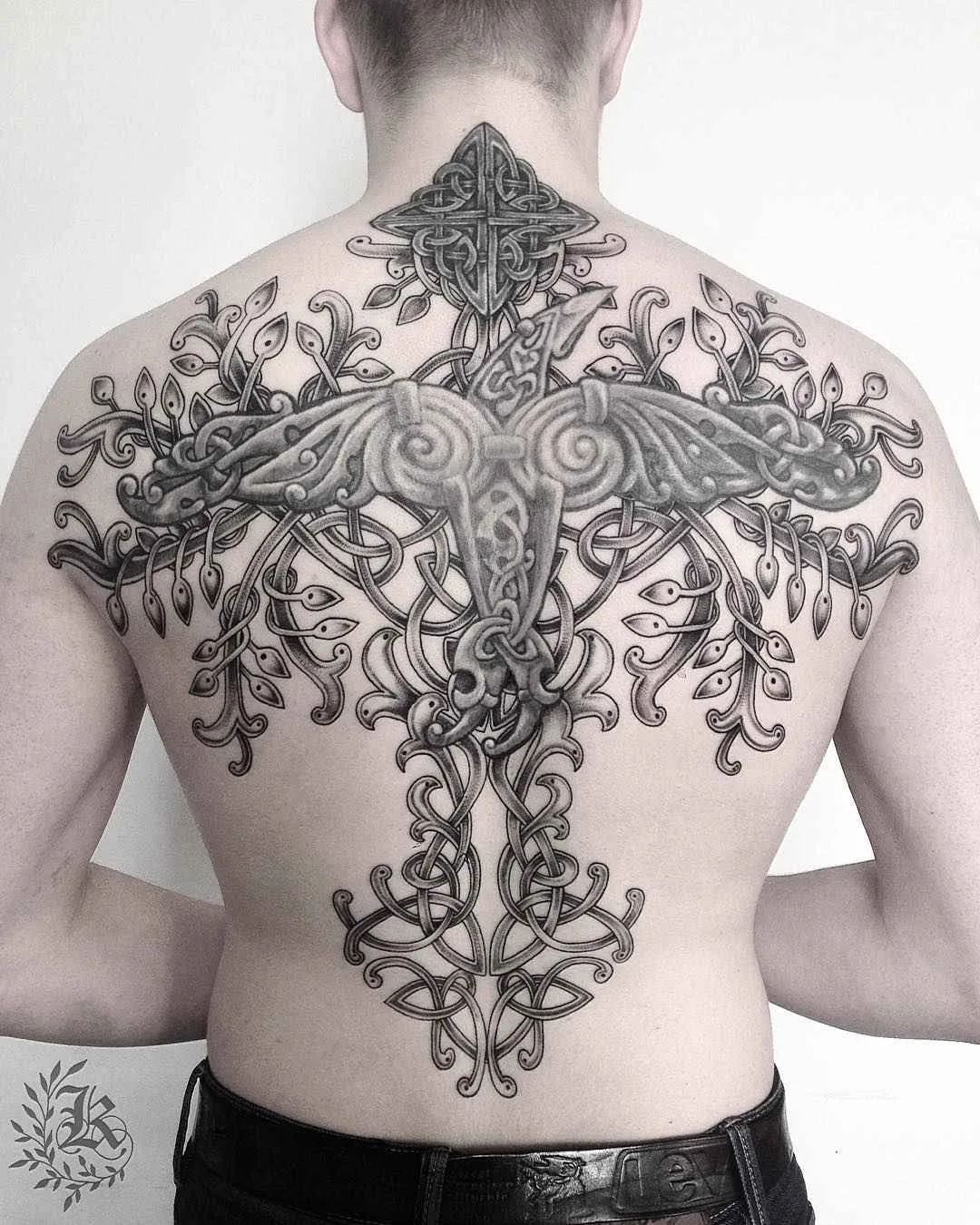
The Celtic Revival of the nineteenth and twentieth centuries carried these patterns into jewelry, illustration, and print. George Bain’s 1951 book Celtic Art: The Methods of Construction presented grid-based methods for building interlace and strongly influenced the way later designers reconstructed knotwork. Tattoo artists still benefit from the same principle: a stable underlying grid keeps bands consistent and crossings orderly.
Ancient writers described painted or marked bodies among peoples of Britain, and the name “Picts” is often connected with a Latin expression for “painted people.” Historical discussion continues over whether those descriptions concerned body paint, scarring, tattooing, or a combination of practices. The surviving ornaments offer reliable design references, while the question of whether people in antiquity wore today’s specific knot motifs as tattoos remains open.
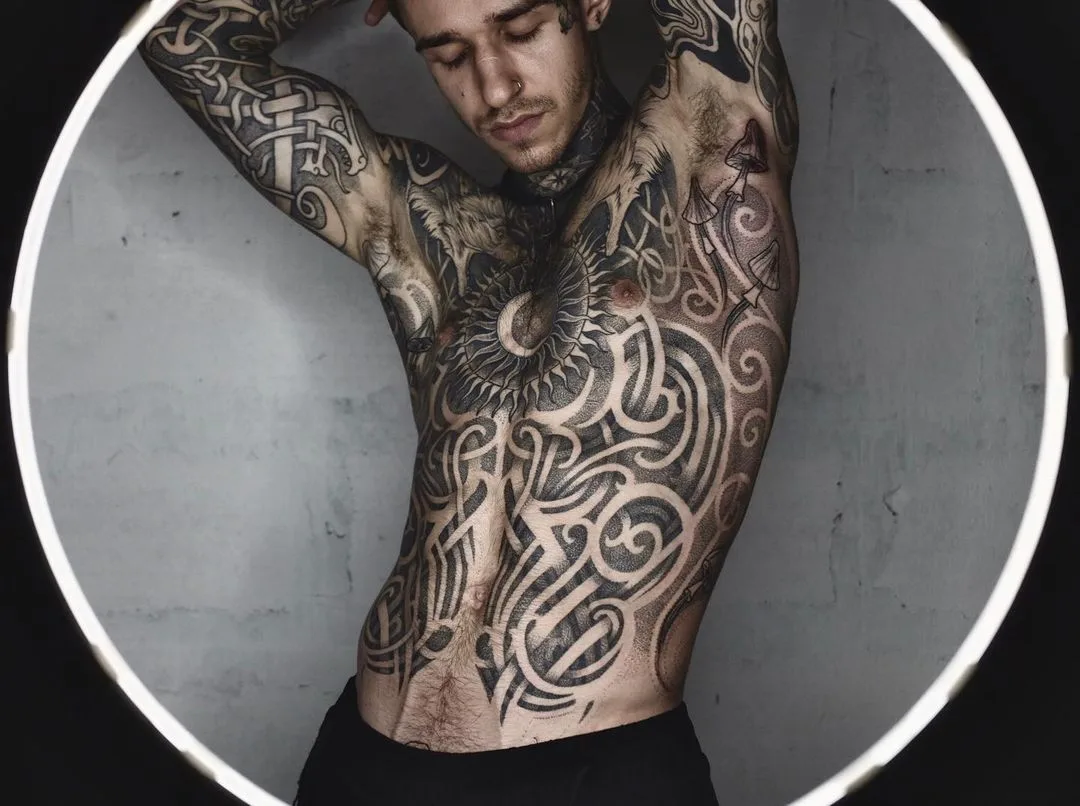
The geographic label also spans several communities. Pan-Celtic organizations such as the Celtic League count Ireland, Scotland, Wales, Cornwall, the Isle of Man, and Brittany as the six Celtic nations, while many prominent knotwork models come from Irish and Northumbrian manuscripts. Looking at Celtic tattoo designs can help you compare how contemporary artists interpret this shared visual inheritance.
Placement and Blackwork
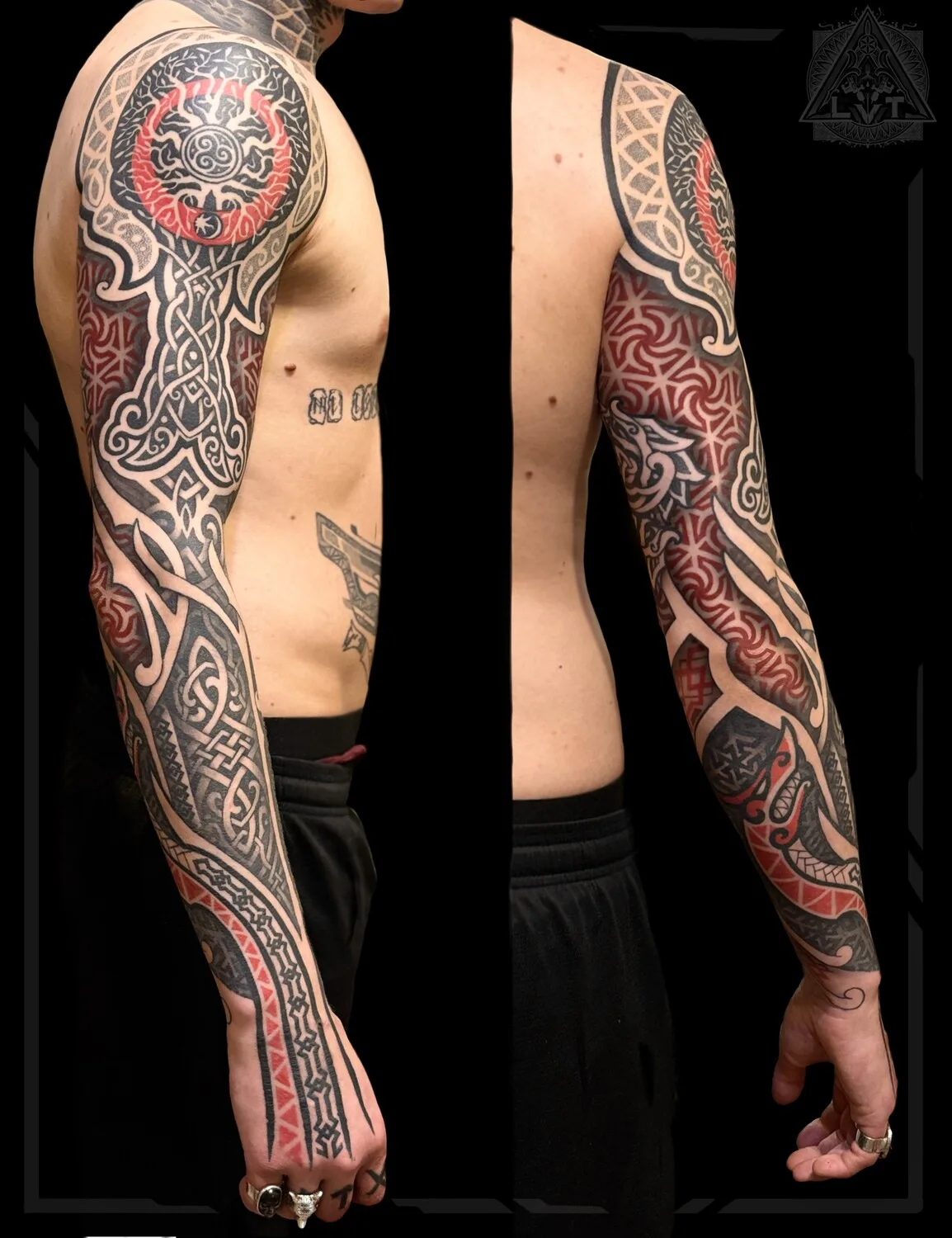
Placement works best when it follows the geometry. Armbands give an endless border pattern a literal sense of return, while the forearm provides enough length for a knot, triskele, or narrow animal interlace. The upper back supports a larger symmetrical composition, and a sleeve can connect separate knots, creatures, and spirals through a continuous framework. Modern placement carries no fixed traditional meaning, so you can select the area according to scale, visibility, and the movement of your body.
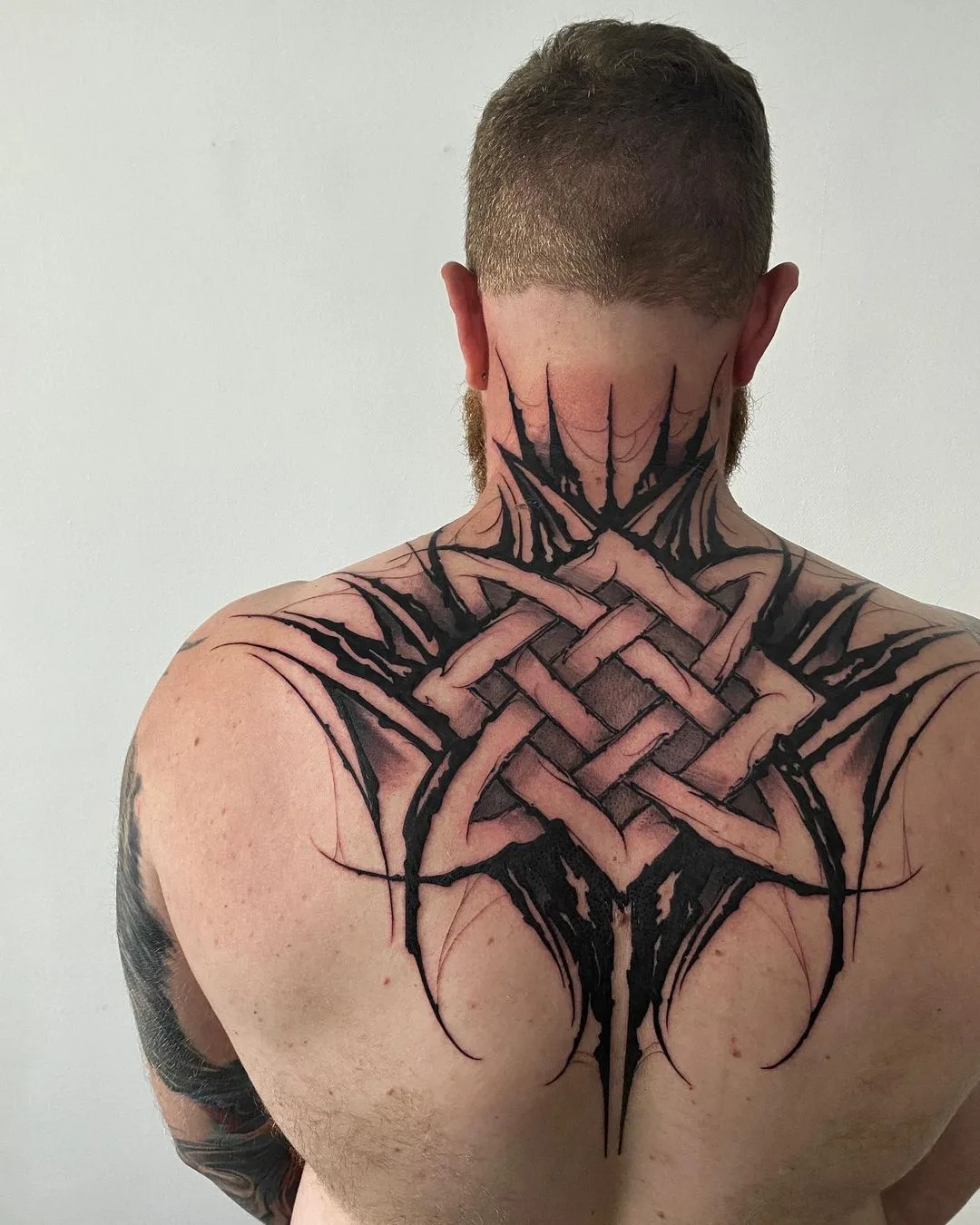
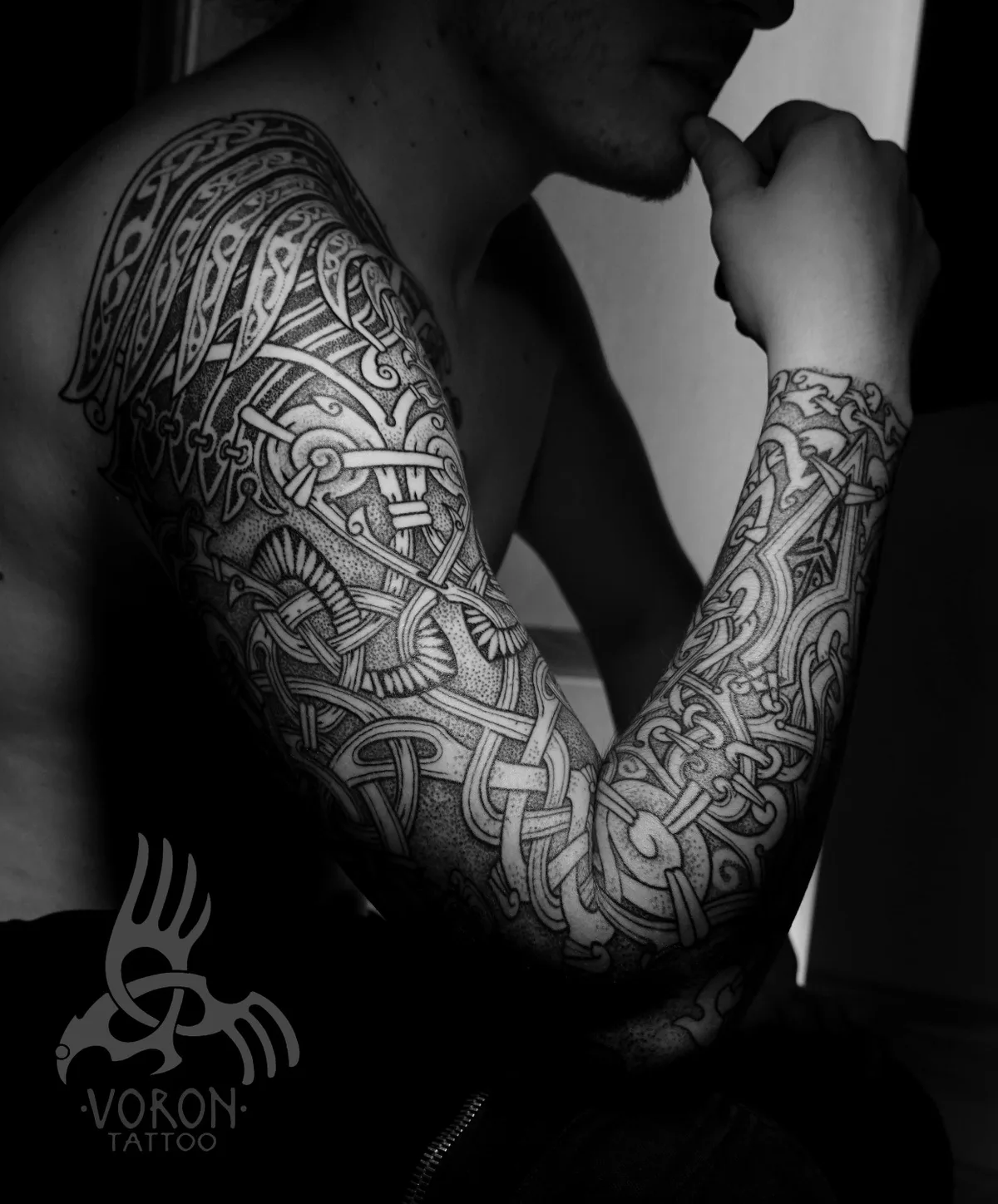
Blackwork emphasizes the rhythm of the pattern through solid bands and open skin. Successful knotwork needs even band widths, generous negative space, and an unmistakable over-and-under order at every crossing. Small gaps require enough room to remain distinct as the tattoo settles. On curved areas, the artist should map the design to the body so circles remain balanced and border patterns meet cleanly. A printed or digital sketch can look precise on a flat page; a body-aware stencil preserves that precision in motion.
FAQ
What does a Celtic knot tattoo mean?
Its continuous interlaced line commonly represents lasting bonds, loyalty, family, and connection between generations in modern tattoo culture. The visual reason is the apparent absence of a beginning or an end. A wearer may dedicate the strands to particular people, promises, or stages of life.
What does a trinity knot mean?
The trinity knot joins three arcs into one interlaced figure. Christian tradition associates it with the Holy Trinity. Contemporary personal readings often use the three parts for partners, children, generations, or connected aspects of life such as body, mind, and spirit.
What does a triskele tattoo mean?
Its three arms turn from a shared center, so modern tattoo readings emphasize movement, growth, cycles, and progress. Triple spirals also appear in the Neolithic carvings at Newgrange, which are older than historical Celtic cultures, while the Breton triskell expresses regional identity.
Are Celtic tattoos Irish or Scottish?
They can refer to Irish or Scottish identity, and the wider cultural family also includes Wales, Cornwall, the Isle of Man, and Brittany. Many familiar interlace models survive in Irish and Northumbrian manuscripts. Your chosen symbol, source, and accompanying imagery can make a regional connection more specific.