Why the Lotus Grows From Mud
A lotus pushes its roots into dark mud, rises through cloudy water, and opens above the surface with clean, bright petals. That climb is the core of the lotus tattoo meaning most people reach for: hardship can become the ground that clarity, resilience, and a new direction grow out of. The flower keeps its roots in the mud and opens anyway.
For many people, a lotus flower tattoo marks growth after grief, illness, addiction, a bad relationship, or another hard stretch. It can also mark quieter changes, such as learning self-respect or choosing a more deliberate way of living. The mud remains part of the story. It represents experience, while the flower shows what someone has made from it.
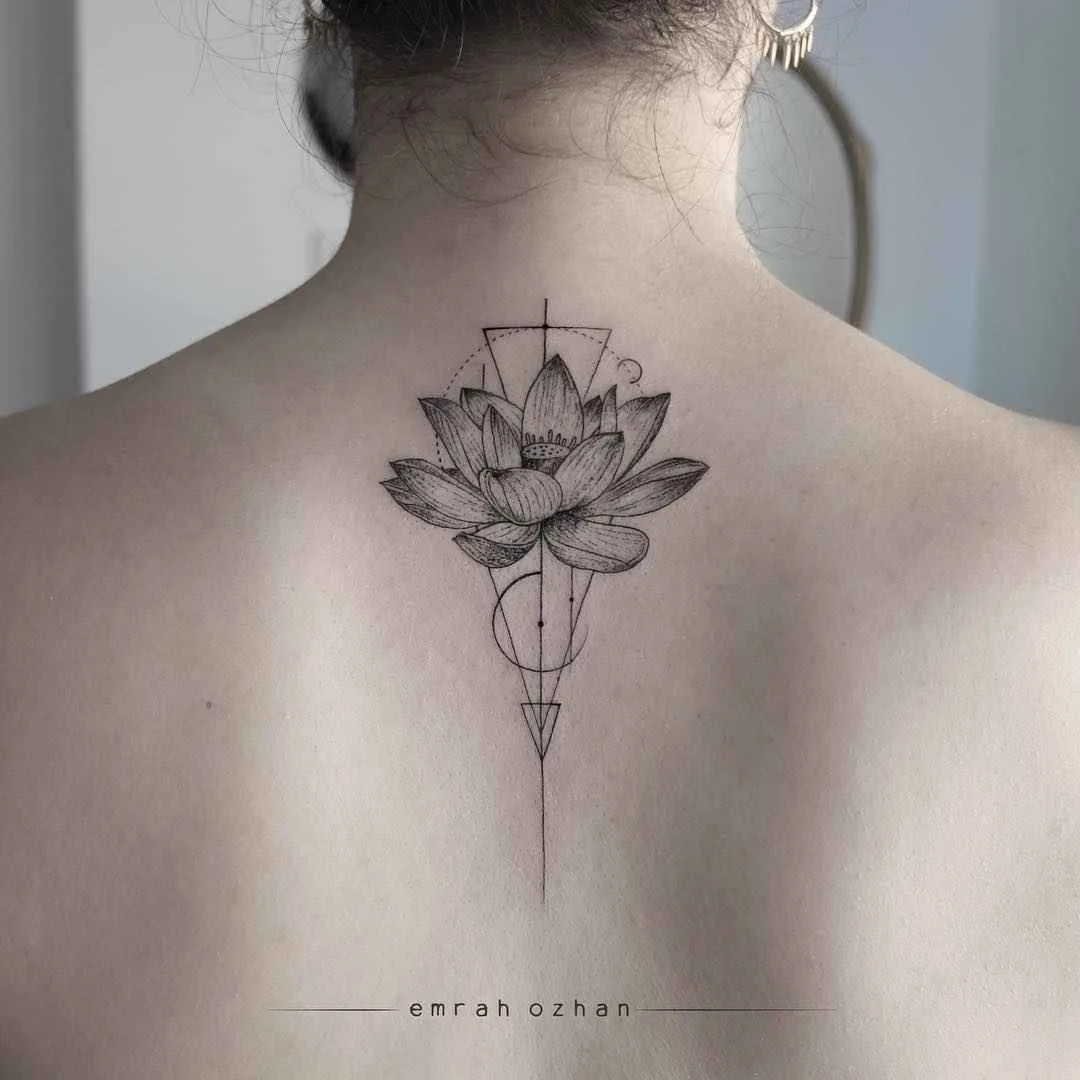
The flower’s stage can refine that message. In modern tattoo culture, a closed bud suggests potential, an early beginning, or a self still taking shape. A fully open bloom points toward unfolding awareness and hard-won clarity. A design showing several stages can turn the flower into a visual timeline.
The lotus also works without a dramatic biography. Its balanced petals can express composure, meditation, or a desire to remain grounded. Before choosing the final composition, browse different approaches in the lotus tattoo gallery and consider whether you connect most strongly with the plant’s growth, its spiritual associations, or its geometry.
Lotus in Buddhism and Hinduism
In Buddhist visual traditions, the lotus reflects a path from ignorance and attachment toward awakening. Buddhas and bodhisattvas are frequently represented seated or standing on lotus thrones, where the flower supports an image of awakened consciousness. The mantra “Om mani padme hum” is commonly rendered in English as “the jewel in the lotus,” further connecting the bloom with spiritual insight.
Hindu traditions give the flower a similarly prominent place. Lakshmi is traditionally shown with or seated upon a lotus, joining the flower with fortune, abundance, and beauty. In a well-known Hindu creation story, Brahma appears on a lotus growing from Vishnu’s navel. A tattoo that draws on these traditions can point to creation, divine order, or prosperity as well as personal growth.
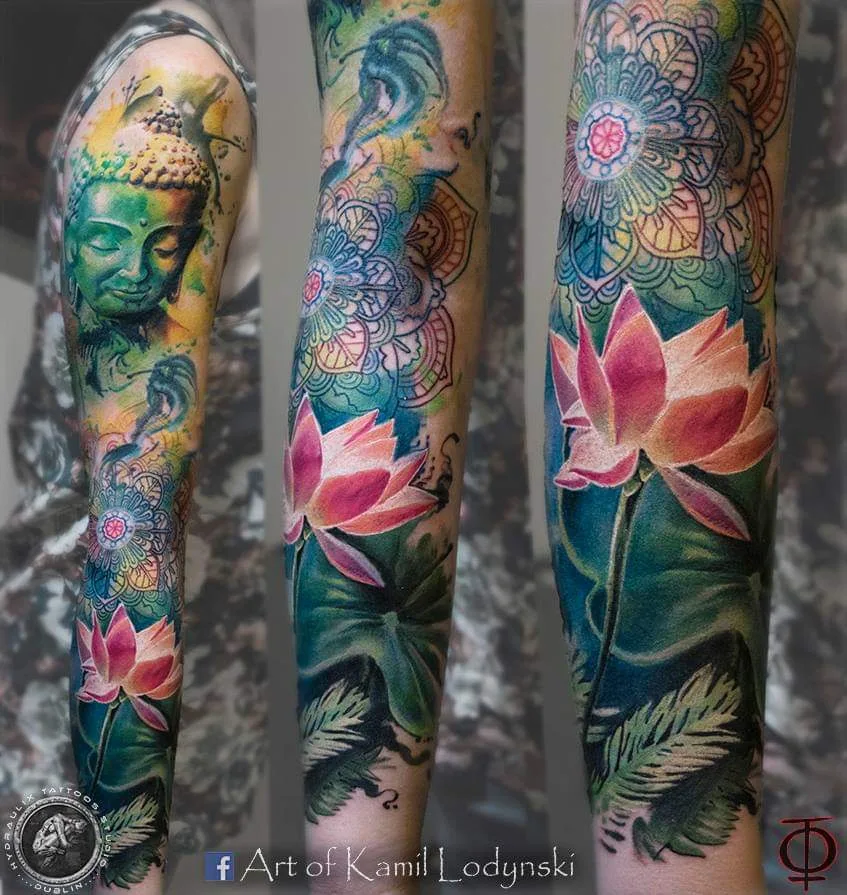
Religious imagery needs some homework. A lotus blossom by itself is widely used as a secular decorative symbol, but Buddha portraits and sacred scripts can carry stronger sensitivities in Buddhist countries. The BBC reported that Sri Lanka deported a British tourist over a Buddha tattoo in 2014. Feet and below-the-waist placement may also be viewed as disrespectful in some Buddhist contexts. If your design includes a Buddha, mantra, or yantra-derived element, learn what it depicts and discuss orientation and placement with your tattoo artist.
Another historical association comes from ancient Egypt, although botanical precision matters. The so-called Egyptian lotus was usually the blue water lily, Nymphaea caerulea, rather than a true Nelumbo lotus. Because its flowers open and close in response to light, Egyptian imagery linked it with the sun, creation, and renewal. That tradition can inspire a design, provided the water lily and Asian lotus are not treated as botanically identical.
Lotus Colors: White, Pink, Blue, Red
Color changes the mood and emphasis of the flower. These associations are modern tattoo-culture readings rather than one religious color code shared by every tradition. White commonly suggests purity, peace, and a fresh start. It can be shown through pale ink, negative space, or lightly shaded petals, depending on your skin tone and the artist’s approach.
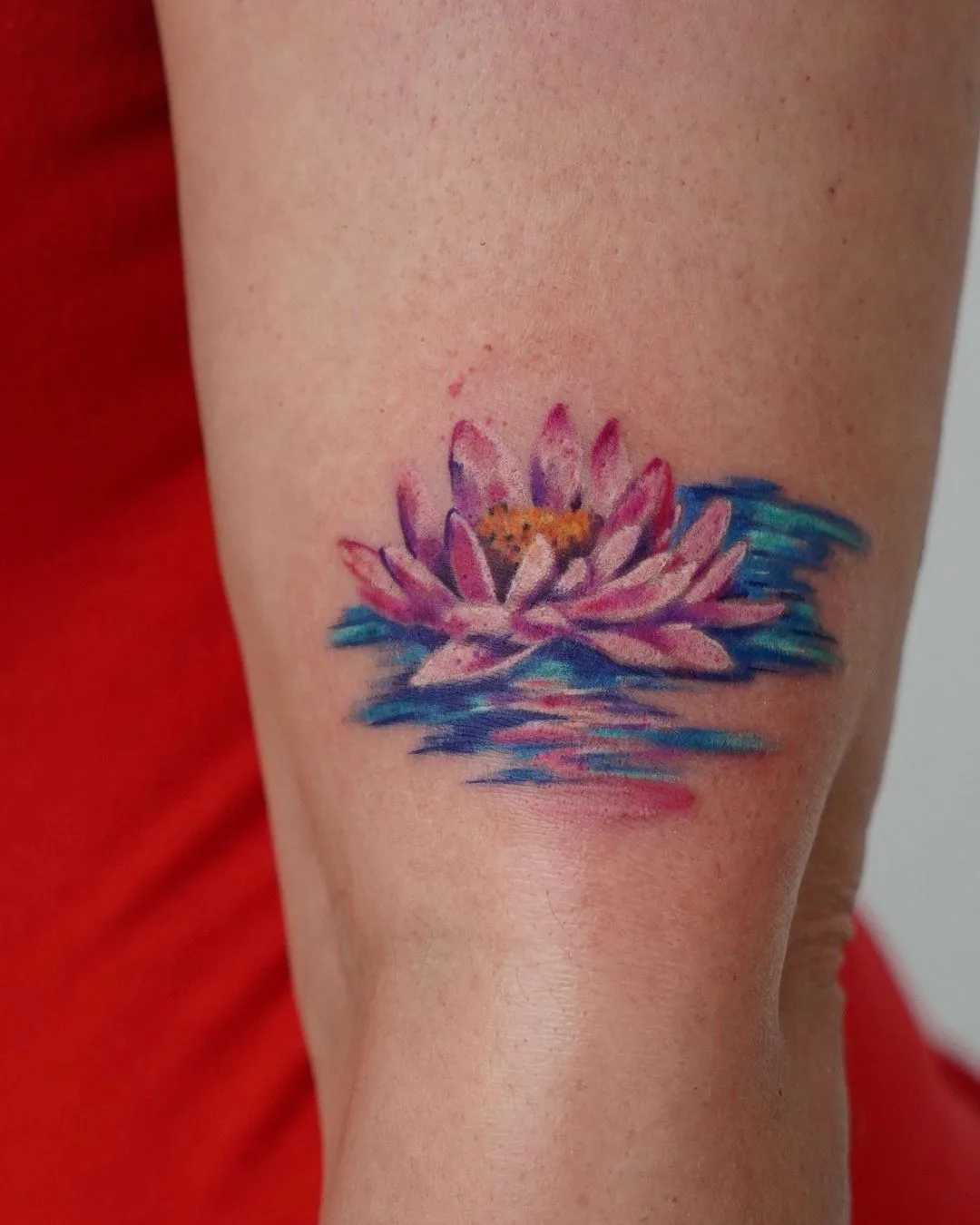
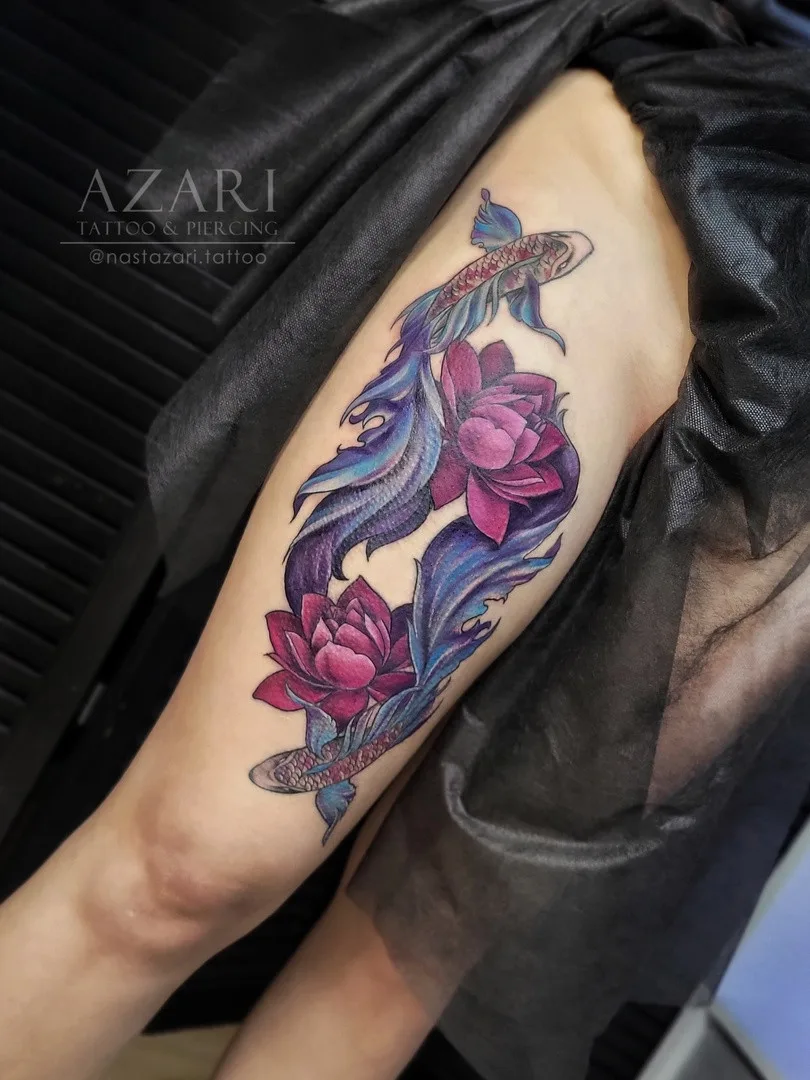
Pink is often connected with the Buddha and awakening, making it a natural choice for a spiritual composition. Blue usually reads as wisdom, self-control, and calm. Red shifts the emotional focus toward love and compassion, giving the flower a warmer, more active presence. A color can also matter simply because it belongs to a personal memory.
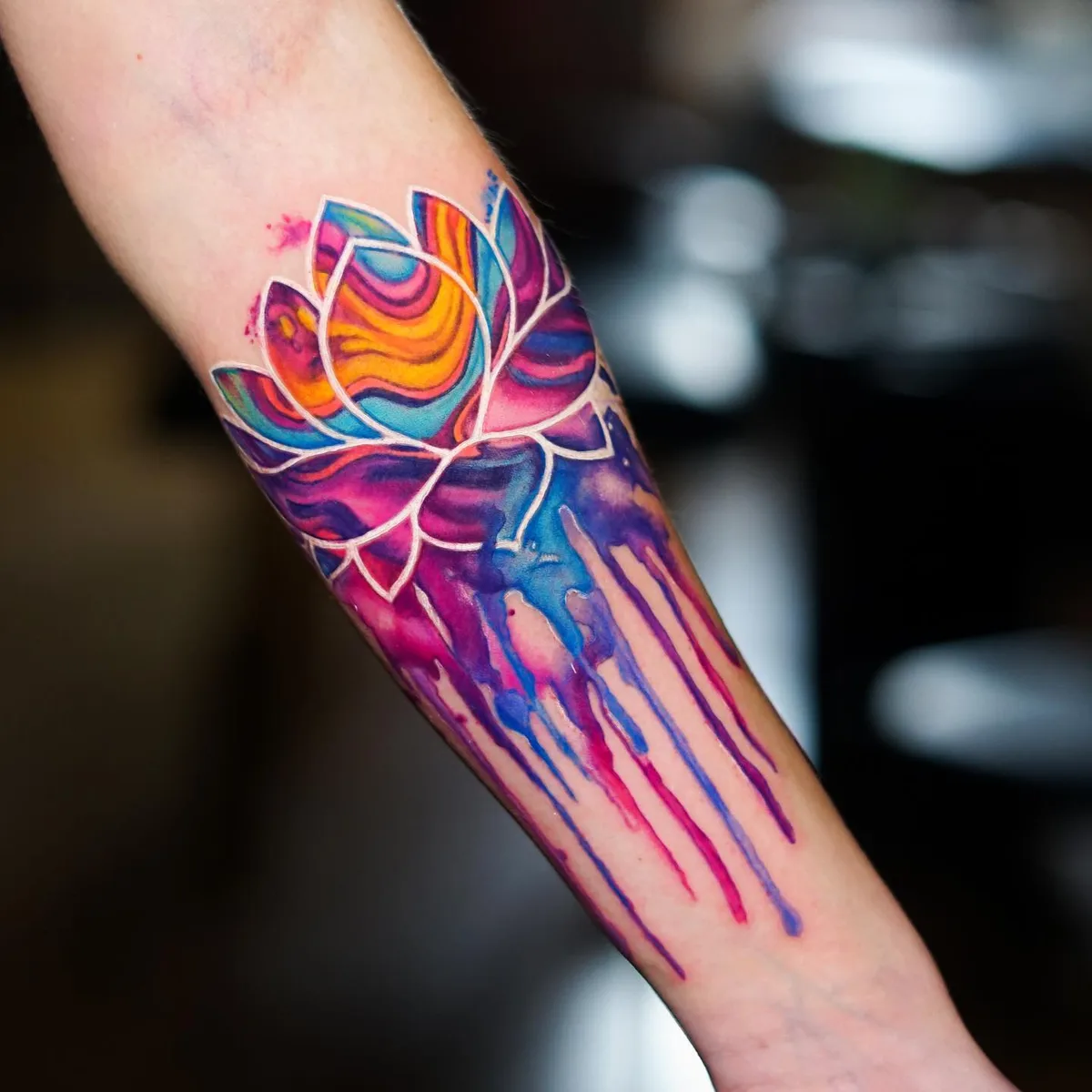
Purple creates a mystical or meditative atmosphere, though it has no single fixed reading. Black-and-gray designs place greater emphasis on petal structure, shading, and contrast. Whatever palette you choose, ask to see healed examples of comparable color work and discuss how the artist will keep the silhouette readable.
Unalome and Lotus
An unalome begins with loops or spirals and gradually becomes a straighter line. In a widespread modern interpretation, the tangled section represents detours, confusion, and repeated lessons, while the straighter path suggests increasing awareness. A lotus placed at the end marks clarity opening after that uneven journey. In an unalome and lotus tattoo, the meaning runs through the whole line, and the flower is where it lands.
The unalome comes from a religious visual field associated with Thai and Buddhist yantra traditions. Treating it as a random flourish can strip away that context. Before getting one, ask your artist to explain the source of the particular form, especially if the design includes sacred script or other yantra elements. Orientation also affects how the journey reads visually, so decide which end represents the beginning and which points toward clarity.
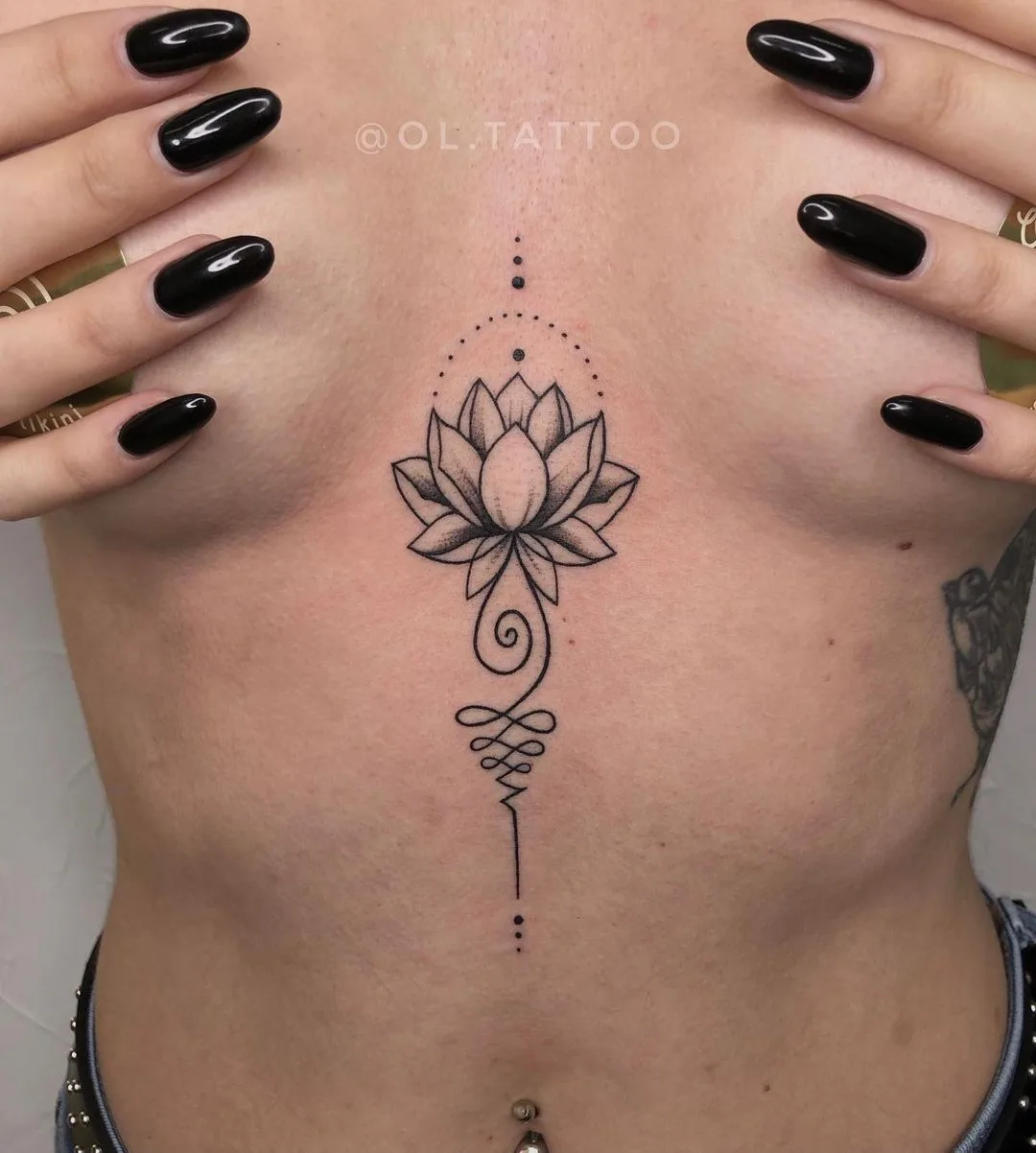
Fine line can keep the symbol light and simple, while dotwork can add soft transitions around the loops or flower. Allow enough space between narrow lines so the path remains legible as a tattoo rather than becoming a compact decorative knot.
Lotus With Snake, Elephant, Phoenix or Skull
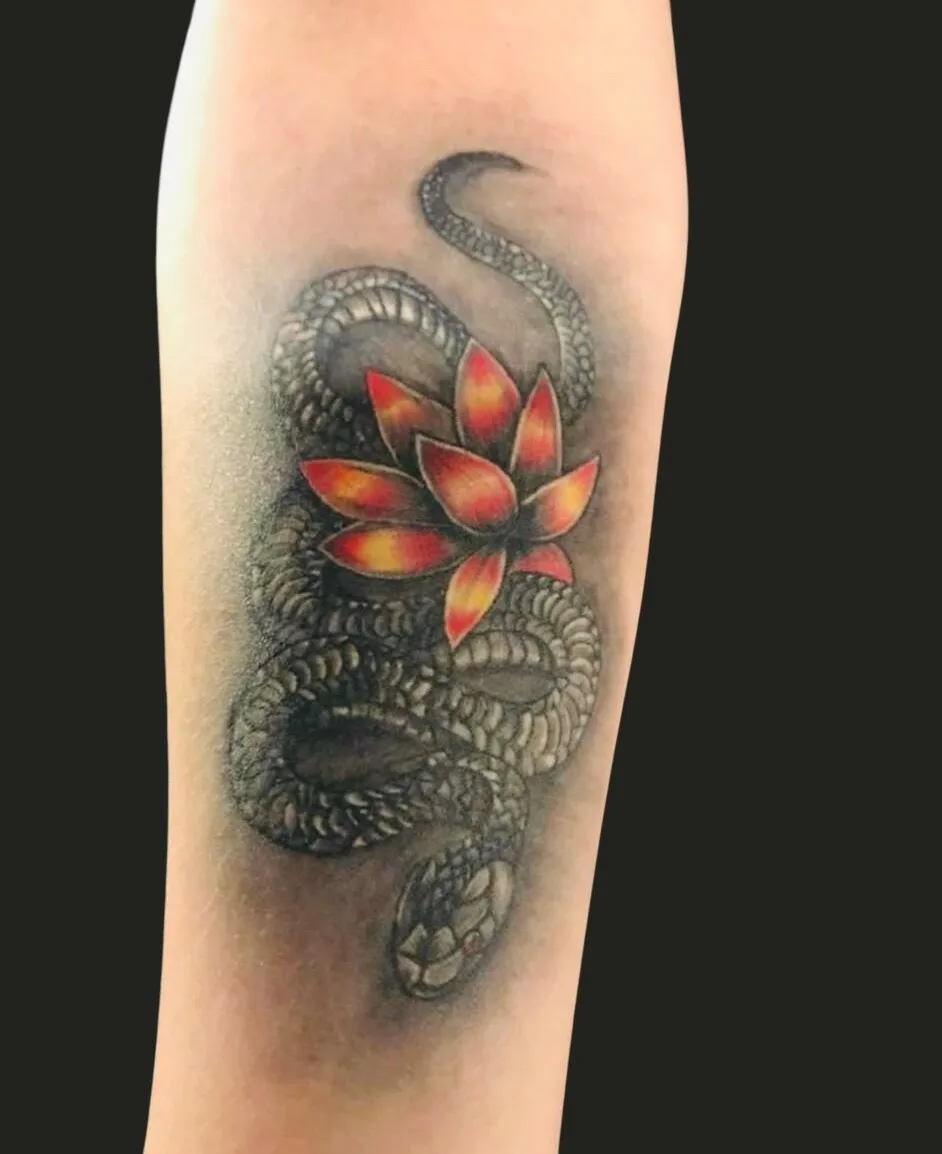
Pairing the flower with another figure creates a conversation between two symbols. A snake and lotus tattoo brings together the serpent’s shedding skin and the flower’s rise through mud, producing a modern image of transformation through difficult experience. Read more about the serpent’s wider cultural background in our guide to snake tattoo symbolism.
An elephant adds strength, steadiness, and wisdom to the lotus’s growth narrative. The composition can feel protective and grounded, especially when the flower is balanced above the animal or held by its trunk. Our article on elephant tattoo meaning offers more context for choosing that combination.
A phoenix and lotus reinforce rebirth through two different images: the bird rises after destruction, while the flower emerges from mud. This doubled renewal can suit a major life reset or recovery. Explore the mythology behind the pairing in the guide to phoenix tattoo symbolism.
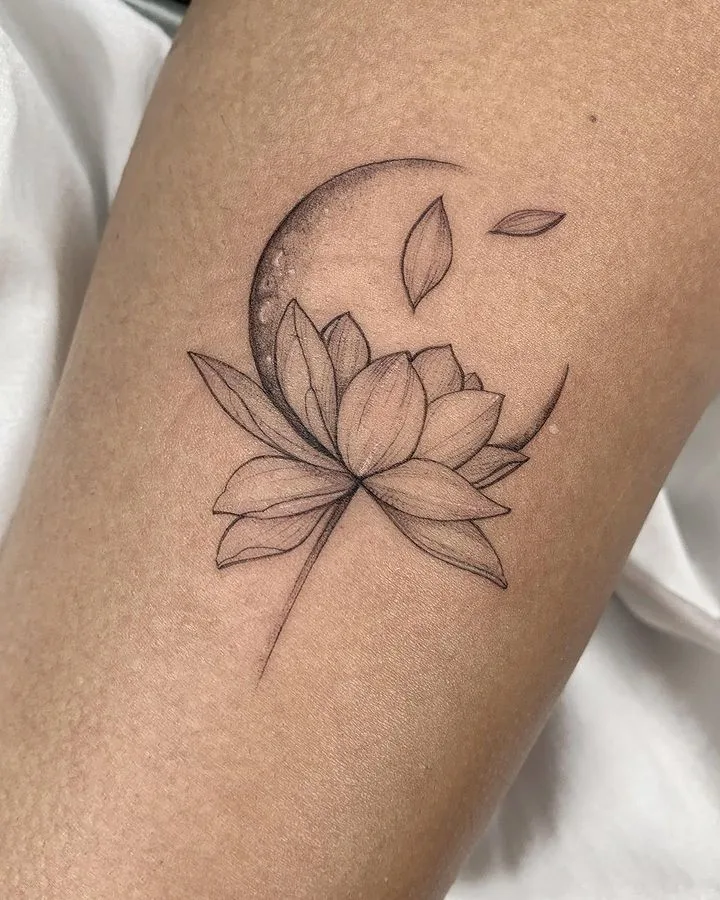
A skull and lotus place mortality beside living growth. In modern tattoo imagery, the pairing can show life emerging from death, acceptance of impermanence, or renewal after loss. A moon adds cycles and change, while a mandala brings symmetry and contemplative focus. Dots around the petals are often decorative, creating texture, balance, or a soft halo; three dots beneath a flower have no reliable universal interpretation.
Fine Line, Dotwork and Placement
Fine line suits an airy lotus with open petals and limited shading, particularly when you want a small design. Dotwork creates gradual shadows and works well with mandalas, ornamental geometry, and unalome compositions. Watercolor can echo the softness of petals, but clear underlying lines help preserve the flower’s structure. Blackwork produces a bolder silhouette with strong contrast and room for graphic negative space.
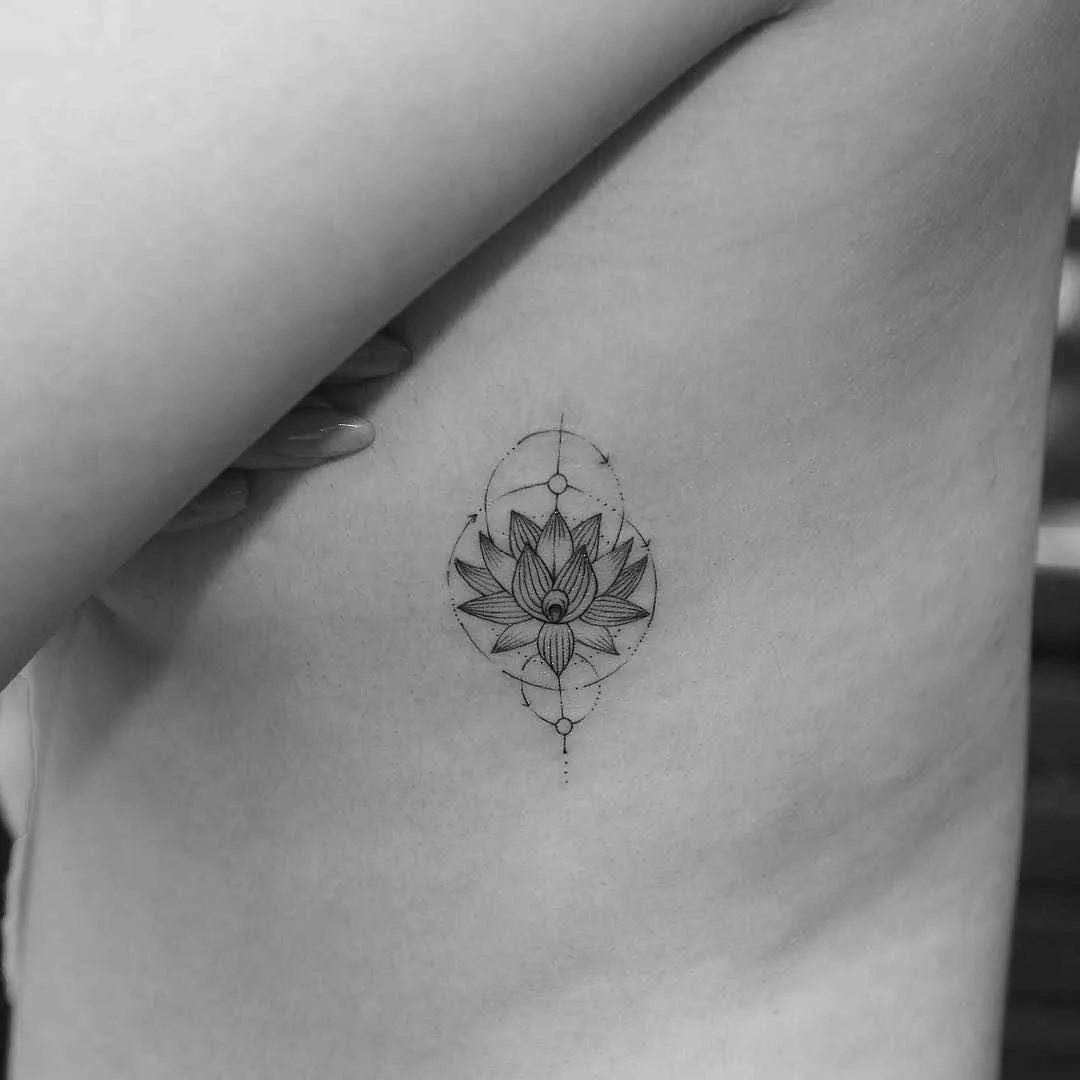
Placement changes visibility, scale, and how the design follows your body; it does not assign a fixed symbolic message. The forearm offers an easy-to-see surface and enough room for a flower with a stem or unalome. The wrist and ankle suit simplified designs, although their limited space demands restraint. The back of the upper arm can hold a discreet medium-size bloom.
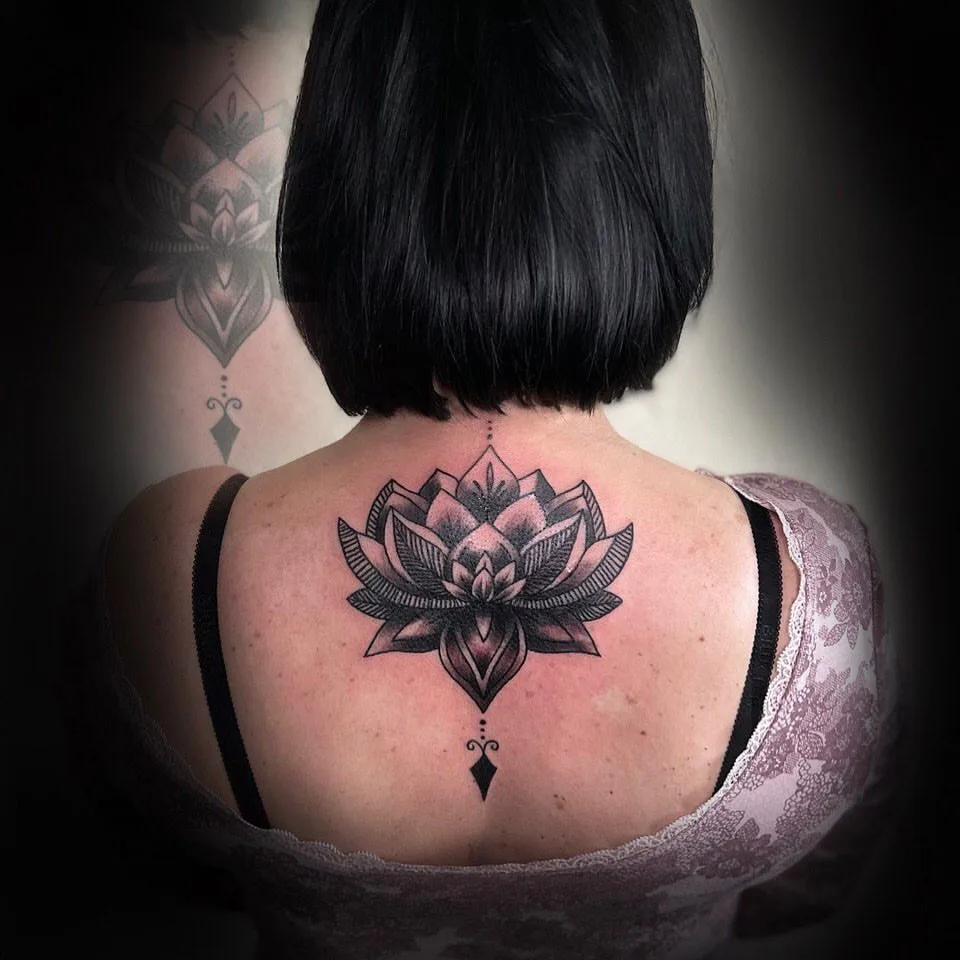
Symmetrical lotus designs often fit the sternum, upper back, or nape because the body’s centerline supports their geometry. A vertical unalome-and-lotus composition can follow the spine, while a larger thigh or shoulder placement leaves room for animals, leaves, and layered petals. Movement and anatomy matter: a stencil that appears balanced on paper may need adjustment once placed on the body.
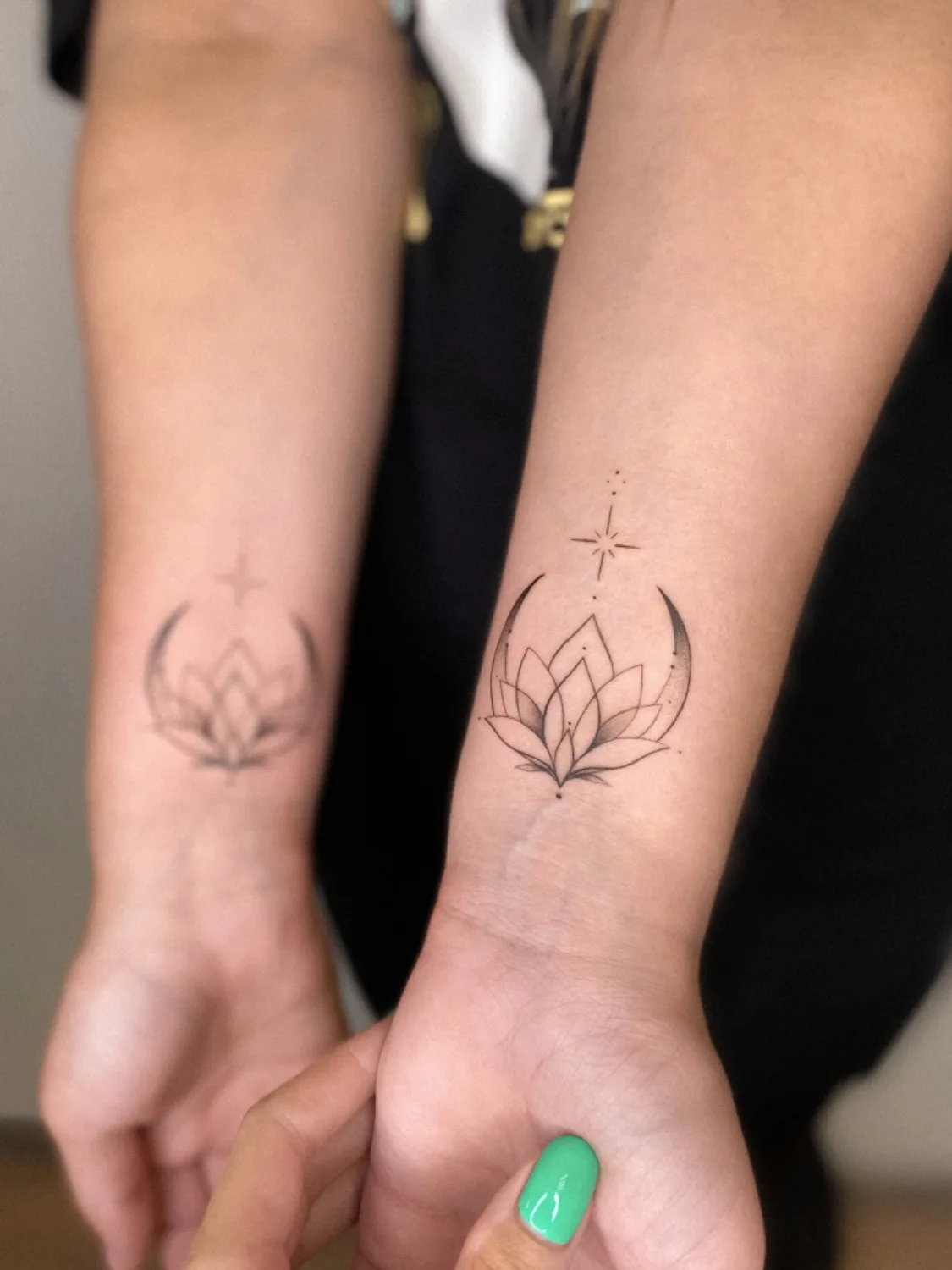
Bring references for the petal shape, line weight, and density you like, then let the tattoo artist adapt them. A lotus suits any wearer. Delicate and bold versions can work for anyone, and the strongest choice is the one that matches your visual taste and reason for wearing the flower.
FAQ
What does a lotus tattoo mean for a woman?
For a woman, the flower can express growth after hardship, clarity, spiritual development, peace, or a fresh start. Those ideas are not limited by gender. Rather than relying on a “feminine” rule, choose the flower’s stage, color, and style around the story you want to carry. A closed bud can suggest potential, while an open bloom can show a period of personal unfolding.
What does an unalome with a lotus mean?
The loops of an unalome are commonly read as confusion, detours, and repeated lessons before the line straightens. The lotus at its end represents clarity or awakening after that uneven path. Because unalome imagery is connected with Thai and Buddhist yantra traditions, research the form and consider its orientation and placement carefully.
Does a lotus tattoo color matter?
Color can guide the design’s emotional tone. White is associated with purity and peace, pink with the Buddha and awakening, blue with wisdom and calm, and red with love and compassion. These are common modern readings rather than a single universal code. Purple often creates a meditative mood, while black and gray emphasize shape and contrast.
What does a lotus with dots mean?
Usually it’s decorative and personal. Dotwork can shade petals, form a mandala-like halo, or visually connect a lotus to an unalome. A small row of dots may suggest stages, balance, or a continuing path to the wearer, but there is no dependable universal meaning for three dots placed beneath the flower.
Is a lotus tattoo disrespectful?
A lotus flower alone is widely used in secular art and is generally less sensitive than a Buddha portrait, sacred script, or a yantra-derived symbol. Respect becomes especially important when religious figures or texts are included. Learn what every element says, avoid casually placing sacred imagery near the feet or below the waist, and consult a knowledgeable artist when the design draws directly from Buddhist or Hindu traditions.