A fine needle draws a smooth, almost calligraphic line on the skin. A crane spreads its wing, a peach branch bends as if blown by the wind. The artist works in a Seoul studio the size of a closet, but what appears on the client's forearm is the legacy of a five-hundred-year-old tradition.
This is Hwajodo (화조도, 花鳥圖), the Korean art of depicting flowers and birds, which for centuries adorned scrolls, screens, and the walls of Joseon Dynasty palaces. Now it is experiencing a rebirth. Only now, instead of rice paper, there is human skin, and instead of ink, pigment driven by a tattoo machine.
How exactly did a centuries-old painting tradition find its way into South Korea's underground tattoo culture, and why is this style rapidly gaining popularity far beyond the peninsula? This deserves a detailed discussion.
What is Hwajodo? From Royal Scrolls to Skin
Before talking about tattoos, we need to understand the original source. Hwajodo is not just "pictures with birds." It is an entire genre of Korean painting, which is part of the broader tradition of minhwa (민화), folk painting created by both professional court artists and anonymous artisans.
Origins in Joseon Dynasty Painting
The heyday of Hwajodo occurred during the Joseon era (1392–1897). Court artists created large-scale screens with images of flowers and birds for royal ceremonies, weddings, receptions, and ritual offerings. These works were executed on silk or paper with natural pigments, and every element of the composition was chosen for a specific reason.
However, Hwajodo was not exclusively court art. Gradually, the genre penetrated the homes of ordinary Koreans, merchants, artisans, and peasants. Folk versions were simpler in technique but no less rich in symbolism. Scrolls were hung in bedrooms to attract family happiness, and in living rooms to demonstrate prosperity. In essence, these were visual spells, amulets woven into everyday life.
The genre of flowers and birds also existed in China and Japan, it is important to clarify, but the Korean version developed its own visual language. The palette became brighter, compositions freer, and the symbolism acquired specifically Korean nuances.
Key Elements: Harmony of Flowers and Birds
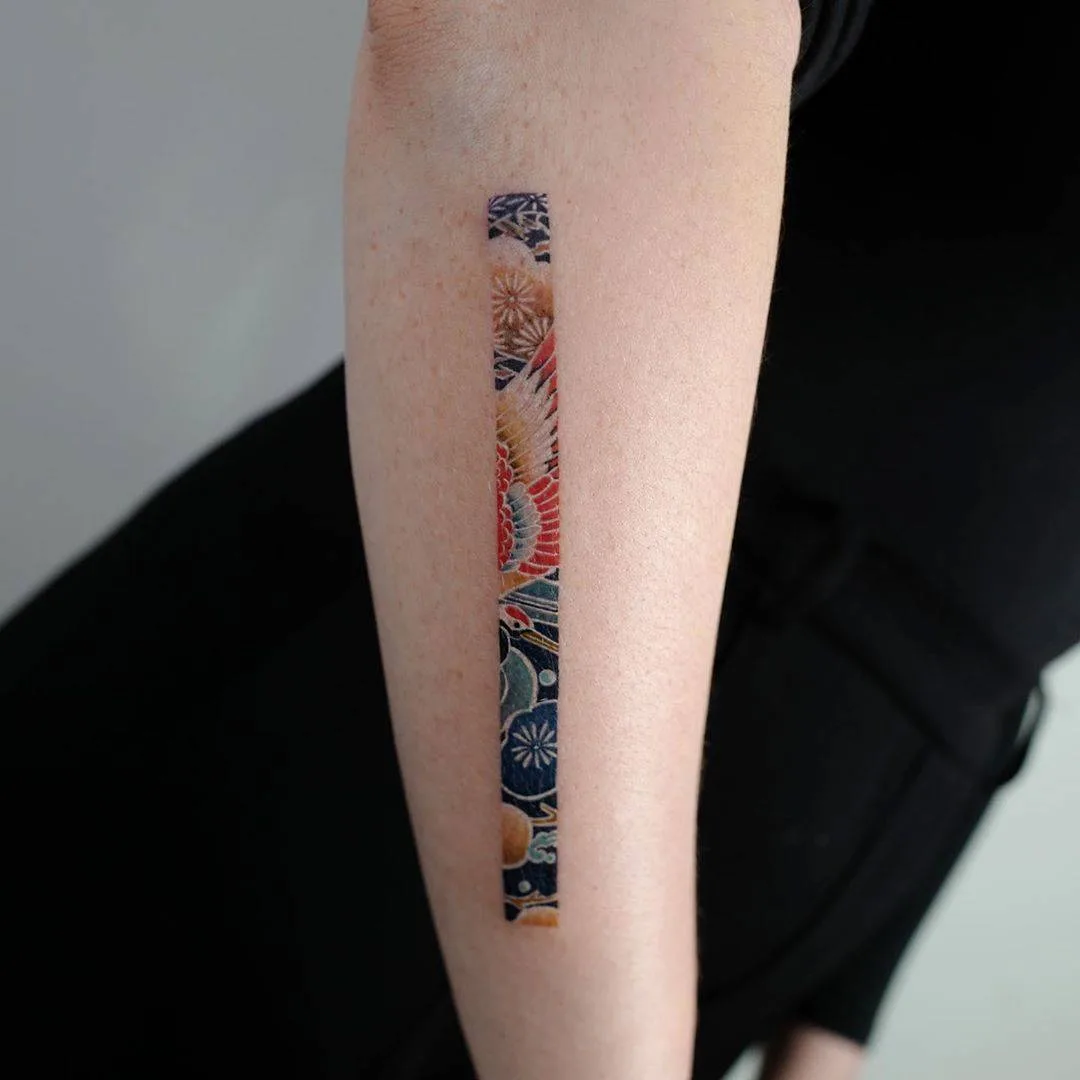
The name of the genre speaks for itself: 화 (hwa), flower, 조 (jo), bird, 도 (do), painting. But limiting oneself to a literal translation would be a mistake. Hwajodo often includes other elements: rocks, streams, butterflies, insects, fruits. All of this forms a single ecosystem where each component supports the others.
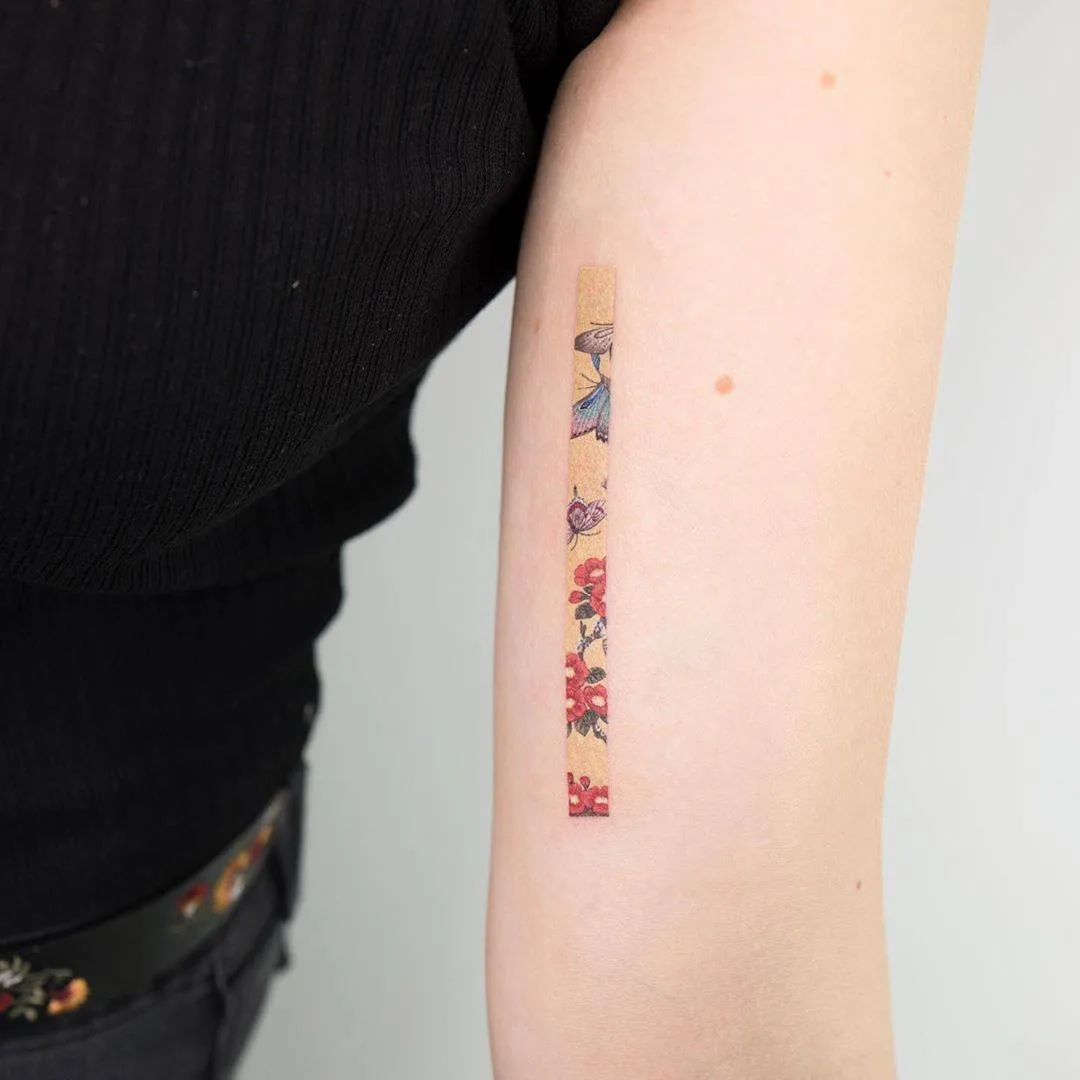
The composition is built on the principle of balance: active and passive, male and female, movement and stillness. A bird on a branch is dynamic, the flower itself is motionless. Water flows, a stone stands. Such duality is not an embellishment, but the foundation of a worldview rooted in Confucianism and Taoism.
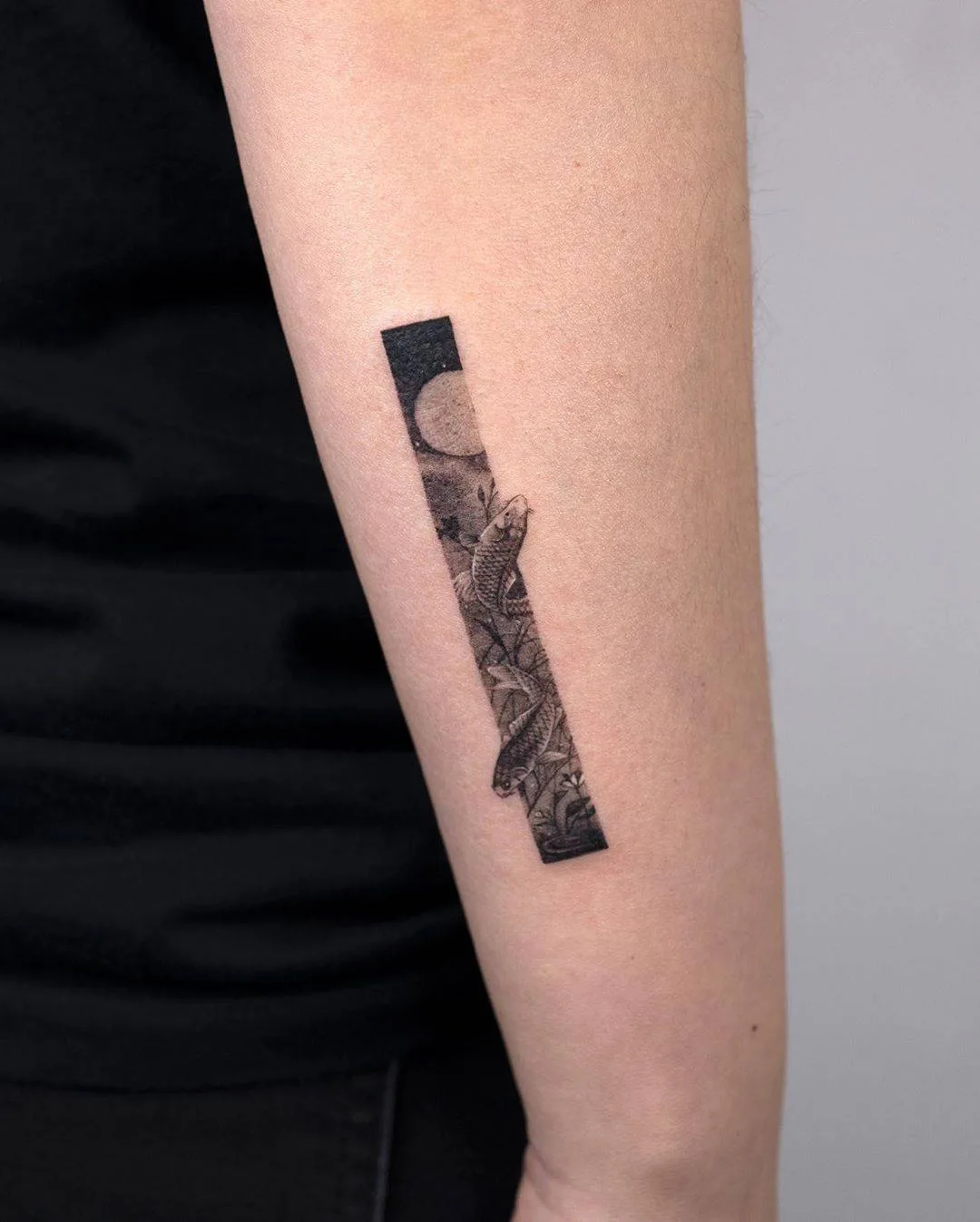
It is this structural logic that makes Hwajodo so organic for tattooing. A composition conceived for a screen fits surprisingly well on the body, on the curve of a rib, the length of a forearm, the width of a shoulder blade.
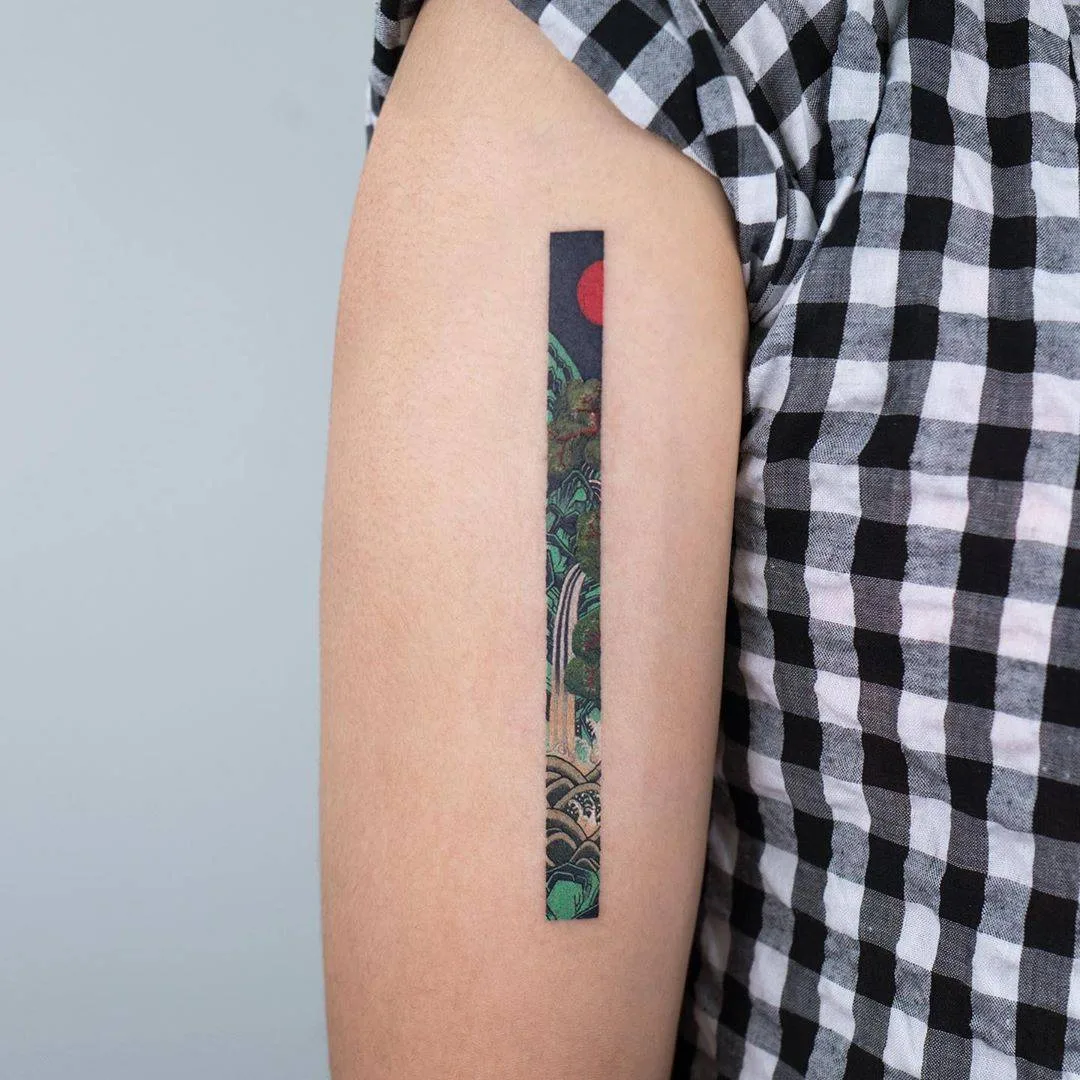
Why it's more than just a pretty picture
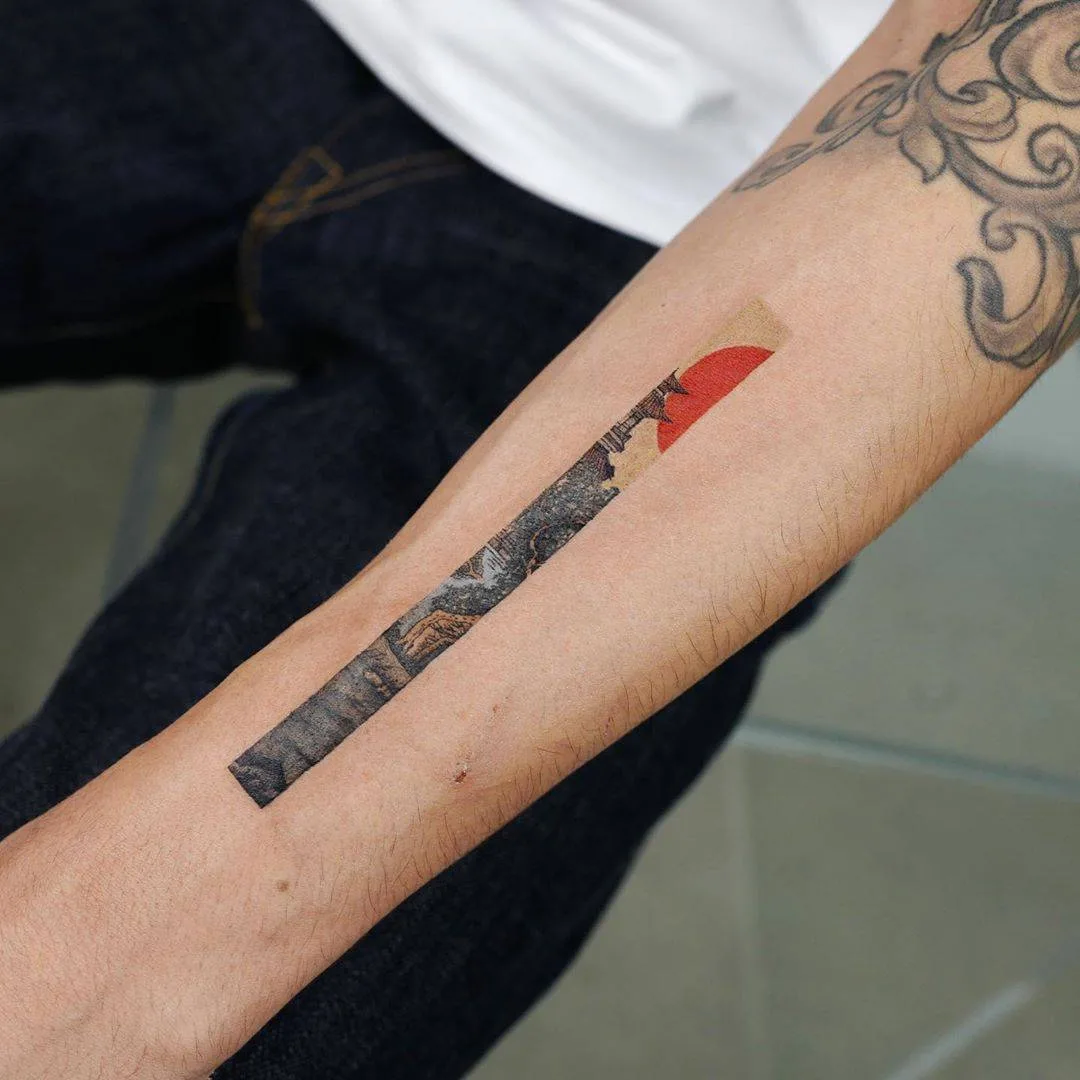
One must be honest here: many choose Hwajodo for its aesthetics. And that's fine. But behind every image lies a layer of meaning that tattoo artists working in this style try to preserve. Or, at the very least, take into account.
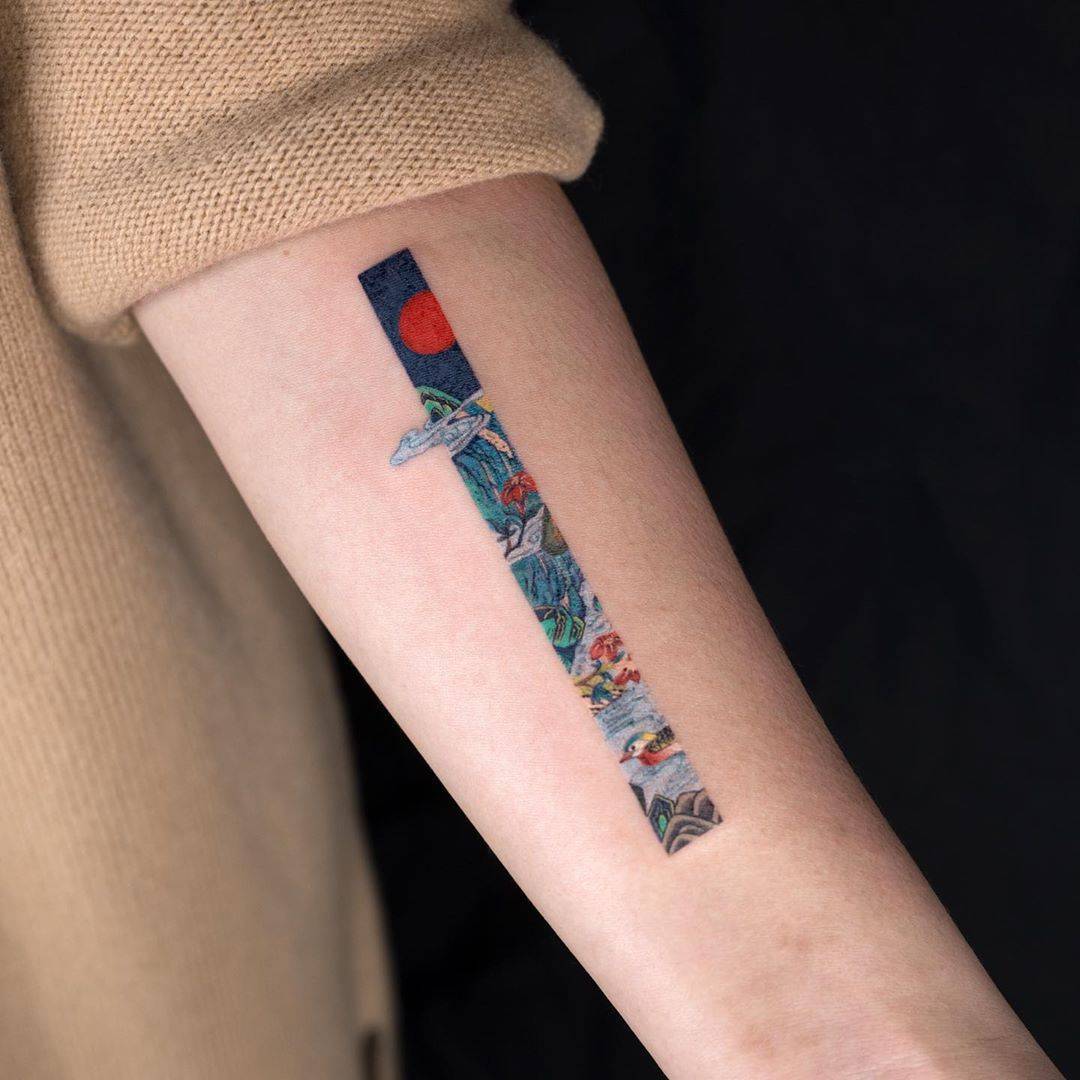
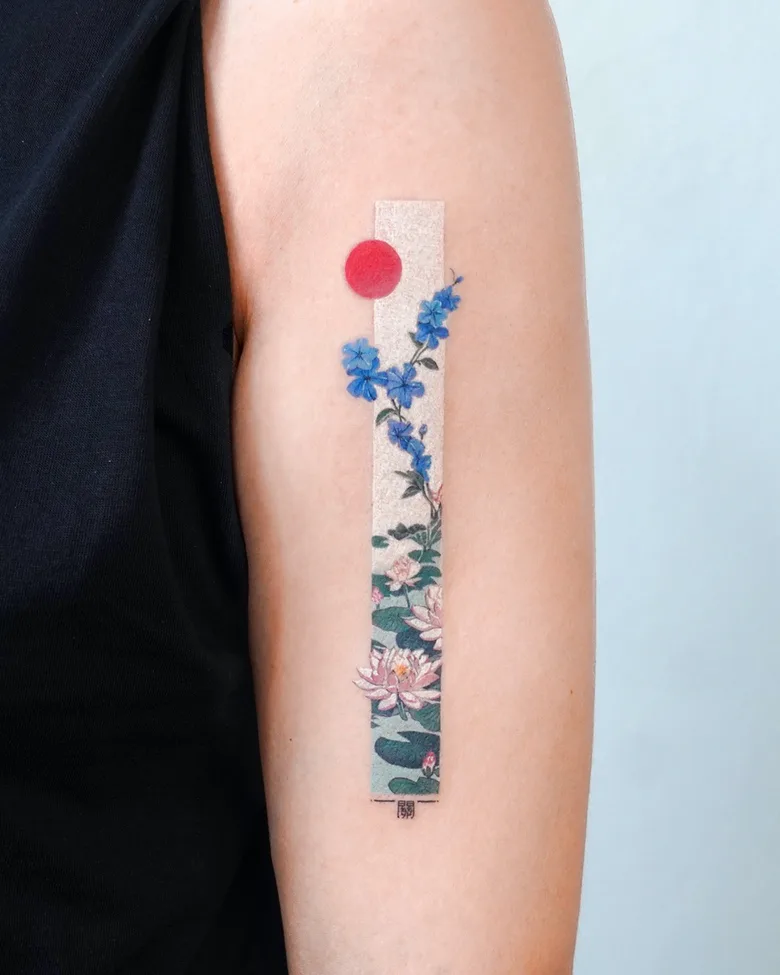
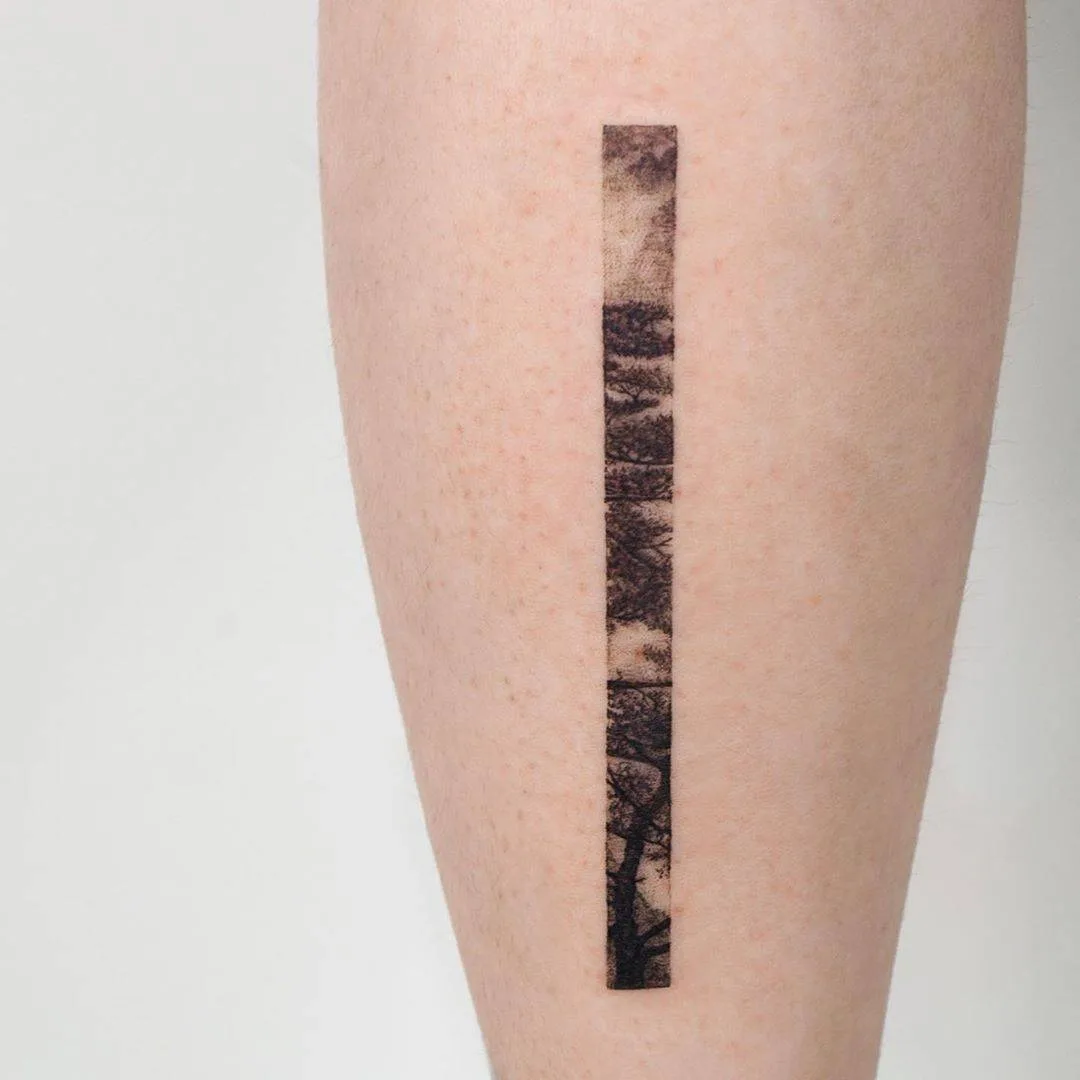
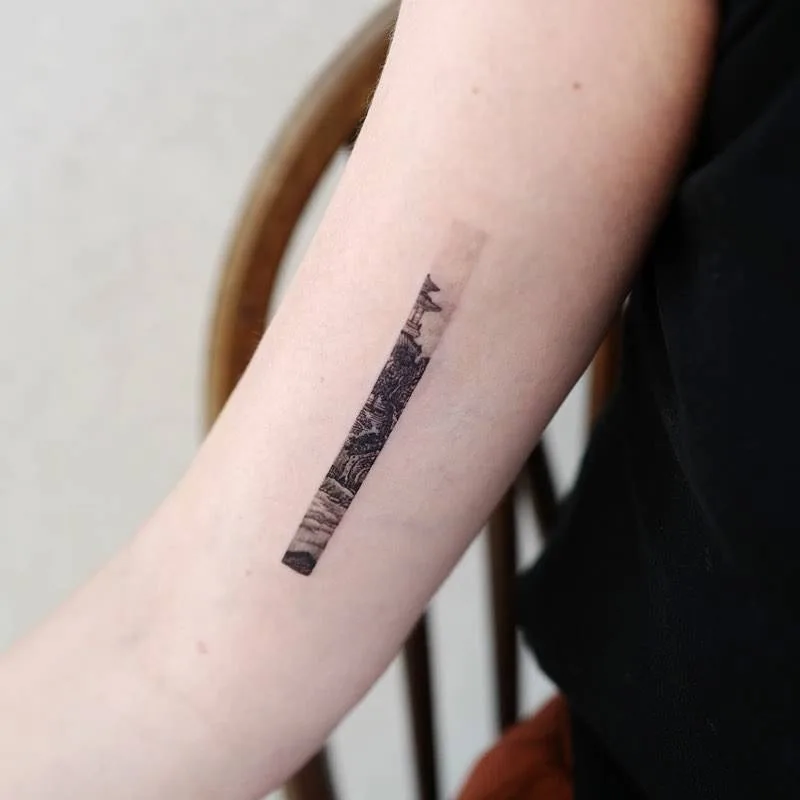
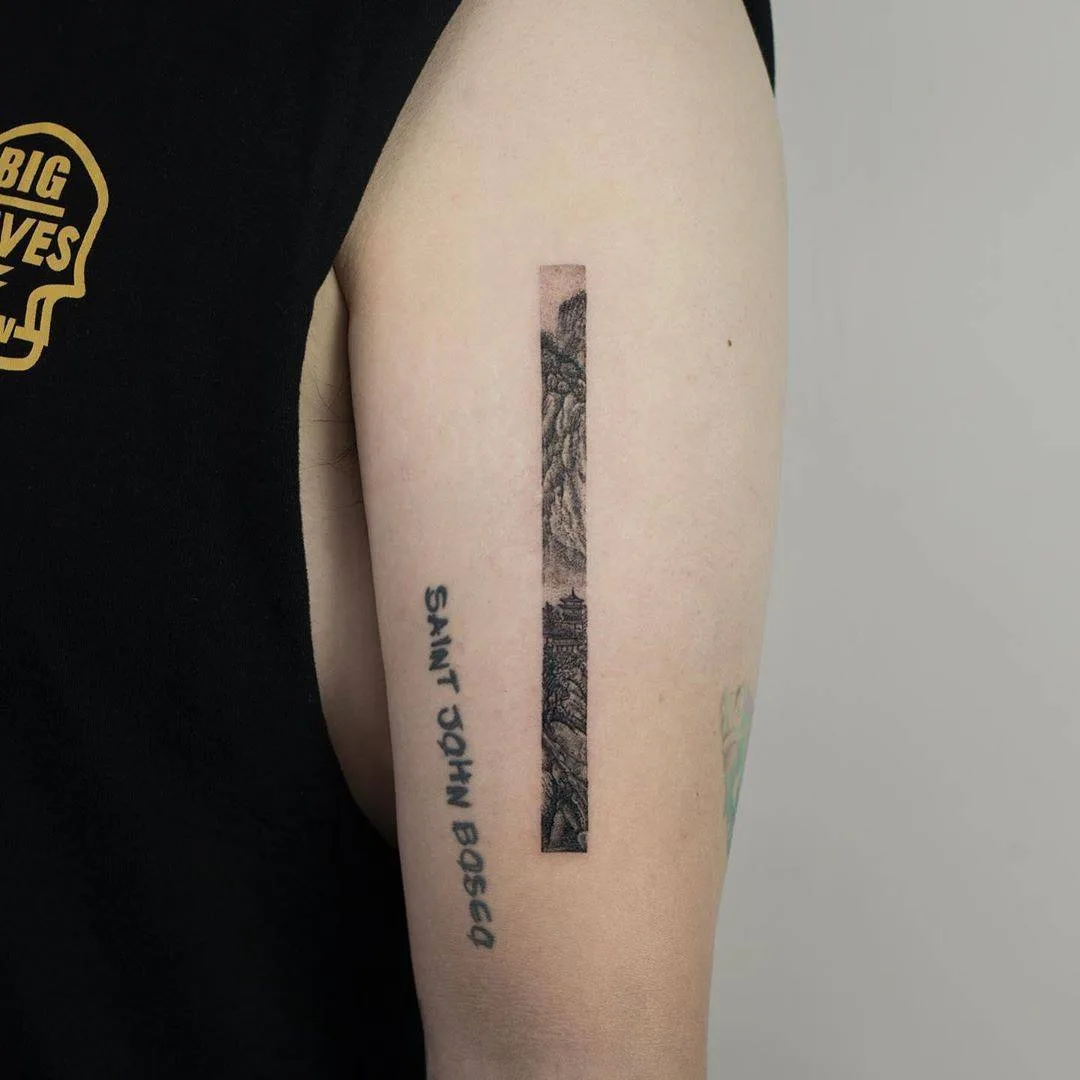
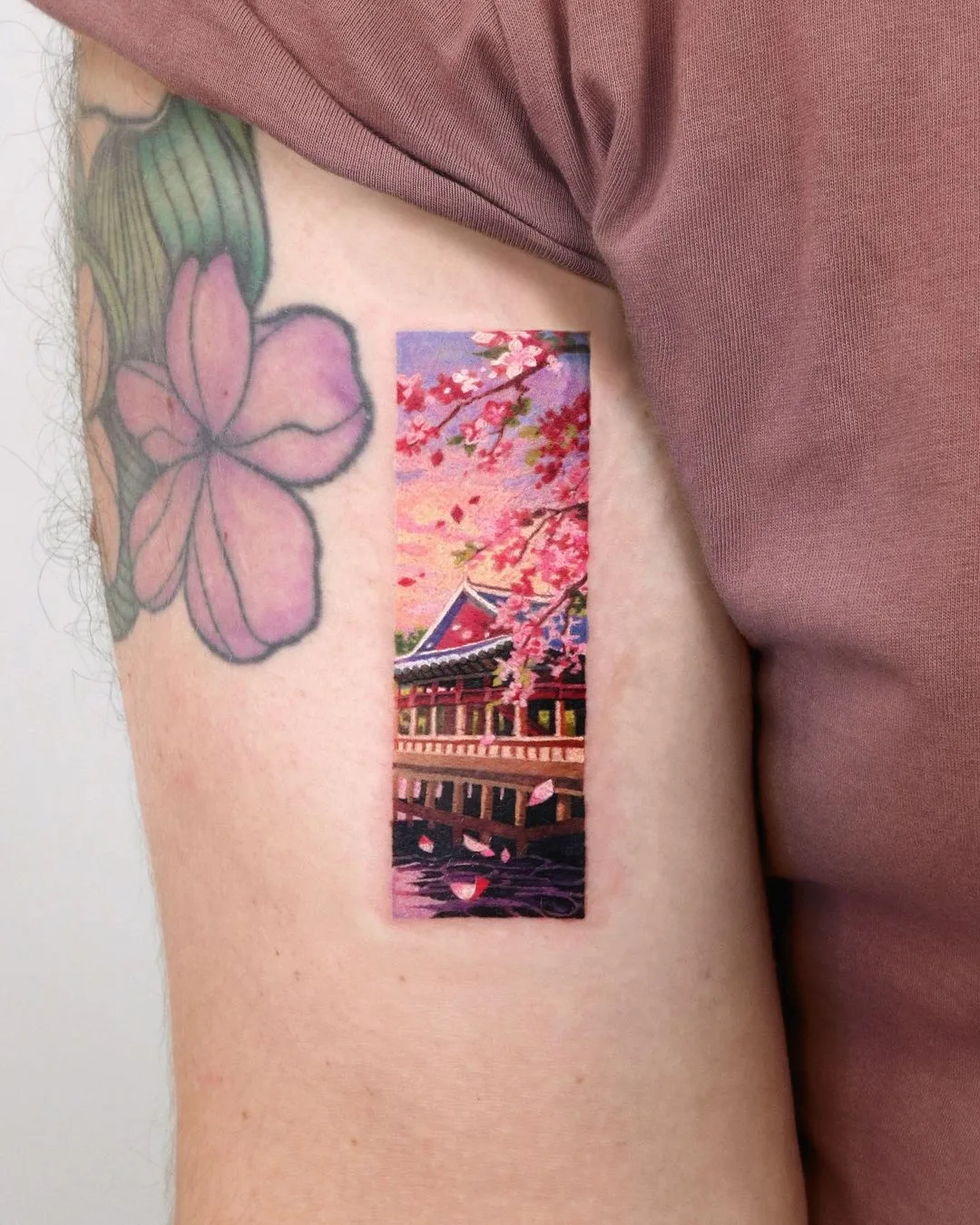
Korean hwajodo strip on forearm
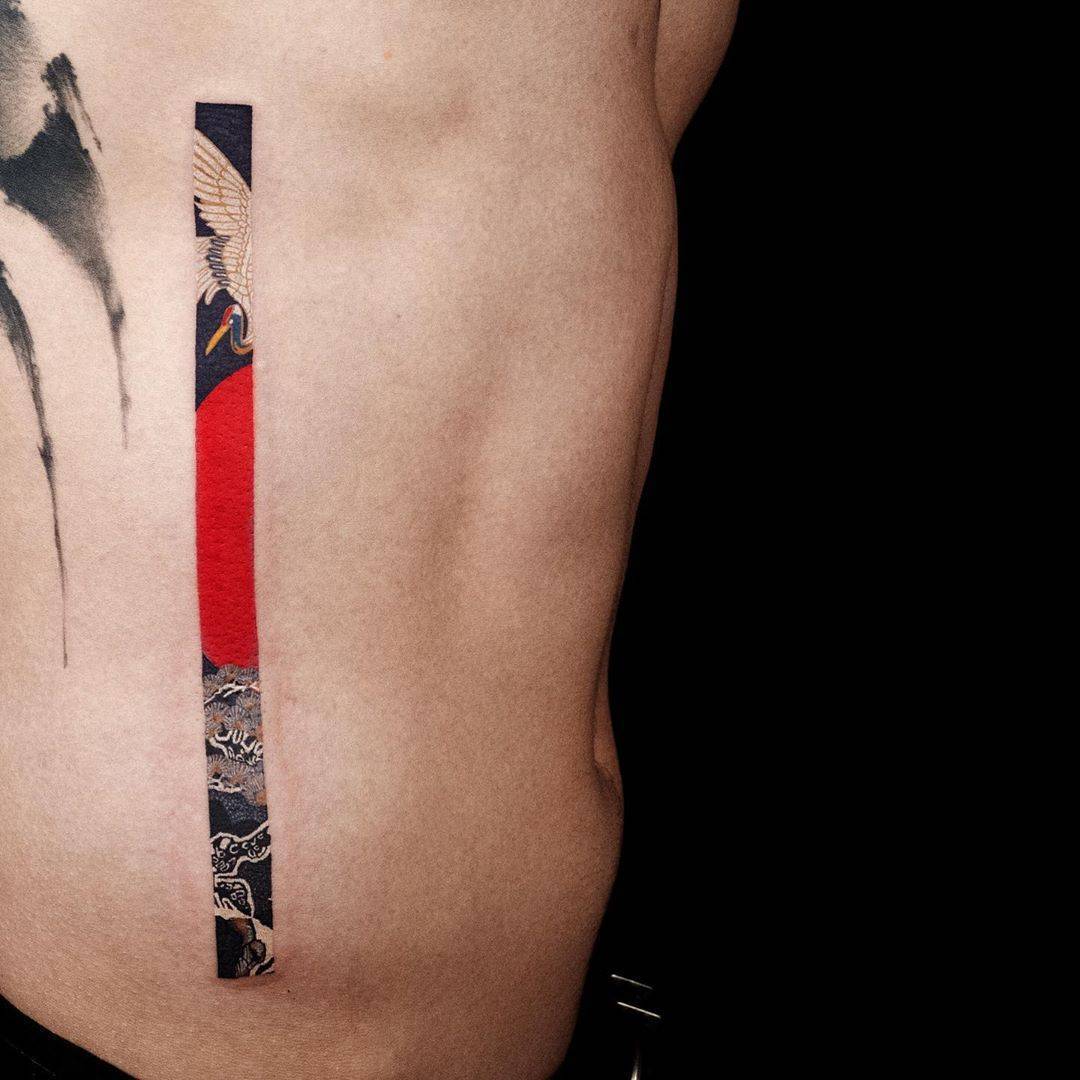
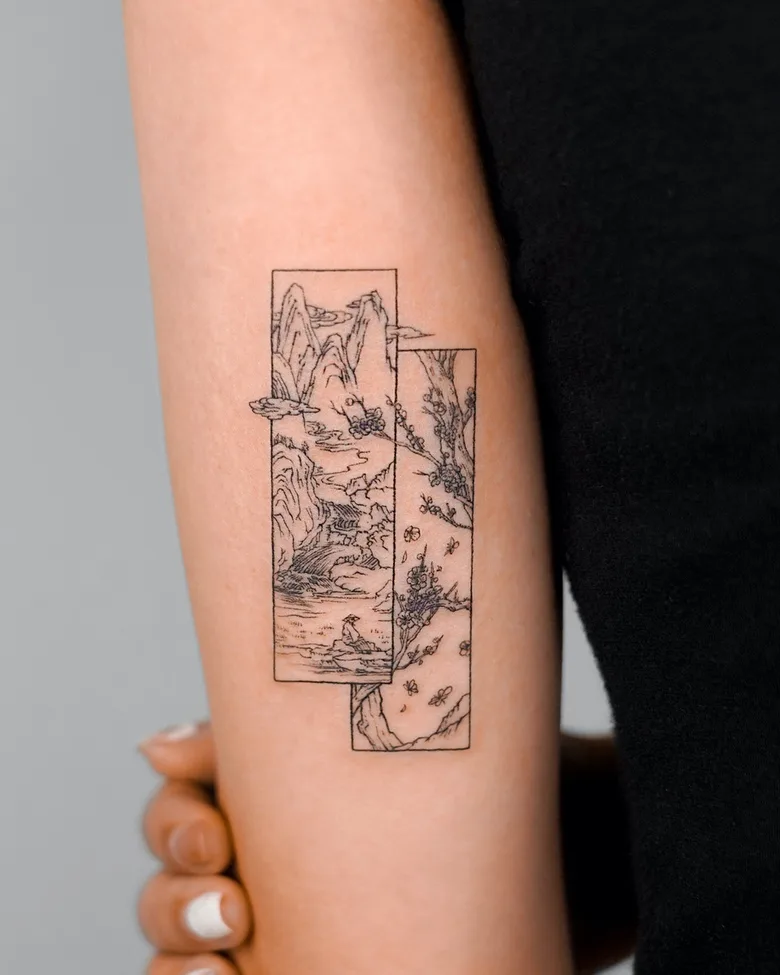
Hwajodo crane and landscape tattoo
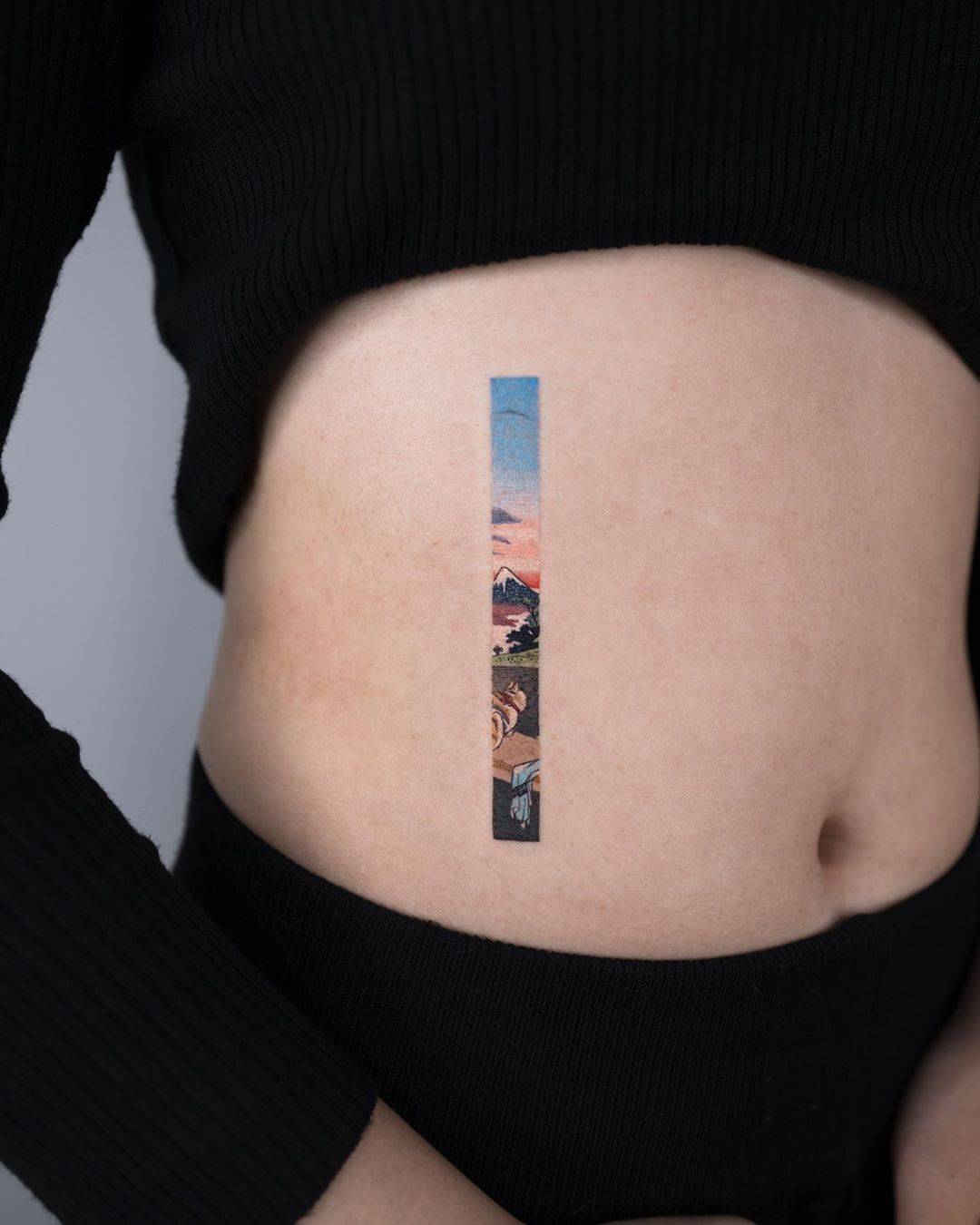
Hwajodo landscape tattoo
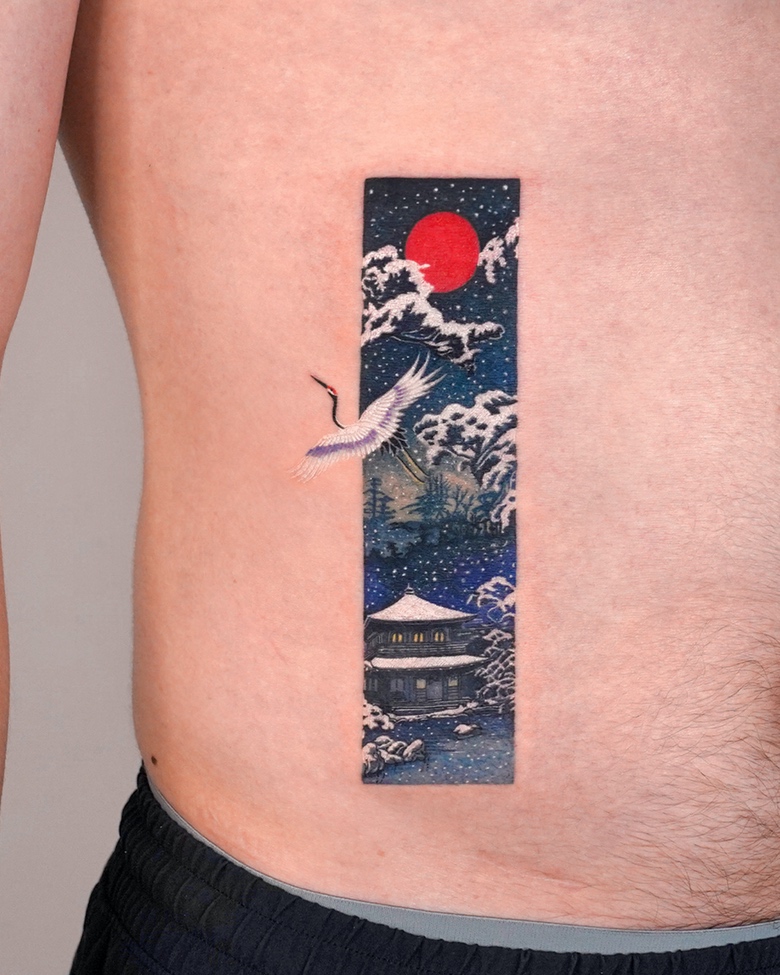
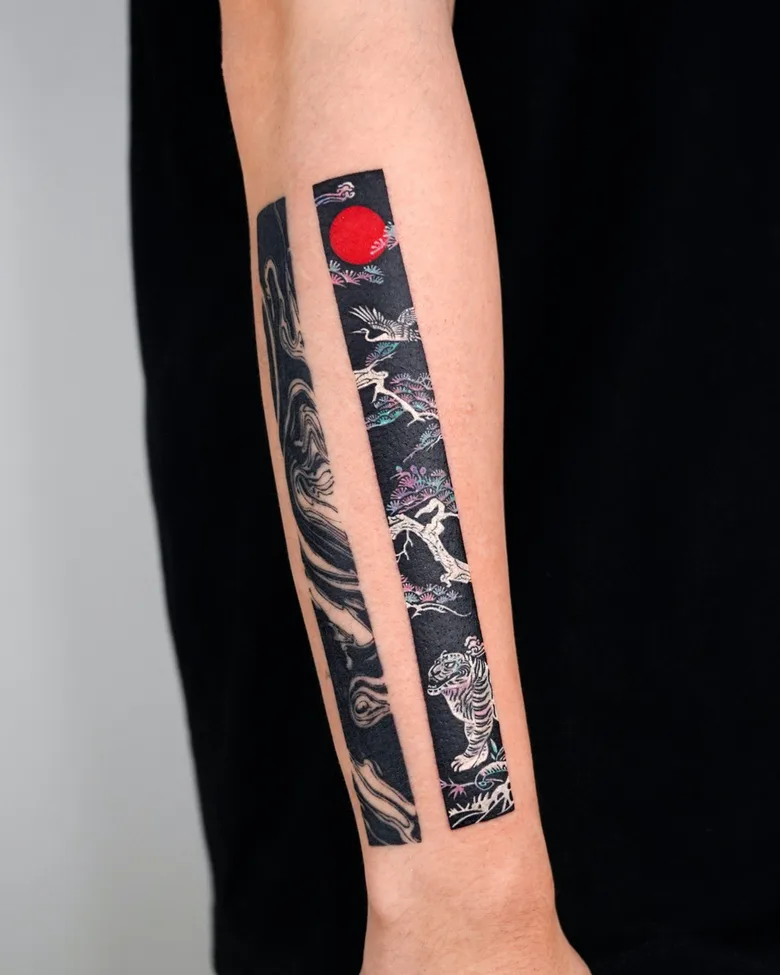
Hwajodo crane with red sun and snowy landscape
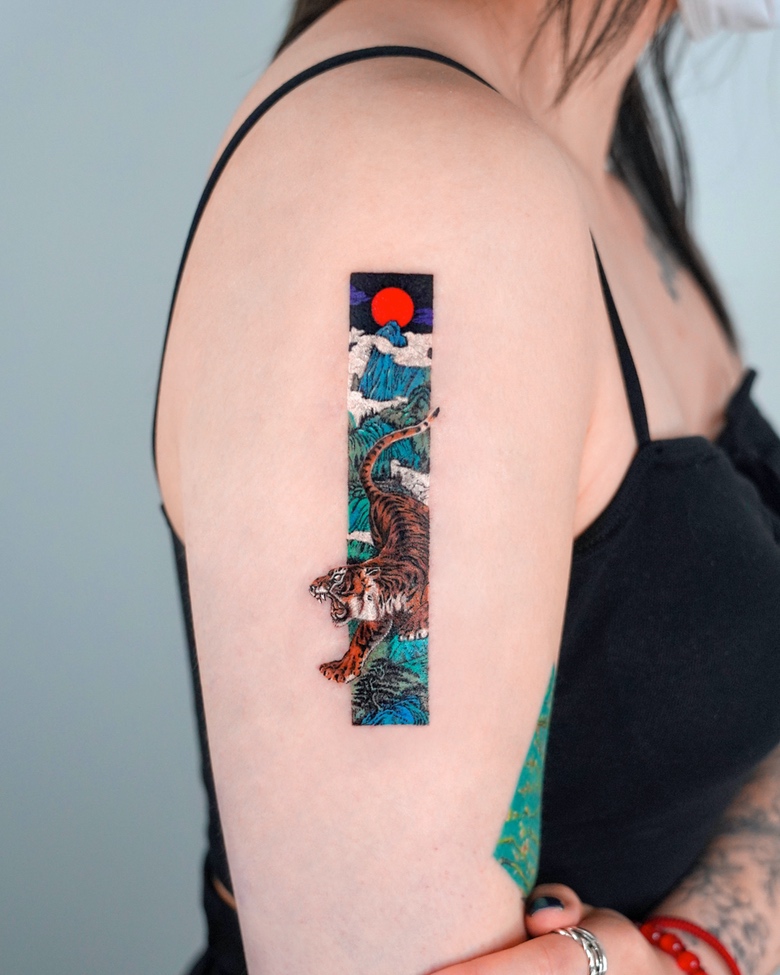
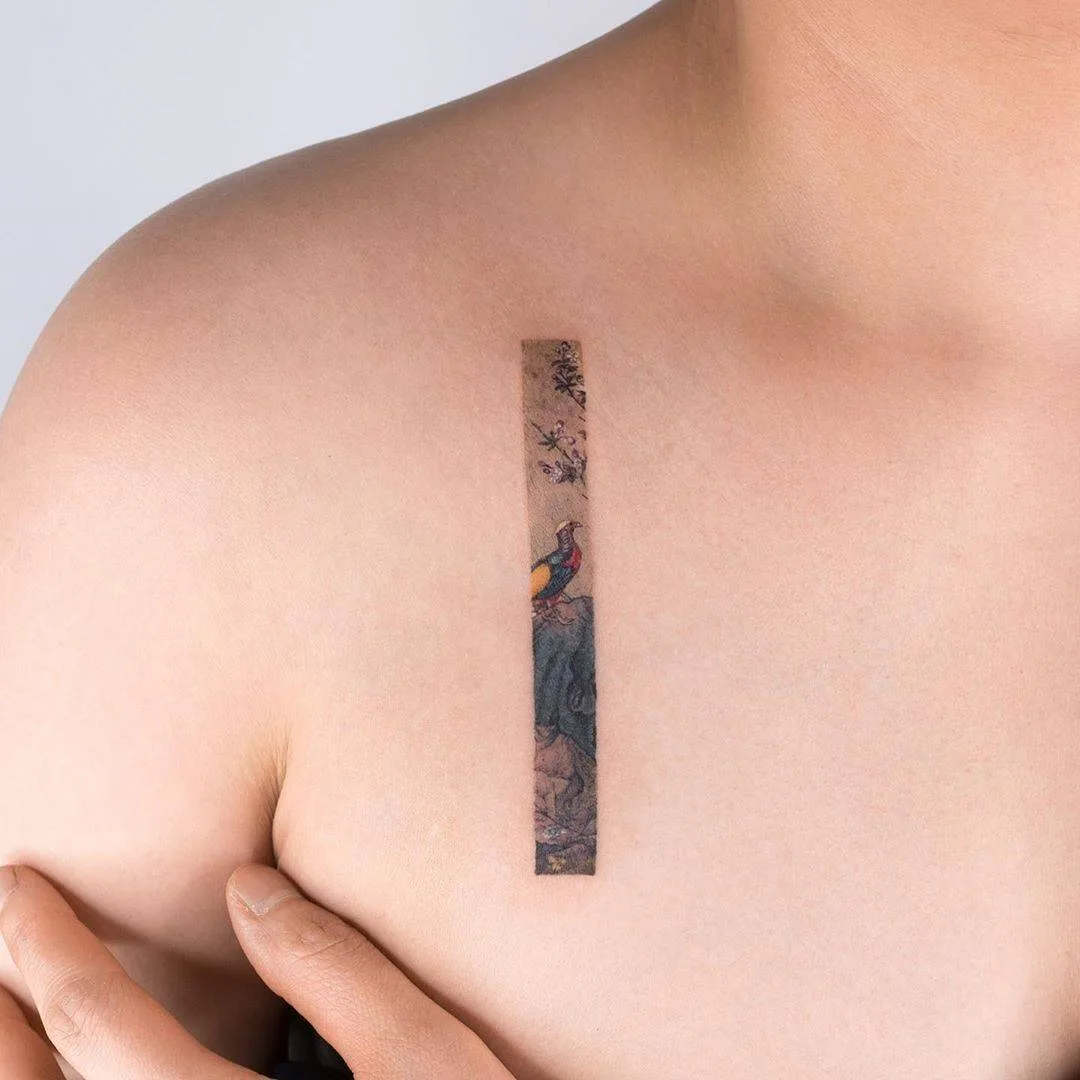
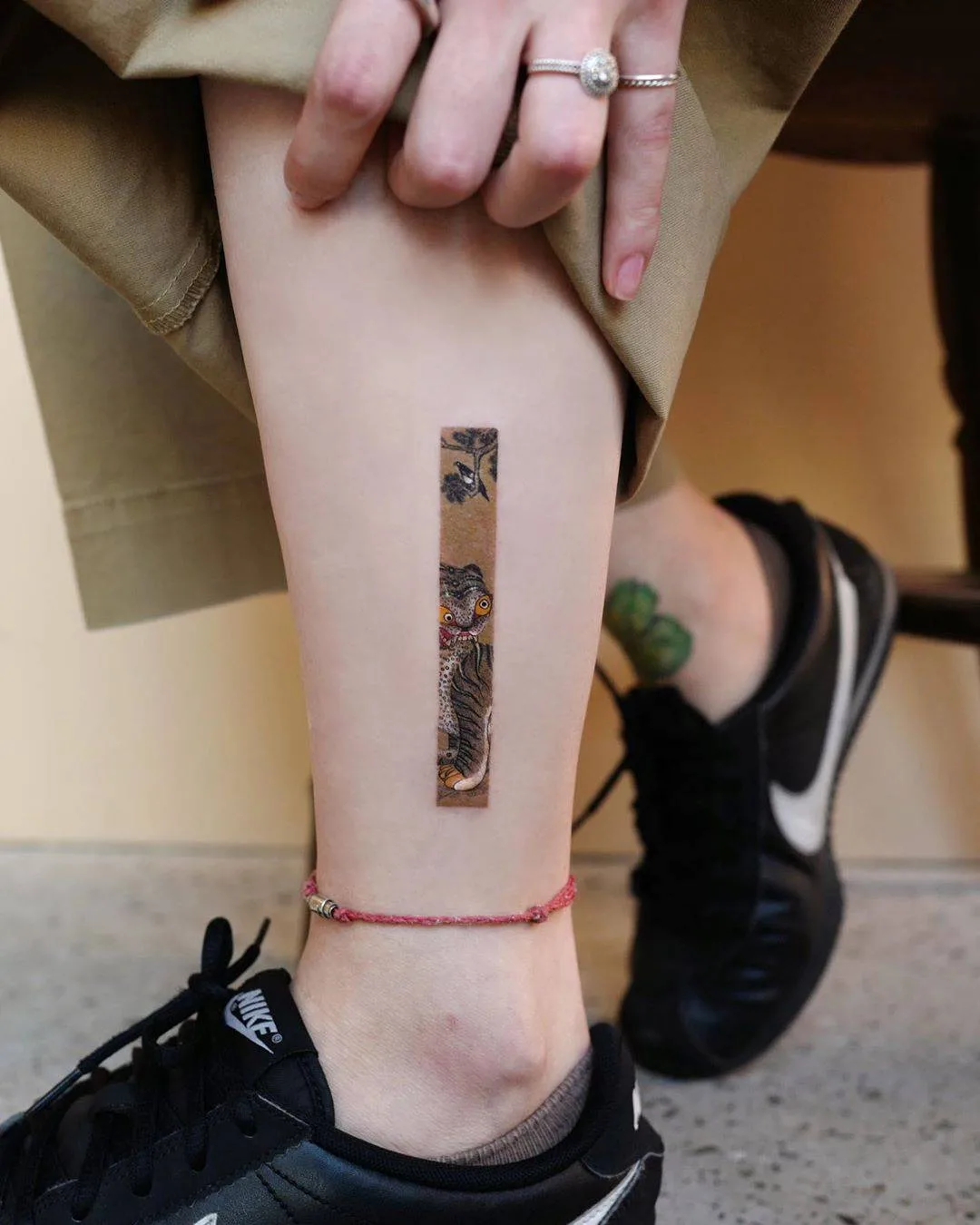
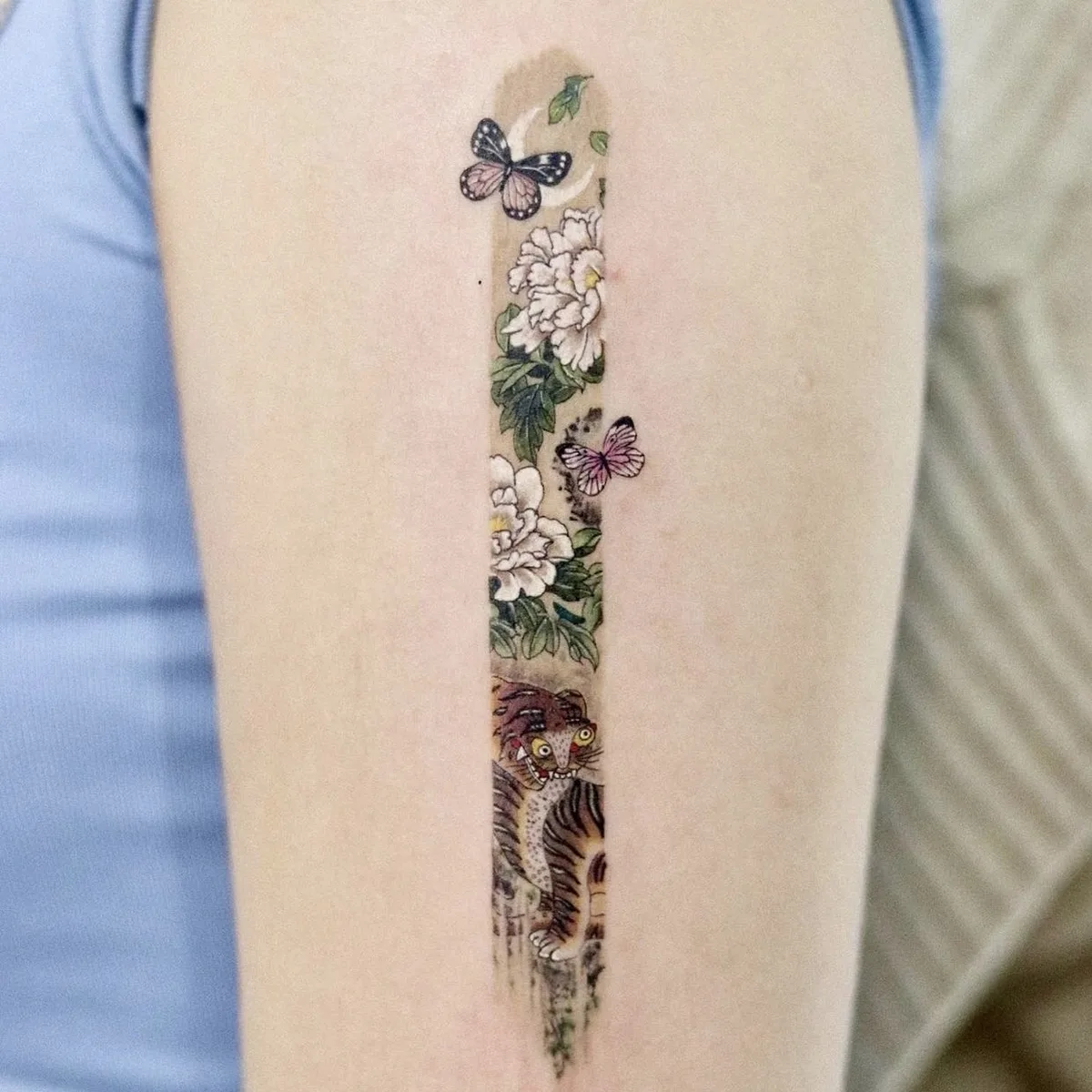
Hwajodo tiger landscape shoulder tattoo
Hwajodo is both decorative art and a system of symbols. Every flower, every bird, is a coded message. The cultural significance of tattooing in Korea. And when an artist transfers these images to skin, they are working not only with visual form, but also with cultural memory.
Hwajodo Symbolism: What Does Your Tattoo Mean?
This section is probably the most practical. If you are planning a Hwajodo tattoo or already have one, it's helpful to understand what exactly is being said on your skin.
Birds: Messengers of Fate
The crane (학, hak) is perhaps the central character in Korean pictorial tradition. It symbolizes longevity, wisdom, and moral purity. In painting, it was often depicted alongside a pine tree, creating a dual symbol of eternal youth and resilience. In tattooing, a crane in flight is particularly striking on large surfaces, such as the back or thigh.
Mandarin ducks (원앙, wonang) are a paired symbol of marital fidelity. They are always drawn together. Without a partner, such a duck loses its meaning. A popular choice for matching tattoos.
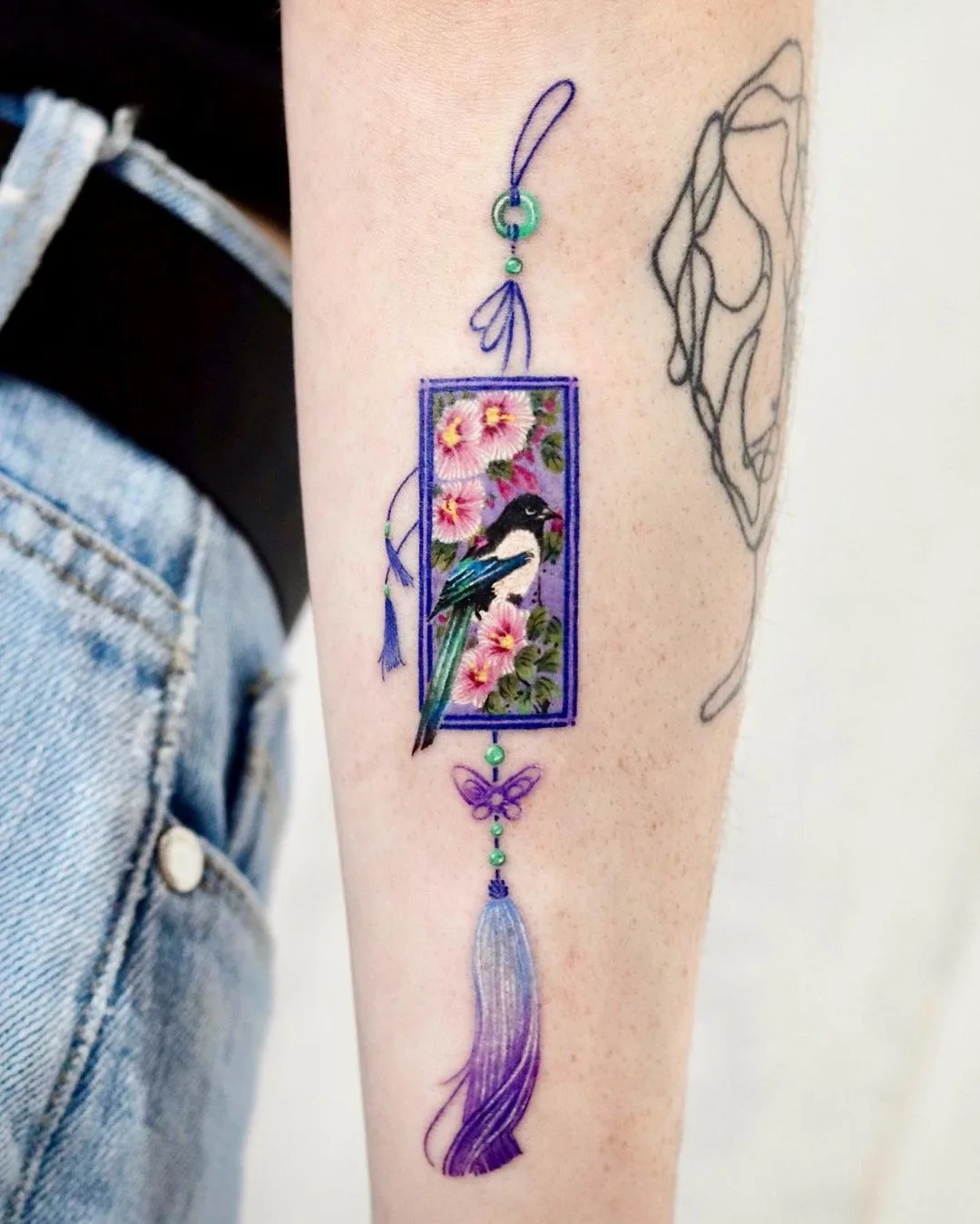
The magpie (까치, kkachhi) in Korean folklore is a bird that brings good news. A magpie on a plum branch is a classic Minhwa motif, signifying joyful changes.
The pheasant is a symbol of beauty and, interestingly, specifically female virtue in the Confucian tradition. It was often paired with a peony.
There are other birds, such as swallows, herons, and orioles, each with its own semantic weight. But the four listed above are the most common in tattoos.
Flowers: The Language of Feelings and Wishes
The peony (모란, moran) is the undisputed king of Hwajodo. It symbolizes wealth, nobility, and prosperity. In Korean painting, peonies often occupied entire screens of eight or ten panels. In tattoos, peonies work at almost any scale, from a large composition on the back to a miniature flower on the wrist.
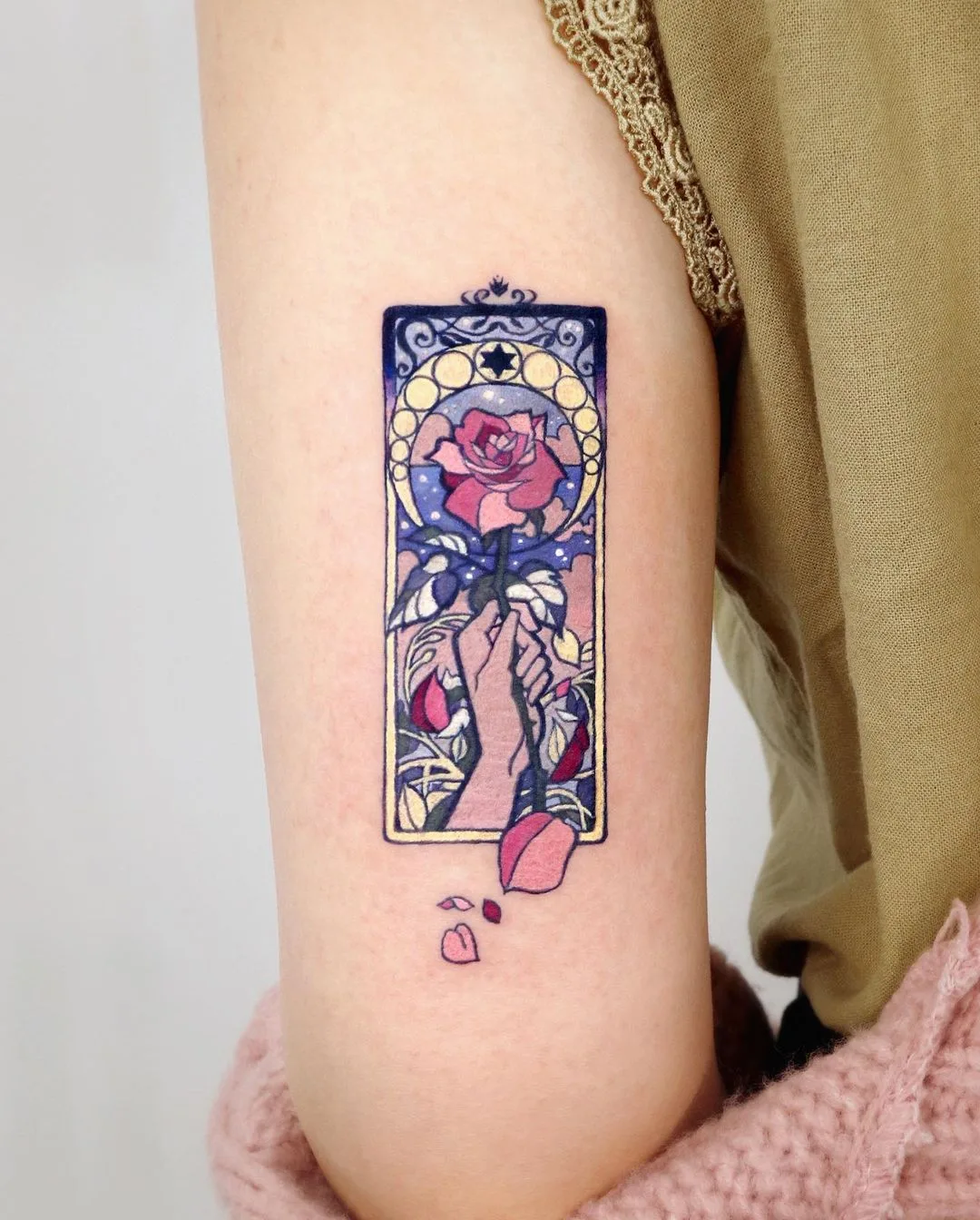
The lotus (연꽃, yeonkkot) symbolizes purity, spiritual enlightenment, and overcoming difficulties. The lotus grows from mud but remains unstained, a metaphor so powerful that it has transitioned into tattoo culture with virtually no adaptation.
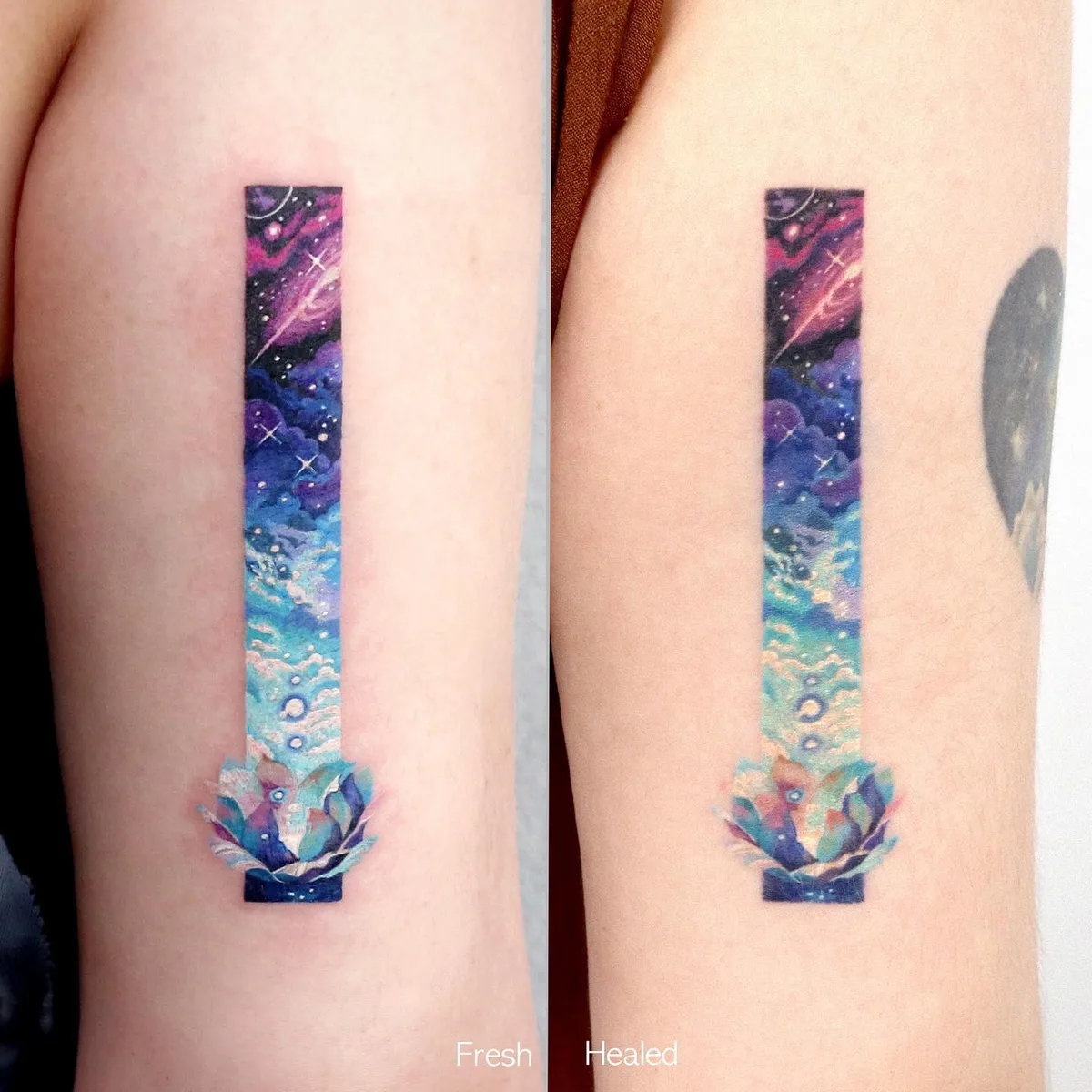
The plum (매화, maehwa) symbolizes resilience and hope. The plum blossoms first, even before the snow melts. It symbolizes resilience for those who don't wait for ideal conditions.
The chrysanthemum (국화, gukhwa) symbolizes nobility, adherence to principles, and autumnal maturity. It is often associated with hermit scholars.
The pine (소나무, sonamu) is not formally a flower, but an integral part of Hwajodo. Its evergreen nature signifies constancy, longevity, and an unyielding character.
Paired Symbols for Lovers
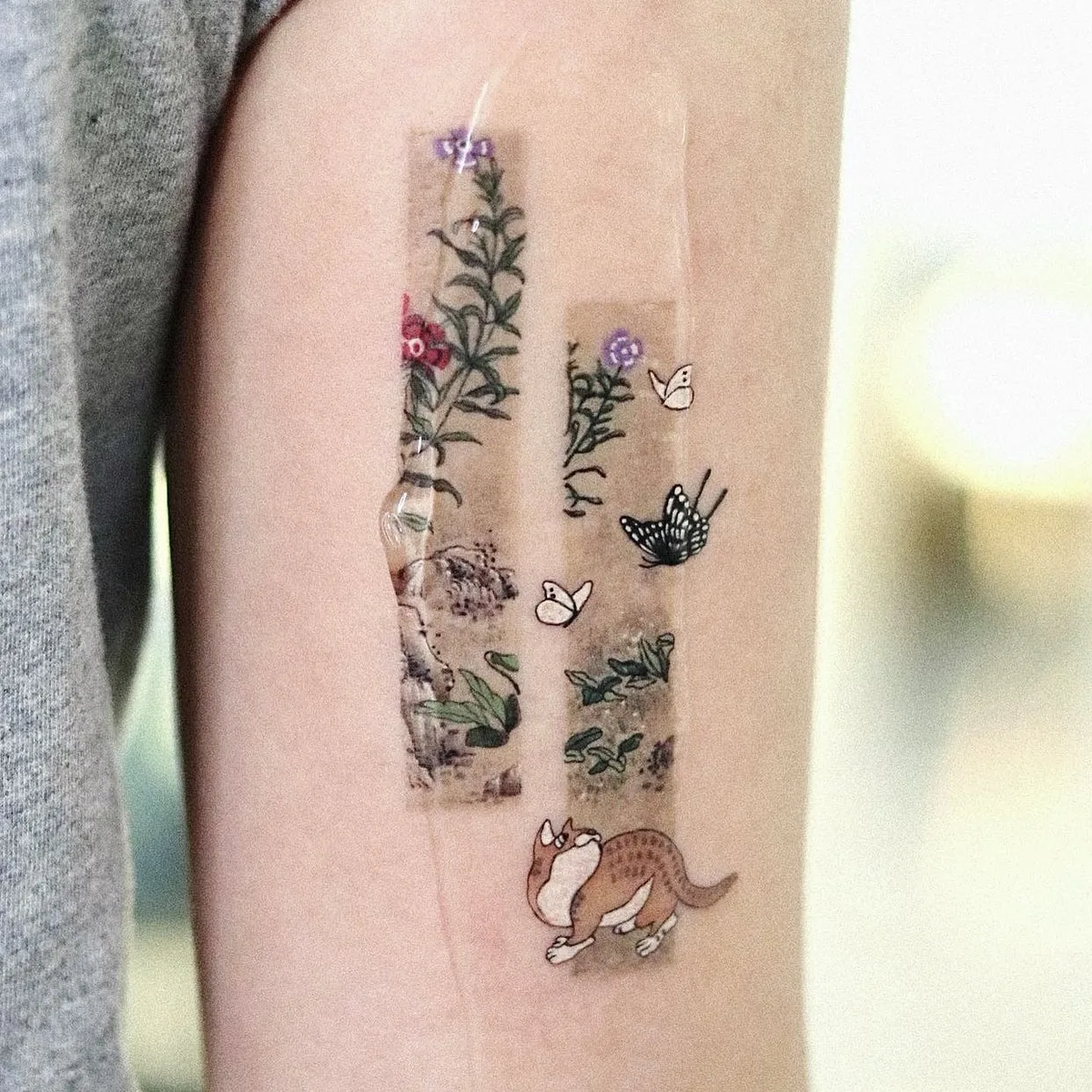
Hwajodo likely offers one of the most elegant systems for matching tattoos in the world. Mandarin ducks are an obvious choice, but there are other options. A pair of cranes facing each other. A butterfly and a peony, symbolizing romantic attraction. Two carp among lotuses, symbolizing harmony and fertility.
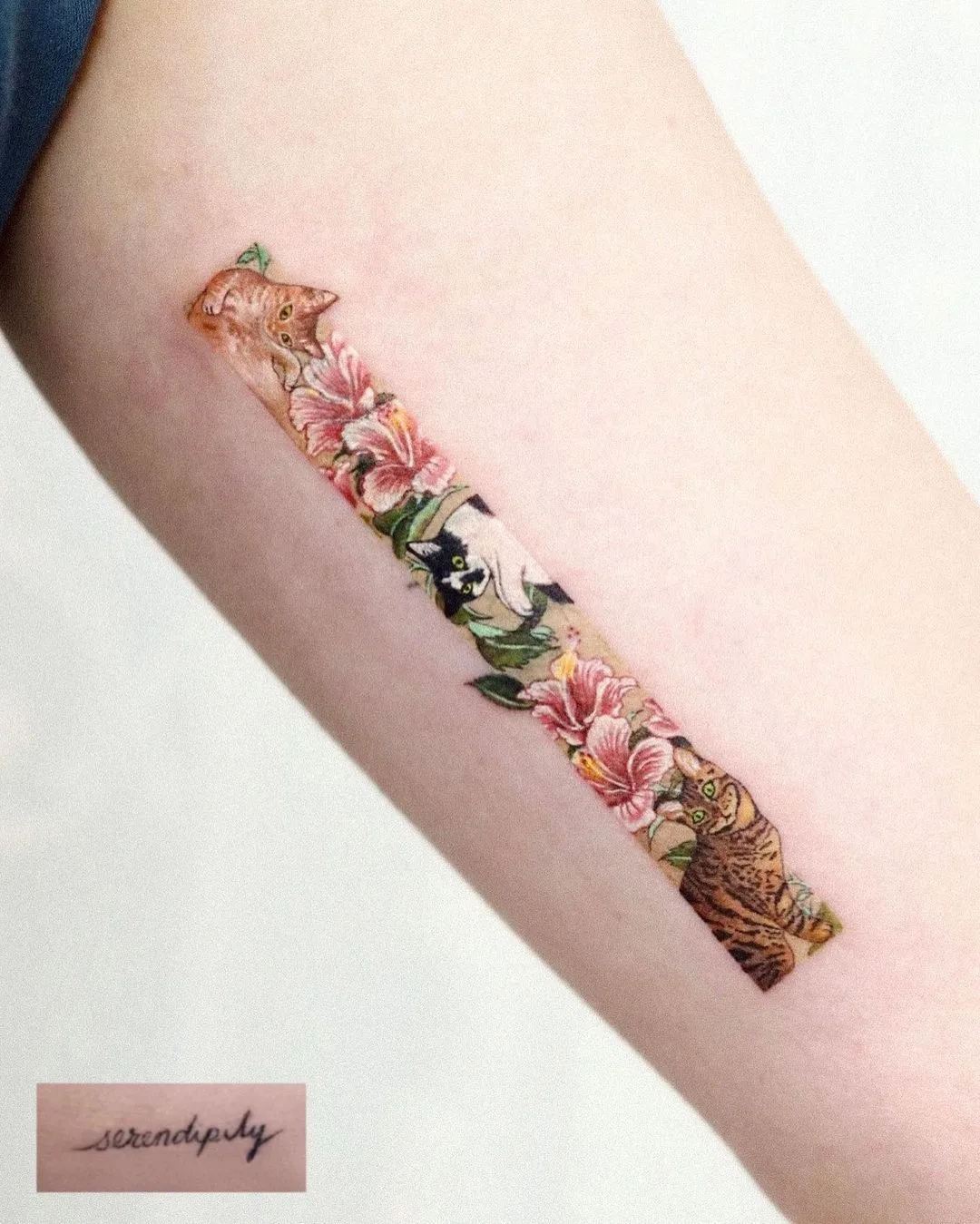
It's important to understand: in Korean tradition, pairing is not just "two identical drawings." It's a dialogue. The elements complement each other, like yin and yang. A good artist will arrange the composition so that two separate images, say, on the forearms of two different people, form a single whole when their hands are together. Subtle. Beautiful.
Hwajodo in Modern Korean Tattooing: A New Wave
Now, let's talk about how all this works in practice. The Korean tattoo scene is a paradoxical phenomenon.
Reinterpreting Tradition: From Canon to Authorial Style
Modern Korean tattoo artists don't literally copy old scrolls. They take the visual vocabulary of Hwajodo and reassemble it through contemporary techniques, fine line tattoo style, watercolor technique, microrealism, sometimes even elements of new school.
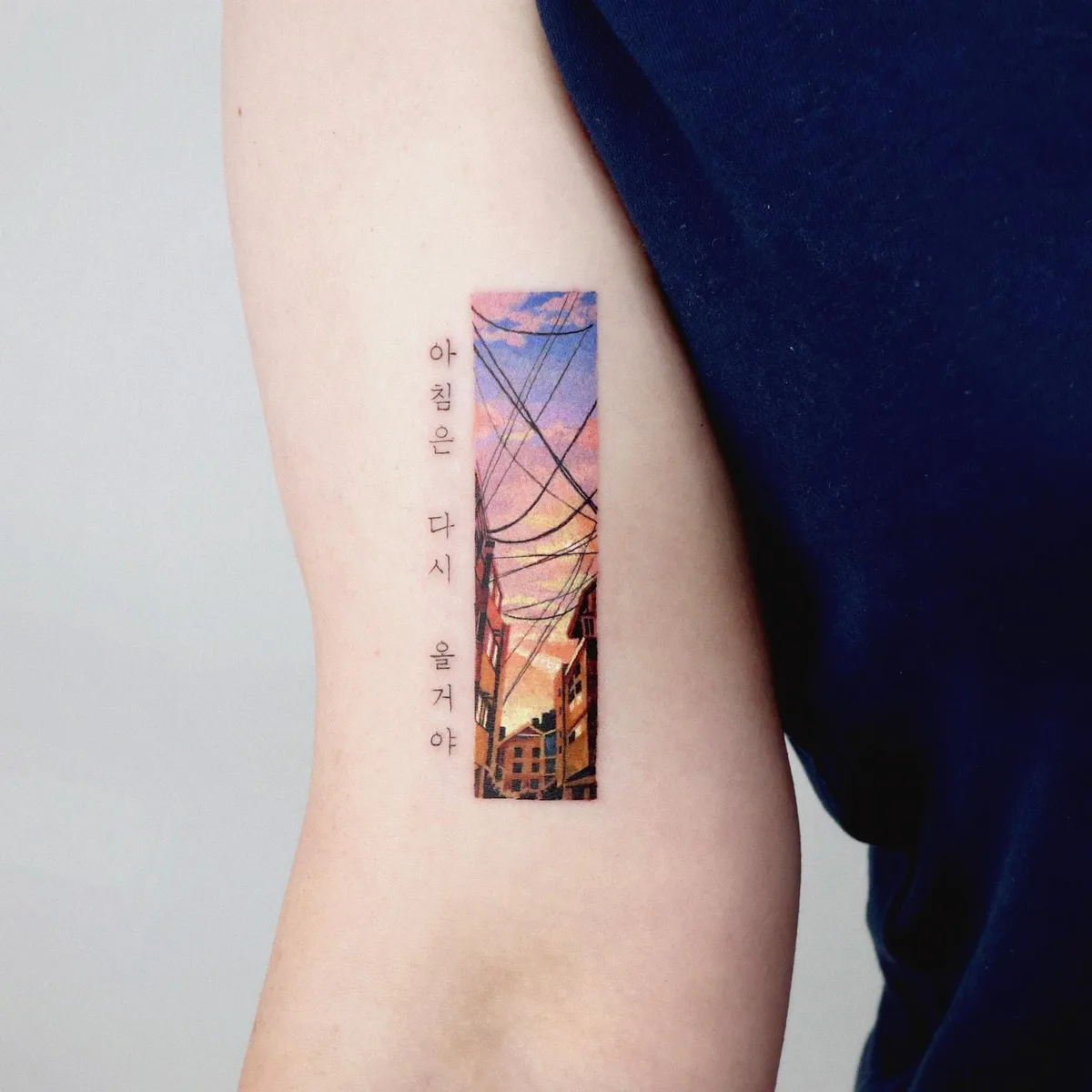
What remains of the tradition? First and foremost, the compositional logic. That very balance between movement and stillness that we discussed earlier. The palette also often refers to Minhwa, with muted but rich tones: peach, indigo, jade green, coral. Although many artists prefer monochrome, working only in black, and this, it must be said, also has historical roots, as early Korean ink painting was precisely black and white.
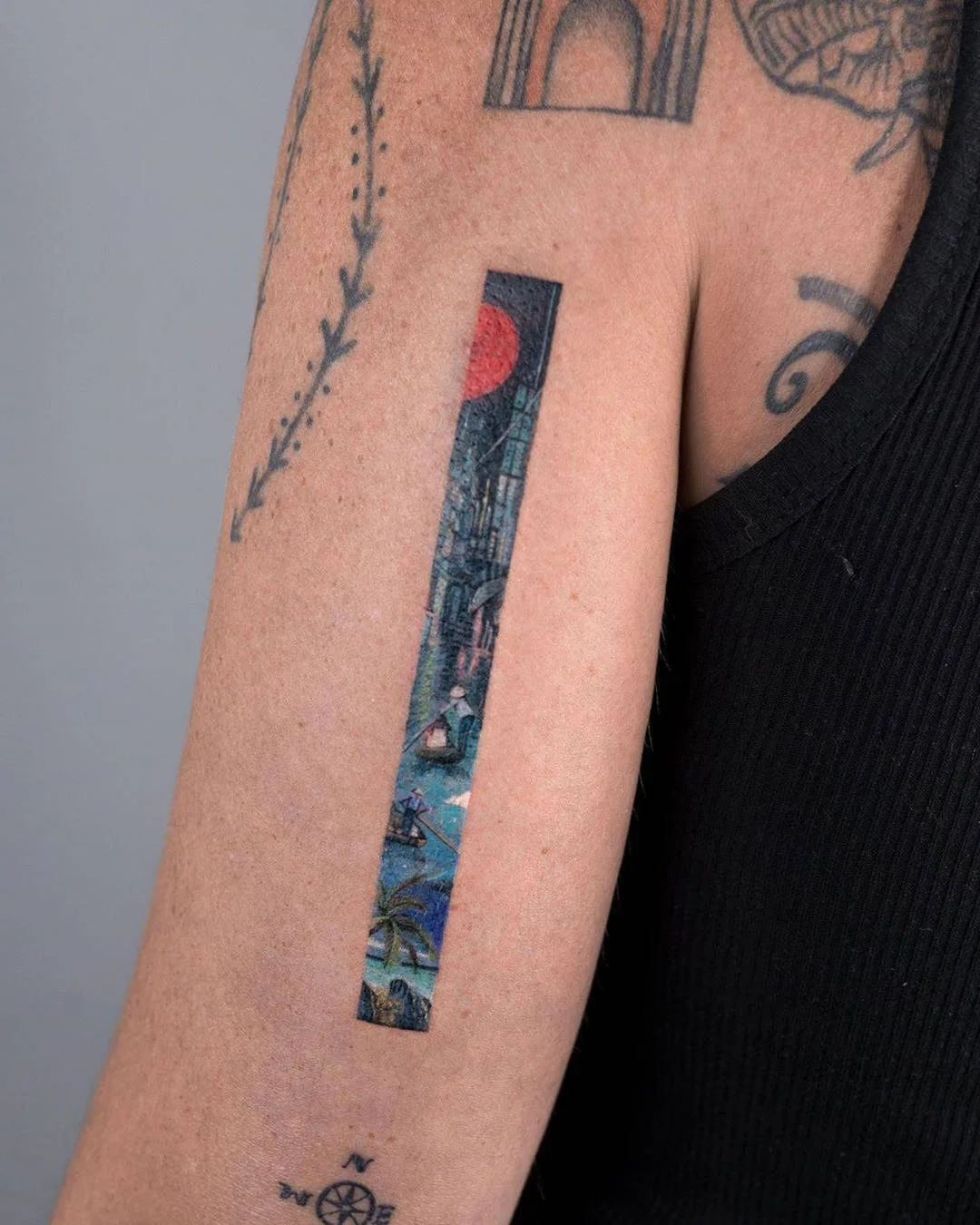
Another interesting trend is scaling. While classical scrolls were large, often human-sized, Hwajodo tattoo interpretations are often intimate. A small plum branch behind the ear. A miniature crane on the ankle. This is not a simplification, but rather a distillation: the essential image is extracted from a complex composition.
Leading Artists and Their Works
It's not easy to name specific artists without risk of error; the Korean tattoo scene is dynamic, artists work under pseudonyms, and studios open and close. But certain trends are discernible.
One artist, whose work I had the chance to observe firsthand, described his approach this way: "I don't restore old art. I converse with it. A scroll on a wall exists separately from a person, but a tattoo is part of their body, their movements, their history. I need to find the point where tradition and the specific individual meet." It's hard to put it more precisely.
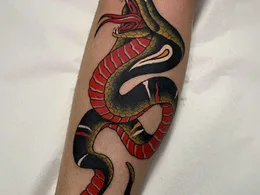
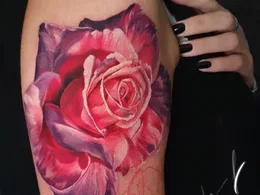
Many artists publish their work on Instagram, and it's through this platform that the style has gained an international audience. Hashtags like #hwajodotattoo or #koreantraditional tattoo garner hundreds of thousands of views.
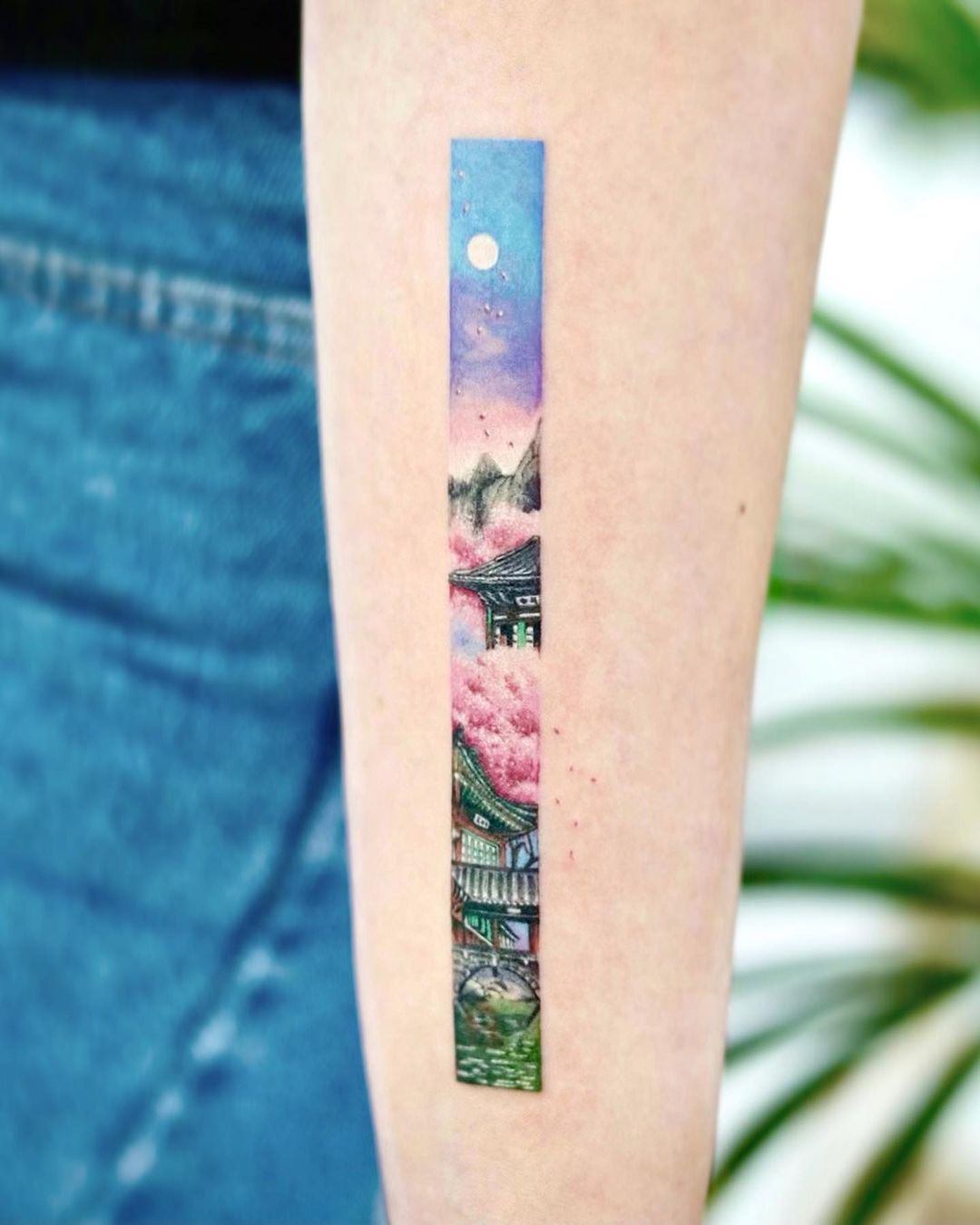
Watercolor hwajodo on forearm
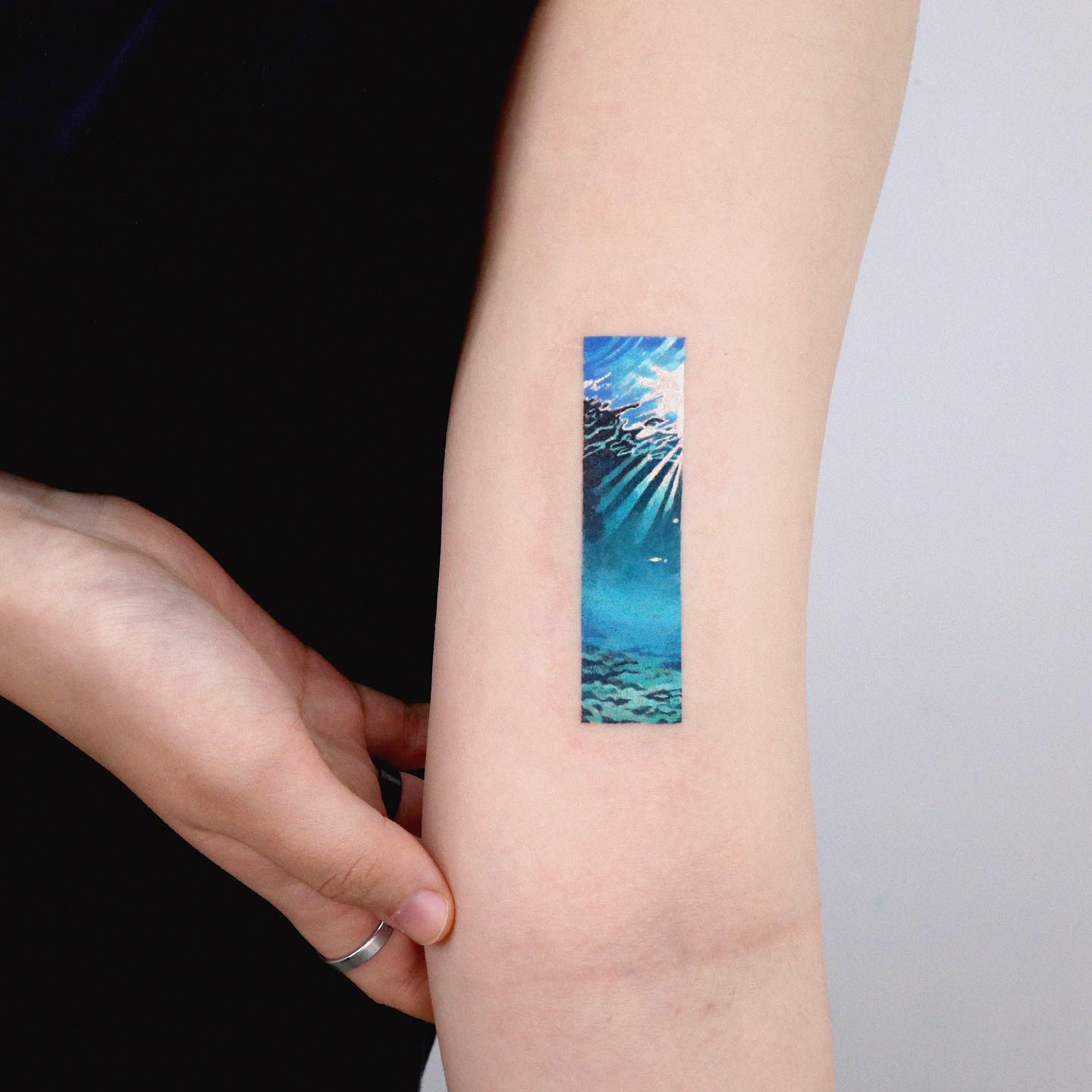
Watercolor underwater scene
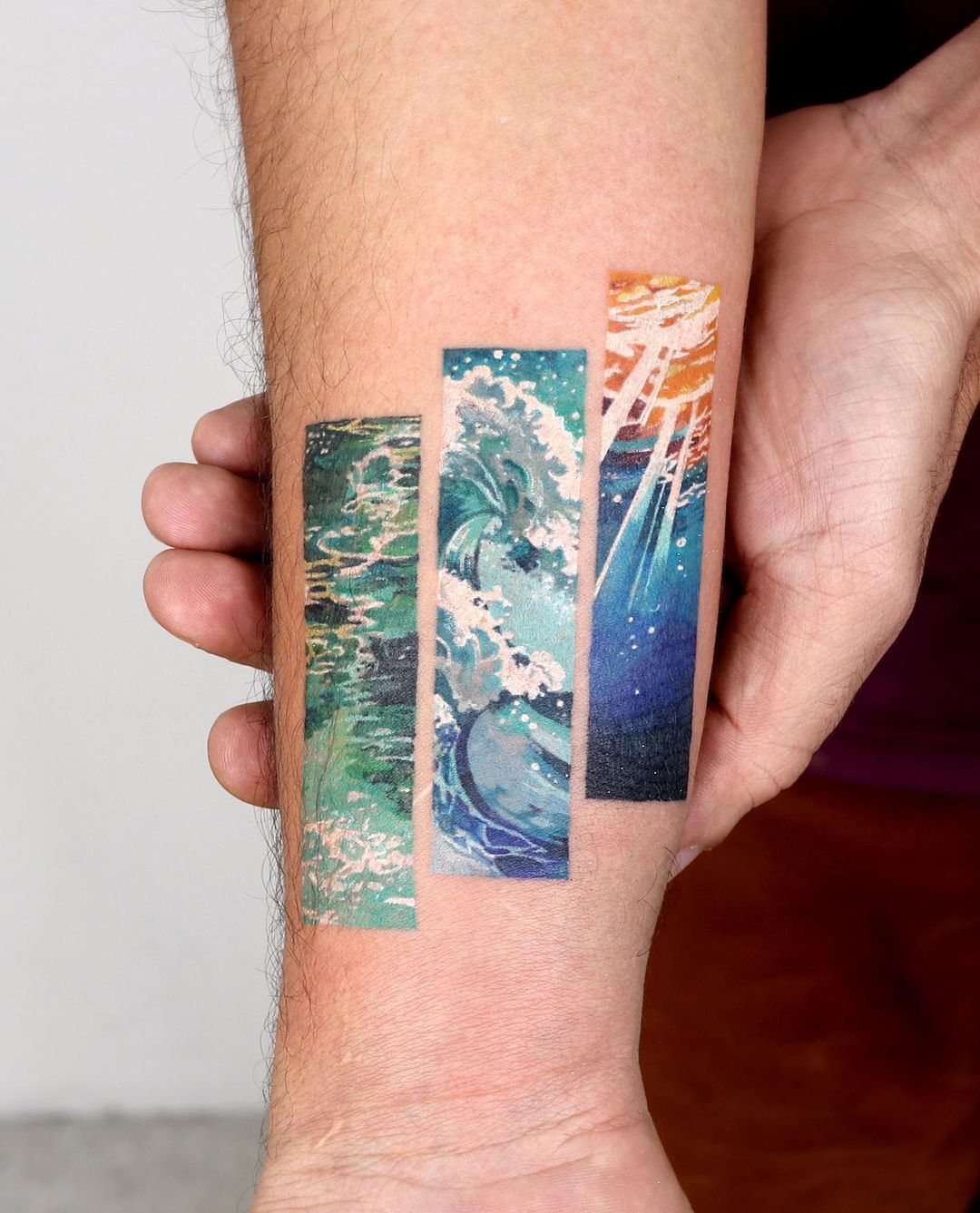
Hwajodo watercolor panels on forearm
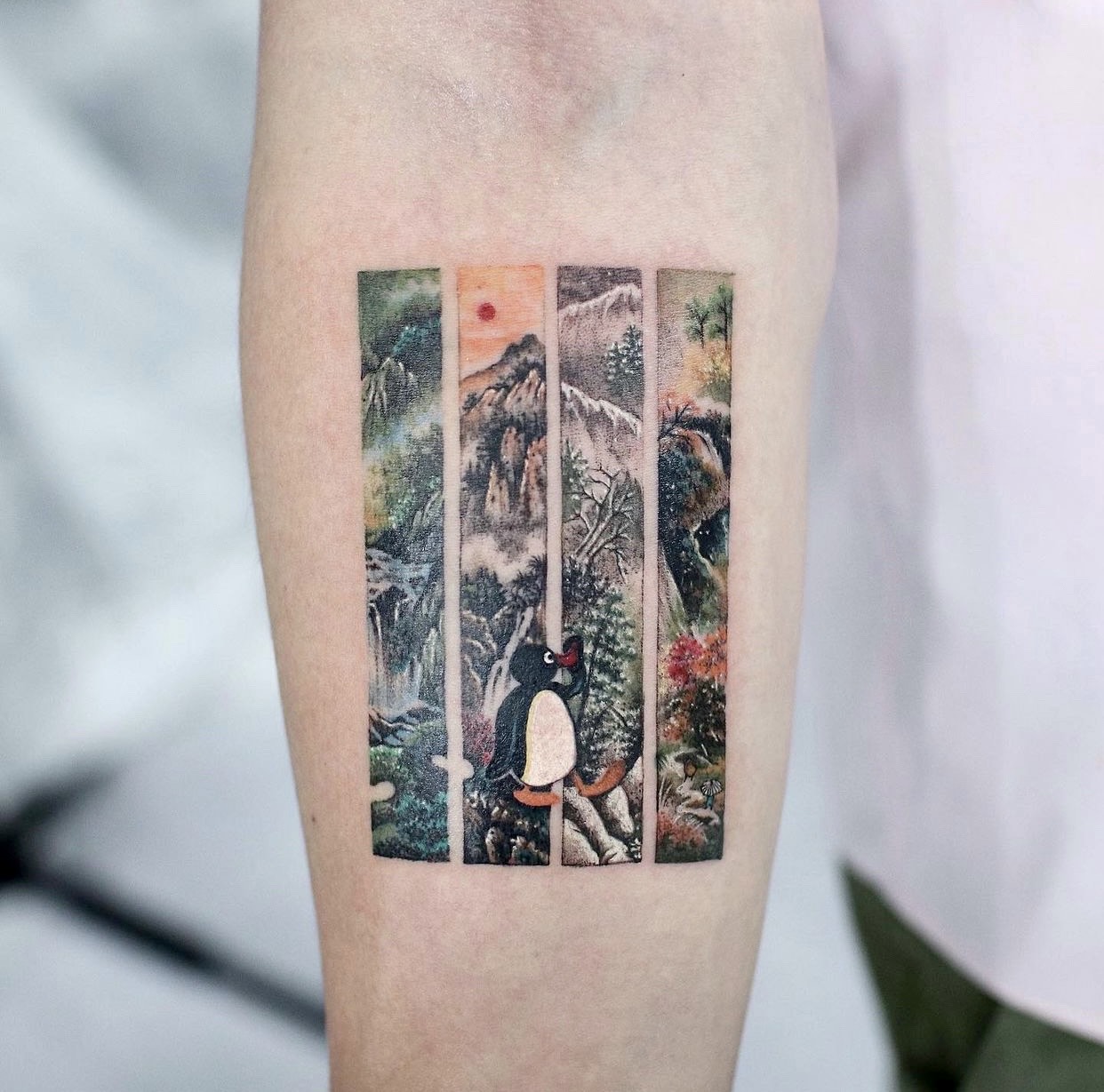
Penguin in Korean hwajodo landscape panels
Global Influence: The Korean Wave in the Tattoo World
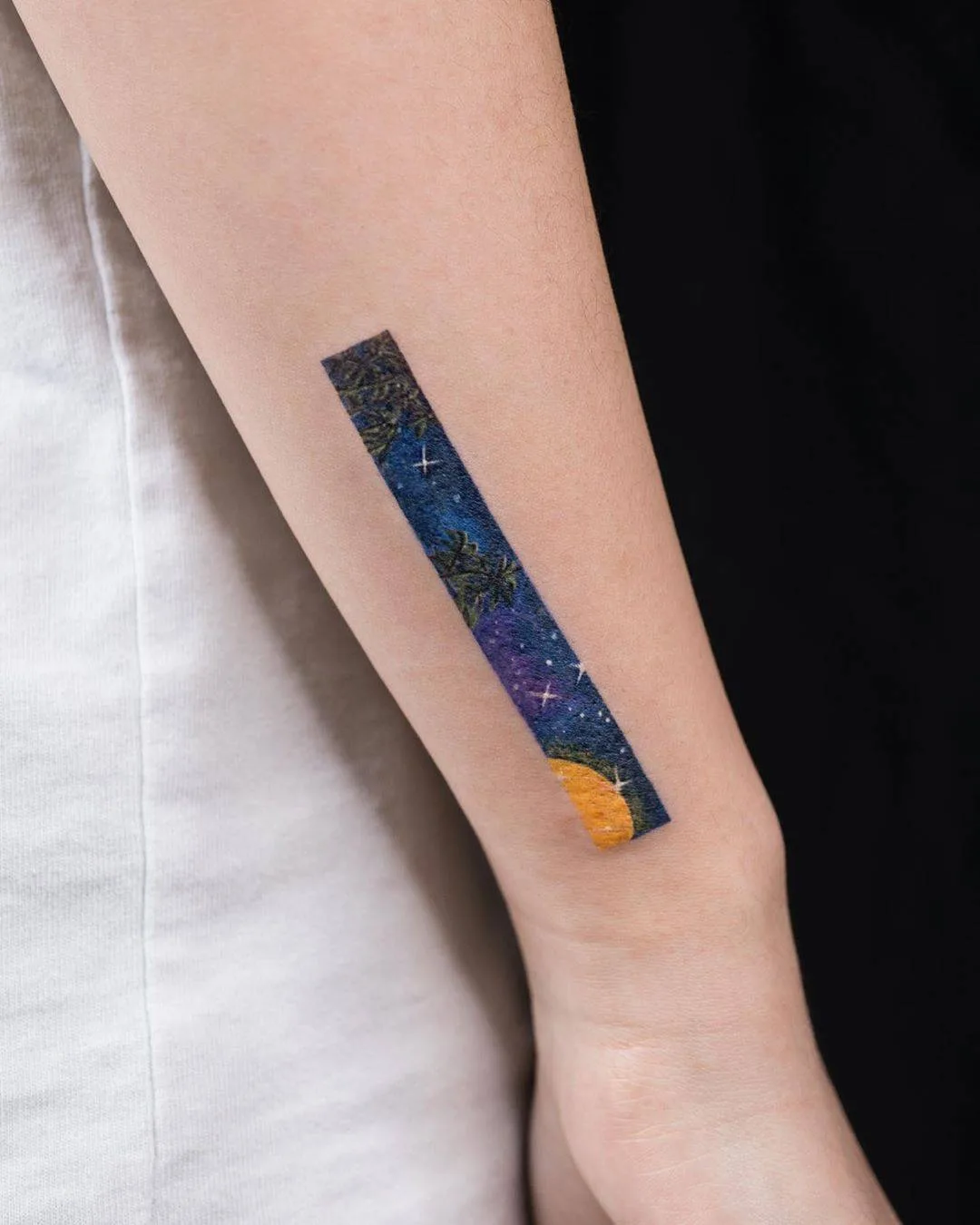
The popularity of Hwajodo tattoos cannot be viewed in isolation from the global phenomenon of Hallyu, the Korean cultural wave. K-pop, K-dramas, Korean cuisine, cosmetics, all of this has created a strong demand for all things Korean, including visual aesthetics.
Tattoo collectors from Europe and North America travel to Seoul specifically for Korean aesthetics, and Hwajodo is among the most sought-after styles. Simultaneously, Western artists are beginning to adopt this style, with varying degrees of success. Without an understanding of the symbolic layer, the result often looks decorative but flat. Beautiful, but empty.
However, cultural exchange works both ways. Korean artists absorb Western techniques, the depth of shadows from realism, texture from dotwork, freedom from new school, and enrich their own tradition with them. Something akin to a visual pidgin is occurring.
How to Choose and Create a Hwajodo Tattoo Design
Let's say you've decided. Here are a few things to consider before you find yourself in the artist's chair.
Finding Your Artist: What to Look For
First and foremost, the portfolio. An artist working with Hwajodo should demonstrate an understanding of Korean pictorial tradition, not just the ability to draw birds and flowers. What to look for? Compositional integrity, elements don't "hang" in a void but interact. Lines that are smooth, confident, without jagged transitions. If it's a color piece, a harmonious palette, without acidic shades alien to Korean aesthetics.
Second, communication. A good artist will ask you not only what you want to see, but also why. What meaning you're investing. What story you want to tell.
And third, be prepared for a waiting list. Artists specializing in this style are often booked months in advance.
Composition and Placement on the Body
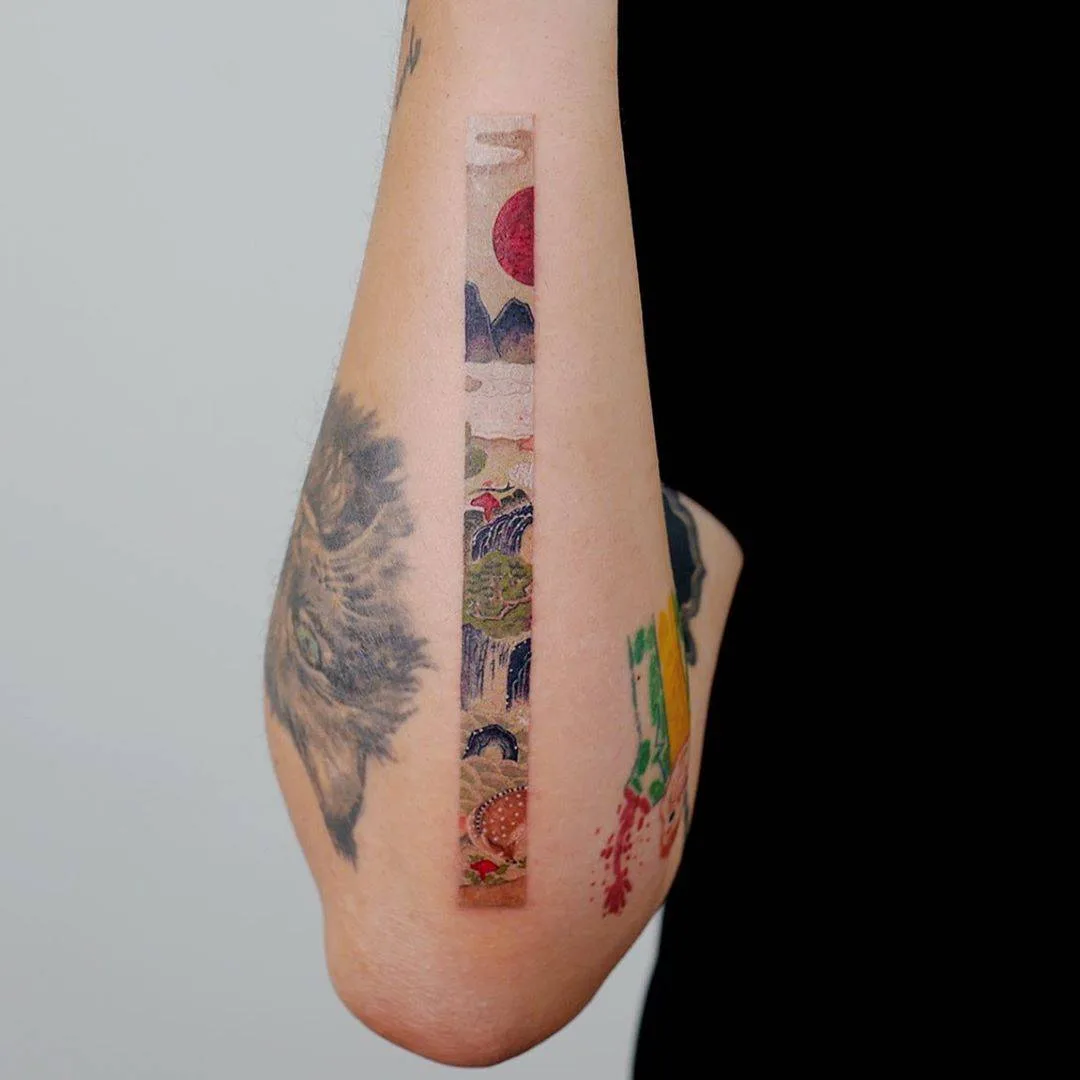
Hwajodo works particularly well on elongated body parts where the composition can "flow." Ribs, forearm from wrist to elbow, outer thigh. Vertical scrolls were literally created for such proportions.
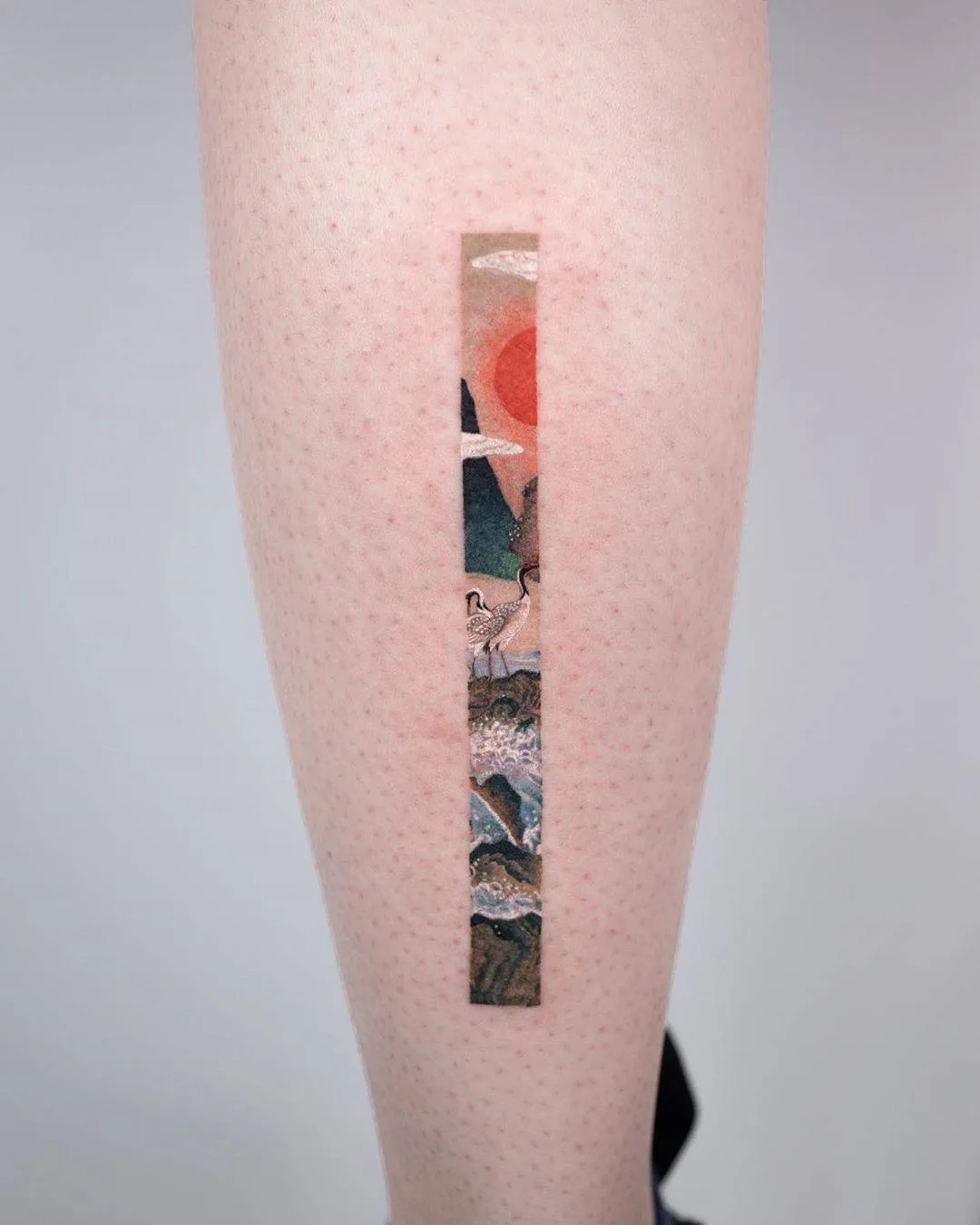
Miniatures deserve a special mention. A small maehwa branch behind the ear, a solitary bird on the collarbone, a tiny lotus on the inner wrist, all of this works if the artist can maintain detail at a small scale. Not everyone can.
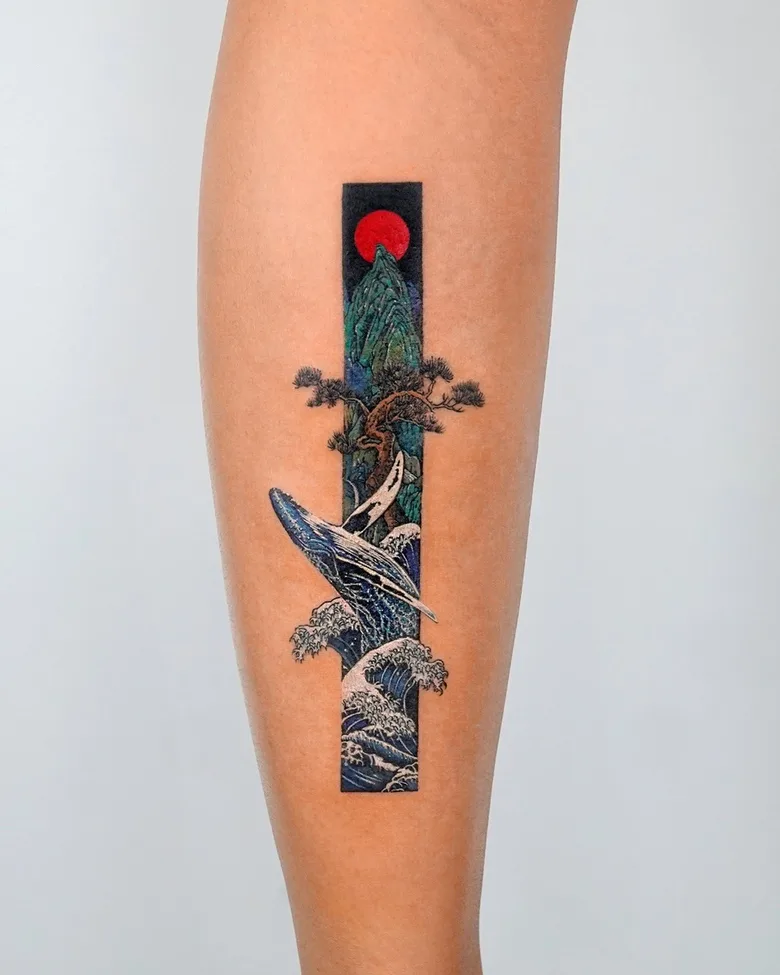
And one more point: consider how the tattoo will interact with the natural lines of your body. A branch that follows the line of a rib. A bird spreading its wing with your shoulder movement. This is the detail that distinguishes a thoughtful piece from merely a beautiful one.
Combining with Other Styles
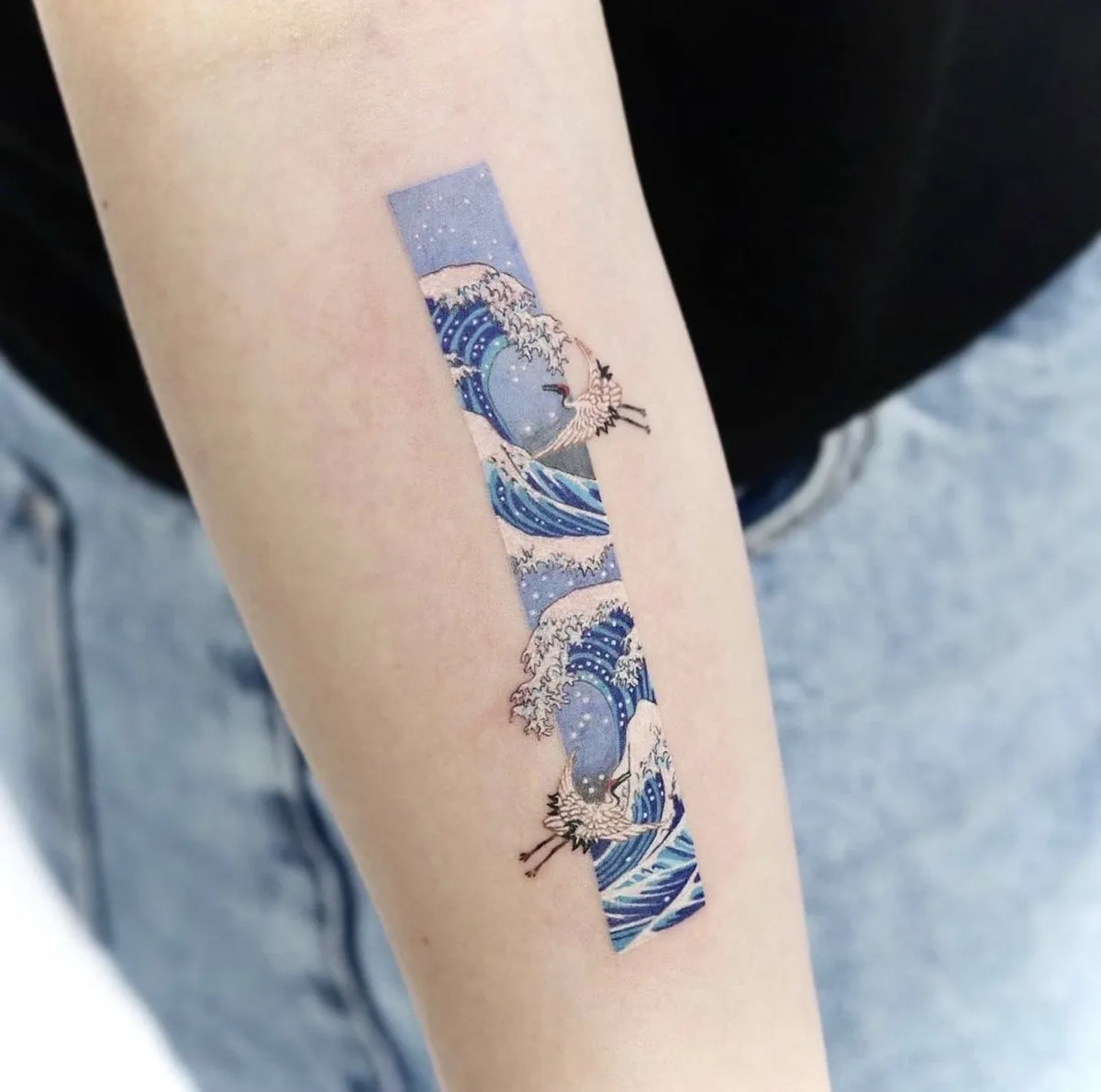
Hwajodo is, surprisingly, a "contact-friendly" style. It combines well with Japanese tradition (irezumi), though caution is needed here, as cultural differences are significant, and a crude mix can look inappropriate. It works better with geometry; strict lines and frames emphasize the organic nature of floral and avian motifs. Hwajodo also pairs nicely with calligraphy, Korean, of course.
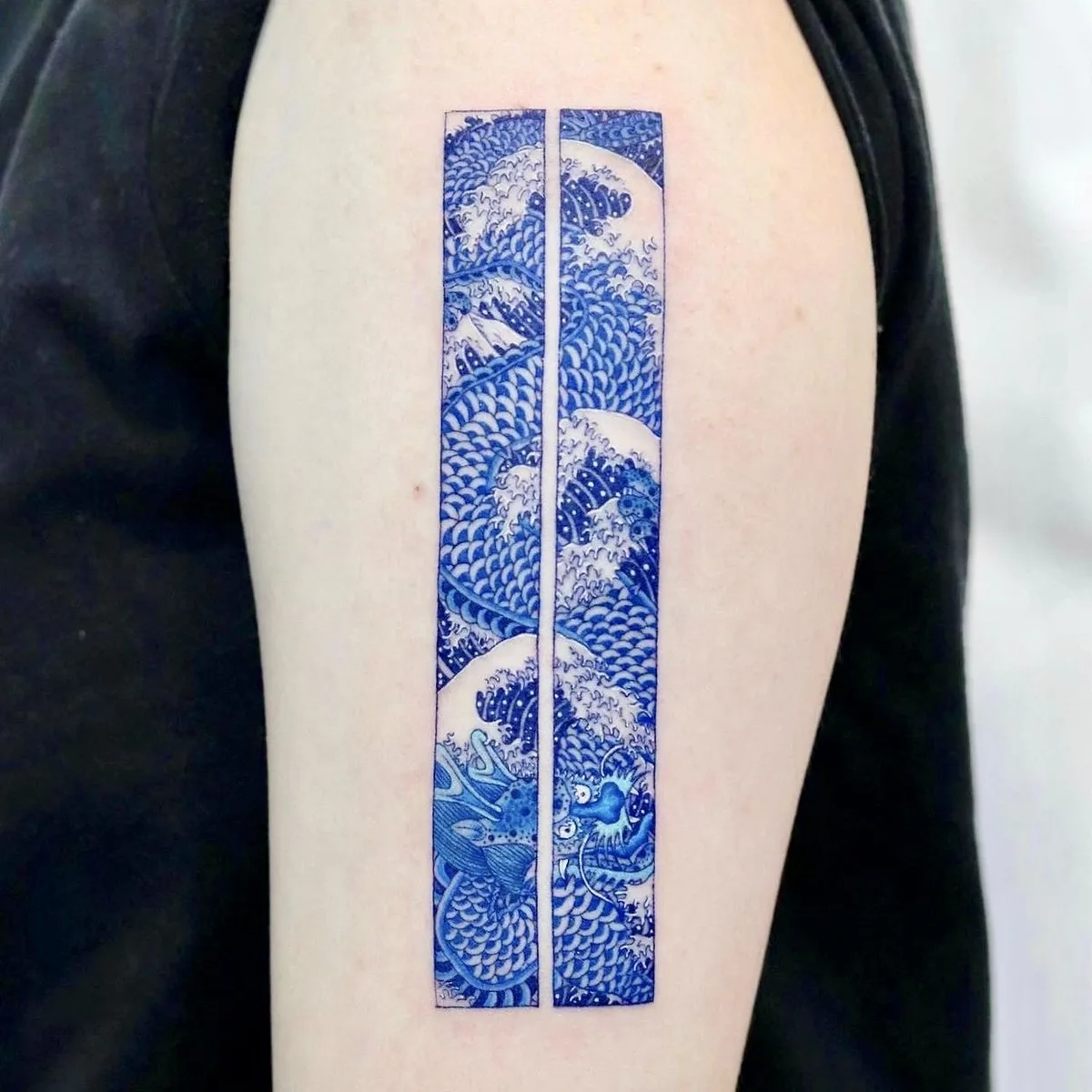
What you should probably avoid is combining it with hyperrealism or trash polka. The stylistic conflict would be too stark.
Frequently Asked Questions about Hwajodo Tattoos
FAQ
How painful is it to get a Hwajodo tattoo?
The pain depends primarily on the location on the body, not on the style. Nevertheless, Hwajodo is most often done using the fine line technique, with thin needles and relatively shallow penetration into the skin. Many clients note that it feels less intense than, for example, dense coloring in a traditional style. Ribs, collarbones, and the inner forearm remain the most sensitive areas regardless of the technique. If you are planning a large work with color fill, be prepared for several sessions; artists usually do not recommend enduring pain for more than 3–4 hours at a time.
What is the average cost of a Hwajodo tattoo?
The price varies significantly and depends on three factors: the size and detail of the work, the region, and the artist's reputation.
How do I care for a colored Hwajodo tattoo so it doesn't fade?
The basic care rules are standard: for the first two weeks, gentle cleaning, moisturizing with specialized products, no swimming pools or saunas. But for colored works, UV protection is especially critical. The delicate shades of Hwajodo, peach, coral, jade, fade faster than darker tones. Use sunscreen with SPF 50+ on your healed tattoo every time it is exposed to the sun. Some artists recommend color correction after 2–3 years; this is normal practice to maintain brightness.
Is it necessary to know the symbolism of Hwajodo before getting a tattoo?
Strictly speaking, no one will demand an exam on Korean culture from you, of course. But understanding the symbolism adds depth to the tattoo and helps avoid awkward situations. For example, mandarin ducks, a symbol of marital fidelity, and getting them alone, without a partner, is considered a bad omen in Korean tradition. A good artist will explain the nuances during the consultation stage. But a basic understanding of what you are permanently putting on your body is more about self-respect than an obligation to another culture.
More than a trend: eternal art on your skin
Hwajodo in tattooing is not a fleeting fashion or another visual trend that will disappear in a couple of seasons. Behind this style are centuries of meaningful visual language, time-tested symbolism, and aesthetics that, apparently, are only at the beginning of their global journey.
This genre reminds us of a simple thing: tattooing can be high art. Not "high" in a snobbish sense, but in the sense of depth, where behind a beautiful line stands a cultural tradition, behind the choice of a flower, a wish, behind a bird in flight, an entire philosophy.
If you are interested in this style, study the works of artists on iNKPPL, save what you like, ask questions. And when you are ready, find an artist who speaks with tradition, not just copies it. The difference will be visible on your skin.