Navigating by the Stars
Before electronic navigation, sailors looked upward for a reliable point that could help them hold a course. That image of steering through darkness shapes the core of the star tattoo meaning many wearers have in mind. A star can represent direction, a personal compass, or a goal that remains visible while everything around you changes.
In traditional celestial navigation, sailors observed Polaris and other stars to estimate direction and latitude. Astronomy references describe Polaris, commonly called the North Star, as appearing nearly fixed above the north celestial pole. Its stable position made it especially useful in the Northern Hemisphere. Translated into tattoo imagery, that fixed light can stand for a person, principle, home, or ambition that helps you make decisions during uncertain periods.
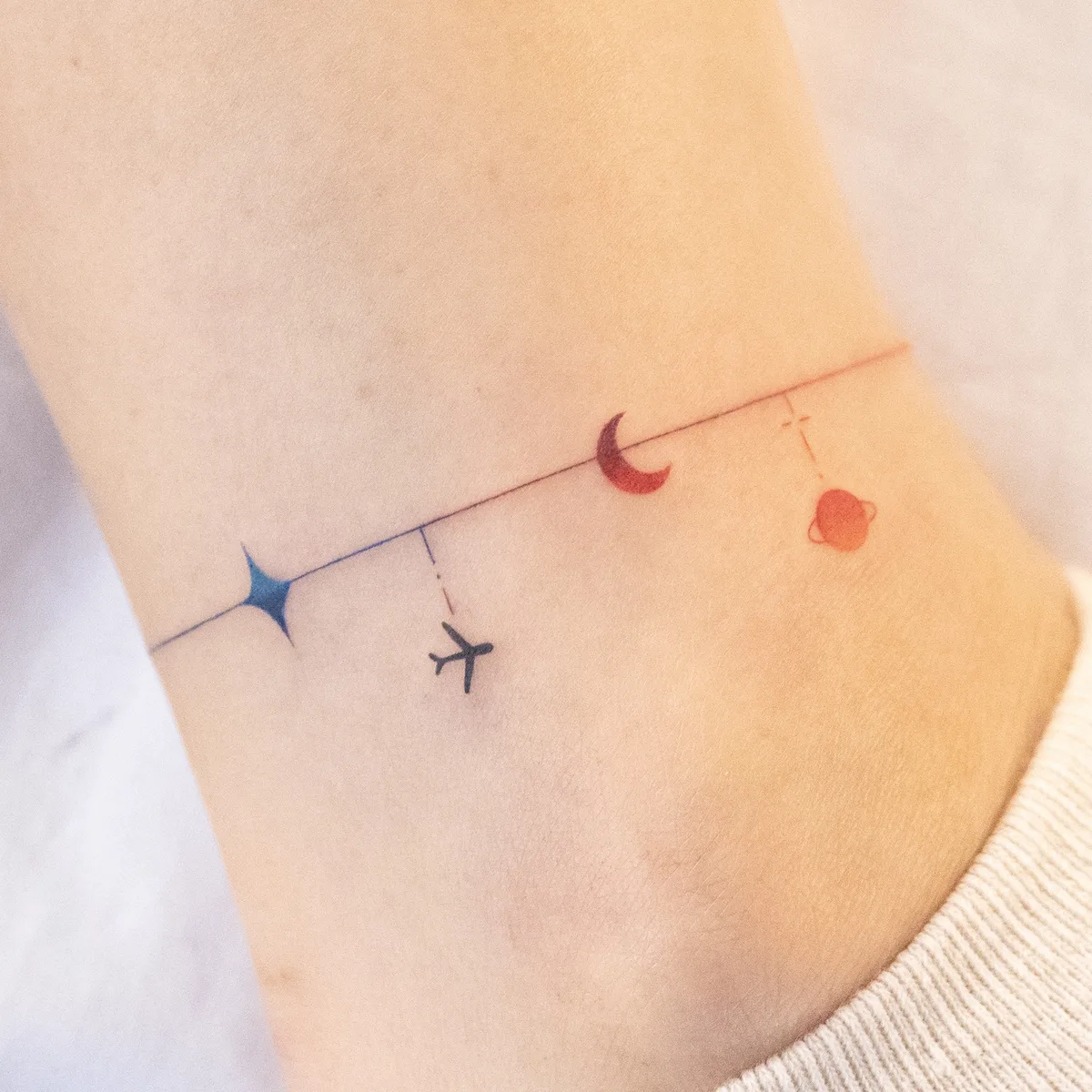
This navigational reading suits people marking a major change, a return home, or a commitment to stay on their chosen path. The star may also honor someone whose advice continues to guide you. Pairing it with directional imagery makes that idea more explicit; our guide to compass tattoo symbolism and personalization explores related designs. A lone North Star feels focused and restrained, while several stars can suggest stages of a journey. Placement adds visual character: a star over the heart can make the guiding figure feel intimate, whereas one on the wrist remains easy to see as a daily reminder.
The Nautical Star
Alternating light and dark segments give the nautical star the look of a three-dimensional compass marker. The classic design has five points, strong outlines, and a bold structure associated with American traditional tattooing. Its visual connection to navigation supports the familiar nautical star tattoo meaning of guidance, safe passage, and finding your way home.

Sailor folklore links the emblem with protection during a voyage and the hope of returning safely. Tattoo-history accounts also associate the motif with the flash tradition surrounding Sailor Jerry’s era in Honolulu, where maritime subjects became enduring parts of American traditional design. Anchors, swallows, ships, and nautical stars shared a vocabulary built around travel, loyalty, and homecoming. These associations remain popular among service members, travelers, and anyone who sees life as a course to hold through rough water.
Later tattoo culture carried the nautical star beyond maritime circles. From the 1980s into the 2000s, the design also became a recurring decorative emblem in punk, hardcore, and skate scenes. In those settings, its crisp geometry worked well on elbows, forearms, chests, and other highly visible placements. Some wearers connect it with independence or belonging to a music community, while others choose it for its strong graphic balance.
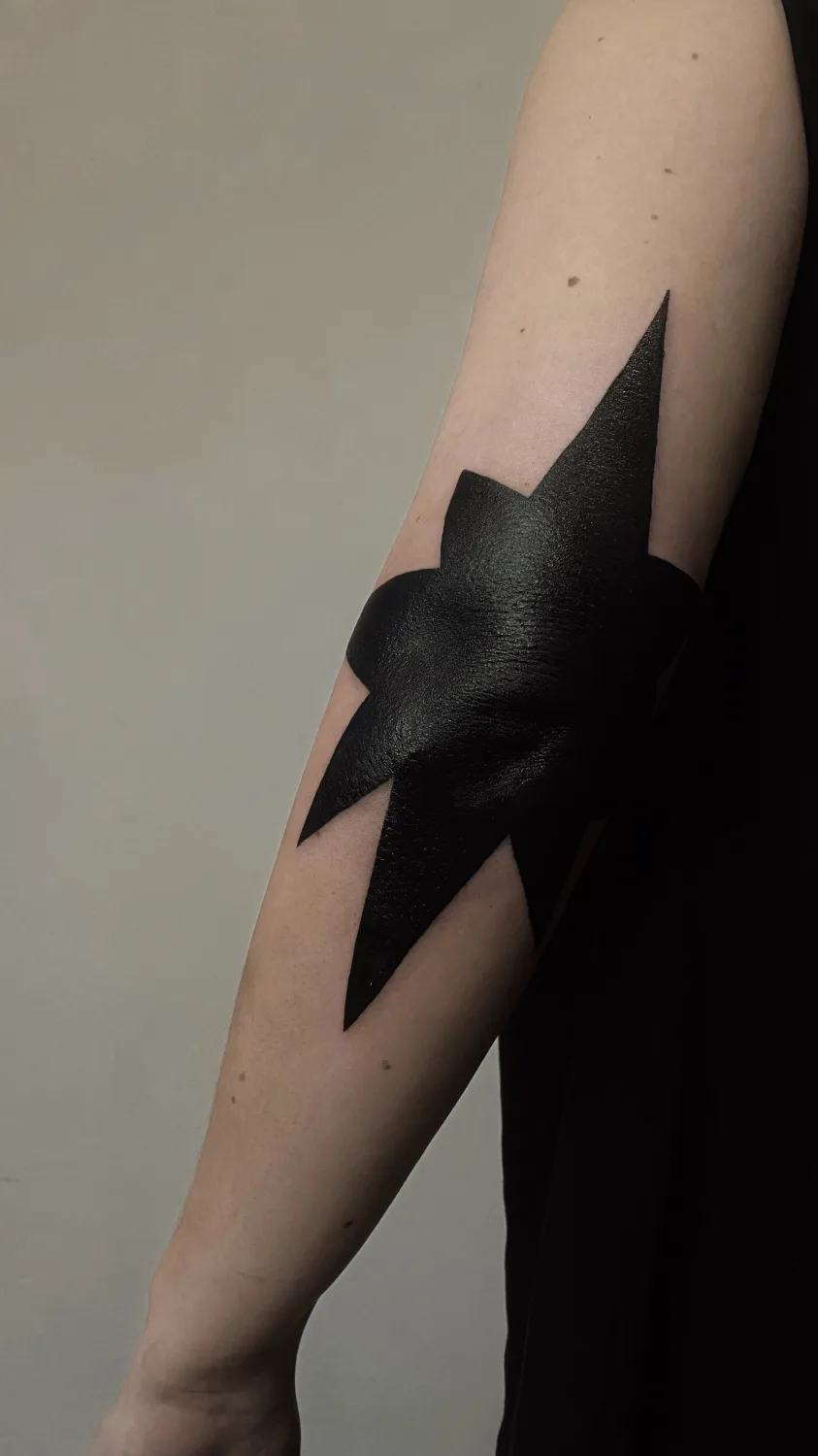
Color can reinforce the traditional look. Red and black create a forceful contrast, while blue, green, and muted cream can evoke marine flash. Two matching stars can frame the chest or shoulders, and a single compact star works well on the forearm or calf. You can browse the star tattoo gallery to compare bold, fine-line, ornamental, and minimalist approaches.
Shooting Stars and Small Stars
A shooting star captures a moment that appears, flashes brightly, and quickly passes. The streak itself is a meteor burning up in Earth’s atmosphere, and folk custom says to make a wish when you see one. That custom shapes the shooting star tattoo meaning: wishes, sudden opportunity, and the courage to act while the moment lasts.
Its fleeting quality also suits memorial designs. A trail ending in a bright star may commemorate someone who died young or left a vivid impression during a short time. Names, initials, or dates can make that dedication personal, though the star alone offers a quieter memorial. Curved trails create movement and work naturally along the shoulder, ribs, ankle, or forearm.
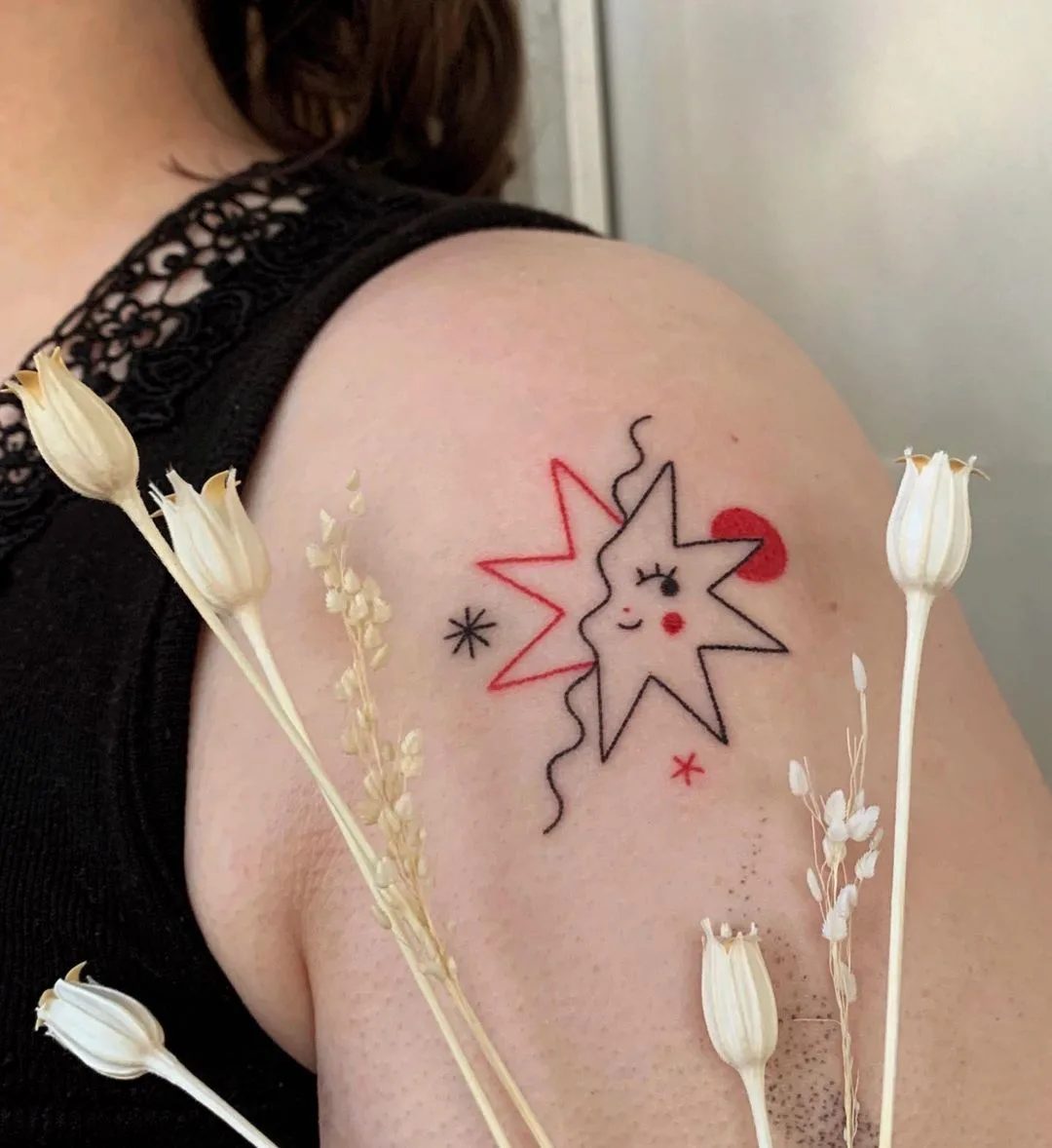
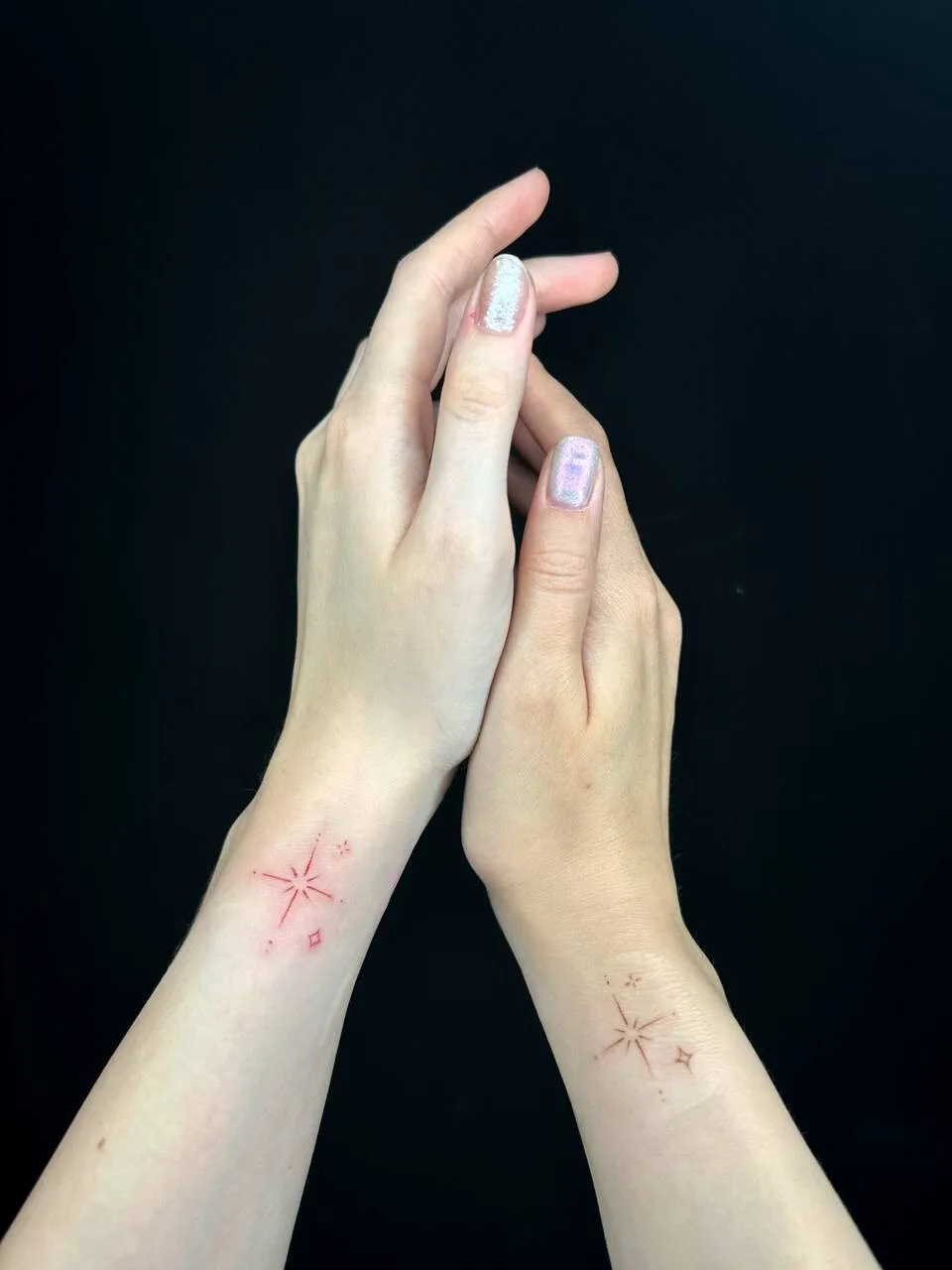
Small stars support more intimate modern readings. Fine-line constellations may refer to a child’s astrological sign, a meaningful night sky, or family members represented as separate lights. A cluster can grow over time as relationships and milestones are added. Minimal stars also fit fingers, wrists, ears, and collarbones, where the design reads as a quiet point of light.
Stars on Shoulders and Knees: Prison Readings
Stars placed on the shoulders, collarbones, or knees carry specific messages in Russian prison tattoo lore. The best-known source is the Russian Criminal Tattoo Encyclopedia, built on drawings that Danzig Baldaev made over decades as a Soviet prison guard. It and the popular guides based on it describe eight-pointed stars on the collarbones or shoulders as marks of high standing in the criminal hierarchy, tied above all to the “thief in law” (vor v zakone) elite. Within that subculture, these sources say, such stars announced rank, authority, and a refusal to cooperate with the prison administration.
Knee stars have a related reading. Russian prison tattoo lore commonly interprets them through the phrase “I will kneel before no one.” The placement turns the body into part of the message: stars positioned on the knees express refusal to submit to other prisoners or prison authorities. According to the same sources, a prisoner who wore these stars without the matching status could face harsh punishment from other inmates.
This prison interpretation belongs to a particular criminal tradition, and everyday tattoo culture reads stars in its own way. Outside it, shoulder stars usually serve decorative symmetry, personal guidance, or a frame for the upper body. A five-pointed nautical star, a delicate celestial cluster, and an eight-pointed prison star also look different. If cultural clarity matters to you, review the number of points, internal shading, placement, and surrounding imagery with your tattoo artist before settling on the design.
Star and Moon Tattoos
The moon changes visibly through its phases while stars appear to hold their places around it. In contemporary tattoo culture, that contrast supports the star and moon tattoo meaning of cycles, intuition, companionship, and guidance through dark periods. The moon can represent an evolving inner life, while the star supplies a destination or steady light.
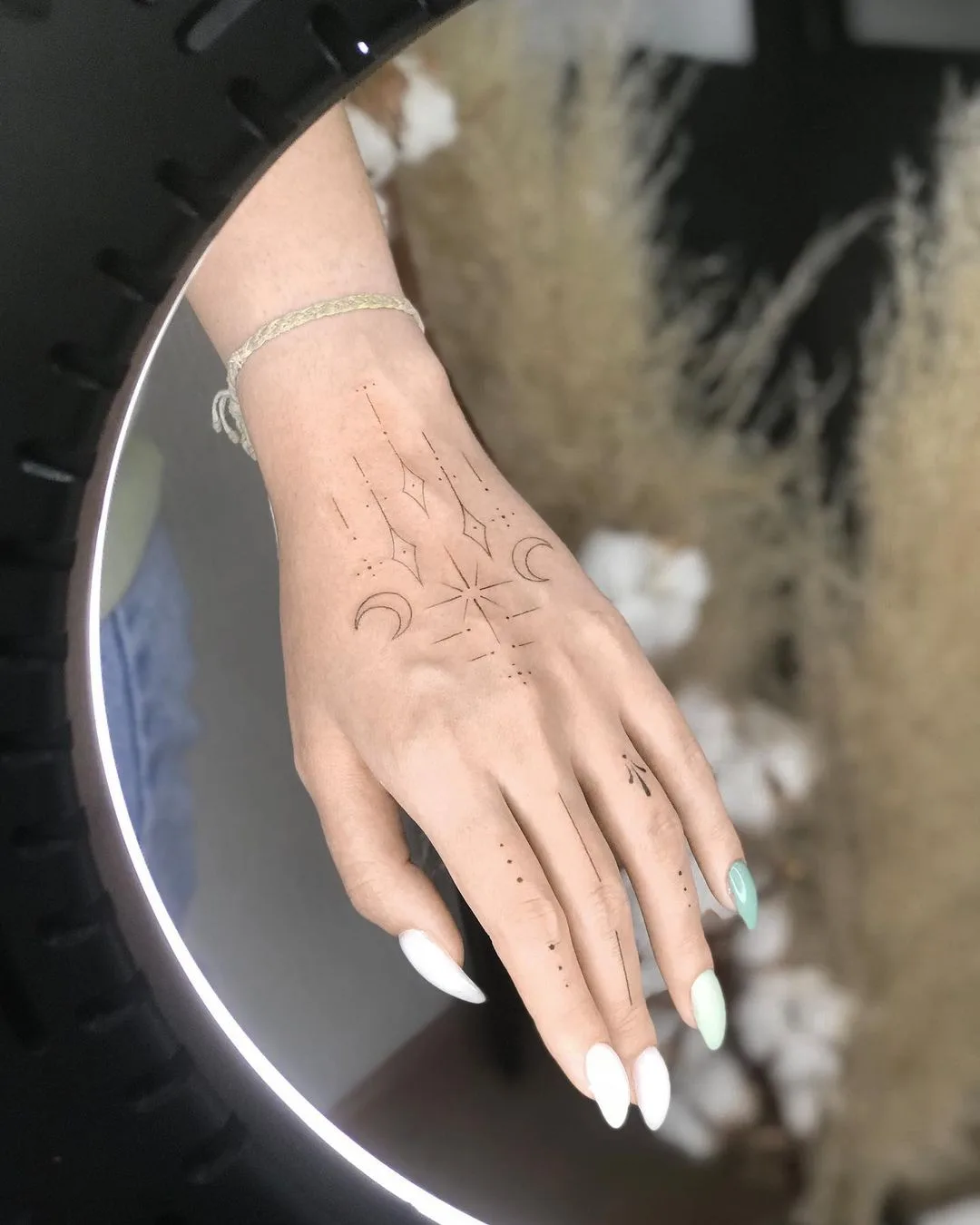
A crescent accompanied by a star also has cultural and religious associations. Historical accounts connect the crescent-and-star emblem with the Ottoman Empire, and it is widely associated with Islam today. It appears on national flags, including Turkey’s. Anyone considering a design close to a flag or religious emblem should approach its composition thoughtfully and understand how viewers from that tradition may recognize it.
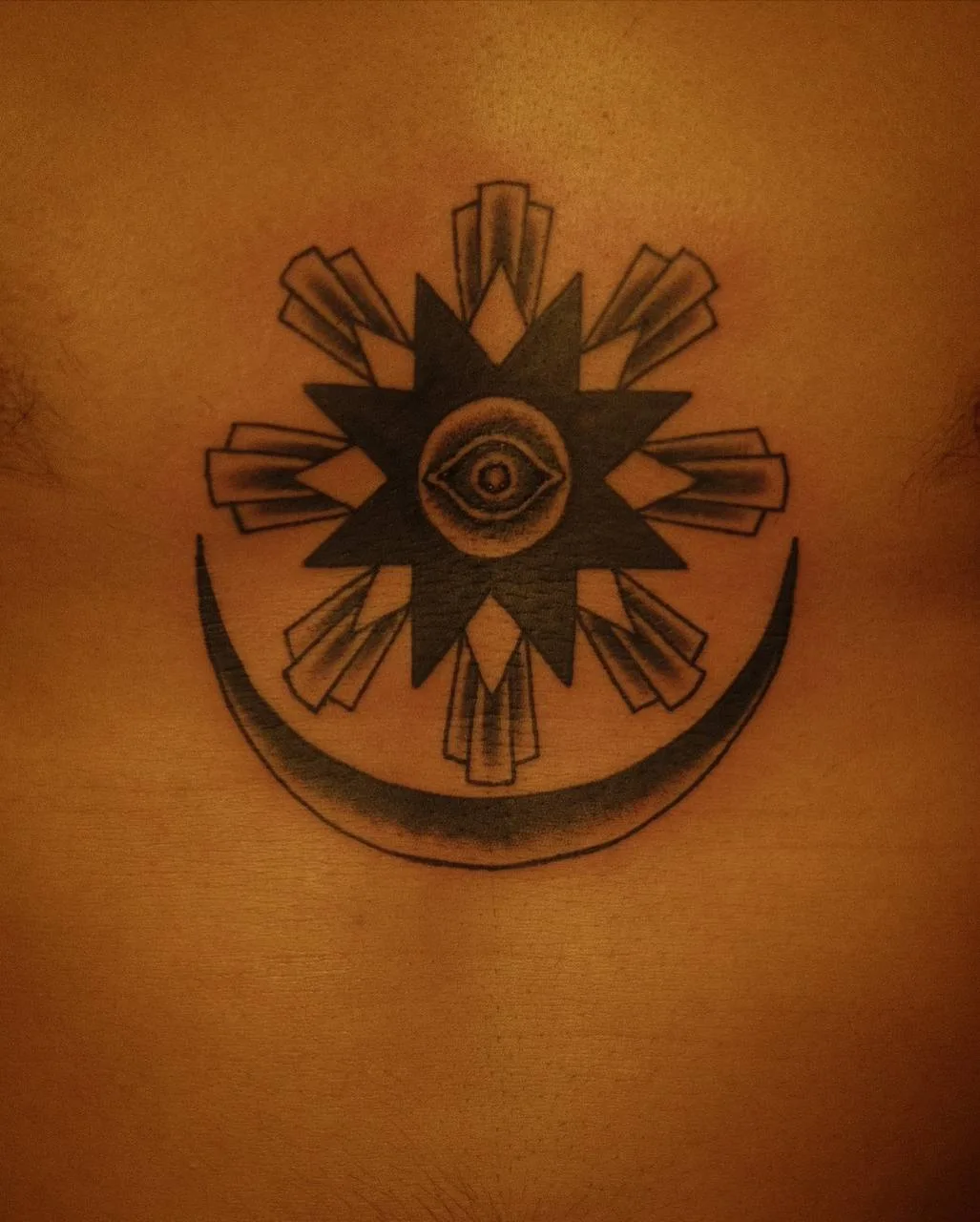
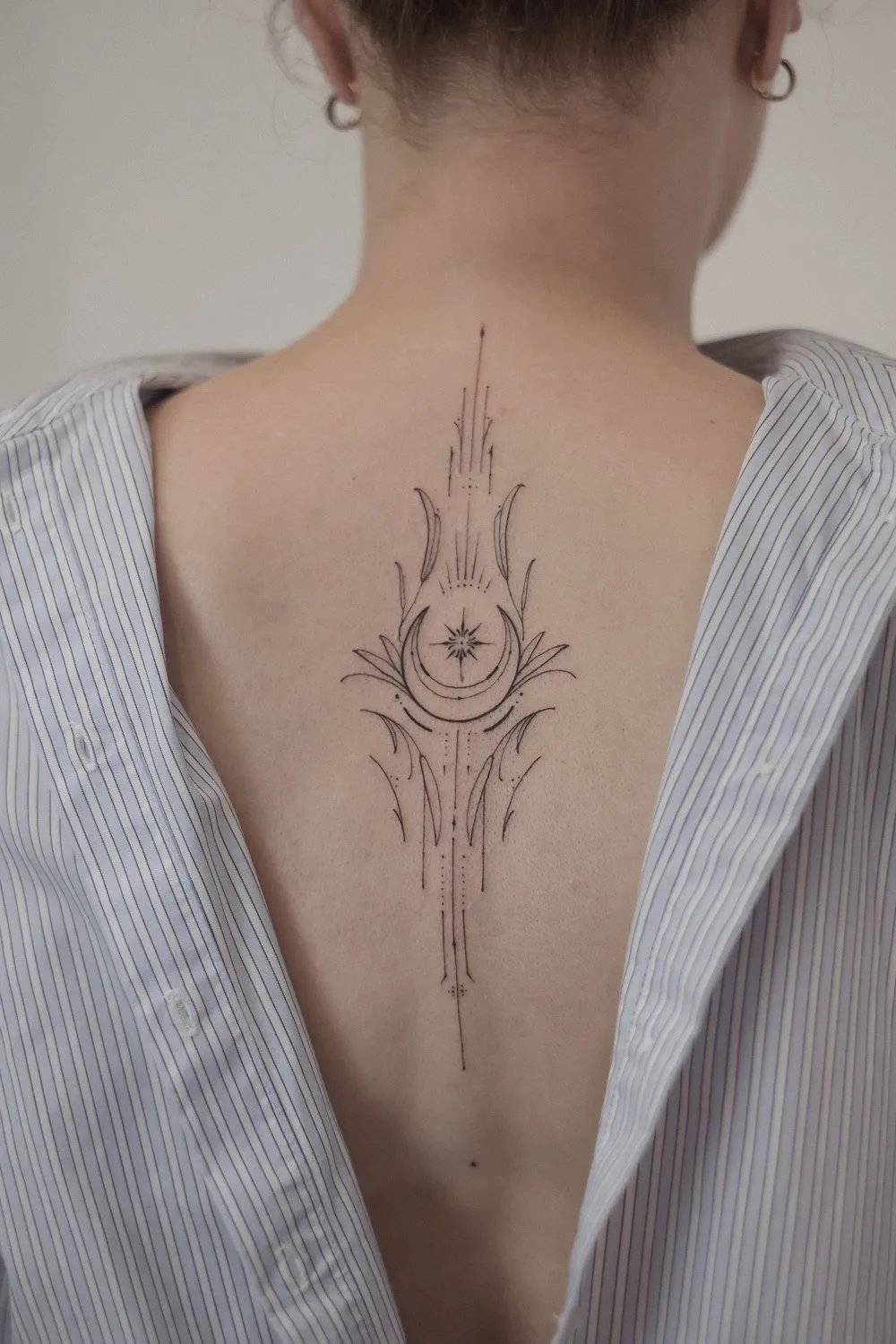
More personal versions can use a realistic crescent, scattered stars, clouds, or a night landscape. Partners sometimes divide the moon and star between two tattoos, while parents may use several stars to represent children. Our article on moon tattoo meanings offers more context for lunar phases, crescents, and eclipse imagery.
Number of Points: Five, Six, Seven
The number of points changes both the geometry and the cultural associations of a star. A five-pointed star is the broadest category: it appears in nautical designs, national symbols, decorative work, and spiritual emblems. In several religious and magical traditions, the upright pentagram has served as a protective sign. Wiccan practice commonly uses the pentacle, an upright pentagram enclosed by a circle, as a religious symbol connected with the elements and spiritual unity.
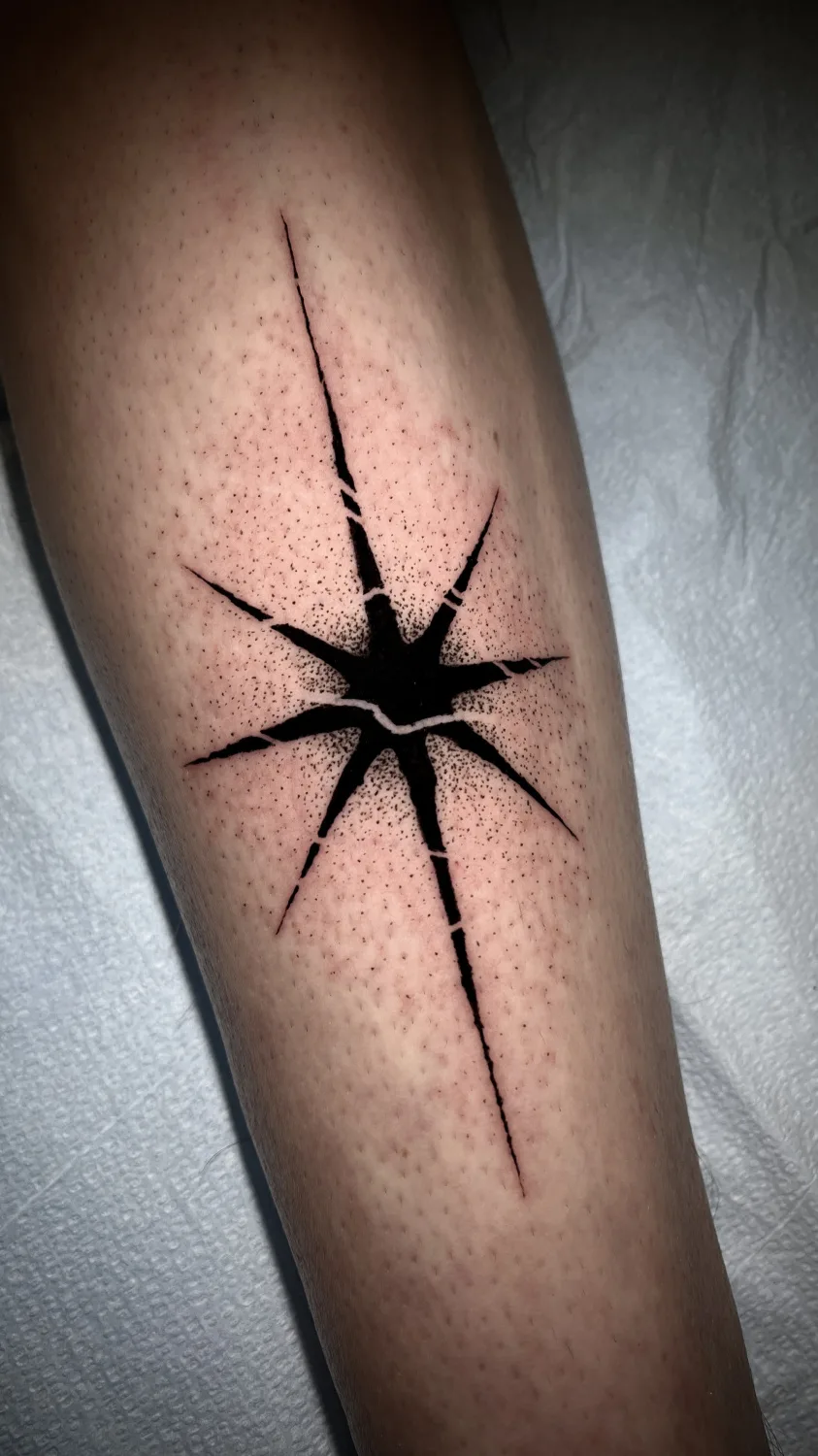
Orientation matters when the design enters explicitly occult territory. The inverted pentagram is associated with Satanism, and the Church of Satan builds its Sigil of Baphomet around one. A plain five-pointed star can carry many other readings, so surrounding details such as a circle, goat imagery, lettering, or ritual symbols establish the intended reference more clearly.
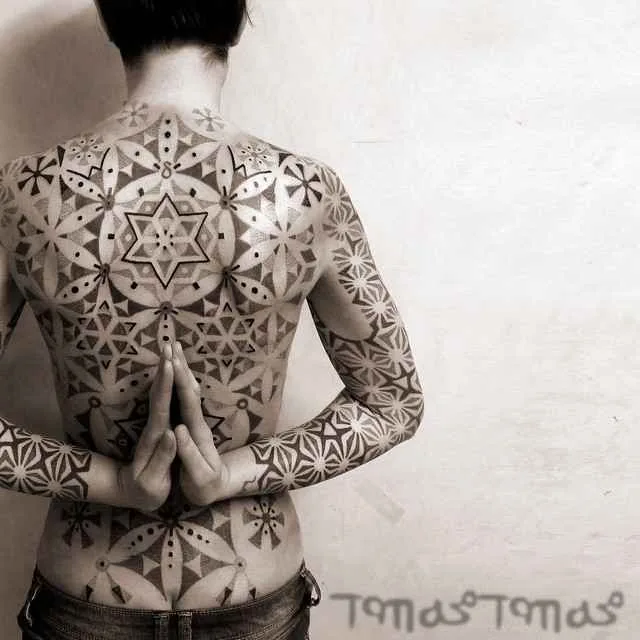
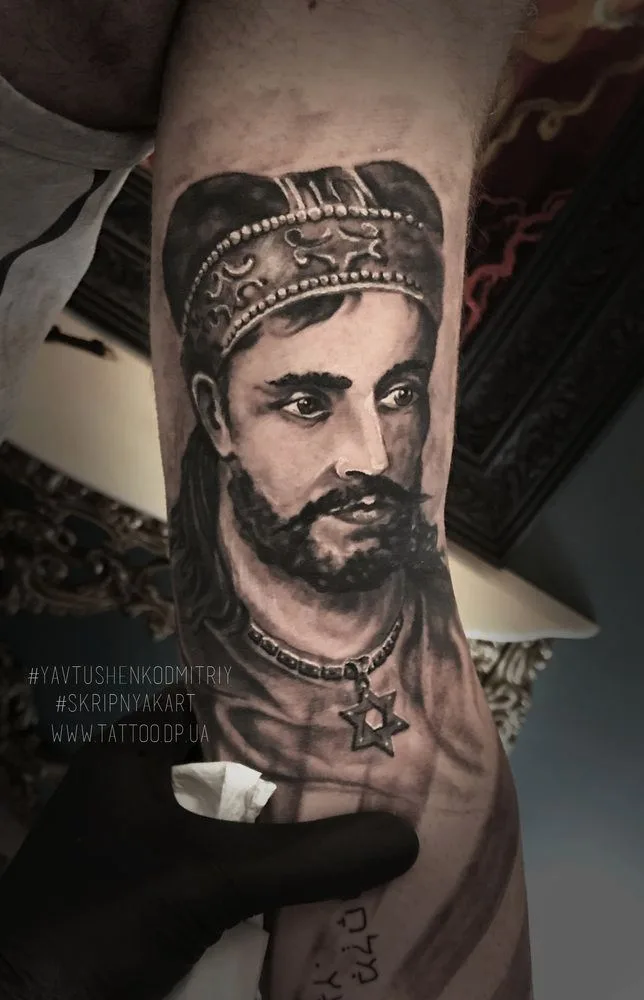
A six-pointed star formed by two interlocking triangles is widely recognized as the Star of David, or Magen David. Jewish tradition uses it as a communal and religious symbol, and it also appears on the flag of Israel. For a Jewish wearer, it may express faith, heritage, family, or solidarity. Traditional Jewish law prohibits tattooing on the basis of Leviticus 19:28, and many observant Jews avoid tattoos for that reason. Its living religious and cultural significance calls for respectful consideration, especially when it is combined with unrelated decorative or provocative imagery.
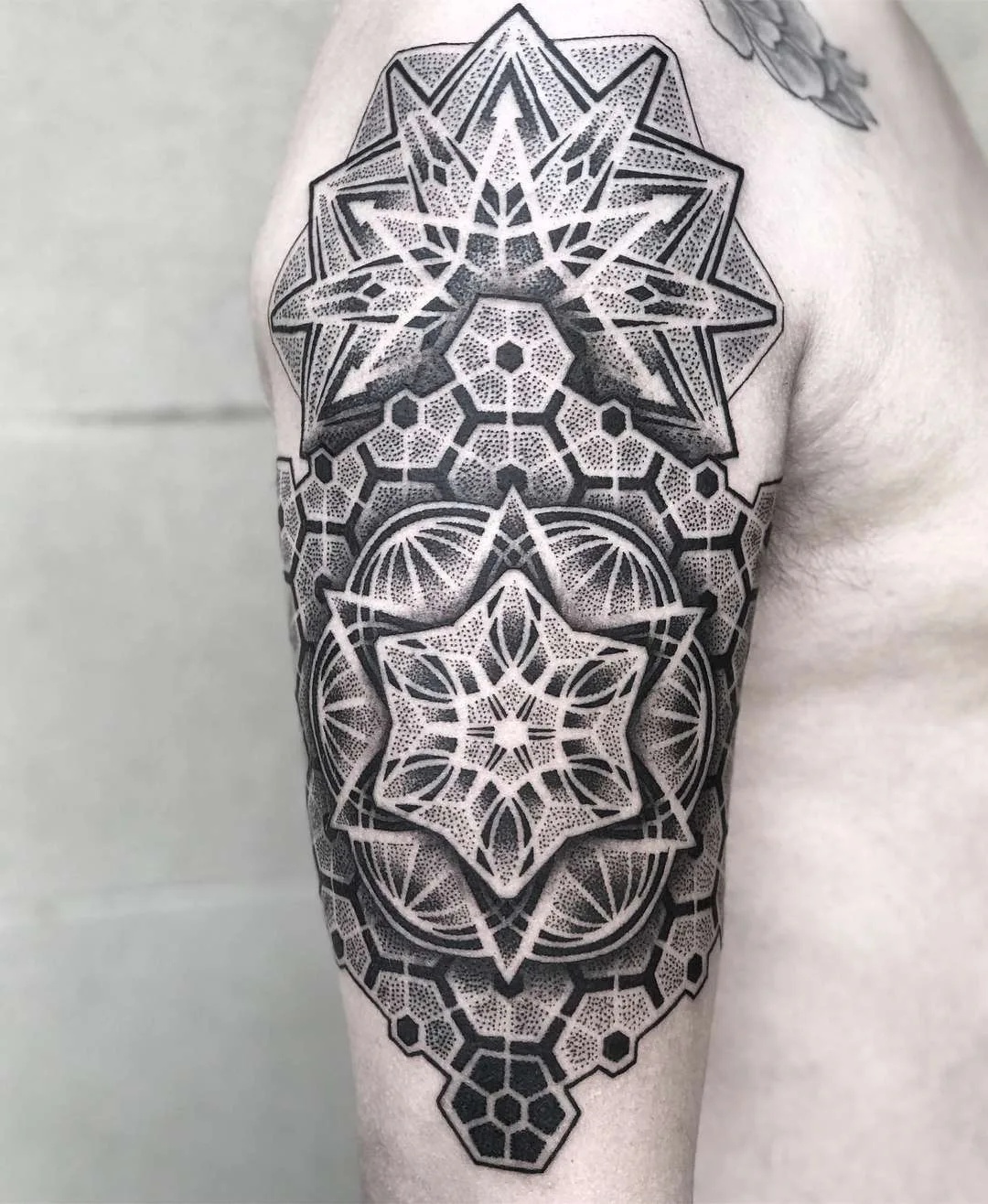
The seven-pointed star, often called a heptagram, appears in some esoteric, ceremonial, and pagan traditions. Particular systems may connect its seven points with planets, days, stages, or sacred groupings. Since those interpretations come from distinct traditions, the surrounding symbols should identify which framework you intend. For a purely ornamental tattoo, a heptagram offers unusual symmetry and a more intricate silhouette than the familiar five-pointed form.
Before choosing a point count, decide whether you want a recognizable emblem or an abstract celestial shape. A tattoo artist can adjust spacing, line weight, shading, and color while preserving the geometry that carries the reference.
FAQ
What does a nautical star tattoo mean?
A nautical star commonly represents guidance, safe passage, and finding your way home. Its five-pointed form with alternating light and dark sections recalls a compass marker. Sailor folklore also connects it with protection and a safe return from a voyage. Contemporary wearers often use it for a person, value, or goal that serves as a fixed point during difficult times.
What do stars on the shoulders mean?
In contemporary tattooing, shoulder stars may provide symmetry, frame the upper body, or express personal guidance. Russian prison tattoo lore gives eight-pointed stars on the shoulders or collarbones a specific criminal reading: the Russian Criminal Tattoo Encyclopedia, based on Danzig Baldaev’s drawings, associates them with high rank in “thief in law” circles. Point count and visual style help distinguish that tradition from decorative work.
What does a star and moon tattoo mean?
Modern tattoo readings connect the pairing with night, intuition, life cycles, and guidance through darkness. A crescent-and-star composition can also resemble an emblem historically associated with the Ottoman Empire and widely linked with Islam today. The chosen arrangement, lunar phase, and surrounding details clarify whether the design is personal, celestial, cultural, or religious.
What does a shooting star tattoo mean?
A shooting star often refers to wishes, brief opportunities, and memorable turning points. The interpretation grows from the folk custom of making a wish after seeing a meteor streak across the sky. Because the light disappears quickly, the design can also serve as a memorial for someone who left too soon or represent a fleeting experience that changed your direction.