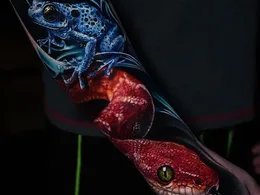
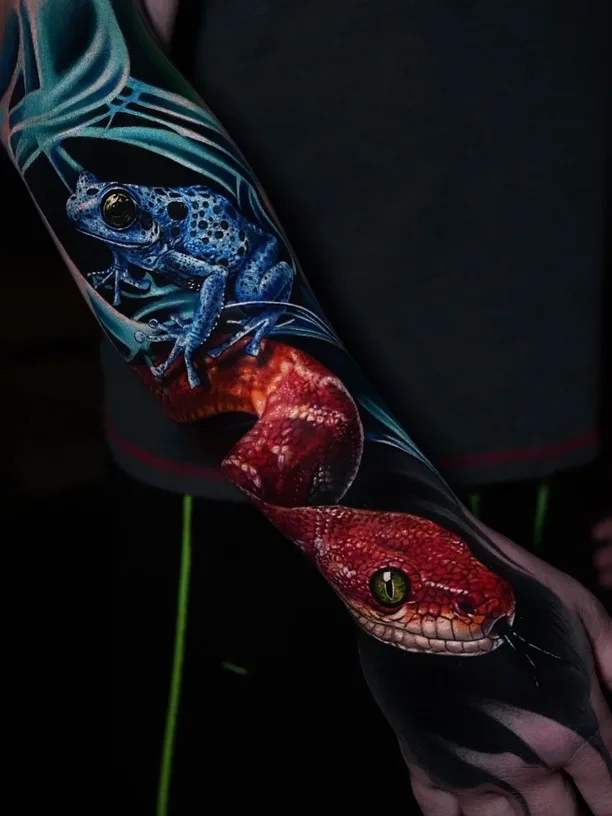
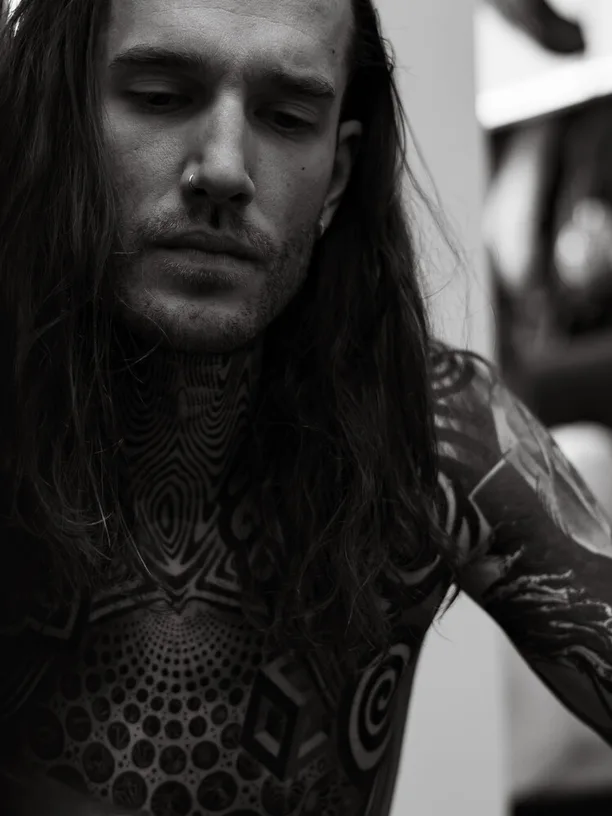
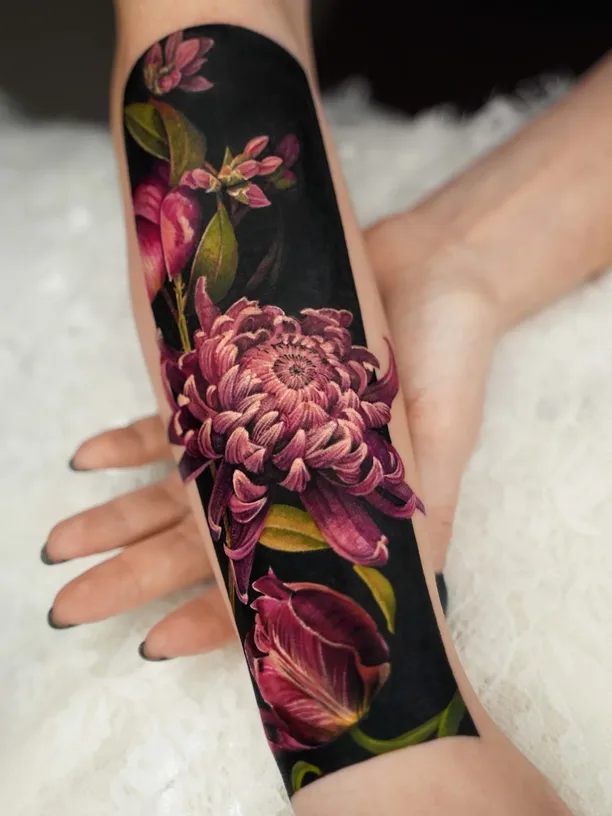
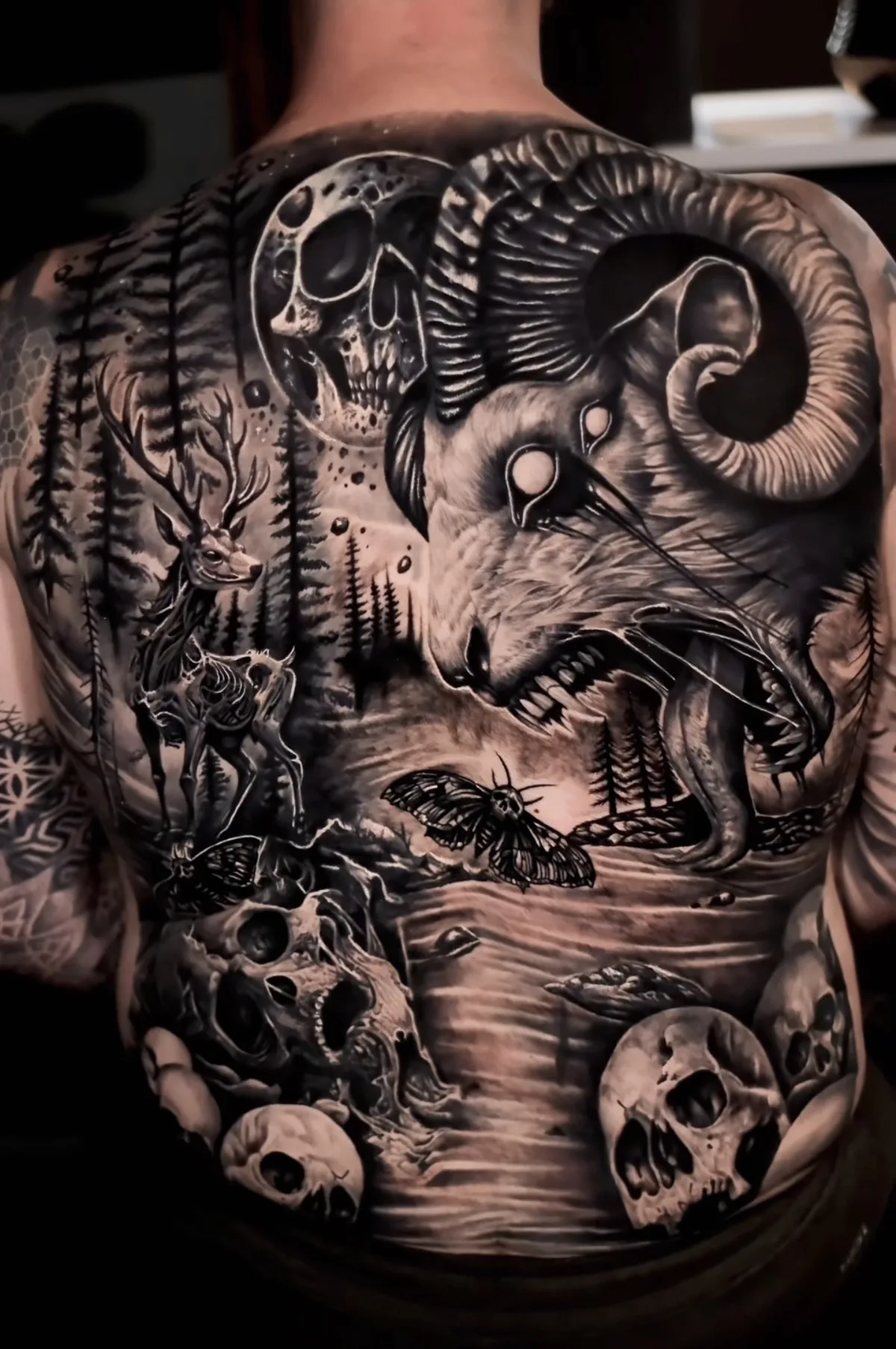
There is a particular kind of stillness in Santiago Iriarte's tattoos. The shadows settle deep, the highlights breathe, and the characters, Jokers, sci-fi figures, creatures from the darker corners of cinema, hold their gaze with a weight that feels less like ink and more like light trapped under skin.
Iriarte's path into tattooing started in Bogotá, Colombia, when he was seventeen. Drawing had been a constant since childhood, a private and serious pursuit, and it eventually pulled him toward the tattoo machine the way most genuine artistic obsessions do, not through a plan, but through inevitability. He gave the craft everything from the beginning.
Formal art school was never part of the picture. What filled that space instead was an intense, self-directed education built around fine arts, sketching, and photography. He studied human anatomy and the behavior of light the way a cinematographer might, obsessively, practically, with specific outcomes in mind. That photographic discipline still shapes how he works today.
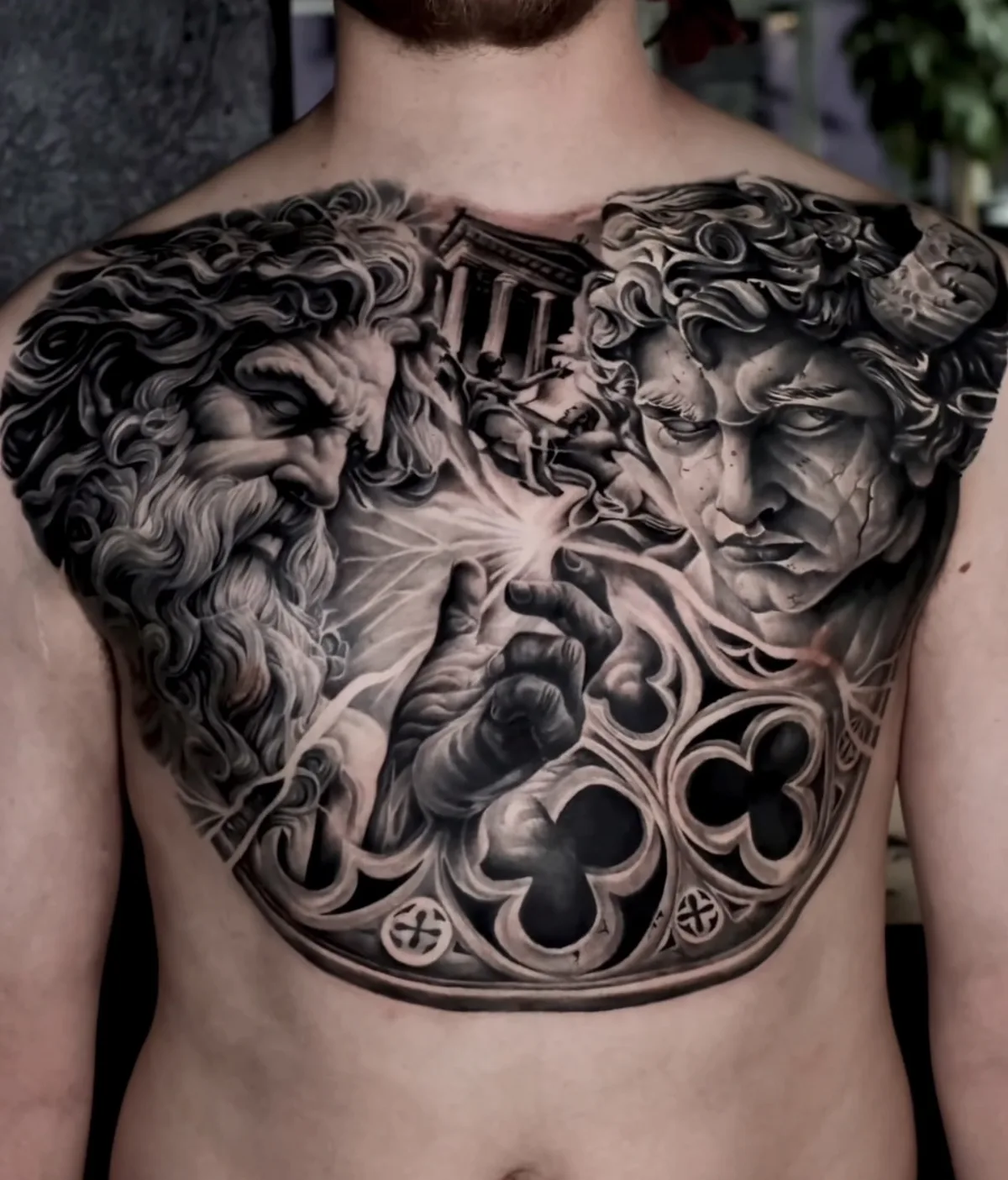
Every client design is prepared at least twenty days before the appointment. Iriarte maps the layout against the natural flow of the body, adjusting the composition to the muscle structure and the contours of the placement. For him, the body is not a flat surface. It is the architecture the design has to answer to.
“My true artistic calling crystallized when I discovered the depth of Black & Grey realism. I fell in love with the elegance of shadows and smooth transitions, and over the last few years, it became my absolute signature and primary professional focus.”
His early career moved through geometric work, where he cut his teeth on precision and clean execution, then into Neo-Traditional color, a period that earned him multiple convention awards across Colombia. He was good at it. But something about the range of shadows in black and grey realism pulled harder, and over time that pull became a direction he stopped resisting.
The shift toward dark realism was not about subject matter so much as technical possibility. Iriarte is candid about the irony: he has no particular appetite for horror in his personal life. What draws him to these characters, the distorted faces, the dramatic expressions, the layered textures of creatures and villains, is the sheer density of visual information they carry, and the challenge of rendering all of it faithfully on skin.
Santiago Iriarte, hyperrealistic
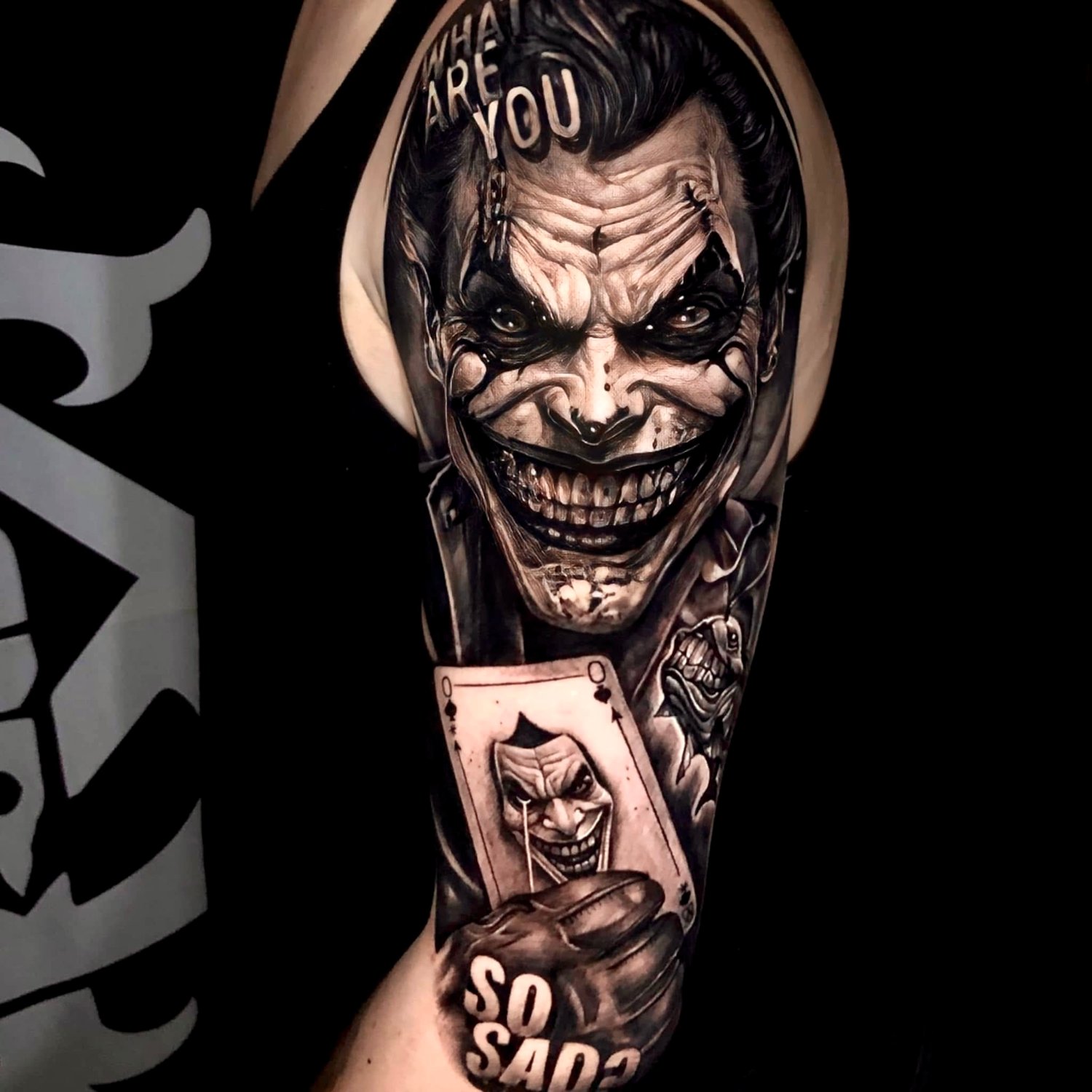
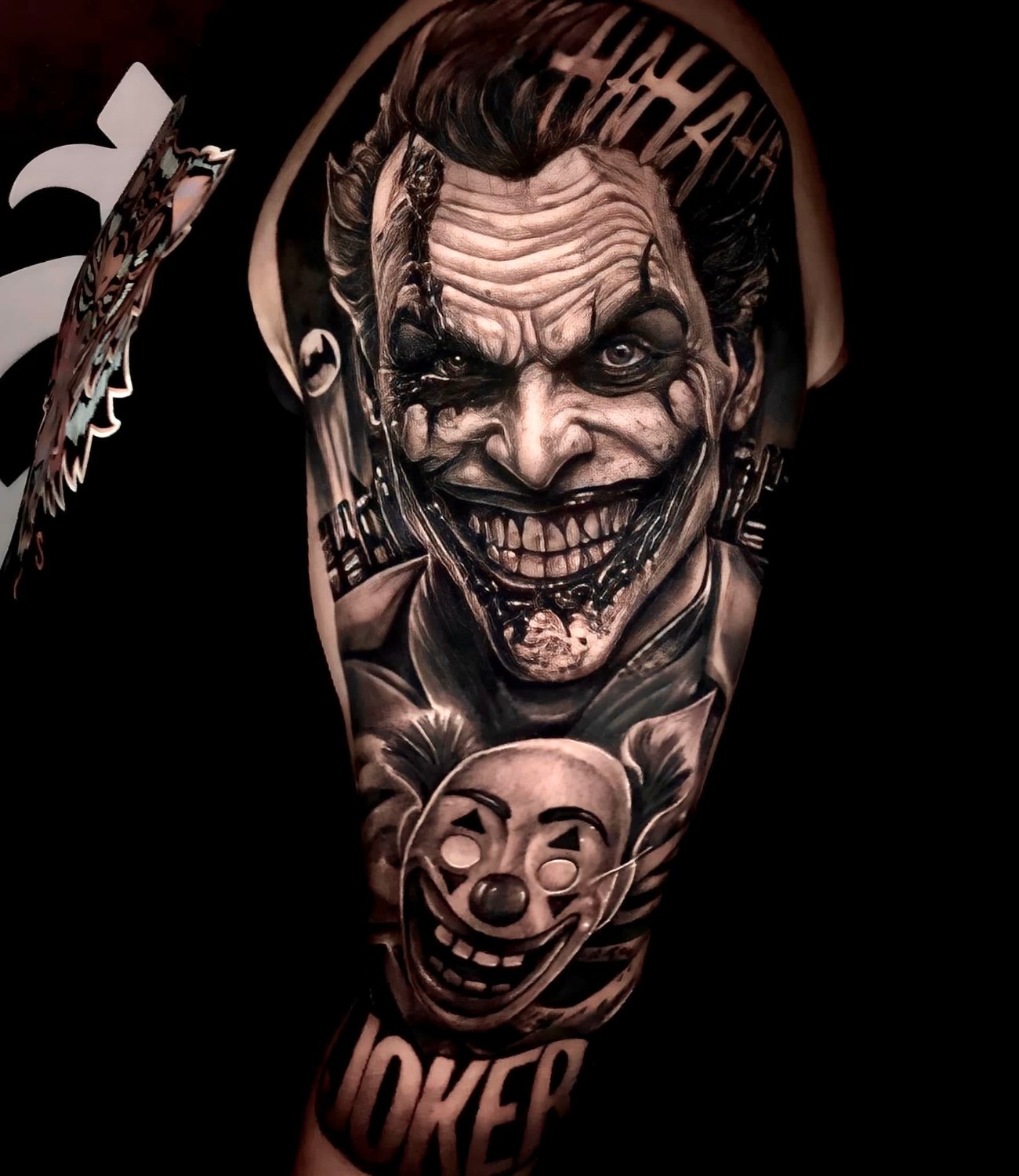
Santiago Iriarte: Joker hyperrealism
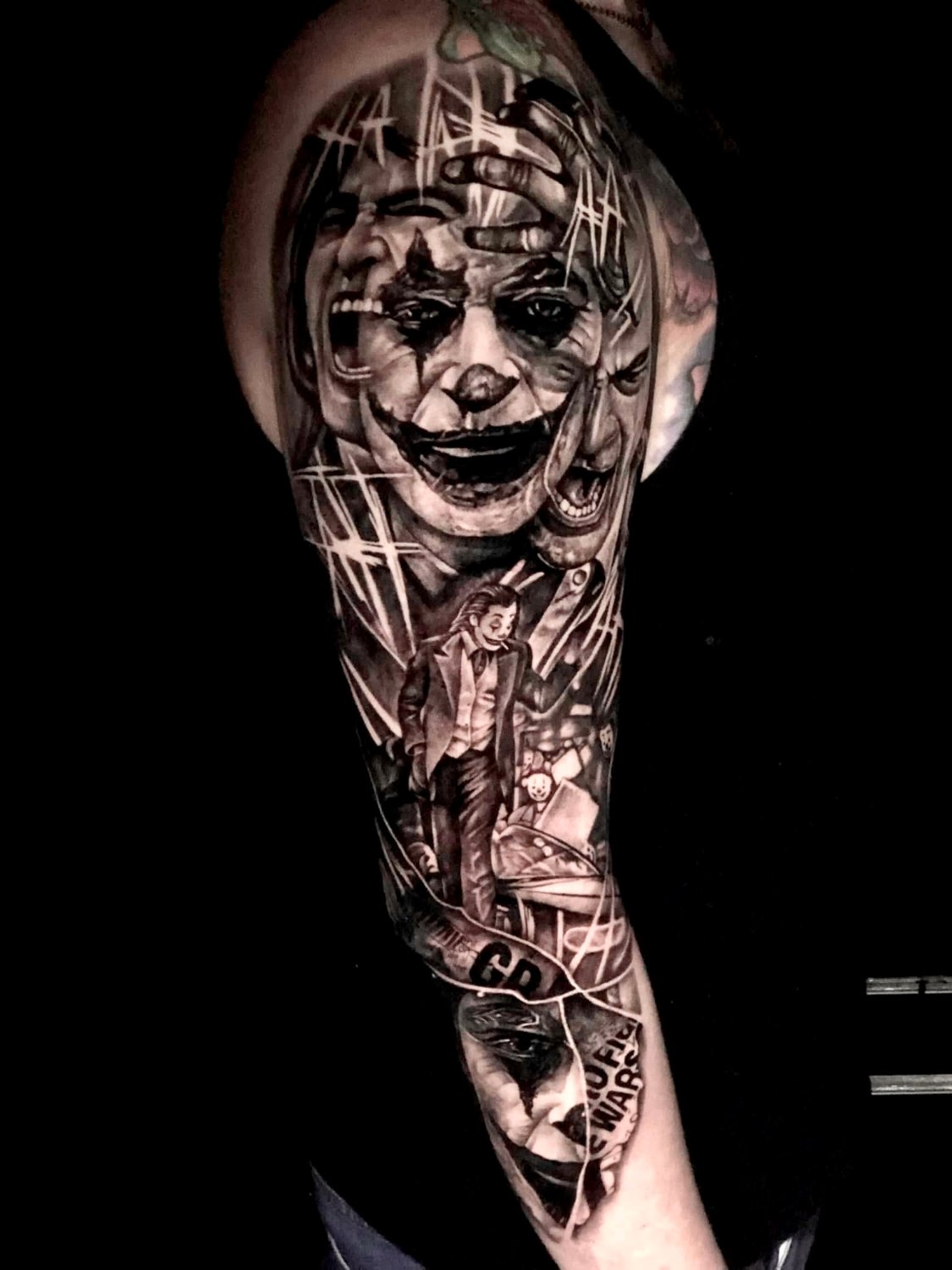
Santiago Iriarte, dark realism
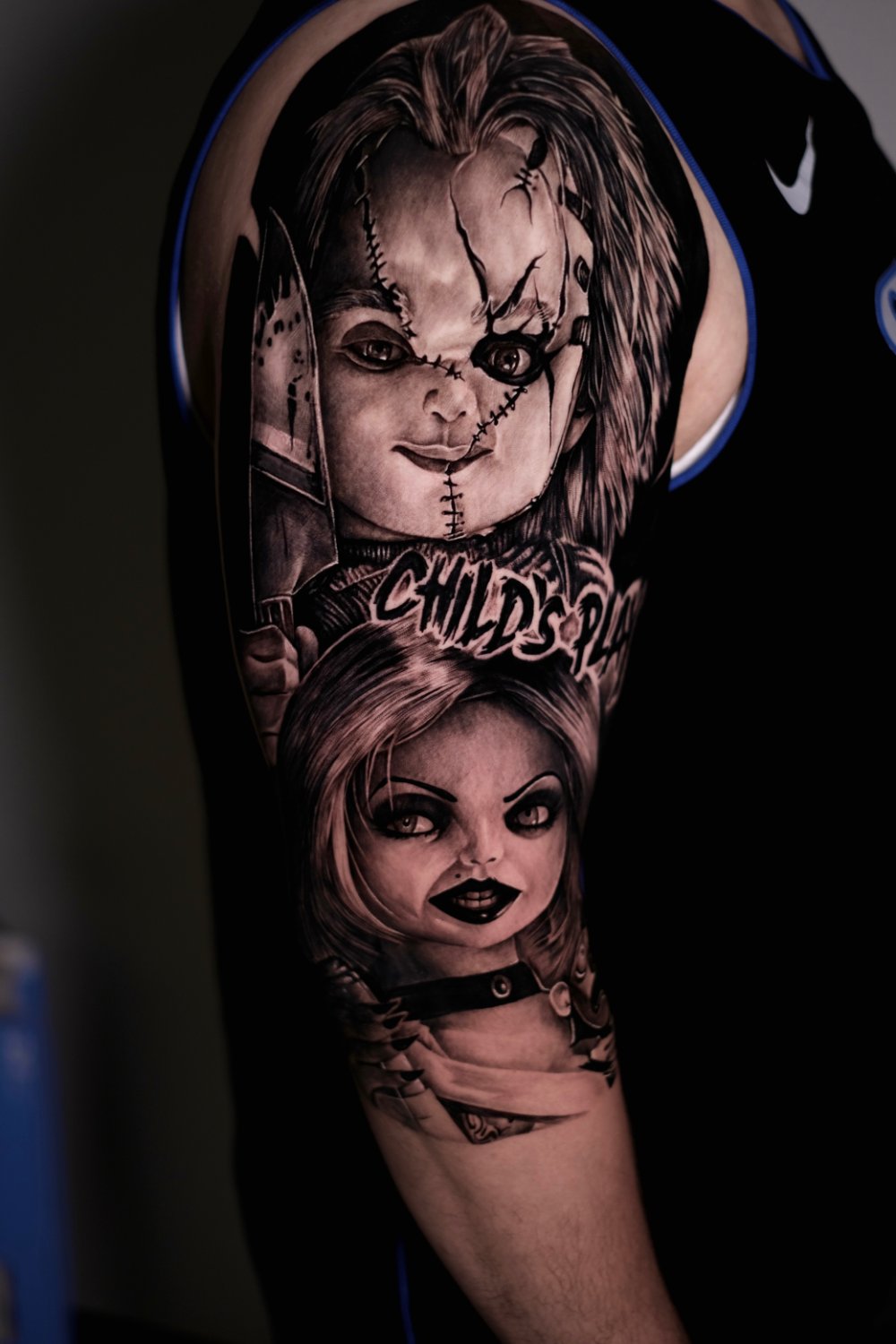
Santiago Iriarte, dark realism
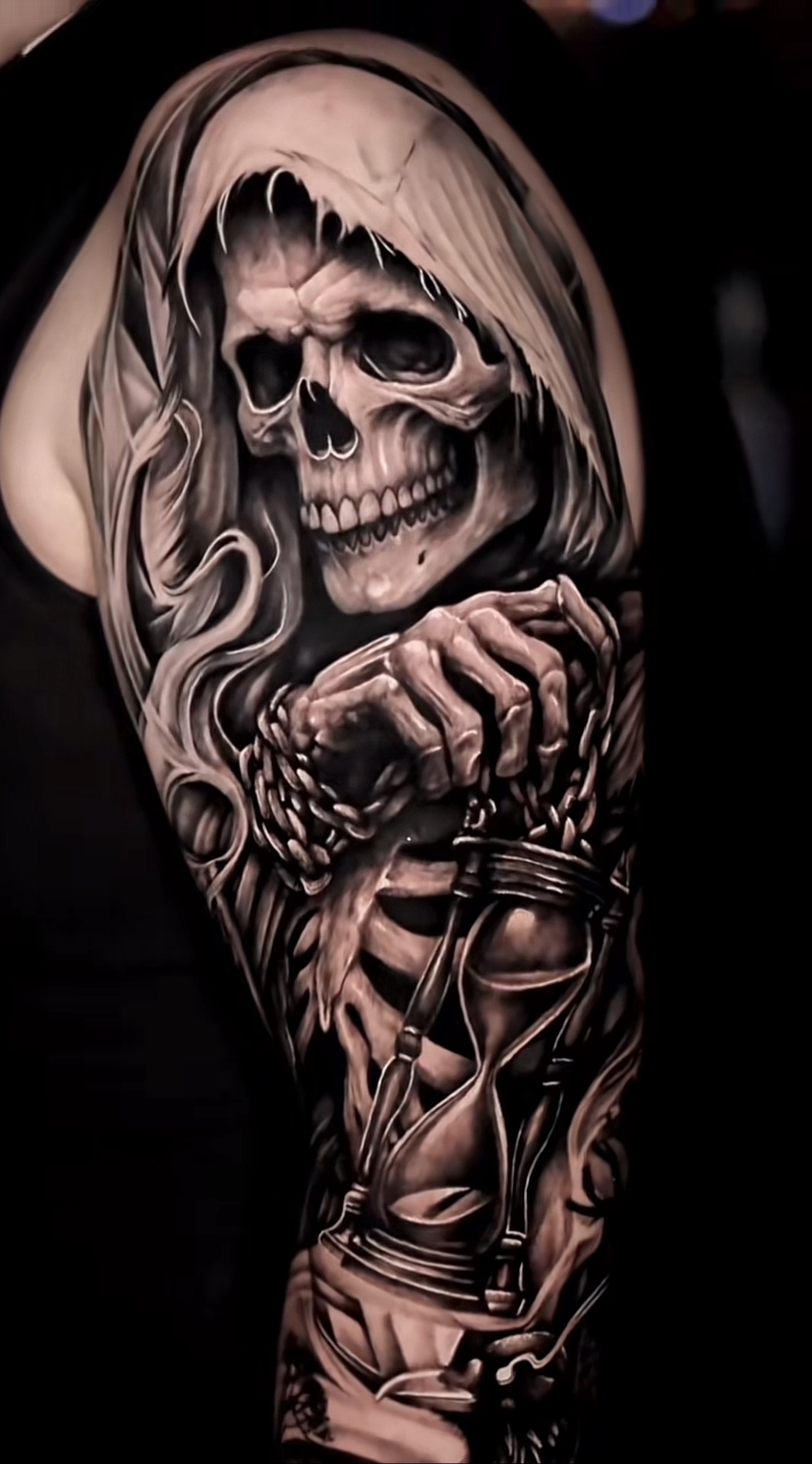
Santiago Iriarte: Grim Reaper, black and grey realism
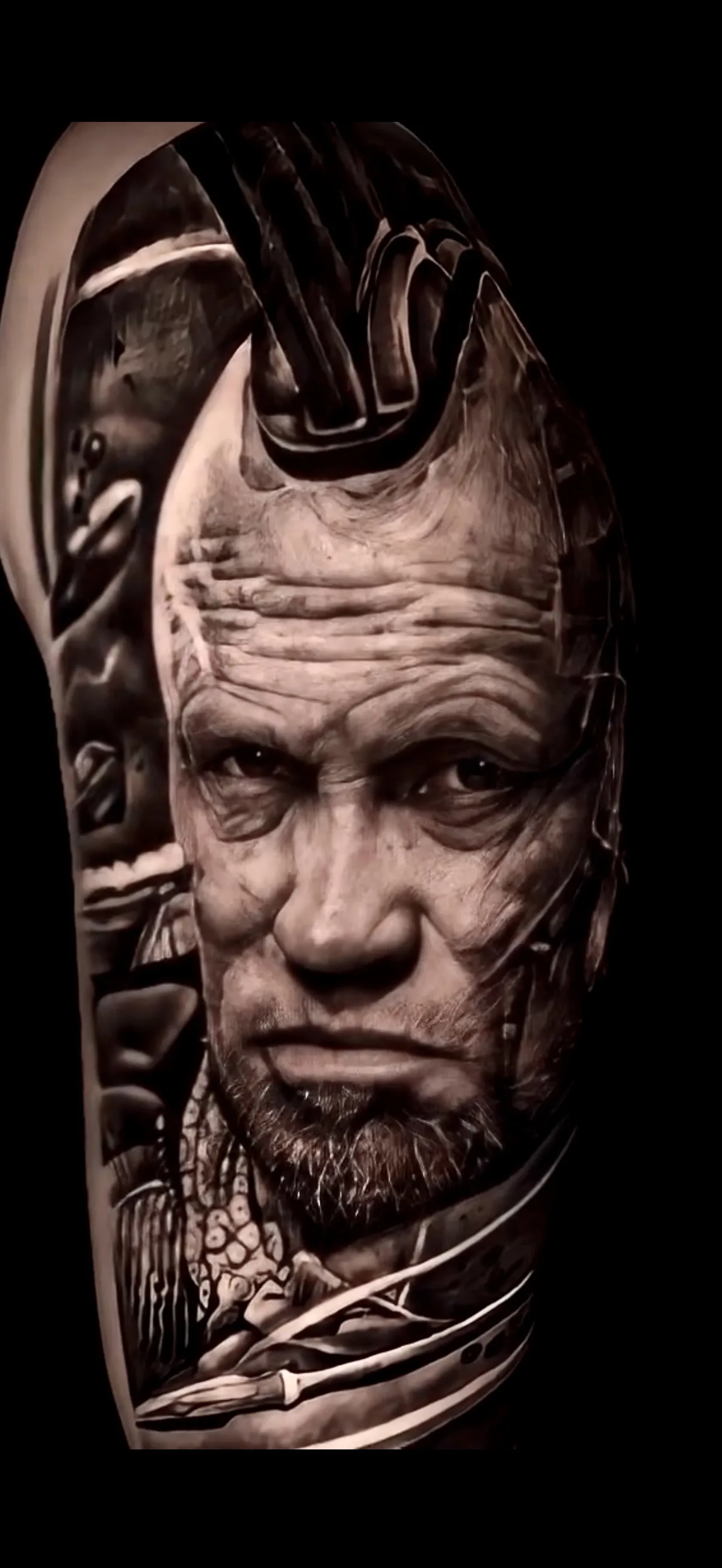
Visually, he traces a lineage back to Paul Booth in the United States and Fred Tattoo in Europe. What he absorbed from studying their work was an approach to cinematic composition, the idea that light slicing through darkness is itself a subject, not just a technique. That sensibility runs through his own pieces, where the drama is almost always architectural: built from the relationship between the deepest blacks and the untouched skin left as highlight.
On the technical side, Iriarte works with Panthera inks for linework and deep blacks, and Empire Inks for his gradients. The combination is deliberate. He builds a solid black foundation first, the structural anchor of the piece, then layers soft shadow transitions that follow the muscle beneath. Preserving the natural skin tone as the brightest highlight is, in his view, what gives the finished tattoo its three-dimensional depth years after healing.
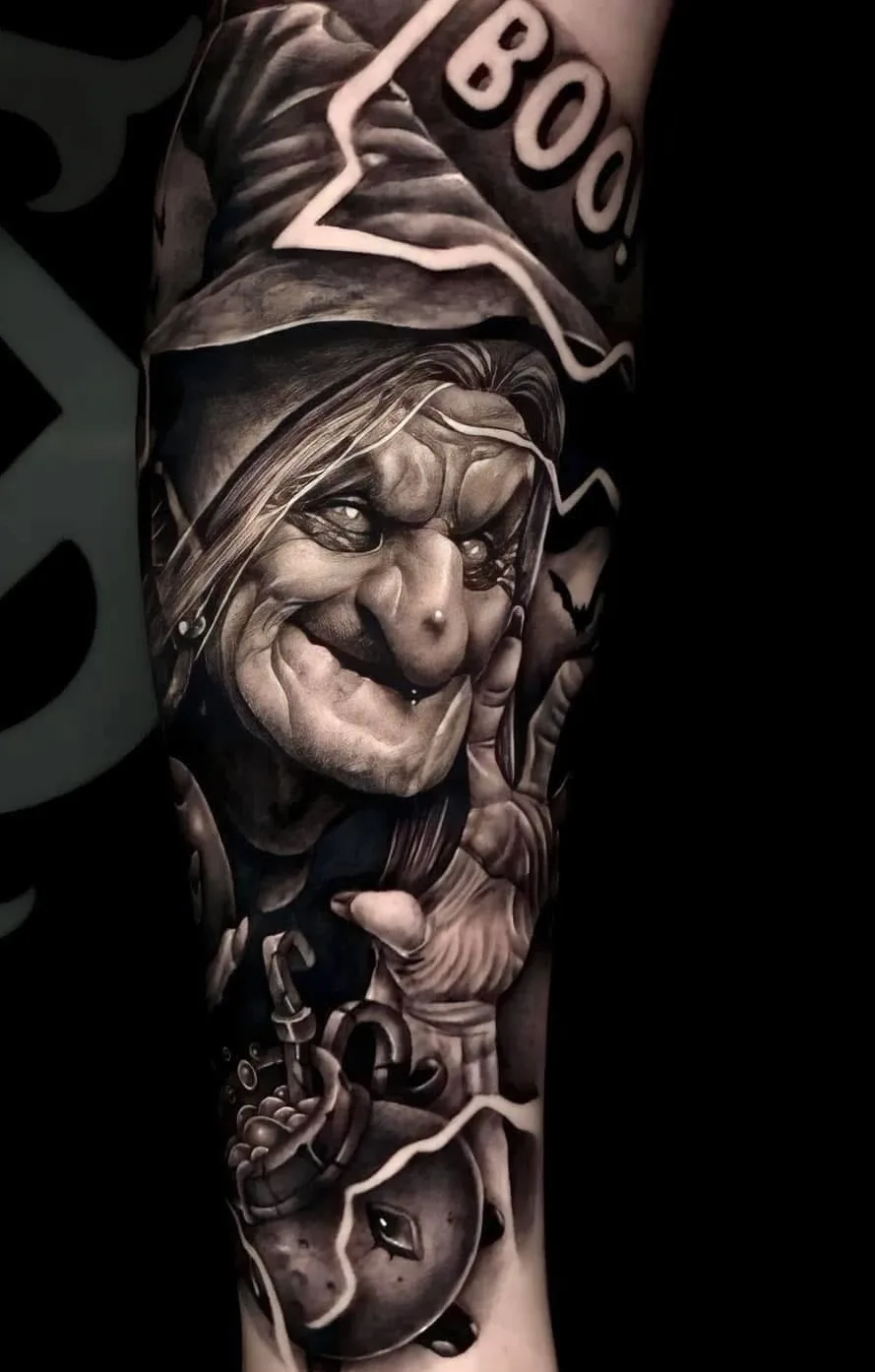
“Preserving the natural skin tone as a highlight is crucial; it creates a balance that ensures the tattoo retains its full depth, clarity, and three-dimensional pop for years to come.”
Sessions run six to eight hours depending on skin texture and placement. Speed is simply not a variable he weighs against quality. Smooth gradients and solid contrasts require time, and rushing either one leaves a mark, not on the session, but on the healed result. His commitment, stated plainly, is to deliver something uncompromised.
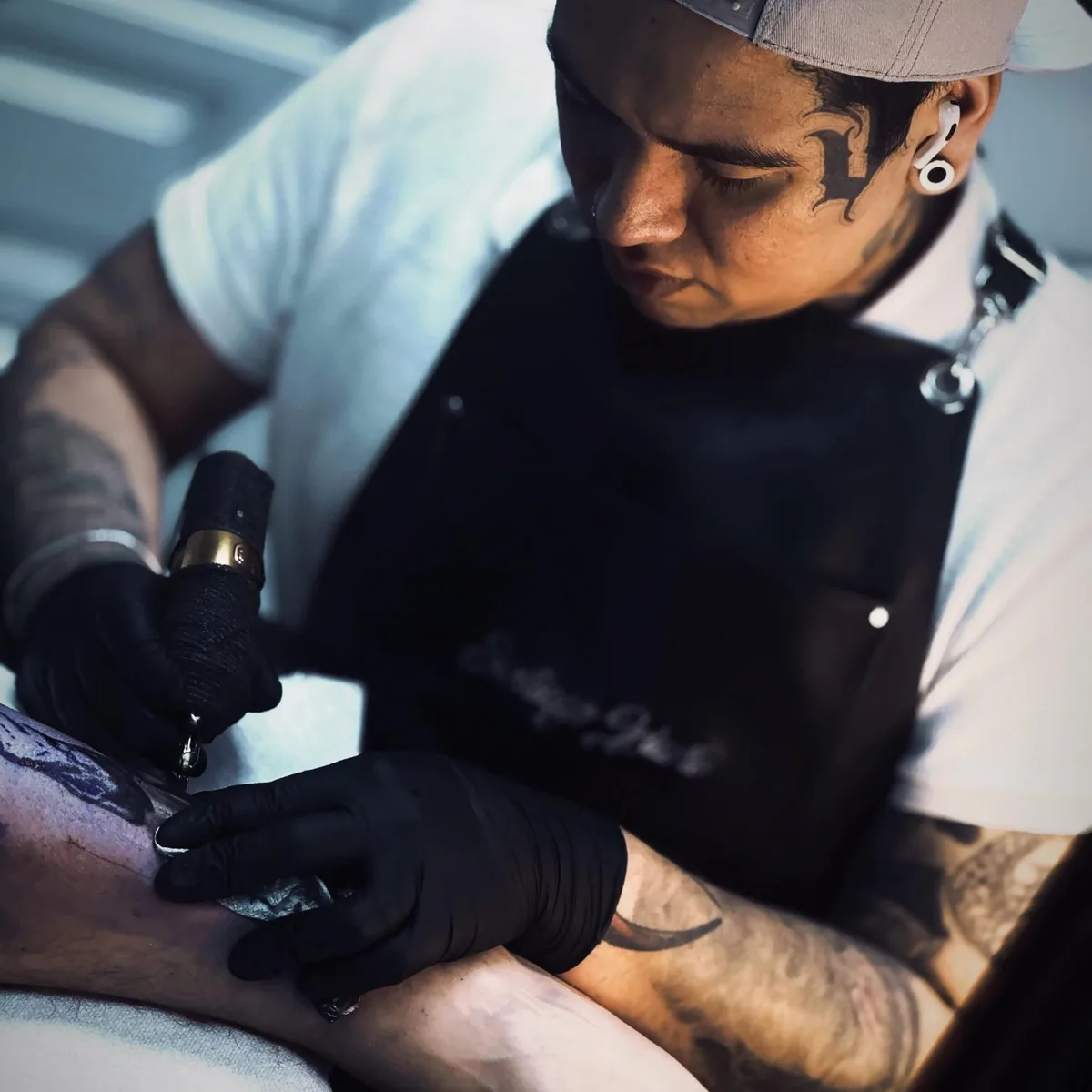
Large-scale work is where his ambitions currently live. Full sleeves, backs, leg pieces, compositions that give him enough canvas to build a narrative rather than a single image. The challenge of merging complex background textures with a high-contrast portrait at the center, managing the depth of both without letting either flatten the other, is the kind of problem that keeps pushing his technical understanding forward.
Convention life has been part of his career since Colombia, and the transition to competing in major United States expos has been a meaningful test. Winning recognition alongside top-tier international artists in the American market confirmed, for him, that the years of evolving his technique were landing the way he intended. The competitive circuit is also, in a practical sense, one of the best classrooms available.
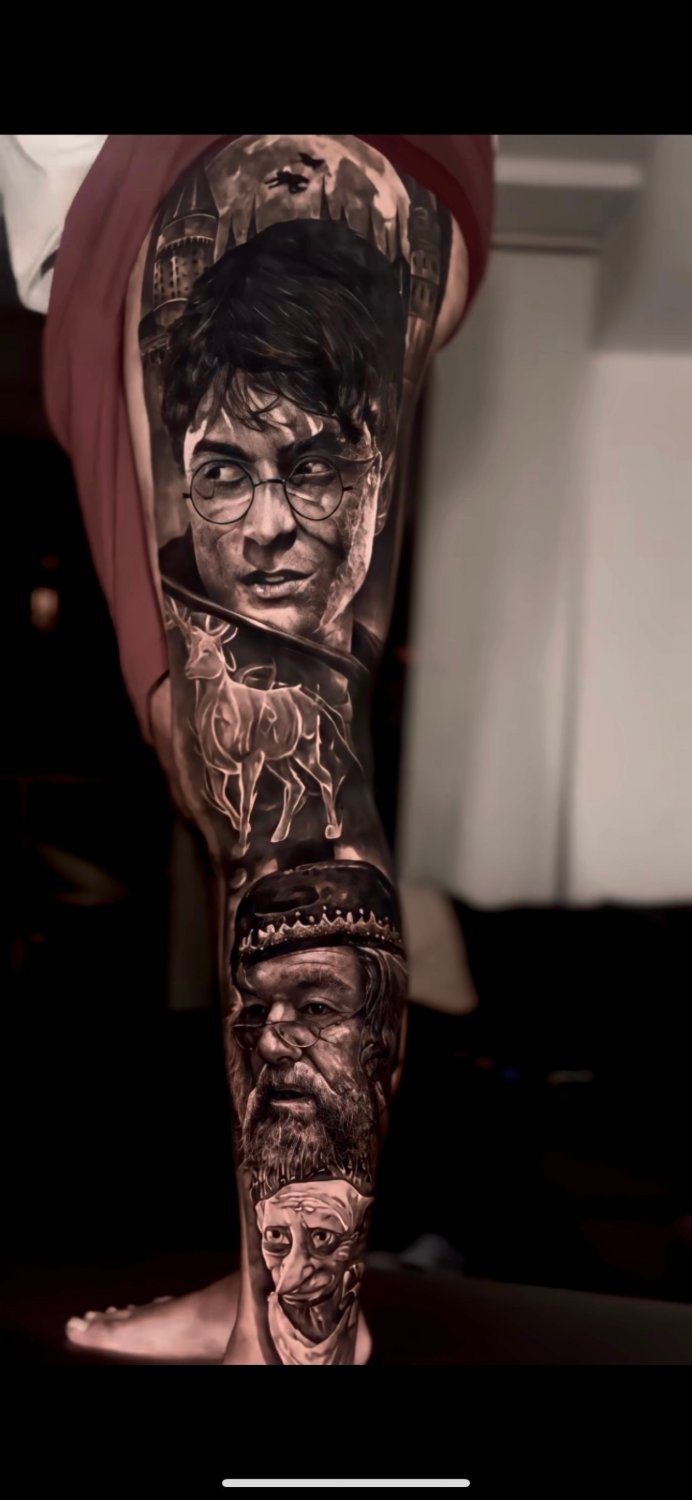
Santiago Iriarte: Harry Potter in black and grey realism
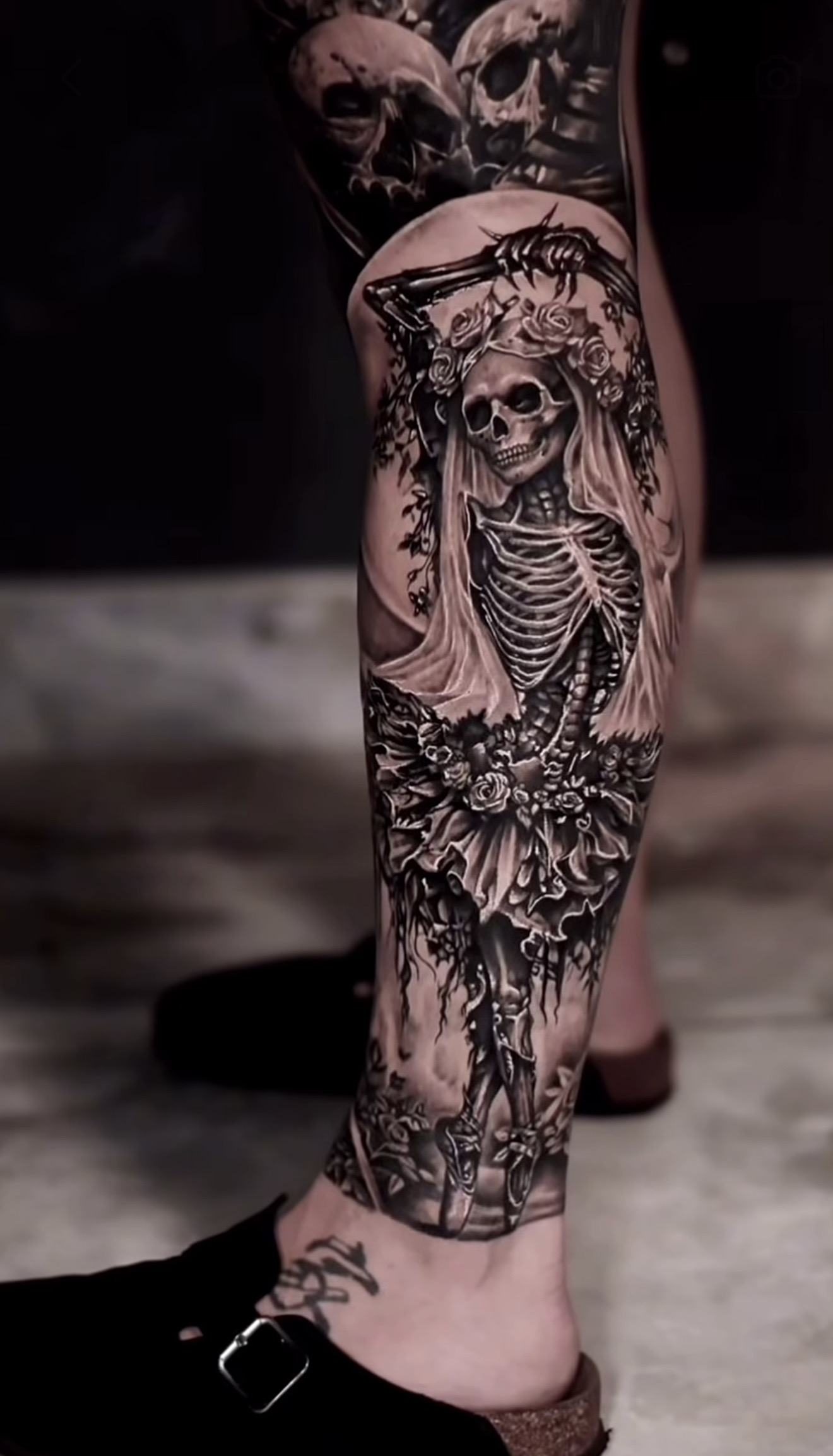
Santiago Iriarte: skeletal bride, black and grey realism
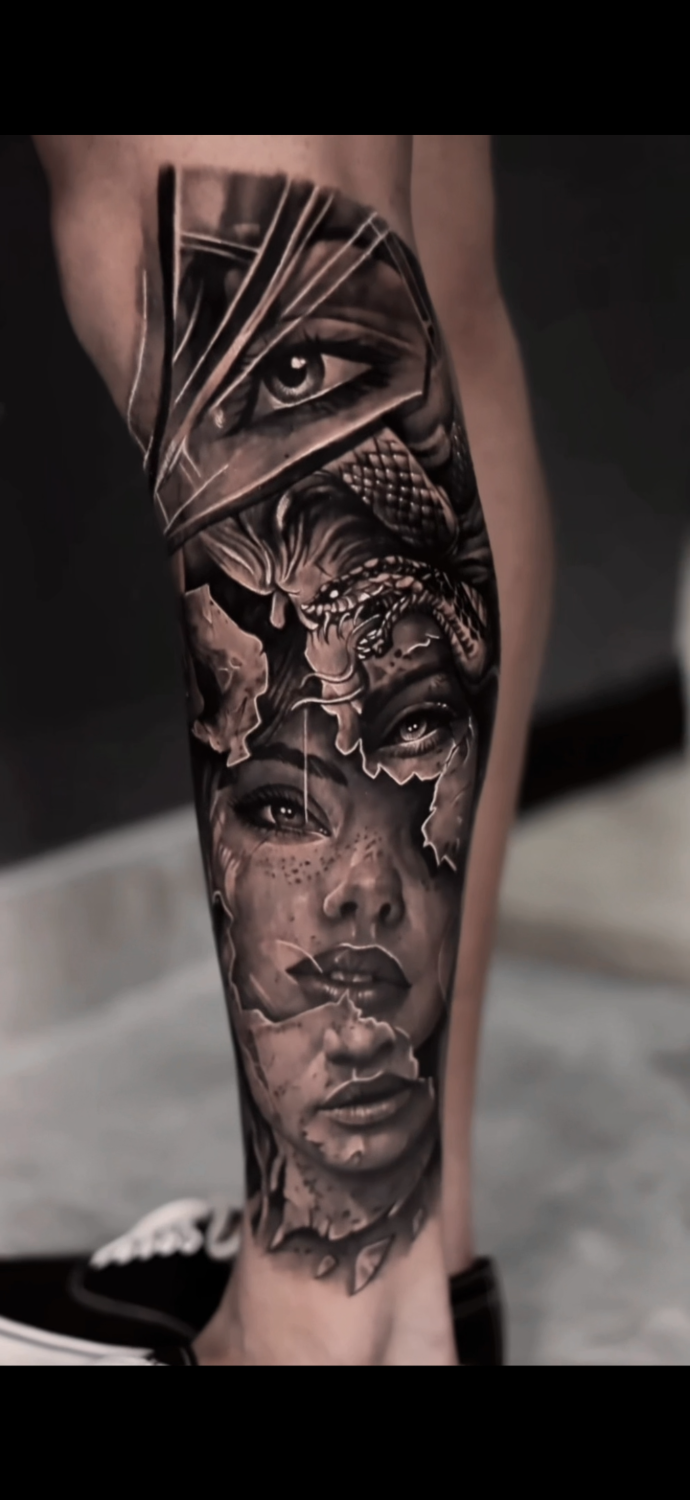
Santiago Iriarte, dark realism
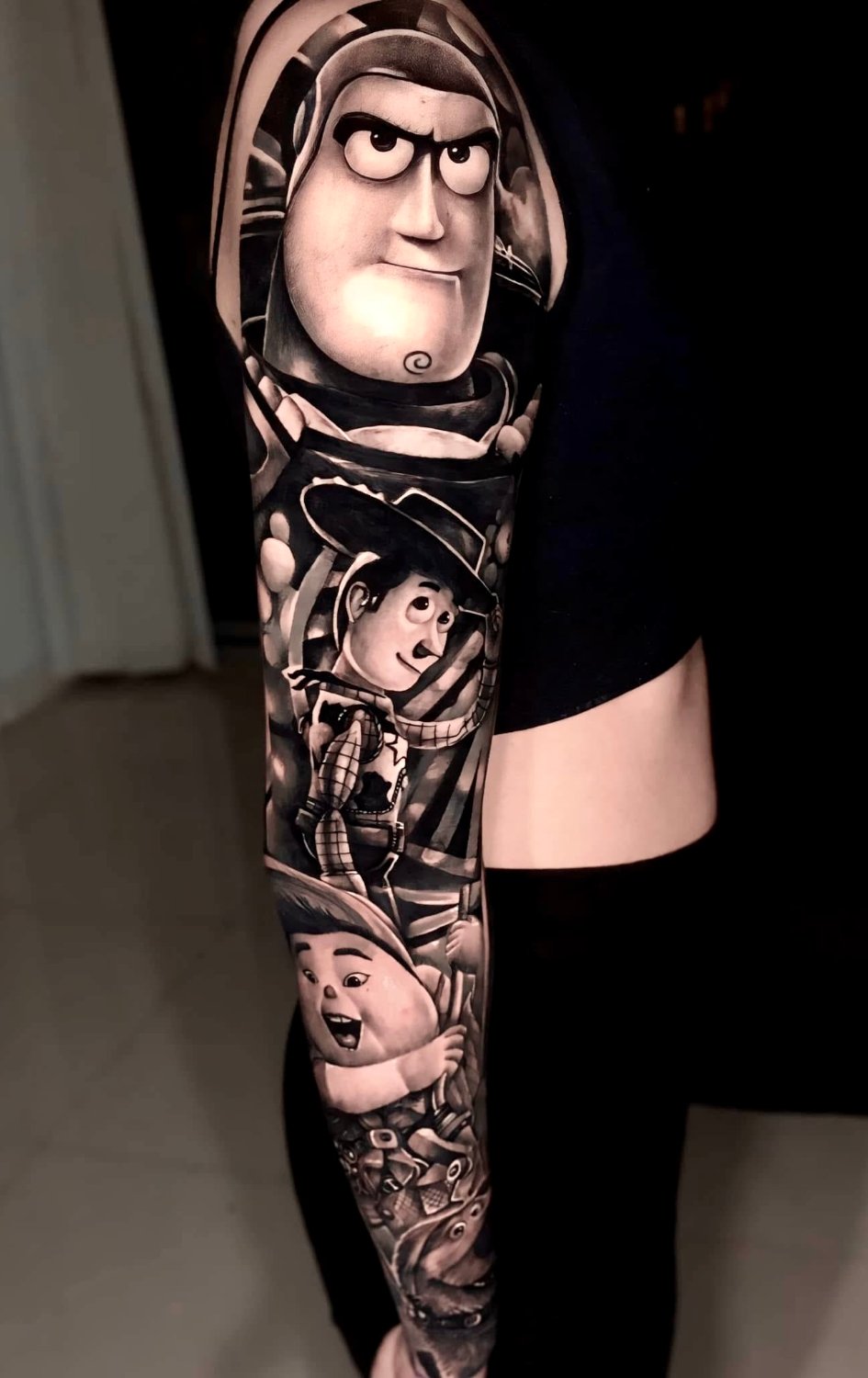
Santiago Iriarte: Toy Story in photorealism
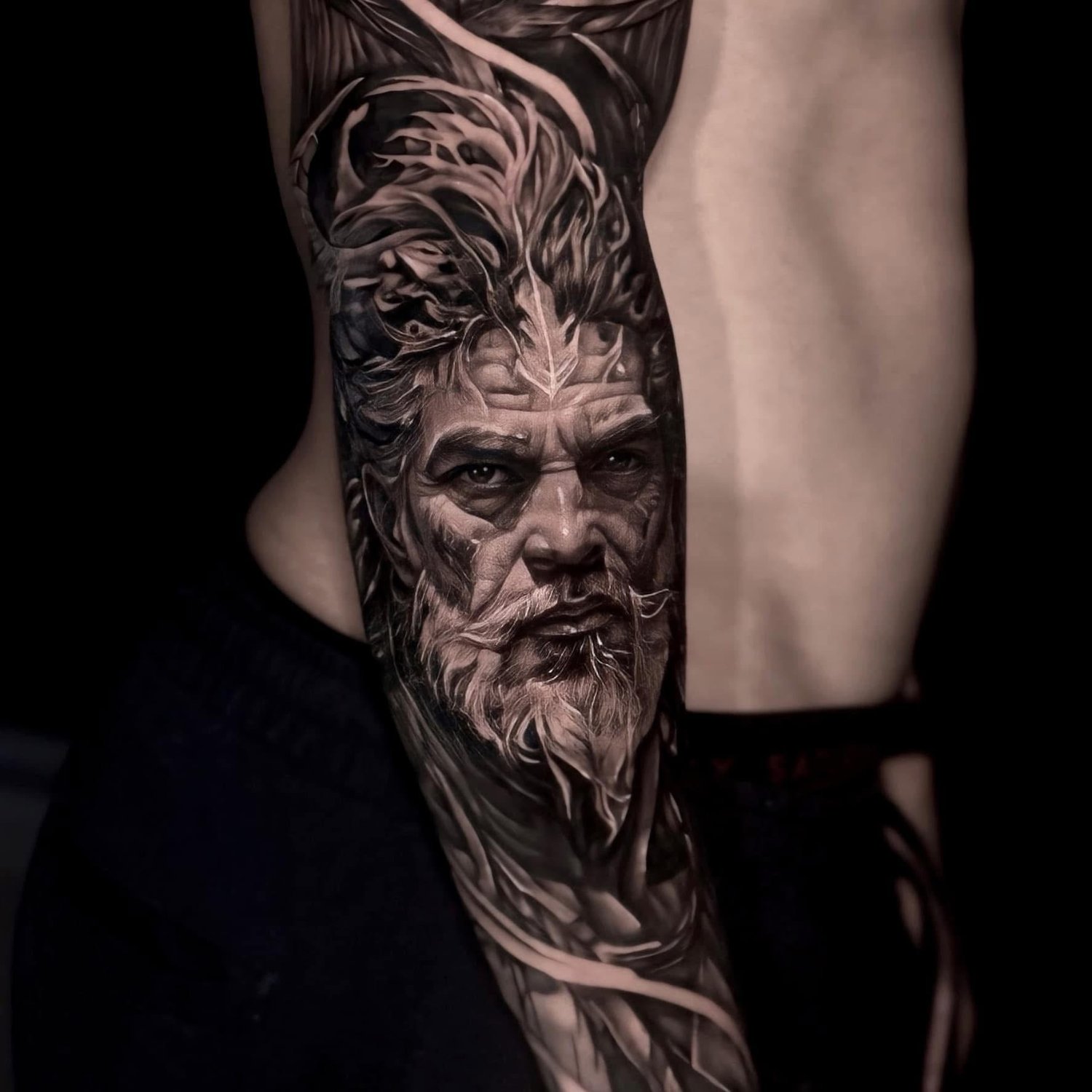
Santiago Iriarte, dark realism
“A winning tattoo must respect the natural lines of the body and have a correct structural order.”
His role at conventions has expanded. This year, Iriarte served as an official judge at the Niagara Falls Tattoo Expo, and he is confirmed to judge at Tommy's Tattoo Convention as well. His evaluation criteria are strict and specific: technical cleanliness of textures, saturation of color packing without overworking the skin, the flow of shadows, and, most importantly, anatomical placement. A piece has to respect the body it lives on.
Traveling has kept him calibrated. Moving through tattoo scenes in Europe, South America, and across the United States exposes him to technical approaches he would not encounter working in one place. He describes it as staying humble, a useful counterweight to the confidence that comes with building a recognizable body of work. Colorado is his primary base now, but the road remains part of the practice.
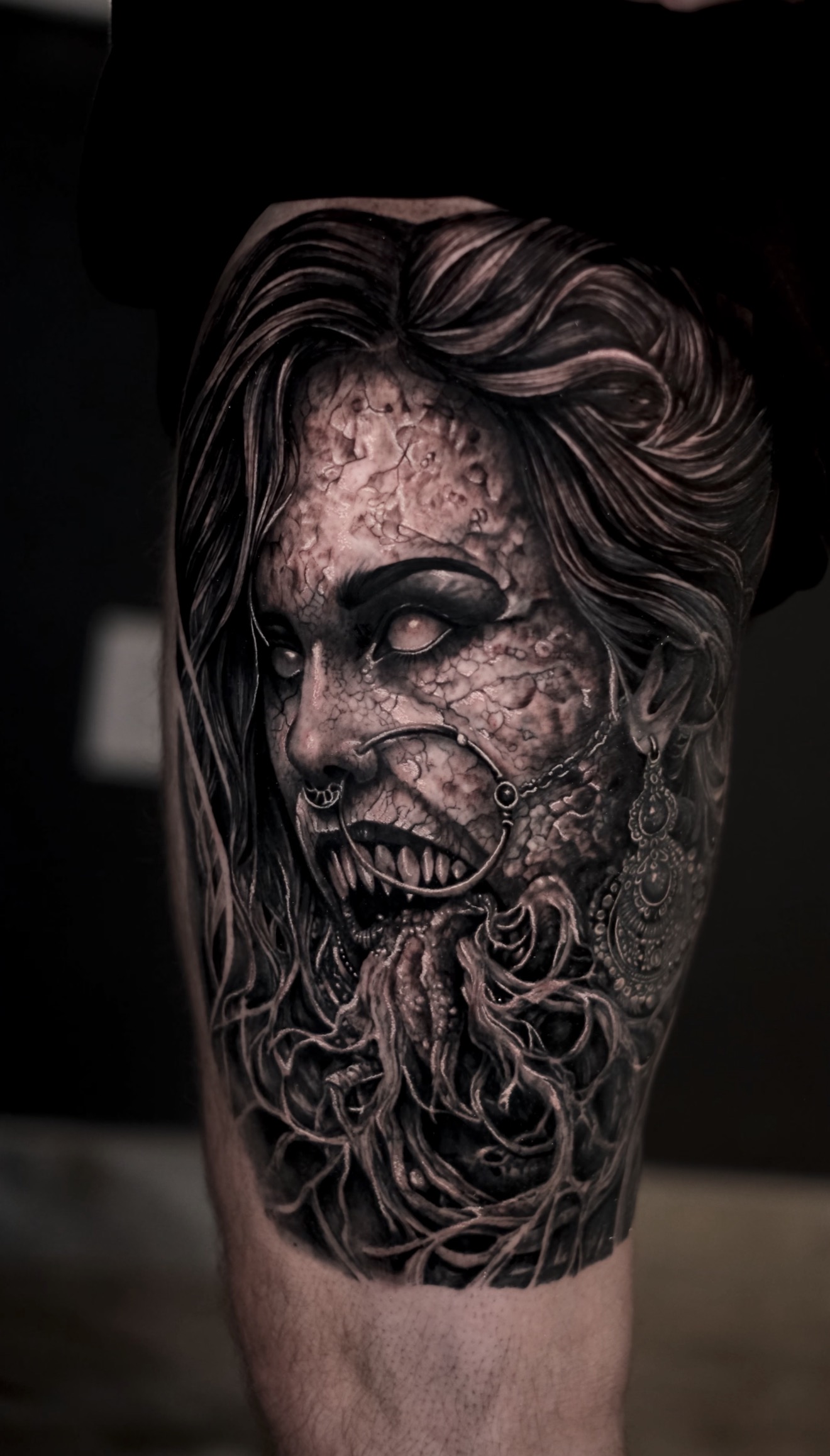
Santiago Iriarte, dark realism
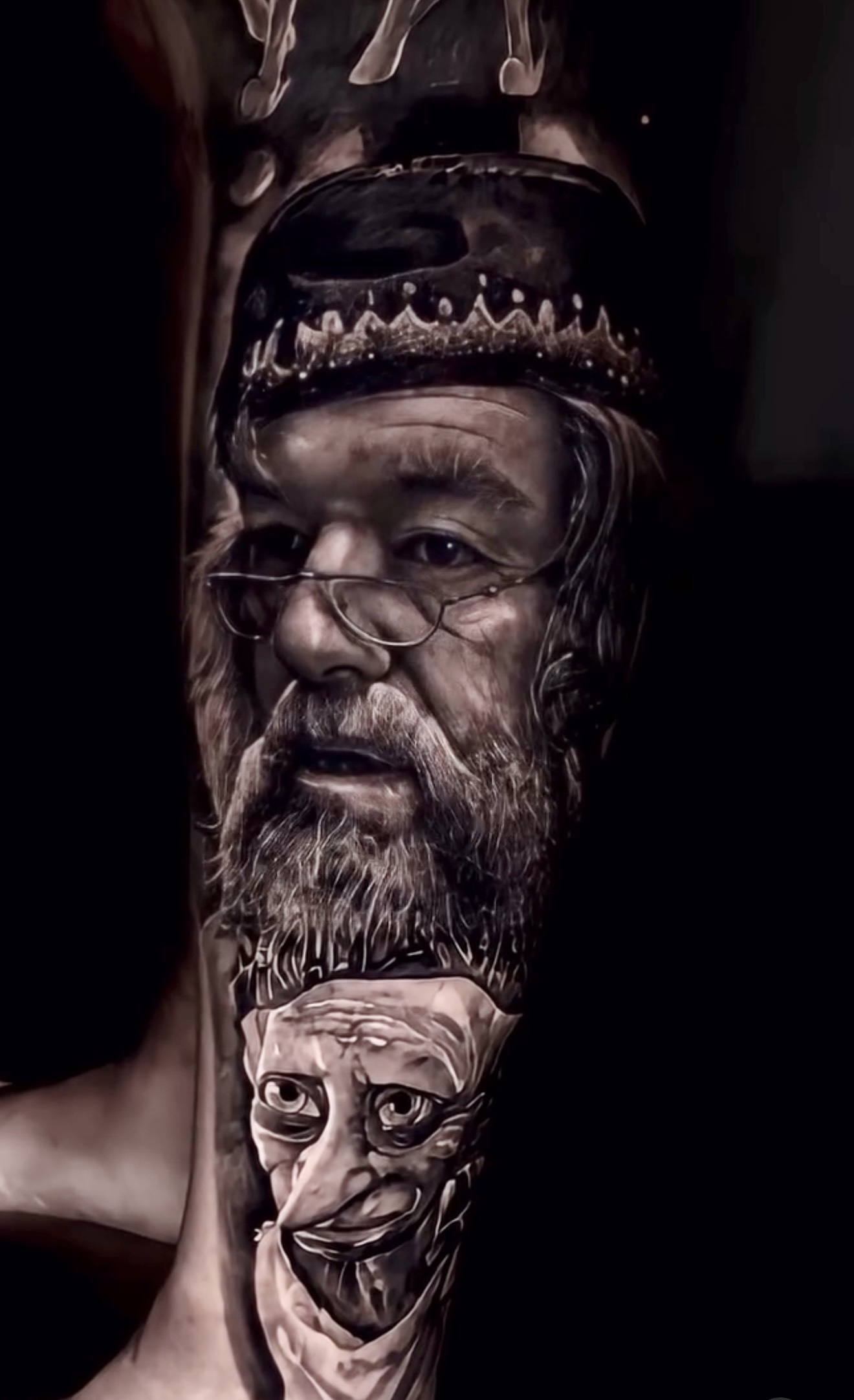
Santiago Iriarte, dark realism
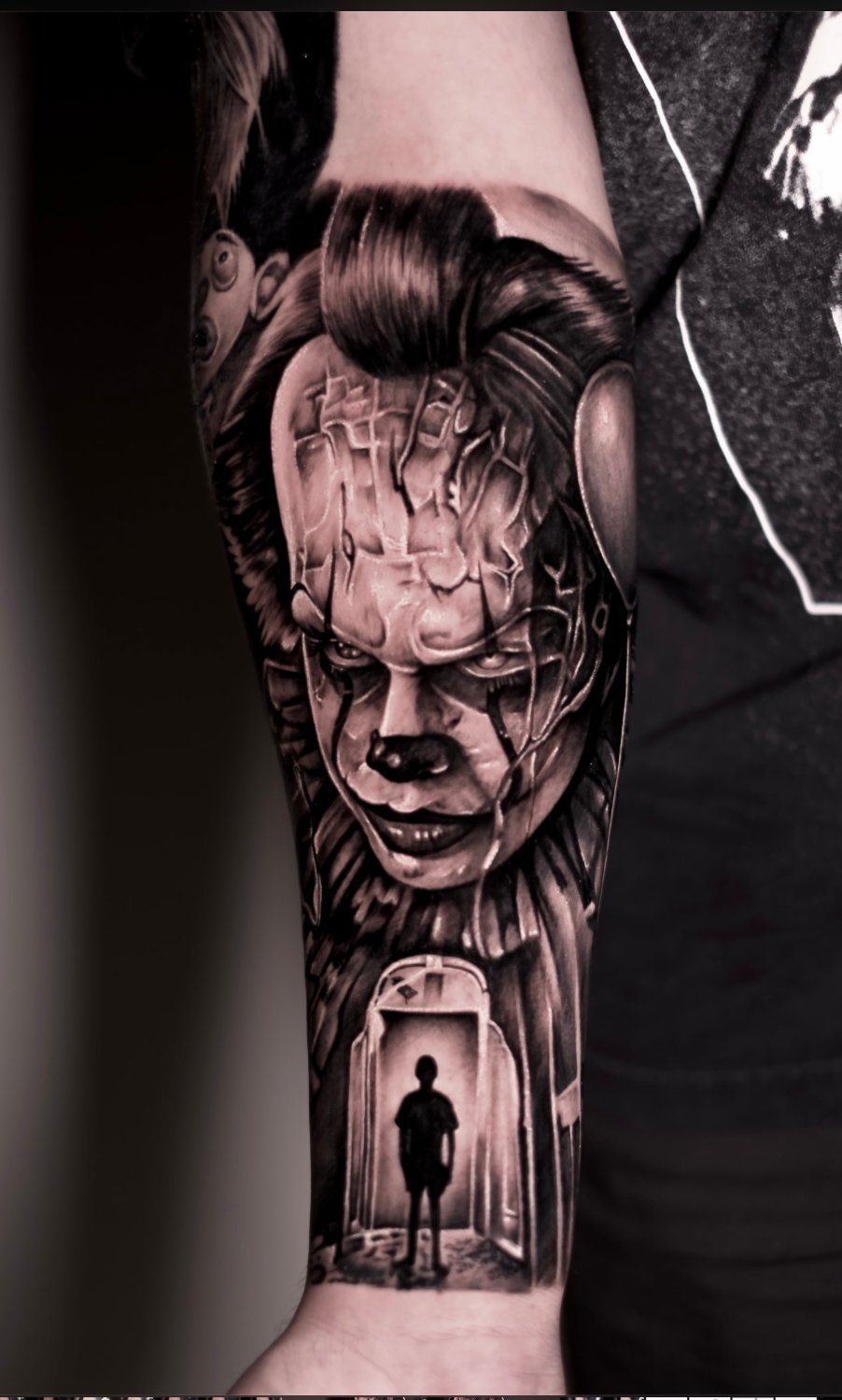
Santiago Iriarte, dark realism
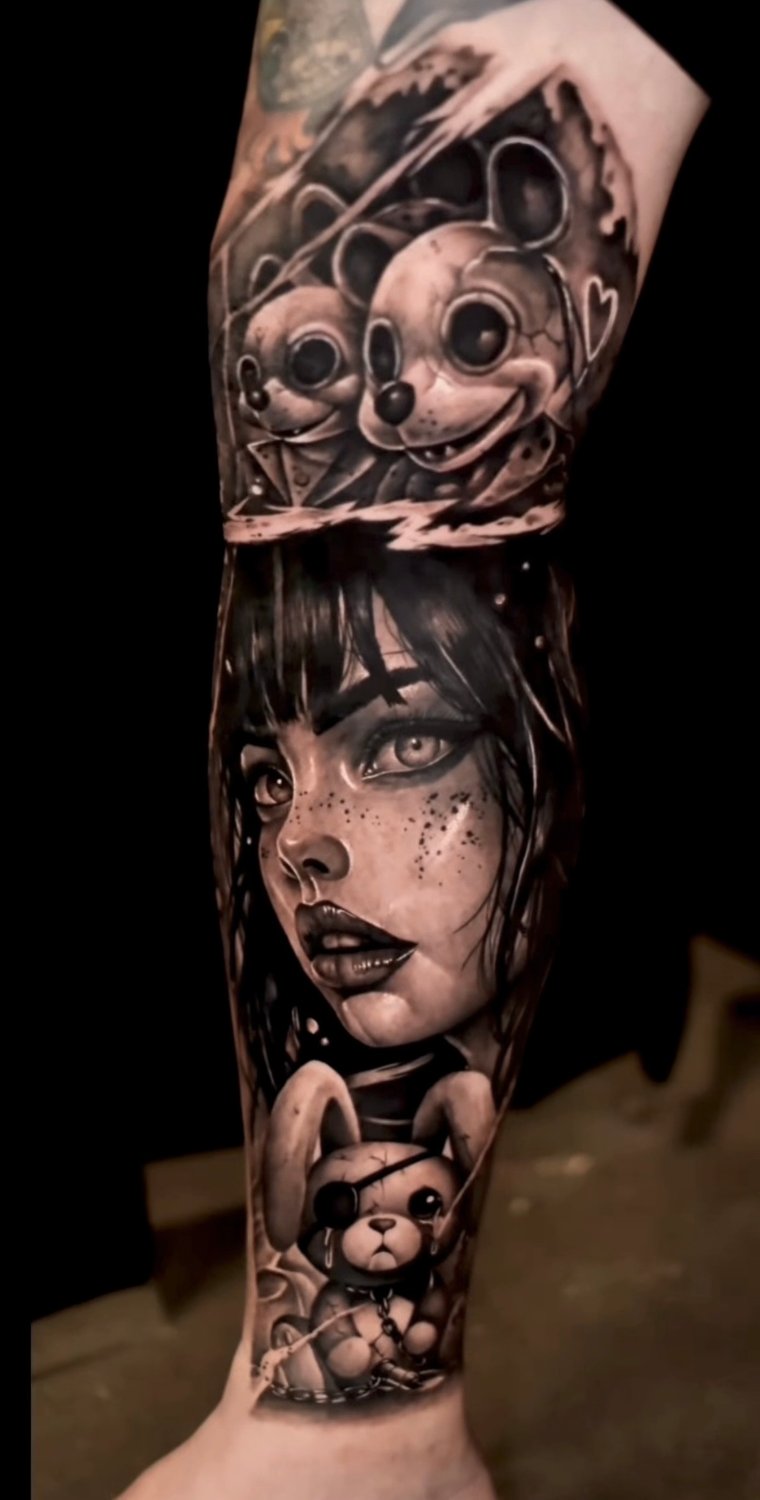
Santiago Iriarte, dark realism
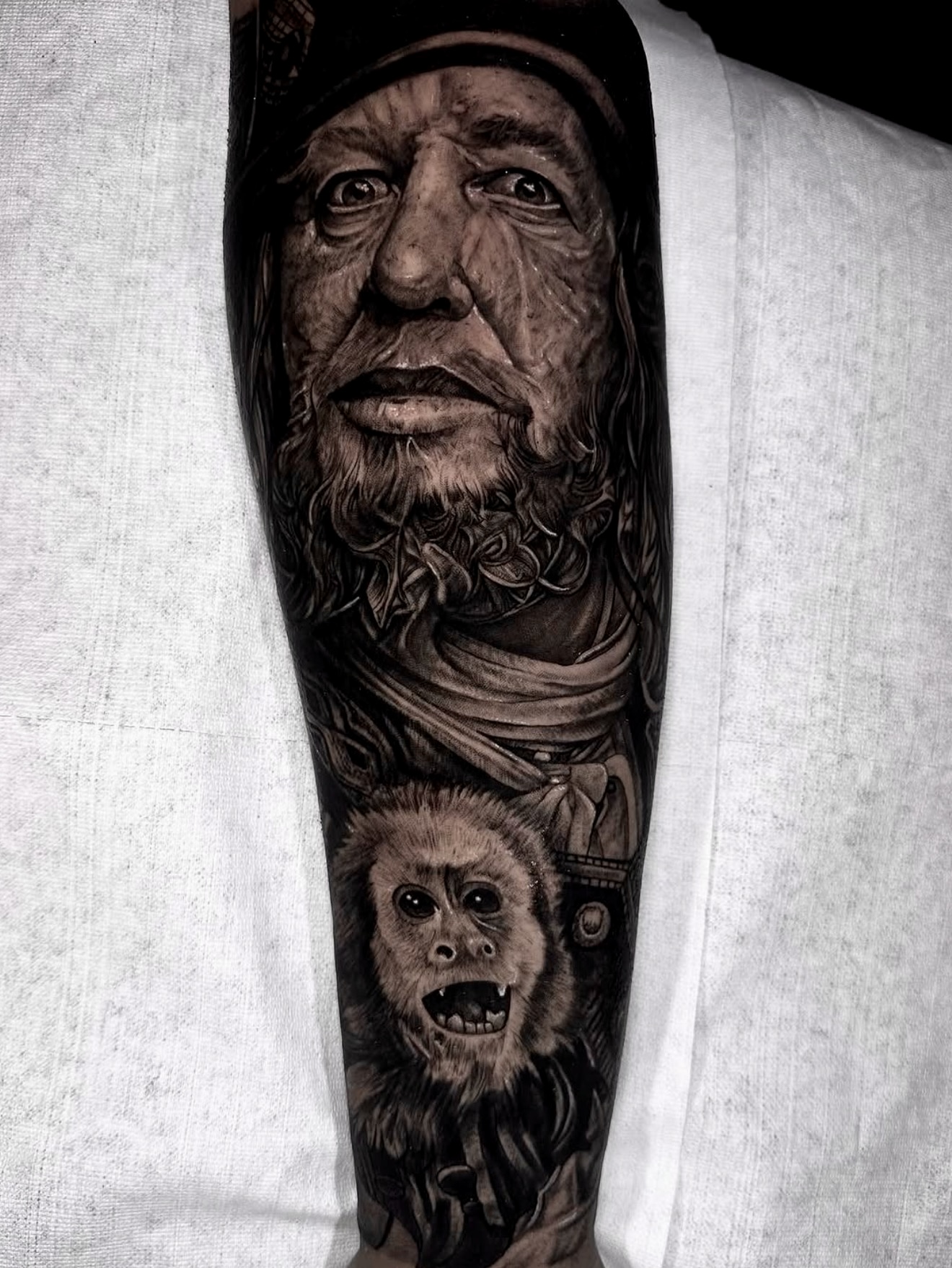
Santiago Iriarte, dark realism
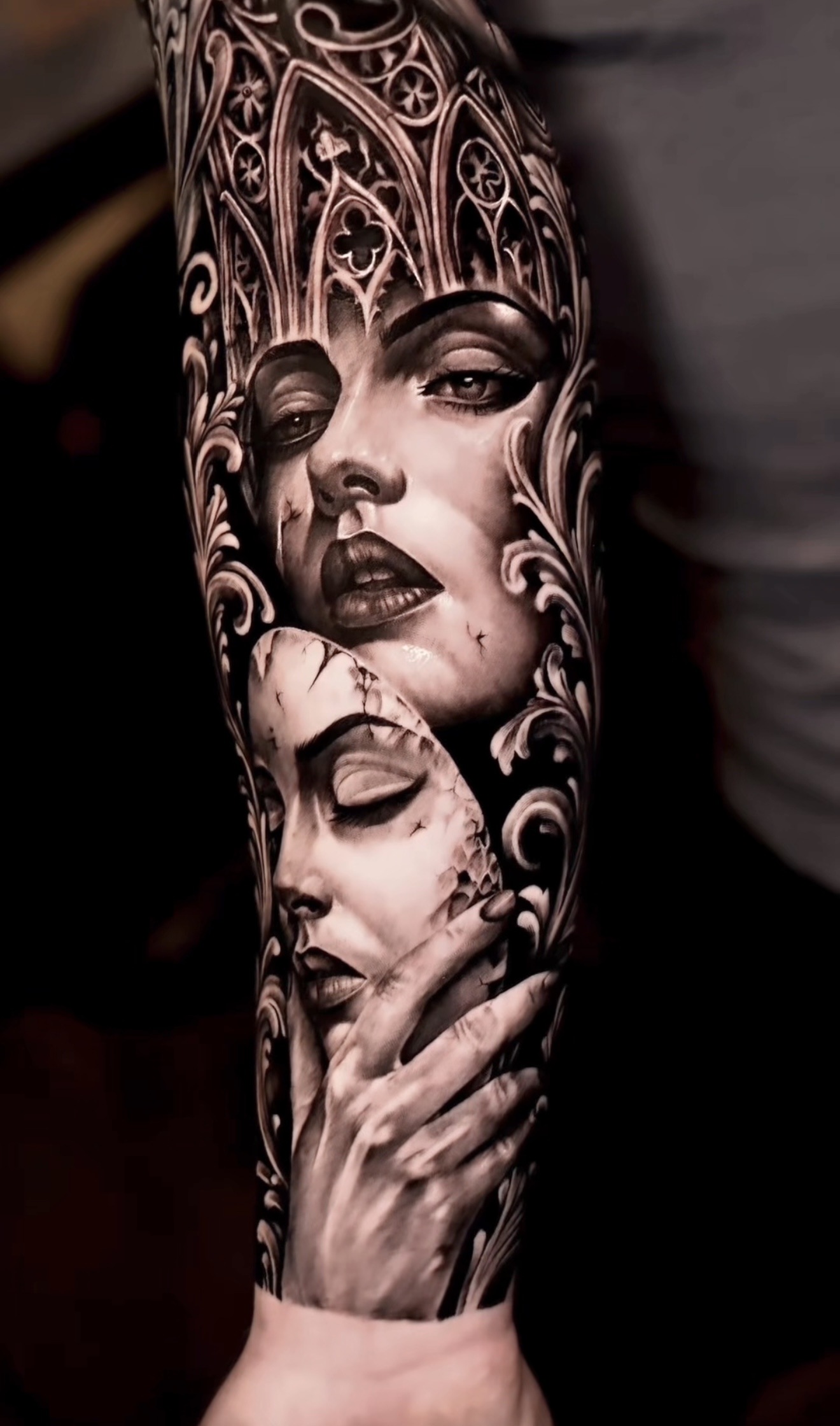
Santiago Iriarte, dark realism
The characters he returns to most, The Joker rendered in both color and shadow versions, figures from science fiction and superhero cinema, are chosen because they carry complex lighting and layered texture. But he is clear that replication is not the goal. He pushes clients toward trusting his interpretation, toward allowing the reference to become a starting point rather than a blueprint. The difference between a copy and a custom piece is, in his view, exactly where the art lives.
“It is far more rewarding when the client trusts my vision and allows me to guide them, inserting my own stylistic interpretation so the tattoo becomes a unique custom piece rather than a mere replica.”
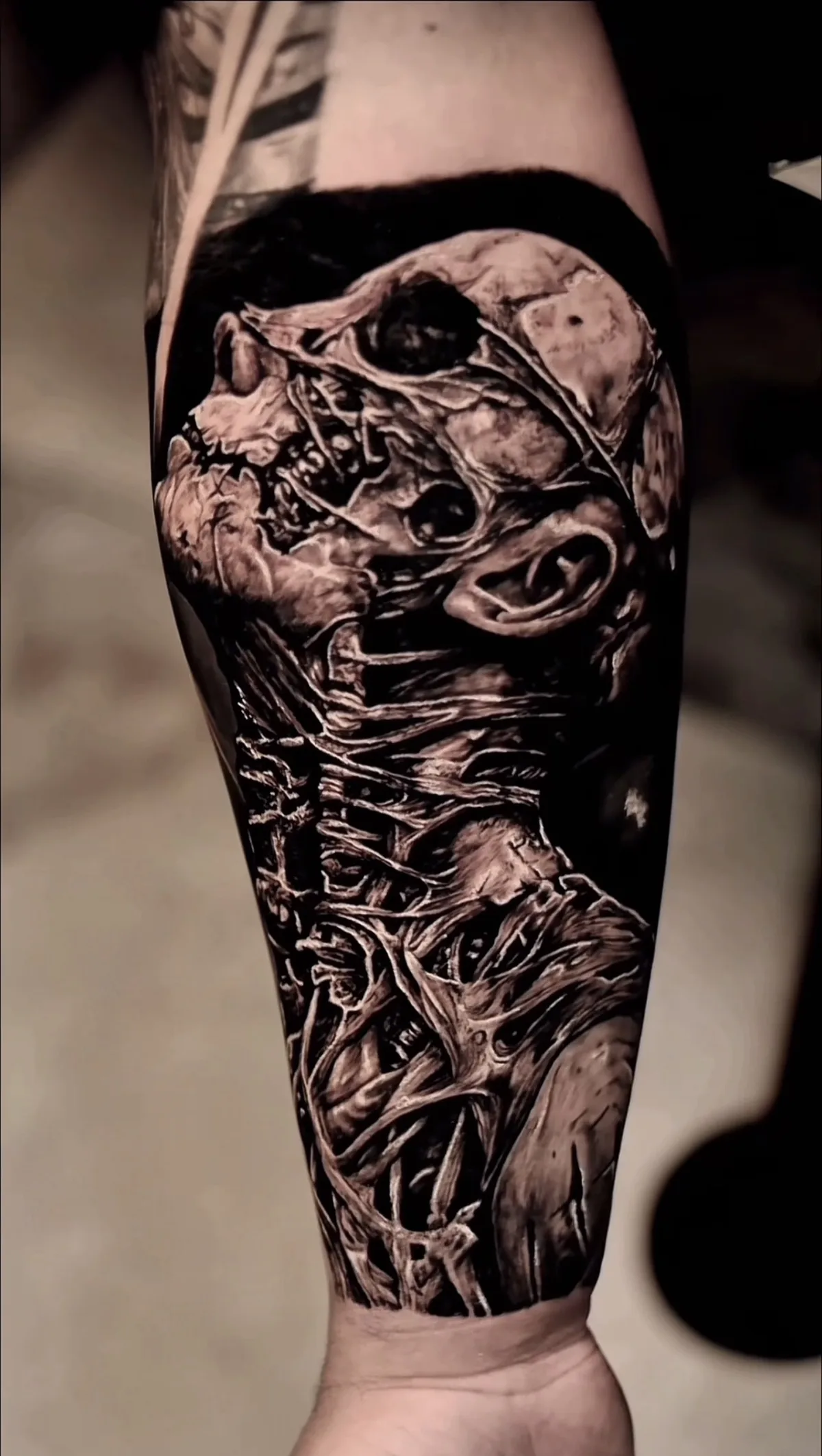
Looking ahead, Iriarte is focused on pushing large-scale hyperrealism further, softer shadows, more seamless transitions, deeper texture. He is also studying English intensively, with a direct practical aim: to connect more fully with international clients and media as he expands his booking calendar globally. The work is already reaching that audience. The language is catching up.
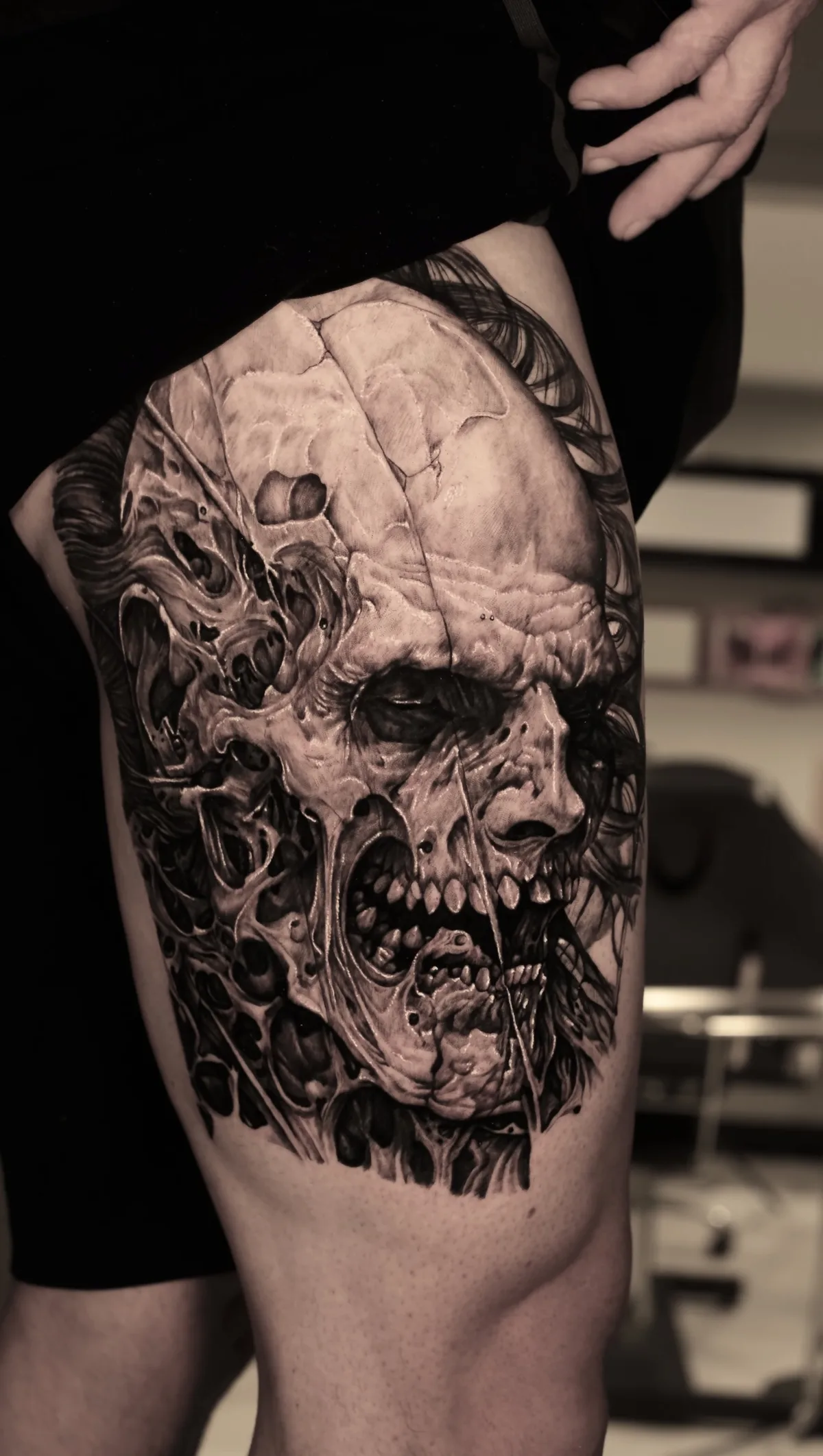
What comes through across all of it, the discipline of the twenty-day design process, the hours spent building a single gradient, the years moving from geometry to color to the deep blacks of dark realism, is a sustained seriousness about the craft. Iriarte arrived at his signature style through accumulated decisions, not a single revelation. And he is, by all evidence, still in the middle of the work.