Brazilian tattoo artist Gustavo Araujo has built his career around one of the most technically demanding areas of tattooing — cover-up work. Born in Vilhena, Rondônia, in the northern region of Brazil, he has been tattooing for 10 years, with the last six years dedicated to developing and refining his own approach to covering old tattoos.
For Gustavo, cover-up tattooing is not only a matter of hiding what is already on the skin. Much of his work begins with people who carry tattoos connected to discomfort, emotional weight, or a past version of themselves they no longer identify with. Through black and grey realism, strong composition, texture, contrast, and anatomical flow, he aims to create a new piece that changes how the client sees their own body.
His work has brought him recognition within the Brazilian tattoo scene, including experience as a judge at Tattoo Week Brazil. In this interview, Gustavo speaks about his path into tattooing, the emotional side of cover-ups, the technical challenges of working over old tattoos, and how tattooing can become a form of confidence, transformation, and personal growth.


— Gustavo, when did cover-up work become such an important part of your career?
— I started focusing on cover-ups about six years ago. At first, I saw it as a market opportunity, because there was a high demand and very few professionals truly specialized in this area.
Over time, I began to connect more deeply with the stories of the people who came to me. Many of them carried discomfort or insecurity because of old tattoos. That changed the way I saw this work. Cover-ups became much more than a technical challenge for me.
Today, I see them as a way to help people change their relationship with their own image. It is about transforming something they no longer identify with into a piece they can feel proud of.


— What attracted you most to cover-ups as an artistic direction?
— The challenge of transforming an old tattoo into a completely new work of art has always attracted me. A cover-up demands a very high level of technical and artistic responsibility, especially because the original tattoo often affects how the person feels about themselves.
I also found a strong creative path in this field. Each case has its own limitations, and those limitations force me to think differently. I need to understand what already exists on the skin, what can be used, what needs to disappear, and how to create a new composition that feels natural.
That combination of technical difficulty, creative freedom, and personal meaning is what connected me so strongly to cover-up work.


— How would you describe your style today?
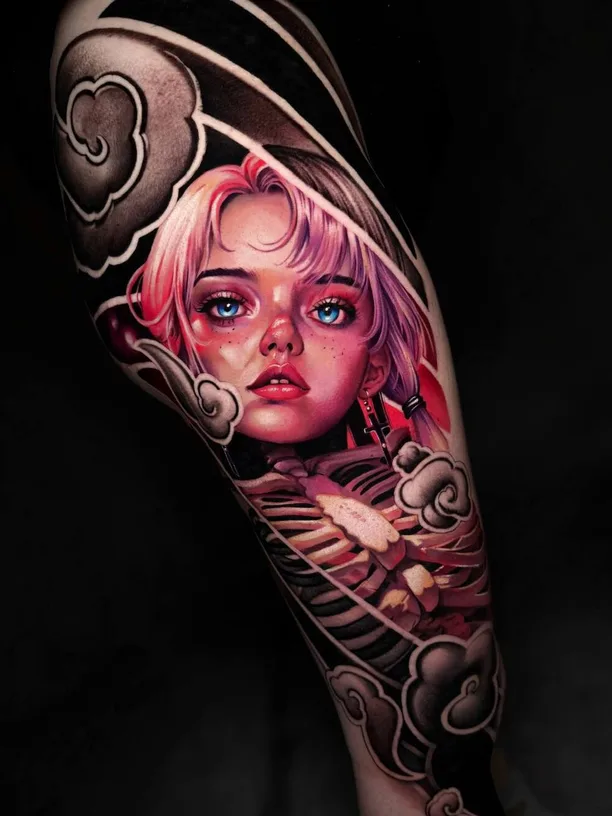
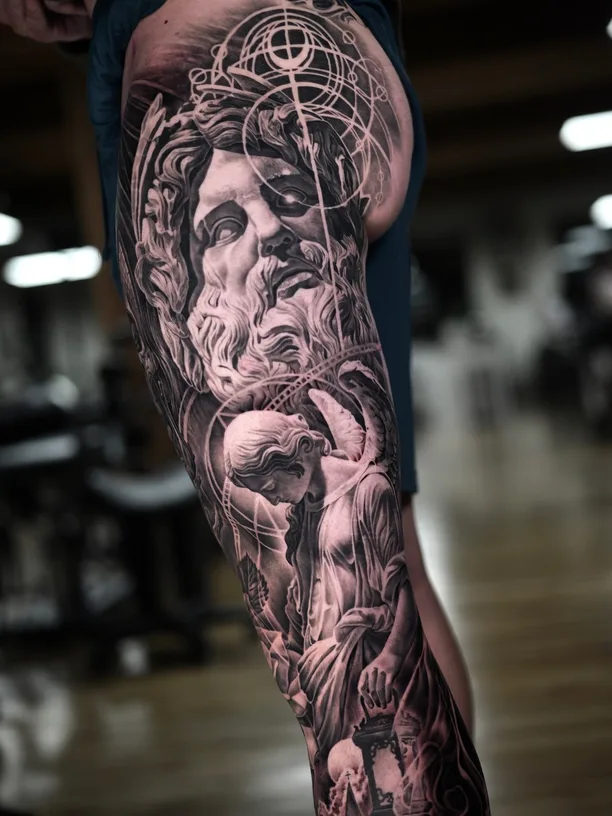
— Today, I would describe my style as black and grey realism with a strong focus on cover-ups. I work a lot with depth, contrast, texture, shadows, and natural flow in the composition.
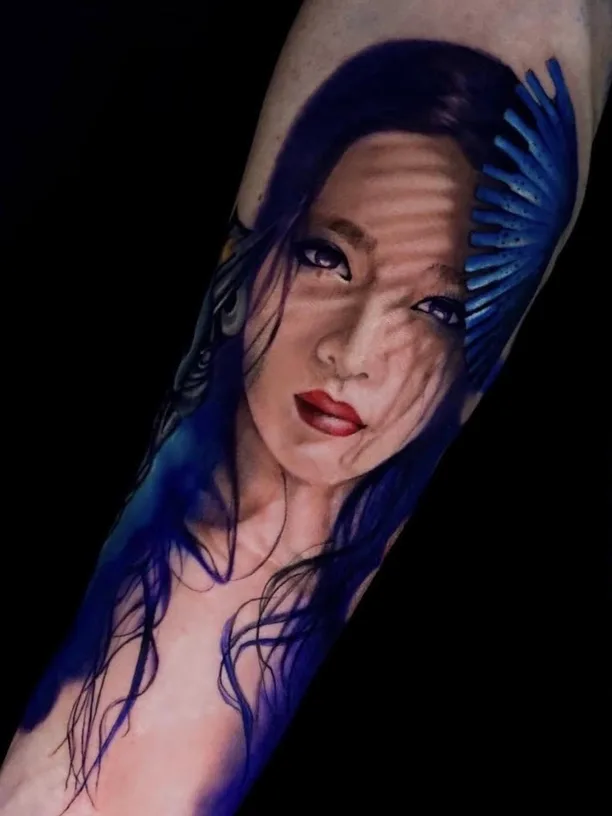
Most of my work is built in black and grey, but in some projects I like to add subtle touches of color. I use color very strategically, usually to guide attention to a specific part of the piece or create a softer highlight within the composition.
For me, the most important part is customization. I don’t want to create a tattoo that is only beautiful in isolation. I want the piece to work with the client’s anatomy, respect the movement of the body, and completely transform the old tattoo into something solid, harmonious, and natural.


— You often work with portraits, sculptures, and animals. Why did these subjects become central in your portfolio?
— These subjects allow me to explore the richness of black and grey realism, especially within cover-up projects.
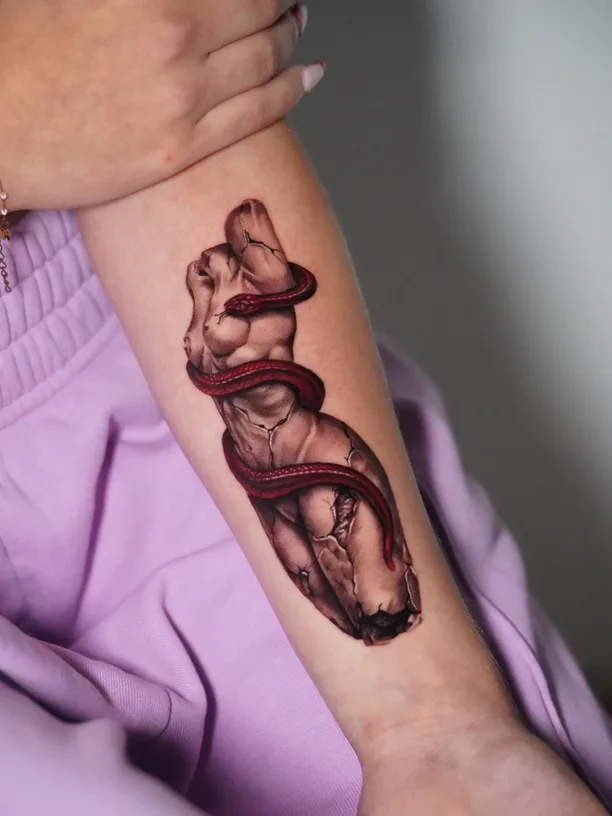
Portraits give me the opportunity to work with subtle details such as skin, eyes, hair, and expression. Sculptures are very powerful because they are built through light, shadow, volume, and structure, which are elements that have always attracted me artistically.
Animals also became an important part of my work because they bring texture, movement, depth, and detail into a composition. From a technical point of view, all these subjects work very well for cover-ups because they allow me to build strong, information-rich designs that can transform an old tattoo while keeping the final result realistic and balanced.


— How do you usually start working with a client who wants to cover an old tattoo?
— The first step is always conversation. Clients who come to me for a cover-up are often carrying some kind of discomfort with the tattoo they have. Many of them want to leave behind a certain phase of life and turn that mark into something more aligned with who they are today.
So I try to understand their story, their references, what bothers them about the old tattoo, and what they want to feel when they look at the new piece. From there, I begin to build a design that can work both emotionally and technically.
My goal is to create something that covers the old tattoo properly, but also gives the client a new connection with their own image.


— Do clients usually come to you with a clear idea, or do you help them find the right direction?
— It depends on each client. Some people already come with a very clear idea, and then we start developing the composition from that concept. In those cases, my role is to make the idea work artistically, anatomically, and technically as a cover-up.
Other clients don’t know exactly what they want the new tattoo to represent. Then the process becomes much more about conversation and exchanging ideas. I try to understand their story, their preferences, and the kind of image that makes sense for them.
Often, the person already has the answer inside, but they don’t know how to express it visually yet. My work is to combine their wishes with my technical and artistic knowledge and turn that into a strong cover-up project.


— What is the most challenging part of creating a good cover-up tattoo?
— The biggest challenge is creating a fully custom project for each person. Every client has a different story, taste, culture, and relationship with the old tattoo. I need to absorb as much of that information as possible and turn it into a design that makes sense for them.
After that comes the technical challenge. Some cover-ups are more straightforward, while others are extremely complex. I need to understand the existing tattoo, the darkness of the pigment, the placement, the skin, and the best way to build a new composition over it.
My goal is never just to hide the old tattoo. I want to create a new piece with detail, texture, contrast, and realism, so the final result feels natural — as if the skin had never been tattooed before.


— In your opinion, what makes a cover-up tattoo successful?
— A successful cover-up is one where the design respects the client’s anatomy, meets their expectations, and includes the references that are important to them. It requires attention at every stage of the process, from the first conversation to the final details in the tattoo.
Of course, the technical result is essential. The old tattoo should no longer be visible, and the new piece should have strong composition, contrast, and artistic quality.
But the emotional result matters too. A successful cover-up is when the client leaves the studio feeling renewed, confident, and proud to wear that tattoo.


— Can you tell us about a cover-up project that was especially memorable for you?
— One of the projects that marked my career the most was covering an entire blacked-out arm — what we call a blackout. The client had previously covered all his old tattoos by filling the whole arm with black ink. Later, he traveled from another state in Brazil to come to me with the idea of transforming that blackout into a new piece of art.
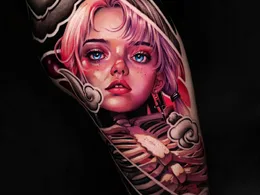
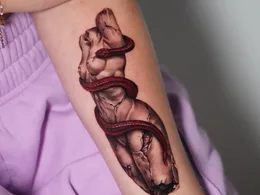
After talking with him and understanding his references, we developed a fully custom project inspired by the evolution of species and Darwin’s theory. It was an extremely challenging and creative piece, especially because we were working over a completely dark surface.
The final result gained a lot of attention on social media and went viral, reaching a combined total of more than 12 million views. That project brought significant recognition to my work and showed how powerful a tattoo can be when concept, technique, and connection with the client come together.
Seeing the client’s reaction was the most important part for me. It was a piece with strong originality and impact, and it became a very special moment in my career.


— Have you participated in tattoo conventions or competitions? What experiences were most important for you?
— Conventions have a very different energy. They bring back the true spirit of tattooing: artists working side by side, exchanging ideas, competing, learning, and sharing the same space with people who live this culture intensely.
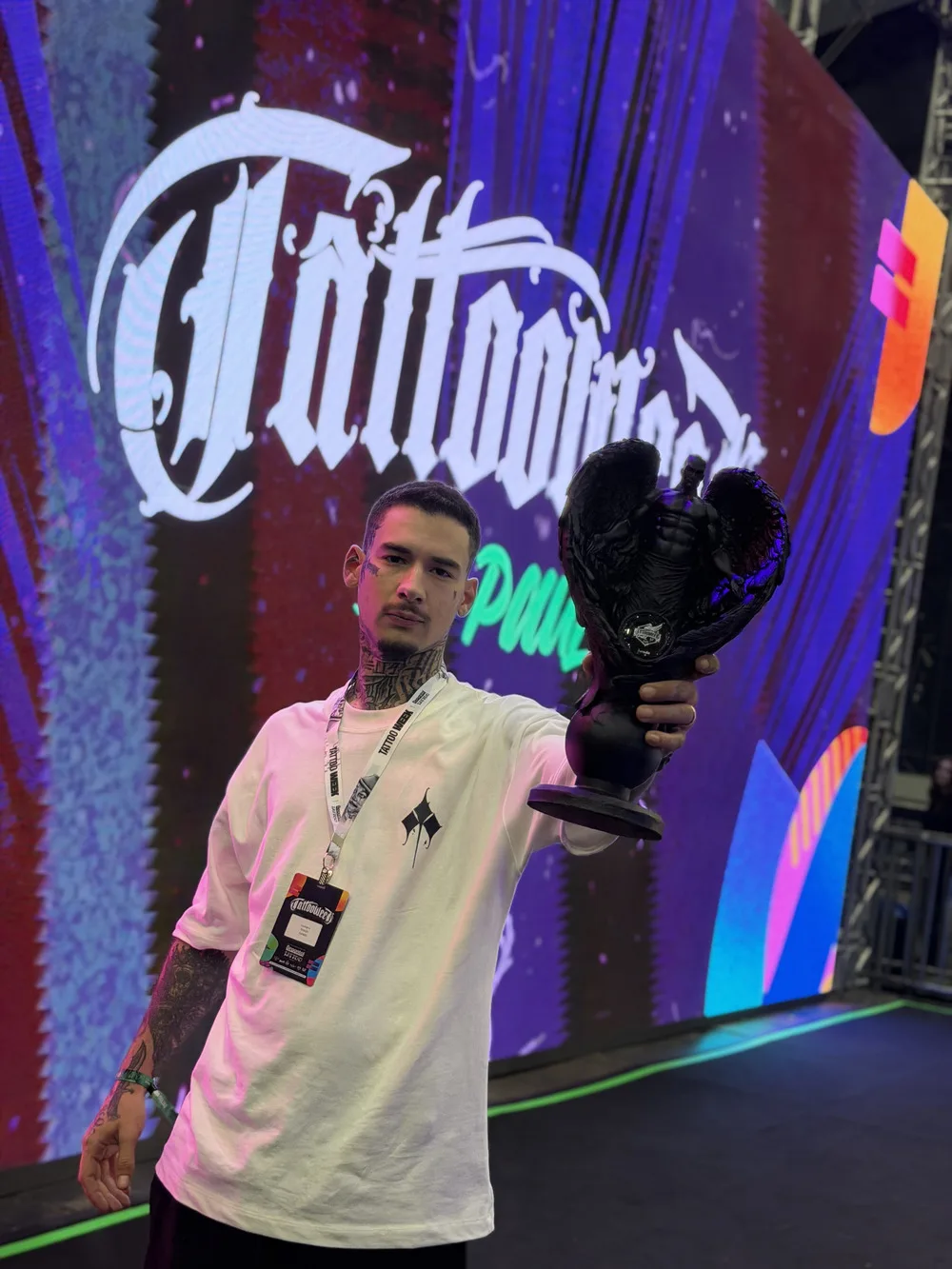
All the conventions I have attended have their own story, but winning my first Tattoo Stars award was especially meaningful. It was my first in-person convention at one of the biggest events in Brazil. My family and friends were there, which made the moment even stronger.
I won in the cover-up category, and that was an extremely rewarding experience. It confirmed that the path I was building with cover-ups had strength and recognition within the tattoo scene.


— You also worked as a judge at Tattoo Week Brazil. How was that experience for you?
— Being a judge at Tattoo Week Brazil, one of the biggest tattoo conventions in the world, was a very impactful experience.
It was important because of the scale of the event and the responsibility involved in evaluating other artists’ work. I have competed in several conventions myself, so I know how an artist feels when presenting a piece after hours, and sometimes days, of dedication.
Being on the other side gave me an even more conscious and respectful perspective. It was a moment of great responsibility, adrenaline, and learning, and it will certainly remain an important milestone in my career.
— In your opinion, what makes Brazilian tattoo culture special?
— Brazilian tattoo culture is special because of its mix of influences and the intensity of the scene here. Brazil has a very rich cultural foundation, with Indigenous, European, and urban references that appear in different forms of art, including tattooing.
The scene is also very competitive. Artists are constantly studying, testing techniques, improving their work, and reinventing themselves. That pushes the overall level of tattooing in the country higher and creates a strong standard of quality.
Another important point is the emotional value tattooing has in Brazil. For many people, tattoos are closely connected to identity, personal history, and transformation. That gives many projects a deeper layer.
Today, with the power of social media, Brazilian artists can reach audiences all over the world. This creativity, combined with technique and cultural diversity, is what makes Brazilian tattooing so strong and respected internationally.
— What are your plans for the future — conventions, guest spots, or new projects?
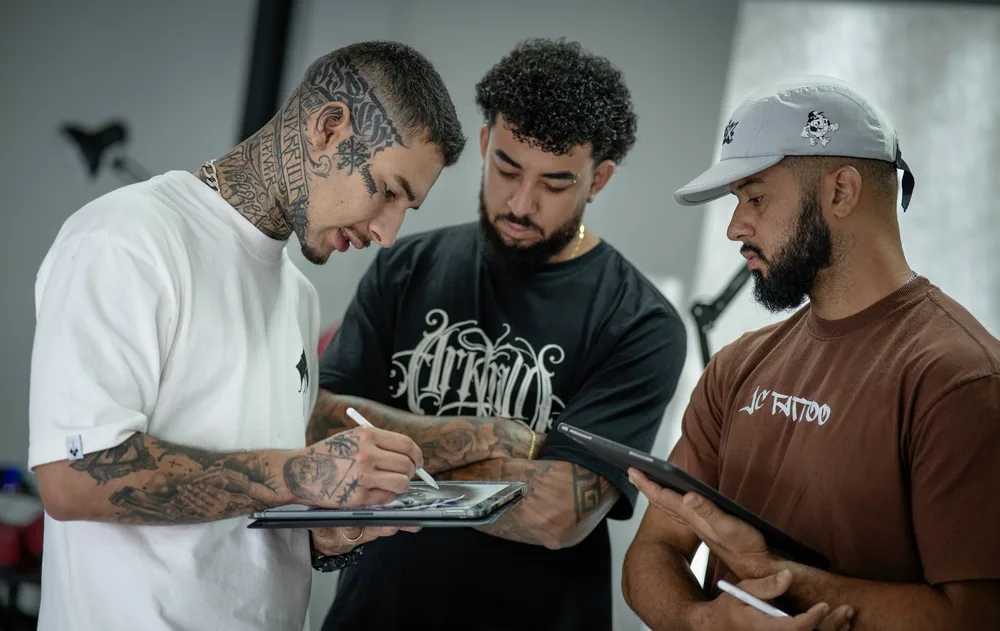
— My goal is to keep expanding my art to different parts of the world. I want to bring my cover-up techniques and my artistic approach to new audiences and different tattoo scenes internationally.
I have always been interested in experiencing other cultures, exchanging knowledge with artists from different countries, and participating in conventions around the world. The United States and other countries with strong tattoo and art scenes are especially interesting to me.
I believe this kind of cultural and artistic exchange is very important for the evolution of my work and my perspective as an artist.
To all the magazine readers, I would like to sincerely thank you for your interest and time. I also invite you to follow my work on social media at @gus.tattoo, where I share more about cover-ups and transformation through tattooing.