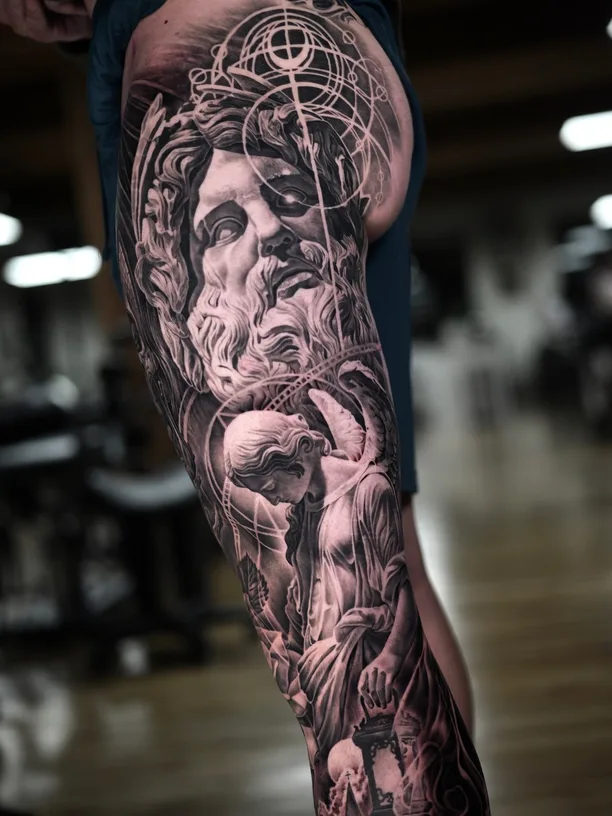
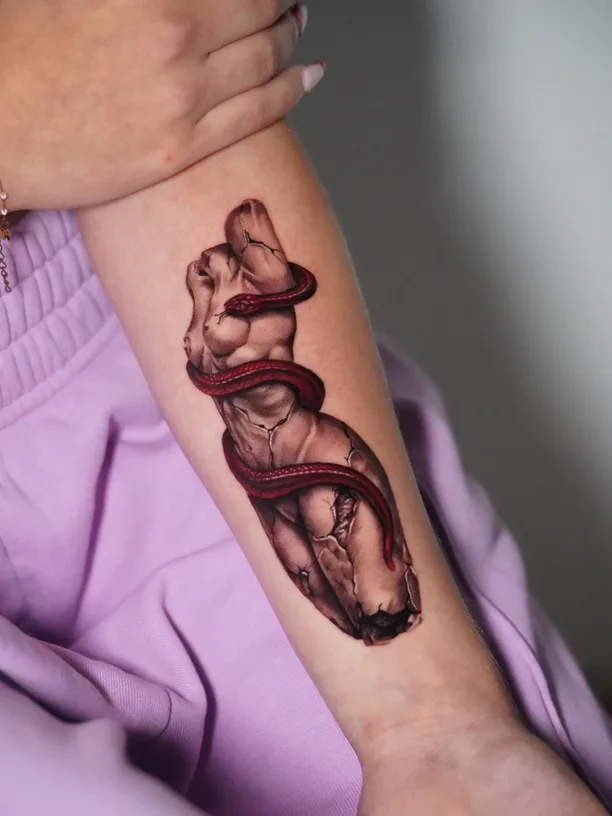
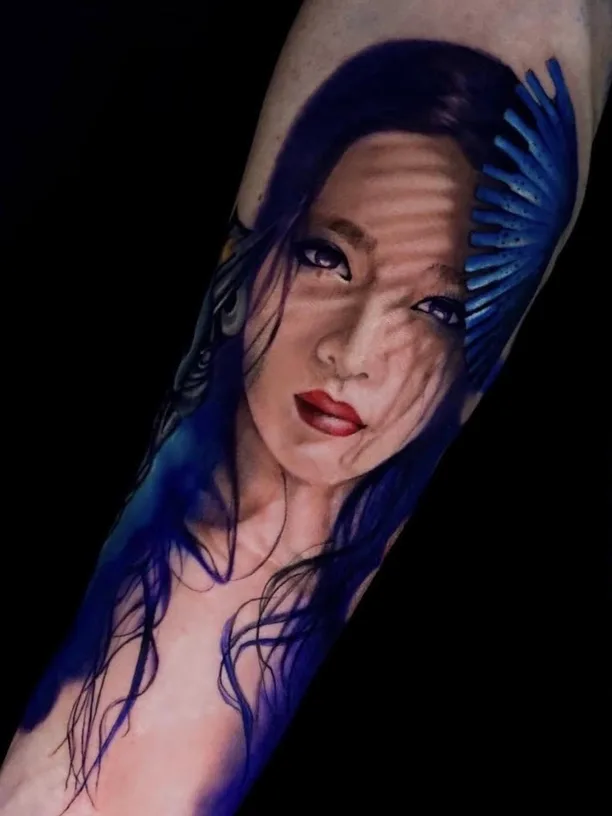
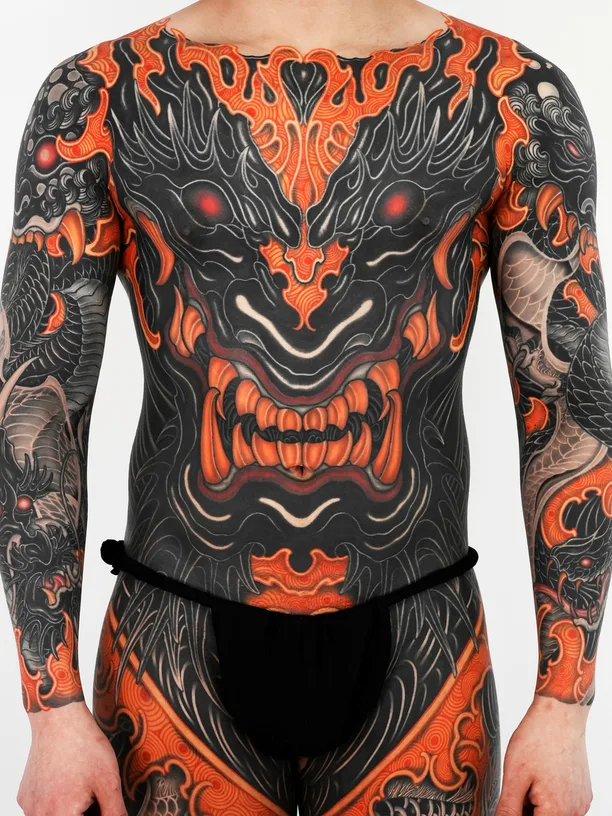
Anastasia Stef Tattoo is a tattoo artist from Moscow whose name is increasingly heard in professional circles. Her delicate graphic works have already earned her awards at tattoo conventions, including Best of Day in the "Graphic" and "Ornamental" categories.
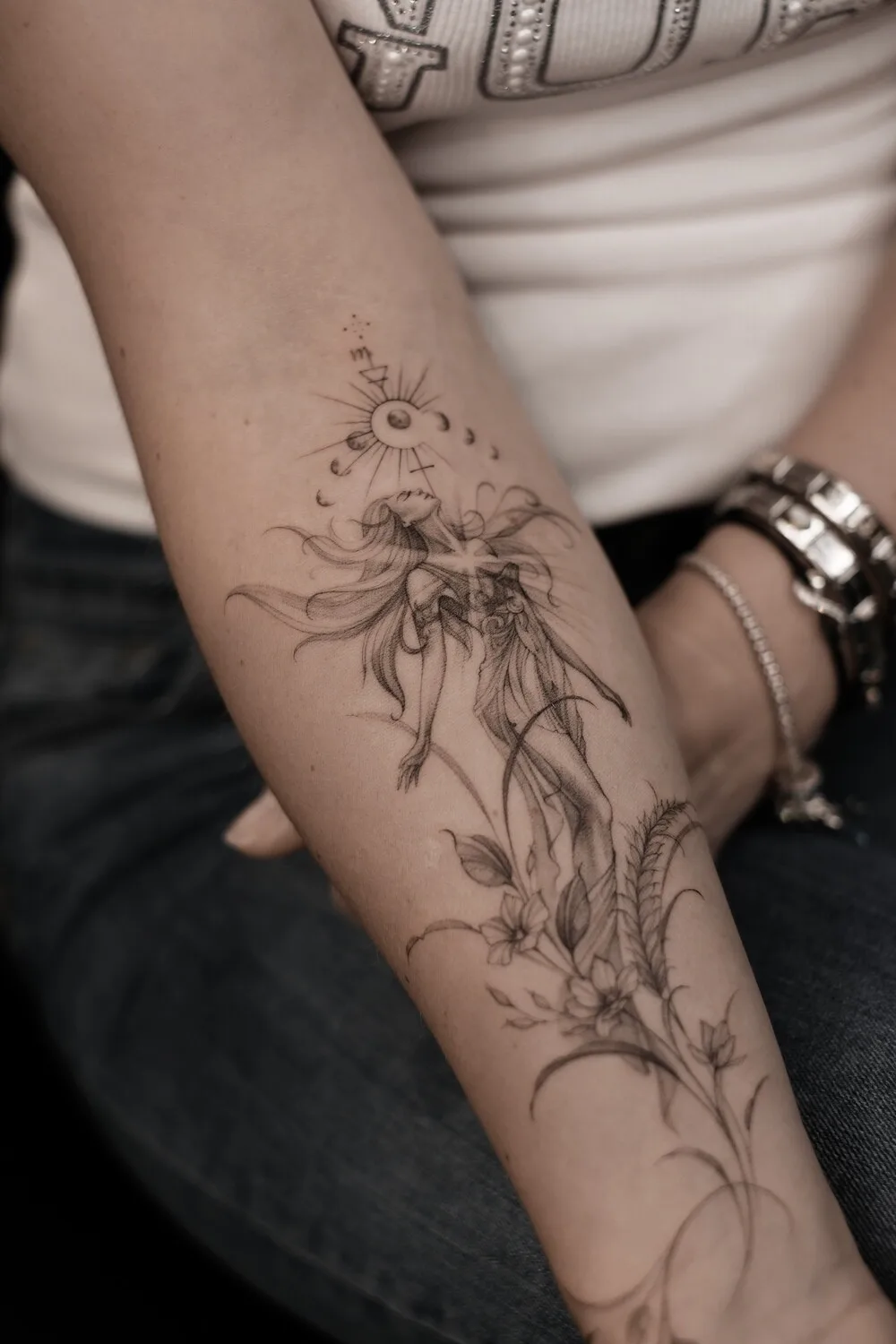
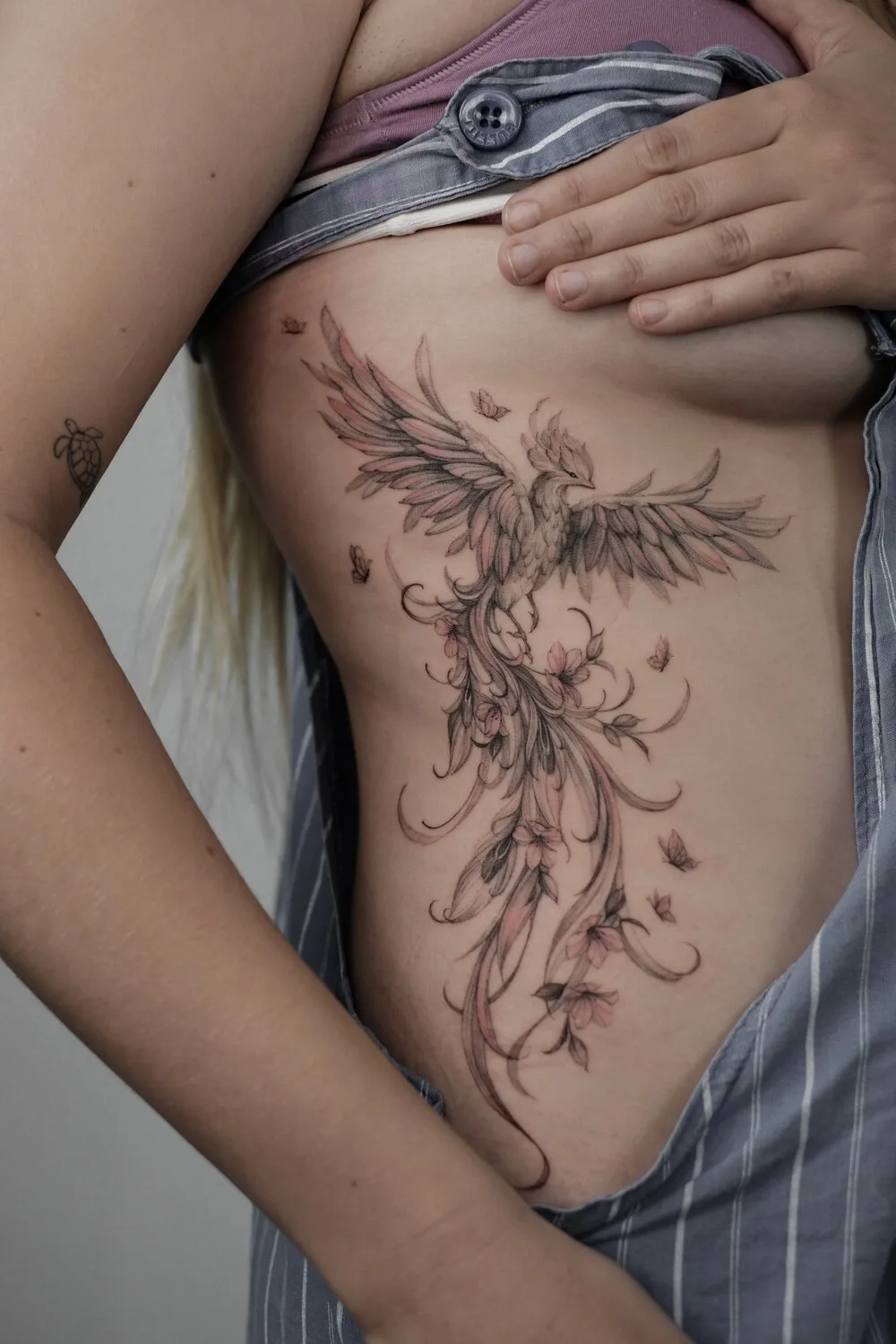
Her style is built on fine lines, soft halftones, fluid compositions, and intricate detailing. In Anastasia's works, female figures, flora, ornaments, sacred geometry, and personal symbols combine into light, anatomical designs, where not only aesthetics and technique are important, but also a connection to the body, the client's story, and their inner state.
In this interview, Anastasia talks about her journey from fashion to tattooing, the "Goddesses" project, working with symbols, her international audience, and the new stage that conventions have opened up for her.
Anastasia, tell us a little about yourself. Where are you from and where are you based now?
— My name is Anastasia, but I usually introduce myself as Nastya. For international clients, it's Stef, which is derived from my surname. I'm from Moscow and I've been tattooing for eight years now. During this time, tattooing has become much more than just a profession for me.
For the past four years, I've been traveling a lot and collaborating with European and Asian tattoo spaces. I really enjoy the feeling of freedom and constant movement, the opportunity to meet "my" people thousands of kilometers from home, and to connect with the world through tattooing.
Perhaps what inspires me most is that each of my works stays with a person for years and becomes part of their story.
How and when did you get into tattooing?
— I'm almost embarrassed to admit it, but I never dreamed of becoming a tattoo artist when I was a child. Later, I often met people who knew they wanted to be tattoo artists by the age of 10, but my path was completely different.
The desire to change something appeared when I was working in an Adidas office on a 5/2 schedule. I quickly realized that this format was too restrictive for me: I'm a creative person, and it's difficult for me to constantly operate only within given frameworks.
In 2019, I came across a forum where tattoo artists discussed a free life, travel, creativity, community, and the opportunity to earn well. That's when I decided to give it a try.
I took a month-long course at a well-known tattoo studio at the time and started working almost immediately. Looking back at that period now, I can't say it was difficult for me. Everything seemed to go smoothly and in the right direction, although I also experienced working in a dark basement studio with stern masters.
Later, I pursued advanced training, and then I joined a strong team where rapid professional growth began. Three years later, I started doing guest spots across Russia and made my first trip to Europe.
Tell us about your art education. How does it help you in your work?
— I have a degree in fashion design and construction, and I think it greatly influenced how I see tattooing now.
In any composition, I perceive the body as a form with anatomical lines and proportions that must be worked with very carefully. It's important for me to create an aesthetic composition that is organically integrated into the body, can "flow" with the anatomy, emphasize movement, and gently work with the features of the figure.
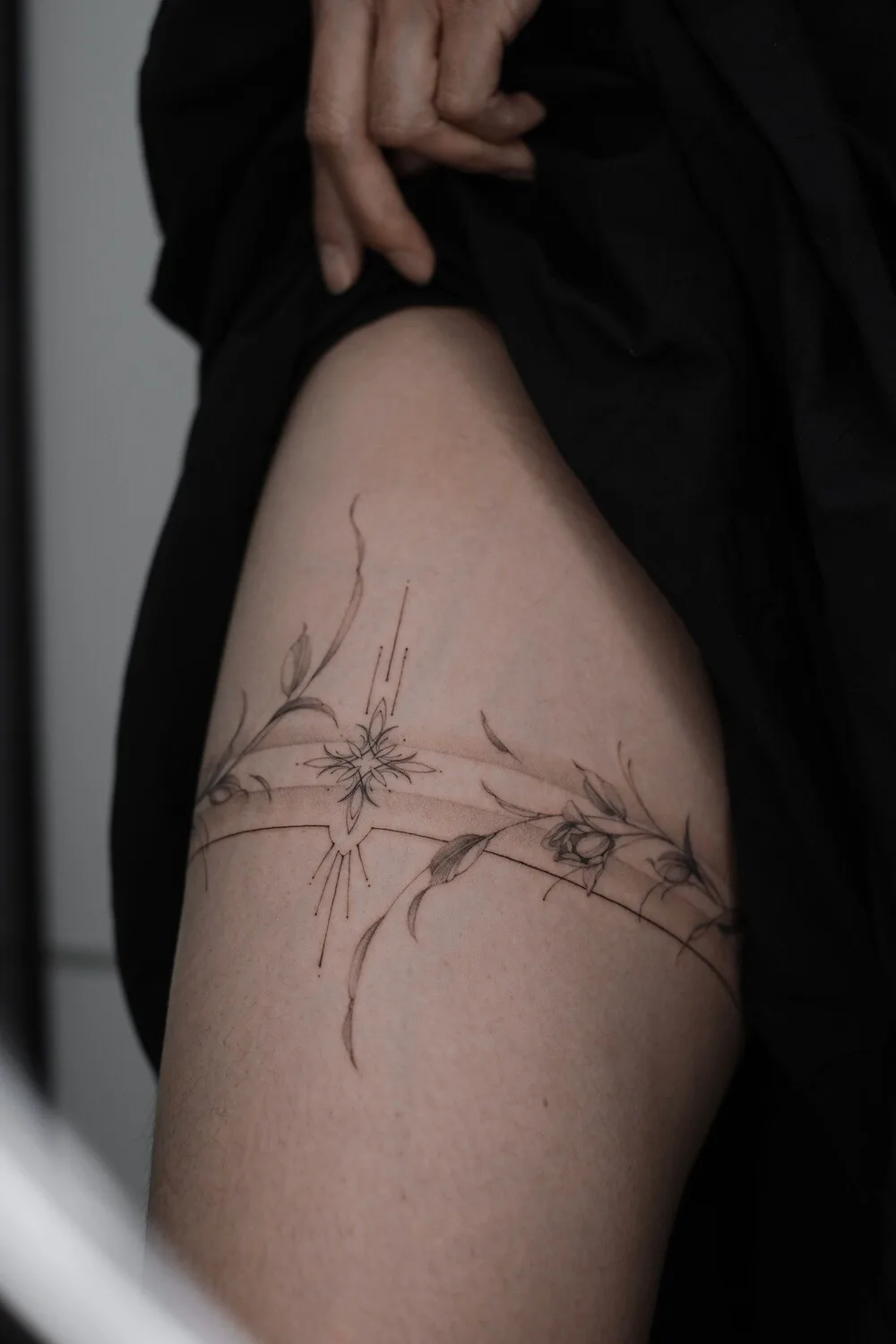
Therefore, my projects feature many flowing lines: florals, shadows, light ornaments. I also pay special attention to creating a sense of lightness within the composition so that the tattoo doesn't look heavy and retains its femininity.
Why did you choose fineline tattoos? Can you tell us more about your style?
— Initially, I wanted to create something I could see on myself. I really love subtlety, lightness, details, the feeling of something almost alive on the body. I like it when an aesthetic, delicate tattoo harmoniously sits on the body and complements the person without overpowering them.
Currently, my style can be described as fineline graphics. I can hardly categorize myself as solely fineline anymore. My projects combine the complex compositions, halftones, and volume found in graphics, with the delicate decorative elements characteristic of fineline.
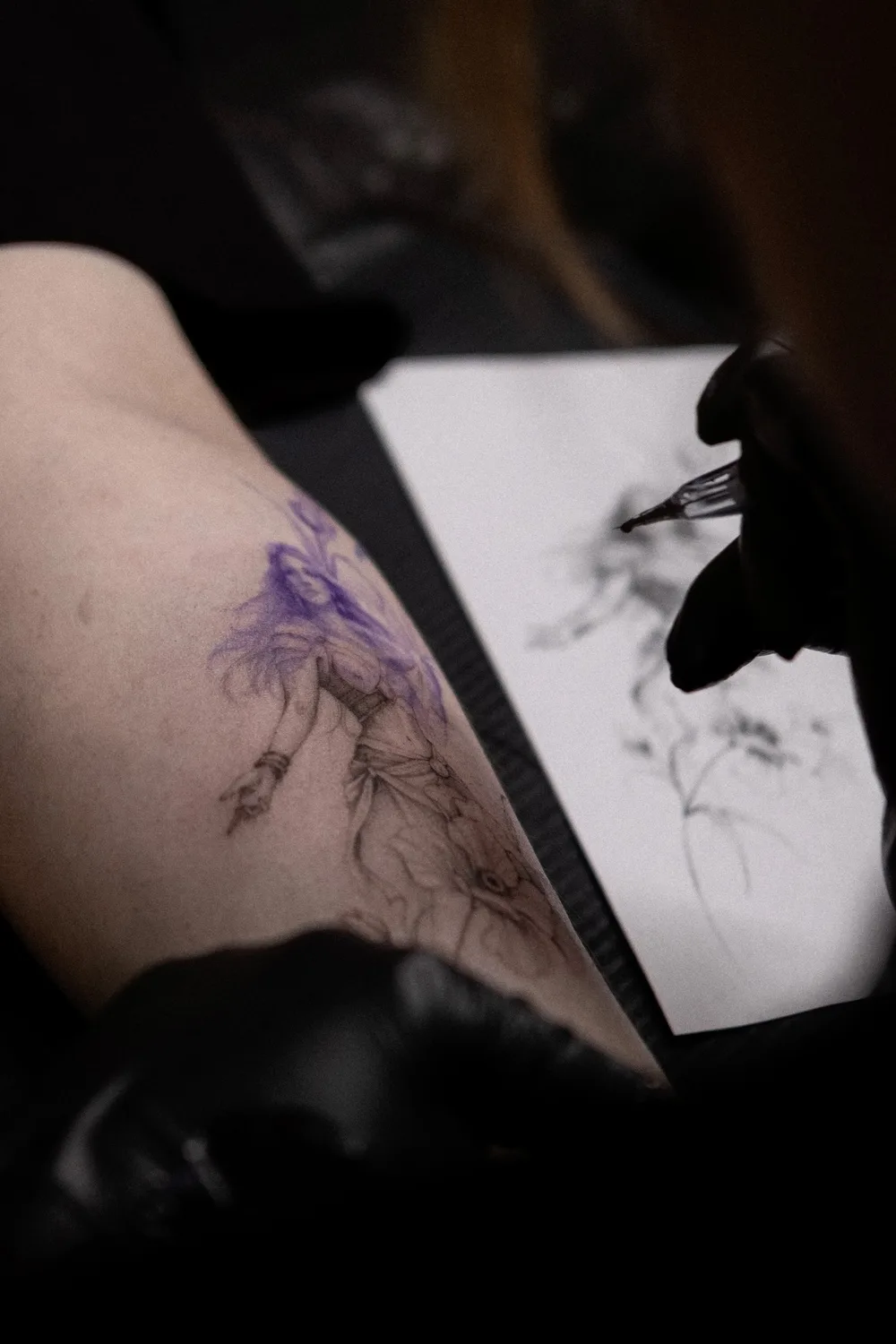
In my work, I love using a 1RL needle: it allows for the smallest details in the design and soft shadows without a coarse texture.
Tell us about your favorite characters and themes that you use in your practice.
— My favorite characters are my clients.
That's partly a joke, but they truly inspire me with their stories and life journeys. Before I start designing, I often ask the person to tell me about themselves, their state, experiences, and inner desires.
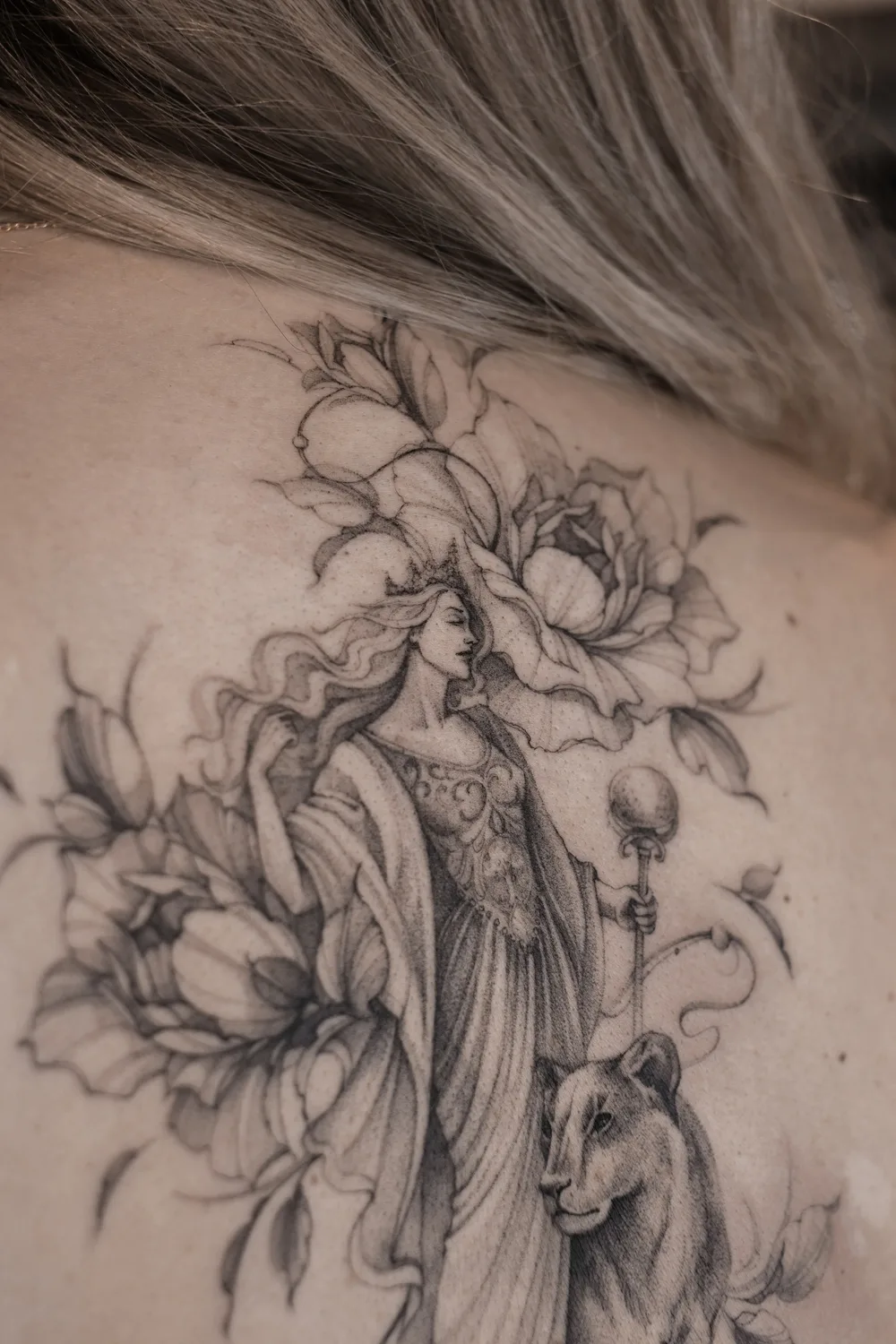
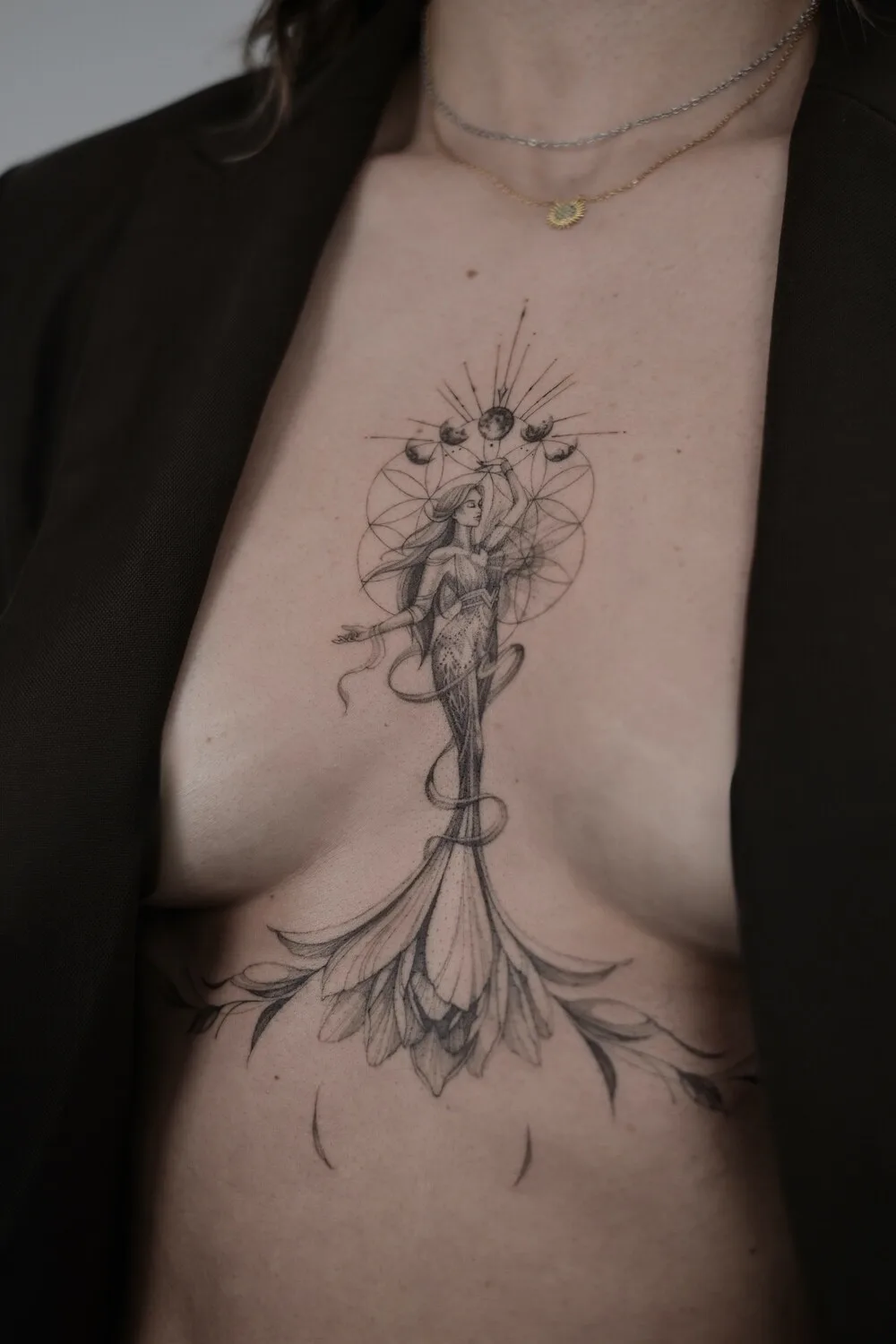
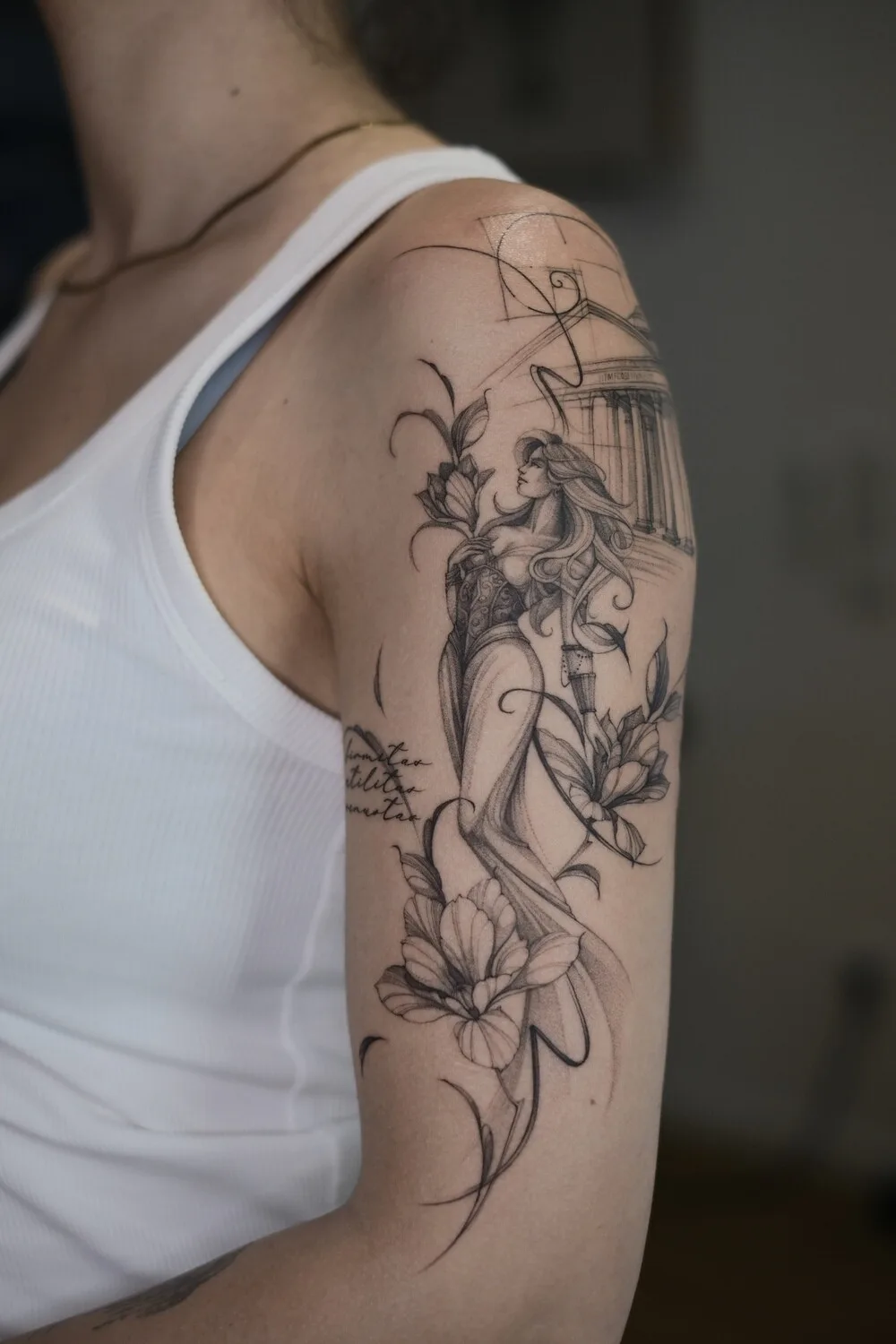
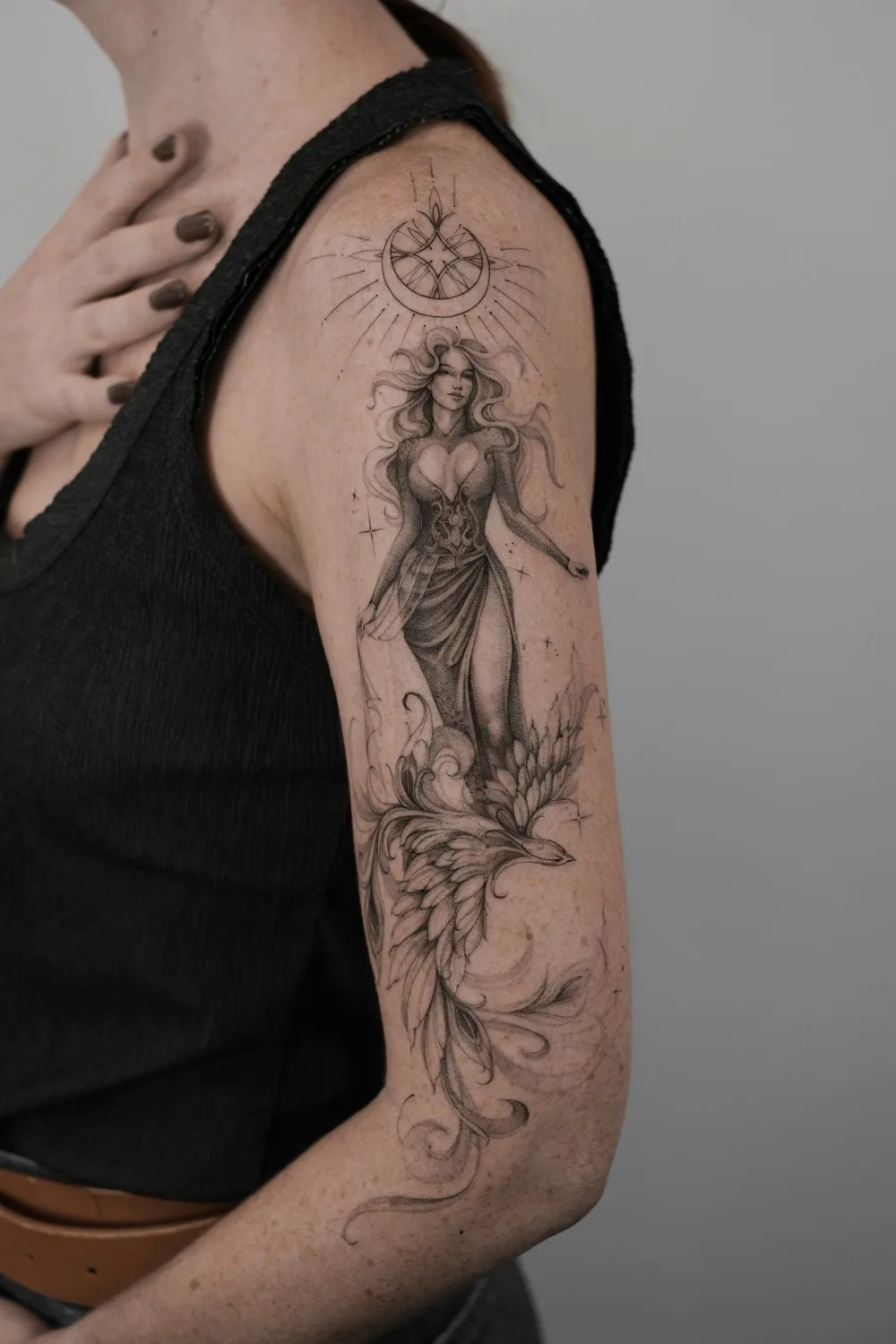
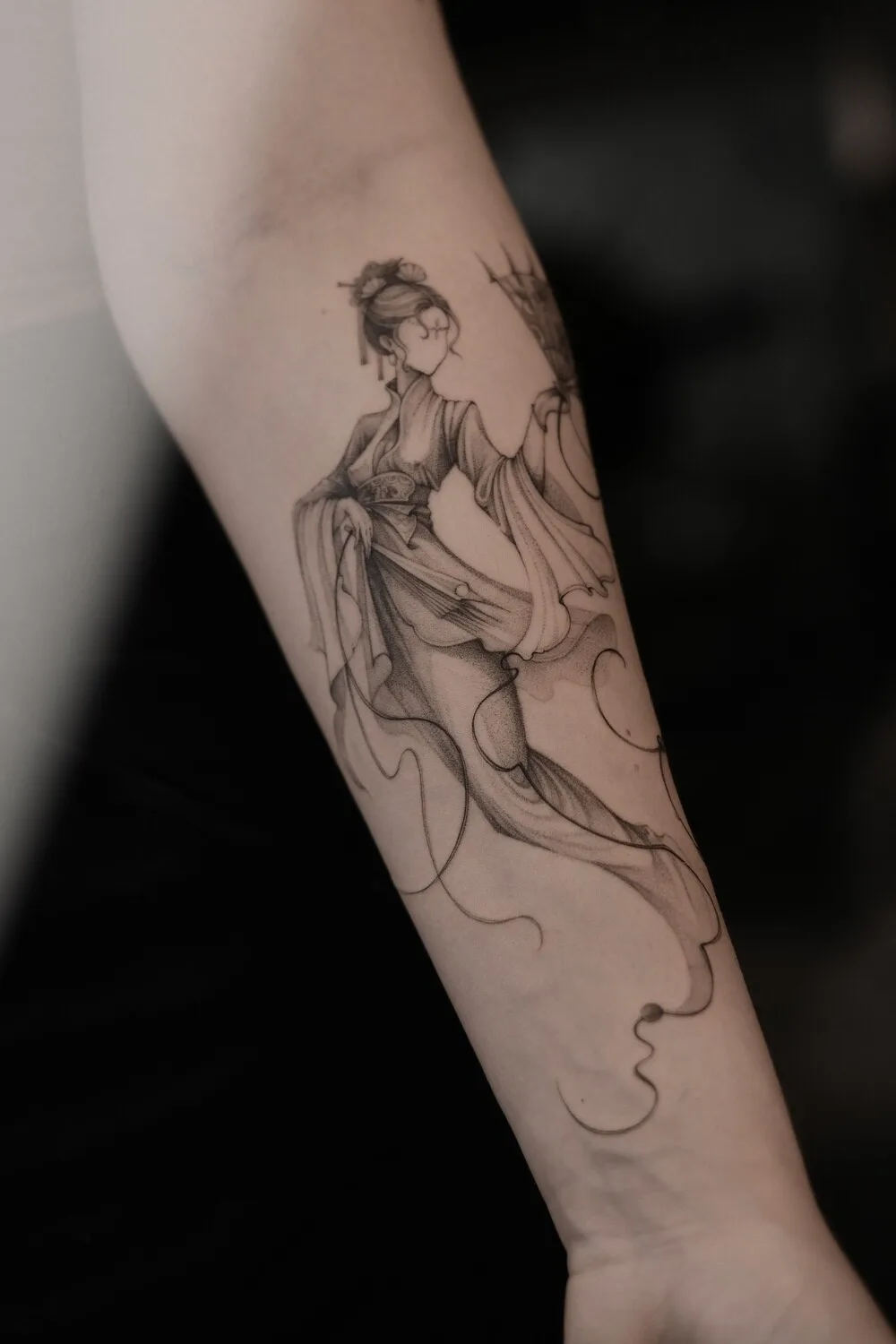
Most often, I turn to female images: goddesses, archetypes, mythological characters from different cultures. Through them, themes of personal growth, inner strength, soft femininity, transformation, and vulnerability are revealed.
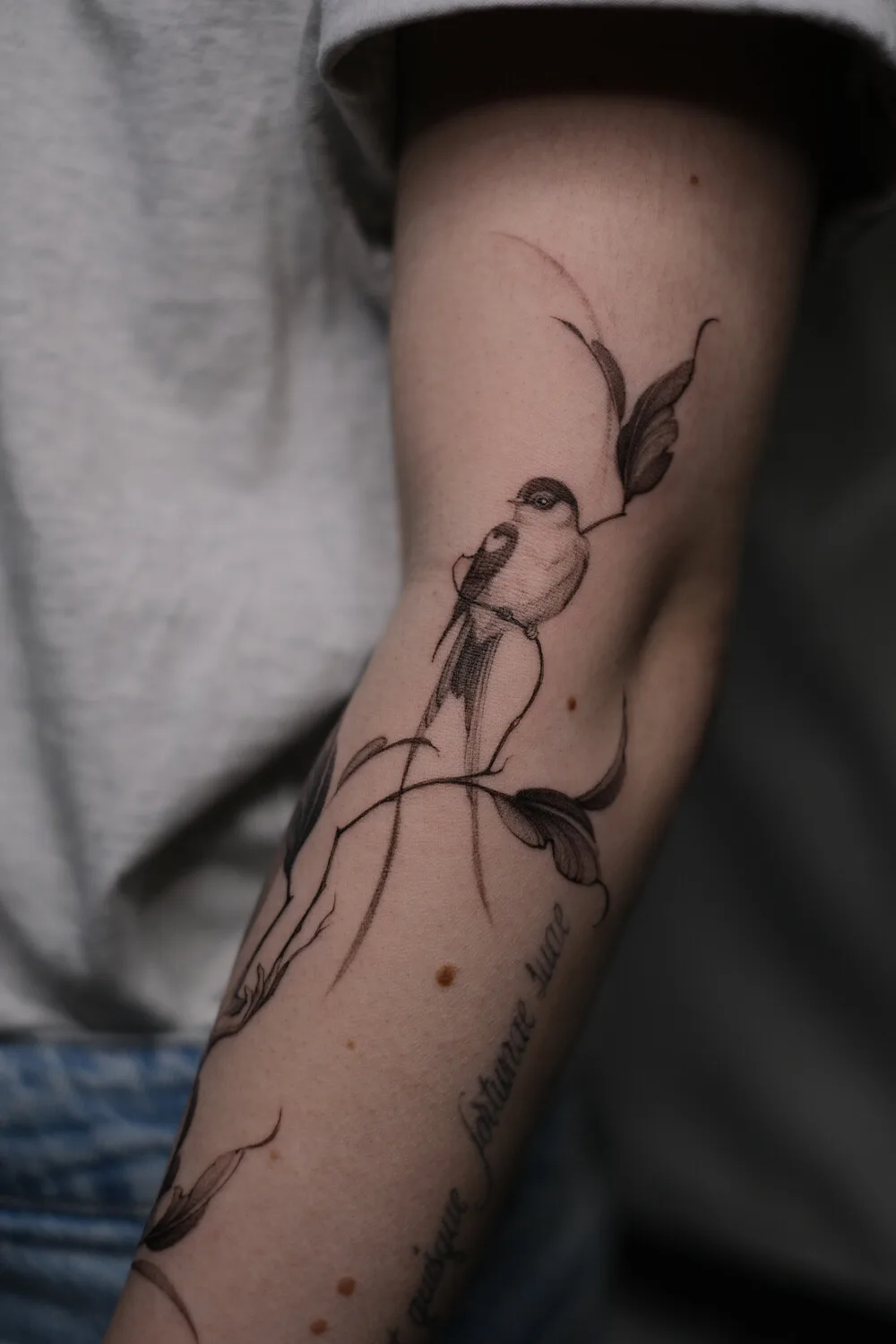
In my projects, I combine female images, florals, sometimes animals or architecture, abstract lines, delicate ornaments, and geometry. I like to include inscriptions and sacred geometry — through such elements, personal symbolism can be embedded, creating a sense of a protective charm.
What visual sources influence how you draw now?
— Many things inspire me: fashion, painting, photography, travel, and my professional environment.
You know that feeling when after an art gallery, you immediately want to sit down with a canvas? That happens to me almost every time. I am especially inspired by 19th-century academic painting: its mythological presentation, dramatic lighting, and smooth skin without visible brushstrokes.
I often notice jewelry forms, volumes in costumes, and shadows on sculptures. I think all of this shapes my style, which often exists at the intersection of tattooing, illustration, and jewelry details.
Do clients more often choose ready-made sketches or custom works?
— Almost all of my projects are custom now.
I really enjoy the process of getting to know a person and delving into their story. Clients come to me for a specific feeling and aesthetic, often wanting to capture an important stage of life or to feel re-energized. Therefore, the process becomes very personal and delicate.
Usually, we discuss the idea a lot: I listen carefully, share my vision, and people trust me. This is very valuable for an artist.
At the same time, I also create ready-made sketches for my creative processes — when I want to express an idea through design, try something new, or when I feel that a certain image might resonate with my audience.
Do you have any special or favorite projects that are personally meaningful to you?
— All projects that have emotional depth or involve transformation resonate with me. Often, only my client and I know the inner story behind a particular tattoo.
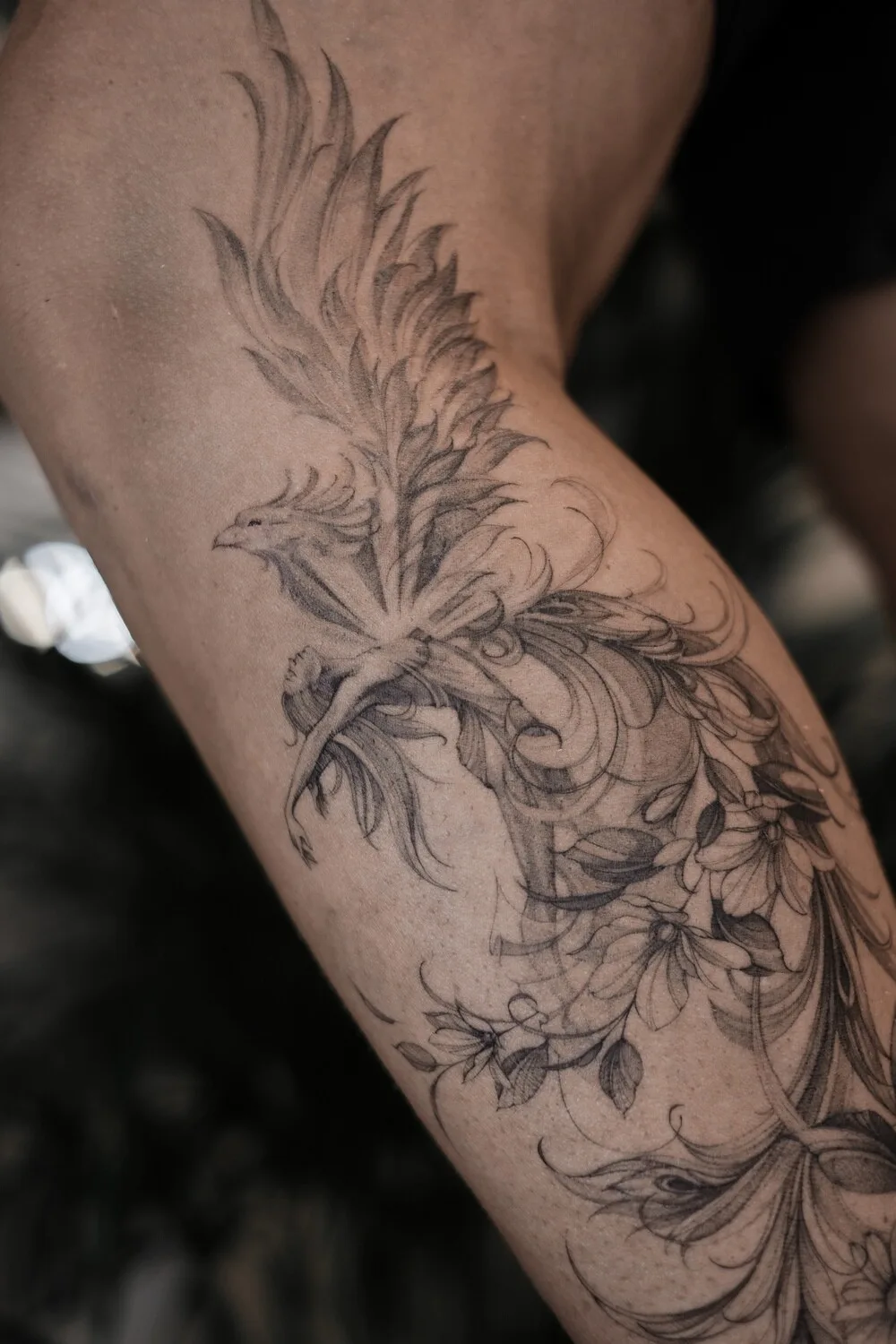
I really love large projects because they allow for long movements across the body and full-scale artistic thinking.
More specifically, the last two designs for which I received awards at conventions hold a special place for me. They marked the beginning of a new stage in my tattooing journey and accurately reflect the style in which I now want to move and develop.
Another project that immediately comes to mind is my first Goddess Hecate. It was the first completed project featuring a female image that I did after a creative crisis.
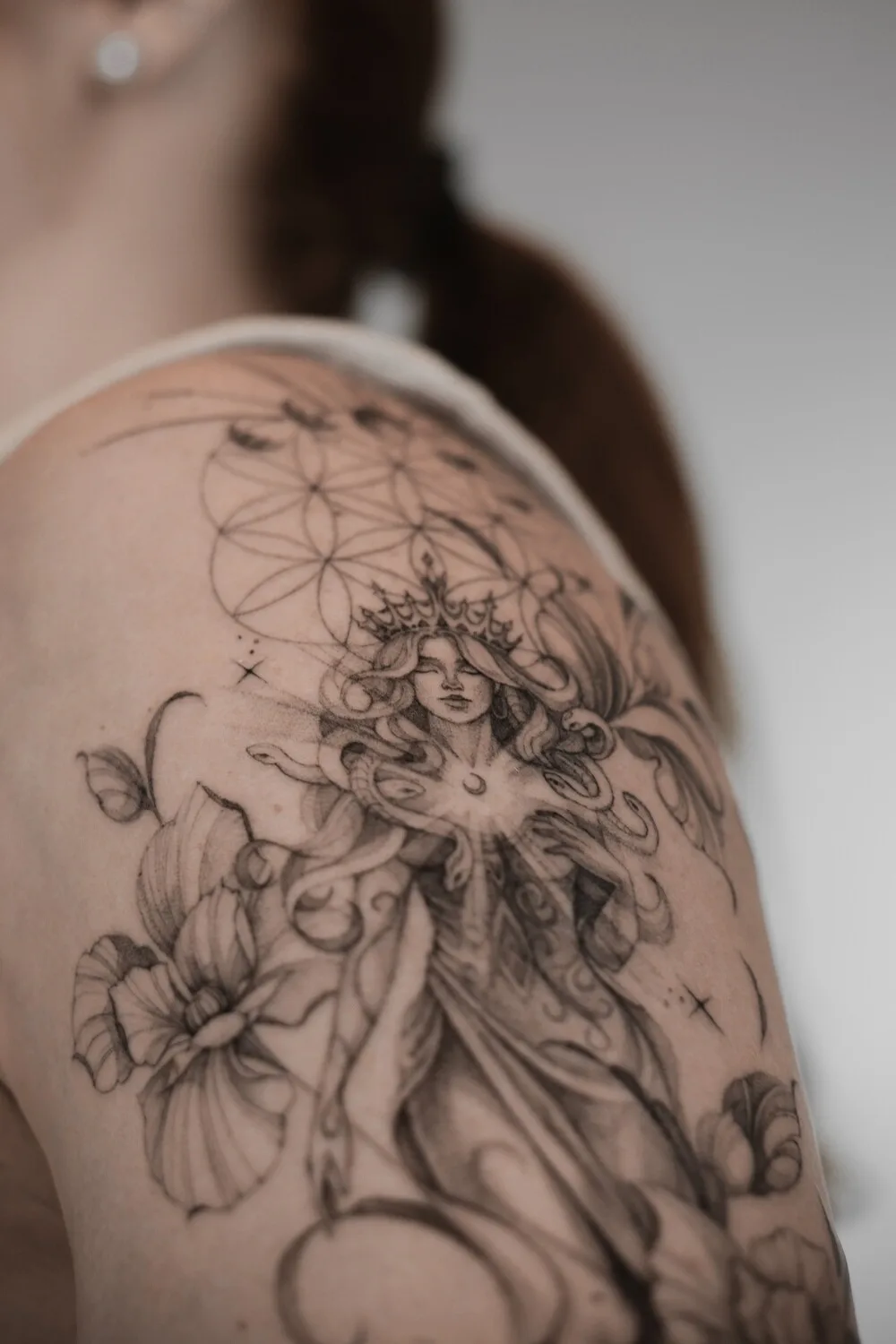
Please tell us more about your "Goddesses" project.
— It was my fifth year in tattooing and my first year as an expat. During that period, I was hit by a creative crisis. I was tired of only doing fineline and felt that I was no longer realizing my potential.
While in Bali, I was particularly close to the culture of another people, to traditions and religion. That's when the idea of creating designs with Greek goddesses first emerged, and I saw a very positive response from my audience.
Over time, this project grew into something more significant. It stopped being just about specific characters. A different foundation emerged: it explored different states of a woman — softness, strength, transformation, sexuality, darkness, intuition. Everyone finds something of themselves in it.
I like to think of it as a mission. Women recognize themselves through these tattoos and their requests. It's important for me to show femininity as alive, complex, and multifaceted.
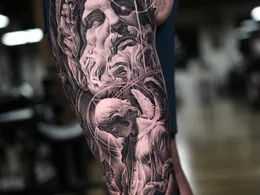
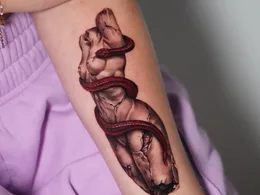
I think it was through this project that my style began to form in a more recognizable way.
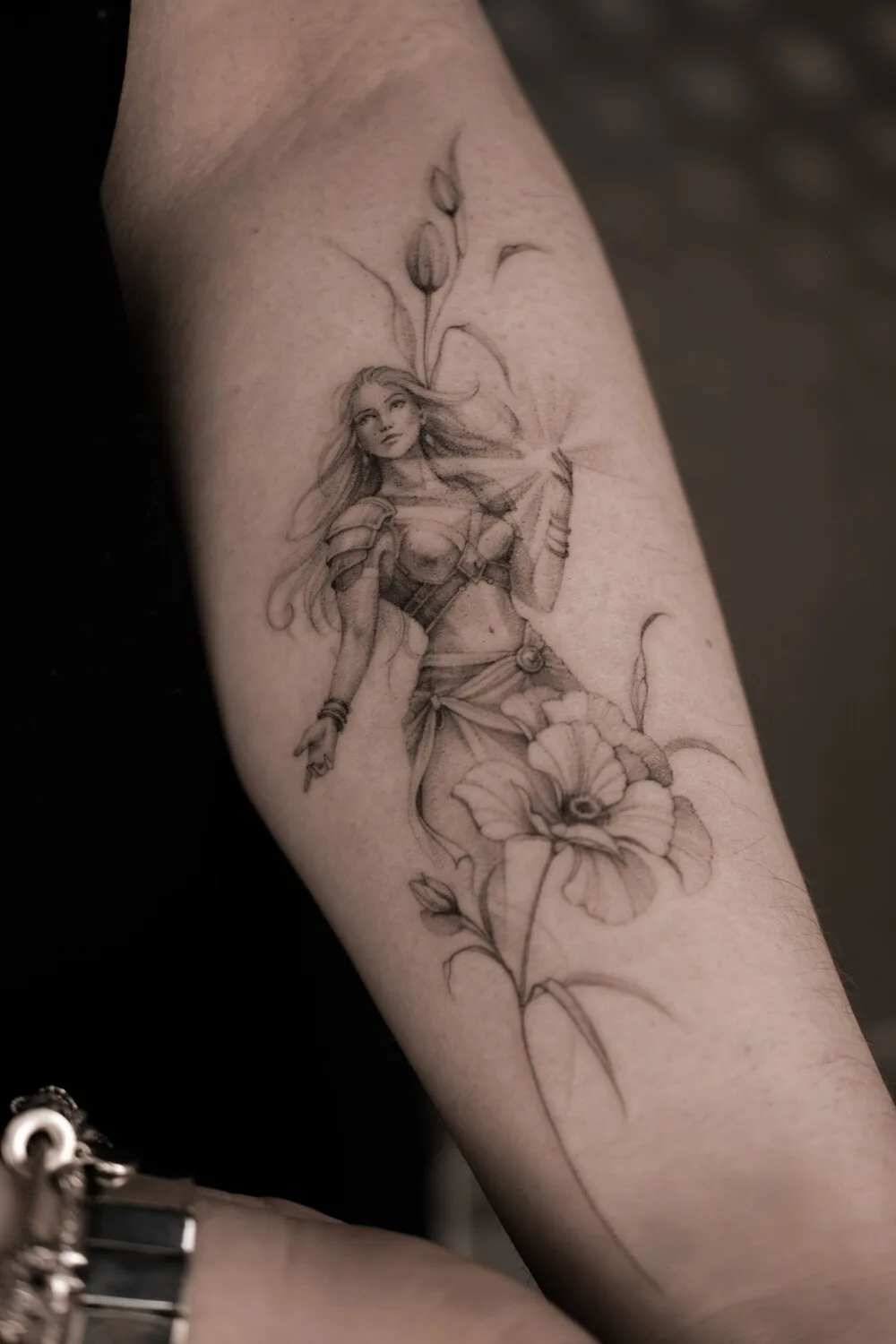
Do you work with scar cover-ups?
— I do work with scar cover-ups, but very selectively, because the density of my compositions and the delicacy of execution are not suitable for every case.
Once, a girl came to me who hadn't been able to walk for several years after an accident. She wanted to cover part of a scar on her back after surgery, and the scar itself allowed for such work. We created a project that fully reflected her journey: a female image where a beautiful flower bud unfolded instead of legs. The appearance of the heroine in the design closely resembled my client.
After the session, she burst into tears of gratitude. For me, it was a very valuable and emotionally delicate moment.
I believe that such projects help a person look at the pain they experienced differently, reconnect with their body, and accept it through a new image.
Do you have experience working in studios and interacting with other tattoo artists?
— I really like how international and vibrant the tattoo industry is. In recent years, I've met a large number of talented artists and creative spaces in different countries. It's always very inspiring.
During my travels, I often participated in artist events, creative meetings, educational events, and author's master classes organized by European studios and artists. Thanks to this, I began to view composition, presentation, and the very approach to tattooing as an art form differently.
When you interact a lot with artists from different countries, you start to notice how differently people perceive aesthetics, the body, and visual language. Some spaces, like Duo Verba in Amsterdam, Sashatattooing in Paris, or Pardon Paris in Munich, have become very dear to me in terms of atmosphere and people.
I grew up admiring the works of foreign fine line and graphic tattoo artists, so now I particularly enjoy meeting artists who once inspired me, observing their techniques, and exchanging experiences.
In which country is your main audience located?
— In the last few years, my audience has indeed become very international.
It all started with Paris, Amsterdam, and Milan, and then the geography gradually expanded to include Istanbul, Bali, London, Munich, Bangkok, Cape Town, and the USA.
This is largely due to creative trips, participation in international events, networking within the industry, and social media, through which people from different countries began to see my projects.
I really like the feeling that art erases borders. Sometimes a person might accidentally see my project on Instagram, and a while later we're already discussing a future design or meeting at an international event in another part of the world.
We met you at the Moscow Tattoo Convention, tell us about your overall experience participating in such competitions.
— I used to have a rather stereotypical idea of tattoo conventions. It seemed to me that it was a space more suited for large old-school or massive color projects, and my delicate graphic works didn't really belong there.
Therefore, I only decided to participate in an online convention for the first time, where there was a separate fine line category. Honestly, if it weren't for that, I might not have applied. In the end, I took first place and received very strong, warm feedback from the judges. This gave me the confidence to try again at the next online convention.
In graphics, I was afraid to participate for a long time because of imposter syndrome. It seemed to me that my delicate, airy projects were not "loud" enough against the backdrop of large-scale works.
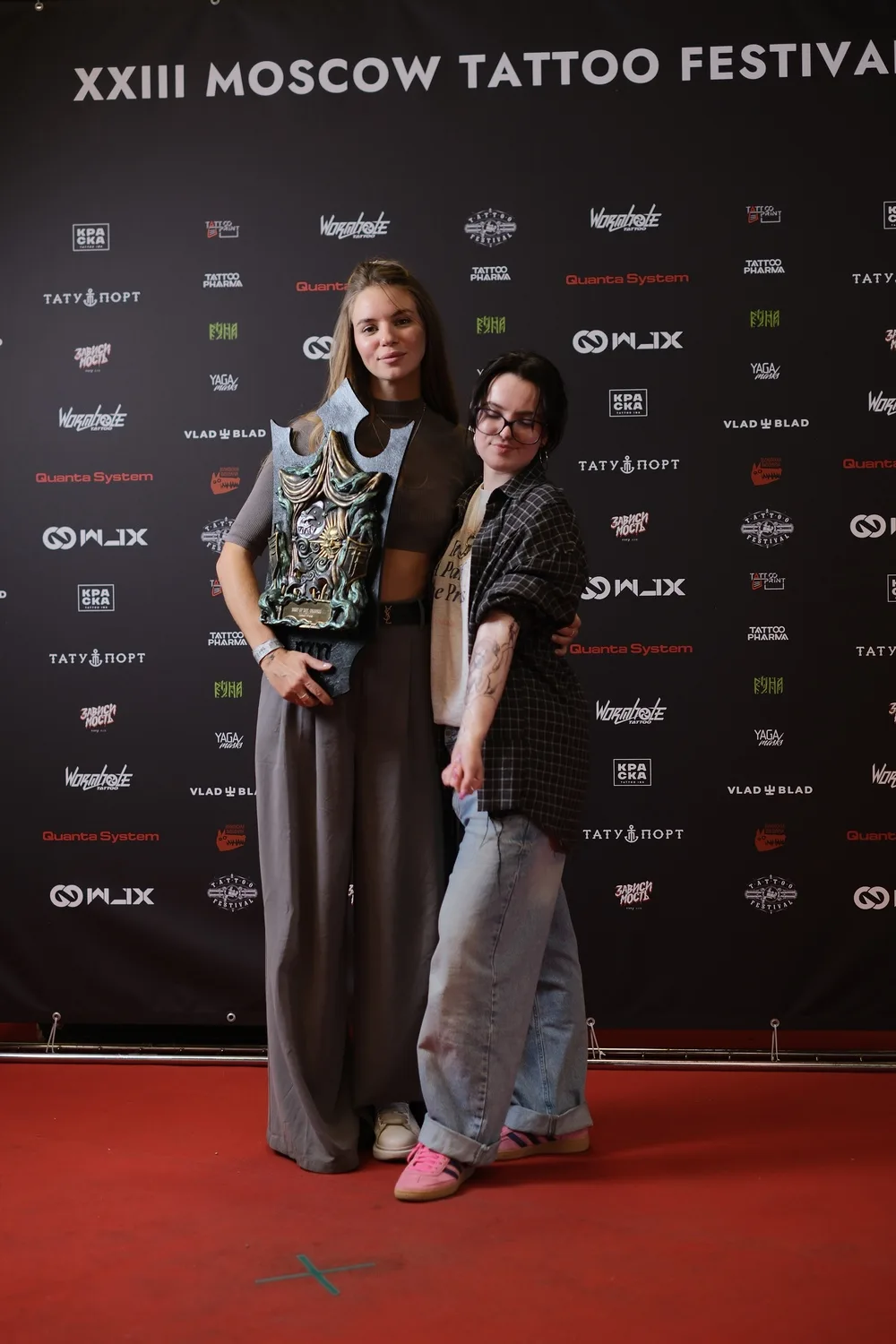
But this spring, I felt ready for offline conventions for the first time. I wanted to prove to myself, first and foremost, that fine lines, intricate details, complex halftones, unusual compositions, and delicate aesthetics can be just as impactful and intricate as large color projects. Their value is simply revealed differently.
So I won Best of Day in the "Graphics" category at the Moscow Tattoo Convention, and then Best of Day in both the "Graphics" and "Ornamental" categories at the Krasnoyarsk Convention, also placing among the top three finalists for the Grand Prix.
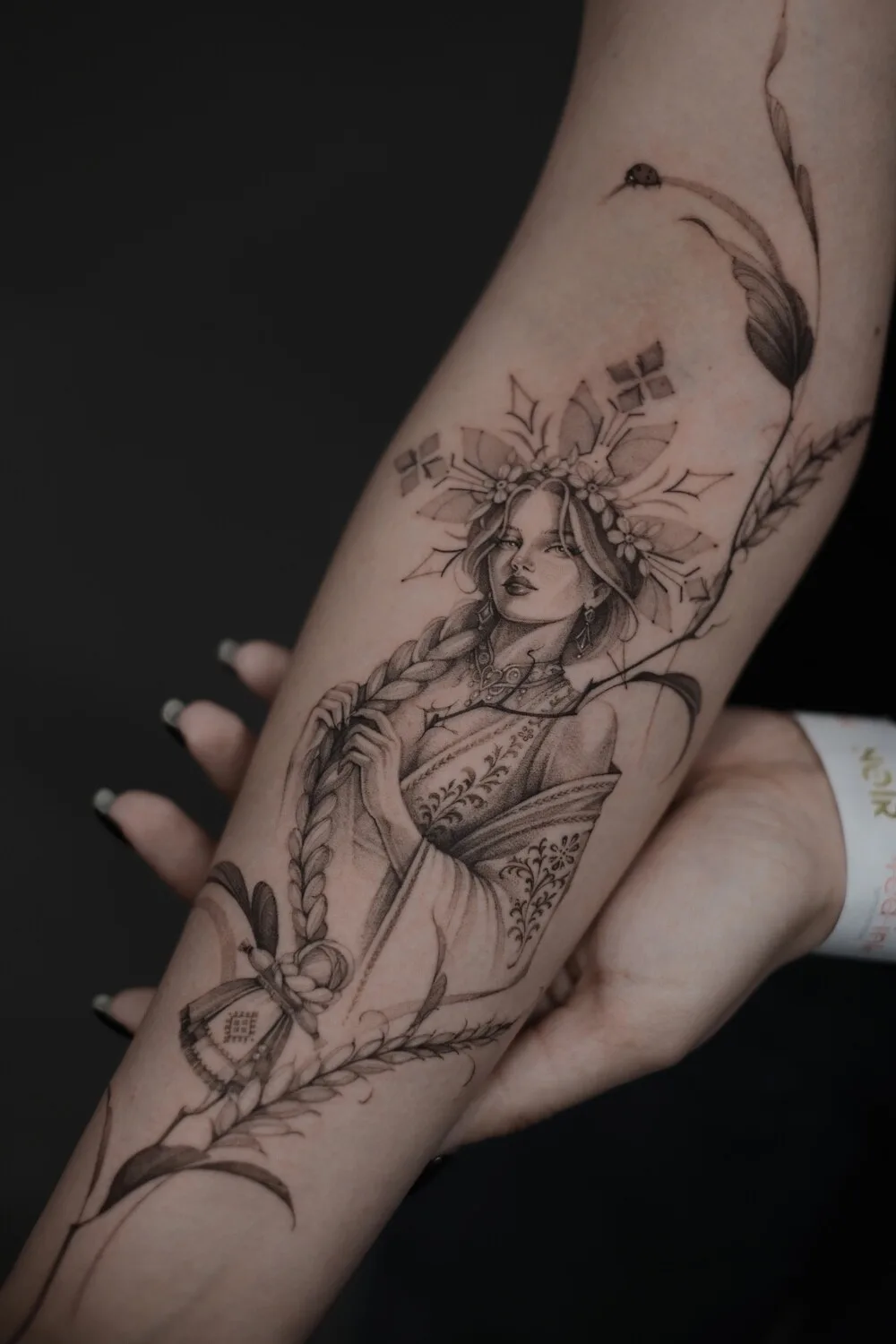
Thanks to conventions, I started allowing myself more complex and artistic projects. For me, it became a space for experimentation, growth, and stepping outside the familiar. It was there that I particularly felt my progress over the past year.
What are your plans for the future — in creativity, travel, and conventions?
— Now I want to delve even deeper into my style and create more large-scale, complex, and recognizable projects.
Lately, I've been feeling a particularly strong inner connection with Paris and the European creative scene. It seems that it was there that I first felt my aesthetic, approach, and visual language resonated most strongly. In the future, I would like to move to France and develop within that environment.
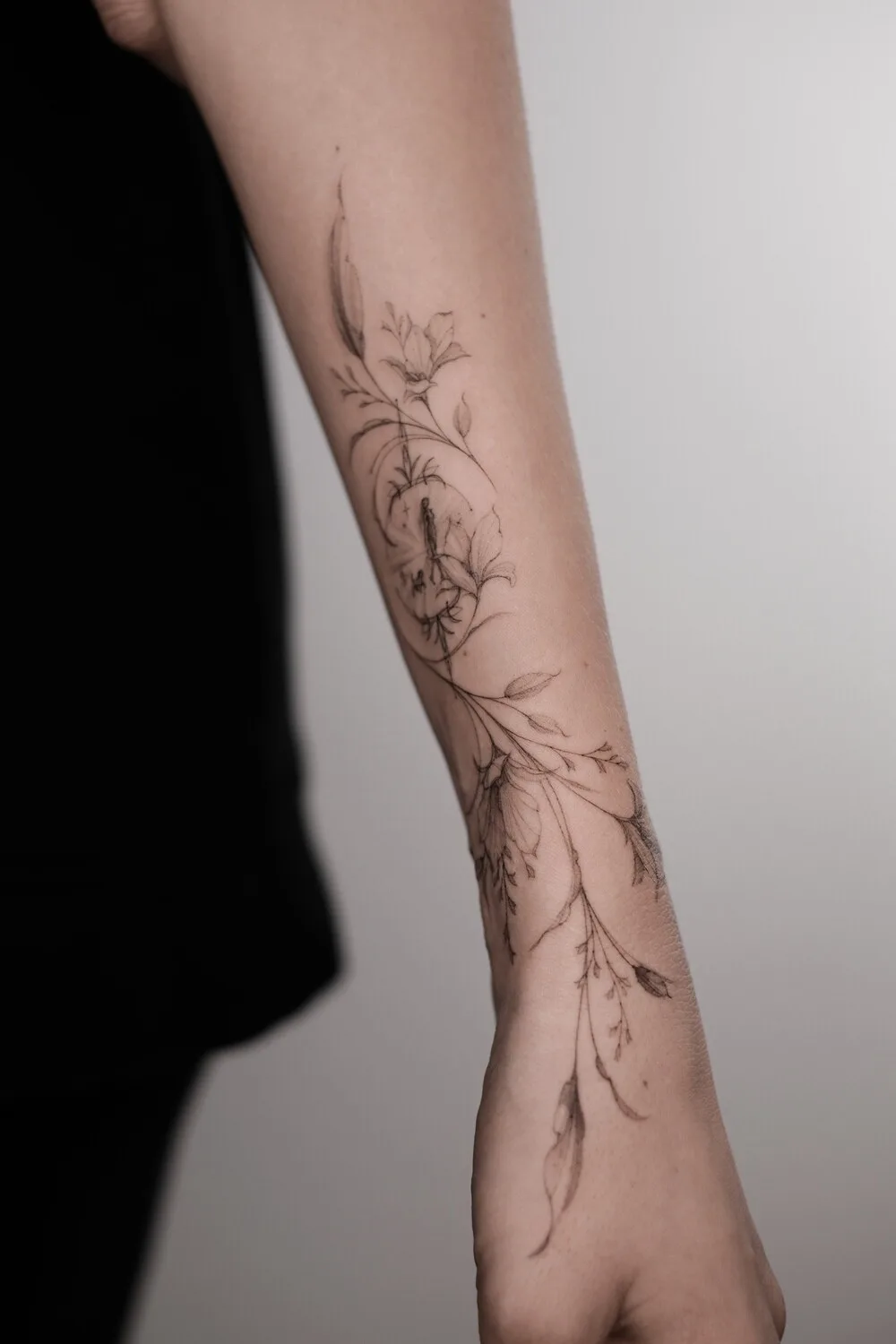
I am interested in developing tattooing as a craft and gradually building a full-fledged personal brand around my art: creating art projects, offering education, developing merchandise, and perhaps something at the intersection of tattooing, fashion, and visual art.
I also want to continue participating in major European conventions, collaborating with artists who were once my idols, and reaching a more complex artistic level.
And, of course, I want to continue seeing the world. Travel greatly shapes me as an artist — through people, architecture, atmosphere, new visual impressions, and internal states. Perhaps now I am only just beginning to truly understand what I want my art to look like in the future.