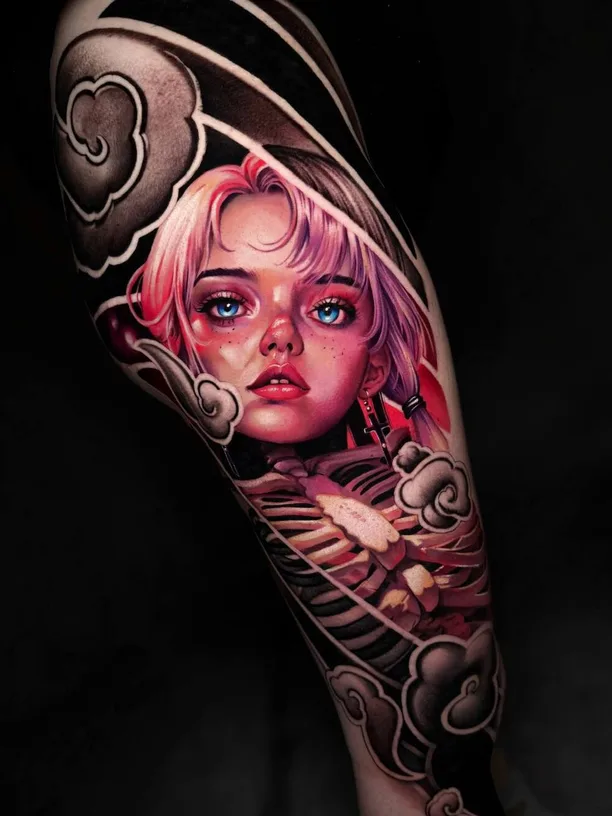
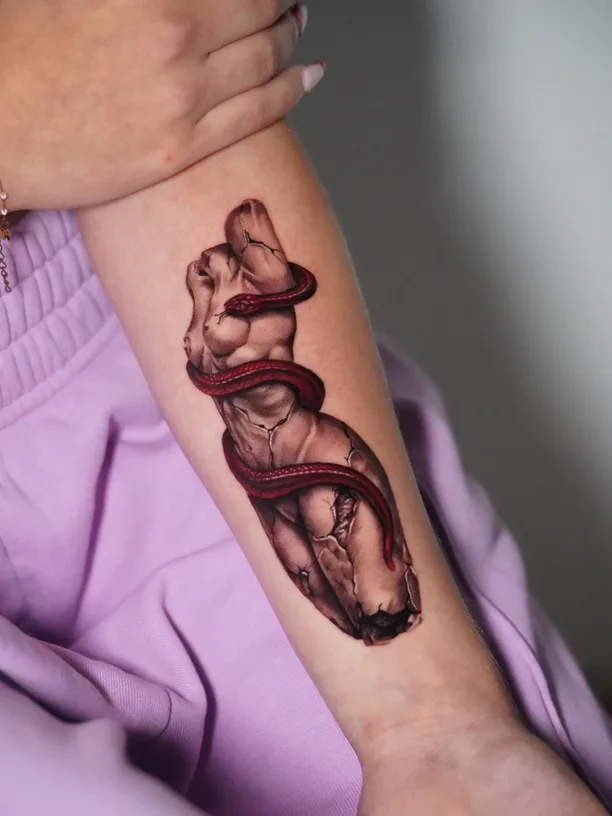
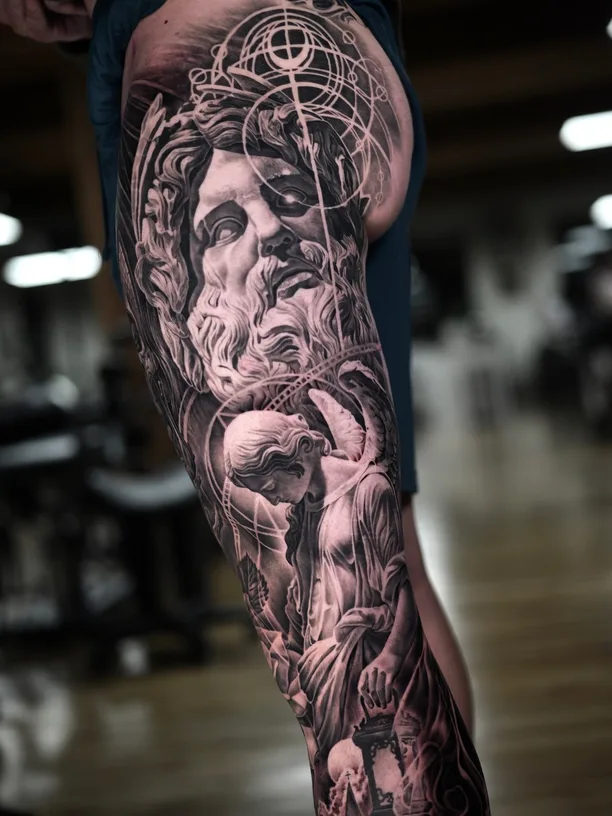
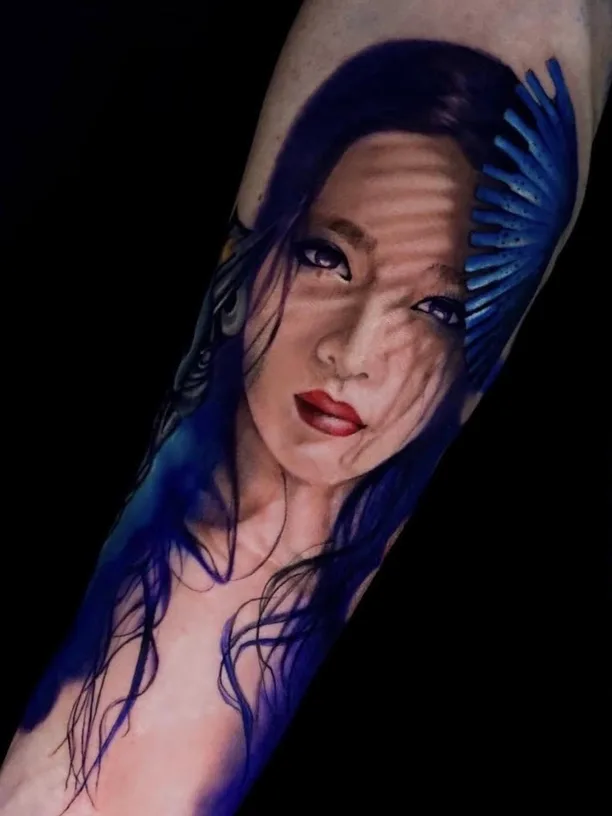
Originally from Xinjiang, China, CAIN is now based in New York. His practice exists somewhere between tattooing, contemporary art, sculpture, and personal mythology. His work is rooted in blackwork, but it goes far beyond a simple style definition: solid black forms, scars, sigils, worn textures, distorted perspectives, and references to prison tattoos, religion, ideology, and human desire all become part of his world.
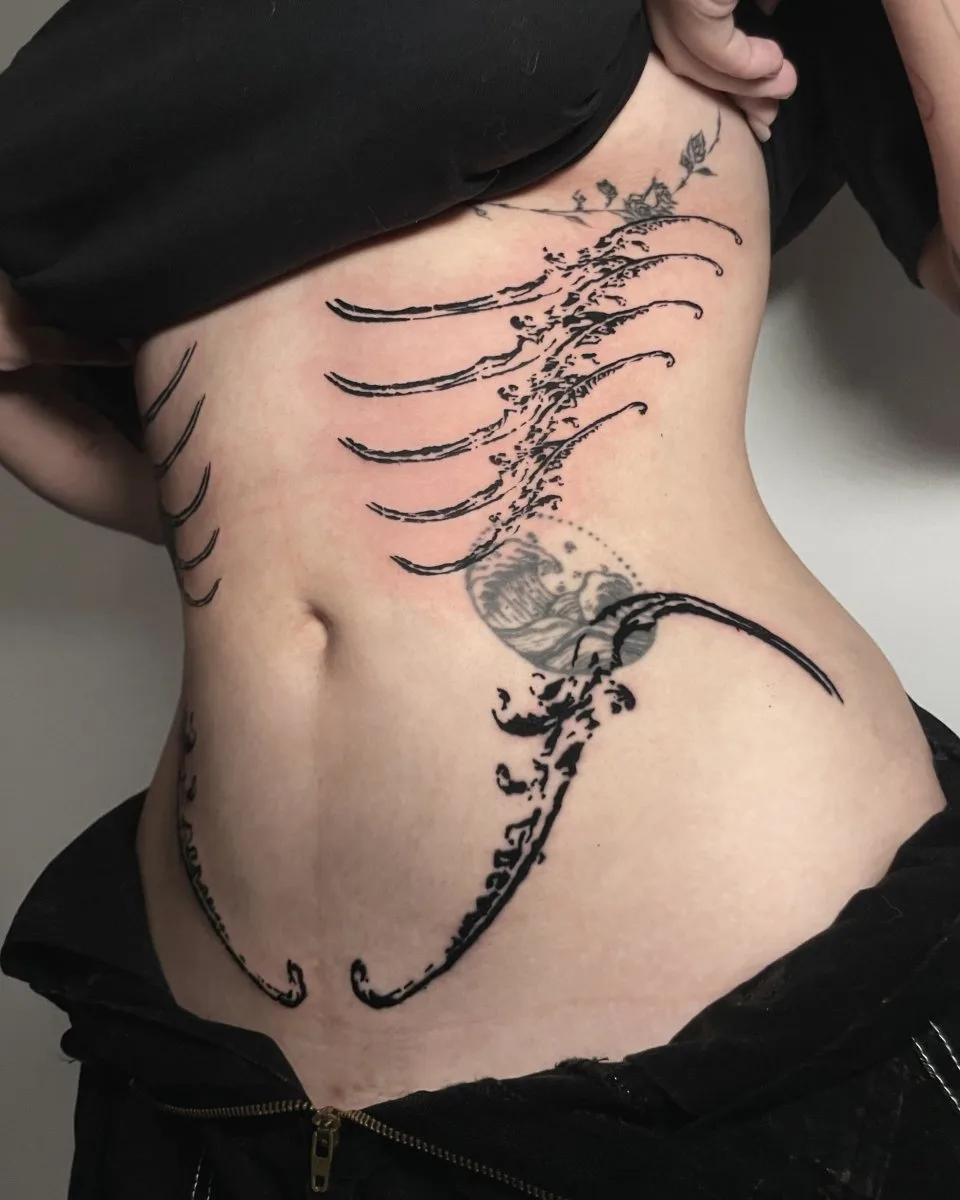
His art began with running away from home at 17 and trying to build a path outside the rules that were expected of him. Today, that path has led CAIN toward deeply underground directions such as Post-Gulag and Immaculate Scar, where pure black, traces, tension, and personal history become the foundation of his tattoo work.
We spoke with CAIN about moving to New York with no connections, the influence of underground culture, and why tattooing is not the final destination for him, but one of the tools for building something bigger.
CAIN, how did your journey from western China lead you to New York?
— I ran away from home when I was 17 to chase my art dream in Shanghai. At first, I joined a contemporary art company, but I realized pretty quickly that they were much better at making money than making art. So I quit.
As it turned out, chasing art with no money, especially as a teenager, isn’t exactly the most sustainable lifestyle. Luckily, I already knew how to tattoo and I loved it, so before I actually starved to death, I simply switched tools: pen out, needle in.
“Before I actually starved to death, I simply switched tools: pen out, needle in.”
Tattooing ended up taking me to a lot of places and introducing me to some incredible artists.
Then one day, I was talking to a friend who had just gone through a breakup. Out of nowhere he said, “I’m thinking about moving to New York. Wanna come?” At that point, I had never even been to the US. I had no clients, no studio, no connections, and I barely spoke English.
But I sold pretty much everything I owned, got a visa, and moved to New York.
How did your path in tattooing begin?
— I’ve always had this habit of liking whatever everyone else wasn’t into. When everyone at school was listening to Jay Chou, I was listening to Black Flag. While everyone else was playing basketball, I was out skateboarding.
At some point, I noticed that all the people I thought were cool had tattoos. And honestly, I thought all those big skull tattoos looked cool as hell.
So I figured that if those people were already cool, then the person giving them tattoos had to be even cooler. That made perfect sense to my 13-year-old brain. I saved up all my Lunar New Year money for two years, learned tattooing, and somehow I’m still doing it.
You work as a multidisciplinary artist. How do painting, sculpture, and exhibitions influence your tattoo work?
— I don’t really see them as separate disciplines. To me, they’re different ways of speaking about different sides of the same idea.
Sometimes a tattoo says it better. Sometimes a sculpture works better. Sometimes it’s a painting or an installation. The medium changes, but what I’m trying to say stays the same.
How would you describe your style?
— I think my tattoo work has two main parts.
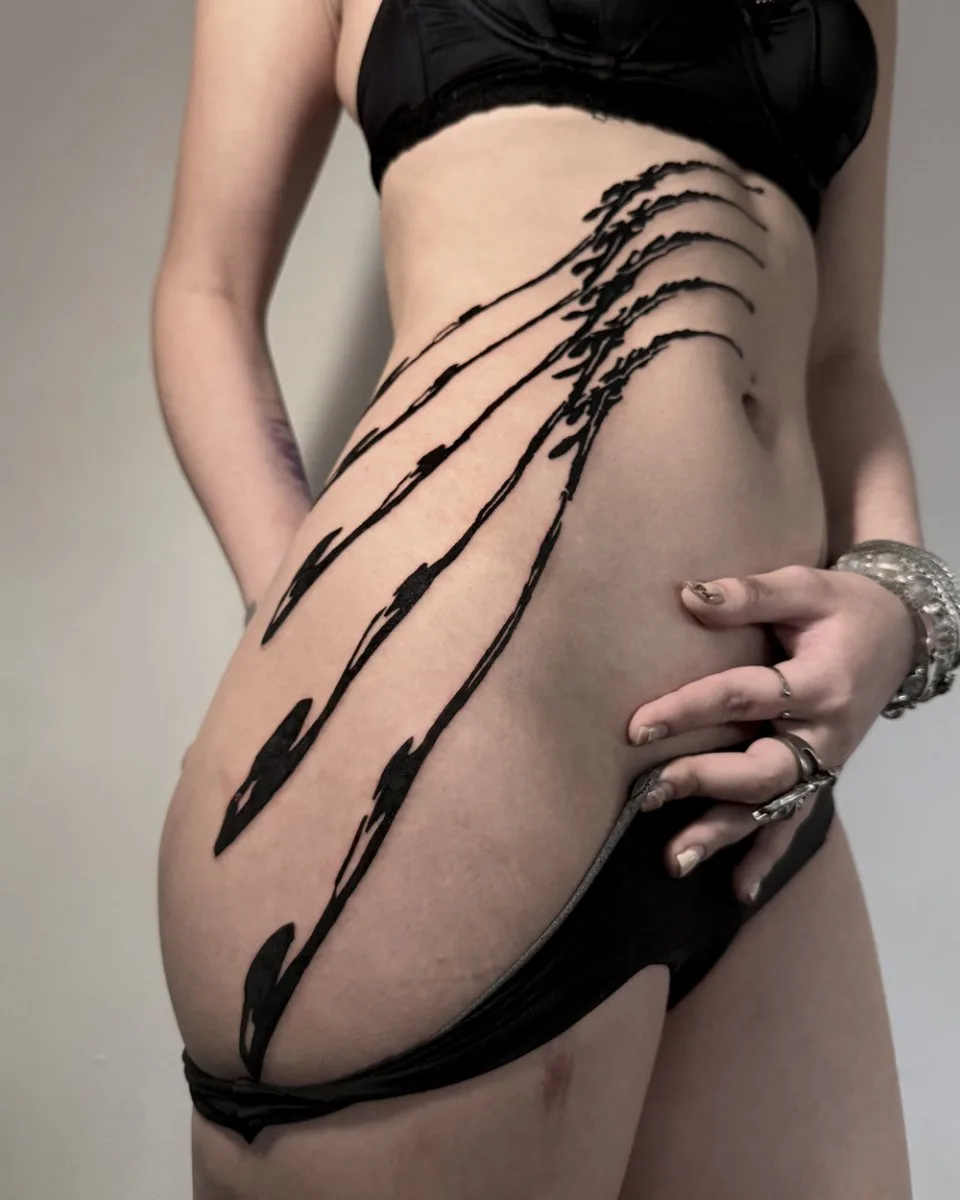
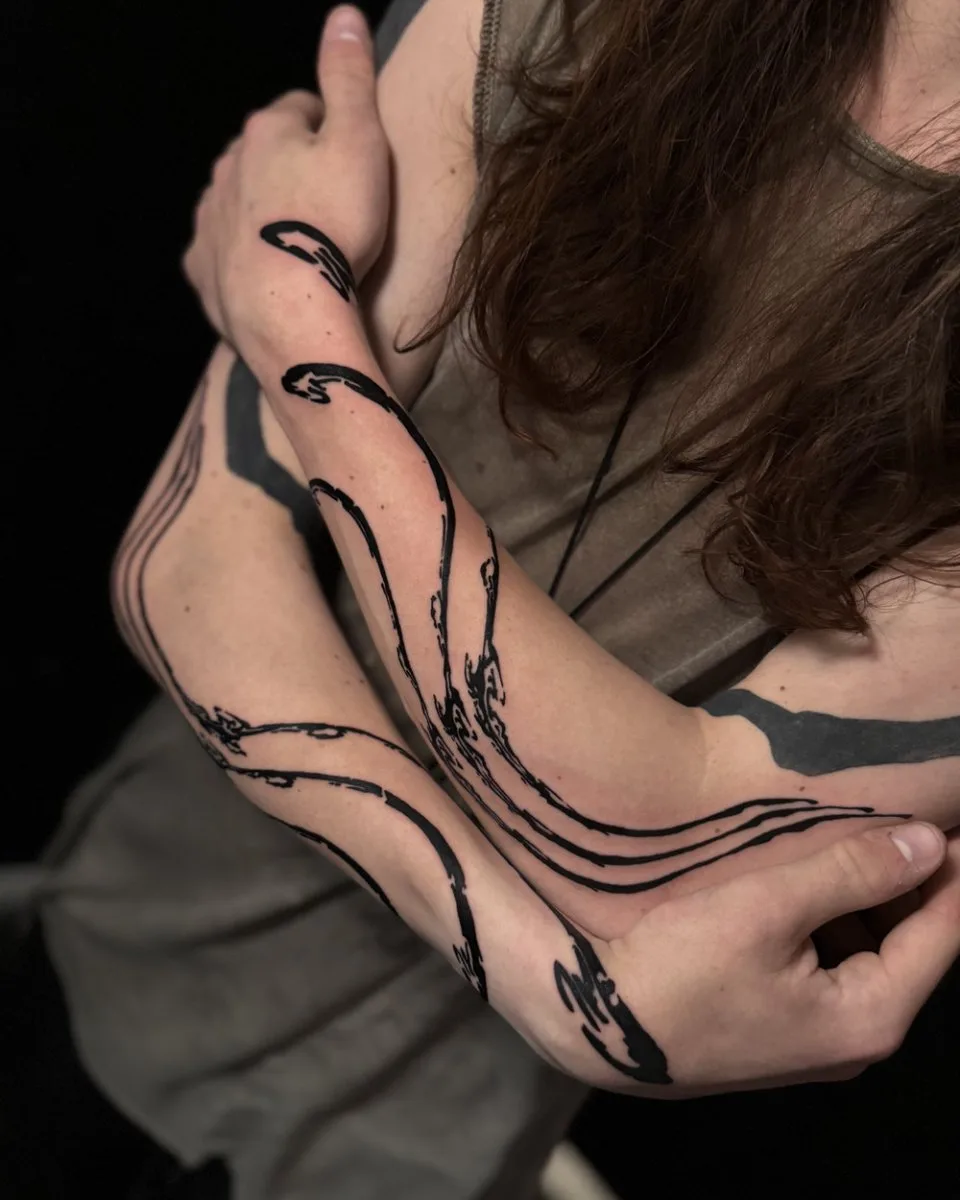
The first is what people now call Post-Gulag. I never planned to give it a name. People just kept asking what style it was, and at some point I got tired of explaining it. Naming it was easier. It also felt right because early Gulag prison tattoos were one of my biggest sources of inspiration.
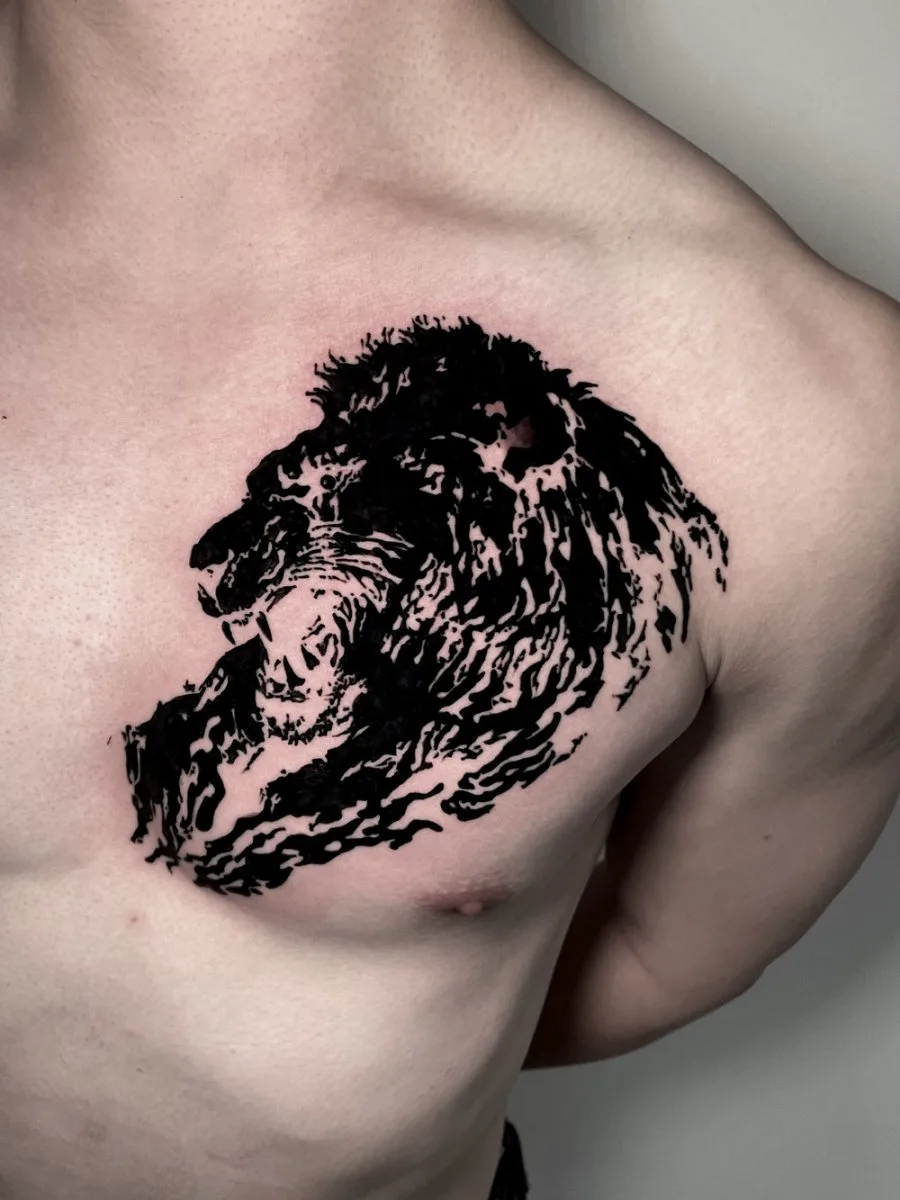
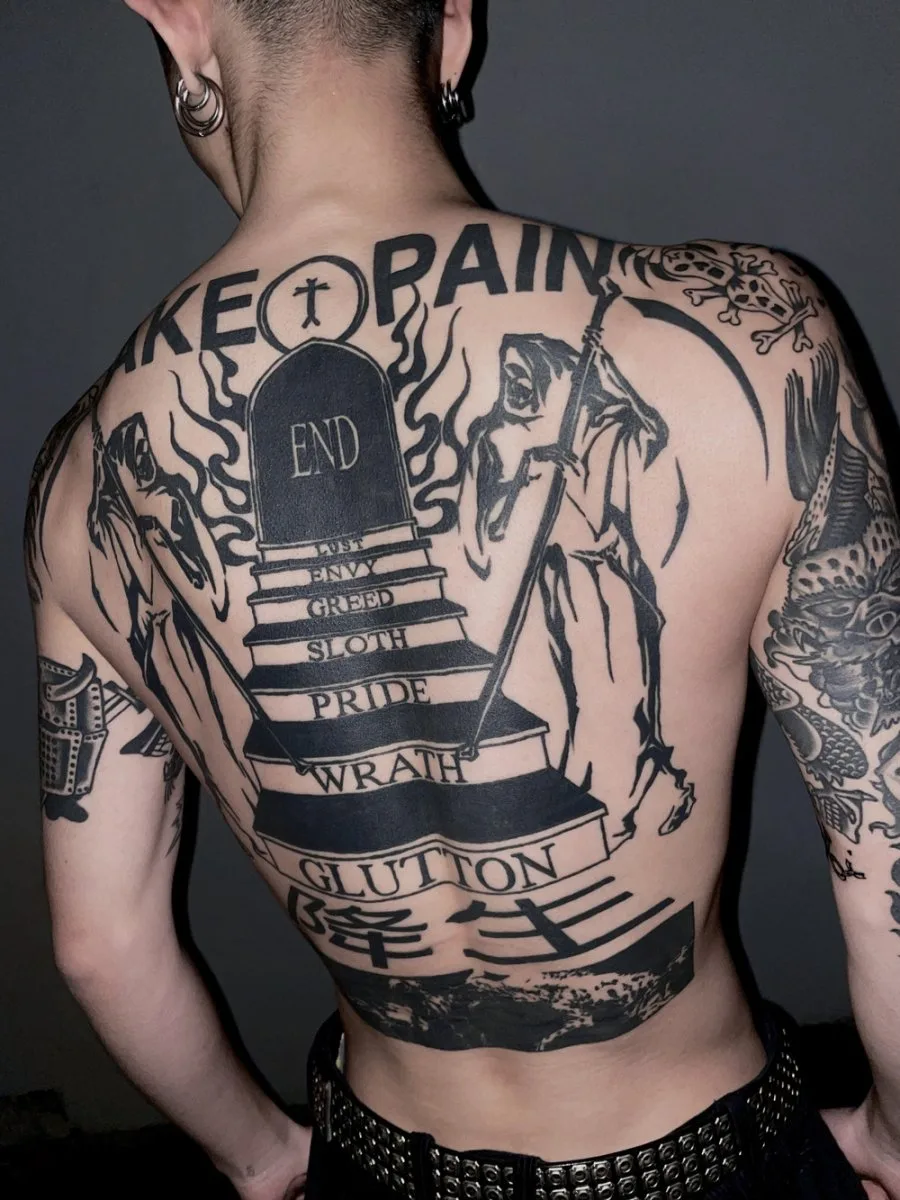
The idea is pretty simple: express the deepest thoughts in the simplest way possible, then push that simplicity to the extreme. That’s why it’s only black. No color, no gradients, no decoration. Just pure black creating the strongest possible impact.
“Express the deepest thoughts in the simplest way possible, then push that simplicity to the extreme.”
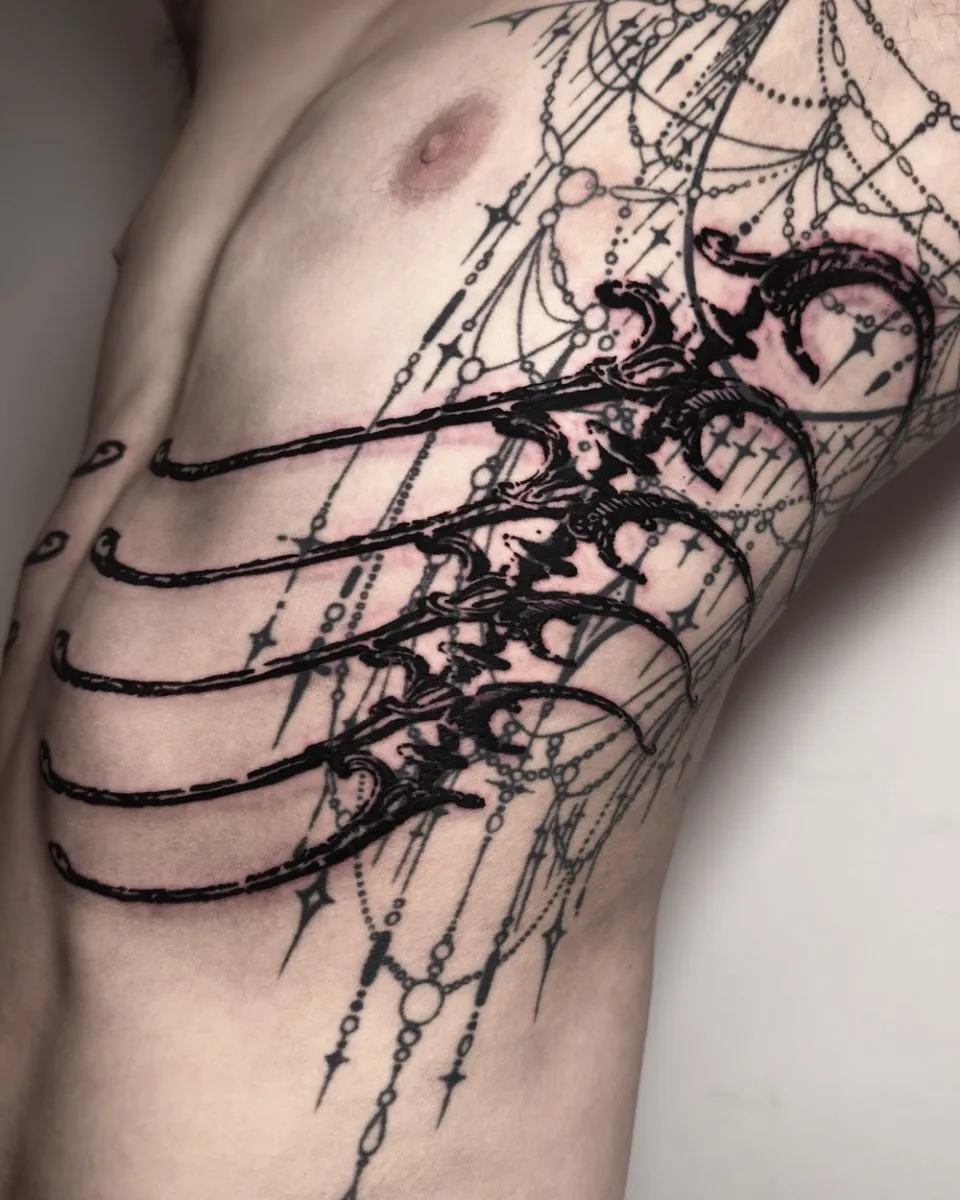
The second part is Immaculate Scar.
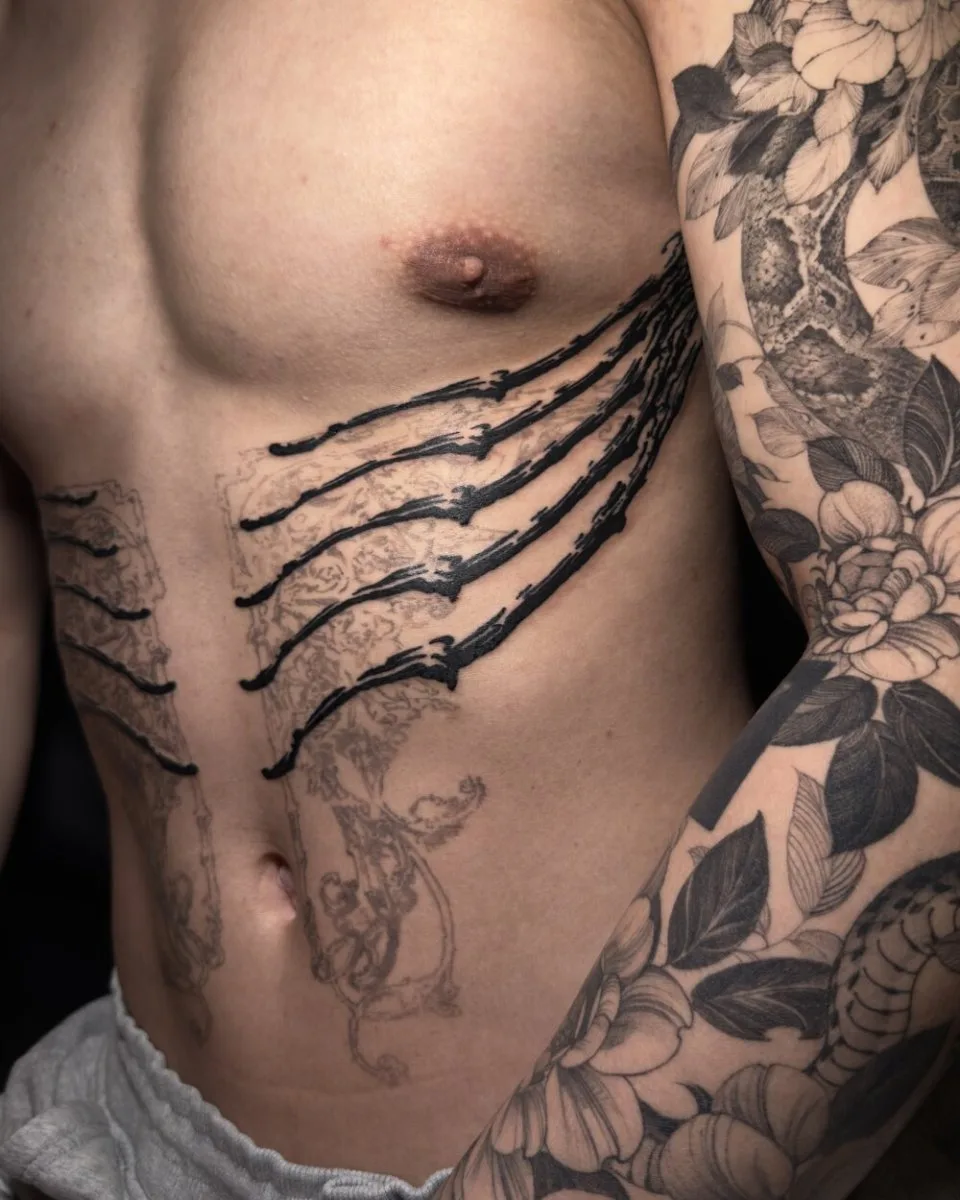
It actually started with blast-over tattoos. I became really fascinated by the contrast between solid black and old faded tattoos. The problem was that not many people were asking for that kind of work, so I thought, why not create that effect myself?
That’s when I started introducing lighter textures behind the black. It kept the force of pure black, but gave the image more depth at the same time.
What does the name Immaculate Scar mean to you?
— Most people think scars represent pain, damage, or something that should be hidden. To me, a scar is proof that you’ve lived. It shows that you took risks, made mistakes, survived them, and kept moving.
“To me, a scar is proof that you’ve lived. In a way, tattoos are scars too, just ones you choose for yourself.”
Over the years, I’ve noticed something interesting. My work looks dark, aggressive, sometimes even intimidating. But the people who connect with it are often some of the purest and bravest people I’ve ever met.
That made me start questioning many of the labels and definitions we usually take for granted. Maybe that’s what Immaculate Scar really means to me.
“Who gets to decide what is pure, and what is dark?”
Why did blackwork become the foundation of your work?
— Haha, probably because when I was traveling for guest spots, I only had to bring one bottle of ink.
Just kidding.
At the beginning, I honestly didn’t think about it that much. I was fascinated by the fact that prisoners, with almost nothing, could create something so powerful using ink made from charcoal. It made me realize that creation has never been about how many colors you have. It’s about how much you can say with just one.
There is a lot of movement, tension, and transformation in your tattoos. How does this kind of composition come to life?
— Maybe it’s because I’m terrible at taking photos.
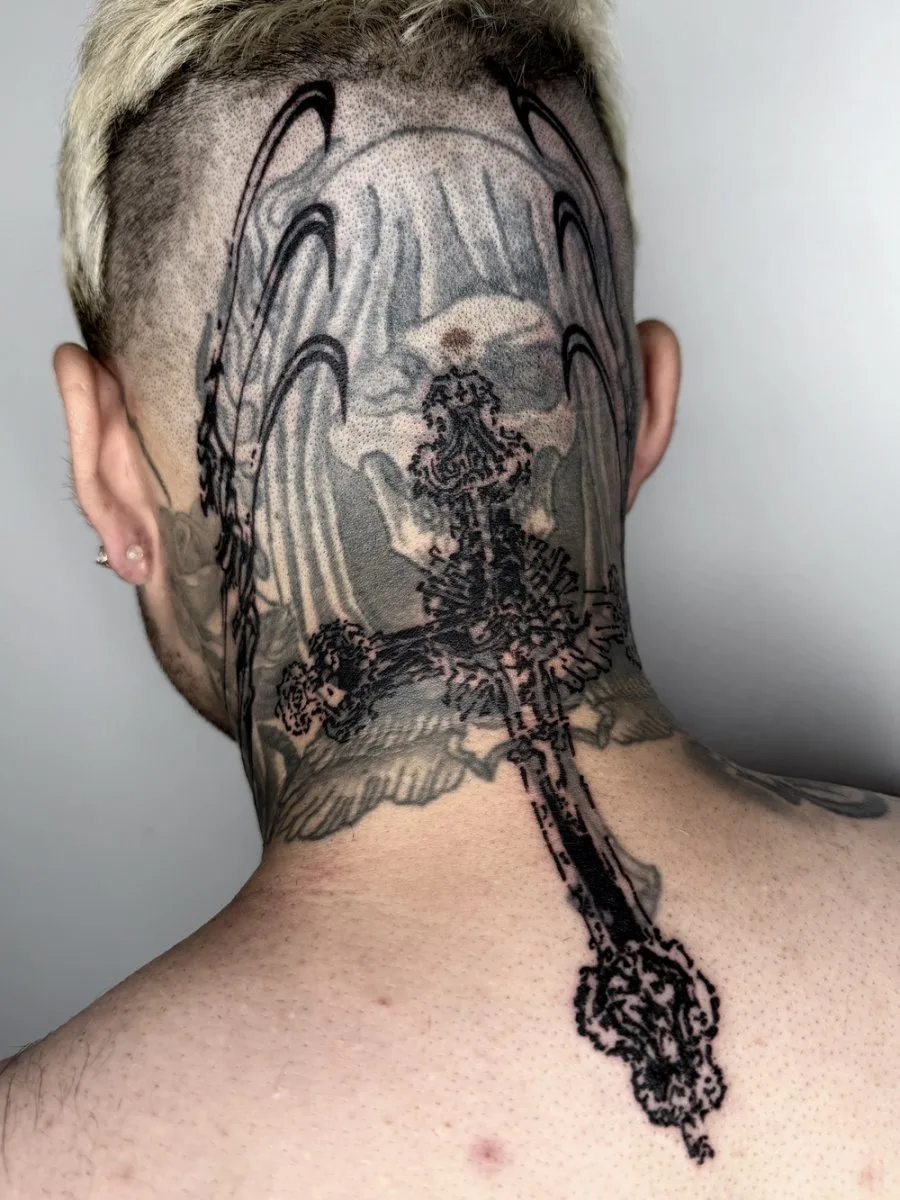
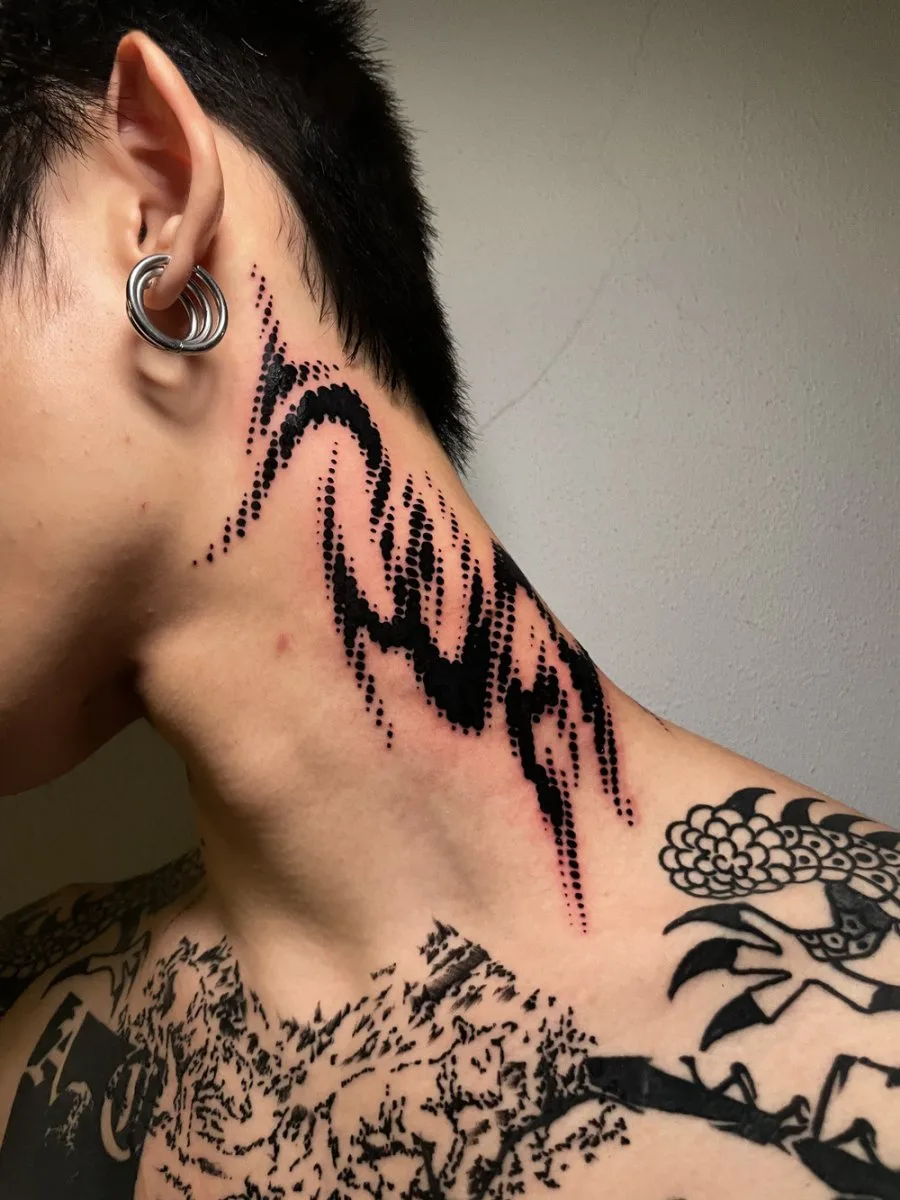
Before I start drawing, I usually take a “photo” of the image in my head. For some reason, I always like very wide angles or perspectives that almost feel distorted.
Maybe that’s part of it. Or maybe I just watch too many weird movies.
What themes are the most important to you right now in art and tattooing?
— The subjects I’m interested in change as I get older. I guess everyone goes through different phases.
But looking back, there are a few threads that never really change. Human nature and desire are probably the biggest ones. I grew up in a heavily controlled environment and left home at a young age, so I’ve seen enough to know that as long as humans have desires, conflict will probably always exist.
Religion is another one. It has given hope to billions of people, but it has also driven people to kill each other. How could I not find that worth exploring?
Politics and ideology are similar. They’ve built civilizations and destroyed them.
And then there are big black skulls. Come on, they just look cool. I don’t think I need to explain that one.
You often work with motifs that resemble scars, sigils, organic structures, and almost sculptural forms. Where do these images come from?
— Honestly, I don’t think those images come from one specific place.
It’s more like throwing everything you’ve experienced, everything you’ve seen, and everything you think into a giant blender. Whatever comes out of it, that’s you.
That’s why you’ll find scars, religious symbols, bones, organic forms, old prison tattoos, movies, music, and even random things I notice in everyday life.
Nothing appears out of nowhere. I think everything we create can be traced back to something we’ve lived through.
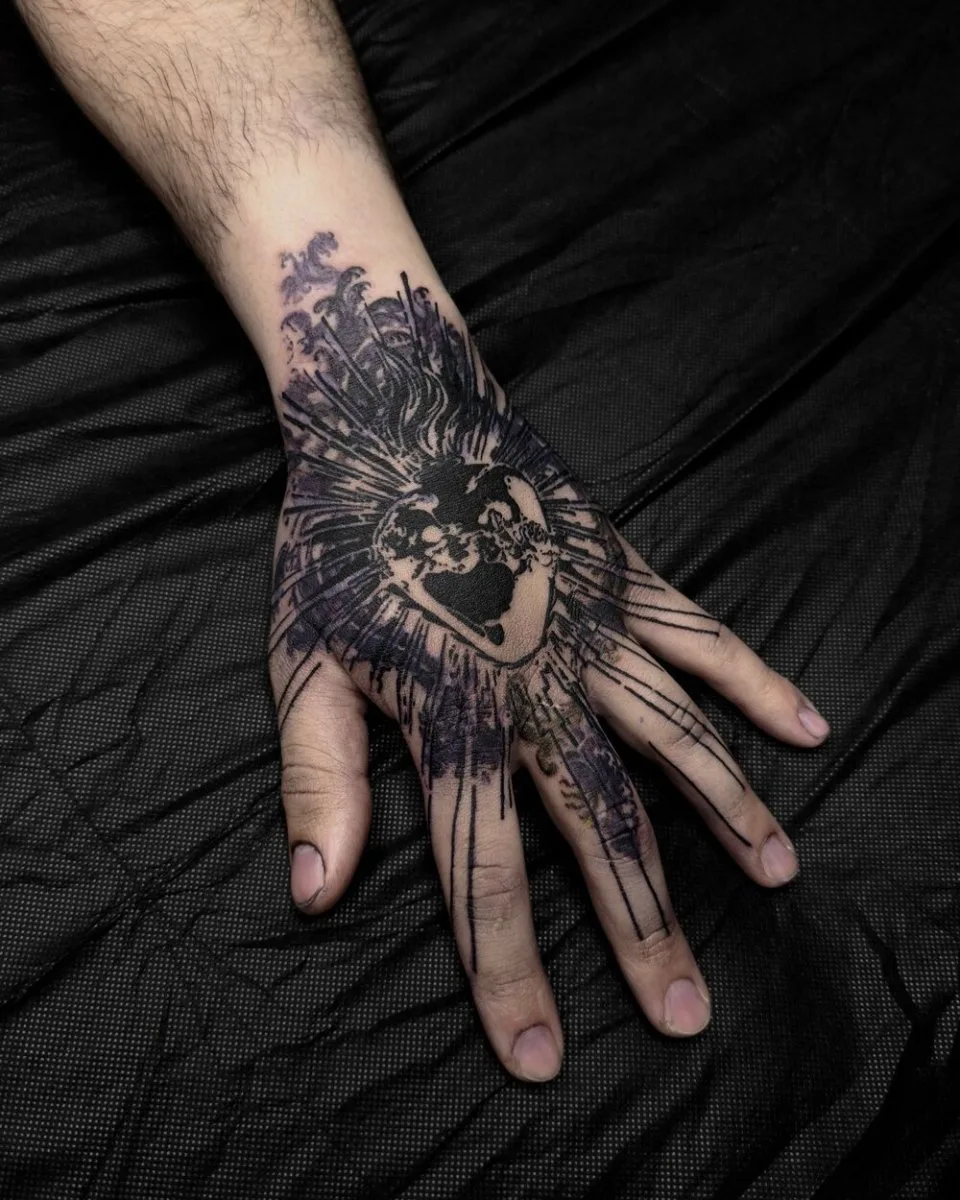
How do you work with the client’s body: do you adapt the design to the anatomy, or does the idea come first?
— At first, I only wanted to do flash pieces. I hated custom work. Sometimes I’d even break the body’s natural flow on purpose because I didn’t want to “cooperate” with it.
But somewhere along the way, I changed my mind. I realized that working with the body was actually much more interesting. Finding ways to make a tattoo fit the anatomy, or even make the body look stronger, became a really fun challenge.
Now, most of my work is custom.
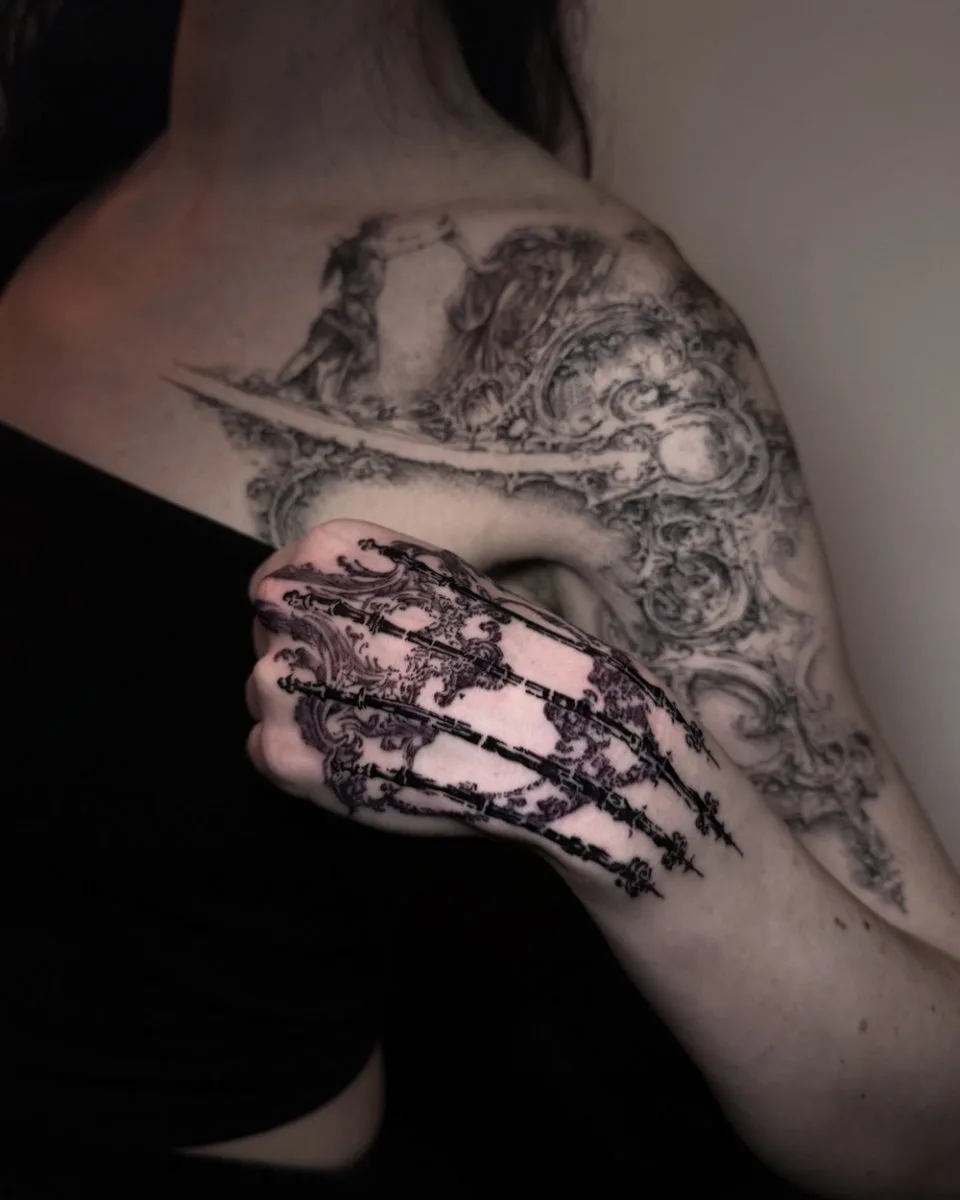
What attracts you to Cybersigilism and halftone?
— To be honest, I do like Cybersigilism, but maybe not for the reason people expect.
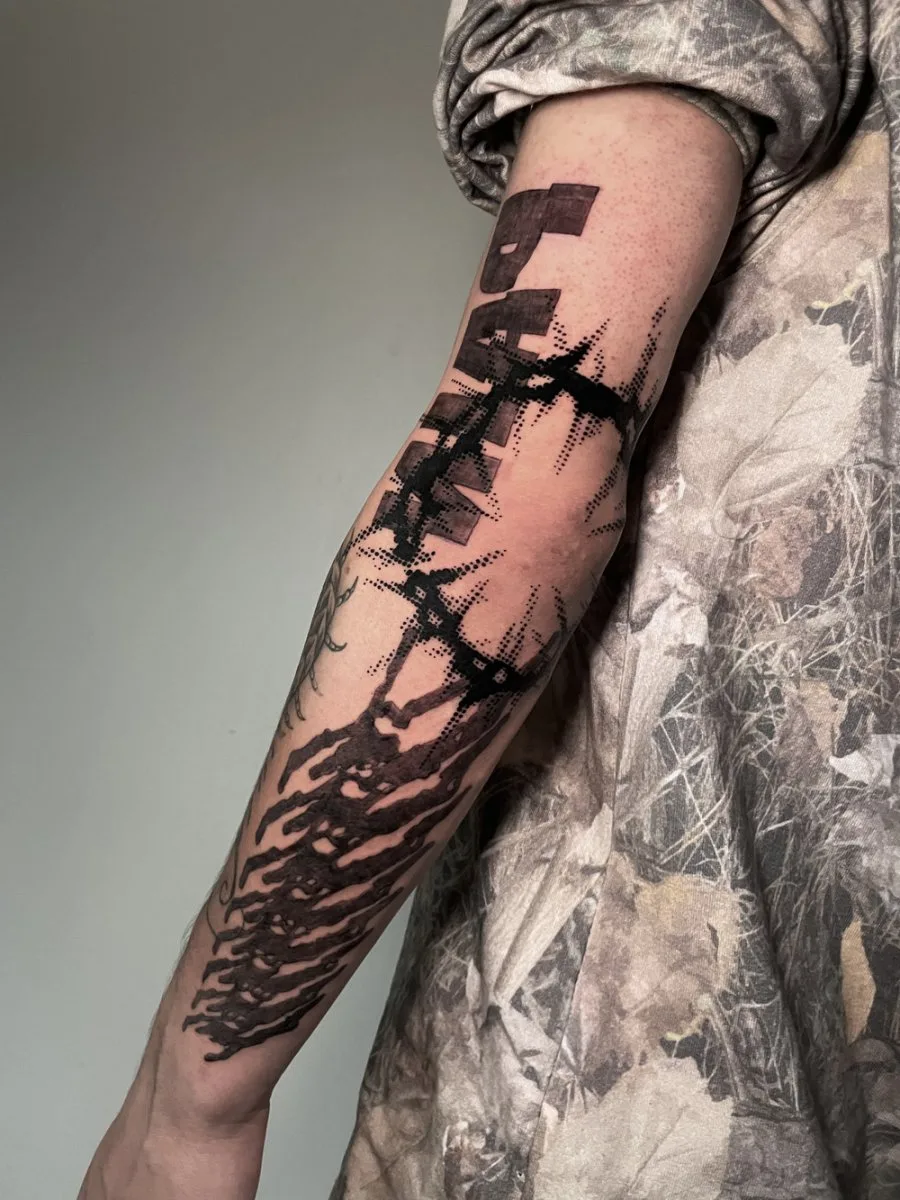
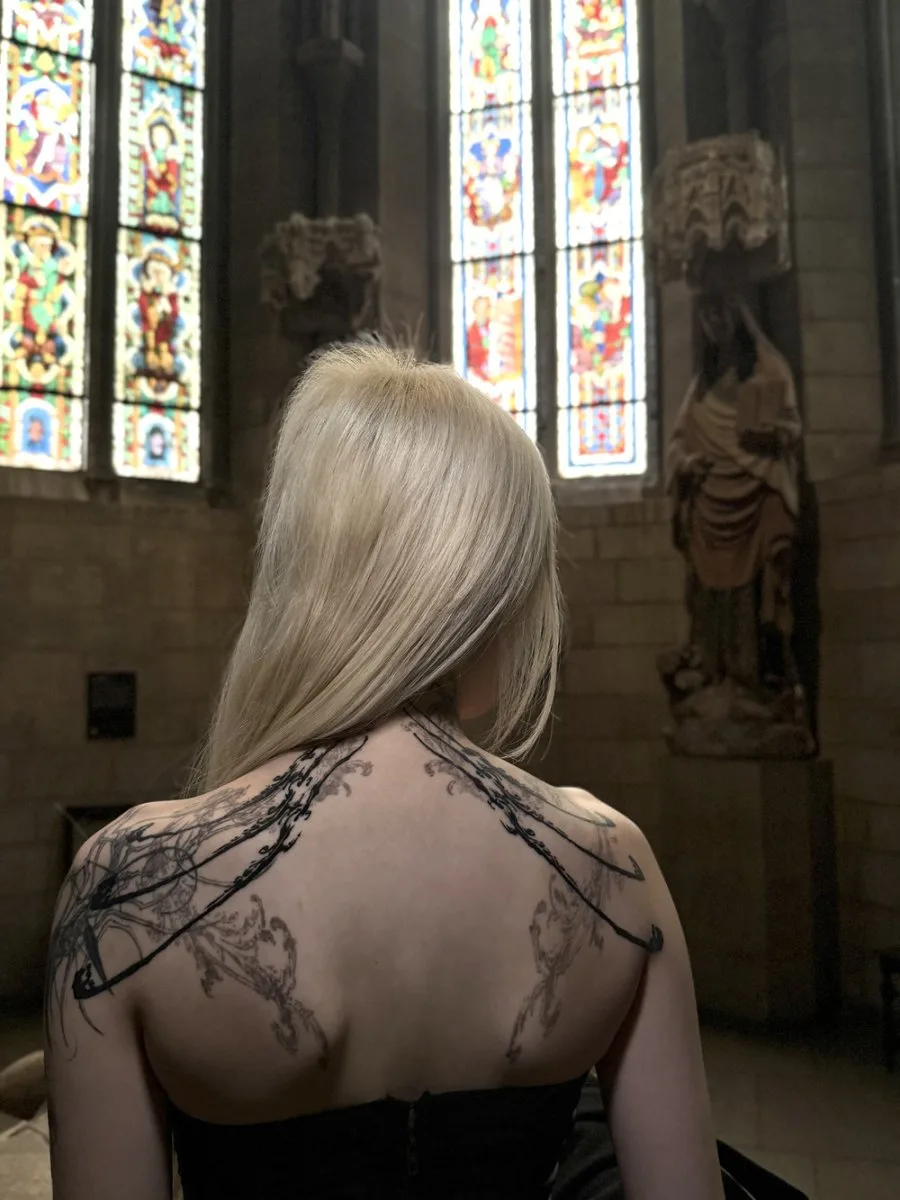
What I like is the rough, worn, almost weathered feeling it has. When I was looking for a background direction for Immaculate Scar, that atmosphere happened to fit really well with what I was trying to create.
Halftone is different. I just genuinely enjoy that approach. It’s still clean black, it still avoids gradients, and technically it isn’t that far from how I already think about tattooing. But it creates the illusion of transition by removing information instead of adding it.
I think that’s pretty clever. And honestly, it’s fun.
You have worked in Paris, Berlin, Barcelona, and other cities. How has this international experience influenced you as an artist?
— When I was a kid, I never imagined I would get to see so much of the world. Tattooing took me there.
Of course, seeing original works by artists I admired was incredible. But honestly, the biggest influence was the people.
I met so many amazing artists. They were all so different, but they all felt incredibly real. Just being around them pushed me to work harder.
Every time I came back from Europe to Shanghai, I would be ridiculously motivated and make work like crazy. For a while, at least. Then eventually my laziness would catch up with me again, and I’d go right back to fighting it.
I guess that’s just part of the process.
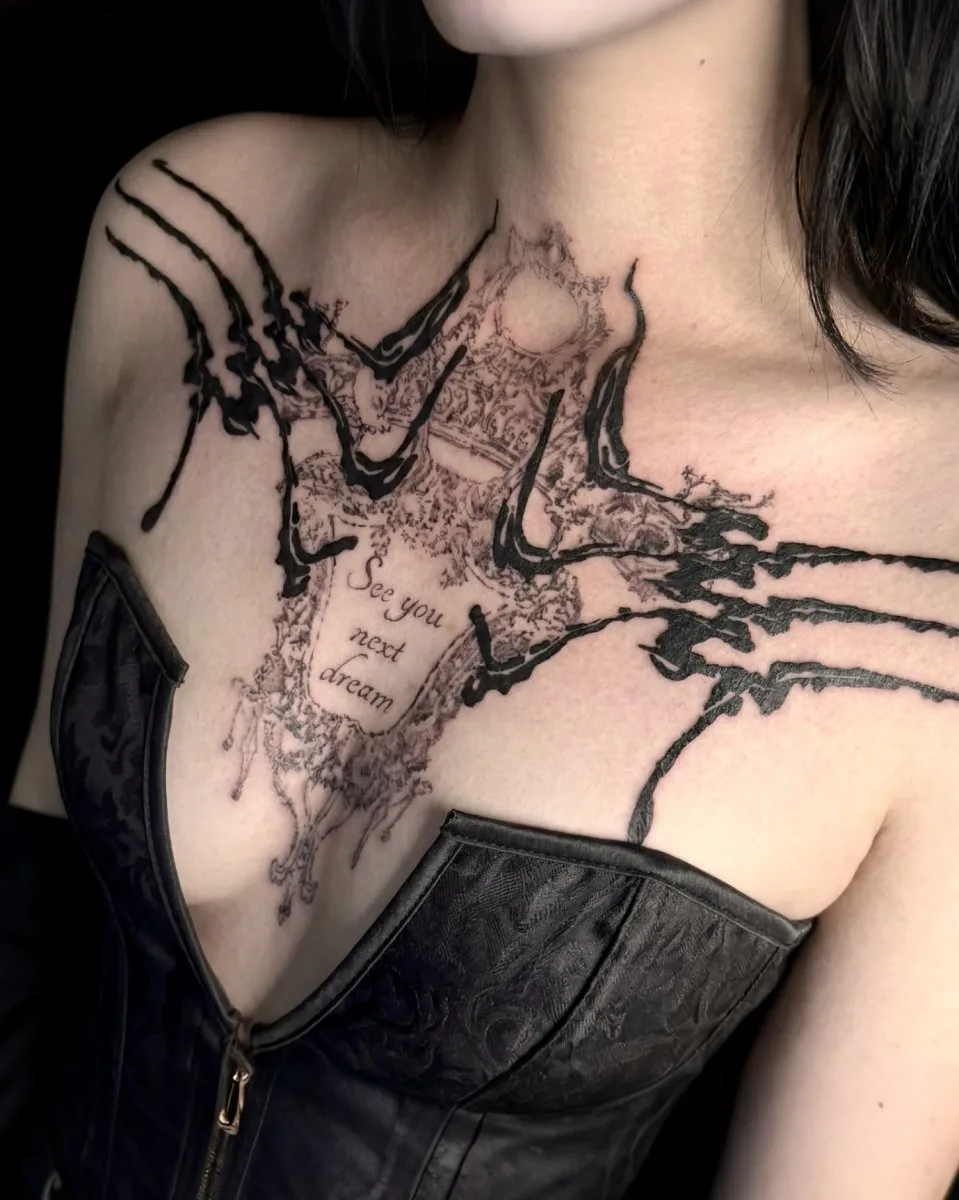
You have collaborated with Fred Perry, Vans, Adidas, i-D, and other projects. What interests you in working with brands and media?
— I used to think being underground or independent meant staying as far away from commercial work as possible.
Over time, I realized that wasn’t really the point. When brands I genuinely liked started reaching out, I noticed something interesting: they weren’t asking me to become someone else. They were coming because they wanted what I was already doing.
I think a lot of the fear around commercial collaborations comes from not fully trusting your own identity. If your voice is strong enough, there usually isn’t that much to compromise. And if there is, you can always say no.
A good collaboration should benefit both sides. It gives artists financial support and a bigger audience, while giving brands a fresh perspective and a different creative direction.
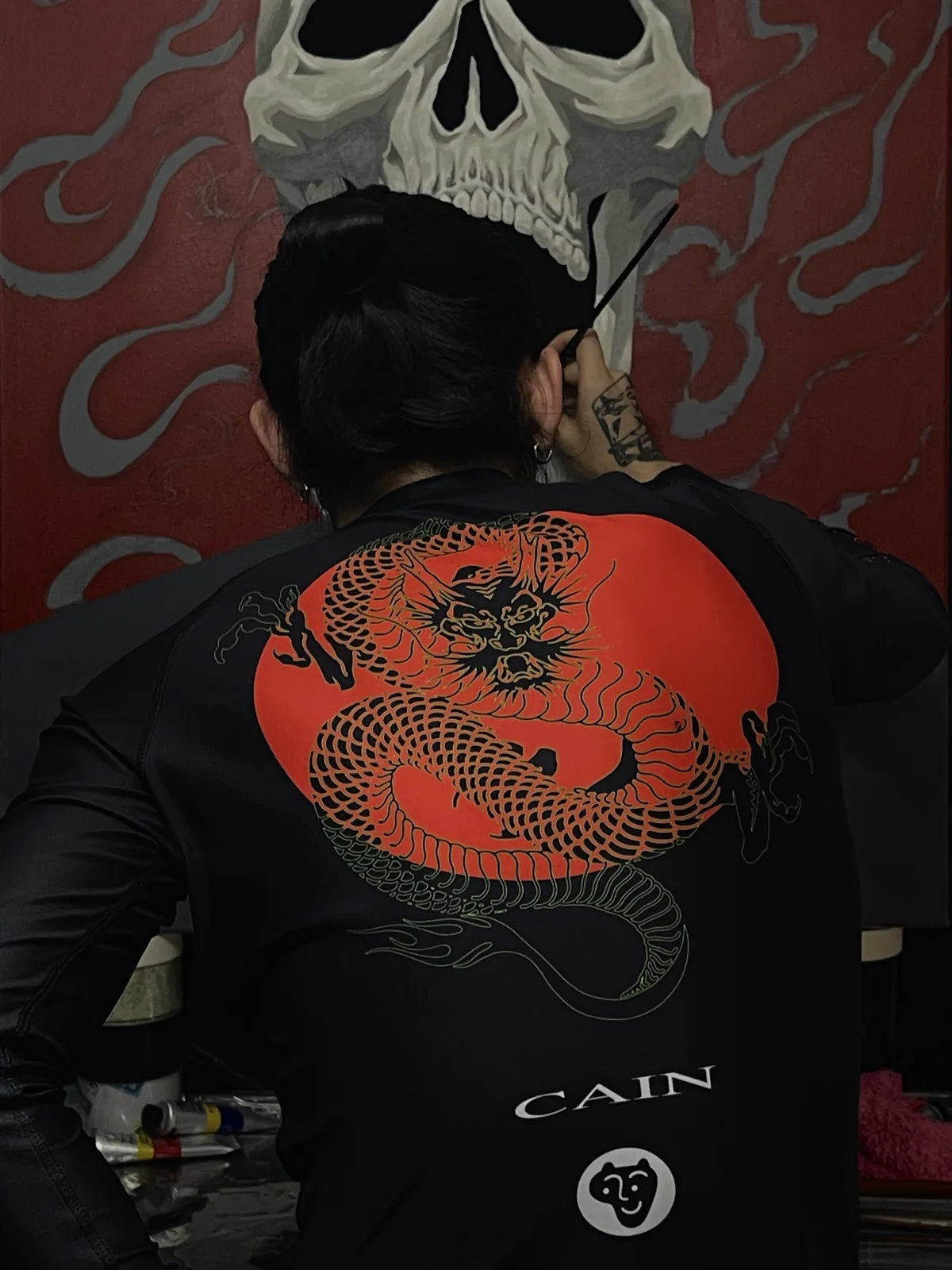
Where would you like to take CAIN-TATTOO next?
Who knows? In ten years, I might still be tattooing. Or maybe I’ll be racing cars. Or maybe I’ll already be dead.
As long as I’m still running down the road I chose myself, I’m happy.
“Tattooing has never really been the destination for me. It’s one of the tools.”
What I’m really trying to build is something bigger than a tattoo style: a whole artistic universe, and maybe even another way of looking at life.
If one day my work can make someone realize there’s more than one way to live, I’ll feel like I did something worthwhile.