Built From Water: Why the Jellyfish Fascinates
A jellyfish pulses through the sea without a brain or a heart, and jellyfish have been doing so for more than 500 million years: Burgessomedusa, a fossil from Canada’s Burgess Shale described in 2023, swam about 505 million years ago. Much of the jellyfish tattoo meaning comes from that movement: the bell contracts, the tentacles trail behind, and the animal swims under its own power even as the current carries it. That’s where the design gets its sense of grace. You can see the effort in the pulse and the ease in everything that follows.
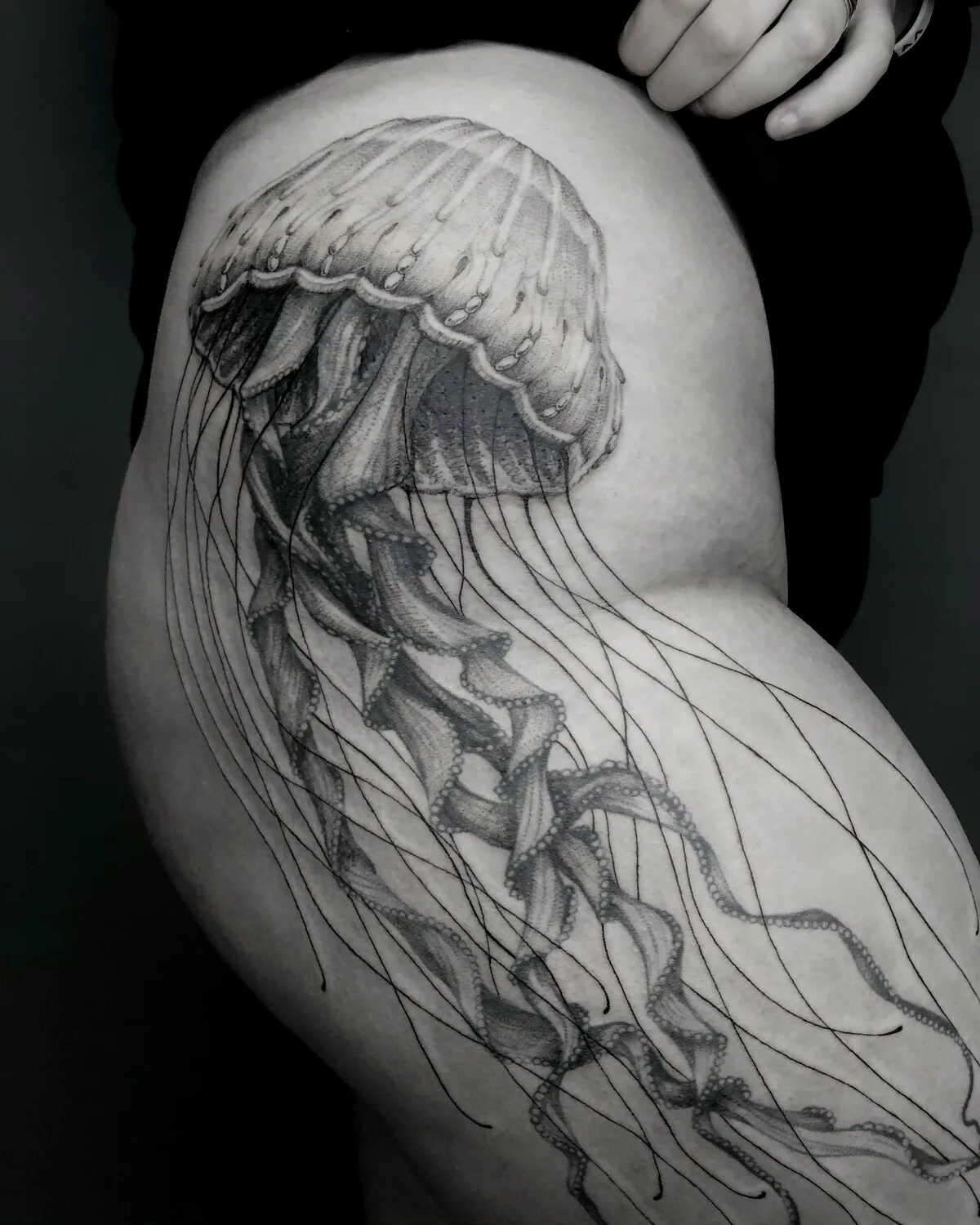
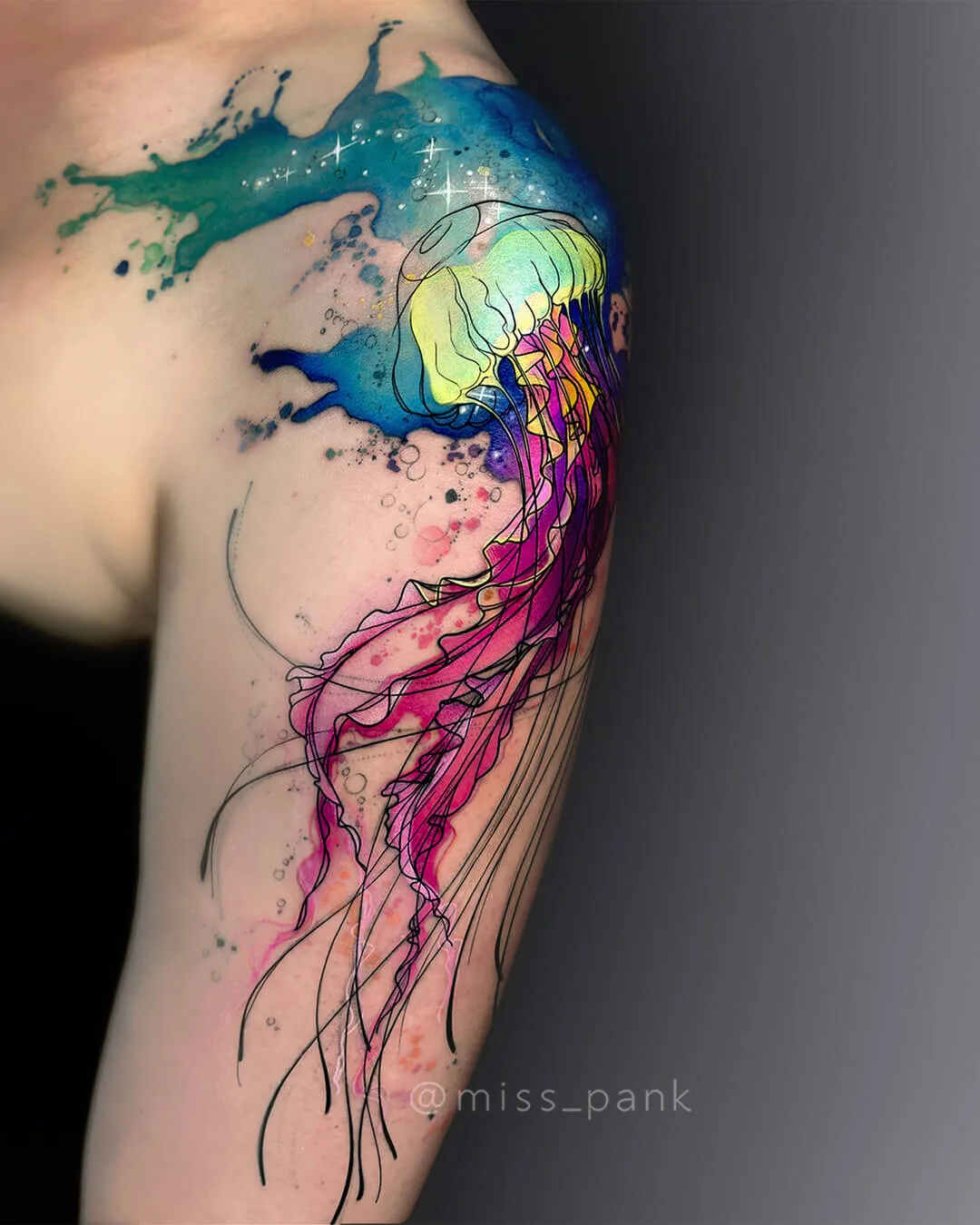
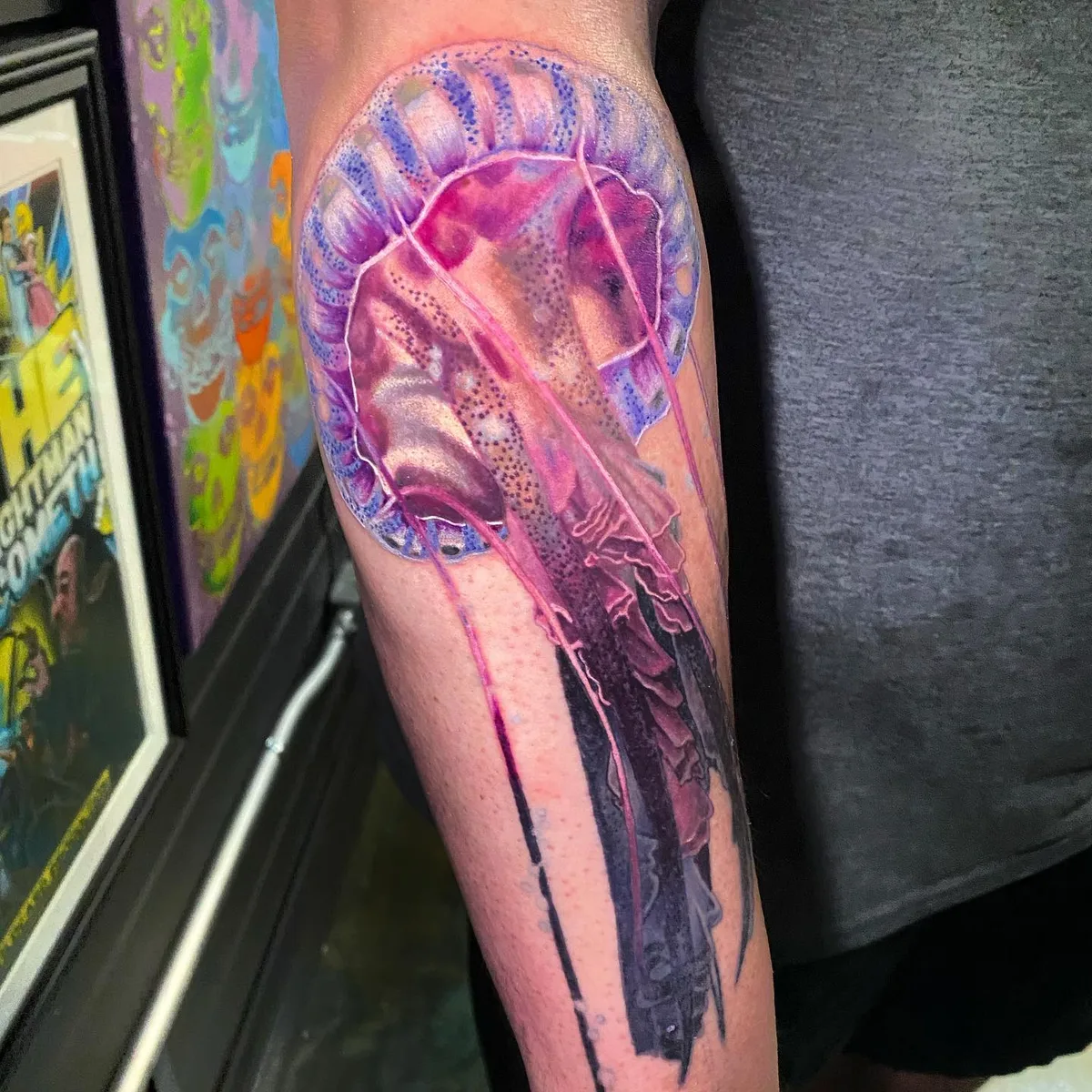
A jellyfish’s body is about 95 percent water, which is why light passes through the bell. You can suggest that translucence on skin by leaving parts of the bell open. A few curves can show where the body folds, while a sweep of tentacles leads the eye down and away from the bell. Browse the iNKPPL jellyfish tattoo gallery and notice where your eye goes first. A deep, shaded bell draws you into the body; long, loose tentacles make you follow the drift.
Going With the Flow and Still Stinging
The same tentacles that make a jellyfish look delicate carry stinging cells. Those cells help the animal catch prey and defend itself. On skin, that double duty gives the trailing lines some bite. If you’ve learned to be flexible and hold a boundary at the same time, the jellyfish gives you a way to picture both qualities in a single gesture.

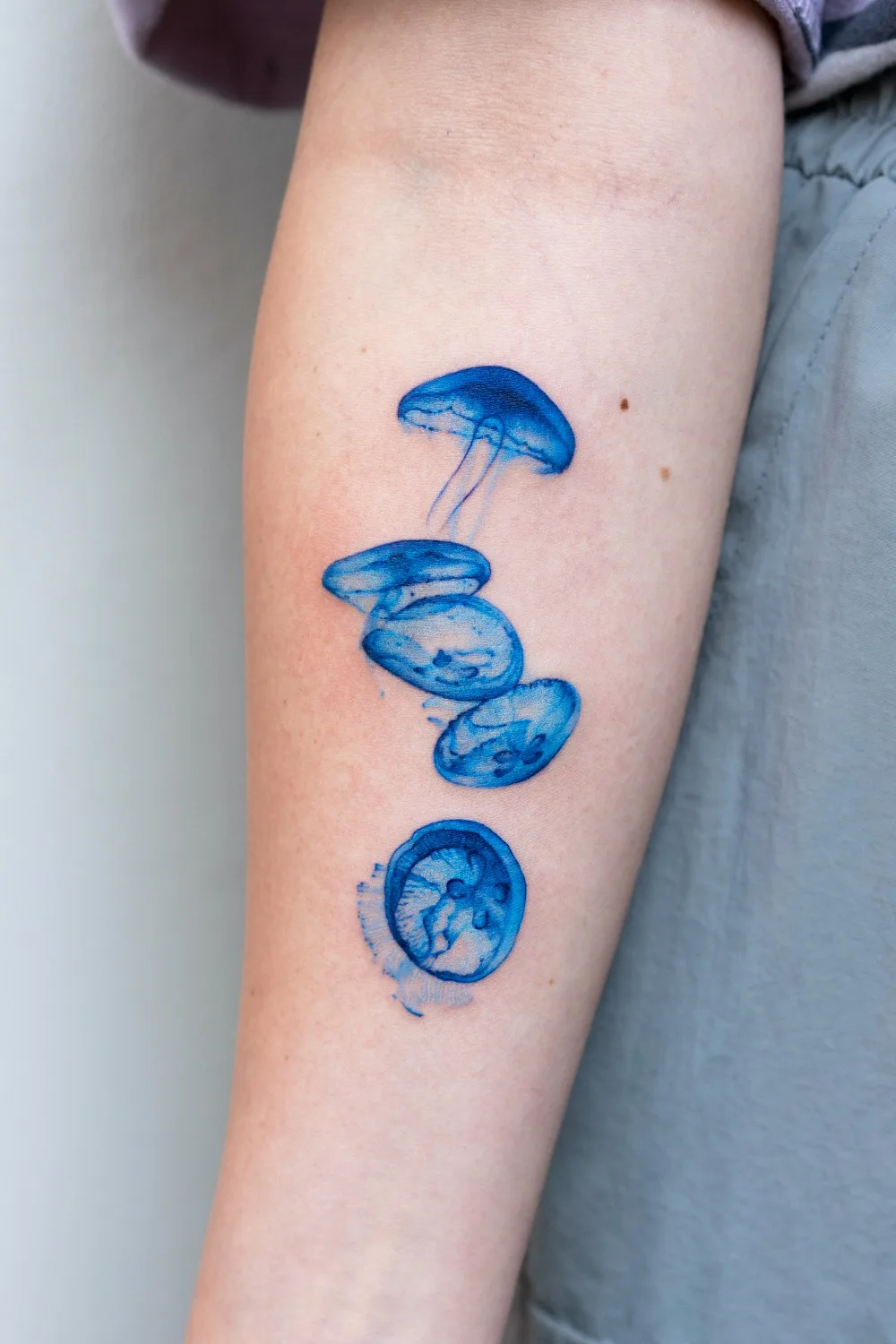
Think about how much of that edge you want someone to see at a glance. Tentacles that fall in loose, uneven curves bring out the drift. A few that bend sharply or reach away from the main cluster give the silhouette a more wary feel. You could keep the bell soft and rounded in either version; the trailing lines can carry the tension on their own.
The Immortal Jellyfish
Turritopsis dohrnii, nicknamed the immortal jellyfish, can return from its adult form to an earlier stage of life. When it is starving, injured, or otherwise stressed, the swimming adult can transform back into a polyp, the small, attached form from which new jellyfish can develop. The nickname refers to that reversal. The animal is still vulnerable to predators and disease.
An immortal jellyfish tattoo can make that return to an earlier stage the heart of the design. If you’re marking a restart, you might show a bell at one end of the piece and a tiny branching polyp at the other. A curved composition can bring the two forms back toward each other, giving the life cycle a path your eye can follow.
Jellyfish With Moon, Octopus or Waves
A jellyfish and moon tattoo can turn on the echo between two shapes: the curve of the bell and the arc of a crescent above it. Leave room between them and the piece can feel suspended, as though you’re looking up through dark water. If the moon is there to mark a change in your life, our guide to moon tattoo meanings can help you choose a phase.
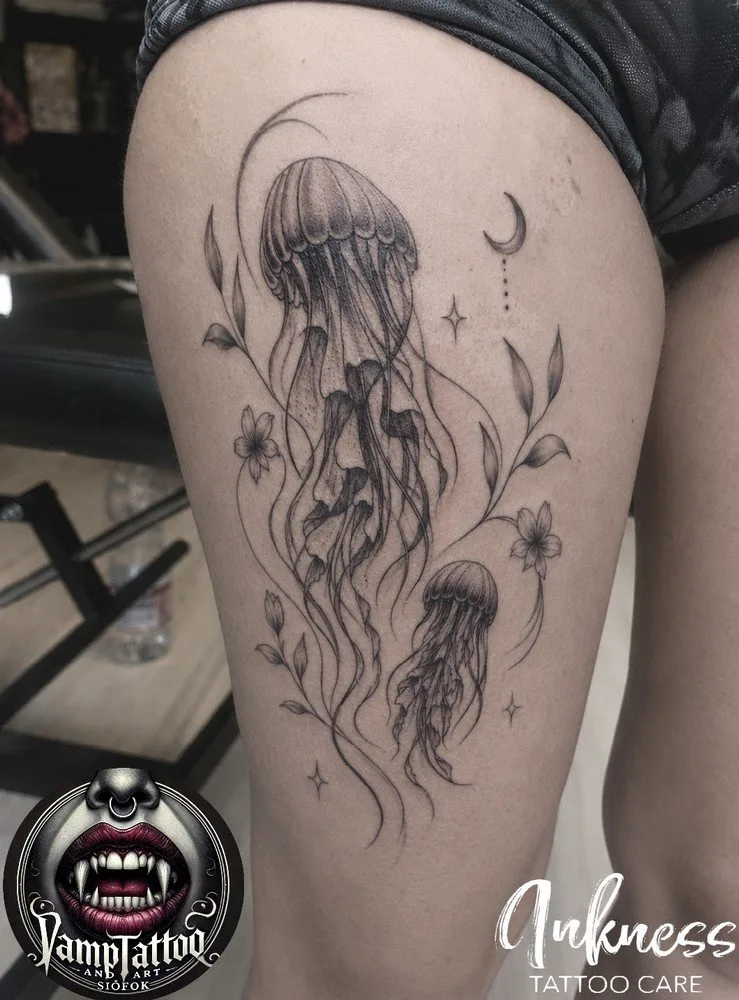
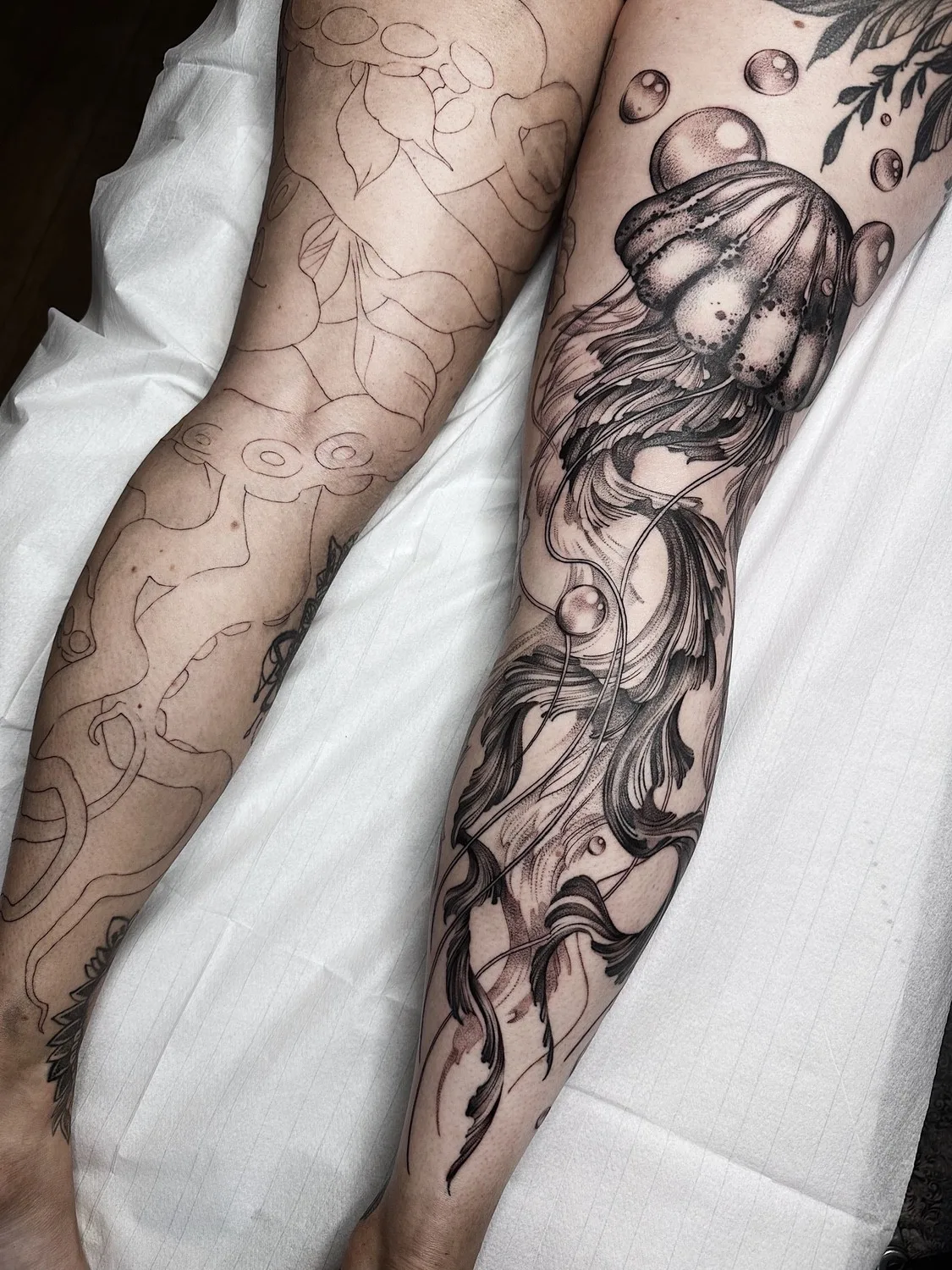
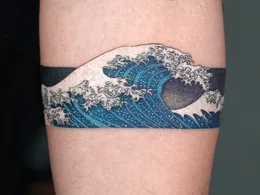
With an octopus, the interest is in how differently the two bodies move. Give the octopus heavier, curling arms and the jellyfish enough room for its tentacles to fall freely. Our guide to octopus tattoo meaning explores what that second animal can bring to the piece. Waves offer a simpler pairing: angle the tentacles along the swell and you can practically see the current carrying the jellyfish sideways.
Fine Line, Color and Placement
A fine line jellyfish tattoo gives the bell a light touch and lets the tentacles do most of the drawing. Ask your tattoo artist to show you the stencil at its intended size. If several strands already look crowded on paper, try fewer lines and more breathing room between them. For color, decide where you want the eye to land. A wash concentrated inside the bell can draw attention to its folds while leaving the tentacles spare.
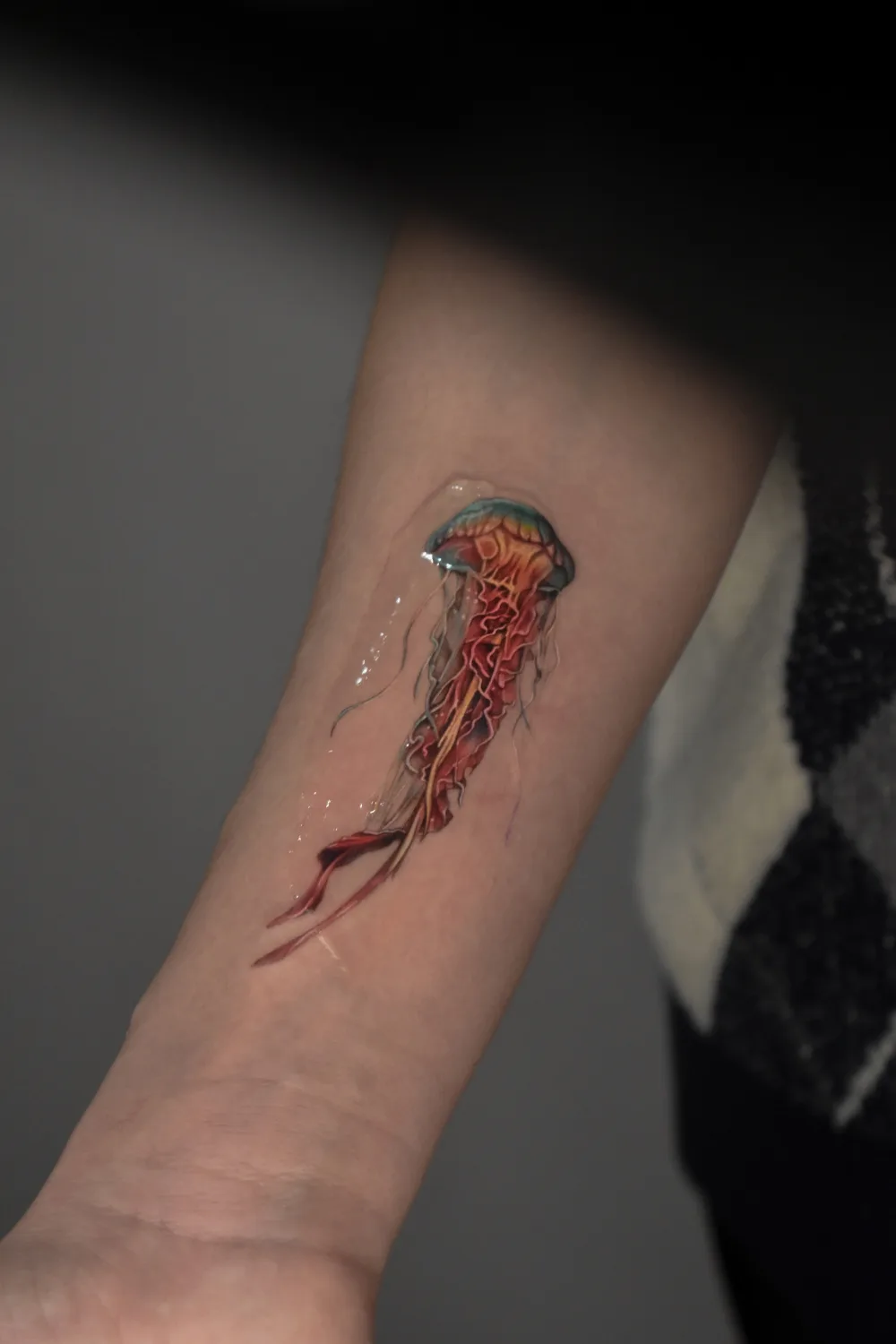
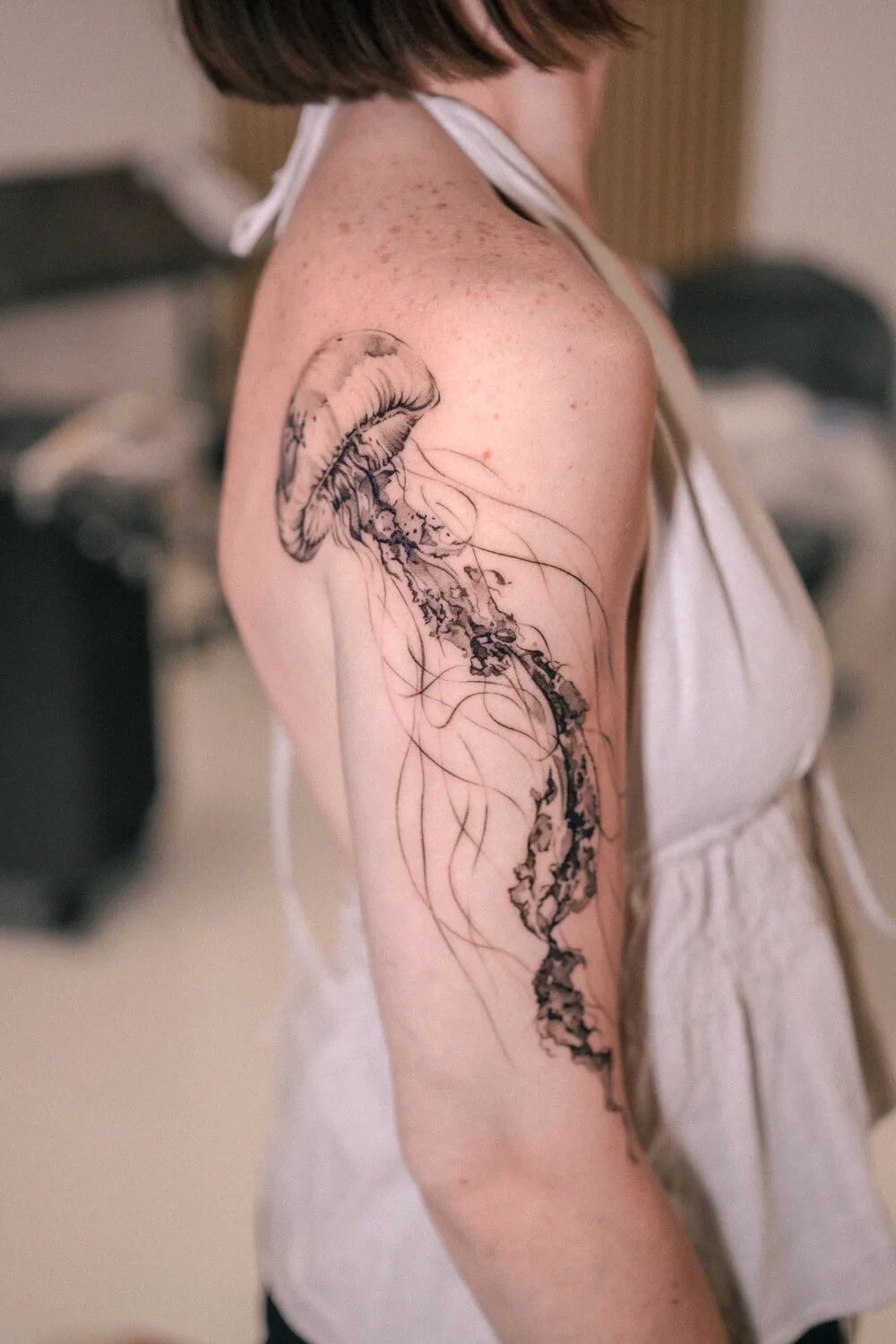
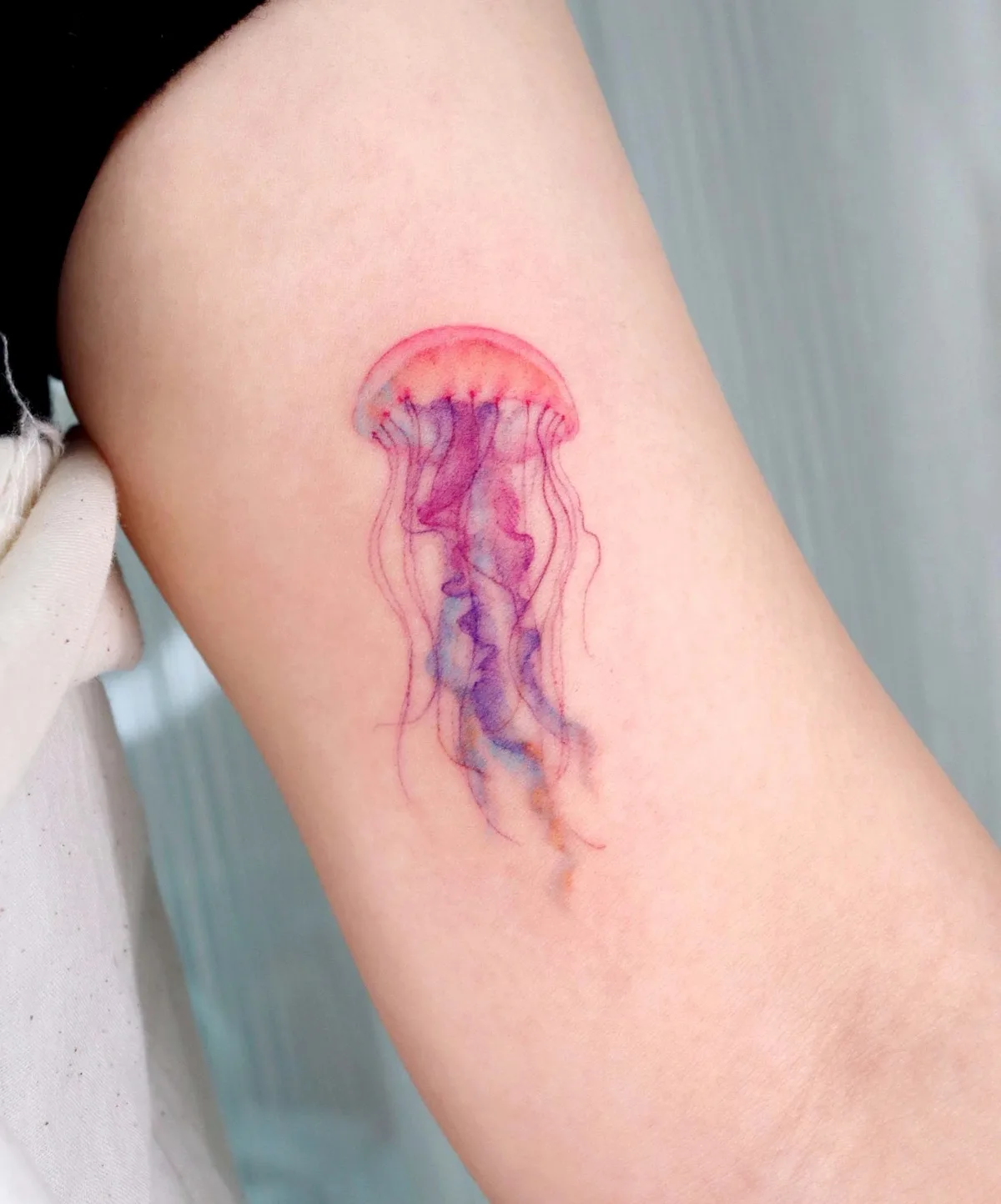
The forearm gives a long design a clear direction, while the upper arm lets the bell turn around a curve. The thigh offers room for a wider bell or a fan of tentacles. Try the stencil with your limb relaxed, then bend or turn it. Pick the spot where the design hangs well in the posture you hold most of the day.
FAQ

Medusa or jellyfish?
In English, a capitalized “Medusa” usually brings to mind the snake-haired Gorgon of Greek myth. In zoology, “medusa” names the free-swimming, bell-shaped stage of a jellyfish’s life cycle. When you brief your tattoo artist, say “jellyfish” and bring a visual reference so you start with the same image in mind. If it’s the Gorgon you’re after, our guide to Medusa tattoo meaning covers the myth and its designs.
How much detail fits in a small jellyfish tattoo?
Start with the bell and a handful of well-spaced tentacles. If you want folds inside the bell as well, have your artist draw a simple and a detailed version at the same size. Compare them at arm’s length to see which reads more clearly.
Can a jellyfish design look bold?
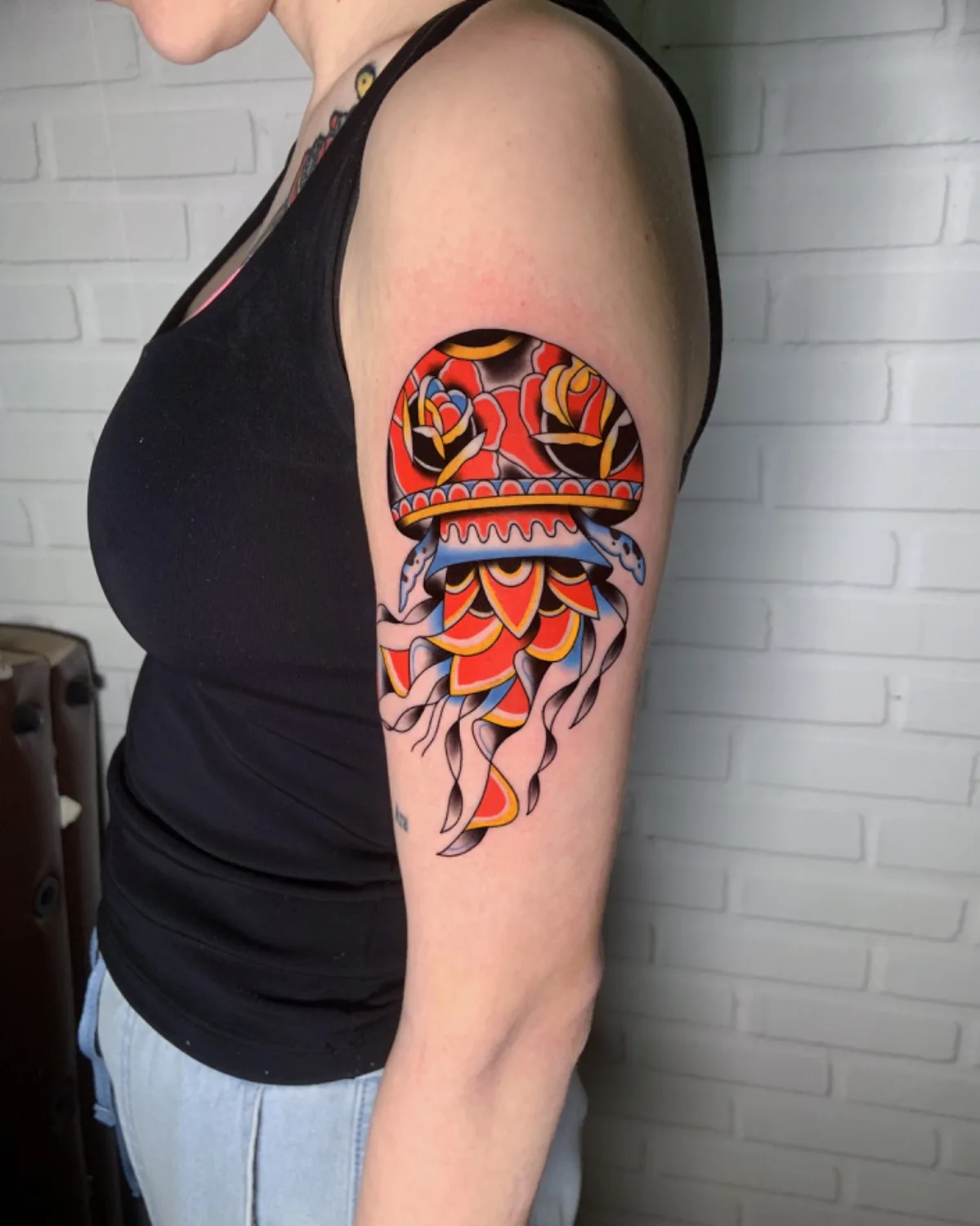
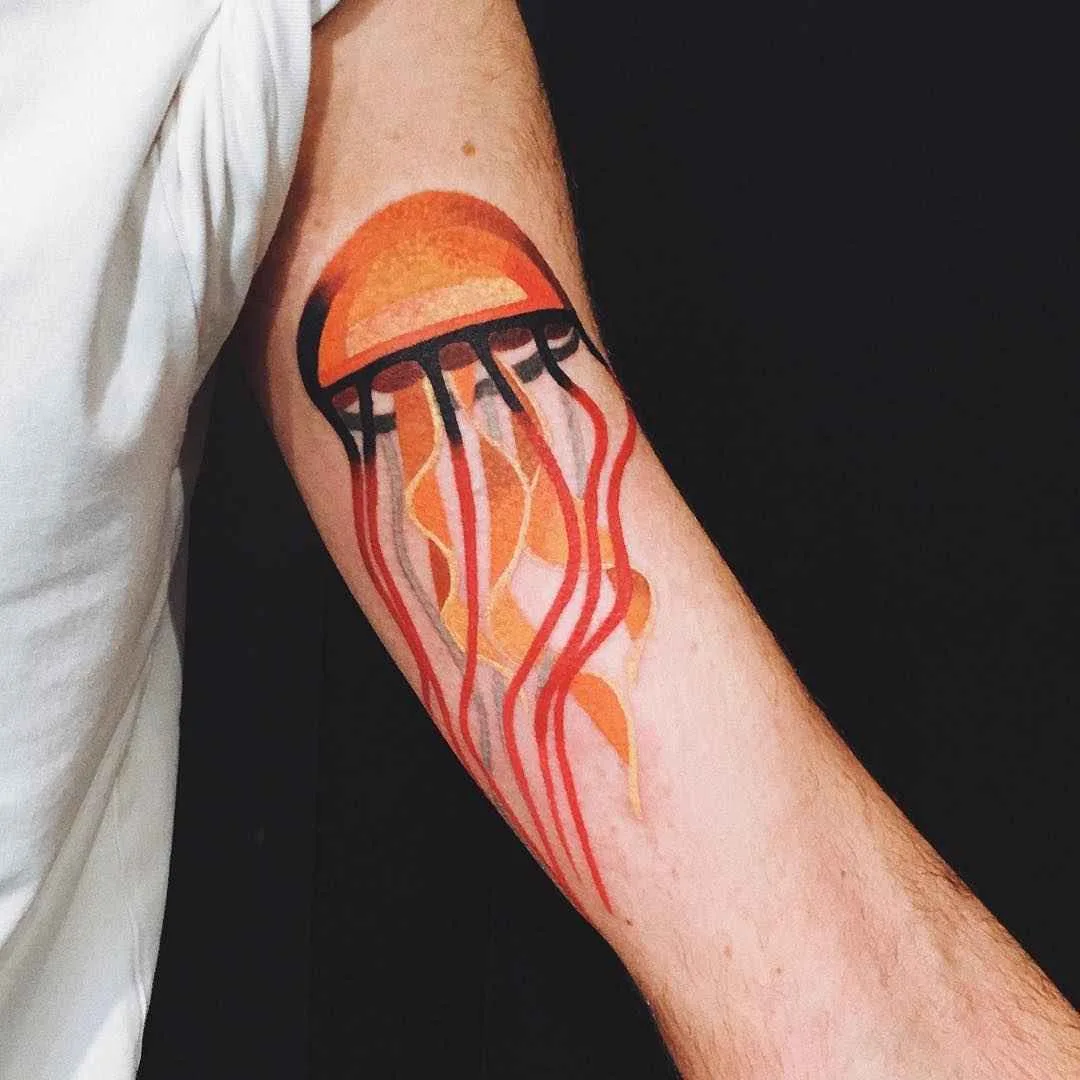
Yes. A dark rim around the bell and a few sweeping tentacles can give it a strong outline. Leave some bare skin inside the bell if you want that heavier version to keep a sense of translucence.
Which way should the tentacles point?
Downward strands give the design a suspended look; a diagonal sweep suggests a passing current. On an arm or leg, try both angles with the stencil and look at them from the side as well as straight on.