A Circle That Maps the World
Tibetan Buddhist monks spend days laying colored sand grain by grain, then sweep the finished mandala away and pour the sand into flowing water. If you’re exploring mandala tattoo meaning, that moment gives you two ways into the design: the circle maps a world around a center, and the sweeping shows how much care you can give to something you’ll eventually let go. The patience belongs to the making as much as the finished image.
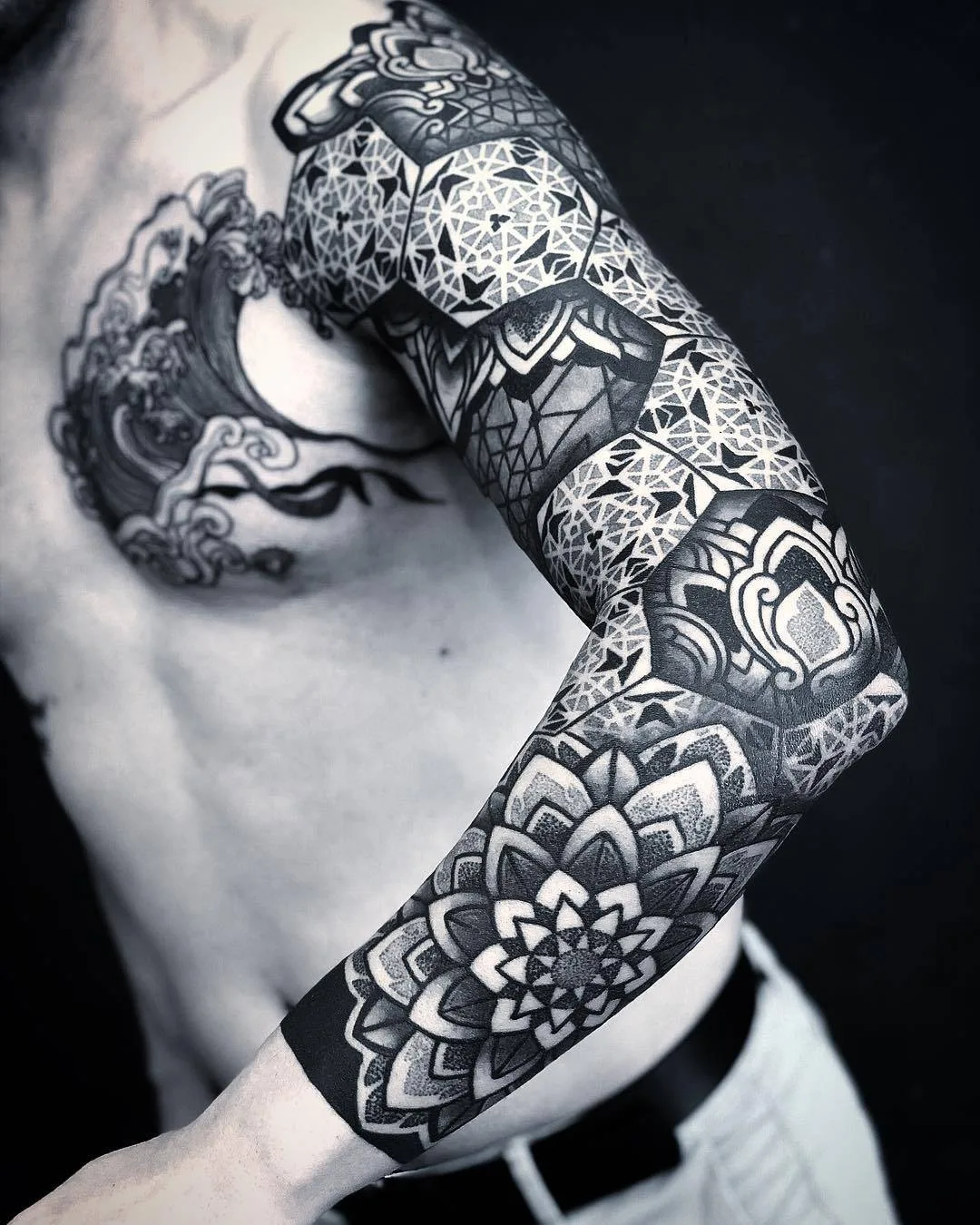
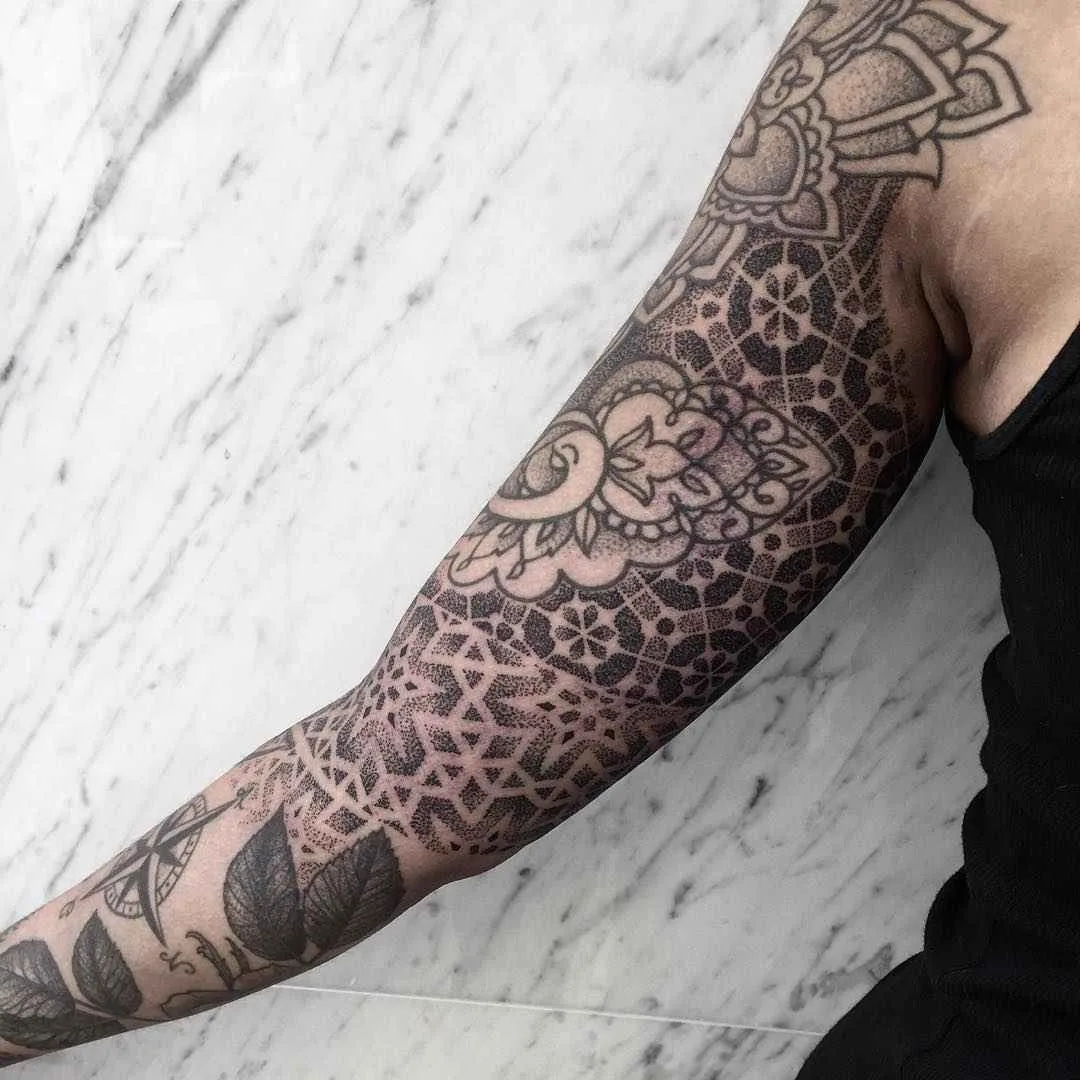
On skin, that center gives your eye somewhere to return after following the pattern outward. In modern tattoo designs, evenly spaced rings can suggest balance, a continuous circle can recall the cycle of life, and an opening flower can mark a fresh start. If attention is what draws you to the design, look at how the details guide your eye. A quiet center with room around it feels different from a dense pattern that keeps you looking. The mandala tattoo gallery is a good place to compare those approaches before you settle on a sketch.
Hindu and Buddhist Roots
The word “mandala” comes from the Sanskrit for “circle.” In Hindu and Buddhist Tantra, a mandala is a symbolic diagram of the cosmos used in ritual and meditation. Many Buddhist examples picture a deity’s palace from above: a square set inside circles, with four gates facing the cardinal directions. The square gives the diagram an orientation, and the gates give your eye a way in. Hindu yantras are related geometric diagrams with a similar role in worship and meditation.
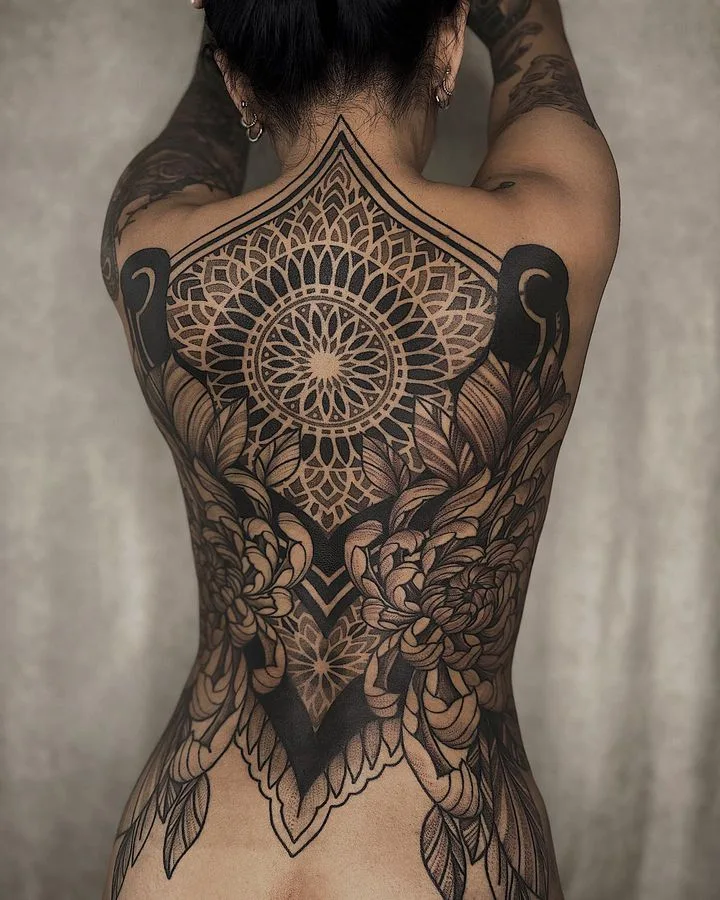
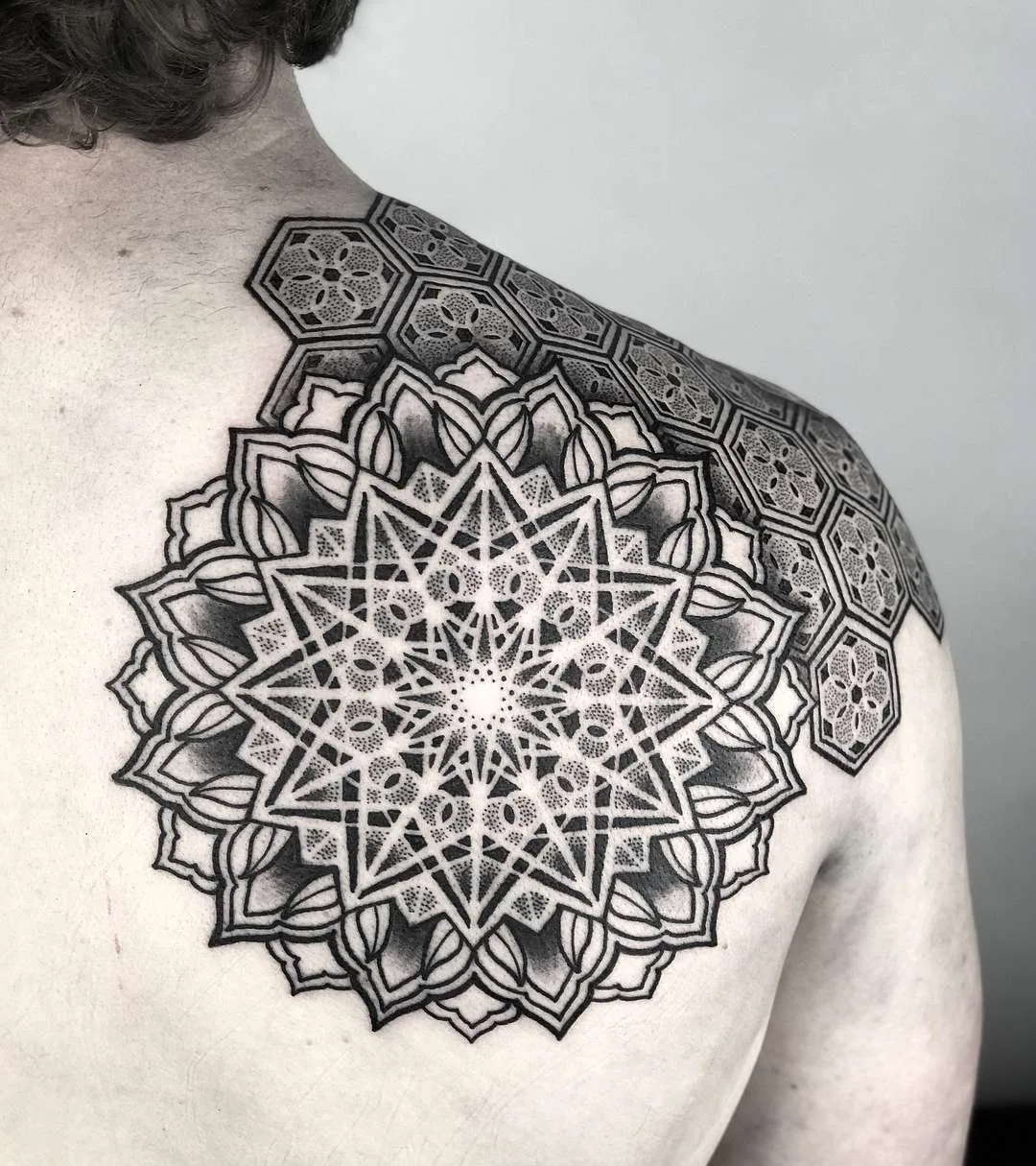
In Tibetan Buddhism, the ritual dismantling of a sand mandala teaches impermanence. The Metropolitan Museum of Art holds painted mandalas in its Asian art collection, among them a Nepalese Chakrasamvara Mandala. In a separate psychological reading, Carl Jung drew mandalas and discussed them as images of the self and inner wholeness in “Concerning Mandala Symbolism.” If a specific religious image catches your eye, learning what it depicts can help you decide which details you want to carry into your design.
Lotus Mandala and Other Combinations
In Buddhist and Hindu imagery, the lotus rises clean from muddy water, an image of purity and awakening. In the Womb Realm mandala of Japanese Shingon Buddhism, an eight-petaled lotus occupies the center. That arrangement also gives you a way to think about composition: a flower at the center draws your eye inward, while petals that widen toward the edge make the design feel as though it’s opening. For a closer look at the flower itself, see our guide to lotus tattoo meaning.
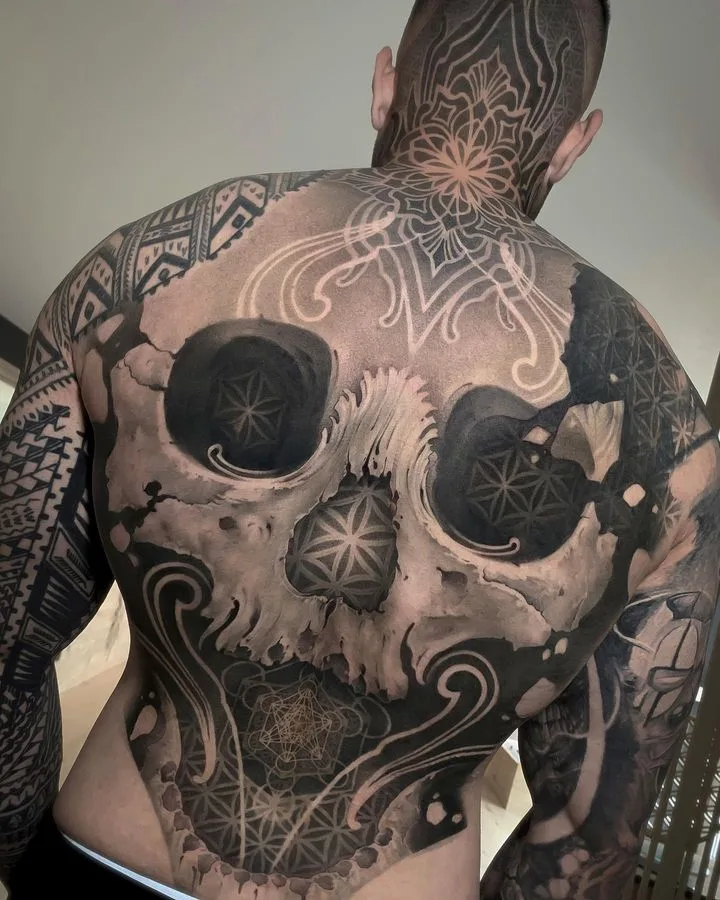
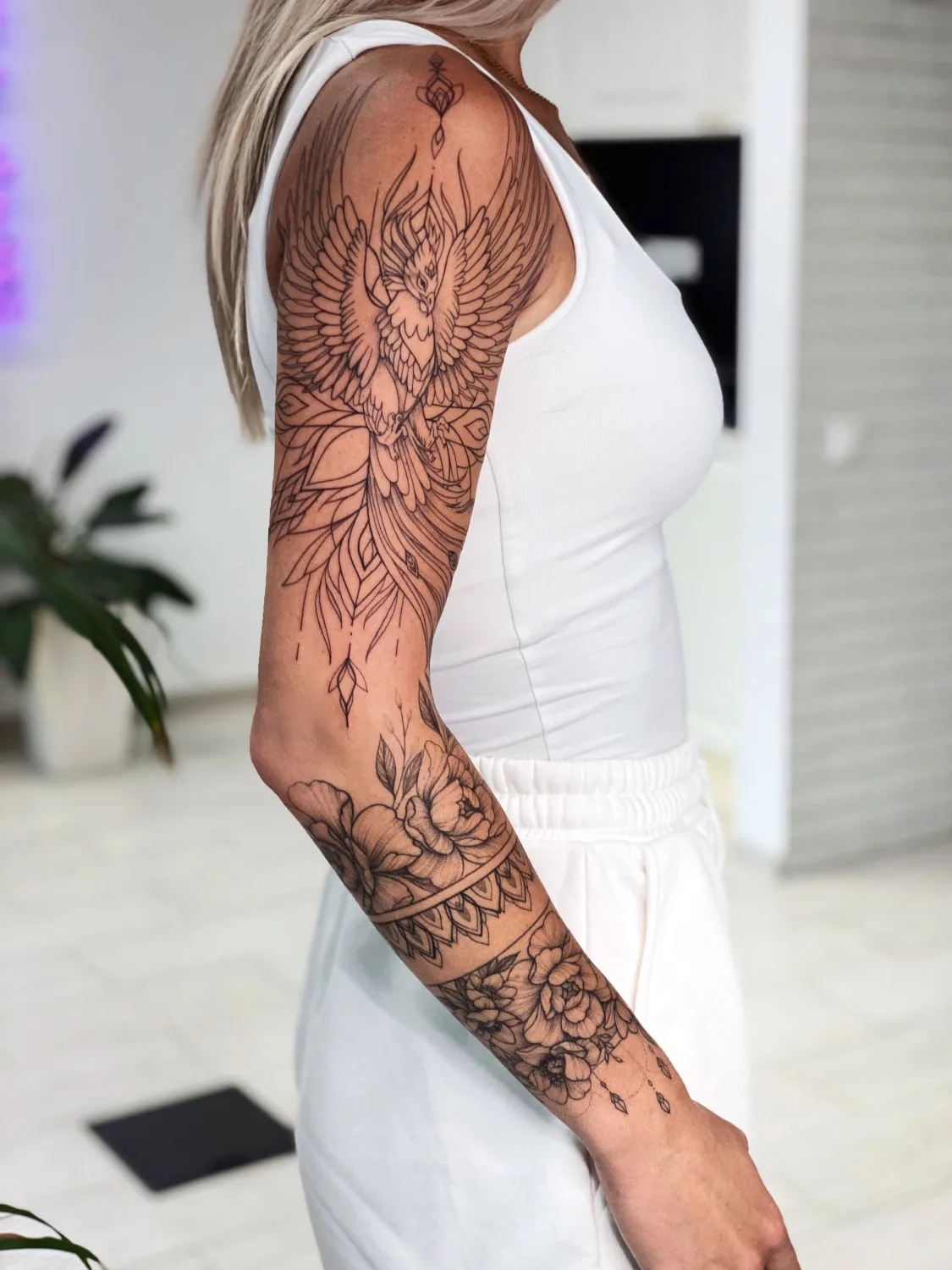
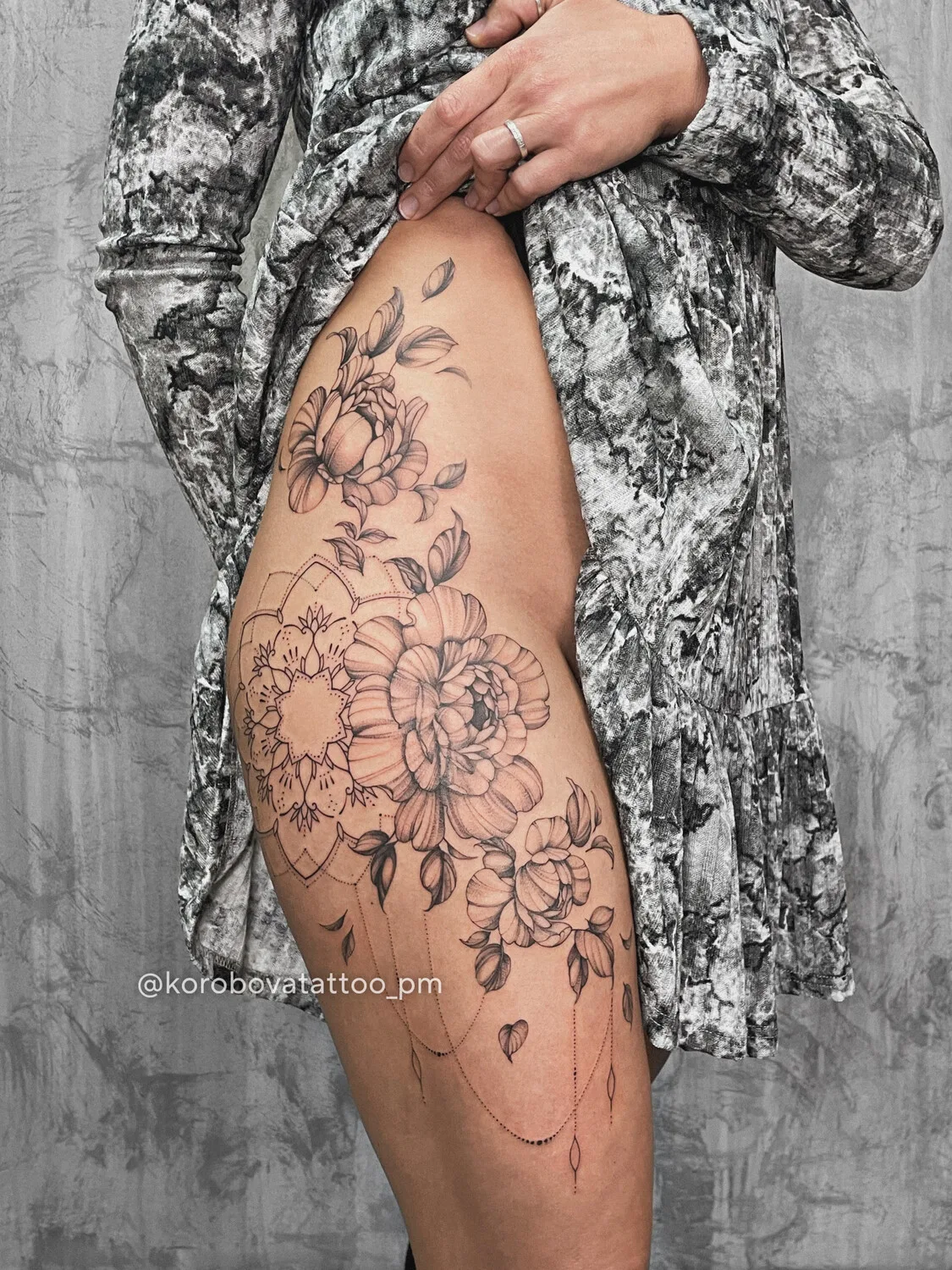
Other pairings can tell a more personal story. In tattoo work, a sun and moon can suggest alternating rhythms, a skull can bring mortality into view, and a favorite flower can recall a person or place. An elephant gives the design a figurative focal point, while the overlapping circles of the Flower of Life keep the emphasis on repetition.
Dotwork and Geometric Technique
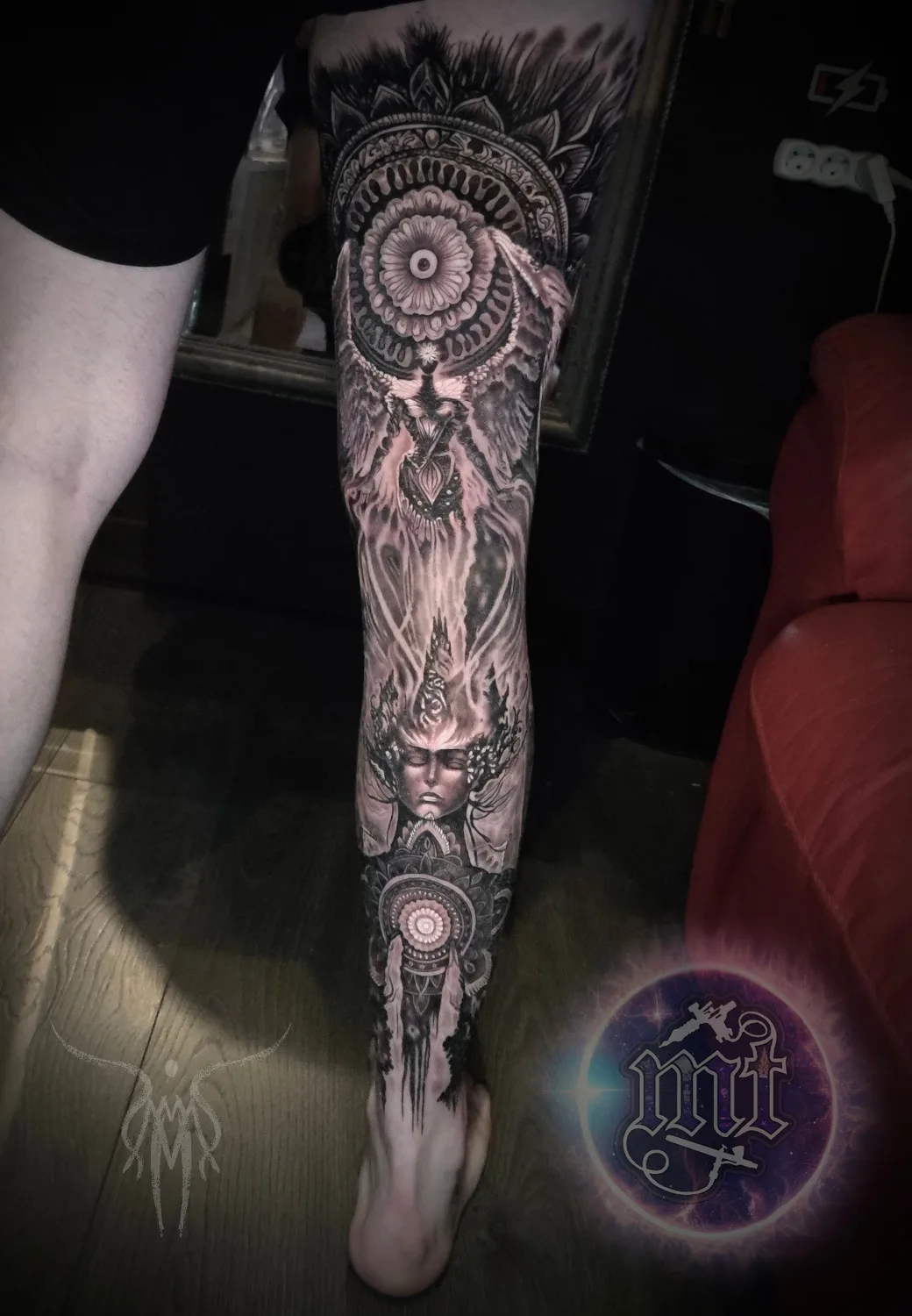
A dotwork mandala tattoo builds shading through the spacing of individual dots. Packed closely, they deepen the tone; spread farther apart, they let more skin show. That gradual change can give a petal a soft edge or make one ring appear to sit behind another. Fine geometric lines make the path through the pattern easier to follow. Compare healed work by dotwork artists to see how those transitions look once the skin has settled.
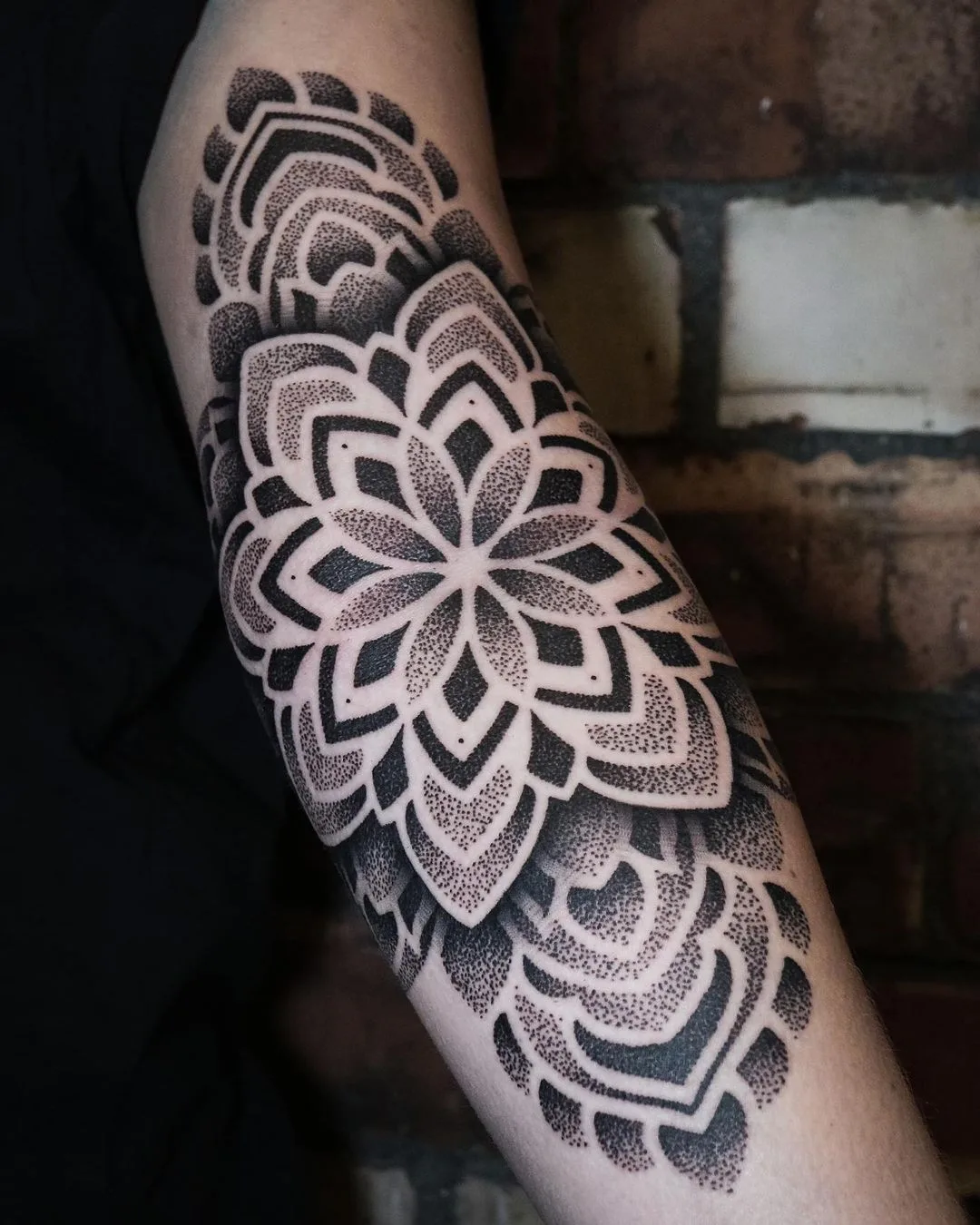
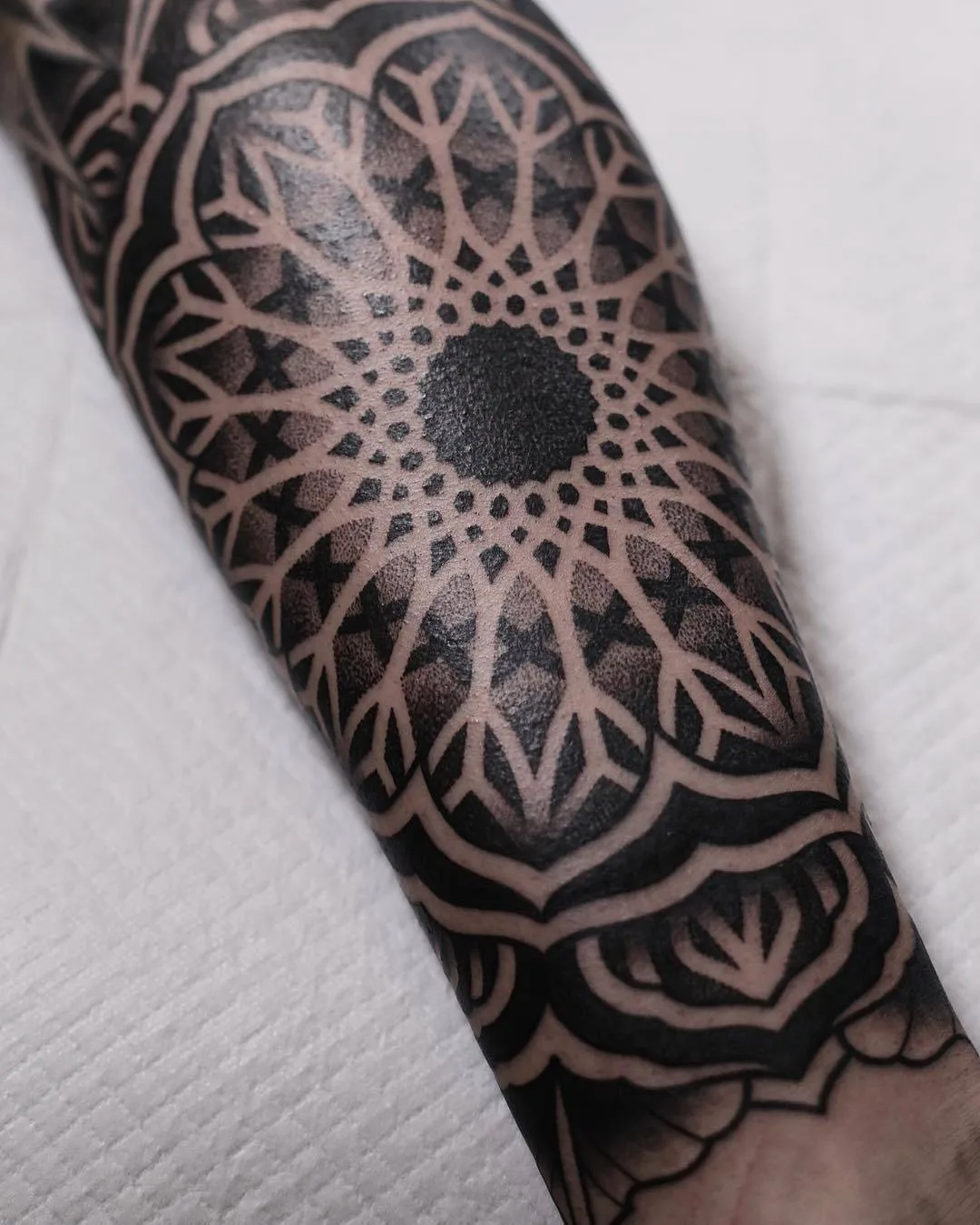
Radial symmetry makes stencil placement and consistent line weight especially important. When you consult geometric tattoo artists, ask how they would handle that at the size you plan to wear. If you want several tight rings in a small area, look at the space between them as carefully as you look at the lines. Dense dot shading takes repeated passes across the design, so ask how the artist would divide the work into sessions.
Back, Thigh, Sternum: Placement
Start with where you want the center to land. The middle of the back gives a broad circle room, while the spine provides an axis for a pattern that extends vertically. A sternum placement makes the centerline especially visible, and a thigh gives you room to see the whole outline from the front or let it wrap toward the side. A shoulder cap, elbow, or knee lets the rings follow a rounded surface. The top of the hand or foot gives a compact design a defined place to sit.
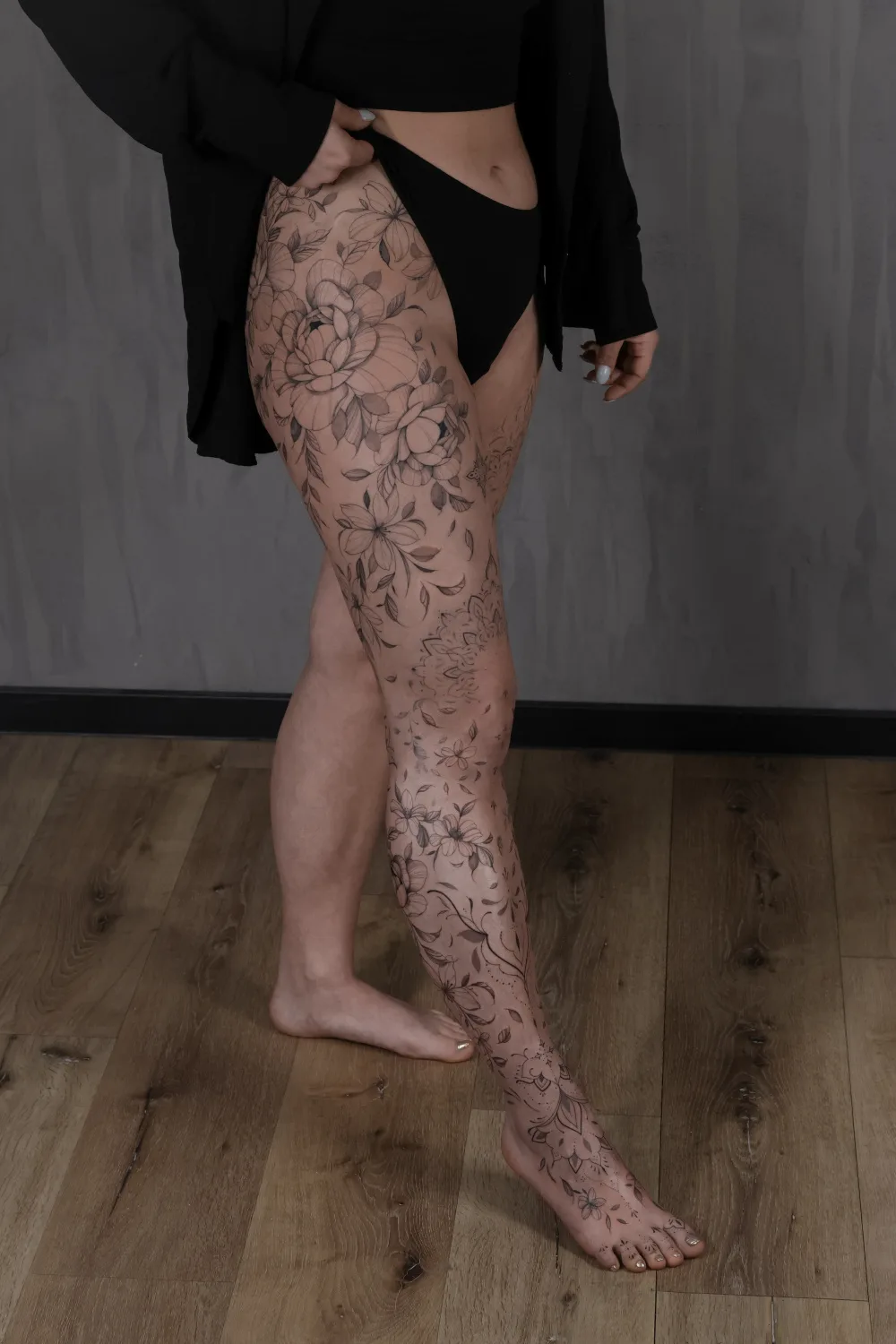
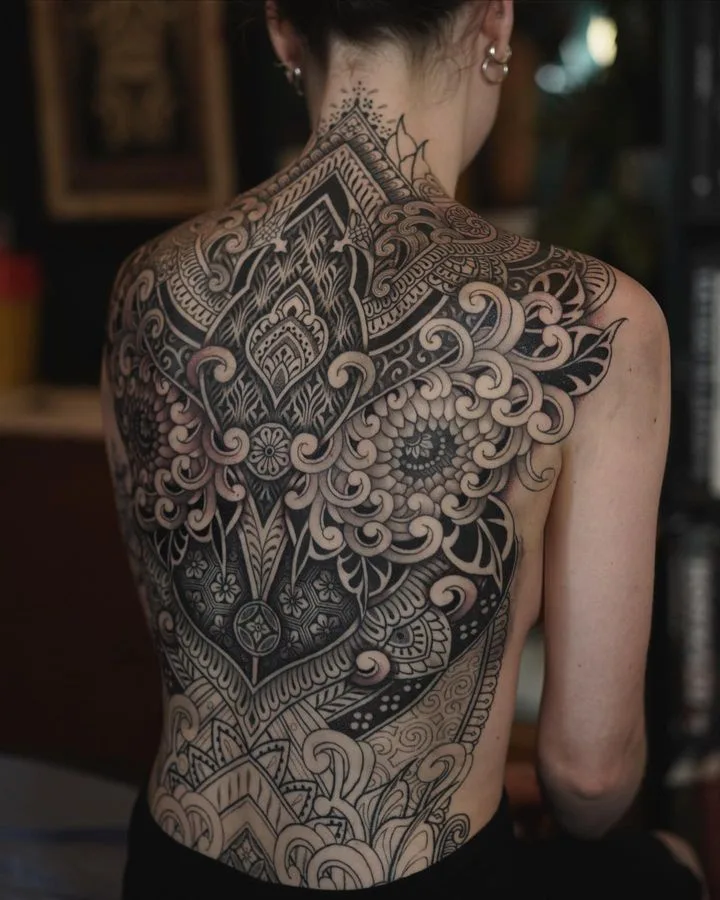
Ask to see the stencil while standing naturally, then move the nearby joint to see how the rings shift. The sternum, spine, elbow, and knee can feel especially sensitive during tattooing. Placement comes down to fit, visibility, and comfort, and any personal meaning you give the spot can weigh in too.
FAQ

What does a mandala tattoo mean?
In Hindu and Buddhist tradition, a mandala maps the cosmos around a sacred center. In tattoos, the return to that center often suggests focus or balance. For some wearers, the care that goes into repeating the pattern is what makes it a reminder of patience.
What does a lotus mandala tattoo mean?
In Hindu and Buddhist imagery, the lotus’s rise from mud into bloom evokes purity and awakening. A wearer might use that image to mark a fresh start after a difficult stretch.
Is it disrespectful to get a mandala tattoo?
Mandalas are sacred in Hindu and Buddhist practice, especially in Tibetan Buddhism. A thoughtful starting point is to learn the background of the image you plan to use. If it comes from a specific ritual tradition, find out what its figures and arrangement represent before adapting it.
Where is the best placement for a mandala tattoo?
Try the upper back or thigh if you want room for several detailed rings. For a compact pattern, a shoulder cap can carry the curve. Check the stencil from a few angles to see how the center sits.