Why Sailors Tattooed Swallows
A swallow leaves for the season and returns to familiar nesting ground. The swallow tattoo meaning sailors carried starts with that flight home: safe return, loyalty, hope, and the stubbornness to find your way back after a long journey. For sailors facing months at sea, the bird showed exactly what they wanted most.
In maritime folklore, swallows were among the first birds sailors might see as a ship approached land. Spotting one meant the voyage was nearly over. The best-known story is about mileage: a sailor earned one swallow after 5,000 nautical miles at sea and a second after 10,000, or so the story goes. Nobody kept an official count, but the tale tied the sailor swallow tattoo to experience and hard-won miles.
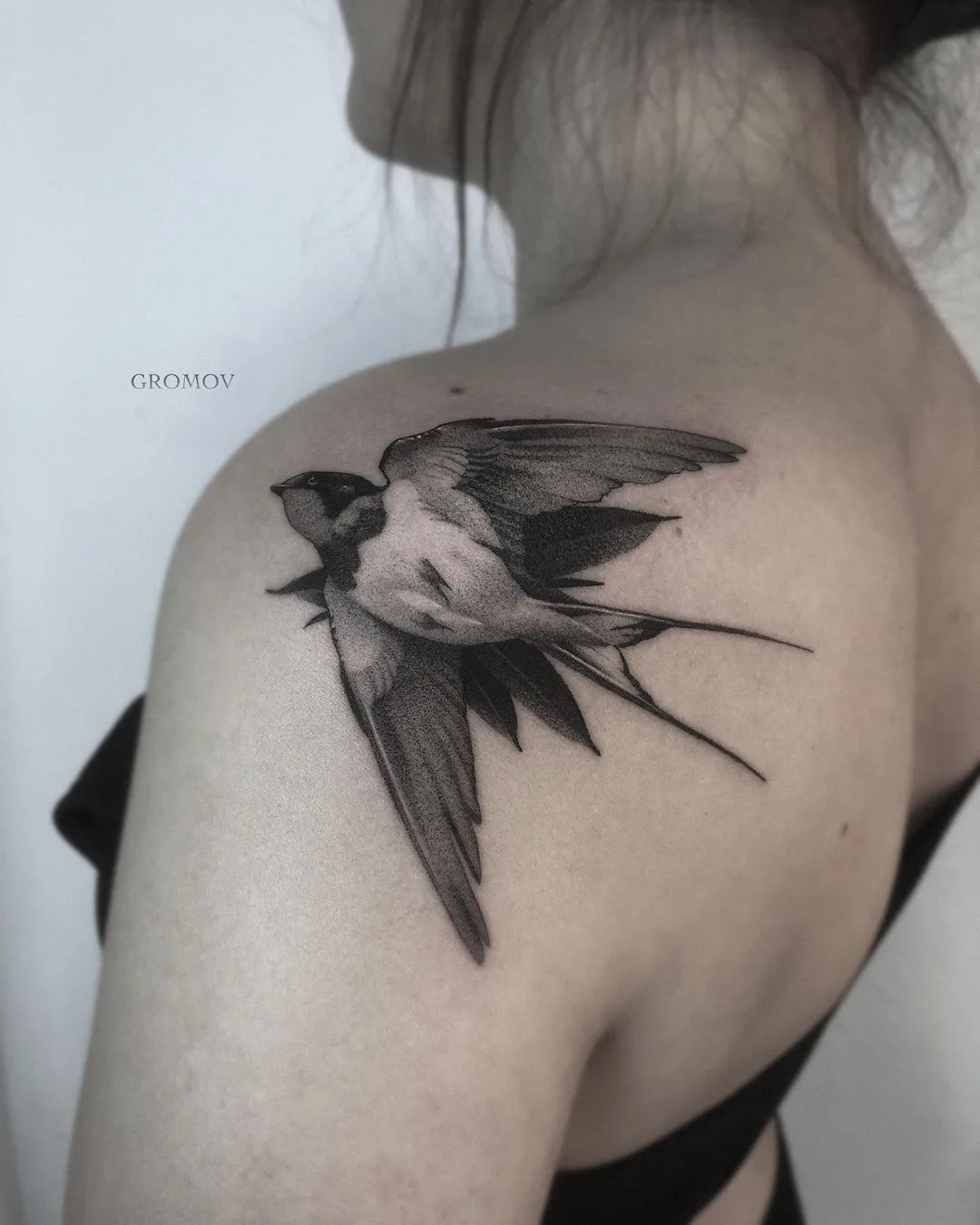
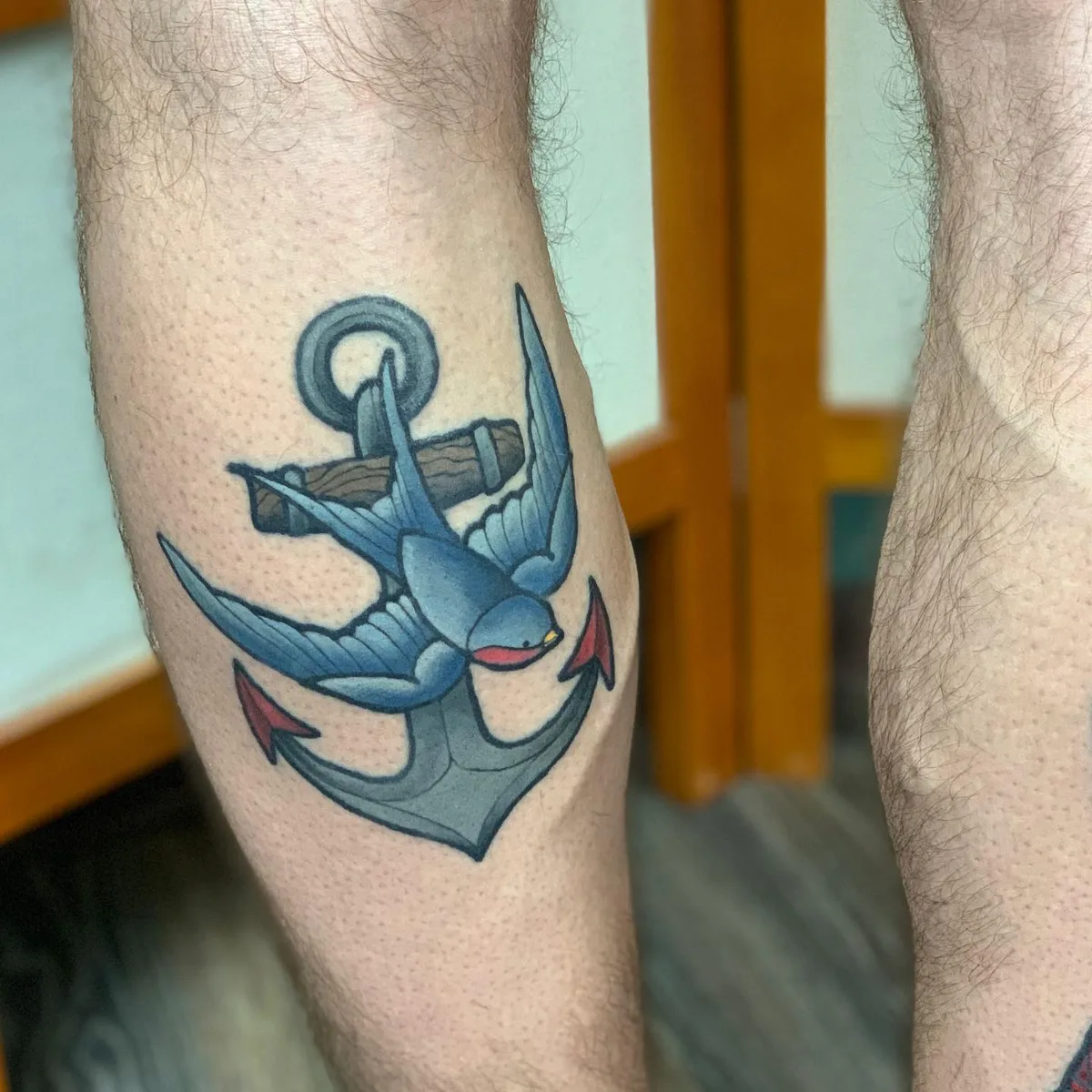
The bird also carried a solemn reading. According to sailor folklore, swallows carried the souls of drowned seafarers to heaven. That makes the bird a natural memorial for someone lost at sea, or for any loved one who still guides you. An anchor, banner, date, or name can make that dedication clearer. A compass tattoo can add direction, purpose, or the idea of navigating through uncertainty.
Older stories widened the symbolism beyond the deck of a ship. In Latin retellings of the myth of Procne and Philomela, Procne becomes a swallow (Greek versions usually make her the nightingale), and Plutarch writes that Isis once took the form of a swallow. Chinese tradition welcomes the swallow as a herald of spring, and European folk belief treats a nest on a house as a fortunate sign. In Christian painting, the bird appears in Annunciation and Nativity imagery. Aristotle’s line in the Nicomachean Ethics that one swallow does not make a spring lives on in the English saying “one swallow doesn’t make a summer.”
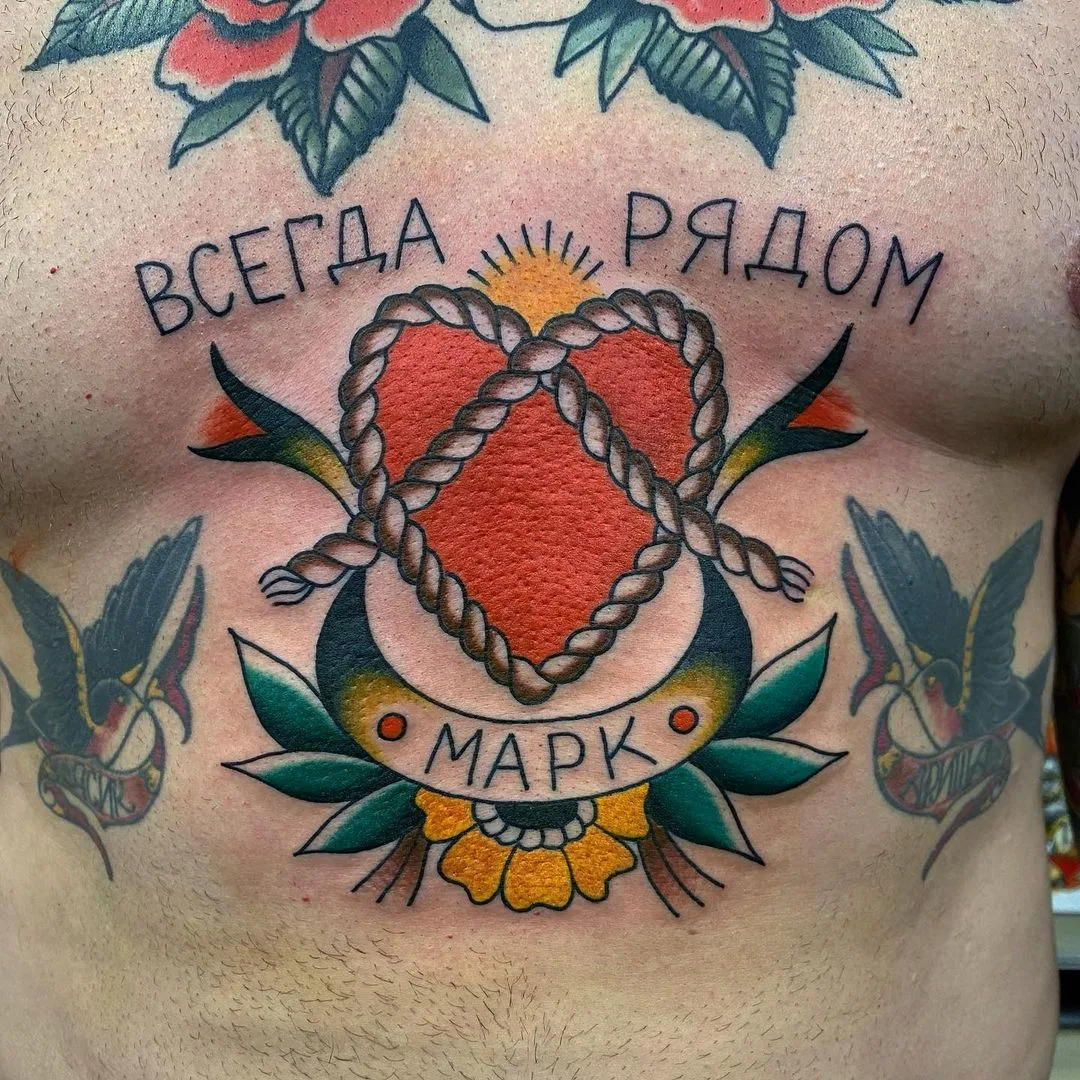
American traditional tattooing gave the motif its most recognizable visual language. Norman Collins, known as Sailor Jerry, worked in Honolulu and helped establish the forked-tailed bird within that repertoire. Bold outlines, compact shapes, and flat areas of red, blue, yellow, or black allowed the design to remain readable. Nautical stars, anchors, hearts, roses, and banners became natural companions.
Coming Home: Loyalty and Return
Swallows show site fidelity, returning to familiar nesting areas year after year. That behavior made the bird a persuasive emblem of attachment to home and to the people waiting there. If you want a tattoo about moving away without cutting your roots, the swallow can hold both sides of the story: the courage to leave and the promise to return.
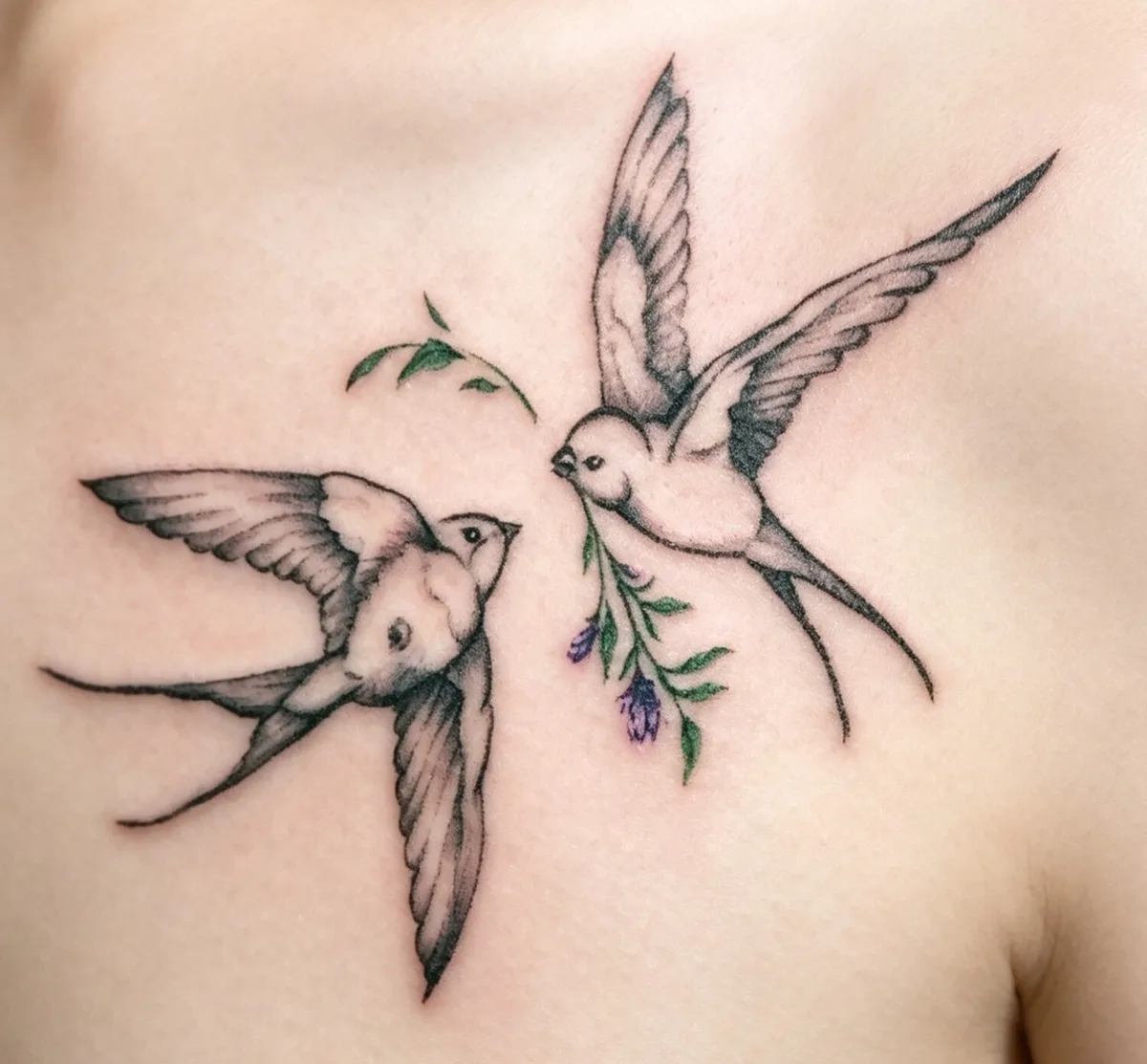
Loyalty is often expressed through a single bird flying toward a name, initial, house, flower, or landmark. The surrounding detail identifies what “home” means to you. A ribbon can carry a short dedication, while a nest or branch creates a quieter domestic image. Couples may choose mirrored birds, and relatives or close friends may share related designs. In contemporary tattoo culture, a pair commonly represents partnership, family, or friendship.
The old mileage tale gives two birds another layer. In maritime folklore, the second swallow marked 10,000 nautical miles after the first marked 5,000. Modern wearers rarely treat that story as an entry requirement. The pair can instead frame a heart, move toward each other across the chest, or fly in the same direction to represent two lives sharing a course.
Homecoming can also be emotional rather than geographical. People choose swallows after recovery, grief, a major relocation, military service, or a difficult period that changed their sense of belonging. The design works especially well when you can name the return at its center: returning to family, to safety, to health, or to yourself. That personal focus keeps a familiar old-school motif connected to your own life.
Swallow vs Sparrow: How to Tell
The clearest distinction is the silhouette. A swallow has a slim body, long pointed wings, and a deeply forked tail that often looks like two narrow streamers. Artists usually draw it in active flight, banking or diving through open space. A sparrow has a fuller body, shorter rounded wings, and a compact tail with a straighter or lightly notched edge. It is often shown perched, although either bird can appear in flight.
Traditional flash sometimes blurs those features. Simplified birds with blue wings, red breasts, and divided tails may be labeled inconsistently. The picture matters more than the label when identifying an existing design. Long sweeping wings and a pronounced fork strongly suggest a swallow; a chunky body and short tail point toward a sparrow.
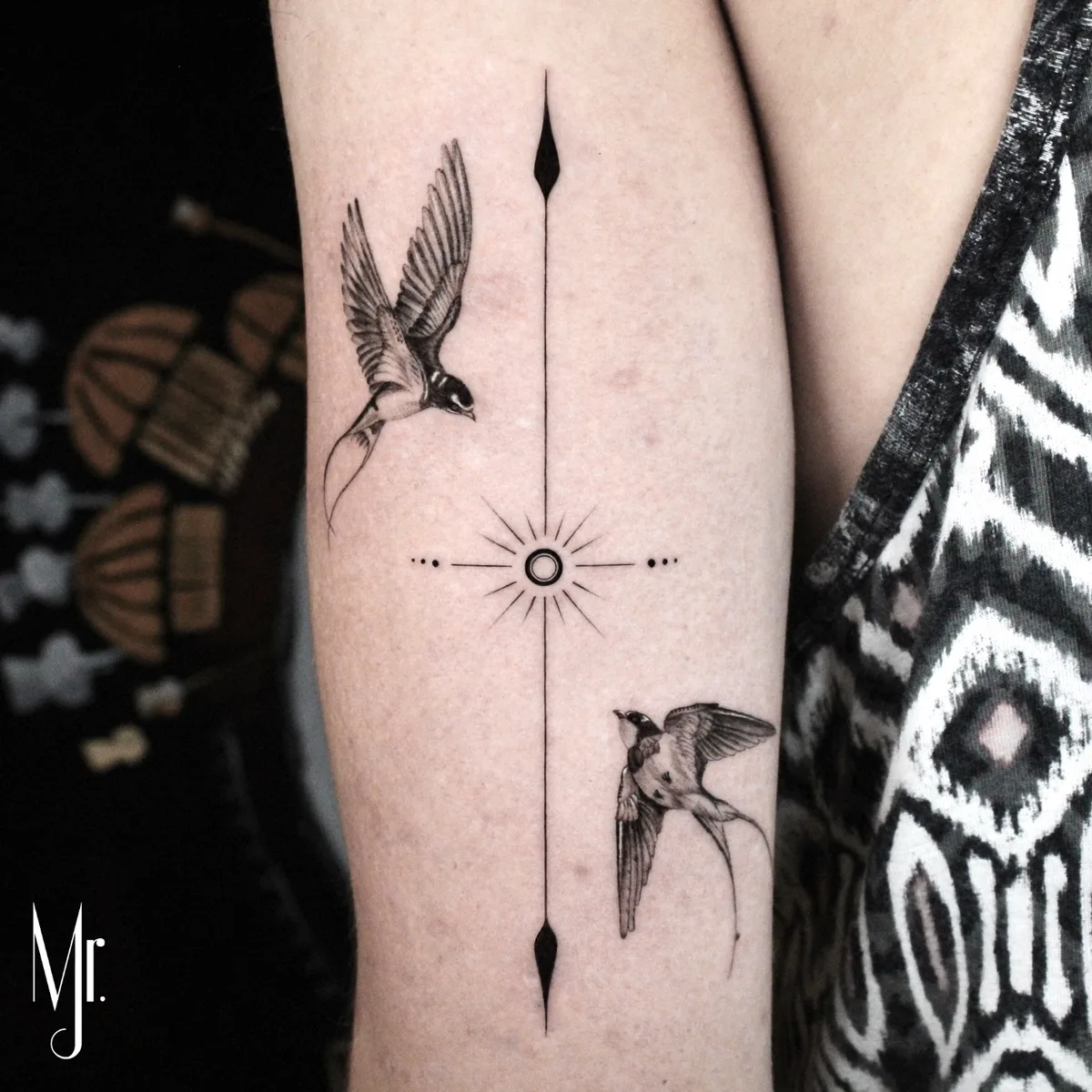
The symbolic emphasis differs as well. Swallows draw heavily from maritime folklore, migration, homecoming, and a safe return to shore. Sparrows are commonly read through everyday resilience, community, humility, and the value of an ordinary life. Our guide to the sparrow’s tattoo symbolism explores that bird in greater depth.
For a custom piece, tell your tattoo artist which species you want and ask for a sketch with recognizable anatomy. Tail shape is especially useful in a small design. Color alone is less reliable because tattoo palettes are often decorative rather than naturalistic.
Swallows on Hands, Chest and Neck
Placement changes how the bird moves with your body, how visible it is, and how much detail the artist can include. It does not supply a fixed symbolic code. The hand, chest, and neck became popular because each area supports a different version of the swallow’s compact, dynamic shape.
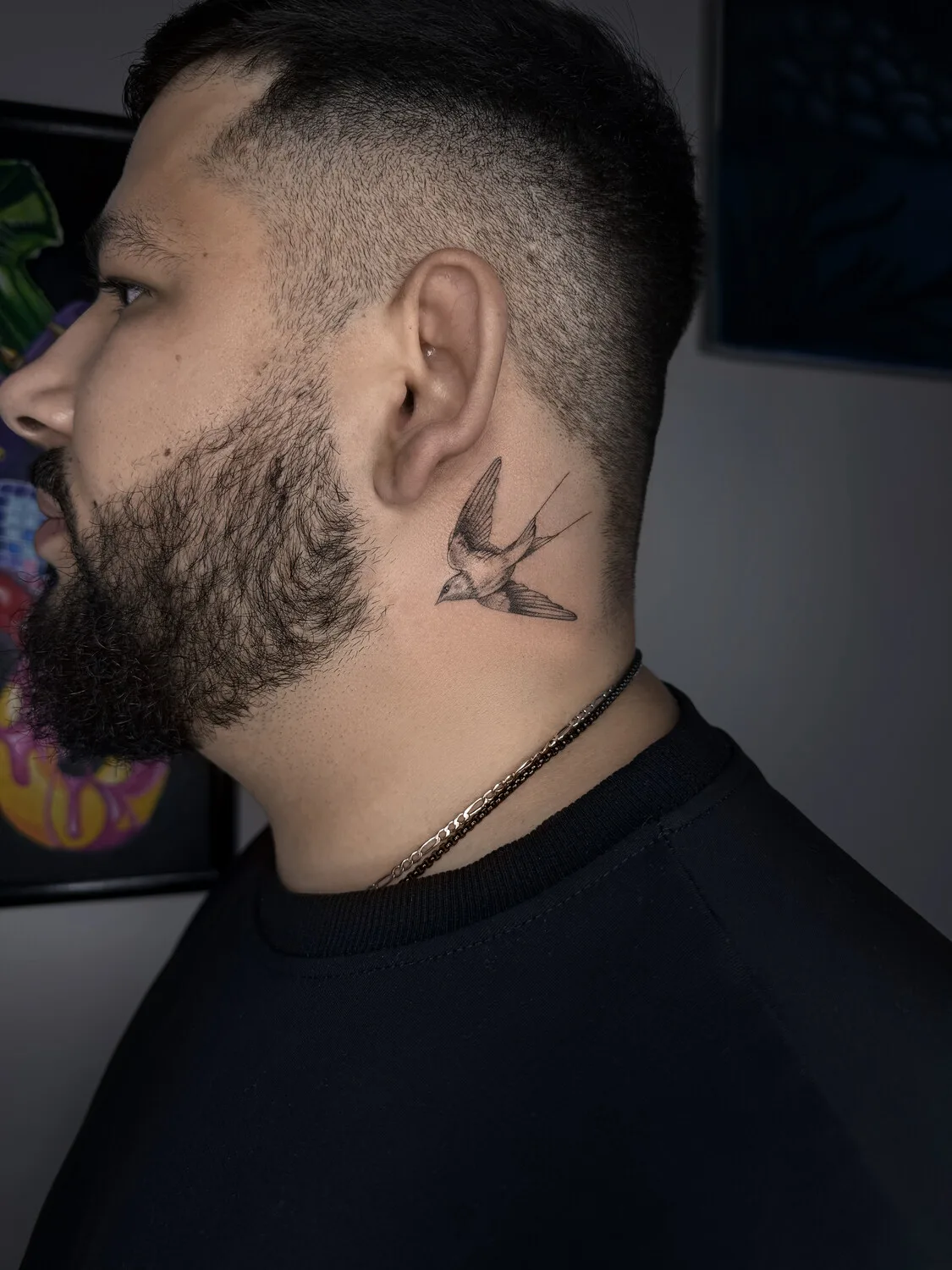
In traditional flash, the web of the hand between thumb and index finger is a classic spot for a swallow. Modern folklore sometimes calls hand swallows signs of “fast hands” and links them with fighters or pickpockets. Those claims are loose and contradict each other, so a hand swallow tells you nothing certain about the person wearing it. A hand design is highly visible and moves whenever you gesture. It also faces frequent sun exposure, washing, and friction, which can affect fine detail over time.
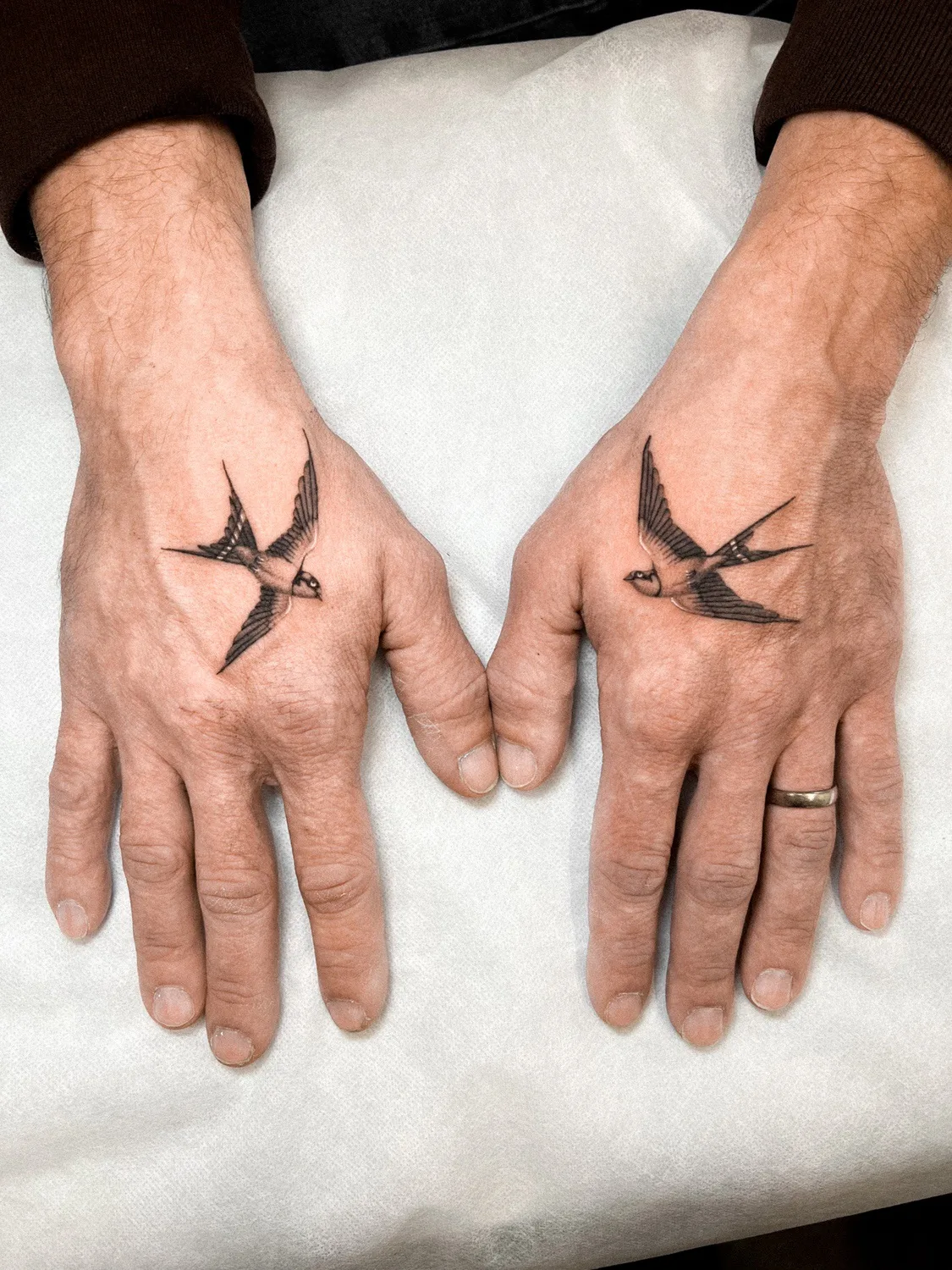
The chest gives an artist room for a classic mirrored pair. Two birds can face each other above the heart, frame lettering, or fly outward toward the shoulders. The broad surface supports stronger wing shapes and larger additions such as roses, nautical stars, or a banner. It also lets you keep the tattoo covered when you choose.
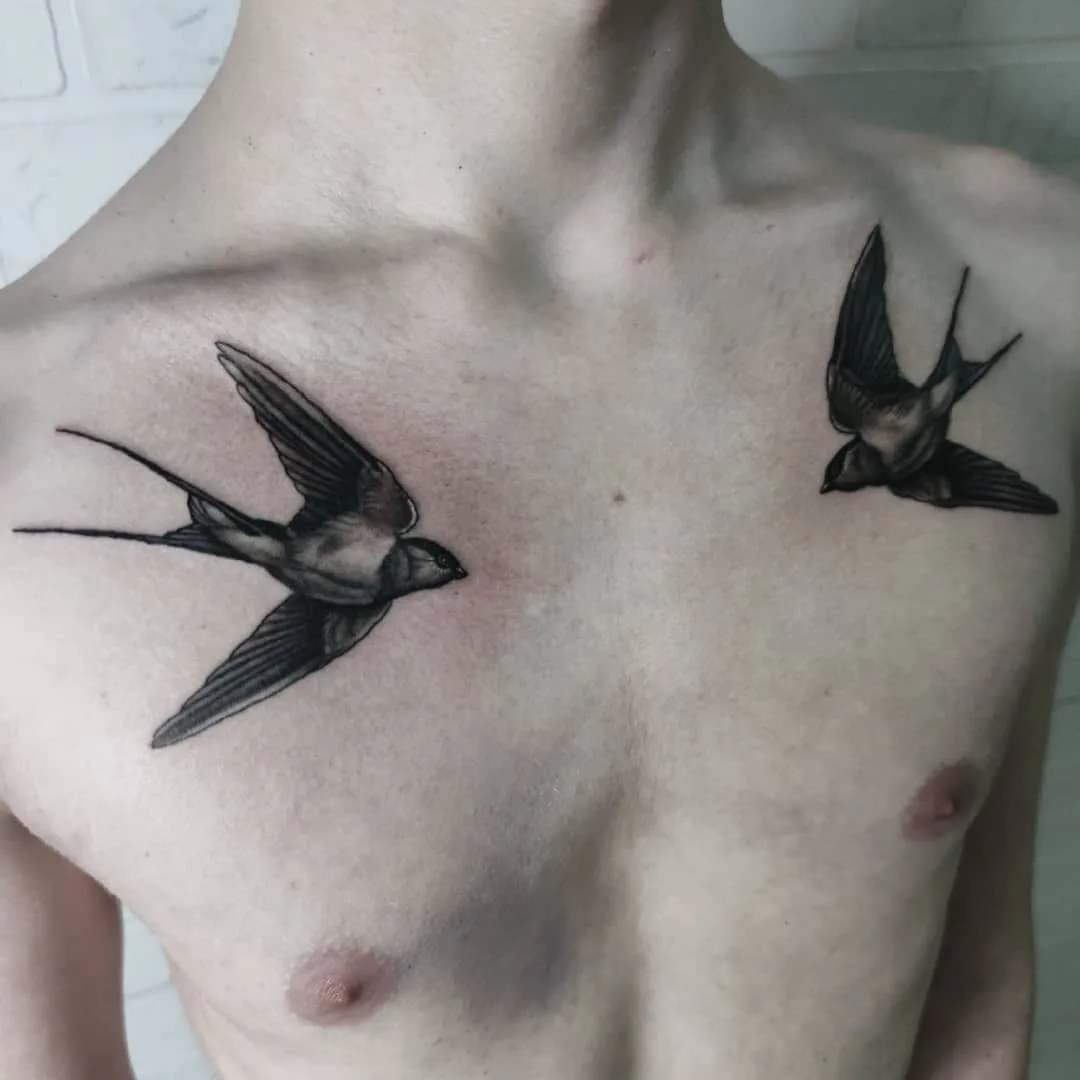
On the neck, a swallow can follow the curve below the ear or travel toward the collar. The placement suits a small bird in profile or a short group in flight, although visibility is difficult to avoid. Behind the ear and at the wrist, reduced designs work best when the wings and forked tail remain clear. Browse the swallow tattoo gallery to compare how artists adapt the bird to different parts of the body.
Traditional and Fine Line Swallows
Traditional tattooing gives the swallow a bold outline, simplified anatomy, and solid blocks of color. Red breast panels, blue or black wings, yellow accents, and a sharply divided tail create the familiar flash design. This approach suits hands, chests, forearms, and shoulders because the silhouette remains legible from a distance. Hearts, roses, banners, stars, and anchors can turn the bird into a fuller nautical composition.
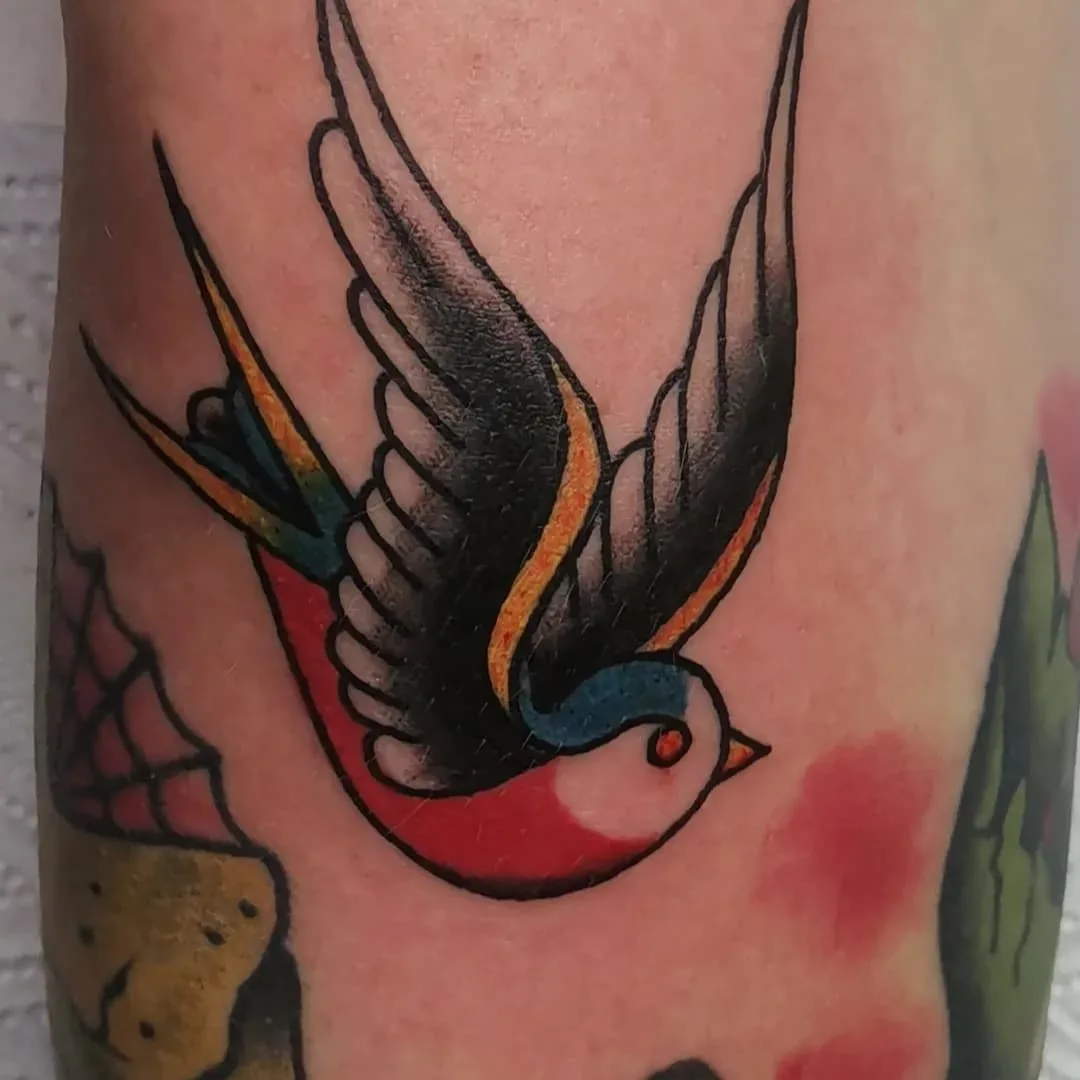
Neo-traditional work keeps the strong silhouette while adding richer shading, more elaborate feathers, and a wider palette. It is useful when you want the bird to feel decorative or dramatic without losing its old-school ancestry. A larger thigh, upper arm, back, or chest placement gives those details enough room.
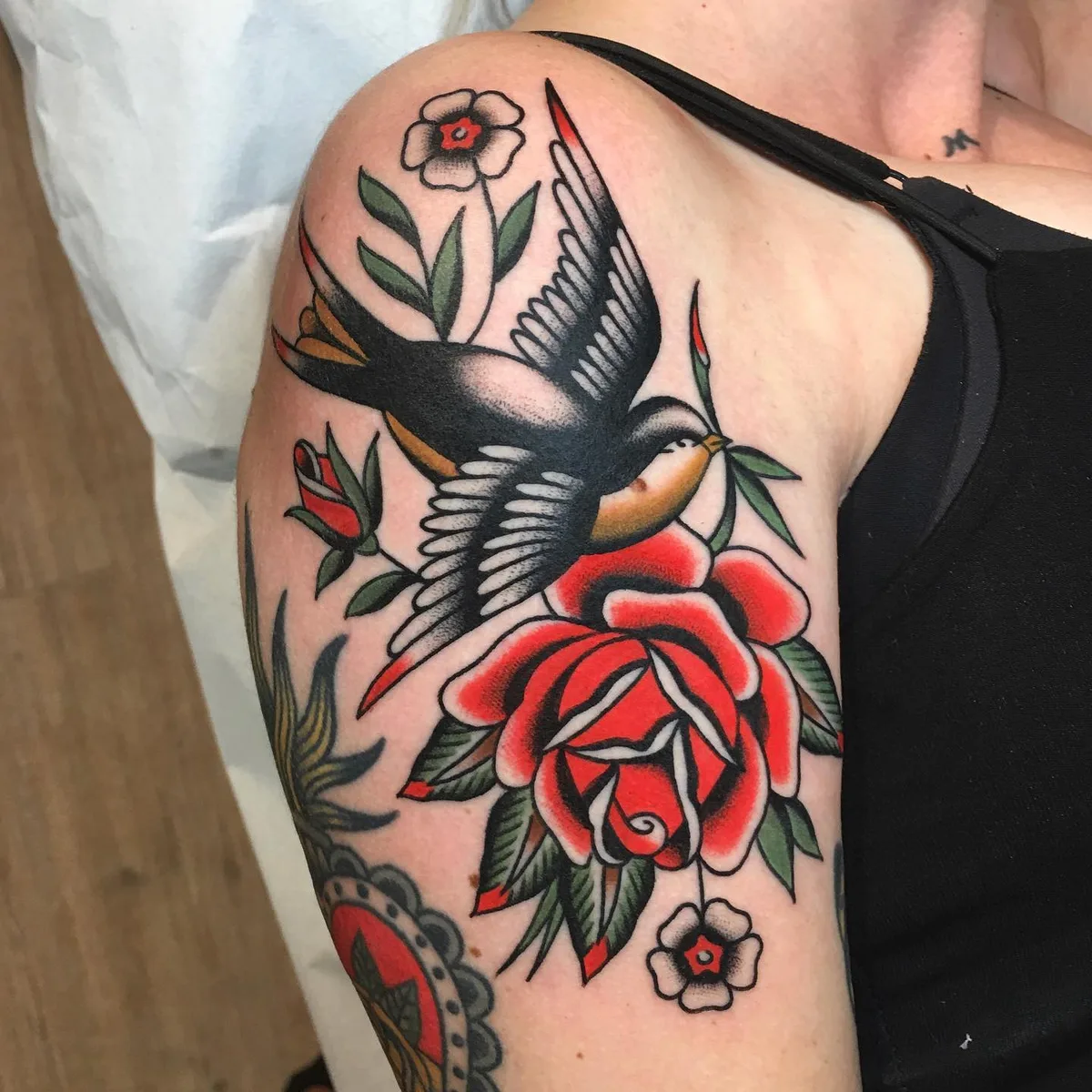
Fine line designs reduce the image to delicate contours and controlled interior marks. A single flying swallow can fit behind the ear, near the wrist, at the ankle, or along the collarbone. The design still needs a recognizable forked tail and pointed wings. Packing too many feathers into a tiny bird can weaken the silhouette, so restraint usually produces a clearer result.
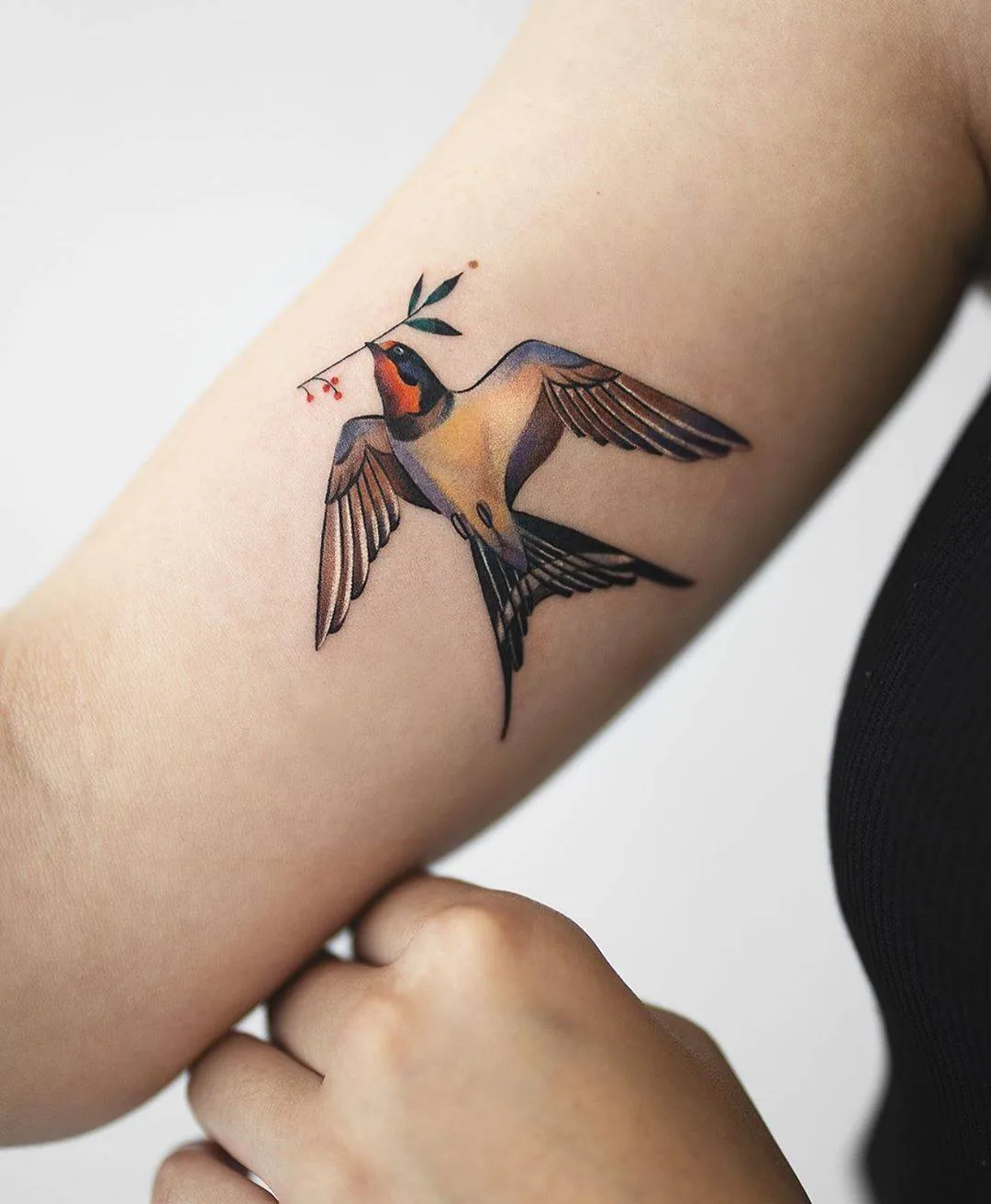
Realism focuses on natural proportions, feather patterns, and the bird’s movement in flight. It generally benefits from more space than a simple icon. Blackwork can translate the swallow into a solid graphic shape, while dotwork can create soft shading or a sense of atmosphere around it. Your choice should reflect both the intended mood and viewing distance: traditional feels direct and historic, fine line feels light, realism feels observational, and blackwork feels graphic.
FAQ
What does a swallow tattoo on the hand mean?
In traditional flash, the hand, especially the web between thumb and index finger, is a classic spot for the bird. Modern folklore has linked hand swallows with fast hands, fighting, or pickpocketing, but those claims do not form a consistent code. For many wearers, the design simply carries the broader themes of travel, loyalty, and returning home. The hand mainly affects visibility and wear: it is always on display and regularly exposed to washing, friction, and sunlight.
What's the difference between a swallow and a sparrow tattoo?
Look at the shape. Swallows have long pointed wings, streamlined bodies, and deeply forked tails. Sparrows have shorter rounded wings, stockier bodies, and compact tails. Old flash drawings sometimes mix the labels, so examine the anatomy rather than relying on a caption. Symbolically, swallows are strongly connected with sailors, migration, and homecoming, while sparrows are more often associated with resilience, community, and everyday life.
What do two swallows mean?
Maritime folklore says the first bird marked 5,000 nautical miles and the second marked 10,000. Today, a pair is also a common image for partners, relatives, or close friends. Birds facing each other may suggest reunion or mutual devotion, while two flying together can represent a shared journey. Adding initials, flowers, a heart, or a banner can make the intended relationship more specific.
Do swallow tattoos mean you've traveled?
They can. Sailor folklore tied swallows to long distances at sea, and the bird’s seasonal movement naturally supports themes of travel and return. Contemporary tattooing does not require proof of nautical mileage. You might use the motif for a move, a life-changing trip, migration between countries, or a difficult personal journey. It can also focus entirely on loyalty, spring, hope, memorial, or finding your way home.