Most people see a skull tattoo and think one thing: death. Fair enough, it's a human skull, after all. But that assumption misses almost everything interesting about the symbol. The skull is probably the single most layered image in all of tattooing, a motif that's been carved into stone, painted on monastery walls, stitched onto pirate flags, and pressed into Mexican candy molds for children. It celebrates the dead and reminds the living to pay attention. It rebels. It mourns. It laughs.
What a skull tattoo actually means depends entirely on how it's drawn, what surrounds it, and, most importantly, whose skin it sits on. A sugar skull inked across someone's forearm after losing a grandmother carries a completely different weight than a geometric skull on the wrist of a twenty-two-year-old philosophy student. Same bone structure. Worlds apart in intention.
This is a symbol that's earned its permanence. Let's get into why.
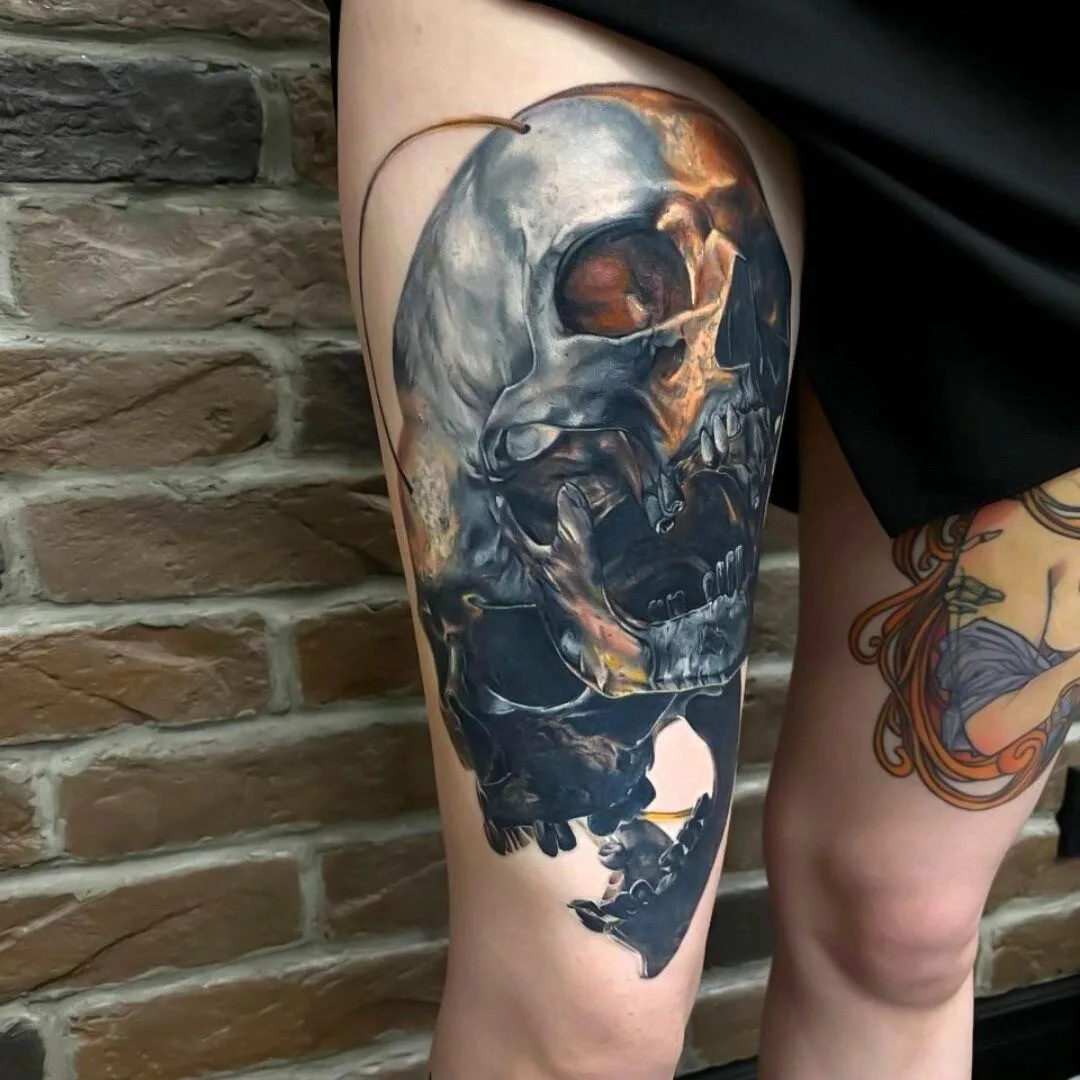
The Meaning of a Skull Tattoo
For those short on time, here's the quick version:
| Cultural Context | Meaning | Visual Style | Purpose |
|---|---|---|---|
| Western Memento Mori | Remember mortality, live deliberately | Realistic skull with hourglasses, candles | Philosophical reminder |
| Mexican Día de los Muertos | Joyful celebration of the dead | Colorful sugar skulls with flowers | Memorial celebration |
| Tibetan Buddhist | Impermanence and liberation | Crowned skulls with flames | Spiritual teaching |
| Modern Punk/Biker | Rebellion and non-conformity | Bold, stark designs | Counter-culture identity |
A Symbol as Old as Time: The Historical Roots of the Skull
The skull didn't become a powerful image because tattoo artists decided it looked cool, though it certainly does. Its roots run back thousands of years, across civilizations that never shared a border or a language but somehow arrived at the same conclusion: this piece of bone means something.
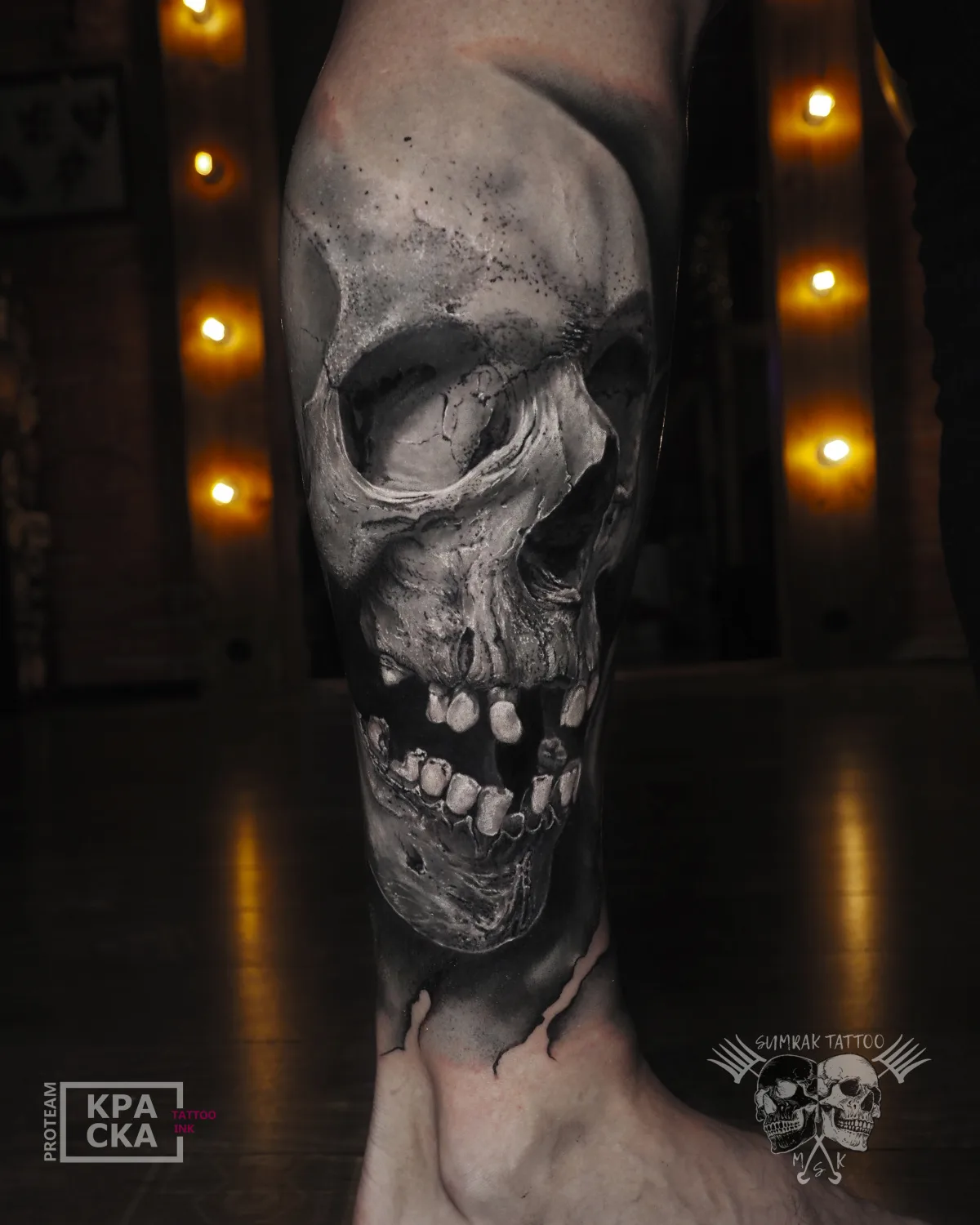
Memento Mori: The Skull in Western Art
The Latin phrase memento mori"remember that you will die", dominated European art and philosophy from the medieval period through the Renaissance. Skulls appeared in paintings, on rings worn by monks, carved into the headstones of 17th-century New England, and eventually engraved into the flash sheets of early Western tattoo parlors.
The idea wasn't morbid. Or rather, it wasn't only morbid. Memento mori was a practical philosophy: if you remember that all of this ends, you might actually bother to live well. The skull sat on a scholar's desk beside an hourglass and a guttering candle, not to frighten, but to focus. Dutch vanitas paintings from the 1600s made this explicit, pairing human skulls with wilting flowers, spilled wine, and half-eaten fruit. Beauty fades. Enjoy it now.
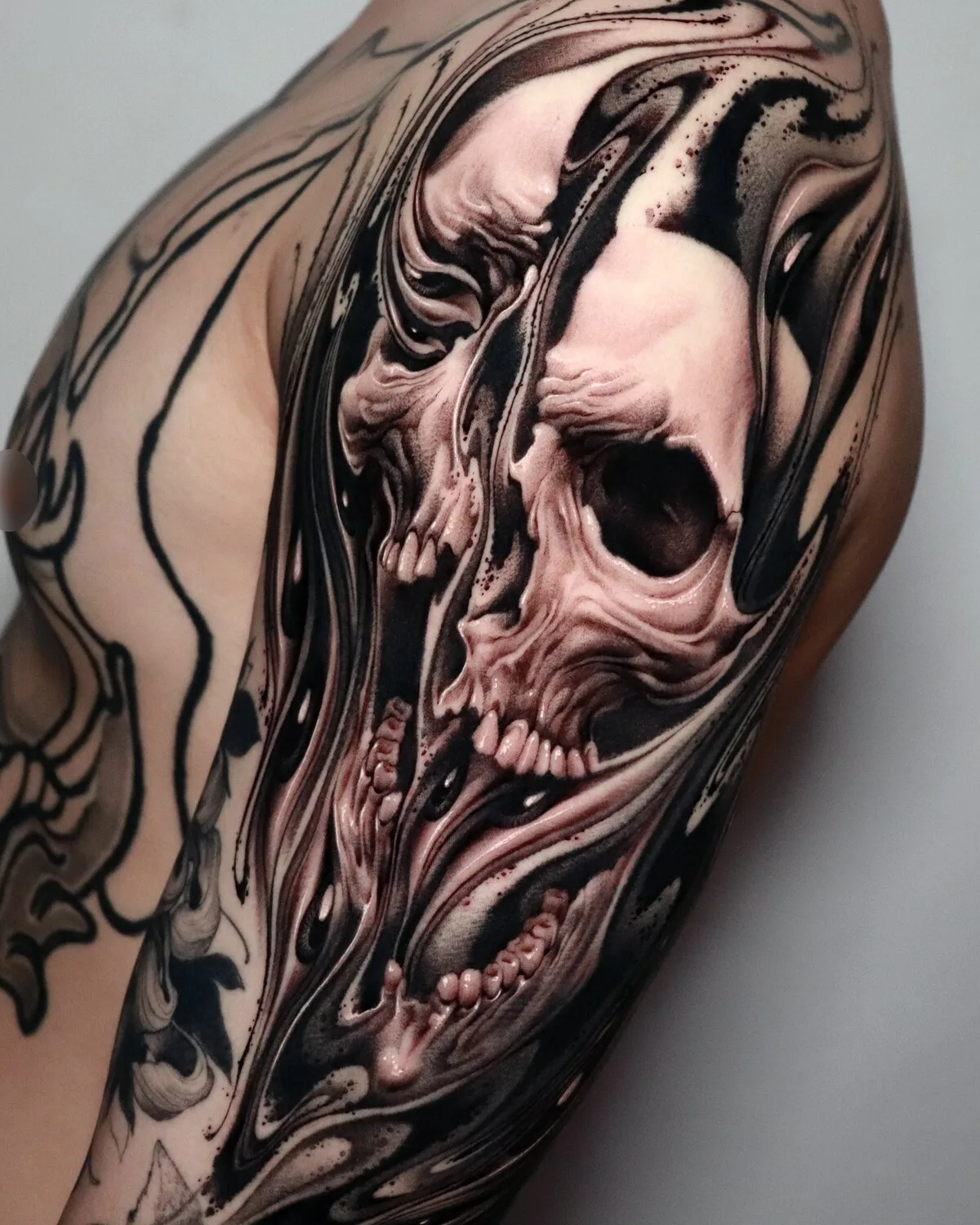
When this concept migrated into tattoo culture, it kept that philosophical edge. Sailors, soldiers, and eventually everyday people wore skulls to acknowledge risk, mark close calls, or simply carry a personal reminder that time isn't unlimited. It's a meaning that hasn't faded, and honestly, it probably never will.
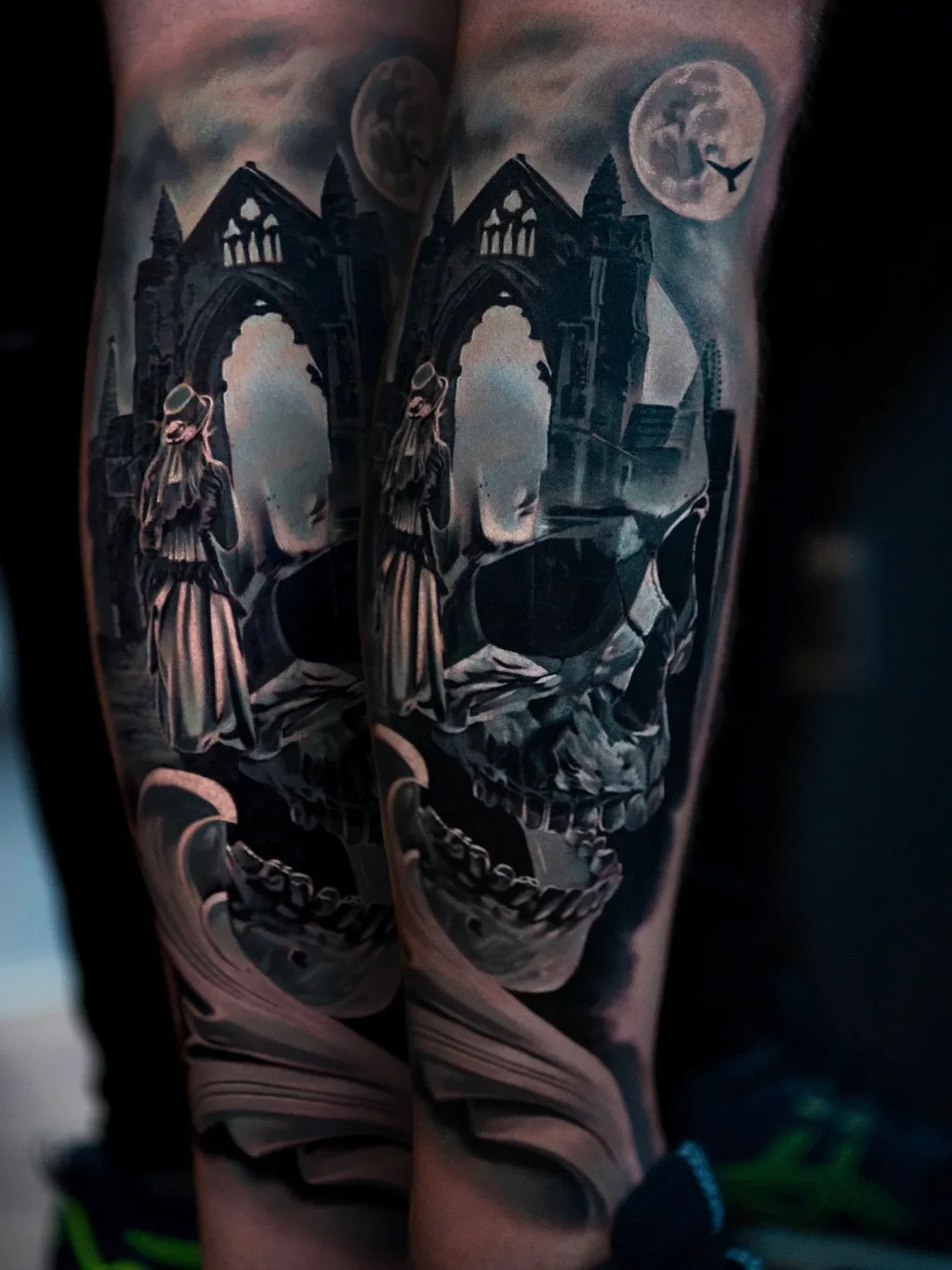
Ancient Cultures and Skull Symbolism
Long before European vanitas painters picked up their brushes, ancient civilizations assigned the skull tremendous spiritual significance. The Celts, for instance, regarded the head as the seat of the soul and of power.
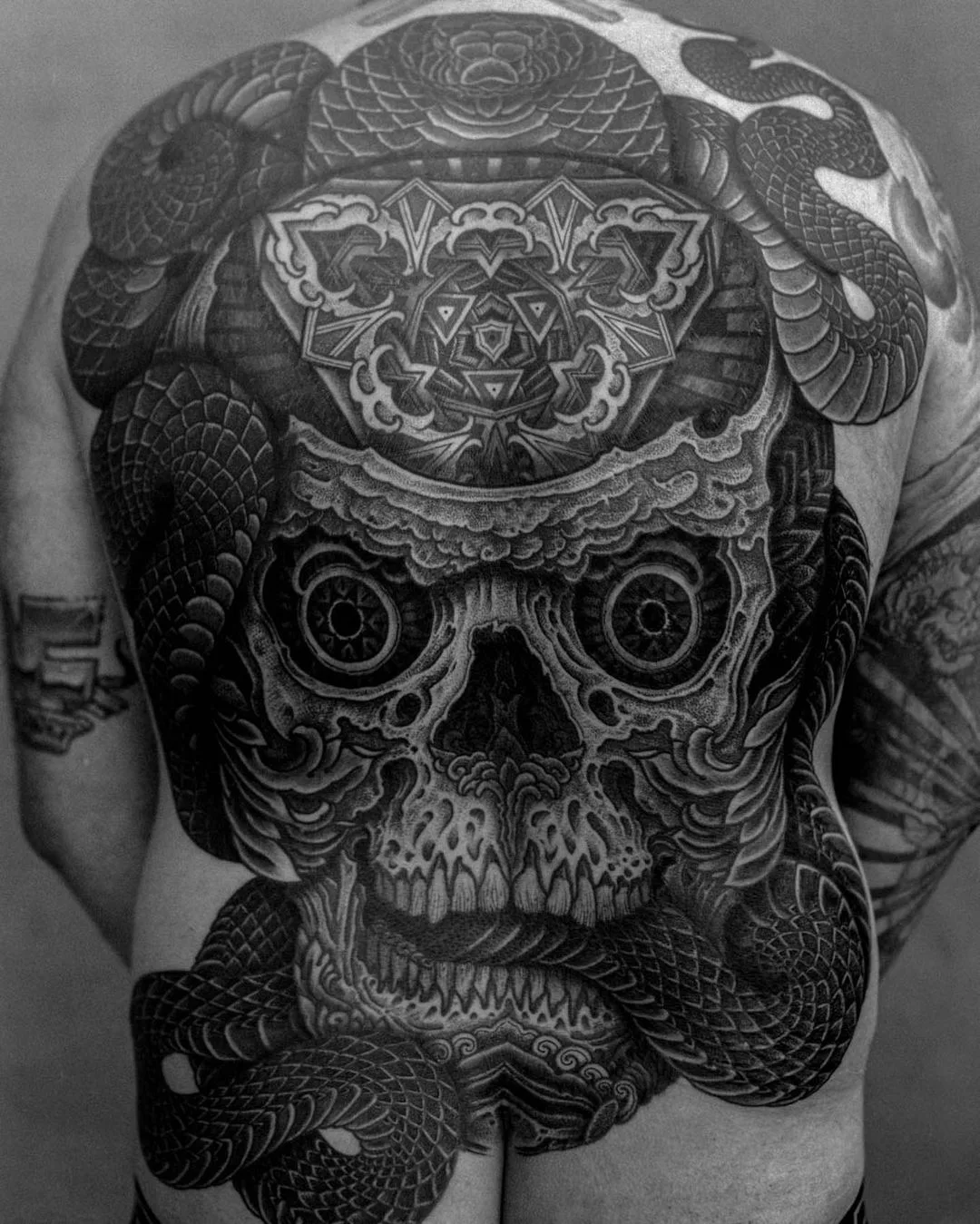
The Aztecs had an even more complex relationship with the skull. Death wasn't an ending in Mesoamerican cosmology, it was a stage, a transition, a necessary counterpart to life. The tzompantli, or skull rack, was a prominent architectural feature in Aztec temples, and skull imagery permeated their art. This wasn't nihilism. It was integration. Death belonged in public life because pretending otherwise was considered foolish.
These ancient threads still surface in modern tattoo work. When an artist renders a skull with Celtic knotwork or Aztec geometric patterning, they're drawing on a symbolic lineage that's genuinely ancient. Whether the wearer consciously knows that history is another question, but the resonance is there either way.
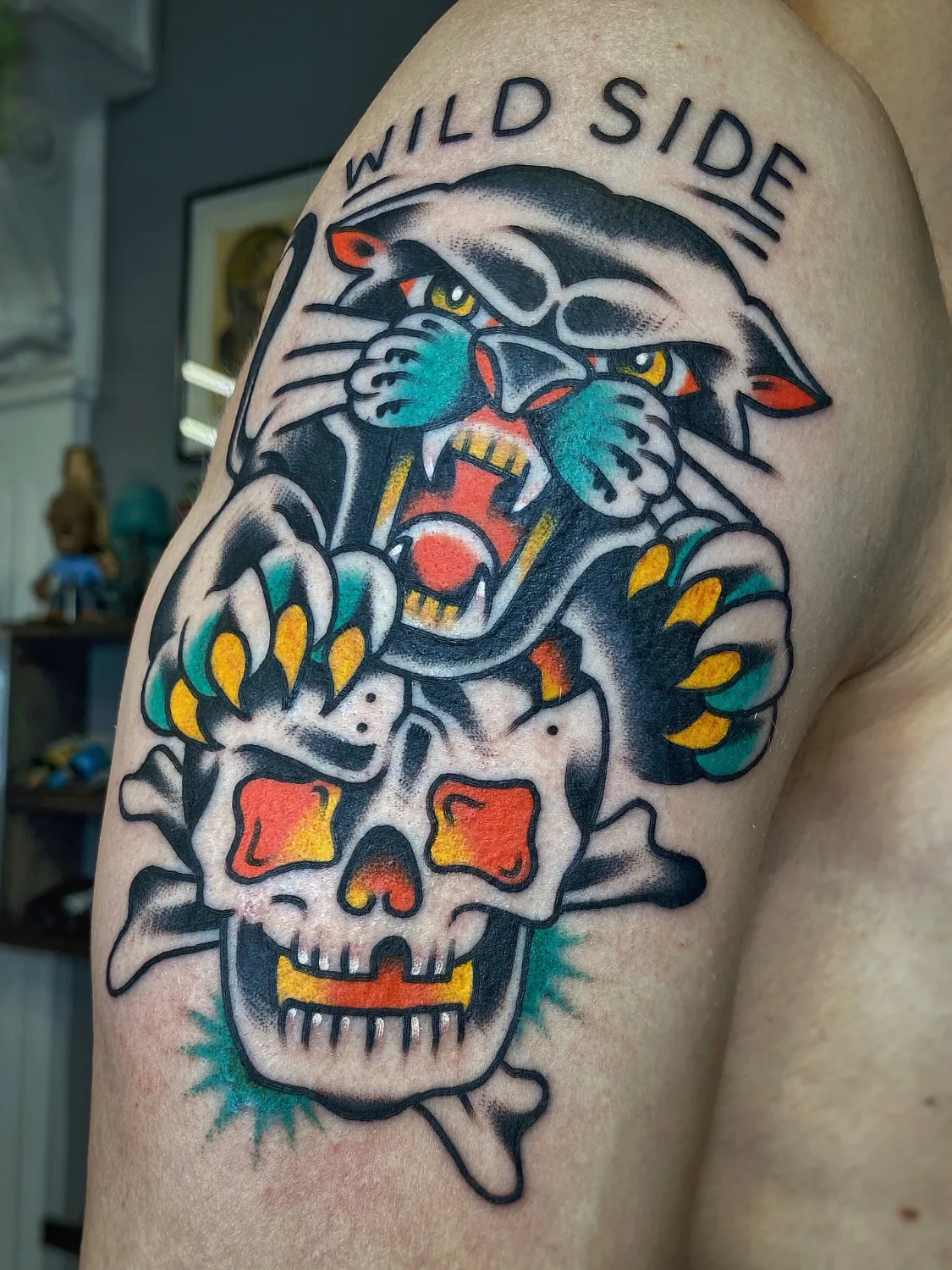
More Than Macabre: Global Interpretations of the Skull Tattoo
One of the things that makes skull tattoos so endlessly compelling is that their meaning shifts dramatically depending on the cultural lens you look through. A skull in Mexico City means something profoundly different from a skull in Lhasa or a skull on the back patch of a motorcycle club in Oakland. Same bones. Different stories entirely.
Mexico's Día de los Muertos: The Joyful Calavera
If there's one cultural tradition that's reshaped how the world thinks about skull tattoos, it's Mexico's Día de los Muertos, the Day of the Dead. Celebrated annually on November 1st and 2nd, the holiday is built around the belief that the dead return to visit their living families. And they don't come back to a house of weeping. They come back to a party.
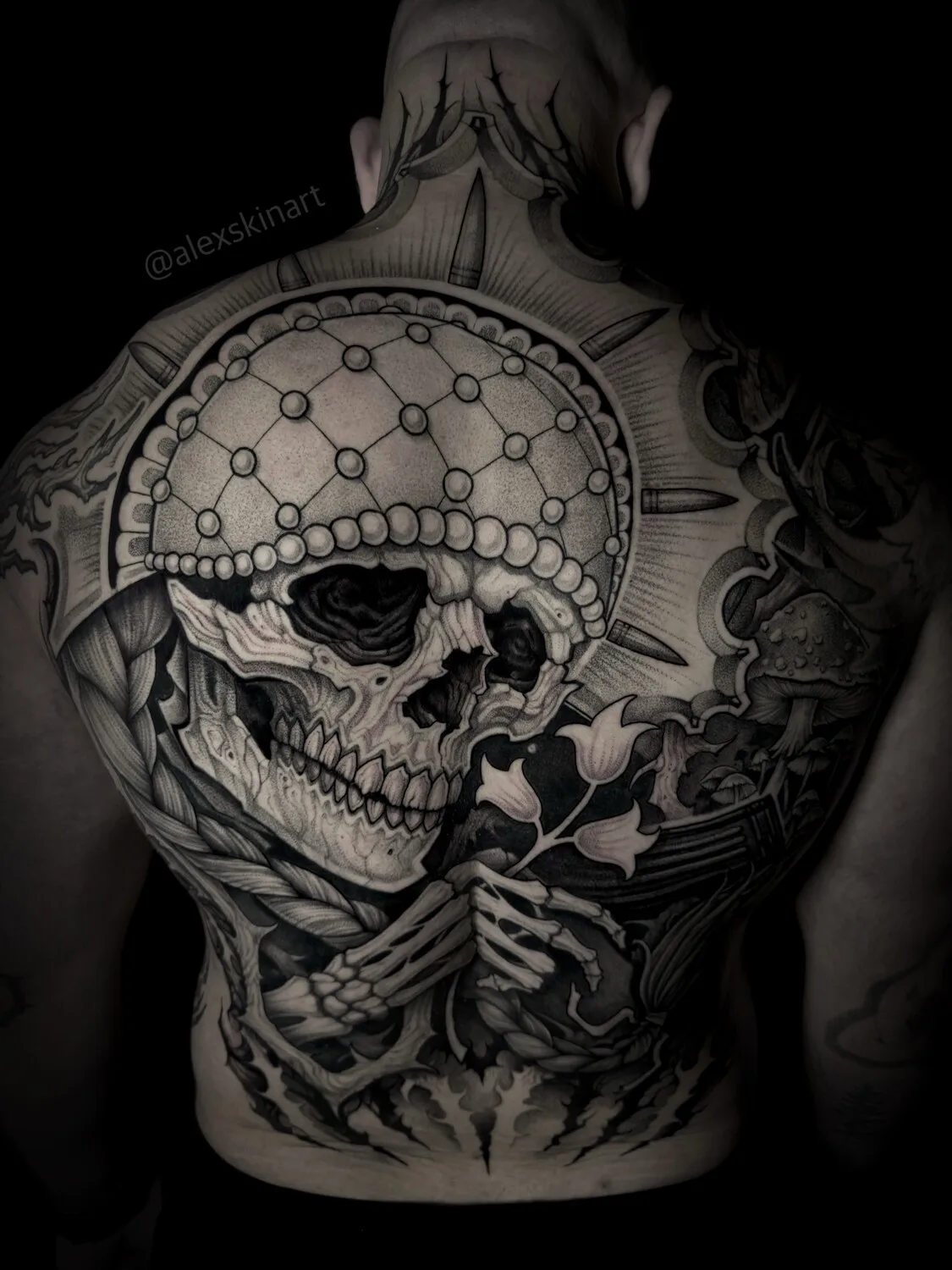
The calaverathe decorated sugar skull, is the visual heart of the celebration. Bright marigold oranges, deep purples, electric pinks, intricate filigree patterns around the eye sockets. These aren't symbols of grief. They're portraits of the dead rendered in joy, color, and sweetness. Literally sweetness, many are made from sugar.
The Latin phrase memento mori literally means "remember that you will die" and was used as a philosophical reminder to live deliberately, not as a morbid threat. Dutch vanitas paintings from the 1600s paired skulls with wilting flowers and spilled wine to emphasize that beauty fades and should be enjoyed now.
As tattoo designs, sugar skulls have become enormously popular worldwide, and it's easy to see why. They allow people to honor a specific person who has died while choosing beauty and celebration over sorrow. A well-executed sugar skull tattoo might incorporate the favorite flowers of a lost grandmother, her name woven into the forehead design, or small symbols that reference her life. It's memorial art that smiles.
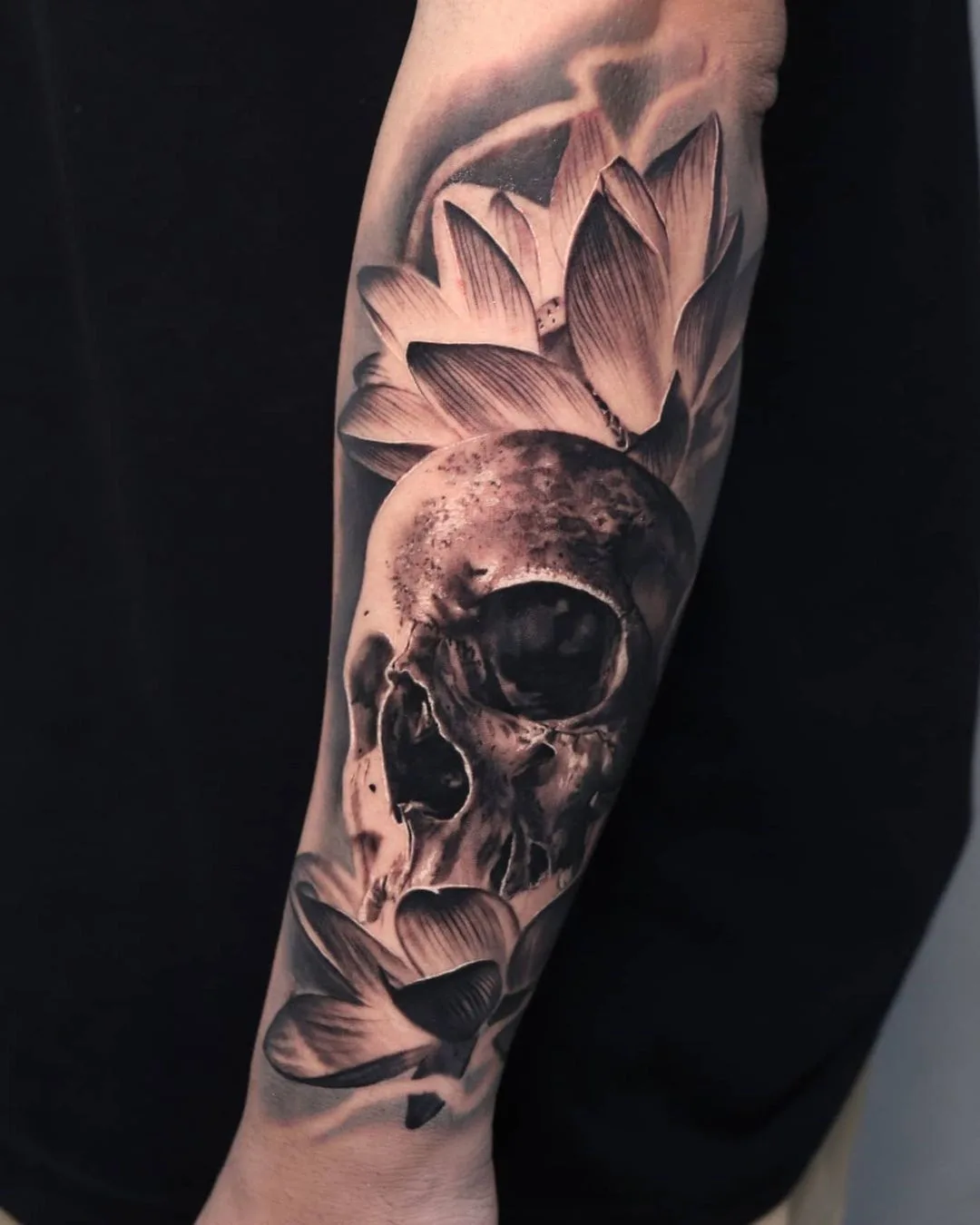
That said, there's an ongoing, and important, conversation about cultural sensitivity when non-Mexican people adopt calavera imagery. The best approach, as with most things in tattooing, is to understand what you're wearing and to wear it with respect.
Tibetan Skull Tattoos: A Path to Enlightenment
In Tibetan Buddhism, the skull carries a very different but equally powerful resonance. The kapala, a ritual skull cup, is used in Vajrayana Buddhist practice as a symbol of wisdom (prajna) and knowledge. It's not a grim object. It's a teaching tool.
Tibetan skull tattoos often feature the skull adorned with a crown of five smaller skulls, sometimes surrounded by flames or held by wrathful deities. The imagery looks fierce, even frightening, but its purpose is liberation. The flames burn away ignorance. The skull itself says: this body is temporary, so don't cling to it. It's memento mori with a distinctly Eastern philosophical framework, less about enjoying life before death and more about transcending attachment altogether.
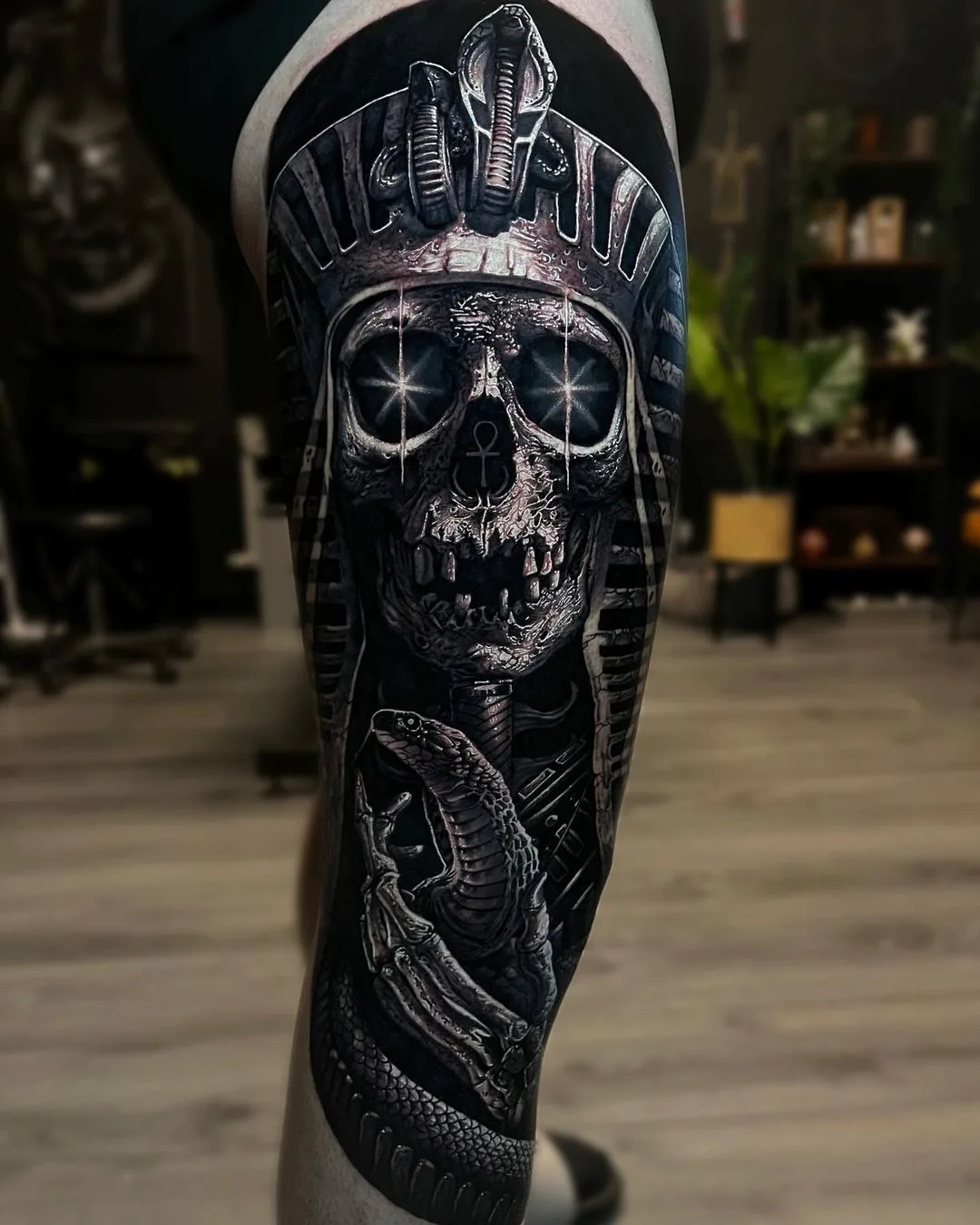
These designs have gained traction among collectors who connect with Buddhist philosophy or who simply respond to the striking visual power of Tibetan sacred art. Either motivation is valid, though, as with the calavera, understanding the source tradition adds real depth to the piece.
The Skull in Modern Biker and Punk Culture
By the mid-20th century, the skull had been thoroughly claimed by counter-culture. Motorcycle clubs adopted it as a symbol of fearlessness and brotherhood. The Hells Angels' winged death's head became one of the most recognizable emblems in American subculture. Punk rock followed suit, the Misfits' crimson ghost skull, the Exploited's mohawked skull, the general punk ethos of wearing death imagery to reject mainstream comfort.
In these contexts, the skull tattoo says something like: I'm not afraid of what scares you. It's confrontational by design. But it's also communal. A skull patch or skull tattoo within these groups signals belonging, shared values, and a willingness to exist outside polite society's boundaries. Rebellion, sure. But also identity.
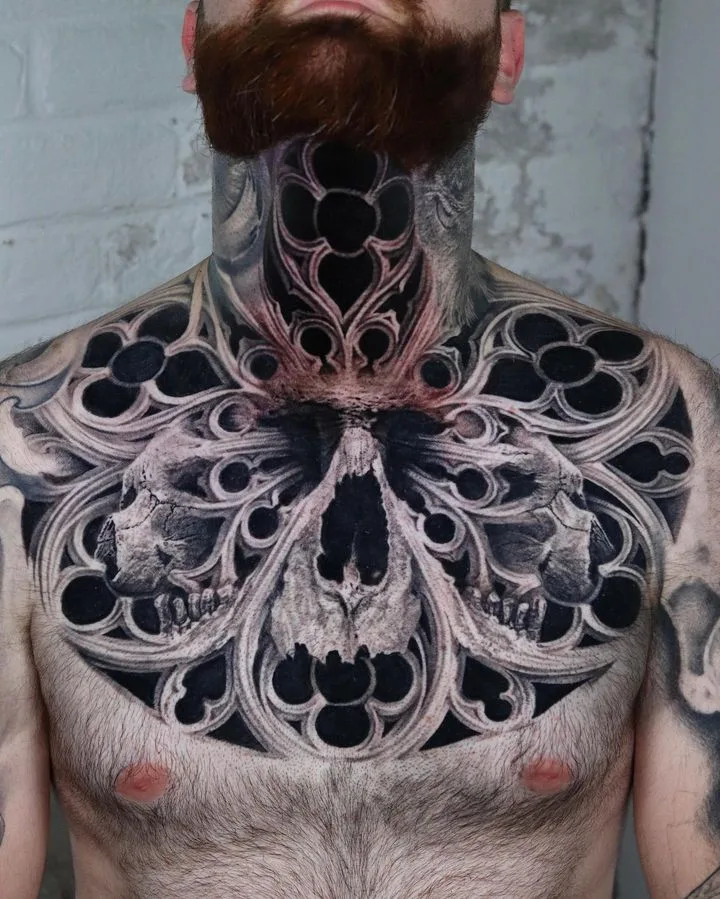
Reading Between the Bones: Popular Skull Tattoo Designs & Their Meanings
A skull on its own is powerful. But pair it with the right elements and it becomes something specific, a sentence instead of a single word. Here are the combinations you'll see most often, and what they tend to communicate.
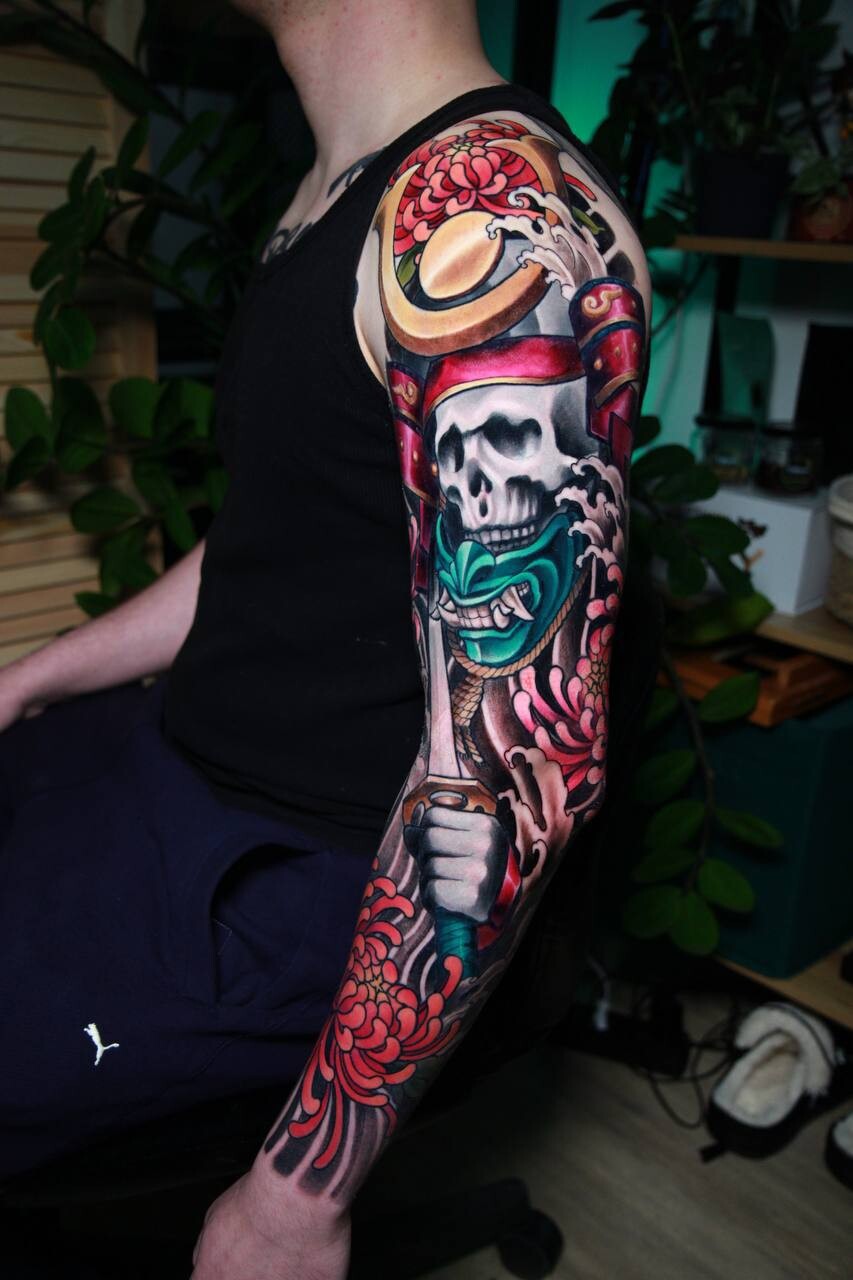
Japanese-inspired skull and floral sleeve
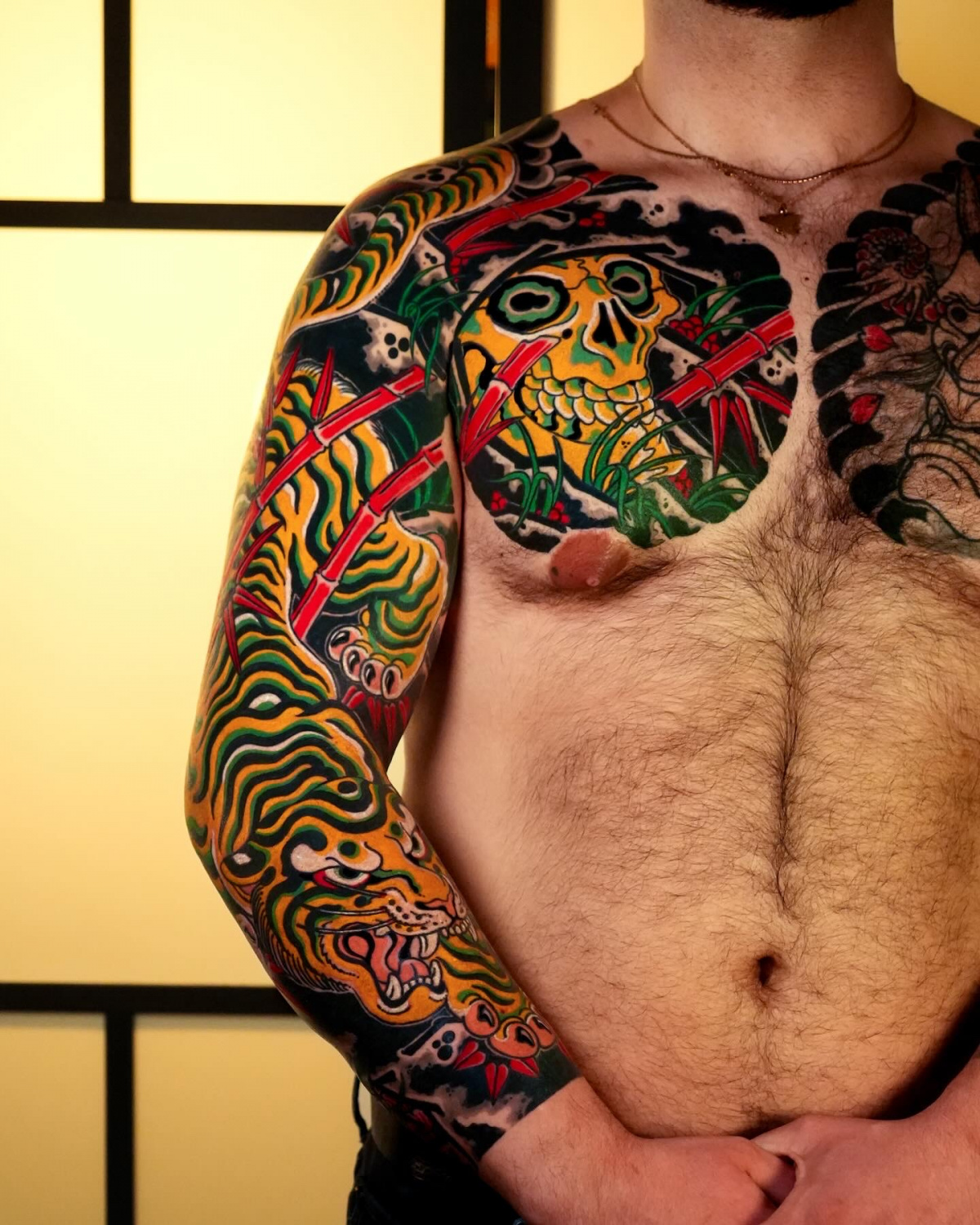
Japanese tiger and skull full sleeve
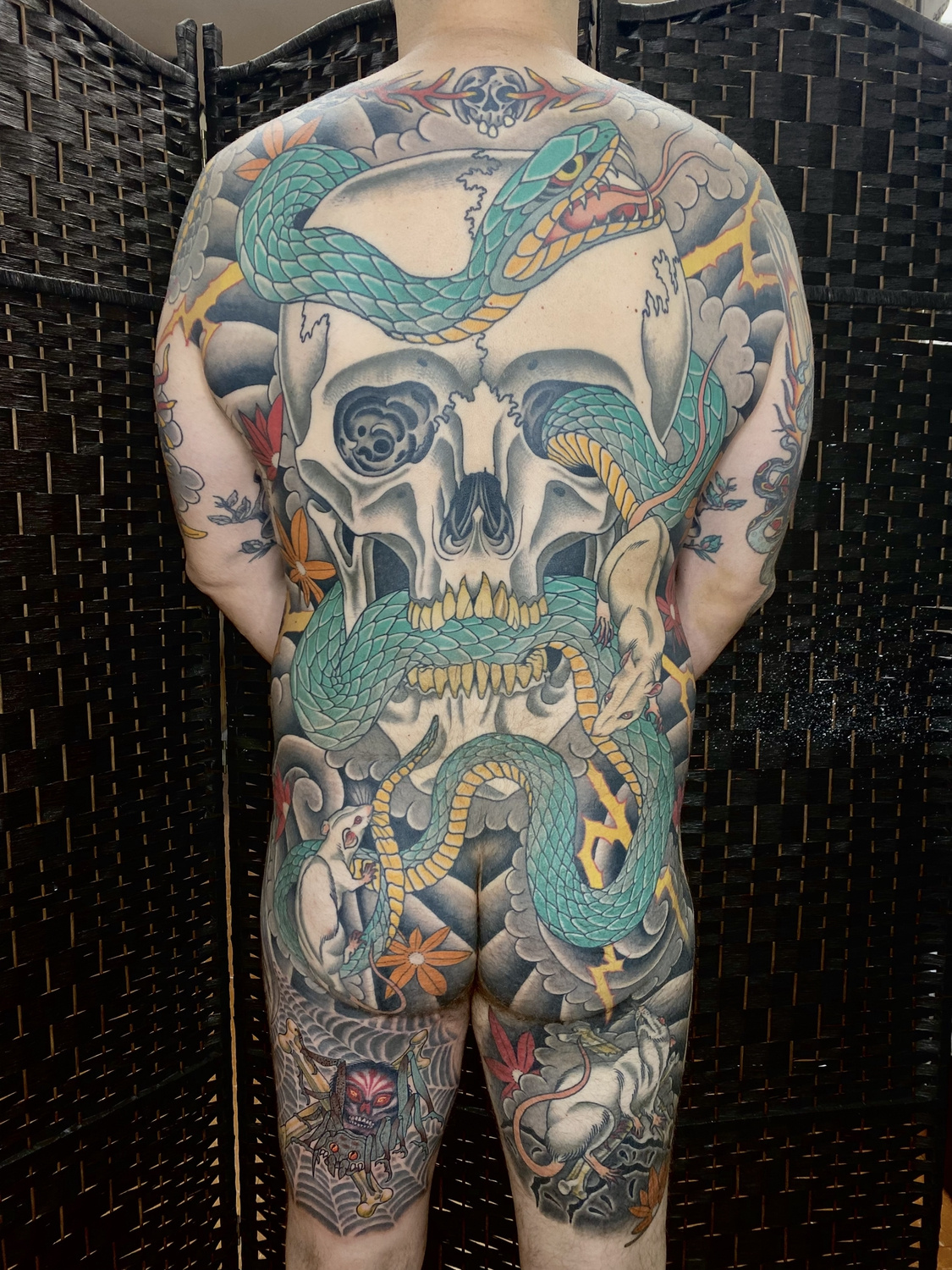
Japanese skull and snake back tattoo
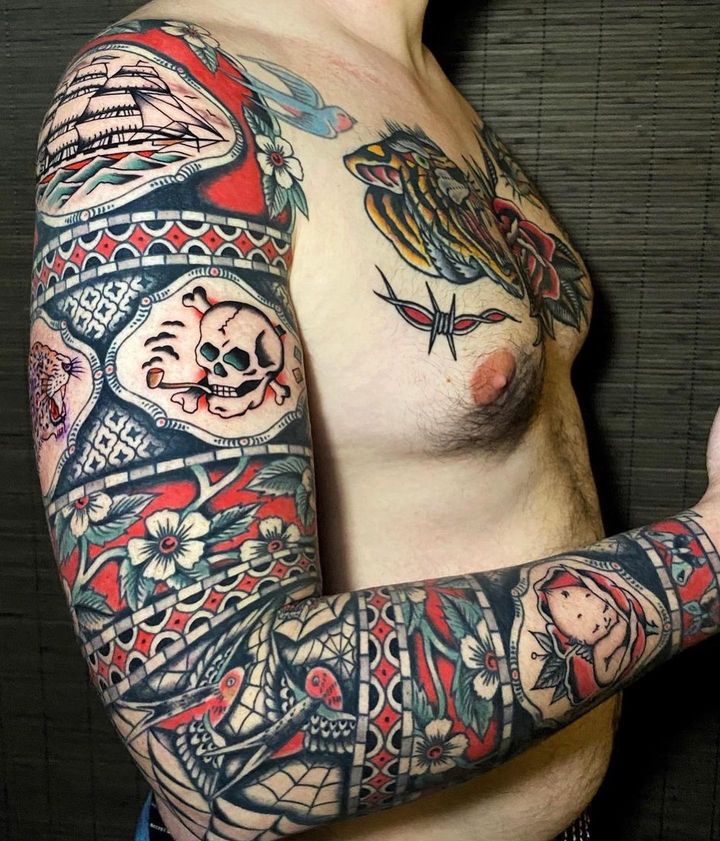
Traditional full sleeve with skull
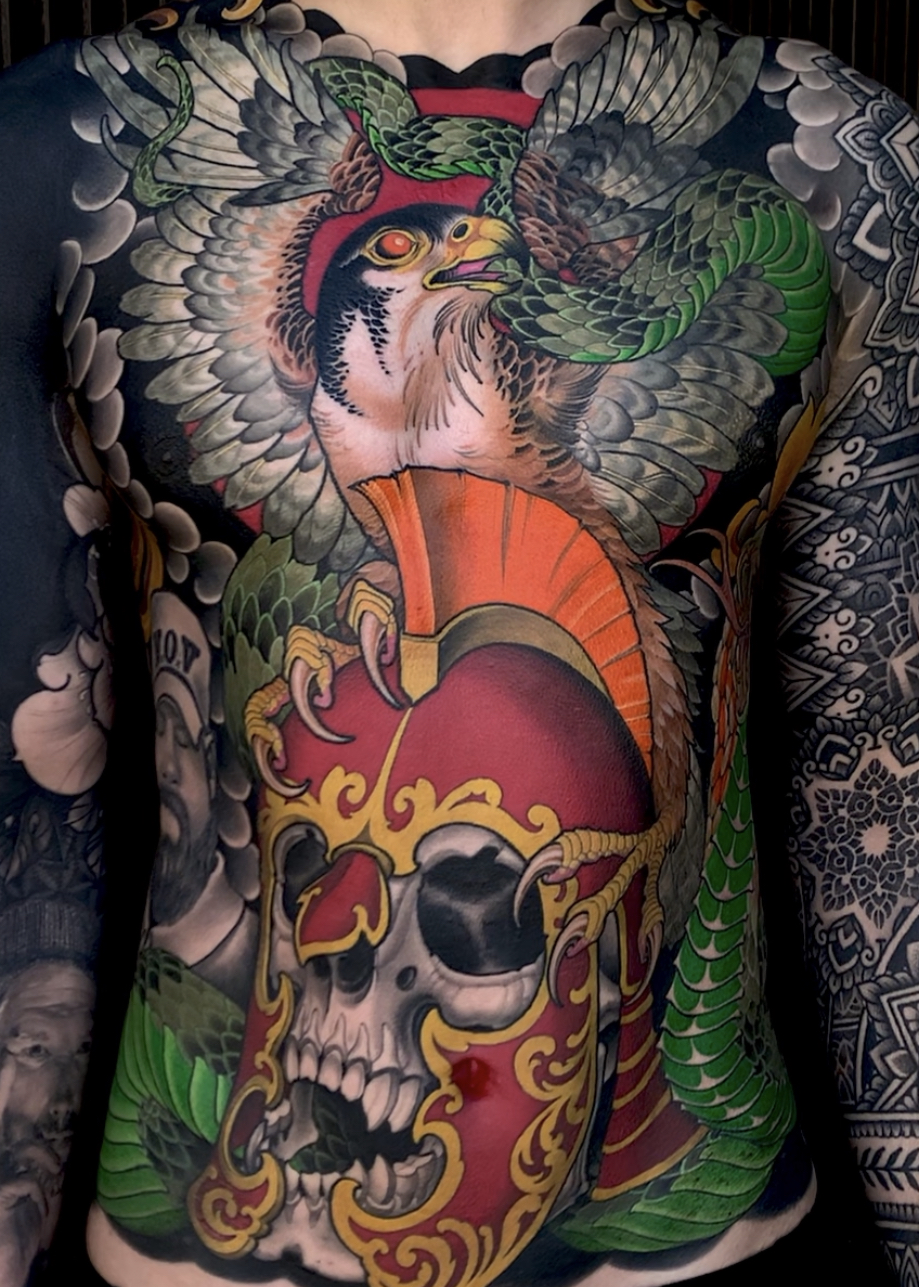
Neo-traditional bird and skull
- Skull tattoos carry vastly different meanings depending on cultural context and personal intention
- The symbol has ancient roots spanning from Celtic soul beliefs to Aztec death cosmology
- Mexican Día de los Muertos calaveras celebrate death with joy and color, not mourning
- Tibetan Buddhist skull imagery represents wisdom and spiritual liberation
- Modern interpretations range from rebellion and non-conformity to overcoming personal hardship
The Skull and Rose: Duality of Life and Death
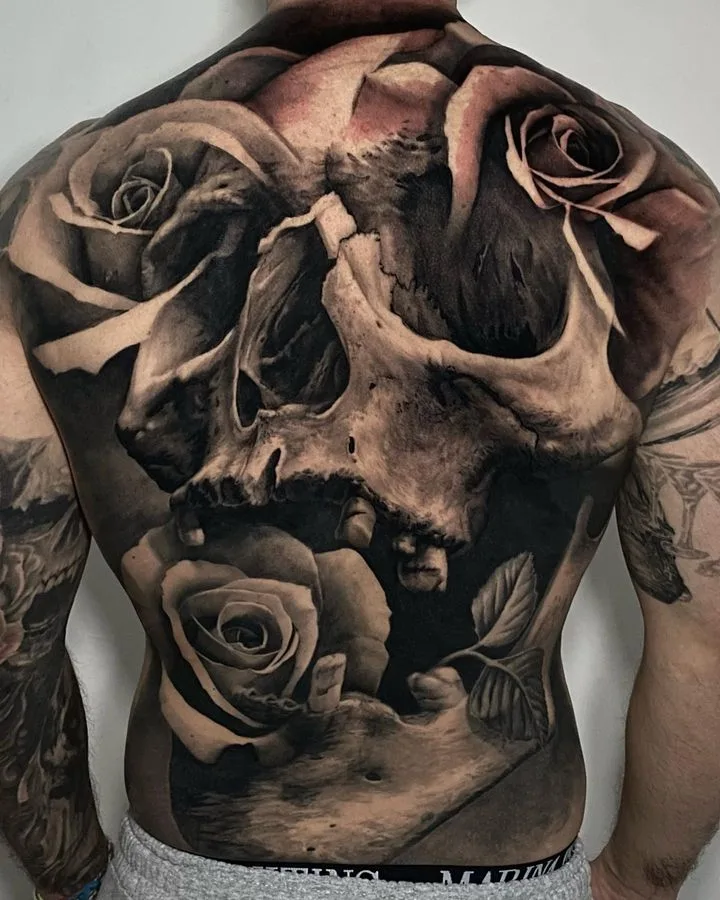
This is arguably the most classic combination in tattoo art. The skull, hard, permanent, stripped of everything soft, sits alongside the rose, which is lush, fragile, and temporary. Together they create a visual conversation about duality: beauty exists beside decay, love beside loss, life beside death.
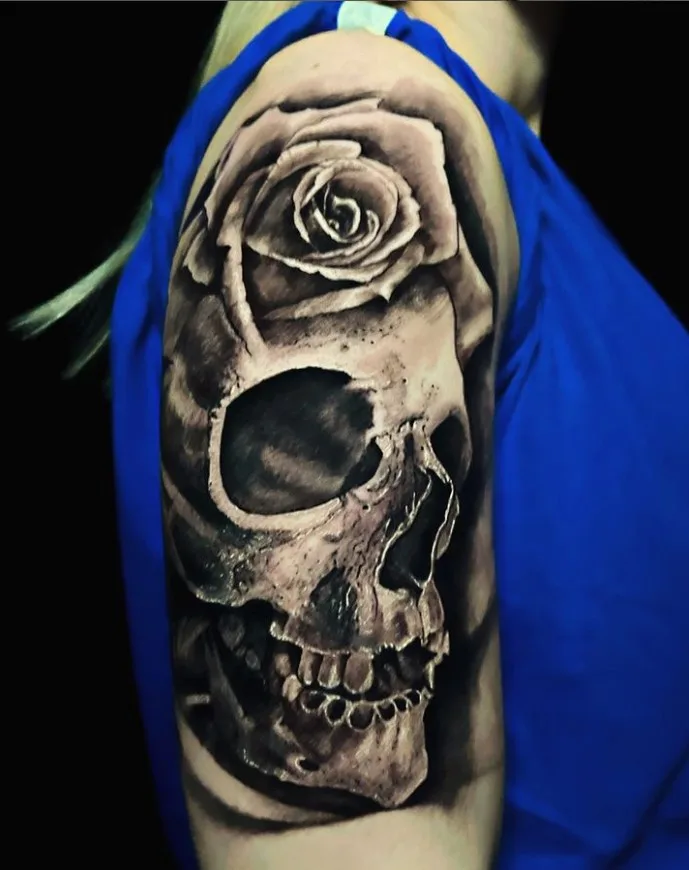
The skull and rose design works across almost every tattoo style. In black and grey realism, a wilting rose draped over a cracked skull can look hauntingly beautiful. In traditional American style, the same pairing becomes bold, graphic, iconic. The meaning stays consistent either way: nothing beautiful lasts forever, and that impermanence is part of what makes it beautiful.
Some wearers use the skull-and-rose specifically to memorialize a romantic partner who has died. Others read it more philosophically. Both interpretations hold.
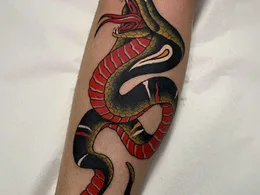
The Skull and Snake: Knowledge, Temptation, and Immortality
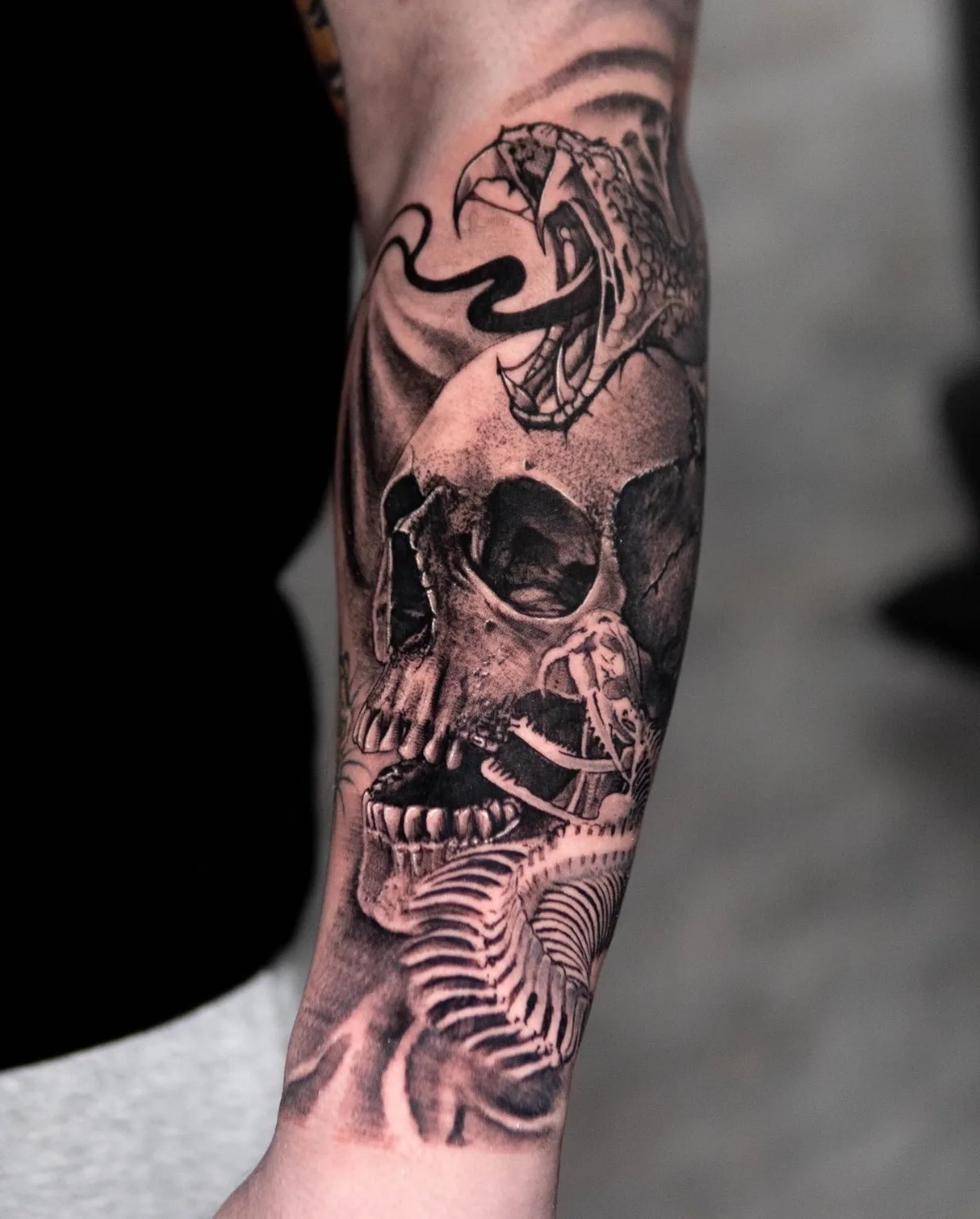
Snakes shed their skin. Skulls don't change at all. When you put them together, you get a tension between transformation and permanence, between the cycle of renewal and the finality of death.
When considering calavera (sugar skull) designs, it's important to understand and respect their cultural significance in Mexican Día de los Muertos traditions. The best approach is to understand what you're wearing and to wear it with respect for its origins.
In many readings, the snake tattoo meaning paired with a skull represents forbidden knowledge, the serpent of Eden coiled around mortality itself. In others, it's about the triumph of life over death, the snake's regenerative ability suggesting that something persists beyond the grave. Medical imagery sometimes borrows from this pairing too, echoing the Rod of Asclepius.
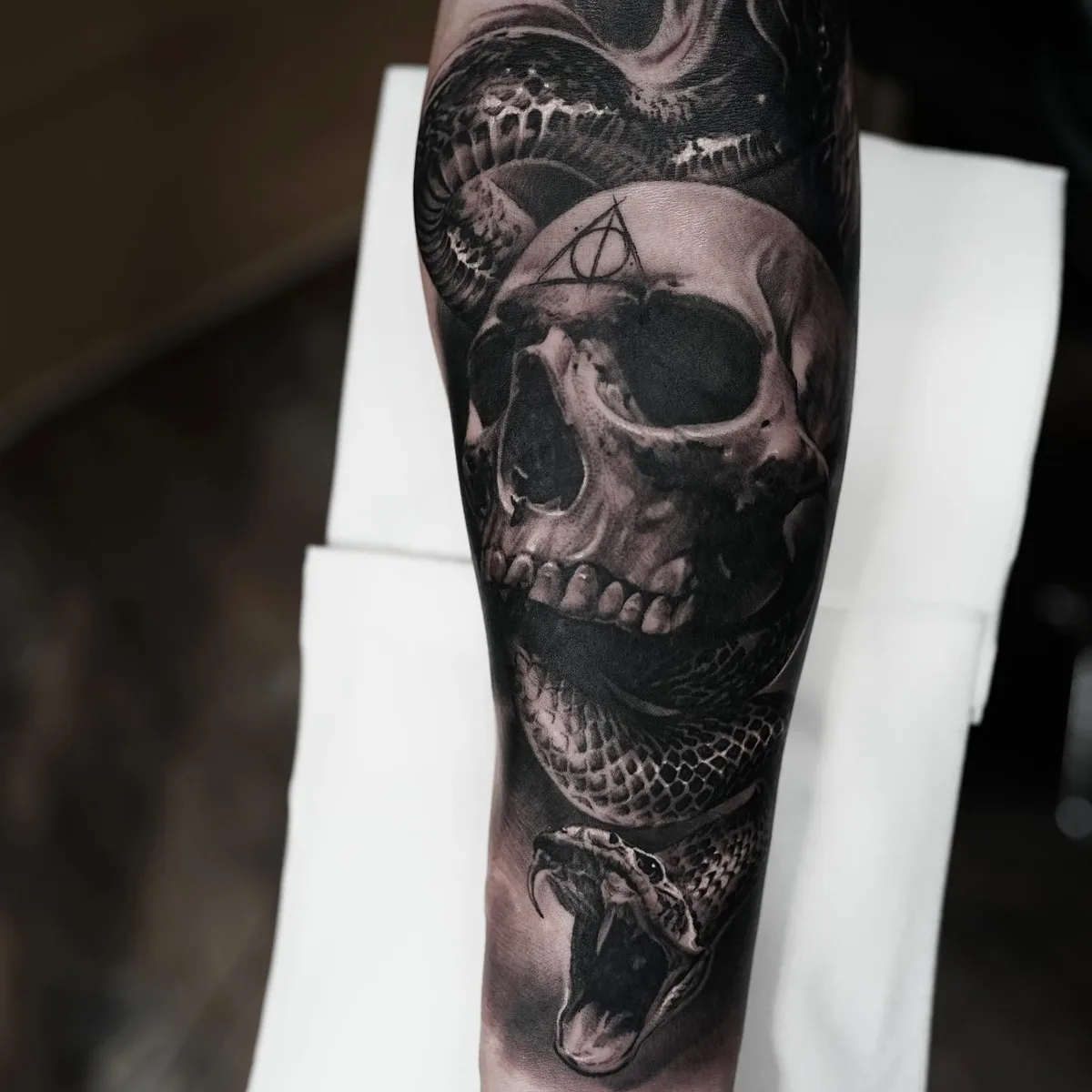
Visually, it's a gift to tattoo artists. The organic, flowing curves of a serpent contrast beautifully with the rigid geometry of a skull, creating dynamic compositions that work at almost any scale.
Animal Skulls (Bull, Crow, Ram): Primal Power and Nature
Human skulls speak to human mortality. Animal skulls speak to something older and wilder.
A bull skull tattoo, especially the longhorn variety associated with the American Southwest, often represents strength, resilience, and a connection to the land. It's earned strong associations with Western and Native American aesthetics, though the specific cultural meanings vary significantly between tribes and should be researched carefully.
Ram skulls carry associations with determination, leadership, and, thanks to their link with the zodiac sign Aries, assertive, headstrong energy. Crow or raven skulls lean more toward mystery, intelligence, and the liminal space between worlds. In Norse mythology, Odin's ravens Huginn and Muninn represented thought and memory. A raven skull tattoo can tap into that lineage.
What unites all animal skull designs is a sense of raw, undomesticated power. They feel primal in a way that human skulls sometimes don't.
The Grim Reaper: The Ultimate Personification of Death
The hooded skeleton with a scythe needs little introduction. The Grim Reaper is death given a body and a job description, and as a tattoo, it's about as direct as skull imagery gets.
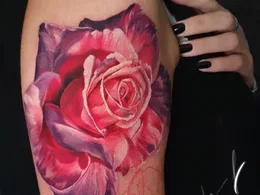
When designing a skull tattoo, consider what elements you pair with it. Roses suggest beauty and decay, butterflies represent transformation, and geometric patterns can add modern minimalism. The surrounding imagery completely changes the skull's meaning and emotional impact.
But even here, interpretation varies. Some wearers see the Reaper as a figure of acceptance, not fear, but acknowledgment that death comes for everyone, democratically, without exception. Others use it to mark a period they survived: cancer, combat, addiction, a car wreck that should have killed them. The Reaper came close, and they walked away. That's a powerful thing to carry on your skin.
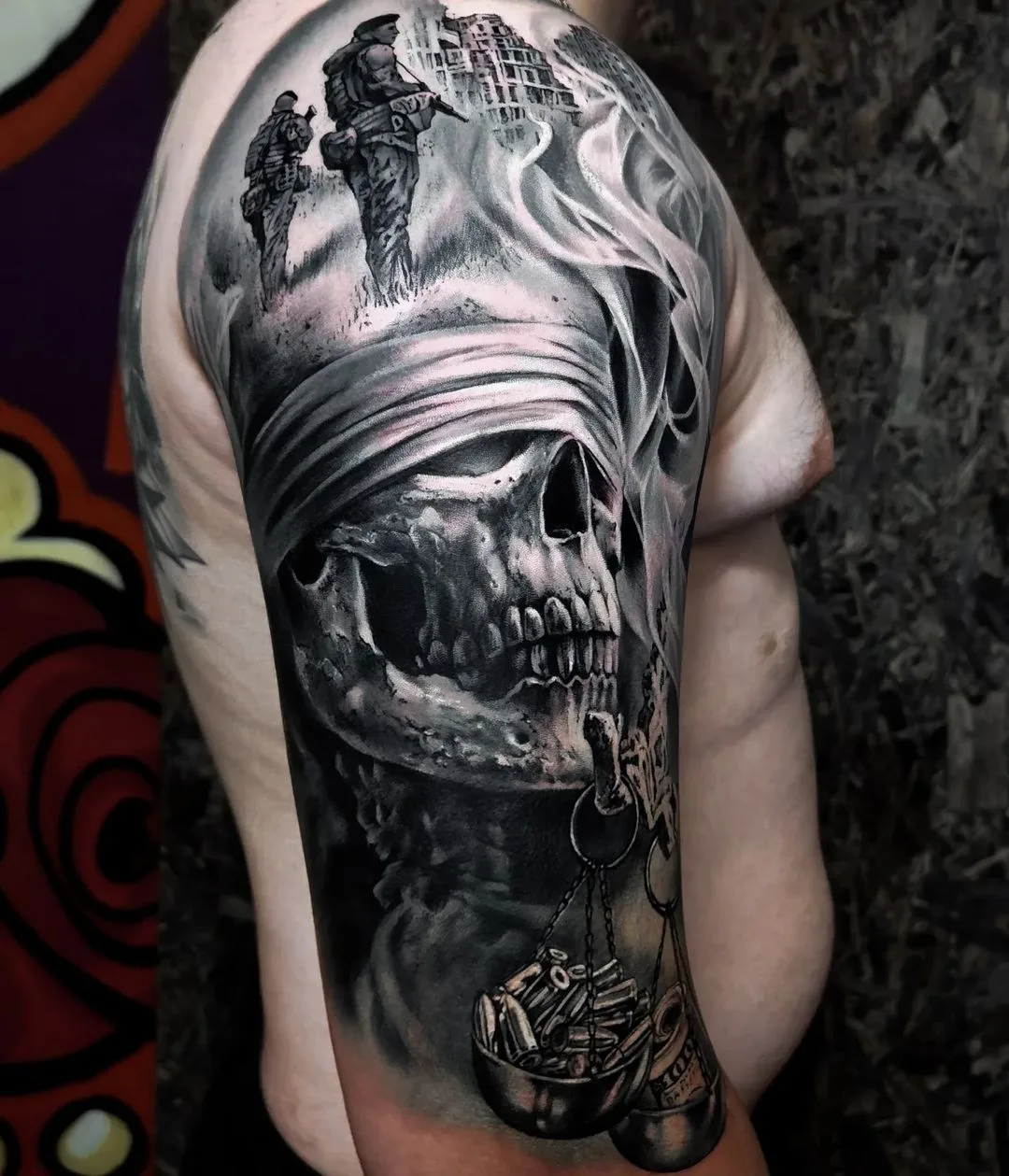
Stylistically, Reaper tattoos tend to work best at larger scales, back pieces, full sleeves, thigh panels, where the drama of flowing robes and shadowed hoods can really breathe.
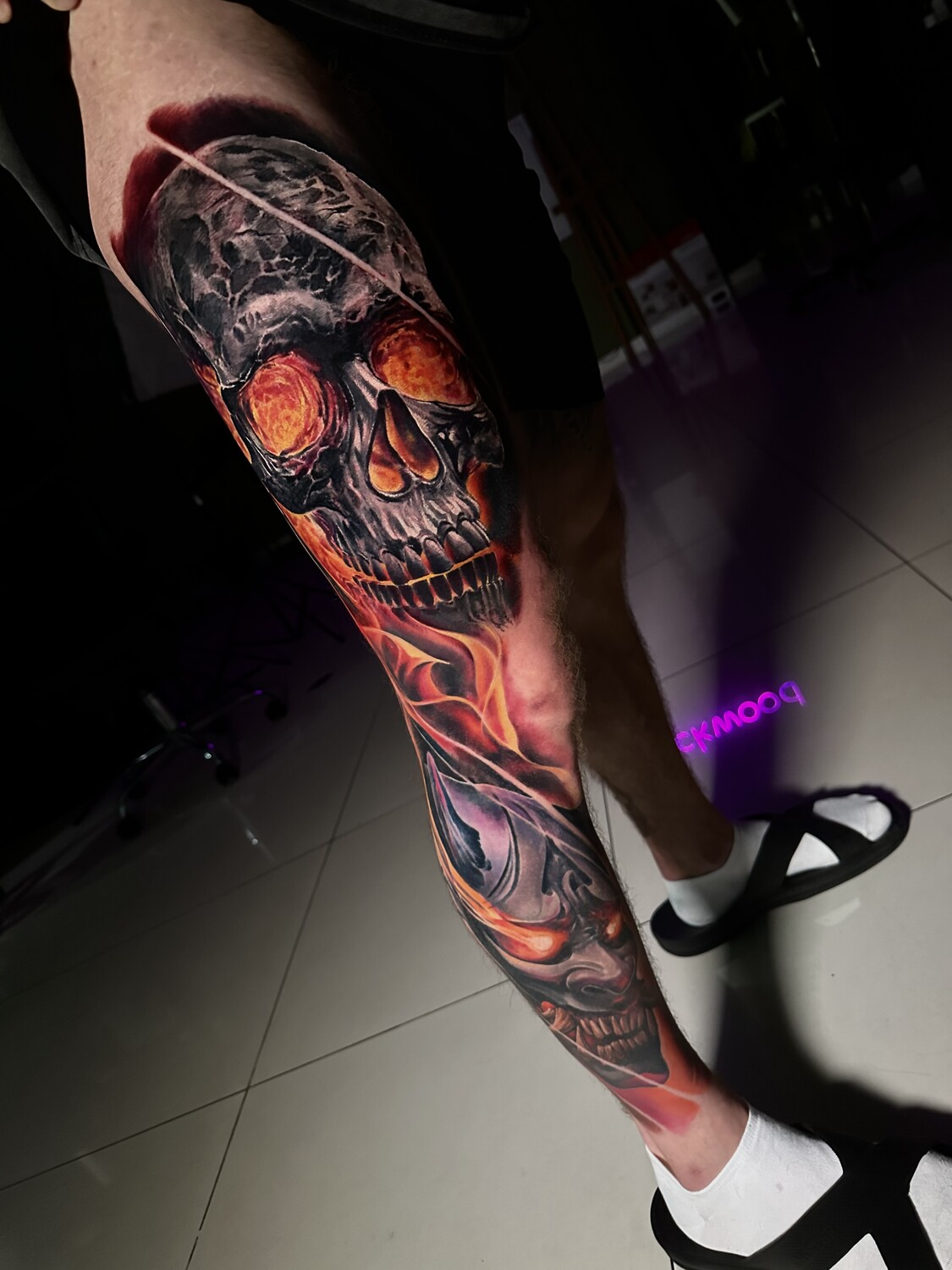
Realistic skull with fiery demonic elements
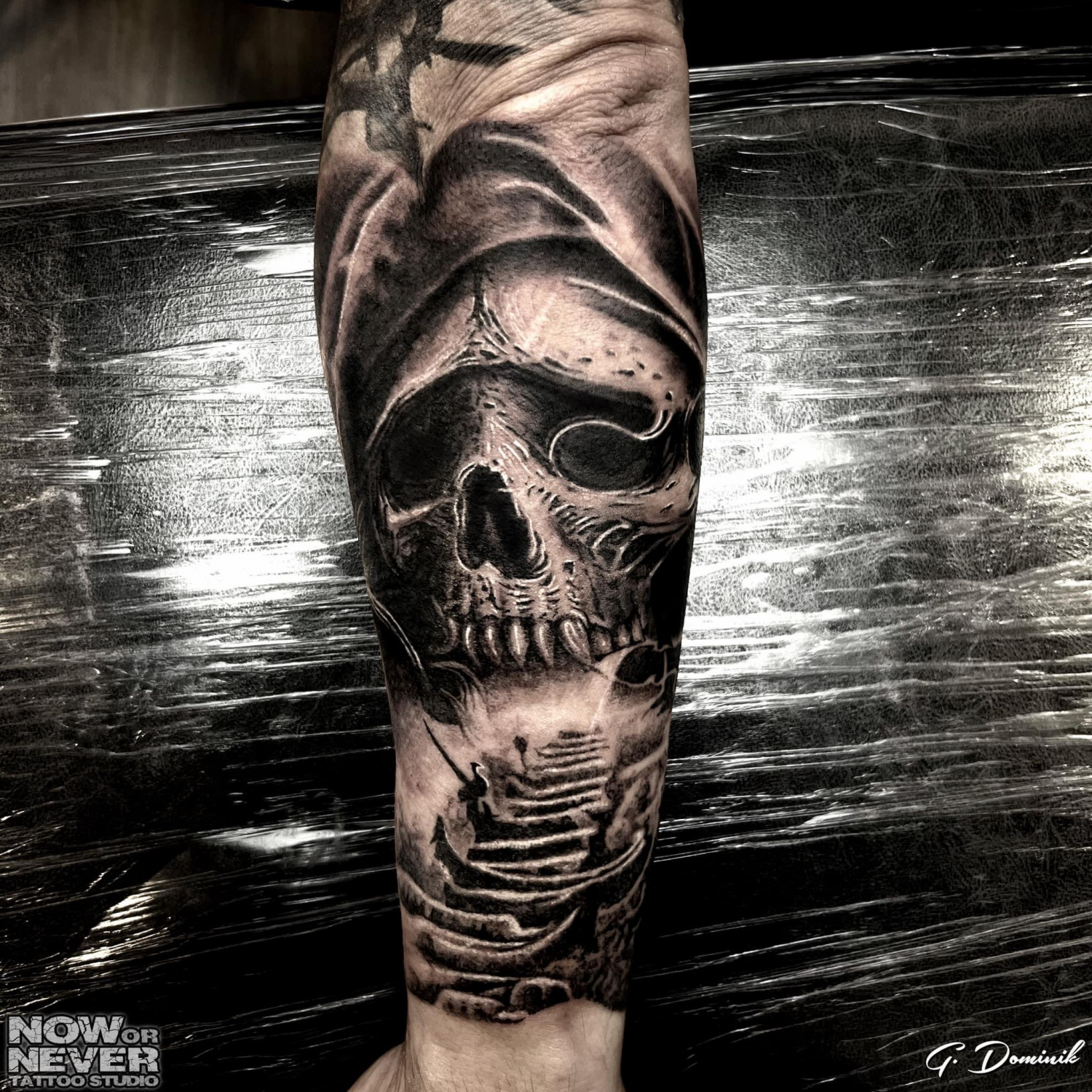
G Dominik, black and grey realism
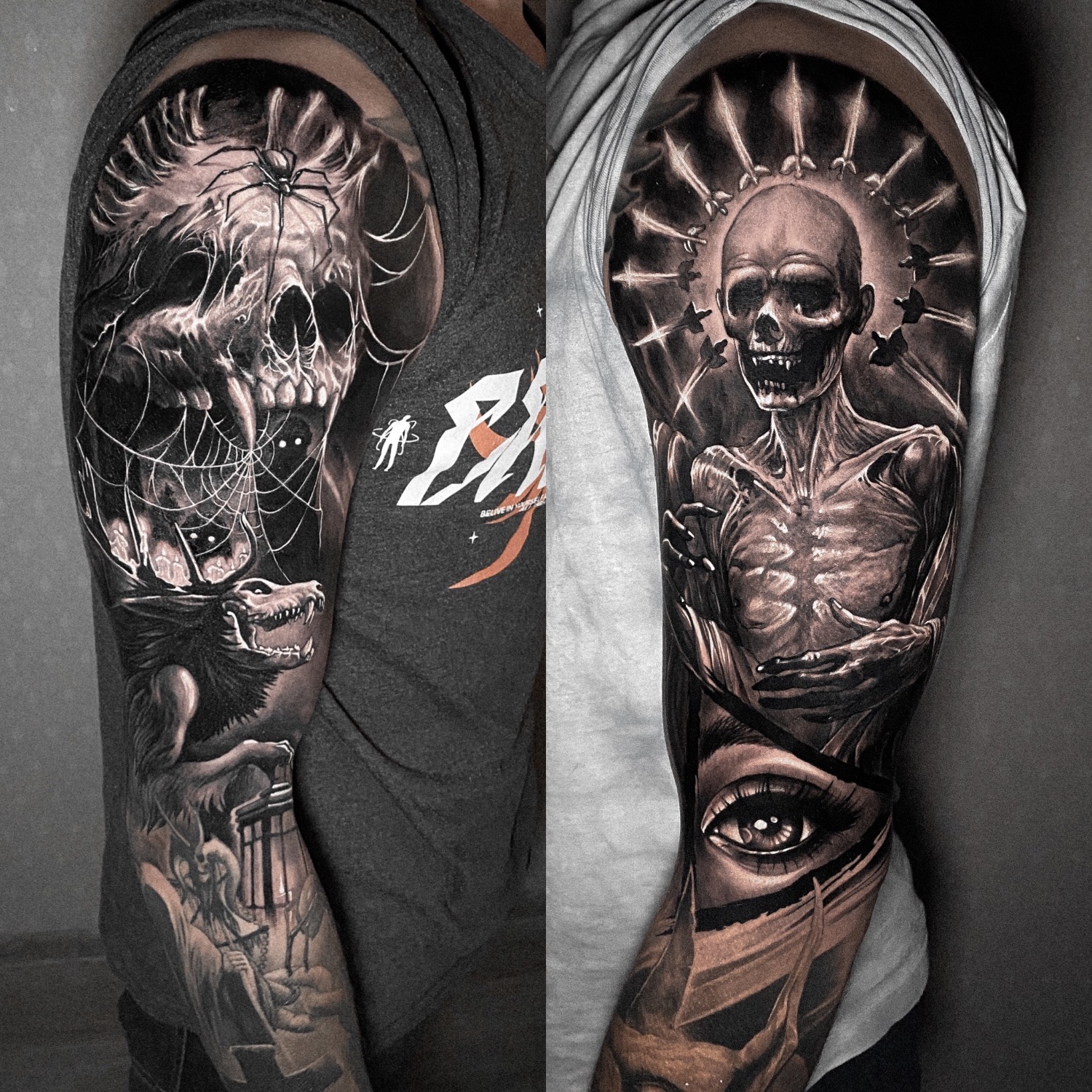
Full sleeve black and grey skull and skeletal figures
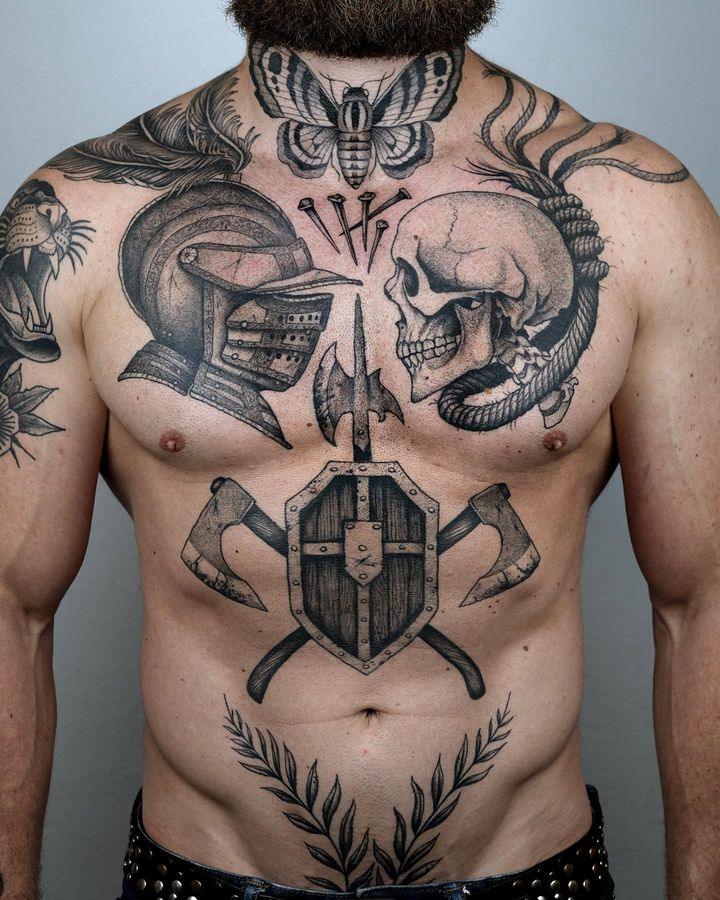
Black and grey medieval chest piece
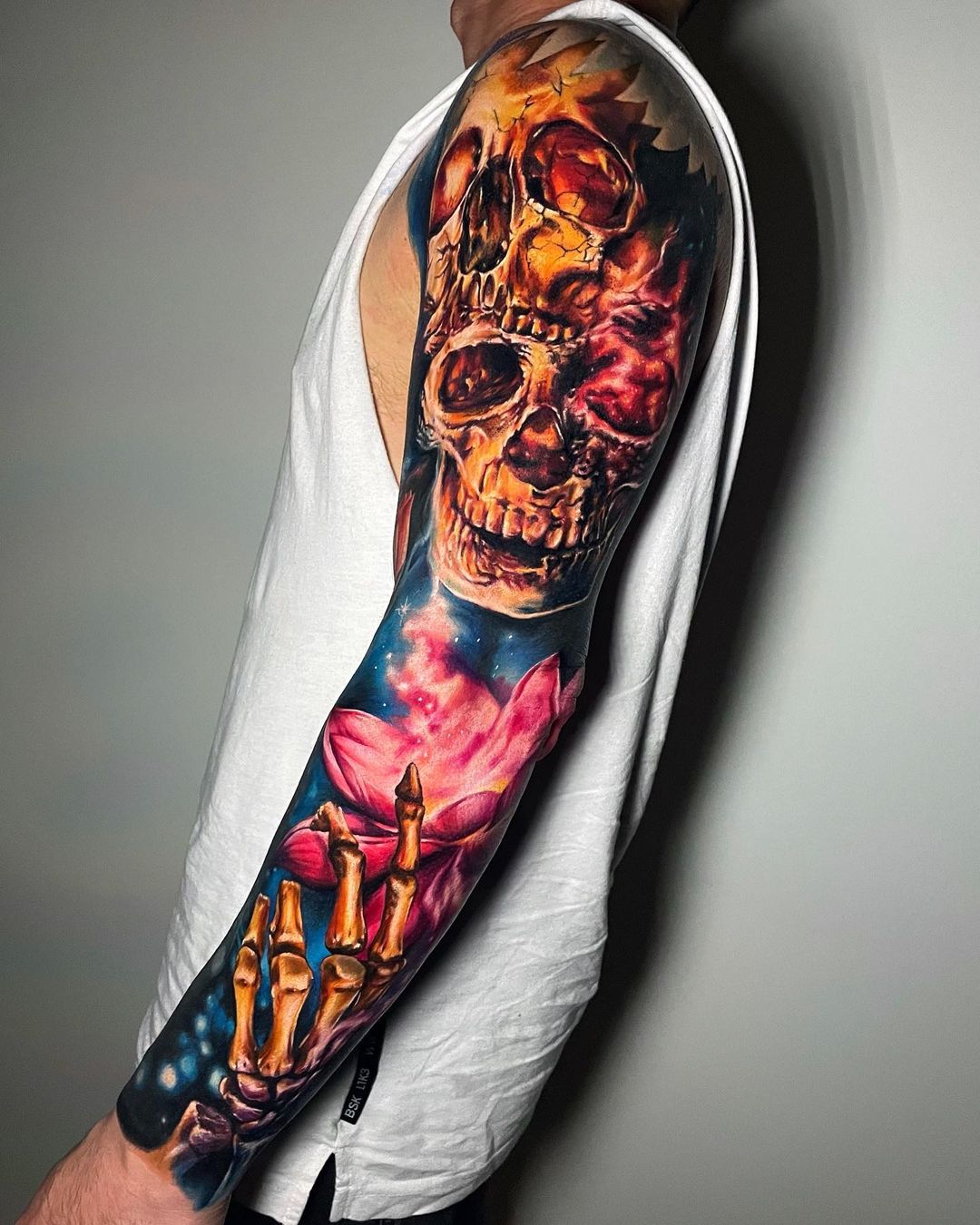
Full sleeve skull and cosmos colour realism
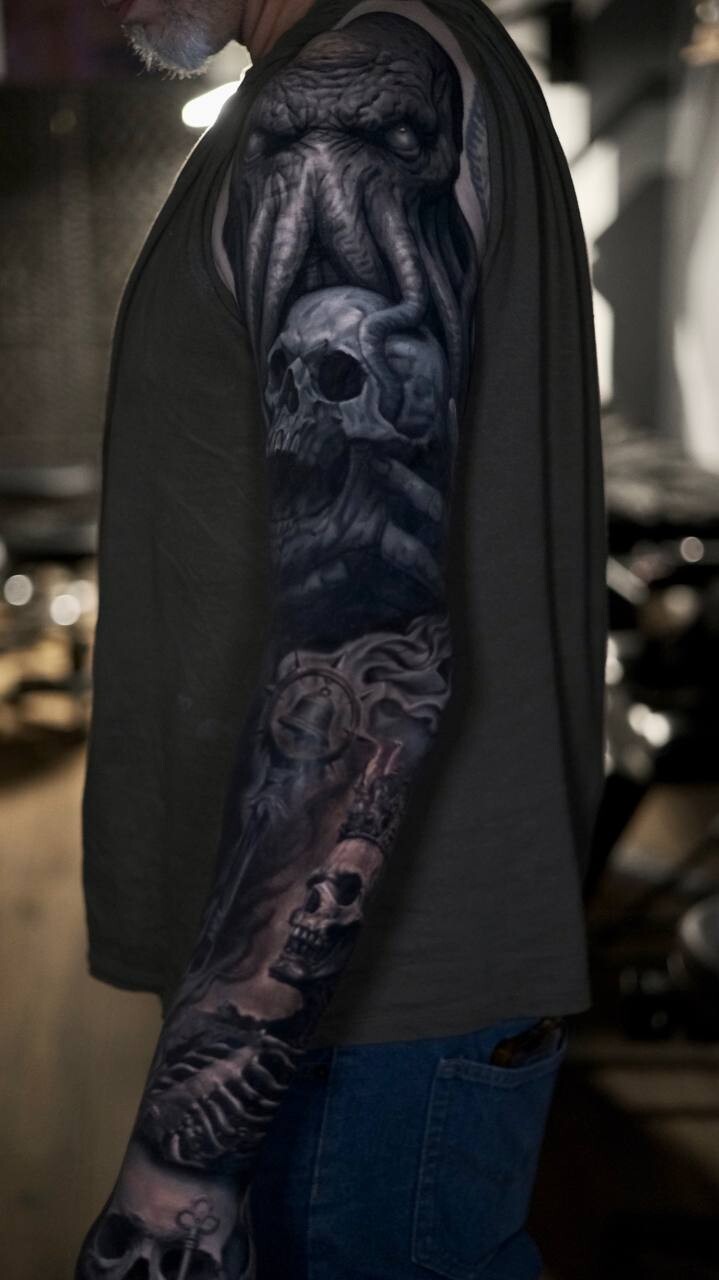
Black and grey demonic full sleeve tattoo
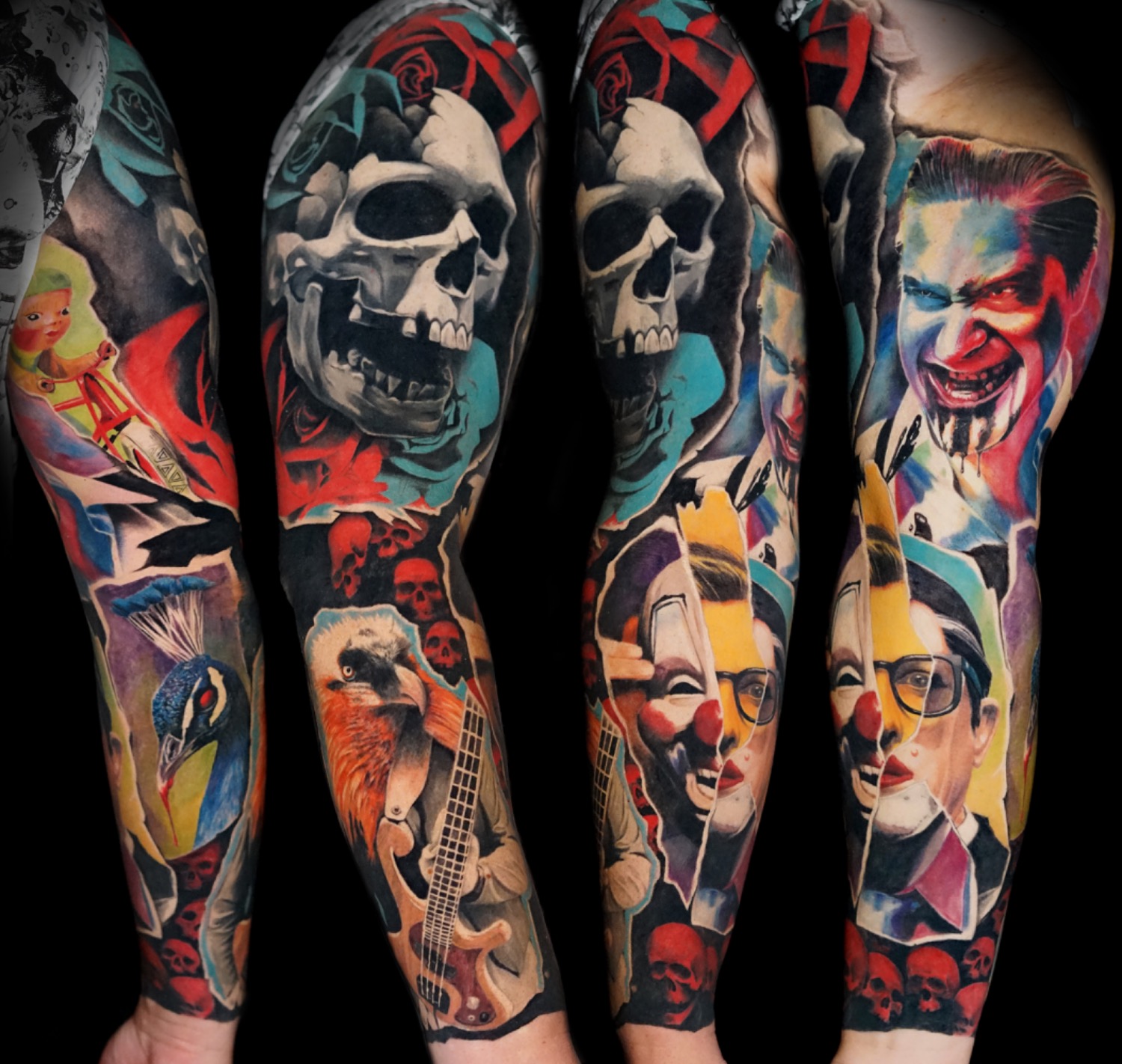
Neo-traditional full sleeve with skulls and portraits
Minimalist & Geometric Skulls: A Modern Take on Mortality
Not every skull tattoo needs to be a full-sleeve masterpiece dripping with detail. The last decade or so has seen a surge in minimalist and geometric skull designs, clean lines, negative space, mathematical precision.
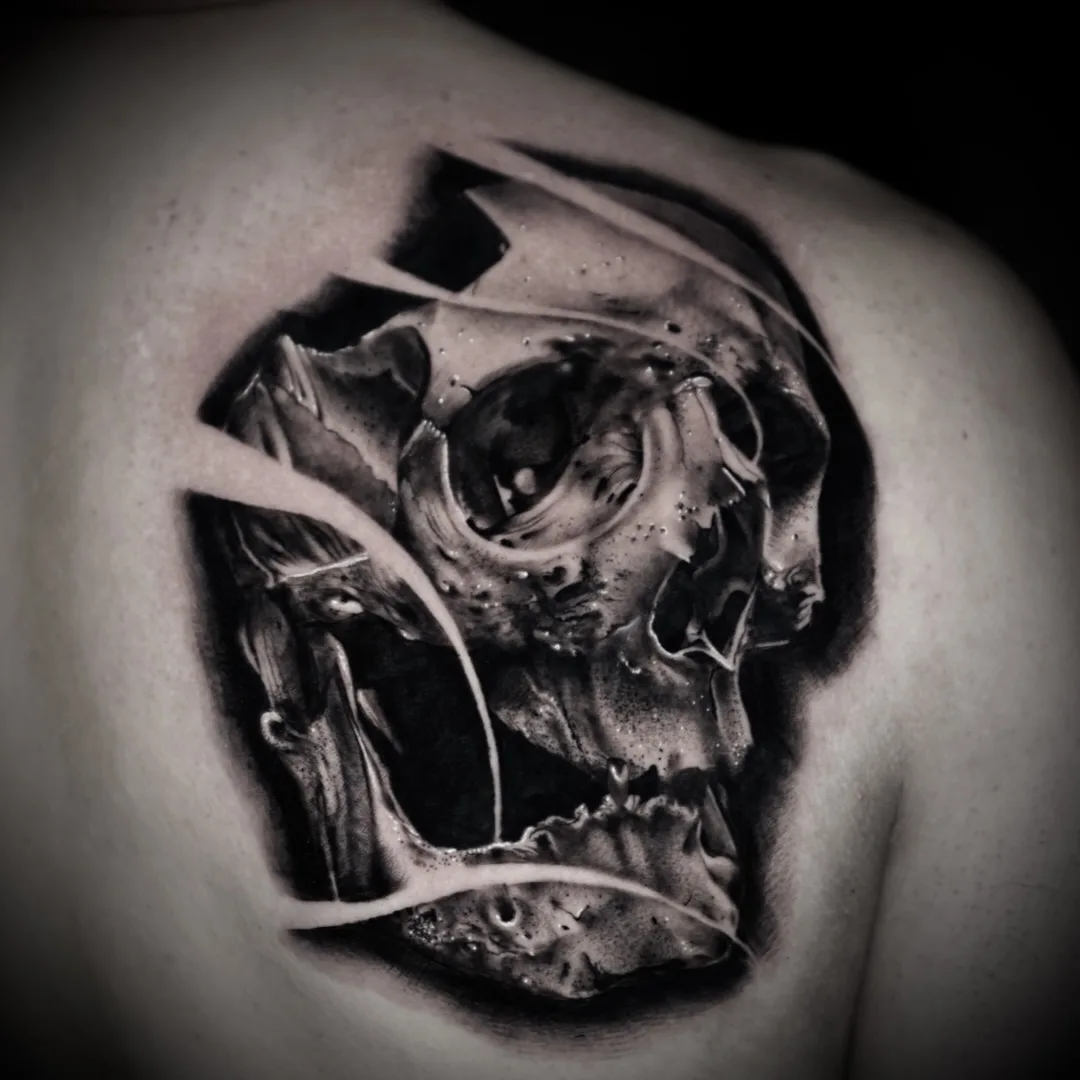
These pieces strip the skull down to its essential geometry. A few well-placed lines suggest eye sockets, a jaw, a cranial vault. Dotwork fills in texture. Sacred geometry patterns overlay the bone structure. The effect is contemplative rather than confrontational. It says the same thing as a realistic skull, remember, you're mortalbut says it quietly.
Read alsoblackwork tattoosThis approach has made skull tattoos accessible to people who connect with the symbolism but prefer subtlety over spectacle. It's also, frankly, gorgeous work when done by a skilled hand.
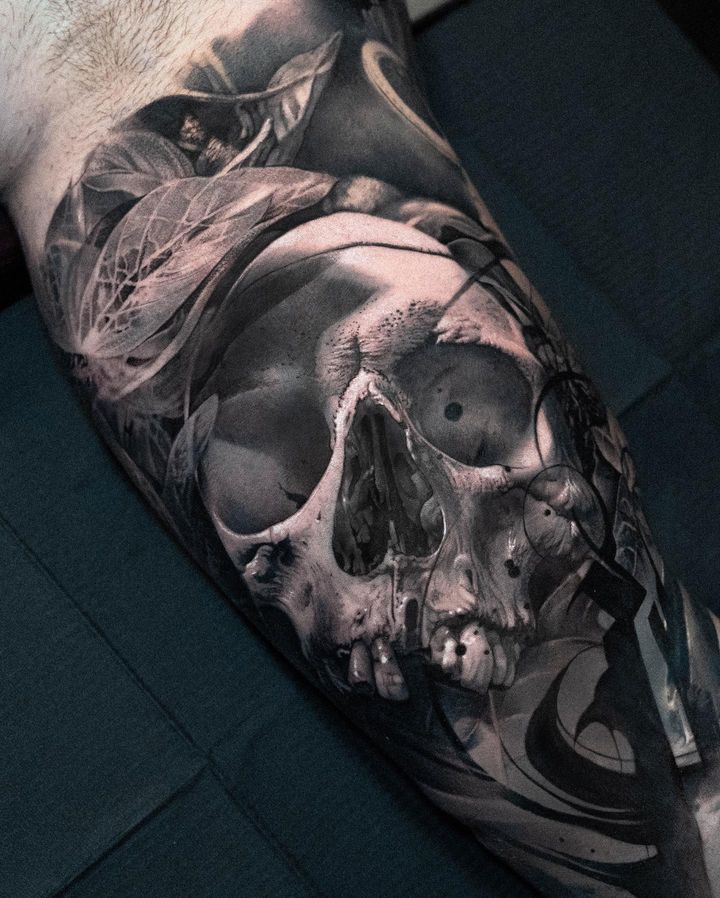
Realistic skull with organic foliage
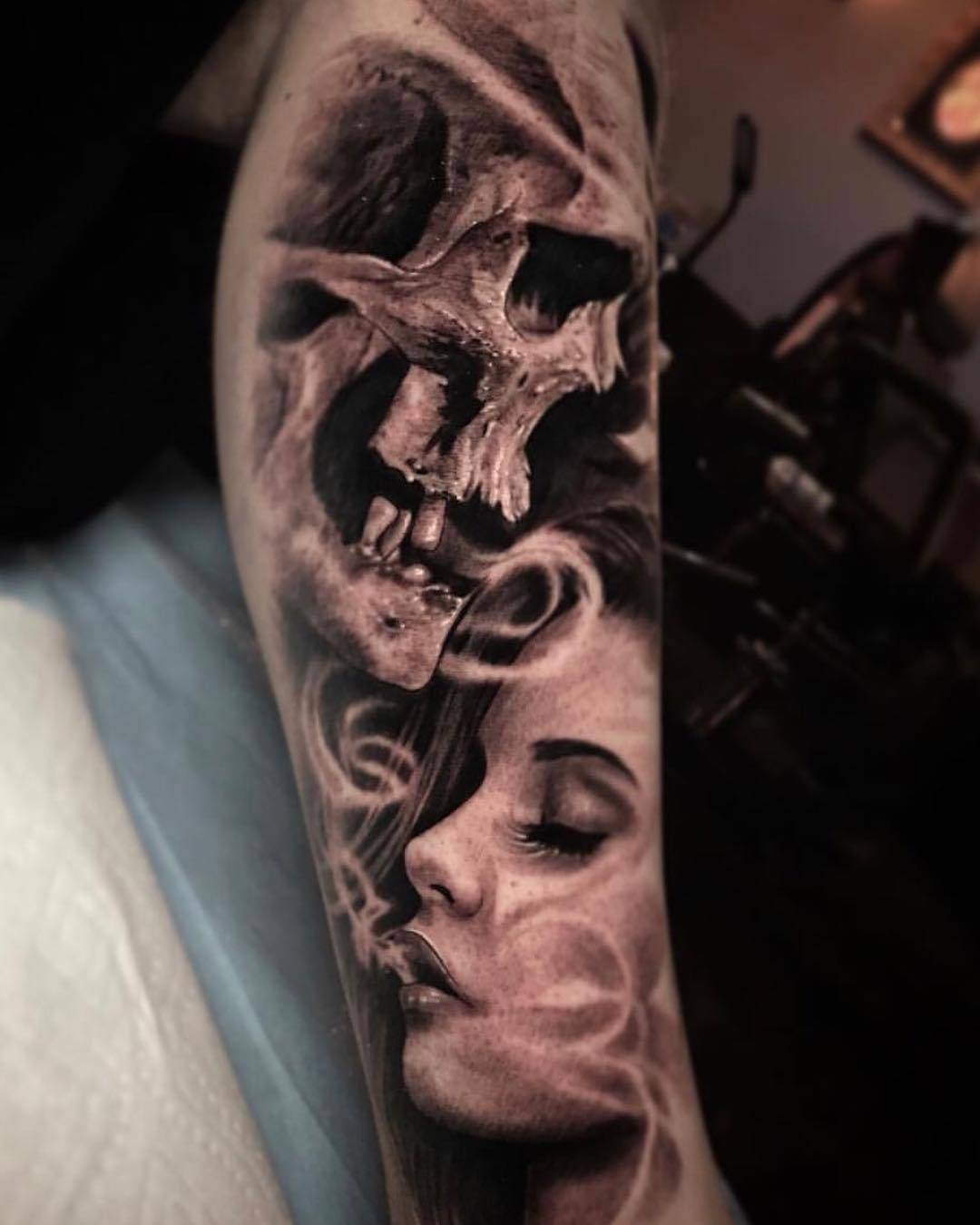
Skull and woman's face with smoke
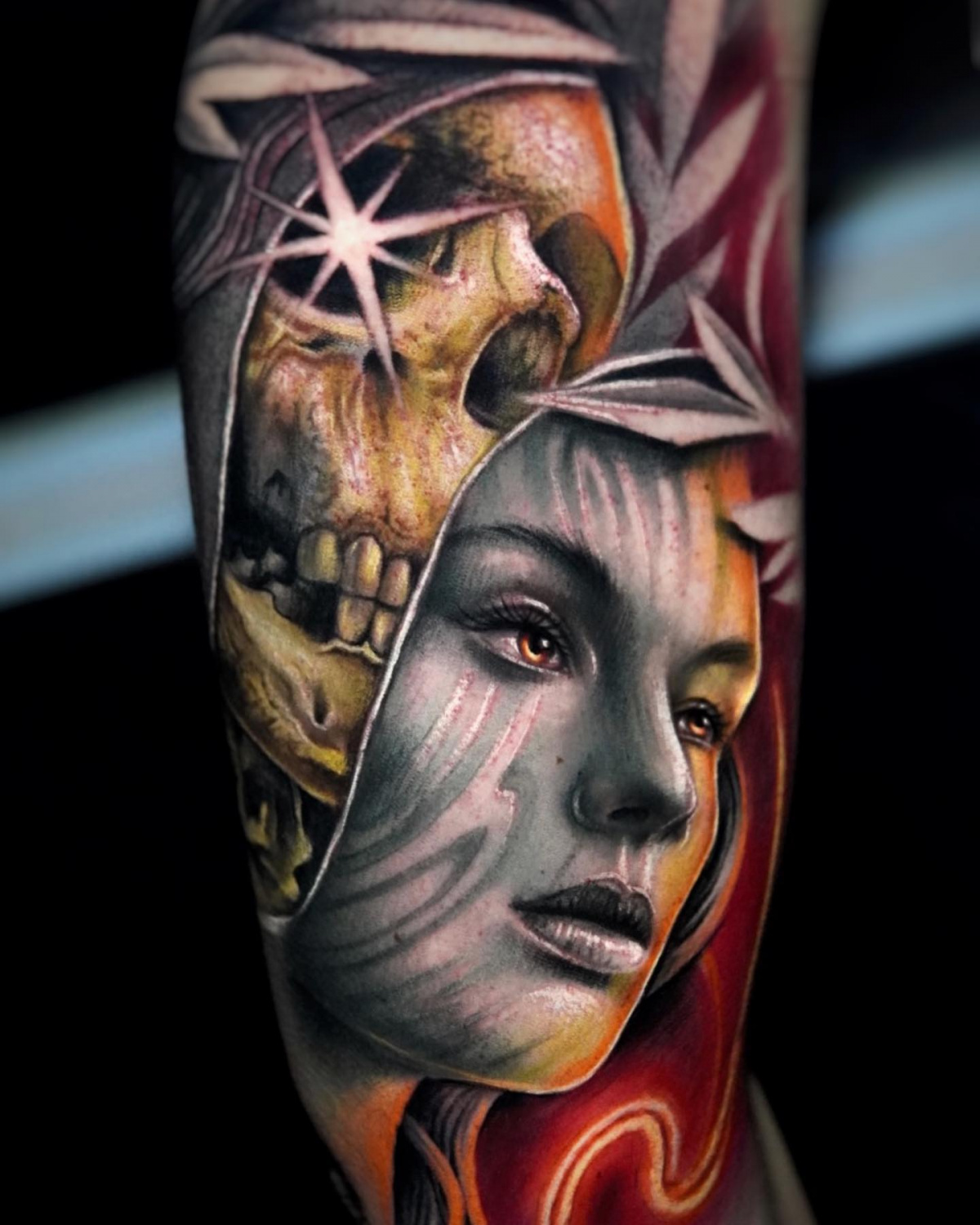
Color realism: woman and skull with star
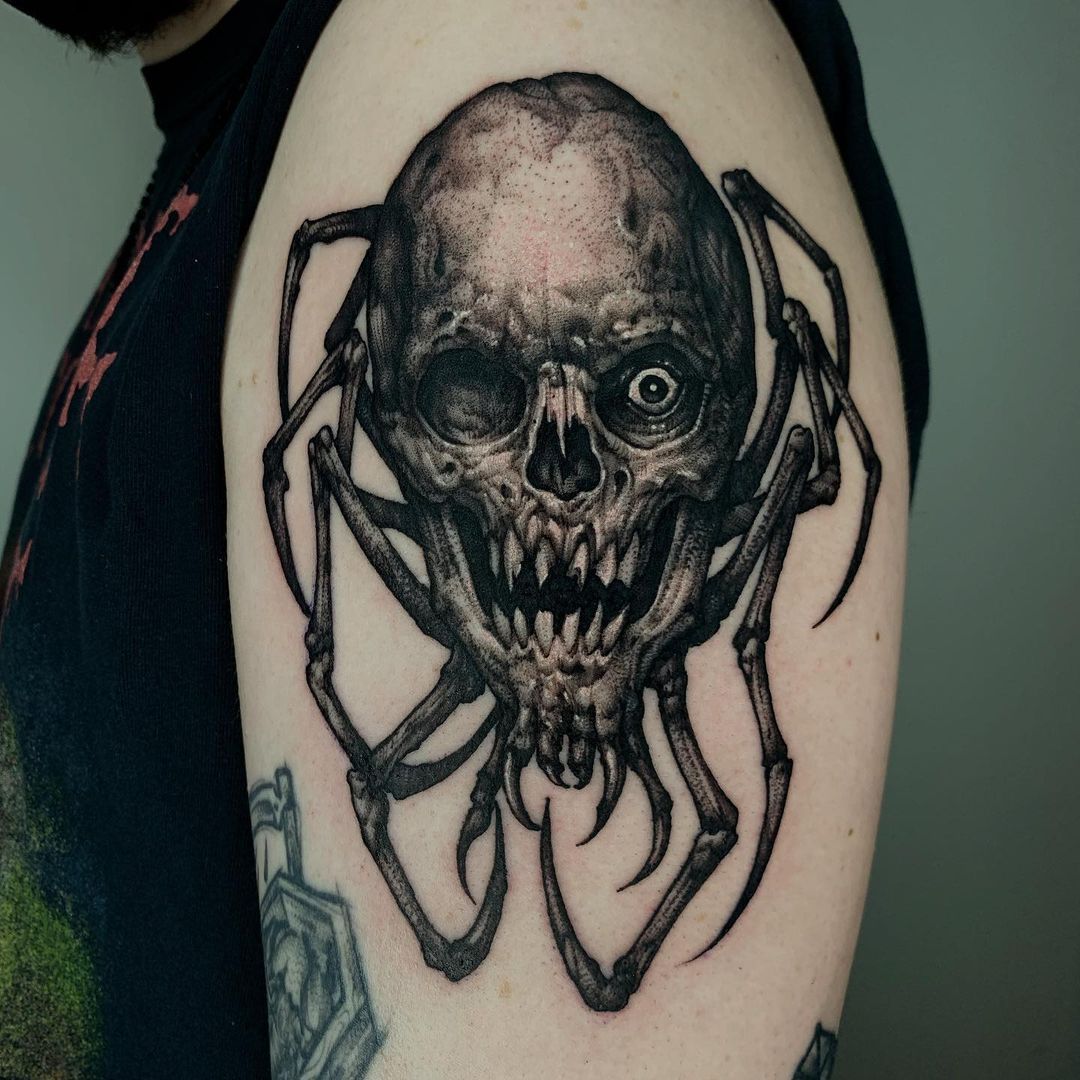
Hyperrealistic skull with spider legs
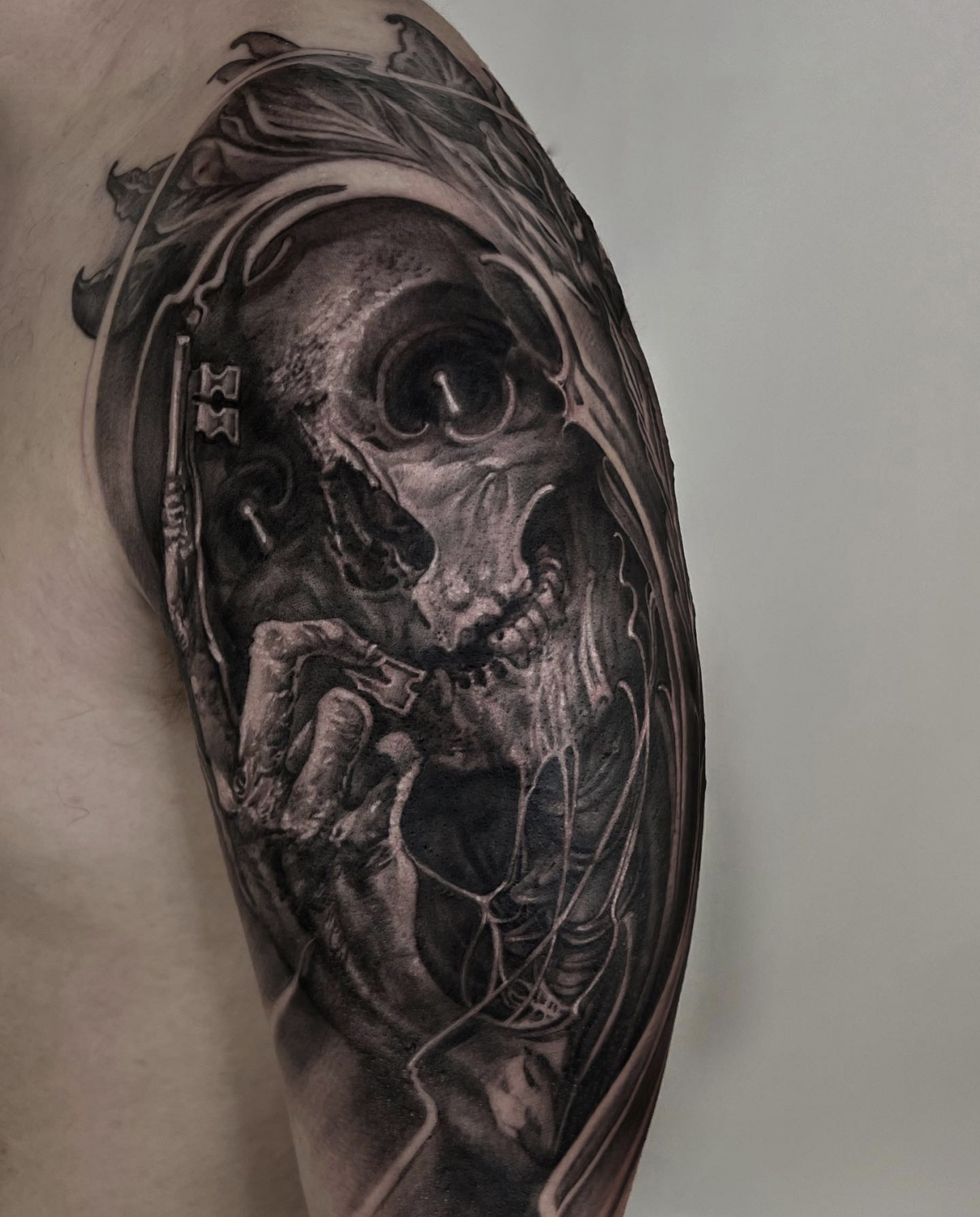
Realistic skull with key tattoo
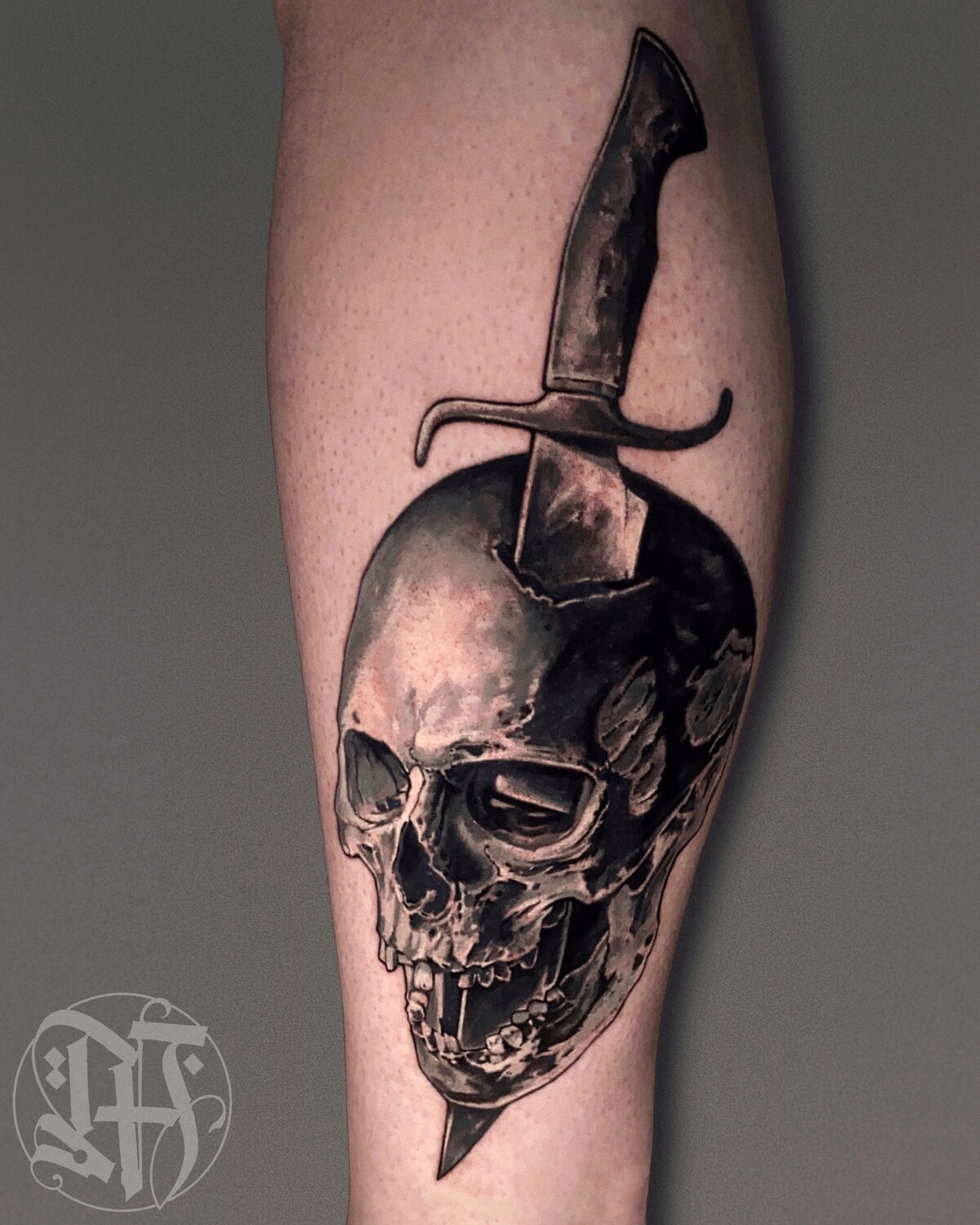
Realistic skull with dagger
From the Artist's Chair: Inking Mortality
Ask any experienced tattoo artist what their most-requested subject is, and skulls will land in the top three. Every time. The consultations behind these pieces, though, reveal something the finished tattoo can't always show.
A father's death. A near-death experience. A philosophical stance on mortality. "People don't usually walk in and say, 'I want a skull because it looks sick,'" one artist noted during a convention panel discussion. "I mean, some do, and that's fine too. But most of the time, there's a conversation first. There's a reason."
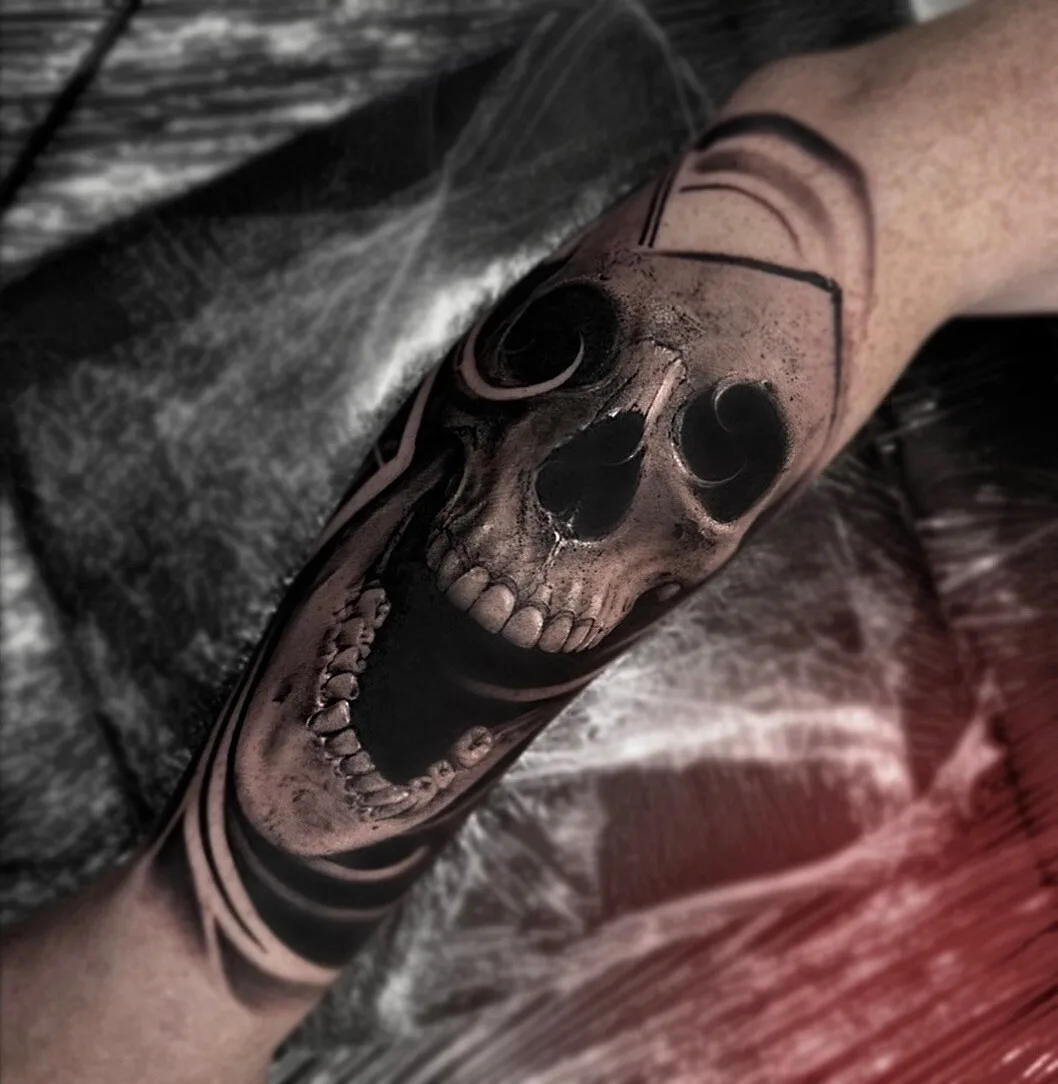
The design process for a meaningful skull piece often involves more back-and-forth than other subjects. Which additional elements should be included? Should the skull look ancient and weathered, or clean and anatomical? Should it face forward, confrontational, direct, or in profile, more contemplative? These choices shape the emotional register of the finished tattoo as much as the linework itself.
What artists often say is that the skull is a uniquely honest subject. It doesn't pretend. It doesn't flatter. It's the one thing underneath every face, and putting it on your skin acknowledges something most people spend their whole lives avoiding.
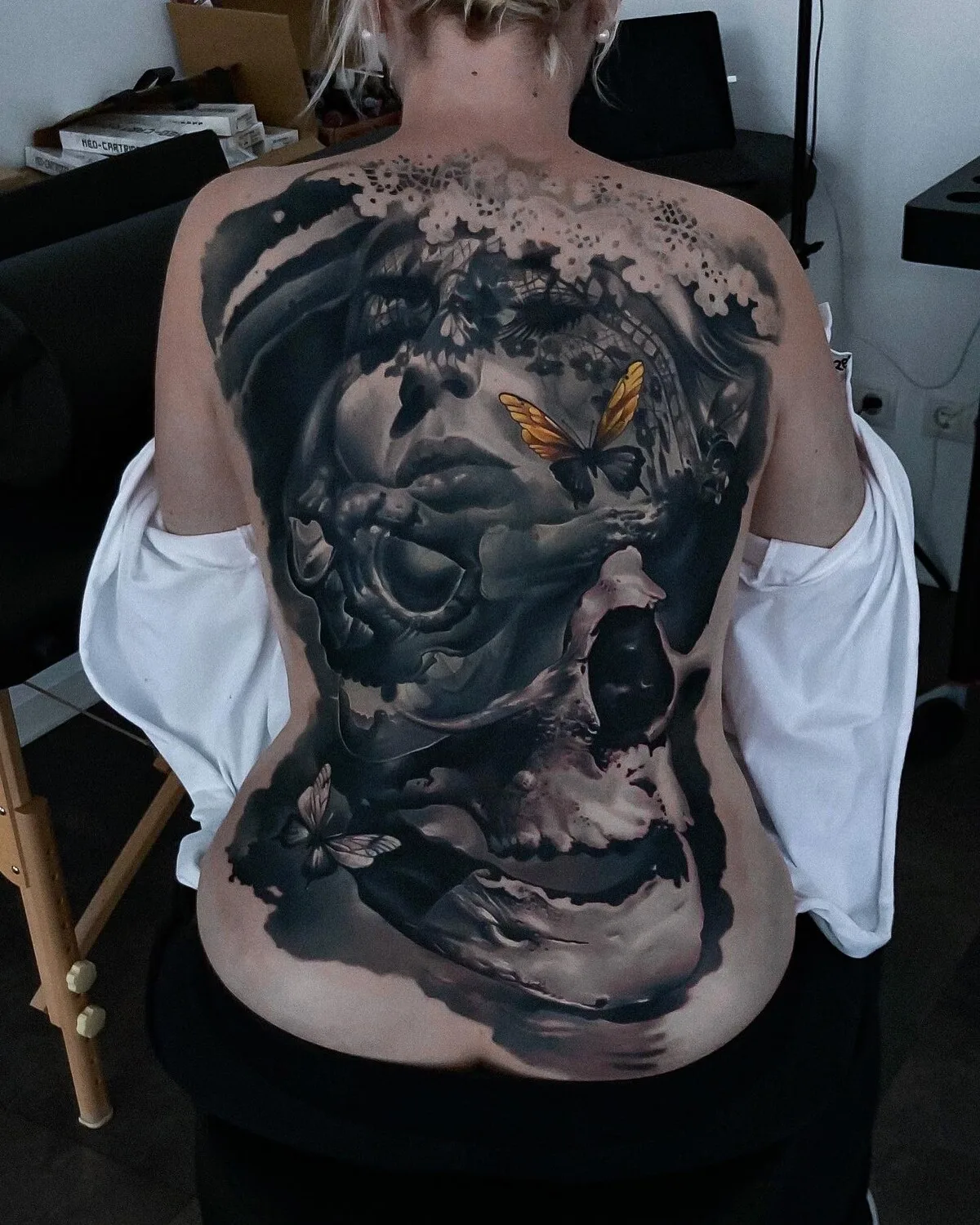
The Skull Tattoo: A Mirror to the Self
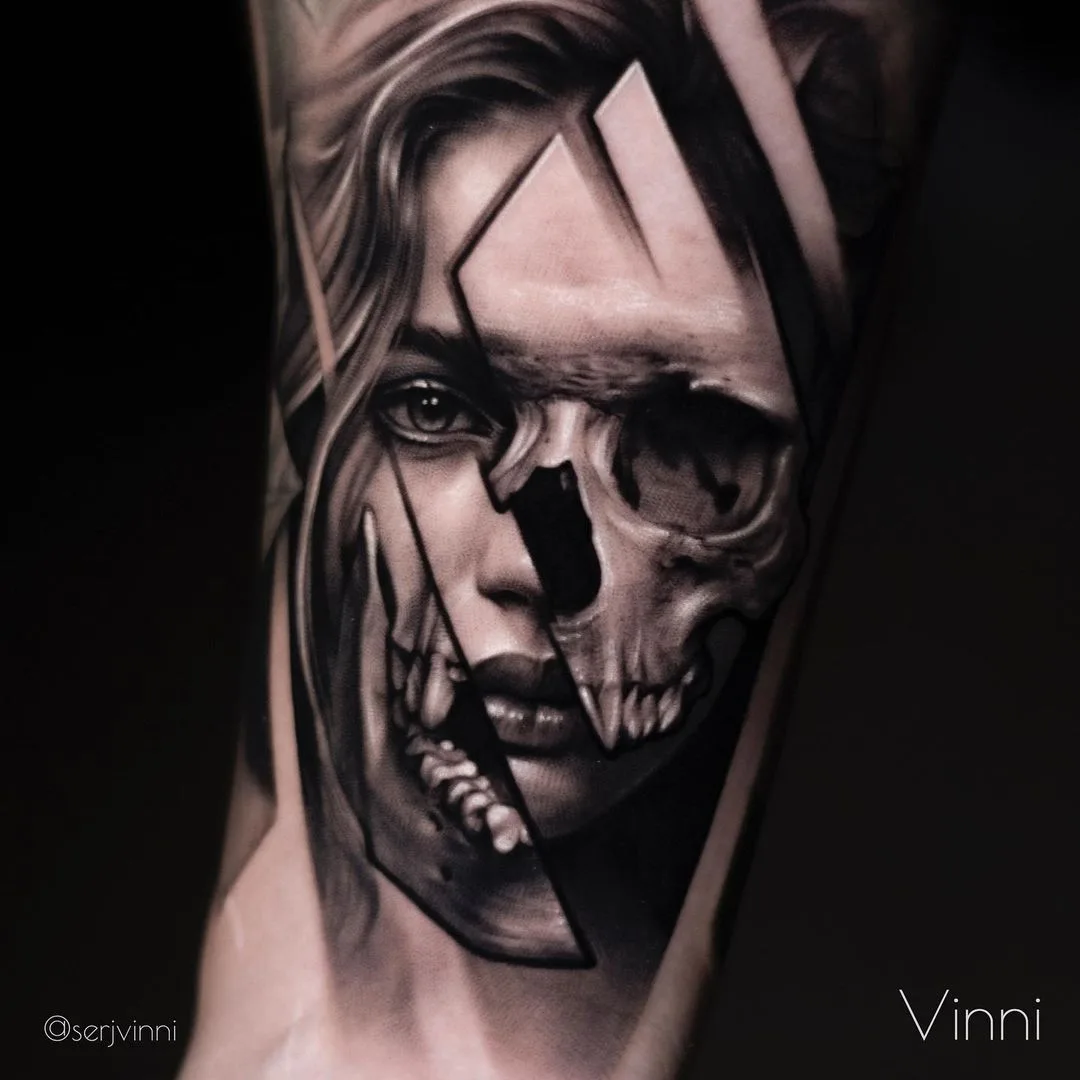
If there's one thing to take away from all of this, it's that the skull is not a one-note symbol. It's not dark. It's not light. It's not happy or sad or rebellious or spiritual in isolation. It's all of these things simultaneously, and it becomes specific only when someone decides to wear it and assigns it their own meaning.
A skull can be a memorial. A philosophy. A middle finger. A prayer. A joke, even. It can honor the dead with marigolds and sugar, or stare down mortality with nothing but black ink and bone.
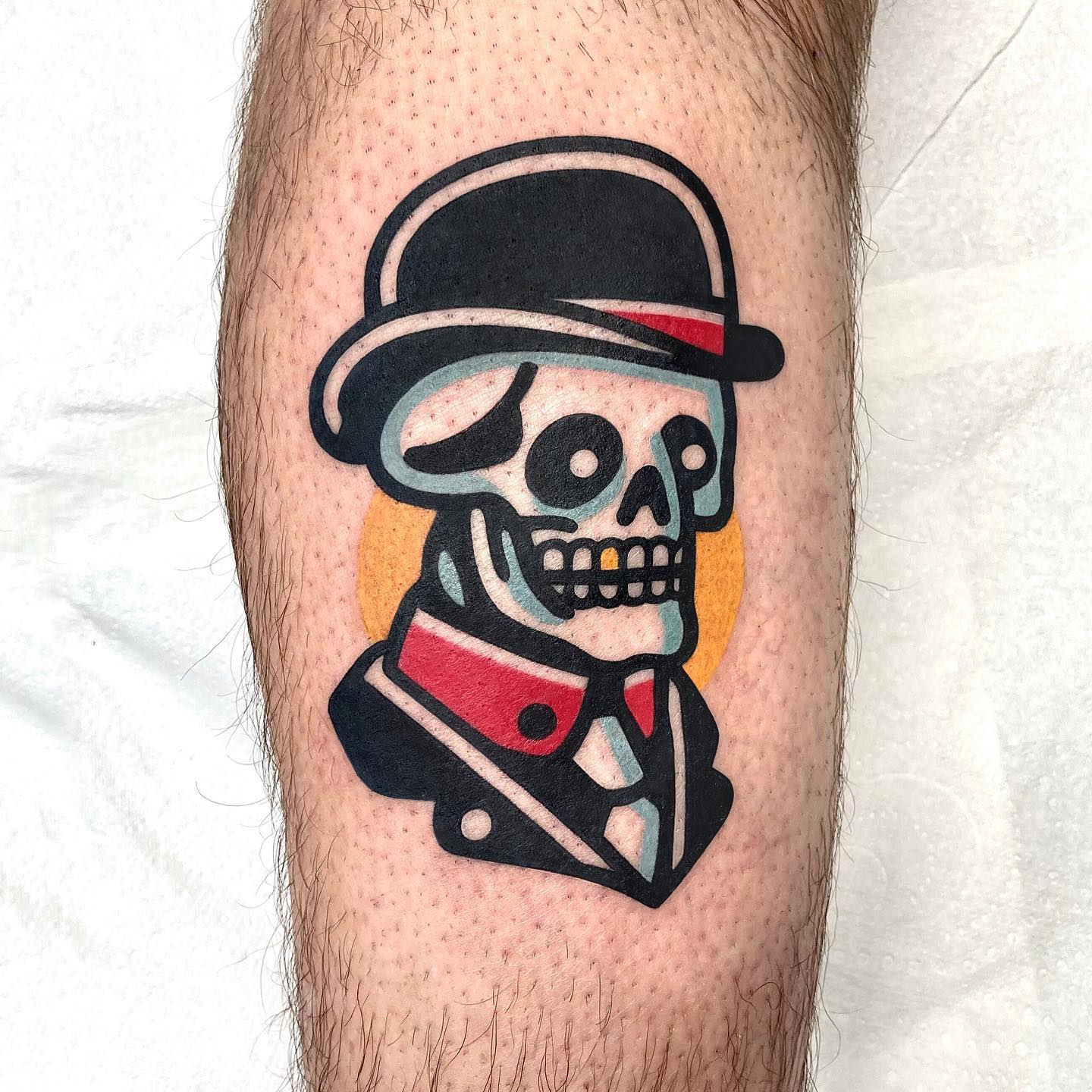
Traditional dapper skull tattoo
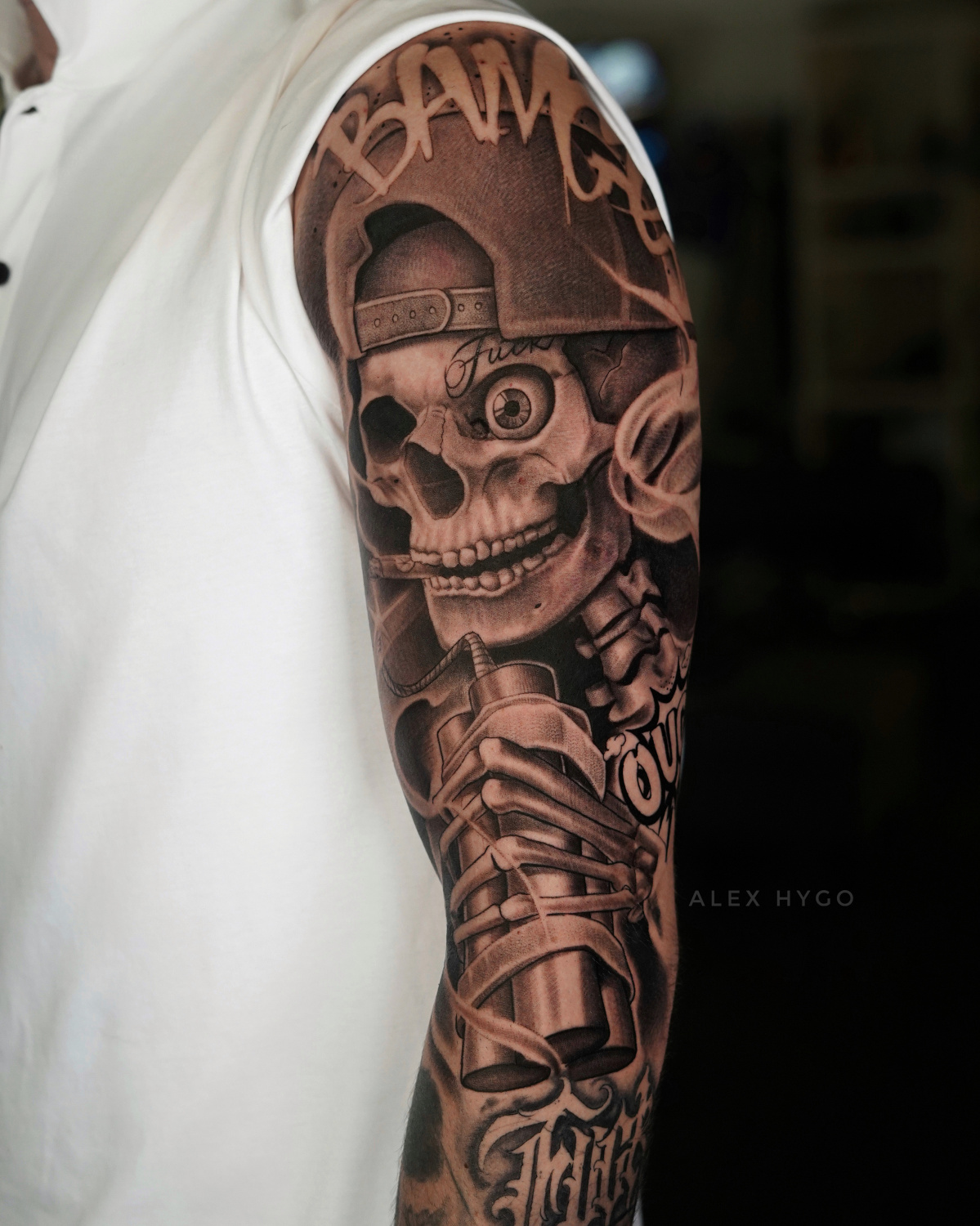
Alex Hygo, black and grey sleeve
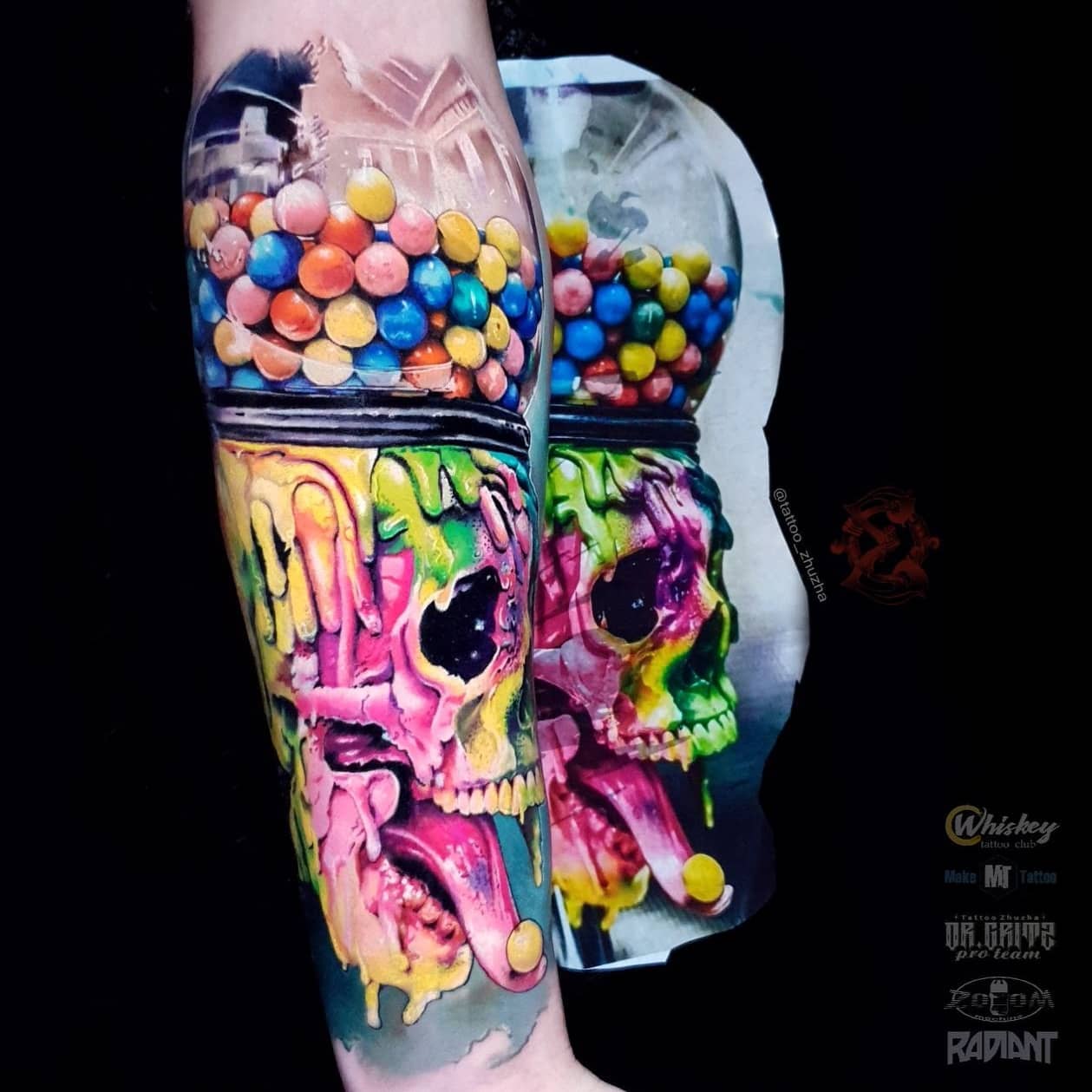
Gumball machine skull, new school style
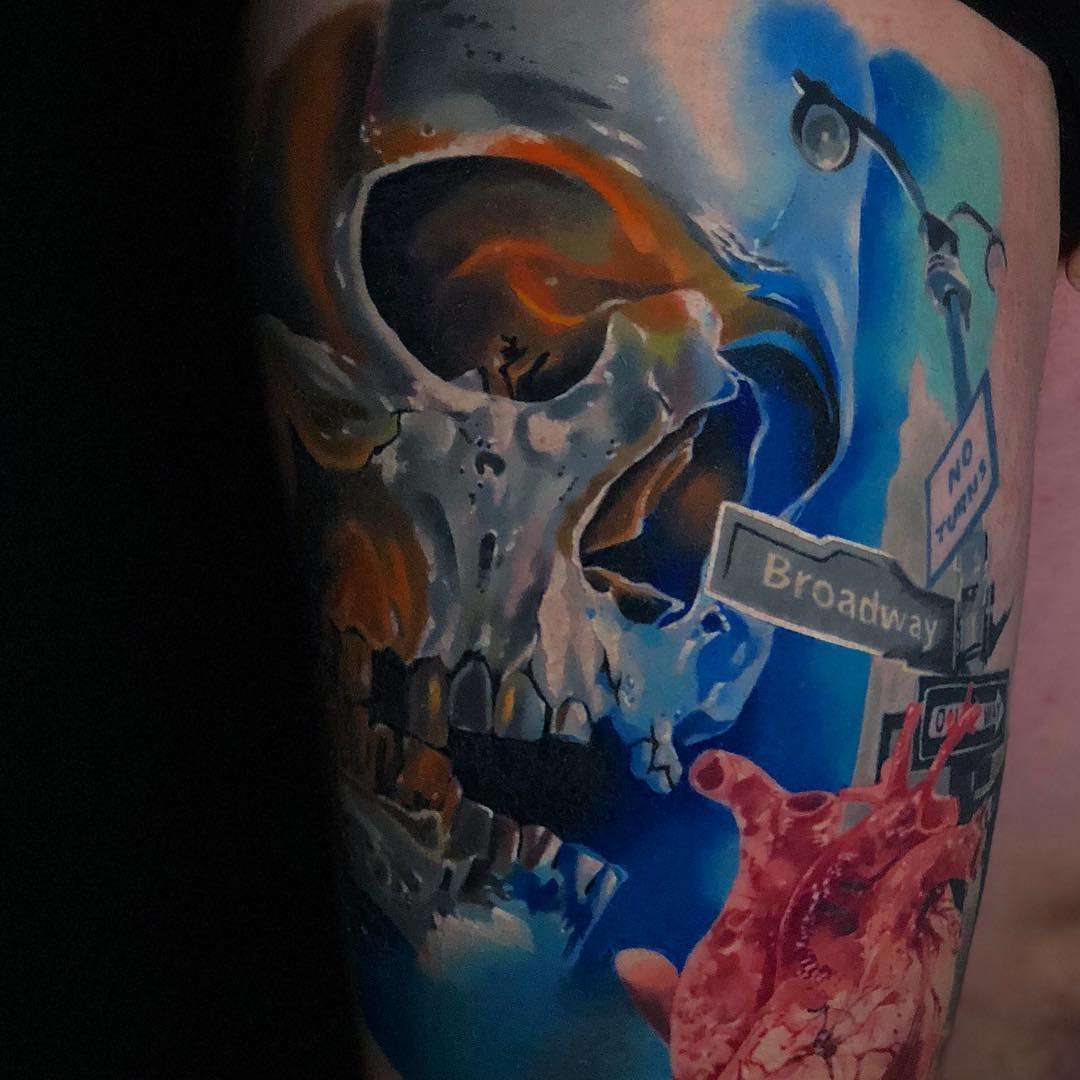
Realistic skull with heart and Broadway sign
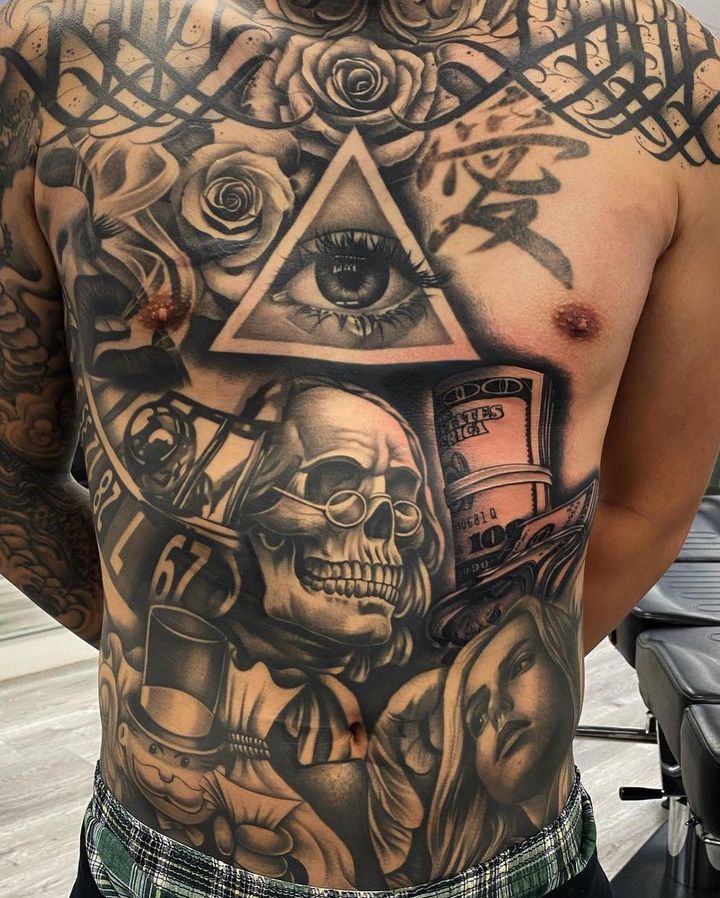
Realist skull and symbolism chest tattoo
That versatility is exactly why the skull has endured as one of tattooing's most powerful images for centuries, and why it isn't going anywhere. It's the most honest mirror available: the face beneath every face, waiting patiently under the skin.
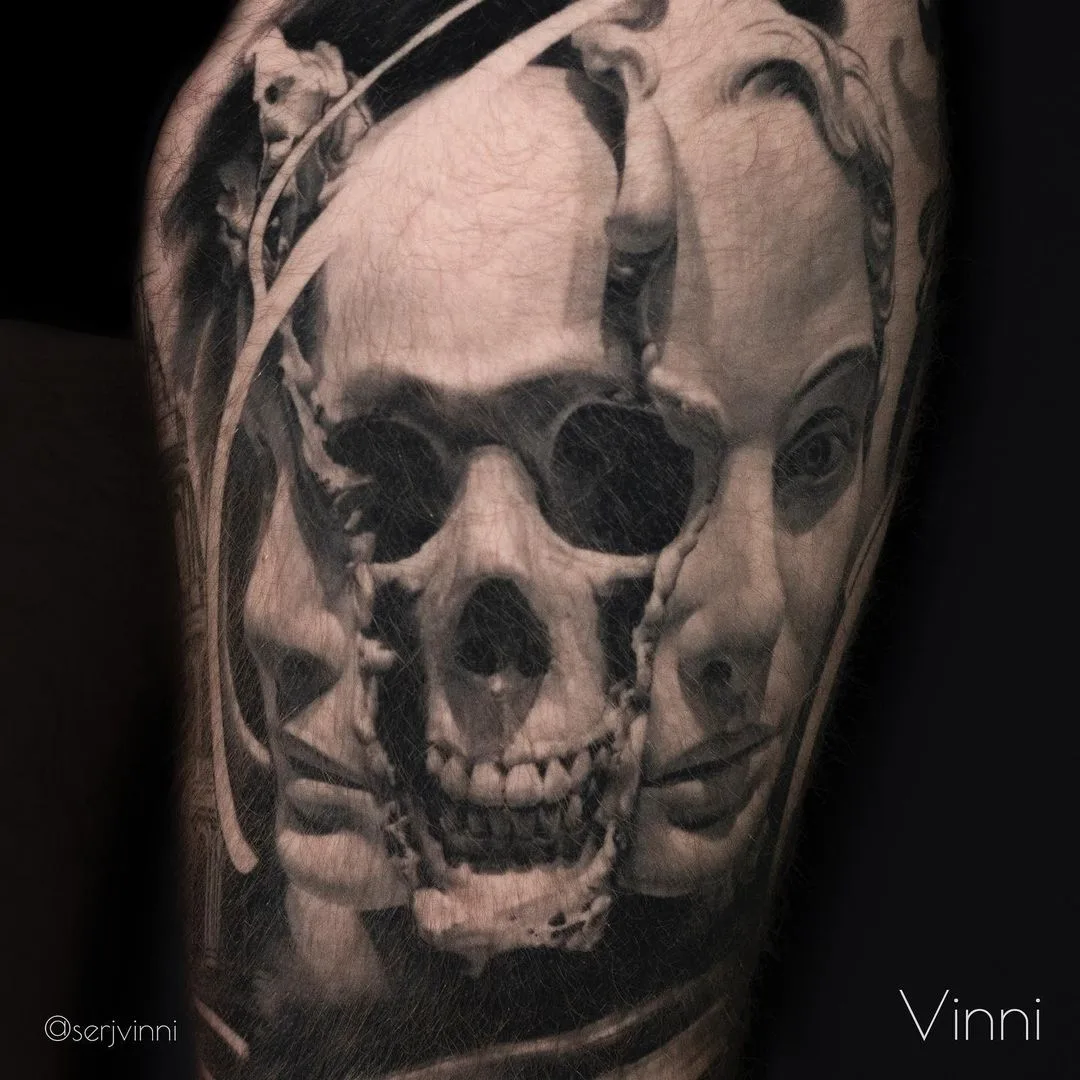
If a skull tattoo is calling to you, spend time thinking about what it means in your hands. Then find an artist whose style matches that meaning. The skull will do the rest.
FAQ
Is a skull tattoo bad luck?
No, this is a persistent myth with no real foundation in tattoo culture or history. In most traditions, the skull is actually considered a protective symbol or a positive philosophical reminder. In Mexican Día de los Muertos celebrations, skull imagery is joyful and life-affirming. In Buddhist practice, it represents enlightenment through the acceptance of impermanence. Even within Western memento mori traditions, the skull's purpose is to inspire better living, not to curse the wearer. The meaning of any tattoo ultimately comes from the intention behind it, and the vast majority of people who wear skulls do so for deeply personal, positive reasons.
What does a skull with a crown tattoo mean?
A skull wearing a crown is a potent combination that typically represents power, mastery, or sovereignty, even over death itself. The crown suggests authority and dominion, while the skull beneath it acknowledges that even kings and queens are mortal. Some wearers interpret it as a statement of personal triumph: they've survived something that could have destroyed them, and they emerged ruling their own life. In certain contexts, particularly within gang or prison tattoo culture, a crowned skull can carry specific coded meanings, so it's worth being aware of those associations depending on your region. For most people, though, it's a bold declaration that mortality doesn't diminish personal power.
Can a skull tattoo be feminine?
Absolutely. The idea that skulls are exclusively masculine imagery is outdated and doesn't reflect the breadth of what contemporary tattoo artists are creating. Sugar skull designs are frequently rendered with delicate floral embellishments, fine-line detail, and soft color palettes that many people consider feminine. Beyond calaveras, a skull drawn in a fine-line or watercolor style, adorned with peonies, butterflies, or jewels, can feel elegant and distinctly feminine. Placement matters too, a small, detailed skull behind the ear or on the collarbone reads very differently from a massive skull backpiece. The skull is a universal symbol, and talented artists can adapt it to fit any aesthetic the wearer desires.