What first drew me to minhwa
What first drew me to minhwa, Korean folk painting, was not the meaning of its symbols. It was the way the pictures looked. Its distinctly Korean visual language felt unlike the paintings I was used to seeing. The tiger is the clearest example. A powerful animal can appear with an oversized face, an awkward pose, or a comical expression. It is still recognisably a tiger, but it has a character all its own.
That combination of originality and visual appeal made me want to explore these paintings further. I began working with minhwa-inspired subjects in 2016. What still matters most to me is how a familiar subject can be interpreted in an unexpected and compelling way.
The meanings behind familiar images
Many minhwa subjects carried wishes for everyday life. Tigers were associated with protection from harmful forces, magpies with welcome news, and pine trees with longevity and steadfastness. These associations help explain the images' enduring appeal. They are part of the history of the painting, even when a person chooses a tattoo for a different reason.
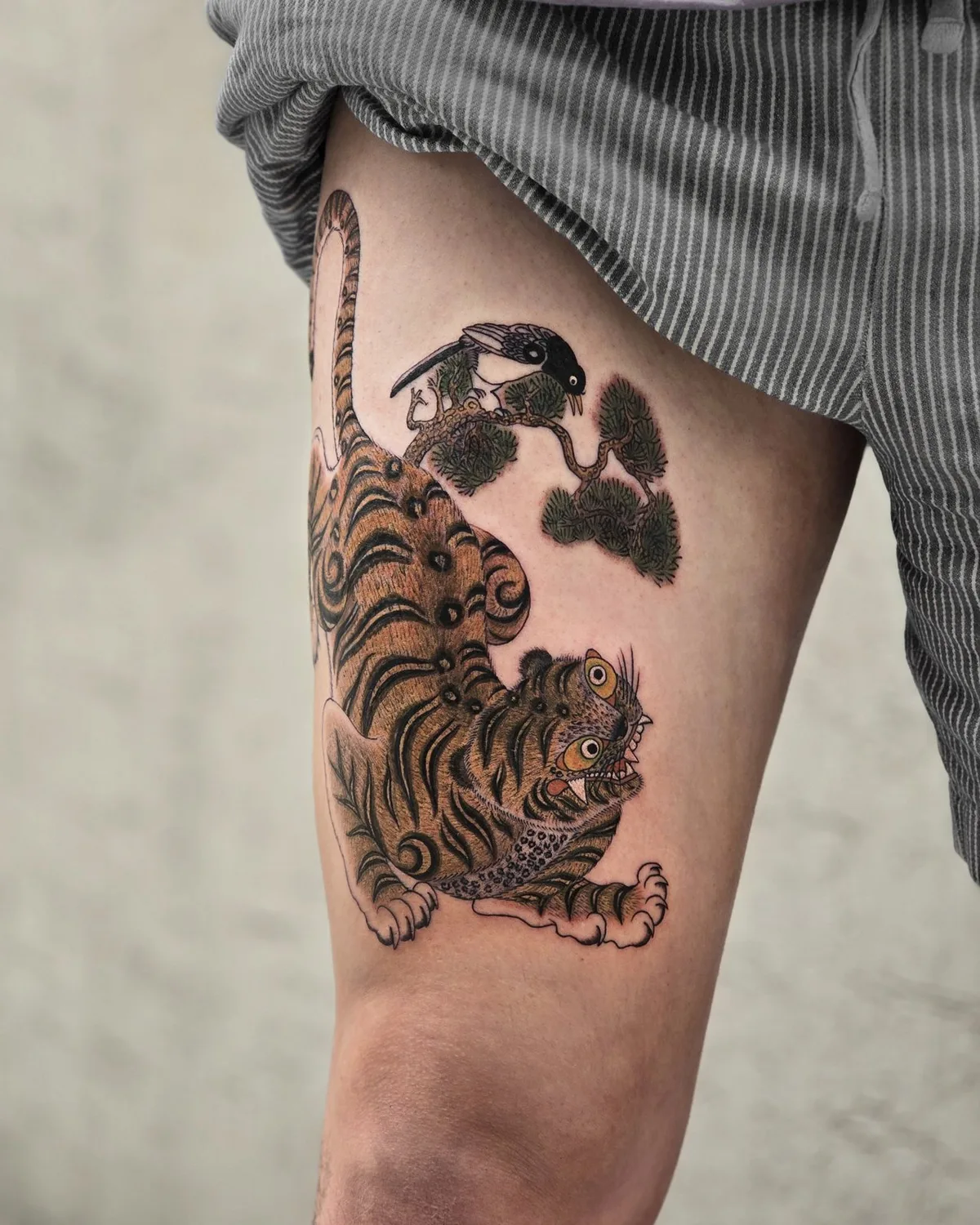
Hojakdo, the familiar scene of a tiger and a magpie, often includes a pine tree. The scene is memorable for more than its symbolism. The contrast between the bird and the tiger, and the tiger's expressive, sometimes humorous appearance, gives the scene an energy that I find particularly appealing. It can be playful without losing visual strength.
Keeping a scene, changing its composition
In a hojakdo tattoo on a client's thigh, I kept the tiger, magpie, and pine together as one scene. The tiger sits below, with the bird and branches above. The subject remains recognisable, but I adjusted the distances between the elements and the distribution of detail for the shape of the thigh. A painting composed for a flat surface cannot always be transferred directly to a curved one. The tattoo needs to feel balanced on the body.
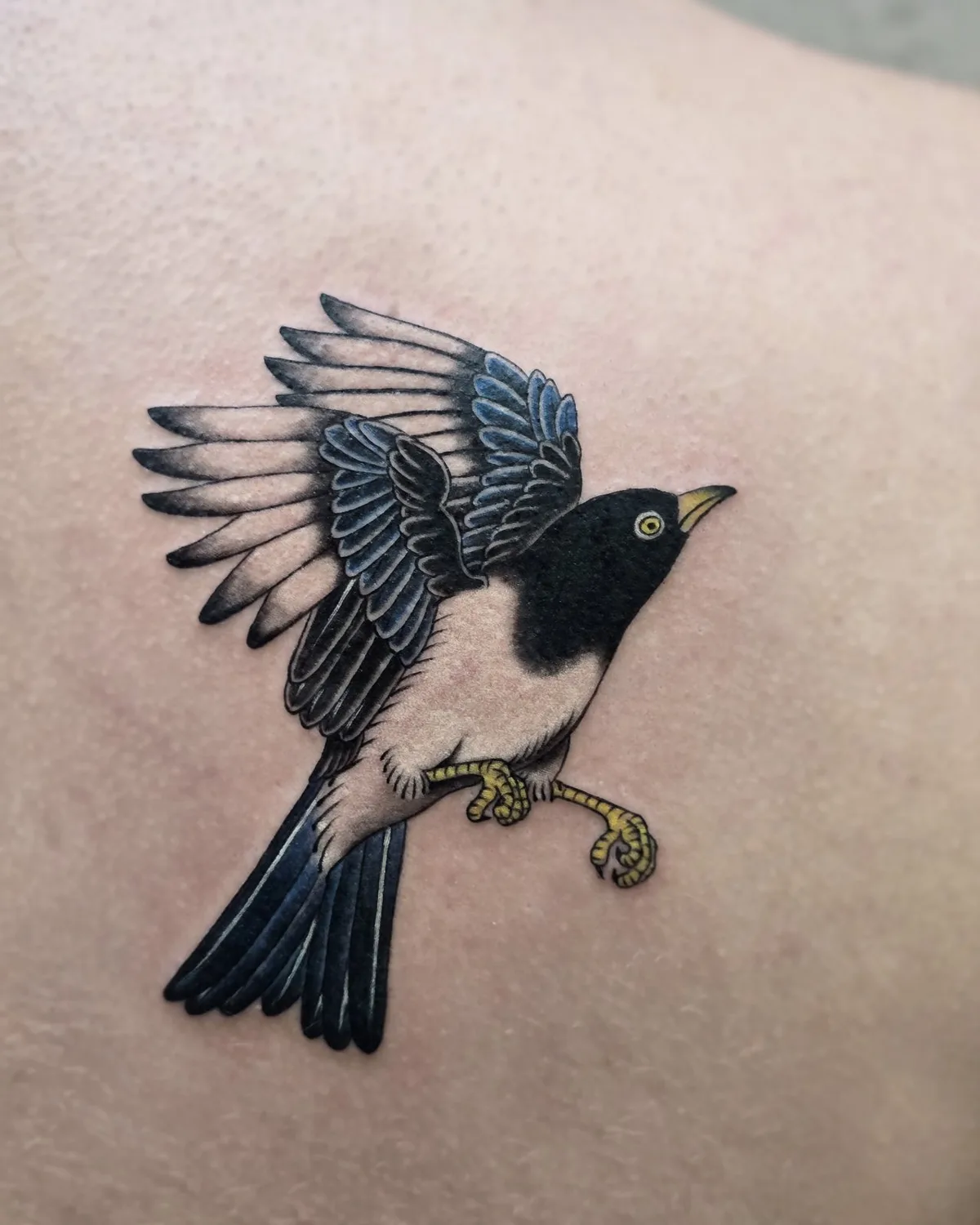
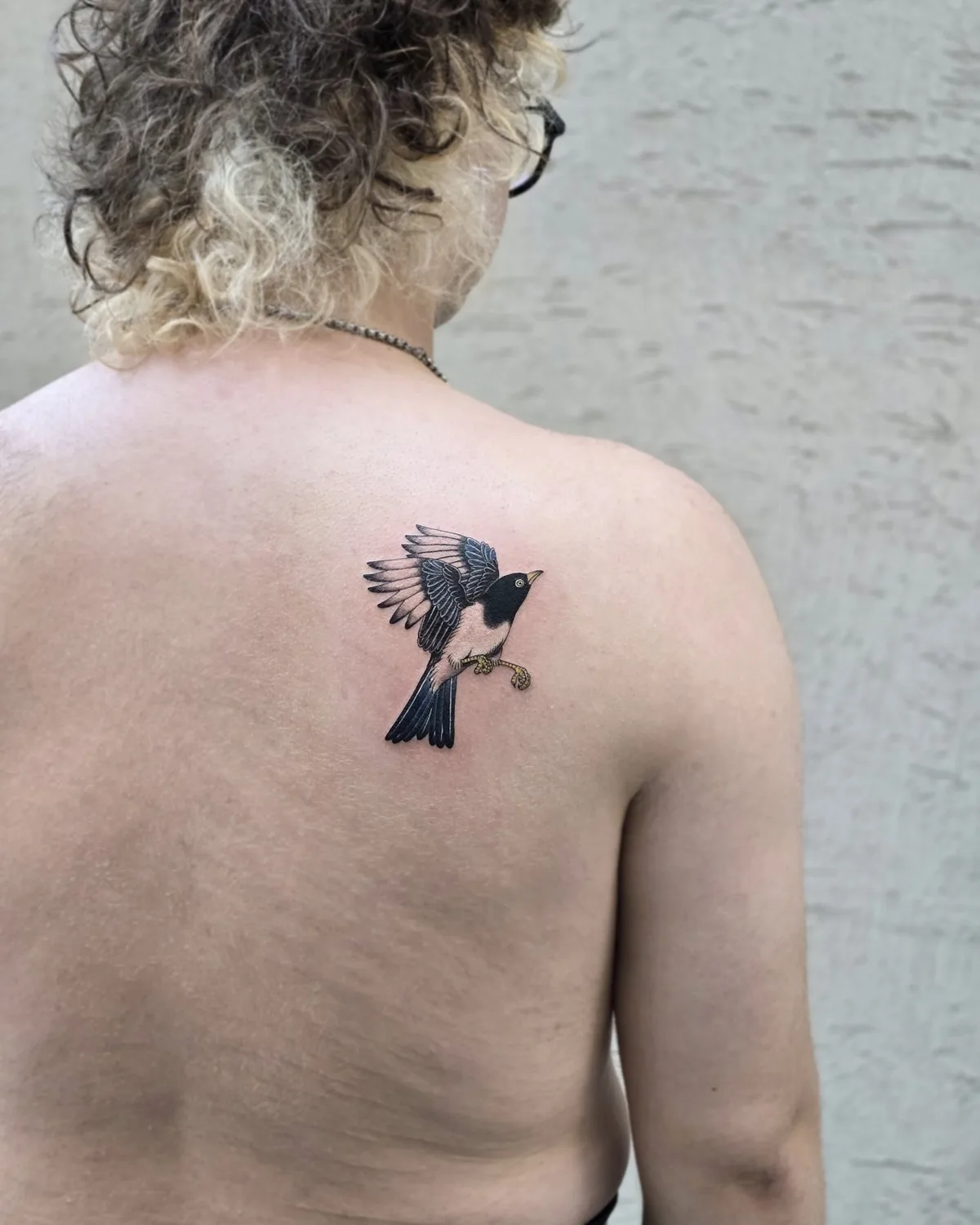
In another piece, I took the magpie out of the larger scene and made it the subject of an upper-back tattoo. Its open wing and long tail move diagonally across the shoulder blade. Dark layered feathers give the bird its structure, with muted blue and small yellow accents adding definition. Without the tiger or the full landscape, the wing, tail, and surrounding space have to carry the composition on their own. Both pieces share a source but work differently.
A symbol does not have only one use
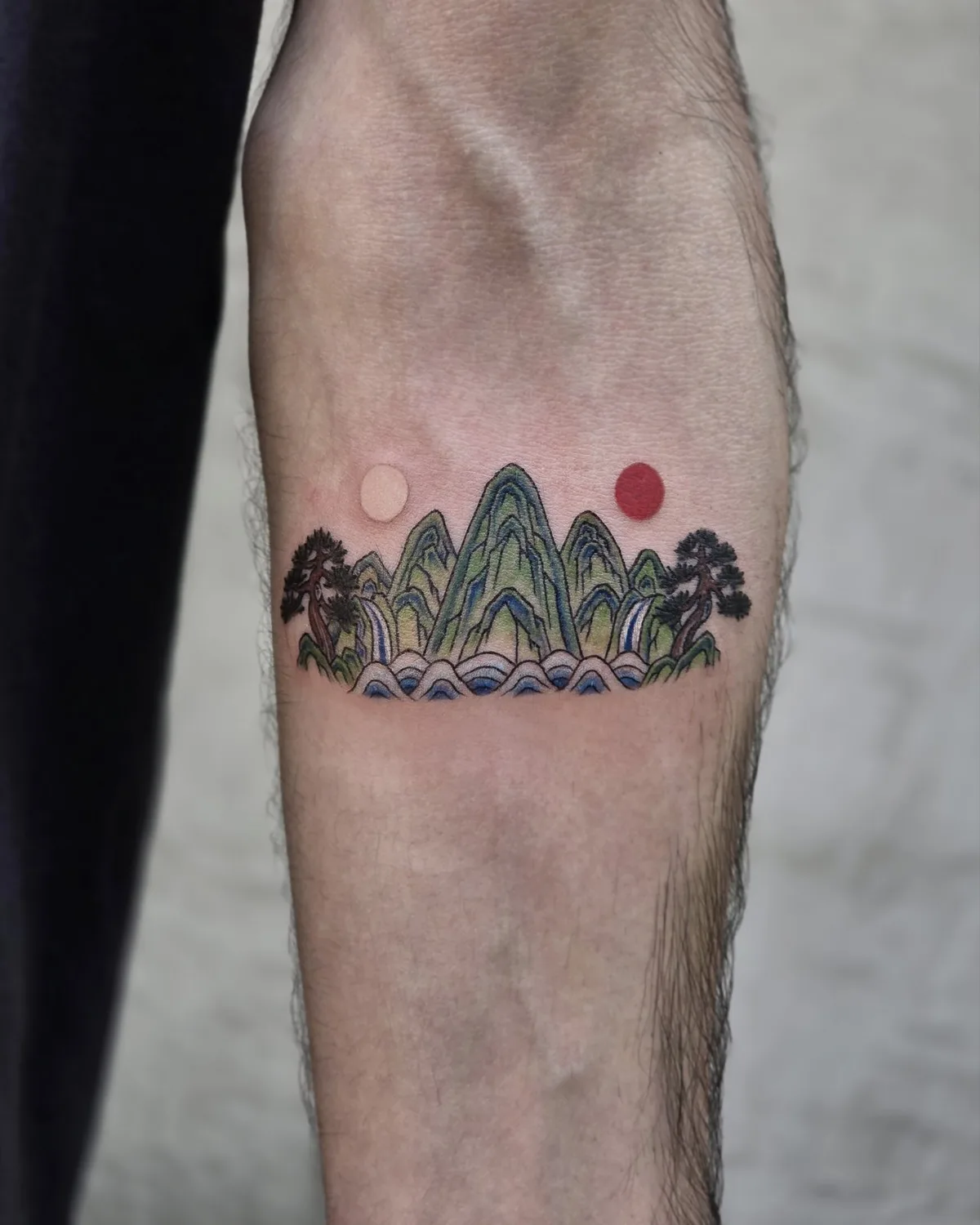
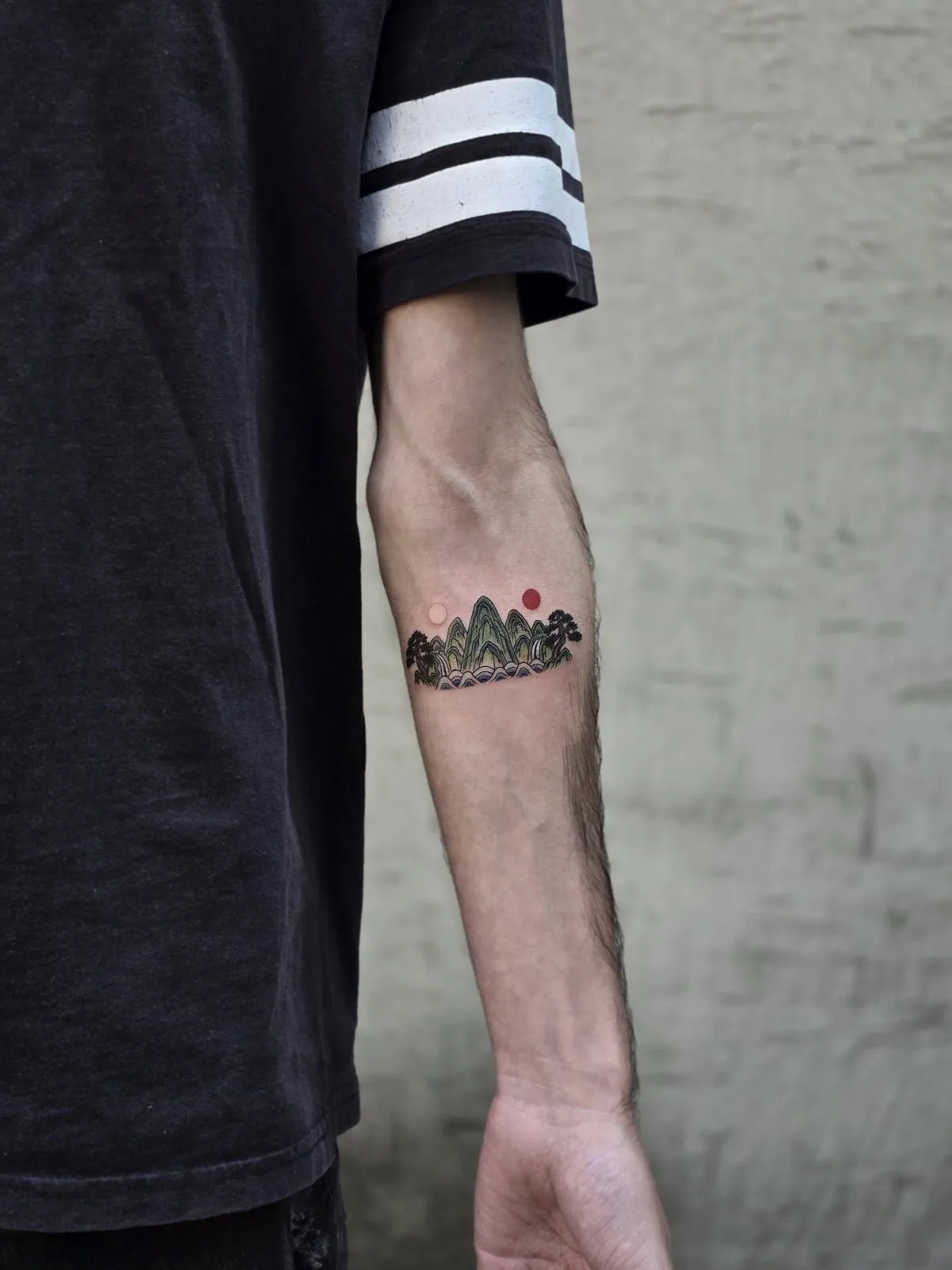
My references are not limited to folk painting. Ilwolobongdo, the painting of the sun, moon, and five peaks, belongs to Korean court painting rather than minhwa. Traditionally displayed behind the royal throne, it expressed the presence and authority of the king. Its arrangement of peaks, trees, water, sun, and moon is also graphically striking.
For a small tattoo based on Ilwolobongdo, I could not simply reduce every part of the original image to the same scale. I had to reconsider the shapes and spacing so that the individual elements remained clear. The historic meaning belongs to the source; the practical decisions in the tattoo come from the size of the work and the space available on the body.
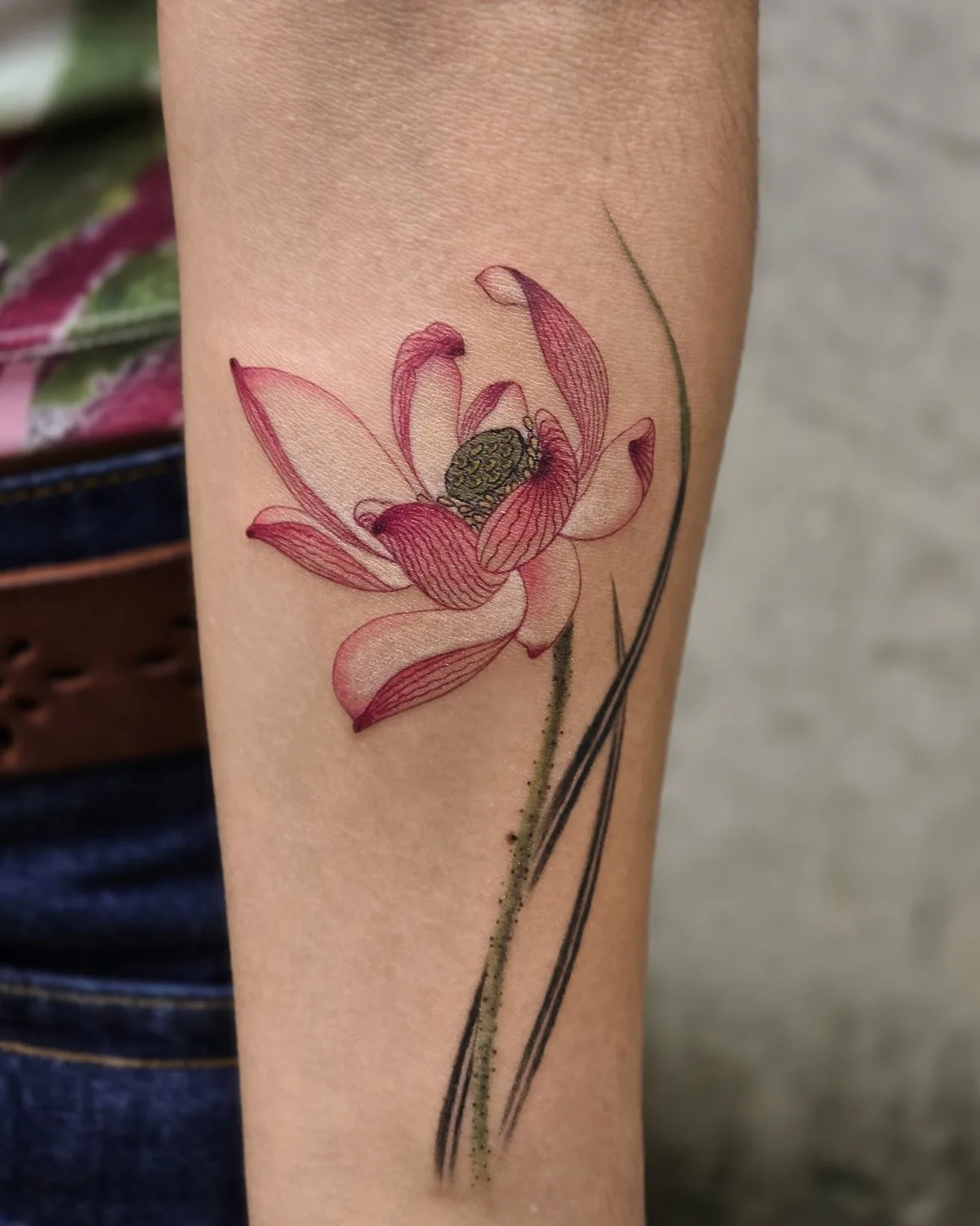
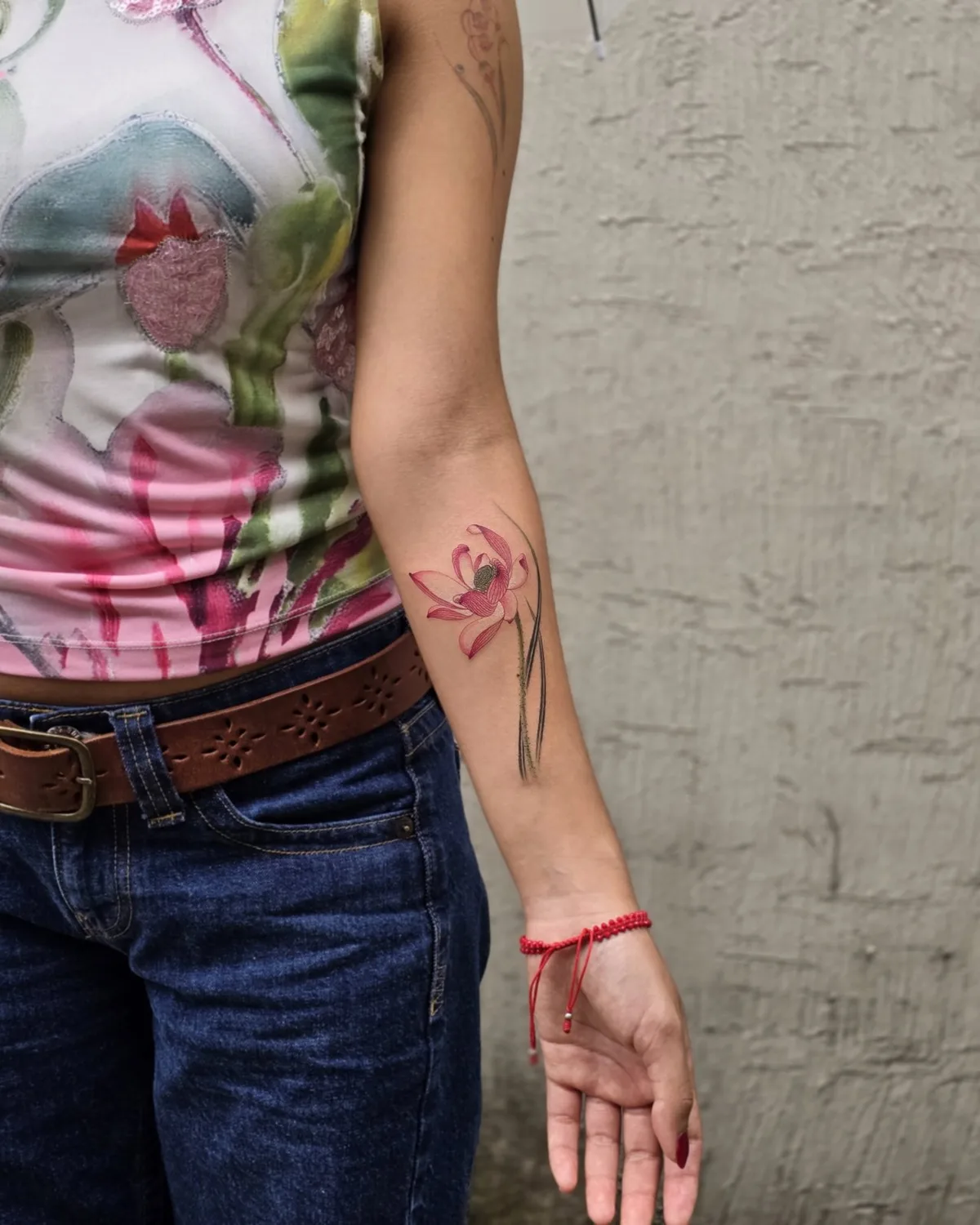
A red lotus tattoo offered another approach. In Buddhist art, the lotus has long been associated with purity, often explained through the way it rises from muddy water. In the tattoo, I gave the red flower and its long stems room to follow the forearm instead of packing the available space with detail. Symbolism provides context; the body shapes the arrangement.
Learning from different forms of beauty
Minhwa was my starting point, but it has never been the only kind of painting I wanted to study. My interest in distinctive forms and ways of depicting a subject led me to Korean literati painting and ink painting, and also to Japanese ukiyo-e. I do not combine these different traditions into a formula. I study their use of line, rhythm, space, and composition.
Originality is important to me, but being unusual is not enough. I want a design to be visually convincing and beautiful as well. Nor does every tattoo need to contain an explicitly Korean motif. I learn from East Asian painting while developing work with its own character.

Making a painting work as a tattoo
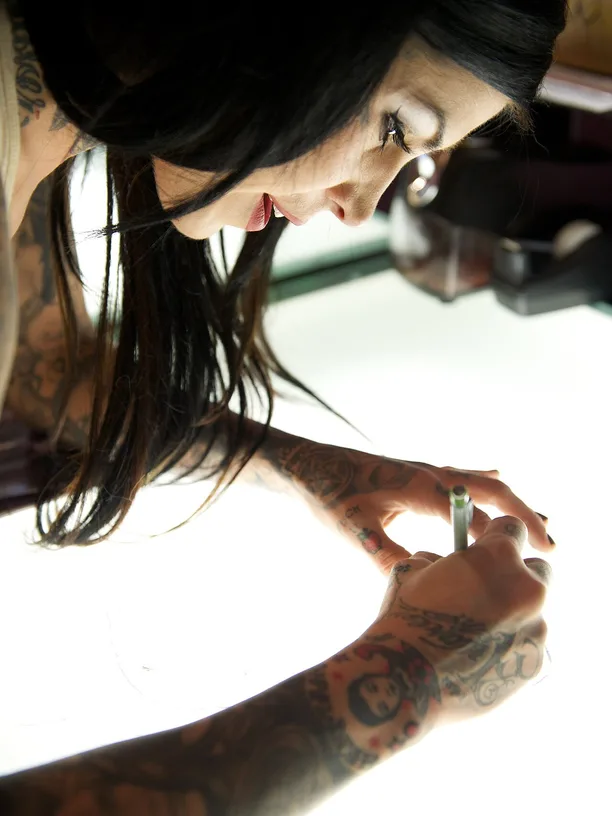
A tattoo is not a painting inside a fixed frame. A shoulder curves, an arm turns, and the image changes with movement. This is why placement, proportion, areas of detail, and open skin are part of the drawing process from the beginning. I may simplify a shape or change the direction of a branch, not to discard the source but to make the composition work on a living body.
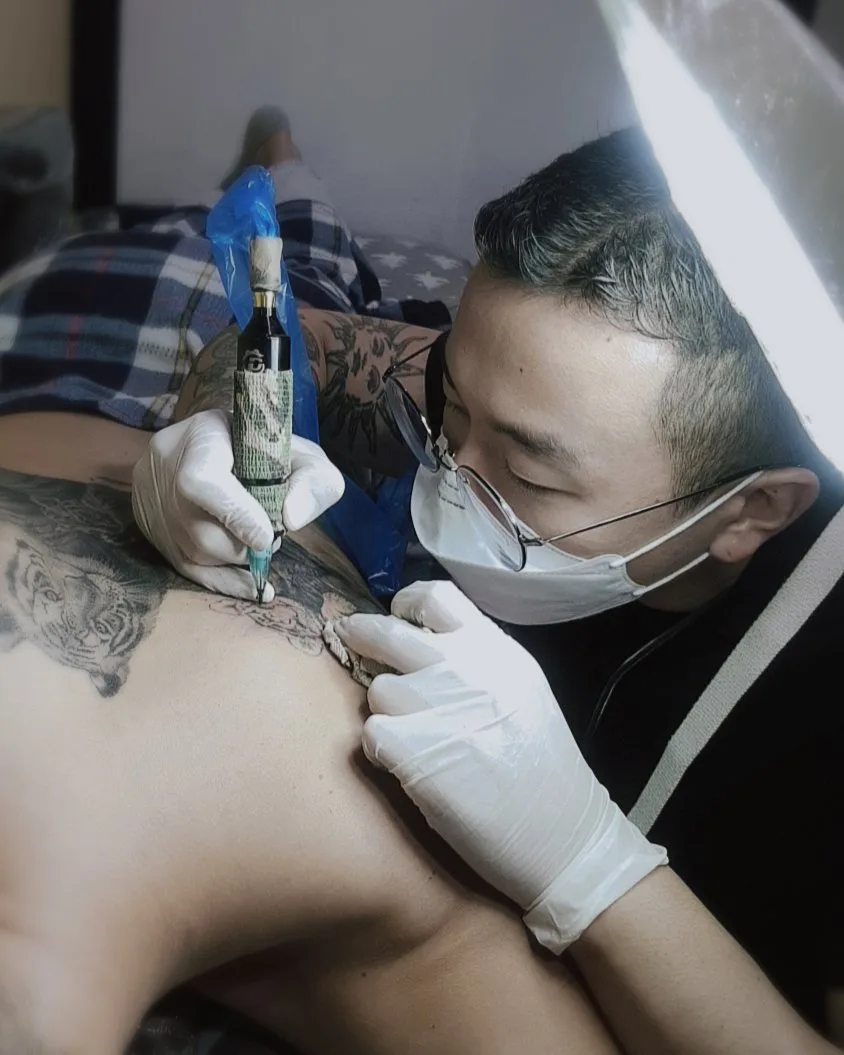
In earlier work I sometimes explored the brush marks and ink effects of literati painting. My current work is not centred on reproducing those techniques. I pay more attention to the relationship between clear forms, line, density, and empty space. The aim is not to make a design look traditional at any cost. It is to create a tattoo that works as an image in its own right.
The symbols in Korean painting help us understand an image's origins. But the reason I keep returning to these traditions is the inventiveness of their visual expression. I want to respect what makes a subject distinctive, then make something new from it–something that belongs naturally on the person who wears it.
About the author
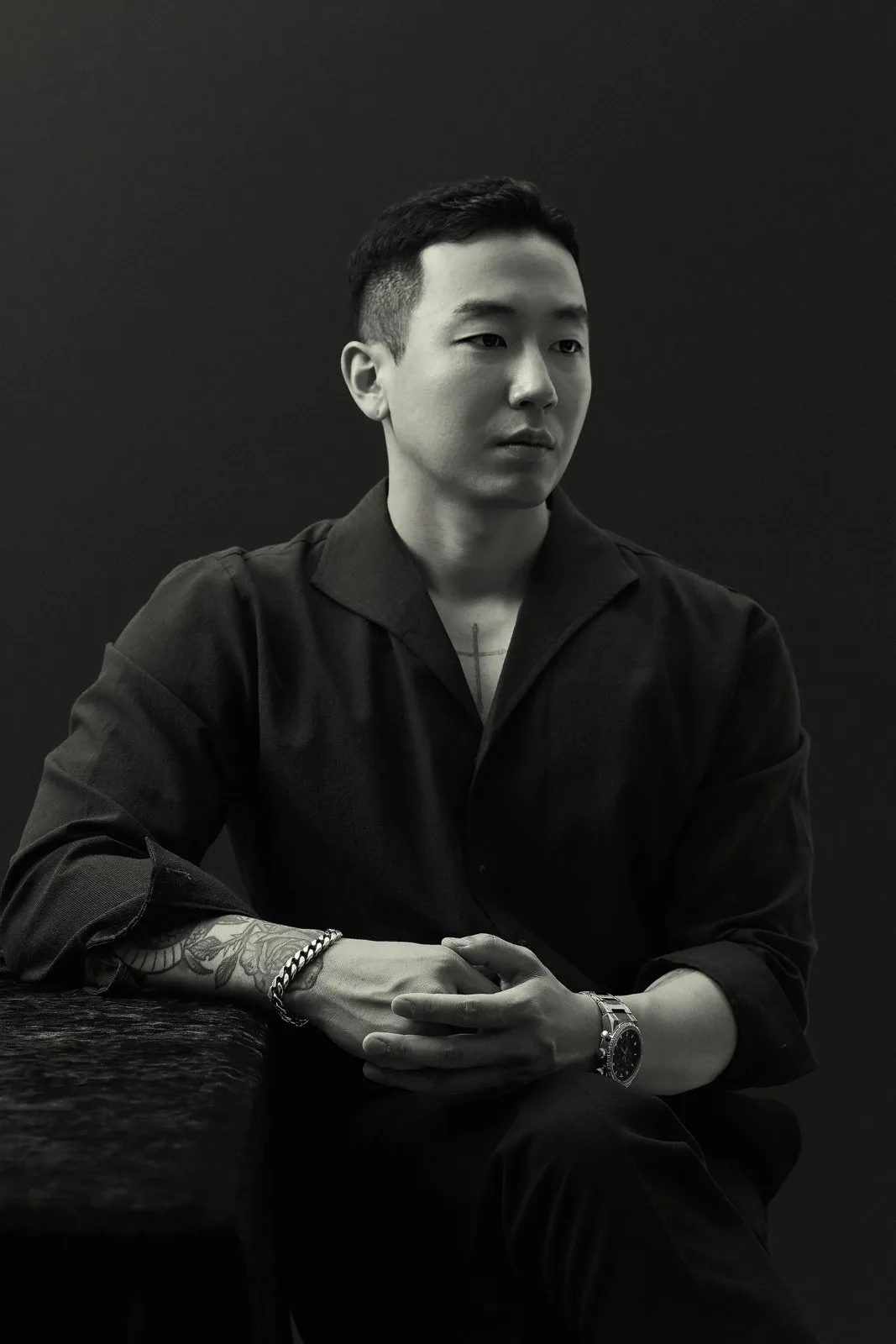
Haesol Choi is a Seoul-based tattoo artist and founder of Onsil Ink. Drawing from Korean minhwa as well as literati painting, court painting, and other East Asian visual traditions, he creates custom tattoos with an emphasis on composition, form, and placement on the body. He consults with clients in Korean and English.
Instagram: @onsil.ink · Website: onsil.ink · Portfolio on iNKPPL: Onsil Ink