In the international tattoo scene, East Asian tattooing is often viewed through two familiar lenses: Japanese irezumi and Chinese ink aesthetics. Korean traditional imagery, by contrast, is still much less visible outside Korea — despite having its own symbols, humour, colours and emotional tone. This is exactly the field where Seoul-based tattoo artistHaesol Choi has been building his practice.
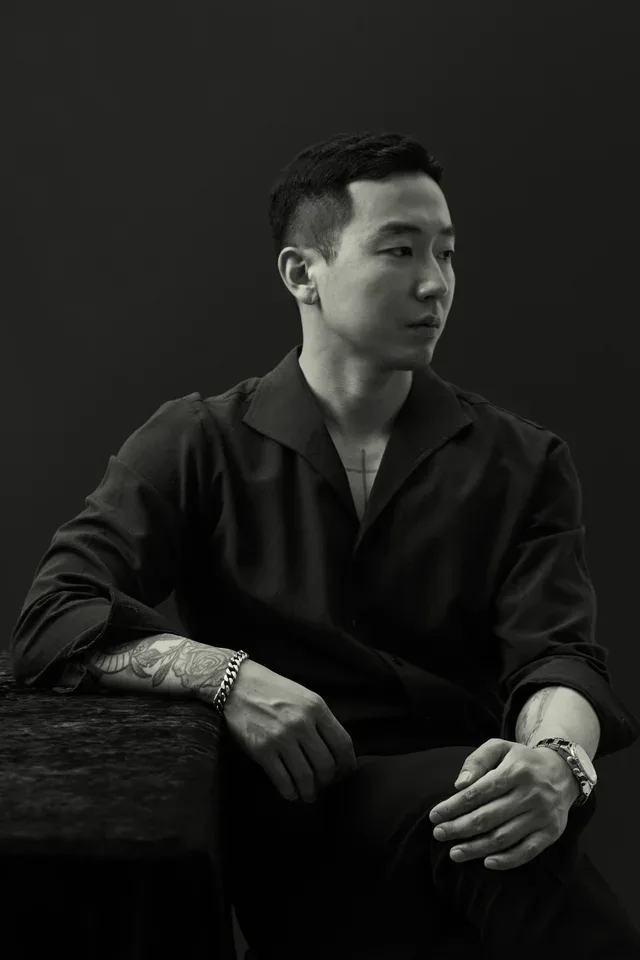
Working at Onsil Studio in Seoul, Haesol creates tattoos influenced by minhwa, Korean folk painting, as well as muninhwa — Korean literati painting — and broader East Asian painting traditions. His work is not an attempt to reproduce historical paintings on skin. Instead, he studies their structure, rhythm and feeling, then translates them into tattoo compositions that can live naturally on the body.
Haesol began working with Korean and East Asian imagery around 2016. His first connection to minhwa came through its directness. The clear outlines, bold colour fields and strong silhouettes reminded him, in some ways, of Western old-school tattooing. But the mood was completely different. Minhwa carried a specifically Korean warmth — sometimes symbolic, sometimes playful, often full of charm and quiet humour.
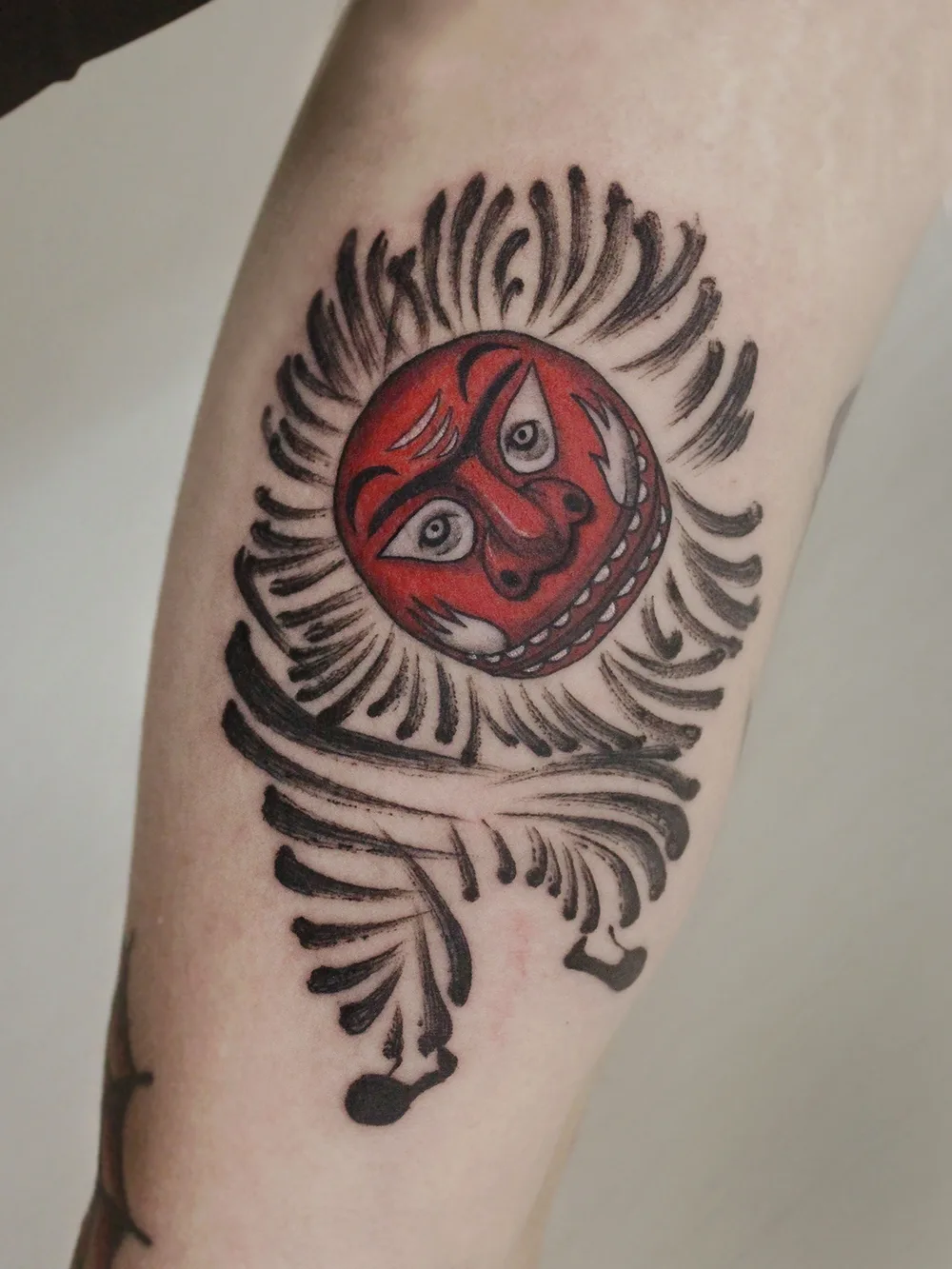
For Haesol, this freedom is one of the main reasons minhwa remains so alive as a source for tattooing.
“What draws me most to minhwa is its freedom and its humour.”
Unlike court painting or more academically controlled traditions, minhwa was closely connected to everyday life. It appeared in homes, on screens, in objects, and in images that carried wishes for protection, happiness, prosperity or good fortune. Tigers, magpies, roosters, dragons, haetae and birds were not only decorative subjects. They were symbols, stories and emotional signs.
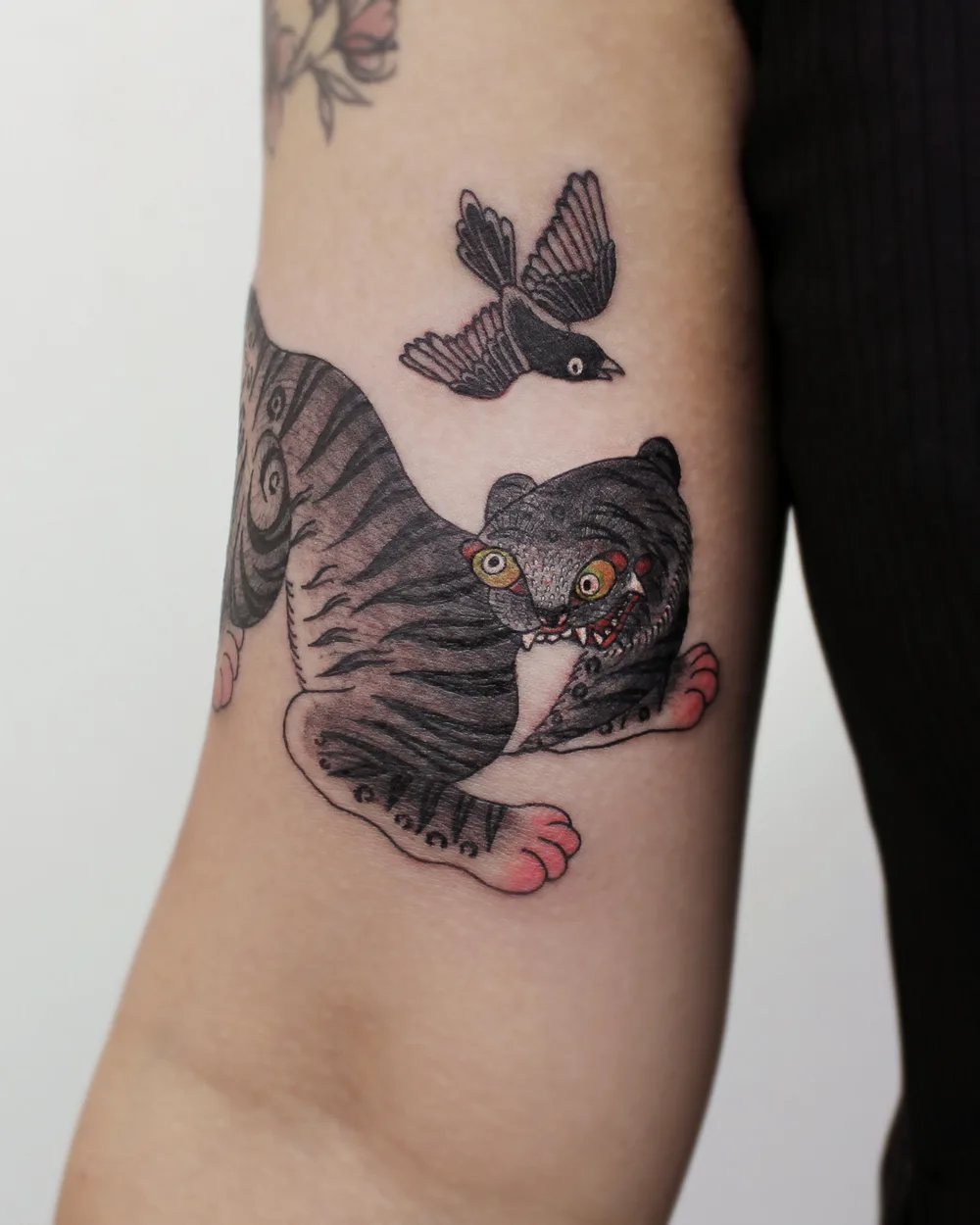
This is also what makes Korean traditional tattooing so distinct. Haesol does not see it as a softer version of Japanese or Chinese traditions. It has its own character. Japanese irezumi often follows highly developed rules of body flow, background and narrative structure. Chinese ink painting is deeply connected to brush energy, ink gradation and empty space. Minhwa moves differently. It is brighter, more ornamental, more direct in its symbolism, and often more playful in its treatment of animals and figures.
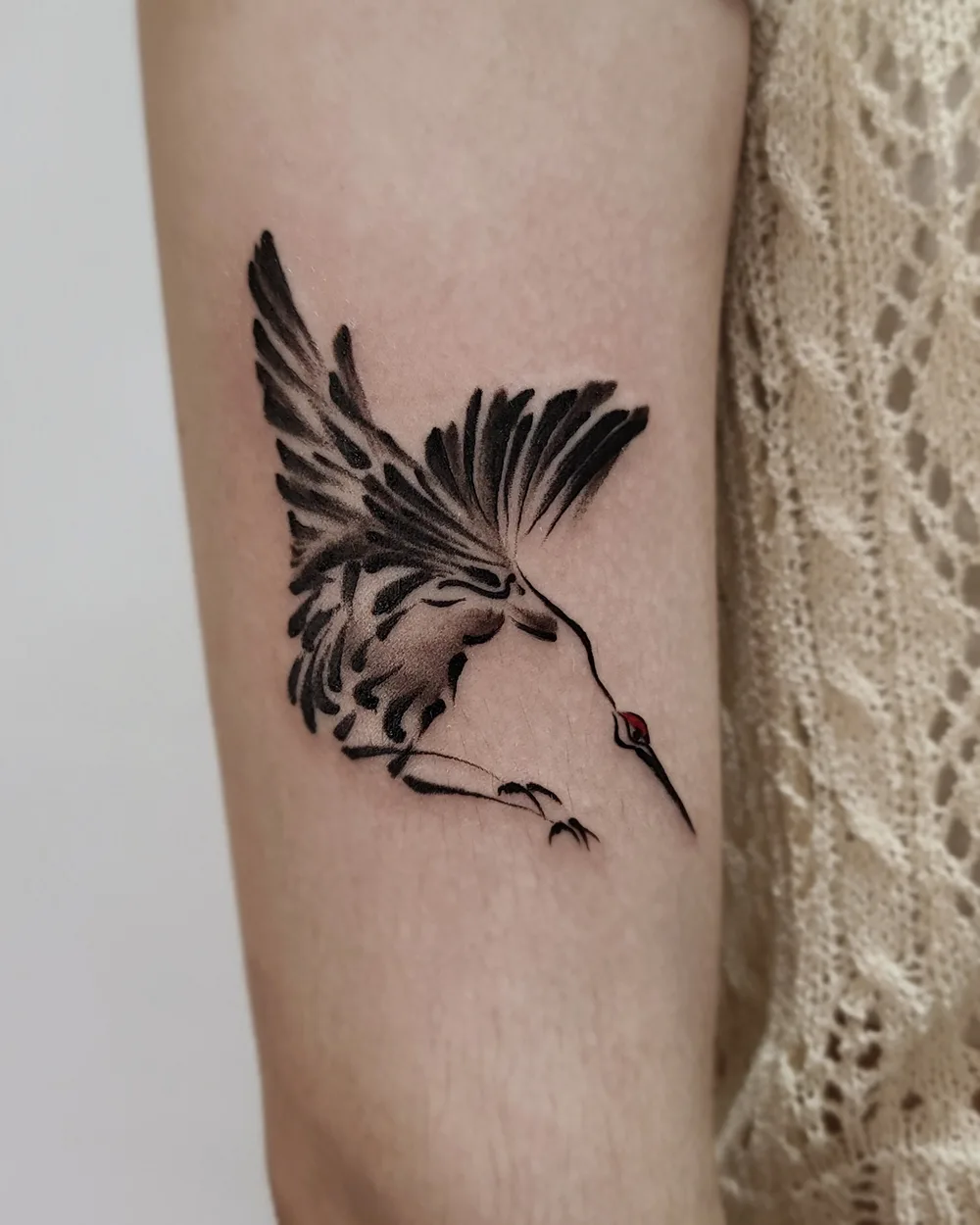
A tiger in minhwa does not need to look like a realistic predator. It may appear exaggerated, awkward, funny or strangely human. A bird may carry elegance, movement and rhythm without becoming overly formal. This tension between symbolism and humour gives Haesol’s work a recognisable emotional quality.
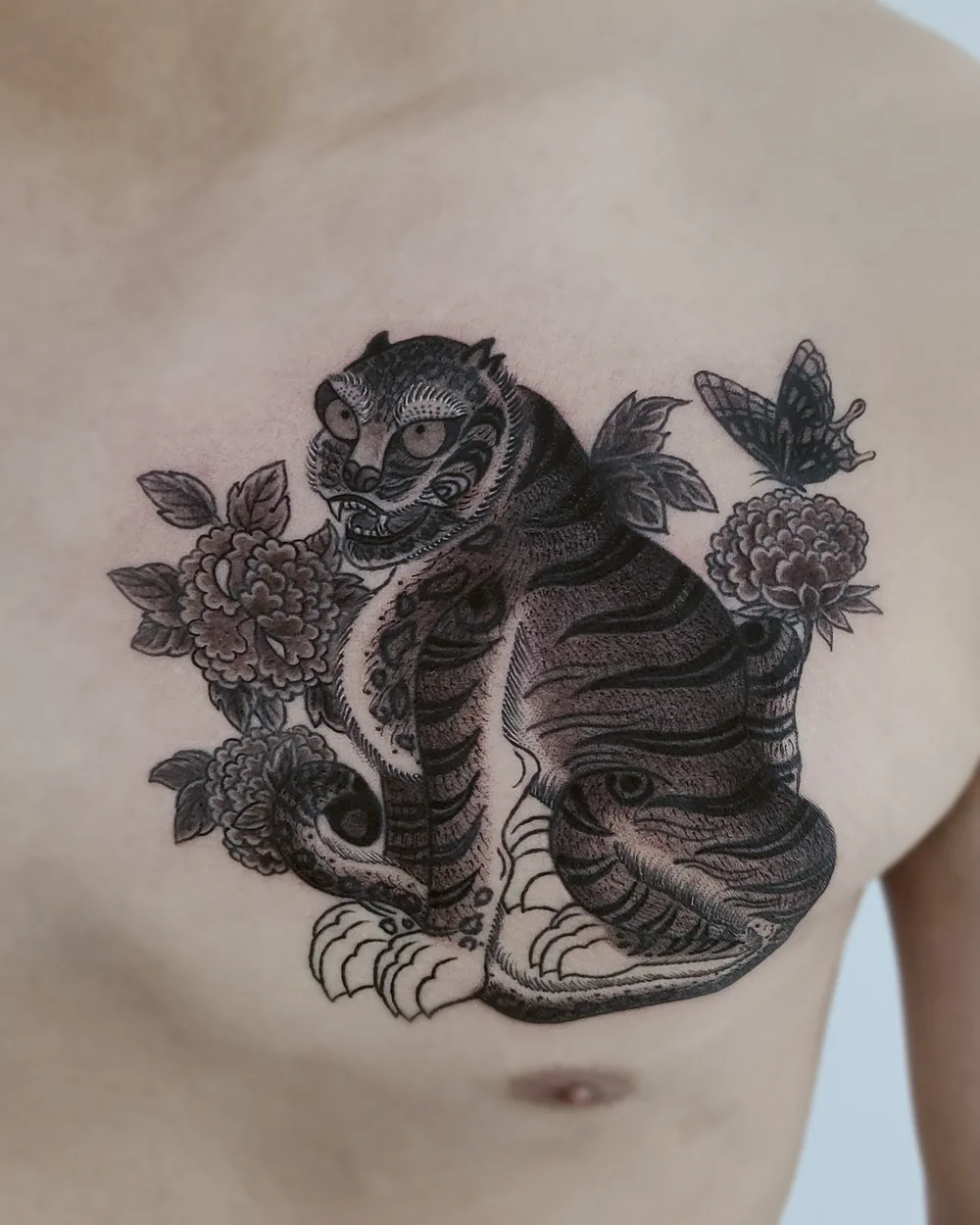
Among the motifs he returns to most often are birds. While he also works with strong traditional subjects such as kkachi-horangi — the magpie and tiger — as well as dragons, roosters, tigers and haetae, birds have become especially important in his recent work.
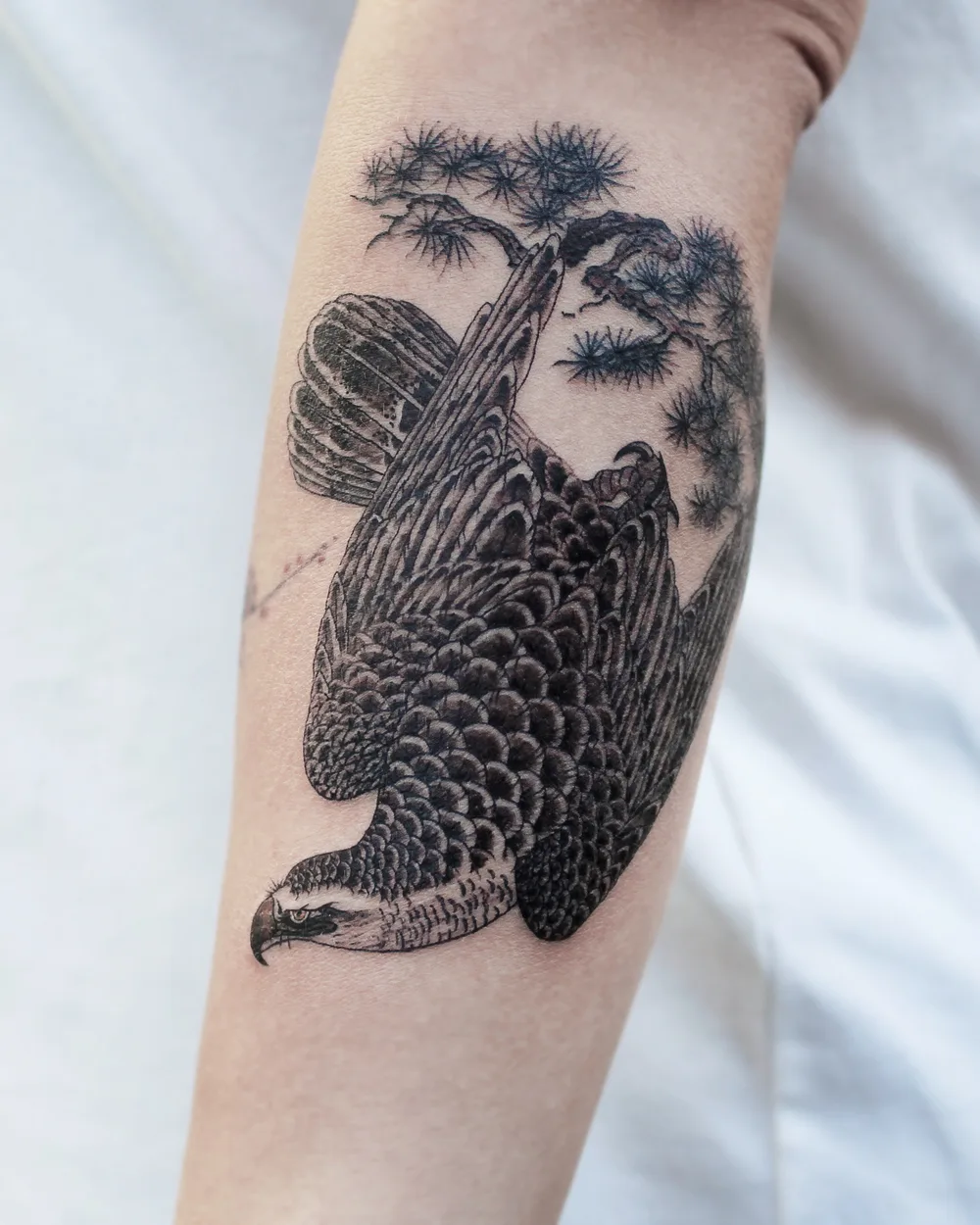
Their appeal is not only symbolic. Haesol is drawn to their structure: the repetition of feathers, the spread of a wing, the curve of a tail, the inner rhythm of pattern and volume. These forms adapt well to the human body. A wing can follow the arm. A tail can extend along the leg. The direction of feathers can create movement across the back or shoulder. In this way, the tattoo becomes less like an image placed on the skin and more like a composition shaped with the body in mind.
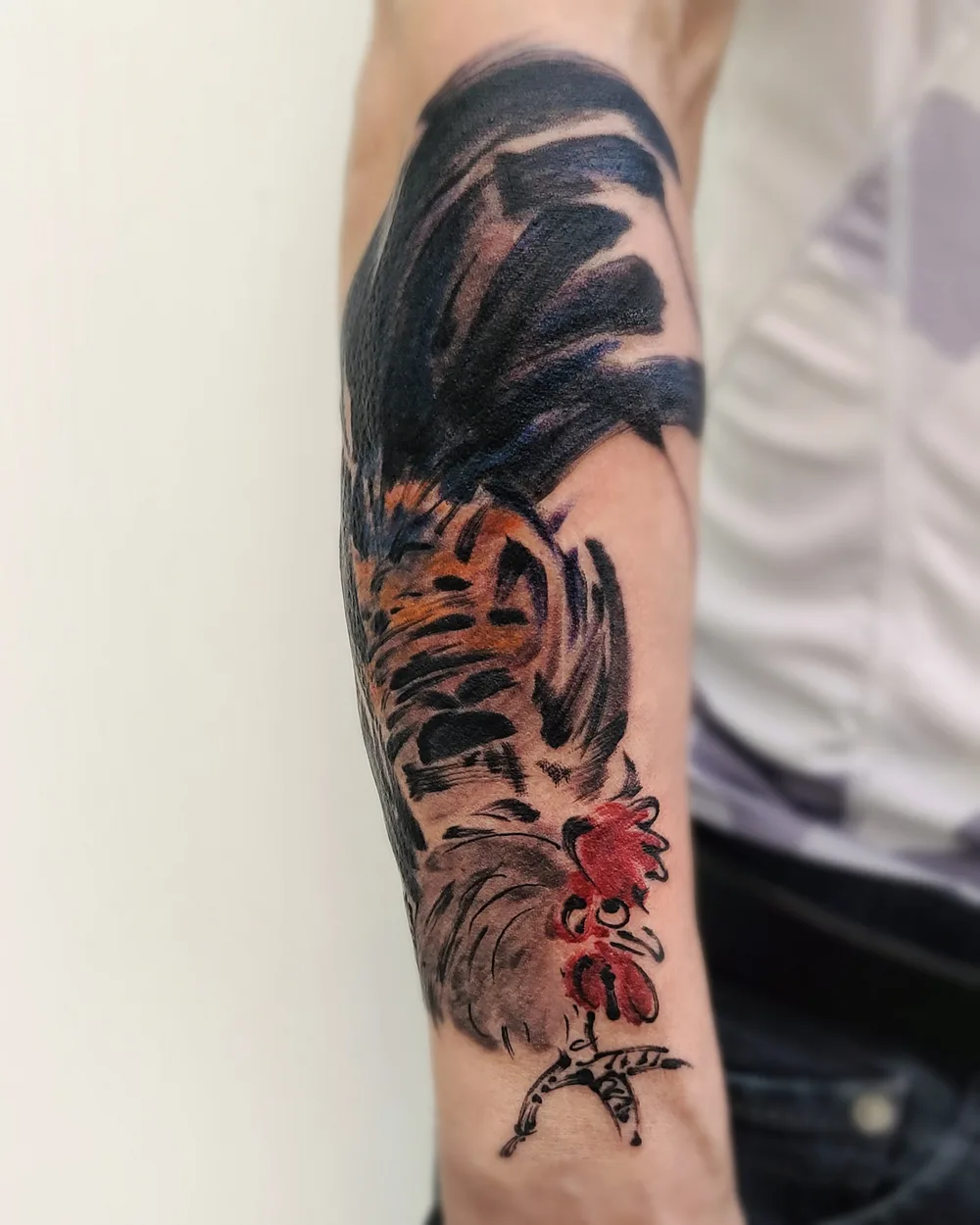
One of the most complex parts of Haesol’s work is translating brush painting into tattooing. Traditional brushwork is full of accidents that happen naturally through water, ink, paper and pressure. Ink may bleed. A brush may run dry. The paper may reveal texture through broken strokes. In Korean and East Asian painting, these effects are not mistakes; they often carry the life of the work.
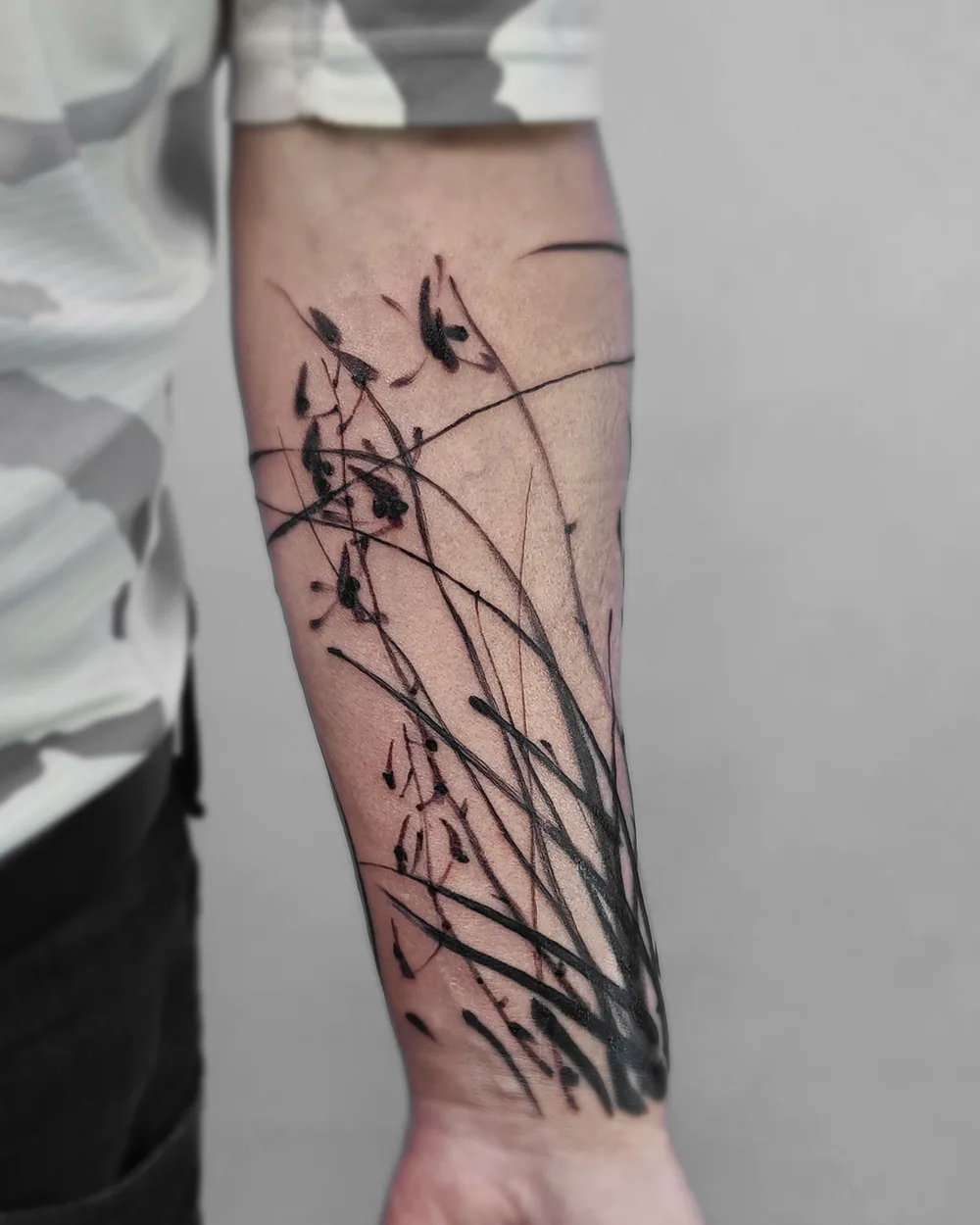
Tattooing does not allow the artist to simply borrow those accidents. Skin does not behave like paper, and a needle does not behave like a brush. Everything that appears spontaneous has to be built intentionally. Haesol has to recreate the feeling of a brush mark without making it look forced.
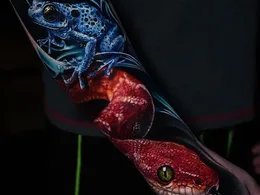
This is one of the central technical questions in his practice: how to preserve the looseness of painting inside a medium that demands control.
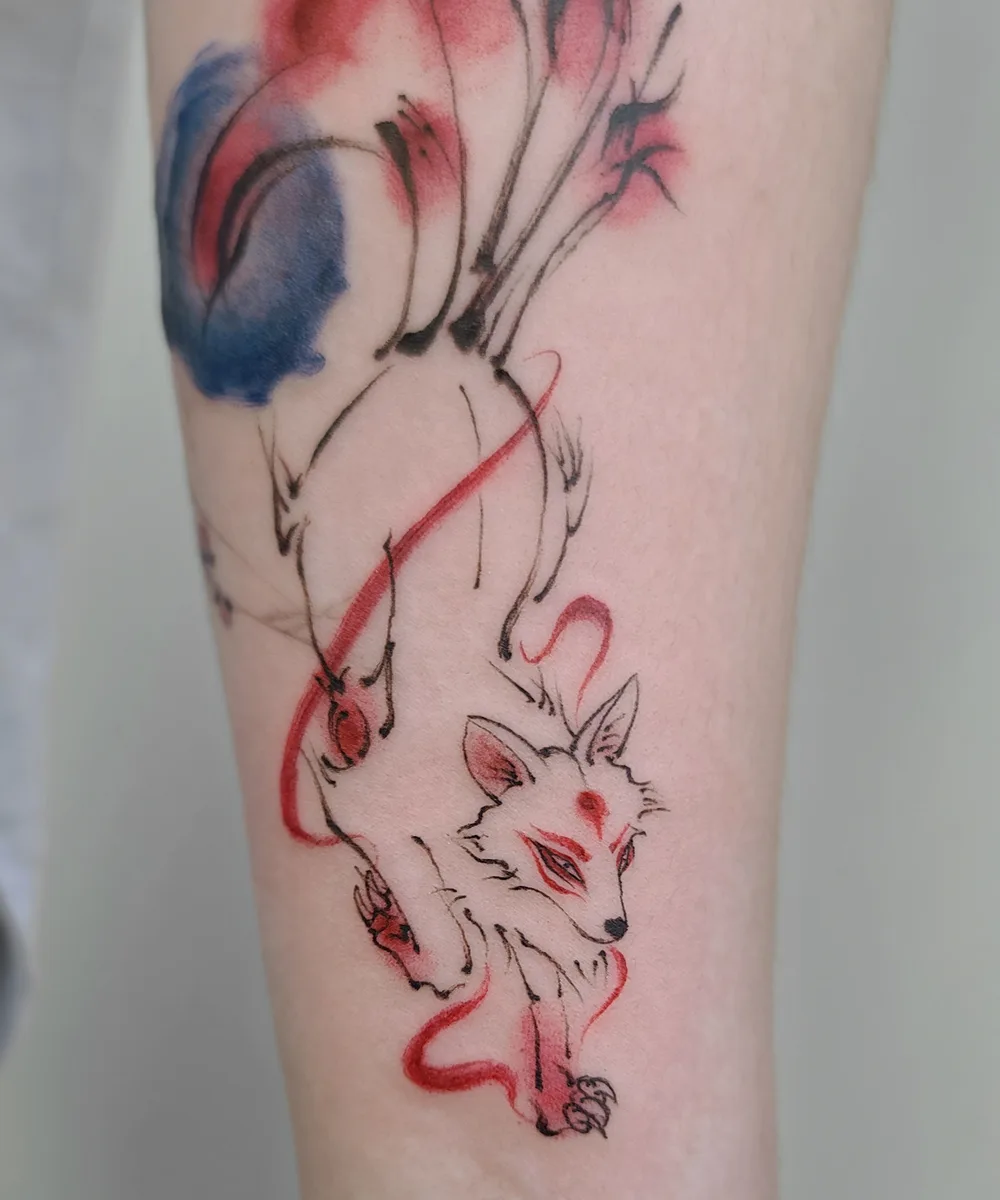
The result is a form of tattooing that sits between tradition and reconstruction. Haesol does not freeze minhwa as a museum reference. He treats it as a living source — something that can be reworked, expanded and placed into a contemporary tattoo context without losing its Korean character.
This is especially meaningful for clients who come to Seoul looking for a tattoo connected to Korea itself. A minhwa-inspired tattoo can become more than a travel souvenir. It can carry a memory of place through images that are deeply rooted in Korean culture: its folk symbols, colours, humour and way of seeing animals, nature and protection.
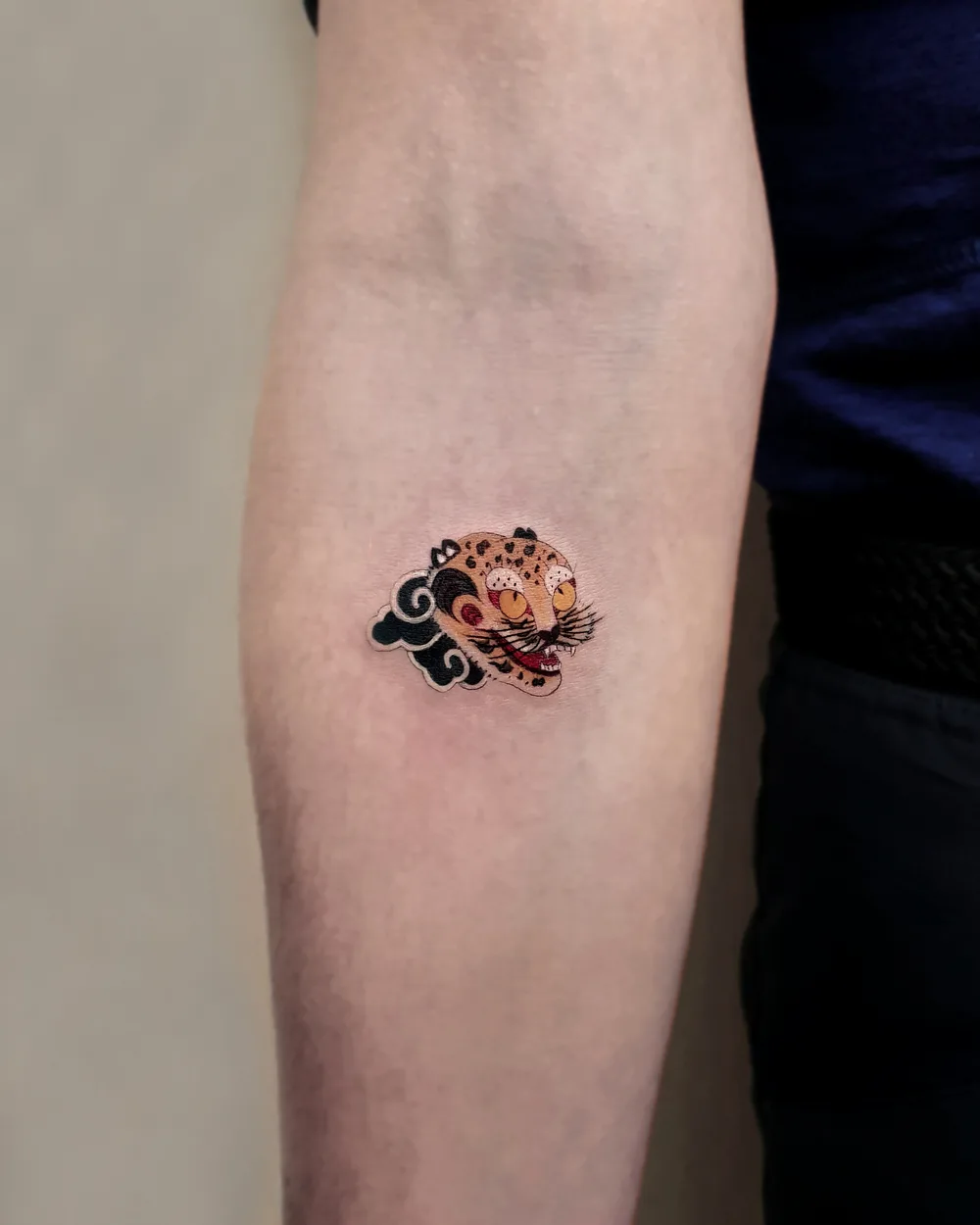
For international collectors, this direction also opens another view of Asian tattooing. It shows that Korean traditional imagery is not secondary to better-known tattoo traditions. It has its own strength, its own visual rhythm, and its own emotional world.
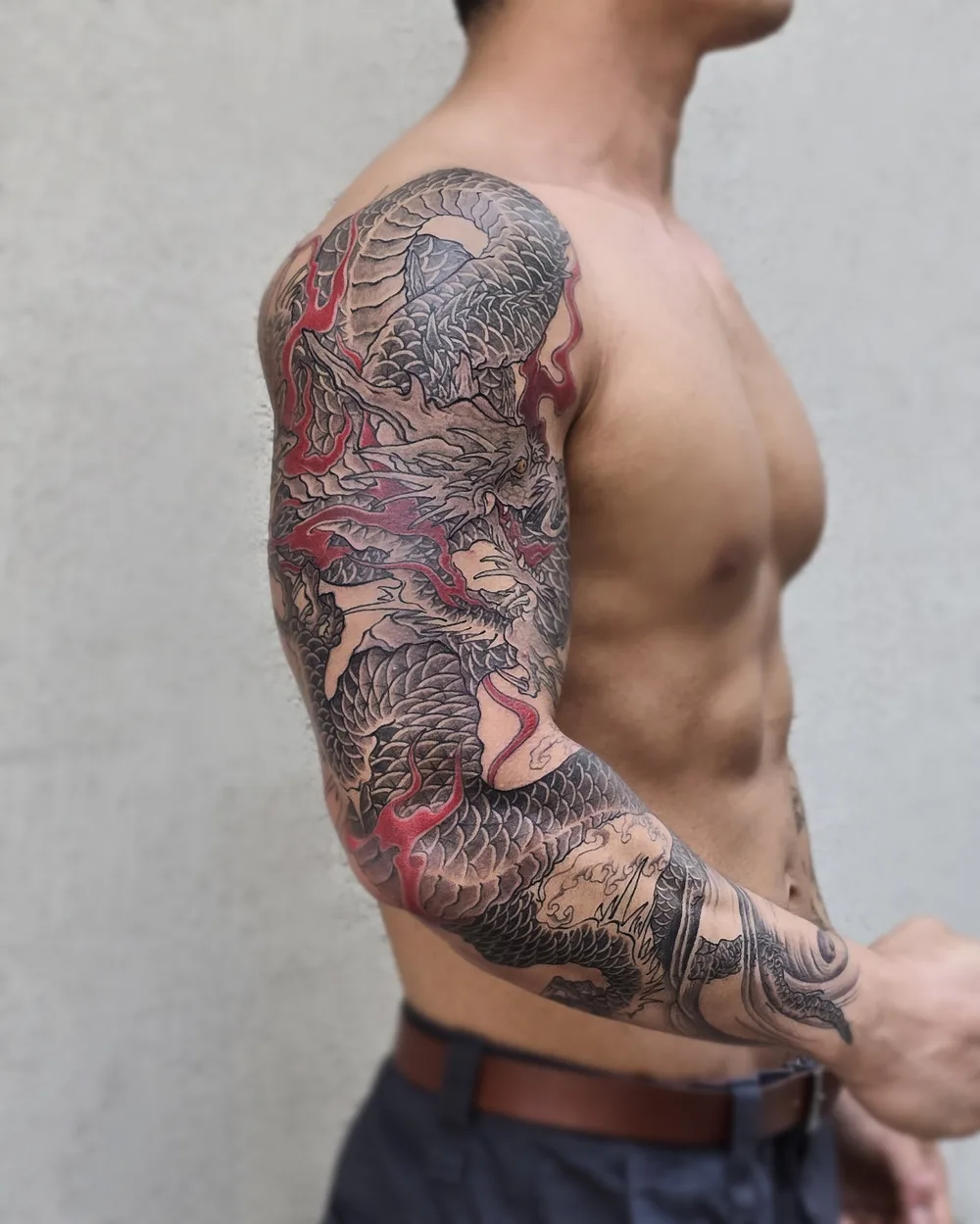
Haesol’s work at Onsil Studio continues to develop from this position. His tattoos move between painting and skin, old symbols and modern bodies, Korean folk imagery and contemporary composition. They do not imitate tradition from a distance. They bring it back into movement — one feather, line and colour field at a time.