There is a castle in Mukachevo, western Ukraine, perched on the highest hill above the city. As a child, Diana Tarakanova would borrow her grandparents' binoculars after lunch and study it from their kitchen window, inventing stories about the people who once walked its halls. That habit of populating imagined worlds with imagined lives never really stopped.
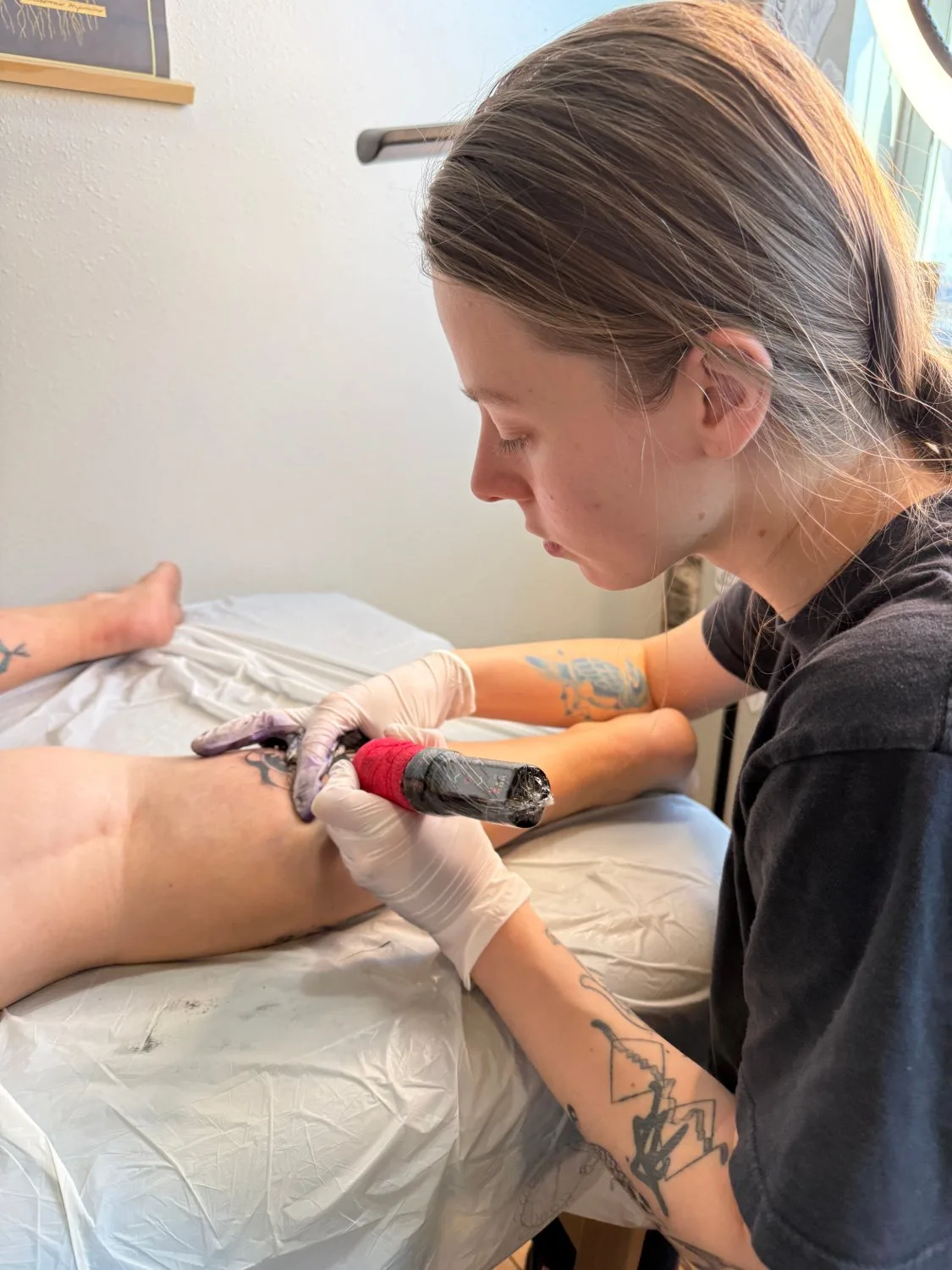
She started tattooing in 2017. Nine years ago now. Before that she was already deep in drawing and illustration, and the move to skin happened almost sideways, someone suggested she try putting her line work there, and the permanence that frightened her at first turned out to be exactly what pulled her in. Tattooing, she has said, was never a childhood dream. It came later, almost by accident.
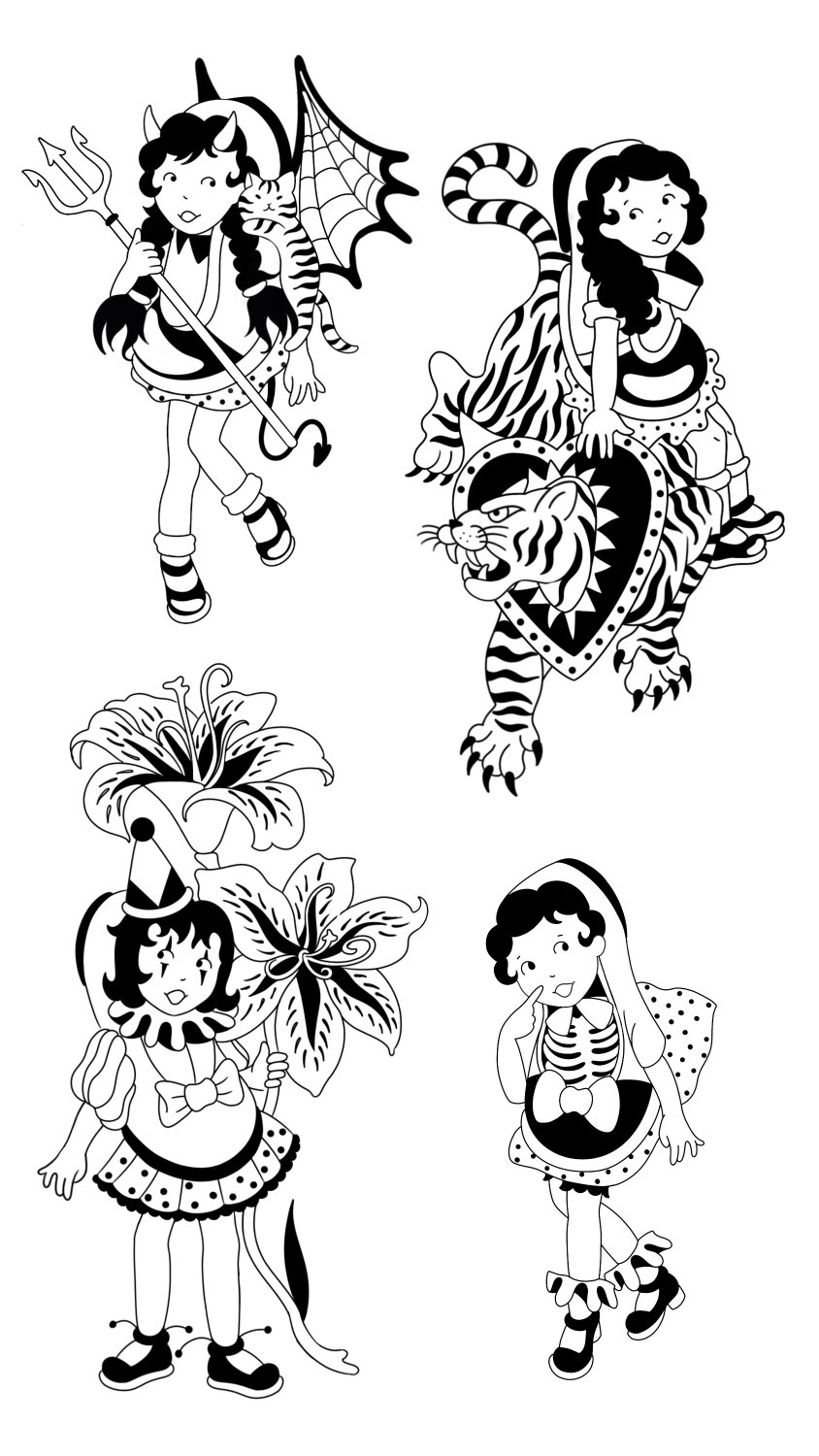
The Shoekids Universe grew the same way. No founding document. No planned mythology. There was Tyler, a client in San Diego, who asked for two small characters playing pétanque together. That was it, one playful image, complete in itself, with no intention of becoming anything larger. Every character that exists in the universe today traces back to that single tattoo.
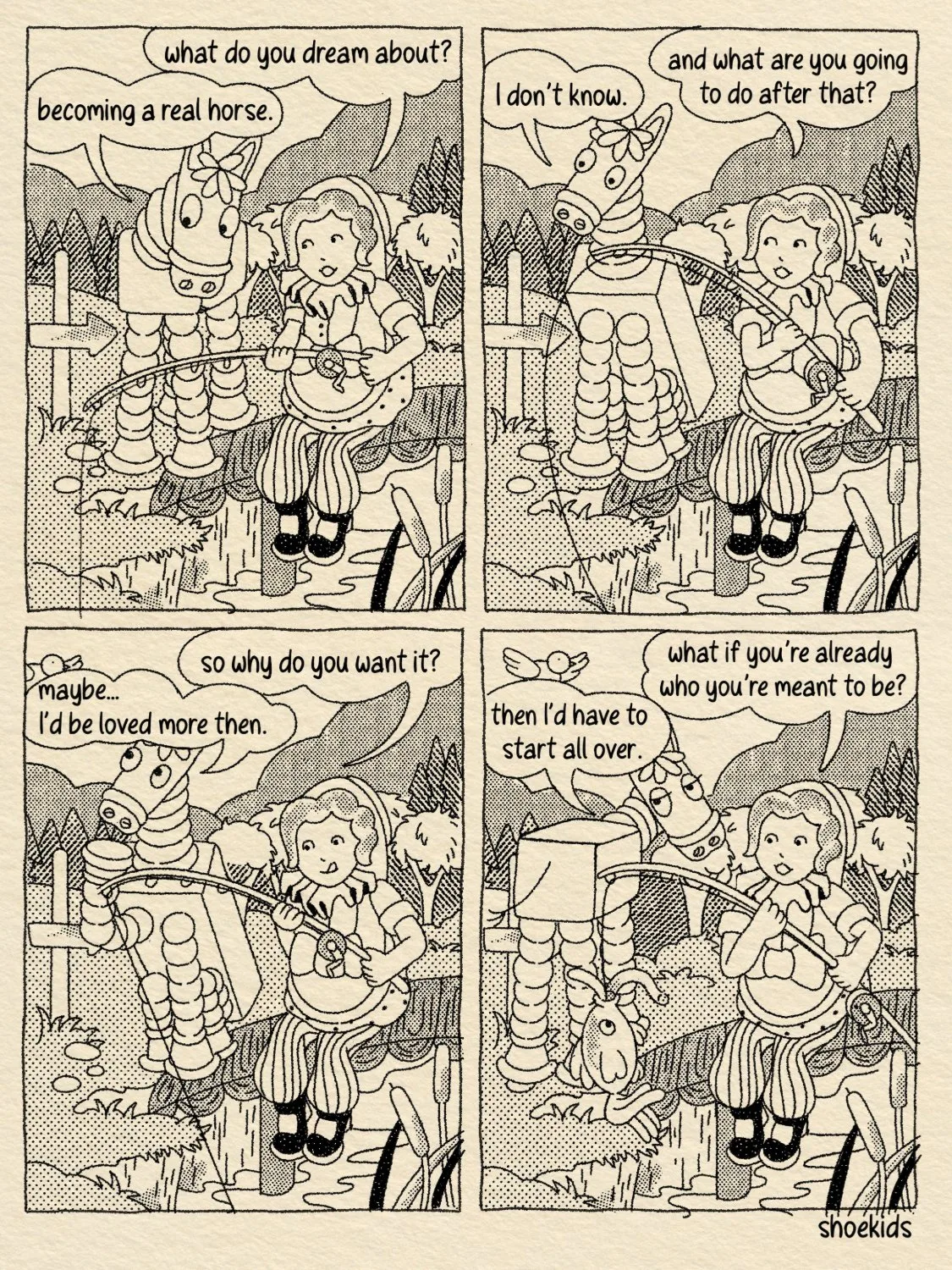
The name comes from a specific childhood game: sliding your feet into shoes twice your size and believing, just for a moment, that you are already an adult. The creatures Diana builds are living that adult life, but one that stays as curious and alive as a child's. It is, she says, a metaphor for the lost child we all carry somewhere. A Shoekids tattoo becomes a small reminder of that: a memory, an experience, the child underneath.
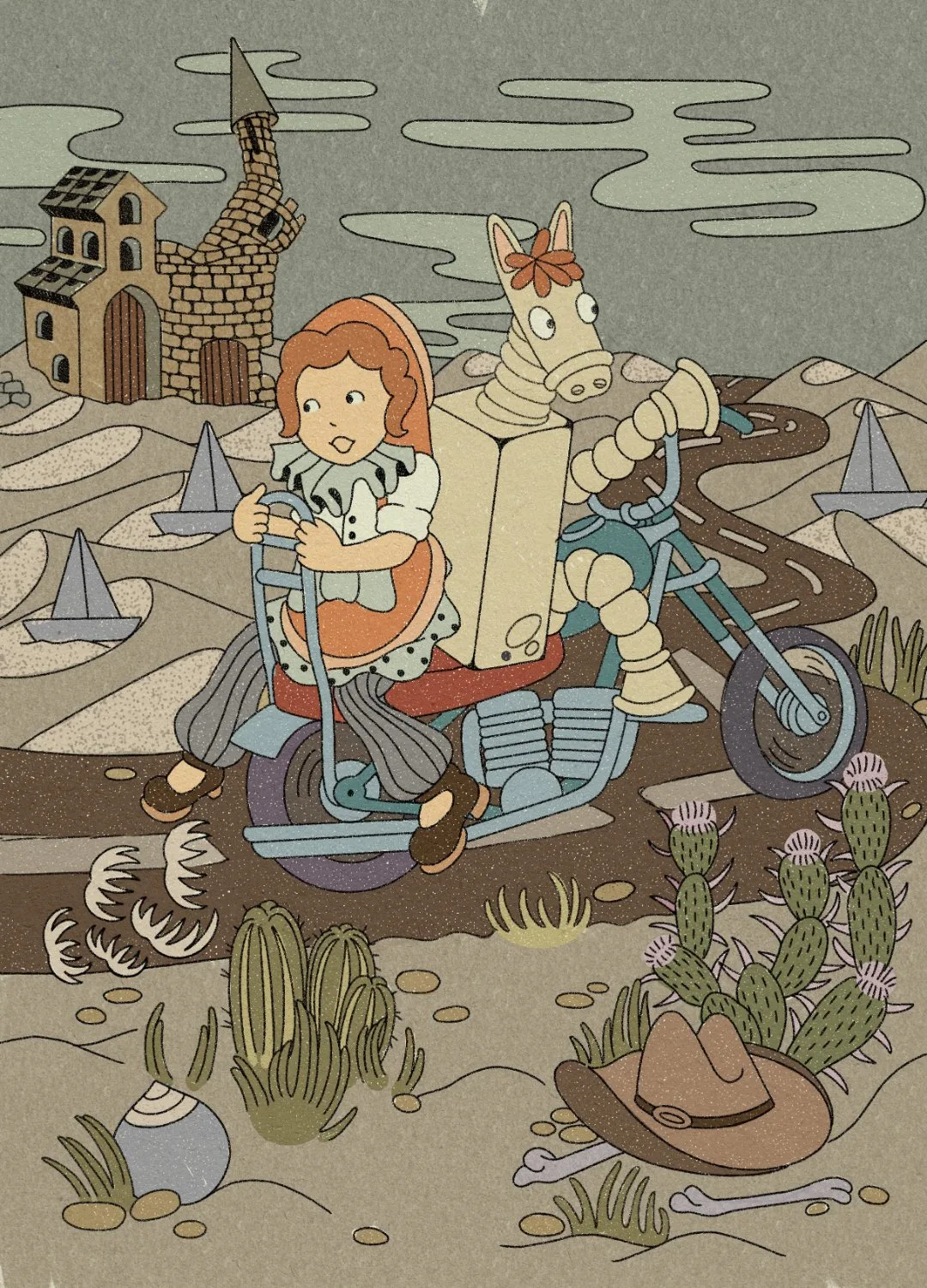
"can you be loved and still be free?"
The universe expanded through conversation rather than design. A client would ask whether Diana could create their own character inside the Shoekids world, she would say yes, and another resident would move in. At some point she noticed she was no longer drawing separate characters. She was documenting a growing community, her collectors shaping the universe as much as she did, probably more than she had ever planned for.
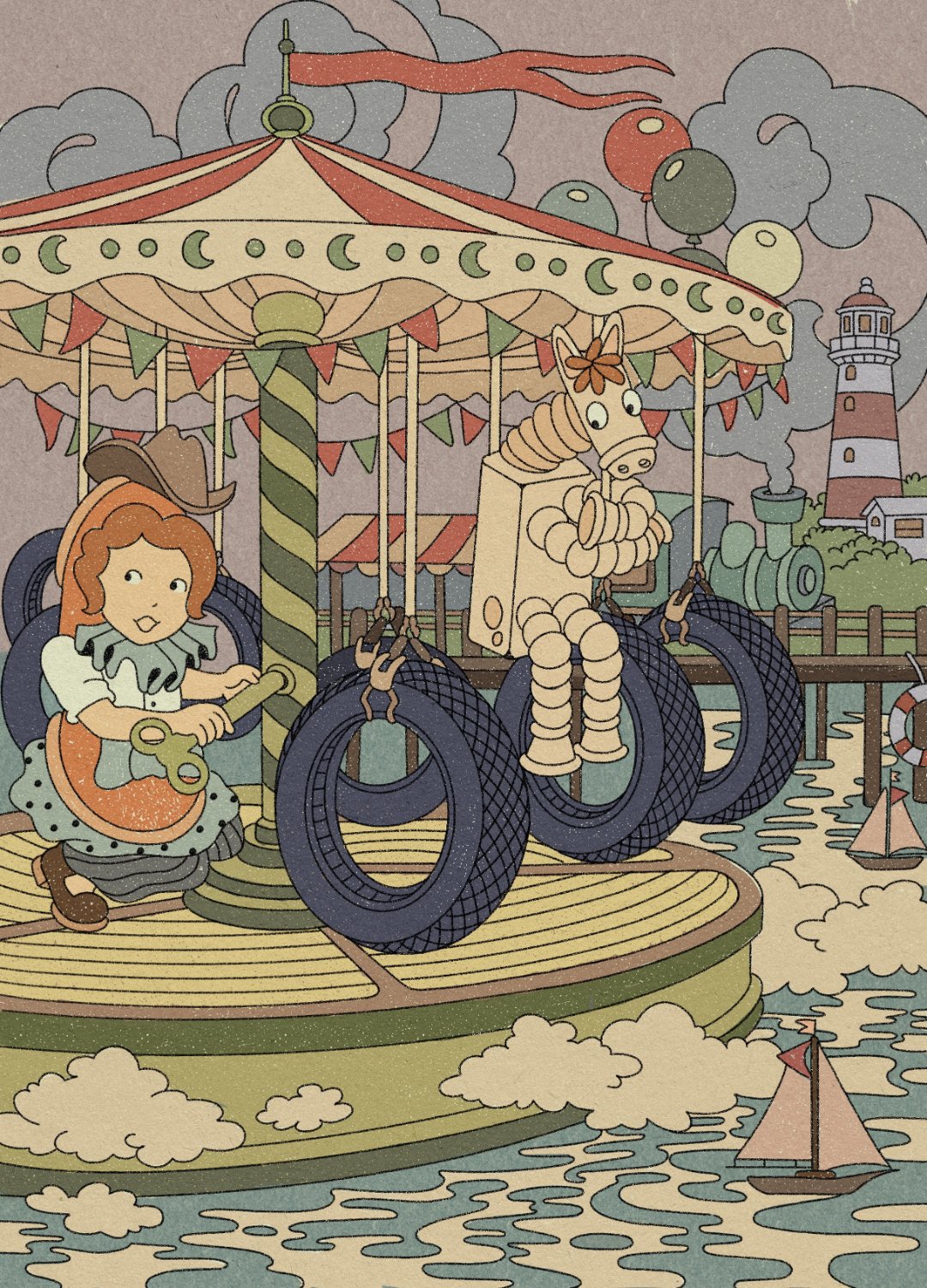
Diana Tarakanova retro carousel illustration
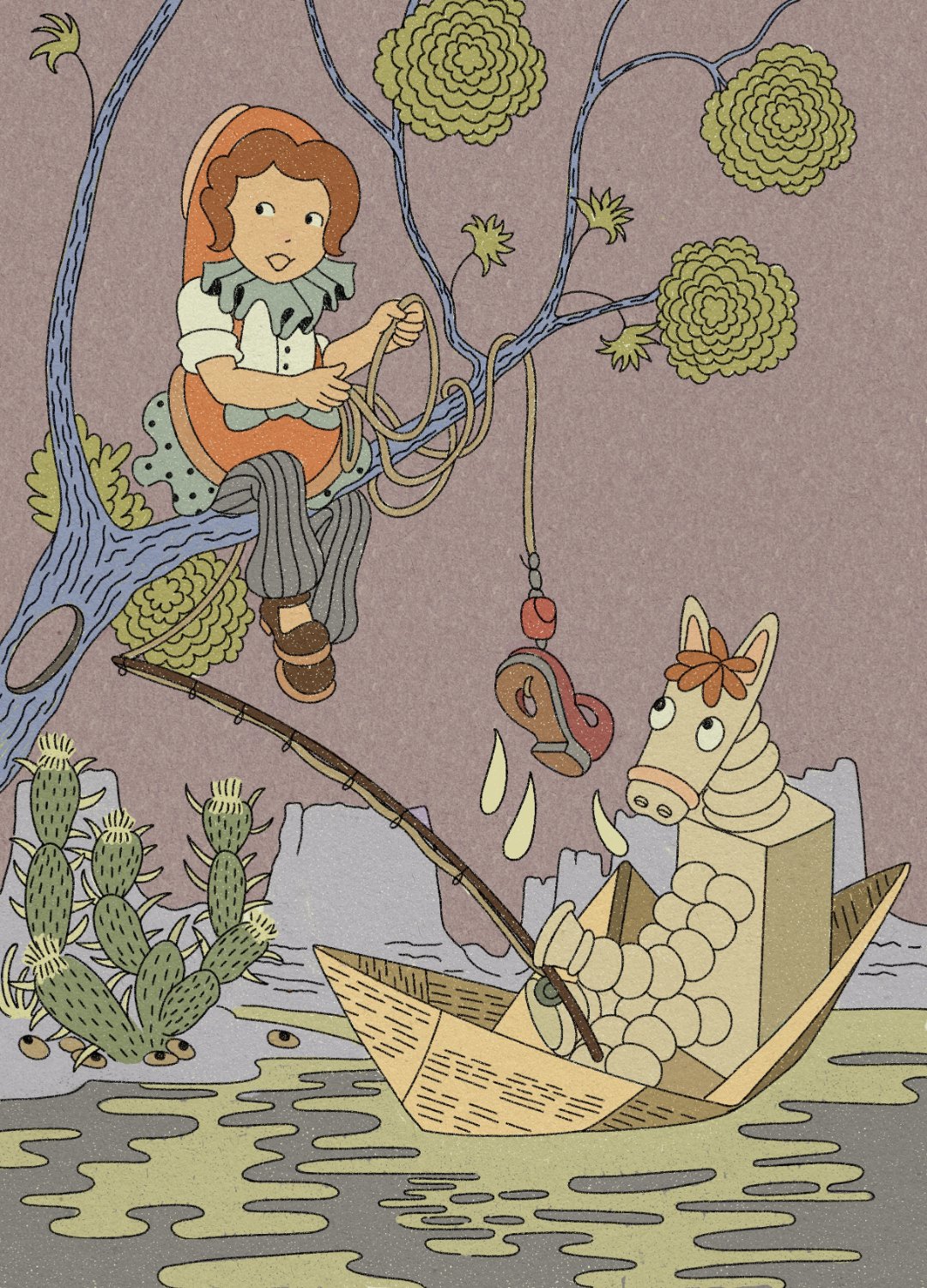
Diana Tarakanova illustration
Tarakanova, fantasy illustration
Diana Tarakanova's Shoekids characters
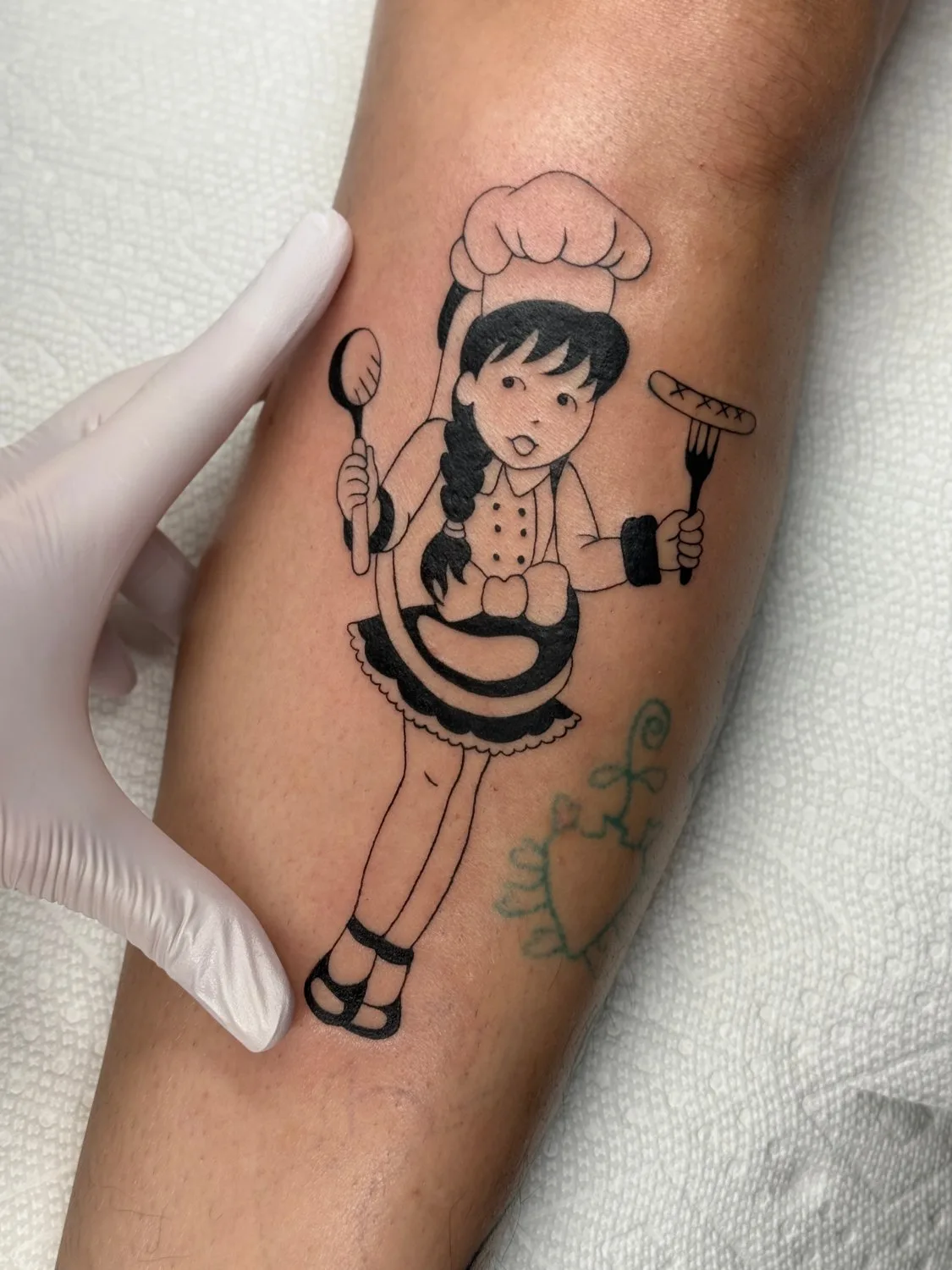
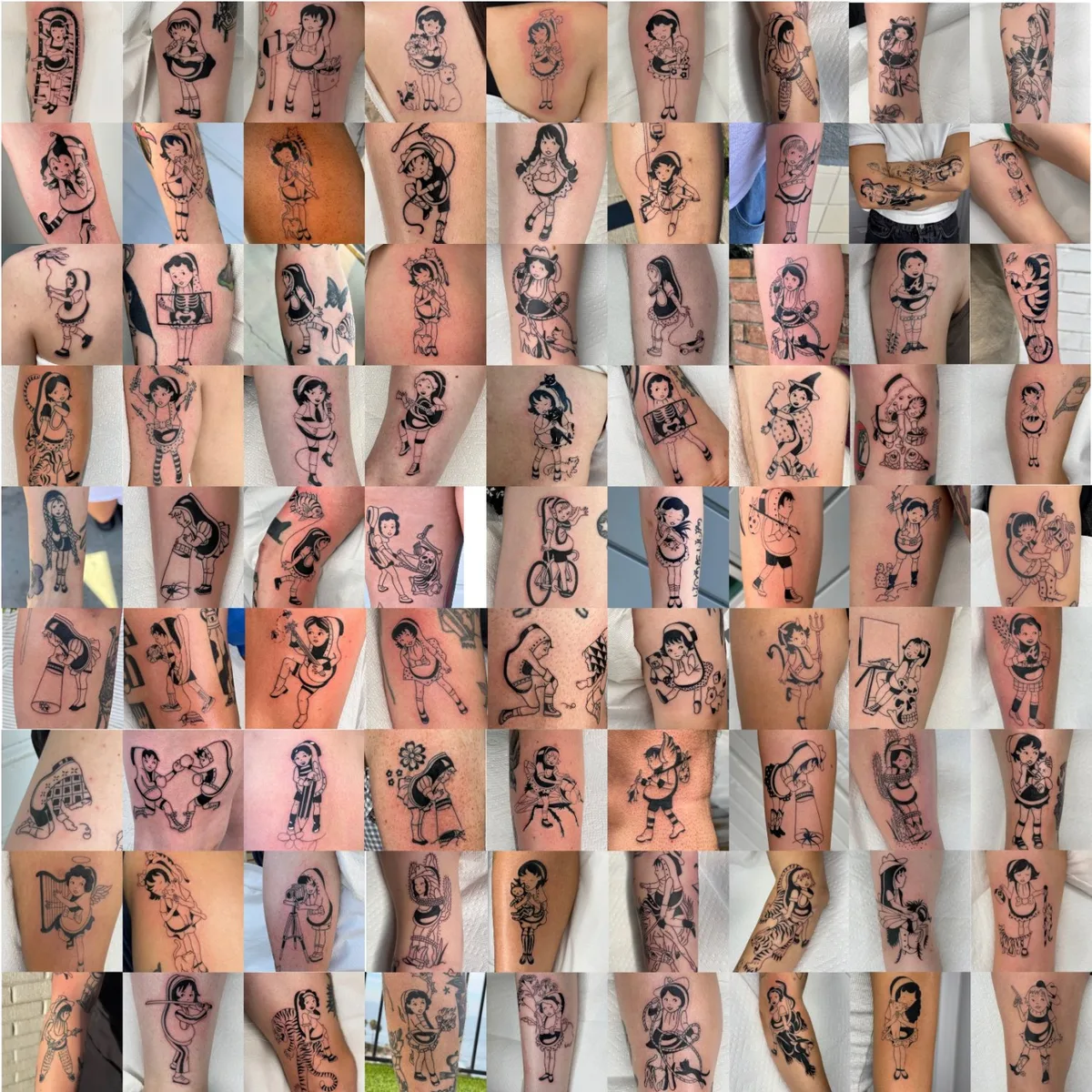
Each character can carry the client's clothing, accessories, pose, colors, even the specific story being told. What stays fixed is the visual language: the drawing style, the proportions, the atmosphere. Diana describes it as speaking the same language while telling different stories. Every tattoo reflects the person wearing it, but it remains unmistakably her work. That balance, she says, is what she tries to preserve.
The two years she spent crossing 45 states fed directly into the characters themselves. In Durango, a small mountain town in Colorado, a client named Brittney asked for a Shoekid tribute to her father, a cowboy and fisherman she described as her hero, with a trout alongside the character so that every time she looked down, she would remember him in the mountains. Cowboy and fishing imagery entered Shoekids that day, carried in by the landscape and the culture around it.
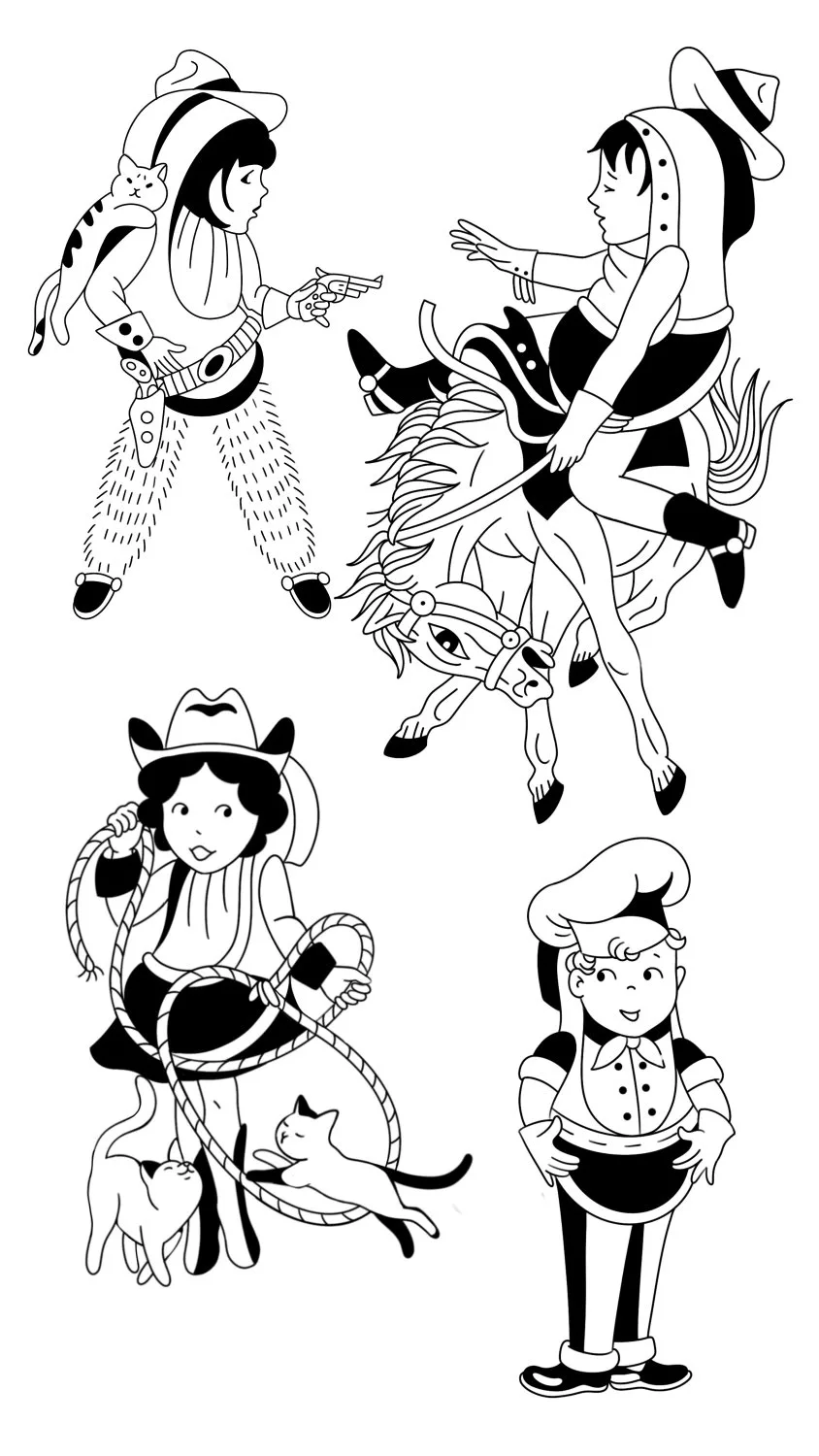
From the same region came one of Diana's larger ongoing collections. A client named Zoe had traveled from Texas to Colorado for her session and wanted a whole crew of cowboy Shoekids alongside cats. She now has four pieces from that world. It started entirely because of where they happened to meet. Travel, Diana found, did not just expose her to new scenery. It fed directly into the characters, one encounter at a time.
"Shoekids absorbed that the same way it absorbs anything personal a client brings one encounter at a time."
Scale changed too, in ways she had not expected. After years of working mostly in Europe, she found that American clients consistently asked for pieces roughly half the size of what she had been making. Smaller scale forces different decisions, less room for detail, more reliance on clean and essential lines. She adapted more easily than she thought she would, and it changed how she approaches design even now, regardless of where she is working.
Some stories stayed with her for reasons that had nothing to do with the drawing. A client came in after losing closeness with her twin sister and described how, as children, the two of them used to recognize each other by touching each other's faces, because the first time they saw themselves in a mirror, each one thought it might just be her sister's reflection, not her own. Diana built the design around that memory. The tattoo became the form the memory takes.
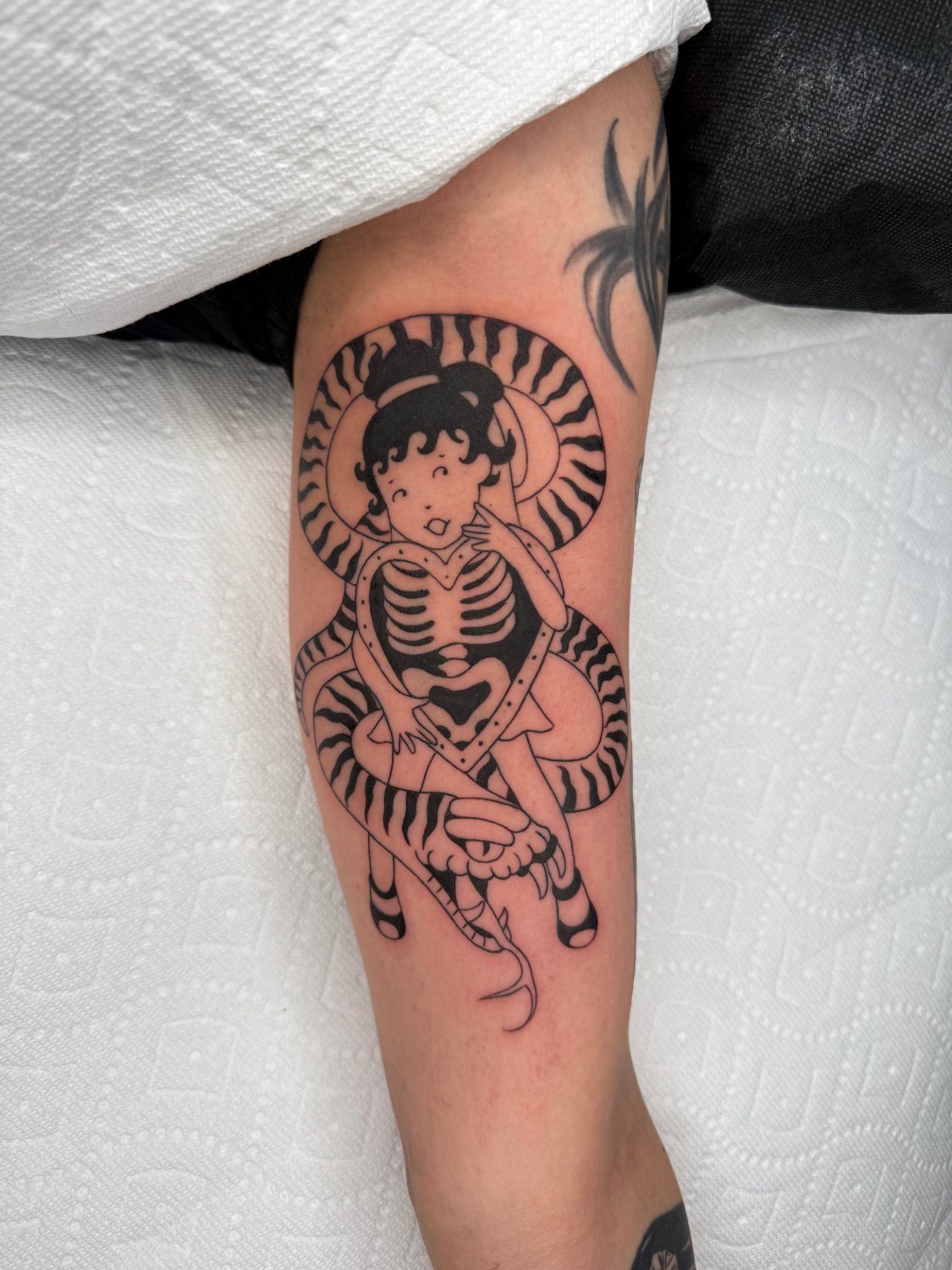
Shoekids Universe, black line work
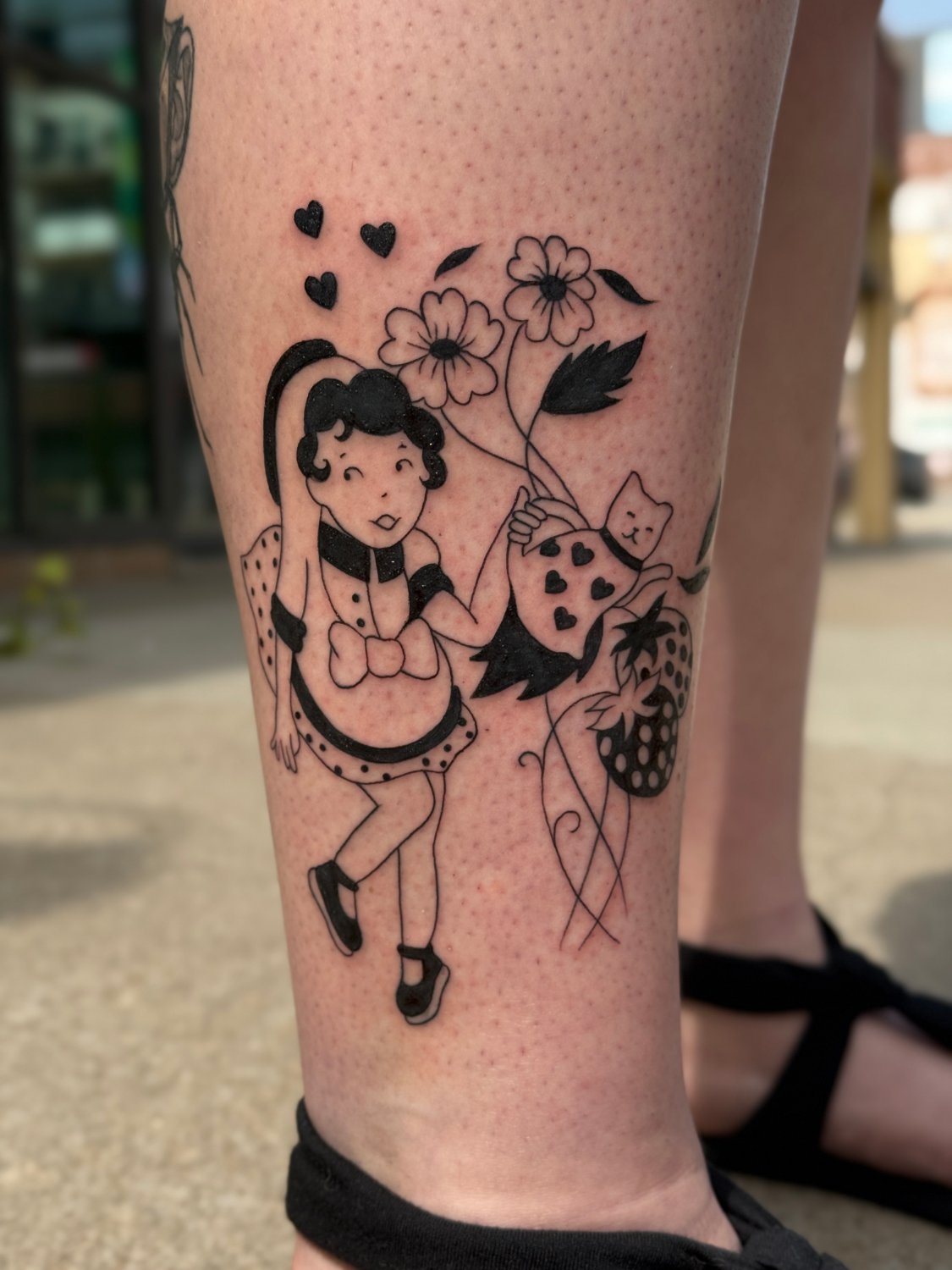
Girl with flowers and cat, black line art
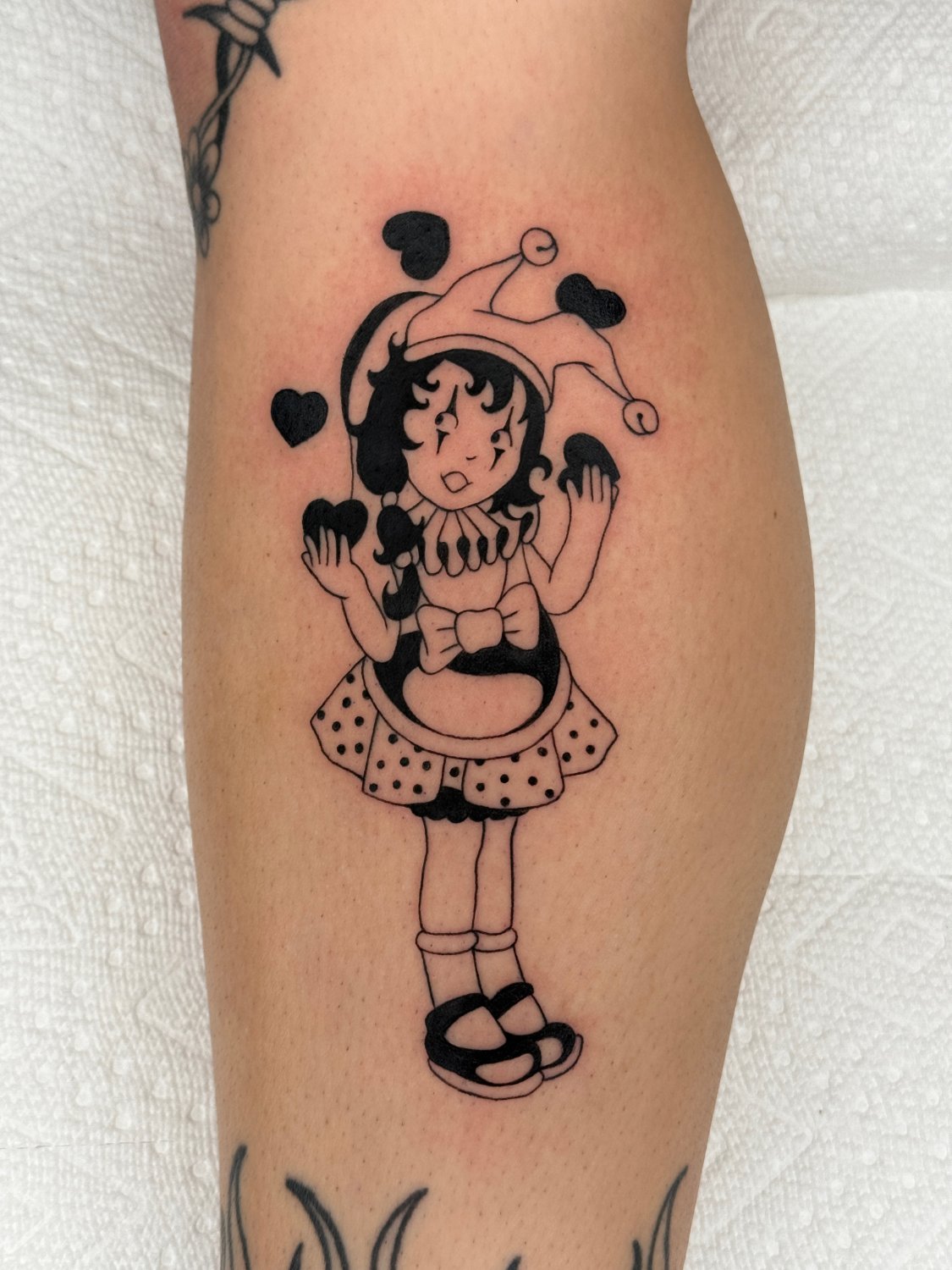
Jester girl juggling hearts, black line work
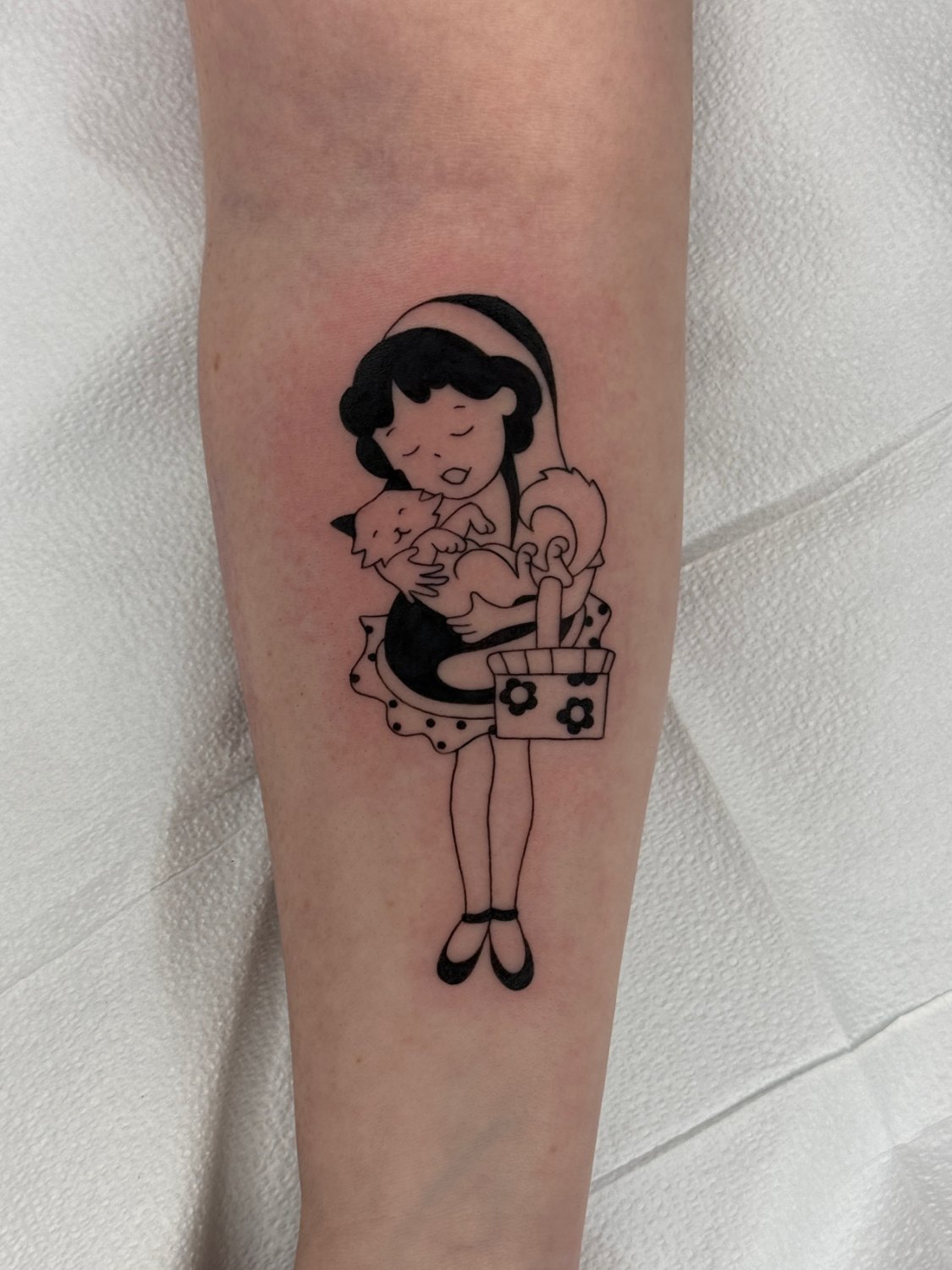
Shoekids Universe black ink tattoo
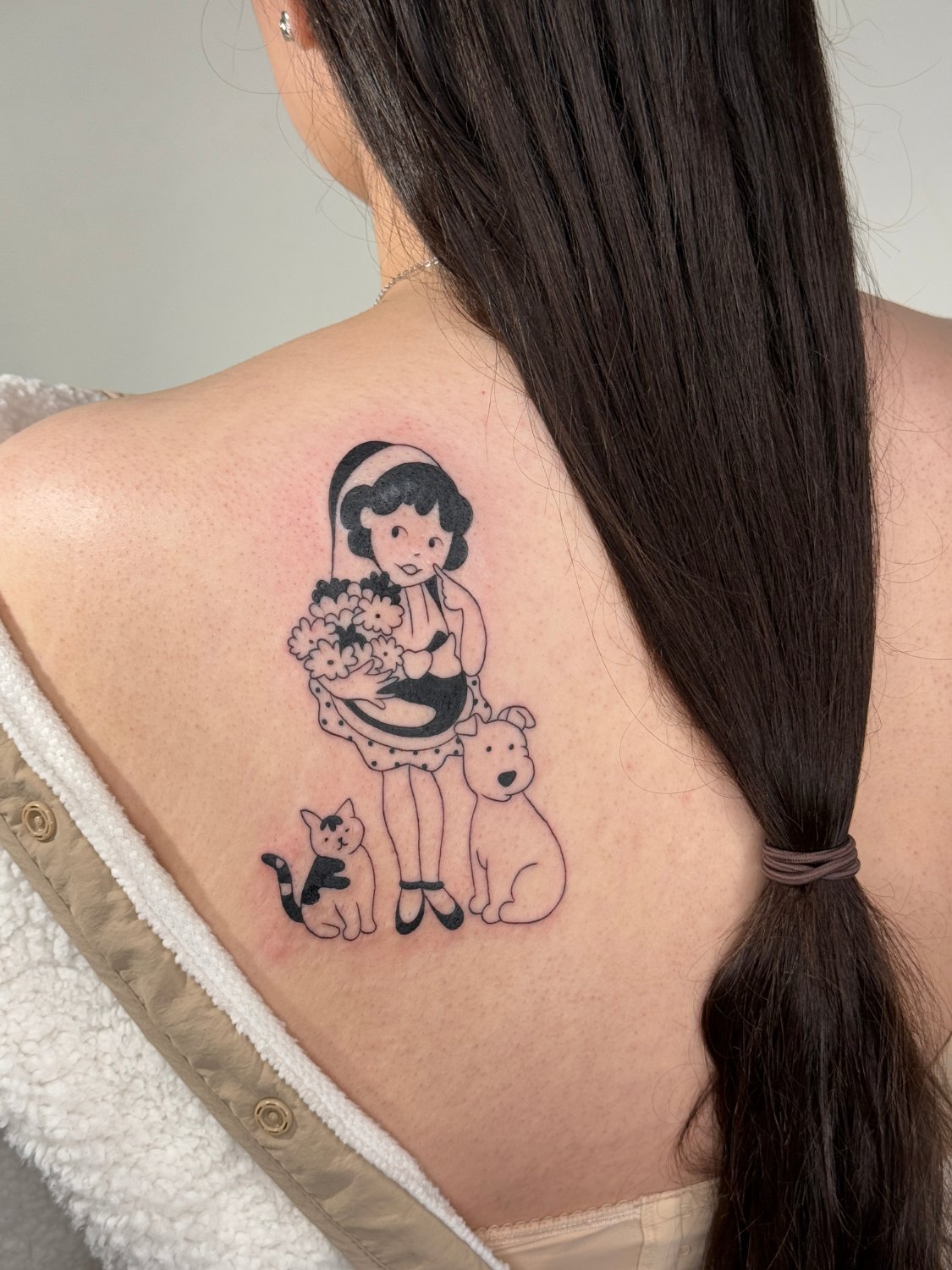
Girl with flowers and animals, fine-line style
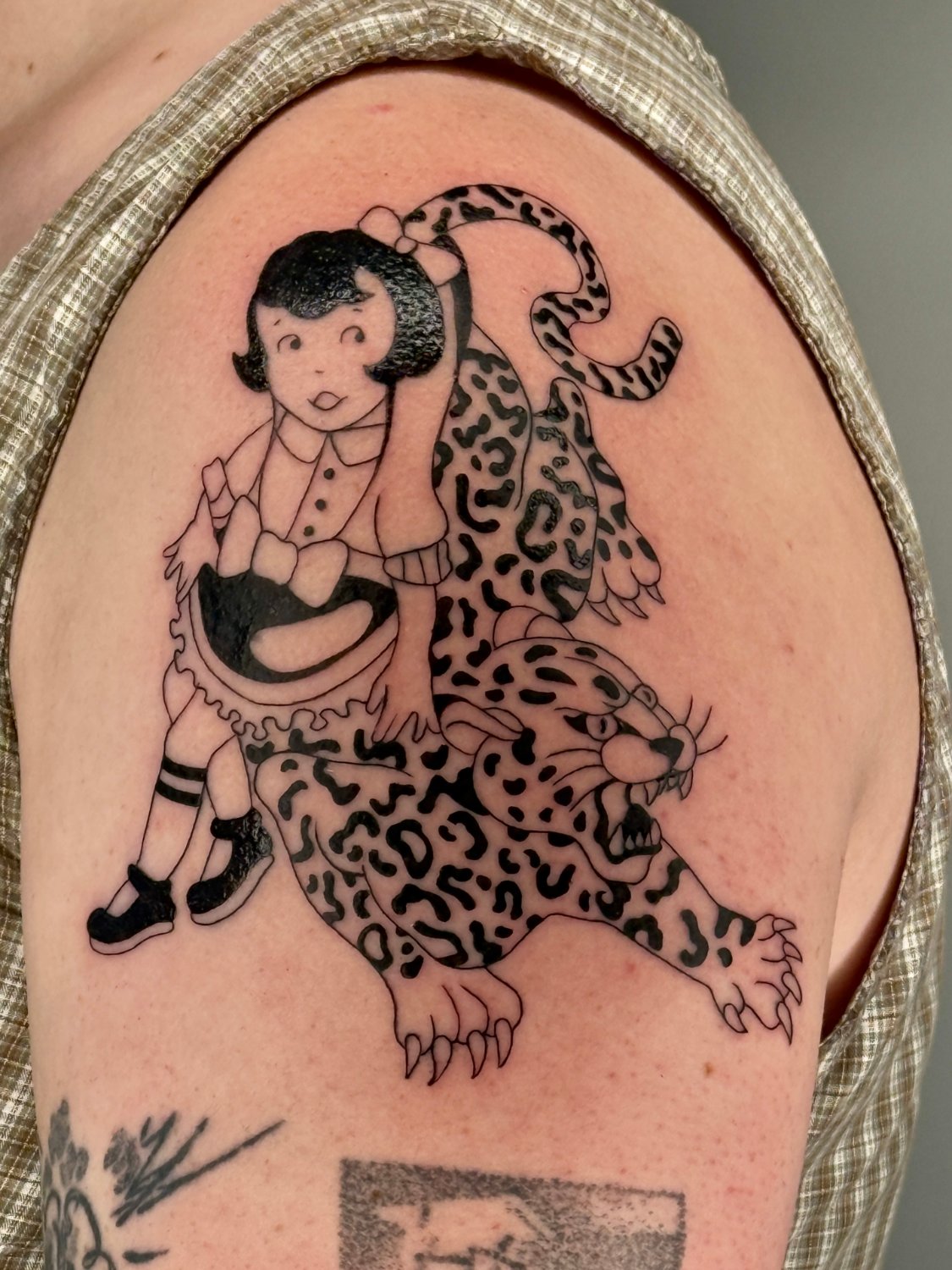
Shoekids girl riding leopard
Ruby has since become one of Diana's long-term collectors, six pieces now, each with its own mood but together forming something larger. She flies to Chicago, or wherever Diana is guesting, to keep adding to it. What moves Diana most is that kind of sustained commitment, the willingness to keep returning, to keep building a world on skin over years rather than in a single session.
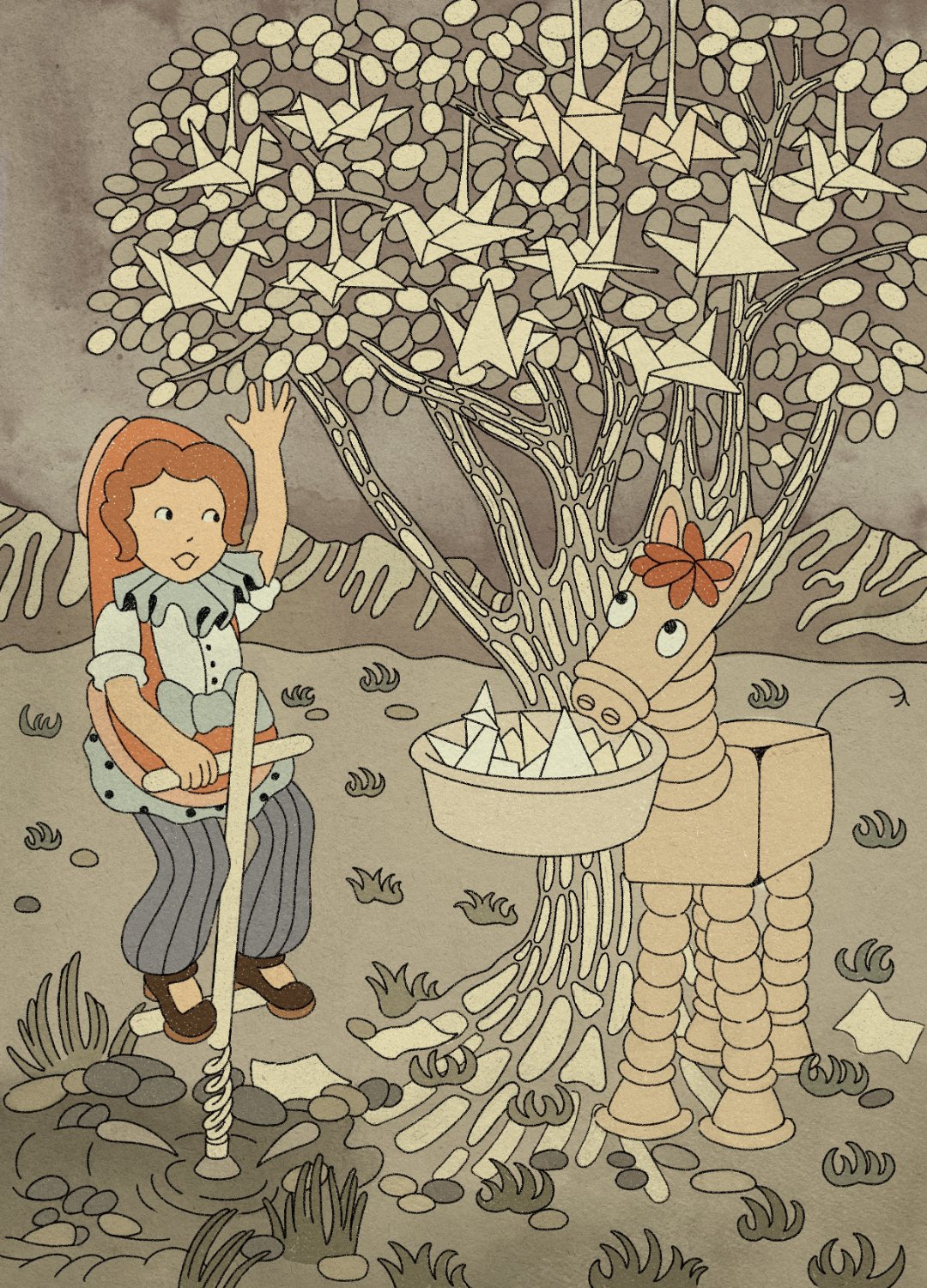
The Shoekids Universe has been expanding beyond tattooing for a while now. Diana completed a 30-page illustrated story following two characters, Shoekids Molly and a wooden horse named Lou, which let her follow them through an actual arc, something a single tattoo design cannot hold. A coloring book releases this October, moving the universe into something more participatory: instead of just looking at the characters, people spend time inside their world with their own hands.
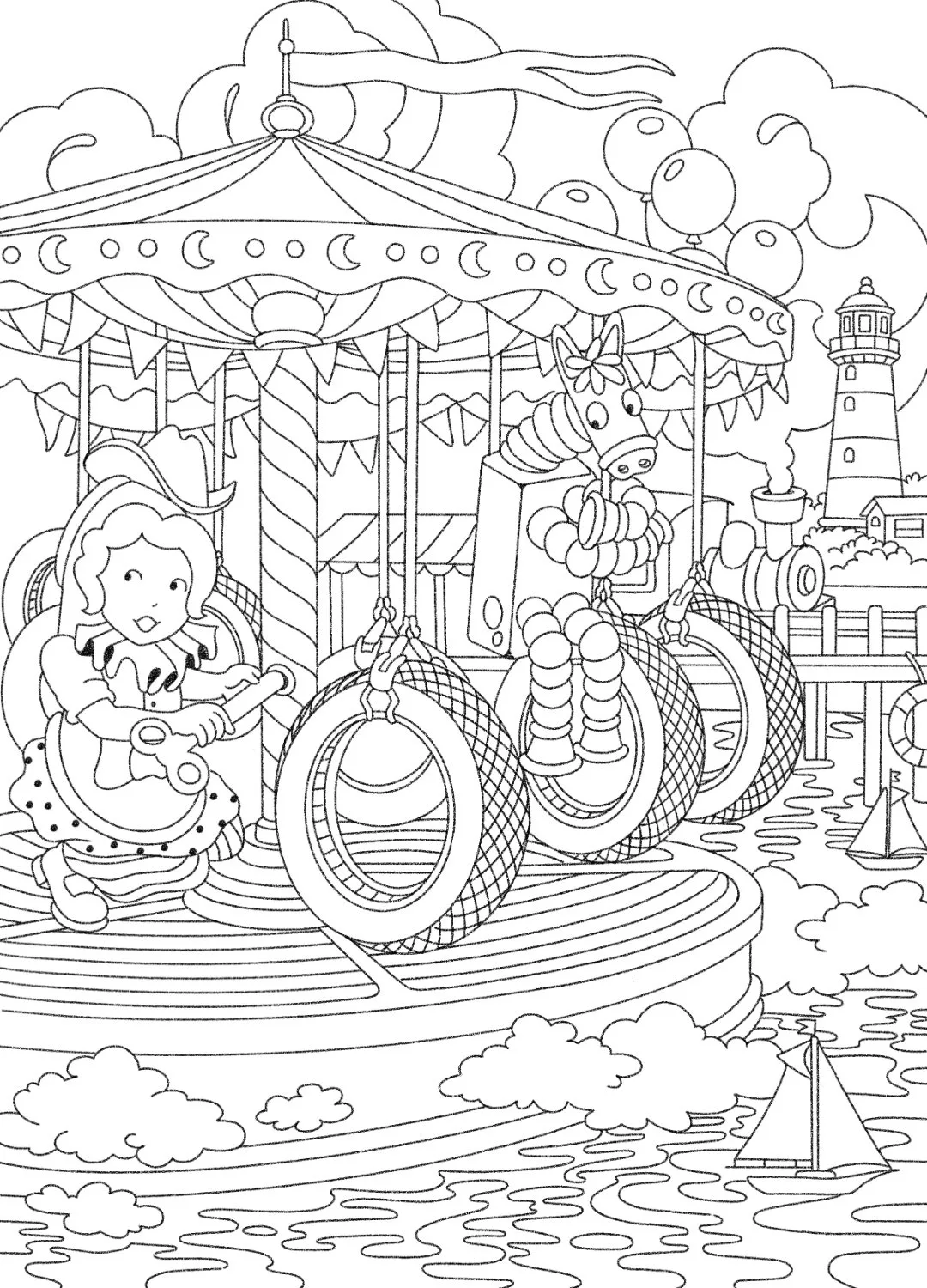
She has also started working with an animator on the first Shoekids animation. Movement adds something illustration cannot, it lets a character's personality come through in how they move, not just how they are drawn. Longer term, she wants to bring the universe into physical space: an exhibition, or a small collection of objects people can hold or live with. Tattoos are already physical and intimate in that way. She is looking for other formats that carry that same closeness, just without needing a needle.
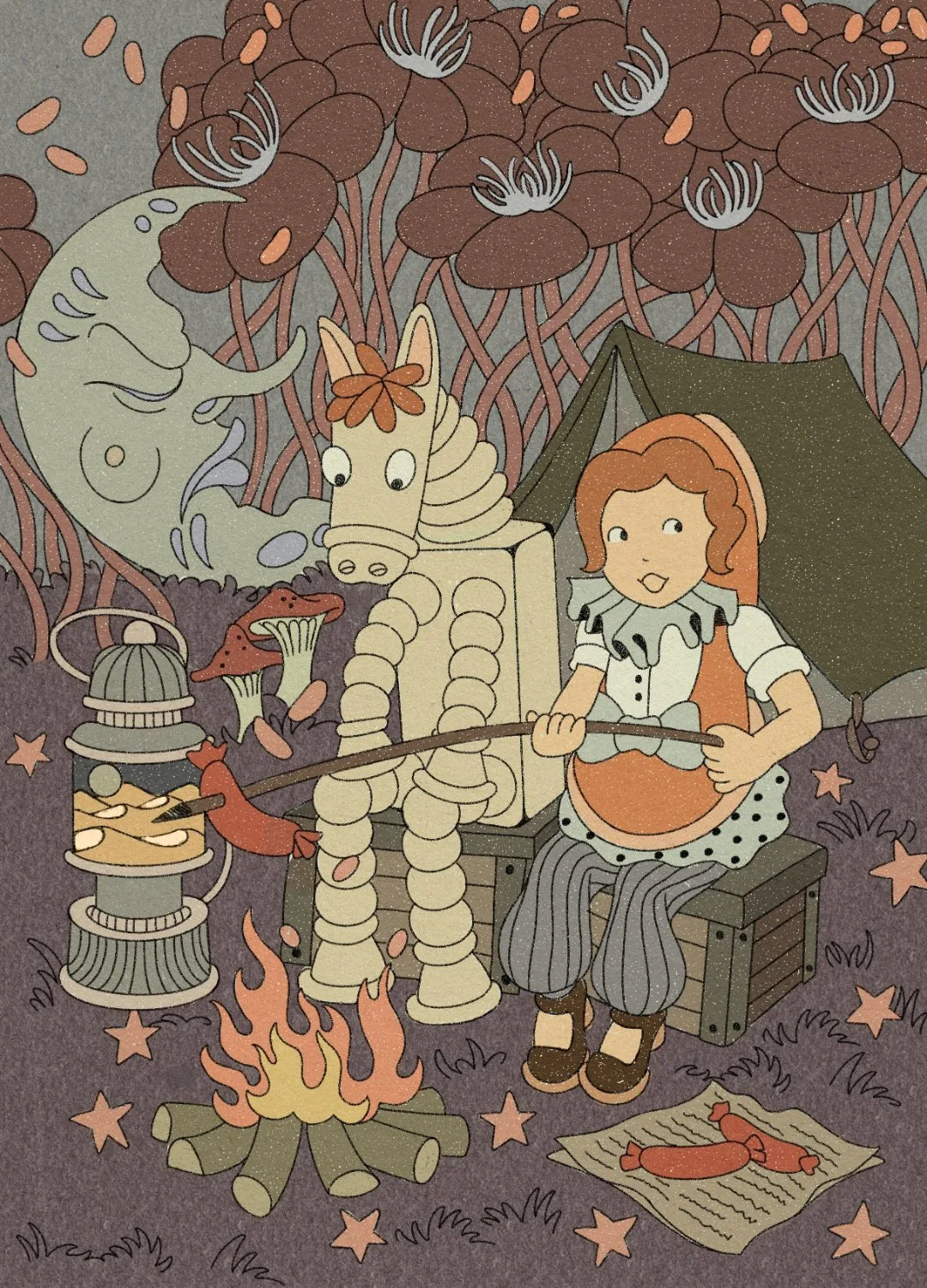
"Some questions fit in one image on skin. Others need thirty pages, or motion."
Teaching became part of Diana’s practice after she had worked in more than a hundred tattoo studios and began noticing a pattern she wanted to respond to. In fast-paced studio environments, clients often arrive with a design they have already seen elsewhere, and the priority naturally becomes speed and delivery rather than a distinct voice. She created the Marked to Be Me seminar to give newer artists space to ask a different question early: what makes this work specifically theirs?
Her grandfather, she mentions, has always told her that even birds eventually settle down to build their nest. He traveled for 28 years before he did. She has only done eight so far. The family carries a long military tradition, generation after generation, and she became the first artist in it, which is, depending on how you look at it, either a departure or a continuation of something about moving toward what you do not yet know.
Chicago is her base now. The cross-continental flights back to San Diego that wore her down through the second year of traveling are behind her. The map has been redrawn, the radius tightened, but the curiosity that drove the original journey has not changed shape. Shoekids keeps absorbing whatever she brings back, the towns, the clients, the specific visual cultures of places she passes through, and keeps growing in directions she did not plan.
“For me art has stopped being only about making images. It's become a way of investigating my life.”
She describes Shoekids as a language she invented for herself. A way to approach things that are hard to say out loud, relationships, emotions, the small negotiations of just being a person, through imagined characters and simple, almost childlike interactions. The indirectness is the point. It gives people a way in that words sometimes cannot. For Diana, art stopped being only about making images somewhere along the road. It became a way of investigating her life.