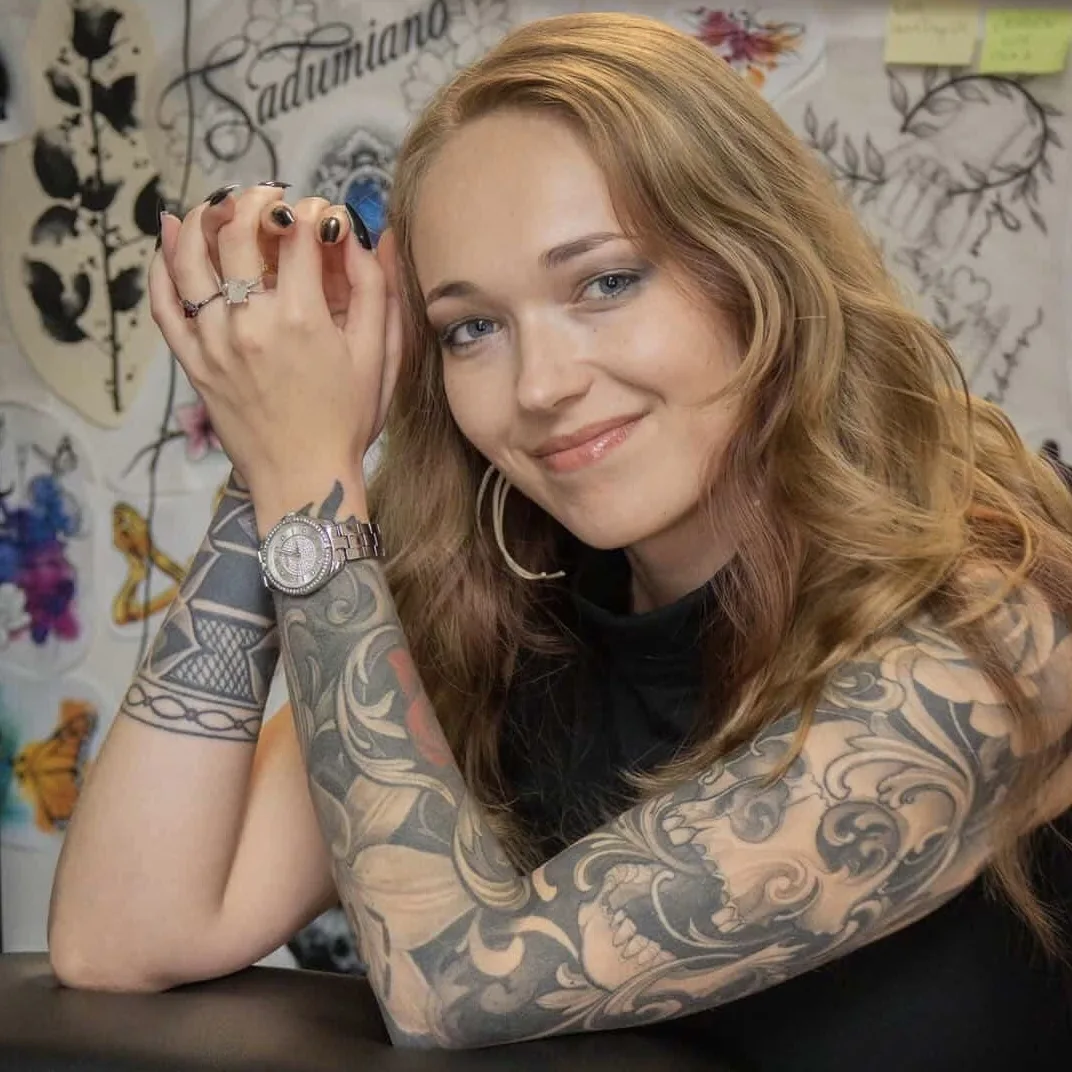
Breanna Beware has carried a sketchbook since she was twelve. Skulls and florals, mostly, the kind of imagery that follows certain artists through their whole career, showing up again and again in new forms. For her, it eventually showed up in skin.
She grew up drawing constantly, in class and out of it, and the people around her kept saying the same thing: you should be a tattoo artist. She took that seriously. After high school, she pursued a fine art diploma with tattooing already in mind as the destination, not a detour. The credential mattered less than the intention behind it.
Adolescence was difficult for her in ways that art helped address. Self-expression and confidence were things she had to find, and drawing gave her both before tattooing eventually deepened them. That personal history is not incidental to how she works, it shapes the entire approach she brings to every client sitting across from her.
“I like to think that I give people a voice when it comes to self-expression and individuality through permanent body art.”
She began tattooing in 2019, and two early experiences defined her practice more than anything else. Both involved her own tattoos. The first was a cover-up she chose to get after her apprenticeship opened her eyes to what the medium could actually do. Three letters, loaded with meaning, replaced by an image that carried more emotional weight than any name could. The second was a tattoo that went wrong, not the only time that had happened to her.
That second experience left a mark, and not just literally. When she started tattooing, she made herself a promise: she would listen to every client's vision and honour it, so they would never feel the way she had about her own work. It is the kind of commitment that sounds simple until you watch how seriously she applies it, the consultations, the homework she sends clients home with, the questions she asks that they have not yet thought to ask themselves.
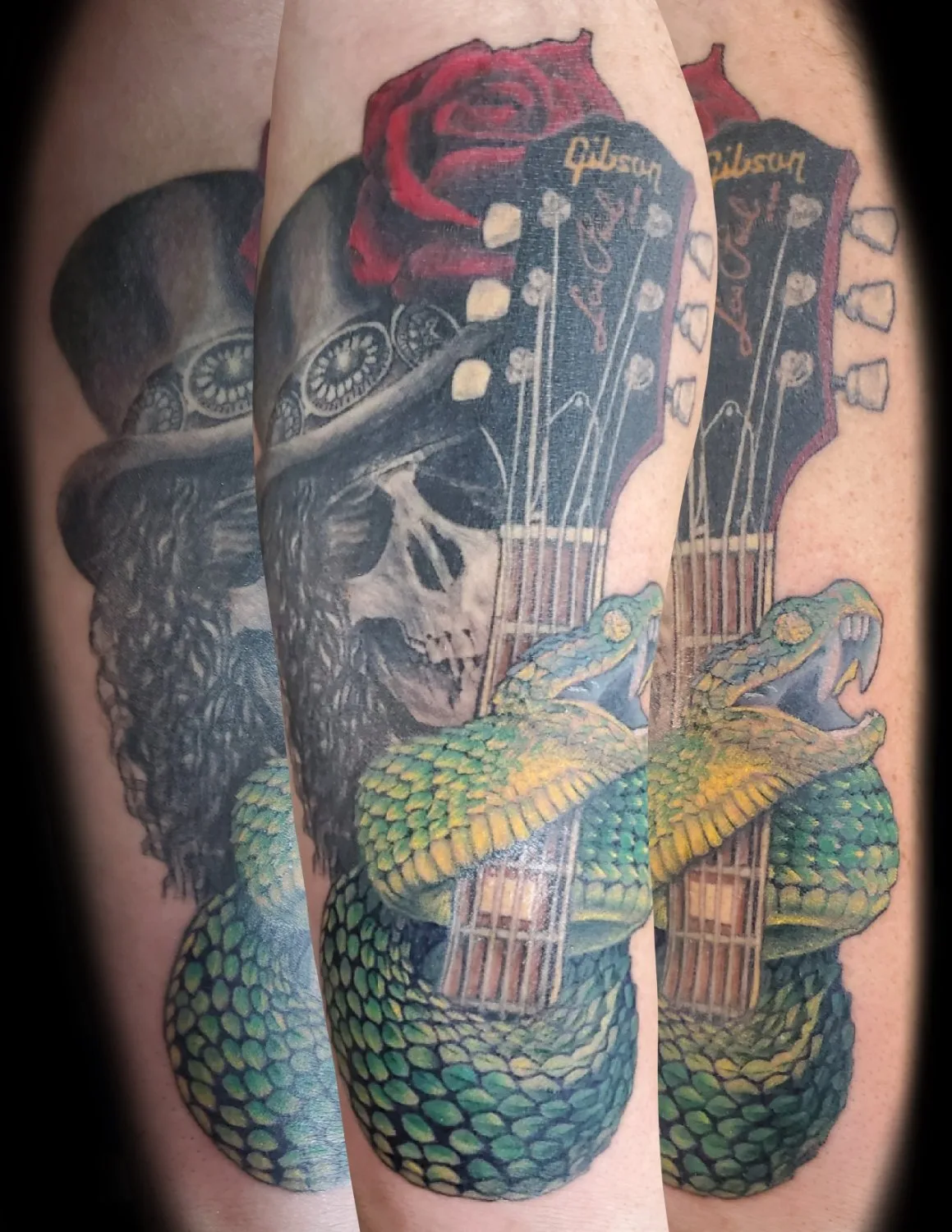
Cover-ups became a specialty for reasons that went beyond craft. Seeing how a bad tattoo could shatter someone's confidence, and how a good cover-up could restore it, gave her a clear sense of purpose. She wanted to show people that transformation was possible. That motivation has stayed with her.
“A bad tattoo can shatter it as much as a good tattoo can improve it.”
She now works out of E-Town Tattoo in Edmonton, where she rents a booth and continues to build her own independent brand, Beware Tattoo Studio. E-Town puts her alongside a much larger roster of artists — and that mix of styles and combined experience has pushed her to keep growing. It's inspired her to step outside her comfort zone and start travelling to conventions beyond the city, with the goal of learning as much as she can from the talented professionals around her.
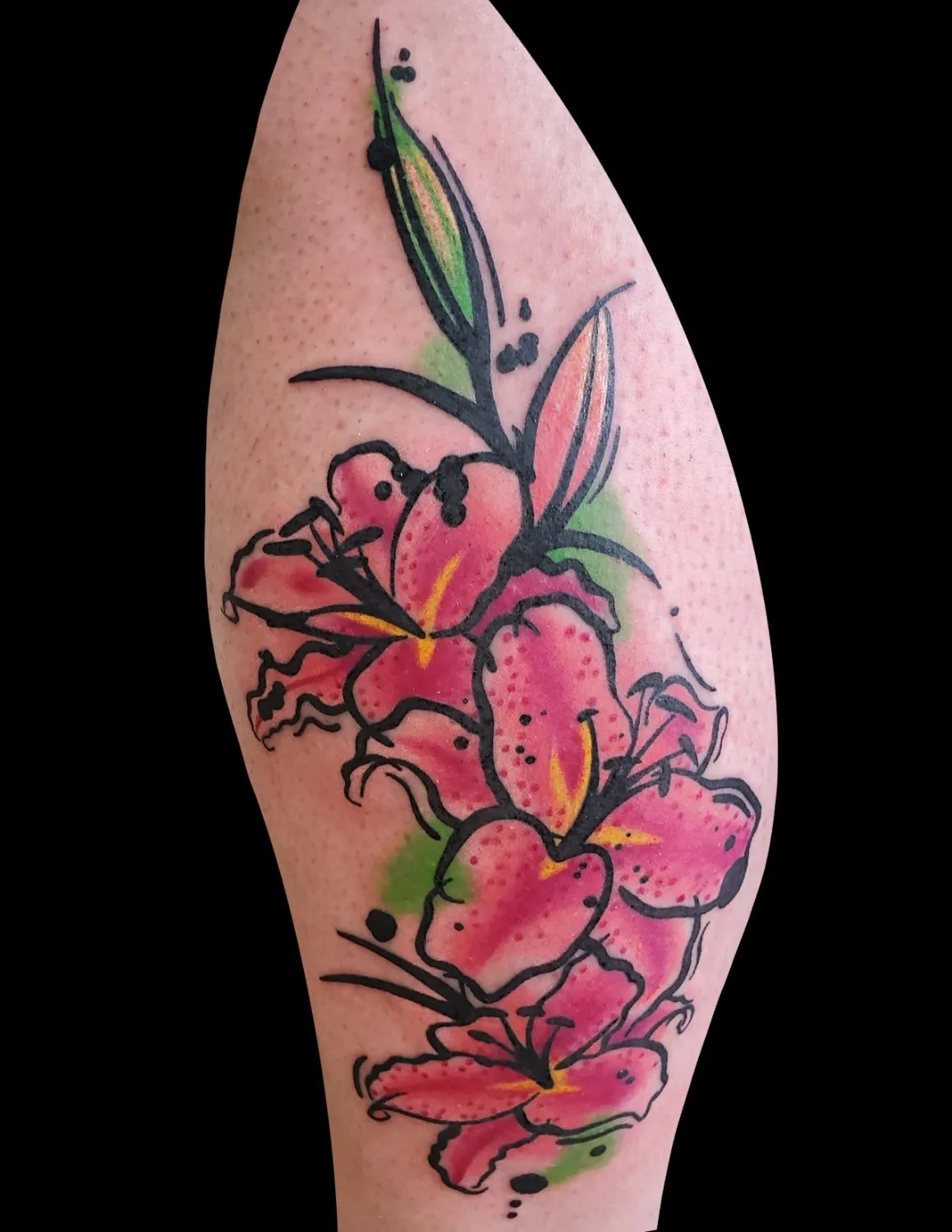
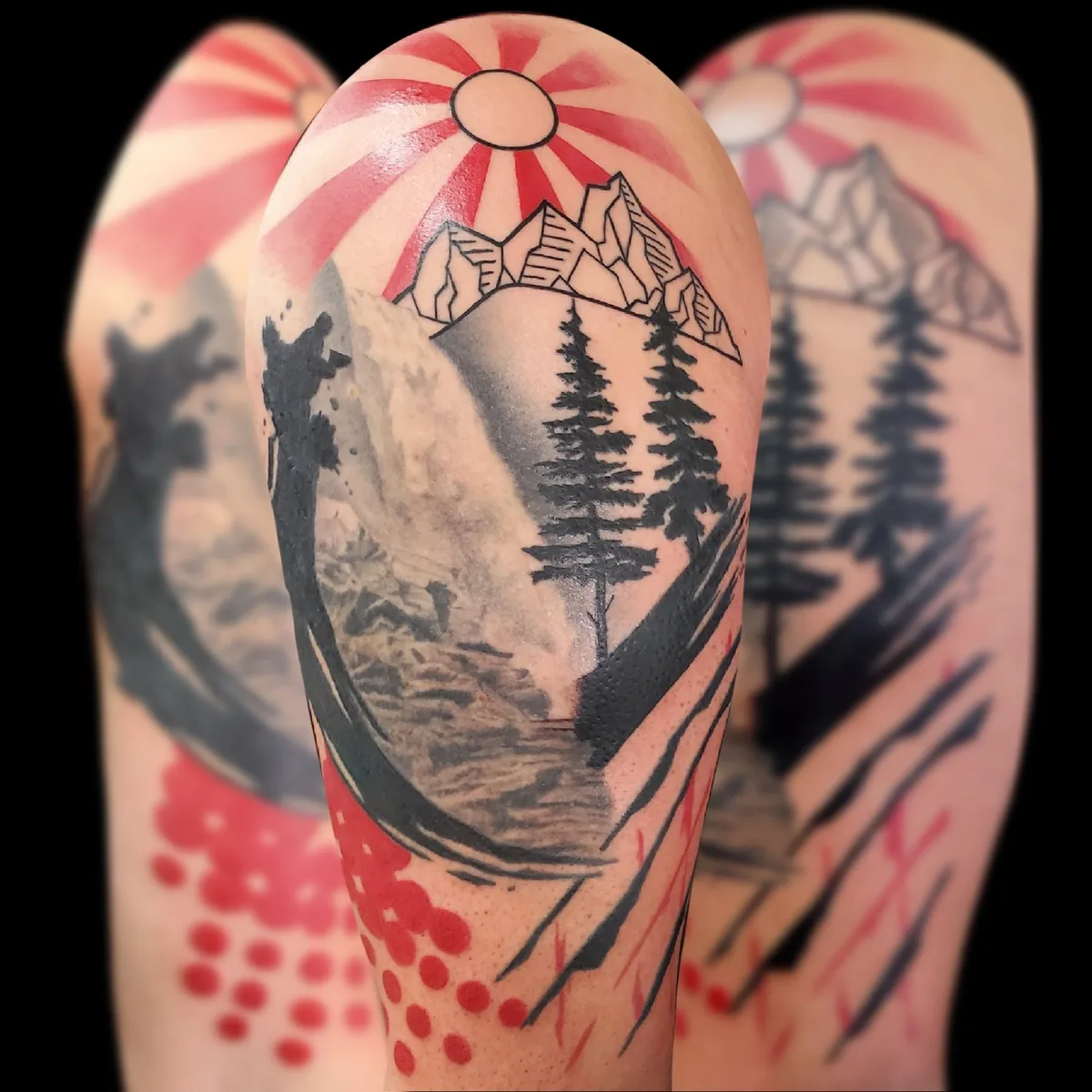
Her style grew out of an unlikely starting point. She came to tattooing with trash polka as her favourite genre, the bold, painterly energy of it, the colour pops, the sense of movement. But her clientele skewed female, and she found herself wanting something that carried those same qualities in a softer register. Watercolor tattooing became the answer, or rather, her version of it.
Watercolor as a painting medium frustrated her. Too unpredictable, and the colours never quite hit the saturation she wanted. Tattooing, she realized, gave her control that the medium itself never could, ink placed exactly where she wanted it, colours bold enough to hold their own. The style she developed pulled from her fine art training, her personal aesthetic, and the specific requests her clients were already bringing her.
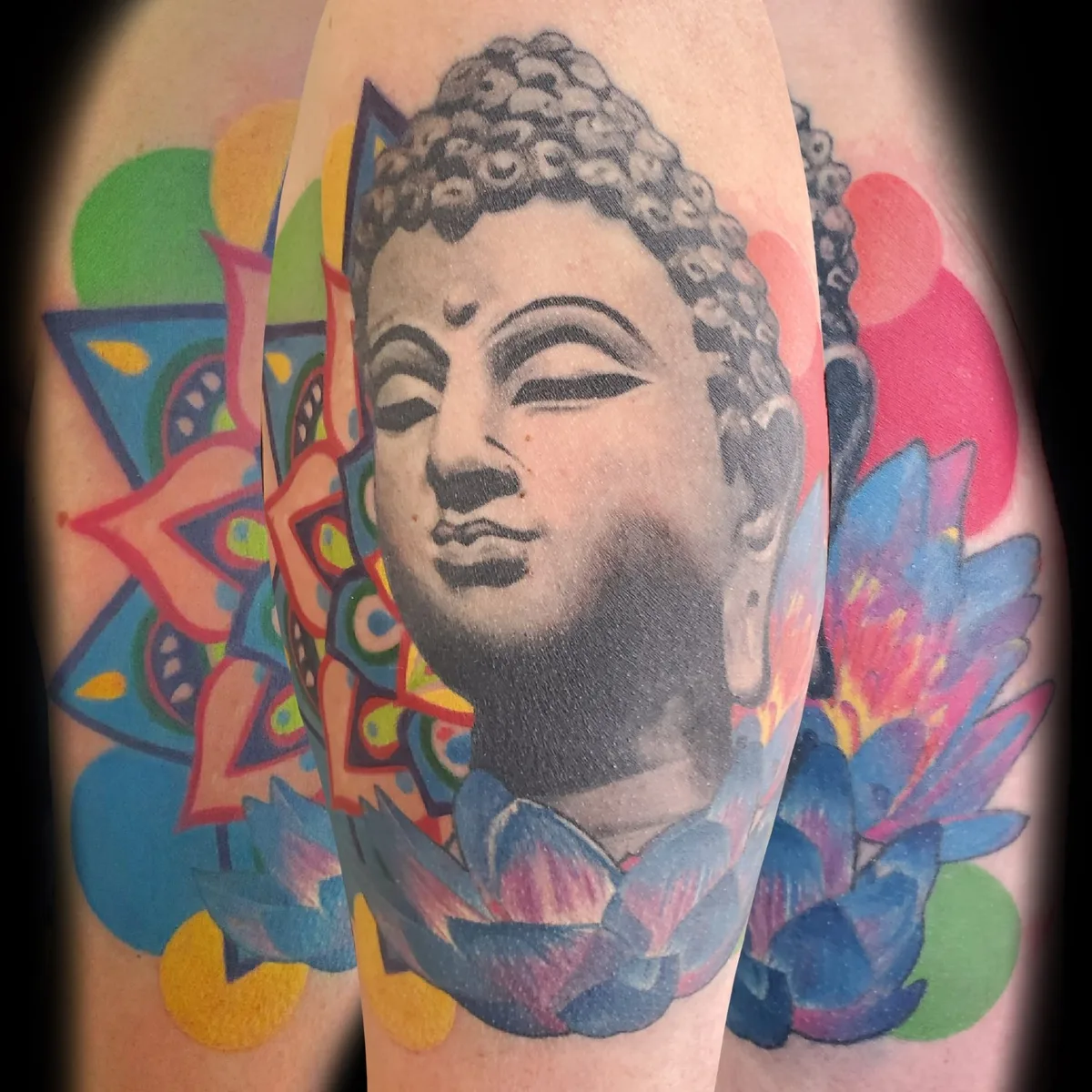
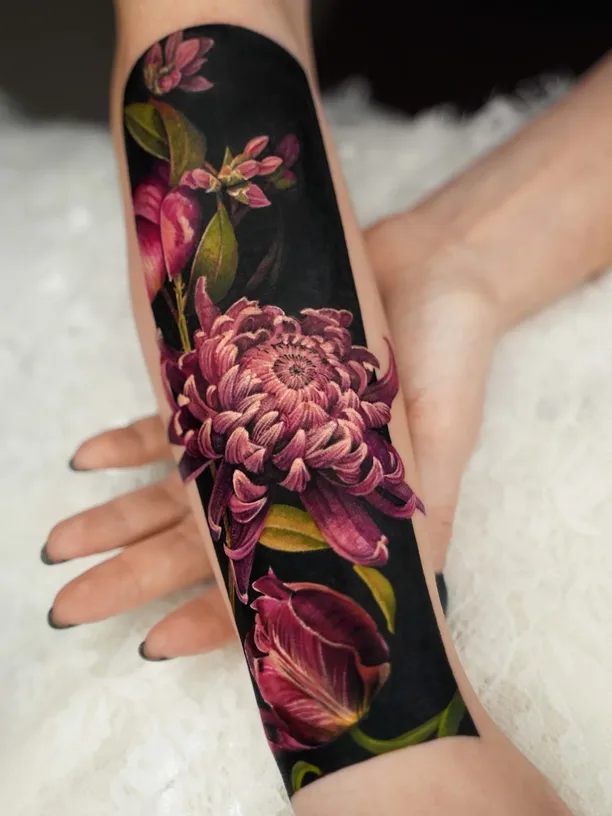
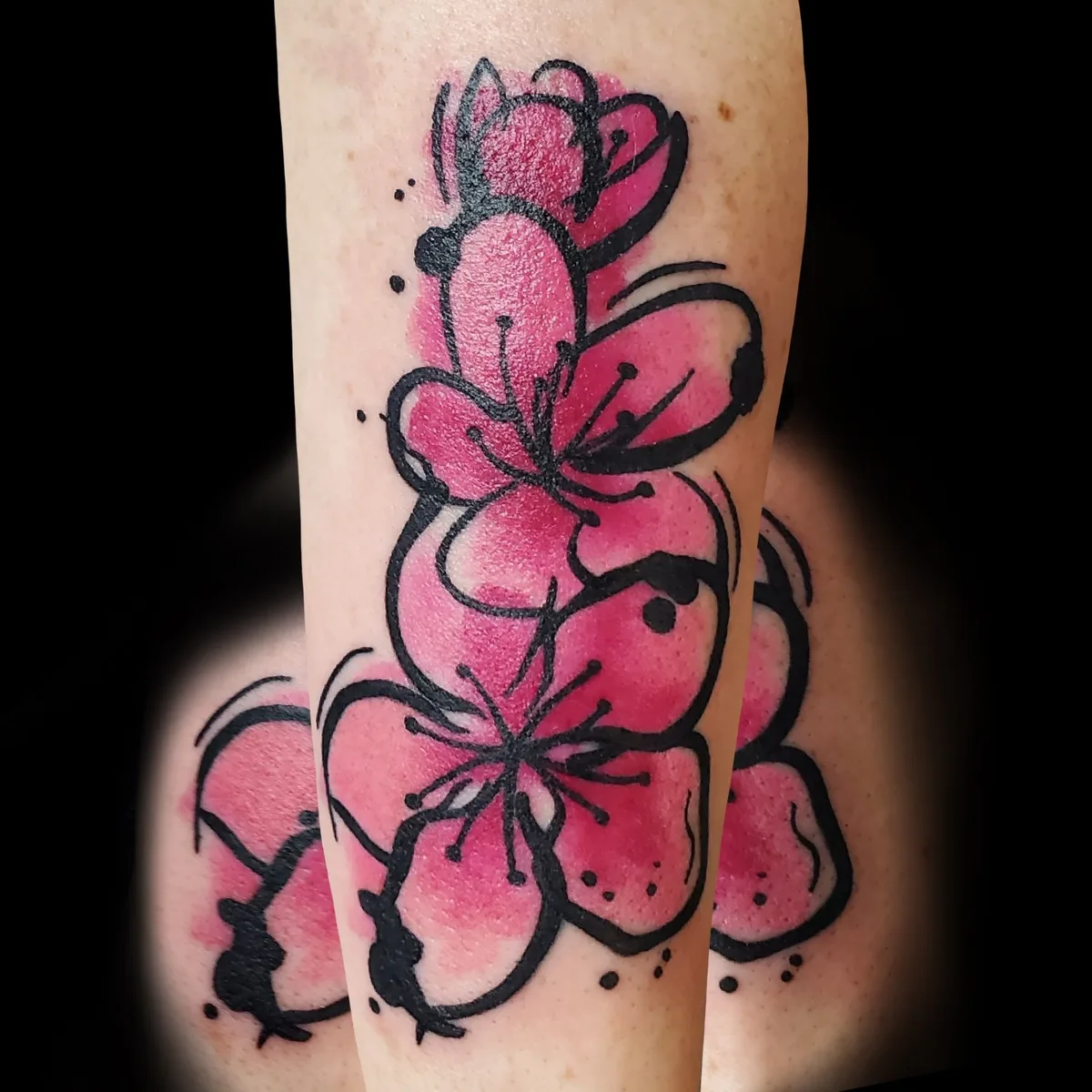
The graphic foundation in her watercolor work came before the colour, in most cases. Clients were requesting linework, geometric elements, or had existing tattoos in a particular area that needed something to connect them. Watercolor became the connective tissue, a way to bring flow and consistency to a collection of pieces that might otherwise feel random. Black, she notes, anchors saturated colour in a way nothing else does.
Structurally, the black elements in her watercolor tattoos do significant work. High contrast supports both readability and longevity, the tattoo needs to hold up in skin over years, not just look good in a photograph taken the day after. She tends to avoid the darkest colour tones so they do not compete with the black, but she keeps enough dark edge in the colour blends to create contrast within the palette itself. Beyond that, every piece is different enough that fixed ratios would be the wrong way to think about it.
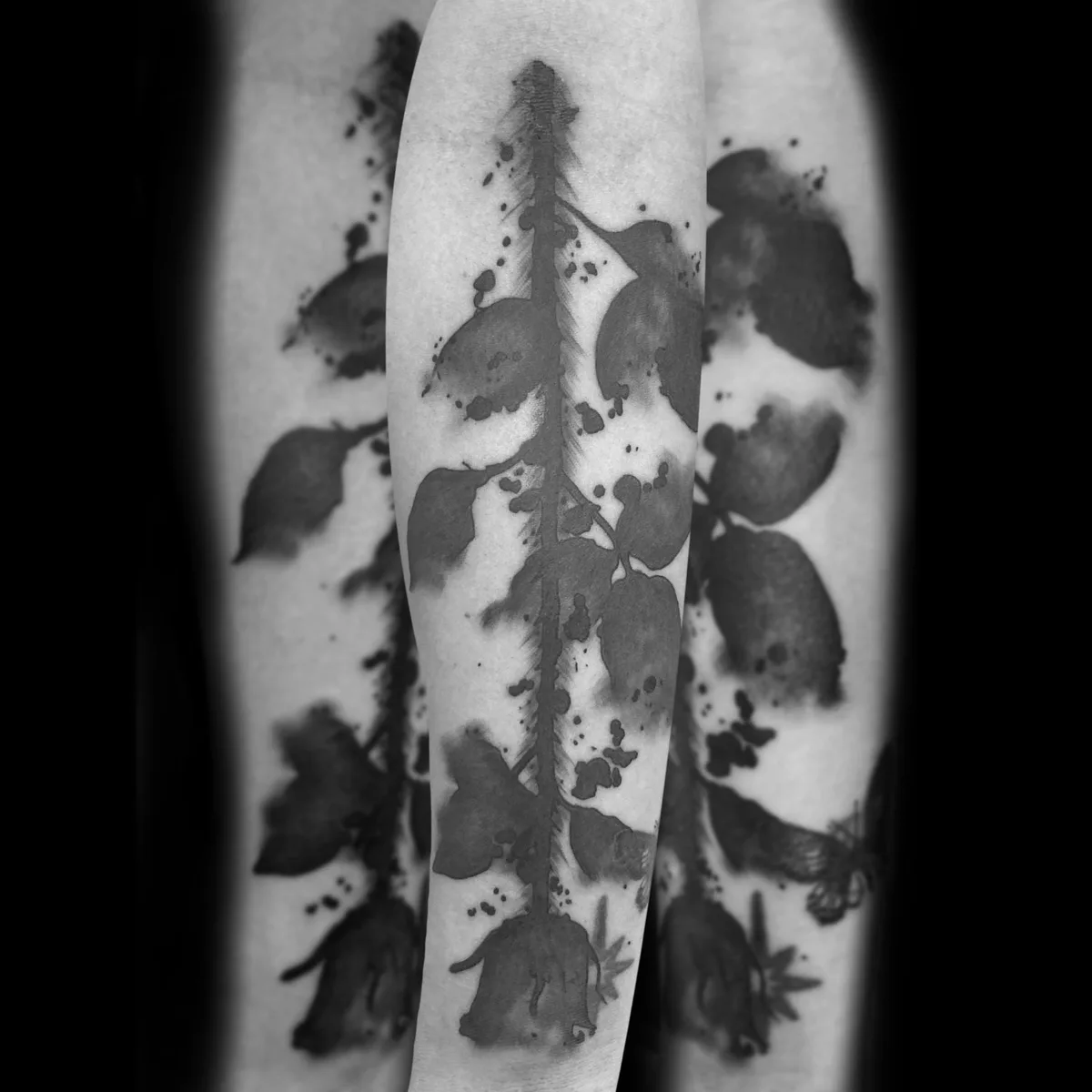
“I find watercolour takes an idea to the next level of artistry, where people start to think about their tattoos as art and extensions of themselves, rather than just lines on the skin.”
Her process starts with consultation, always in person. She gets specific, placement, future plans, long-term vision for the body as a whole. Most clients have not thought about how their current tattoo will sit alongside the ones they have not gotten yet. She pushes them to think further out, then sends them home with questions to sit with before they start sending reference images. The design takes shape from there.
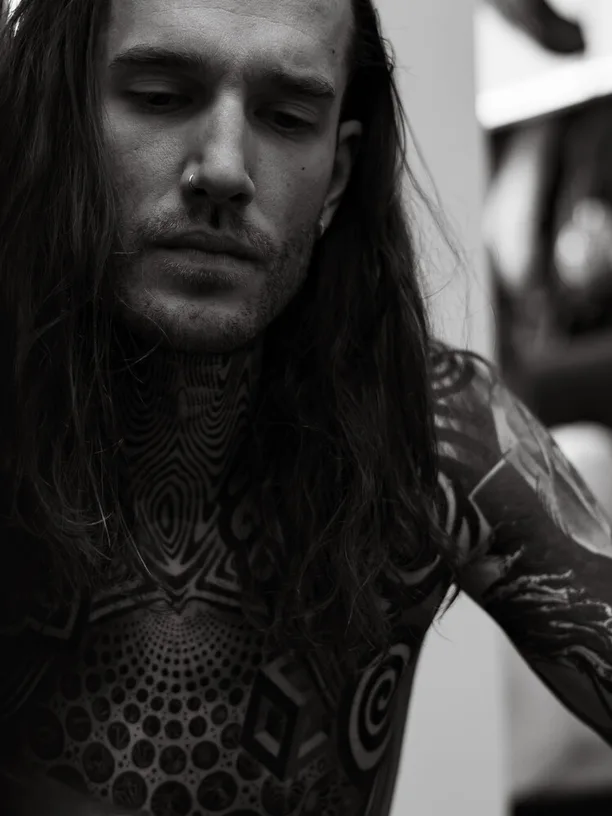
Cover-up work follows more-or-less the same process with additional parameters. The most challenging projects, in her experience, are large pieces done well, especially if they are relatively fresh. She has tackled an upper arm piece that extended onto the chest, complicated further by an existing tattoo in the same area that her client wanted to keep, and a torso piece running from the collarbone to the navel, where bold tribal and a blacked-out chest section required saturated cool colours and heavy detail to absorb the darkness underneath.
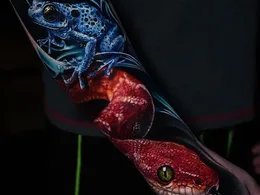
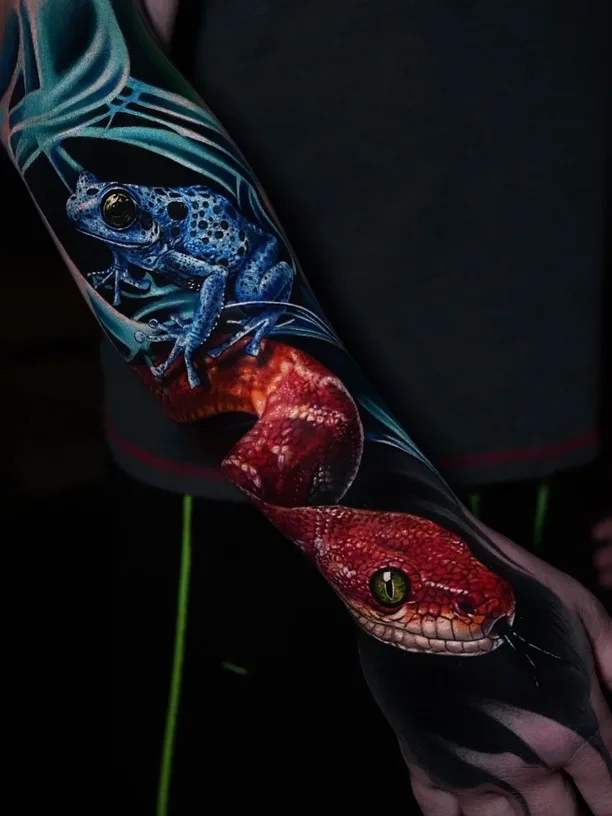
Her favourite watercolor tattoo so far combines a realistic black and grey wolf with tiger lilies and wild roses rendered in a bold, sketch-style watercolor approach. The client originally came in for a flash piece, cherry blossoms with ink splotches, and liked the style enough to commission something larger and more complex. The combination of realism and painterly florals is exactly the kind of hybrid that interests her most, where two distinct approaches exist in the same piece without either one apologizing for the other.
“I love combining styles because tattoos are about creative self-expression, and what better way to portray that than by creating something completely unique?”
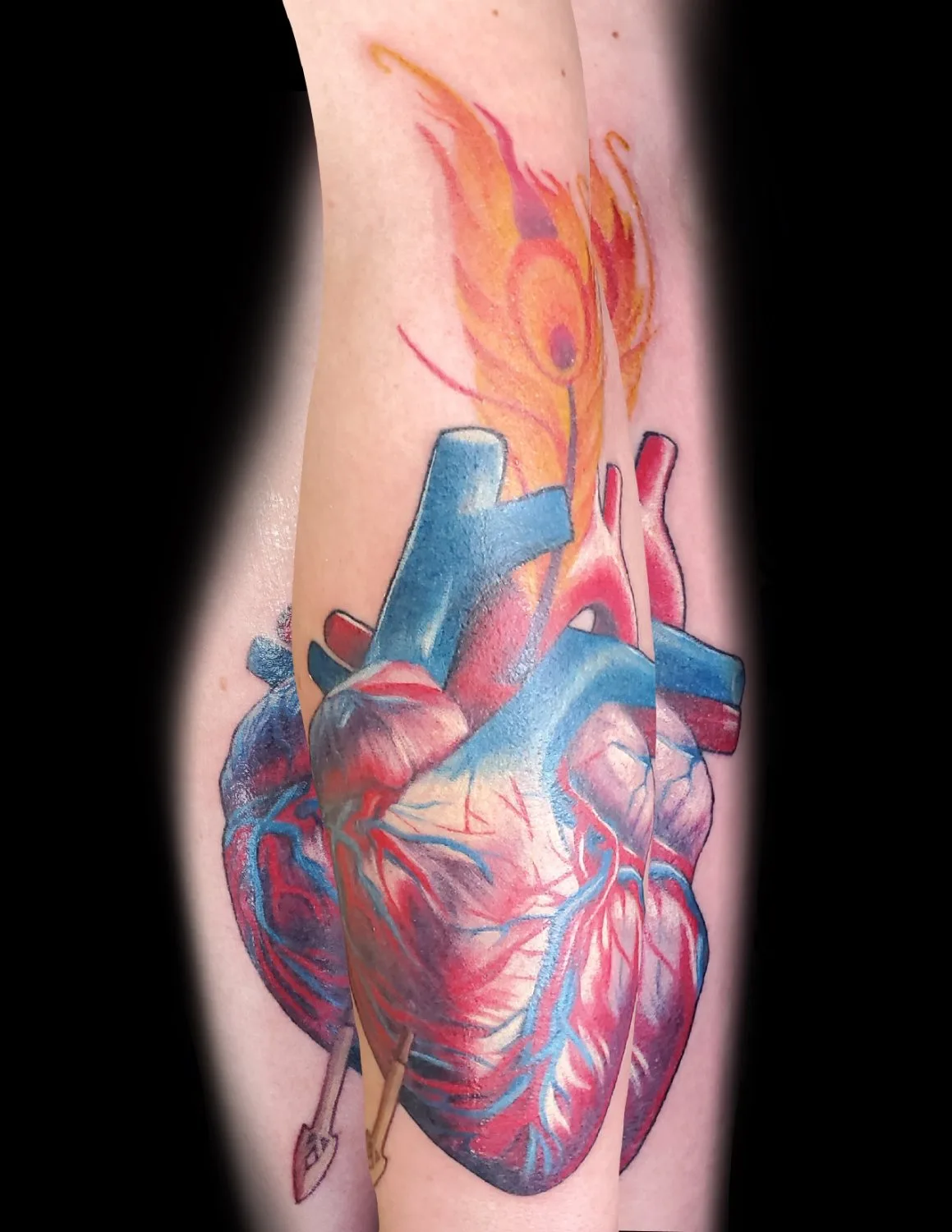
Conventions have been part of her career since nearly the beginning. She attended her first Edmonton Tattoo Convention only three months into tattooing, and describes the feeling of belonging she found there as unlike anything else she had experienced. Each convention since has reinforced it. She plans to return to the Edmonton Tattoo and Arts Festival and has broader travel ambitions, guest spots and conventions across Canada to start, with the rest of the world somewhere on the horizon.
Painting has never entirely left the picture. Alongside her tattooing practice, she is expanding her work as a painter, with market showcases planned around Edmonton and an online gallery in development. She has reopened her books for commissions. The sketchbook she carried to every class at twelve has simply grown into something larger, a practice that moves between skin and canvas, and finds purpose in both.
What connects all of it, the cover-ups and the watercolor work and the consultations and the flash designs she creates because she has too many ideas to leave unrealized, is something she has said plainly: tattoos are more personal than what we see on the surface. She built a practice around that belief, and it shows in how she works, slowly, collaboratively, with a clear memory of what it felt like to be on the other side of the table.