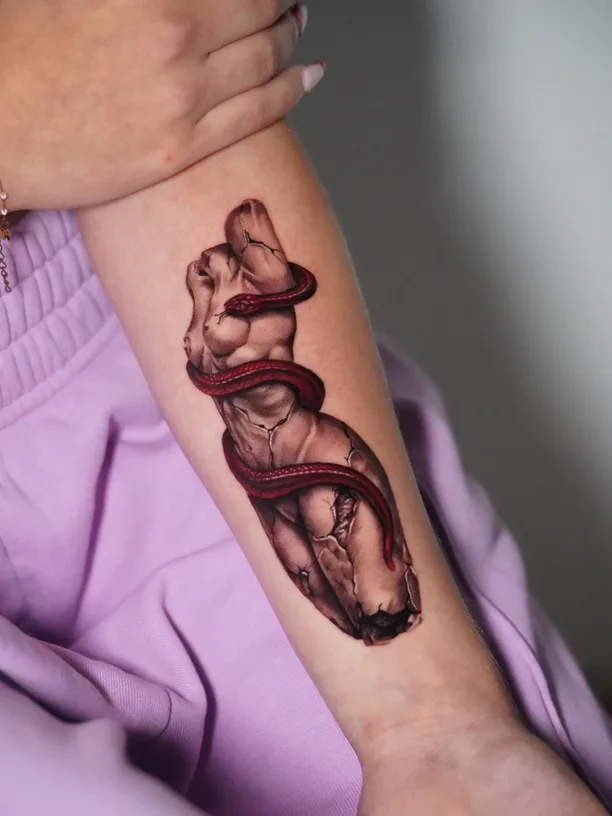
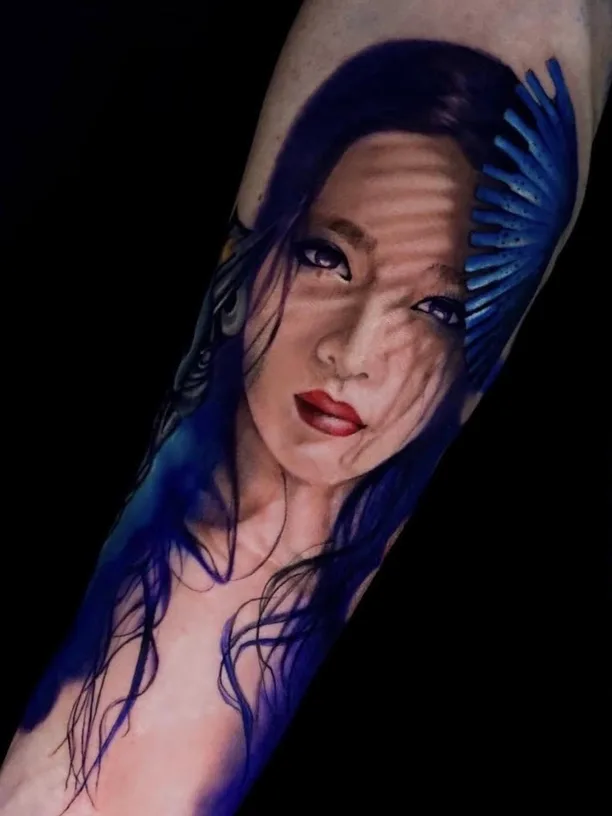
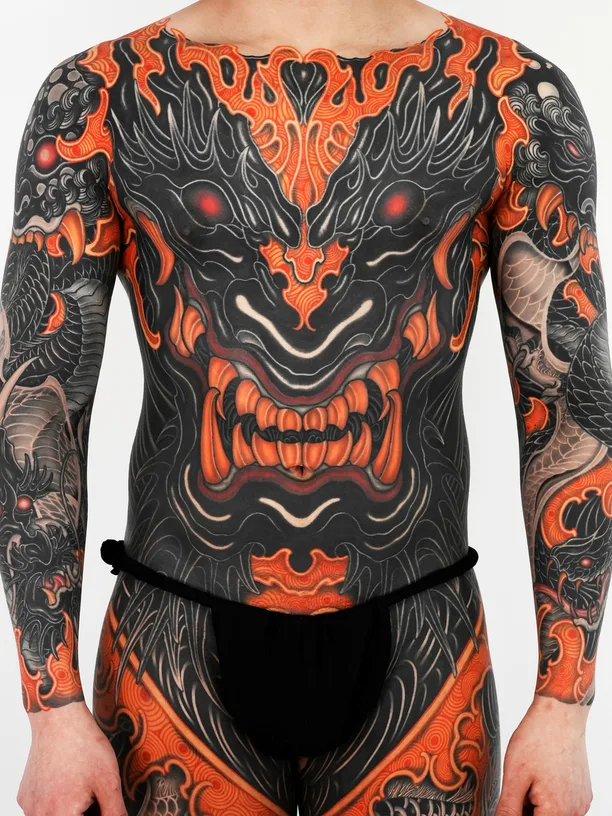
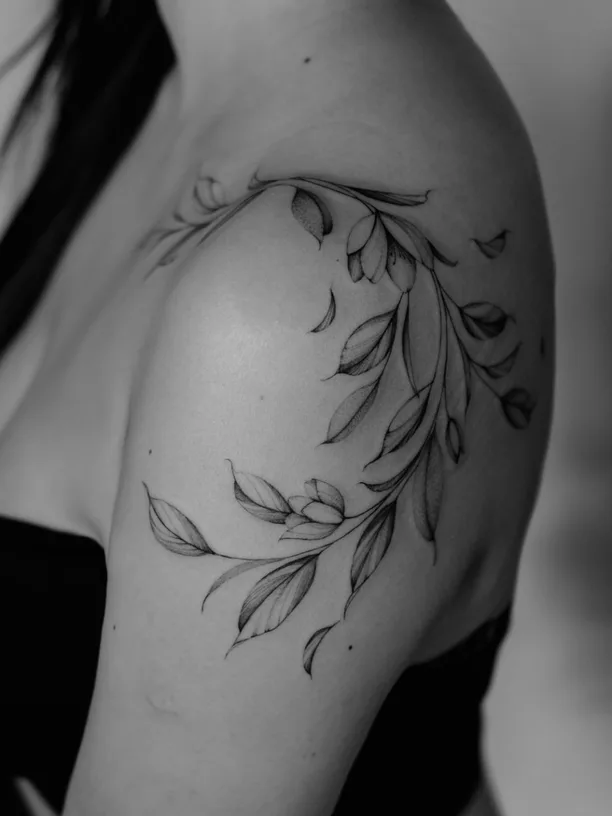
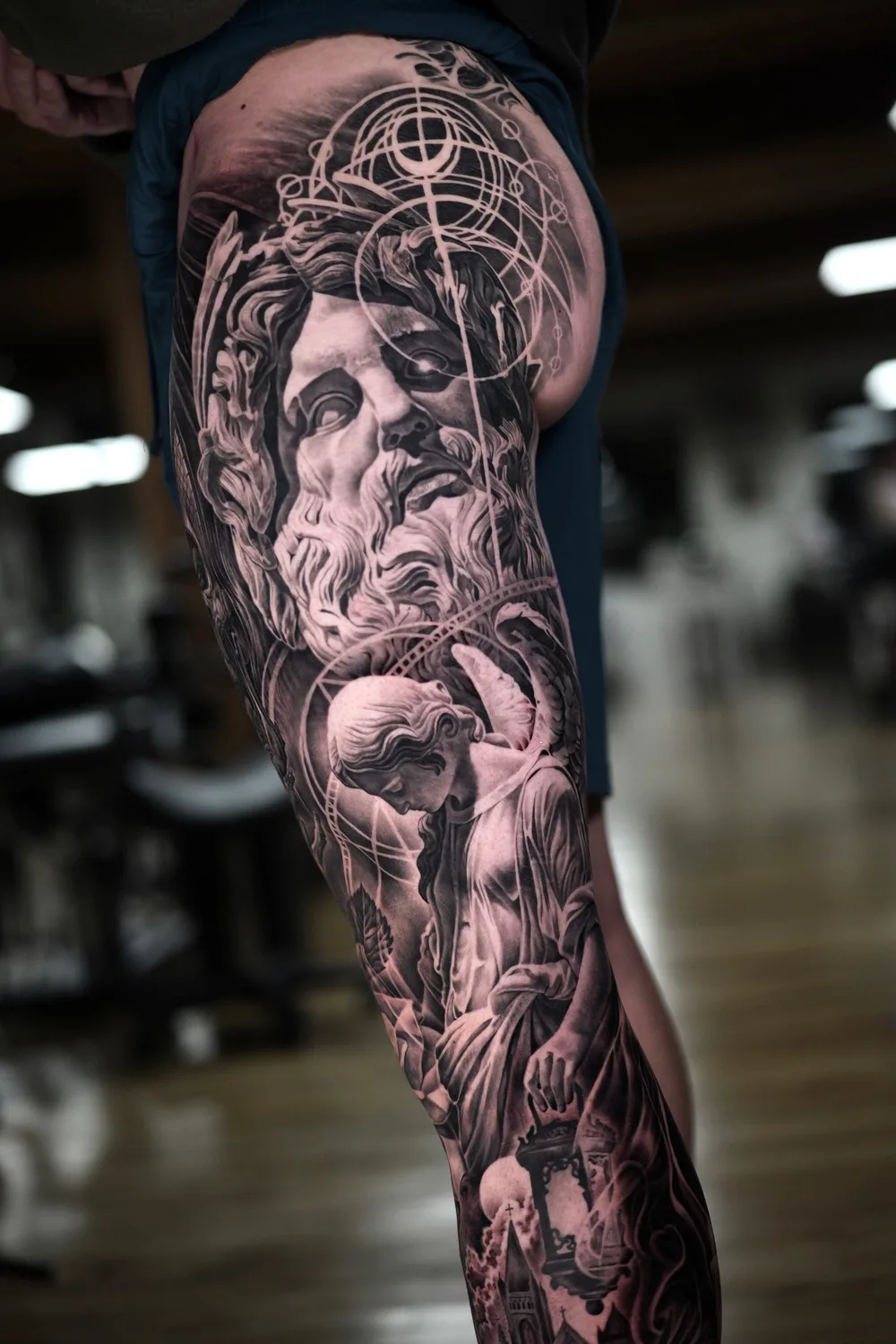
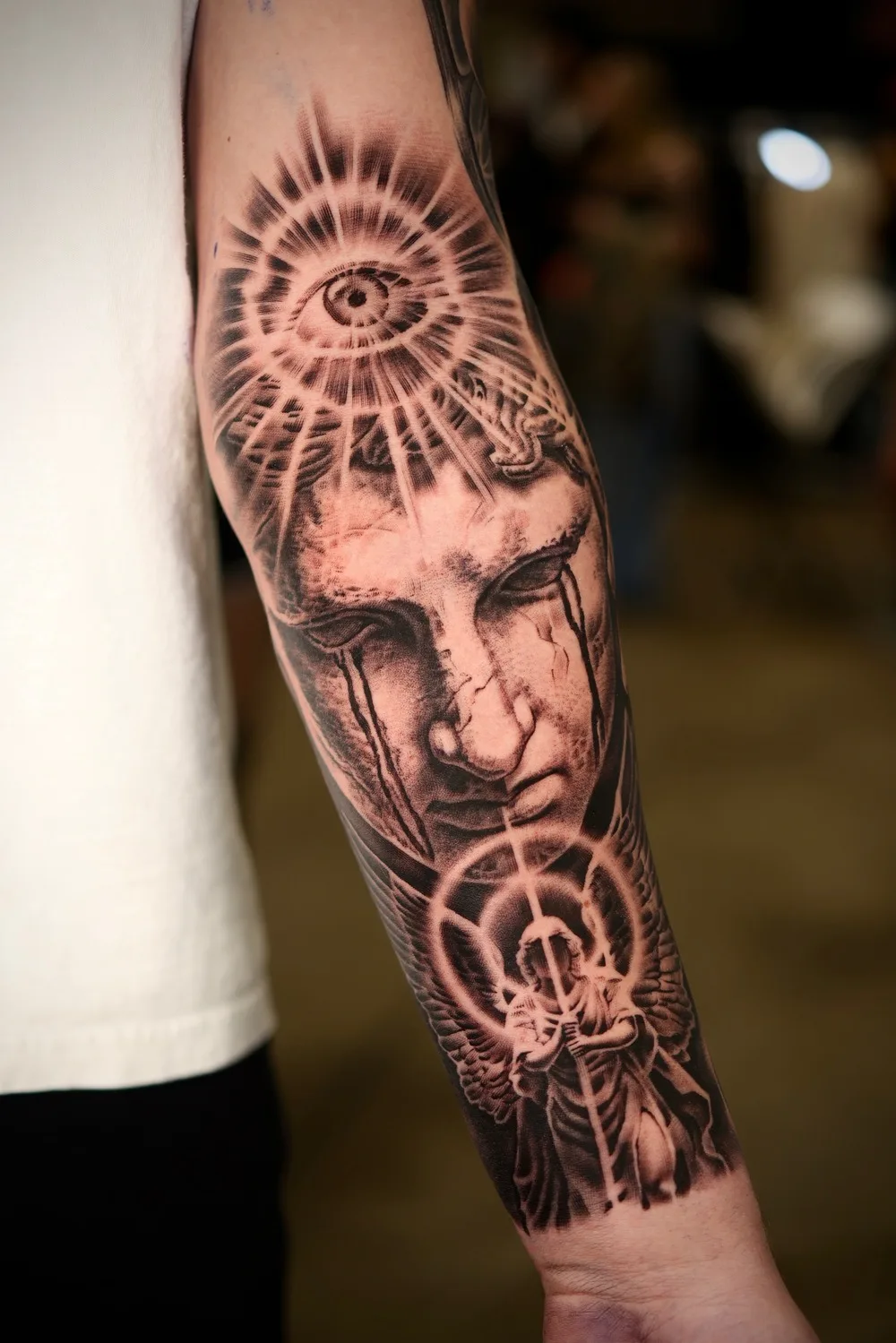
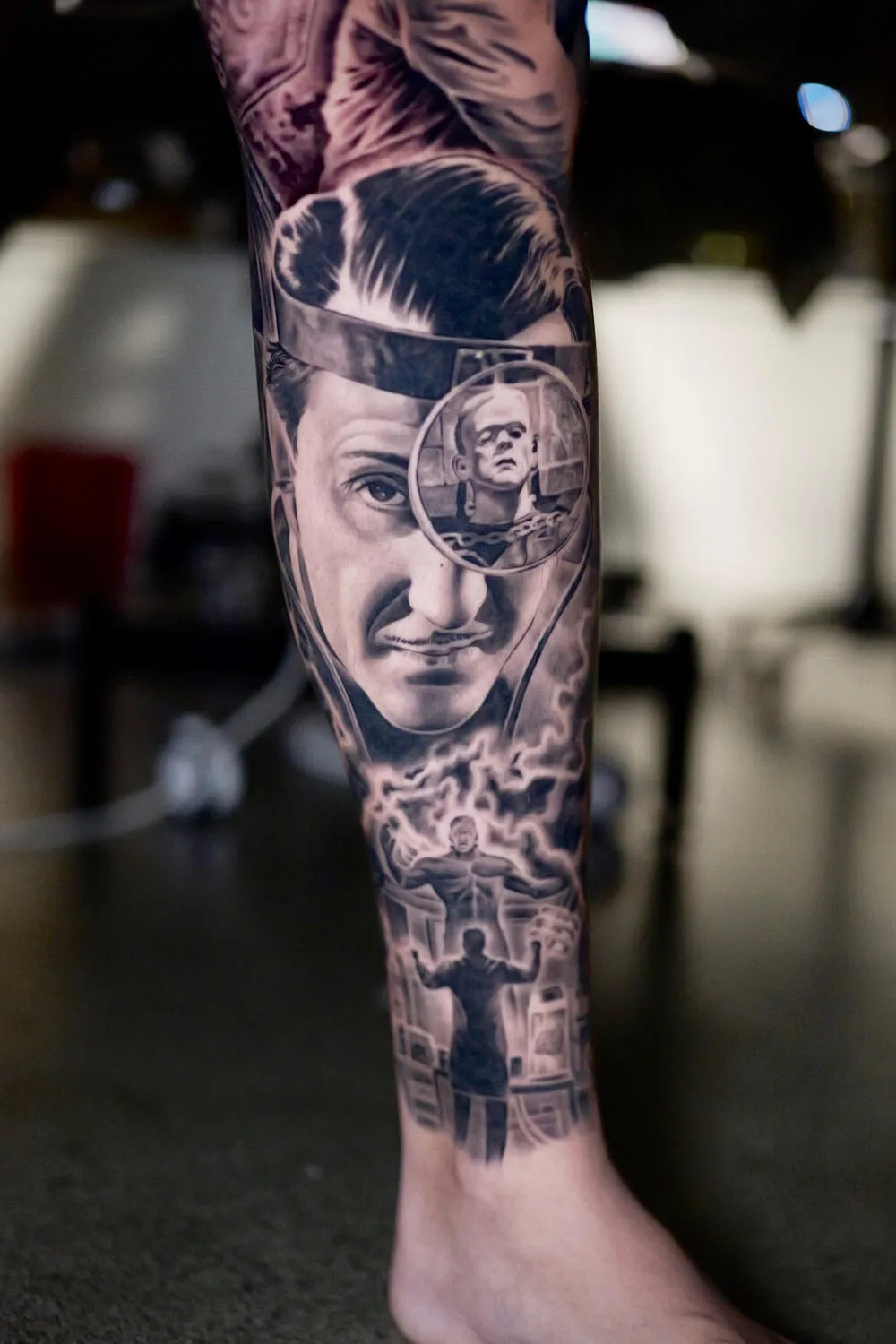
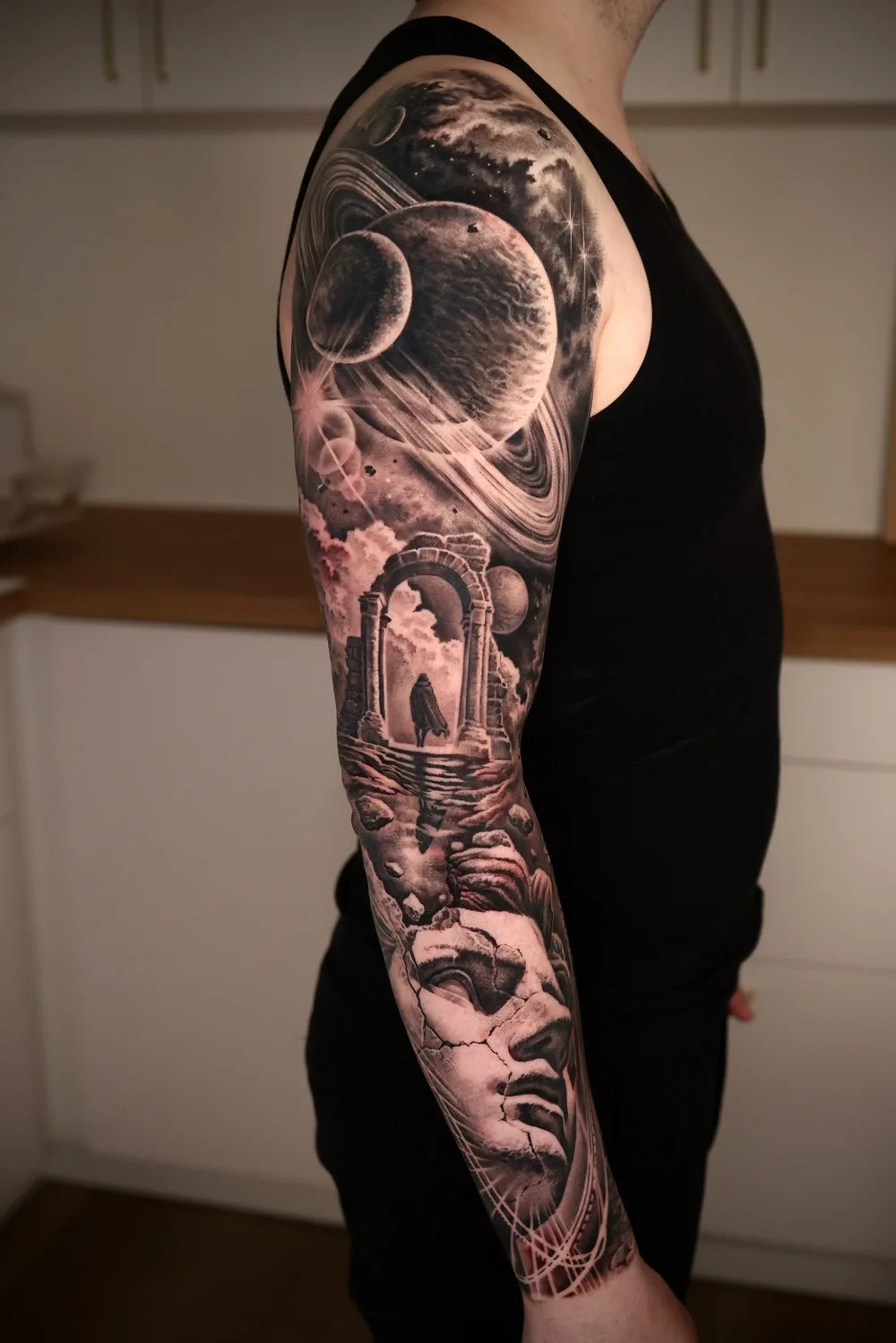
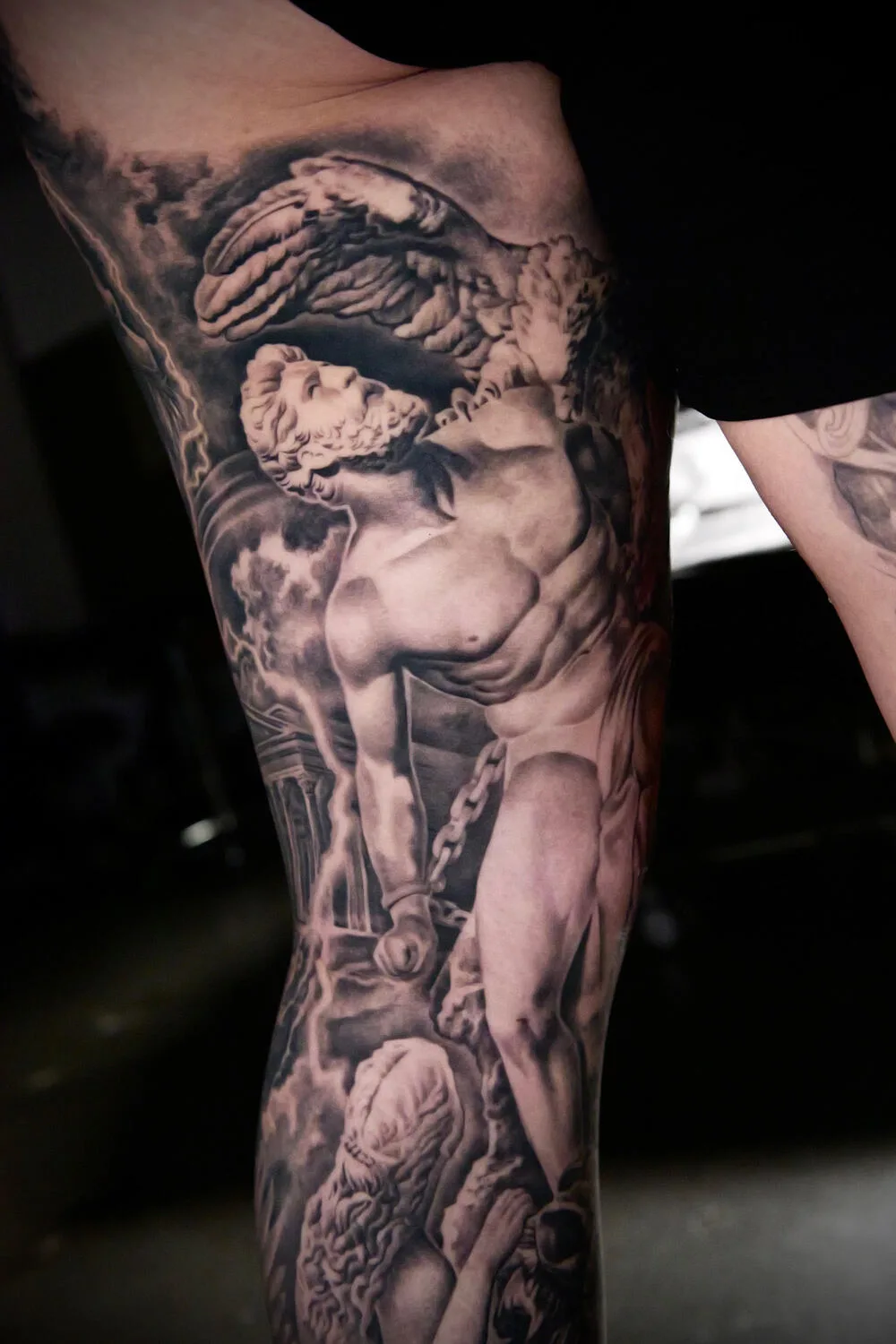
Ezra Currier is a Toronto-based tattoo artist working in black and grey realism. Today, his main focus is large-scale work: sleeves, leg pieces, and complex compositions that combine realism with classical sculpture, religious imagery, architectural details, and graphic elements.
Ezra came to tattooing relatively late, at 29, and chose perhaps one of the worst possible moments to begin: his first week as an apprentice coincided with the start of the pandemic. Still, he talks about that period without unnecessary drama and with plenty of self-irony — the same way he speaks about his early work, finding his own approach, and the inevitable “humiliation rituals” every beginner goes through.
In this interview with iNKPPL, Ezzy talks about his path into the industry, working on large-scale projects, the challenges of black and grey realism, and why sometimes the most important part of a tattoo is what you decide not to tattoo.
Let’s start before tattooing. What were you doing professionally before you turned 29, and what eventually made you decide you were willing to leave that life behind for tattooing?
— Prior to tattooing, I was working as a telecom technician. The work and pay were both decent, but eventually I realized I needed to do something more creative. There are only so many times you can explain to an 80-year-old how to scroll through the inputs on their TV remote before you seek another calling in life.
You’ve said that you quit your job, sold everything you owned, and spent around a year and a half trying to find an apprenticeship. Why were you so certain that tattooing was worth taking that kind of risk for?
— Just the opportunity to be fully in control of my success or failure made it feel worth the risk. Also, my cousin let me stay in his basement while I was unemployed, so I was living the high life.
“The beauty of tattooing is that it's very merit based, if you work hard you're going to find success no matter what challenges you face.”
I was fully committed from the beginning, so I didn’t spend much time worrying about what would happen if it didn’t work out. But if it hadn’t worked out, I’d probably still be in my cousin’s basement. Thanks, Jeremy.
A year and a half is a long time to keep hearing “no” or simply waiting for an opportunity. What was the hardest part of finding an apprenticeship, and was there ever a point when you seriously considered giving up?
— That was probably the most challenging aspect in the beginning. Finding an apprenticeship is hard because even if you have talent, the studio taking you on has no guarantee that you’re worth the risk, and there’s such a long wait before you’ll be making them any money.
One studio in particular gave me an interview, and as part of that process I had to trace 100 sheets of barcodes as accurately as I could. Completing all 100 would have taken around 40–50 hours. When I was 80 sheets in, they called to tell me I didn’t get the apprenticeship. It was probably a QR code of a banana or something. I still think about it to this day.
Then, almost immediately after you finally started, the pandemic shut everything down. What do you remember about that first week, and how did beginning your career under those circumstances affect the way you learned tattooing?
— My apprenticeship beginning the week COVID started felt like a sick joke. Originally, everyone thought it was going to be a one- or two-week thing, but the lockdowns ended up lasting nearly a year on and off. My life was one of those A Series of Unfortunate Events books for a little while.
It made it almost impossible to learn because there’s no actual tattooing at the start of an apprenticeship. We would come into the studio for a few days, tracing lines on paper wrapped around a 2L pop bottle, and then not be allowed back for another month or more. In the first year, I probably did only 10–15 actual tattoos on skin. Not an ideal scenario for trying to get your feet wet.
Looking back now, do you think starting during such an unstable period slowed your development down, or did it force you to become more independent and intentional as an artist?
— I would say it slowed my development for sure. Every tattoo you do in the beginning is basically a humiliation ritual with a side of self-loathing. Each time you get a chance to tattoo, you get to improve on what you did poorly.
"Every tattoo you do in the beginning is basically a humiliation ritual with a side of self-loathing.”
When you do a bad apprenticeship tattoo and have to wait another month to try again, it feels like you’re starting over each time. And luckily, it’s definitely another DaFont script.
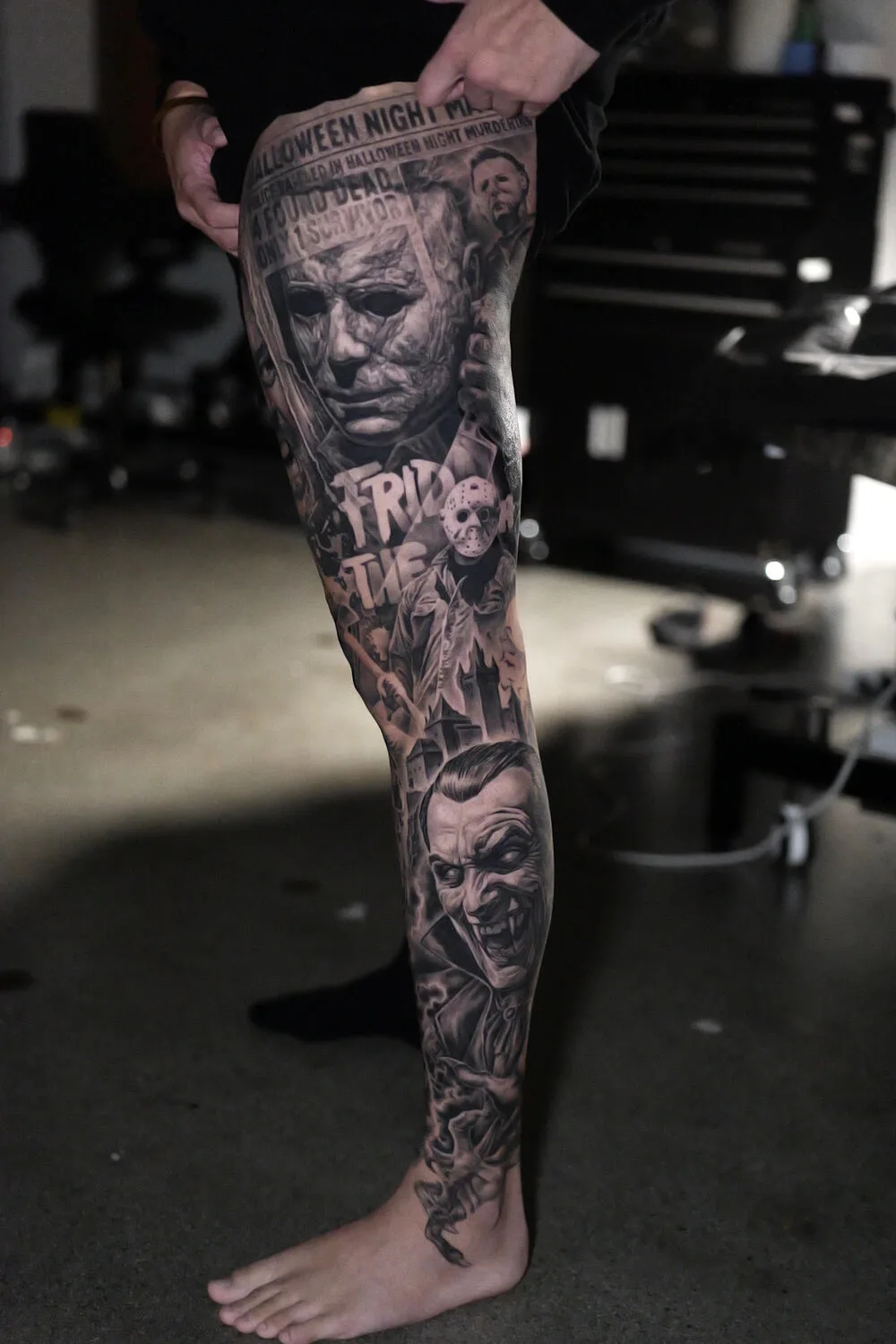
When did black and grey realism become the direction you wanted to pursue seriously? Was it something you were drawn to from the beginning, or did your style emerge gradually through practice?
— I really gravitated toward the complexity of black and grey realism from the beginning, but early on, you’re really just taking whatever comes your way. I’m having a quick flashback to some tribal armbands I did — is apprenticeship PTSD a thing?
Gradually, I settled into more of a smooth-shading realism style, but that comes with time, and I still feel there are so many things I want to experiment with and change.
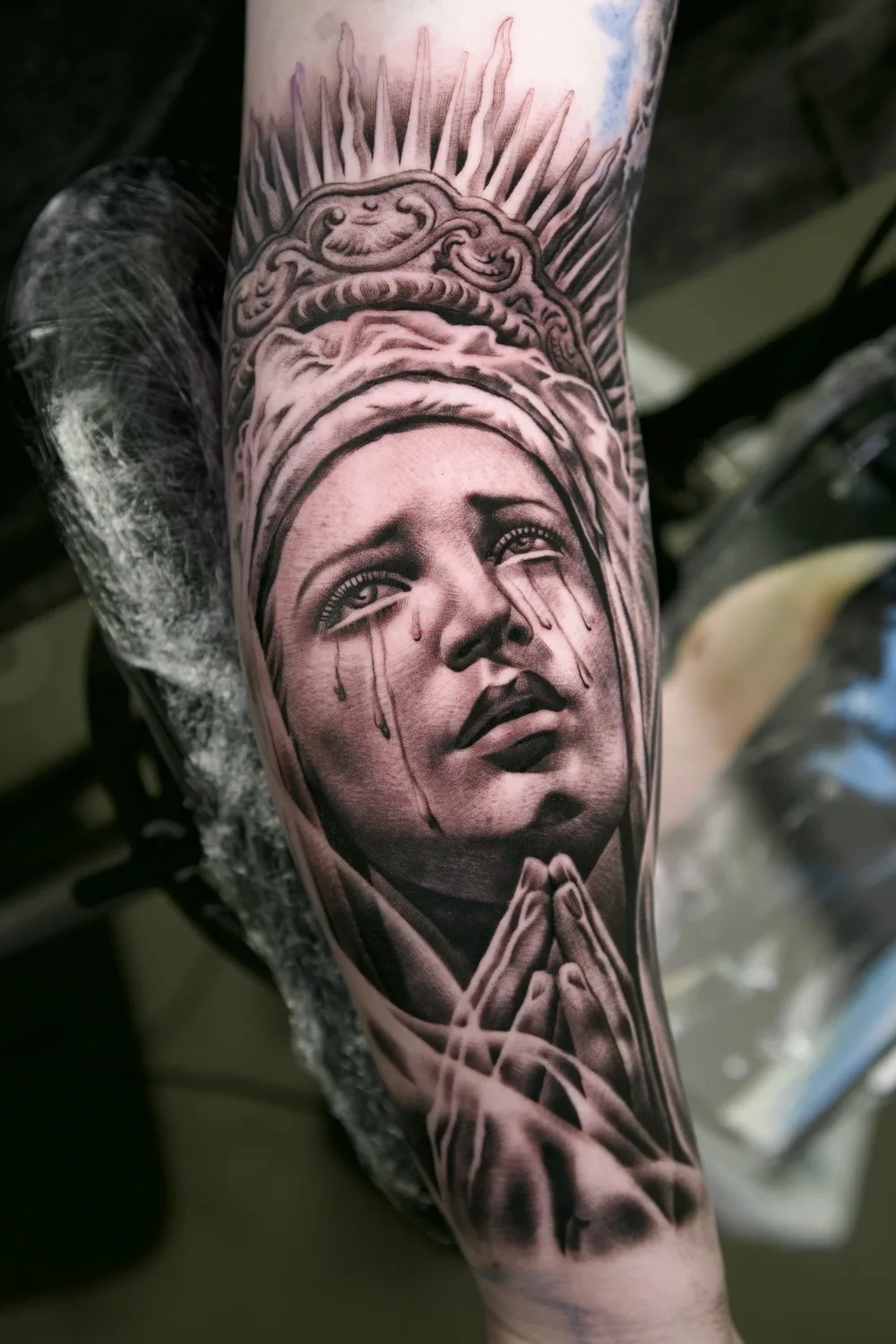
Your work often draws from sculpture, religious imagery, classical figures, and monumental subjects. What attracts you to this visual world, and what makes an image interesting enough for you to turn it into a tattoo?
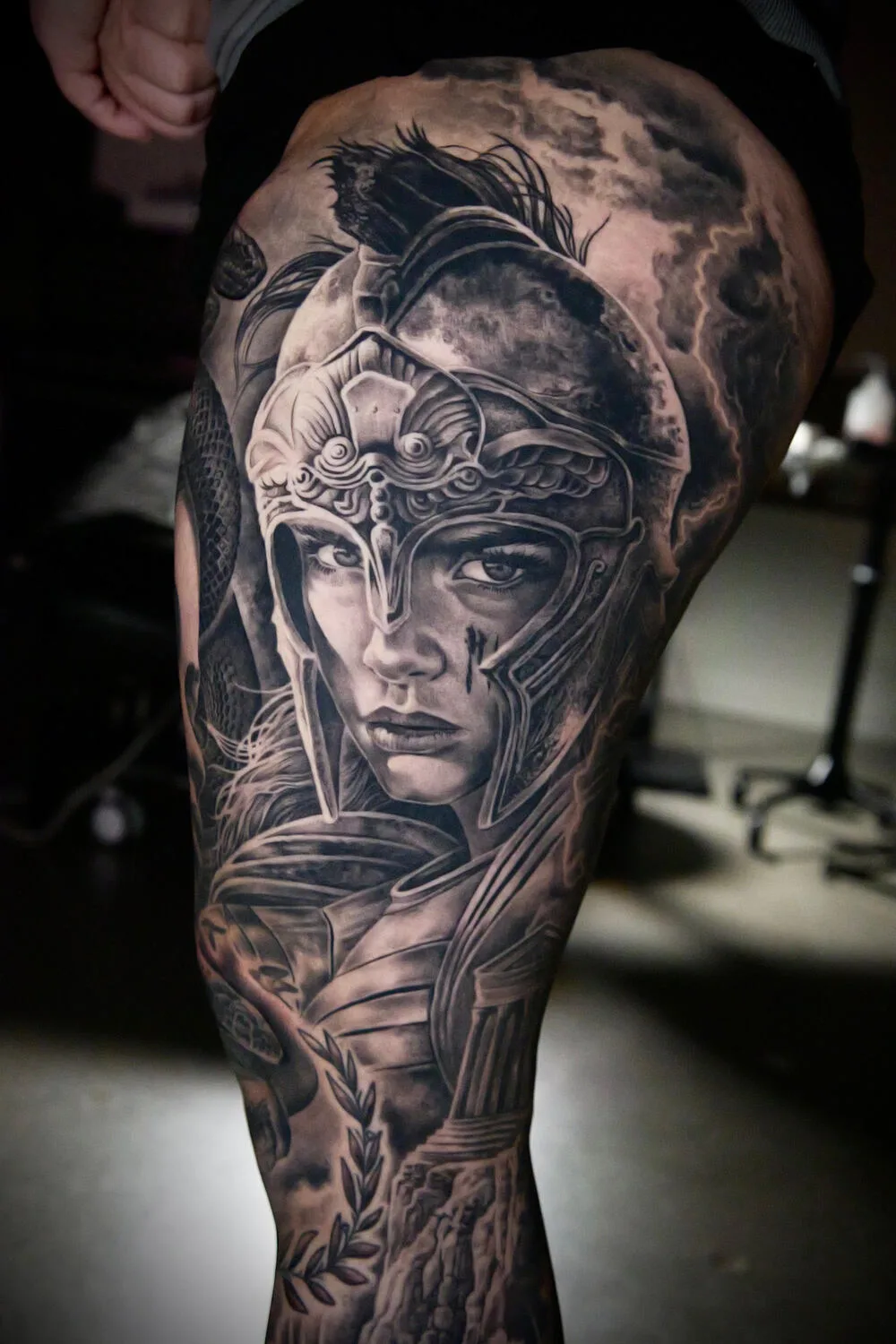
— I find myself really drawn to a lot of classic Renaissance imagery. I’m fascinated by the idea of mortality, and that art really played off those same themes: heaven and hell, good and evil. It makes for a really interesting visual balance, and I think that works well for tattoos.
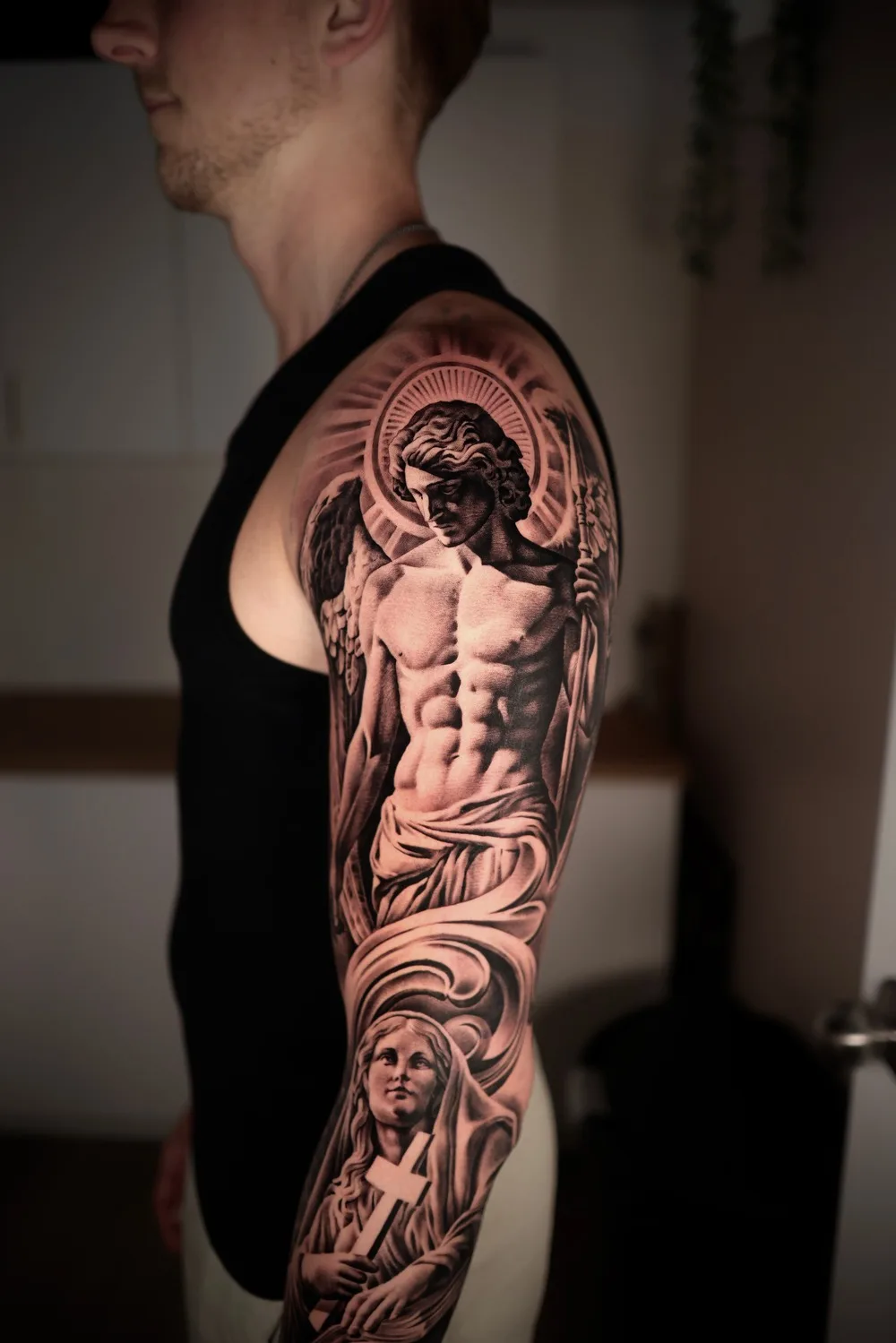
In several of your pieces, realistic figures are combined with geometry, architectural details, or more graphic elements. What role do those elements play for you — are they primarily compositional tools, or part of the visual identity you’re developing?
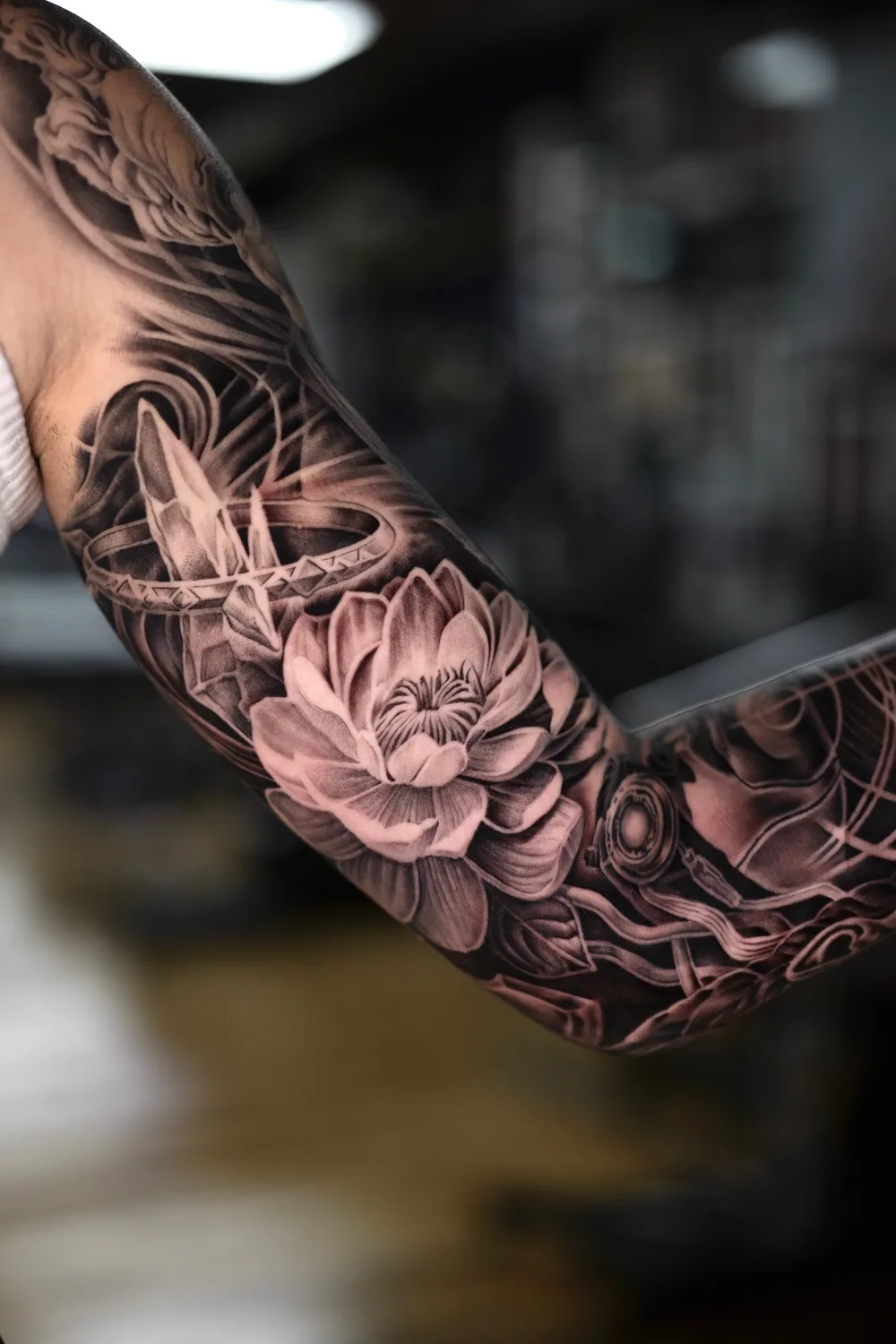
— More than anything, I’m just trying to find interesting ideas to create good transitions. That’s easily the most challenging part of designing a tattoo: how do you make all those different ideas flow across a 3D surface and also blend in the right spots?
There are plenty of themes that are already sort of set — lightning with Zeus, filigree with statues, thorns with roses. It can be hard to find ideas outside of what already works so well, but that’s the fun part of any new project: trying to find a new set of ideas to experiment with.
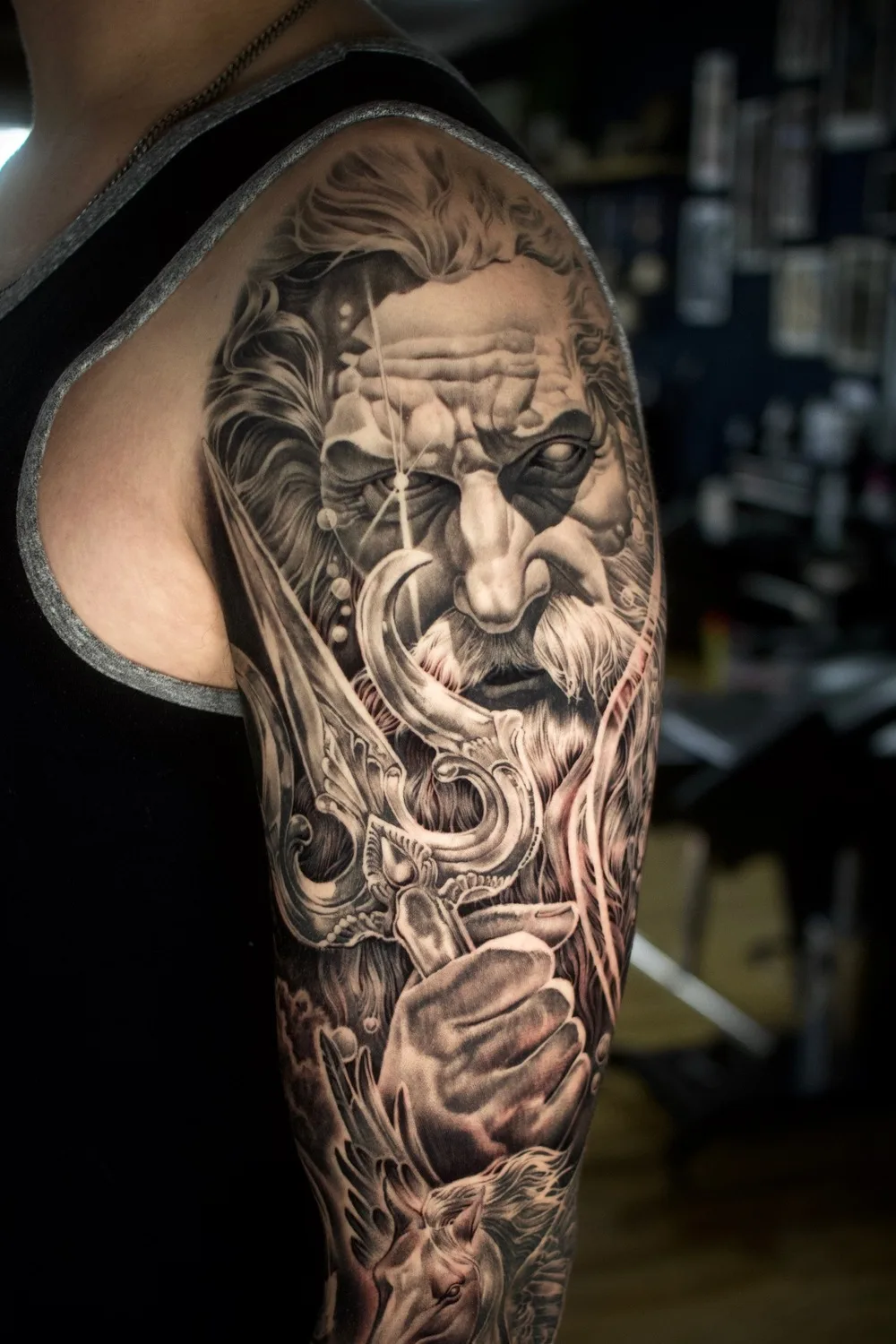
You’re now working on much larger compositions. What changes, technically and creatively, when you move from an individual realism piece to a full sleeve or another large-scale project?
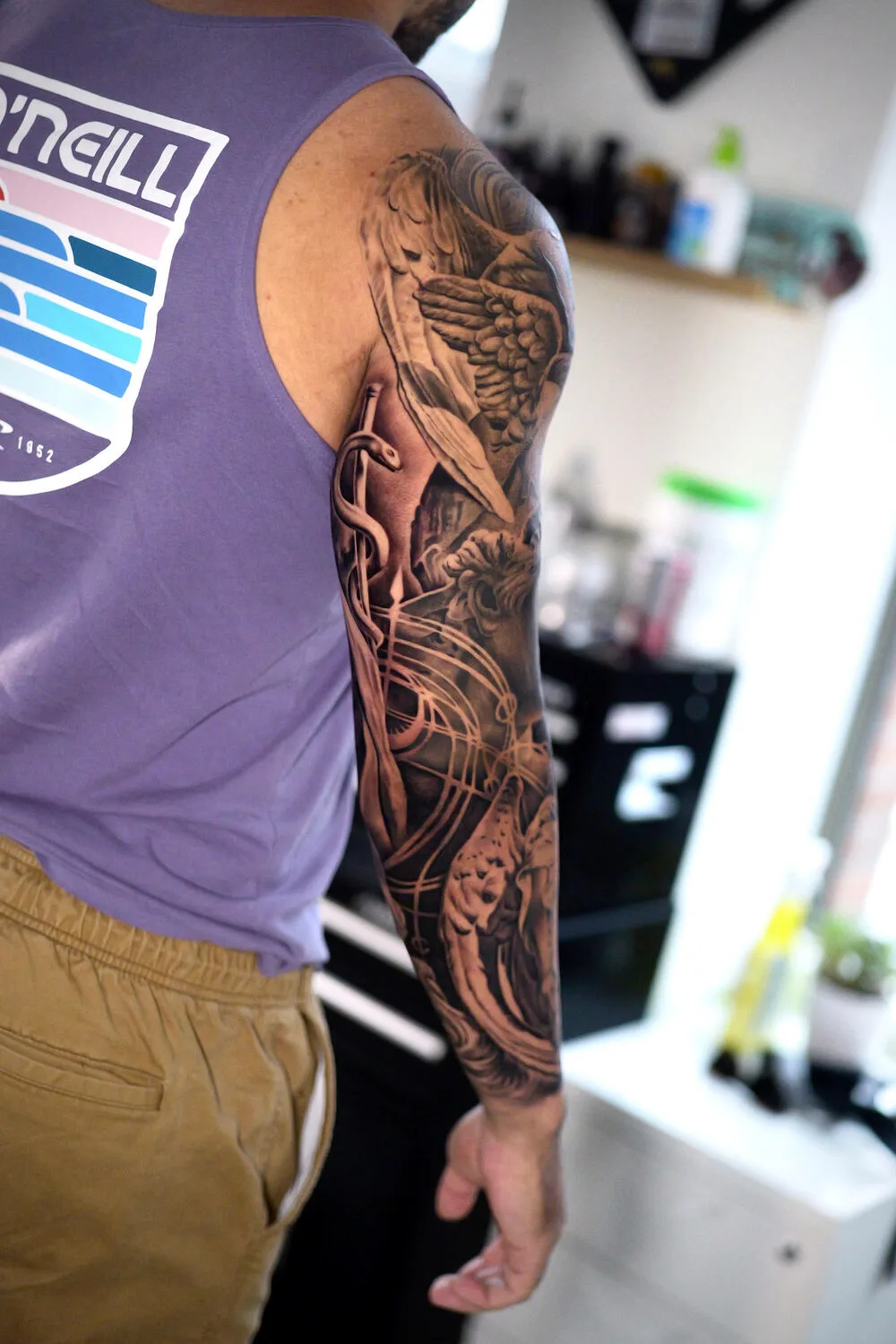
— I’m going to sound like a broken record here, but easily the thing that stresses me out the most on large-scale projects is the transitions. There are very different challenges depending on where on the body the project is located. The transitions on a leg, for instance, are far more visible than the transitions on an arm.
I really want the project to complement my client’s body no matter what angle you’re viewing it from, and that’s really hard to achieve. There’s a tremendous amount of planning that comes with a large-scale project, and even then, things will inevitably not work, so you have to be flexible as well.
How much of a design is finalized before the client arrives? Do you rely heavily on a prepared stencil, modify the composition directly on the body, or combine several approaches?
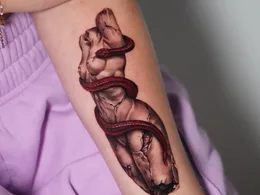
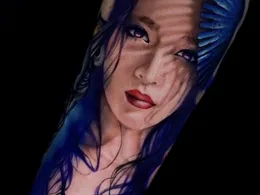
— I do all of my designing beforehand, but the best-laid plans don’t always work out, so there are plenty of ad hoc changes that happen throughout the project.
I actually tend to draw a lot with markers rather than stenciling. It makes for better transitions, and you’re getting the exact fit and sizing without having to mess with a stencil printer. Also, I get to feel like a real artist when I’m drawing some clouds on my client’s arm with a Sharpie.
A photograph can look incredible as a reference but still make a poor tattoo. What do you look for when selecting or creating references for black and grey realism, especially for work that needs to remain readable over time?
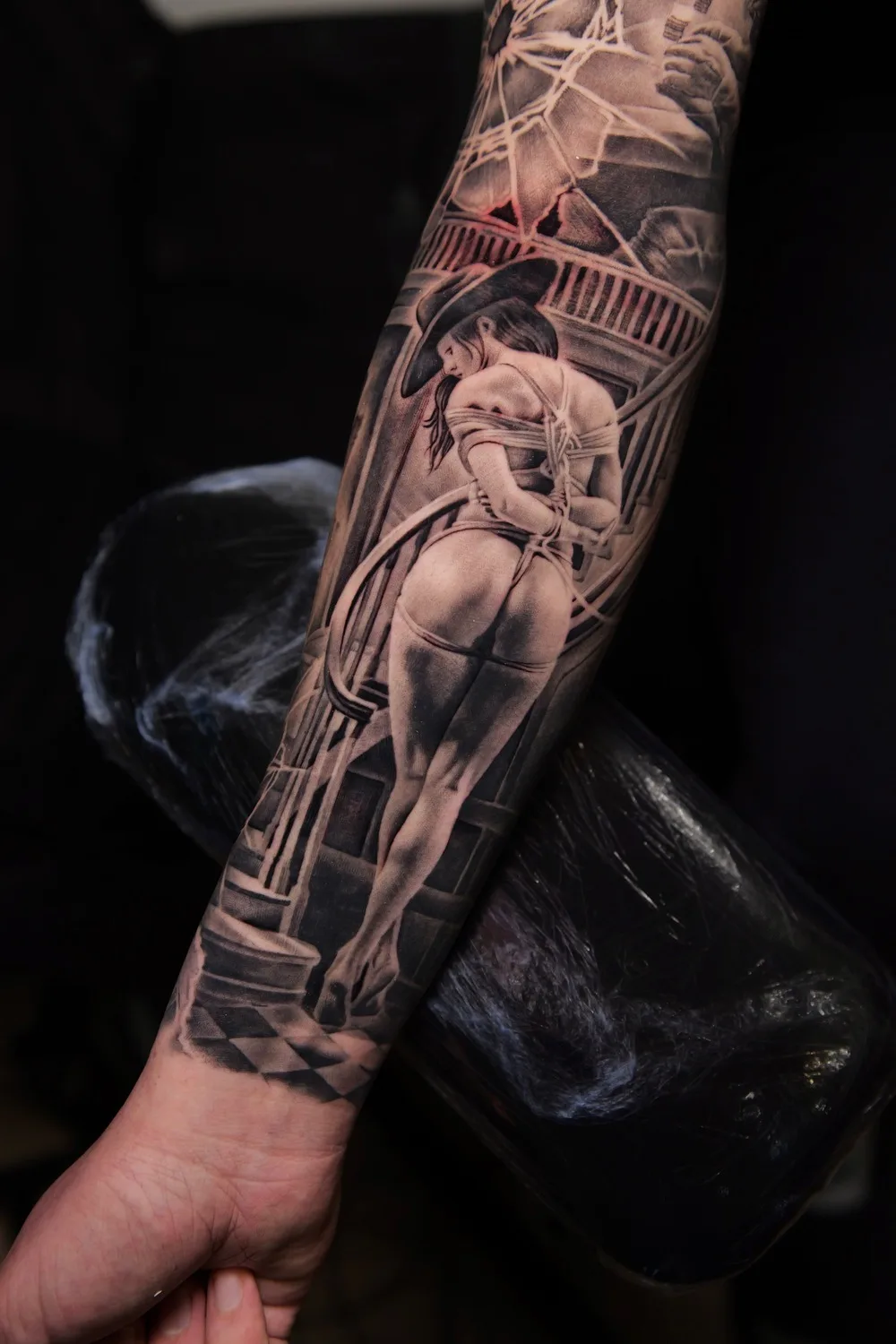
— I always look for images that have really obvious areas of black, empty skin, and midtones. If you can’t understand the tattoo from five or six feet away, I typically won’t use that reference. Selecting the correct lighting scenario and scaling a piece large enough are the most important things for the longevity of a tattoo.
"There’s a saying in blues music that what matters is what you don’t play, and in tattooing it’s the same thing: it’s really important where you don’t tattoo."
What has been the biggest technical breakthrough in your work during the last few years — something you understand now about realism that you didn’t understand when you began?
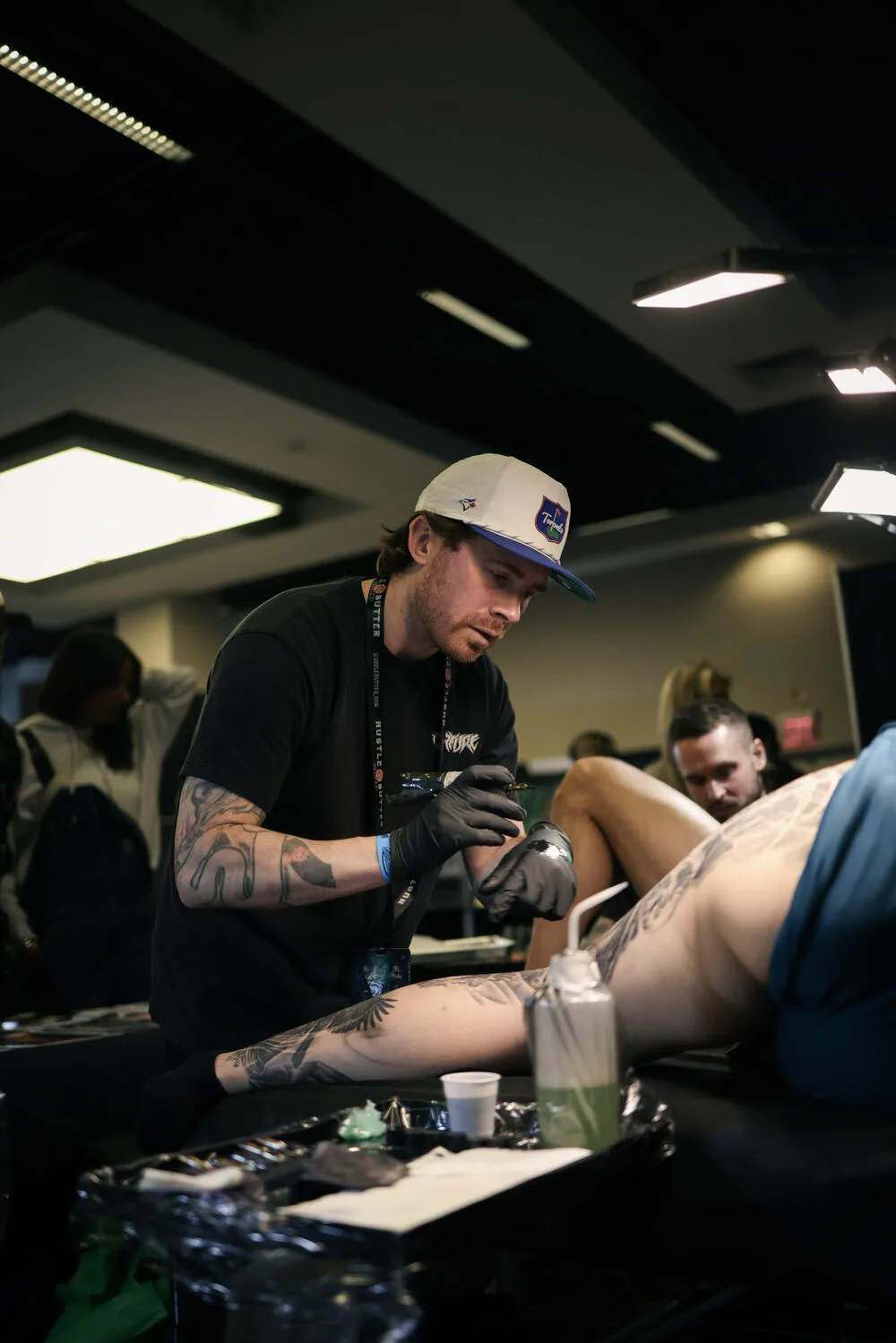
— From a technical standpoint, I think the biggest thing is just building your stamina for patience. You’re staring at the same six inches of skin for eight to ten hours.
“You get tired and maybe want to speed it up but the details take as long as they take.”
I’m still learning so much. It really never ends.
You’re based in Toronto, one of Canada’s largest and most international cities. How has working there influenced your clientele, your career, and the kind of projects you’re able to take on?
— Toronto is an incredible art city, and it’s really one of the best places to be a tattoo artist. The people here wear a lot of artwork, and they wear big pieces. You walk around downtown and you’ll see full sleeves everywhere.
We’ve seen a really big influx of talent coming from all around the world over the last couple of years, so it’s very competitive for clients, but that’s a great thing because it raises the standard for everyone.
Have conventions, guest spots, and opportunities to work alongside other artists played an important role in your development so far? Are there any particular experiences, achievements, or moments of recognition that became turning points for you?
— Learning from other artists is everything for me. I just try to observe and break down what they’re doing and see if there are ideas I can incorporate into my own process. Everyone has these little nuances in how they work, and it’s great to try to borrow the best ideas.
I was tattooed at the first edition of the Gods of Ink Tattoo Convention, and that left a really big impression on me. The level there is incredible.
I think my proudest achievement in tattooing is just making it through my apprenticeship and being at the point now where people trust me with these big projects. It’s a pinch-me kind of moment, thinking back to when I was tattooing a few inches of Roman numerals on a client every six to eight weeks during lockdown.
You made an unusually radical decision at 29 to start again from zero. Now that tattooing has become your profession, what does success look like to you today — and what are you trying to reach next as an artist?
— I just want to keep improving as an artist. I’m trying to draw every day, experiment with new ideas, and take on bigger projects.
“I think the moment you feel like you’ve figured it all out you're screwed.”
I really want to push my artwork in a darker direction, so for me, success will just be finding projects that let me express the ideas I’ve got in my mind.