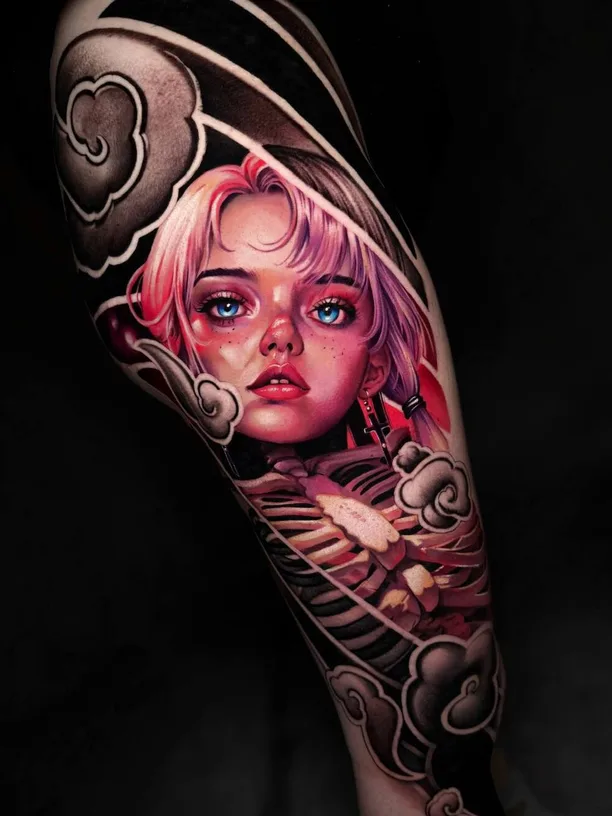
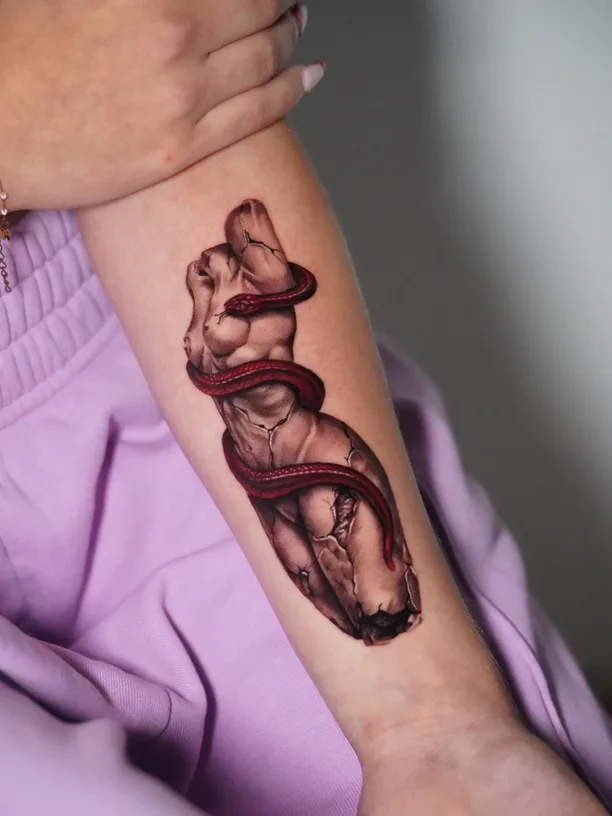
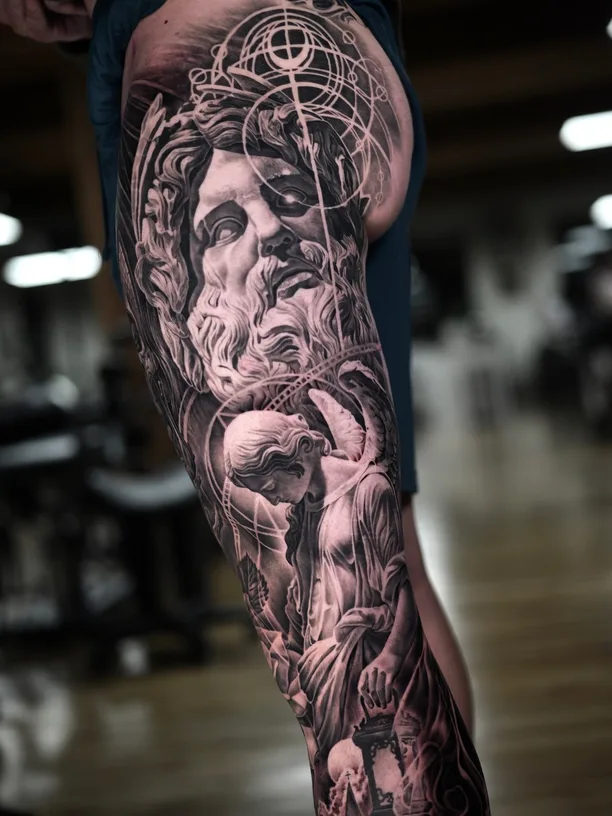
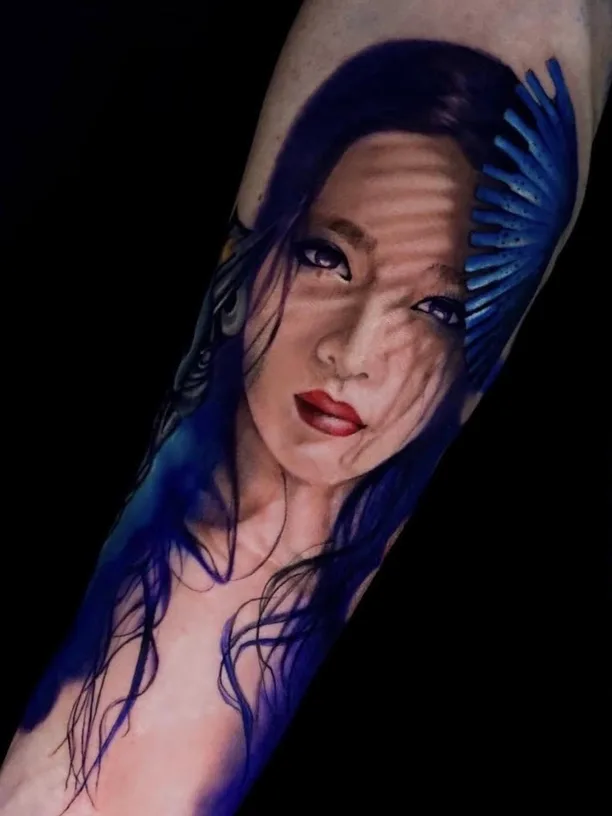
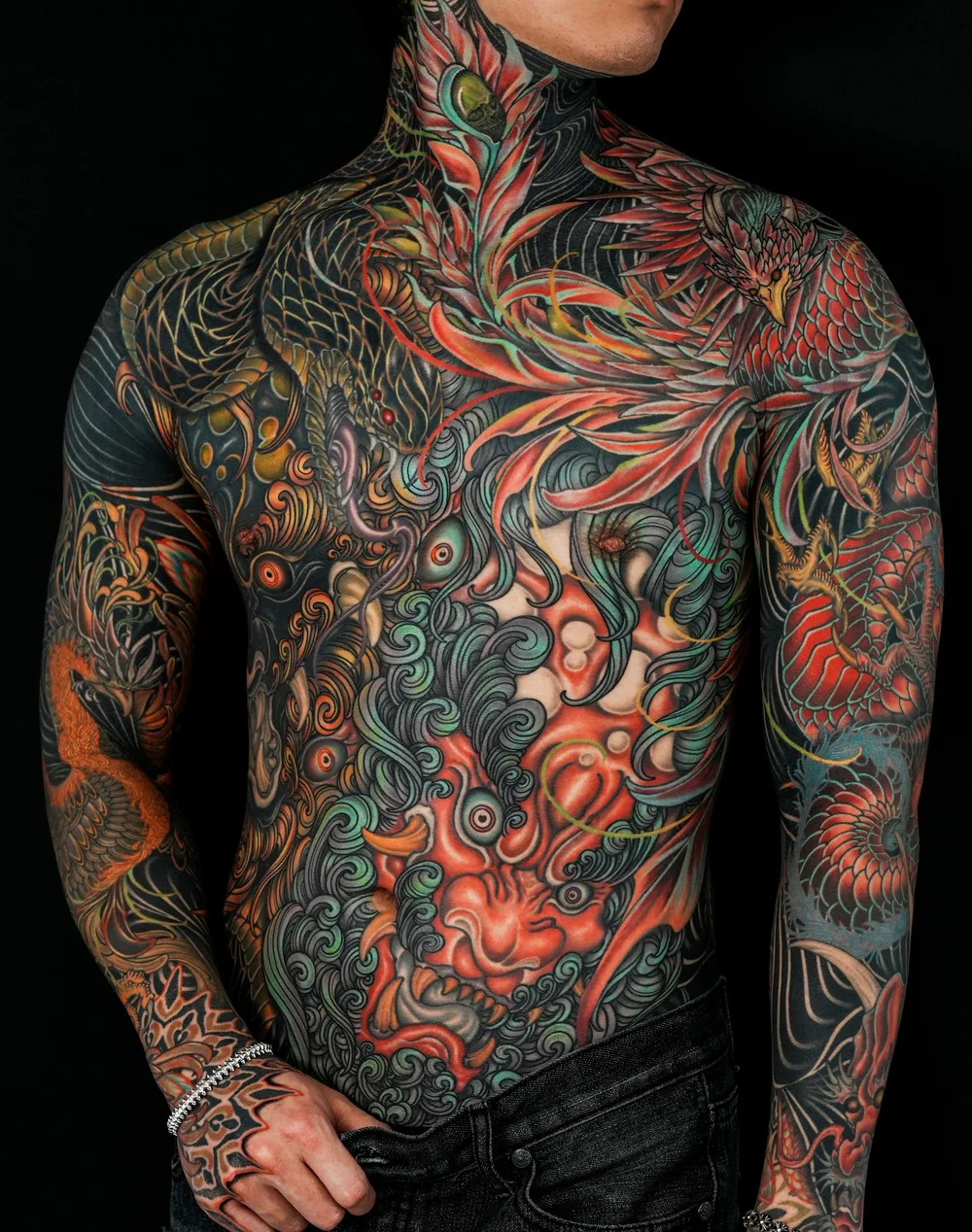
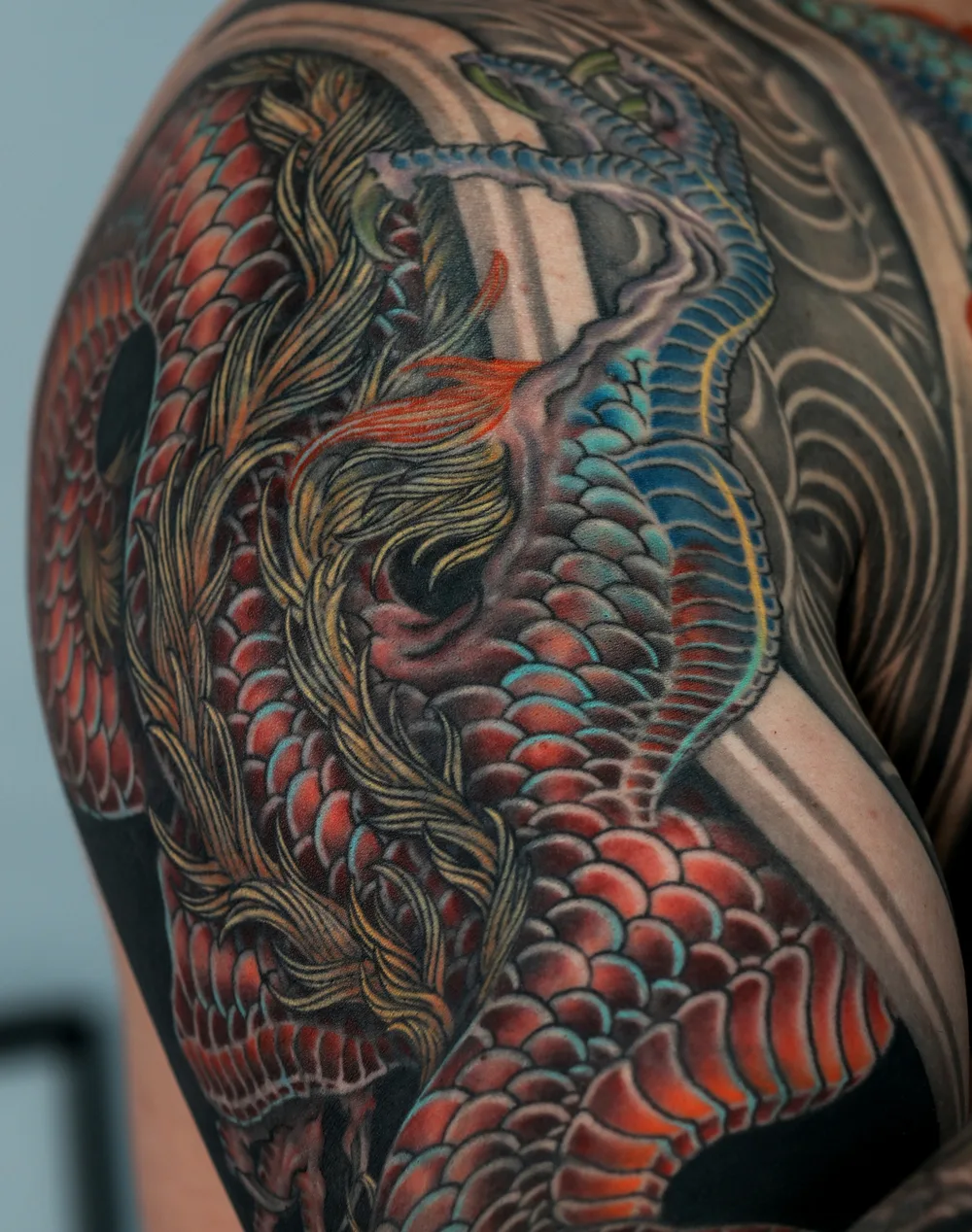
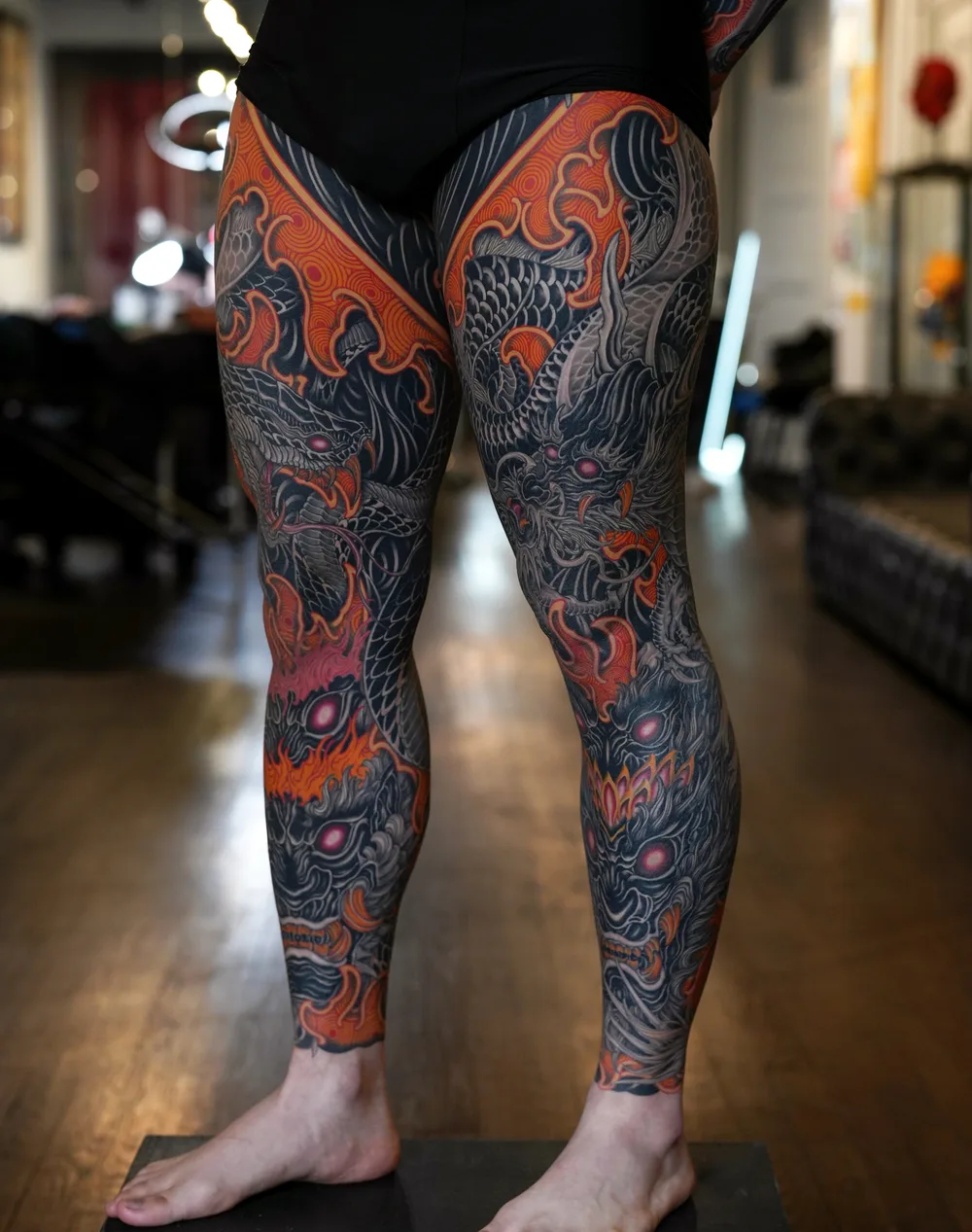
Over 17 years in tattooing, ShiRyu has moved from traditional Irezumi and New School toward his own interpretation of Neo-Japanese — a style in which the subject itself is increasingly less important than the way the entire composition is constructed around it.
The Korean tattoo artist, now based in New York City, spent years studying the rules of Japanese tattooing before gradually reshaping them into his own visual language. One of the key elements of that language is the background. ShiRyu does not treat it as secondary decoration, but as an independent part of the design and one of the clearest markers of authorship in his work. His approach has also been shaped by sculpture, Persian art, and a continuing interest in form, movement, and complex color relationships.
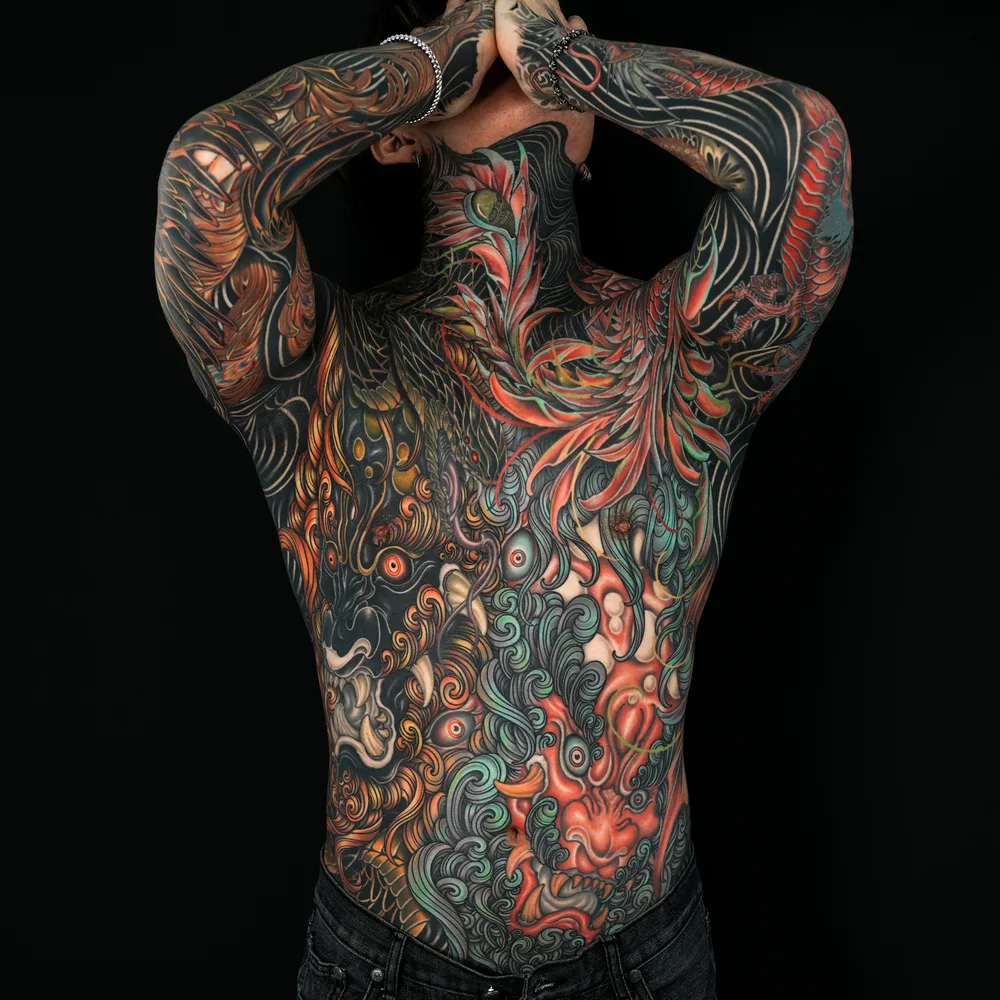
ShiRyu works across the United States and Europe, participates in international tattoo conventions, serves as a competition judge, and has received multiple awards in Asian-inspired and large-scale categories.
Yet in his conversation with iNKPPL, he focuses less on achievements than on the process of developing a distinct artistic language: why tradition needs to be understood before it can be challenged, why technical skill alone is not enough to make an artist recognizable, and what still needs to happen before the “ShiRyu Style” becomes something entirely its own.
You have been working as a professional tattoo artist for 17 years. Which stage of your career changed you the most as an artist?
— I began going through a major change around my 11th year of tattooing. That was when the direction of the background designs I had been developing for years gradually started to take shape and become much clearer.
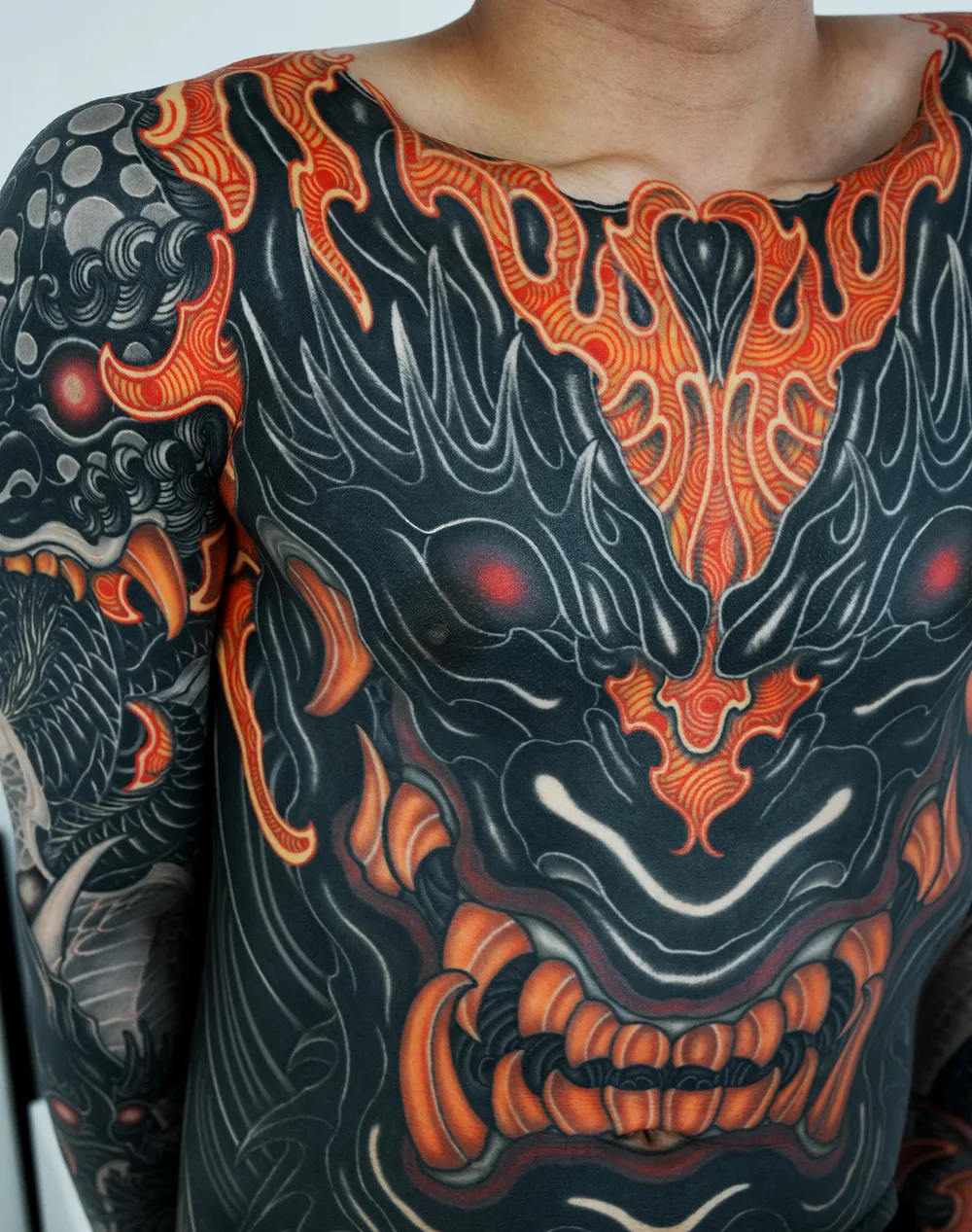
Once I had established what I consider my signature background design, my work began to move beyond New Japanese and evolve into the Neo-Japanese style I work in today.
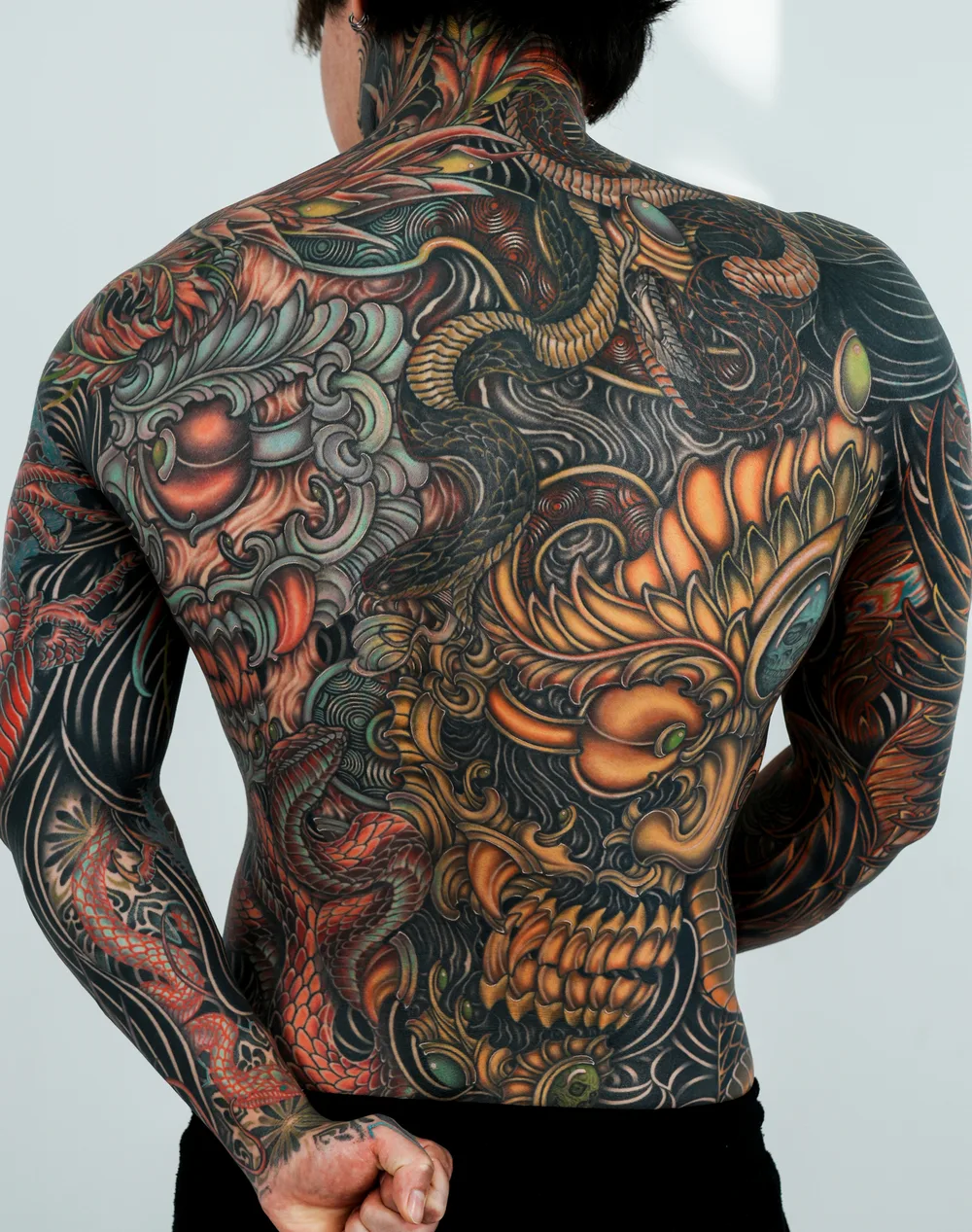
Your path began with traditional Irezumi and New School, while today your work has developed into your own Neo-Japanese direction. What was the main turning point in forming your visual language?
— To be honest, it is difficult for me to point to one specific moment as the most important turning point. From the very beginning of my career, my goal was always to eventually create a style that was completely my own.
I have always believed that there is a significant difference between breaking rules after fully understanding them and breaking rules without knowing them in the first place.
That is why I wanted to learn and understand those rules first. I studied traditional Irezumi, then explored different forms of expression through New School, and those experiences gradually accumulated and eventually led me to the Neo-Japanese style I work in today.
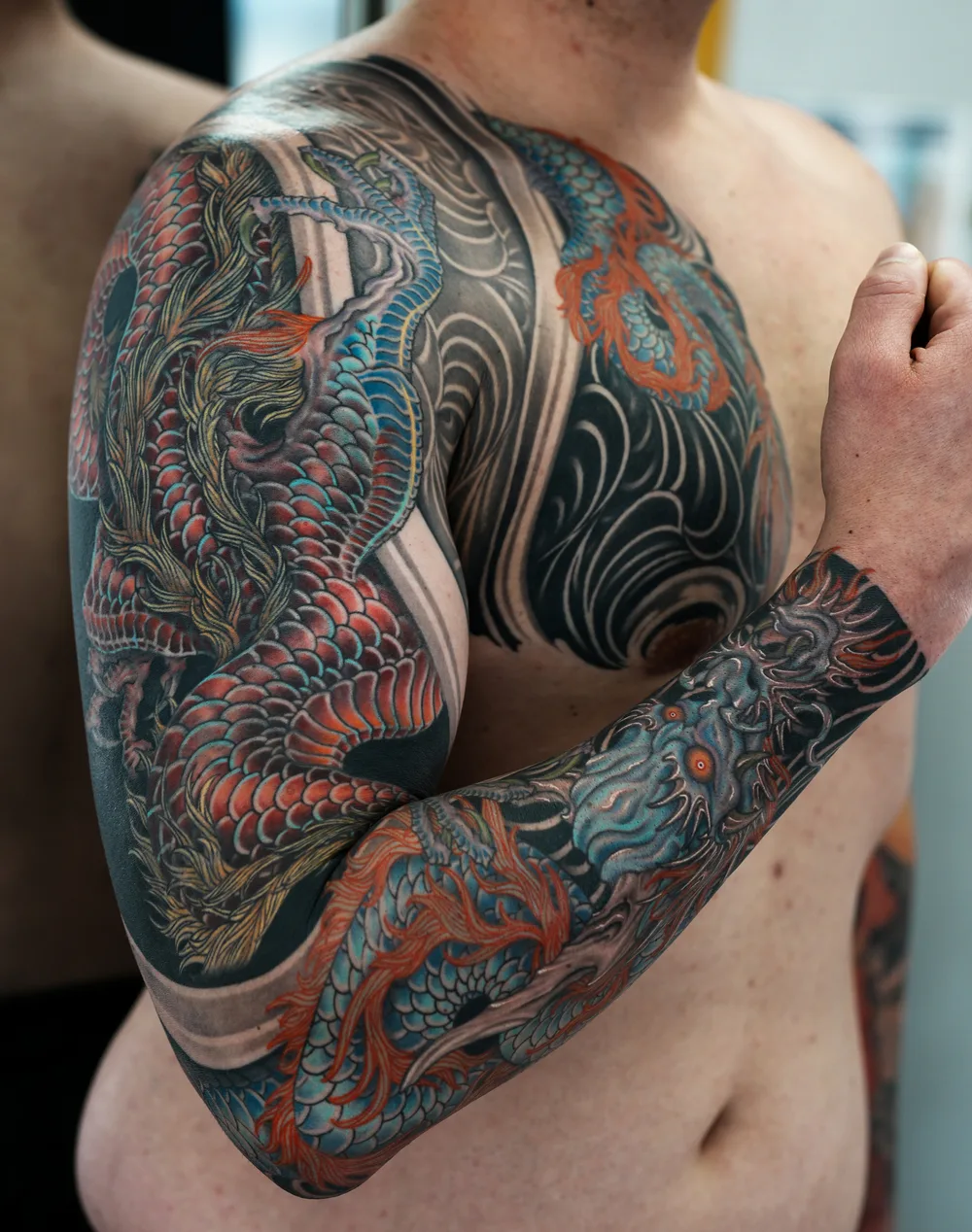
In your large-scale work, the background often plays almost as important a role as the main subjects. How do you build the background composition so that the entire body reads as one complete piece?
— Generally, it is not easy to meet clients who want to begin with a full upper-body or full-body project from the very start. Most projects develop gradually—a client may complete a full sleeve first and then expand into the chest or a full back piece.
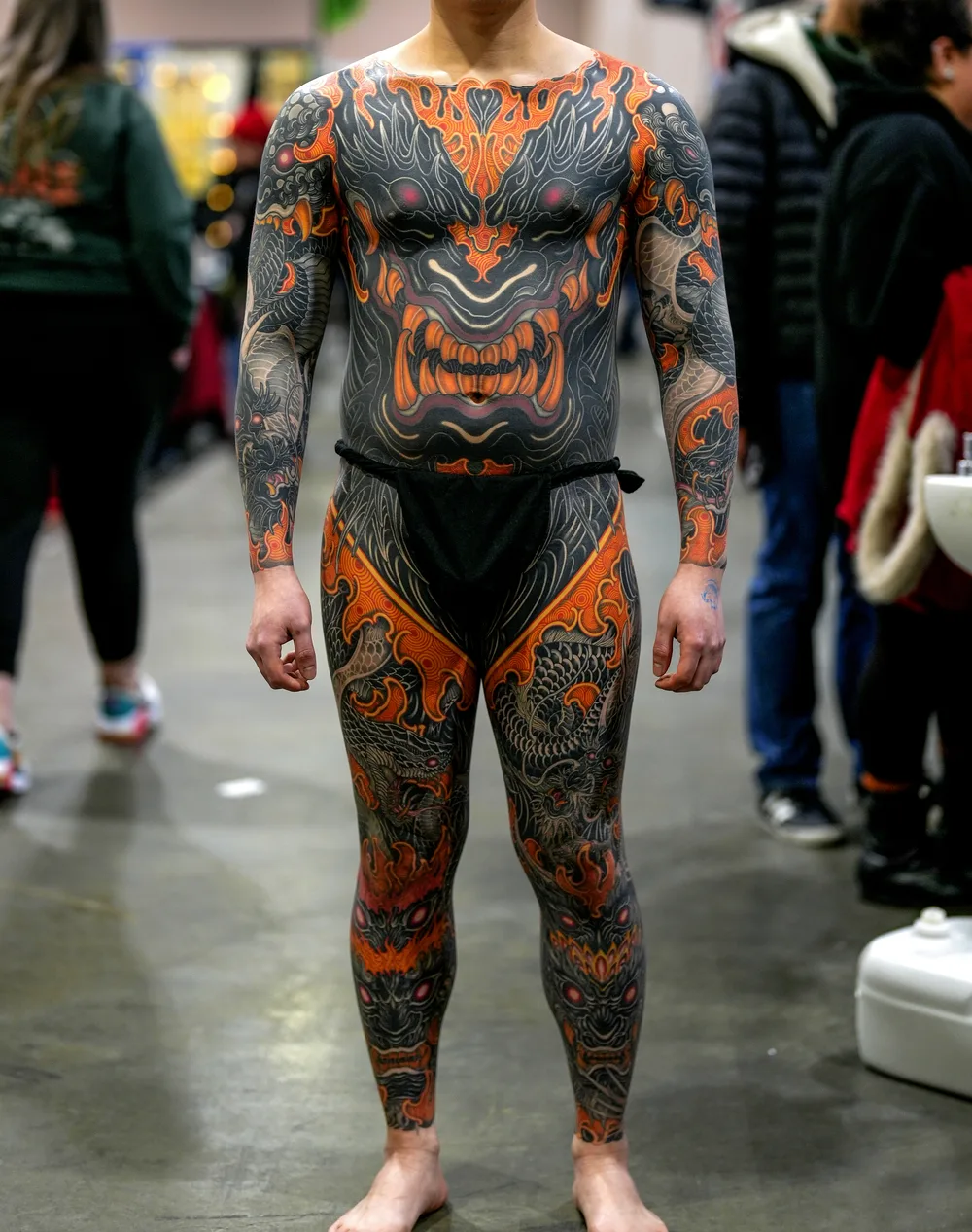
I have been fortunate to work on extremely large-scale projects, including full upper-body pieces, from very early in my career. That experience has given me many opportunities to experiment with ways of making the entire body read as one complete artwork.
The simplest way to explain my approach is that we normally think of the arms, torso, and legs as separate parts of the body. But if you reverse that way of thinking and approach the entire body as one large canvas, everything changes.
Instead of designing each body part separately, I think of it as creating one composition across a single canvas. That is how I try to create flow and continuity throughout my large-scale projects.
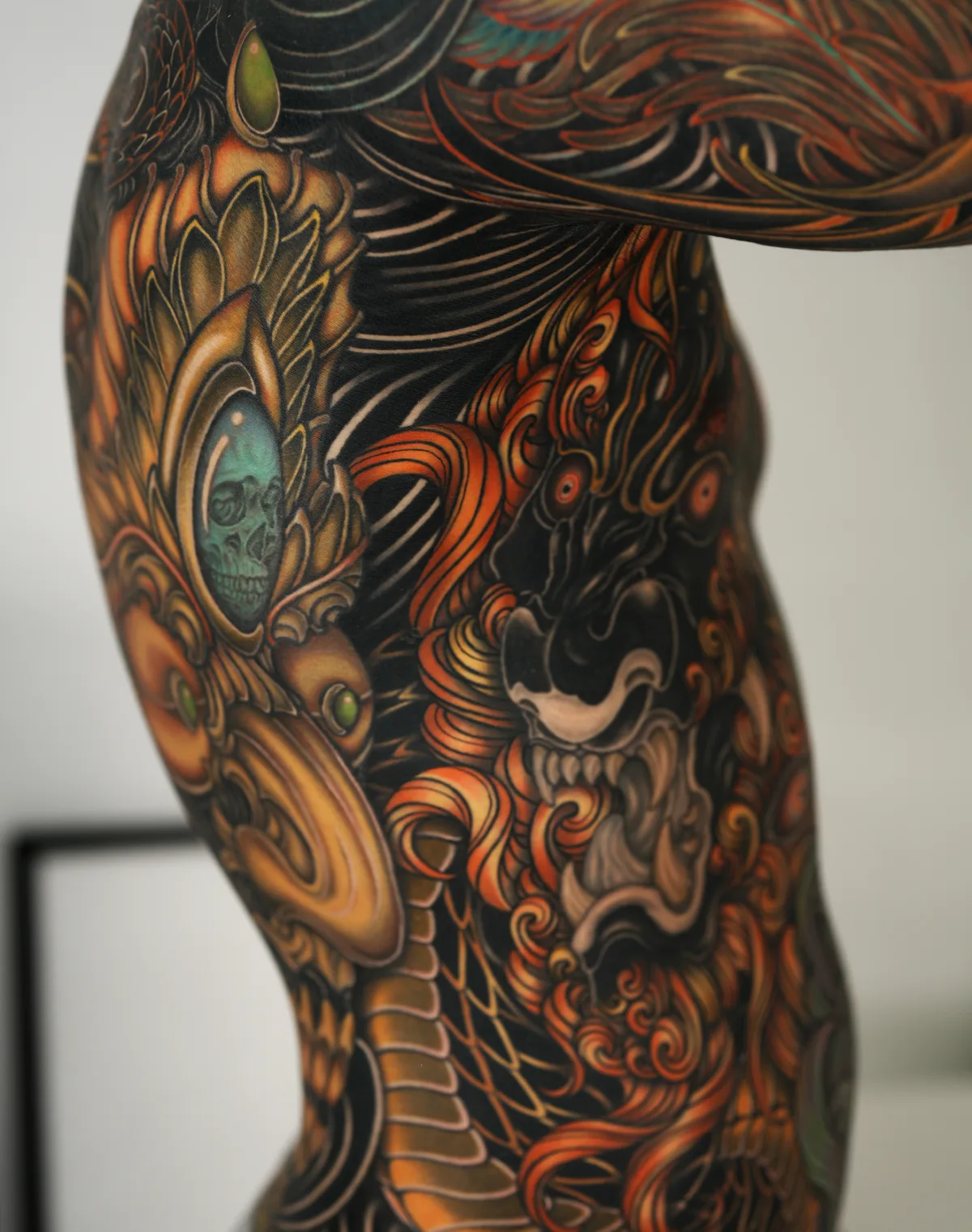
You have mentioned that you now create most of your designs on the iPad. How does a digital sketch become a large-scale tattoo on the body? Do you work with stencils, freehand, or a combination of both?
— Early in my career, I also created my designs by hand with pencil at a full 1:1 scale. At that time, I had to transfer those life-size drawings into stencils manually as well, and I remember how much time and effort that process required.
Today, I use a combination of both methods.
For the main subjects, I generally use stencils, while backgrounds and smaller elements are drawn freehand directly onto the body. Especially with large-scale work, many areas need to be adjusted to the anatomy and movement of the body, so I believe combining both methods is very important.
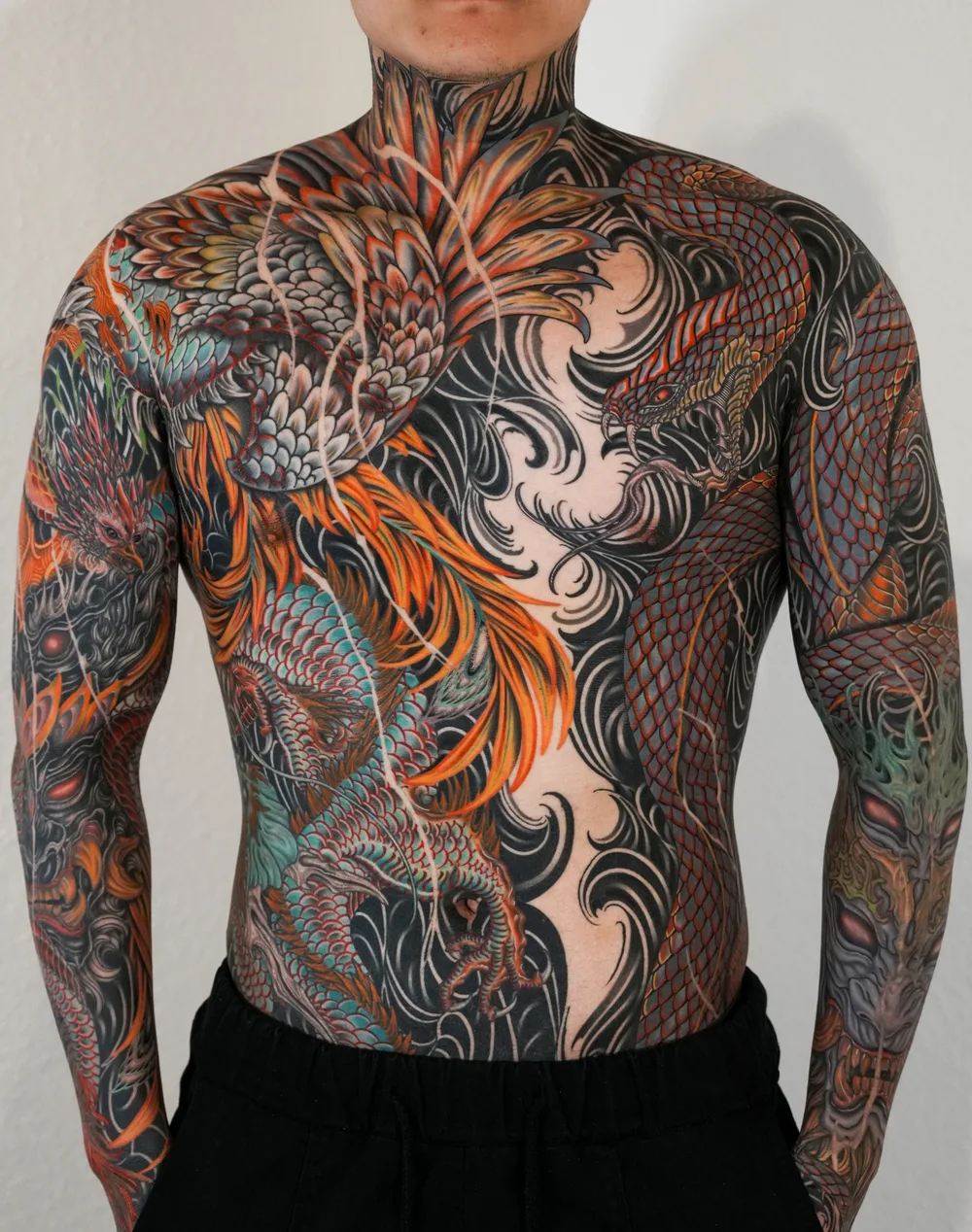
Large projects are completed over many sessions. How do you maintain density, contrast, and overall visual consistency from the first session to the last?
— Rather than deciding every detail of the finished piece before I begin, I establish a clear overall framework first.
By framework, I mean the fundamental direction of the tattoo—whether it will be all black, full color, or primarily black with selected areas of color.
After that, I develop the details as I complete each individual section.
Large-scale projects take a very long time to finish. During that time, I am also constantly changing and developing as an artist. New ideas can appear, and I may discover a better approach than the one I originally had in mind. Because of that, I prefer to leave some possibilities open rather than fixing every decision at the beginning.
For example, if I am working on a project consisting of a snake and maple leaves, I might complete the snake first, or I might begin with the maple leaves. Once that part is finished, I look at the result and then decide how the remaining elements should connect and develop around it.
For me, a large-scale tattoo is less about following a predetermined answer and more about allowing the work to continue evolving throughout the process.


You have said that today you focus much more on developing design and style than on pure technical improvement. What advice would you give to tattoo artists who are technically strong but still struggle to create a distinct artistic language of their own?
— I do not believe an artist necessarily needs to reach the absolute highest level of technical skill first, but I do think it is important to develop a strong enough technical foundation to consistently express the designs you want to create.
After that, if I were to give advice about developing your own artistic language, I would say that ultimately, you have to keep experimenting and challenging yourself until you find what you are looking for.
I was also fortunate enough to discover my current style through countless attempts, changes, and challenges. I believe that process will continue for me as well.
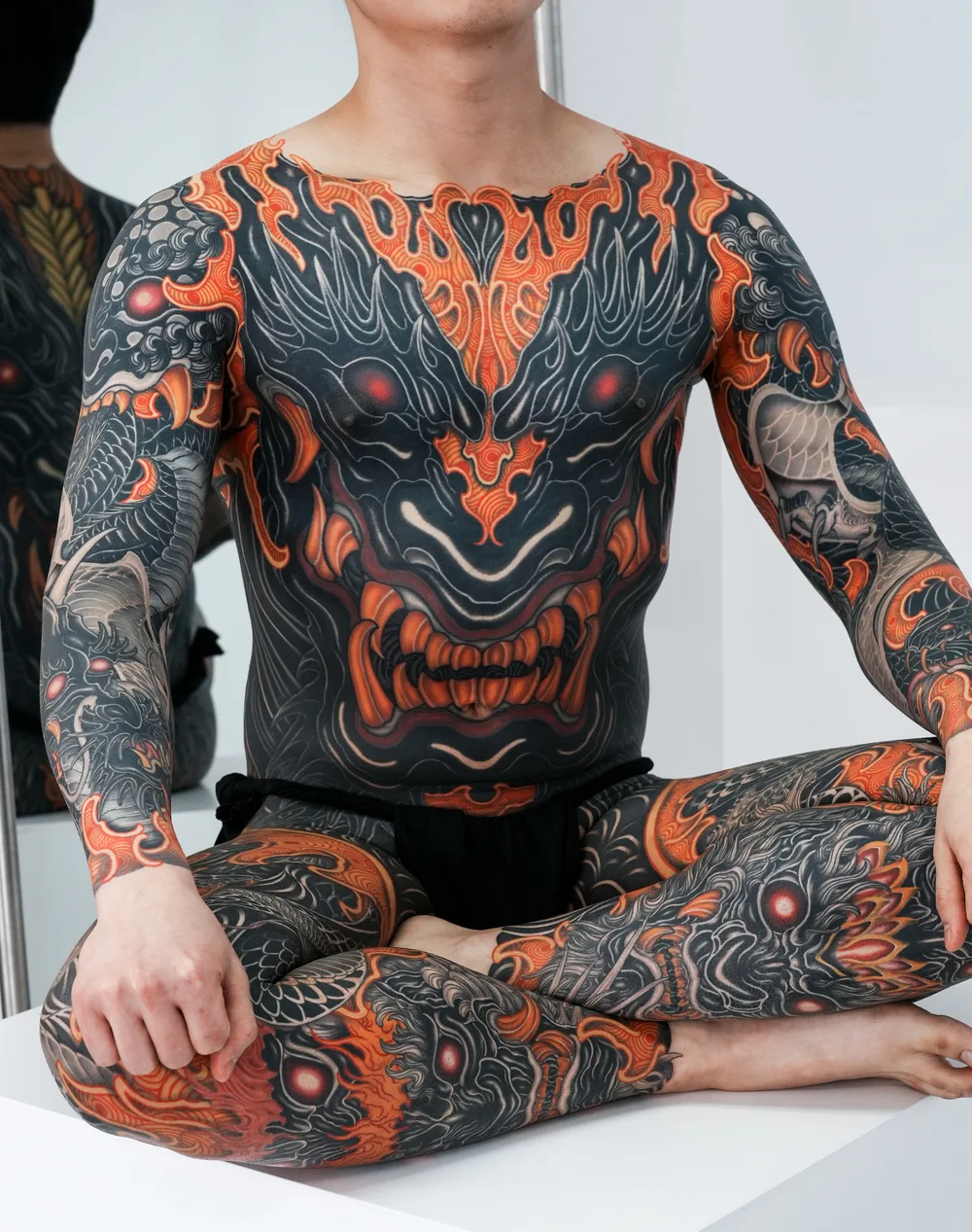
Sculpture is one of your important sources of inspiration. What elements do you take from sculpture into tattooing—volume, movement, light, monumentality, or something else?
— The element I draw the most inspiration from in sculpture is form.
You could also describe it as movement. Even in a sculpture that is completely still, there are moments when you can feel movement through the flow of its form. That is something I am very interested in.
I often think about how that sense of form and movement can be translated into tattoo composition and expressed through the movement of the human body.
Persian art is another distinctive influence in your work. Which elements of it have had the greatest impact on your compositions?
— I have been strongly influenced by the intricate details and distinctive color combinations found in Persian art.
I am particularly interested in the way multiple colors can be used together while still maintaining harmony, and how complex details can come together to create a larger pattern or form.
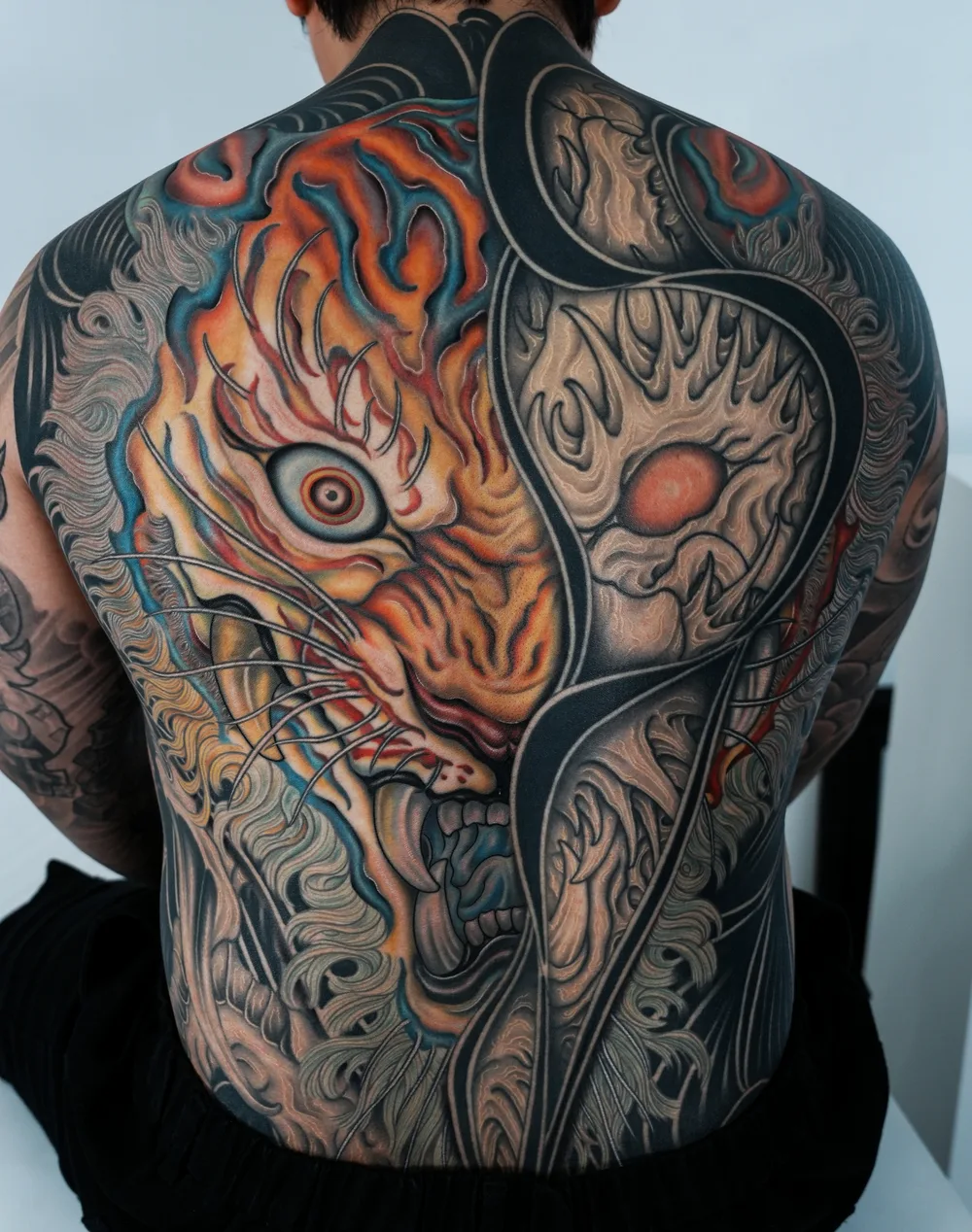
Dragons, snakes, demons, birds, and other traditional Asian subjects frequently appear in your work. To what extent do you follow their historical and traditional meanings, and where do you begin to reinterpret them in a contemporary way?
— If I were an artist working strictly within traditional Irezumi, I would place much greater importance on the historical meanings and traditional rules associated with each subject.
However, my work has evolved in a Neo-Japanese direction, and recently I have become even more focused on background design and the overall composition rather than the main subject itself.
Because of that, I do not completely disregard traditional meanings, but I also do not see them as absolute rules that must always be followed.
For me today, what matters more than the traditional meaning of an individual subject is the form and movement it creates within the overall design, and how it interacts with the background.
Where do you personally draw the line between respecting traditional Japanese tattooing and having the freedom to transform its traditional rules in your own way?
— My answer is closely connected to the previous question.
At this stage, rather than simply reproducing traditional rules, I am more interested in understanding those rules and then transforming them in my own way.
I believe I still need to go through several more stages of change.
If I continue breaking the rules I currently work with, creating new ones, and then challenging those rules again, I believe that eventually something completely different from what I am creating today may emerge.
That possibility is actually what excites me the most.
Your projects require a high level of trust from your clients and often continue over a long period of time. How do you choose the clients you work with, and how do you build that relationship and trust throughout the project?
— Before I choose a client, I think the starting point is that the client chooses me first. Once the project begins, however, I believe it is important for me, as the artist, to lead the overall direction of the work.
The most effective way to earn a client’s trust is ultimately through the result. No matter how much you explain something, showing them work they can genuinely trust is far more powerful.
In many cases, I can feel a significant change in the client’s confidence in the project as soon as the first session is completed.
There is also one thing I consider important when maintaining a good relationship throughout a long-term project: keeping a certain level of professional distance between the artist and the client until the work is completed.
Of course, maintaining a good relationship is important, but if the relationship becomes too personal, unnecessary factors can sometimes enter the process of making decisions about the artwork.
I believe that keeping our roles and relationship clear while the project is in progress ultimately helps create a better result over the long term.
You are simultaneously managing long-term large-scale projects, creating new designs, attending conventions, judging competitions, and working internationally. How is your current working system structured, and how do you manage your time?
— My basic working routine is currently built around approximately eight hours of tattooing per day.
After finishing a tattoo session, I take a short break and then begin creating designs for upcoming work.
If I had to mention one approach to time management that allows me to focus completely on tattooing, I would say that I try to minimize unnecessary meetings and social commitments whenever possible.
Maintaining relationships with people requires more time and energy than we sometimes realize. By limiting those commitments, I naturally gain more time to dedicate to tattooing and design.
For me, time management is less about fitting more things into my schedule and more about removing the things that are not necessary for my work.
Looking back over the past 17 years, which working habits have been most important to your growth, and which habits help you maintain the workload you have today?
— Consistent exercise is one of the most fundamental things for me.
I also pay extremely close attention to my working environment—perhaps to a degree that might seem overly sensitive to some people. I constantly adjust small things such as the position and brightness of my lighting, the height of my chair, and the height of the tattoo bed.
When you work long hours every day, those small differences become extremely important.
If even a minor adjustment can reduce the physical strain on my body or make my working environment more comfortable, I make that change immediately.
Ultimately, maintaining a heavy workload over many years is not only about the work itself. I believe it is equally important to create an environment that allows you to continue doing that work consistently.
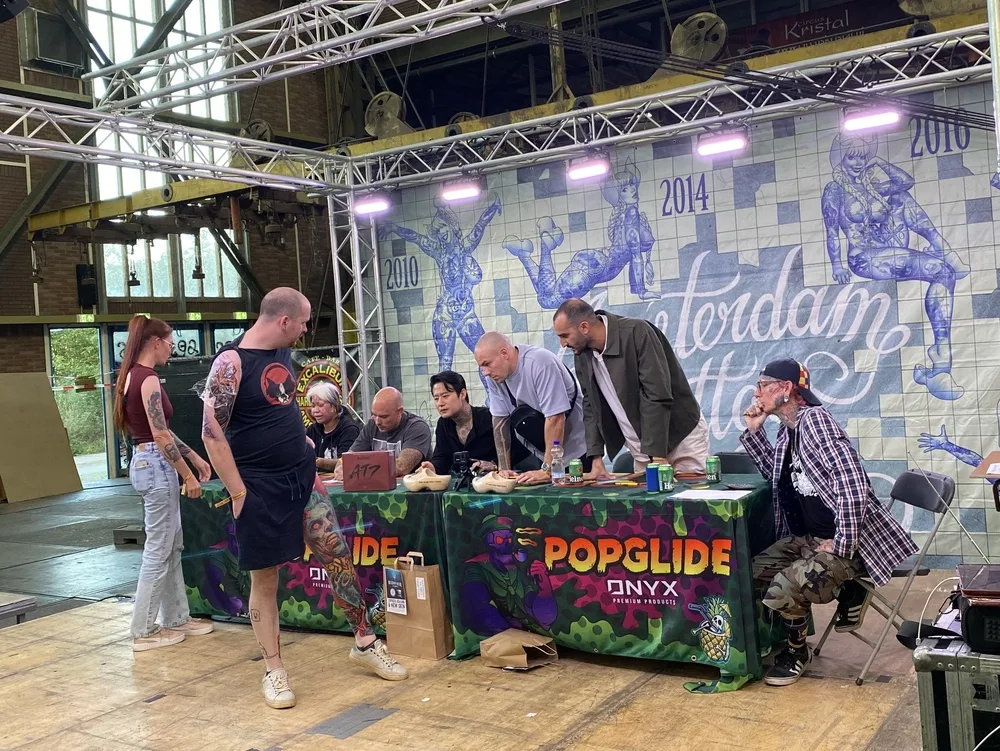
You work internationally, including in the United States and Europe, and you also participate as a convention judge. Has judging changed the way you distinguish between a technically excellent tattoo and a truly outstanding tattoo?
— My standards have not changed very much over time.
I tend to be more interested in tattoos that are exceptional in terms of design rather than those that are simply technically perfect.
Of course, a high level of technical ability is an essential foundation for creating a great tattoo, and I believe technique can be developed significantly through consistent practice and experience.
Exceptional design, however, involves elements that cannot be explained by technical training alone. It comes from the way an artist sees things, their sense of composition and form, their personal experiences, and the visual language they have developed over time.
So when I am judging, once the technical standard has reached a certain level, I pay much more attention to how original the design is and how successfully the entire composition has been resolved.
You have received multiple awards in Asian/Japanese categories and for large-scale work. Which award or achievement has been the most meaningful to you personally, and why?
— I cannot mention which convention or which country it was in, but ironically, the most meaningful convention for me personally was one where I did not receive any awards at all.
What mattered was not simply the fact that I did not win. That experience gave me a new perspective on the areas where I was lacking, the areas I needed to develop further, and the things I needed to improve.
Of course, I am grateful for the awards I have received, and they are meaningful to me, but that particular convention remains special because it forced me to look at my own work from a different perspective.
After many years of participating in tattoo conventions, what do you now look for most when viewing competition pieces from the perspective of a judge rather than a competitor?
— Technique is such a fundamental requirement when evaluating competition work that I consider it the starting point.
Once that basic standard has been met, what I focus on most is freshness of design, originality, and overall harmony.
The quality of each individual element is important, but ultimately I look at how naturally all of those elements connect within the piece and whether they come together as one complete and cohesive design.
You have spoken about developing your own distinctive “ShiRyu Style.” If someone saw one of your tattoos without knowing the artist’s name, what elements of its composition, movement, or visual language would you want them to recognize as uniquely yours?
— My first goal is for people to recognize my work simply by seeing the background design I use.
My second goal is for people to recognize my work through the main tattoo subjects themselves, even without any of my signature background elements.
And I believe my final goal will begin after I have achieved both of those things.
When I can combine a background language that is completely my own with main subjects that are also created in my own visual language, I believe I can reach entirely new territory beyond where my work is today.
My first goal is for people to recognize my work simply by seeing the background design I use.
That is probably the closest description of what I ultimately imagine the “ShiRyu Style” to be.
After 17 years of tattooing, what do you still want to explore, and in what direction would you like to develop your style in the future?
— One area I would like to explore someday is creating sculpture myself. I have always been interested in sculpture and three-dimensional form, so I would like to experience creating physical forms with my own hands.
However, there are still many things I have not yet accomplished in tattooing, so I do not know when I will be able to begin exploring that.
In terms of developing my tattoo style, my first goal is to further refine the background designs I currently use. At the same time, I want to begin removing unnecessary elements from my overall compositions.
There is a saying that you have to fill something completely before you can truly begin to empty it.
Until now, my work has developed in a direction of filling the composition with many elements and details. I feel that I have reached a point where I now want to use everything I have learned from that process and begin removing things one by one.
Rather than creating something new by continuously adding more, I want to see how much I can remove while creating stronger forms and clearer movement.
That is the direction I currently see as the next stage of my work.