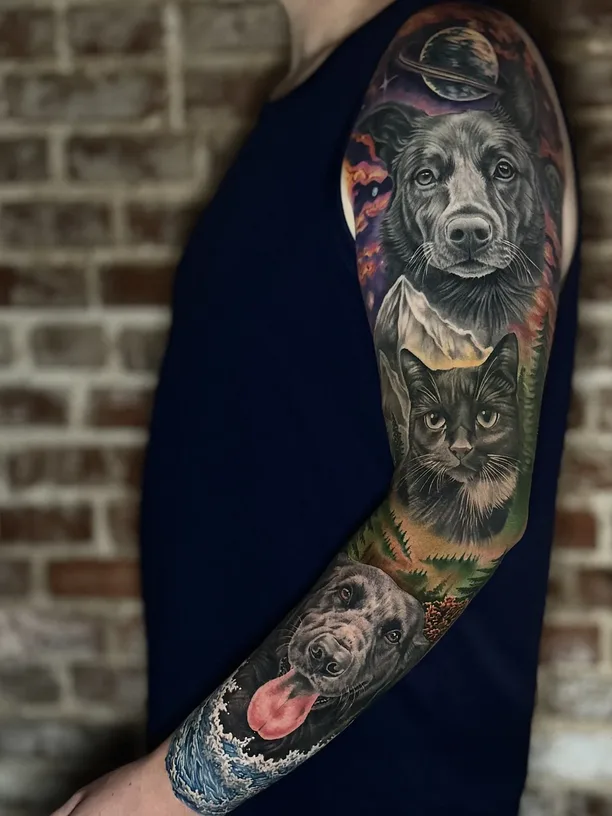
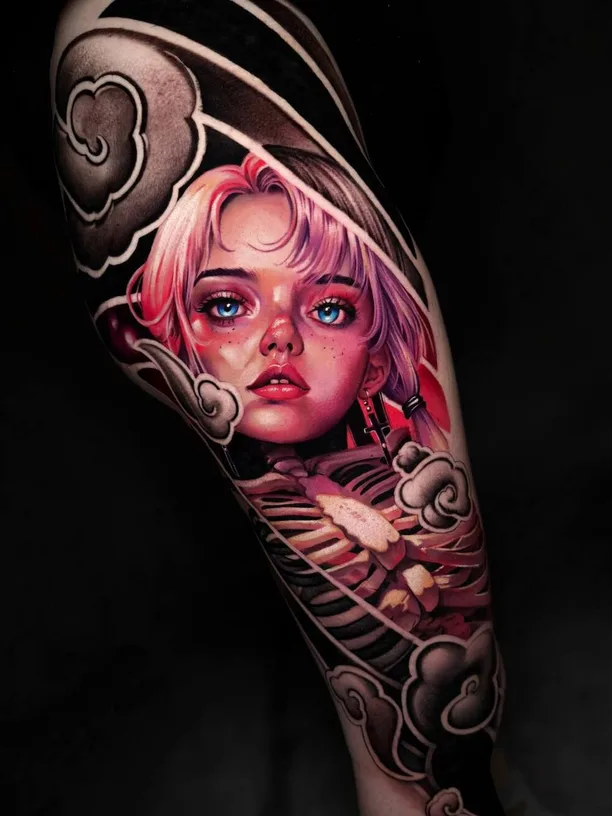
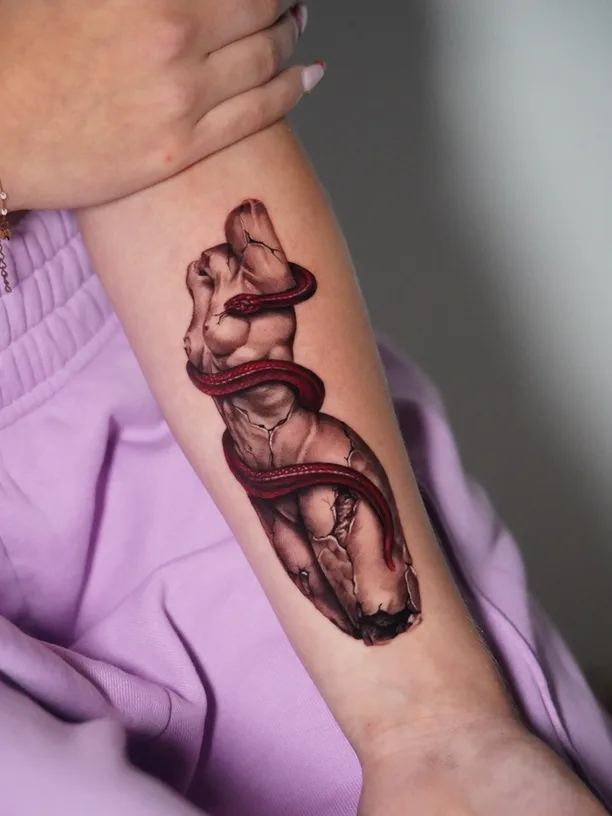
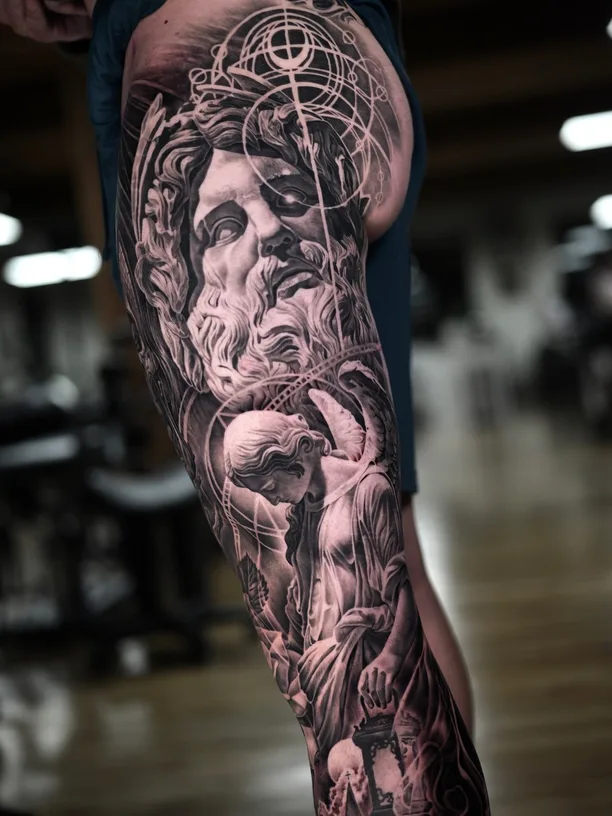
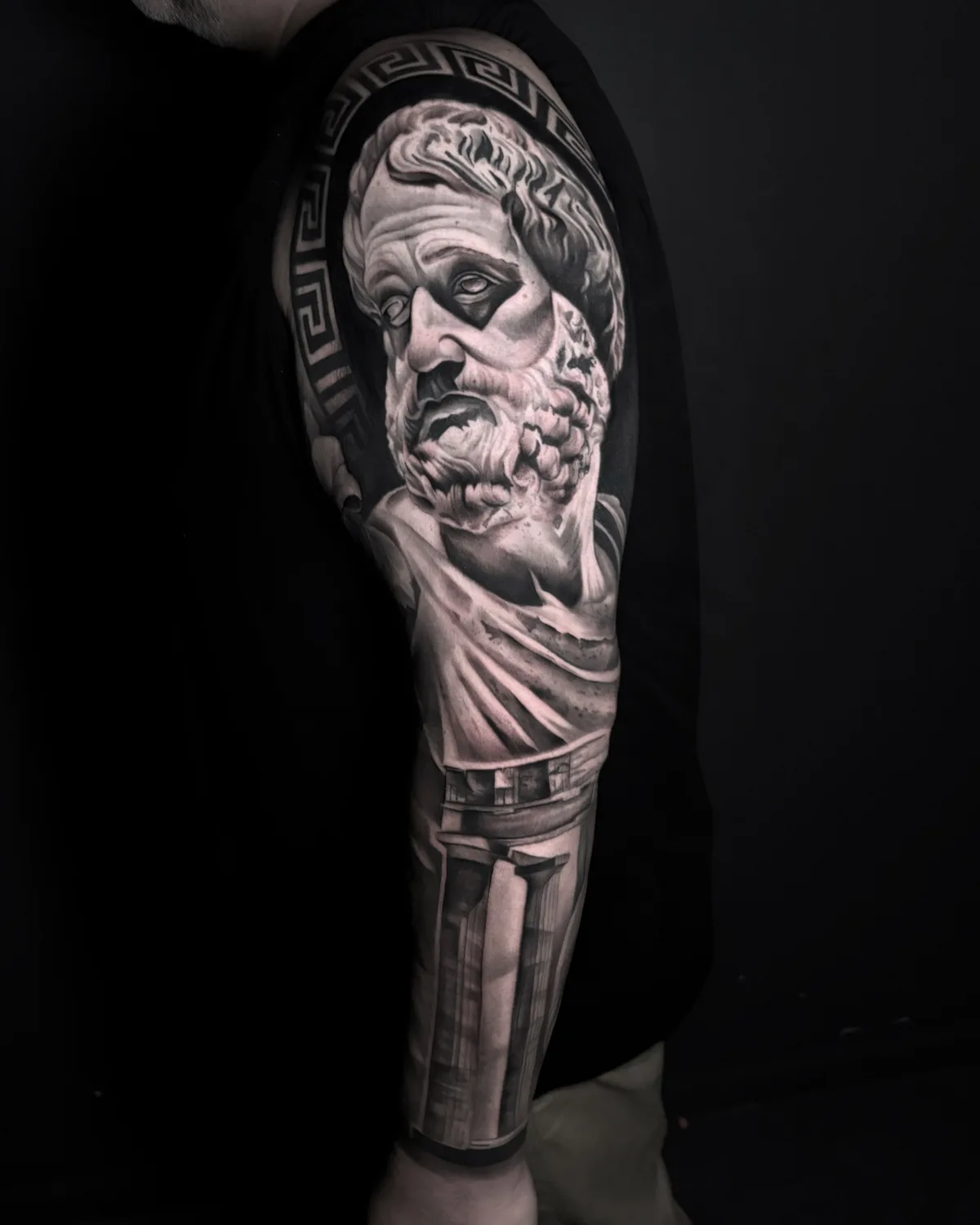
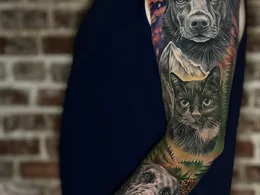
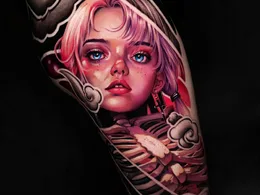
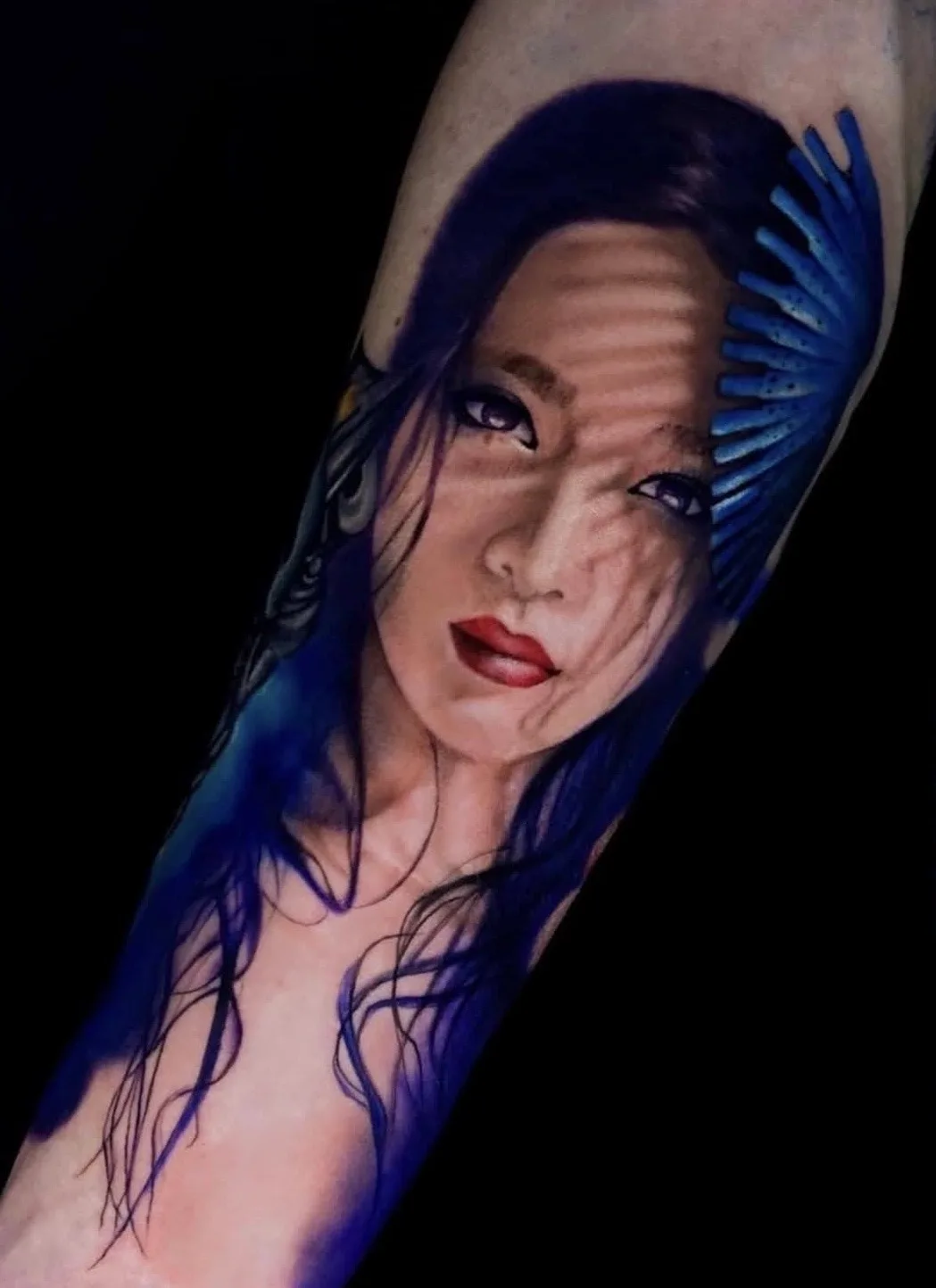
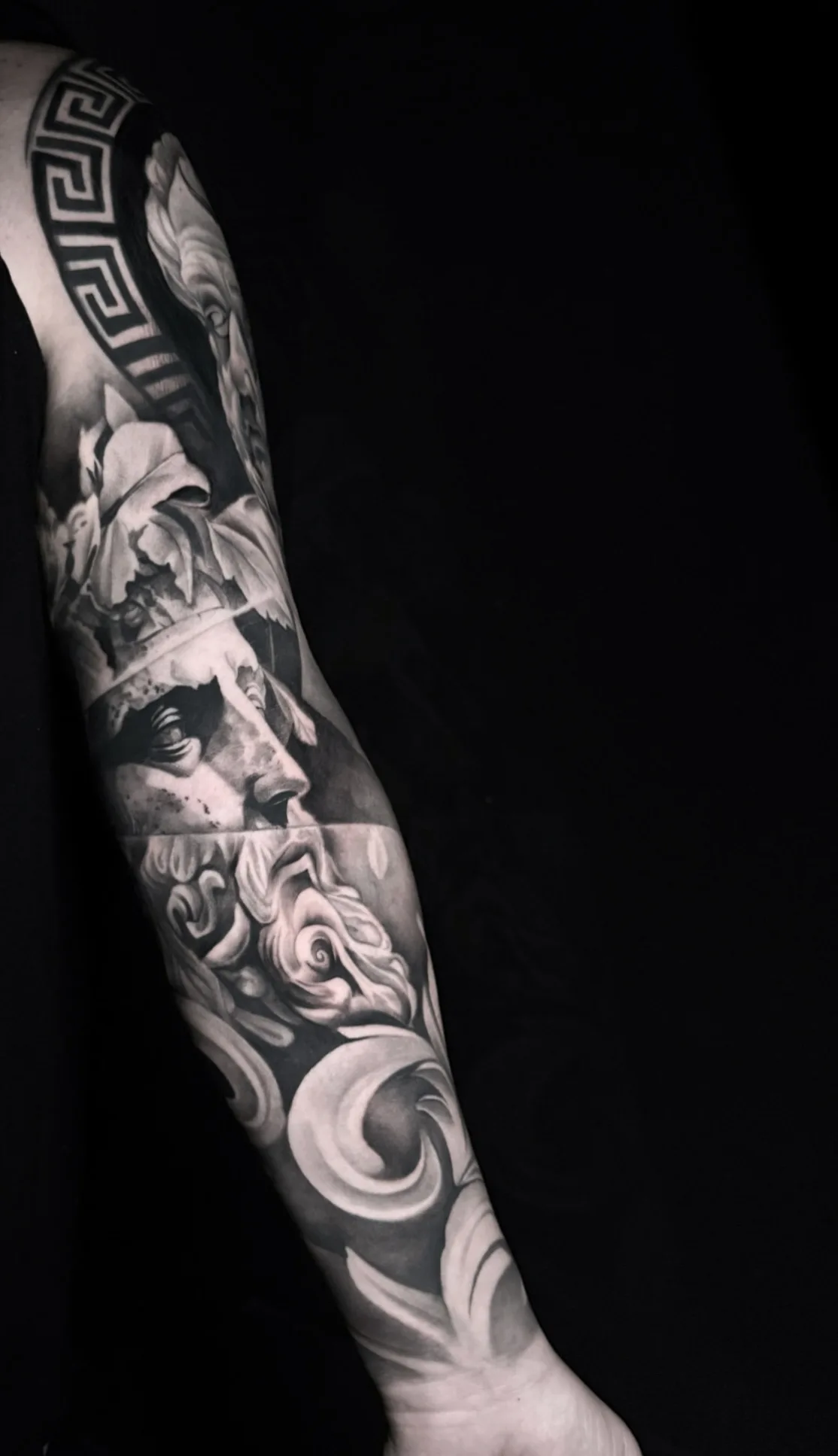
In Anastasia Nechaeva’s tattoos, realism rarely remains just realism. She pushes contrast, reshapes the lighting, and works with dense silver-grey tones and color to build a visual language of her own from familiar imagery. Portraits, animals, sculptures, and characters may differ completely in subject, but they are tied together by deep shadows, expressive highlights, and a distinctive density of tone.
Originally from Kazakhstan, Anastasia worked as a tattoo artist in Turkey before moving to the United States. Today, she is based in Los Angeles. She describes her direction as stylized realism: classical realism remains the technical foundation, while color, lighting, and composition become tools for personal interpretation.
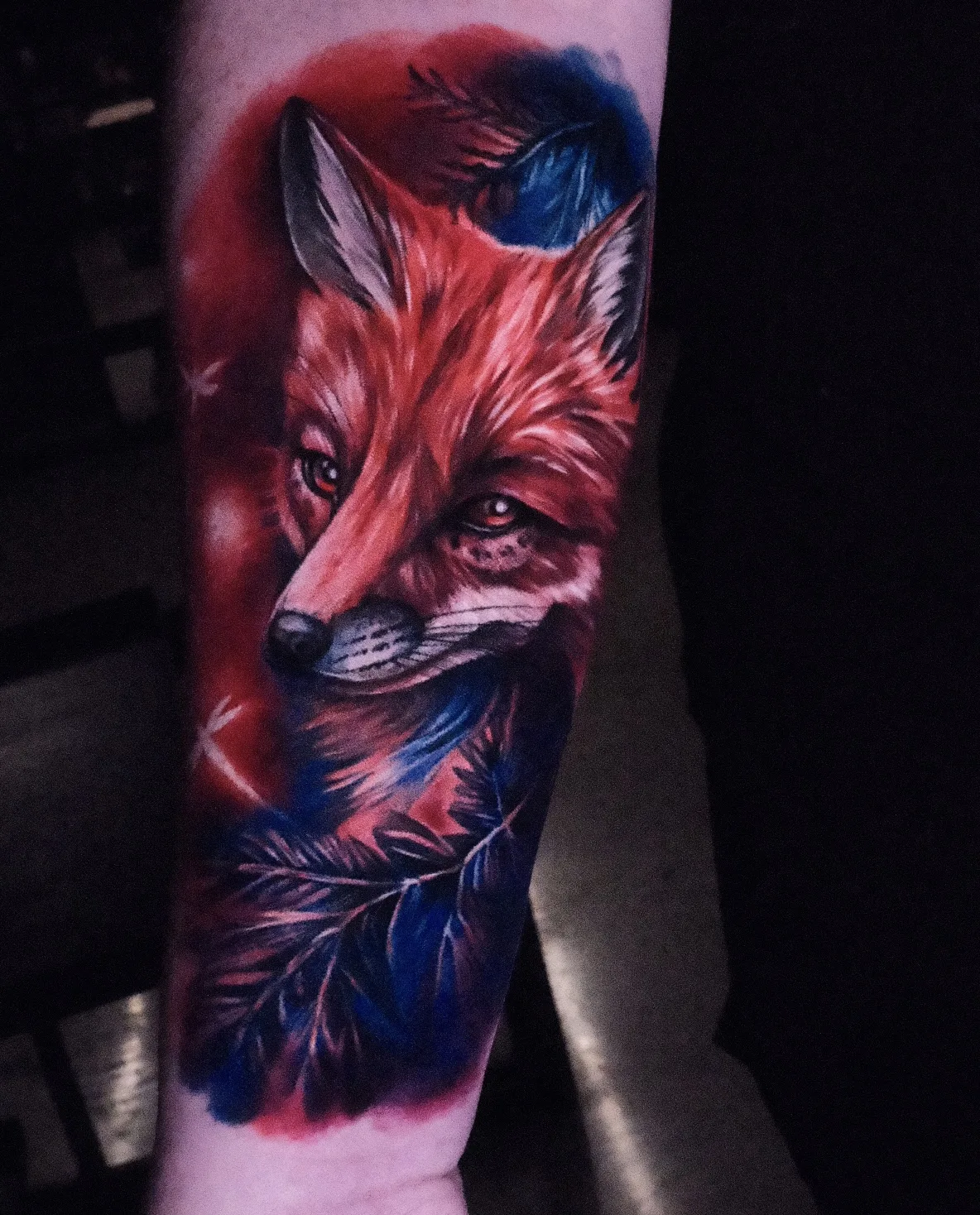
Cover-ups are also an important part of Anastasia Nechaeva’s practice. Rather than simply hiding an old tattoo beneath a darker image, she rebuilds the composition from the ground up — shifting focal points, adding depth, and designing the new piece so that the previous tattoo naturally disappears into it.
After moving to the United States, she took part in her first American tattoo convention in Florida and received several awards. Anastasia is now continuing to develop her style, planning to take part in conventions in other states and abroad, while also exploring oil painting and gradually bringing its aesthetics into her approach to tattooing.
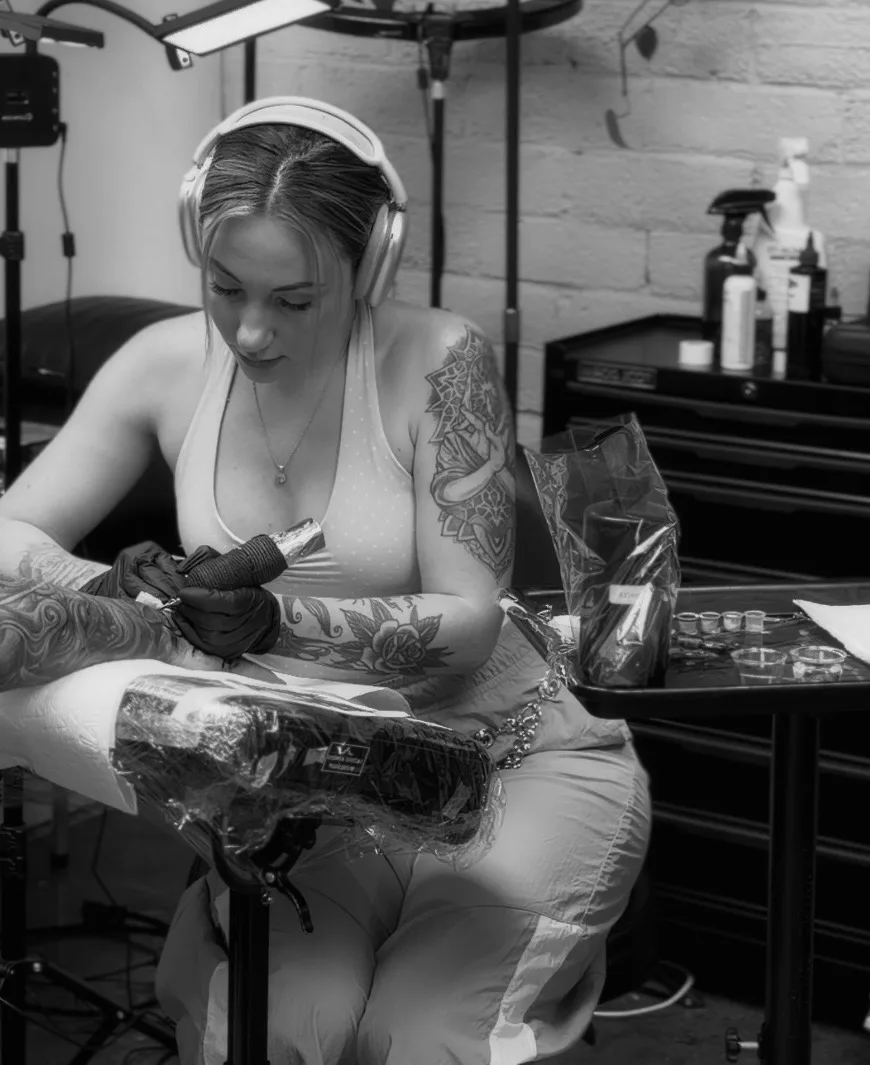
Where are you originally from, and how did tattooing first become part of your life?
— I’m originally from Kazakhstan. I initially worked in a completely different field, but tattoos had already been part of my life for a long time. I enjoyed getting tattooed myself and met many people who shared my interest in tattoo culture. Gradually, this personal passion developed into a desire to create tattoos and grow professionally as an artist.
You have no formal art training. How did you develop your artistic and technical skills?
— I’m entirely self-taught. At some point, I started drawing a lot, just for myself, and realized how deeply the creative process fascinated me. Since I was already into tattoos, these two interests naturally came together. I decided that I wanted to put my ideas on skin and began independently studying drawing, composition, color, and the technical aspects of tattooing.
Before moving to Los Angeles, you worked as a tattoo artist in Turkey. What led you to the United States, and how has the move influenced your development?
— In Turkey, I worked as a tattoo artist, but over time I wanted to take my work to the next level, so when I got the chance to work in the US, I moved to California and am now based in Los Angeles.
The creative environment here constantly motivates me to improve and develop a more recognizable artistic style. In the future, I would like to visit more states and countries, participate in international conventions and professional events, learn from other artists and connect with them.
How would you describe the style you are developing today?
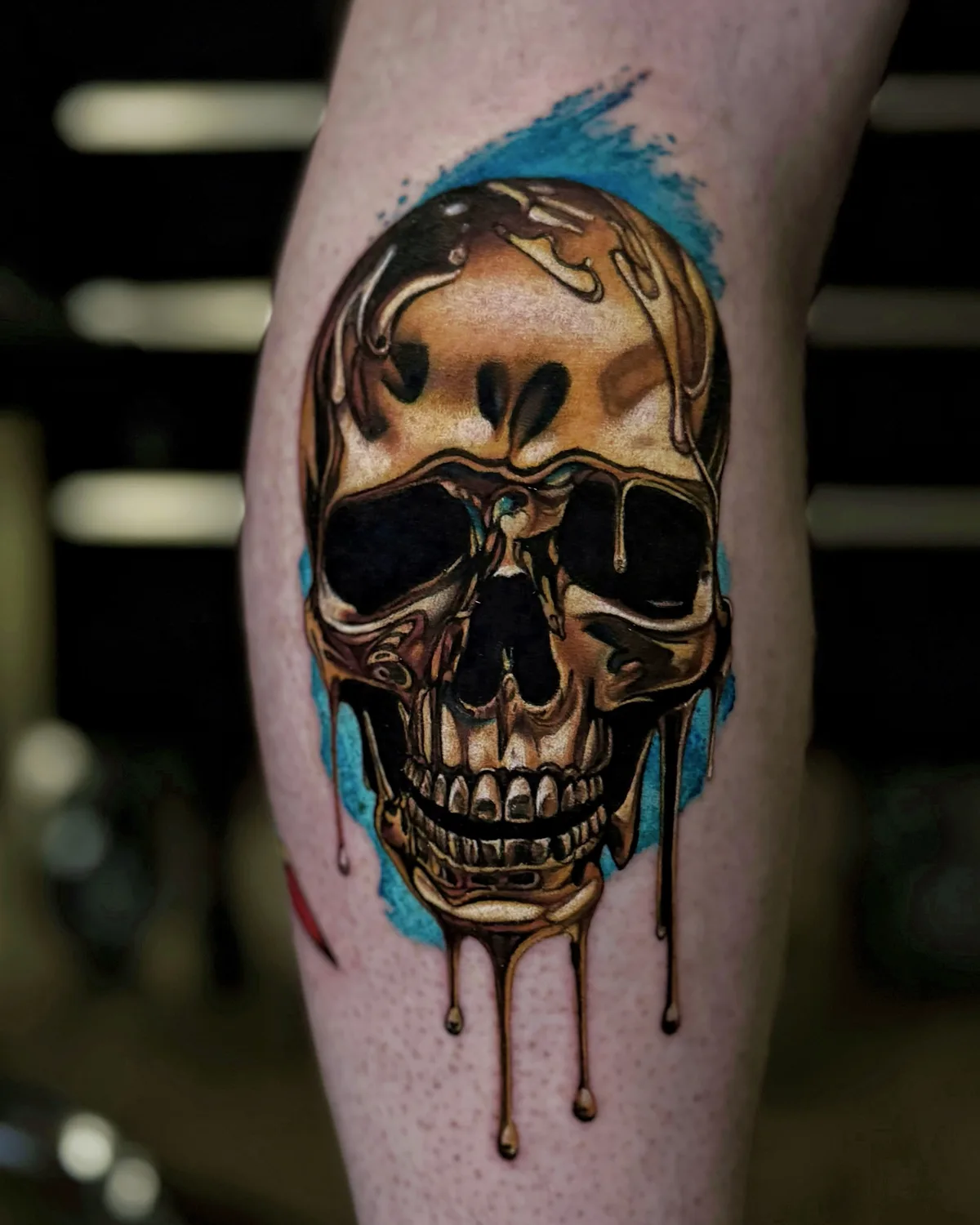
— Today, I’d describe my style as stylized realism. It preserves the foundations of traditional realism — accurate proportions, volume, anatomy, and recognizable imagery — while allowing for greater artistic freedom.
Rather than simply transferring a photograph onto the skin, I reinterpret the lighting, contrast, colors, and details. I often combine several visual sources to create an entirely new composition. For me, realism provides the technical foundation, while stylization makes each piece more artistic and personal.
“For me, realism provides the technical foundation, while stylization makes each piece more artistic and personal.”
Your portfolio includes portraits, animals, characters, sculptures, and symbolic imagery. What connects such different subjects visually?
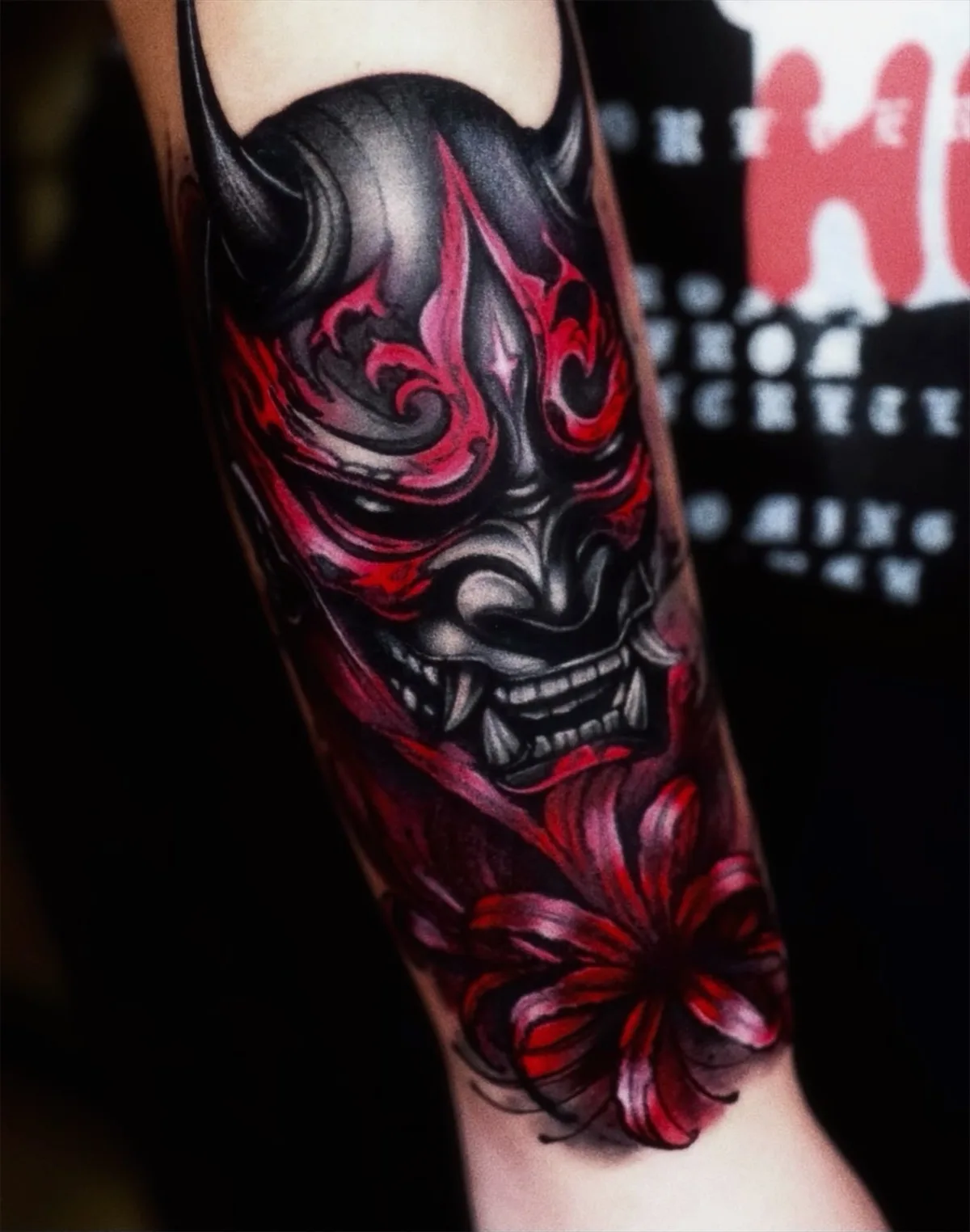
— I work with lots of different subjects. I don’t want to limit myself to one specific theme. I am more interested in developing my own technique and visual language.
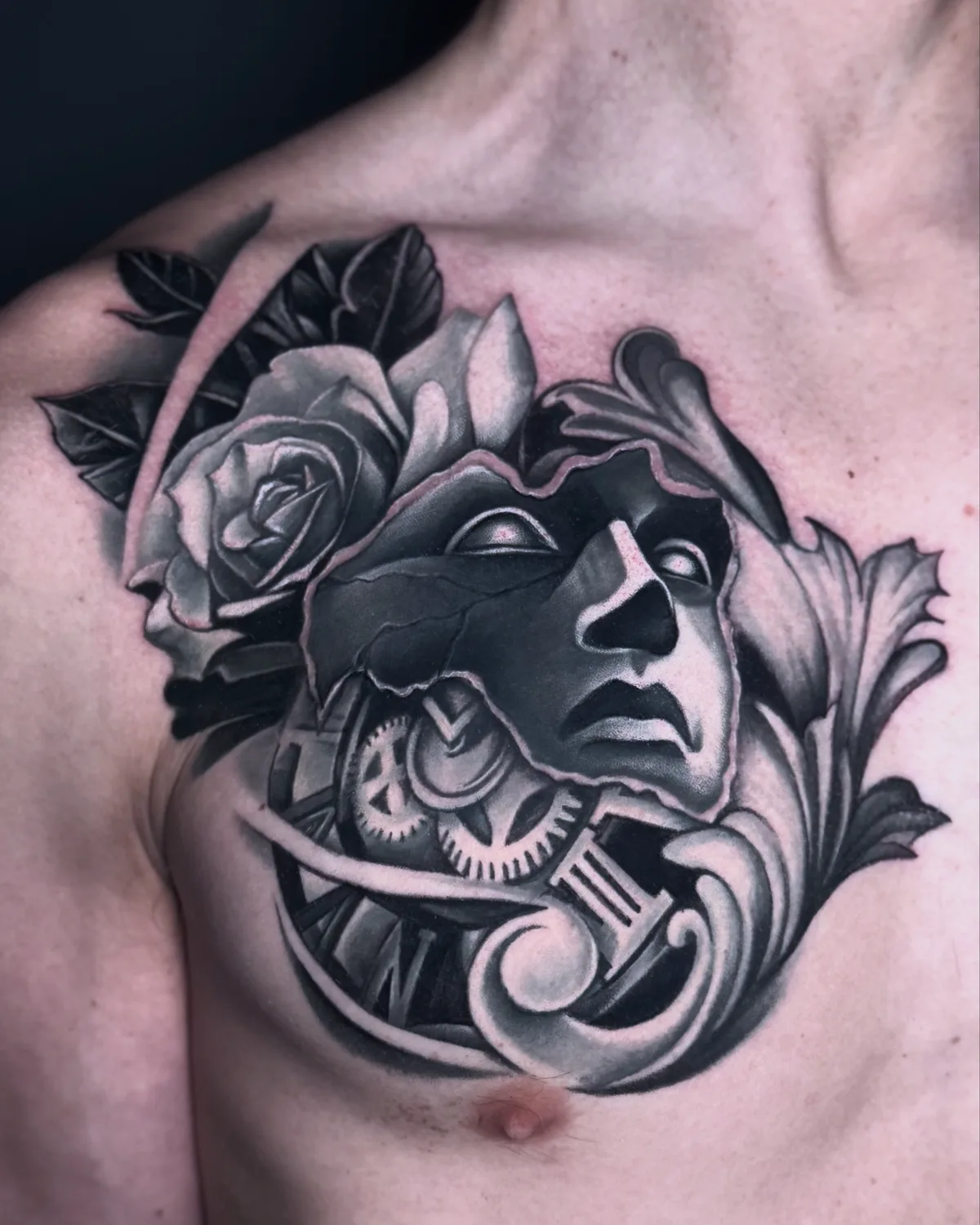
I especially enjoy working with dense tones, silver-grey shades, and strong, expressive lighting. My goal is for my work to be recognizable through its visual treatment, regardless of the particular subject.
“My goal is for my work to be recognizable through its visual treatment, regardless of the particular subject.”
Your black and grey work has a very dense and graphic quality. How does your technical approach differ from traditional greywash tattooing?
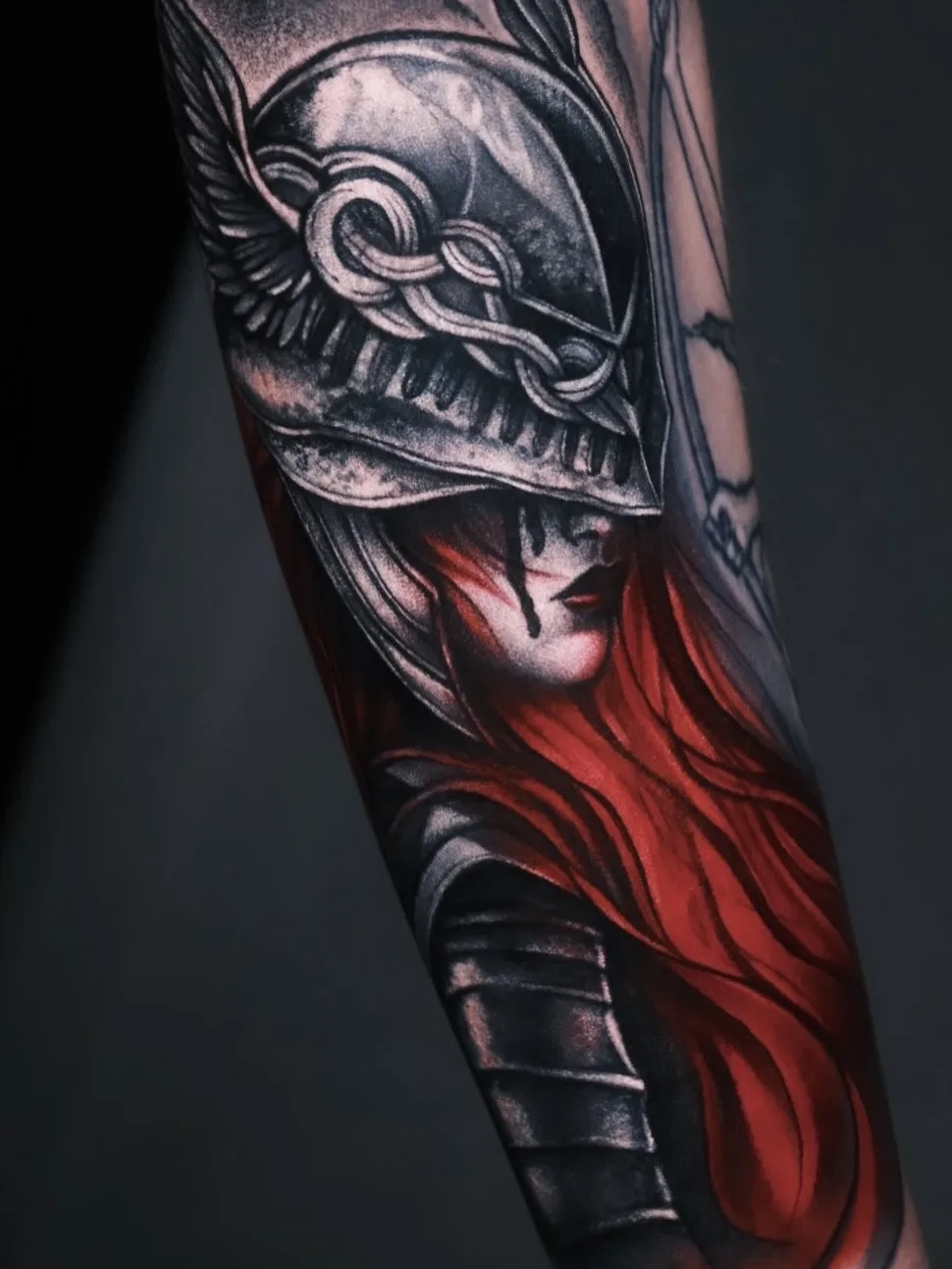
— Right now, I don’t work in traditional greywash or the typical light, airy black and grey style. My technique is based on solid pigment application, deep shadows, strong contrast, and pronounced highlights.
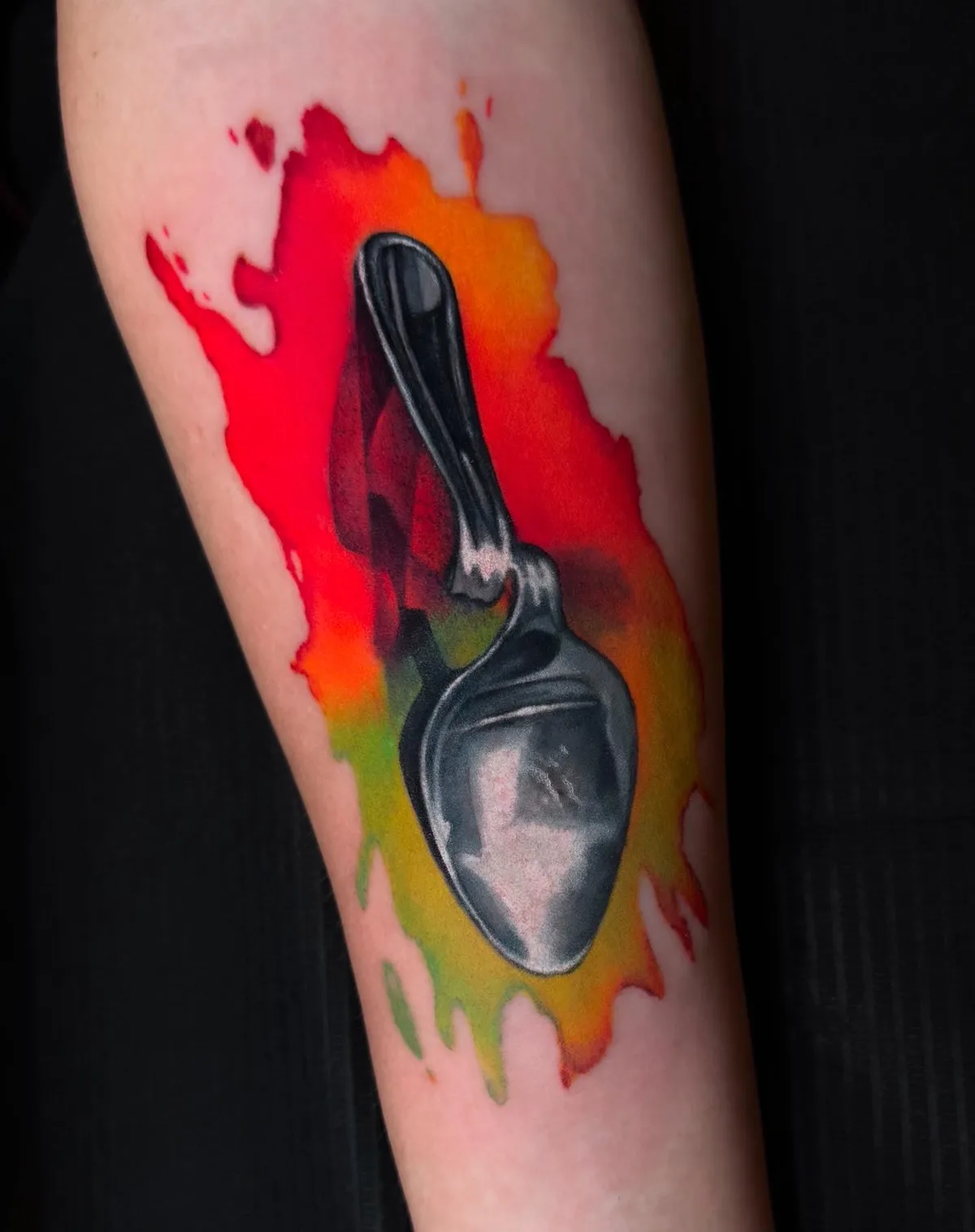
I may use only a silver-grey palette, do a full-color piece, or combine silver and colored tones within one composition. Technically, I approach all of these options as color work.
How do you decide whether a particular composition should be done in color or in silver or black and grey?
— I don’t divide subjects into those that should only be created in color and those that belong exclusively in a silver or black and grey palette. Almost any composition can be adapted to either approach.
That is the essence of stylization for me: I reinterpret the reference, modify the lighting, colors, and tonal relationships, and may introduce shades that don’t exist in the original image. This allows me to create an artistic interpretation instead of simply reproducing a high-quality photograph.
Cover-ups have become an important part of your portfolio. What makes a cover-up technically successful in your view?
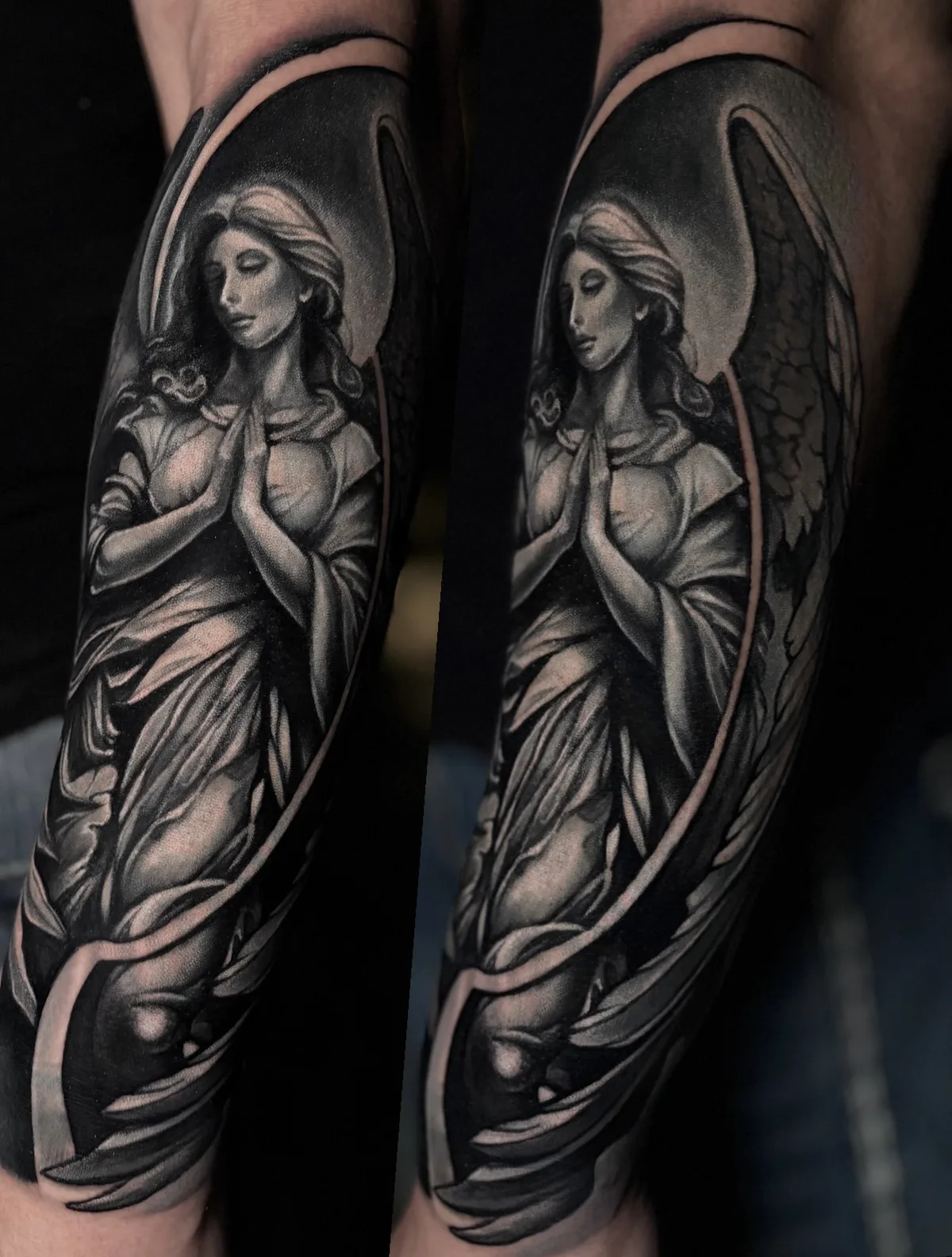
— Cover-up work is one of the main areas of my practice, alongside work on untouched skin. A successful cover-up requires enough available skin around the existing tattoo to build a larger and more complete composition.
Instead of simply placing a dark object of the same size over the old tattoo, I redirect attention through new focal points, lighting, depth, and movement. It is also essential to consider the density and color of the existing pigment, the condition of the skin, and how the new work will look after healing.
How do you develop a cover-up together with the client, and how much freedom do they have in choosing the new design?
— As with my regular custom projects, I take primary responsibility for creating the entire cover-up design. First, the client and I determine the general direction, subject, and atmosphere of the composition. I then create a custom design based on their preferences while adapting every detail to the technical requirements of the particular cover-up. For this reason, the client’s choices may be somewhat limited by what can realistically be executed well.
Most of my cover-ups are completed in one main session and often need no touch-ups when the composition and technical approach have been carefully planned. However, more complex cases may require several sessions and additional work on certain areas.
Where do you usually find inspiration, and what influences the visual language you are developing?
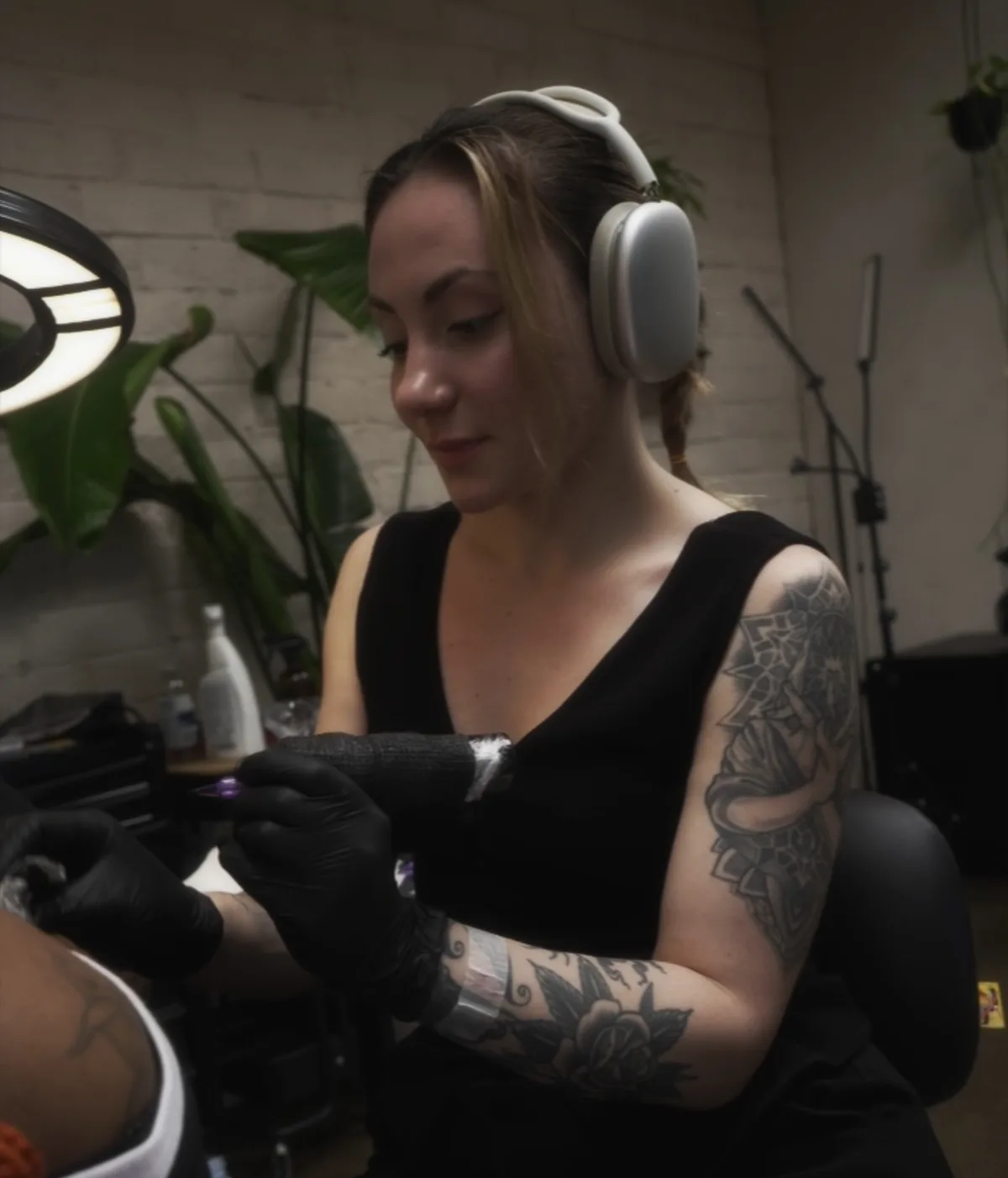
— I find inspiration in many different places. I follow painters and other tattoo artists on Instagram, save references, and study interesting combinations of color, light, texture, and abstract forms. At the same time, an idea may come from a person, an object, an unusual detail, or a combination of colors that I notice on a walk.
I am also currently studying and practicing oil painting. I am searching for my own style in this medium and would eventually like to connect it with the aesthetic of my tattoo work. It is important to me that my paintings and tattoos share common characteristics and gradually form a single, recognizable artistic language.
You recently participated in your first tattoo convention in the United States. What did that experience give you professionally?
— I won several awards at my very first American convention. For me, conventions are not only competitions. They are an opportunity to step out of my comfort zone, work in an unfamiliar environment, watch other accomplished artists work, and assess my own level more objectively.
They provide valuable experience, new ideas, professional connections, and motivation for further growth. I plan to continue attending conventions in different states and countries whenever possible.
Which of your awards have been the most meaningful to you so far?
— The awards that mean the most to me are those I received at my first convention in the United States, which took place in Florida. It was my first experience of this kind after moving, so having my work recognized confirmed that I was moving in the right direction and could hold my own at a new professional level.
I see these awards not as a final achievement but as the beginning of a new stage and additional motivation to participate in future conventions.
“I see these awards not as a final achievement but as the beginning of a new stage.”
Looking back at your recent work, where do you see the biggest evolution in yourself as an artist?
— The most noticeable progress in my work is the increased attention I give to details, textures, lighting, and the overall presentation of each image. I have become more deliberate in my design process, in photographing completed pieces, and in developing a limited color palette that reflects my style and the results I want to achieve.
I have also become more selective about the projects I accept and now consider the technical limitations of tattooing from the earliest stages of the composition. My goal is not simply to execute each individual piece well, but to develop a consistent and recognizable artistic style.