The Weaver and the Hunter
A spider builds a precise structure, then waits inside or beside it for the right moment to strike. That double role is the core of the spider tattoo meaning most wearers have in mind: patient craft, self-reliance, control, and a quiet suggestion of danger. The image suits someone who creates opportunities carefully rather than chasing them, as well as someone who has survived by staying alert.
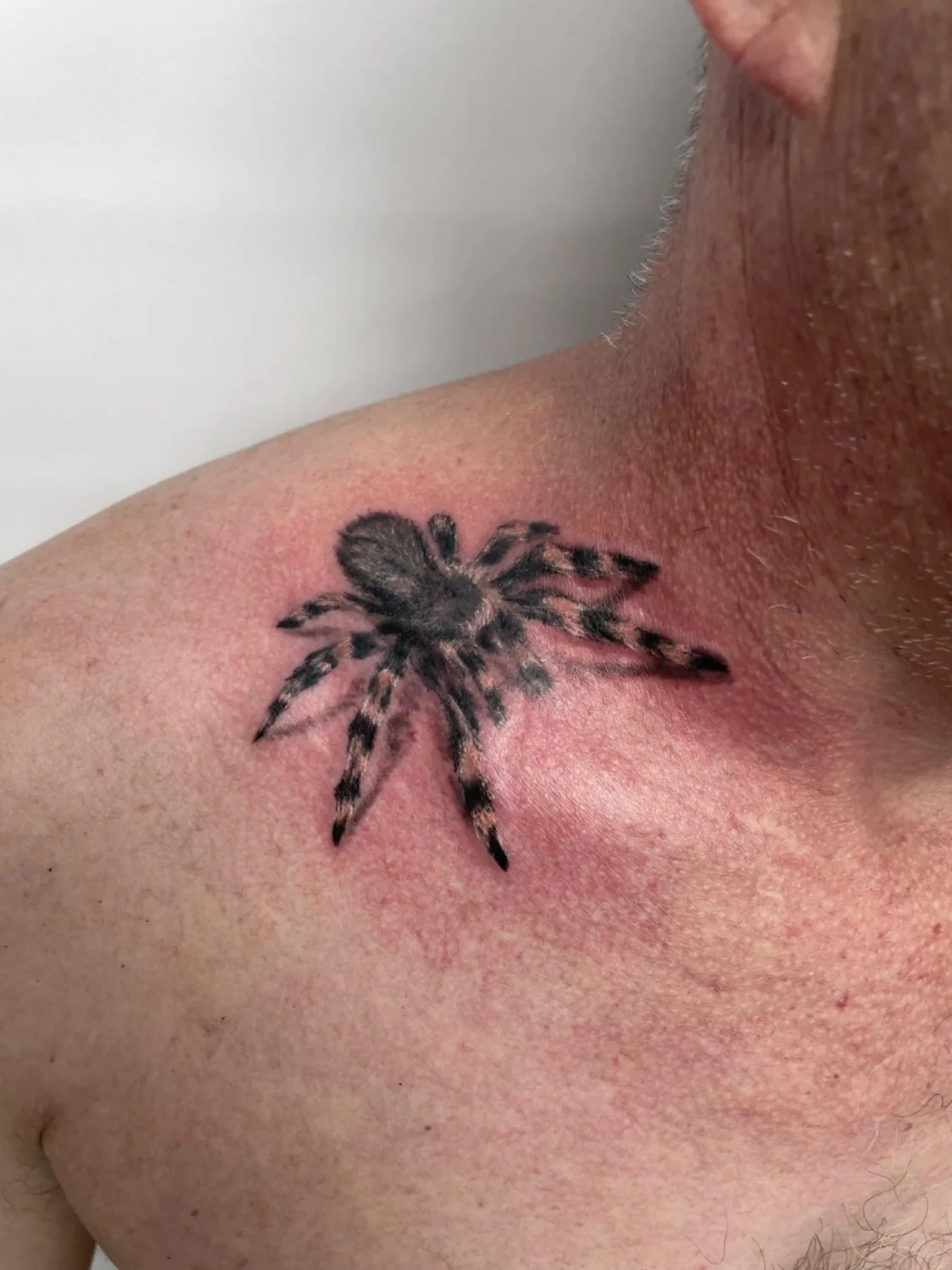
The web also provides a natural metaphor for long work. Each strand contributes to a larger design, while damage can be repaired and the structure begun again. In modern tattoo reading, that makes the spider relevant to artists, makers, and people rebuilding their lives. A spider shown actively spinning emphasizes process and skill; one poised over its web feels watchful and territorial. A large realistic tarantula can turn fear into a trophy, presenting the creature associated with arachnophobia as an image of power and confrontation.
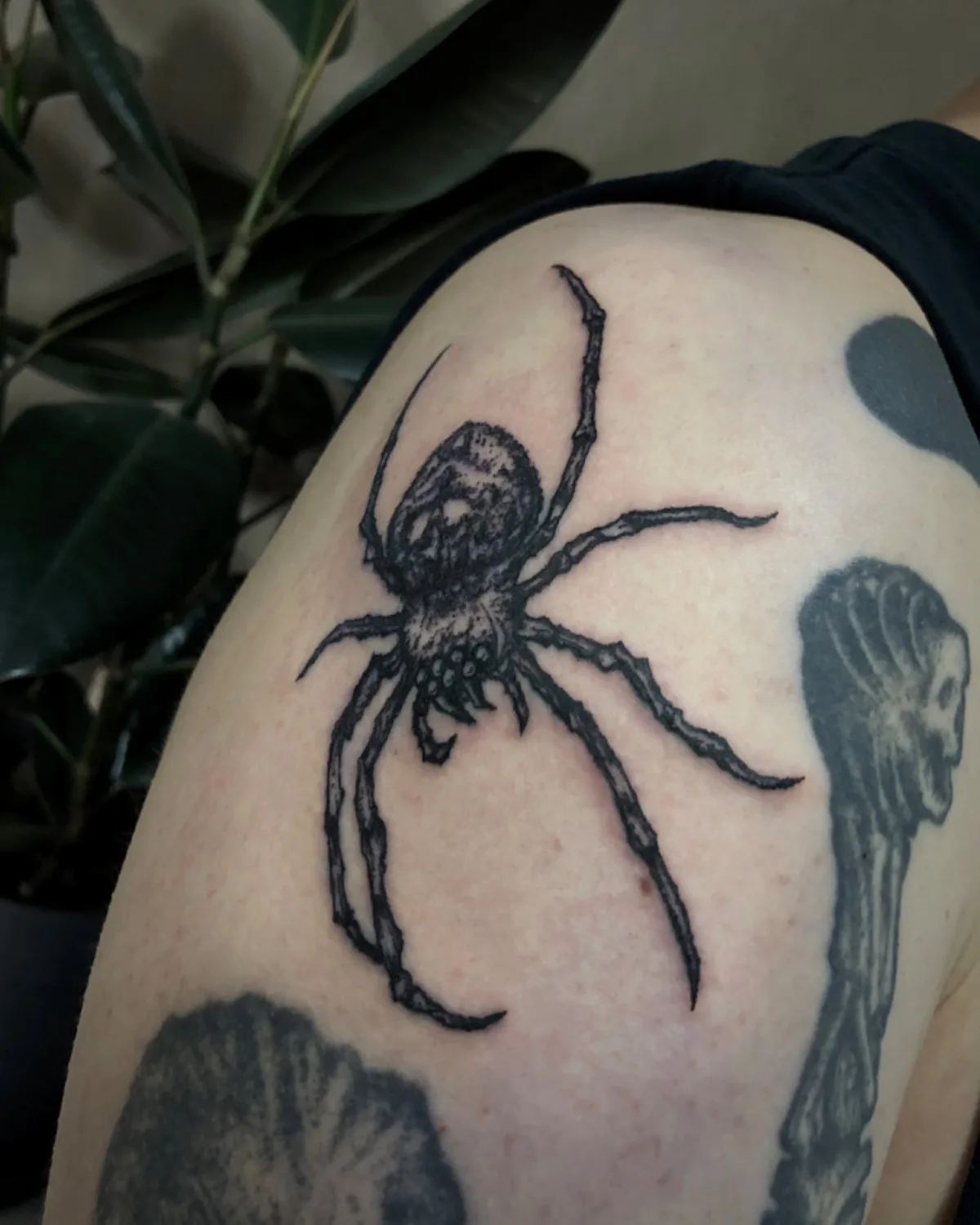
Scottish legend adds perseverance to the motif. In a story retold by Walter Scott in Tales of a Grandfather in 1828, Robert the Bruce watches a spider repeatedly attempt to spin its web. Its persistence encourages him to try again, giving the spider a clear survivor reading. Your design can lean into that idea with a broken web under repair, or focus on the hunter through prominent legs, fangs, and a dark silhouette. For visual approaches ranging from fine line to blackwork and realism, browse the spider tattoo gallery.
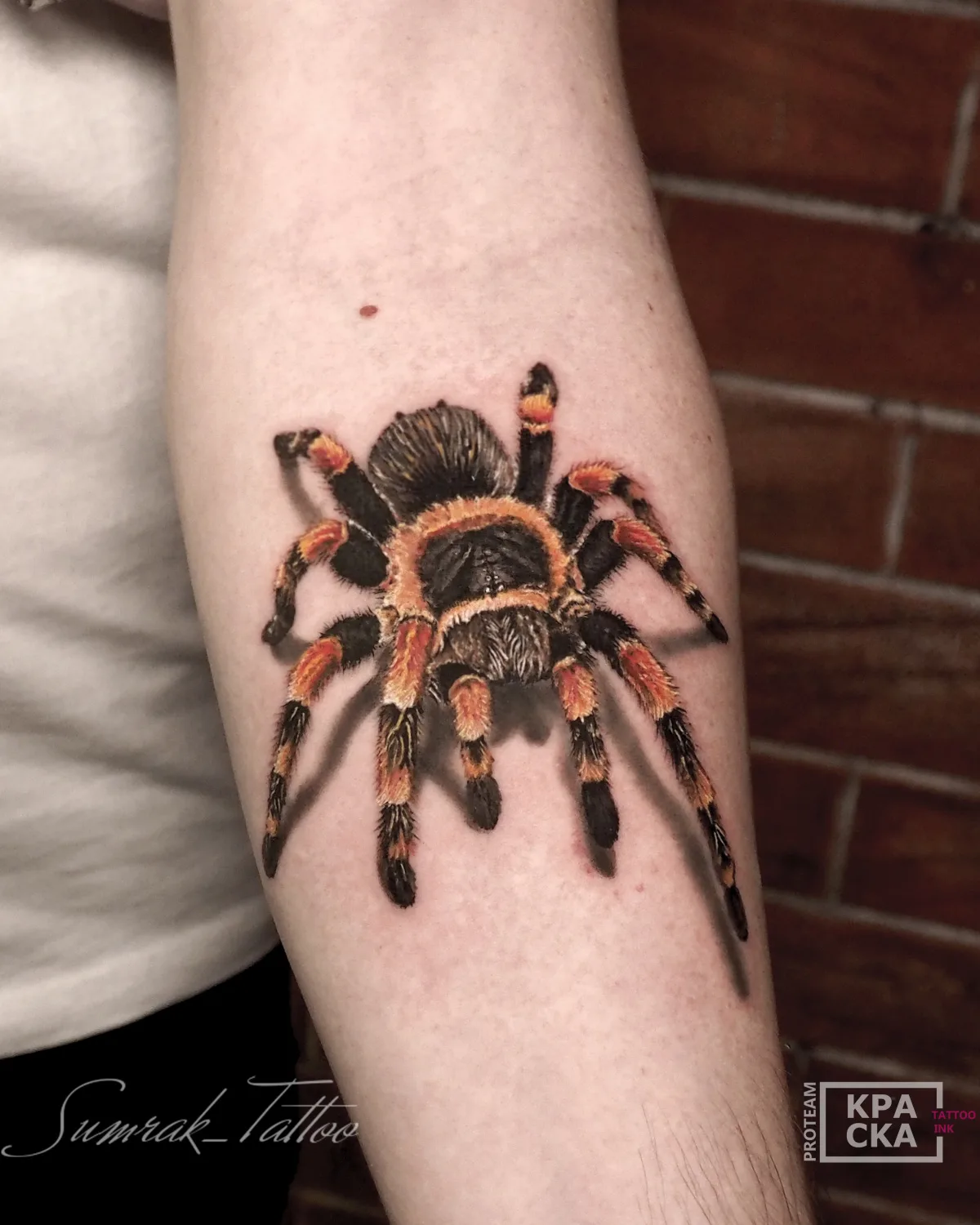
Arachne, Anansi and Spider Grandmother
In book 6 of Ovid’s Metamorphoses, Arachne is a gifted Lydian weaver who challenges Minerva, the Roman Athena, in a contest of craft. After the confrontation, Arachne is transformed into a spider and continues weaving. The story connects the motif with extraordinary skill, pride, ambition, and the risks of challenging authority. The scientific class name Arachnida comes from the same Greek word, arachne, meaning spider. Her story tends to speak to people whose craft sits at the center of who they are.
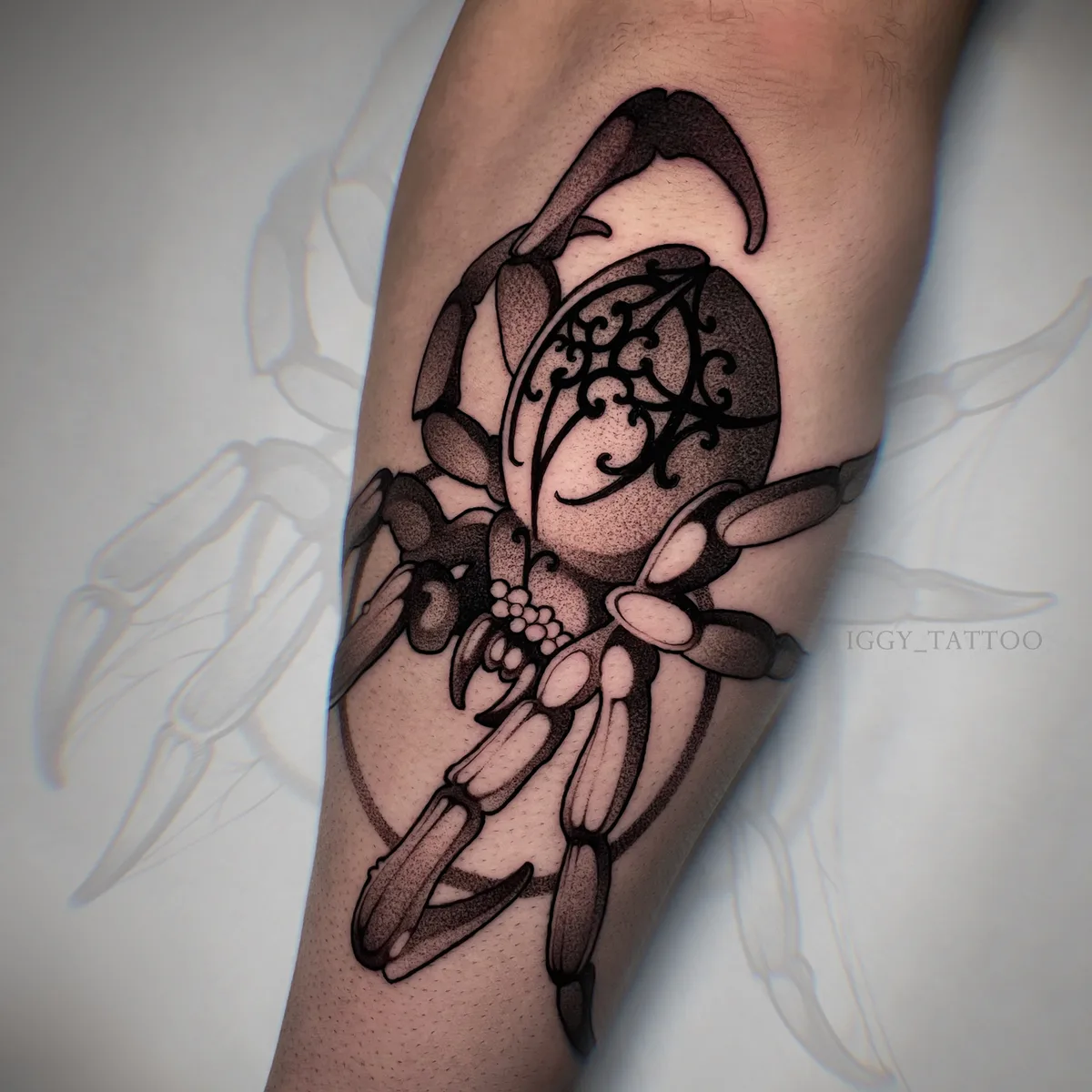
Anansi belongs to Akan, including Ashanti, folklore from Ghana. He is a trickster spider whose small body is matched by wit, adaptability, and command of stories. In the best-known tale, he buys all the world’s stories from the sky god Nyame and pays with cunning, since he has no strength to spare. Enslaved Africans carried Anansi traditions to the Caribbean and the Americas, and Anansi stories remain particularly associated with Jamaica. As tattoo imagery, he can represent storytelling, intelligence, and the survival of the small against the powerful.
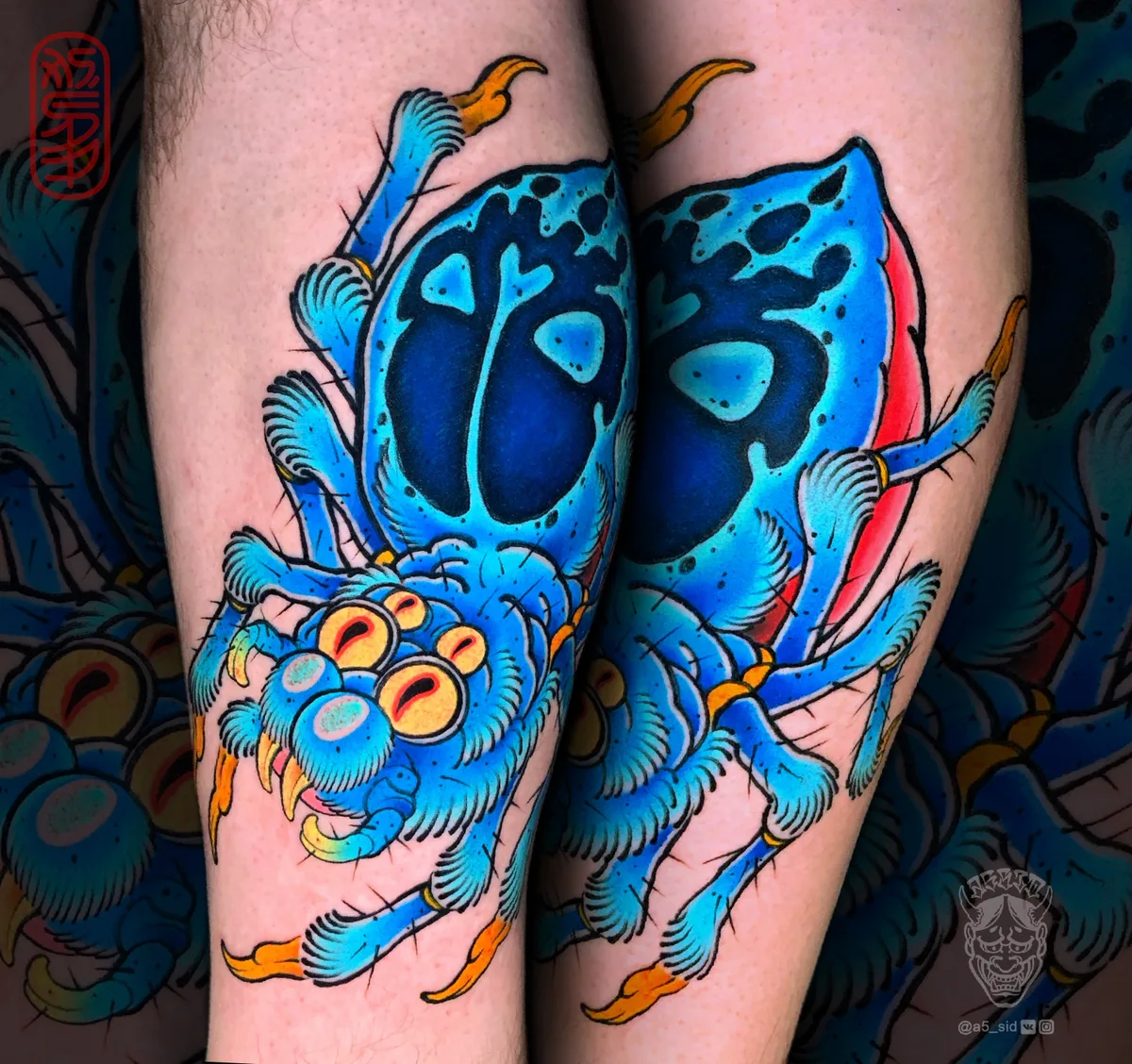
Spider Grandmother or Spider Woman appears as a creator and helper in Hopi and other Pueblo traditions. In Diné tradition, Spider Woman is associated with teaching weaving. These are living Indigenous traditions rather than a collection of interchangeable fantasy characters. If you want to reference one, know which tradition it comes from, leave ceremonial imagery out unless you understand it, and ask yourself whether a plain spider says what you mean just as well.
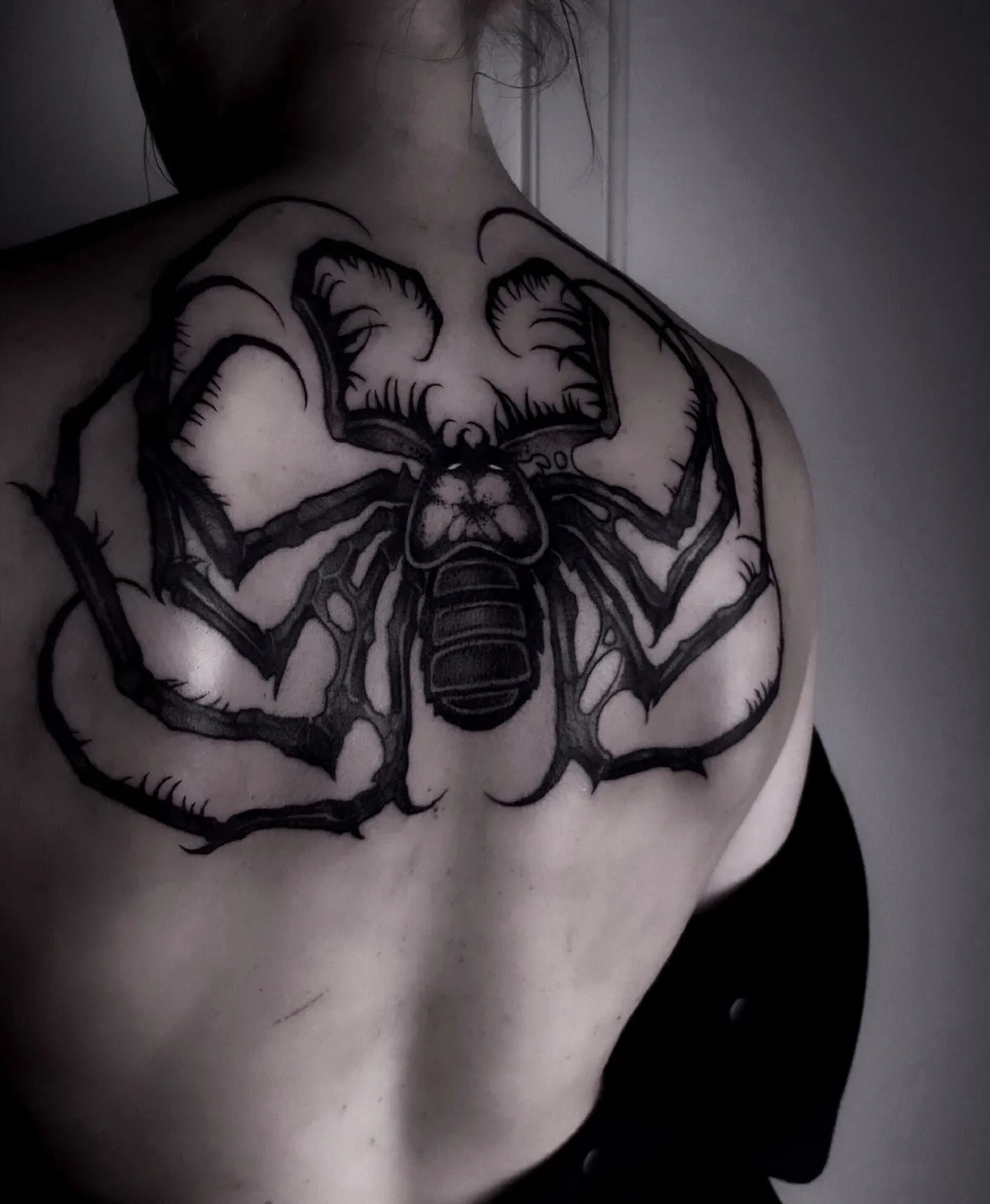
Together, these figures reveal several sides of the spider: Arachne is the proud craftsperson, Anansi the clever storyteller, and Spider Woman a teacher connected with creation and weaving. You can build a personal design from one clearly understood narrative. A spindle or woven pattern may support Arachne, while books, thread, or story-inspired elements can point toward Anansi without turning sacred cultural material into decoration.
Black Widow Tattoos
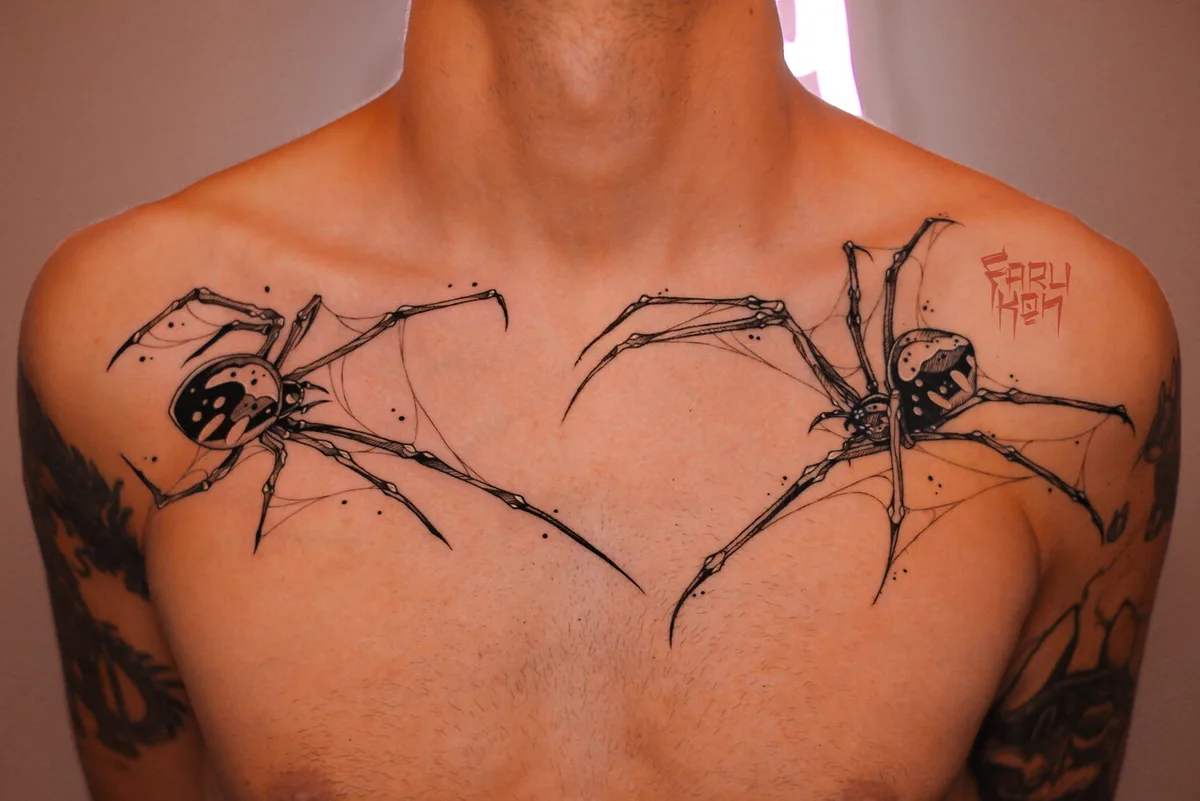
Modern readings of the black widow tattoo center on dangerous femininity, self-protection, independence, and the warning “look, but don’t touch.” Black widows belong to the genus Latrodectus, and the female is commonly recognized by the red hourglass marking on the abdomen. Natural-history accounts also describe sexual cannibalism, although females eating males after mating is less frequent in the wild than the spider’s popular reputation suggests.
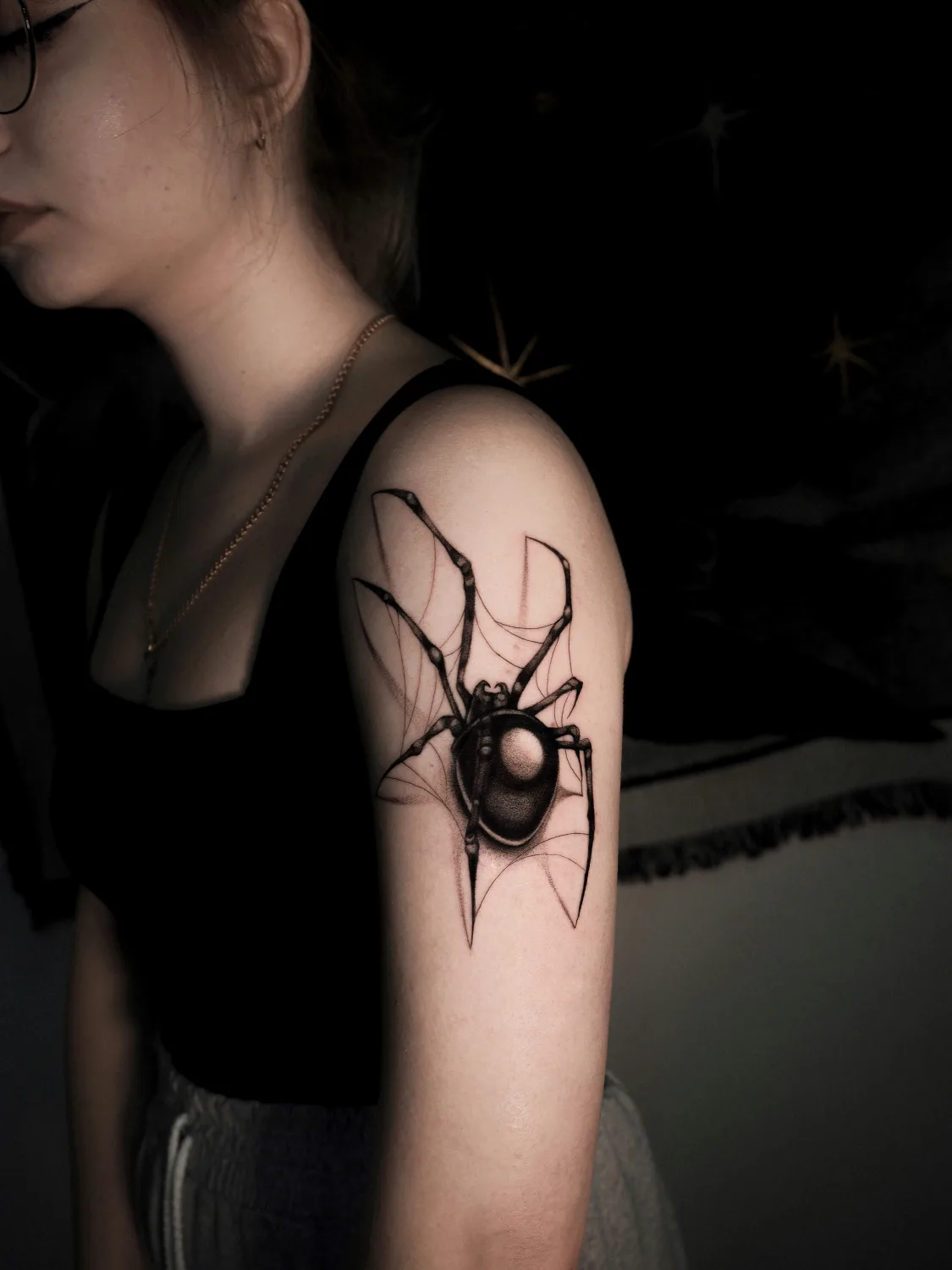
That reputation gives tattoo artists a strong visual language. A glossy black body and concentrated red mark remain readable in a compact traditional or neo-traditional design, while realism can emphasize the animal itself. Some wearers use the widow as a modern emblem of surviving a toxic relationship or establishing firm boundaries. Others simply enjoy its elegant shape and venomous reputation.
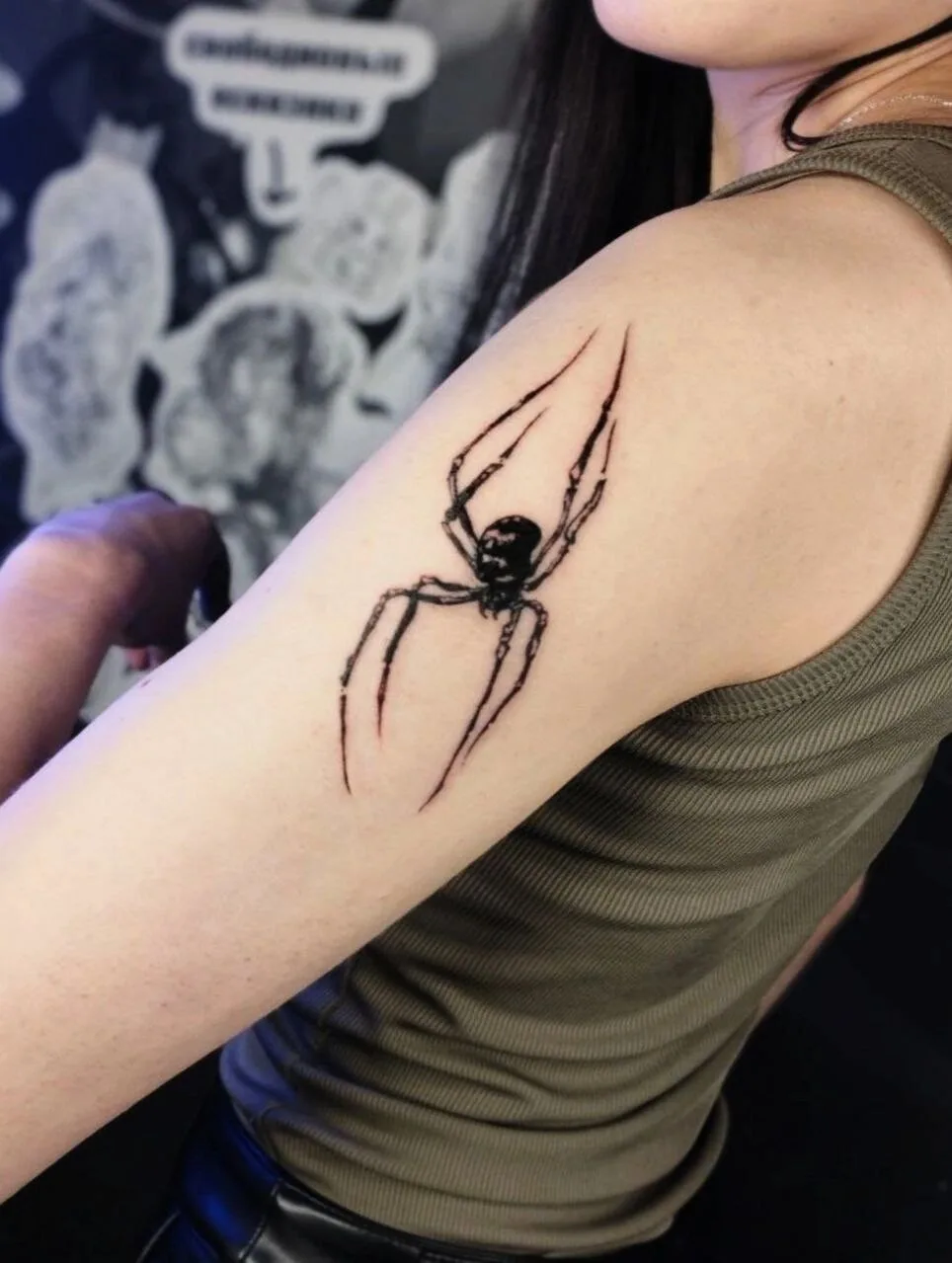
Flowers can soften the composition, while blades, flames, or thorns increase its warning quality. Pairing the widow with death imagery creates a darker meditation on mortality; our guide to skull tattoo meanings explains how that companion motif changes a composition. These are contemporary interpretations rather than rules attached to every black widow design.
Spider Tattoos in Prison Culture
Prison readings of the spider only make sense once you name the country. Russian prison lore has one set, US prison culture has another, and outside those settings most spider tattoos today carry neither.
Russian criminal tattoos work as a coded system, best known in the West through Danzig Baldaev’s drawings in the Russian Criminal Tattoo Encyclopedia. Popular guides to that system often link a spider on a web with thieves and drug users, and one reading gets repeated constantly: a spider climbing up marks someone still active in crime, a spider heading down marks someone who has left that life. This belongs to a specific criminal tattoo system, where composition and direction may carry coded information, and the reading applies only inside that system.
In US prison culture, a spider web on the elbow is associated with time served; sociologist Michael Atkinson records that reading in Tattooed: The Sociogenesis of a Body Art (2003). Even there, context decides, and the image alone proves nothing about the person wearing it. Most contemporary spider and web tattoos are decorative, personal, or mythological.
If you are concerned about an unintended reading, discuss the complete composition with your tattoo artist. A spider without a web, an explicit mythological reference, botanical framing, or placement away from the elbow can shift the visual context, although no single adjustment creates a universal interpretation.
Spider vs Spider Web
The spider focuses attention on the maker and hunter. It suggests agency: building, repairing, waiting, and acting at the chosen moment. The web shifts attention toward the environment created around that figure. Common modern readings include time, entrapment, interconnection, fate, and the consequences of earlier choices.
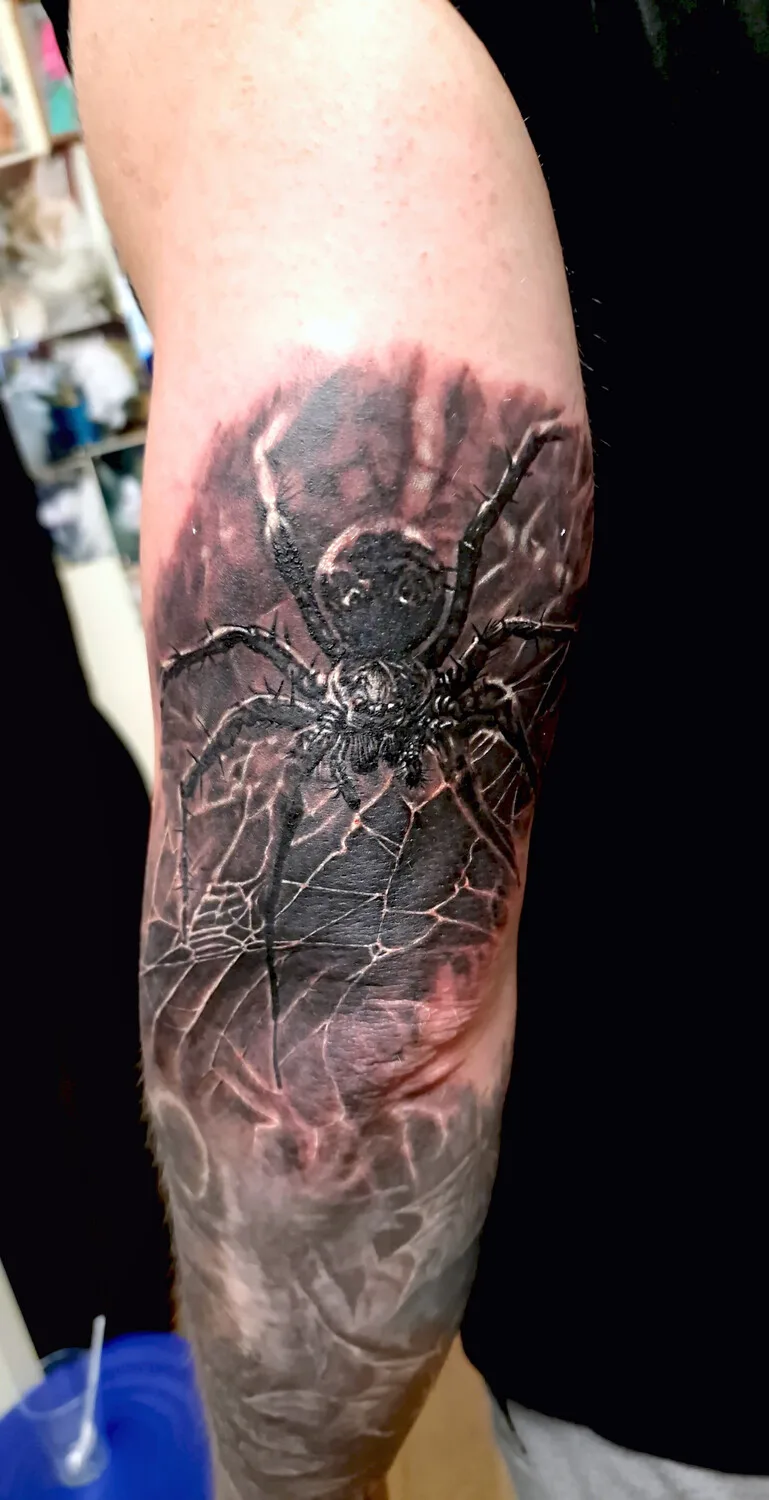
Combining them creates a relationship between creator and creation. A spider at the center can convey control over one’s world, while a spider caught in damaged strands may suggest becoming trapped by something originally built for safety. An empty web feels more abstract and can work as geometric ornament. Our detailed guide to spider web symbolism and history explores those distinctions further.
Placement: Neck, Elbow, Hand
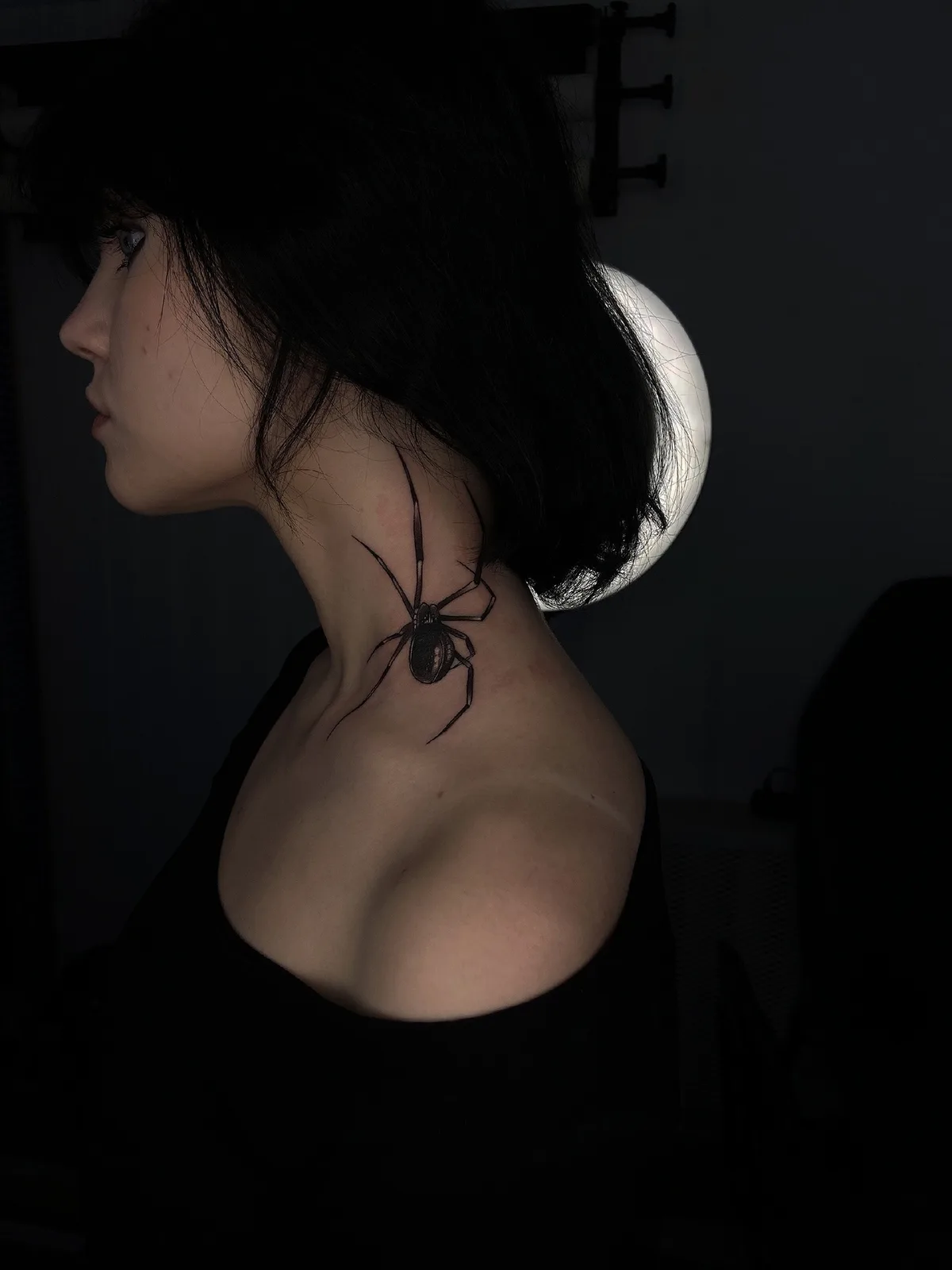
Placement changes visibility, scale, and how a spider moves with the body. It does not assign a fixed personal message. Questions about a spider tattoo on the neck usually concern its boldness: the neck keeps the design highly visible, particularly when it sits at the front or side. A small spider behind the ear offers a more discreet fine-line option, although it remains easy to reveal with a change of hairstyle.
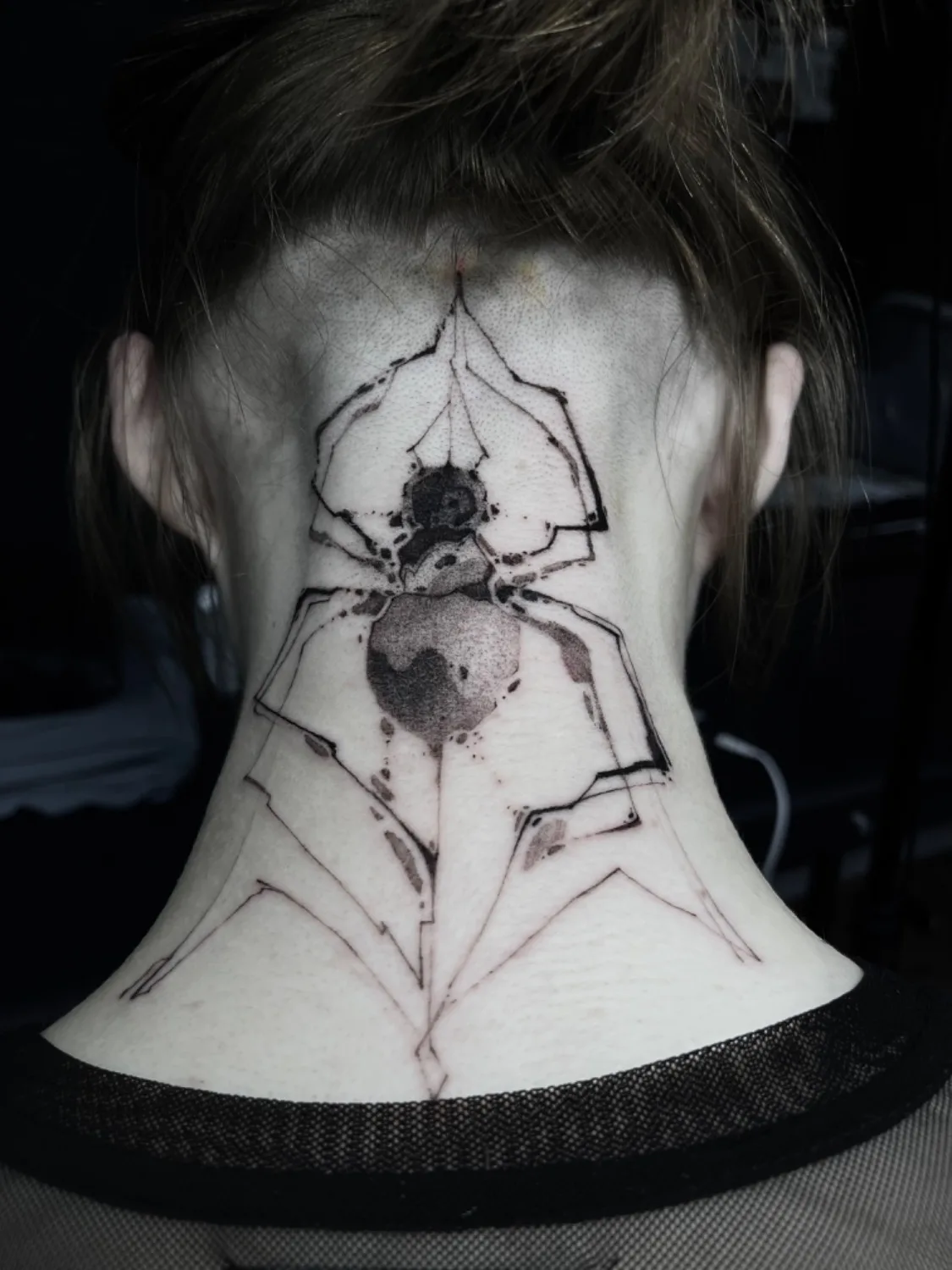
The elbow is a classic location for a radiating web because the joint provides a natural center. Bending the arm makes the pattern expand and contract. The US prison association described above belongs to the web on the elbow, and it doesn’t carry over to every spider near the joint. A standalone spider above or below the joint reads differently from a web covering the elbow point.
On the hand, long legs can follow the fingers, cross the knuckles, or spread over the back of the hand. The location gives even a small design considerable visual impact. It also receives frequent sun exposure and friction, so line spacing and future touch-ups are practical topics to discuss with your tattoo artist. The neck, elbow, and hand all favor designs planned for the anatomy rather than sketches reduced to fit at the last moment.
FAQ
What does a black widow tattoo mean?
Common modern readings include dangerous femininity, self-protection, firm boundaries, and survival after a destructive relationship. The black body and red hourglass also create a visually direct warning image. Some people choose it simply for the spider’s elegant form and venomous reputation, without attaching a relationship narrative.
What does a spider tattoo on the neck mean?
The neck mainly adds visibility and intensity rather than a fixed message. A prominent side-neck spider can make confidence or danger feel more immediate, while a small design behind the ear feels subtler. The creature, pose, and supporting imagery provide more meaning than the location alone.
Is a spider tattoo a prison tattoo?
It can carry prison associations in specific contexts, but the motif is not inherently a prison marker. Russian prison lore assigns coded readings to certain spiders on webs. In the US, a web on the elbow is associated with time served. Most contemporary spider designs have decorative, personal, or mythological intentions.
Spider vs spider web tattoo: what's the difference?
A spider emphasizes the active figure: the builder, hunter, survivor, or storyteller. A web emphasizes structure and circumstance, with readings such as time, connection, or entrapment. Together, they can express patience and control over a world you have built, or tension between creating a system and becoming caught within it.