Picture a frozen valley. One wolf lifts its head and howls, raw, mournful, carrying for miles. Now shift the image: six wolves moving in silent formation across a snow-dusted ridge, every step coordinated, every ear angled toward the same prey. No sound at all.
That contrast is exactly why wolf tattoos endure. The wolf carries a duality few other animals can match, fierce independence on one side, absolute devotion to the pack on the other. It's a creature built to survive alone in brutal terrain, and yet it chooses, when it can, to live inside one of nature's tightest social structures. For tattoo collectors, that tension is magnetic. It probably explains why the wolf has remained one of the most requested animal tattoo motifs decade after decade, across every culture and every style.
What follows is a close look at wolf tattoo meaning, the symbolism, the cultural roots, the design choices that shift and shade that meaning in ways that aren't always obvious.
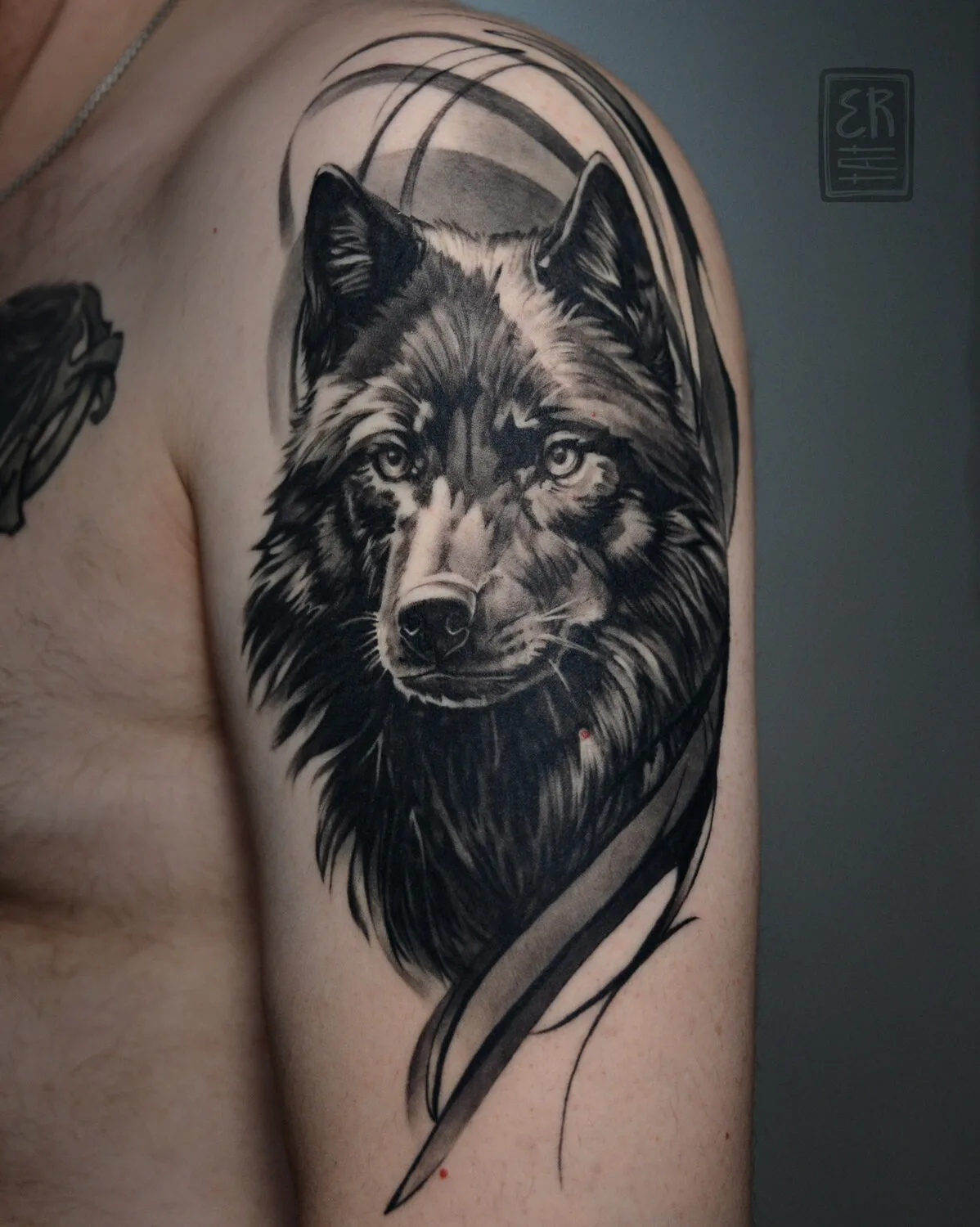
Wolf Tattoo Meanings: The Quick Guide
Before getting into the depth, here's the snapshot. The most common symbolic associations with wolf tattoos:
• Loyalty and Familythe unbreakable bond of the pack • Independence and Freedomthe lone wolf walking its own path • Strength and Survivalresilience through harsh conditions • Instinct and Intuitiontrusting primal knowledge • Protection and Guardianshipdefending those you love • Spiritual Guidancethe wolf as a spirit animal or totem • Ferocity and Dangerraw, untamed power • Transformation and Dualitythe balance between wild and civilized selves
Most wolf tattoos draw from two or three of these threads at once. The specific design, style, and placement determine which meanings rise to the surface.
The Duality of the Wolf: Pack Animal vs. Lone Wanderer
This is the fundamental fork in the road for anyone considering a wolf tattoo, and it shapes every decision that follows, the composition, the mood, even the number of wolves in the design. Understanding this split is essential to understanding wolf tattoo symbolism as a whole.
The Wolf Pack: A Symbol of Family, Loyalty, and Community
Wolves are among the most socially bonded mammals on the planet. A pack is a family, parents, offspring, sometimes aunts and uncles, operating under a sophisticated hierarchy of communication, shared labor, and mutual defense. The alpha pair leads, but every member matters. A weakened pack member gets defended, not abandoned.
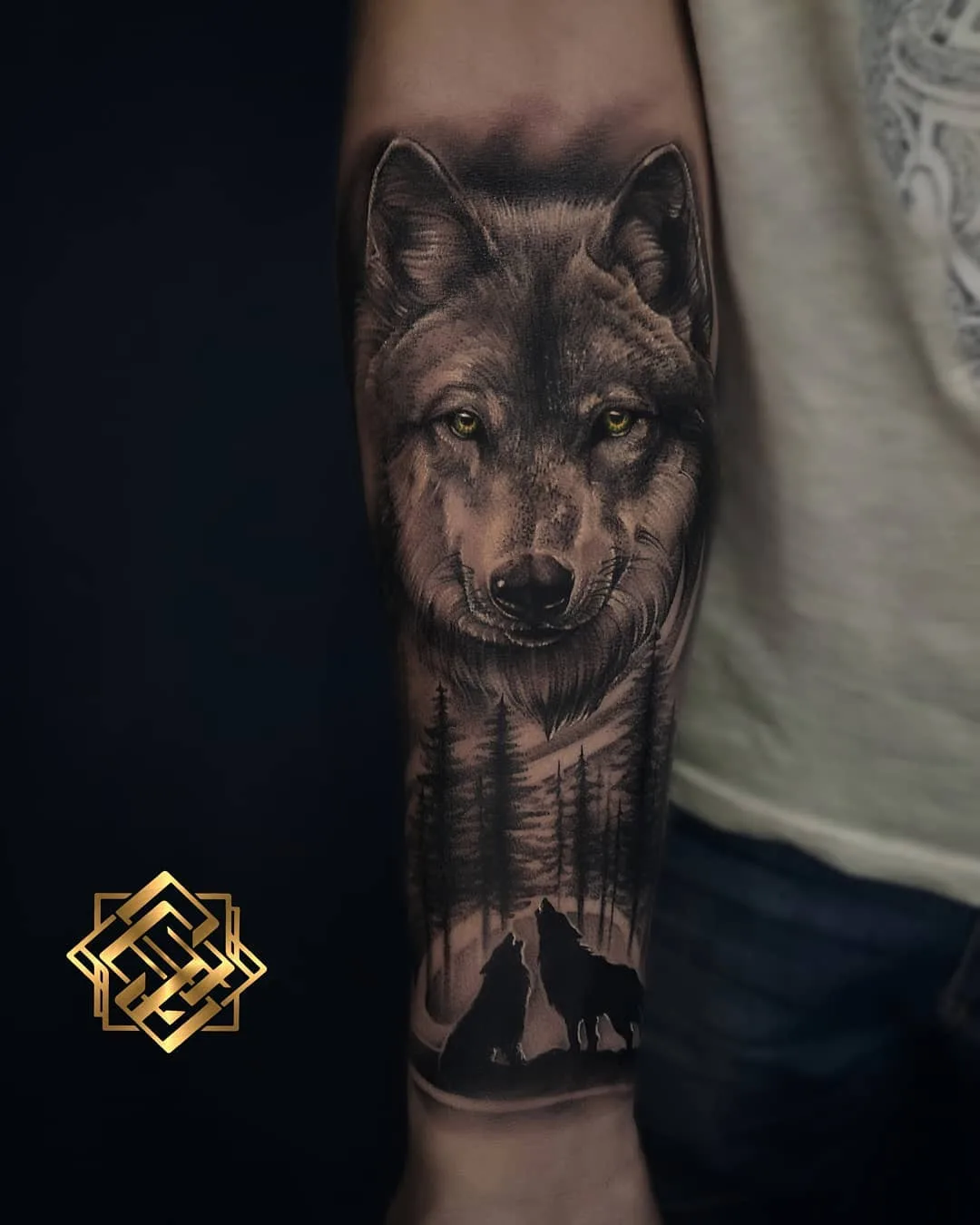
That reality translates directly into ink. A wolf pack tattoo almost always signals deep family loyalty: the idea that your people come first, that you'd fight for them without hesitation. Parents get pack tattoos to represent their children. Siblings mark their bond. Military veterans use the pack motif to honor their unit. The meaning stays consistent, we move together, or we don't move at all.
- Wolf tattoos embody a powerful duality: fierce independence vs. absolute pack loyalty
- The design choice between lone wolf and pack determines the core symbolic meaning
- Cultural interpretations vary dramatically, from Norse chaos to Japanese divine protection
- Most wolf tattoos combine 2-3 symbolic threads: loyalty, strength, independence, and spiritual guidance
- Placement and style significantly influence which meanings come to the surface
Design-wise, pack compositions tend to feature wolves running together, standing on a ridge line, or gathered with pups. Some artists work in subtle hierarchy, the lead wolf slightly larger or positioned higher, while others keep the pack level, emphasizing equality over dominance. Both approaches read clearly to anyone familiar with the motif.
The Lone Wolf: Embodying Independence, Freedom, and Resilience
Then there's the other side. In the wild, a lone wolf is typically a young animal that has left its birth pack to find a mate and establish new territory. It's a dangerous, solitary journey. Many don't survive it.
The ones that do, though, become founders. That narrative arc resonates deeply. A lone wolf tattoo speaks to self-reliance during a difficult passage, to trusting yourself when there's no safety net beneath you. Collectors who've been through major life upheavals, divorce, recovery, emigration, leaving a toxic environment, gravitate toward this image because it mirrors their experience accurately.
There's also a thread of rebellion woven through the lone wolf motif. It says: I chose my own path. I'm not following the group. For some wearers, it carries a philosophical edge, existential independence, a refusal to conform. Well, not exactly refusal, more like a deliberate choice to define terms on their own.
The tension between pack and lone wolf is, honestly, what makes this symbol so rich. Most of us feel both pulls. We need our people, and we need our solitude. A well-designed wolf tattoo can hold both truths at once.
Cultural Echoes: How the World Sees the Wolf
One of the more remarkable things about the wolf as a tattoo subject is how deeply it's embedded in mythology across the globe. Its meaning shifts depending on the cultural lens, sometimes dramatically. That cultural weight adds layers that a purely personal interpretation can't reach on its own.
Native American Symbolism: The Spirit Guide and Teacher
Across many Indigenous North American traditions, the wolf holds a position of deep respect as a teacher, pathfinder, and spirit guide. It carries associations with loyalty, strong family ties, communication, and intelligence. In some traditions, the wolf represents the warrior spirit and the courage to face danger for the sake of the community.
Wolf imagery drawn from these traditions often appears in tribal tattoo styles, incorporating bold linework, symbolic patterns, and spiritual iconography. It's worth saying, and this genuinely matters, that non-Indigenous people borrowing specific ceremonial or tribal wolf imagery should approach the subject with real cultural awareness and respect. The symbolism carries sacred weight. It isn't decorative.
Norse Mythology: Fenrir, Sköll, and the Fear of the Untamable
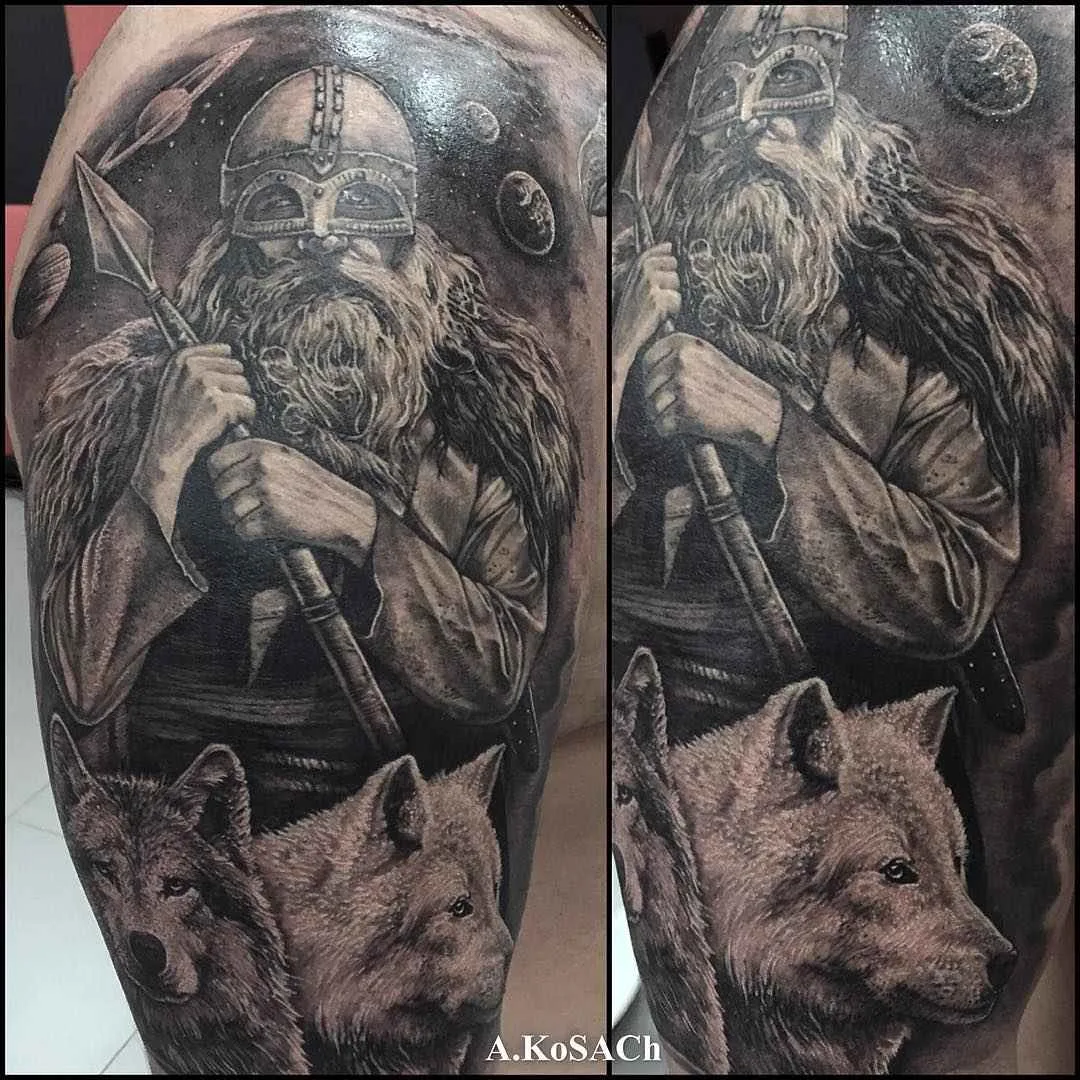
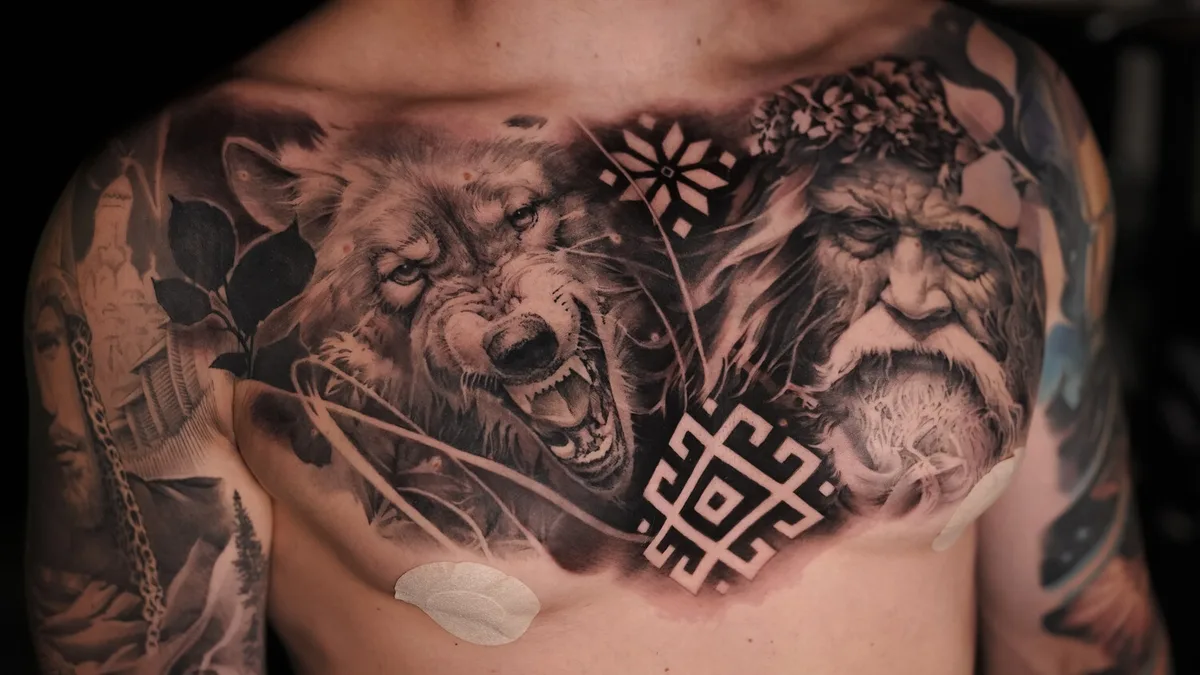
Norse mythology gives us perhaps the most dramatic wolf figures in all of world mythology. Fenrir, the monstrous wolf-son of Loki, was so powerful that the gods bound him with a magical chain, knowing that when he finally broke free, it would trigger Ragnarök, the end of the world. His children, Sköll and Hati, chase the sun and moon across the sky, and will one day catch them.
A Fenrir tattoo signals raw, uncontrollable power. The kind of chaos no chain can hold. People drawn to it tend to identify with breaking constraints, defying authority, or sitting comfortably with the darker, wilder parts of themselves, and they usually know exactly what they're after. Norse wolf tattoos typically feature rune inscriptions, knotwork, heavy chains, and open snarling jaws. The mood is aggressive, mythic, and, well, pretty metal.
Japanese Folklore: The Ōkami as Divine Messenger and Protector
Japan's relationship with wolves is haunting. The Japanese wolf (Nihon ōkami) went extinct in the early 1900s, but its cultural legacy has never really faded. In Shinto tradition, the wolf, ōkami, a word sharing its root with the term for deity or spirit, was revered as a divine messenger, a guardian of travelers and farmland alike. Shrines dedicated to the wolf still stand today, including the Mitsumine Shrine in Saitama Prefecture.
Japanese-style wolf tattoos carry connotations of divine protection, spiritual duty, and a deep reverence for something the natural world lost. They often feature flowing compositions, wind-swept fur, and the elegant linework that traditional Japanese tattooing is known for. There's an inherent melancholy to them as well, the memory of something sacred that was destroyed, and not forgotten.
Greco-Roman Legends: The She-Wolf as a Nurturing Founder
The founding myth of Rome pivots on a wolf. The twins Romulus and Remus, abandoned as infants and left to die by the Tiber River, were rescued and nursed by a she-wolf, the Lupa. Without her, no Rome. The image of that she-wolf nursing two human children has carried the weight of fierce maternal protection and the wild origins of civilization for over two thousand years. No small thing to wear on your skin.
It's a potent motif for parents, especially mothers, who identify with protecting their children against impossible odds. It also resonates for anyone who feels they were shaped by unconventional forces, hardship rather than comfort, survival rather than ease.
Decoding the Design: Popular Wolf Tattoo Compositions
In Japanese, the word for wolf (ōkami) shares a root with the word for deity or spirit. The extinct Japanese wolf was revered as a divine messenger and protector, with shrines still dedicated to them today, including the famous Mitsumine Shrine.
The symbolism of a wolf tattoo isn't carried by the wolf alone. Surrounding elements, pose, framing, these choices act as modifiers that can shift or sharpen the meaning considerably. Sometimes a single design decision changes everything.
The Howling Wolf: A Call to the Wild or a Cry of Loneliness?
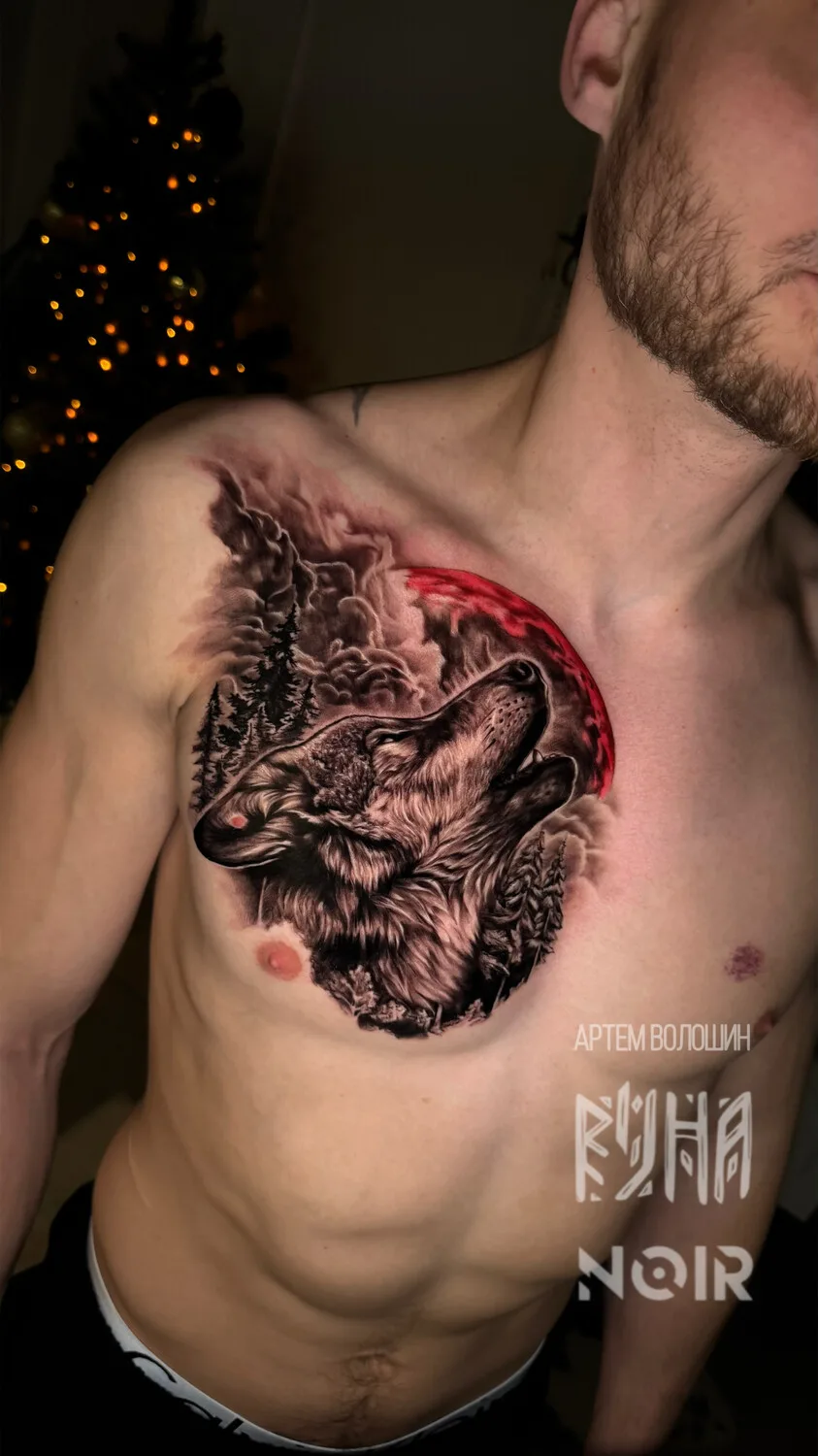
A howling wolf is probably the single most popular wolf tattoo composition, and it carries genuine ambiguity. Biologically, howling is communication, it's how wolves locate pack members, coordinate hunts, define territorial boundaries. A howling wolf can represent connection, calling out to your people, staying in touch across distance.
But it also reads as solitude. The lone howler against a vast sky. The yearning for something just beyond reach. That emotional openness is what makes the image so compelling; it doesn't resolve neatly into one meaning, and most collectors seem to prefer it that way.
The Wolf and Moon: Instinct, Cycles, and Hidden Power
The wolf and moon pairing is ancient and deeply embedded in collective imagination, even though, it should be said, real wolves don't actually howl at the moon. They howl with their heads raised because it projects sound further. The association is cultural, not biological. But that doesn't make it any less powerful as a symbol, or as a tattoo.
A wolf and moon tattoo taps into instinct, mystery, cycles of change, and the pull of forces we can't fully explain. The moon phase matters here. A full moon suggests power at its peak; a crescent suggests emergence or transition; a dark moon implies hidden knowledge. Combined with the wolf, the composition becomes a statement about trusting your deeper nature, the parts of yourself that operate well below conscious thought.
Wolf Eyes: The Window to the Soul and Intense Focus
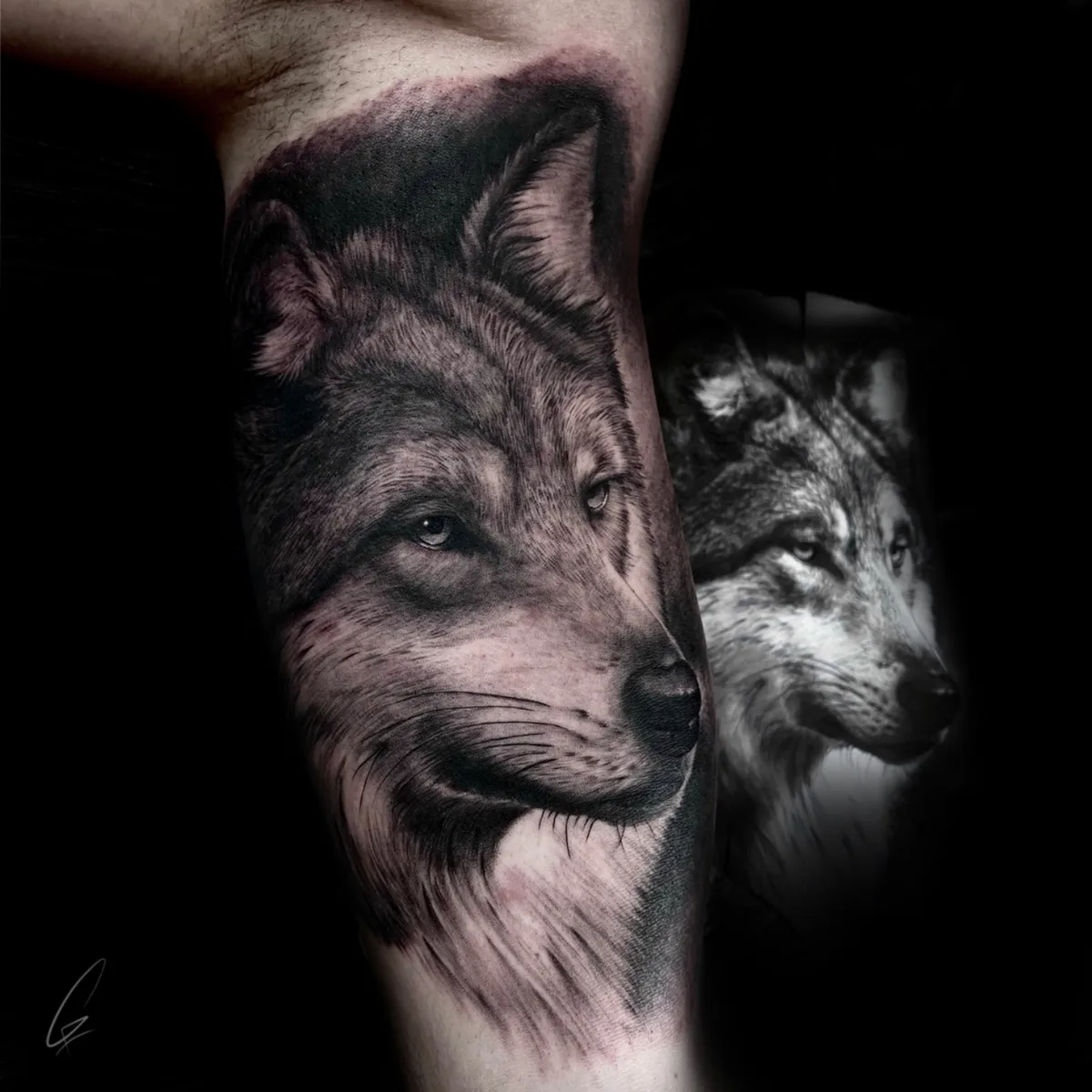
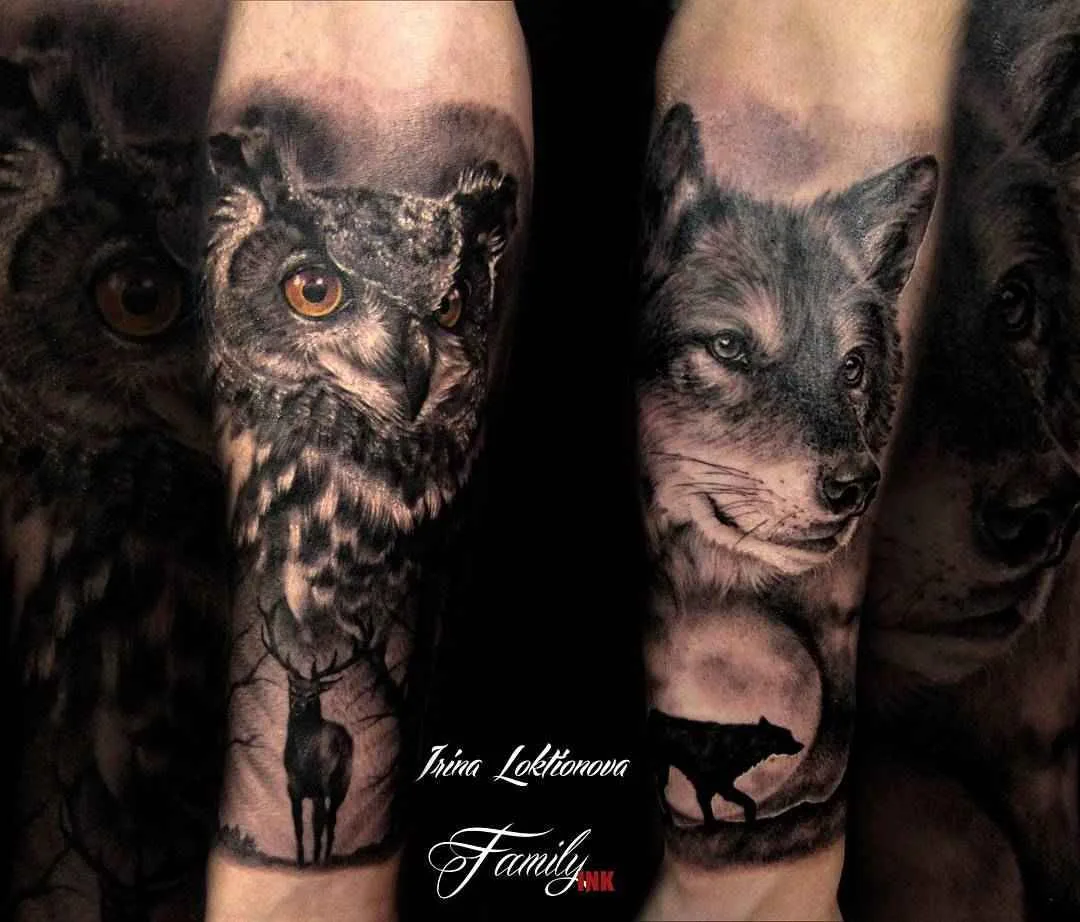
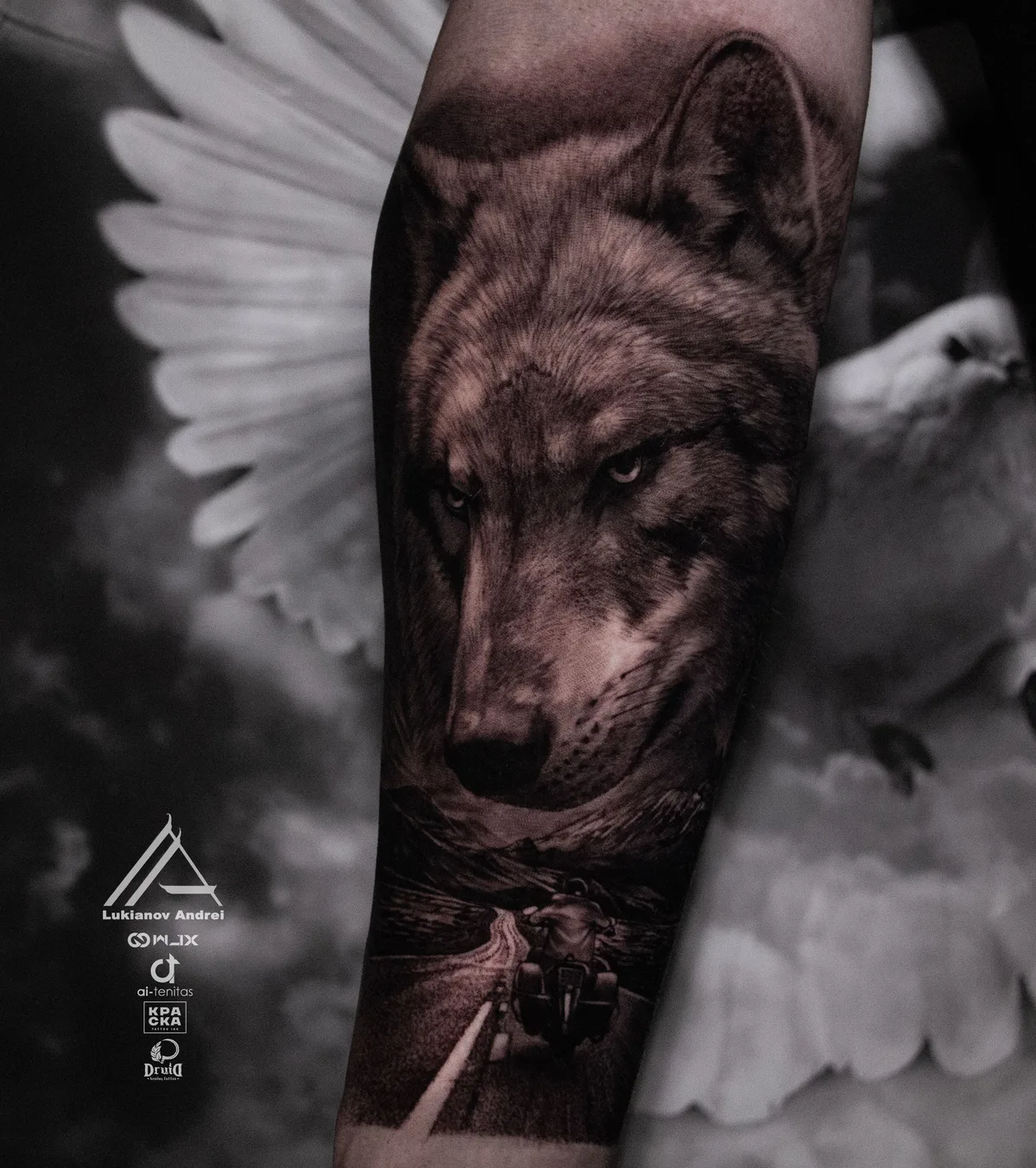
Some of the most striking wolf tattoos show nothing but the eyes, piercing, luminous, staring directly at the viewer. It's an intense choice. Wolf eye tattoos symbolize vigilance, perception, the ability to see through deception. There's something almost confrontational about them. They demand attention.
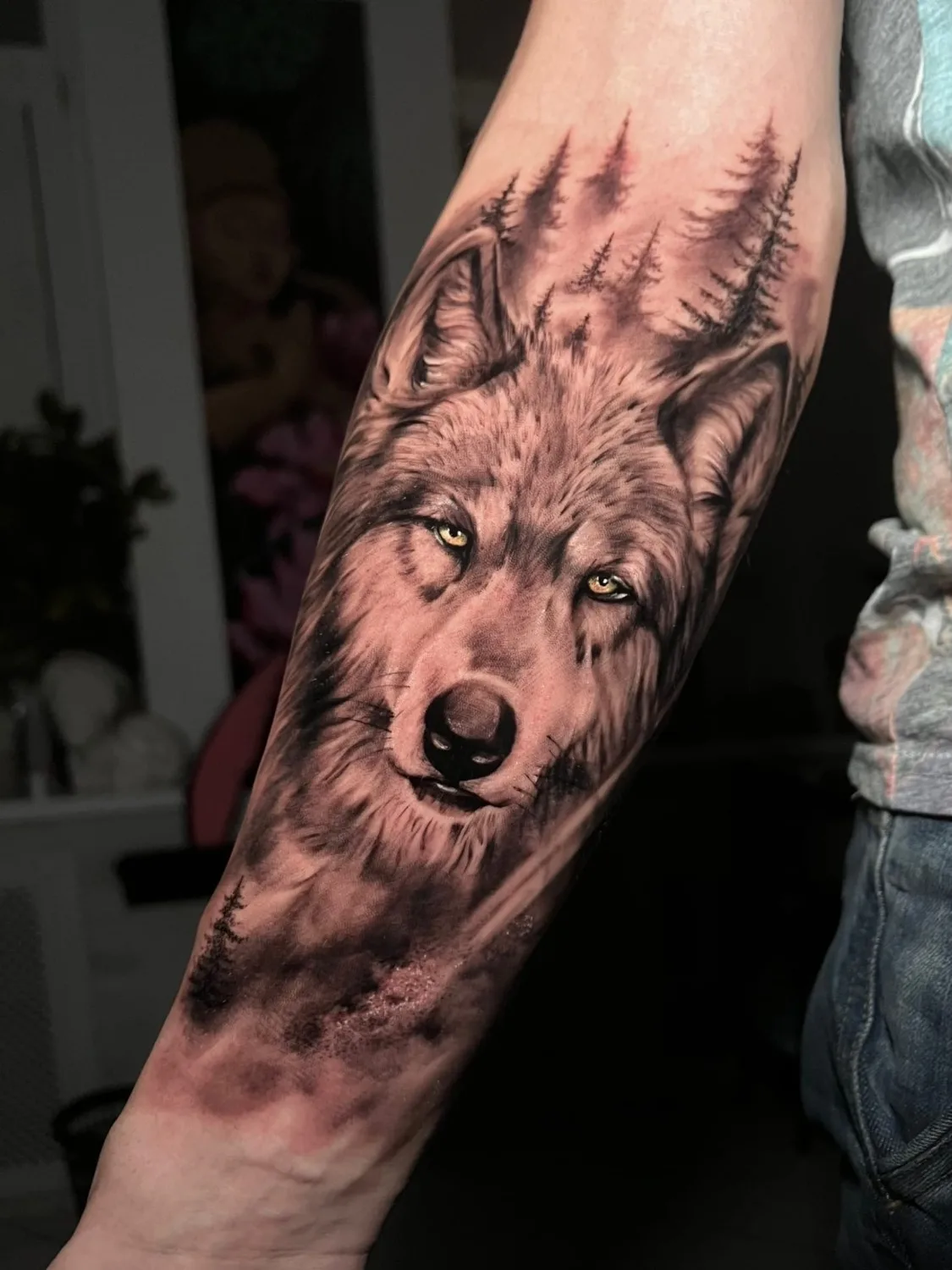
This composition works especially well in realism or hyperrealism styles, where the artist can render the translucent quality of a wolf's iris, those pale golds and icy blues that seem to glow from within. A skilled artist can make wolf eyes look genuinely alive on skin, in a way that stays with you.
Geometric & Watercolor Wolves: Modern Interpretations of a Primal Symbol
| Wolf Type | Core Symbolism | Design Elements | Best For |
|---|---|---|---|
| Pack Wolf | Family loyalty, community, shared strength | Multiple wolves, running together, hierarchy | Parents, siblings, military veterans |
| Lone Wolf | Independence, self-reliance, personal journey | Single wolf, solitary poses, dramatic landscapes | Life transitions, recovery, personal growth |
Over the past decade or so, geometric wolf tattoos have surged in popularity. They deconstruct the wolf into clean lines, sacred geometry, and abstract shapes, often splitting the design so one half is realistic and the other dissolves into angles and planes. The read? The intersection of nature and order. Instinct held within structure. It's a concept that resonates with a lot of people who feel pulled in both directions.
Watercolor wolf tattoos take the opposite approach entirely. Splashes of color bleed beyond the wolf's outline, creating a sense of motion, emotion, and impermanence. These designs tend to feel more personal than symbolic, less about what the wolf means in the abstract, more about what it feels like to the specific person wearing it.
The Wolf with Other Elements (Roses, Skulls, Forests)
Pairing a wolf with secondary elements creates a kind of visual sentence. A wolf with roses suggests the coexistence of beauty and danger, tenderness alongside ferocity, a popular choice for people who embrace their own contradictions. A wolf with a skull confronts mortality head-on, combining predator with inevitable end, and can also nod toward the cycle of life and death in nature. Two very different emotional registers, depending on how the artist handles it.
Forest backgrounds, dense pines, fog, mountain ridges, ground the wolf in its environment and strengthen the wilderness association. They expand the composition from a portrait into a world. And they give the artist room to build atmosphere, which, frankly, is where a lot of the emotional impact lives.
Bringing Your Wolf to Life: Style and Placement
From Hyperrealism to Neo-Traditional: Choosing Your Style
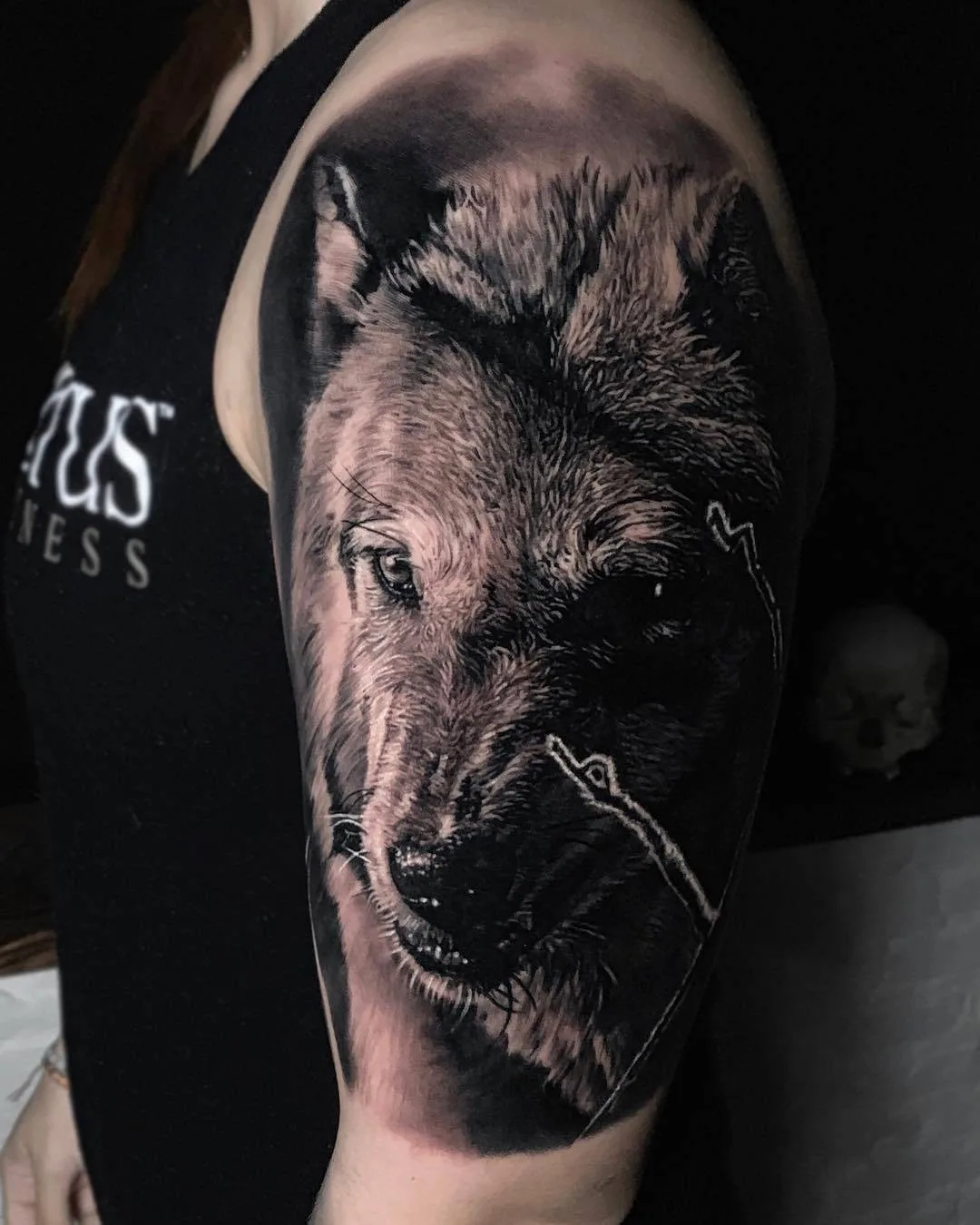
The style you choose for a wolf tattoo fundamentally changes its character. Hyperrealism delivers a portrait-quality image with photographic detail, every individual hair rendered, every shadow accurate. It's ideal for tribute pieces or designs where the emotional weight comes from the wolf's expression. The downside? It demands an artist with serious technical skill, and it ages differently than bolder styles.
Neo-traditional pulls the wolf into illustrated territory: bold outlines, vivid color, stylized detail that reads clearly from across a room and holds up over years. Traditional, or old-school, wolf tattoos push this further toward iconic simplicity, heavy black outlines, a limited palette, flat composition. Symbolism over likeness, every time.
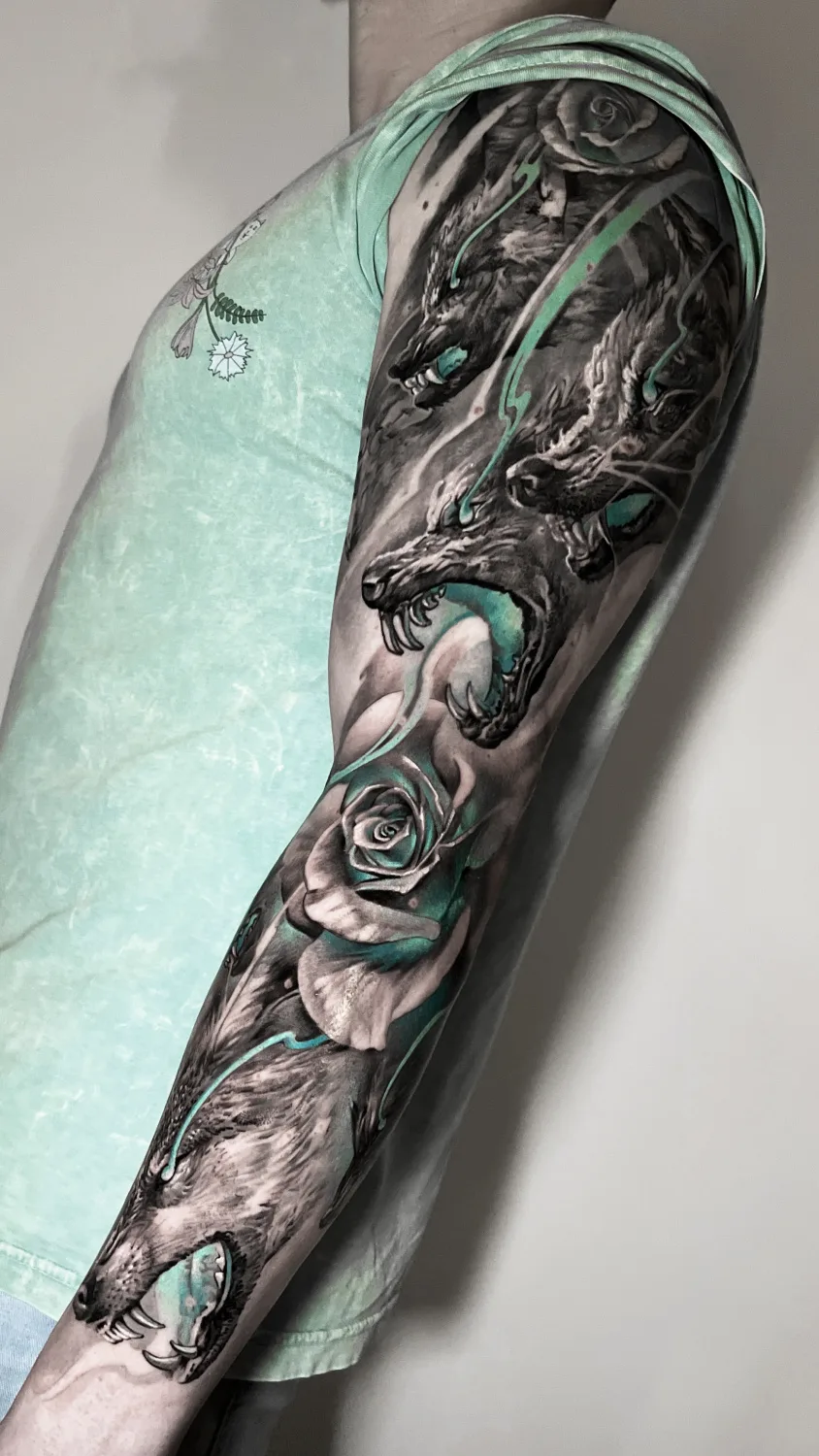
Tribal and blackwork styles anchor the wolf in cultural or spiritual ground, trading naturalistic detail for pattern and form. Japanese-style wolves follow the compositional grammar of irezumi, flowing with the body's contours and folding into larger narrative sleeves or full back pieces where every element earns its place.
| Cultural Tradition | Wolf Symbolism | Visual Style | Key Themes |
|---|---|---|---|
| Native American | Spirit guide, teacher, warrior | Tribal patterns, bold linework | Loyalty, communication, courage |
| Norse | Chaos, untamable power | Runes, chains, snarling jaws | Breaking constraints, raw power |
| Japanese | Divine messenger, protector | Flowing composition, elegant lines | Protection, spiritual duty, reverence |
| Greco-Roman | Nurturing founder, maternal protection | Classical imagery, she-wolf with twins | Fierce protection, wild origins |
Placement Matters: Forearm, Chest, and Back Tattoos
Placement carries its own weight. A chest piece puts the wolf close to the heart, intimate, personal, often tied to loyalty or family in a way that feels almost private. A full back piece opens up real compositional room: a whole pack moving through a mountain landscape, a scene with actual narrative weight. The forearm is a declaration. Visible, public, a piece you're choosing to show the world every single day. Upper arms and shoulders suit contained portraits or geometric designs that benefit from a defined canvas.
Smaller wolf tattoos on the wrist, ankle, or behind the ear lean toward something quieter. They suggest the meaning rather than announce it. That's a legitimate approach. Some symbols work better at a whisper.
FAQ
What does a wolf tattoo represent for a woman?
A wolf tattoo carries the same core symbolism regardless of who wears it, strength, loyalty, independence, instinct. That said, many women are drawn specifically to the she-wolf archetype: the fierce protector, the mother who will fight for her young against any threat. The Roman Lupa, who nursed Romulus and Remus, remains a powerful reference point. Wolf tattoos on women also frequently emphasize intuition, spiritual connection, and the wild feminine, the part of the self that refuses to be diminished or contained.
Can a wolf tattoo have a negative meaning?
It can, depending on cultural context and design choices. The European "big bad wolf" tradition frames the animal as predator and deceiver, think Little Red Riding Hood, the Three Little Pigs. In Norse mythology, Fenrir embodies world-ending destruction. Some people lean into these darker associations deliberately, choosing snarling, aggressive wolf designs to represent danger, rage, or an honest reckoning with one's shadow side. Context shapes everything: a wolf baring its teeth with blood on its muzzle tells a very different story than a serene wolf sitting beneath a full moon.
What does a wolf tattoo with three eyes symbolize?
A three-eyed wolf draws from the concept of the "third eye", heightened perception, spiritual awareness, seeing past the surface of things. It merges the wolf's natural association with instinct and intuition with a more explicitly mystical dimension, suggesting clairvoyance, inner wisdom, or access to hidden knowledge. The design has gained real traction in occult and spiritual tattoo circles, and it pairs well with geometric or blackwork styles that already carry esoteric visual language.
How do I find the right tattoo artist for a detailed wolf tattoo?
Start by identifying the style you want, realism, neo-traditional, geometric, Japanese, and then look for artists who specialize in that style with strong animal work already in their portfolios. Look specifically for wolf or canine pieces they've completed. Pay close attention to how they handle fur texture, eye detail, and compositional flow. Platforms like iNKPPL's artist search let you filter by style and location. A generalist won't serve a complex animal portrait the way a specialist will. This is one of those pieces where that distinction matters.
Embracing Your Inner Wolf
The wolf endures as a tattoo motif because it holds contradiction without collapsing under it. Loyal pack member and solitary wanderer. Nurturing mother and snarling predator. Spirit guide and chaos beast. Few symbols in tattoo art carry that kind of range without feeling overloaded.
The meaning of your wolf tattoo is, in the end, the one you carry into it. The mythology, the design elements, the style, these are tools. They shape the conversation, but you decide what gets said. Whether your wolf runs with the pack or walks alone, whether it howls at the moon or holds the viewer's gaze without flinching, it should reflect something true about your own story.
That's what makes it permanent-worthy. Browse iNKPPL's galleries and artist profiles to find the right creator for your wolf, someone who understands the animal as deeply as you do.